Overview
Socioeconomic status (SES) represents one of the most powerful determinants of health outcomes, educational achievement, and life opportunities examined on the MCAT. This multidimensional construct combines economic resources, social prestige, and political power to create a hierarchical ranking system that profoundly influences individual and population health. Understanding SES is essential for future physicians because it directly impacts patient access to healthcare, disease prevalence, treatment adherence, and health literacy—all topics frequently tested in the Psychological, Social, and Biological Foundations of Behavior section.
The MCAT extensively tests socioeconomic status within the broader framework of Social Stratification and Inequality, requiring students to analyze how economic disparities create and perpetuate health inequities. Questions often present clinical vignettes where patients' economic circumstances influence their health behaviors, treatment options, or disease outcomes. Test-makers expect students to recognize how income, education, and occupational prestige interact to shape health trajectories across the lifespan, from prenatal development through aging.
Mastering socioeconomic status Sociology concepts enables students to connect individual-level health behaviors to macro-level social structures. This topic intersects with numerous other Sociology domains including social capital, cultural capital, healthcare access, health disparities, social mobility, and the social determinants of health. The MCAT frequently integrates SES into passages about healthcare utilization, disease prevention, mental health outcomes, and physician-patient communication, making it one of the highest-yield topics for exam preparation.
Learning Objectives
- [ ] Define Socioeconomic status using accurate Sociology terminology
- [ ] Explain why Socioeconomic status matters for the MCAT
- [ ] Apply Socioeconomic status to exam-style questions
- [ ] Identify common mistakes related to Socioeconomic status
- [ ] Connect Socioeconomic status to related Sociology concepts
- [ ] Differentiate between the three primary components of SES (income, education, occupation)
- [ ] Analyze how SES influences health outcomes through multiple pathways
- [ ] Evaluate the relationship between SES and social mobility in stratified societies
Prerequisites
- Basic understanding of social inequality: Necessary to contextualize how SES creates hierarchical differences in society
- Familiarity with health disparities: Provides the foundation for understanding how SES translates into differential health outcomes
- Knowledge of social determinants of health: Essential for connecting SES to concrete health impacts
- Understanding of social institutions: Required to comprehend how education, economy, and healthcare systems interact with SES
Why This Topic Matters
Clinical and Real-World Significance
Socioeconomic status fundamentally shapes every aspect of medical practice. Physicians encounter SES-related challenges daily: patients who cannot afford medications, individuals with limited health literacy due to educational barriers, workers exposed to occupational hazards, and families living in neighborhoods with environmental toxins. Research consistently demonstrates that SES predicts mortality, morbidity, mental health outcomes, and healthcare utilization more powerfully than many biological risk factors. Understanding SES enables future physicians to provide culturally competent, patient-centered care that acknowledges structural barriers to health.
Exam Statistics and Question Types
Socioeconomic status MCAT questions appear in approximately 15-20% of Sociology passages in the Psychological, Social, and Biological Foundations section. The topic appears in multiple question formats:
- Passage-based questions: Clinical vignettes describing patients with varying SES backgrounds and health outcomes
- Discrete questions: Standalone items testing definitions and relationships between SES components
- Data interpretation: Tables or graphs showing correlations between SES indicators and health metrics
- Application questions: Scenarios requiring students to predict health behaviors or outcomes based on SES
Common Exam Appearances
MCAT passages frequently integrate SES into discussions of:
- Healthcare access and insurance coverage disparities
- Chronic disease prevalence across income levels
- Educational attainment and health literacy
- Neighborhood effects on health behaviors
- Occupational stress and workplace hazards
- Intergenerational transmission of advantage/disadvantage
- Social mobility and health trajectories
Core Concepts
Definition and Components of Socioeconomic Status
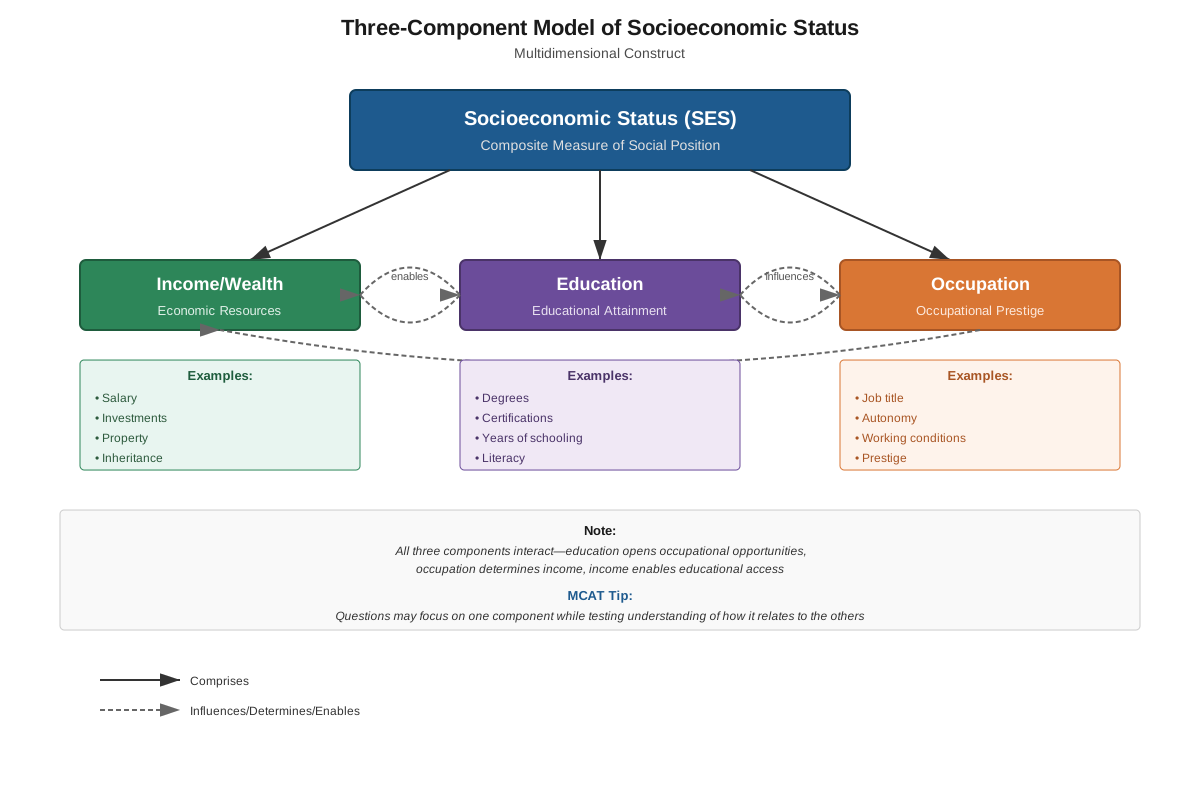
Socioeconomic status is a composite measure of an individual's or group's economic and social position relative to others, based on income, education, and occupation. Unlike simple economic measures, SES captures the multidimensional nature of social stratification by incorporating both material resources and social prestige. This construct recognizes that social position involves not just wealth, but also the respect, power, and opportunities that accompany certain educational credentials and occupational roles.
The three primary components of SES operate both independently and synergistically:
| Component | Definition | Health Impact Mechanisms | MCAT Focus |
|---|---|---|---|
| Income | Total earnings from wages, investments, and transfers | Direct purchasing power for healthcare, nutrition, housing; stress from financial insecurity | Most frequently tested; appears in healthcare access questions |
| Education | Formal schooling and credentials attained | Health literacy, cognitive skills for navigating healthcare, employment opportunities | Critical for health behavior and communication questions |
| Occupation | Type of work and associated prestige | Workplace hazards, autonomy, stress levels, social networks, benefits | Often linked to occupational health and social capital |
Income and Economic Resources
Income represents the flow of financial resources available to individuals or households over a specific time period. Beyond absolute purchasing power, income influences health through multiple pathways. Higher income enables access to nutritious food, safe housing, quality healthcare, and health-promoting recreational activities. Conversely, income inequality—the gap between rich and poor—creates psychosocial stress, reduces social cohesion, and correlates with worse population health outcomes even among wealthy individuals in unequal societies.
Wealth (accumulated assets minus debts) differs from income and provides additional security, intergenerational advantages, and buffering against economic shocks. The MCAT may test the distinction between income and wealth, particularly regarding health security and stress. For example, two families with identical incomes but different wealth levels experience different health vulnerabilities—the family with savings can weather medical emergencies without catastrophic stress.
Education and Human Capital
Education serves as a fundamental determinant of SES and health through multiple mechanisms. Educational attainment provides:
- Cognitive skills: Critical thinking, problem-solving, and information processing abilities
- Health literacy: Capacity to obtain, process, and understand health information for decision-making
- Credentialing: Formal qualifications that open occupational opportunities
- Social networks: Connections to individuals with resources and information
- Sense of control: Belief in one's ability to influence life circumstances
The relationship between education and health follows a dose-response pattern—each additional year of schooling correlates with improved health outcomes, reduced mortality, and healthier behaviors. This gradient effect appears across all education levels, not just between those with and without degrees. MCAT questions often test understanding of why education matters beyond just income effects: educated individuals demonstrate better medication adherence, preventive care utilization, and chronic disease management regardless of income.
Occupation and Social Prestige
Occupational position encompasses both the type of work performed and the social standing associated with that work. Occupational prestige rankings reflect societal evaluations of jobs based on required education, income potential, and social value. Physicians, professors, and engineers occupy high-prestige positions, while service workers and laborers occupy lower-prestige positions.
Occupation influences health through:
- Physical exposures: Workplace hazards, ergonomic stressors, injury risks
- Psychosocial factors: Job control, demand-control balance, workplace social support
- Benefits: Health insurance, paid leave, retirement security
- Schedule: Shift work, hours, flexibility affecting sleep and family time
- Social networks: Colleagues who provide information, support, and opportunities
The demand-control model of occupational stress, frequently tested on the MCAT, posits that jobs combining high psychological demands with low worker control (e.g., assembly line work, food service) create the most harmful stress. Conversely, high-demand jobs with high control (e.g., physicians, executives) produce less harmful stress despite long hours.
SES as a Gradient
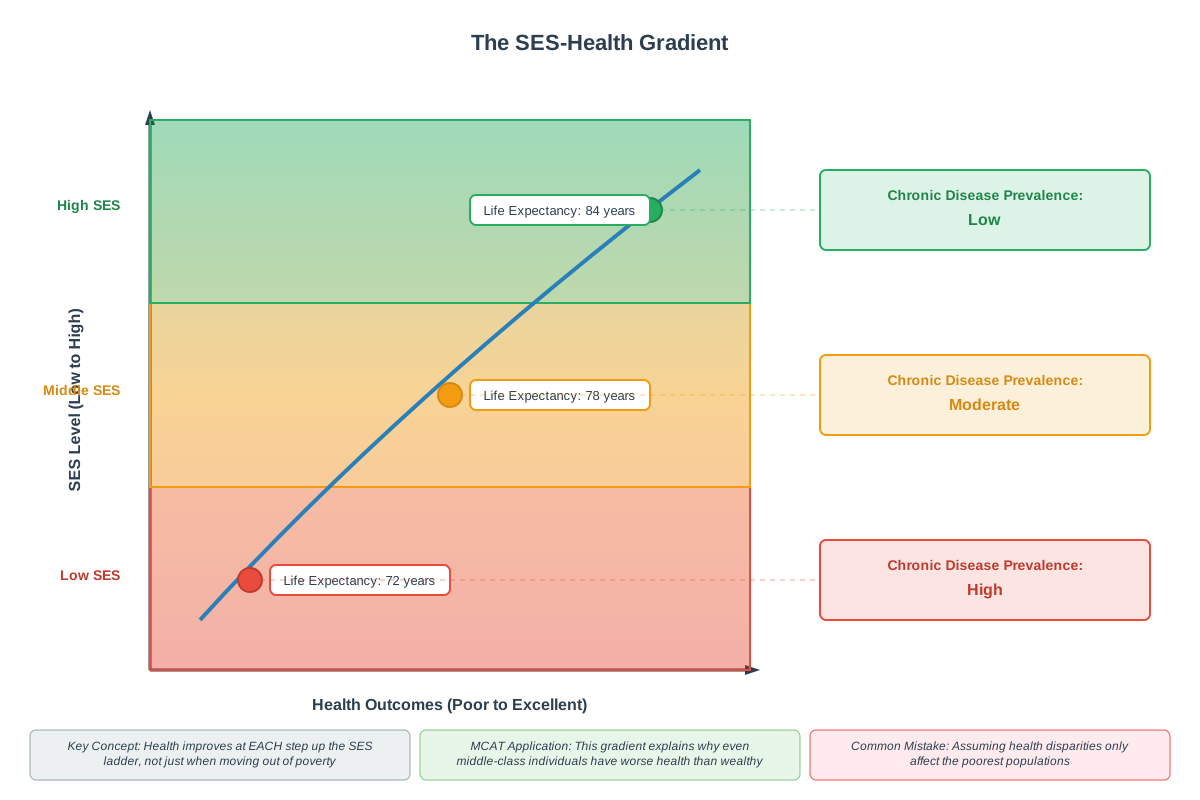
A critical concept for the MCAT is that SES operates as a gradient or continuum rather than a simple dichotomy between rich and poor. Health outcomes improve incrementally at each step up the socioeconomic ladder, even among affluent groups. This gradient effect demonstrates that SES influences health through mechanisms beyond absolute deprivation—relative position matters. The gradient appears for virtually all health outcomes: mortality, chronic disease, mental health, disability, and health behaviors.
The gradient concept challenges students to think beyond poverty-focused explanations. Even comparing upper-middle-class individuals to wealthy individuals reveals health differences, suggesting that psychosocial factors like relative deprivation, social comparison, and status anxiety contribute to health alongside material resources.
Pathways from SES to Health
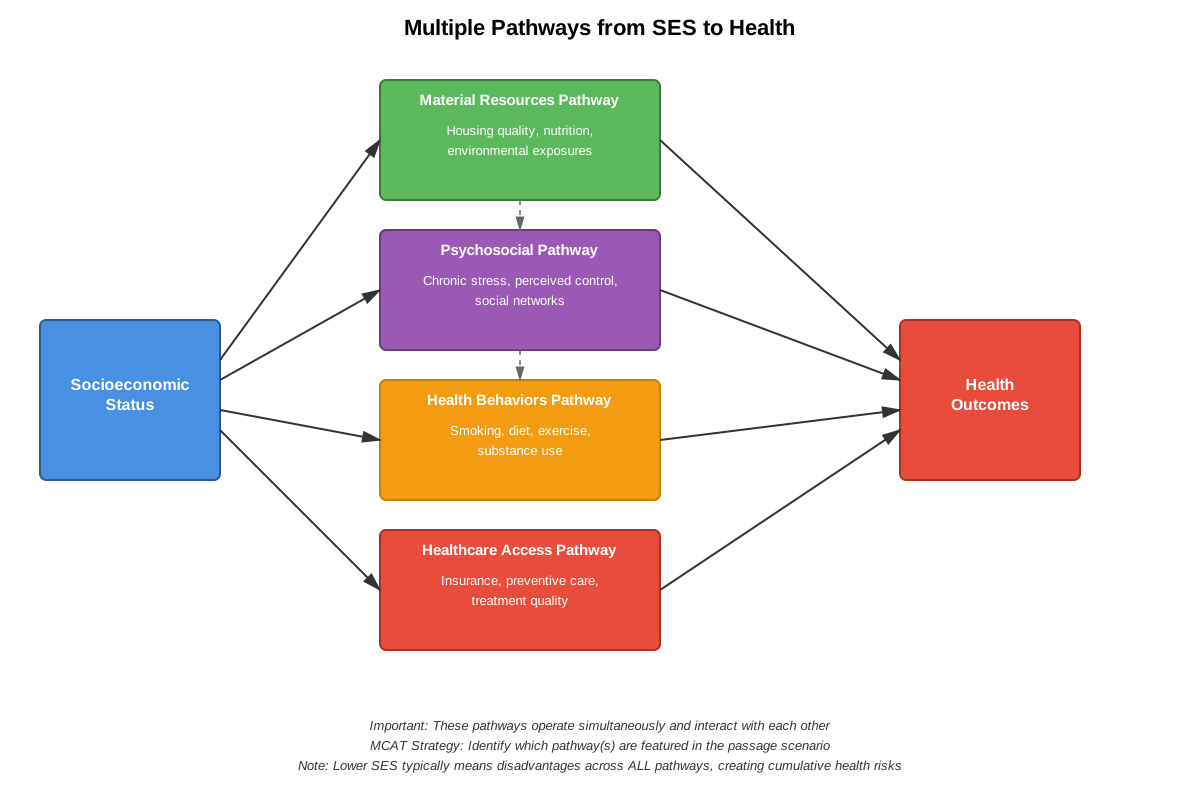
Understanding the mechanisms linking SES to health outcomes is essential for MCAT success. Multiple pathways operate simultaneously:
Material pathway: Economic resources directly purchase health-promoting goods and services (healthcare, nutrition, housing, recreation)
Psychosocial pathway: Social position creates stress through relative deprivation, discrimination, lack of control, and status anxiety; chronic stress dysregulates physiological systems
Behavioral pathway: SES shapes health behaviors including smoking, diet, exercise, substance use, and healthcare utilization through norms, resources, and stress
Environmental pathway: SES determines residential location, exposing individuals to neighborhood conditions including pollution, violence, food availability, and recreational facilities
Healthcare access pathway: SES influences insurance coverage, provider availability, quality of care received, and ability to follow treatment recommendations
Intergenerational Transmission
SES exhibits strong intergenerational transmission—children's socioeconomic position correlates highly with parents' position. This transmission occurs through multiple mechanisms: inherited wealth, educational advantages, social networks, neighborhood effects, and early childhood experiences that shape cognitive and non-cognitive skills. The MCAT tests understanding of how parental SES influences child health outcomes through prenatal nutrition, early childhood development, educational opportunities, and health behaviors learned in the family context.
Social mobility—movement up or down the socioeconomic ladder—varies across societies and time periods. The MCAT may present data on mobility rates or ask students to analyze factors promoting or inhibiting mobility. Understanding that limited mobility perpetuates health inequalities across generations is crucial for exam success.
Concept Relationships
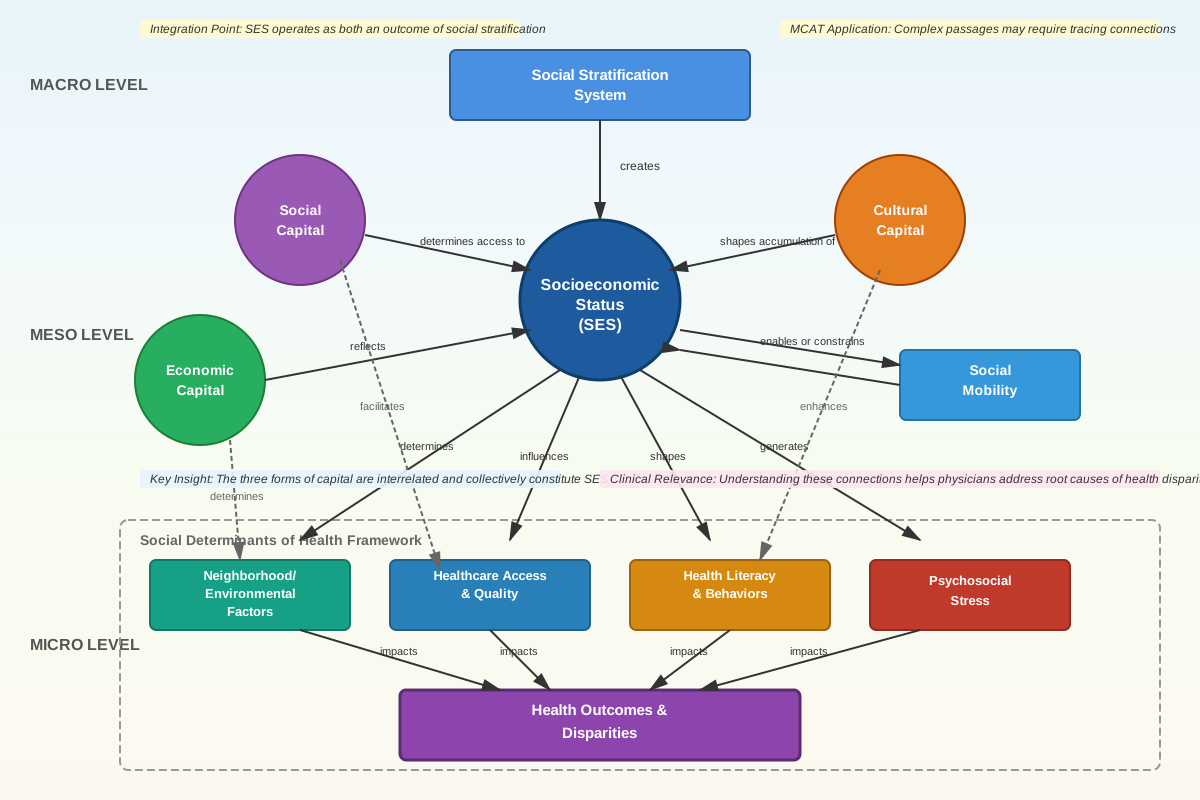
Socioeconomic status functions as a central organizing concept within Social Stratification and Inequality, connecting to virtually all other topics in this domain. The three components of SES (income, education, occupation) interact synergistically: education enables access to prestigious occupations, which generate higher income, which can fund children's education, creating intergenerational cycles of advantage or disadvantage.
Relationship map:
- SES → Social Capital: Higher SES provides access to valuable social networks and connections
- SES → Cultural Capital: Education and family background transmit cultural knowledge, tastes, and credentials
- SES → Health Disparities: SES gradient creates systematic health differences across populations
- SES → Healthcare Access: Income and insurance determine ability to obtain medical care
- SES → Environmental Justice: Lower SES groups experience disproportionate environmental hazards
- SES → Social Mobility: Degree of mobility determines whether SES advantages/disadvantages persist across generations
- SES ← Discrimination: Racial, ethnic, and gender discrimination limits SES attainment for marginalized groups
- SES → Stress: Lower SES creates chronic stress through material hardship and psychosocial mechanisms
- SES → Health Literacy: Education component directly influences ability to understand health information
The bidirectional relationship between SES and health creates a feedback loop: poor health can reduce educational attainment and work capacity, lowering SES, which further compromises health. This cycle of disadvantage appears frequently in MCAT passages examining chronic disease, disability, or mental health.
Quick check — test yourself on Socioeconomic status so far.
Try Flashcards →High-Yield Facts
⭐ Socioeconomic status comprises three primary components: income (economic resources), education (human capital and credentials), and occupation (work type and prestige)
⭐ The SES-health relationship follows a gradient pattern—health improves incrementally at each step up the socioeconomic ladder, even among affluent groups
⭐ Education influences health independently of income through mechanisms including health literacy, cognitive skills, sense of control, and social networks
⭐ Lower SES correlates with higher rates of chronic diseases (cardiovascular disease, diabetes, obesity), infectious diseases, mental health disorders, and all-cause mortality
⭐ SES operates through multiple pathways to influence health: material resources, psychosocial stress, health behaviors, environmental exposures, and healthcare access
- Income inequality (the gap between rich and poor) predicts worse population health outcomes independently of absolute income levels
- Occupational stress follows the demand-control model: jobs with high demands and low control create the most harmful stress
- Intergenerational transmission of SES occurs through inherited wealth, educational advantages, social networks, and early childhood experiences
- The relationship between SES and health begins before birth (prenatal care, maternal nutrition) and accumulates across the lifespan
- Health literacy, strongly correlated with educational attainment, predicts medication adherence, preventive care utilization, and chronic disease management
- Neighborhood SES (area-level socioeconomic characteristics) influences health beyond individual SES through environmental quality, resource availability, and social norms
Common Misconceptions
Misconception: SES only matters for poor people; once basic needs are met, additional resources don't improve health.
Correction: The SES gradient extends across the entire socioeconomic spectrum. Even comparing upper-middle-class to wealthy individuals reveals health differences, demonstrating that relative position and psychosocial factors matter beyond absolute material deprivation.
Misconception: Income is the only component of SES that matters for health.
Correction: Education and occupation influence health through independent pathways beyond income. Education provides health literacy and cognitive skills; occupation determines workplace exposures, stress, and social networks. Studies controlling for income still show strong education-health and occupation-health relationships.
Misconception: SES causes poor health behaviors, so individuals are responsible for their health outcomes.
Correction: While SES correlates with health behaviors, this relationship reflects structural constraints (limited resources, chronic stress, neighborhood environments) rather than individual failings. Additionally, health behaviors explain only a portion of SES-health gradients; material, psychosocial, and environmental pathways operate independently.
Misconception: Wealth and income are the same thing.
Correction: Income represents the flow of financial resources over time (wages, salaries), while wealth represents accumulated assets minus debts (savings, property, investments). Two families with identical incomes may have vastly different wealth levels, affecting their economic security and health resilience.
Misconception: The SES-health relationship is entirely explained by healthcare access.
Correction: Healthcare access explains only a modest portion of SES-health gradients. Material resources, chronic stress, health behaviors, environmental exposures, and early-life experiences contribute substantially. SES-health gradients exist even in countries with universal healthcare coverage.
Misconception: Social mobility is equally possible for everyone in modern societies.
Correction: Social mobility varies dramatically across societies and has declined in many developed nations. Structural barriers including educational inequality, residential segregation, discrimination, and wealth concentration limit mobility opportunities, particularly for disadvantaged groups.
Worked Examples
Example 1: Analyzing SES Components and Health Outcomes
Vignette: A research study examines cardiovascular disease (CVD) rates across different socioeconomic groups. The study finds that individuals with graduate degrees have lower CVD rates than those with bachelor's degrees, who in turn have lower rates than high school graduates. This pattern persists even after controlling for income and health insurance coverage.
Question: Which of the following best explains why education predicts cardiovascular disease rates independently of income?
A) Higher education causes genetic changes that protect against CVD
B) Educational attainment provides health literacy and cognitive skills for disease management
C) Wealthy individuals can afford more education, which then improves their health
D) The study's statistical controls were inadequate
Worked Solution:
Step 1: Identify the key finding—education predicts CVD even after controlling for income, meaning education has independent effects beyond economic resources.
Step 2: Evaluate each option against SES theory:
- Option A suggests biological mechanisms, but education doesn't alter genetics; eliminate
- Option B aligns with established pathways: education provides health literacy (understanding health information), cognitive skills (processing medical instructions), and sense of control (belief in ability to influence health)
- Option C reverses causality and doesn't explain the independent effect after controlling for income
- Option D dismisses the finding without justification
Step 3: Recognize that education influences health through multiple mechanisms independent of income: health literacy enables better medication adherence and preventive care utilization; cognitive skills support chronic disease self-management; educational credentials provide social networks with health information; and education fosters sense of control over health outcomes.
Answer: B
Connection to learning objectives: This example demonstrates applying SES concepts to exam-style questions by analyzing how different SES components (education vs. income) operate through distinct pathways to influence health outcomes.
Example 2: Understanding the SES Gradient
Vignette: A public health researcher presents data showing life expectancy by income quintile (dividing the population into five equal groups from lowest to highest income). The data reveal that each step up in income quintile corresponds to approximately 2 years of additional life expectancy, with this pattern continuing even when comparing the fourth quintile to the highest quintile.
Question: This pattern best illustrates which concept related to socioeconomic status?
A) Absolute deprivation determines health outcomes
B) SES operates as a gradient across the entire socioeconomic spectrum
C) Income is the only component of SES that matters for health
D) Healthcare access fully explains socioeconomic health disparities
Worked Solution:
Step 1: Identify the key pattern—health improves incrementally at each income level, including among relatively affluent groups (fourth vs. fifth quintile).
Step 2: Evaluate theoretical concepts:
- Absolute deprivation (Option A) suggests only poverty matters, but the pattern extends to affluent groups; eliminate
- The gradient concept (Option B) precisely describes incremental health improvements across the entire SES spectrum, including among non-poor groups
- Option C focuses only on income, but the question asks about the pattern itself, not which component matters
- Option D suggests healthcare access explains everything, but gradients exist even in universal healthcare systems; eliminate
Step 3: Recognize that the gradient pattern demonstrates that relative position matters, not just absolute deprivation. This finding suggests psychosocial mechanisms (status anxiety, relative deprivation, social comparison) contribute to health alongside material resources.
Step 4: Connect to broader implications: The gradient challenges interventions focused solely on poverty, suggesting that reducing inequality across the entire spectrum could improve population health.
Answer: B
Connection to learning objectives: This example requires students to identify the gradient concept, understand its implications for health disparities, and distinguish it from absolute deprivation models—all essential for MCAT success.
Exam Strategy
Approaching SES Questions
When encountering socioeconomic status MCAT questions, follow this systematic approach:
- Identify which SES component(s) the question addresses: income, education, occupation, or composite measures
- Determine the pathway being tested: material, psychosocial, behavioral, environmental, or healthcare access
- Watch for gradient vs. threshold language: Does the question suggest incremental effects across all levels or only poverty effects?
- Consider independent vs. mediated effects: Does one SES component work through another, or do they have separate pathways?
Trigger Words and Phrases
Recognize these high-yield terms that signal SES-related content:
- Income-related: "financial resources," "economic hardship," "purchasing power," "wealth," "poverty"
- Education-related: "educational attainment," "health literacy," "years of schooling," "credentials," "human capital"
- Occupation-related: "job prestige," "occupational status," "workplace conditions," "employment type," "job control"
- Gradient indicators: "dose-response," "incremental," "stepwise," "across all levels," "even among affluent"
- Pathway language: "mediates," "explains," "accounts for," "independently predicts," "controlling for"
Process-of-Elimination Tips
Eliminate options that:
- Suggest SES only matters for the poor (ignores gradient)
- Claim single-pathway explanations (SES operates through multiple mechanisms)
- Reverse causality without justification (e.g., "health determines SES" when the question implies SES → health)
- Attribute SES effects entirely to healthcare access (access explains only partial variance)
- Conflate SES components (treating income and education as identical)
Favor options that:
- Acknowledge multiple pathways from SES to health
- Recognize independent effects of different SES components
- Describe gradient patterns across the socioeconomic spectrum
- Connect SES to specific mechanisms (health literacy, chronic stress, environmental exposures)
- Consider structural factors alongside individual behaviors
Time Allocation
For passage-based questions on SES:
- Spend 1-2 minutes identifying the SES component(s) and health outcome(s) in the passage
- Note whether data show gradients, thresholds, or other patterns
- For each question, spend 60-90 seconds identifying the concept being tested before evaluating options
- If stuck between two options, return to the passage to identify which pathway or mechanism is emphasized
Memory Techniques
Mnemonic for SES Components
"I Earn Occupational prestige"
- I = Income (economic resources)
- E = Education (human capital and credentials)
- O = Occupation (work type and prestige)
Mnemonic for SES-to-Health Pathways
"My Parents Bought Every House"
- M = Material pathway (direct purchasing power)
- P = Psychosocial pathway (stress, relative deprivation)
- B = Behavioral pathway (health behaviors)
- E = Environmental pathway (neighborhood conditions)
- H = Healthcare access pathway (insurance, quality of care)
Visualization Strategy
Picture a ladder with multiple rungs representing the SES gradient. At each step up:
- The person gains slightly more resources (coins in pocket)
- Stress decreases slightly (lighter color)
- Health improves incrementally (brighter glow)
This image reinforces that SES operates continuously across all levels, not just at the bottom. When you see gradient questions, visualize this ladder with incremental changes at each step.
Acronym for Education's Health Benefits
"CLEANS" captures how education influences health:
- C = Control (sense of personal control over health)
- L = Literacy (health literacy for understanding information)
- E = Employment (access to better occupational opportunities)
- A = Autonomy (decision-making capacity)
- N = Networks (social connections with resources)
- S = Skills (cognitive abilities for health management)
Summary
Socioeconomic status represents a multidimensional construct combining income, education, and occupation to create hierarchical social positions that profoundly influence health outcomes. The SES-health relationship operates as a gradient across the entire socioeconomic spectrum, with health improving incrementally at each step up the ladder even among affluent groups. This gradient pattern demonstrates that relative position matters beyond absolute material deprivation, implicating psychosocial mechanisms like status anxiety and social comparison alongside material resources. SES influences health through multiple simultaneous pathways: material resources enable purchase of health-promoting goods; psychosocial stress from low status dysregulates physiological systems; health behaviors vary by socioeconomic position; environmental exposures concentrate in disadvantaged neighborhoods; and healthcare access depends on economic resources. Education exerts independent health effects through health literacy, cognitive skills, sense of control, and social networks, explaining why educational gradients persist even after controlling for income. Understanding these mechanisms and their interconnections enables students to analyze complex MCAT passages examining health disparities, healthcare access, and social determinants of health.
Key Takeaways
- Socioeconomic status comprises three interrelated components—income, education, and occupation—each influencing health through distinct and overlapping pathways
- The SES-health gradient extends across the entire socioeconomic spectrum; health improves incrementally at each step up the ladder, not just when comparing poor to non-poor
- Education influences health independently of income through health literacy, cognitive skills, sense of control, social networks, and credentialing effects
- Five major pathways link SES to health: material resources, psychosocial stress, health behaviors, environmental exposures, and healthcare access
- SES exhibits strong intergenerational transmission through inherited wealth, educational advantages, social networks, and early childhood experiences
- The demand-control model explains occupational stress: jobs combining high demands with low control create the most harmful stress
- Understanding SES is essential for analyzing MCAT passages on health disparities, healthcare access, social determinants of health, and health behaviors across populations
Related Topics
Social Capital: Networks of relationships that provide access to resources and opportunities; strongly correlated with SES and independently predicts health outcomes. Mastering SES provides foundation for understanding how social connections translate into tangible advantages.
Cultural Capital: Knowledge, skills, education, and advantages that enable social mobility; complements economic capital (income/wealth) in determining social position. Understanding SES components, especially education, prepares students for cultural capital concepts.
Health Disparities: Systematic differences in health outcomes across social groups; SES represents one of the most powerful determinants of health disparities. This topic applies SES concepts to specific health outcomes and populations.
Social Determinants of Health: Conditions in environments where people live, work, and age that affect health; SES functions as a fundamental cause determining exposure to other social determinants. Mastering SES enables deeper analysis of how social factors shape health.
Social Mobility: Movement up or down the socioeconomic ladder; understanding SES structure is prerequisite for analyzing mobility patterns and their health implications across generations.
Environmental Justice: Fair distribution of environmental benefits and burdens; lower SES groups disproportionately experience environmental hazards. SES concepts explain why environmental exposures follow socioeconomic gradients.
Practice CTA
Now that you've mastered the core concepts of socioeconomic status, test your understanding with practice questions and flashcards. Focus on distinguishing between SES components, identifying pathways from SES to health, and recognizing gradient patterns in data. The more you practice applying these concepts to MCAT-style vignettes, the more automatically you'll recognize SES-related content on test day. Remember: SES appears in approximately 15-20% of Sociology passages, making it one of the highest-yield topics for your preparation. Your investment in mastering this material will pay dividends across multiple question types and passages. You've got this!
Sign up free to keep reading
Create a free AnvayaPrep account to finish this MCAT guide on Socioeconomic status — plus flashcards and practice questions.