Overview
Gender is a foundational concept in Sociology that appears frequently on the MCAT, particularly within questions addressing Social Stratification and Inequality. Unlike biological sex, which refers to anatomical and physiological characteristics, gender encompasses the socially constructed roles, behaviors, expressions, and identities that societies attribute to individuals. Understanding gender from a sociological perspective requires recognizing it as a multidimensional system that shapes individual experiences, interpersonal interactions, institutional structures, and broader cultural patterns. The MCAT tests this concept not merely as a definition to memorize, but as a lens through which to analyze health disparities, patient-physician interactions, access to healthcare, and the social determinants of health outcomes.
For the MCAT Sociology section, gender serves as a critical organizing principle that intersects with numerous other sociological concepts including social inequality, discrimination, socialization, identity formation, and institutional power structures. Test-makers frequently present passages describing healthcare scenarios where gender influences patient experiences, treatment decisions, or health outcomes. Questions may ask students to identify how gender norms affect health-seeking behaviors, explain disparities in disease prevalence or treatment, or analyze how gender intersects with other social categories like race, class, and sexuality to create unique experiences of advantage or disadvantage.
Mastering gender as a sociological concept enables students to approach MCAT passages with a sophisticated analytical framework. This topic connects directly to theories of social construction, symbolic interactionism, structural functionalism, and conflict theory. It also provides essential background for understanding related concepts such as gender identity, gender expression, sex versus gender distinctions, patriarchy, feminism, and the medicalization of gender. Students who thoroughly understand gender sociology can more effectively analyze complex passages, eliminate incorrect answer choices, and select responses that reflect current sociological understanding rather than common-sense assumptions.
Learning Objectives
- [ ] Define Gender using accurate Sociology terminology
- [ ] Explain why Gender matters for the MCAT
- [ ] Apply Gender to exam-style questions
- [ ] Identify common mistakes related to Gender
- [ ] Connect Gender to related Sociology concepts
- [ ] Distinguish between sex, gender, gender identity, and gender expression
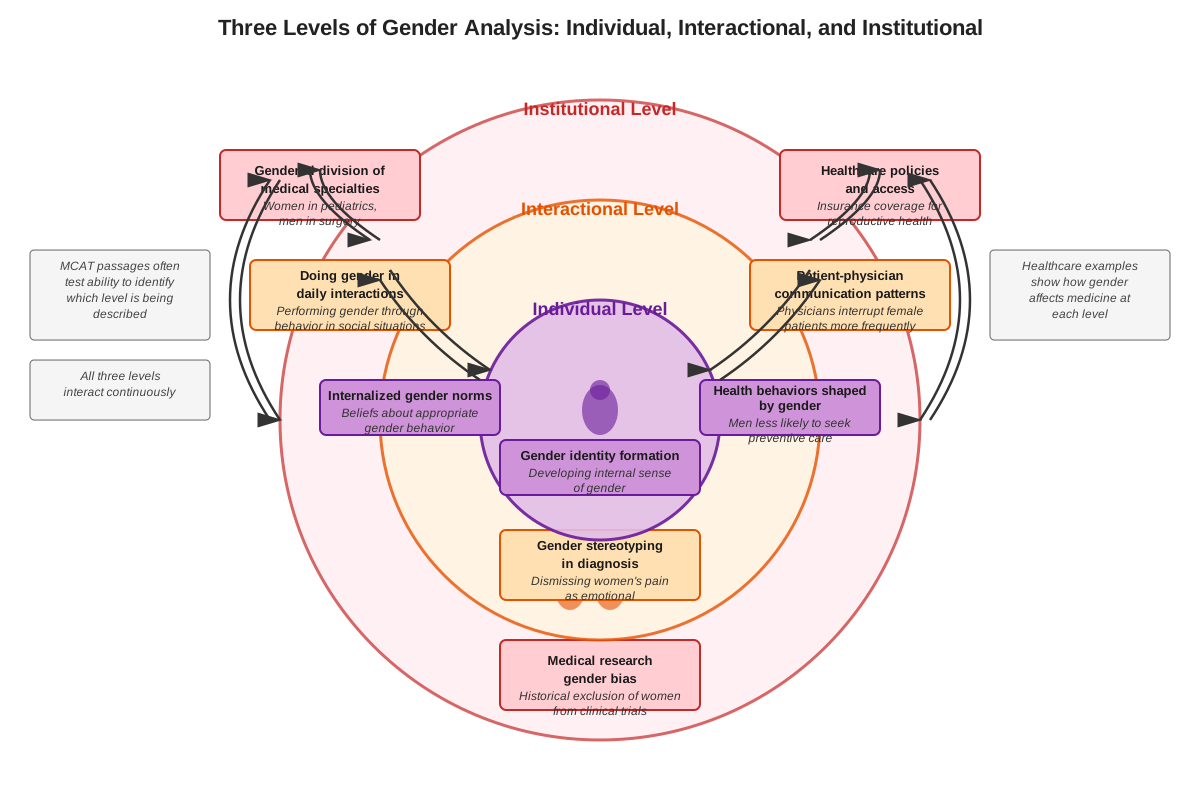
- [ ] Analyze how gender operates at individual, interactional, and institutional levels
- [ ] Evaluate the intersection of gender with other systems of stratification
- [ ] Explain how gender socialization shapes behavior and expectations across the lifespan
Prerequisites
- Basic understanding of socialization: Gender is learned through socialization processes, making this foundational concept essential for understanding how gender norms are transmitted and internalized.
- Familiarity with social institutions: Gender operates through institutions like family, education, healthcare, and media, requiring knowledge of how institutions function in society.
- Awareness of social inequality concepts: Gender is a form of social stratification, necessitating understanding of how societies create and maintain hierarchies.
- Knowledge of nature versus nurture debates: Distinguishing biological sex from socially constructed gender requires understanding the interaction between biological and social factors.
Why This Topic Matters
Gender represents one of the most frequently tested topics within the MCAT Sociology section, appearing in approximately 15-20% of social science passages. The AAMC explicitly includes gender within the "Social Inequality" content category, recognizing its fundamental importance to understanding health disparities and healthcare delivery. Questions addressing gender typically appear in discrete format, passage-based analysis, or integrated with psychological concepts about identity formation and self-concept.
In clinical contexts, gender profoundly influences health outcomes, disease presentation, treatment adherence, and patient-provider communication. Gender norms affect which symptoms patients report, how seriously healthcare providers take those symptoms, and what treatments are offered or accepted. For example, cardiovascular disease presents differently in women than men, yet historical research focused predominantly on male subjects, leading to delayed diagnosis and treatment in female patients. Understanding gender as a social construct helps future physicians recognize how cultural expectations shape health behaviors, identify when gender bias affects clinical decision-making, and provide more equitable, patient-centered care.
On the MCAT, gender commonly appears in passages describing: healthcare disparities between men and women; the impact of gender stereotypes on mental health diagnosis; how gender socialization affects risk-taking behaviors or help-seeking; the medicalization of pregnancy and childbirth; transgender health experiences and barriers to care; and the intersection of gender with race, class, or sexuality in creating health inequities. Questions may ask students to identify examples of gender discrimination, explain how gender norms are maintained through social institutions, or analyze data showing gender-based differences in health outcomes.
Core Concepts
Defining Gender in Sociology
Gender refers to the socially constructed roles, behaviors, expressions, and identities that a given society considers appropriate for individuals based on their assigned sex. Unlike biological sex (chromosomal, hormonal, and anatomical characteristics), gender is learned, performed, and reinforced through social interaction. Sociologists emphasize that gender is not an inherent property of individuals but rather a social system that organizes relationships, distributes resources, and structures opportunities and constraints.
The sociological understanding of gender encompasses several key dimensions:
- Gender as a social structure: Gender operates at macro-level through laws, policies, and institutional practices that systematically advantage some groups while disadvantaging others
- Gender as an interactional accomplishment: Individuals "do gender" through everyday behaviors, presentations, and interactions that signal gender identity to others
- Gender as an identity: Individuals develop a sense of themselves as gendered beings through socialization and internalization of cultural norms
- Gender as ideology: Belief systems about gender differences and appropriate gender roles shape perceptions and justify inequalities
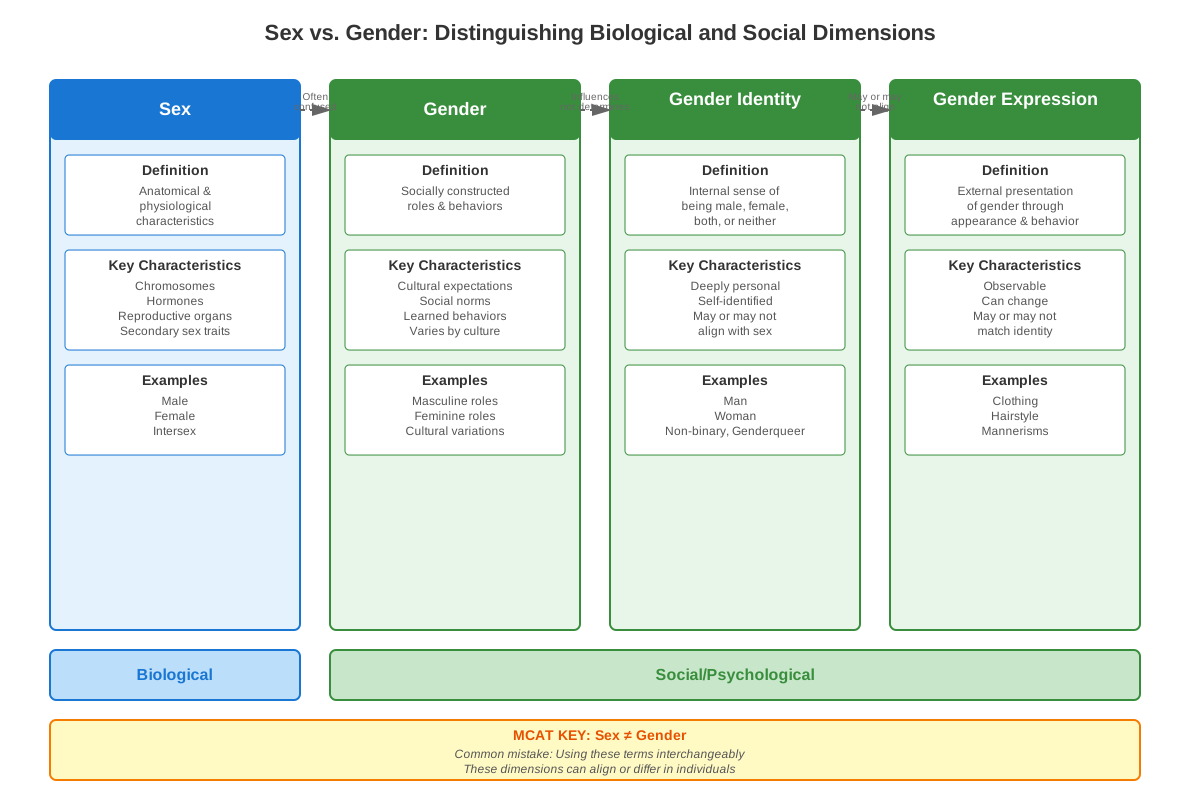
Sex Versus Gender Distinction
A critical concept for the MCAT involves distinguishing between sex and gender. This distinction appears frequently in exam questions and represents a fundamental principle in contemporary sociology:
| Dimension | Sex | Gender |
|---|---|---|
| Definition | Biological and physiological characteristics including chromosomes, hormones, reproductive organs | Socially constructed roles, behaviors, and identities |
| Nature | Typically assigned at birth based on anatomy | Learned through socialization; varies across cultures and time |
| Categories | Traditionally binary (male/female), though intersex conditions exist | Spectrum including masculine, feminine, androgynous, non-binary |
| Changeability | Relatively fixed (though medical interventions can modify) | Fluid; can change across lifespan and contexts |
| Discipline | Biology, medicine | Sociology, anthropology, gender studies |
The MCAT frequently tests whether students can identify when a passage or question stem is discussing biological sex differences (hormonal, anatomical, genetic) versus socially constructed gender differences (behavioral expectations, role assignments, cultural norms). Confusing these concepts represents one of the most common errors students make.
Gender Identity and Gender Expression
Gender identity refers to an individual's internal, deeply felt sense of being male, female, both, neither, or another gender. This psychological sense of self may or may not align with sex assigned at birth. Gender expression describes the external manifestation of gender through clothing, behavior, voice, body characteristics, and other outward presentations. These concepts are distinct but related:
- Cisgender: Gender identity aligns with sex assigned at birth
- Transgender: Gender identity differs from sex assigned at birth
- Non-binary: Gender identity exists outside the male/female binary
- Gender fluid: Gender identity shifts over time or across contexts
- Agender: Absence of gender identity or identification outside gender categories
The MCAT may present passages about transgender health experiences, barriers to healthcare access, or the psychological impact of gender identity development. Understanding these concepts enables students to analyze such passages without imposing stereotypes or outdated assumptions.
Gender Socialization
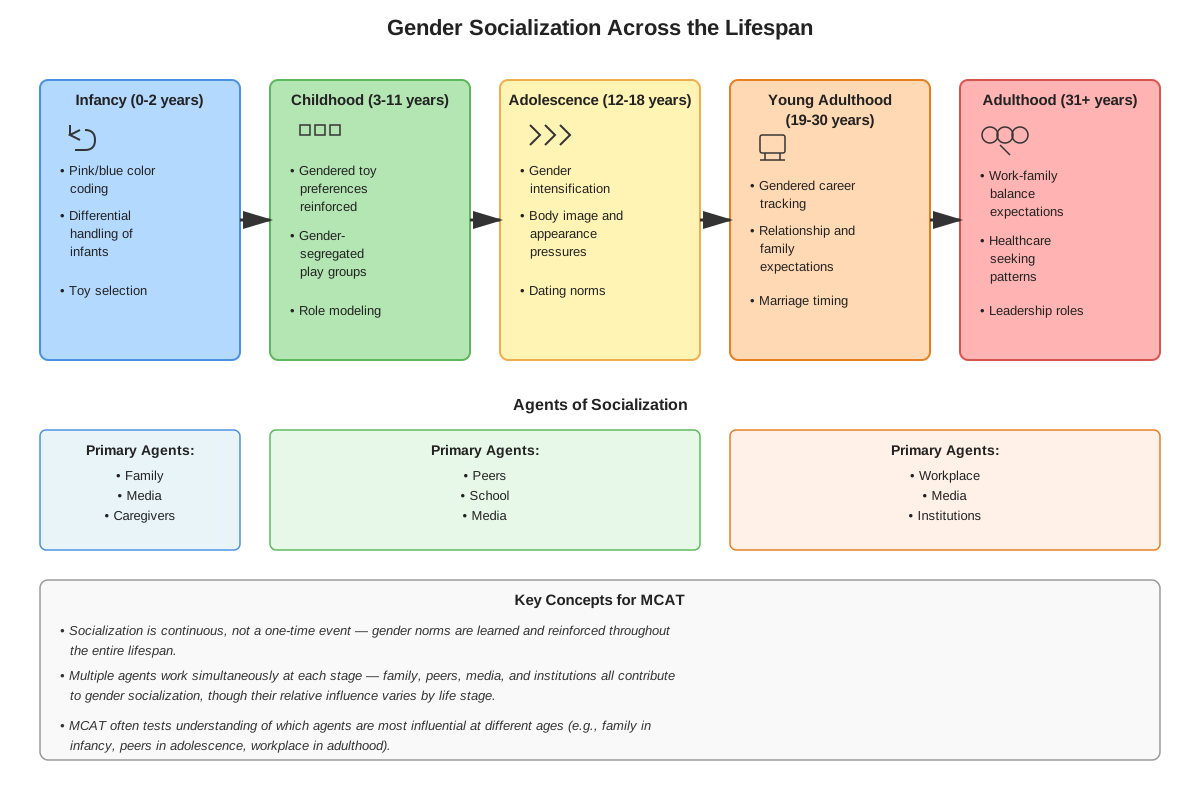
Gender socialization describes the lifelong process through which individuals learn gender norms, roles, and expectations from their culture. This process begins in infancy and continues throughout the lifespan, operating through multiple agents of socialization:
Primary socialization agents:
- Family: Parents and caregivers model gender behaviors, provide gender-typed toys, and respond differently to children based on perceived gender
- Peers: Children enforce gender norms through play, exclusion, and social rewards/punishments
- Schools: Teachers, curricula, and institutional practices reinforce gender expectations
- Media: Television, films, advertising, and social media present gender stereotypes and ideals
Secondary socialization contexts:
- Workplace: Occupational segregation and organizational cultures maintain gender divisions
- Religious institutions: Many religions prescribe specific gender roles and behaviors
- Healthcare system: Medical professionals may reinforce or challenge gender norms
- Legal system: Laws and policies codify gender categories and regulate gender expression
Gender socialization produces observable differences in behavior, preferences, and self-concept between individuals socialized as boys versus girls. However, sociologists emphasize that these differences result from social learning rather than biological determinism, as evidenced by substantial cross-cultural variation in gender norms and historical changes in gender expectations.
Gender Stratification and Inequality
Gender stratification refers to the unequal distribution of resources, power, and opportunities based on gender. In most societies, gender operates as a system of inequality that systematically advantages men and disadvantages women, though the specific mechanisms and degree of inequality vary across cultures and historical periods.
Key dimensions of gender inequality include:
- Economic inequality: Wage gaps, occupational segregation, glass ceiling effects, and unequal distribution of household labor
- Political inequality: Underrepresentation in government, differential access to political power and decision-making
- Educational inequality: Historical exclusion from education, gender tracking into different fields of study
- Healthcare inequality: Differential access to care, gender bias in diagnosis and treatment, medicalization of women's bodies
- Violence and safety: Disproportionate rates of sexual assault, domestic violence, and harassment
Patriarchy describes social systems organized around male dominance and female subordination. Feminist sociologists analyze how patriarchal structures operate through institutions, ideologies, and everyday interactions to maintain gender inequality. The MCAT may present passages examining how patriarchal norms affect health behaviors, treatment seeking, or medical authority.
Intersectionality and Gender
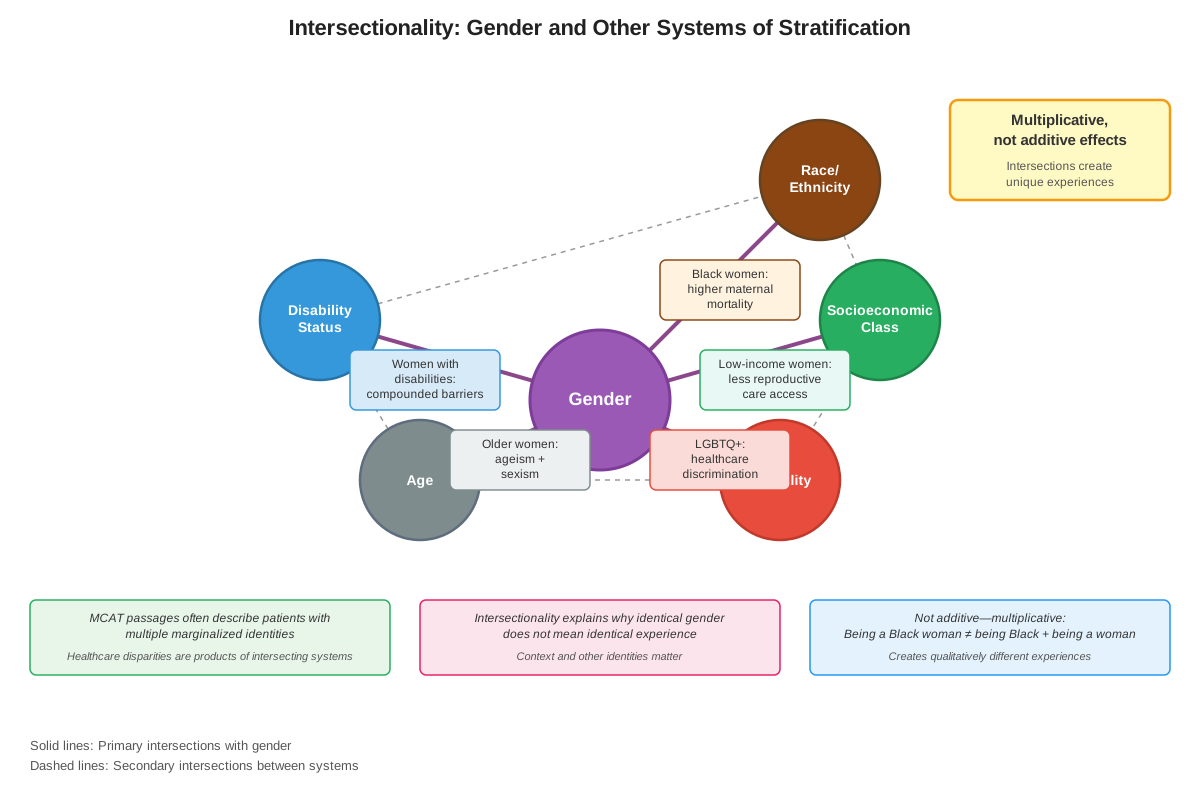
Intersectionality theory, developed by legal scholar Kimberlé Crenshaw, recognizes that gender does not operate in isolation but intersects with other social categories including race, class, sexuality, disability, and age to create unique experiences of privilege and oppression. An intersectional approach to gender acknowledges that:
- Women do not constitute a homogeneous group; experiences of gender vary by race, class, and other identities
- Gender inequality cannot be fully understood without examining how it compounds with other forms of inequality
- Individuals hold multiple, simultaneous identities that interact to shape their social position
- Healthcare disparities often result from intersecting systems of oppression rather than single factors
For MCAT purposes, intersectionality frequently appears in passages describing health disparities affecting specific populations (e.g., Black women's maternal mortality rates, transgender people of color's healthcare access barriers). Questions may ask students to identify how multiple forms of discrimination combine to produce particular health outcomes.
Gender and Healthcare
Gender profoundly shapes healthcare experiences, outcomes, and disparities in multiple ways:
Gender bias in medical research: Historical exclusion of women from clinical trials led to medications and treatments optimized for male physiology, potentially causing adverse effects or reduced efficacy in women.
Gender bias in diagnosis: Certain conditions are underdiagnosed in one gender due to stereotypes (e.g., ADHD in girls, eating disorders in boys, cardiovascular disease in women).
Medicalization of women's bodies: Normal female biological processes (menstruation, pregnancy, menopause) have been increasingly defined as medical conditions requiring intervention.
Gender and symptom presentation: Socialization affects which symptoms patients report and how they describe distress, potentially leading to misdiagnosis.
Provider-patient communication: Gender dynamics between patients and providers affect communication quality, shared decision-making, and treatment adherence.
Healthcare access barriers: Gender-specific barriers include lack of reproductive healthcare, discrimination against transgender patients, and economic barriers related to the gender wage gap.
Concept Relationships
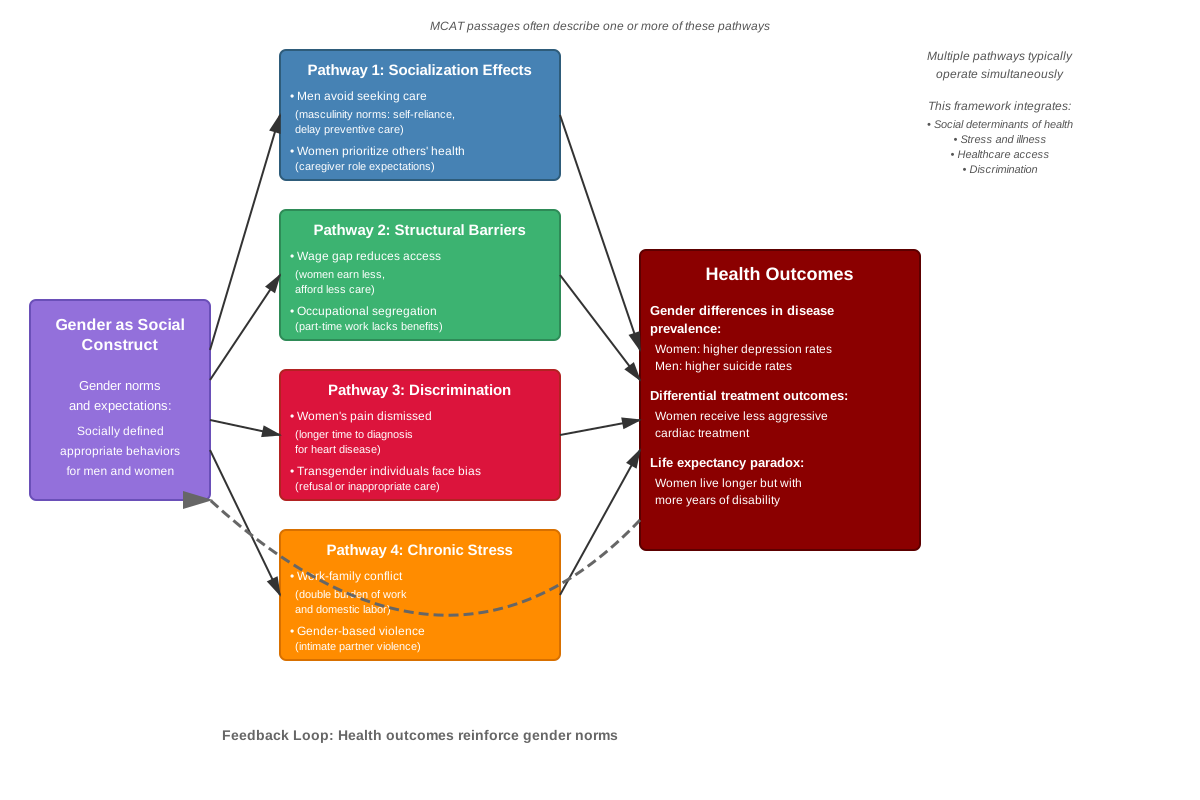
Gender concepts form an interconnected system that operates across multiple levels of social organization. At the foundation, the sex versus gender distinction establishes that biological characteristics differ from socially constructed roles and expectations. This distinction enables understanding of gender identity (internal sense of gender) and gender expression (external presentation), which may or may not align with assigned sex or societal expectations.
Gender socialization represents the mechanism through which gender norms are transmitted and internalized, connecting individual-level gender identity to cultural-level gender ideologies. Socialization processes → produce gendered behaviors and preferences → which reinforce gender stereotypes → which justify gender stratification → which maintains institutional gender inequality.
Gender stratification connects to broader concepts of social stratification and inequality, positioning gender as one axis of social hierarchy alongside race, class, and other dimensions. The concept of intersectionality bridges gender to these other stratification systems, recognizing that gender inequality operates differently depending on one's position within multiple hierarchies.
Within healthcare contexts, gender connects to: health disparities (gender-based differences in disease prevalence and outcomes), social determinants of health (how gender affects access to resources that promote health), medicalization (defining gender-related experiences as medical conditions), and patient-provider relationships (how gender dynamics affect clinical interactions).
Understanding these relationships enables students to analyze complex MCAT passages that integrate multiple sociological concepts, trace causal pathways from gender norms to health outcomes, and recognize how interventions at different levels (individual, interactional, institutional) might address gender-based health inequities.
Quick check — test yourself on Gender so far.
Try Flashcards →High-Yield Facts
⭐ Gender is socially constructed, meaning it consists of learned roles, behaviors, and expectations that vary across cultures and historical periods, unlike biological sex which refers to anatomical and physiological characteristics.
⭐ Gender socialization begins in infancy and continues throughout the lifespan through family, peers, schools, media, and other social institutions that teach and reinforce gender norms.
⭐ Gender identity (internal sense of being male, female, both, neither, or another gender) is distinct from gender expression (external presentation of gender through appearance and behavior).
⭐ Gender stratification refers to the systematic inequality in resources, power, and opportunities based on gender, with most societies historically privileging men over women.
⭐ Intersectionality recognizes that gender intersects with race, class, sexuality, and other identities to create unique experiences of privilege and oppression that cannot be understood by examining gender alone.
- Cisgender individuals have gender identity that aligns with sex assigned at birth, while transgender individuals have gender identity that differs from assigned sex.
- Patriarchy describes social systems organized around male dominance and female subordination, operating through institutions, ideologies, and everyday practices.
- Gender affects healthcare through multiple mechanisms including research bias, diagnostic bias, medicalization, symptom presentation differences, and provider-patient communication dynamics.
- The gender wage gap persists across most occupations and countries, with women earning approximately 80-85% of what men earn for comparable work in the United States.
- Occupational segregation refers to the concentration of men and women in different jobs, with female-dominated occupations typically paying less than male-dominated occupations requiring similar skill levels.
- Gender norms affect health behaviors including risk-taking, help-seeking, preventive care utilization, and adherence to medical recommendations.
- The glass ceiling describes invisible barriers that prevent women from advancing to top leadership positions despite qualifications and experience.
Common Misconceptions
Misconception: Gender and sex are synonyms referring to the same biological reality.
Correction: Sex refers to biological and physiological characteristics (chromosomes, hormones, anatomy), while gender refers to socially constructed roles, behaviors, and identities. The MCAT consistently distinguishes these concepts, and confusing them leads to incorrect answer selections.
Misconception: Gender differences in behavior result primarily from biological differences between males and females.
Correction: While biological factors may contribute to some differences, sociologists emphasize that most gender differences in behavior, preferences, and abilities result from socialization and cultural expectations. Cross-cultural variation in gender norms demonstrates the social construction of gender.
Misconception: Gender identity is a choice that individuals make.
Correction: Gender identity is a deeply felt, internal sense of gender that typically develops early in childhood and is not chosen. Individuals may choose how to express their gender, but the underlying identity itself is not voluntary.
Misconception: Intersectionality means simply adding together different forms of discrimination (e.g., racism + sexism = double discrimination).
Correction: Intersectionality recognizes that multiple identities interact to create unique experiences that cannot be understood by simply adding separate forms of discrimination. For example, Black women face specific forms of discrimination that differ qualitatively from those faced by Black men or white women.
Misconception: Gender inequality primarily affects women, so men do not experience negative consequences from gender norms.
Correction: While gender stratification systematically advantages men as a group, restrictive gender norms also harm men by limiting emotional expression, discouraging help-seeking, promoting risky behaviors, and constraining occupational and personal choices. Gender inequality affects everyone, though in different ways.
Misconception: Transgender individuals are confused about their gender or going through a phase.
Correction: Transgender identity represents a stable, deeply felt sense of gender that differs from assigned sex. Research demonstrates that transgender identities persist over time and that affirming transgender identities improves mental health outcomes.
Misconception: Achieving gender equality means making men and women identical in all behaviors and outcomes.
Correction: Gender equality refers to equal access to opportunities, resources, and power, not necessarily identical outcomes. Equality means removing systematic barriers and discrimination, allowing individuals to make choices free from gender-based constraints.
Worked Examples
Example 1: Gender Socialization and Health Behaviors
Passage Summary: A study examines why men are less likely than women to seek preventive healthcare services. Researchers find that men visit primary care physicians less frequently, are less likely to have regular check-ups, and delay seeking care for symptoms. Interviews reveal that many men associate healthcare-seeking with weakness and view stoicism in the face of illness as masculine.
Question: Which concept best explains the observed gender difference in healthcare-seeking behavior?
A) Biological sex differences in disease susceptibility
B) Gender socialization promoting different health behaviors
C) Genetic factors affecting risk perception
D) Hormonal influences on decision-making
Analysis:
Step 1: Identify what the passage describes. The passage focuses on learned behaviors and attitudes (associating healthcare-seeking with weakness, viewing stoicism as masculine) rather than biological factors.
Step 2: Recognize the key sociological concept. The passage describes how cultural expectations about masculinity shape behavior—this is gender socialization in action.
Step 3: Evaluate each answer:
- A is incorrect because the passage discusses behavior patterns, not disease susceptibility, and attributes differences to cultural attitudes rather than biology
- B is correct because gender socialization teaches individuals gender-appropriate behaviors, and the passage explicitly describes how masculine norms discourage help-seeking
- C is incorrect because the passage provides no evidence of genetic factors and instead emphasizes learned cultural attitudes
- D is incorrect because hormones are biological factors, while the passage emphasizes social and cultural explanations
Answer: B
Connection to Learning Objectives: This example demonstrates how gender socialization (a core concept) shapes health behaviors and creates gender disparities in healthcare utilization. It requires distinguishing between biological sex and socially constructed gender, a critical skill for MCAT success.
Example 2: Intersectionality in Healthcare Disparities
Passage Summary: Research on maternal mortality reveals that Black women in the United States die from pregnancy-related complications at 3-4 times the rate of white women. This disparity persists across education and income levels—even college-educated Black women face higher maternal mortality than white women without high school diplomas. Qualitative research indicates that Black women's reports of symptoms are often dismissed or minimized by healthcare providers, leading to delayed diagnosis and treatment of serious complications.
Question: Which theoretical framework best explains why maternal mortality disparities persist even among high-income, well-educated Black women?
A) Social capital theory
B) Intersectionality theory
C) Structural functionalism
D) Rational choice theory
Analysis:
Step 1: Identify the key features of the scenario. The passage describes disparities based on both race and gender that cannot be explained by class or education alone. It emphasizes how multiple identities (Black + woman) create unique experiences of discrimination in healthcare.
Step 2: Recall the definition of intersectionality. Intersectionality examines how multiple social identities (race, gender, class) intersect to create unique experiences of privilege or oppression that differ from the experiences of each identity considered separately.
Step 3: Evaluate each answer:
- A is incorrect because social capital theory focuses on networks and relationships, not the intersection of multiple forms of discrimination
- B is correct because intersectionality specifically addresses how race and gender combine to create unique experiences of discrimination that persist regardless of class or education
- C is incorrect because structural functionalism examines how social structures maintain stability, not how multiple identities create unique experiences of inequality
- D is incorrect because rational choice theory focuses on individual decision-making based on costs and benefits, not structural discrimination
Answer: B
Connection to Learning Objectives: This example demonstrates the application of intersectionality to understand healthcare disparities, connecting gender to race and showing how multiple systems of stratification interact. It requires recognizing that gender inequality operates differently depending on other social identities.
Exam Strategy
When approaching MCAT questions about gender, employ these strategic approaches:
Trigger Words and Phrases:
- "Socially constructed" or "learned behaviors" → signals gender rather than biological sex
- "Roles," "expectations," "norms" → indicates gender as social system
- "Assigned at birth" versus "identifies as" → distinguishes sex from gender identity
- "Intersects with," "compounds," "multiple identities" → suggests intersectionality framework
- "Systematic," "structural," "institutional" → points to gender stratification rather than individual differences
Question Analysis Process:
- Determine whether the question addresses sex or gender: Look for biological language (hormones, anatomy, genetics) versus social language (roles, expectations, socialization). Many incorrect answers confuse these concepts.
- Identify the level of analysis: Is the question asking about individual identity, interpersonal interaction, or institutional structures? Gender operates at all three levels, and the correct answer must match the level specified in the question.
- Watch for intersectionality: If the passage mentions multiple social identities (race, class, gender, sexuality), consider whether the question requires an intersectional analysis rather than examining gender in isolation.
- Distinguish correlation from causation: Passages may present gender differences in health outcomes. Determine whether the question asks about the observed difference (correlation) or the mechanism producing the difference (causation through socialization, discrimination, or structural barriers).
Process of Elimination Tips:
- Eliminate answers that treat gender as purely biological or innate
- Eliminate answers that ignore cultural variation or historical change in gender norms
- Eliminate answers that assume gender differences are natural or inevitable
- Eliminate answers that examine only one dimension of identity when the passage describes multiple intersecting identities
- Eliminate answers that focus on individual choice when the passage describes structural constraints
Time Allocation:
Gender questions typically require 60-90 seconds. Spend 20-30 seconds carefully reading the question stem to identify whether it addresses sex versus gender, individual versus structural levels, or single versus intersecting identities. Spend 30-40 seconds evaluating answer choices, and reserve 10-20 seconds to verify that your selected answer matches the question's level of analysis and theoretical framework.
Memory Techniques
Mnemonic for Gender Socialization Agents: "FPSM-RHL" (Family, Peers, Schools, Media, Religion, Healthcare, Legal)
- Visualize a family tree (Family) with children playing (Peers) in a schoolyard (Schools) while watching TV (Media) near a church (Religion), hospital (Healthcare), and courthouse (Legal)
Mnemonic for Distinguishing Sex and Gender: "Sex is BODY, Gender is BRAIN and BEHAVIOR"
- Biological characteristics
- Organs and anatomy
- Determined at birth
- You can see it physically
versus
- Behaviors learned socially
- Roles assigned by culture
- Attitudes and expectations
- Identity internally felt
- Norms that vary across societies
Visualization for Intersectionality: Picture a street intersection where multiple roads (representing race, gender, class, sexuality) cross. A person standing at the intersection experiences traffic from all directions simultaneously—they cannot separate the effects of each road. This visual reinforces that intersecting identities create unique experiences.
Acronym for Gender Inequality Dimensions: "EPHV" (Economic, Political, Healthcare, Violence)
- Earnings and employment disparities
- Power and political representation
- Healthcare access and treatment
- Violence and safety concerns
Memory Hook for Cisgender vs. Transgender: "Cis" comes from Latin meaning "on the same side" (like "cisalpine" = on this side of the Alps), while "trans" means "across" or "beyond" (like "transatlantic" = across the Atlantic). Cisgender = gender identity on the same side as assigned sex; transgender = gender identity across from assigned sex.
Summary
Gender represents a fundamental concept in sociology that distinguishes socially constructed roles, behaviors, and identities from biological sex characteristics. For MCAT success, students must recognize gender as a multidimensional system operating at individual (identity), interactional (doing gender), and institutional (structural inequality) levels. Gender socialization through family, peers, schools, media, and other institutions teaches and reinforces gender norms throughout the lifespan, producing observable differences in behavior and preferences that vary across cultures and historical periods. Gender stratification creates systematic inequality in resources, power, and opportunities, with most societies historically privileging men over women through patriarchal structures. Intersectionality theory recognizes that gender does not operate in isolation but intersects with race, class, sexuality, and other identities to create unique experiences of privilege and oppression. In healthcare contexts, gender affects research design, diagnostic practices, symptom presentation, provider-patient communication, and health outcomes, making it essential for understanding health disparities and providing equitable care. MCAT questions test whether students can distinguish sex from gender, identify gender socialization mechanisms, analyze gender stratification, apply intersectionality frameworks, and recognize how gender shapes healthcare experiences.
Key Takeaways
- Gender is socially constructed (learned roles and behaviors) while sex is biological (anatomical and physiological characteristics)—confusing these concepts is the most common error on MCAT gender questions
- Gender socialization operates through multiple agents (family, peers, schools, media) throughout the lifespan to teach and reinforce culturally specific gender norms and expectations
- Gender identity (internal sense of gender) differs from gender expression (external presentation) and may or may not align with sex assigned at birth
- Gender stratification creates systematic inequality in economic, political, healthcare, and safety domains, with patriarchal structures historically privileging men over women
- Intersectionality recognizes that gender intersects with race, class, sexuality, and other identities to create unique experiences that cannot be understood by examining gender alone
- Gender profoundly affects healthcare through research bias, diagnostic bias, medicalization, symptom presentation differences, and provider-patient communication dynamics
- MCAT questions require identifying the level of analysis (individual, interactional, or institutional) and distinguishing between biological explanations and social constructionist explanations for gender differences
Related Topics
Sex and Sexuality: While this guide focuses on gender, understanding sexuality (sexual orientation and sexual behavior) as distinct from both sex and gender enables analysis of how multiple dimensions of identity intersect. Mastering gender provides foundation for understanding heteronormativity and LGBTQ+ health disparities.
Social Institutions: Gender operates through and is reinforced by social institutions including family, education, economy, healthcare, religion, and government. Understanding institutional analysis enables recognition of how gender inequality is maintained structurally rather than merely through individual attitudes.
Socialization and Identity Formation: Gender represents one dimension of identity formation through socialization processes. Mastering gender socialization provides a model for understanding how other aspects of identity (racial, ethnic, class) develop through social learning.
Feminist Theory and Social Movements: Feminist sociological theory provides frameworks for analyzing gender inequality and patriarchy. Understanding social movements enables analysis of how gender norms change over time and how collective action challenges gender stratification.
Health Disparities and Social Determinants of Health: Gender represents one social determinant of health that affects disease prevalence, healthcare access, and health outcomes. Mastering gender enables more sophisticated analysis of how social factors produce health inequalities.
Practice CTA
Now that you have thoroughly reviewed the core concepts, relationships, and exam strategies for gender in sociology, reinforce your learning by attempting practice questions and flashcards on this topic. Focus particularly on distinguishing sex from gender, identifying gender socialization mechanisms, and applying intersectionality frameworks to healthcare scenarios. Challenge yourself with passages that integrate gender with other sociological concepts like social stratification, institutions, and health disparities. The more you practice applying these concepts to MCAT-style questions, the more automatic your recognition of gender-related triggers and frameworks will become. Remember that mastering gender provides essential foundation for understanding numerous other topics in the MCAT Sociology section—your investment in this topic will pay dividends throughout your preparation!
Sign up free to keep reading
Create a free AnvayaPrep account to finish this MCAT guide on Gender — plus flashcards and practice questions.