Overview
Social mobility refers to the movement of individuals, families, or groups within or between social strata in a society. This fundamental concept in Sociology describes how people transition from one social class to another, whether upward, downward, or horizontally across the social hierarchy. Understanding social mobility is crucial for comprehending how societies function, how opportunities are distributed, and how social stratification and inequality persist or change over time.
For the MCAT, social mobility represents a high-yield topic that frequently appears in Psychological, Social, and Biological Foundations of Behavior passages. The exam tests not only definitional knowledge but also the ability to analyze complex social scenarios, interpret data about class transitions, and understand the structural factors that facilitate or impede movement between social classes. Questions may present research studies examining educational attainment across generations, economic data showing income changes, or scenarios involving individuals navigating class boundaries.
Social mobility connects intimately with broader themes in social stratification and inequality, including social class, socioeconomic status, poverty, meritocracy, and structural inequality. It serves as a lens through which to examine whether societies truly offer equal opportunities or whether structural barriers perpetuate inequality across generations. The concept also intersects with cultural capital, social capital, and the role of institutions like education in either promoting or limiting social advancement. Mastering this topic enables students to analyze complex sociological passages and apply theoretical frameworks to real-world scenarios commonly featured on the MCAT.
Learning Objectives
- [ ] Define social mobility using accurate Sociology terminology
- [ ] Explain why social mobility matters for the MCAT
- [ ] Apply social mobility to exam-style questions
- [ ] Identify common mistakes related to social mobility
- [ ] Connect social mobility to related Sociology concepts
- [ ] Distinguish between different types of social mobility (intergenerational, intragenerational, vertical, horizontal)
- [ ] Analyze factors that promote or inhibit social mobility in various societies
- [ ] Evaluate the relationship between social mobility and meritocracy
- [ ] Interpret data representations of social mobility patterns in research passages
Prerequisites
- Social stratification: Understanding how societies organize into hierarchical layers is essential because social mobility describes movement within these stratification systems
- Social class and socioeconomic status (SES): Knowledge of class categories and SES components (income, education, occupation) provides the framework for understanding what changes when mobility occurs
- Cultural and social capital: Familiarity with these concepts helps explain mechanisms through which mobility happens or is blocked
- Sociological perspectives: Basic understanding of functionalist, conflict, and symbolic interactionist theories provides interpretive frameworks for analyzing mobility patterns
Why This Topic Matters
Social mobility has profound real-world significance because it reflects the degree to which societies provide equal opportunities for advancement. Countries with high social mobility demonstrate that individual effort and merit can overcome birth circumstances, while low mobility societies reveal structural barriers that perpetuate inequality across generations. This concept helps explain patterns of poverty, educational achievement gaps, health disparities, and economic inequality—all topics relevant to medical professionals who will serve diverse patient populations.
On the MCAT, social mobility appears with high frequency in the Psychological, Social, and Biological Foundations of Behavior section. Approximately 15-20% of sociology questions involve stratification and mobility concepts. Questions typically appear in two formats: (1) passage-based questions requiring interpretation of research studies examining mobility patterns, often with data tables or graphs showing intergenerational changes in income or education, and (2) discrete questions testing definitional knowledge and the ability to distinguish between mobility types.
Common exam scenarios include passages describing educational interventions and their effects on social class transitions, studies comparing mobility rates across different societies or time periods, research on factors predicting upward or downward mobility, and analyses of how social institutions either facilitate or impede class movement. The MCAT particularly favors questions that require students to identify structural versus individual factors affecting mobility, distinguish between different mobility types, and recognize how mobility relates to concepts like meritocracy, social reproduction, and inequality.
Core Concepts
Definition and Types of Social Mobility
Social mobility is the movement of individuals or groups within the hierarchical system of social stratification. This movement can occur in multiple directions and timeframes, making it essential to understand the various classifications.
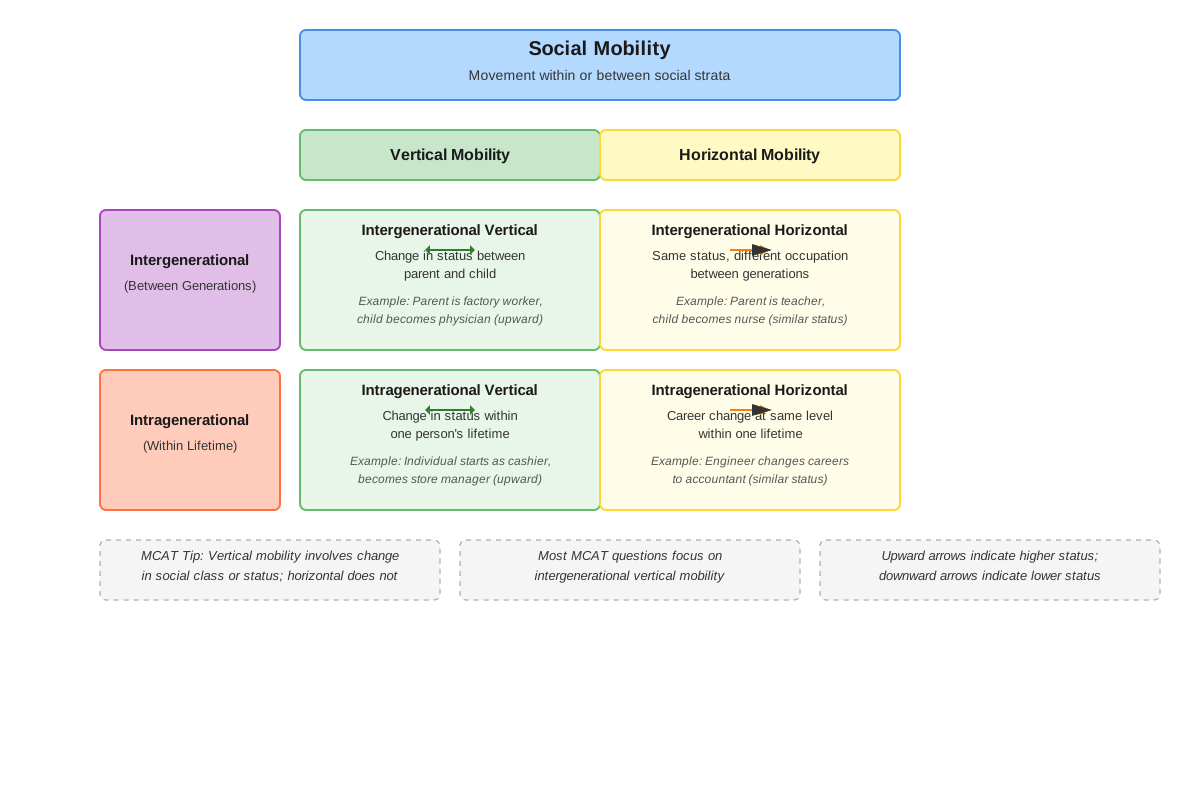
Vertical mobility refers to movement up or down the social hierarchy, involving changes in social class, income, occupation, or status. Upward mobility occurs when individuals move to a higher social position (e.g., a child of factory workers becoming a physician), while downward mobility involves movement to a lower position (e.g., a middle-class professional becoming unemployed and experiencing poverty). Horizontal mobility describes movement within the same social level, such as changing occupations without changing social class (e.g., a teacher becoming a social worker, both middle-class professions).
Intergenerational mobility measures changes in social status between different generations within a family, typically comparing parents' and children's socioeconomic positions. This type reveals whether children achieve higher, lower, or similar status compared to their parents. Intragenerational mobility (also called career mobility) refers to changes in social status within a person's own lifetime, such as starting in an entry-level position and advancing to management.
Structural vs. Individual Mobility
Structural mobility results from changes in the economy or society that affect large numbers of people simultaneously. For example, industrialization created numerous factory jobs, enabling many agricultural workers to move into higher-paying industrial positions. Similarly, the expansion of higher education in the mid-20th century created pathways for upward mobility for many families. Structural mobility occurs regardless of individual effort—the social structure itself changes, creating new opportunities or eliminating old ones.
Individual mobility (or exchange mobility) occurs when specific individuals move up or down the social hierarchy through personal characteristics, efforts, or circumstances. This type involves someone gaining a position that another person loses, essentially exchanging places in the social structure. Individual mobility is often emphasized in meritocratic narratives about hard work and talent determining success.
Factors Affecting Social Mobility
Multiple interconnected factors influence mobility patterns:
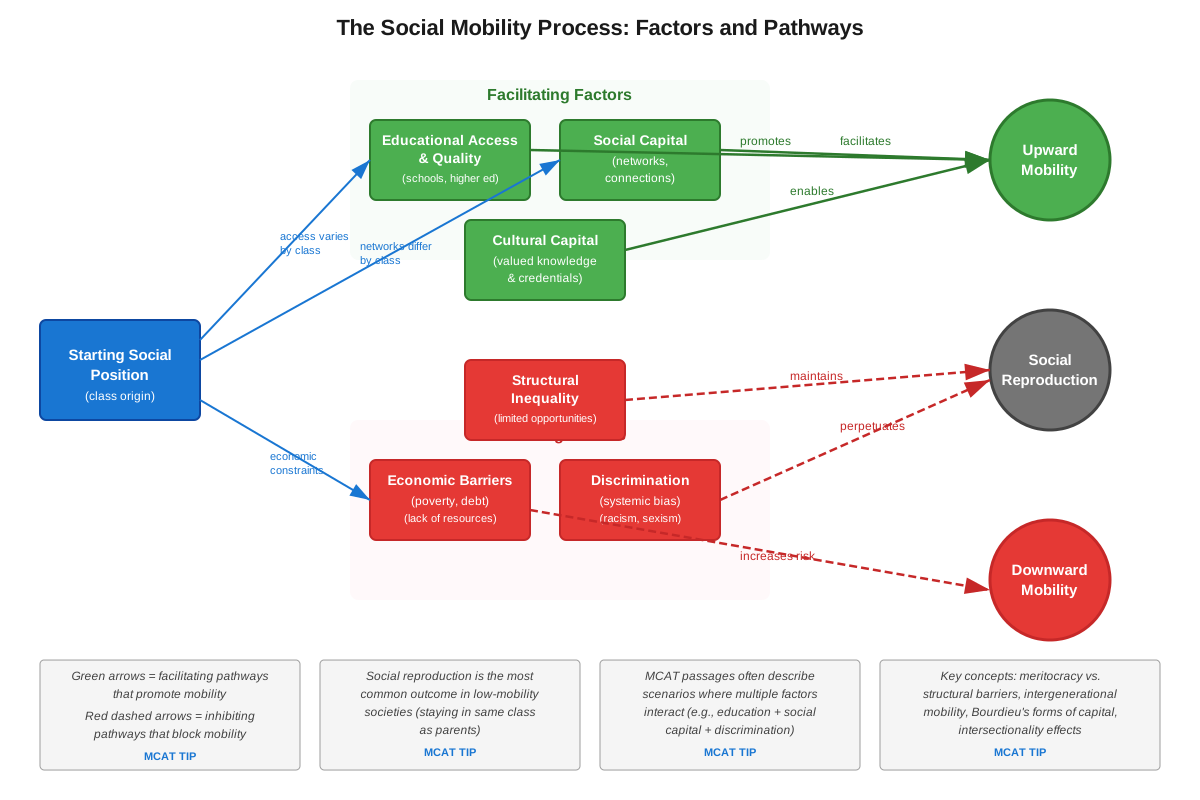
Educational attainment serves as the primary mechanism for upward mobility in modern societies. Higher education credentials provide access to professional occupations and higher incomes. However, educational opportunities themselves are unequally distributed, with children from higher-SES families having greater access to quality education.
Social capital—networks of relationships and connections—significantly impacts mobility. Individuals with connections to people in higher social positions gain access to information, opportunities, and resources that facilitate advancement. Cultural capital, including knowledge, skills, education, and cultural competencies valued by dominant groups, also enables mobility by helping individuals navigate higher-status environments.
Economic factors including economic growth, labor market conditions, and wage structures affect mobility opportunities. Expanding economies typically offer more upward mobility, while recessions may increase downward mobility. Income inequality levels also correlate with mobility rates—societies with greater inequality often exhibit lower mobility.
Discrimination and structural barriers based on race, ethnicity, gender, or other characteristics systematically limit mobility for certain groups. These barriers operate through various mechanisms including hiring discrimination, unequal educational opportunities, residential segregation, and differential access to capital.
Family background influences mobility through multiple pathways: financial resources for education, social networks, cultural knowledge, expectations and aspirations, and early childhood experiences affecting cognitive and social development.
Measuring Social Mobility
Sociologists use several approaches to measure mobility:
| Measurement Approach | Description | Example |
|---|---|---|
| Absolute mobility | Whether individuals achieve higher status than their parents, regardless of others' movement | 60% of children earn more than their parents earned |
| Relative mobility | An individual's position relative to others in their generation compared to their parents' relative position | A child born in the bottom income quintile reaching the top quintile |
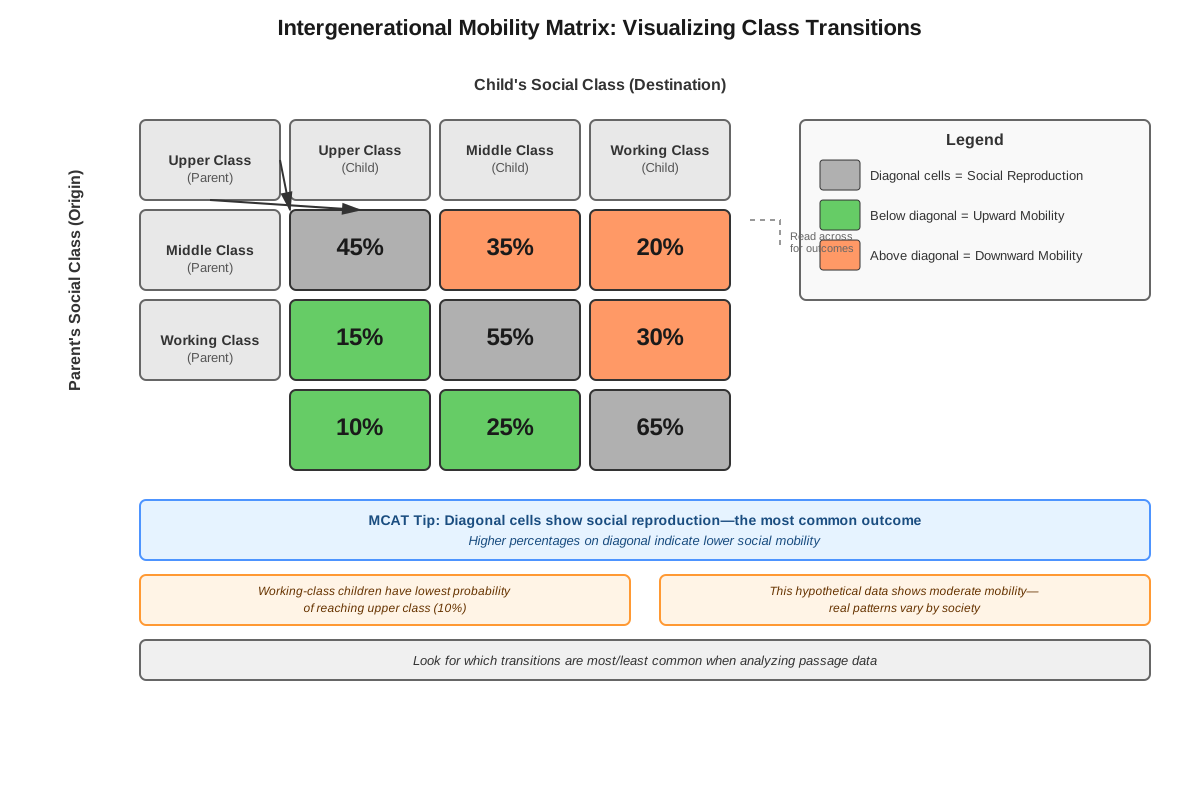
| Mobility tables | Cross-tabulations showing the relationship between parents' and children's social positions | Matrix comparing father's occupation to son's occupation |
| Income elasticity | Statistical measure of how strongly parents' income predicts children's income | Correlation coefficient between parent and child earnings |
Social Mobility and Meritocracy
Meritocracy is a system where social positions are allocated based on individual merit—talent, effort, and achievement—rather than inherited status or wealth. High social mobility is often considered evidence of meritocratic functioning, suggesting that capable individuals can rise regardless of origins.
However, sociologists recognize that true meritocracy rarely exists. Even in societies with relatively high mobility, advantages accumulate across generations through mechanisms like inheritance, educational advantages, social networks, and cultural capital transmission. The meritocracy myth refers to the belief that contemporary societies are purely meritocratic, which can obscure structural inequalities and blame individuals for circumstances beyond their control.
Open vs. Closed Stratification Systems
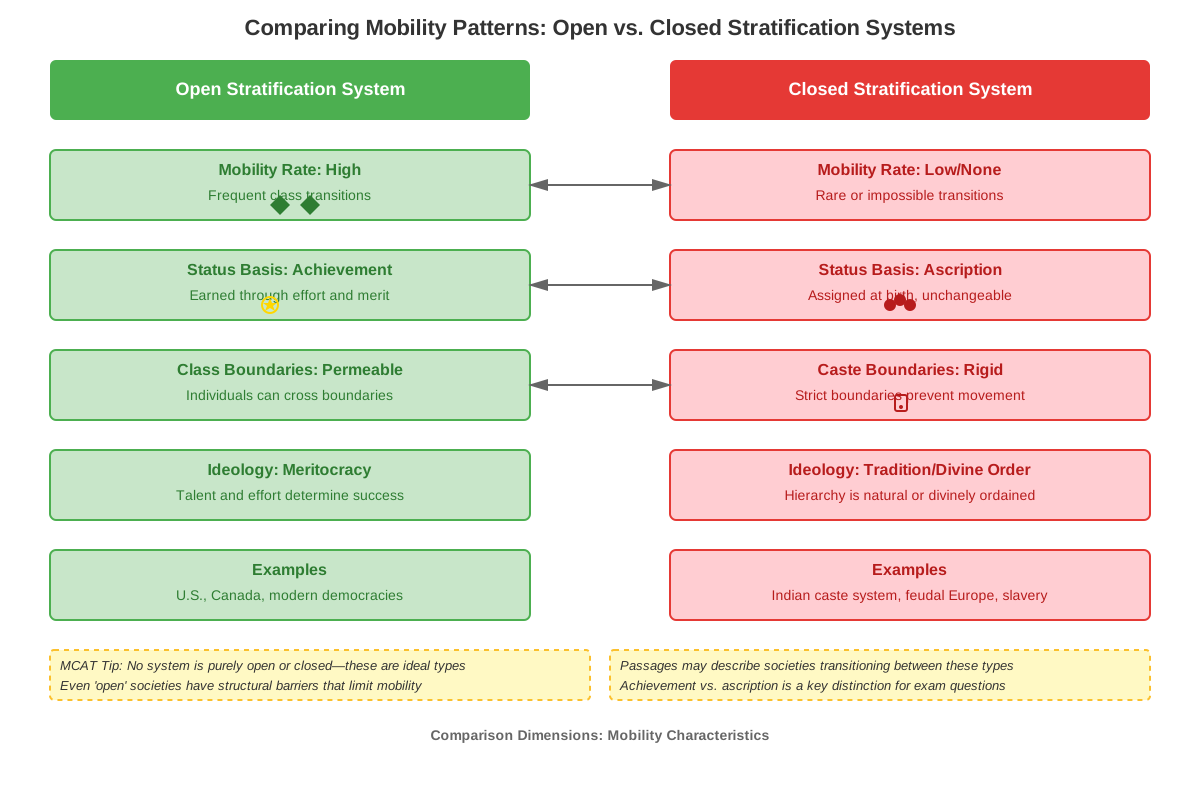
Open stratification systems feature high social mobility, with social positions achieved rather than ascribed. Modern democratic societies typically claim to be open systems where individuals can rise or fall based on merit and effort. Closed stratification systems feature limited mobility, with social positions largely determined by birth. Historical examples include caste systems and feudal societies where legal and social barriers prevented movement between classes.
In reality, all societies fall on a continuum between completely open and completely closed. Even relatively open societies contain structural barriers limiting mobility, while even rigid systems allow some movement.
The Mobility Paradox
An important sociological observation is that societies can simultaneously experience high absolute mobility but low relative mobility. For example, economic growth might enable most children to earn more than their parents (high absolute mobility), yet the relative positions of rich and poor families remain stable across generations (low relative mobility). This paradox is crucial for MCAT passages that present mobility data requiring careful interpretation.
Concept Relationships
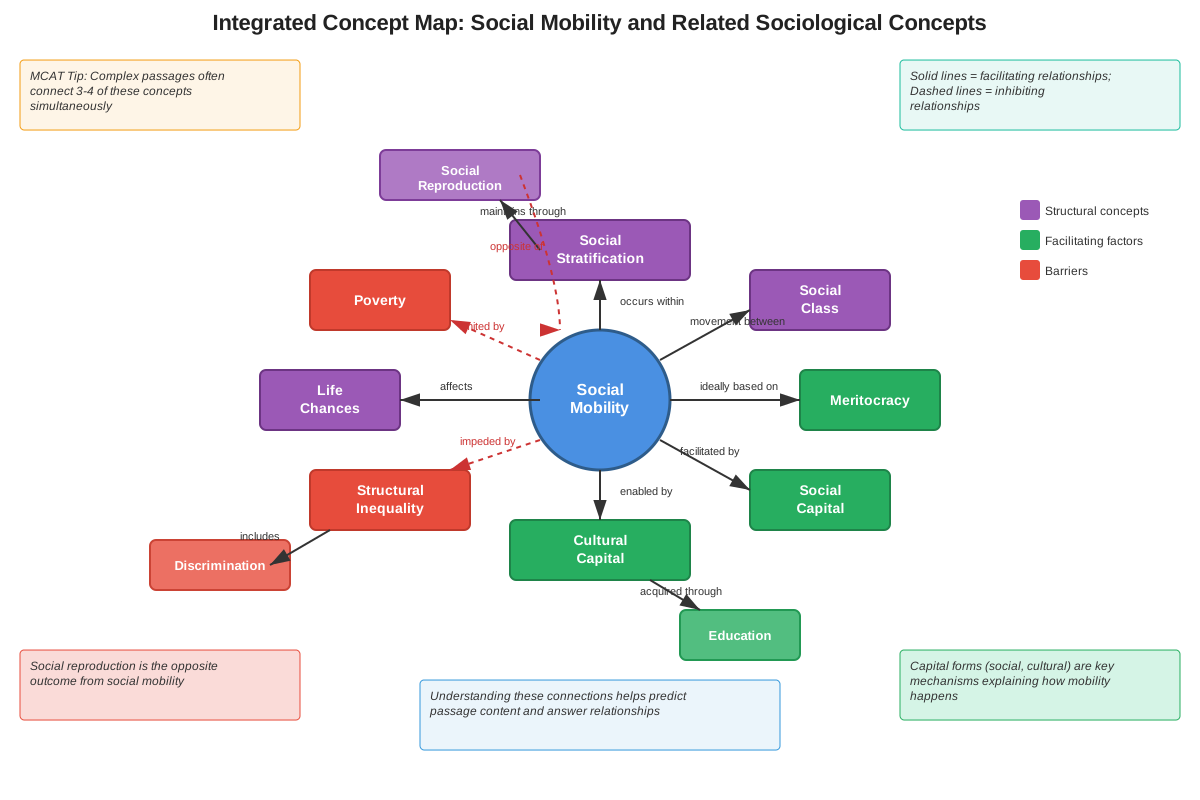
Social mobility serves as a central concept connecting multiple sociological themes. The relationship begins with social stratification, which establishes the hierarchical structure within which mobility occurs. Without stratification creating distinct social levels, mobility would be meaningless. Social class and socioeconomic status define the specific positions between which individuals move, providing the categories for measuring mobility.
Cultural capital and social capital function as mechanisms enabling mobility. Individuals acquire these resources and deploy them to access higher social positions. Conversely, lack of these capitals creates barriers to upward mobility. Educational institutions serve as the primary pathway connecting capital to mobility—schools theoretically provide meritocratic advancement opportunities but also reproduce existing inequalities when access and quality vary by social class.
Social reproduction represents the opposite of mobility—the tendency for social positions to persist across generations. High social reproduction means low intergenerational mobility. These concepts exist in tension: societies with strong reproduction mechanisms exhibit limited mobility, while factors disrupting reproduction (like educational expansion or economic restructuring) increase mobility.
Poverty and inequality relate to mobility through multiple pathways. High inequality often correlates with low mobility (the "Great Gatsby Curve"), as larger gaps between classes make movement more difficult. Persistent poverty across generations indicates low upward mobility from the bottom of the social hierarchy.
The relationship map flows as follows:
Social Stratification → creates hierarchical structure → Social Class/SES → defines positions → Social Mobility → movement between positions → influenced by → Cultural Capital, Social Capital, Education → which are unequally distributed → leading to → Social Reproduction → perpetuating → Inequality → which constrains → Social Mobility (feedback loop)
High-Yield Facts
⭐ Social mobility refers to movement within or between social strata, classified as vertical (up/down) or horizontal (same level)
⭐ Intergenerational mobility compares social status across generations (parent to child), while intragenerational mobility measures changes within one person's lifetime
⭐ Structural mobility results from societal changes affecting large groups; individual mobility involves specific people moving up or down through personal circumstances
⭐ Societies with greater income inequality typically exhibit lower social mobility (the "Great Gatsby Curve")
⭐ Education serves as the primary mechanism for upward mobility in modern societies, though educational access itself is stratified by social class
- Absolute mobility measures whether individuals achieve more than their parents; relative mobility measures position changes relative to others in the same generation
- Open stratification systems feature high mobility and achieved status; closed systems feature low mobility and ascribed status
- Cultural capital (knowledge, skills, cultural competencies) and social capital (networks and connections) facilitate social mobility
- The meritocracy myth obscures structural barriers by attributing success solely to individual merit and effort
- Social reproduction describes how families transmit advantages or disadvantages across generations, limiting mobility
- Discrimination based on race, ethnicity, gender, or other characteristics creates systematic barriers to upward mobility for affected groups
- Economic expansion and industrialization historically increased structural mobility by creating new higher-status positions
Quick check — test yourself on Social mobility so far.
Try Flashcards →Common Misconceptions
Misconception: Social mobility and social stratification are opposite concepts—high mobility means no stratification exists.
Correction: Social mobility occurs within stratification systems. Even societies with high mobility maintain hierarchical social structures; mobility simply means movement between levels is possible. Stratification and mobility are complementary concepts, not opposites.
Misconception: Horizontal mobility is less important than vertical mobility and doesn't really count as "true" mobility.
Correction: Horizontal mobility is a legitimate form of social movement that can significantly impact individuals' lives through career changes, geographic relocation, or shifts in social networks. While it doesn't involve class changes, it remains sociologically significant and appears in MCAT questions.
Misconception: High absolute mobility in a society proves that it functions as a meritocracy with equal opportunity.
Correction: Absolute mobility can result from structural changes (like economic growth) that raise most people's status regardless of merit or opportunity equality. A society can have high absolute mobility but low relative mobility, meaning the relative advantages of wealthy families persist even as everyone's absolute position improves.
Misconception: Intergenerational mobility and intragenerational mobility measure the same thing over different time periods.
Correction: These concepts measure fundamentally different phenomena. Intergenerational mobility compares different people (parents vs. children) across generations, revealing whether family advantages persist. Intragenerational mobility tracks the same individual's changes over their lifetime, revealing career trajectory patterns.
Misconception: Individual mobility and structural mobility are mutually exclusive categories—mobility is either one or the other.
Correction: Both types of mobility occur simultaneously in societies. An individual's upward mobility might result partly from personal effort (individual factors) and partly from economic expansion creating new opportunities (structural factors). MCAT questions often require identifying which factor predominates in a given scenario.
Misconception: Social mobility rates are primarily determined by individual characteristics like intelligence, work ethic, and talent.
Correction: While individual characteristics matter, structural factors—including economic conditions, educational system quality, discrimination, social capital access, and family resources—significantly influence mobility rates. Overemphasizing individual factors reflects the meritocracy myth and ignores systematic barriers.
Worked Examples
Example 1: Distinguishing Mobility Types
Vignette: A research study tracks 1,000 individuals born in 1980. The study finds that 65% of participants earn higher inflation-adjusted incomes at age 40 than their parents earned at age 40. However, children born to parents in the top income quintile have a 45% chance of remaining in the top quintile, while children born to parents in the bottom quintile have only a 7% chance of reaching the top quintile.
Question: What do these findings reveal about mobility in this population?
Analysis:
First, identify what each statistic measures. The 65% figure represents absolute mobility—the majority of individuals achieve higher real incomes than their parents, suggesting overall economic improvement across generations.
The second set of statistics addresses relative mobility—how likely individuals are to change their position relative to others. The 45% probability of top-quintile children remaining in the top quintile, combined with the 7% probability of bottom-quintile children reaching the top, indicates low relative mobility. The social hierarchy remains relatively stable across generations despite absolute improvements.
This scenario illustrates the mobility paradox: a society can simultaneously exhibit high absolute mobility (most people doing better than their parents) and low relative mobility (relative positions remaining stable). This occurs when economic growth raises all boats, but structural advantages keep wealthy families' children at the top.
Answer: The findings reveal high absolute mobility but low relative mobility, indicating that while most individuals earn more than their parents, the relative advantages of being born into wealthy families persist across generations. This pattern suggests structural factors and social reproduction mechanisms maintain inequality despite overall economic improvement.
Connection to Learning Objectives: This example demonstrates the application of social mobility concepts to interpret research data, distinguishes between mobility types, and identifies how mobility relates to inequality—all high-yield skills for MCAT passages.
Example 2: Identifying Mobility Mechanisms
Vignette: Maria's parents immigrated to the United States and worked as agricultural laborers with elementary school educations. Maria attended public schools, earned a scholarship to a state university, completed a bachelor's degree in biology, and gained admission to medical school. She is now a practicing physician earning significantly more than her parents and holding higher social status.
Question: What type(s) of mobility has Maria experienced, and what factors facilitated this mobility?
Analysis:
First, classify the mobility type. Maria moved from working-class origins (agricultural laborers, low education, low income) to professional-class status (physician, advanced education, high income). This represents upward vertical mobility—movement to a higher position in the social hierarchy.
Comparing Maria's status to her parents' status indicates intergenerational upward mobility—she achieved higher social class than the previous generation. We could also examine her own career trajectory: if the passage provided information about her working lower-status jobs before medical school, that would represent intragenerational mobility within her own lifetime.
Now identify facilitating factors:
- Education served as the primary mechanism—her bachelor's degree and medical degree provided credentials for professional status
- Structural factors including scholarship availability and public university access created opportunities despite limited family financial resources
- Individual factors including academic achievement enabled her to access these opportunities
- The passage doesn't mention it, but social capital (mentors, advisors, professional networks) likely played a role in navigating the path to medical school
This example illustrates how multiple factors interact to enable mobility. While individual achievement mattered, structural opportunities (public education, scholarships) were essential—without these, individual effort alone might not have produced upward mobility.
Answer: Maria experienced intergenerational upward vertical mobility, moving from working-class origins to professional-class status. Key facilitating factors included educational attainment (primary mechanism), structural opportunities (scholarships, public university access), and individual achievement. This case demonstrates how education serves as the main pathway for upward mobility in modern societies, though access to educational opportunities depends on structural factors beyond individual control.
Connection to Learning Objectives: This example requires applying mobility concepts to analyze a realistic scenario, identifying multiple mobility types, recognizing factors that facilitate mobility, and connecting mobility to education and social stratification—all essential skills for MCAT success.
Exam Strategy
When approaching MCAT questions on social mobility, begin by identifying what type of mobility the question addresses. Look for key trigger words: "intergenerational" signals comparison between parents and children; "career" or "lifetime" suggests intragenerational mobility; "upward," "downward," or "horizontal" indicates the direction of movement. Many incorrect answer choices confuse these mobility types, so precise classification is essential.
For passage-based questions, carefully examine any data tables or graphs showing mobility patterns. Distinguish between absolute and relative mobility—passages often present data that could support either interpretation, and questions test whether students recognize the difference. If a passage shows most people earning more than their parents but relative positions remaining stable, that's the mobility paradox. Watch for answer choices that incorrectly conflate these concepts.
When questions ask about factors affecting mobility, use process of elimination by categorizing factors as structural versus individual. MCAT passages typically emphasize structural factors (economic conditions, educational access, discrimination, social capital) over purely individual factors (intelligence, work ethic). Answer choices overemphasizing individual factors often reflect the meritocracy myth and are frequently incorrect. However, don't automatically eliminate individual factors—the correct answer often acknowledges both structural and individual influences.
For questions connecting mobility to other concepts, map the relationships: low mobility → high social reproduction → persistent inequality; high inequality → low mobility (Great Gatsby Curve); education → primary mobility mechanism but also reproduces inequality when unequally distributed. These conceptual connections frequently appear in correct answers.
Time allocation: Spend 60-70 seconds on discrete mobility questions, which typically test definitions and classifications. Allocate 80-90 seconds for passage-based questions requiring data interpretation or application of multiple concepts. If a question asks you to identify mobility type from a scenario, quickly categorize it (vertical/horizontal, intergenerational/intragenerational, upward/downward) before examining answer choices—this prevents confusion from misleading options.
Exam Tip: When a passage presents a "success story" of upward mobility, the MCAT often asks questions that require recognizing structural factors that made the mobility possible, not just celebrating individual achievement. This tests whether students understand sociology's emphasis on structural analysis over individualistic explanations.
Memory Techniques
Mobility Types Mnemonic - "VHII":
- Vertical (up or down the hierarchy)
- Horizontal (same level, different position)
- Intergenerational (parent to child comparison)
- Intragenerational (within one person's lifetime)
Structural vs. Individual Mobility - "SEEP vs. MEET":
- Structural factors: Society changes, Economic shifts, Education expansion, Policy changes
- Individual factors: Merit, Effort, Education attainment, Talent
Factors Affecting Mobility - "ECSFD" (pronounced "ex-fed"):
- Education access and quality
- Cultural capital and social capital
- Structural economic conditions
- Family background and resources
- Discrimination and structural barriers
Visualization Strategy: Picture social stratification as a ladder with rungs representing different social classes. Vertical mobility means climbing up or down rungs. Horizontal mobility means moving sideways to a different ladder at the same height. Intergenerational mobility compares where parents stood on the ladder to where children stand. Intragenerational mobility tracks one person's movement up or down their ladder over time. This concrete image helps distinguish mobility types quickly during exams.
Absolute vs. Relative Mobility: Remember "Absolute = All boats rise" (everyone might improve) versus "Relative = Rank changes" (comparing positions to others). This distinction frequently appears in data interpretation questions.
Summary
Social mobility, the movement of individuals or groups within social stratification systems, represents a high-yield MCAT topic connecting multiple sociological concepts. Understanding the distinctions between vertical and horizontal mobility, intergenerational and intragenerational mobility, and structural and individual mobility is essential for analyzing exam passages and answering discrete questions. Social mobility serves as a key indicator of opportunity equality and meritocratic functioning in societies, though high mobility rates don't necessarily prove true meritocracy exists. Education functions as the primary mechanism for upward mobility in modern societies, while cultural capital, social capital, family resources, economic conditions, and discrimination patterns significantly influence mobility rates. The relationship between inequality and mobility (the Great Gatsby Curve), the mobility paradox (high absolute but low relative mobility), and the tension between social mobility and social reproduction frequently appear in MCAT passages. Success on mobility questions requires distinguishing between mobility types, identifying structural versus individual factors, interpreting mobility data accurately, and connecting mobility to broader themes of stratification, inequality, and opportunity.
Key Takeaways
- Social mobility encompasses multiple types: vertical (up/down), horizontal (same level), intergenerational (across generations), and intragenerational (within a lifetime)—distinguishing these is essential for MCAT success
- Structural mobility results from societal changes affecting large groups, while individual mobility involves specific people moving through personal circumstances; both occur simultaneously in real societies
- Education serves as the primary mechanism for upward mobility, though educational access itself is stratified by social class, creating a paradox where education both enables mobility and reproduces inequality
- The mobility paradox describes situations where absolute mobility is high (most people doing better than parents) but relative mobility is low (relative positions remain stable)—this distinction frequently appears in data interpretation questions
- Societies with greater income inequality typically exhibit lower social mobility (the Great Gatsby Curve), connecting mobility to broader inequality patterns
- Cultural capital and social capital facilitate mobility by providing knowledge, skills, networks, and resources needed to access higher social positions
- The meritocracy myth obscures structural barriers to mobility by attributing success solely to individual merit, while sociological analysis emphasizes structural factors like discrimination, economic conditions, and unequal opportunities
Related Topics
Social Reproduction: The mechanisms through which families transmit advantages or disadvantages across generations, directly opposing social mobility. Understanding reproduction helps explain why mobility rates remain limited even in ostensibly open societies.
Cultural Capital and Social Capital: These concepts explain specific mechanisms through which mobility occurs or is blocked. Mastering capital theories enables deeper analysis of mobility pathways and barriers.
Poverty and Social Class: Detailed understanding of class structures and poverty dynamics provides the framework for analyzing mobility patterns, particularly barriers to upward mobility from lower classes.
Meritocracy and Social Inequality: These concepts contextualize mobility within broader debates about fairness, opportunity, and justice in stratified societies, frequently appearing together in MCAT passages.
Educational Inequality: Since education serves as the primary mobility mechanism, understanding how educational opportunities and outcomes vary by social class is essential for analyzing mobility patterns.
Intersectionality: Examining how race, ethnicity, gender, and class intersect to create unique mobility patterns for different groups extends mobility analysis beyond simple class categories.
Practice CTA
Now that you've mastered the core concepts of social mobility, it's time to reinforce your understanding through active practice. Attempt the practice questions and flashcards associated with this topic to test your ability to distinguish between mobility types, analyze mobility data, and apply these concepts to exam-style scenarios. Remember that social mobility questions frequently appear in MCAT passages, so developing quick recognition of mobility patterns and factors will significantly boost your score. Each practice question you complete strengthens your conceptual understanding and builds the pattern recognition skills essential for test day success. You've built a strong foundation—now apply it!
Sign up free to keep reading
Create a free AnvayaPrep account to finish this MCAT guide on Social mobility — plus flashcards and practice questions.