Overview
Social class is a fundamental concept in Sociology that refers to the hierarchical divisions in society based on economic, social, and cultural factors. Understanding social class is essential for the MCAT because it directly influences health outcomes, healthcare access, disease prevalence, and patient-physician interactions—all critical themes in the Psychological, Social, and Biological Foundations of Behavior section. Social class operates as a system of social stratification that organizes individuals into groups with differential access to resources, power, and opportunities.
The MCAT frequently tests social class within the broader framework of Social Stratification and Inequality, requiring students to analyze how socioeconomic position affects health behaviors, medical decision-making, and population health disparities. Questions may present clinical vignettes where a patient's social class influences their ability to afford medications, access preventive care, or navigate the healthcare system. Understanding social class enables test-takers to interpret research passages about health disparities, evaluate the social determinants of health, and apply sociological theories to medical scenarios.
Social class intersects with numerous other sociological concepts including social mobility, poverty, cultural capital, and institutional discrimination. It serves as a lens through which to understand how society allocates resources and opportunities unequally, creating systematic advantages for some groups while disadvantaging others. Mastering this topic provides the foundation for understanding how structural factors—rather than individual choices alone—shape health outcomes and life chances across populations.
Learning Objectives
- [ ] Define Social class using accurate Sociology terminology
- [ ] Explain why Social class matters for the MCAT
- [ ] Apply Social class to exam-style questions
- [ ] Identify common mistakes related to Social class
- [ ] Connect Social class to related Sociology concepts
- [ ] Distinguish between objective and subjective measures of social class
- [ ] Analyze how social class influences health outcomes and healthcare access
- [ ] Compare different theoretical perspectives on social class (Marx, Weber, functionalism)
- [ ] Evaluate the relationship between social class and social mobility
Prerequisites
- Basic understanding of social structures: Social class exists within larger societal frameworks that organize human relationships and institutions
- Familiarity with economic concepts: Income, wealth, and economic resources form key components of class distinctions
- Knowledge of inequality: Social class represents one form of systematic inequality that creates differential access to resources
- Understanding of socialization: Class position influences how individuals are socialized and what values they internalize
Why This Topic Matters
Clinical and Real-World Significance
Social class profoundly impacts health outcomes through multiple pathways. Individuals in lower social classes experience higher rates of chronic diseases, shorter life expectancies, and greater exposure to environmental hazards. Class position determines access to quality healthcare, nutritious food, safe housing, and health-promoting resources. Physicians must understand how patients' socioeconomic circumstances affect their ability to follow treatment recommendations, afford medications, and engage in preventive health behaviors. The social determinants of health—factors like education, occupation, and income—are fundamentally linked to social class and account for a substantial portion of health disparities between populations.
Exam Statistics and Question Types
Social class appears in approximately 15-20% of Sociology questions on the MCAT Psychological, Social, and Biological Foundations section. Questions typically fall into three categories: (1) passage-based questions analyzing research on health disparities by socioeconomic status, (2) discrete questions testing definitions and theoretical perspectives on class, and (3) vignette-based questions requiring application of class concepts to clinical scenarios. The AAMC frequently integrates social class with topics like healthcare access, health literacy, and social determinants of health.
Common Exam Appearances
MCAT passages often present epidemiological studies showing correlations between socioeconomic indicators and health outcomes, requiring students to interpret findings through a social class lens. Questions may ask students to identify which social class theory best explains observed patterns, predict how class position might affect patient compliance, or analyze how social mobility relates to health trajectories. Clinical vignettes might describe patients from different class backgrounds facing similar diagnoses but experiencing different barriers to care, testing the ability to recognize how class shapes healthcare experiences.
Core Concepts
Definition and Components of Social Class
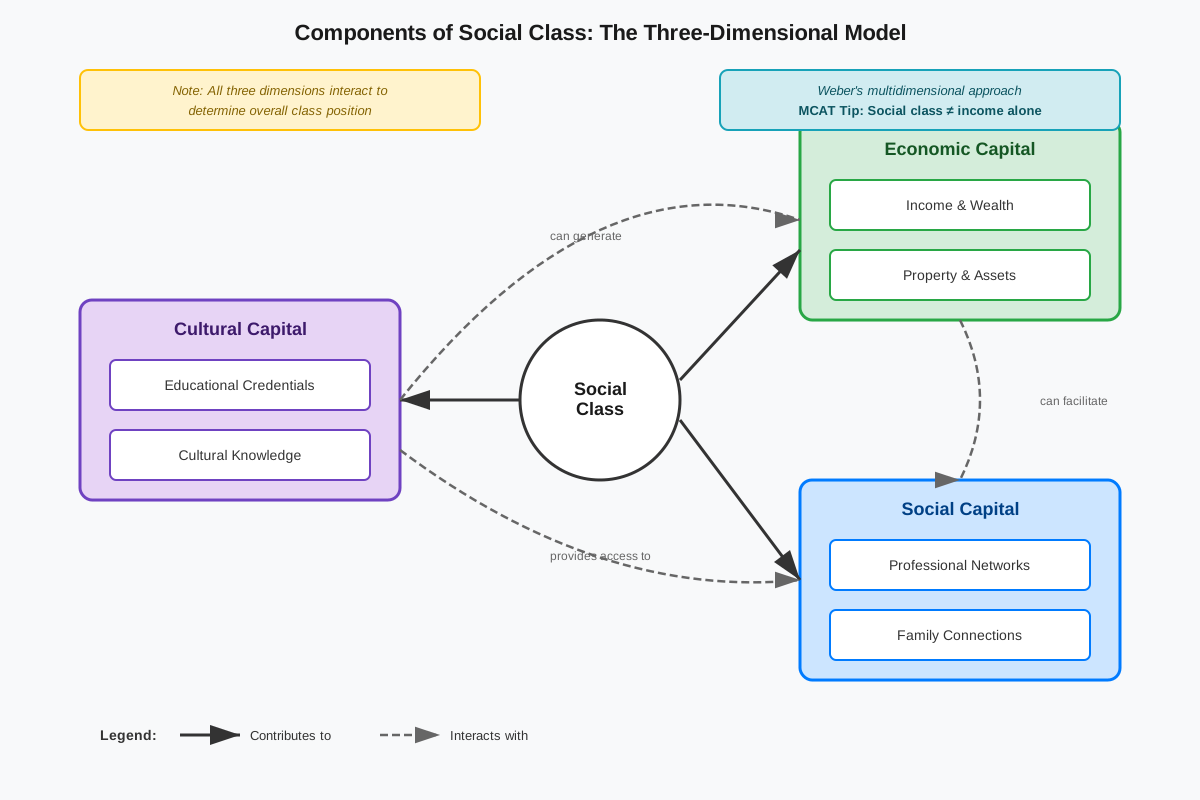
Social class refers to a group of people who share a similar position in the social hierarchy based on wealth, income, education, occupation, and social status. Unlike simple economic categories, social class encompasses multiple dimensions that together determine an individual's life chances and social standing. The concept recognizes that society is stratified into hierarchical layers with unequal access to valued resources.
Socioeconomic status (SES) is the most common operational measure of social class, typically combining three key indicators:
- Income: The flow of money received, usually measured annually
- Education: Highest level of formal schooling completed
- Occupation: Type of work performed and associated prestige
Wealth (total assets minus debts) differs from income and represents accumulated economic resources that can be transferred across generations. Wealth inequality typically exceeds income inequality and more strongly predicts long-term life chances.
Objective vs. Subjective Social Class
| Dimension | Objective Social Class | Subjective Social Class |
|---|---|---|
| Definition | Measurable indicators like income, education, occupation | Individual's self-perception of class position |
| Measurement | Quantitative data (dollars, years of education, occupational codes) | Survey questions asking "What class do you belong to?" |
| Stability | Relatively stable, based on concrete factors | Can vary based on reference groups and social comparison |
| MCAT Relevance | Used in epidemiological research on health disparities | Influences health behaviors and identity |
The distinction matters because subjective class identification can influence behavior independently of objective position. Someone with high income but low education might identify as working class, affecting their health behaviors and social networks.
Theoretical Perspectives on Social Class
Marxist Theory
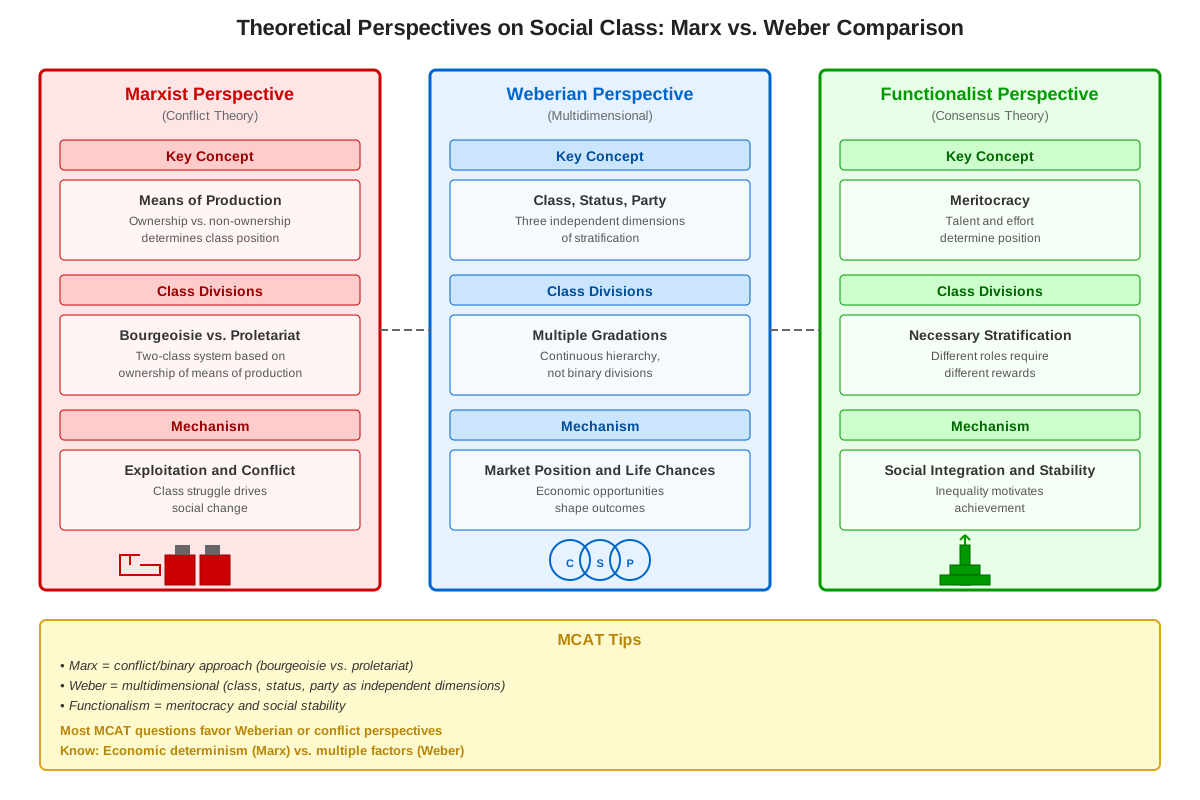
Karl Marx conceptualized class based on relationship to the means of production—the resources needed to produce goods and services. Marx identified two primary classes:
- Bourgeoisie: Owners of the means of production (capitalists)
- Proletariat: Workers who sell their labor for wages
Marx emphasized class consciousness—awareness of one's class position and shared interests with others in the same class—as essential for collective action. He predicted inevitable conflict between classes due to exploitation of workers by owners. For the MCAT, understand that Marxist theory views class as fundamentally about power and economic relationships, not just income levels.
Weberian Theory
Max Weber expanded class analysis beyond purely economic factors to include:
- Class: Economic position based on market situation and life chances
- Status: Social prestige and honor, often linked to lifestyle and consumption patterns
- Party: Political power and ability to influence decision-making
Weber recognized that these three dimensions don't always align—someone might have high income (class) but low prestige (status), or vice versa. This multidimensional approach better captures the complexity of social stratification. Status groups share similar lifestyles and social honor, which may cross economic class lines.
Functionalist Perspective
Functionalist theorists, particularly Kingsley Davis and Wilbert Moore, argued that social stratification serves important societal functions:
- Motivates individuals to fill important positions requiring extensive training
- Ensures the most qualified people occupy critical roles
- Rewards differential talent and effort
Critics note this perspective justifies inequality and ignores how class position is often inherited rather than earned through merit. The MCAT may present functionalist arguments in passages about educational systems or occupational hierarchies.
Social Class Categories in Contemporary Society
While class boundaries are fluid, sociologists commonly identify these categories:
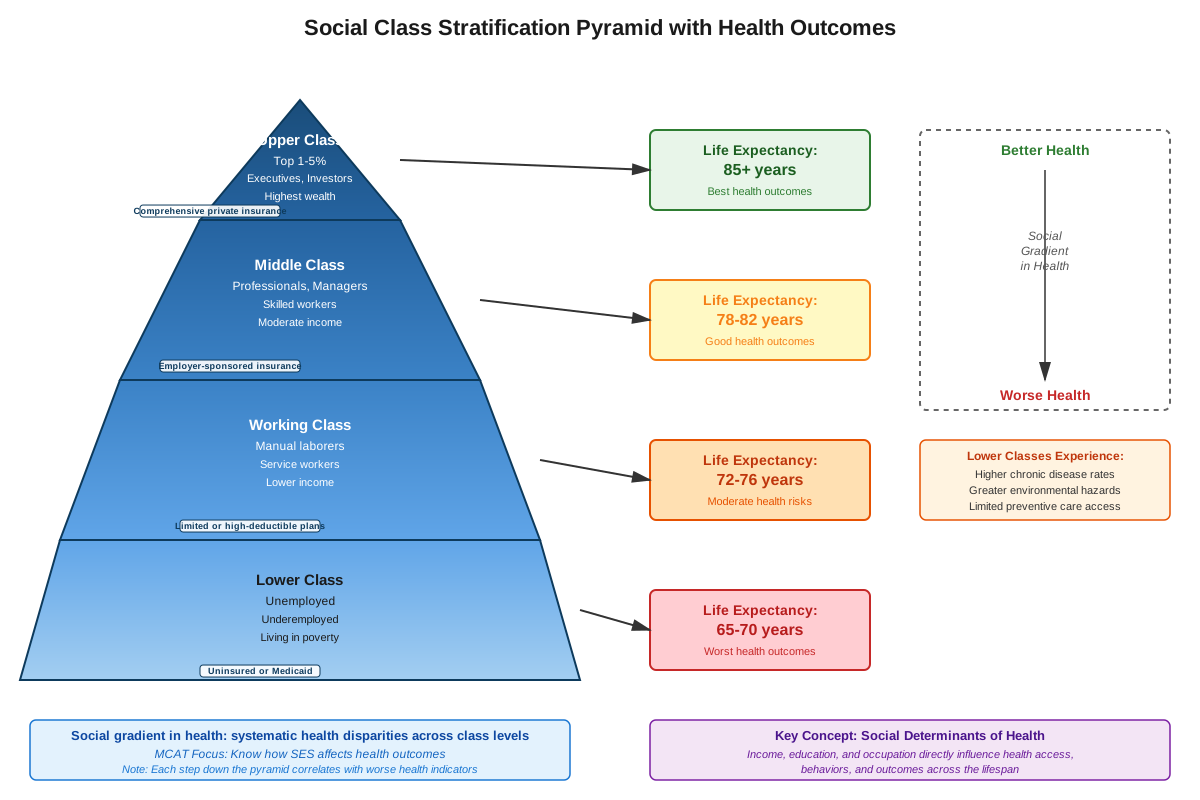
Upper Class: Characterized by substantial wealth (often inherited), elite education, and powerful social networks. Comprises roughly 1-3% of the population. Members often have significant influence over economic and political institutions.
Upper-Middle Class: Professionals and managers with advanced degrees, high incomes from skilled work, and considerable economic security. Includes physicians, lawyers, executives, and professors. Represents approximately 15% of the population.
Middle Class: Workers with moderate incomes, some college education, and relative economic stability. Includes teachers, nurses, small business owners, and skilled tradespeople. The largest class category, though its boundaries are contested.
Working Class: Individuals in manual labor, service work, or lower-skilled occupations with limited economic security. Education typically includes high school or some vocational training. Income is sufficient for basic needs but offers little cushion for emergencies.
Lower Class/Underclass: Characterized by poverty, unemployment or underemployment, and limited access to resources. Often experiences residential segregation and social marginalization.
Cultural Capital and Social Reproduction
Pierre Bourdieu introduced cultural capital—non-financial social assets including education, intellect, style of speech, dress, and cultural knowledge that promote social mobility. Cultural capital exists in three forms:
- Embodied: Knowledge, skills, and dispositions acquired through socialization
- Objectified: Physical objects like books, art, or instruments
- Institutionalized: Formal credentials and qualifications
Social reproduction describes how class advantages and disadvantages are transmitted across generations. Children from upper-class families inherit not just wealth but also cultural capital, social networks, and educational opportunities that maintain their privileged position. This explains why social mobility is more limited than meritocratic ideology suggests.
Social Class and Health: The Gradient Effect
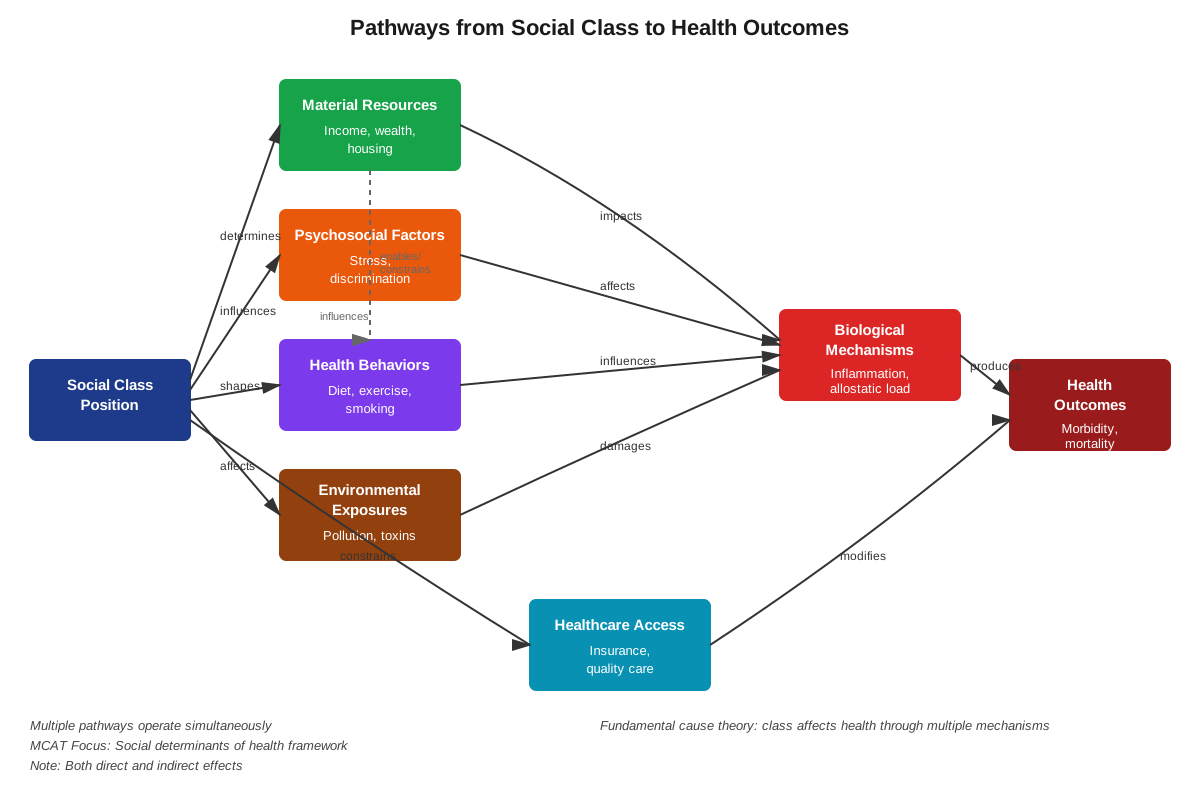
The relationship between social class and health follows a social gradient—health improves incrementally at each step up the class hierarchy. This pattern holds even in countries with universal healthcare, indicating that class affects health through multiple pathways beyond healthcare access:
- Material resources: Money for nutritious food, safe housing, healthcare
- Psychosocial factors: Chronic stress from economic insecurity, lower sense of control
- Health behaviors: Smoking, exercise, and diet patterns vary by class
- Environmental exposures: Lower-class neighborhoods have more pollution, fewer parks
- Healthcare quality: Even with access, lower-class patients may receive lower-quality care
The gradient effect demonstrates that health disparities aren't simply about poverty versus non-poverty, but reflect continuous advantages that accumulate across the entire class spectrum.
Concept Relationships
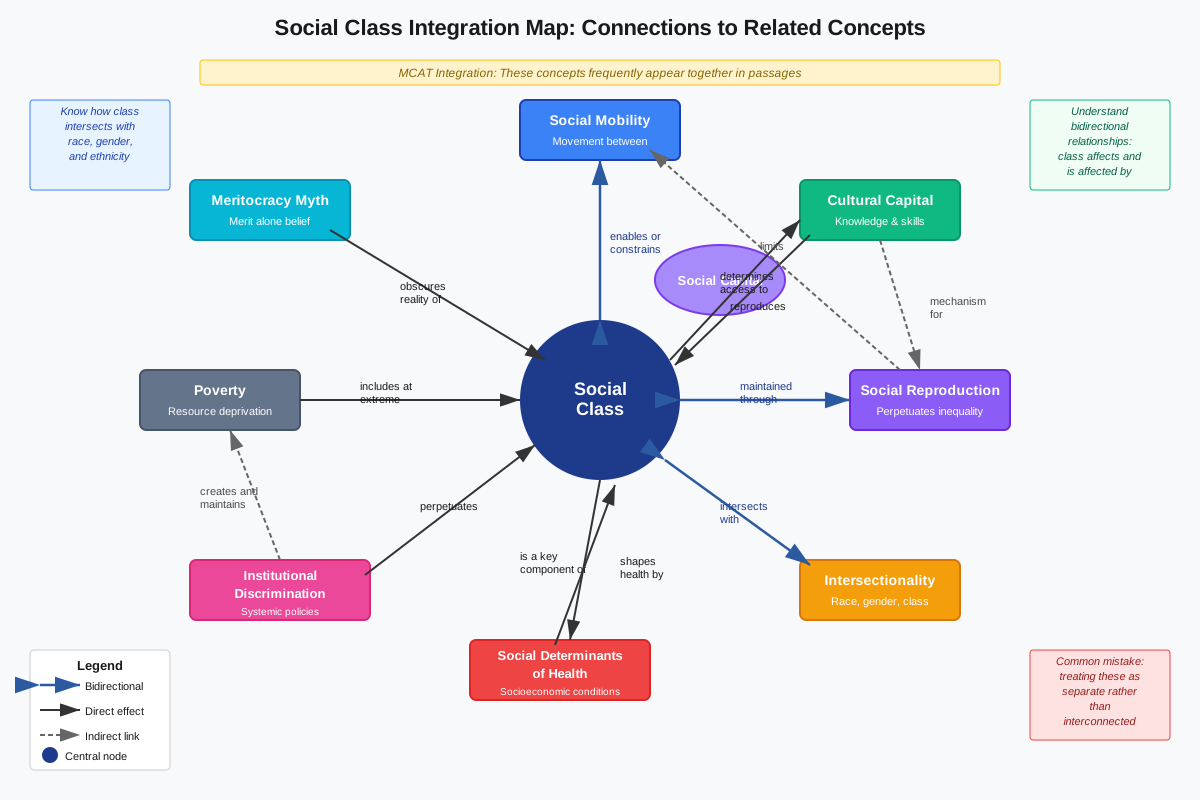
Social class serves as a central organizing concept connecting multiple sociological phenomena. Social stratification represents the broader system within which social class operates, encompassing all forms of structured inequality including race, gender, and age hierarchies. Social class both results from and reinforces stratification systems.
Social mobility—movement between class positions—depends on the rigidity of class boundaries and availability of opportunities. High social mobility indicates a more open class system, while low mobility suggests class reproduction across generations. The relationship flows bidirectionally: class position influences mobility opportunities, while mobility patterns shape the overall class structure.
Cultural capital → mediates → social class reproduction: Families transmit class advantages through cultural knowledge and practices, not just economic resources. This explains why education alone doesn't eliminate class inequality—upper-class children benefit from cultural capital that facilitates academic success.
Social class → influences → health outcomes: Through material resources, psychosocial stress, health behaviors, and healthcare access. This relationship is bidirectional, as poor health can also lead to downward mobility through medical expenses and reduced earning capacity.
Social class ← intersects with → race, gender, and ethnicity: These systems of stratification operate simultaneously, creating unique experiences for individuals at their intersection. For example, the Black middle class faces different opportunities and constraints than the white middle class due to ongoing racial discrimination.
Institutional structures (education, healthcare, criminal justice) → reinforce → social class boundaries: These institutions often reproduce class inequality by providing differential resources and opportunities based on class position, even when formally neutral policies exist.
Quick check — test yourself on Social class so far.
Try Flashcards →High-Yield Facts
⭐ Social class is a multidimensional concept encompassing economic resources (income, wealth), education, occupation, and social status—not just income alone.
⭐ Socioeconomic status (SES) is typically measured using three indicators: income, education, and occupation, which together predict life chances and health outcomes.
⭐ The social gradient in health shows that health improves incrementally at each step up the class hierarchy, even among those above the poverty line.
⭐ Cultural capital includes non-financial assets like education, cultural knowledge, and social skills that facilitate social mobility and class reproduction.
⭐ Marx defined class by relationship to the means of production (owners vs. workers), while Weber added status and party as additional dimensions of stratification.
- Subjective social class (self-identified class position) can differ from objective measures and independently influences behavior and identity.
- Social reproduction describes how class advantages are transmitted across generations through inheritance of wealth, cultural capital, and social networks.
- The upper-middle class includes professionals with advanced degrees (physicians, lawyers) who earn high incomes from skilled labor rather than capital ownership.
- Life chances—opportunities to achieve desired outcomes like health, education, and longevity—vary systematically by social class position.
- Social class affects health through multiple pathways: material resources, psychosocial stress, health behaviors, environmental exposures, and healthcare quality.
- Class consciousness—awareness of shared class interests—is necessary for collective action according to Marxist theory.
- Wealth inequality typically exceeds income inequality and better predicts long-term economic security and intergenerational mobility.
Common Misconceptions
Misconception: Social class is determined solely by income level.
Correction: Social class is multidimensional, incorporating income, wealth, education, occupation, and social status. Two individuals with identical incomes may occupy different class positions based on education, occupational prestige, and cultural capital. A teacher and a plumber might earn similar incomes but differ in educational credentials and social status.
Misconception: The United States has a classless society where anyone can achieve success through hard work (pure meritocracy).
Correction: While some social mobility exists, class position is substantially influenced by family background, inherited wealth, and structural opportunities. Social reproduction mechanisms ensure that class advantages are transmitted across generations. Research shows that parental income strongly predicts children's adult income, indicating limited mobility.
Misconception: Social class only matters for people in poverty; middle-class and wealthy individuals aren't affected by class dynamics.
Correction: The social gradient demonstrates that class affects outcomes across the entire hierarchy, not just at the bottom. Each incremental increase in class position correlates with better health, longer life expectancy, and greater opportunities. Upper-middle-class individuals still experience advantages over middle-class individuals.
Misconception: Healthcare access eliminates the relationship between social class and health.
Correction: Even in countries with universal healthcare, significant health disparities by social class persist. Class affects health through multiple pathways beyond healthcare access, including chronic stress, environmental exposures, health behaviors, and quality of care received. Material and psychosocial factors associated with class position influence health independently of medical services.
Misconception: Subjective and objective social class always align—people accurately perceive their class position.
Correction: Subjective class identification often differs from objective measures. Many Americans identify as "middle class" regardless of their actual income, education, or occupation. Reference groups and social comparison processes influence subjective class identity, which can affect behavior independently of objective position.
Misconception: Marx and Weber had completely opposing views on social class.
Correction: Weber expanded rather than rejected Marx's class analysis. While Marx focused on economic relationships to the means of production, Weber added status and party as additional dimensions of stratification. Weber agreed that economic factors were important but argued that prestige and power also independently structure social hierarchies.
Worked Examples
Example 1: Analyzing a Health Disparities Study
Vignette: A research study examines cardiovascular disease rates across different socioeconomic groups in a city with universal healthcare. The study measures SES using education level, household income, and occupational prestige. Results show that cardiovascular disease rates decrease progressively from the lowest to highest SES groups, with each incremental increase in SES associated with lower disease rates. Even among groups above the poverty line, significant differences persist.
Question: Which concept best explains why health disparities persist across all SES levels rather than only between poor and non-poor groups?
Analysis:
- Identify the key observation: Health improves incrementally across the entire SES spectrum, not just at the poverty threshold
- Recognize that universal healthcare is present, so access alone doesn't explain the pattern
- Consider which social class concepts address continuous gradients rather than categorical differences
Answer: The social gradient in health best explains this pattern. This concept describes how health outcomes improve progressively at each step up the social hierarchy, reflecting cumulative advantages in material resources, psychosocial factors, health behaviors, and environmental conditions. The gradient demonstrates that class affects health through multiple pathways beyond healthcare access, including chronic stress from economic insecurity, differential exposure to environmental hazards, and variations in health-promoting resources. Each incremental increase in SES provides additional protective factors that accumulate to produce better health outcomes.
Connection to Learning Objectives: This example demonstrates how to apply social class concepts to interpret research findings (LO: Apply social class to exam-style questions) and illustrates the relationship between social class and health outcomes (LO: Analyze how social class influences health outcomes).
Example 2: Distinguishing Theoretical Perspectives
Vignette: A sociology student is analyzing social stratification in a hospital setting. She observes that physicians (who earn high salaries and have extensive education) hold more decision-making power than hospital administrators (who may earn similar or higher salaries but have less professional prestige). Meanwhile, nursing staff (with moderate education and income) have limited input in hospital policy despite their essential role in patient care. The student wants to understand which theoretical framework best explains these complex hierarchies.
Question: Which theorist's perspective on social class would best help analyze this situation, and why?
Analysis:
- Note that multiple dimensions of stratification are present: income, education, prestige, and power
- Recognize that these dimensions don't perfectly align—administrators may earn more than physicians but have less prestige
- Consider which theoretical framework accounts for multiple, potentially independent dimensions of stratification
Answer: Weber's multidimensional theory best explains this situation because it recognizes that class (economic position), status (prestige), and party (power) represent distinct but related dimensions of stratification. Physicians have high status due to their professional prestige and educational credentials, which translates into decision-making power (party) even when administrators have comparable or higher incomes (class). Weber's framework explains why these dimensions don't always align and why someone can rank high on one dimension but lower on another. In contrast, Marx's theory focuses primarily on relationship to the means of production and wouldn't capture the nuances of professional prestige and organizational power within a single institution.
Connection to Learning Objectives: This example requires comparing different theoretical perspectives on social class (LO: Compare different theoretical perspectives) and demonstrates how to apply theoretical frameworks to analyze real-world situations (LO: Apply social class to exam-style questions).
Exam Strategy
Approaching MCAT Questions on Social Class
When encountering social class questions, first identify whether the question asks about (1) definitions and theoretical perspectives, (2) measurement and operationalization, or (3) applications to health outcomes and disparities. Read carefully to distinguish between objective and subjective measures of class, as the MCAT frequently tests this distinction.
For passage-based questions, pay attention to how researchers operationalize SES—do they use income alone, or multiple indicators? Questions often hinge on recognizing limitations of single-indicator measures. When passages present correlations between SES and health outcomes, be prepared to identify potential mechanisms (material resources, stress, behaviors, access) rather than simply noting that a relationship exists.
Trigger Words and Phrases
Watch for these terms that signal social class concepts:
- "Socioeconomic status," "SES," or "socioeconomic position"
- "Income," "wealth," "education level," "occupational prestige"
- "Health disparities," "social gradient," "social determinants of health"
- "Cultural capital," "social reproduction," "intergenerational mobility"
- "Life chances," "class consciousness," "means of production"
- "Upper-middle class," "working class," "professional occupations"
When you see "despite having access to healthcare" or "even in countries with universal healthcare," the question likely addresses how class affects health through non-access pathways.
Process of Elimination Tips
Eliminate answers that:
- Define social class using only income (too narrow—class is multidimensional)
- Suggest that class differences disappear with healthcare access (ignores multiple pathways)
- Confuse correlation with causation in class-health relationships
- Attribute class position entirely to individual merit (ignores structural factors and social reproduction)
- Conflate Marx's and Weber's theories (they differ in important ways)
- Suggest subjective and objective class always align (they often diverge)
Be cautious of answers using absolute language like "only," "always," or "never" when describing class relationships, as these are typically oversimplifications.
Time Allocation
Social class questions typically require 60-90 seconds. Definitional questions should take closer to 60 seconds, while passage-based applications may require the full 90 seconds to analyze the study design and interpret findings. If a question asks you to identify the best theoretical framework, quickly eliminate perspectives that don't address the key features described in the vignette before choosing between remaining options.
Memory Techniques
Mnemonic for SES Components
"I-O-E" (like "I owe")
- Income
- Occupation
- Education
These three indicators together measure socioeconomic status. Remember: "I owe" suggests economic obligation, connecting to the economic dimension of class.
Mnemonic for Weber's Three Dimensions
"C-S-P" (like "crisp")
- Class (economic position)
- Status (prestige)
- Party (power)
Weber added Status and Party to Marx's focus on Class, creating a "crisp" three-dimensional model.
Visualization for Social Gradient
Picture a staircase where each step up represents higher SES, and each step is a different shade of green (representing health). The stairs gradually get brighter green as you ascend, with no sharp dividing line between "healthy" and "unhealthy" groups. This continuous gradient contrasts with a simple two-category model (poor vs. non-poor).
Acronym for Cultural Capital Forms
"E-O-I"
- Embodied (knowledge and skills in your body/mind)
- Objectified (physical objects you own)
- Institutionalized (formal credentials)
Think: "Every Object Institutionalizes" culture—cultural capital exists in multiple forms that work together.
Memory Aid for Marx vs. Weber
Marx = Means (relationship to means of production)
Weber = Wide (wider view including status and party)
The alliteration helps distinguish their primary contributions to class theory.
Summary
Social class represents a fundamental system of social stratification that organizes individuals into hierarchical groups based on economic resources, education, occupation, and social status. For the MCAT, understanding social class requires mastering both theoretical perspectives (Marx's focus on means of production versus Weber's multidimensional approach) and practical applications to health disparities. Social class is operationalized through socioeconomic status (SES), typically measured using income, education, and occupation. The social gradient in health demonstrates that class affects outcomes across the entire hierarchy through multiple pathways including material resources, psychosocial stress, health behaviors, and environmental exposures. Cultural capital and social reproduction explain how class advantages are transmitted across generations, limiting social mobility. Distinguishing between objective and subjective measures of class is essential, as self-identified class position can differ from measurable indicators and independently influence behavior. MCAT questions frequently test the application of class concepts to health disparities research and clinical scenarios, requiring students to identify mechanisms linking class position to health outcomes and recognize how structural factors shape individual life chances.
Key Takeaways
- Social class is multidimensional, encompassing income, wealth, education, occupation, and status—not simply income level alone
- SES (socioeconomic status) is measured using three key indicators: income, education, and occupation, which together predict health outcomes and life chances
- The social gradient in health shows continuous improvement in health at each step up the class hierarchy, operating through material, psychosocial, behavioral, and environmental pathways
- Marx defined class by relationship to means of production, while Weber expanded the concept to include status (prestige) and party (power) as additional dimensions
- Cultural capital and social reproduction explain how class advantages are transmitted across generations, maintaining inequality despite formal equality of opportunity
- Social class affects health even in the presence of universal healthcare, demonstrating that access alone doesn't eliminate class-based health disparities
- Objective and subjective measures of social class can diverge, with each independently influencing behavior and outcomes
Related Topics
Social Mobility: The movement of individuals or groups between different class positions, including intergenerational mobility (between parent and child generations) and intragenerational mobility (within a person's lifetime). Understanding social class provides the foundation for analyzing how open or closed stratification systems are and what factors facilitate or impede mobility.
Poverty and Social Exclusion: While social class encompasses the entire hierarchy, poverty represents the lower extreme with distinct characteristics including material deprivation and social marginalization. Mastering social class concepts enables deeper analysis of poverty's causes, consequences, and relationship to broader stratification systems.
Social Capital: Networks of relationships and social connections that provide access to resources and opportunities. Social capital intersects with social class, as higher-class individuals typically have more extensive and resource-rich networks that facilitate mobility and opportunity.
Health Disparities and Social Determinants of Health: The systematic differences in health outcomes between social groups, heavily influenced by social class position. Understanding social class is essential for analyzing how structural factors create and maintain health inequalities across populations.
Intersectionality: The interconnected nature of social categorizations such as race, class, and gender, creating overlapping systems of discrimination or disadvantage. Social class operates alongside other stratification systems, requiring analysis of how multiple identities simultaneously shape experiences and opportunities.
Practice CTA
Now that you've mastered the core concepts of social class, test your understanding with practice questions and flashcards. Focus on distinguishing between theoretical perspectives, identifying how class operates through multiple dimensions, and applying class concepts to health disparities scenarios. Challenge yourself to explain why certain answers are incorrect, not just identify correct answers—this deeper engagement will prepare you for the nuanced questions you'll encounter on test day. Remember: social class appears frequently on the MCAT, and mastering this topic will strengthen your performance across multiple question types. You've built a solid foundation—now reinforce it through active practice!
Sign up free to keep reading
Create a free AnvayaPrep account to finish this MCAT guide on Social class — plus flashcards and practice questions.