Overview
Bureaucracy is a formal organizational structure characterized by hierarchical authority, specialized roles, explicit rules, and impersonal relationships designed to achieve specific goals efficiently. In Sociology, bureaucracy represents a fundamental component of modern social structure and institutions, serving as the dominant organizational model for governments, corporations, healthcare systems, educational institutions, and virtually all large-scale organizations in contemporary society. Max Weber, the pioneering German sociologist, developed the classical theory of bureaucracy, identifying it as the most rational and efficient form of organization in modern societies, though subsequent scholars have identified both its strengths and significant limitations.
For the MCAT, understanding bureaucracy is essential because it appears frequently in passages examining healthcare delivery systems, organizational behavior, institutional inequality, and the relationship between individuals and large-scale social structures. The MCAT Psychological, Social, and Biological Foundations of Behavior section regularly tests students' ability to analyze how bureaucratic structures influence patient care, access to healthcare, professional relationships, and health outcomes. Questions may present scenarios involving hospital administration, insurance companies, public health agencies, or medical education systems—all of which operate as bureaucracies with characteristic features that shape individual experiences and social outcomes.
Bureaucracy connects to numerous other sociology concepts tested on the MCAT, including social institutions, rationalization, authority types, organizational culture, social inequality, and the medicalization of society. Understanding bureaucracy provides the foundation for analyzing how formal organizations perpetuate or challenge existing power structures, how institutional rules can both facilitate and impede individual agency, and how the tension between efficiency and humanization manifests in healthcare settings. This topic bridges micro-level interactions (such as doctor-patient relationships) with macro-level social structures (such as healthcare policy and institutional hierarchies), making it a high-yield area for integrated MCAT questions.
Learning Objectives
- [ ] Define bureaucracy using accurate sociology terminology, including its essential characteristics and theoretical foundations
- [ ] Explain why bureaucracy matters for the MCAT, particularly in healthcare contexts and organizational analysis
- [ ] Apply bureaucracy concepts to exam-style questions involving organizational scenarios and institutional behavior
- [ ] Identify common mistakes related to bureaucracy, including conflating bureaucracy with inefficiency or assuming all formal organizations are equally bureaucratic
- [ ] Connect bureaucracy to related sociology concepts including rationalization, authority, social institutions, and organizational culture
- [ ] Analyze the advantages and disadvantages of bureaucratic organization in healthcare and other institutional settings
- [ ] Distinguish between Weber's ideal type of bureaucracy and real-world bureaucratic dysfunction
- [ ] Evaluate how bureaucratic structures can perpetuate or reduce social inequality and affect access to resources
Prerequisites
- Social institutions: Understanding that society organizes around established patterns of behavior and relationships; bureaucracy represents the formal organizational structure of modern institutions
- Authority and power: Familiarity with different types of authority (traditional, charismatic, rational-legal); bureaucracy relies specifically on rational-legal authority based on rules and positions rather than personal characteristics
- Social structure: Knowledge that society consists of patterned relationships and positions; bureaucracy creates formal, explicit social structures within organizations
- Rationalization: Awareness that modern societies increasingly emphasize efficiency, calculability, and systematic organization; bureaucracy represents the organizational manifestation of rationalization
Why This Topic Matters
Bureaucracy is clinically and practically significant because virtually all healthcare delivery occurs within bureaucratic organizations—hospitals, insurance companies, public health departments, pharmaceutical companies, and medical schools all exhibit bureaucratic characteristics. Understanding bureaucracy helps explain why healthcare professionals must navigate complex administrative procedures, why patients experience delays or impersonal treatment, why medical errors can result from communication failures across hierarchical levels, and why healthcare reform efforts often encounter institutional resistance. The tension between bureaucratic efficiency and individualized patient care represents a fundamental challenge in modern medicine that MCAT passages frequently explore.
On the MCAT, bureaucracy appears in approximately 5-8% of Psychological, Social, and Biological Foundations of Behavior questions, making it a high-yield topic. Questions typically appear in two formats: (1) passage-based questions presenting organizational scenarios (hospital administration, public health programs, insurance systems) that require students to identify bureaucratic characteristics, analyze organizational dysfunction, or predict outcomes based on bureaucratic principles; and (2) discrete questions testing direct knowledge of Weber's bureaucratic theory, characteristics of bureaucracy, or the relationship between bureaucracy and other sociological concepts. The MCAT particularly favors questions that integrate bureaucracy with healthcare access, social inequality, organizational culture, and the medicalization of society.
Common passage contexts include: analyzing how hospital hierarchies affect communication and patient safety; examining how insurance bureaucracies create barriers to healthcare access; evaluating public health program implementation through bureaucratic agencies; comparing bureaucratic and non-bureaucratic organizational structures in healthcare delivery; and exploring how bureaucratic rules can both standardize care (reducing disparities) and create rigidity (limiting individualized treatment). Students who master bureaucracy can quickly identify organizational dynamics in passages and apply sociological frameworks to analyze institutional behavior, giving them a significant advantage on complex, integrated MCAT questions.
Core Concepts
Weber's Ideal Type of Bureaucracy
Max Weber developed the concept of bureaucracy as an "ideal type"—a theoretical model representing the pure form of bureaucratic organization, though no real organization perfectly matches all characteristics. Weber identified bureaucracy as the organizational form most compatible with rational-legal authority, where power derives from formal positions and established rules rather than personal characteristics or traditions. This represented a fundamental shift in how modern societies organize large-scale activities, moving away from patrimonial systems based on personal loyalty or traditional systems based on inherited status.
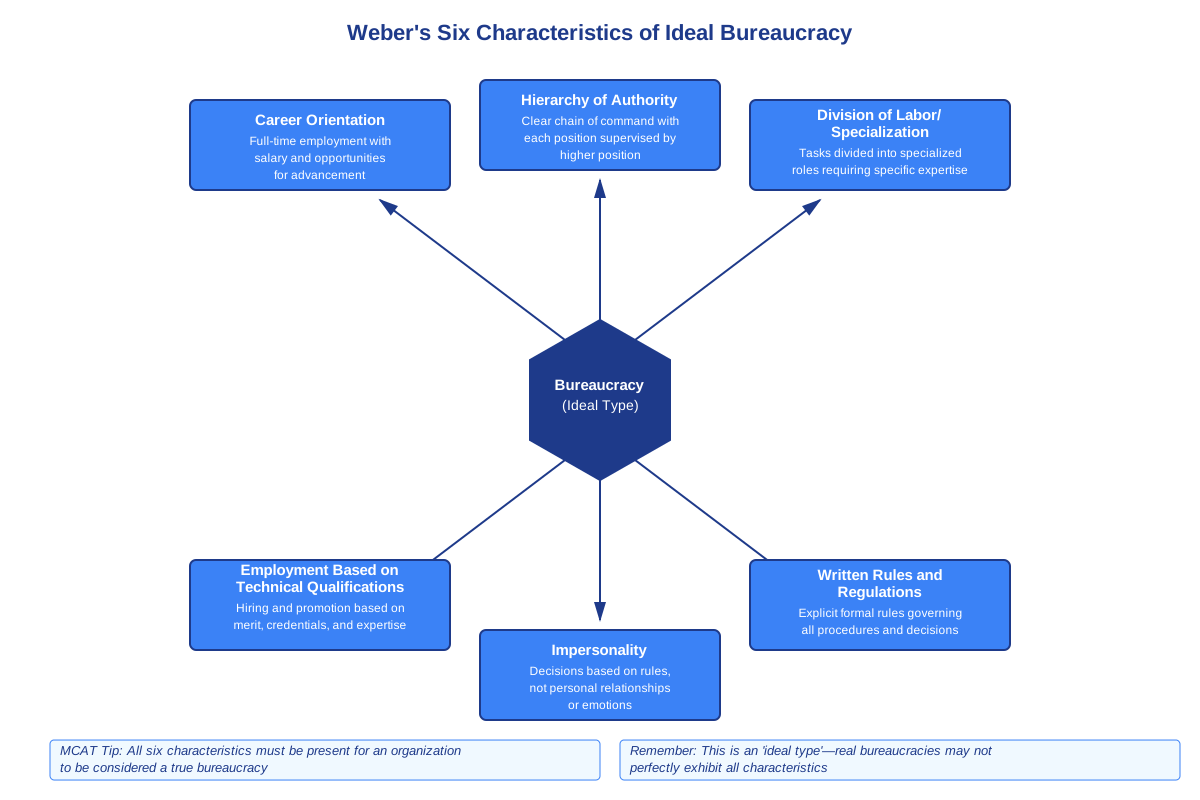
Weber's ideal bureaucracy includes six essential characteristics that work together to create efficient, predictable organizational functioning:
- Hierarchy of authority: Clear chain of command with each position supervised by a higher position, creating pyramid-like structure
- Division of labor and specialization: Tasks divided into specialized roles with clearly defined responsibilities and expertise requirements
- Written rules and regulations: Explicit, formal procedures governing all organizational activities and decisions
- Impersonality: Decisions based on rules and positions rather than personal relationships or individual characteristics
- Employment based on technical qualifications: Hiring and promotion determined by credentials, expertise, and merit rather than favoritism or family connections
- Career orientation: Employment viewed as long-term career with salary, benefits, and advancement opportunities based on seniority and performance
These characteristics combine to create what Weber considered the most technically efficient form of organization, capable of handling complex tasks, coordinating large numbers of people, and maintaining consistency across time and space. Weber argued that bureaucracy's rationality and predictability made it superior to earlier organizational forms for achieving specific goals in modern industrial societies.
Advantages of Bureaucratic Organization
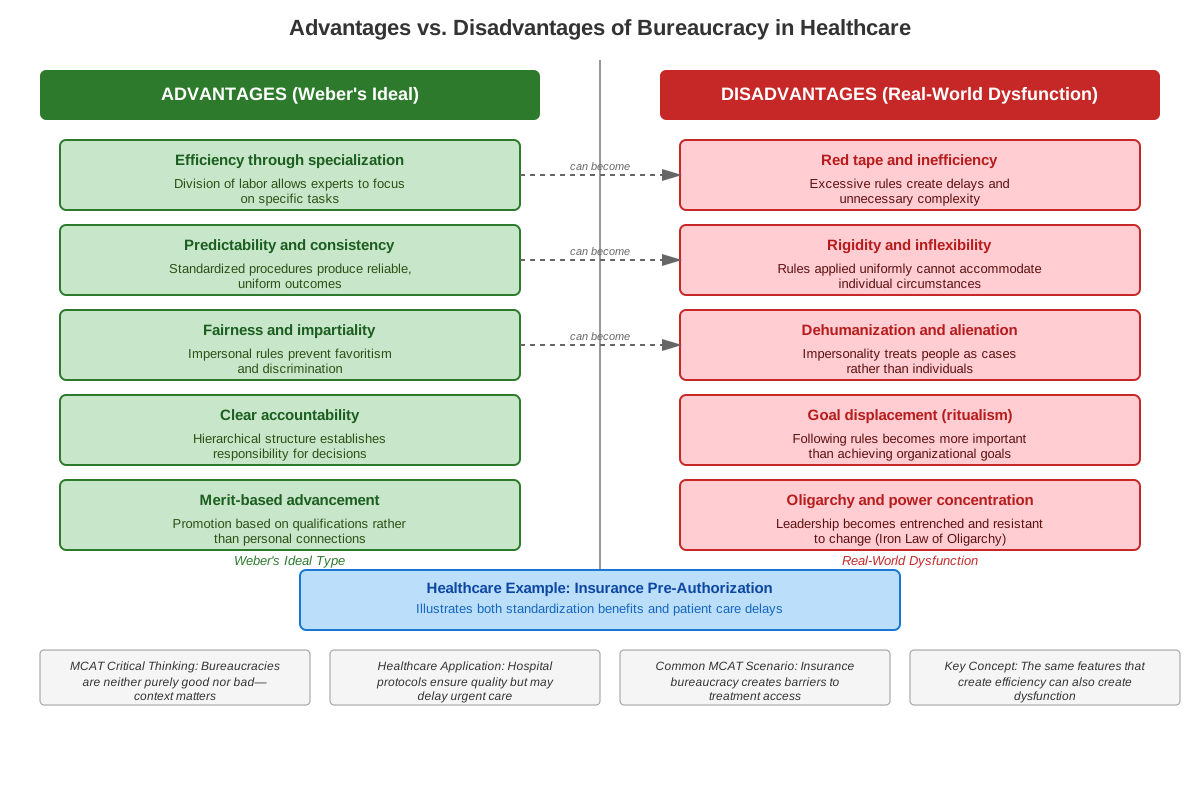
Bureaucracy offers several significant advantages that explain its dominance in modern institutions:
Efficiency and productivity: Specialization allows workers to develop expertise in narrow areas, increasing skill and speed. Clear procedures eliminate time wasted on deciding how to handle routine situations. Hierarchical coordination ensures that complex tasks involving many people proceed systematically.
Consistency and predictability: Written rules ensure that similar situations receive similar treatment regardless of which employee handles them or when they occur. This standardization reduces arbitrary decision-making and creates reliable organizational outputs. In healthcare, this means patients receive evidence-based care following established protocols rather than idiosyncratic treatments varying by provider.
Accountability and transparency: Clear hierarchies establish responsibility for decisions and outcomes. Written documentation creates records that can be reviewed and audited. Formal procedures make organizational processes visible and subject to oversight, theoretically reducing corruption and abuse of power.
Meritocracy and fairness: Employment based on qualifications rather than personal connections theoretically creates equal opportunity and rewards competence. Impersonal treatment means that organizational decisions aren't influenced by favoritism, prejudice, or personal relationships, promoting equity.
Scalability: Bureaucratic structures can expand to coordinate thousands or millions of people across vast geographic areas while maintaining organizational coherence. This makes bureaucracy essential for large-scale institutions like national healthcare systems, insurance companies, or hospital networks.
Disadvantages and Dysfunctions of Bureaucracy
Despite theoretical advantages, real-world bureaucracies often exhibit significant problems that sociologists have extensively documented:
Ritualism and goal displacement: Employees may become so focused on following rules and procedures that they lose sight of organizational goals. Ritualism occurs when adherence to rules becomes an end in itself rather than a means to achieve objectives. In healthcare, this manifests when administrative requirements take precedence over patient care, or when providers spend more time on documentation than with patients.
Rigidity and resistance to change: Bureaucratic rules and procedures, once established, become difficult to modify even when circumstances change or better methods emerge. Organizations develop institutional inertia, with established interests resisting innovations that might disrupt existing hierarchies or procedures. This explains why healthcare reform often proceeds slowly despite evidence supporting new approaches.
Impersonality and alienation: While impersonality theoretically promotes fairness, it can also create dehumanizing experiences where individuals feel like interchangeable units rather than unique persons. Patients may experience healthcare bureaucracies as cold and uncaring. Healthcare workers may feel alienated when bureaucratic requirements prevent them from exercising professional judgment or building meaningful relationships with patients.
Inefficiency and red tape: Contrary to Weber's emphasis on efficiency, bureaucracies often become inefficient through excessive rules, redundant procedures, and complex approval processes. Red tape refers to excessive bureaucratic requirements that impede rather than facilitate goal achievement. Multiple layers of hierarchy can slow decision-making and create communication bottlenecks.
Oligarchy and concentration of power: Robert Michels' "iron law of oligarchy" suggests that even democratic organizations inevitably develop bureaucratic structures where power concentrates in the hands of a small leadership group. Those at the top of bureaucratic hierarchies accumulate disproportionate influence and may use organizational resources to maintain their positions rather than serve organizational goals.
Bureaucracy in Healthcare Systems
Healthcare delivery in modern societies occurs predominantly through bureaucratic organizations, creating characteristic patterns and tensions:
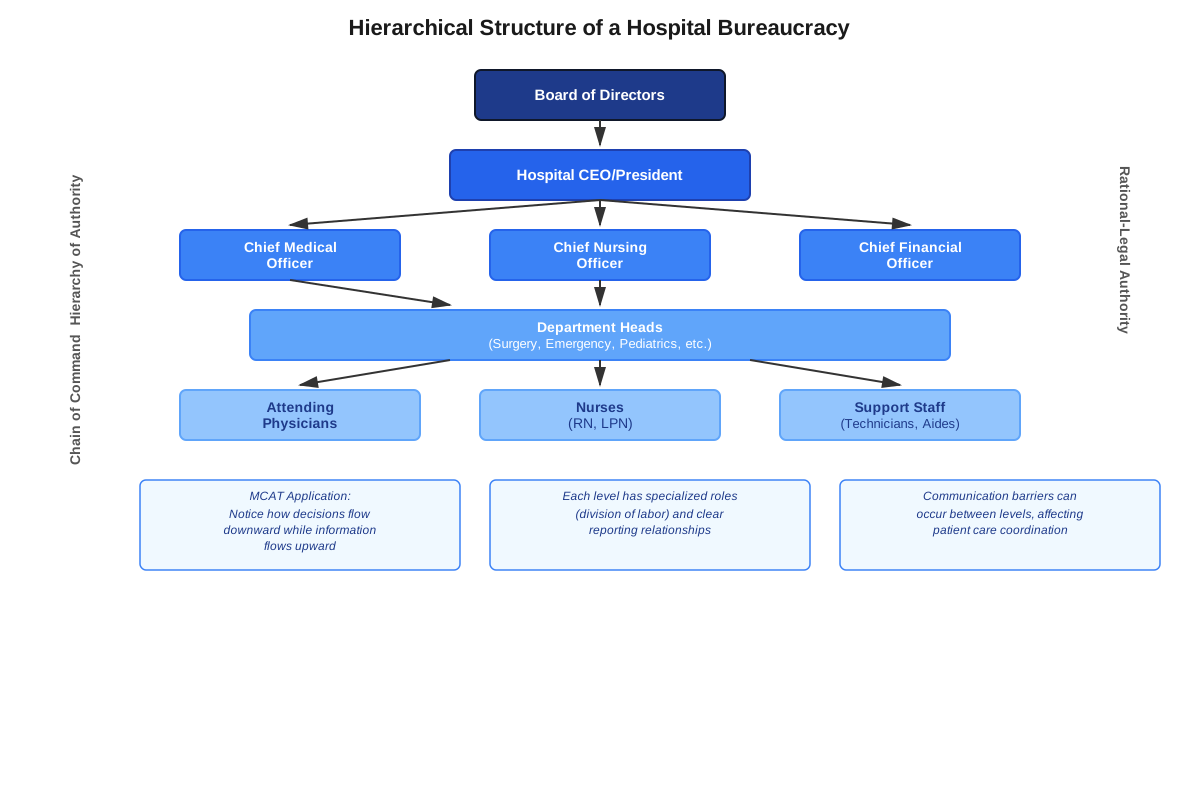
Hospital bureaucracies exhibit clear hierarchies (administrators, physicians, nurses, support staff), specialized roles (departments, specialties, specific job descriptions), and extensive rules (protocols, policies, regulatory compliance requirements). This structure enables coordination of complex care involving multiple providers and sophisticated technologies, but can also create communication barriers between hierarchical levels, professional silos that impede integrated care, and administrative burdens that reduce time for direct patient care.
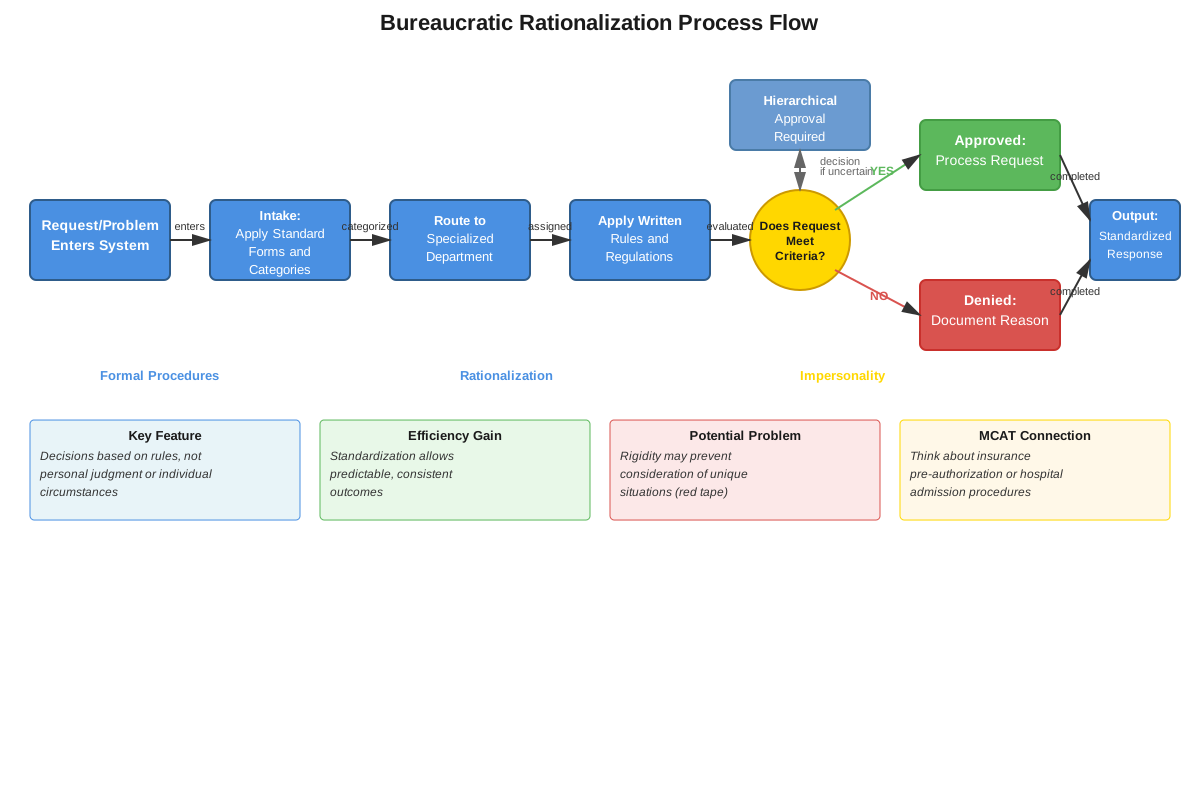
Insurance bureaucracies determine healthcare access and reimbursement through formal procedures, creating standardized processes for claims, pre-authorizations, and coverage determinations. While this standardization theoretically promotes consistency, it often results in barriers to care (prior authorization delays, coverage denials, appeals processes), administrative costs (billing specialists, coding requirements), and conflicts between bureaucratic rules and clinical judgment.
Public health bureaucracies implement population-level interventions through government agencies with hierarchical structures and formal procedures. These organizations can mobilize resources for large-scale programs (vaccination campaigns, disease surveillance, health education), but may struggle with rigidity (slow response to emerging threats), fragmentation (multiple agencies with overlapping jurisdictions), and disconnect from community needs (top-down programs that don't reflect local contexts).
The medicalization of society—the process by which non-medical problems become defined and treated as medical issues—often involves bureaucratic expansion as new conditions require specialized providers, formal diagnostic procedures, and institutional treatment settings. This creates both opportunities (systematic approaches to previously ignored problems) and concerns (social control through medical institutions, overtreatment, and increased costs).
Bureaucracy and Social Inequality
Bureaucracies can both reduce and perpetuate social inequality through various mechanisms:
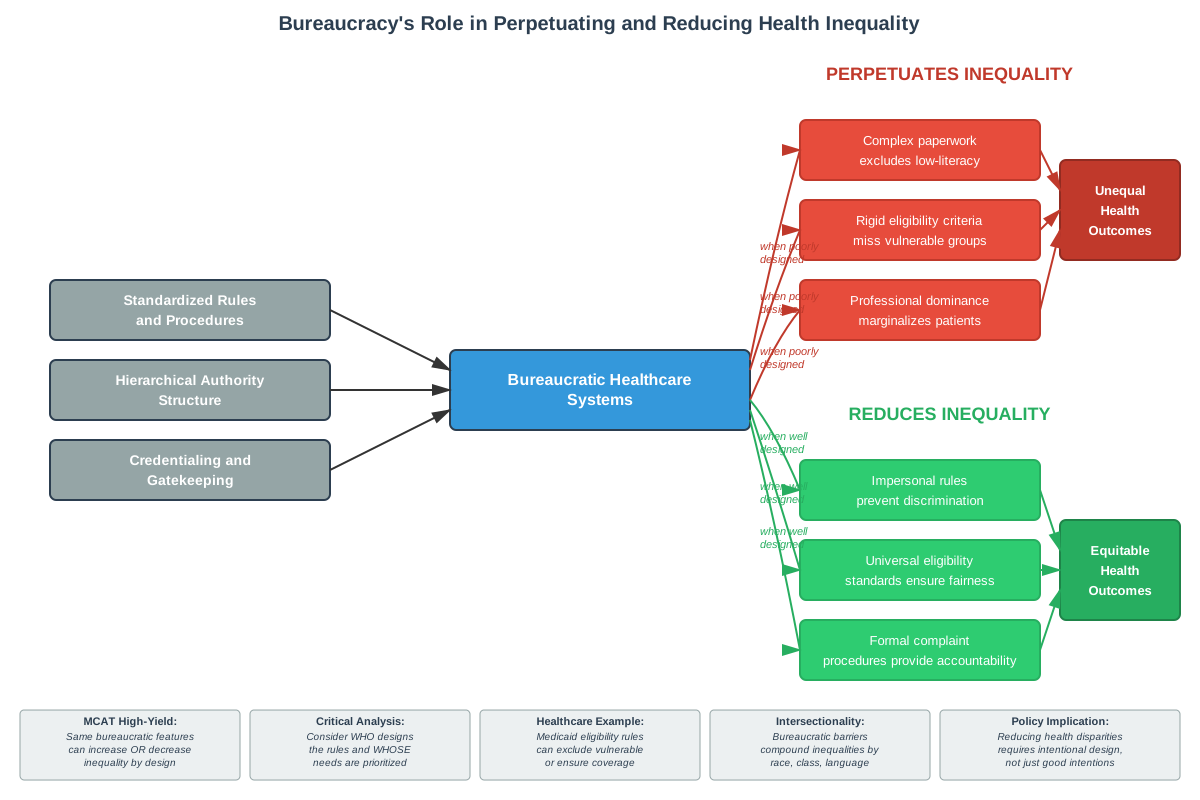
Potential for reducing inequality: Impersonal rules and merit-based employment theoretically eliminate discrimination based on personal characteristics. Standardized procedures can ensure that all individuals receive equal treatment regardless of social status. Formal accountability mechanisms can identify and address discriminatory practices.
Perpetuation of inequality: However, bureaucracies often reproduce existing social hierarchies through several processes. Credentialism—requiring formal qualifications for positions—may exclude disadvantaged groups who lack access to education. Bureaucratic rules, while appearing neutral, may reflect the values and interests of dominant groups. Hierarchical structures concentrate power among elites who may use organizational resources to maintain advantages. Impersonal treatment may ignore relevant individual circumstances, disadvantaging those whose situations don't fit standard categories.
In healthcare, bureaucratic structures can create disparities in access (complex enrollment procedures disadvantage those with limited literacy or language barriers), quality (standardized protocols may not account for cultural differences or social determinants of health), and outcomes (hierarchical communication patterns may mean that concerns of lower-status patients or providers receive less attention).
Concept Relationships
The concepts within bureaucracy form an interconnected system: Weber's ideal type provides the theoretical foundation → defining the six essential characteristics → which produce both advantages (efficiency, consistency, accountability) and disadvantages (ritualism, rigidity, impersonality) → manifesting distinctly in healthcare contexts → with implications for social inequality.
Bureaucracy connects to prerequisite concepts through multiple pathways: Rational-legal authority provides the legitimacy basis for bureaucratic power structures, explaining why people comply with organizational rules and hierarchies. Rationalization represents the broader societal process of which bureaucracy is the organizational manifestation—both emphasize efficiency, calculability, and systematic procedures. Social institutions (healthcare, education, government) organize through bureaucratic structures, making bureaucracy the formal architecture of institutional life.
Bureaucracy relates to other MCAT sociology topics in important ways: Organizational culture exists within bureaucratic structures, creating informal norms and values that may complement or contradict formal rules. Social networks operate alongside formal hierarchies, with informal connections sometimes facilitating or circumventing bureaucratic procedures. Professionalization intersects with bureaucracy as professional groups (physicians, nurses) maintain specialized expertise and autonomy within bureaucratic organizations, creating tensions between professional judgment and bureaucratic control. Social stratification manifests within bureaucratic hierarchies, with positions conferring different levels of prestige, power, and resources.
The relationship map: Rationalization (societal process) → Bureaucracy (organizational form) → Rational-legal authority (legitimacy basis) → Hierarchy + Specialization + Rules + Impersonality (structural characteristics) → Efficiency + Consistency vs. Rigidity + Alienation (outcomes) → Healthcare delivery + Social inequality (applications).
Quick check — test yourself on Bureaucracy so far.
Try Flashcards →High-Yield Facts
⭐ Bureaucracy is characterized by six essential features: hierarchy of authority, division of labor/specialization, written rules and regulations, impersonality, employment based on technical qualifications, and career orientation.
⭐ Max Weber developed bureaucracy as an "ideal type" representing the pure form of rational-legal organization, though no real organization perfectly matches all characteristics.
⭐ Rational-legal authority forms the legitimacy basis for bureaucracy, where power derives from formal positions and established rules rather than personal characteristics or traditions.
⭐ Ritualism occurs when adherence to bureaucratic rules becomes an end in itself rather than a means to achieve organizational goals, representing goal displacement.
⭐ The "iron law of oligarchy" (Robert Michels) states that even democratic organizations inevitably develop bureaucratic structures where power concentrates among a small leadership group.
- Bureaucratic impersonality theoretically promotes fairness by treating all individuals according to rules rather than personal relationships, but can create alienating, dehumanizing experiences.
- Red tape refers to excessive bureaucratic requirements and procedures that impede rather than facilitate organizational goal achievement.
- Healthcare delivery in modern societies occurs predominantly through bureaucratic organizations (hospitals, insurance companies, public health agencies), creating characteristic tensions between efficiency and individualized care.
- Bureaucracies can both reduce inequality (through merit-based employment and standardized treatment) and perpetuate inequality (through credentialism, rules reflecting dominant group values, and hierarchical power concentration).
- Specialization in bureaucracies increases efficiency and expertise but can create professional silos that impede communication and integrated approaches to complex problems.
- Bureaucratic hierarchies establish clear accountability but can also create communication barriers, slow decision-making, and concentrate power at upper levels.
Common Misconceptions
Misconception: Bureaucracy always means inefficiency and excessive red tape. → Correction: While bureaucracies can become inefficient, Weber identified bureaucracy as the most technically efficient organizational form for coordinating complex tasks and large numbers of people. The term "bureaucracy" is descriptive (referring to specific organizational characteristics) rather than inherently negative. Bureaucratic dysfunction represents deviation from the ideal type rather than an essential feature.
Misconception: Impersonality in bureaucracy is entirely negative and dehumanizing. → Correction: Impersonality serves important functions by promoting fairness and consistency—decisions based on rules rather than personal relationships theoretically reduce favoritism, discrimination, and arbitrary treatment. The challenge is balancing impersonal standardization with recognition of individual circumstances, not eliminating impersonality entirely.
Misconception: All formal organizations are equally bureaucratic. → Correction: Bureaucracy exists on a continuum, with organizations exhibiting bureaucratic characteristics to varying degrees. Small organizations, start-ups, and informal groups typically show fewer bureaucratic features than large, established institutions. Weber's ideal type represents one end of the spectrum, not a binary category.
Misconception: Bureaucratic rules always reflect rational, objective requirements. → Correction: While bureaucratic rules appear neutral and rational, they often reflect the values, interests, and perspectives of dominant groups who create them. Rules can perpetuate existing inequalities even when applied consistently, because the rules themselves may disadvantage certain groups.
Misconception: Hierarchy in bureaucracy simply means that some people have more power than others. → Correction: Bureaucratic hierarchy specifically refers to a formal chain of command where each position is supervised by a higher position and authority derives from the position itself (rational-legal authority) rather than personal characteristics. This differs from informal status hierarchies or traditional authority systems based on personal loyalty.
Misconception: Weber believed bureaucracy was perfect and had no problems. → Correction: Weber recognized bureaucracy as the most efficient form of organization for certain purposes in modern societies, but he also warned about the "iron cage" of rationalization—the concern that bureaucratic rationality would dominate all aspects of life, reducing human freedom and meaning. Weber's analysis was descriptive and analytical rather than purely celebratory.
Worked Examples
Example 1: Hospital Communication Failure
Vignette: A patient experiences a medication error when a nurse administers a drug to which the patient has a documented allergy. Investigation reveals that the allergy was noted in the admission paperwork completed by an intake clerk, but this information was not transferred to the electronic health record system that nurses use for medication administration. The intake clerk reports following the standard procedure of completing the paper form, while the nurse reports checking the electronic system as required by hospital protocol. The hospital has separate departments for admissions (supervised by administrative staff) and nursing (supervised by the chief nursing officer), with limited communication between these hierarchical chains.
Question: Which characteristic of bureaucracy most directly contributed to this adverse event?
Analysis: This scenario illustrates bureaucratic dysfunction resulting from several characteristics:
- Hierarchy of authority: The separate hierarchical chains (administrative vs. clinical) created silos where each department followed its own procedures without coordinating with others. The intake clerk reported to administrative supervisors who focused on completing admission paperwork, while nurses reported to clinical supervisors who focused on medication administration protocols.
- Division of labor and specialization: While specialization created expertise (intake clerks skilled at admissions, nurses skilled at medication administration), it also created fragmentation where no single role was responsible for ensuring information transfer between systems.
- Written rules and regulations: Both employees followed their respective written procedures correctly, but the rules didn't account for the gap between systems. This demonstrates how bureaucratic rules can create ritualism—focus on following procedures rather than achieving the underlying goal (patient safety).
Answer: The most direct contributor is the hierarchy of authority creating separate departmental silos with limited communication between hierarchical chains. However, this example also illustrates how multiple bureaucratic characteristics interact to produce dysfunction—specialization created fragmentation, written rules focused on procedures rather than outcomes, and the hierarchical structure lacked coordination mechanisms across departments.
Connection to learning objectives: This example demonstrates applying bureaucracy concepts to healthcare scenarios, identifying how bureaucratic characteristics can produce both efficiency (specialized roles, clear procedures) and problems (communication barriers, fragmentation), and connecting bureaucracy to patient safety outcomes.
Example 2: Public Health Program Implementation
Vignette: A state health department develops a program to increase vaccination rates in underserved communities. The program requires community health centers to submit detailed monthly reports documenting outreach activities, vaccination numbers by demographic categories, and budget expenditures. Centers must obtain prior approval for any modifications to approved outreach strategies. Program staff at the state level review reports and provide feedback, but most staff have backgrounds in epidemiology and data analysis rather than community health work. After six months, vaccination rates have increased only marginally, and community health center staff report spending significant time on documentation rather than outreach. Several centers note that approved strategies don't work well in their specific communities, but the approval process for modifications takes 4-6 weeks.
Question: Identify the bureaucratic advantages and disadvantages illustrated in this scenario, and explain how they affect program outcomes.
Analysis:
Bureaucratic advantages present:
- Accountability: Detailed reporting creates documentation of activities and expenditures, allowing oversight of public funds
- Consistency: Standardized procedures ensure all centers follow similar approaches, facilitating comparison and evaluation
- Specialization: State staff bring epidemiological expertise to program design and data analysis
Bureaucratic disadvantages present:
- Ritualism/goal displacement: Documentation requirements become so burdensome that they interfere with the actual goal (increasing vaccination rates)—staff spend time on paperwork rather than community outreach
- Rigidity: The requirement for prior approval and lengthy modification process prevents centers from adapting strategies to local contexts, even when approved approaches prove ineffective
- Impersonality: Standardized procedures don't account for community-specific circumstances, treating all contexts as identical
- Hierarchy creating disconnect: State-level staff with epidemiological backgrounds may lack understanding of community health realities, creating top-down programs that don't reflect ground-level needs
Effect on outcomes: The bureaucratic structure creates accountability and consistency but undermines effectiveness through excessive documentation requirements, inflexibility, and disconnect between hierarchical levels. The program achieves bureaucratic goals (reports submitted, procedures followed) while failing to achieve substantive goals (significantly increased vaccination rates).
Connection to learning objectives: This example illustrates distinguishing between Weber's ideal type (emphasizing efficiency) and real-world dysfunction, analyzing advantages and disadvantages of bureaucracy in healthcare contexts, and connecting bureaucracy to health outcomes and social inequality (underserved communities affected by bureaucratic rigidity).
Exam Strategy
When approaching MCAT questions on bureaucracy, use this systematic strategy:
1. Identify bureaucratic characteristics in the scenario: Look for explicit mentions of hierarchy, specialization, rules/procedures, impersonality, or merit-based employment. Passages often describe organizational structures without using the term "bureaucracy," so recognize the characteristics even when not explicitly labeled.
2. Distinguish between ideal type and dysfunction: Determine whether the question asks about bureaucracy in theory (Weber's ideal type emphasizing efficiency and rationality) or in practice (real-world problems like ritualism, rigidity, or red tape). Questions may present scenarios where bureaucratic characteristics produce problems, then ask you to identify which characteristic is involved or explain the dysfunction.
3. Watch for trigger words and phrases:
- "Hierarchy," "chain of command," "reporting structure" → hierarchy of authority
- "Specialized roles," "division of labor," "departments" → specialization
- "Policies," "procedures," "protocols," "regulations" → written rules
- "Standardized," "consistent treatment," "same process for everyone" → impersonality
- "Credentials," "qualifications," "merit-based" → technical qualifications
- "Red tape," "excessive paperwork," "bureaucratic barriers" → dysfunction
- "Following procedures but missing goals" → ritualism/goal displacement
4. Apply to healthcare contexts: Most MCAT bureaucracy questions involve healthcare organizations. Consider how bureaucratic characteristics affect patient care, healthcare access, professional relationships, and health outcomes. Common scenarios include hospital hierarchies affecting communication, insurance procedures creating access barriers, and public health programs balancing standardization with local needs.
5. Use process of elimination: When answers include multiple sociological concepts, eliminate options that don't involve organizational structure or formal rules. Bureaucracy specifically refers to organizational characteristics, not informal social processes, individual psychology, or cultural values (unless those values are formalized in organizational rules).
6. Time allocation: Bureaucracy questions typically require 60-90 seconds. Spend 30-40 seconds identifying bureaucratic characteristics in the passage, 20-30 seconds connecting to the question, and 10-20 seconds eliminating wrong answers. Don't overthink—MCAT questions usually test straightforward application of Weber's characteristics or identification of common dysfunctions.
Exam Tip: If a question asks about organizational efficiency, consistency, or coordination, consider bureaucratic advantages. If it asks about rigidity, impersonality, or barriers, consider bureaucratic disadvantages. The MCAT often tests your ability to recognize that the same organizational characteristics can produce both benefits and problems depending on context.
Memory Techniques
Mnemonic for Weber's six characteristics - "HIDES C":
- Hierarchy of authority
- Impersonality
- Division of labor (specialization)
- Employment based on technical qualifications
- Specific written rules and regulations
- Career orientation
Visualization for bureaucratic hierarchy: Picture a pyramid with multiple levels, each level supervising the one below. Information flows up and down through channels, but horizontal communication between different pyramids (departments) is limited. This image helps remember both the structure and the communication problems it creates.
Acronym for bureaucratic dysfunctions - "RRIO":
- Ritualism (following rules becomes the goal)
- Rigidity (resistance to change)
- Impersonality (alienation and dehumanization)
- Oligarchy (power concentration at the top)
Conceptual anchor: Think of bureaucracy as "organized rationality"—it's the attempt to organize human activity according to rational principles of efficiency and consistency. This helps distinguish it from informal organization (social networks, organizational culture) and reminds you that both its strengths (systematic organization) and weaknesses (excessive rationality ignoring human elements) stem from this core characteristic.
Memory palace technique: Imagine walking through a hospital (familiar to pre-med students) and encountering bureaucratic characteristics at each location: entering through the main entrance (hierarchy—organizational chart on the wall), stopping at different departments (specialization), seeing policy manuals at nursing stations (written rules), experiencing impersonal check-in procedures (impersonality), noticing credential certificates on walls (technical qualifications), and seeing long-term employees with seniority (career orientation).
Summary
Bureaucracy represents the dominant organizational form in modern societies, characterized by hierarchy of authority, division of labor and specialization, written rules and regulations, impersonality, employment based on technical qualifications, and career orientation. Max Weber developed bureaucracy as an ideal type representing the most rational and efficient form of organization based on rational-legal authority, where power derives from formal positions and established rules rather than personal characteristics. While bureaucracy offers significant advantages—including efficiency through specialization, consistency through standardized procedures, accountability through clear hierarchies, and theoretically fair treatment through impersonal rules—real-world bureaucracies often exhibit dysfunctions such as ritualism (rule-following becomes an end in itself), rigidity (resistance to change), alienation (dehumanizing impersonality), and oligarchy (power concentration). For the MCAT, understanding bureaucracy is essential for analyzing healthcare organizations, including hospitals, insurance companies, and public health agencies, where bureaucratic structures shape patient care, healthcare access, professional relationships, and health outcomes. Bureaucracy can both reduce inequality (through merit-based employment and standardized treatment) and perpetuate inequality (through credentialism, rules reflecting dominant group values, and hierarchical power concentration), making it crucial for understanding how social structures affect health disparities.
Key Takeaways
- Bureaucracy is defined by six essential characteristics: hierarchy, specialization, written rules, impersonality, technical qualifications, and career orientation—all working together to create rational-legal organization
- Weber's ideal type emphasizes bureaucracy as the most efficient organizational form, but real-world bureaucracies often exhibit dysfunctions including ritualism, rigidity, and excessive red tape
- Rational-legal authority provides the legitimacy basis for bureaucracy, distinguishing it from traditional or charismatic authority systems
- Healthcare delivery occurs predominantly through bureaucratic organizations, creating characteristic tensions between efficiency/standardization and individualized/humanized care
- Bureaucratic impersonality serves important functions (promoting fairness and consistency) but can also create alienating experiences for patients and healthcare workers
- Bureaucracy connects to broader sociological concepts including rationalization (societal process), social institutions (organizational context), and social inequality (both reducing and perpetuating disparities)
- MCAT questions typically test identification of bureaucratic characteristics in organizational scenarios, analysis of bureaucratic advantages versus disadvantages, and application to healthcare contexts affecting patient outcomes and access
Related Topics
Organizational Culture: The informal norms, values, and beliefs that develop within organizations, often complementing or contradicting formal bureaucratic rules. Mastering bureaucracy provides the foundation for understanding how formal and informal organizational elements interact.
Professionalization: The process by which occupations develop specialized knowledge, credentials, and autonomy. Understanding bureaucracy helps explain tensions between professional autonomy (physicians exercising clinical judgment) and bureaucratic control (organizational rules and hierarchies).
McDonaldization: George Ritzer's concept extending Weber's rationalization to describe how principles of fast-food restaurants (efficiency, calculability, predictability, control) increasingly dominate society. This builds directly on bureaucracy and rationalization concepts.
Social Institutions: The established patterns of behavior organized around particular purposes (healthcare, education, government). Bureaucracy provides the formal organizational structure through which modern institutions operate.
Social Stratification and Inequality: The hierarchical arrangement of individuals and groups in society. Understanding bureaucracy enables analysis of how organizational structures create and maintain inequality through credentialism, hierarchical power, and rules reflecting dominant group interests.
Practice CTA
Now that you've mastered the core concepts of bureaucracy, test your understanding with practice questions and flashcards. Focus on identifying bureaucratic characteristics in organizational scenarios, distinguishing between ideal-type efficiency and real-world dysfunction, and applying concepts to healthcare contexts. Remember that bureaucracy appears frequently on the MCAT in passages about hospitals, insurance systems, and public health programs—the more you practice recognizing these patterns, the faster and more accurate you'll become on test day. You've built a strong foundation in a high-yield topic; reinforce it through active practice and you'll be well-prepared for any bureaucracy question the MCAT presents!
Sign up free to keep reading
Create a free AnvayaPrep account to finish this MCAT guide on Bureaucracy — plus flashcards and practice questions.