Overview
Role conflict is a fundamental concept in Sociology that describes the tension experienced when an individual faces incompatible demands from two or more social roles they occupy simultaneously. This phenomenon is central to understanding how individuals navigate complex social structures and institutions in modern society. When a person holds multiple roles—such as parent, employee, student, caregiver, or community member—the expectations, obligations, and demands of these roles can clash, creating psychological stress and forcing difficult choices about time allocation, priorities, and identity expression.
For the MCAT, role conflict represents a high-yield topic that appears frequently in the Psychological, Social, and Biological Foundations of Behavior section. The exam tests not only definitional knowledge but also the ability to identify role conflict in complex social scenarios, distinguish it from related concepts like role strain, and analyze its consequences for individual well-being and social functioning. Understanding role conflict provides essential insight into how social structures shape individual behavior and experience, making it a cornerstone concept for interpreting passages about healthcare delivery, patient-provider relationships, medical professionalism, and the social determinants of health.
Role conflict connects to broader sociological frameworks including social structure theory, symbolic interactionism, and functionalism. It illuminates how macro-level social organization creates micro-level individual experiences, demonstrating the interplay between society and self that is central to Sociology MCAT content. Mastering this concept enables students to analyze how institutional demands, cultural expectations, and interpersonal relationships create the complex social landscape that individuals must navigate daily.
Learning Objectives
- [ ] Define Role conflict using accurate Sociology terminology
- [ ] Explain why Role conflict matters for the MCAT
- [ ] Apply Role conflict to exam-style questions
- [ ] Identify common mistakes related to Role conflict
- [ ] Connect Role conflict to related Sociology concepts
- [ ] Distinguish between role conflict and role strain with specific examples
- [ ] Analyze the consequences of role conflict for individual health and social functioning
- [ ] Evaluate strategies individuals use to manage or resolve role conflicts
Prerequisites
- Social roles: Understanding that roles are sets of expected behaviors associated with particular social positions; relevant because role conflict specifically involves tensions between multiple roles
- Status and social position: Knowledge that individuals occupy multiple statuses simultaneously; relevant because each status carries role expectations that may conflict
- Socialization: Familiarity with how individuals learn social expectations; relevant because role expectations are socially constructed and learned through socialization processes
- Social structure: Basic understanding of how society is organized into interconnected institutions; relevant because role conflicts often arise from competing institutional demands
Why This Topic Matters
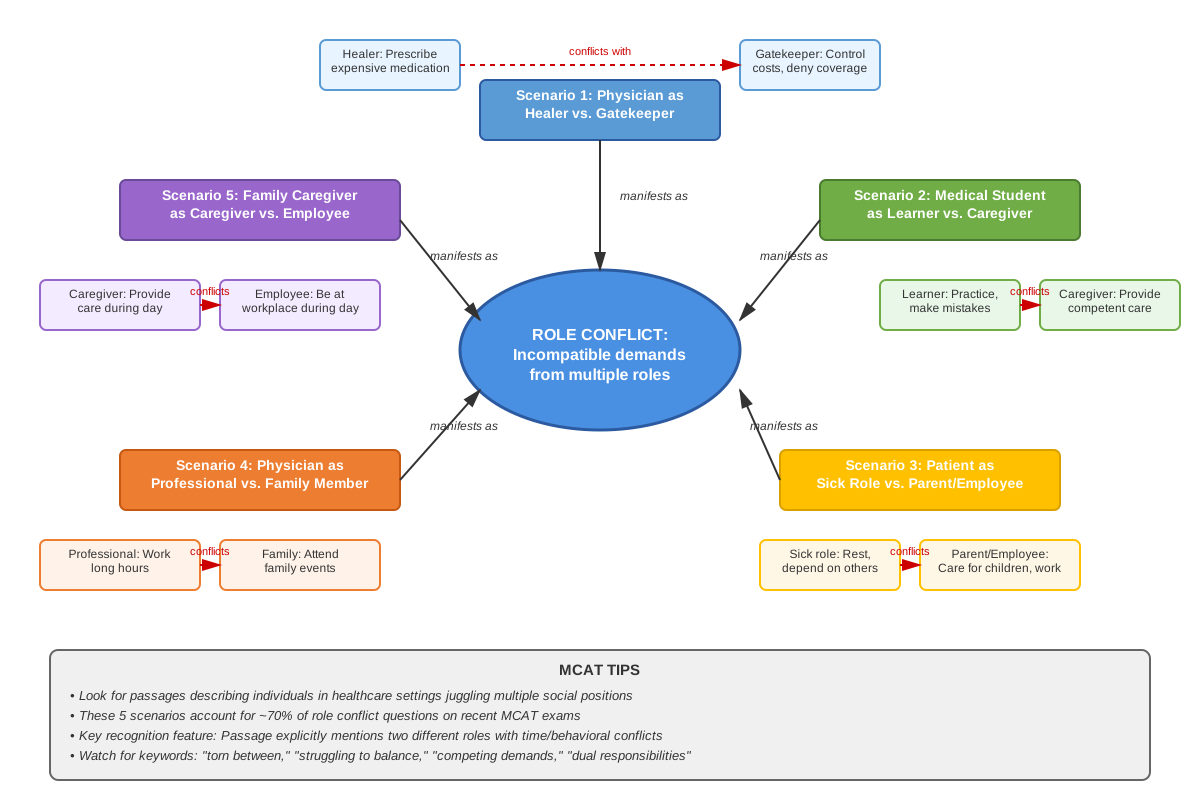
Role conflict has profound real-world significance for healthcare professionals and patients alike. Physicians regularly experience role conflict between their roles as healers (prioritizing individual patient care) and gatekeepers (managing healthcare resources and institutional efficiency). Medical students face conflicts between their roles as learners (needing to ask questions and make mistakes) and caregivers (expected to project competence and provide care). Patients may experience conflict between their sick role (requiring rest and dependence) and their roles as parents, employees, or caregivers (requiring activity and independence). These conflicts directly impact health outcomes, treatment adherence, professional burnout, and healthcare quality.
On the MCAT, role conflict appears in approximately 15-20% of Sociology passages and discrete questions in the Psychological, Social, and Biological Foundations section. Questions typically present complex social scenarios requiring students to identify which type of role problem exists, predict consequences, or evaluate resolution strategies. The exam frequently embeds role conflict within passages about medical professionalism, healthcare disparities, family dynamics affecting health decisions, or workplace stress in medical settings.
Common exam presentations include: (1) vignettes describing healthcare workers balancing professional and personal obligations, (2) passages analyzing how social structures create competing demands on individuals, (3) research scenarios examining stress and coping mechanisms, and (4) case studies of patients whose multiple social roles affect their health behaviors. The MCAT particularly favors questions that require distinguishing role conflict from role strain, as this discrimination tests deeper conceptual understanding rather than simple memorization.
Core Concepts
Definition and Components of Role Conflict
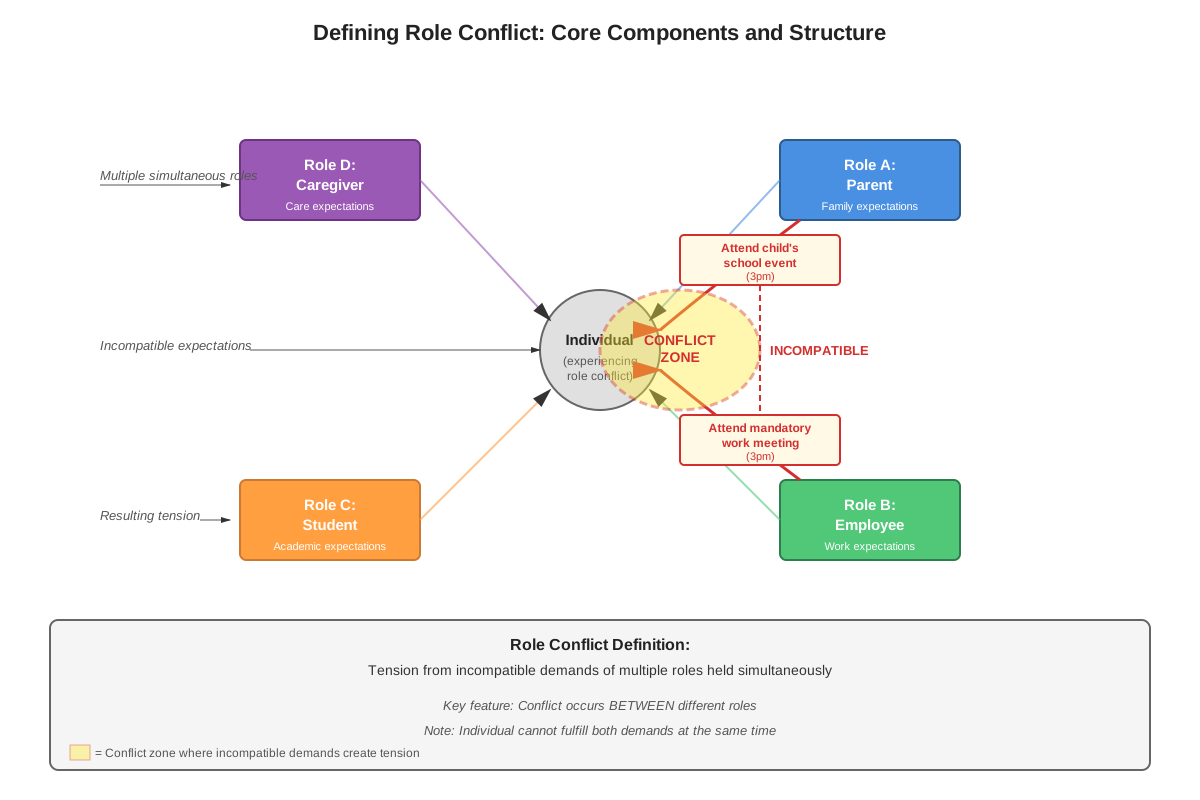
Role conflict occurs when an individual experiences incompatible demands from two or more roles they occupy simultaneously, or when the expectations within a single role are contradictory due to different people holding different expectations for that role. This concept is fundamental to role conflict Sociology and represents a key mechanism through which social structure and institutions create individual-level stress and behavioral dilemmas.
Role conflict has three essential components:
- Multiple role occupancy: The individual must hold two or more distinct social roles
- Incompatible expectations: The demands, obligations, or expectations of these roles must conflict in some meaningful way
- Simultaneous activation: The conflicting roles must be salient or active at the same time, forcing the individual to choose or compromise
The experience of role conflict is inherently social rather than purely psychological—it arises from the structure of social positions and cultural expectations rather than from individual personality traits or preferences, though individual factors influence how role conflict is experienced and managed.
Types of Role Conflict
Inter-role conflict (also called role-to-role conflict) occurs when the demands of two or more different roles clash. This is the most common type tested on the MCAT. For example, a medical resident experiences inter-role conflict when their role as a physician requires them to work a night shift while their role as a parent requires them to attend their child's school event. The expectations are mutually exclusive—the individual cannot simultaneously fulfill both role demands.
Intra-role conflict (also called person-role conflict) occurs when different people hold different expectations for the same role, or when a single role contains inherently contradictory expectations. For instance, a physician may experience intra-role conflict when patients expect unlimited time and attention while hospital administrators expect efficiency and high patient volume. Both sets of expectations apply to the same role (physician), but they conflict with each other.
Inter-sender conflict is a specific type of intra-role conflict where different people (role senders) communicate incompatible expectations for the same role. A nurse might receive conflicting instructions from two different physicians about patient care, creating inter-sender conflict within the nursing role.
Person-role conflict occurs when role expectations clash with an individual's personal values, beliefs, or identity. A pharmacist who personally opposes certain medications may experience person-role conflict when their professional role requires dispensing those medications. While this involves internal tension, it remains a social phenomenon because the conflict arises from socially defined role expectations rather than purely personal preferences.
Role Conflict vs. Role Strain
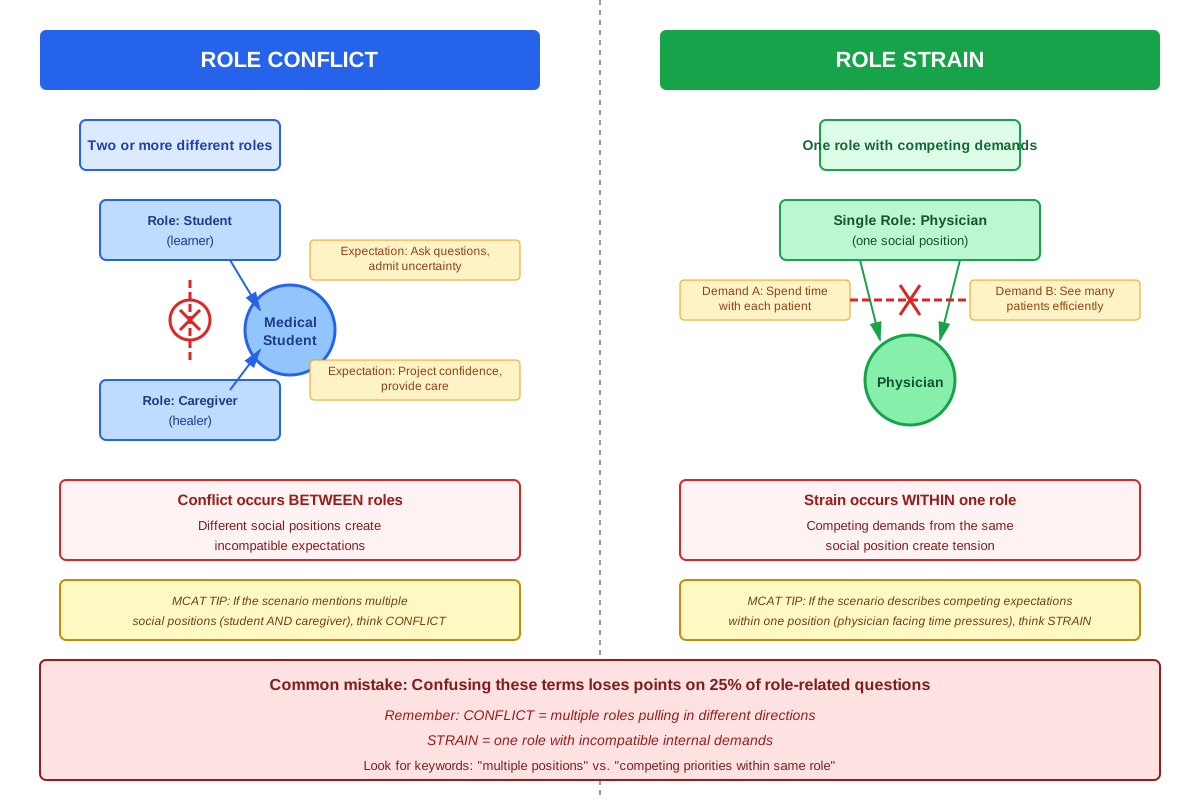
Distinguishing role conflict from role strain is critical for MCAT success, as this comparison appears frequently on the exam. Both concepts involve role-related stress, but they differ fundamentally in structure:
| Feature | Role Conflict | Role Strain |
|---|---|---|
| Number of roles | Two or more different roles | Single role |
| Source of tension | Incompatible demands between roles | Excessive or difficult demands within one role |
| Example | Student-athlete missing class for competition | Student overwhelmed by multiple assignments in one course |
| Resolution strategy | Prioritize one role over another; compartmentalize | Time management; seek support; reduce expectations |
| Structural cause | Multiple role occupancy | Role overload or role ambiguity |
Role strain specifically refers to stress experienced within a single role due to excessive demands, unclear expectations, or insufficient resources to meet role requirements. A physician experiencing burnout from working 80-hour weeks is experiencing role strain (one role, too many demands), while a physician missing their child's birthday due to work is experiencing role conflict (two roles with incompatible demands).
Consequences of Role Conflict
Role conflict produces multiple consequences at individual and social levels. Psychological consequences include stress, anxiety, guilt, reduced life satisfaction, and identity confusion. When individuals cannot fulfill all role expectations, they may experience cognitive dissonance and emotional distress. Chronic role conflict contributes to burnout, particularly in helping professions where professional and personal role boundaries are frequently challenged.
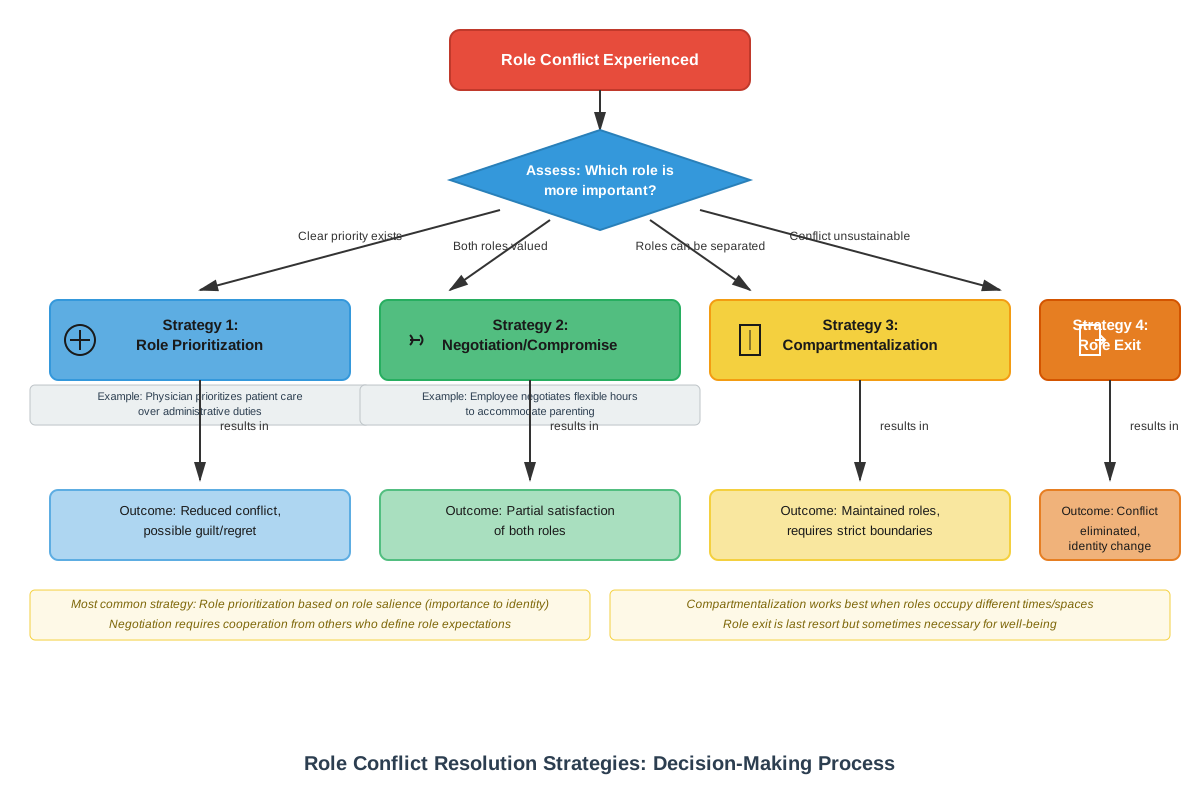
Behavioral consequences include reduced performance in one or more roles, withdrawal from roles, or attempts to compartmentalize roles strictly. Individuals may engage in role prioritization (consistently choosing one role over others), role negotiation (attempting to modify expectations), or role exit (abandoning a role entirely). These behavioral responses can affect social relationships, career trajectories, and health outcomes.
Health consequences are particularly relevant for the MCAT. Research demonstrates that chronic role conflict correlates with increased cardiovascular disease risk, immune system suppression, sleep disturbances, and mental health disorders. The stress pathway involves activation of the hypothalamic-pituitary-adrenal (HPA) axis and sustained cortisol elevation, linking social structure to biological outcomes—a key theme in MCAT Sociology content.
Social consequences include reduced organizational effectiveness, increased turnover in work settings, family disruption, and social inequality. Role conflict disproportionately affects individuals with fewer resources to manage competing demands, contributing to health disparities. For example, low-income parents may experience more severe work-family role conflict due to inflexible work schedules and limited access to childcare.
Coping Strategies and Resolution
Individuals employ various strategies to manage role conflict. Structural solutions involve changing the objective situation—reducing role commitments, negotiating modified expectations, or seeking institutional accommodations. A medical student might request a schedule adjustment to accommodate family obligations, addressing role conflict through structural change.
Cognitive solutions involve changing how one thinks about roles without changing the objective situation. Rationalization (justifying prioritizing one role), compartmentalization (mentally separating roles), and reframing (reinterpreting role demands as compatible) are cognitive strategies. A physician might rationalize missing family dinners by emphasizing that their work ultimately benefits their family financially.
Social support serves as a crucial buffer against role conflict stress. Support from family, colleagues, or institutions can provide practical assistance (reducing demands) or emotional validation (reducing psychological distress). Healthcare institutions that provide childcare, flexible scheduling, or mental health resources help employees manage work-family role conflicts.
Role prioritization involves establishing a hierarchy of role importance and consistently choosing higher-priority roles when conflicts arise. While this reduces decision-making stress, it may lead to guilt or relationship problems in deprioritized roles. Cultural values and social identities strongly influence which roles individuals prioritize.
Concept Relationships
Role conflict connects intimately to other core sociology concepts tested on the MCAT. Social roles form the foundation—role conflict cannot exist without multiple role occupancy. Each role carries expectations learned through socialization, and conflicts arise when socialization into different roles produces incompatible behavioral scripts.
Status relates directly to role conflict because each status (social position) carries associated roles. Individuals with multiple statuses (status set) necessarily hold multiple roles, increasing role conflict potential. Master status—a status that dominates others and shapes overall identity—can influence how individuals resolve role conflicts by prioritizing roles associated with their master status.
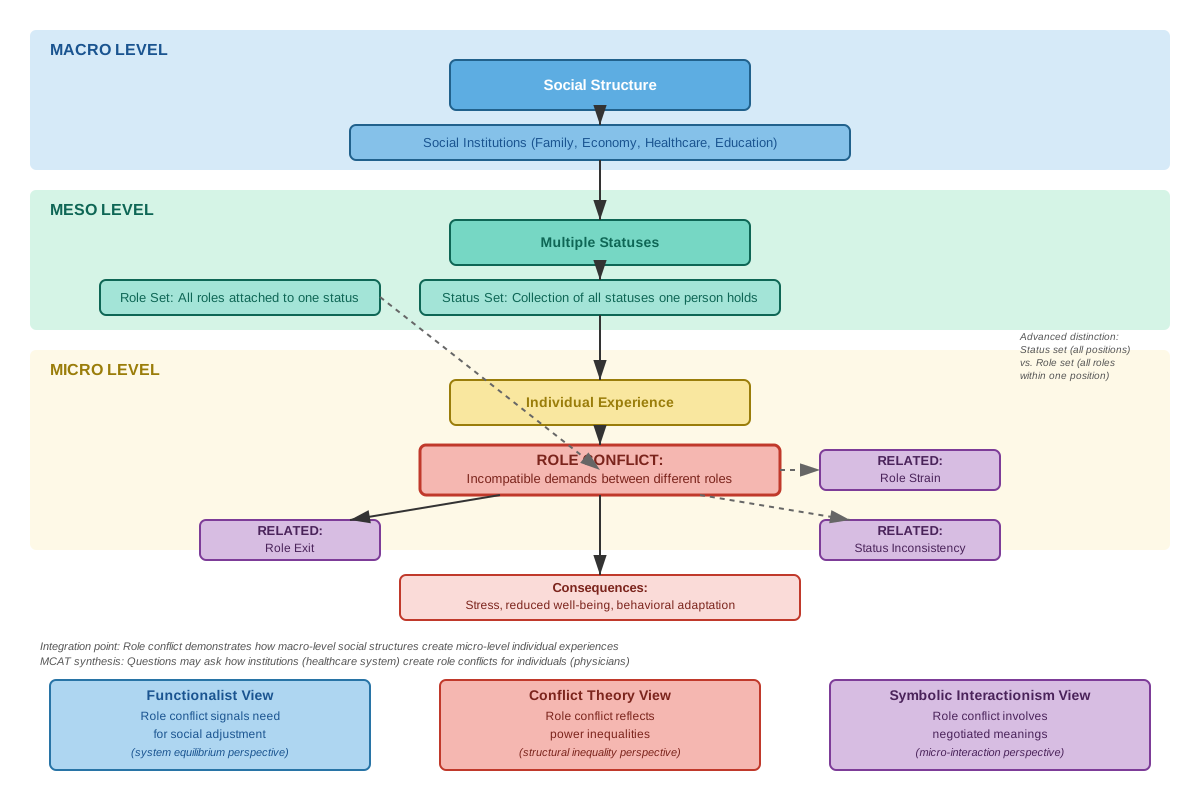
Social structure and institutions create the framework within which role conflicts emerge. Institutional demands (workplace productivity expectations, family caregiving norms, educational requirements) generate role expectations that may conflict. Understanding role conflict illuminates how macro-level social organization produces micro-level individual experiences.
Role strain represents the closest related concept, differing in involving a single role rather than multiple roles. Both role conflict and role strain can lead to role exit—abandoning a role entirely when stress becomes unmanageable. Role exit represents a dramatic resolution strategy for severe role conflict.
Social identity theory connects to role conflict through the concept of identity salience—which social identities are most central to self-concept. When role conflict occurs, individuals often prioritize roles associated with more salient identities. Reference groups—groups individuals use for self-evaluation and behavior guidance—influence which role expectations individuals prioritize during conflicts.
The relationship map flows: Social Structure → Multiple Status Occupancy → Multiple Role Occupancy → Competing Role Expectations → Role Conflict → Stress and Coping Responses → Health Outcomes and Behavioral Consequences.
Quick check — test yourself on Role conflict so far.
Try Flashcards →High-Yield Facts
⭐ Role conflict occurs when incompatible demands arise from two or more different roles occupied simultaneously, while role strain involves excessive demands within a single role.
⭐ Inter-role conflict (conflict between different roles) is the most common type tested on the MCAT and most frequently involves work-family conflicts in healthcare settings.
⭐ Role conflict is a structural phenomenon arising from social organization rather than individual personality, though individual factors influence coping responses.
⭐ Chronic role conflict activates stress pathways (HPA axis) and correlates with increased risk for cardiovascular disease, immune suppression, and mental health disorders.
⭐ Healthcare professionals commonly experience role conflict between their roles as healers (patient advocacy) and gatekeepers (resource management), a frequent MCAT passage theme.
- Intra-role conflict occurs when different people hold different expectations for the same role or when a single role contains contradictory expectations.
- Role conflict disproportionately affects individuals with fewer resources (time, money, social support), contributing to health disparities.
- Common coping strategies include structural solutions (changing the situation), cognitive solutions (changing interpretations), and social support (buffering stress).
- Role prioritization involves establishing a hierarchy of role importance, influenced by cultural values and identity salience.
- Medical students experience role conflict between their learner role (needing to ask questions and acknowledge limitations) and caregiver role (expected to project competence).
- Person-role conflict occurs when role expectations clash with personal values, common in healthcare professions involving ethically complex decisions.
- Role conflict can lead to role exit—completely abandoning a role—when stress becomes unmanageable and other coping strategies fail.
Common Misconceptions
Misconception: Role conflict and role strain are the same thing, just different terms for role-related stress.
Correction: Role conflict specifically involves incompatible demands from two or more different roles, while role strain involves excessive or difficult demands within a single role. The distinction is structural—role conflict requires multiple roles, role strain requires only one. This difference matters for predicting consequences and identifying appropriate solutions.
Misconception: Role conflict is primarily a psychological problem caused by poor time management or personal inadequacy.
Correction: Role conflict is fundamentally a social structural phenomenon arising from how society organizes roles and expectations. While individual factors influence coping, the conflict itself stems from incompatible social demands rather than personal failings. Recognizing this prevents victim-blaming and directs attention to structural solutions.
Misconception: All role conflicts involve work and family roles.
Correction: While work-family conflict is common and frequently tested, role conflict can involve any combination of roles: student-athlete, patient-caregiver, friend-employee, religious community member-professional, or any other role combination. The MCAT tests recognition of role conflict across diverse social contexts.
Misconception: Experiencing role conflict means someone has taken on too many responsibilities and should simply reduce commitments.
Correction: Role conflict can occur even with minimal role commitments if those roles have fundamentally incompatible expectations. Additionally, many roles (parent, employee, student) cannot be easily abandoned. Effective responses often involve negotiating expectations or seeking institutional support rather than role exit.
Misconception: Person-role conflict is not really role conflict because it involves personal values rather than multiple roles.
Correction: Person-role conflict is a legitimate form of role conflict because the tension arises from socially defined role expectations conflicting with personal identity. The conflict remains social in origin—society defines the role expectations that clash with individual values. This type appears on the MCAT in questions about medical ethics and professional identity.
Worked Examples
Example 1: Identifying Role Conflict in a Clinical Vignette
Vignette: Dr. Martinez is a resident physician working in the emergency department. During her shift, her daughter's school calls to report that her daughter is sick and needs to be picked up immediately. Dr. Martinez is the only physician available to treat several patients waiting for care. She feels torn between staying to care for her patients and leaving to care for her daughter.
Analysis:
Step 1: Identify the roles involved. Dr. Martinez occupies two distinct roles: (1) physician/healthcare provider and (2) parent/mother.
Step 2: Identify the expectations of each role. The physician role expects her to provide medical care to patients who need treatment and to maintain professional responsibility for patient welfare. The parent role expects her to respond to her child's illness and provide direct care when her child is sick.
Step 3: Determine if expectations are incompatible. Yes—she cannot simultaneously be physically present in the emergency department treating patients and at her daughter's school providing parental care. The expectations are mutually exclusive at this moment.
Step 4: Classify the type of conflict. This is inter-role conflict (also called role-to-role conflict) because the incompatible demands come from two different roles. It is specifically a work-family role conflict.
Step 5: Distinguish from role strain. This is NOT role strain because the stress arises from competing demands of two different roles, not from excessive demands within a single role. If Dr. Martinez were simply overwhelmed by the number of patients to see (one role, too many demands), that would be role strain.
Step 6: Predict consequences. Dr. Martinez will likely experience stress, guilt regardless of which choice she makes, and potential negative consequences in whichever role she deprioritizes. This situation may contribute to burnout if it occurs repeatedly.
Connection to learning objectives: This example demonstrates application of role conflict concepts to an exam-style clinical vignette, distinguishes role conflict from role strain, and identifies consequences—all key MCAT skills.
Example 2: Distinguishing Role Conflict from Role Strain
Scenario A: A medical student has three exams, two lab reports, and a research presentation all due within the same week. She feels overwhelmed and anxious about completing all the work to her usual standards.
Scenario B: A medical student is scheduled to take an important exam on the same day her sister is getting married in another state. She feels torn between her academic obligations and her family obligations.
Analysis:
Scenario A Classification: This is role strain, not role conflict. The student occupies one role (student), and the stress arises from excessive demands within that single role. All the competing demands (exams, reports, presentation) are expectations of the student role. The solution involves time management, prioritization within the role, or negotiating deadline extensions—all strategies for managing demands within a single role.
Scenario B Classification: This is role conflict, specifically inter-role conflict. The student occupies two roles (student and family member/sister), and these roles have incompatible demands at the same time. She cannot simultaneously be in two different locations fulfilling both role expectations. The solution requires choosing to prioritize one role over the other or negotiating to change the timing of one obligation.
Key distinction: The critical difference is whether the competing demands come from one role (strain) or multiple roles (conflict). Both create stress, but the structural difference determines appropriate coping strategies and predicts different consequences.
MCAT application: Exam questions frequently present scenarios and ask students to identify whether role conflict or role strain is occurring. The correct answer depends on counting roles and identifying the source of incompatible demands. Watch for scenarios with multiple social positions (physician AND parent, student AND athlete) as signals of potential role conflict.
Exam Strategy
When approaching role conflict MCAT questions, begin by systematically identifying all social roles mentioned in the passage or question stem. Create a mental list: "This person is a [role 1], [role 2], and [role 3]." This inventory helps distinguish role conflict scenarios (multiple roles) from role strain scenarios (single role).
Trigger words and phrases that signal role conflict include: "torn between," "competing demands," "work-family balance," "professional obligations versus personal responsibilities," "multiple commitments," and "conflicting expectations from different areas of life." When you see these phrases, immediately consider whether multiple distinct roles are involved.
Process of elimination strategy: When answer choices include both "role conflict" and "role strain," eliminate role strain if the scenario clearly involves two or more distinct social roles with incompatible demands. Eliminate role conflict if the scenario involves only one role with excessive demands. If the scenario involves a healthcare professional experiencing stress, ask: "Is this stress from balancing different life roles (conflict) or from demands within their professional role (strain)?"
For questions asking about consequences or solutions, remember that role conflict solutions often involve choosing between roles or negotiating role expectations, while role strain solutions involve managing demands within a role through time management or seeking support. Answer choices suggesting "better time management" typically address role strain, while choices suggesting "institutional flexibility" or "role prioritization" typically address role conflict.
Time allocation: Role conflict questions typically require 60-90 seconds. Spend 20-30 seconds carefully reading and identifying roles, 20-30 seconds determining the type of conflict, and 20-30 seconds evaluating answer choices. Don't rush the role identification step—misidentifying the number of roles involved leads to incorrect answers.
Exam Tip: If a passage describes a healthcare worker experiencing stress, always ask: "Is this person struggling to balance their professional role with other life roles (conflict), or struggling with excessive demands within their professional role (strain)?" This single question correctly categorizes most MCAT role conflict scenarios.
Memory Techniques
Mnemonic for Role Conflict vs. Role Strain: "CONFLICT = COUNT roles"
- Conflict requires Counting multiple roles (2+)
- Strain involves a Single role
Visualization strategy: Picture role conflict as a person being pulled in opposite directions by two different groups of people (representing different roles), like a tug-of-war with the person in the middle. Picture role strain as a person carrying an increasingly heavy stack of boxes (all labeled with the same role), struggling under the weight but moving in one direction.
Acronym for types of role conflict: "I-I-P" (sounds like "eye-eye-pee")
- Inter-role conflict (between different roles)
- Intra-role conflict (within one role, different expectations)
- Person-role conflict (personal values vs. role expectations)
Memory phrase for consequences: "Role conflict causes BASH"
- Behavioral changes (reduced performance, withdrawal)
- Anxiety and stress
- Social problems (relationship strain)
- Health consequences (HPA axis activation, disease risk)
Conceptual anchor: Link role conflict to the common experience of "wearing different hats"—when your "parent hat" and "employee hat" require you to be in two places at once, that's role conflict. When one "hat" is too heavy with responsibilities, that's role strain.
Summary
Role conflict represents a fundamental sociological concept describing the tension individuals experience when incompatible demands arise from two or more social roles they occupy simultaneously. Distinguished from role strain (excessive demands within a single role), role conflict is a structural phenomenon arising from how society organizes multiple role expectations that may clash. The MCAT frequently tests this concept through clinical vignettes involving healthcare professionals balancing work and family roles, medical students navigating learner and caregiver identities, or patients whose multiple social roles affect health decisions. Understanding role conflict requires recognizing its types (inter-role, intra-role, and person-role conflict), identifying its psychological and health consequences (stress, burnout, cardiovascular disease risk), and evaluating coping strategies (structural solutions, cognitive reframing, social support, role prioritization). Success on MCAT questions demands the ability to distinguish role conflict from role strain by systematically identifying the number of roles involved and the source of incompatible demands, then applying this analysis to predict consequences and evaluate solutions within complex social scenarios.
Key Takeaways
- Role conflict occurs when incompatible demands arise from two or more different roles occupied simultaneously, while role strain involves excessive demands within a single role—this distinction is the most frequently tested concept.
- The three main types are inter-role conflict (between different roles), intra-role conflict (contradictory expectations within one role), and person-role conflict (role expectations conflicting with personal values).
- Role conflict is a structural social phenomenon arising from how society organizes roles and expectations, not primarily a personal or psychological problem, though individual factors influence coping.
- Chronic role conflict produces significant health consequences through stress pathway activation (HPA axis), increasing risk for cardiovascular disease, immune suppression, and mental health disorders.
- Healthcare professionals commonly experience role conflict between professional obligations (patient care, institutional demands) and personal roles (parent, spouse, caregiver), making this a high-yield MCAT theme.
- Effective coping strategies include structural solutions (changing the situation), cognitive solutions (reframing), social support (buffering stress), and role prioritization (establishing role hierarchy).
- On the MCAT, systematically count the roles involved in any scenario—multiple distinct roles suggest role conflict, while a single role with excessive demands suggests role strain.
Related Topics
- Role strain: Excessive demands within a single role; mastering role conflict enables clear distinction from role strain, a common comparison on the MCAT
- Role exit: The process of disengaging from a role that is central to self-identity; understanding role conflict illuminates why individuals might exit roles
- Status and status sets: The collection of social positions an individual occupies; each status carries roles that may conflict
- Social identity theory: How individuals derive identity from group memberships; explains which roles individuals prioritize during conflicts
- Work-family balance: Specific application of role conflict theory to employment and family domains; frequent MCAT passage topic
- Burnout and occupational stress: Consequences of chronic role conflict and role strain in professional settings, particularly healthcare
- Social support networks: Resources that buffer against role conflict stress; understanding role conflict clarifies why social support matters for health
Practice CTA
Now that you've mastered the core concepts of role conflict, it's time to solidify your understanding through active practice. Complete the practice questions to test your ability to identify role conflict in complex scenarios, distinguish it from role strain, and apply these concepts to MCAT-style passages. Use the flashcards to reinforce key definitions and high-yield facts until you can instantly recognize role conflict triggers in exam questions. Remember: the MCAT rewards not just knowledge but the ability to apply concepts quickly and accurately under time pressure. Your investment in practice now will translate directly to points on test day. You've got this!
Sign up free to keep reading
Create a free AnvayaPrep account to finish this MCAT guide on Role conflict — plus flashcards and practice questions.