Overview
Sanctions are fundamental mechanisms through which societies maintain social order, enforce norms, and regulate behavior. In Sociology, sanctions represent the rewards and punishments that groups use to encourage conformity and discourage deviance from established social norms. Understanding sanctions is critical for MCAT success because they form the backbone of how social structure and institutions function to create predictable patterns of behavior within communities, organizations, and entire societies.
The concept of sanctions bridges multiple domains tested on the MCAT Sociology section. Sanctions connect directly to theories of social control, deviance, socialization, and the functioning of institutions like family, education, religion, and criminal justice systems. When analyzing MCAT passages about community responses to behavior, organizational policies, or cultural practices, recognizing the role of sanctions helps students identify the underlying mechanisms that maintain social cohesion. The MCAT frequently tests this concept through scenarios involving conformity pressure, institutional responses to rule-breaking, or cultural variations in acceptable behavior.
Sanctions operate at every level of social organization—from informal peer disapproval in small groups to formal legal penalties imposed by governments. This multi-level application makes sanctions a high-yield topic that appears across diverse question types, including those involving psychological and social foundations of behavior, cultural competency in healthcare settings, and understanding patient compliance with medical recommendations. Mastering sanctions provides students with a powerful analytical framework for dissecting complex social scenarios that regularly appear in MCAT passages.
Learning Objectives
- [ ] Define sanctions using accurate Sociology terminology
- [ ] Explain why sanctions matter for the MCAT
- [ ] Apply sanctions to exam-style questions
- [ ] Identify common mistakes related to sanctions
- [ ] Connect sanctions to related Sociology concepts
- [ ] Distinguish between formal and informal sanctions with specific examples
- [ ] Analyze how positive and negative sanctions work together to shape behavior
- [ ] Evaluate the effectiveness of different sanction types in various social contexts
- [ ] Predict which type of sanction would be most appropriate in a given scenario
Prerequisites
- Social norms: Understanding of explicit and implicit rules that govern behavior in groups; sanctions are the enforcement mechanisms for these norms
- Deviance: Knowledge of behavior that violates social norms; sanctions are society's responses to both conformity and deviance
- Socialization: Familiarity with how individuals learn social expectations; sanctions are tools used during socialization to teach appropriate behavior
- Social control: Basic understanding of mechanisms societies use to regulate behavior; sanctions are the primary instruments of social control
- Groups and organizations: Recognition of how collectives function; sanctions operate differently across various group sizes and organizational structures
Why This Topic Matters
Clinical and Real-World Significance
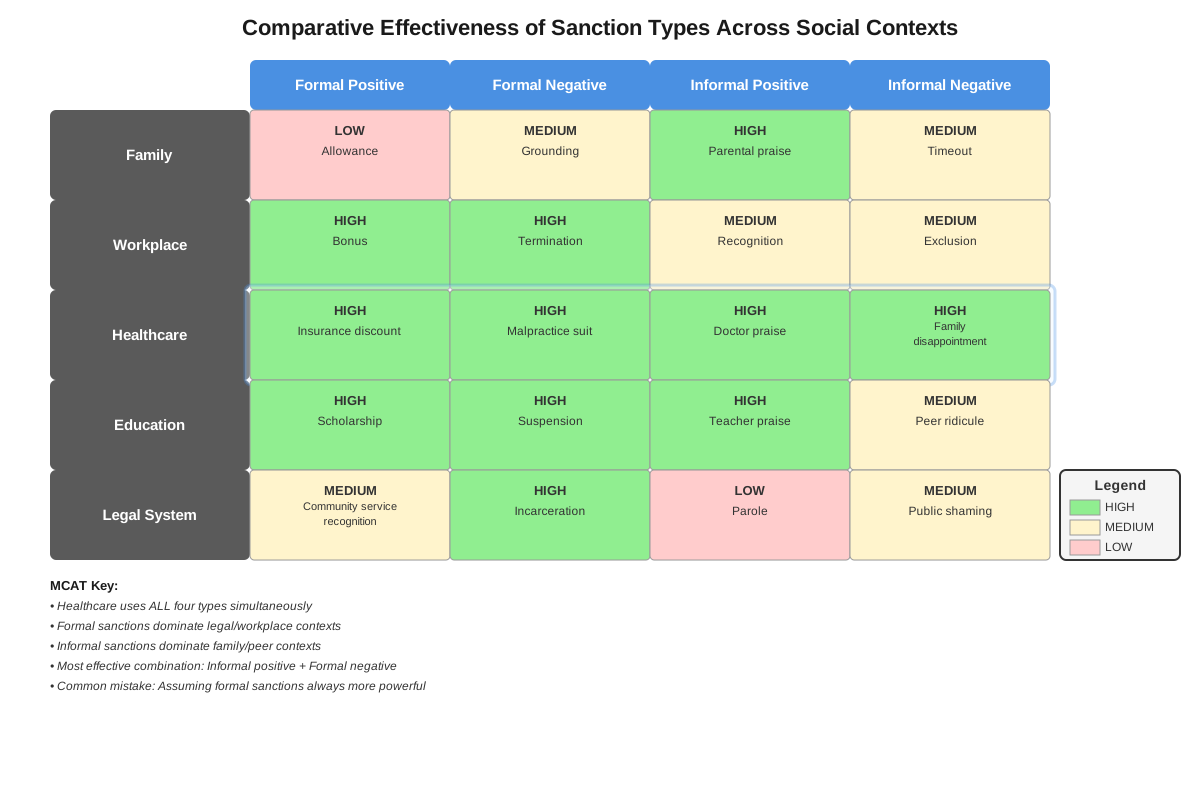
Healthcare professionals encounter sanctions constantly in medical practice. Patient compliance with treatment regimens often depends on informal sanctions (family approval or disapproval) and formal sanctions (insurance coverage or denial). Medical professionals themselves operate within sanction systems—from informal peer recognition for excellent care to formal disciplinary actions by medical boards. Understanding sanctions helps future physicians recognize why patients may resist certain treatments due to cultural sanctions, why healthcare disparities persist through institutional sanction patterns, and how to effectively motivate behavioral change in patients.
MCAT Exam Statistics
Sanctions appear in approximately 15-20% of MCAT Sociology passages, making this a high-frequency topic. Questions typically present scenarios requiring students to identify sanction types, predict behavioral responses to sanctions, or analyze how sanctions maintain social order. The concept appears most commonly in passages about:
- Healthcare compliance and patient behavior
- Cultural practices and medical decision-making
- Institutional responses to professional misconduct
- Community health interventions
- Social determinants of health
Common Exam Presentation Formats
The MCAT presents sanctions through various question formats: identifying which type of sanction is being described in a vignette, predicting how individuals will respond to different sanctions, analyzing why certain sanctions are more effective than others in specific contexts, and connecting sanction systems to broader theories of social control. Passages may describe workplace scenarios, community health programs, educational settings, or family dynamics—all requiring students to recognize and analyze sanction mechanisms at work.
Core Concepts
Definition and Classification of Sanctions
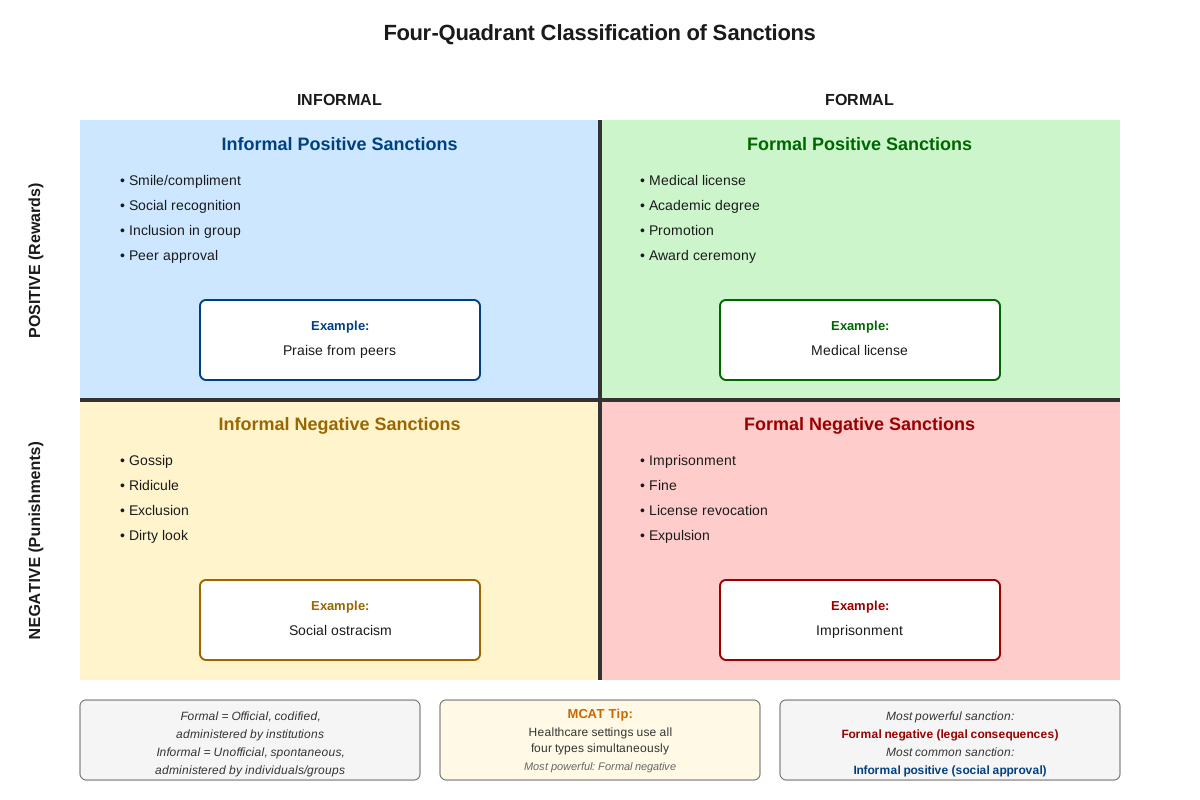
Sanctions are reactions from others to an individual's behavior that serve to enforce social norms. They function as the primary mechanism through which societies encourage conformity and discourage deviance. Sanctions can be understood along two critical dimensions that create four distinct categories.
The first dimension distinguishes between formal sanctions and informal sanctions. Formal sanctions are official, organized responses administered by recognized authorities or institutions. These sanctions follow established rules and procedures, are typically documented, and carry predictable consequences. Examples include legal penalties (fines, imprisonment), professional licensure actions (suspension, revocation), academic consequences (grades, expulsion), and workplace disciplinary measures (written warnings, termination).
Informal sanctions are unofficial, spontaneous reactions from individuals or groups without institutional authority. These sanctions emerge naturally from social interactions and include gestures, expressions, comments, and changes in social relationships. Examples include praise, ridicule, gossip, social inclusion or exclusion, facial expressions of approval or disapproval, and changes in friendship patterns.
Positive and Negative Sanctions
The second dimension distinguishes between positive sanctions and negative sanctions based on whether they reward or punish behavior.
Positive sanctions are rewards that reinforce conformity to norms. They encourage individuals to repeat desirable behaviors by providing benefits, recognition, or approval. Positive sanctions can be formal (awards, promotions, bonuses, honors, degrees) or informal (compliments, smiles, applause, increased social status, friendship).
Negative sanctions are punishments that discourage norm violations. They aim to prevent individuals from repeating undesirable behaviors by imposing costs, restrictions, or disapproval. Negative sanctions can be formal (imprisonment, fines, license revocation, demotion, expulsion) or informal (criticism, gossip, ostracism, ridicule, frowning).
| Sanction Type | Formal Example | Informal Example |
|---|---|---|
| Positive | Medical license, academic degree, employee bonus, military medal | Praise from peers, smile of approval, invitation to social events, compliment |
| Negative | Prison sentence, professional suspension, academic expulsion, traffic ticket | Social ostracism, gossip, eye roll, unfriending on social media, verbal criticism |
Mechanisms of Sanction Effectiveness
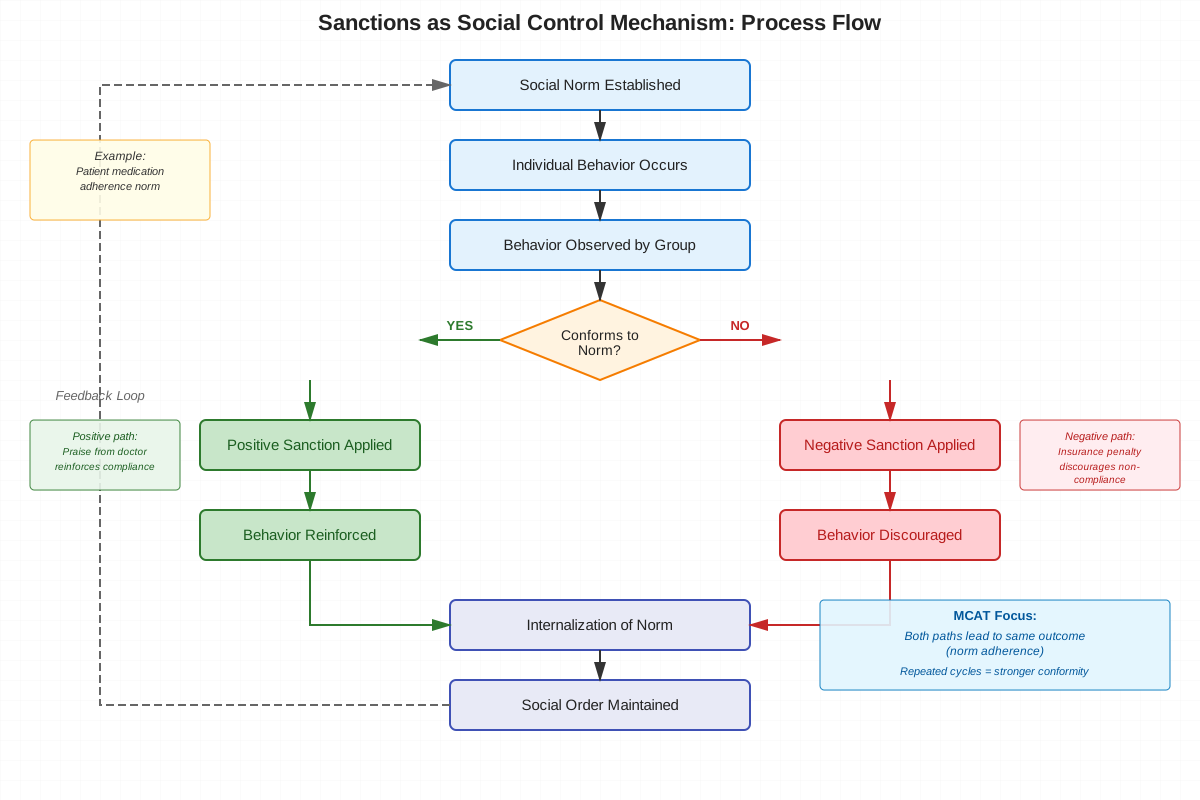
Sanctions influence behavior through several psychological and social mechanisms. Deterrence operates when individuals avoid norm violations because they fear negative sanctions or when they conform to obtain positive sanctions. The effectiveness of deterrence depends on the certainty, severity, and swiftness of sanctions.
Social learning occurs when individuals observe others receiving sanctions and adjust their own behavior accordingly. This vicarious learning allows sanctions applied to one person to influence entire groups. Internalization happens when repeated exposure to sanctions leads individuals to adopt norms as personal values, making external sanctions less necessary over time.
Stigmatization represents a powerful form of negative sanction where individuals are labeled and socially marked, leading to lasting changes in identity and social opportunities. Conversely, status elevation through positive sanctions can permanently alter an individual's social position and opportunities.
Sanction Strength and Social Context
Not all sanctions carry equal weight. Sanction strength varies based on multiple factors:
- Source legitimacy: Sanctions from respected authorities or valued social groups carry more weight than those from illegitimate or disliked sources
- Consistency: Sanctions applied reliably and predictably are more effective than sporadic or arbitrary ones
- Cultural context: The same action may constitute a strong sanction in one culture but have minimal impact in another
- Individual values: Sanctions aligned with personal values have greater impact than those contradicting deeply held beliefs
- Social visibility: Public sanctions typically have stronger effects than private ones due to reputation concerns
Sanctions Across Social Levels
Sanctions operate at multiple levels of social organization, each with distinct characteristics:
Micro-level sanctions occur in face-to-face interactions and small groups. These are predominantly informal and include immediate feedback like facial expressions, tone of voice, and interpersonal responses. Family sanctions, peer group reactions, and friendship dynamics exemplify this level.
Meso-level sanctions function within organizations and institutions. These combine formal and informal elements, such as workplace policies, school disciplinary systems, and professional association standards. Organizations typically have codified sanction systems with graduated responses.
Macro-level sanctions operate at the societal level through legal systems, government policies, and broad cultural norms. These are primarily formal and include criminal justice responses, regulatory enforcement, and international sanctions between nations.
Sanctions in Healthcare Contexts
Medical settings involve complex sanction systems that MCAT students must understand. Professional sanctions regulate physician behavior through medical boards, hospital credentialing committees, and professional associations. These range from informal peer feedback to formal license revocation.
Patient compliance is heavily influenced by sanction systems. Positive sanctions include physician praise, family approval, and improved health outcomes. Negative sanctions include physician disapproval, family criticism, and worsening symptoms. Understanding these dynamics helps explain why patients may not follow medical advice despite knowing the health benefits.
Cultural sanctions significantly impact healthcare decisions. Behaviors encouraged in one cultural context may face strong negative sanctions in another. For example, certain treatments may violate religious norms, leading to community ostracism if pursued. Effective healthcare requires recognizing these sanction systems and working within them.
Concept Relationships
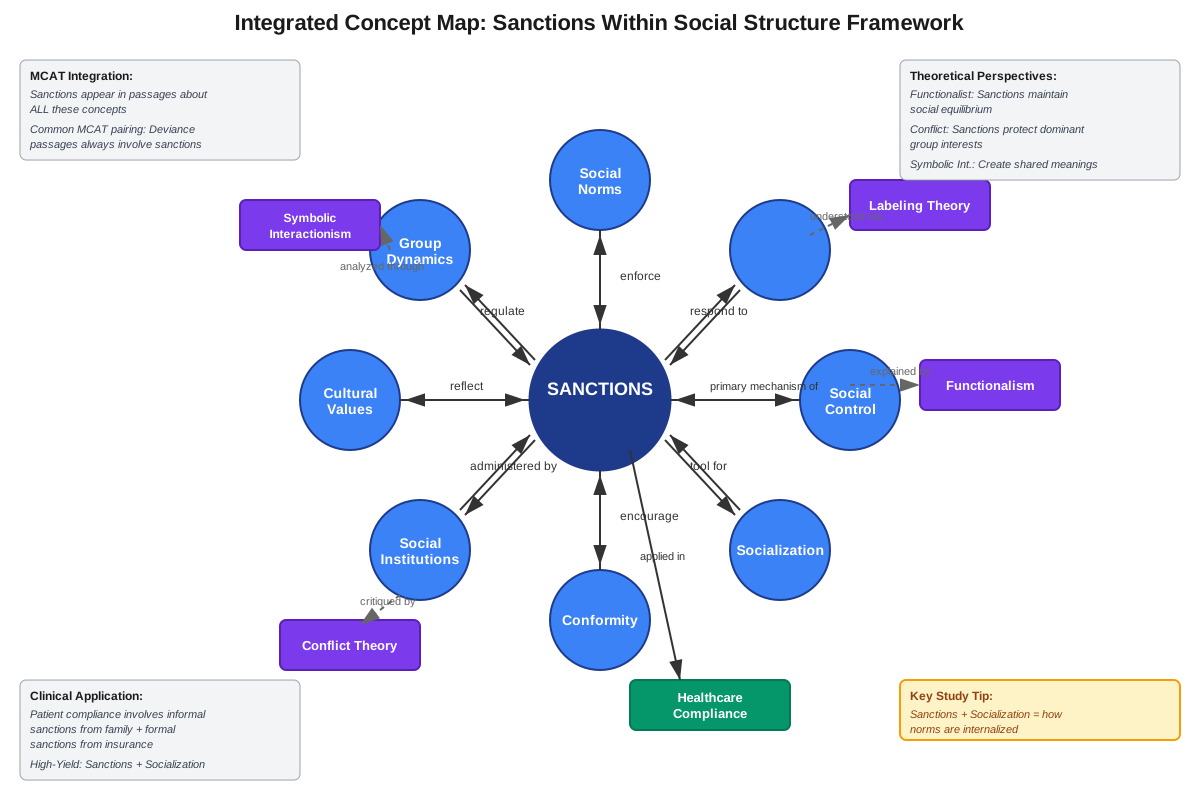
Sanctions serve as the enforcement mechanism connecting multiple sociological concepts. The relationship flows as follows:
Social norms → define expected behaviors → Sanctions → enforce these expectations → produce conformity or identify deviance → which triggers additional sanctions → reinforcing or modifying norms
Sanctions connect to socialization as the primary tool through which individuals learn appropriate behavior. During childhood socialization, parents and teachers use sanctions to teach norms. This relationship continues throughout life as individuals encounter new social contexts requiring different behaviors.
The connection to social control is direct—sanctions represent the operational tools of social control. Formal social control relies on formal sanctions (laws, regulations), while informal social control operates through informal sanctions (peer pressure, gossip). Together, these create the comprehensive system maintaining social order.
Sanctions relate to social stratification because sanction systems often reflect and reinforce existing power structures. Those with higher social status may face weaker sanctions for norm violations, while marginalized groups may experience harsher sanctions for the same behaviors. This differential application of sanctions perpetuates inequality.
The concept connects to institutions because each major institution (family, education, religion, economy, government) maintains its own sanction system aligned with institutional goals. These systems interact—for example, religious sanctions may influence family sanctions, which affect educational outcomes.
Sanctions link to deviance theories. Labeling theory emphasizes how negative sanctions create deviant identities. Differential association theory explains how sanction patterns in peer groups influence behavior. Social disorganization theory suggests that inconsistent sanction systems contribute to higher deviance rates.
Quick check — test yourself on Sanctions so far.
Try Flashcards →High-Yield Facts
⭐ Sanctions are divided into four types based on two dimensions: formal vs. informal and positive vs. negative, creating formal positive, formal negative, informal positive, and informal negative sanctions
⭐ Informal sanctions are more common than formal sanctions in daily life and often have greater immediate impact on behavior due to their frequency and social-emotional significance
⭐ Positive sanctions are generally more effective at producing lasting behavioral change than negative sanctions because they build intrinsic motivation rather than just fear of punishment
⭐ The effectiveness of sanctions depends on certainty, severity, and swiftness—certain and swift sanctions deter more effectively than severe but uncertain ones
⭐ Sanctions operate at micro (interpersonal), meso (organizational), and macro (societal) levels, with different characteristics and mechanisms at each level
- Stigmatization represents a particularly powerful form of negative sanction that can permanently alter social identity and opportunities
- Cultural context dramatically affects sanction interpretation—the same response may be a strong positive sanction in one culture and meaningless in another
- Sanctions serve multiple functions: deterrence, behavior modification, social boundary maintenance, and reinforcement of group values
- Inconsistent application of sanctions reduces their effectiveness and can undermine the legitimacy of the sanctioning authority
- Healthcare compliance is heavily influenced by both formal sanctions (insurance coverage, physician recommendations) and informal sanctions (family approval, peer support)
Common Misconceptions
Misconception: All sanctions are negative punishments for bad behavior.
Correction: Sanctions include both positive rewards for conformity and negative punishments for deviance. Positive sanctions (praise, awards, recognition) are equally important in maintaining social order and often more effective at encouraging desired behaviors.
Misconception: Formal sanctions are always more powerful than informal sanctions.
Correction: Informal sanctions often have greater immediate impact on behavior because they occur more frequently and carry social-emotional weight. Being ostracized by friends (informal negative sanction) may affect behavior more strongly than a small fine (formal negative sanction).
Misconception: Sanctions only affect the person being sanctioned.
Correction: Sanctions influence entire groups through social learning and deterrence. When one person receives a sanction, others observe and modify their behavior accordingly, making sanctions a group-level control mechanism.
Misconception: Harsher sanctions always produce better compliance.
Correction: Sanction effectiveness depends more on certainty and swiftness than severity. Moderate sanctions applied consistently deter more effectively than severe sanctions applied sporadically. Additionally, excessively harsh sanctions may be viewed as illegitimate, reducing compliance.
Misconception: Sanctions are only about controlling deviant behavior.
Correction: Sanctions serve multiple functions including reinforcing positive behaviors, maintaining group boundaries, communicating values, and facilitating socialization. Most sanctions actually reward conformity rather than punish deviance.
Misconception: The same sanction will have the same effect across all contexts.
Correction: Sanction effectiveness varies dramatically based on cultural context, individual values, source legitimacy, and social setting. A sanction that powerfully shapes behavior in one context may be completely ineffective in another.
Worked Examples
Example 1: Healthcare Compliance Scenario
Vignette: A physician recommends that a patient with diabetes begin insulin therapy. The patient's family strongly believes that insulin is "unnatural" and expresses disappointment when the patient considers the treatment. The patient's religious community also views medical interventions skeptically. Despite understanding the medical benefits, the patient refuses insulin therapy.
Analysis:
Step 1: Identify the sanctions at work. The family's disappointment represents an informal negative sanction. The religious community's skepticism creates additional informal negative sanctions through potential social disapproval or ostracism.
Step 2: Recognize the absence of competing sanctions. While the physician's recommendation could be viewed as a formal positive sanction (professional approval), it lacks the immediate social-emotional weight of the informal sanctions from family and community.
Step 3: Understand the sanction hierarchy. For this patient, informal sanctions from valued social groups (family, religious community) outweigh formal sanctions from medical authorities. The certainty and immediacy of family disapproval exceed the uncertain future health consequences.
Step 4: Connect to broader concepts. This scenario illustrates how cultural sanctions can override medical recommendations, demonstrating the importance of understanding patients' social contexts. It also shows how informal social control through family and community sanctions can be more powerful than formal social control through medical authority.
MCAT Application: Questions might ask which type of sanction is most influential in the patient's decision (informal negative), why the patient refuses despite understanding benefits (informal sanctions from valued groups outweigh formal medical recommendations), or what intervention might improve compliance (engaging family to provide informal positive sanctions for treatment adherence).
Example 2: Professional Misconduct Scenario
Vignette: A hospital physician is discovered falsifying patient records. The hospital administration places the physician on probation and requires ethics training (formal negative sanction). Colleagues begin avoiding the physician in common areas and exclude them from informal consultations (informal negative sanction). The state medical board launches an investigation that could result in license suspension (formal negative sanction). The physician's reputation in the medical community is severely damaged (stigmatization).
Analysis:
Step 1: Categorize multiple sanctions. This scenario involves formal negative sanctions at two levels: organizational (hospital probation) and governmental (medical board investigation). It also includes informal negative sanctions through colleague ostracism.
Step 2: Recognize sanction layering. The physician faces sanctions at multiple social levels: micro-level (colleague interactions), meso-level (hospital policies), and macro-level (state licensing). This layering amplifies the total sanctioning effect.
Step 3: Identify stigmatization. Beyond specific sanctions, the physician experiences stigmatization—a lasting change in social identity that affects future opportunities even after formal sanctions end. This represents the most enduring consequence.
Step 4: Analyze deterrence effects. These sanctions serve both specific deterrence (preventing this physician from repeating the behavior) and general deterrence (signaling to other physicians that falsification carries severe consequences).
MCAT Application: Questions might ask which sanction type has the most lasting effect (stigmatization), how these sanctions function as social control (operating at multiple levels to enforce professional norms), or why multiple sanction types are applied simultaneously (layering increases effectiveness and addresses different aspects of the violation).
Exam Strategy
Question Recognition
MCAT questions about sanctions often include trigger phrases: "social response," "consequences for behavior," "enforcement of norms," "rewards and punishments," "maintaining social order," or "reactions from others." When these appear, immediately consider which sanction type is being described or which would be most effective.
Systematic Approach
Use this four-step process for sanction questions:
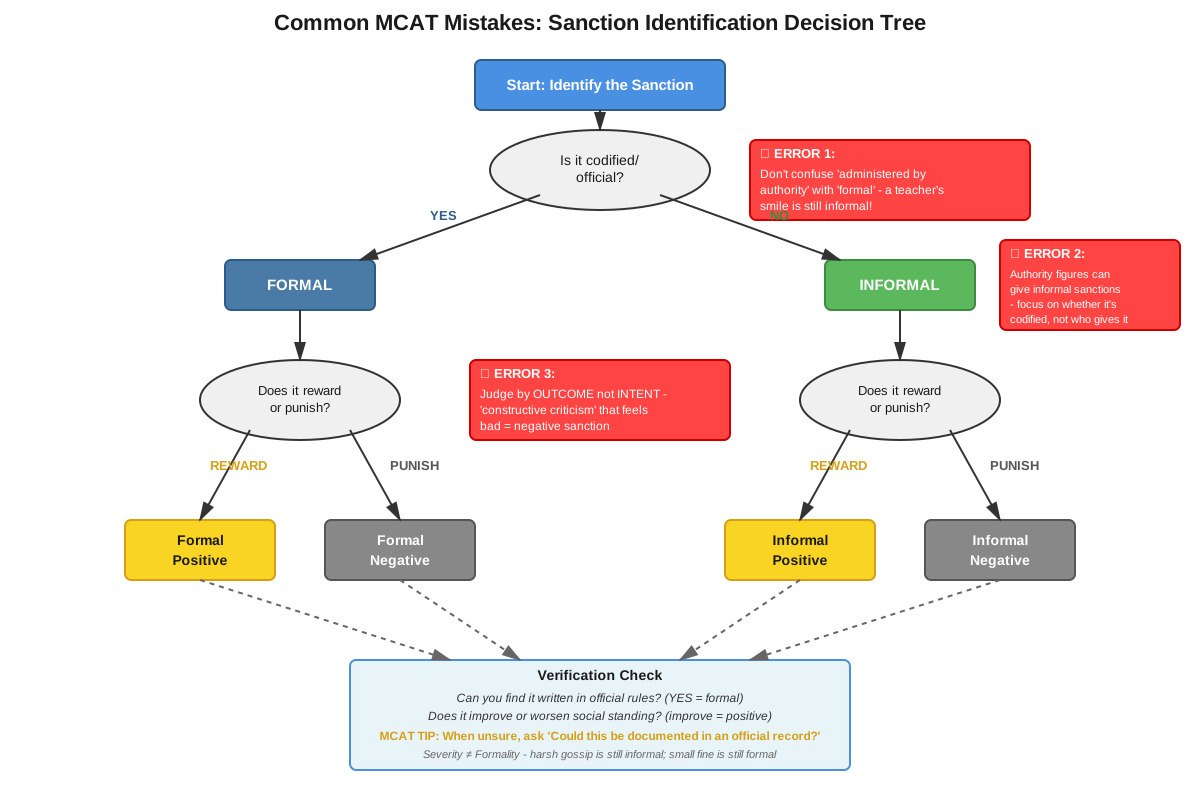
- Identify the behavior: Is it conformity or deviance? This determines whether positive or negative sanctions apply.
- Determine the source: Is the sanction coming from an official authority/institution (formal) or from peers/community (informal)?
- Classify the sanction: Place it in the 2×2 matrix (formal/informal × positive/negative).
- Analyze effectiveness: Consider certainty, severity, swiftness, cultural context, and source legitimacy.
Process of Elimination
When multiple answer choices seem plausible:
- Eliminate options that confuse formal and informal sanctions—these are fundamentally different in source and mechanism
- Remove answers that ignore cultural context—sanction effectiveness always depends on social setting
- Reject choices suggesting sanctions only punish deviance—remember that positive sanctions for conformity are equally important
- Eliminate answers implying all sanctions have equal effectiveness—context, consistency, and legitimacy matter greatly
Time Management
Sanction questions typically require 60-90 seconds. Spend 20-30 seconds identifying the sanction type, 20-30 seconds connecting to relevant concepts, and 20-30 seconds evaluating answer choices. If a question asks about multiple sanction types or complex scenarios, allocate up to 2 minutes but avoid getting stuck on subtle distinctions that don't affect the answer.
Common Question Formats
Type 1: "Which of the following best describes the sanction in the passage?" → Classify using the 2×2 matrix.
Type 2: "Why did the individual change their behavior?" → Identify which sanction(s) motivated the change and explain the mechanism.
Type 3: "Which intervention would most effectively encourage compliance?" → Compare sanction types and select based on context, considering cultural factors and source legitimacy.
Type 4: "The scenario illustrates which sociological concept?" → Connect sanctions to broader theories of social control, deviance, or socialization.
Memory Techniques
The "FPIN" Matrix Mnemonic
Remember the four sanction types with FPIN:
- Formal Positive: "Fancy Prizes" (awards, degrees, licenses)
- Formal Negative: "Fines and Nasty penalties" (imprisonment, expulsion)
- Informal Positive: "I'm Pleased" (smiles, praise, inclusion)
- Informal Negative: "I'm Not happy" (frowns, gossip, exclusion)
The "CSS" Effectiveness Framework
Remember what makes sanctions effective with CSS:
- Certainty: Will the sanction definitely occur?
- Swiftness: Will it happen immediately?
- Severity: How strong is the consequence?
Certainty and Swiftness typically matter more than Severity.
Visualization Strategy
Picture sanctions as a social thermostat: Positive sanctions turn up desired behaviors (heating), negative sanctions turn down undesired behaviors (cooling). Formal sanctions are like programmed temperature settings (automatic, official), while informal sanctions are like manual adjustments (spontaneous, personal). Both work together to maintain the "comfortable temperature" of social order.
Level Ladder Mnemonic
Remember sanction levels with "My Messy Macro":
- My = Micro (face-to-face, interpersonal)
- Messy = Meso (organizations, institutions)
- Macro = Macro (society-wide, legal systems)
Summary
Sanctions are the fundamental mechanisms through which societies enforce norms and maintain social order. They are classified along two dimensions: formal versus informal (based on source) and positive versus negative (based on whether they reward or punish). This creates four distinct types: formal positive, formal negative, informal positive, and informal negative sanctions. Sanctions operate at multiple social levels—micro (interpersonal), meso (organizational), and macro (societal)—with different characteristics at each level. Their effectiveness depends on certainty, swiftness, severity, cultural context, and source legitimacy, with certainty and swiftness typically mattering more than severity alone. Sanctions connect to broader sociological concepts including social control, deviance, socialization, and social stratification. In healthcare contexts, understanding sanctions helps explain patient compliance, professional behavior, and cultural influences on medical decision-making. For MCAT success, students must be able to identify sanction types in scenarios, predict their effectiveness based on context, and connect them to theories of social behavior and control.
Key Takeaways
- Sanctions are rewards and punishments that enforce social norms, classified into four types based on formal/informal and positive/negative dimensions
- Informal sanctions occur more frequently in daily life and often have greater immediate impact than formal sanctions due to their social-emotional significance
- Sanction effectiveness depends more on certainty and swiftness than on severity, with consistent application being crucial for maintaining legitimacy
- Sanctions operate at micro, meso, and macro levels of social organization, serving as the primary tools of social control at each level
- Cultural context dramatically affects sanction interpretation and effectiveness—the same response may be powerful in one setting and meaningless in another
- In healthcare, sanctions from family and community often influence patient decisions more strongly than formal medical recommendations
- Understanding sanctions provides a framework for analyzing conformity, deviance, socialization, and the functioning of social institutions—all high-yield MCAT topics
Related Topics
Social Control: The broader system of mechanisms (including sanctions) that societies use to regulate behavior and maintain order; mastering sanctions provides the foundation for understanding formal and informal control systems.
Deviance and Social Stigma: The study of norm violations and their consequences; sanctions are society's responses to deviance, making this a natural extension of sanction concepts.
Socialization: The lifelong process of learning social norms; sanctions are the primary tools used during socialization to teach appropriate behavior across different life stages.
Social Institutions: Organizations like family, education, religion, and government; each institution maintains its own sanction system aligned with institutional goals.
Conformity and Obedience: Psychological processes through which individuals align behavior with group expectations; sanctions provide the external motivation that often drives conformity.
Labeling Theory: A deviance theory emphasizing how negative sanctions create deviant identities; understanding sanctions is essential for analyzing labeling processes.
Practice CTA
Now that you've mastered the core concepts of sanctions, it's time to solidify your understanding through active practice. Complete the associated practice questions to test your ability to identify sanction types, analyze their effectiveness in various contexts, and apply these concepts to MCAT-style passages. Use the flashcards to reinforce the key distinctions between formal and informal, positive and negative sanctions. Remember: understanding sanctions gives you a powerful analytical tool for dissecting social scenarios across the entire MCAT Sociology section. Your investment in mastering this high-yield topic will pay dividends on test day!
Sign up free to keep reading
Create a free AnvayaPrep account to finish this MCAT guide on Sanctions — plus flashcards and practice questions.