Overview
Clause recognition is a foundational skill in SAT Reading and Writing (RW) that directly impacts a student's ability to identify sentence boundaries, fix run-ons, correct comma splices, and understand complex sentence structures. On the SAT, approximately 13-15% of all Reading and Writing questions test boundaries and sentence structure concepts, making clause recognition one of the most frequently assessed skills on the exam. Understanding clauses—the building blocks of sentences—enables students to parse complicated academic prose, identify grammatical errors, and select the most effective sentence constructions.
Mastering sat clause recognition requires students to distinguish between independent and dependent clauses, recognize how clauses connect within sentences, and understand the punctuation rules that govern clause boundaries. This skill extends beyond simple grammar identification; it forms the basis for understanding sentence variety, parallel structure, and logical flow—all critical components of the SAT's Standard English Conventions domain. Students who can quickly and accurately identify clauses gain a significant advantage in both the grammar-focused questions and the rhetorical skills questions that require understanding sentence relationships.
The ability to recognize clauses connects directly to other essential rw concepts including punctuation usage, modifier placement, verb tense consistency, and pronoun-antecedent agreement. When students understand where one clause ends and another begins, they can more effectively evaluate whether transitions are appropriate, whether ideas are properly coordinated or subordinated, and whether sentences achieve their intended rhetorical purpose. This topic serves as a gateway skill that unlocks proficiency across multiple question types on the SAT.
Learning Objectives
- [ ] Identify key features of clause recognition
- [ ] Explain how clause recognition appears on the SAT
- [ ] Apply clause recognition to answer SAT-style questions
- [ ] Distinguish between independent and dependent clauses in complex sentences
- [ ] Recognize common clause patterns and their appropriate punctuation
- [ ] Evaluate whether clauses are properly connected or improperly joined
- [ ] Analyze how clause structure affects sentence meaning and effectiveness
Prerequisites
- Basic sentence structure: Understanding subjects and predicates is essential because every clause must contain both elements
- Parts of speech identification: Recognizing verbs, nouns, conjunctions, and relative pronouns enables students to identify clause boundaries and types
- Fundamental punctuation rules: Knowledge of periods, commas, and semicolons provides the foundation for understanding how clauses are separated or connected
- Subject-verb agreement: This ensures students can identify complete clauses rather than fragments that lack proper verb forms
Why This Topic Matters
Clause recognition appears in real-world contexts whenever clear, precise communication is required. Professional writing, academic papers, legal documents, and technical instructions all demand proper clause construction to avoid ambiguity and ensure readers understand the relationships between ideas. The ability to recognize and construct proper clauses prevents miscommunication that can have serious consequences in fields ranging from medicine to engineering to law.
On the SAT, clause recognition questions appear in approximately 3-5 questions per test section, making this one of the highest-yield grammar topics. These questions typically present four versions of a sentence or passage segment, requiring students to identify which option correctly joins, separates, or punctuates clauses. The College Board consistently tests whether students can distinguish between independent and dependent clauses, recognize run-on sentences and comma splices, and select appropriate conjunctions or punctuation to connect clauses logically.
Common SAT question formats include: identifying run-on sentences that improperly join two independent clauses without punctuation; recognizing comma splices where two independent clauses are incorrectly joined with only a comma; evaluating whether a dependent clause is properly attached to an independent clause; and determining whether semicolons, colons, or periods are appropriately used between clauses. These questions often appear embedded within science, history, or literature passages, requiring students to apply clause recognition skills while processing complex content.
Core Concepts
Independent Clauses
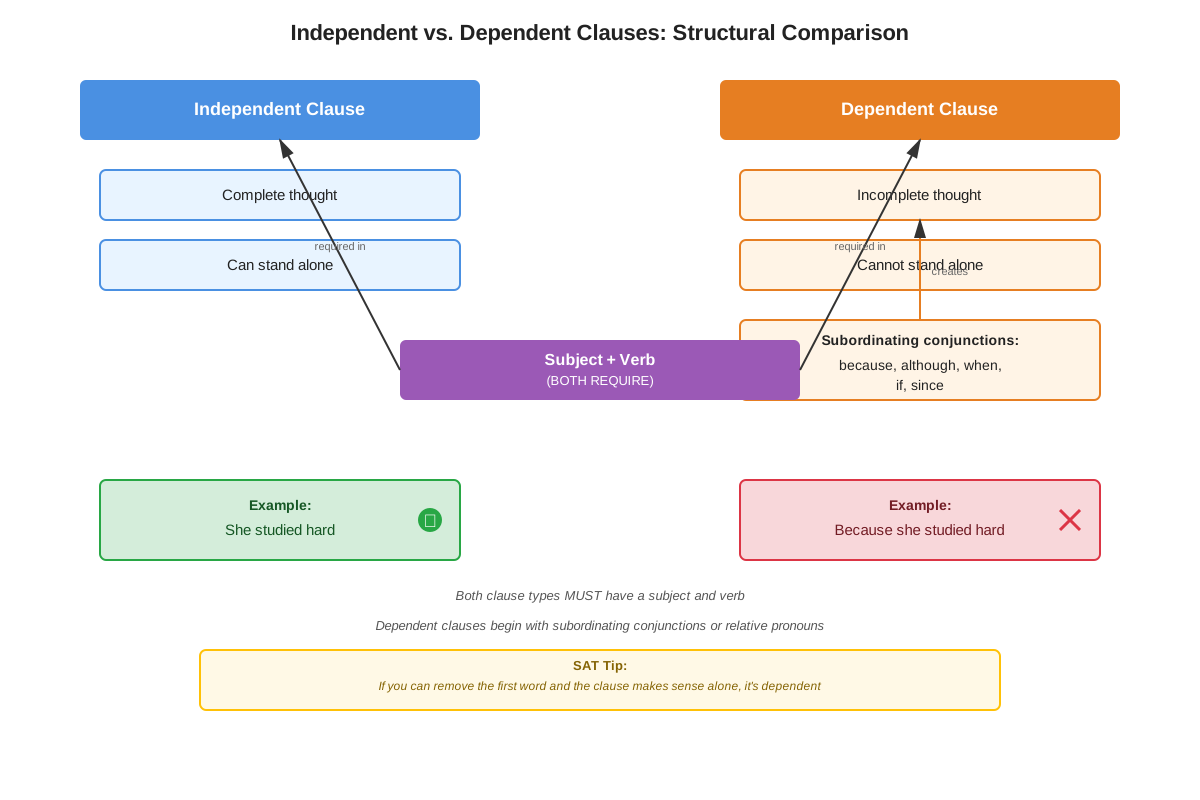
An independent clause (also called a main clause) contains a subject and a predicate and expresses a complete thought that can stand alone as a sentence. Independent clauses form the backbone of English sentences and can function independently without additional information. For example: "The researcher conducted the experiment" is an independent clause because it has a subject (researcher), a verb (conducted), and expresses a complete idea.
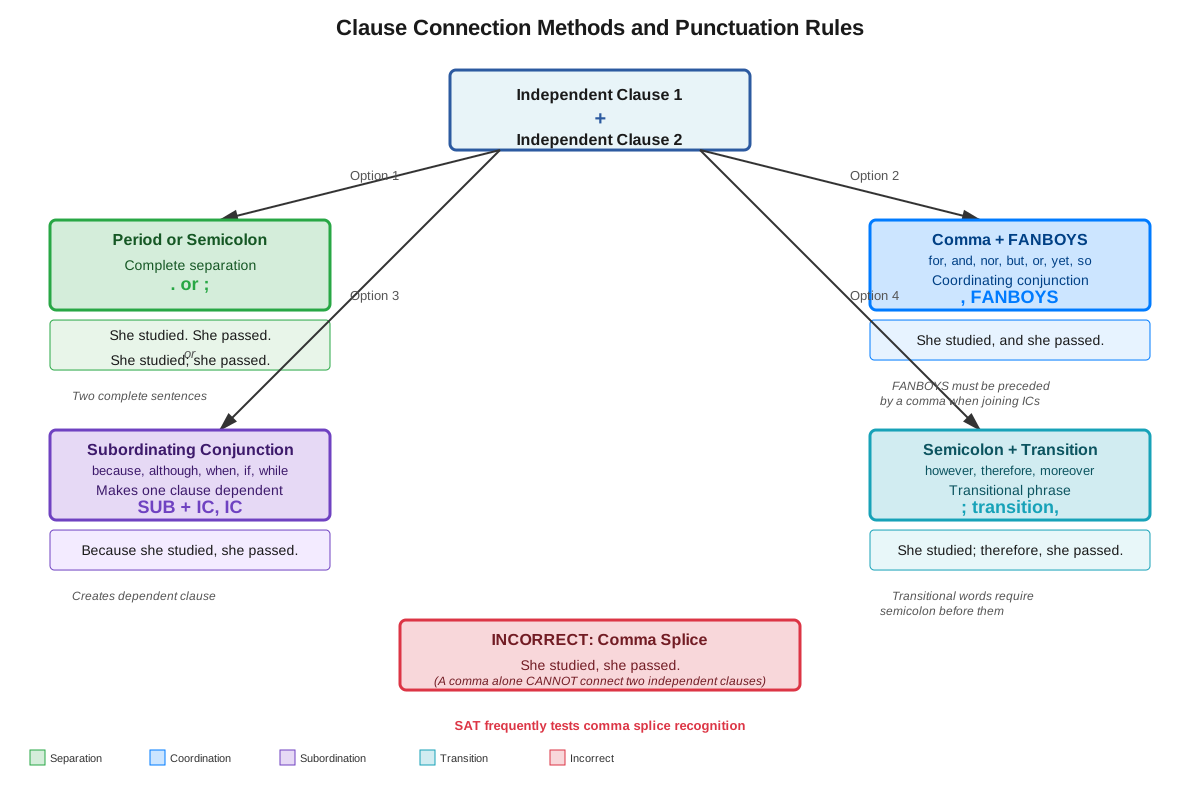
Independent clauses can be joined in several ways:
- With a coordinating conjunction (for, and, nor, but, or, yet, so) preceded by a comma
- With a semicolon when the clauses are closely related
- With a period to create separate sentences
- With a semicolon followed by a conjunctive adverb (however, therefore, moreover) and a comma
The SAT frequently tests whether students recognize when two independent clauses are improperly joined without appropriate punctuation or conjunctions—a grammatical error called a run-on sentence or fused sentence.
Dependent Clauses
A dependent clause (also called a subordinate clause) contains a subject and a predicate but does not express a complete thought and cannot stand alone as a sentence. Dependent clauses rely on independent clauses to complete their meaning. These clauses begin with subordinating conjunctions (because, although, since, when, if, while, unless, after, before) or relative pronouns (who, whom, whose, which, that).
Examples of dependent clauses:
- "Because the data was inconclusive" (subordinating conjunction)
- "Which the scientists had predicted" (relative pronoun)
- "When the experiment concluded" (subordinating conjunction)
Each of these clauses leaves the reader waiting for additional information. They must be attached to independent clauses to form complete sentences: "Because the data was inconclusive, the researchers repeated the trial."
Types of Dependent Clauses
Adverbial clauses modify verbs, adjectives, or other adverbs and typically answer questions about when, where, why, how, or under what conditions something occurs. They begin with subordinating conjunctions: "Although the temperature dropped, the reaction continued."
Adjectival clauses (relative clauses) modify nouns or pronouns and typically begin with relative pronouns: "The hypothesis that the team proposed was revolutionary." These clauses provide essential or non-essential information about the noun they modify.
Noun clauses function as subjects, objects, or complements within sentences and often begin with words like "that," "what," "whoever," or "whether": "What the researchers discovered surprised everyone."
Clause Boundaries and Punctuation
| Clause Combination | Punctuation Rule | Example |
|---|---|---|
| Independent + Independent | Comma + coordinating conjunction | "The study concluded, and the results were published." |
| Independent + Independent | Semicolon | "The study concluded; the results were published." |
| Independent + Independent | Period | "The study concluded. The results were published." |
| Dependent + Independent | Comma after introductory dependent clause | "When the study concluded, the results were published." |
| Independent + Dependent | No comma (usually) | "The results were published when the study concluded." |
| Independent + Nonessential dependent | Commas around the clause | "The results, which surprised many, were published." |
Understanding these punctuation patterns is crucial for SAT success because the exam frequently presents sentences with incorrect punctuation between clauses, requiring students to identify and correct these errors.
Recognizing Run-On Sentences and Comma Splices
A run-on sentence occurs when two or more independent clauses are joined without proper punctuation or conjunctions: "The experiment failed the researchers tried again." This error confuses readers about where one complete thought ends and another begins.
A comma splice occurs when two independent clauses are joined with only a comma, without a coordinating conjunction: "The experiment failed, the researchers tried again." This is one of the most commonly tested errors on the SAT because it appears frequently in student writing and can be corrected in multiple ways.
Correction strategies for run-on sentences and comma splices:
- Add a period to create two sentences
- Add a comma and coordinating conjunction
- Add a semicolon
- Add a semicolon, conjunctive adverb, and comma
- Convert one independent clause to a dependent clause by adding a subordinating conjunction
Signal Words for Clause Recognition
Certain words consistently signal the beginning of dependent clauses and help students quickly identify clause boundaries:
Subordinating conjunctions: after, although, as, because, before, even though, if, since, though, unless, until, when, whenever, where, whereas, wherever, while
Relative pronouns: who, whom, whose, which, that, whoever, whomever, whichever, whatever
When students encounter these words, they should immediately recognize that a dependent clause follows and verify that it's properly connected to an independent clause.
Concept Relationships
Clause recognition serves as the foundation for understanding sentence boundaries, which directly connects to punctuation rules and sentence structure. The relationship flows as follows:
Clause Recognition → Punctuation Selection → Sentence Boundary Identification → Run-on/Fragment Prevention
Independent clause identification enables students to determine when periods, semicolons, or coordinating conjunctions are appropriate. Dependent clause recognition helps students understand when commas are necessary (after introductory dependent clauses) or when they should be omitted (when dependent clauses follow independent clauses).
The connection between clause recognition and other grammar concepts:
Clause Recognition → Modifier Placement: Understanding clause boundaries helps students identify whether modifying phrases are correctly positioned near the words they modify.
Clause Recognition → Parallel Structure: Recognizing coordinate clauses (independent clauses joined by coordinating conjunctions) enables students to verify that parallel elements maintain consistent grammatical form.
Clause Recognition → Transition Usage: Identifying whether clauses are independent or dependent determines which transitional words are grammatically appropriate (conjunctive adverbs require independent clauses; subordinating conjunctions create dependent clauses).
Within the topic itself, concepts build hierarchically: Students must first distinguish independent from dependent clauses, then recognize the specific types of dependent clauses, then apply appropriate punctuation rules based on how clauses combine, and finally evaluate whether clause combinations achieve clear, effective communication.
High-Yield Facts
⭐ An independent clause must contain both a subject and a predicate and express a complete thought that can stand alone as a sentence.
⭐ Two independent clauses cannot be joined with only a comma—this creates a comma splice, one of the most frequently tested errors on the SAT.
⭐ Dependent clauses begin with subordinating conjunctions (because, although, when, if) or relative pronouns (who, which, that) and cannot stand alone as complete sentences.
⭐ When a dependent clause begins a sentence, it must be followed by a comma before the independent clause.
⭐ A semicolon can only connect two independent clauses; it cannot connect an independent clause to a dependent clause.
- Coordinating conjunctions (FANBOYS: for, and, nor, but, or, yet, so) require a comma before them when joining two independent clauses.
- Run-on sentences occur when two or more independent clauses are joined without proper punctuation or conjunctions.
- Relative clauses that provide essential information (restrictive clauses) are not set off by commas, while those providing non-essential information (non-restrictive clauses) require commas.
- Conjunctive adverbs (however, therefore, moreover, consequently) require a semicolon before them and a comma after them when connecting independent clauses.
- A sentence fragment occurs when a dependent clause stands alone without being attached to an independent clause.
- The word "that" can introduce both noun clauses and adjectival clauses, requiring students to analyze the clause's function within the sentence.
- Subordinating conjunctions create dependent clauses regardless of where they appear in a sentence (beginning, middle, or end).
Quick check — test yourself on Clause recognition so far.
Try Flashcards →Common Misconceptions
Misconception: Any clause with a subject and verb is an independent clause. → Correction: A clause must express a complete thought to be independent. "Because the experiment succeeded" has a subject (experiment) and verb (succeeded) but is dependent because "because" makes it incomplete—readers need to know what happened as a result.
Misconception: Semicolons and commas are interchangeable. → Correction: Semicolons can only join independent clauses or separate complex items in a list. Commas have multiple functions but cannot join independent clauses without a coordinating conjunction. Using a comma alone between independent clauses creates a comma splice.
Misconception: Long sentences are always run-ons, and short sentences are always correct. → Correction: Sentence length doesn't determine grammatical correctness. "The study concluded the results were published" is a short run-on sentence, while a 40-word sentence with properly connected clauses is grammatically correct.
Misconception: All dependent clauses at the beginning of sentences need commas. → Correction: While introductory dependent clauses typically require commas, very short adverbial clauses (3-4 words) sometimes don't: "When ready the team proceeded" versus "When the team felt completely prepared they proceeded" (comma required).
Misconception: The word "however" is a coordinating conjunction that can join independent clauses with just a comma. → Correction: "However" is a conjunctive adverb, not a coordinating conjunction. It requires a semicolon before it and a comma after it when connecting independent clauses: "The experiment failed; however, the team learned valuable lessons."
Misconception: Dependent clauses are always shorter than independent clauses. → Correction: Clause length doesn't determine independence. "Although the researchers conducted extensive trials across multiple laboratories and analyzed thousands of data points" is a long dependent clause, while "They succeeded" is a short independent clause.
Misconception: Every sentence needs both an independent and dependent clause. → Correction: Simple sentences containing only one independent clause are grammatically complete and often preferable for clarity. Complex sentences (independent + dependent) and compound sentences (multiple independent clauses) serve specific rhetorical purposes but aren't always necessary.
Worked Examples
Example 1: Identifying and Correcting a Comma Splice
Original sentence: "The archaeologists discovered ancient pottery, they dated the artifacts to 3000 BCE."
Analysis process:
Step 1: Identify the clauses by finding subjects and verbs.
- First clause: "The archaeologists discovered ancient pottery" (subject: archaeologists; verb: discovered)
- Second clause: "they dated the artifacts to 3000 BCE" (subject: they; verb: dated)
Step 2: Determine whether each clause is independent or dependent.
- First clause expresses a complete thought: independent
- Second clause expresses a complete thought: independent
Step 3: Evaluate the punctuation between the clauses.
- The clauses are joined with only a comma
- Two independent clauses cannot be joined with only a comma
- This is a comma splice
Step 4: Consider correction options.
- Option A: Add a coordinating conjunction: "The archaeologists discovered ancient pottery, and they dated the artifacts to 3000 BCE."
- Option B: Use a semicolon: "The archaeologists discovered ancient pottery; they dated the artifacts to 3000 BCE."
- Option C: Create two sentences: "The archaeologists discovered ancient pottery. They dated the artifacts to 3000 BCE."
- Option D: Convert one clause to dependent: "After the archaeologists discovered ancient pottery, they dated the artifacts to 3000 BCE."
Best answer: On the SAT, all grammatically correct options would be acceptable, but the test would present these as choices. Option B (semicolon) is often preferred when the clauses are closely related and of equal importance.
Connection to learning objectives: This example demonstrates clause identification (finding subjects and verbs), classification (determining independence), and application of punctuation rules to correct errors—all essential SAT skills.
Example 2: Distinguishing Dependent from Independent Clauses
Sentence: "Because the data contradicted previous findings, the research team conducted additional trials to verify their results."
Analysis process:
Step 1: Identify potential clause boundaries by locating subjects and verbs.
- "the data contradicted previous findings" (subject: data; verb: contradicted)
- "the research team conducted additional trials" (subject: team; verb: conducted)
- "to verify their results" (infinitive phrase, not a clause—no subject performing the action)
Step 2: Determine the nature of each clause.
- First clause begins with "Because," a subordinating conjunction
- Subordinating conjunctions create dependent clauses
- First clause is dependent: "Because the data contradicted previous findings"
- Second clause expresses a complete thought with no subordinating word
- Second clause is independent: "the research team conducted additional trials"
Step 3: Evaluate the punctuation.
- Dependent clause comes first, followed by a comma
- Independent clause follows
- This follows the rule: introductory dependent clause + comma + independent clause
- The sentence is correctly punctuated
Step 4: Consider what would happen with different punctuation.
- Without the comma: "Because the data contradicted previous findings the research team conducted additional trials" would be harder to read but technically acceptable for very short dependent clauses
- With a period instead of comma: "Because the data contradicted previous findings. The research team conducted additional trials" would create a fragment (the dependent clause standing alone)
Connection to learning objectives: This example shows how subordinating conjunctions signal dependent clauses, demonstrates proper punctuation of introductory dependent clauses, and illustrates why understanding clause types prevents fragment errors.
Exam Strategy
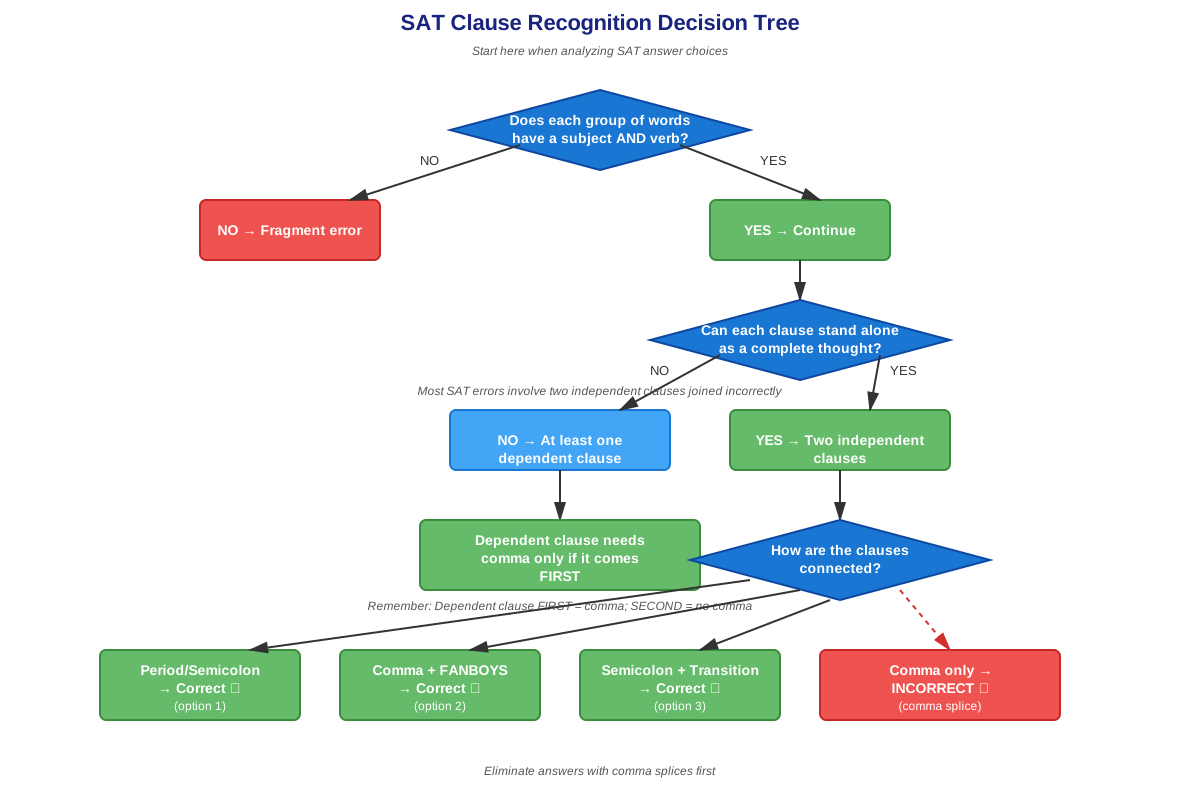
When approaching SAT clause recognition questions, follow this systematic process:
Step 1: Identify all subjects and verbs in the sentence or passage segment. Circle or mentally note each subject-verb pair, as each represents a potential clause. This prevents overlooking clauses in complex sentences.
Step 2: Classify each clause as independent or dependent. Look for subordinating conjunctions (because, although, when, if) or relative pronouns (who, which, that) at the beginning of clauses—these signal dependent clauses. If a clause has a subject and verb but no subordinating word, and it expresses a complete thought, it's independent.
Step 3: Examine the punctuation between clauses. Check whether the punctuation matches the clause types:
- Two independent clauses need a comma + coordinating conjunction, semicolon, or period
- Dependent clause before independent clause needs a comma
- Independent clause before dependent clause usually needs no comma
Step 4: Eliminate answer choices that create comma splices, run-ons, or fragments. On the SAT, incorrect answers often:
- Join two independent clauses with only a comma (comma splice)
- Join two independent clauses with no punctuation (run-on)
- Separate a dependent clause from its independent clause with a period (fragment)
- Use a semicolon before a dependent clause
Trigger words to watch for:
- FANBOYS (for, and, nor, but, or, yet, so): These coordinating conjunctions require a comma before them when joining independent clauses
- Subordinating conjunctions (because, although, since, when, while, if, unless): These create dependent clauses
- Conjunctive adverbs (however, therefore, moreover, consequently): These require semicolons before them when connecting independent clauses
- Relative pronouns (who, which, that): These introduce dependent clauses
Time allocation: Clause recognition questions should take 30-45 seconds each. If you can quickly identify the clause types and punctuation rules, select your answer and move on. If a question seems complex, mark it and return after completing easier questions.
Process of elimination tips:
- Immediately eliminate any option that creates a comma splice (two independent clauses joined with only a comma)
- Eliminate options that use semicolons before dependent clauses
- Eliminate options that separate closely related independent clauses with a period when a semicolon would better show their connection
- When multiple options are grammatically correct, choose the one that best maintains the logical relationship between ideas
Exam Tip: The SAT rarely tests obscure punctuation rules. Focus on the most common errors: comma splices, run-ons, and fragments. If you can identify independent versus dependent clauses, you can answer 90% of clause recognition questions correctly.
Memory Techniques
FANBOYS acronym for coordinating conjunctions: For, And, Nor, But, Or, Yet, So. Remember: these are the only seven words that can join two independent clauses with just a comma before them.
"AAAWWUBBIS" mnemonic for common subordinating conjunctions: After, Although, As, When, While, Where, Until, Because, Before, If, Since. When you see these words, expect a dependent clause to follow.
The "Can it stand alone?" test: When evaluating whether a clause is independent, ask: "If this clause were the only sentence in a paragraph, would it make complete sense to a reader?" If yes, it's independent. If the reader would ask "What happened?" or "So what?" then it's dependent.
Semicolon = Period test: Semicolons can only go where periods could also go (between two independent clauses). If you can't replace a semicolon with a period and have two complete sentences, the semicolon is incorrect.
Visualization strategy: Picture independent clauses as complete LEGO structures that can stand alone, and dependent clauses as pieces that need to attach to a complete structure. Just as a loose LEGO piece isn't a finished creation, a dependent clause isn't a complete sentence.
The "Because test": Add "because" to the beginning of any clause. If it still makes sense grammatically (even if the meaning changes), it was an independent clause. If it becomes nonsensical or redundant, it was already dependent. Example: "The experiment succeeded" → "Because the experiment succeeded" (makes sense, so original was independent). "Because the data was clear" → "Because because the data was clear" (nonsensical, so original was already dependent).
Summary
Clause recognition is an essential SAT skill that enables students to identify sentence boundaries, correct grammatical errors, and understand complex sentence structures. Independent clauses contain subjects and predicates and express complete thoughts that can stand alone, while dependent clauses contain subjects and predicates but begin with subordinating conjunctions or relative pronouns and cannot stand alone. The SAT frequently tests whether students can distinguish between these clause types and apply appropriate punctuation rules: two independent clauses require a comma plus coordinating conjunction, a semicolon, or a period, while dependent clauses must be properly attached to independent clauses with appropriate punctuation. Common errors tested include comma splices (two independent clauses joined with only a comma), run-on sentences (independent clauses joined without punctuation), and sentence fragments (dependent clauses standing alone). Mastering clause recognition requires students to systematically identify subjects and verbs, classify clauses as independent or dependent, and evaluate whether punctuation correctly reflects clause relationships—skills that appear in 3-5 questions per SAT section and form the foundation for understanding broader sentence structure concepts.
Key Takeaways
- Independent clauses express complete thoughts and can stand alone; dependent clauses cannot stand alone and begin with subordinating conjunctions or relative pronouns
- Two independent clauses cannot be joined with only a comma—this creates a comma splice, one of the most frequently tested SAT errors
- Semicolons can only connect two independent clauses; they cannot connect independent and dependent clauses
- When a dependent clause begins a sentence, place a comma after it before the independent clause
- Coordinating conjunctions (FANBOYS) require a comma before them when joining two independent clauses
- Systematically identifying subjects and verbs in every clause prevents overlooking run-ons, comma splices, and fragments
- Understanding clause types and boundaries is foundational for mastering punctuation, sentence structure, and rhetorical effectiveness on the SAT
Related Topics
Punctuation Rules and Usage: After mastering clause recognition, students should study comprehensive punctuation rules including comma usage, semicolon and colon applications, and dash usage. Understanding clause boundaries makes punctuation rules more intuitive and applicable.
Sentence Fragments and Run-Ons: This topic builds directly on clause recognition by examining specific error types in detail, including how to identify and correct fragments (incomplete sentences) and run-ons (improperly joined sentences).
Coordination and Subordination: Advanced study of how to effectively combine clauses using coordinating and subordinating conjunctions to create varied, sophisticated sentence structures that enhance writing quality.
Modifier Placement: Understanding clause boundaries helps students identify whether modifying phrases and clauses are positioned correctly relative to the words they modify, preventing ambiguity and misreading.
Parallel Structure: Recognizing coordinate clauses (independent clauses joined by coordinating conjunctions) enables students to verify that parallel elements maintain consistent grammatical form across clauses.
Practice CTA
Now that you understand the fundamentals of clause recognition, it's time to apply these concepts to SAT-style questions. Complete the practice questions to test your ability to identify independent and dependent clauses, recognize common errors like comma splices and run-ons, and select appropriate punctuation between clauses. Use the flashcards to reinforce your memory of subordinating conjunctions, coordinating conjunctions, and punctuation rules. Remember: clause recognition is a high-yield skill that appears in multiple questions per test section, so mastering this topic will directly improve your SAT Reading and Writing score. With focused practice, you'll develop the automatic recognition skills needed to quickly and confidently answer these questions on test day!
Sign up free to keep reading
Create a free AnvayaPrep account to finish this SAT guide on Clause recognition — plus flashcards and practice questions.