Overview
Understatement in answer choices is a critical concept for success on the SAT Reading and Writing section. This phenomenon occurs when test makers craft answer choices that minimize, downplay, or present information in a more restrained manner than what the passage actually conveys. Understanding this concept is essential because the SAT frequently includes incorrect answer choices that are technically accurate but fail to capture the full scope, intensity, or significance of what the passage communicates. Students who cannot identify understated answers often select choices that are "sort of right" but miss the mark by being too weak, too narrow, or too cautious in their claims.
The SAT understatement in answer choices trap is particularly insidious because these options often feel safe and defensible. They contain no obvious errors and may even reference details from the passage. However, they fail the fundamental test of accurately representing the passage's central ideas, tone, or emphasis. For instance, if a passage describes a scientific discovery as "revolutionary" and "transformative," an answer choice describing it merely as "noteworthy" would be an understatement—technically not wrong, but significantly weaker than what the text supports.
Mastering this topic connects directly to broader RW (Reading and Writing) skills, particularly the ability to evaluate answer choices for precision and completeness. This skill intersects with understanding tone, identifying main ideas, and recognizing the difference between what a passage implies versus what it explicitly states. Students who excel at detecting understatement develop a more sophisticated approach to the Central Ideas and Details questions, learning to demand that correct answers fully match the passage's scope and intensity rather than settling for partial matches.
Learning Objectives
- [ ] Identify key features of understatement in answer choices
- [ ] Explain how understatement in answer choices appears on the SAT
- [ ] Apply understatement in answer choices to answer SAT-style questions
- [ ] Distinguish between appropriately cautious answers and understated incorrect answers
- [ ] Evaluate answer choices for alignment with passage tone and emphasis
- [ ] Recognize the specific language patterns that signal understatement in distractors
Prerequisites
- Basic reading comprehension skills: Students must be able to understand passage content at a literal level before evaluating answer choice precision
- Familiarity with SAT question formats: Understanding how Central Ideas and Details questions are structured helps students recognize when understatement is being tested
- Vocabulary knowledge of degree words: Recognizing the difference between words like "significant" versus "revolutionary" is essential for detecting understatement
- Understanding of main idea versus supporting details: Students need to distinguish between central claims and minor points to evaluate whether an answer captures the appropriate scope
Why This Topic Matters
In real-world contexts, the ability to detect understatement is crucial for critical reading of news articles, academic papers, and professional communications. When a medical study describes results as "promising" versus "conclusive," or when a business report calls performance "adequate" versus "exceptional," these distinctions carry significant implications. The skill of evaluating whether language matches the strength of evidence or importance of claims translates directly to academic and professional success.
On the SAT, understatement in answer choices appears with remarkable frequency—approximately 15-20% of incorrect answer choices in the Central Ideas and Details questions employ this strategy. The College Board uses understated distractors because they effectively separate students who read carefully from those who settle for "close enough" answers. These questions typically appear in:
- Main idea questions where an answer choice captures only a minor aspect of the passage's central claim
- Purpose questions where the stated purpose is too narrow or weak compared to the author's actual intent
- Tone/attitude questions where the answer choice suggests mild interest when the passage demonstrates strong conviction
- Summary questions where key elements are minimized or presented as less significant than the passage indicates
The SAT particularly favors this distractor type in passages about scientific discoveries, social movements, artistic achievements, and historical events—contexts where the magnitude of impact or significance is central to understanding the passage.
Core Concepts
Defining Understatement in Answer Choices
Understatement in answer choices refers to incorrect options that present information in a manner that is less forceful, comprehensive, or significant than what the passage actually conveys. These answers are characterized by language that minimizes impact, narrows scope, or reduces intensity compared to the source text. Unlike answers that are factually incorrect, understated answers contain accurate information but fail to capture the full weight of the passage's message.
The key distinguishing feature is that understated answers are incomplete rather than inaccurate. They represent a subset of the truth rather than a distortion of it. This makes them particularly challenging because students can often find textual support for understated answers—the problem is that stronger, more complete support exists for the correct answer.
The Spectrum of Statement Strength
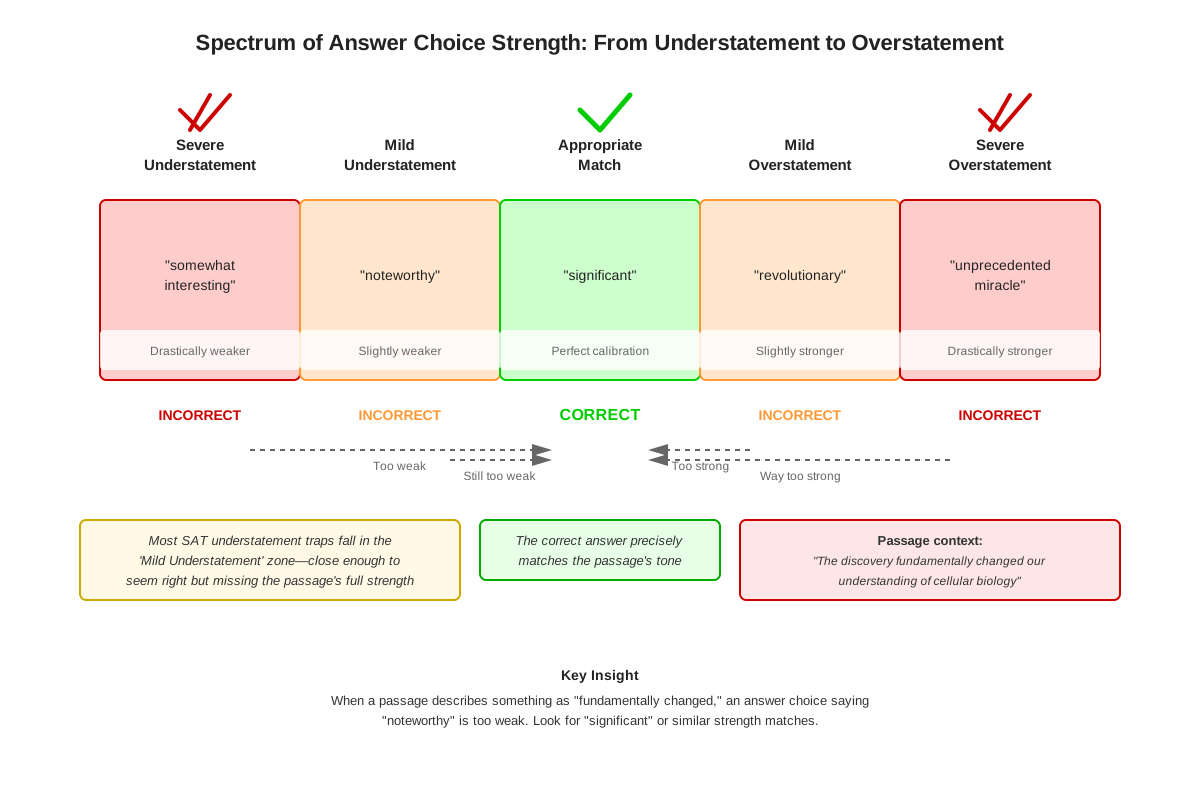
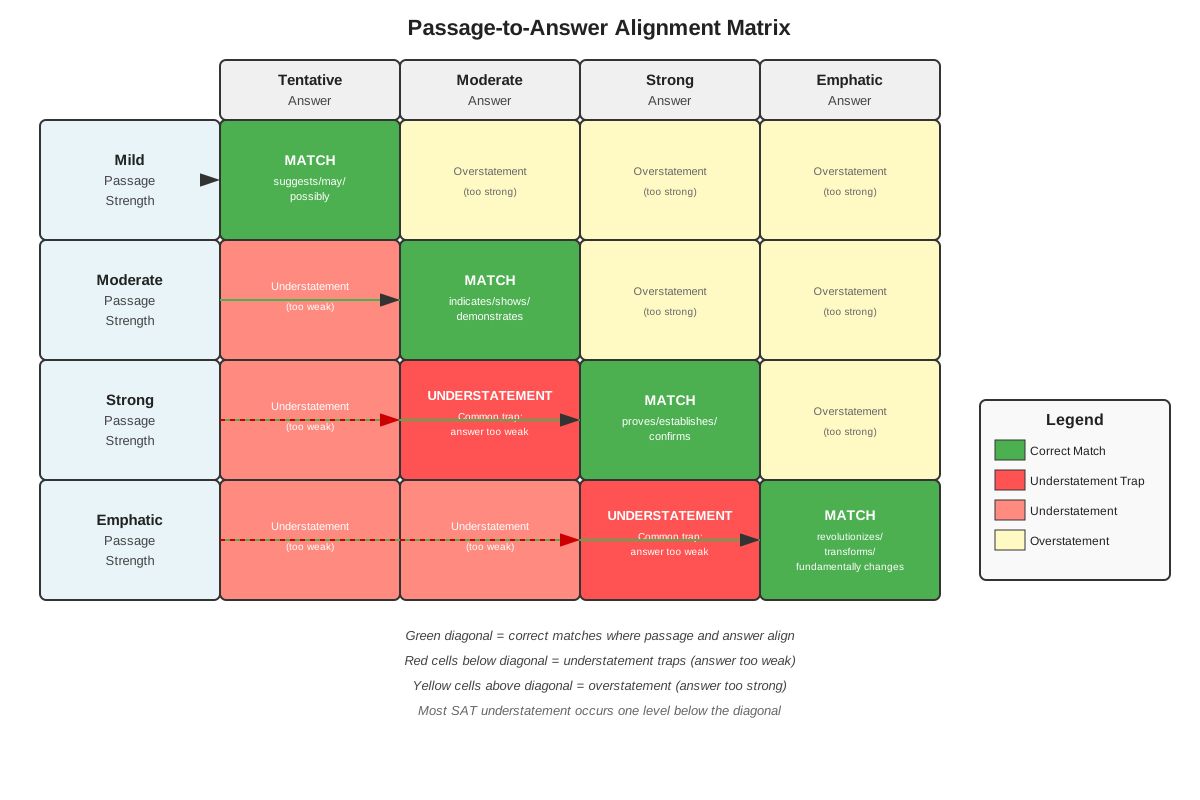
Understanding understatement requires recognizing that statements exist on a spectrum of strength and scope:
| Weak/Narrow | Moderate | Strong/Broad |
|---|---|---|
| suggests | indicates | demonstrates |
| somewhat | considerably | profoundly |
| noteworthy | significant | revolutionary |
| mentions | discusses | emphasizes |
| one aspect | several aspects | the central focus |
| may have | likely has | definitively has |
On the SAT, understated answer choices typically fall on the left side of this spectrum when the passage supports language from the middle or right side. The test makers deliberately select words that are defensible but insufficiently strong.
Types of Understatement
Scope Understatement
This occurs when an answer choice narrows the breadth of what the passage addresses. For example:
- Passage claim: "The invention transformed communication, commerce, and social relationships worldwide"
- Understated answer: "The invention affected communication methods"
The understated answer is accurate but captures only one-third of the passage's scope.
Intensity Understatement
This involves reducing the degree or strength of the passage's claims:
- Passage claim: "Scientists were astonished by the unprecedented results"
- Understated answer: "Scientists found the results interesting"
"Interesting" is far weaker than "astonished" and "unprecedented."
Significance Understatement
This minimizes the importance or impact that the passage attributes to something:
- Passage claim: "This discovery fundamentally altered our understanding of physics"
- Understated answer: "This discovery contributed to physics knowledge"
All discoveries "contribute," but the passage indicates something far more substantial.
Certainty Understatement
This reduces the level of confidence or definitiveness expressed in the passage:
- Passage claim: "The evidence conclusively proves the hypothesis"
- Understated answer: "The evidence suggests support for the hypothesis"
"Suggests" implies possibility, while "conclusively proves" indicates certainty.
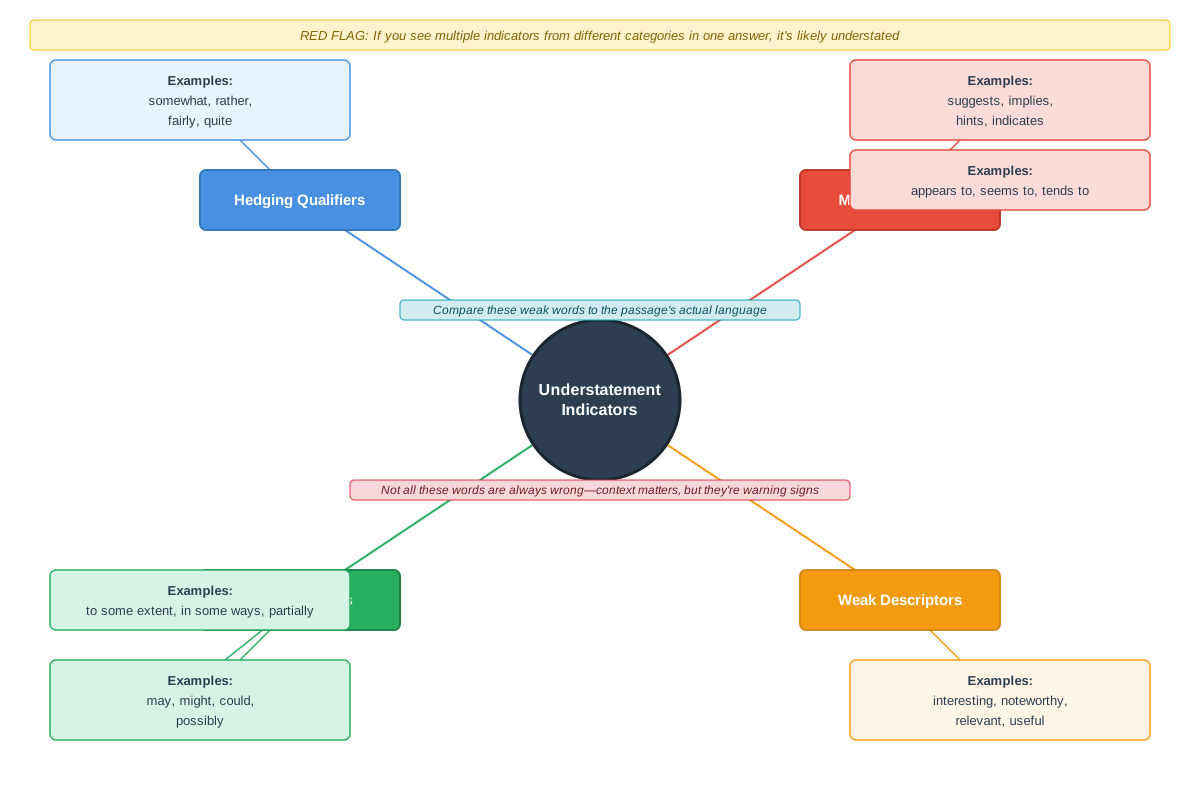
Recognizing Understatement Markers
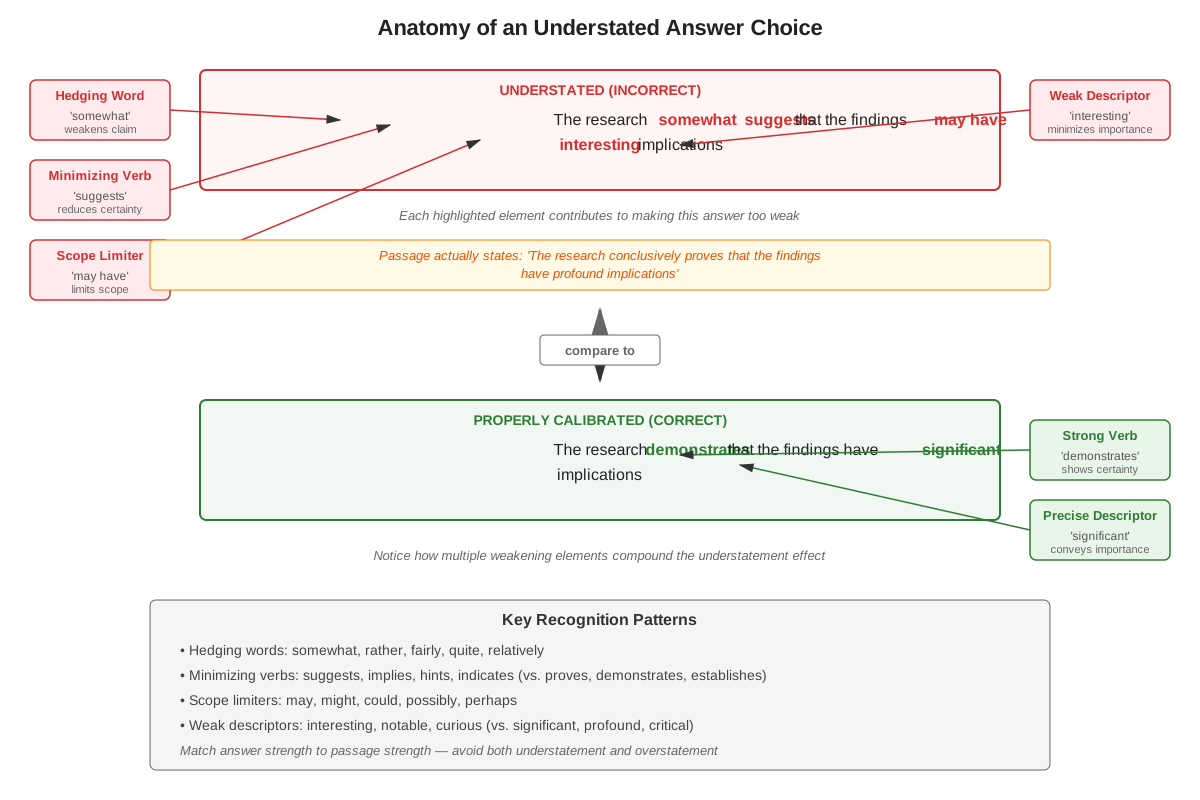
Certain linguistic patterns frequently signal understated answer choices:
Hedging language: Words like "somewhat," "relatively," "fairly," "rather," "to some extent," and "in certain ways" often indicate understatement when the passage makes stronger claims.
Minimizing verbs: "Mentions," "notes," "touches on," "alludes to," and "references" suggest passing treatment when the passage may actually emphasize or focus on the topic.
Weak qualifiers: "One of several," "among other things," "a factor in," and "partially" reduce the centrality or importance of concepts.
Tentative modals: "May," "might," "could," and "possibly" introduce uncertainty not present in more definitive passage language.
The Goldilocks Principle for Answer Choices
The correct answer on SAT Reading and Writing questions must be "just right"—not too strong (overstated), not too weak (understated), but precisely aligned with the passage. Students should evaluate each answer choice by asking:
- Does this capture the full scope of what the passage addresses?
- Does the intensity of language match the passage's tone and emphasis?
- Does this reflect the level of certainty or definitiveness the passage expresses?
- Does this acknowledge the significance the passage attributes to the concept?
When an answer fails any of these tests by being too weak, narrow, or tentative, it is likely understated.
Concept Relationships
The concept of understatement in answer choices connects directly to several other critical SAT Reading and Writing skills. Understanding tone and attitude is foundational because recognizing understatement requires detecting when answer choice language doesn't match the passage's emotional or intellectual stance. A passage written with enthusiasm and conviction cannot be accurately summarized with neutral, detached language.
The relationship flows as follows: Passage tone analysis → Evaluation of answer choice language → Detection of understatement. Similarly, main idea identification → Scope assessment → Recognition of scope understatement. Students must first accurately understand what the passage emphasizes before they can recognize when an answer choice fails to capture that emphasis.
Understatement also connects to the broader skill of eliminating distractors. While some incorrect answers are obviously wrong (containing factual errors or contradicting the passage), understated answers require more sophisticated elimination. They represent the "second-best" answers that trap students who don't demand complete accuracy.
The concept relates inversely to overstatement in answer choices, another common distractor type. Together, these form a framework: correct answers are precisely calibrated, understated answers are too weak, and overstated answers are too strong. Mastering the detection of both extremes sharpens a student's ability to identify the appropriately balanced correct answer.
High-Yield Facts
⭐ Understated answer choices contain accurate information but fail to capture the full scope, intensity, or significance of the passage's claims
⭐ Approximately 15-20% of incorrect answers in Central Ideas and Details questions employ understatement as a distractor strategy
⭐ Hedging language (somewhat, relatively, fairly) often signals understatement when the passage makes stronger claims
⭐ Understated answers are particularly common in questions about scientific discoveries, social movements, and historical significance
⭐ The correct answer must match both the content AND the strength/scope of the passage's presentation
- Understatement can affect scope (breadth), intensity (degree), significance (importance), or certainty (definitiveness)
- Words like "mentions," "notes," and "touches on" suggest minimal treatment and often indicate understated answers
- Understated answers feel "safe" because they're defensible, making them effective traps for cautious test-takers
- The SAT uses understatement more frequently than overstatement in distractor answers
- Detecting understatement requires comparing the relative strength of language between passage and answer choices, not just checking for factual accuracy
Quick check — test yourself on Understatement in answer choices so far.
Try Flashcards →Common Misconceptions
Misconception: If an answer choice is supported by the passage, it must be correct → Correction: An answer can be supported by the passage but still be incorrect if it understates the passage's full message. The correct answer must capture the complete scope and appropriate intensity, not just contain accurate information.
Misconception: More cautious, conservative answers are safer choices on the SAT → Correction: While overly extreme answers are often wrong, understated answers that are too cautious are equally incorrect. The SAT rewards precision, not caution. Students should select the answer that best matches the passage's actual claims, even if those claims are strong.
Misconception: Understatement only affects the main idea; supporting details can be minimized → Correction: Understatement can make any answer choice incorrect, whether the question asks about main ideas, purposes, tones, or specific details. Even when describing a detail, the answer must match how the passage presents that detail.
Misconception: If the passage uses strong language, the correct answer must use equally strong language → Correction: While the correct answer should match the passage's intensity, it doesn't need to use identical words. "Revolutionary" in the passage might correctly be captured by "transformative" in an answer, but not by "noteworthy." The key is equivalent strength, not identical vocabulary.
Misconception: Understated answers are always obviously too weak → Correction: Effective understated distractors are subtle. The difference between "significant impact" and "profound impact" may seem minor, but if the passage supports "profound," then "significant" is understated. Students must develop sensitivity to these gradations.
Worked Examples
Example 1: Scientific Discovery Passage
Passage excerpt: "The discovery of penicillin revolutionized medical treatment, saving countless lives and fundamentally transforming humanity's relationship with bacterial infections. Before this breakthrough, minor wounds frequently led to fatal infections; afterward, previously deadly diseases became manageable. Medical historians universally regard this as one of the most consequential scientific achievements of the twentieth century."
Question: The passage primarily serves to:
Answer choices:
- A) Describe a medical advancement that improved treatment options
- B) Explain how penicillin changed medical practice
- C) Emphasize the transformative impact of a crucial medical discovery
- D) Note the historical importance of antibiotic development
Analysis:
Choice A is understated in multiple ways. "Improved treatment options" is far weaker than "revolutionized medical treatment" and "fundamentally transforming." The passage doesn't merely describe an improvement—it emphasizes a revolution. Additionally, "a medical advancement" is generic and doesn't capture the magnitude indicated by "most consequential scientific achievements."
Choice B is closer but still understated in scope. The passage does explain changes to medical practice, but it goes further to discuss the broader impact on "humanity's relationship with bacterial infections" and the historical significance. This answer captures one element but misses the emphasis on magnitude and importance.
Choice C is correct. "Transformative impact" matches the passage's language ("revolutionized," "fundamentally transforming"), "crucial" aligns with "most consequential," and "emphasize" accurately reflects that the passage's primary purpose is to stress the significance of this discovery, not merely to inform about it.
Choice D is understated through the verb "note." The passage doesn't simply "note" importance—it emphasizes and elaborates on it extensively. Additionally, "historical importance" is weaker than the passage's claim about being "one of the most consequential scientific achievements."
Key lesson: The correct answer matches both the content (what the passage discusses) and the intensity (how strongly the passage presents it). Choices A, B, and D all contain accurate information but fail to capture the full force of the passage's emphasis.
Example 2: Social Movement Passage
Passage excerpt: "The civil rights movement of the 1960s represented far more than a series of protests and legislative victories. It fundamentally challenged and ultimately reshaped American society's understanding of equality, justice, and citizenship. The movement's influence extended beyond legal changes to transform social attitudes, cultural norms, and institutional practices across virtually every sector of American life."
Question: According to the passage, the civil rights movement:
Answer choices:
- A) Led to important legal reforms in American society
- B) Included protests that contributed to social change
- C) Comprehensively transformed multiple dimensions of American society
- D) Affected legal and social aspects of American life
Analysis:
Choice A is understated in scope. While the passage acknowledges "legislative victories," it explicitly states the movement "represented far more than" legal changes. This answer captures only one element the passage mentions while ignoring the broader transformation the passage emphasizes.
Choice B is understated in both scope and intensity. "Included protests" makes protests sound like one component among many, and "contributed to social change" is far weaker than "fundamentally challenged and ultimately reshaped." The passage presents the movement as transformative, not merely contributory.
Choice C is correct. "Comprehensively" captures the passage's emphasis on breadth ("virtually every sector"), "transformed" matches the passage's language about reshaping society, and "multiple dimensions" reflects the passage's discussion of legal changes, social attitudes, cultural norms, and institutional practices.
Choice D is understated through the verb "affected." While technically accurate, "affected" is much weaker than "fundamentally challenged and ultimately reshaped" and "transform." Additionally, this answer doesn't capture the comprehensive scope indicated by "virtually every sector of American life."
Key lesson: Pay attention to verbs that indicate the degree of impact. "Affected," "influenced," and "contributed to" are weaker than "transformed," "reshaped," and "revolutionized." When the passage uses strong language, the correct answer should reflect that strength.
Exam Strategy
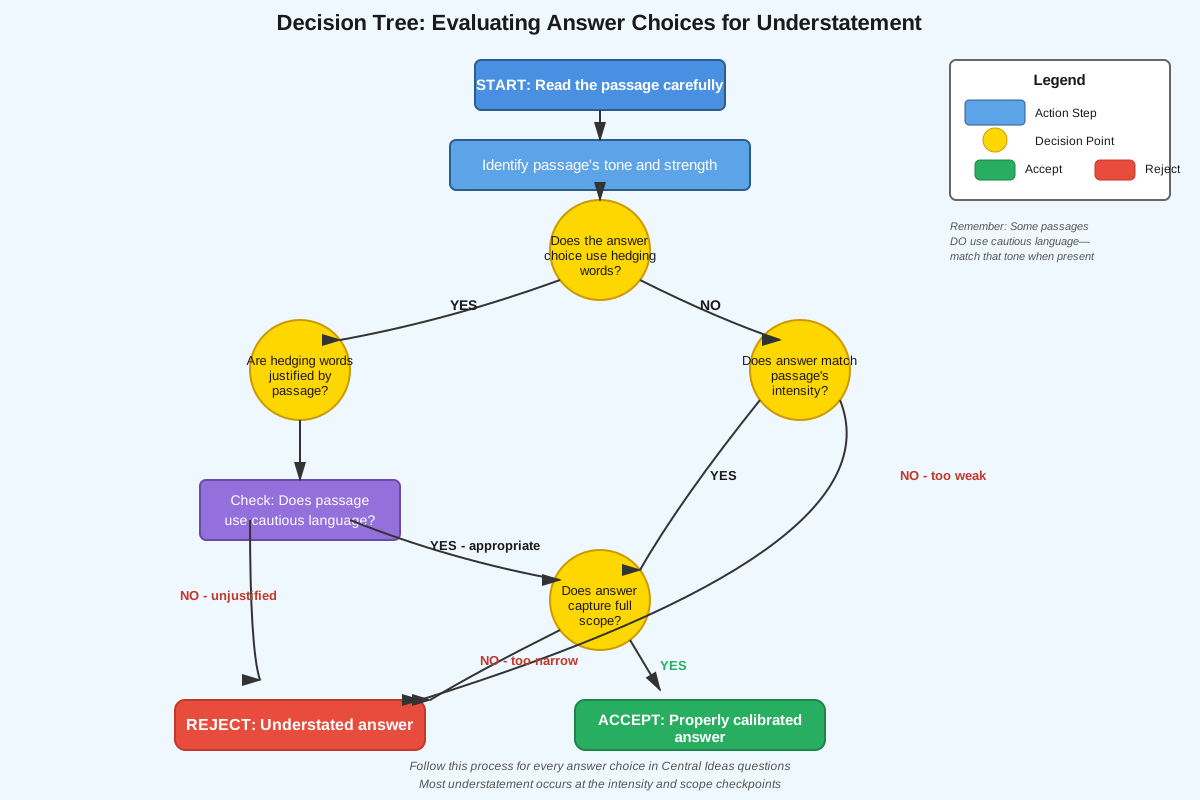
When approaching SAT Reading and Writing questions, implement this systematic process to detect and eliminate understated answer choices:
Step 1: Identify the passage's emphasis
Before looking at answer choices, note the strength of language in the relevant passage section. Circle or mentally note words that indicate degree (revolutionary, significant, somewhat), scope (comprehensive, one aspect, widespread), or certainty (proves, suggests, demonstrates).
Step 2: Predict the answer's strength
Based on the passage language, predict whether the correct answer should be strong, moderate, or cautious. If the passage says something is "unprecedented," the answer should reflect that level of significance.
Step 3: Evaluate each choice for calibration
For each answer choice, ask: "Is this too strong, too weak, or just right compared to the passage?" Eliminate choices that fall on either extreme.
Step 4: Watch for trigger words
Be immediately suspicious of answer choices containing:
- Hedging: "somewhat," "relatively," "fairly," "rather"
- Minimizing verbs: "mentions," "notes," "touches on," "alludes to"
- Weak qualifiers: "one of several," "among other things," "partially"
- Tentative modals: "may," "might," "could" (when the passage is more definitive)
Step 5: Compare relative strength
When choosing between two seemingly correct answers, select the one whose language strength better matches the passage. If the passage "emphasizes" something, an answer saying it "mentions" it is understated, even if both are technically accurate.
Exam Tip: Time allocation for these questions should be approximately 60-75 seconds. Spend 30 seconds reading and understanding the passage excerpt, 15 seconds predicting the answer strength, and 30 seconds evaluating choices. Don't rush the evaluation phase—understated answers are designed to seem acceptable on quick reading.
Process of elimination specific to understatement:
- Eliminate answers with verbs that are too weak for the passage's claims
- Eliminate answers that capture only part of the passage's scope
- Eliminate answers that reduce certainty the passage expresses
- Keep answers that match both content AND intensity
Memory Techniques
The SICS Mnemonic for evaluating answer choices:
- Scope: Does it cover the full breadth of what the passage addresses?
- Intensity: Does the strength of language match the passage's tone?
- Certainty: Does it reflect the passage's level of definitiveness?
- Significance: Does it capture the importance the passage attributes?
If an answer fails any SICS criterion by being too weak or narrow, it's likely understated.
The Goldilocks Visualization: Picture three bowls of porridge. The left bowl (too cold) represents understated answers, the right bowl (too hot) represents overstated answers, and the middle bowl (just right) represents the correct answer. Train yourself to feel when an answer is in the "too cold" zone.
The Verb Strength Ladder: Memorize this hierarchy from weakest to strongest:
- Mentions/notes/touches on
- Discusses/addresses/describes
- Emphasizes/focuses on/highlights
- Demonstrates/establishes/proves
When the passage uses a verb from level 3 or 4, answers using verbs from level 1 or 2 are likely understated.
The "More Than" Flag: When a passage explicitly says something is "more than" or "goes beyond" a certain description, any answer using only that lesser description is understated. For example, if the passage says "The impact was more than merely economic," an answer focusing only on economic impact is understated.
Summary
Understatement in answer choices represents a sophisticated distractor strategy where incorrect options contain accurate information but fail to capture the full scope, intensity, significance, or certainty of the passage's claims. These answers are particularly challenging because they feel defensible and safe, making them effective traps for students who don't demand complete precision. Success requires recognizing that correct SAT answers must match not just the content but also the strength of the passage's presentation. Students must develop sensitivity to gradations in language strength, understanding the difference between words like "mentions" versus "emphasizes," "significant" versus "revolutionary," or "affected" versus "transformed." The key skill is evaluating answer choices along multiple dimensions—scope, intensity, certainty, and significance—and eliminating options that fall short on any dimension. By systematically comparing the relative strength of passage language to answer choice language, students can consistently identify and avoid understated distractors, selecting instead the answer that fully and accurately represents what the passage conveys.
Key Takeaways
- Understated answers contain accurate information but minimize the passage's full message through weaker language or narrower scope
- Approximately 15-20% of incorrect Central Ideas and Details answers employ understatement, making it one of the most common distractor types
- Correct answers must match both the content AND the strength/intensity of the passage's presentation
- Hedging language, minimizing verbs, and tentative modals often signal understated answer choices
- Use the SICS framework (Scope, Intensity, Certainty, Significance) to systematically evaluate whether answers fully capture the passage's claims
- When choosing between similar answers, select the one whose language strength better aligns with the passage's emphasis
- Develop sensitivity to verb strength hierarchies and recognize when answer choice verbs are too weak for the passage's claims
Related Topics
Overstatement in Answer Choices: The inverse of understatement, where incorrect answers make claims stronger or broader than the passage supports. Mastering understatement detection naturally prepares students to recognize overstatement.
Tone and Attitude Questions: Understanding how authors convey attitude through word choice directly supports the ability to detect when answer choices don't match the passage's tone intensity.
Main Idea versus Supporting Details: Distinguishing between central claims and minor points helps students evaluate whether an answer captures appropriate scope or understates the passage's emphasis.
Inference Questions: While inference questions require going beyond explicit statements, the correct inference must still match the passage's level of support—not understating what can be reasonably concluded.
Author's Purpose and Function: Recognizing whether an author "mentions," "discusses," or "emphasizes" something connects directly to evaluating answer choice language strength.
Practice CTA
Now that you understand how understatement functions in SAT answer choices, it's time to apply these concepts to practice questions. Work through the practice problems carefully, using the SICS framework to evaluate each answer choice. Pay special attention to the relative strength of language between passages and answers. The flashcards will help you internalize the verb strength hierarchies and common understatement markers. Remember: every practice question you analyze builds your sensitivity to these subtle but crucial distinctions. With focused practice, detecting understated answers will become automatic, significantly improving your performance on Central Ideas and Details questions. You've got this!
Sign up free to keep reading
Create a free AnvayaPrep account to finish this SAT guide on Understatement in answer choices — plus flashcards and practice questions.