Overview
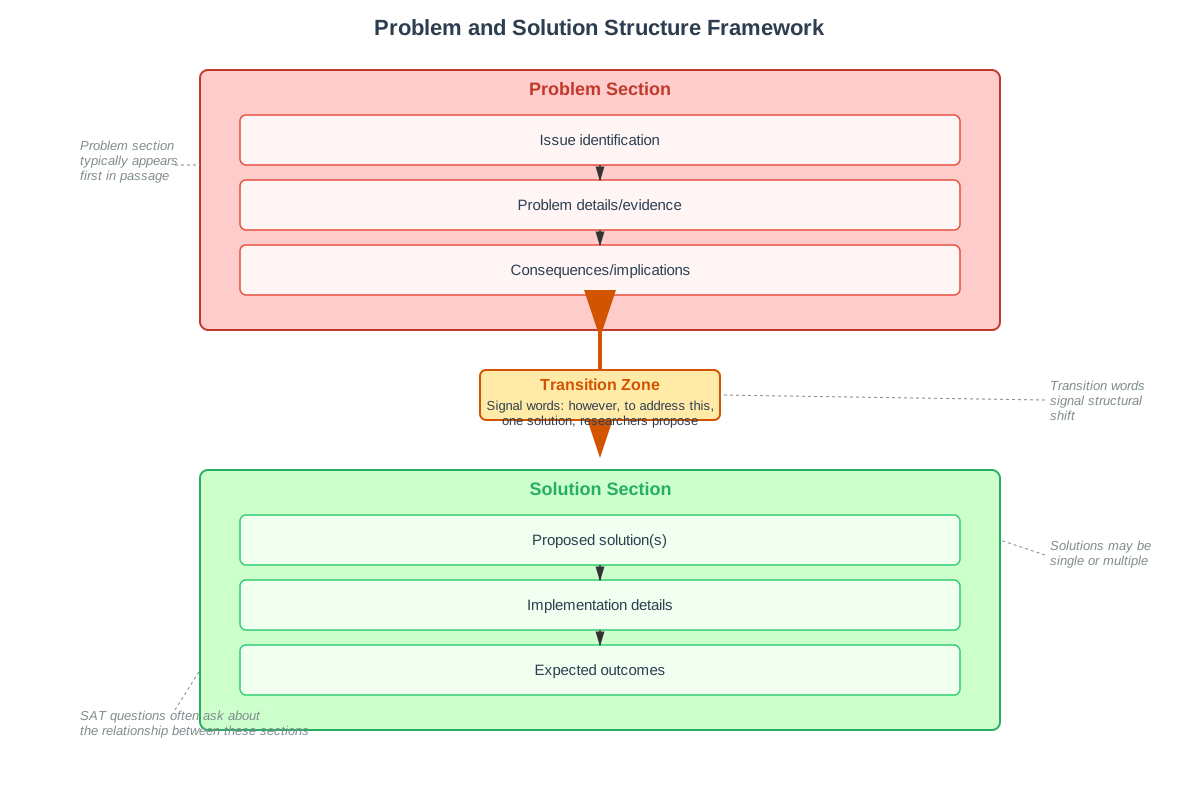
The problem and solution structure is one of the most frequently tested organizational patterns in the SAT Reading and Writing section. This text structure presents a challenge, issue, or difficulty in the first portion of a passage, then describes one or more responses, remedies, or resolutions in the subsequent sections. Understanding this structure is critical because the SAT regularly asks students to identify how authors organize information, recognize the purpose of specific paragraphs, and determine the relationship between different parts of a text.
On the SAT, problem and solution structure questions appear in the Craft and Structure domain of the RW (Reading and Writing) section. These questions test whether students can recognize organizational patterns and understand how authors use structure to convey meaning. Students who master this concept gain a significant advantage because they can quickly identify the framework of a passage, predict what information will follow, and eliminate incorrect answer choices that mischaracterize the text's organization. This skill applies across multiple question types, including those asking about text structure, purpose, and logical relationships between ideas.
The problem and solution framework connects to broader Reading and Writing concepts such as cause and effect relationships, argumentative structure, and rhetorical purpose. While cause and effect explains why something happened, problem and solution focuses specifically on challenges and their remedies. This distinction is crucial for SAT success, as the exam frequently includes answer choices that confuse these similar but distinct organizational patterns. Mastering problem and solution structure also strengthens overall reading comprehension by helping students anticipate content, identify main ideas more efficiently, and understand how authors develop their arguments across multiple paragraphs.
Learning Objectives
- [ ] Identify key features of problem and solution structure
- [ ] Explain how problem and solution structure appears on the SAT
- [ ] Apply problem and solution structure to answer SAT-style questions
- [ ] Distinguish problem and solution structure from other organizational patterns (cause and effect, chronological, compare and contrast)
- [ ] Recognize signal words and transitions that indicate problem and solution organization
- [ ] Analyze how authors use problem and solution structure to achieve specific rhetorical purposes
Prerequisites
- Basic paragraph structure: Understanding topic sentences, supporting details, and concluding sentences helps identify where problems are introduced and solutions are presented
- Main idea identification: Recognizing central claims enables students to distinguish between the problem being discussed and proposed solutions
- Transition word knowledge: Familiarity with connecting words helps spot structural shifts from problem presentation to solution discussion
- Reading comprehension fundamentals: The ability to understand literal meaning is necessary before analyzing organizational patterns
Why This Topic Matters
Problem and solution structure appears throughout academic, professional, and civic life. Scientific research papers present problems (research questions) and solutions (findings and recommendations). Business proposals identify challenges facing organizations and suggest remedies. Policy documents outline social issues and legislative responses. Recognizing this structure helps students become more effective readers across disciplines and contexts, preparing them for college-level texts where complex problems and multifaceted solutions are standard.
On the SAT, problem and solution questions appear with high frequency—approximately 2-4 questions per test directly assess text structure recognition, and many additional questions require structural understanding to answer correctly. These questions typically appear in two formats: explicit structure questions that ask students to identify the organizational pattern, and implicit questions that require understanding the relationship between different parts of the text. The College Board consistently includes passages from natural sciences, social sciences, and humanities that employ problem and solution organization, making this a cross-disciplinary skill.
Common SAT passages using this structure include: scientific texts describing environmental challenges and conservation efforts, historical passages discussing social problems and reform movements, economic texts presenting market failures and policy interventions, and technological passages outlining engineering obstacles and innovative solutions. The structure may be simple (one problem, one solution) or complex (multiple problems with corresponding solutions, or one problem with several proposed remedies). Students who quickly recognize this pattern save valuable time and answer questions more accurately.
Core Concepts
Defining Problem and Solution Structure
Problem and solution structure is an organizational pattern in which an author first presents a difficulty, challenge, issue, or undesirable situation, then describes one or more approaches to address, resolve, or mitigate that problem. This structure serves a clear rhetorical purpose: to inform readers about challenges and educate them about potential remedies, or to persuade readers that particular solutions are necessary or effective.
The problem component typically includes: identification of what is wrong or needs improvement, explanation of why the situation is problematic, description of negative consequences or impacts, and sometimes background information about how the problem developed. The solution component typically includes: proposed actions or interventions, explanation of how the solution addresses the problem, potential benefits or positive outcomes, and sometimes acknowledgment of limitations or challenges in implementation.
Key Features and Signal Words
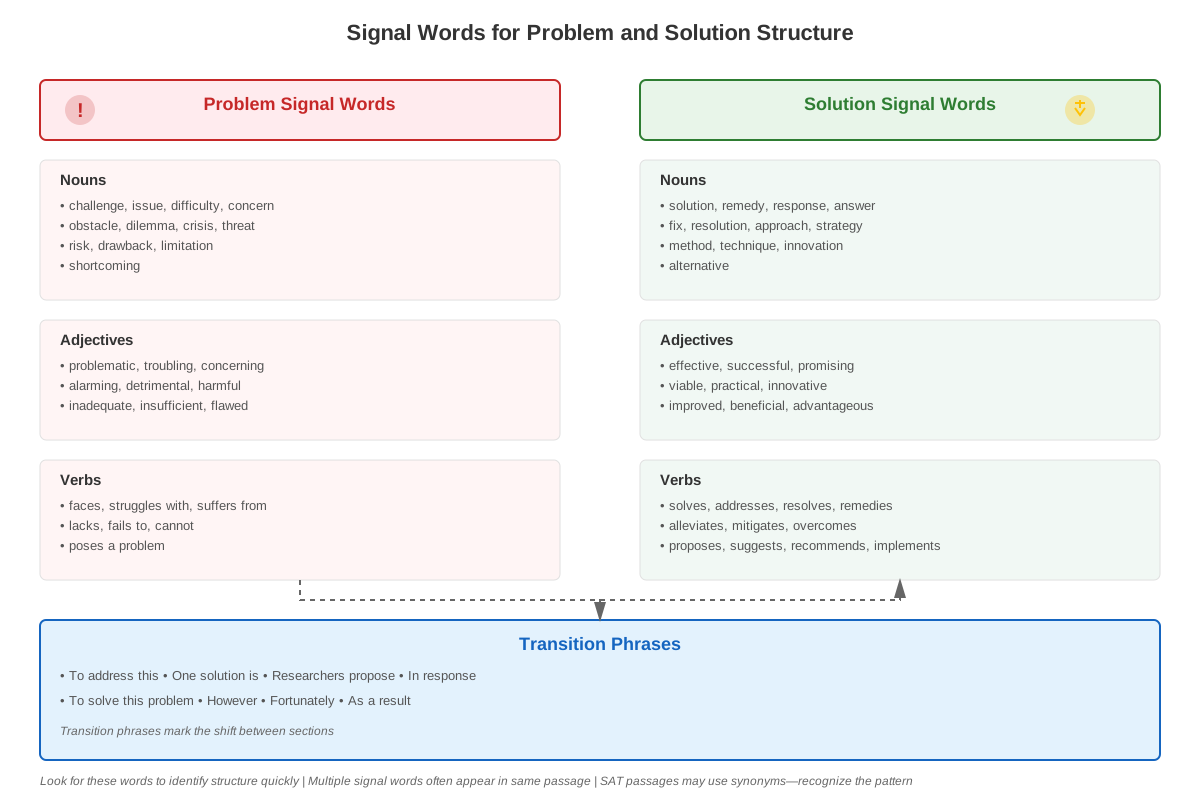
Recognizing sat problem and solution structure requires attention to specific linguistic markers. Problem indicators include words and phrases such as: "challenge," "difficulty," "issue," "concern," "obstacle," "dilemma," "crisis," "threat," "drawback," "shortcoming," and "unfortunately." These terms signal that the author is describing something negative or undesirable.
Solution indicators include: "solution," "answer," "remedy," "response," "approach," "strategy," "method," "technique," "innovation," "development," "proposal," "recommendation," "to address this," "to solve," "to resolve," "to overcome," and "to combat." Transition words connecting problems to solutions include: "therefore," "consequently," "as a result," "to address this issue," "in response," "accordingly," and "for this reason."
| Text Component | Common Signal Words | Purpose |
|---|---|---|
| Problem Introduction | challenge, issue, difficulty, concern, obstacle | Identify what needs to be addressed |
| Problem Elaboration | unfortunately, problematic, harmful, negative impact | Explain why the situation is undesirable |
| Transition to Solution | to address, in response, therefore, consequently | Connect problem to proposed remedy |
| Solution Presentation | solution, approach, method, innovation, development | Describe how to resolve the issue |
| Solution Benefits | effective, successful, improvement, positive outcome | Explain advantages of the solution |
Structural Variations
Problem and solution texts appear in several organizational patterns:
- Simple structure: One clearly defined problem followed by one solution
- Multiple solutions: One problem with several proposed or attempted remedies
- Comparative solutions: One problem with multiple solutions that are compared or contrasted
- Sequential solutions: One problem with solutions that build upon each other or represent stages
- Problem-solution-evaluation: Problem and solution followed by assessment of effectiveness
- Embedded structure: Smaller problem-solution pairs within a larger problem-solution framework
Understanding these variations is essential for SAT success because passages may present complex organizational patterns. A scientific passage might describe an environmental problem, present multiple attempted solutions, then evaluate which proved most effective. A historical passage might outline a social problem and trace how solutions evolved over time.
Distinguishing from Similar Structures
Students must differentiate problem and solution from related organizational patterns:
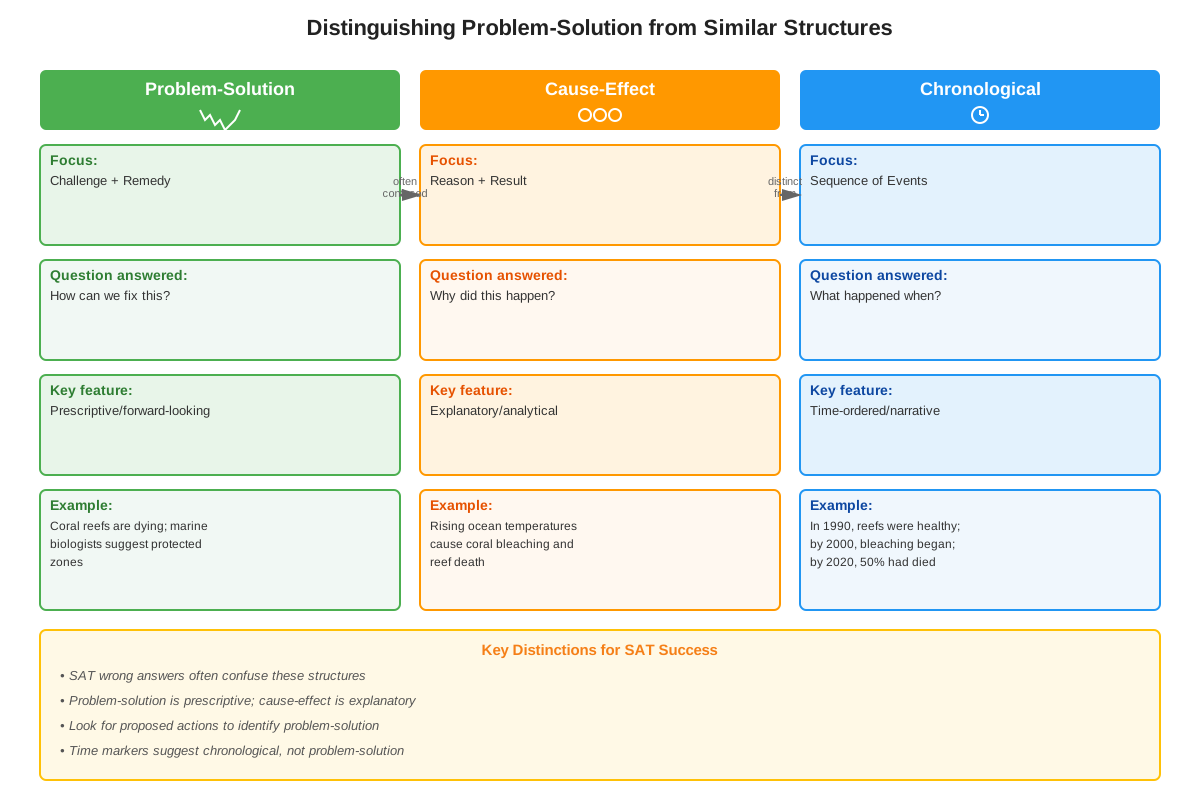
Problem and Solution vs. Cause and Effect: Cause and effect explains why something happened (cause → effect), while problem and solution presents a challenge and describes responses to it (problem → solution). A passage stating "Deforestation causes soil erosion" uses cause and effect. A passage stating "Soil erosion is a serious problem; planting cover crops can prevent it" uses problem and solution.
Problem and Solution vs. Compare and Contrast: Compare and contrast examines similarities and differences between two or more subjects without necessarily presenting either as problematic. Problem and solution specifically identifies something as undesirable and proposes remedies.
Problem and Solution vs. Chronological: Chronological structure presents events in time order. While a problem and solution text might include temporal elements (the problem developed over time, solutions were implemented sequentially), the primary organizing principle is the problem-remedy relationship, not temporal sequence.
Concept Relationships
Problem and solution structure connects to multiple Reading and Writing concepts in a hierarchical and complementary manner. At the foundation level, understanding problem and solution structure requires mastery of main idea identification—students must recognize what the central problem is and what the proposed solution entails. This structure then builds upward to support comprehension of author's purpose, as writers who employ problem and solution organization typically aim to inform readers about challenges and educate them about remedies, or to persuade readers that specific solutions are necessary.
The relationship flows as follows: Paragraph structure → Main idea identification → Problem and solution structure → Author's purpose → Rhetorical analysis. Each level depends on the previous one. Students who understand how individual paragraphs are organized can identify main ideas within those paragraphs, which enables recognition of problem and solution patterns, which reveals author's purpose, which supports deeper rhetorical analysis.
Problem and solution structure also connects laterally to other organizational patterns. Authors frequently combine structures: a problem and solution passage might use cause and effect to explain how the problem developed, compare and contrast to evaluate different solutions, or chronological order to trace how solutions evolved over time. On the SAT, recognizing these combined structures helps students answer questions about specific paragraphs within a larger passage.
Additionally, problem and solution structure relates to argumentative writing concepts. When authors propose solutions, they often employ evidence and reasoning to support their claims about effectiveness. Understanding problem and solution structure helps students identify claims (the solution will work), evidence (data supporting the solution), and reasoning (explanation of how the solution addresses the problem).
High-Yield Facts
- ⭐ Problem and solution structure presents a challenge or difficulty first, then describes one or more responses or remedies to address that challenge
- ⭐ Signal words for problems include "challenge," "difficulty," "issue," "concern," and "obstacle"; signal words for solutions include "solution," "remedy," "approach," "method," and "to address"
- ⭐ SAT questions may ask students to identify the overall structure of a passage or the function of specific paragraphs within a problem and solution framework
- ⭐ Problem and solution differs from cause and effect: cause and effect explains why something happened, while problem and solution presents a challenge and proposes remedies
- ⭐ The SAT frequently includes passages where the problem is stated in early paragraphs and solutions appear in later paragraphs, making paragraph function questions common
- Transition phrases like "to address this issue," "in response," and "consequently" often signal the shift from problem to solution
- Some passages present multiple solutions to a single problem, requiring students to track which solution corresponds to which aspect of the problem
- Authors may evaluate solutions by discussing their effectiveness, limitations, or potential drawbacks
- Problem and solution structure appears across all SAT passage types: science, social science, history, and humanities
- Not all problems have solutions presented; some passages identify problems to raise awareness without proposing specific remedies
- The problem may be implicit rather than explicitly stated, requiring inference from context
- Solutions may be presented as hypothetical proposals, implemented interventions, or naturally occurring developments
Quick check — test yourself on Problem and solution structure so far.
Try Flashcards →Common Misconceptions
Misconception: Every passage that mentions a problem uses problem and solution structure → Correction: Problem and solution structure requires both a problem and a corresponding solution or remedy. A passage that only describes a problem without discussing responses uses a different organizational pattern, such as descriptive or explanatory structure.
Misconception: Cause and effect structure is the same as problem and solution structure → Correction: These are distinct patterns. Cause and effect explains why something happened (X caused Y), while problem and solution presents something undesirable and describes attempts to address it. A passage can use both structures, but they serve different purposes.
Misconception: The solution must completely resolve the problem for the passage to use problem and solution structure → Correction: Solutions may be partial, proposed but not yet implemented, or acknowledged as imperfect. The structure depends on presenting a problem and discussing responses to it, not on whether those responses are entirely successful.
Misconception: Problem and solution structure always follows a simple linear pattern (problem first, then solution) → Correction: Authors may present solutions before fully explaining the problem, alternate between discussing problems and solutions, or embed smaller problem-solution pairs within a larger structure. The key is recognizing the relationship between challenges and responses, not the specific order.
Misconception: If a passage compares two solutions, it uses compare and contrast structure rather than problem and solution structure → Correction: A passage can employ problem and solution as the primary structure while using comparison as a secondary organizational tool to evaluate different solutions. The overall structure is determined by the main organizing principle—in this case, presenting a problem and discussing remedies.
Misconception: Signal words alone determine structure → Correction: While signal words provide important clues, structure is determined by the overall organization and relationship between ideas. A passage might use the word "problem" without employing problem and solution structure if it doesn't discuss remedies.
Worked Examples
Example 1: Scientific Passage
Passage: "Coral reefs worldwide face unprecedented threats from rising ocean temperatures. As waters warm, corals expel the symbiotic algae that provide them with nutrients and color, a process called bleaching. Prolonged bleaching leads to coral death, devastating entire reef ecosystems. To combat this crisis, marine biologists have developed heat-resistant coral strains through selective breeding. By identifying corals that survived previous bleaching events and breeding them, researchers have created varieties that can withstand temperatures 2-3 degrees higher than normal corals. Early trials in the Caribbean show promising results, with heat-resistant corals maintaining their algae even during warm water events that bleached nearby natural reefs."
Question: The passage is primarily organized around which of the following?
A) A chronological account of coral reef development
B) A comparison between different types of coral
C) A problem affecting coral reefs and a scientific response to it
D) A cause and effect relationship between algae and coral
Solution Process:
Step 1: Identify the main components of the passage. The first portion describes coral bleaching as a threat ("unprecedented threats," "devastating entire reef ecosystems"). This is clearly presenting something negative—a problem.
Step 2: Identify what follows. The passage then introduces "heat-resistant coral strains through selective breeding" with the transition phrase "To combat this crisis." The word "combat" signals a solution, and the remainder describes how this solution works and its effectiveness.
Step 3: Evaluate each answer choice:
- Choice A: The passage doesn't trace coral development over time; it discusses a current problem and response. Eliminate.
- Choice B: While two types of coral are mentioned (natural and heat-resistant), comparison isn't the primary organizing principle. The focus is on the problem and the solution. Eliminate.
- Choice C: This accurately describes the structure—coral bleaching is the problem, and heat-resistant coral strains are the scientific response. Keep.
- Choice D: The passage does mention a relationship between algae and coral, but this is a detail within the larger problem-solution framework, not the primary organizational pattern. Eliminate.
Answer: C
Connection to Learning Objectives: This example demonstrates identifying key features of problem and solution structure (problem presented first, solution introduced with transition phrase, solution explained and evaluated) and applying this knowledge to answer an SAT-style question.
Example 2: Social Science Passage
Passage: "Urban food deserts—neighborhoods lacking access to affordable, nutritious food—contribute to health disparities in low-income communities. Residents of these areas often rely on convenience stores offering primarily processed foods high in sugar and fat, leading to elevated rates of obesity and diabetes. Traditional solutions like attracting large supermarkets have proven difficult; major chains avoid areas they perceive as unprofitable. A more successful approach has emerged through mobile farmers markets. These truck-based markets bring fresh produce directly to underserved neighborhoods on regular schedules. A Chicago program demonstrated that mobile markets increased fruit and vegetable consumption by 32% among participants. Additionally, community-supported agriculture (CSA) programs adapted for low-income areas, offering flexible payment plans and accepting food assistance benefits, have expanded access to fresh, locally grown food."
Question: Which choice best describes the overall structure of the passage?
A) It presents a social problem and then describes multiple approaches to addressing it
B) It argues that one solution to a problem is superior to another
C) It traces the historical development of urban food systems
D) It explains the causes of health disparities in urban areas
Solution Process:
Step 1: Identify the problem. The passage begins by defining food deserts and explaining their negative health impacts. This is the problem component.
Step 2: Identify the solution(s). The passage mentions "traditional solutions like attracting large supermarkets" (which failed), then describes two successful approaches: mobile farmers markets and adapted CSA programs. Multiple solutions are presented.
Step 3: Determine the relationship between components. The passage doesn't simply list solutions; it presents them as responses to the food desert problem. The structure is problem → multiple solutions.
Step 4: Evaluate answer choices:
- Choice A: Accurately describes the structure—one problem (food deserts) with multiple approaches (mobile markets, CSA programs). Keep.
- Choice B: While the passage notes that mobile markets are "more successful" than supermarkets, the primary purpose isn't to argue for one solution's superiority but to present multiple approaches. This is less accurate than A. Eliminate.
- Choice C: No historical development is traced; the passage focuses on current problems and solutions. Eliminate.
- Choice D: While causes are mentioned briefly, the passage primarily focuses on solutions, not causes. Eliminate.
Answer: A
Connection to Learning Objectives: This example shows how to distinguish problem and solution structure from similar patterns (cause and effect, argumentation) and recognize variations (multiple solutions to one problem).
Exam Strategy
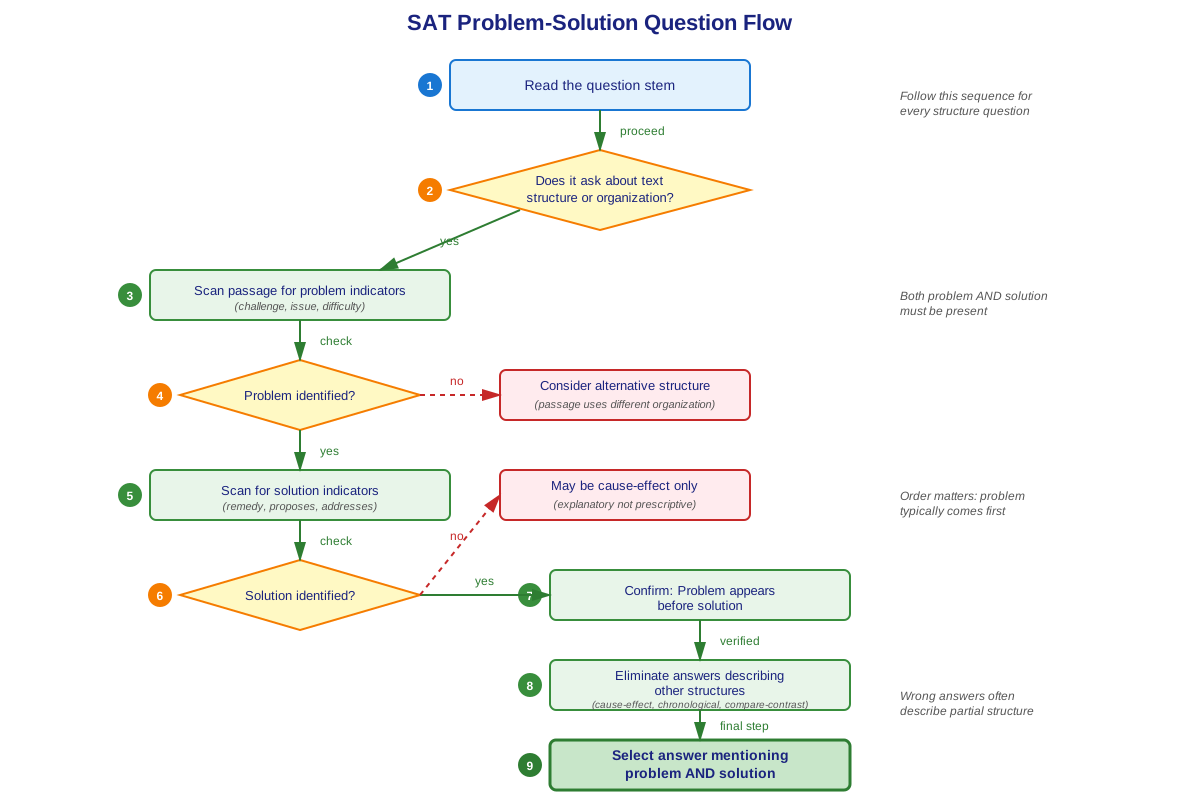
When approaching sat problem and solution structure questions, follow this systematic process:
Step 1: Skim for organizational markers. Before reading in detail, quickly scan for signal words indicating problems ("challenge," "difficulty," "issue") and solutions ("solution," "approach," "to address"). This preview helps you anticipate the structure.
Step 2: Identify the problem explicitly. As you read, underline or mentally note what the author presents as problematic, undesirable, or in need of improvement. Ask yourself: "What's wrong? What needs to be fixed?"
Step 3: Locate the transition. Find where the passage shifts from describing the problem to discussing solutions. Look for transition phrases like "to address this," "in response," or "consequently."
Step 4: Map the solutions. Note how many solutions are presented and whether they're described as proposed, implemented, successful, or unsuccessful. Some passages present one solution; others present multiple options.
Step 5: Eliminate answer choices that mischaracterize the structure. Common wrong answers include:
- Choices that identify only the problem or only the solution, ignoring the other component
- Choices that confuse problem and solution with cause and effect
- Choices that focus on a secondary organizational pattern (like comparison) while missing the primary problem-solution framework
- Choices that describe the content rather than the structure
Exam Tip: If a question asks about "the overall structure" or "how the passage is organized," focus on the relationship between major components, not specific details. The correct answer will describe the framework, not the content.
Trigger phrases in questions: Watch for these question stems that signal structure questions:
- "The passage is primarily organized around..."
- "Which choice best describes the overall structure..."
- "The main purpose of the [second/third/fourth] paragraph is to..."
- "The author introduces [concept] in order to..."
Time allocation: Structure questions should take 30-45 seconds once you understand the passage. If you've already read the passage for a previous question, structure questions become quick points. If the structure question appears first, spend 60-90 seconds reading strategically to identify the organizational pattern.
Memory Techniques
PS-STAR Mnemonic for identifying problem and solution structure:
- Problem identified (something is wrong)
- Signal words present (challenge, issue, solution, remedy)
- Transition to solution (to address, in response)
- Approach described (how the solution works)
- Result or evaluation (effectiveness discussed)
Visual Memory Strategy: Picture a bridge. The problem is on one side of a river (the undesirable situation), the solution is the bridge (the remedy), and the other side represents the improved situation. When reading, visualize building this bridge from problem to solution.
Signal Word Categories: Remember the acronym DISCO for solution indicators:
- Development
- Innovation
- Strategy
- Combat (to combat)
- Overcome (to overcome)
Structure vs. Content Distinction: Remember "HOW not WHAT"—structure questions ask HOW the passage is organized, not WHAT the passage is about. If you find yourself thinking about specific details rather than organizational patterns, refocus on the framework.
Summary
Problem and solution structure is a fundamental organizational pattern in SAT Reading and Writing passages where authors present a challenge, difficulty, or undesirable situation, then describe one or more responses or remedies to address it. This structure appears frequently across all passage types—science, social science, history, and humanities—making it essential for SAT success. Students must recognize key features including problem indicators (challenge, difficulty, issue), solution indicators (remedy, approach, method), and transition phrases connecting problems to solutions (to address, in response). The structure may be simple (one problem, one solution) or complex (multiple solutions, evaluation of effectiveness, or embedded problem-solution pairs). Distinguishing problem and solution from similar patterns like cause and effect is crucial: cause and effect explains why something happened, while problem and solution presents something undesirable and discusses remedies. Mastering this concept enables students to quickly identify passage organization, predict content, eliminate incorrect answers, and answer structure questions efficiently and accurately.
Key Takeaways
- Problem and solution structure presents a challenge or undesirable situation followed by one or more responses or remedies to address it
- Signal words for problems include "challenge," "difficulty," "issue," and "concern"; signal words for solutions include "solution," "remedy," "approach," and "method"
- Transition phrases like "to address this issue" and "in response" mark the shift from problem to solution
- Problem and solution differs from cause and effect: the former presents challenges and remedies, the latter explains why something happened
- SAT questions test both recognition of overall structure and understanding of how specific paragraphs function within the problem-solution framework
- Structure questions ask HOW a passage is organized, not WHAT it's about—focus on relationships between components, not specific content details
- Multiple solutions may be presented for a single problem, requiring careful tracking of which solution addresses which aspect of the challenge
Related Topics
Cause and Effect Structure: Understanding how authors explain why events occur and their consequences; mastering problem and solution structure provides a foundation for distinguishing between explanatory and remedial organizational patterns.
Compare and Contrast Structure: Learning how authors examine similarities and differences between subjects; this connects to problem and solution when passages compare multiple solutions to evaluate their relative effectiveness.
Author's Purpose and Rhetorical Strategy: Analyzing why authors choose specific organizational patterns and how structure serves persuasive or informative goals; problem and solution structure often serves to advocate for particular remedies.
Paragraph Function Questions: Determining the role of specific paragraphs within a larger passage; understanding problem and solution structure helps identify whether a paragraph introduces a problem, proposes a solution, or evaluates effectiveness.
Transition Words and Logical Relationships: Mastering how authors connect ideas and signal shifts between concepts; this skill supports recognition of the transition from problem to solution within passages.
Practice CTA
Now that you've mastered the core concepts of problem and solution structure, it's time to apply your knowledge! Complete the practice questions to test your ability to identify this organizational pattern in SAT-style passages. Work through the flashcards to reinforce signal words and key distinctions between problem and solution and similar structures. Remember: recognizing text structure quickly and accurately gives you a significant advantage on test day, helping you answer questions more efficiently and confidently. Each practice question you complete strengthens your pattern recognition skills and builds the automaticity you need for SAT success. You've got this!
Sign up free to keep reading
Create a free AnvayaPrep account to finish this SAT guide on Problem and solution structure — plus flashcards and practice questions.