Overview
Example clues are one of the most powerful and frequently tested context clue types on the SAT Reading and Writing section. These clues appear when an author provides specific instances, illustrations, or samples to clarify the meaning of an unfamiliar or challenging vocabulary word. Rather than defining a term directly, the author demonstrates its meaning through concrete examples that follow the word in question. Understanding how to identify and interpret sat example clues is essential for success on vocabulary-in-context questions, which appear consistently throughout the rw (Reading and Writing) section.
On the SAT, example clues typically manifest through signal words and phrases such as "such as," "for example," "including," "like," "for instance," or "especially." These linguistic markers alert test-takers that the author is about to provide specific cases that illuminate the meaning of a preceding term. Mastering example clues enables students to determine word meanings without relying solely on memorized definitions, which is precisely the skill the College Board aims to assess. This approach reflects real-world reading comprehension, where educated readers infer meanings from context rather than consulting a dictionary for every unfamiliar term.
Example clues represent a fundamental component of the broader "Words in Context" unit, which tests students' ability to understand vocabulary through contextual analysis rather than rote memorization. This topic connects directly to other context clue strategies, including definition clues, contrast clues, and inference clues. By developing proficiency with example clues specifically, students build a transferable skill set that enhances overall reading comprehension and prepares them for the analytical demands of college-level texts.
Learning Objectives
- [ ] Identify key features of example clues in SAT passages
- [ ] Explain how example clues appears on the SAT
- [ ] Apply example clues to answer SAT-style questions
- [ ] Recognize signal words and phrases that introduce example clues
- [ ] Distinguish between example clues and other types of context clues
- [ ] Evaluate the relationship between examples provided and the target vocabulary word
- [ ] Synthesize information from multiple examples to determine precise word meanings
Prerequisites
- Basic vocabulary knowledge: Understanding common academic words provides a foundation for inferring meanings of more challenging terms through context
- Sentence structure comprehension: Recognizing how clauses and phrases relate within sentences helps identify where example clues appear
- Reading comprehension fundamentals: The ability to understand main ideas and supporting details enables recognition of how examples function within passages
- Familiarity with punctuation conventions: Commas, colons, semicolons, and dashes often signal the introduction of examples
Why This Topic Matters
Example clues represent one of the most practical reading comprehension strategies students will use throughout their academic careers and professional lives. In college courses, textbooks frequently introduce specialized terminology through illustrative examples, making this skill essential for independent learning across disciplines. Professional documents, research papers, and technical manuals similarly rely on examples to clarify complex concepts without interrupting the flow of text with formal definitions.
On the SAT specifically, example clues appear in approximately 15-20% of all Words in Context questions, making them a high-yield topic for focused study. The College Board consistently includes 2-4 questions per test that can be efficiently solved by identifying example clues. These questions typically appear in both the shorter single-passage questions and the longer paired-passage sections, spanning fiction, social science, natural science, and humanities passages.
Example clues manifest in SAT passages through several common patterns. Authors may list multiple instances after introducing a general term, provide a single detailed illustration that exemplifies a concept, or embed examples within parenthetical remarks or appositive phrases. The test frequently presents these clues in passages discussing scientific phenomena (where examples clarify technical terms), historical events (where specific instances illustrate broader concepts), or literary analysis (where particular textual elements exemplify critical terminology). Recognizing these patterns enables students to quickly locate relevant information and eliminate incorrect answer choices with confidence.
Core Concepts
Definition and Structure of Example Clues
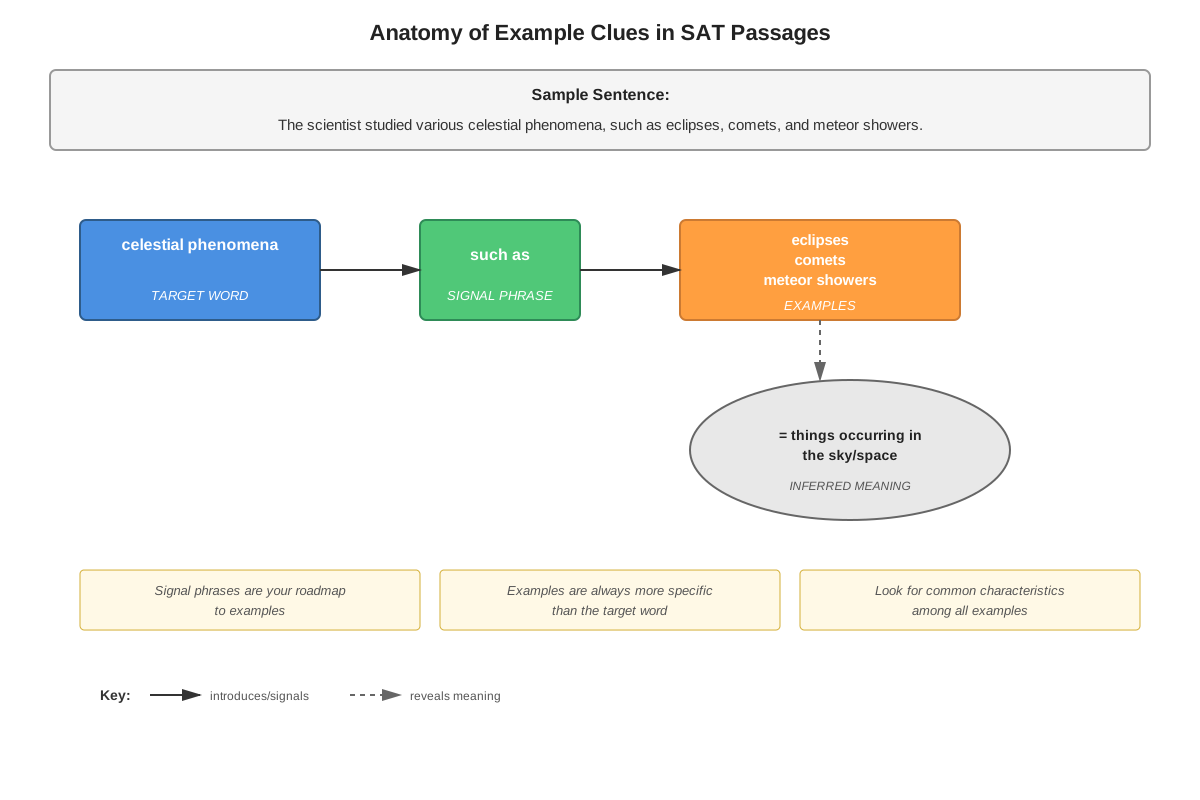
Example clues are contextual hints that reveal a word's meaning by providing specific instances, cases, or illustrations of the concept the word represents. Unlike definition clues that explicitly state what a word means, example clues demonstrate meaning through concrete particulars. The fundamental structure consists of three components: the target vocabulary word, a signal phrase indicating examples will follow, and one or more specific instances that embody the word's meaning.
The logical relationship in example clues moves from general to specific. The vocabulary word represents a category, class, or abstract concept, while the examples that follow represent particular members of that category or concrete manifestations of the abstract idea. This hierarchical relationship allows readers to work backward from the specific examples to infer the general meaning of the unfamiliar term.
Signal Words and Phrases
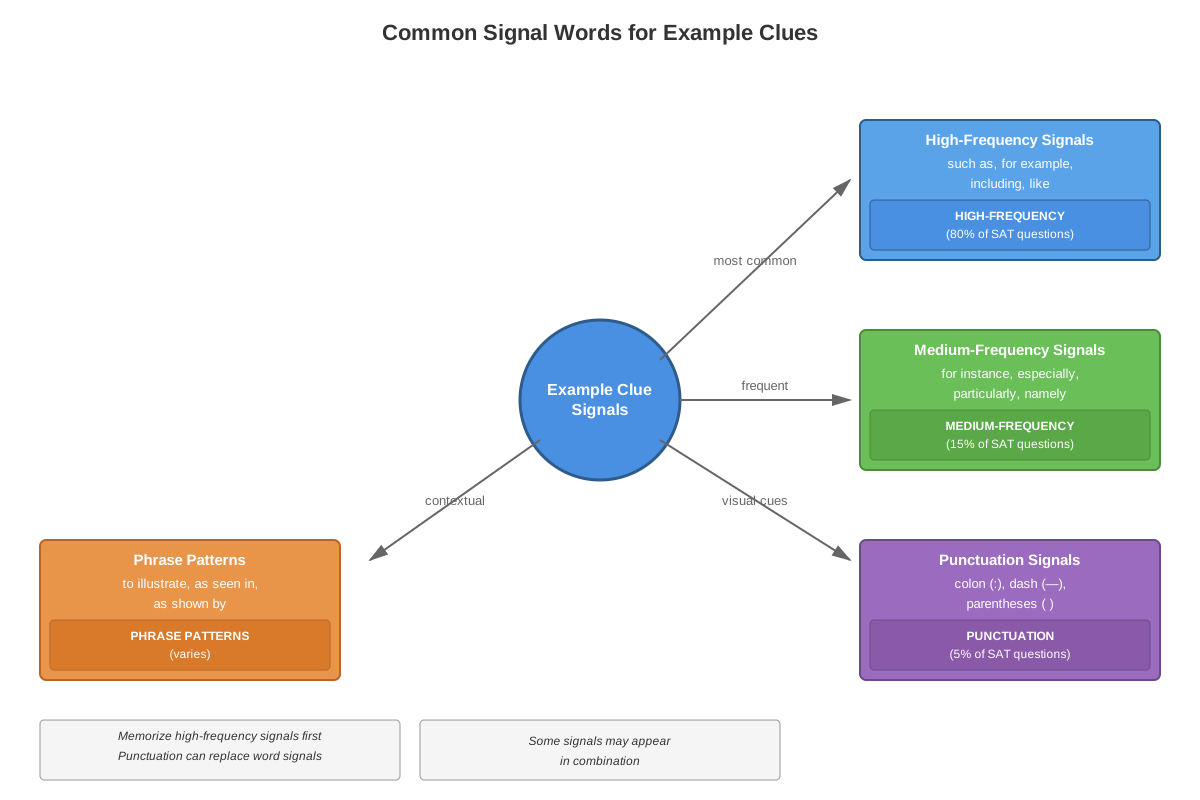
Recognizing signal words is crucial for quickly identifying example clues on the SAT. These linguistic markers function as road signs that alert readers to the presence of illustrative examples. The most common signals include:
| Signal Type | Examples | Usage Pattern |
|---|---|---|
| Direct example phrases | such as, for example, for instance | Typically followed by comma and list |
| Including/listing words | including, like, especially | May appear with or without commas |
| Punctuation signals | colon (:), dash (—), parentheses ( ) | Introduces examples without explicit words |
| Demonstrative phrases | these include, among them, namely | Often precedes formal lists |
Understanding these signals enables rapid scanning of passages to locate relevant contextual information. On timed SAT sections, this efficiency can save precious seconds per question, accumulating to significant time advantages across the entire test.
Types of Example Patterns
Example clues appear in several distinct patterns on the SAT, each requiring slightly different analytical approaches:
Multiple Brief Examples: The author provides several short instances in list form. For example: "The garden contained various herbaceous plants, such as basil, mint, and parsley." The multiple examples (basil, mint, parsley) share the common characteristic of being herbs, allowing inference that "herbaceous" relates to herb-like qualities.
Single Extended Example: The author develops one detailed illustration. For instance: "The politician's bombastic speech, filled with exaggerated claims about single-handedly saving the economy and grandiose promises to solve every social problem within weeks, alienated moderate voters." The extended description of the speech's characteristics reveals that "bombastic" means pompous or inflated in style.
Embedded Examples: Examples appear within parenthetical elements or appositive phrases. Example: "Several pinnipeds (seals, sea lions, and walruses) inhabit the coastal waters." The parenthetical list directly clarifies the category "pinnipeds" represents.
Comparative Examples: The author uses "like" or "similar to" to draw parallels. For instance: "The cacophony of the construction site—like the clashing of cymbals, the roar of engines, and the shouting of workers—made conversation impossible." The comparison reveals "cacophony" means harsh, discordant noise.
Analytical Process for Using Example Clues
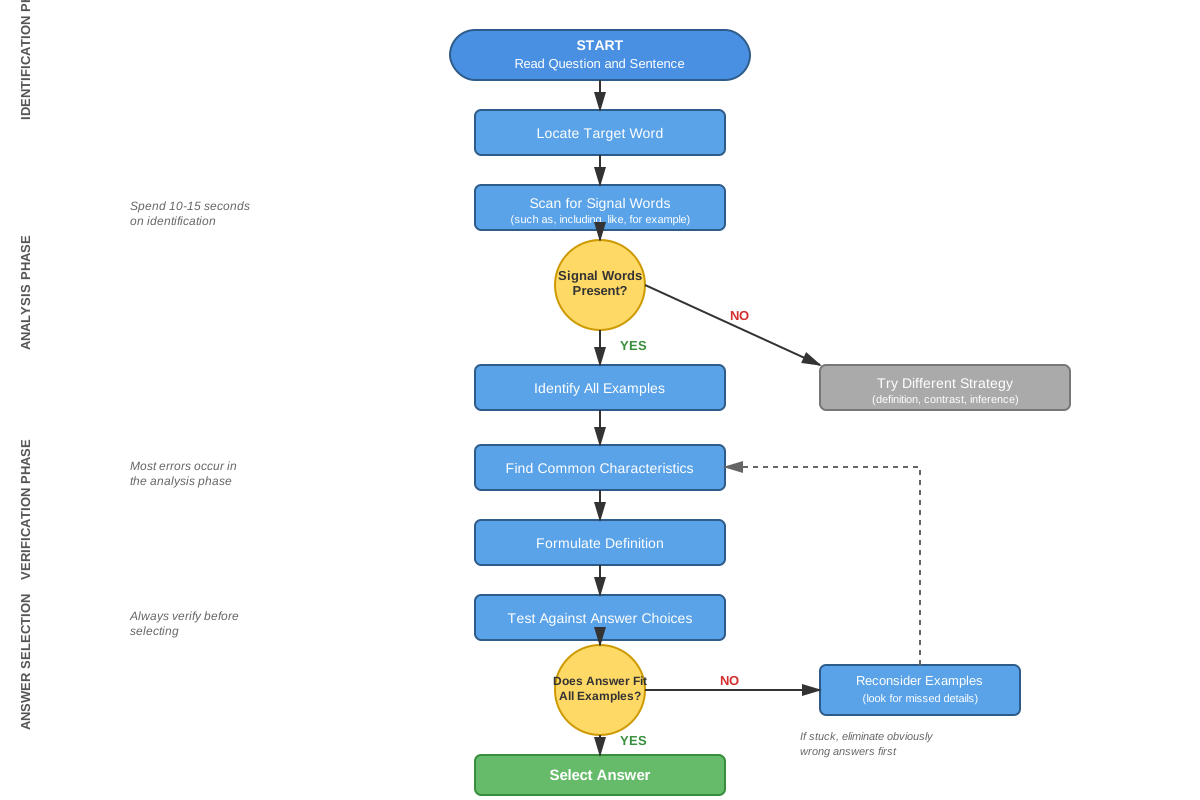
Applying example clues effectively requires a systematic approach:
- Identify the target word: Locate the vocabulary word being tested in the question stem
- Scan for signal words: Look for phrases like "such as," "including," or punctuation that introduces examples
- Extract the examples: Note all specific instances provided
- Analyze common characteristics: Determine what qualities or features all examples share
- Formulate a general meaning: Create a definition that encompasses all examples
- Test against context: Verify the inferred meaning makes sense in the complete sentence
- Evaluate answer choices: Select the option that best matches the inferred meaning
This process transforms example clues from passive reading into active problem-solving, significantly improving accuracy on Words in Context questions.
Relationship Between Examples and Word Meaning
The connection between examples and the target vocabulary word operates through categorical membership or characteristic illustration. In categorical membership, the examples are specific members of the class the vocabulary word names (e.g., "raptors such as hawks, eagles, and falcons"). In characteristic illustration, the examples demonstrate typical features or behaviors associated with the word (e.g., "his meticulous approach, checking every calculation twice and organizing materials by color and size").
Understanding this relationship helps students avoid a common pitfall: confusing the examples themselves with the word's meaning. The examples are not synonyms for the target word; rather, they represent instances or demonstrations of it. For instance, if a passage states "various legumes, including beans, lentils, and peas," the word "legumes" does not mean "beans"—it means the category to which beans, lentils, and peas all belong.
Concept Relationships
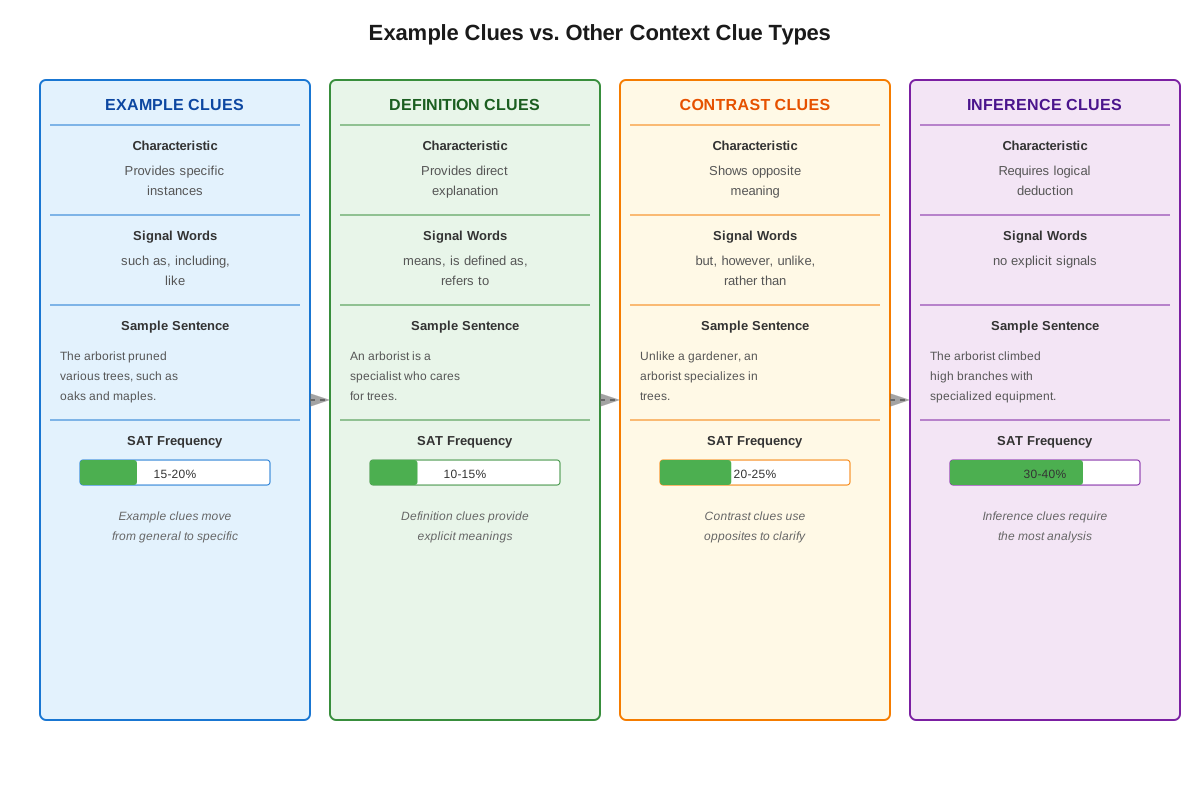
Example clues function as one component within the broader ecosystem of context clue strategies. They share the fundamental principle with definition clues (explicit statements of meaning) and contrast clues (opposites that reveal meaning) that surrounding text provides information about unfamiliar words. However, example clues specifically employ the general-to-specific logical relationship, distinguishing them from other clue types.
The relationship map for example clues operates as follows:
Vocabulary Word (General/Abstract) → Signal Phrase → Specific Examples → Inferred Meaning
This process connects to prerequisite knowledge of sentence structure because identifying where examples begin and end requires understanding how clauses and phrases function within sentences. The connection to punctuation conventions becomes evident when colons, dashes, or parentheses introduce examples without explicit signal words.
Example clues also relate to the broader SAT skill of evidence-based reading. Just as students must locate textual evidence to support answers in comprehension questions, using example clues requires identifying specific textual evidence (the examples) to support vocabulary inferences. This parallel reinforces that the SAT consistently tests the ability to ground interpretations in concrete textual details rather than assumptions or outside knowledge.
High-Yield Facts
⭐ Signal phrases like "such as," "for example," and "including" appear in approximately 70% of example clue questions on the SAT
⭐ Example clues can appear before or after the target vocabulary word, though after is more common
⭐ Multiple examples are more reliable than single examples for determining precise word meanings
⭐ Punctuation marks (colons, dashes, parentheses) can introduce examples without any signal words
⭐ The examples provided always share at least one common characteristic that relates to the target word's meaning
- Example clues appear across all passage types on the SAT: fiction, social science, natural science, and humanities
- The SAT frequently tests whether students can distinguish between the examples themselves and the category or concept the target word represents
- Example clues often appear in passages introducing specialized or technical terminology
- Signal words may be separated from examples by several words or even a short clause
- Some questions require synthesizing information from multiple examples to eliminate answer choices that are too narrow or too broad
Quick check — test yourself on Example clues so far.
Try Flashcards →Common Misconceptions
Misconception: The examples provided are synonyms for the target vocabulary word.
Correction: Examples are specific instances or illustrations of the concept the word represents, not alternative words with identical meanings. If a passage mentions "various citrus fruits such as oranges and lemons," "citrus" does not mean "oranges"—it means the category to which oranges belong.
Misconception: Only the phrase "for example" signals example clues.
Correction: Numerous signal phrases and punctuation marks can introduce examples, including "such as," "including," "like," "especially," colons, dashes, and parentheses. Limiting attention to only "for example" causes students to miss many example clues.
Misconception: Example clues always appear immediately after the target word.
Correction: While examples frequently follow the vocabulary word, they can also precede it or appear several words away. The sentence "Basil, mint, and parsley are common herbaceous plants" places examples before the target word.
Misconception: A single example is sufficient to determine precise word meaning.
Correction: Single examples may be ambiguous or represent only one aspect of a word's meaning. Multiple examples provide more reliable information by revealing common characteristics across different instances.
Misconception: If you recognize one of the examples, you automatically know the target word's meaning.
Correction: Recognizing an example helps but requires additional analysis. You must identify what characteristic or category the example represents, then determine how that relates to the target word. Knowing that "basil" is an herb helps only if you recognize that the passage is using it to illustrate a category of plants.
Worked Examples
Example 1: Multiple Brief Examples
Passage: "The museum's collection included numerous artifacts from ancient civilizations, such as pottery shards, bronze tools, and carved figurines."
Question: As used in the passage, "artifacts" most nearly means:
A) decorations
B) objects made by humans
C) ancient mysteries
D) valuable treasures
Solution Process:
Step 1: Identify the target word: "artifacts"
Step 2: Locate the signal phrase: "such as" clearly indicates examples will follow
Step 3: Extract the examples: pottery shards, bronze tools, carved figurines
Step 4: Analyze common characteristics: All three examples are physical objects created by people in the past. They represent different categories (pottery, tools, art) but share the quality of being human-made items from historical periods.
Step 5: Formulate general meaning: "Artifacts" must refer to objects created by humans, particularly from past civilizations
Step 6: Evaluate answer choices:
- A) "decorations" - Too narrow; bronze tools aren't primarily decorative
- B) "objects made by humans" - Matches our inference perfectly
- C) "ancient mysteries" - The examples are physical objects, not mysteries
- D) "valuable treasures" - Too narrow; pottery shards might not be valuable
Answer: B
Connection to Learning Objectives: This example demonstrates identifying key features (signal phrase "such as"), explaining how example clues appear (list format after the target word), and applying the strategy to answer correctly.
Example 2: Embedded Examples with Punctuation
Passage: "The composer's oeuvre—symphonies, concertos, chamber music, and operas spanning four decades—demonstrated remarkable versatility and evolution of style."
Question: In context, "oeuvre" most nearly means:
A) masterpiece
B) lifetime body of work
C) musical talent
D) creative process
Solution Process:
Step 1: Identify the target word: "oeuvre"
Step 2: Locate the signal: Dashes (—) introduce examples without an explicit signal phrase
Step 3: Extract the examples: symphonies, concertos, chamber music, operas spanning four decades
Step 4: Analyze common characteristics: All examples are types of musical compositions. The phrase "spanning four decades" indicates these represent accumulated work over time, not a single piece.
Step 5: Formulate general meaning: "Oeuvre" refers to the complete collection of works a composer created throughout their career
Step 6: Evaluate answer choices:
- A) "masterpiece" - Refers to a single great work, but the examples show multiple compositions
- B) "lifetime body of work" - Perfectly captures the accumulated collection over four decades
- C) "musical talent" - The examples are actual compositions, not talent itself
- D) "creative process" - The examples are finished works, not the process of creating
Answer: B
Connection to Learning Objectives: This example shows recognizing punctuation as a signal for examples, distinguishing example clues from other context clue types (no explicit definition given), and evaluating the relationship between multiple examples and the target word's meaning.
Exam Strategy
Systematic Approach for Example Clue Questions
When encountering a Words in Context question on the SAT, implement this strategic sequence:
- Read the question first to identify which word's meaning you need to determine
- Return to the passage and read 1-2 sentences before and after the target word for full context
- Scan for signal words using your mental checklist: "such as," "for example," "including," "like," "especially"
- Check punctuation if no signal words appear—look for colons, dashes, or parentheses
- Identify all examples provided, not just the first one
- Substitute your inferred meaning into the original sentence before looking at answer choices
- Eliminate answers that are too broad, too narrow, or unrelated to the examples
Trigger Words and Phrases
Develop automatic recognition of these high-frequency signals:
Primary triggers: such as, for example, for instance, including, like
Secondary triggers: especially, particularly, notably, among them, these include
Punctuation triggers: colon followed by list, dash introducing examples, parenthetical lists
Exam Tip: If you see a colon in the sentence containing your target word, there's an 80% chance examples follow that will clarify the word's meaning.
Process of Elimination Strategies
Eliminate answers that describe only one example: If the passage provides "various vehicles, including cars, trucks, and motorcycles," eliminate any answer choice that means only "cars" or only "trucks." The correct answer must encompass all examples.
Eliminate answers that are too broad: If examples are all specific types within a category, avoid answers that extend beyond that category. For "felines such as lions, tigers, and leopards," eliminate "animals" (too broad) in favor of "cats" (appropriately specific).
Eliminate answers with characteristics absent from all examples: If none of the examples share a particular quality mentioned in an answer choice, that choice is incorrect. For "deciduous trees like oaks, maples, and birches," eliminate answers referring to evergreen characteristics.
Time Allocation
Example clue questions should take 30-45 seconds once you've developed proficiency. Allocate time as follows:
- 10 seconds: Locate and read relevant sentence(s)
- 10 seconds: Identify signal and extract examples
- 10 seconds: Analyze common characteristics
- 10-15 seconds: Evaluate answer choices
If you cannot identify clear examples within 20 seconds, mark the question and return to it after completing easier questions. Not every vocabulary question uses example clues, so don't force this strategy when other context clue types are more apparent.
Memory Techniques
The SIGNAL Acronym
Remember common example clue indicators with SIGNAL:
- Such as
- Including
- Giving examples (for example, for instance)
- Namely
- Among them
- Like
Visualization Strategy: The Category Box
When you encounter example clues, visualize a box labeled with the target vocabulary word. Picture the examples as items inside that box. This mental image reinforces that the word represents the container (category) while the examples are contents (members). For "various legumes, including beans, lentils, and peas," imagine a box labeled "LEGUMES" containing pictures of beans, lentils, and peas.
The Three-Question Method
Memorize these three questions to ask whenever you identify examples:
- What do all these examples have in common?
- What category or concept do they all belong to?
- What word would name this category?
Answering these questions systematically leads to the correct inference about the target word's meaning.
Punctuation Mnemonic: "CPD Introduces Examples"
Remember that Colons, Parentheses, and Dashes commonly introduce examples without explicit signal words. When you see these punctuation marks near an unfamiliar word, check whether they're introducing illustrative examples.
Summary
Example clues represent a high-yield, frequently tested strategy for determining vocabulary meanings on the SAT Reading and Writing section. These clues function by providing specific instances, illustrations, or cases that demonstrate what an unfamiliar word means, operating through a general-to-specific logical relationship. Signal phrases like "such as," "for example," and "including," along with punctuation marks like colons, dashes, and parentheses, alert readers to the presence of examples. Success with example clues requires identifying these signals, extracting all provided examples, analyzing their common characteristics, and inferring the general meaning that encompasses all instances. The most critical distinction students must maintain is recognizing that examples are not synonyms for the target word but rather specific members of the category or concrete demonstrations of the concept the word represents. By systematically applying the analytical process—from signal identification through answer evaluation—students can efficiently and accurately answer example clue questions, typically within 30-45 seconds per question.
Key Takeaways
- Example clues appear in 15-20% of SAT Words in Context questions, making them essential for test success
- Signal phrases ("such as," "for example," "including") and punctuation (colons, dashes, parentheses) introduce examples
- Examples are specific instances of the general category or concept the target vocabulary word represents
- Multiple examples provide more reliable information than single examples for determining precise meanings
- The analytical process moves from identifying signals → extracting examples → analyzing common characteristics → inferring general meaning
- Avoid confusing the examples themselves with the word's meaning; examples demonstrate or belong to the category the word names
- Systematic application of example clue strategies typically allows completion of these questions in 30-45 seconds
Related Topics
Definition Clues: While example clues demonstrate meaning through instances, definition clues provide explicit statements of what words mean. Mastering both strategies creates a comprehensive approach to vocabulary-in-context questions.
Contrast Clues: These clues reveal word meanings through opposites or contrasts. Understanding how contrast clues differ from example clues helps students quickly identify which strategy to apply.
Inference Clues: When no explicit signals appear, readers must infer meanings from general context. Example clues provide more concrete evidence than inference clues, making them more reliable when present.
Transition Words and Phrases: Many example clue signals function as transition words. Studying transitions more broadly enhances recognition of example signals and improves overall reading comprehension.
Evidence-Based Reading: The skill of locating textual evidence to support answers applies across all SAT reading questions. Example clues represent one specific application of this broader evidence-based approach.
Practice CTA
Now that you've mastered the core concepts of example clues, it's time to solidify your understanding through active practice. Complete the practice questions to test your ability to identify signals, extract examples, and infer word meanings under timed conditions. Use the flashcards to reinforce recognition of signal words and common example patterns. Remember: example clues appear on every SAT, and with systematic practice, these questions become some of the fastest and most reliable points you'll earn on test day. Your investment in mastering this high-yield strategy will pay dividends not only on the SAT but throughout your academic career as you encounter unfamiliar terminology across disciplines. Start practicing now to transform example clues from a reading challenge into a scoring opportunity!
Sign up free to keep reading
Create a free AnvayaPrep account to finish this SAT guide on Example clues — plus flashcards and practice questions.