Overview
Clause boundary decisions represent one of the most frequently tested concepts on the ACT English section, appearing in approximately 15-20% of all Sentence Structure and Punctuation questions. These questions assess a student's ability to recognize where one clause ends and another begins, and to choose the appropriate punctuation or conjunction to correctly join or separate clauses. Mastering this skill is essential because improper clause boundaries create run-on sentences, comma splices, and sentence fragments—three of the most common grammatical errors that the ACT specifically targets.
Understanding ACT clause boundary decisions requires recognizing that every complete clause contains both a subject and a predicate (verb), and that two complete clauses cannot simply be placed next to each other without proper punctuation or connecting words. The ACT tests whether students can identify independent clauses (which can stand alone as complete sentences) versus dependent clauses (which cannot stand alone), and whether they can select the correct method to join them: periods, semicolons, commas with coordinating conjunctions, or subordinating conjunctions.
This topic sits at the intersection of punctuation rules and sentence structure principles, making it foundational for success on the ACT English section. Students who master clause boundary decisions will simultaneously improve their performance on questions involving comma usage, semicolon placement, conjunction selection, and sentence fragment identification. The ability to quickly identify clause boundaries also accelerates reading comprehension and editing efficiency, skills that prove valuable across all five passages in the English section.
Learning Objectives
- [ ] Identify when Clause boundary decisions is being tested in ACT English questions
- [ ] Explain the core rule or strategy behind Clause boundary decisions
- [ ] Apply Clause boundary decisions to ACT-style questions accurately
- [ ] Distinguish between independent and dependent clauses in complex sentences
- [ ] Recognize the four correct methods for joining independent clauses
- [ ] Identify comma splices and run-on sentences in test passages
- [ ] Select appropriate punctuation based on the relationship between clauses
Prerequisites
- Independent vs. Dependent Clauses: Understanding the structural difference between clauses that can stand alone and those that cannot is fundamental to making correct boundary decisions
- Parts of Speech: Recognizing subjects, verbs, and conjunctions enables quick identification of clause structures
- Basic Punctuation Rules: Familiarity with comma, semicolon, and period usage provides the foundation for applying these marks at clause boundaries
- Coordinating vs. Subordinating Conjunctions: Knowing the difference between FANBOYS conjunctions and subordinators determines which punctuation patterns are grammatically correct
Why This Topic Matters
In professional and academic writing, clear clause boundaries ensure that ideas are communicated precisely and that readers can follow complex arguments without confusion. Ambiguous or incorrect clause boundaries force readers to reread sentences, disrupting comprehension and undermining the writer's credibility. Legal documents, scientific papers, and business communications all require impeccable clause boundary management to avoid misinterpretation.
On the ACT English section, clause boundary questions appear with remarkable consistency—students can expect to encounter 8-12 such questions across the 75-question test. These questions typically appear in two formats: (1) underlined punctuation marks between clauses where students must choose the correct mark or NO CHANGE, and (2) underlined conjunctions or transitions where students must select the appropriate connecting word. The passages often present run-on sentences or comma splices that students must identify and correct.
The ACT specifically tests clause boundaries in contexts that mirror common writing errors: two independent clauses joined only by a comma (comma splice), two independent clauses with no punctuation between them (run-on sentence), and independent clauses incorrectly separated by a semicolon when one is actually dependent. Questions frequently appear in narrative, social science, and humanities passages where complex sentence structures naturally occur. The test makers deliberately create answer choices that "sound right" when read aloud but violate grammatical rules, making this topic particularly high-yield for students who rely on intuition rather than systematic analysis.
Core Concepts
Understanding Clause Structure
A clause is a group of words containing both a subject and a predicate (verb). The fundamental distinction in clause boundary decisions is between independent clauses and dependent clauses. An independent clause expresses a complete thought and can stand alone as a sentence: "The scientist conducted the experiment." A dependent clause contains a subject and verb but cannot stand alone because it begins with a subordinating word: "Because the scientist conducted the experiment."
The ACT tests whether students recognize that independent clauses require specific punctuation or conjunctions when joined together, while dependent clauses follow different rules. Identifying clause types requires locating the subject-verb combinations and determining whether any subordinating words (such as "although," "because," "when," "if," or "since") make a clause dependent.
The Four Correct Methods for Joining Independent Clauses
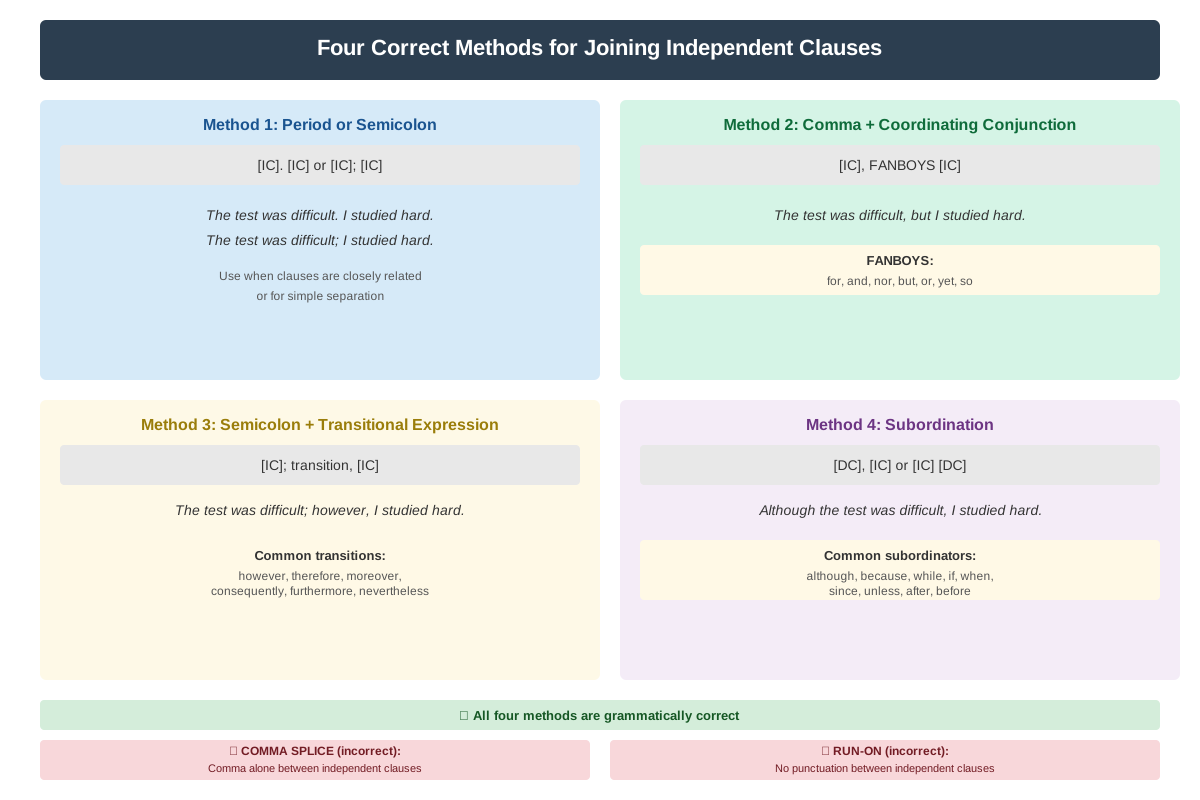
When two independent clauses appear in the same sentence, only four grammatical methods exist for joining them:
| Method | Structure | Example |
|---|---|---|
| Period | IC. IC | The experiment succeeded. The team celebrated. |
| Semicolon | IC; IC | The experiment succeeded; the team celebrated. |
| Comma + Coordinating Conjunction | IC, FANBOYS IC | The experiment succeeded, and the team celebrated. |
| Subordination | DC, IC or IC DC | Because the experiment succeeded, the team celebrated. |
The FANBOYS coordinating conjunctions (For, And, Nor, But, Or, Yet, So) are the only conjunctions that can follow a comma to join two independent clauses. This is a critical distinction because the ACT frequently includes answer choices with commas followed by conjunctive adverbs (however, therefore, moreover) or subordinating conjunctions, both of which are incorrect.
Comma Splices: The Most Common Error
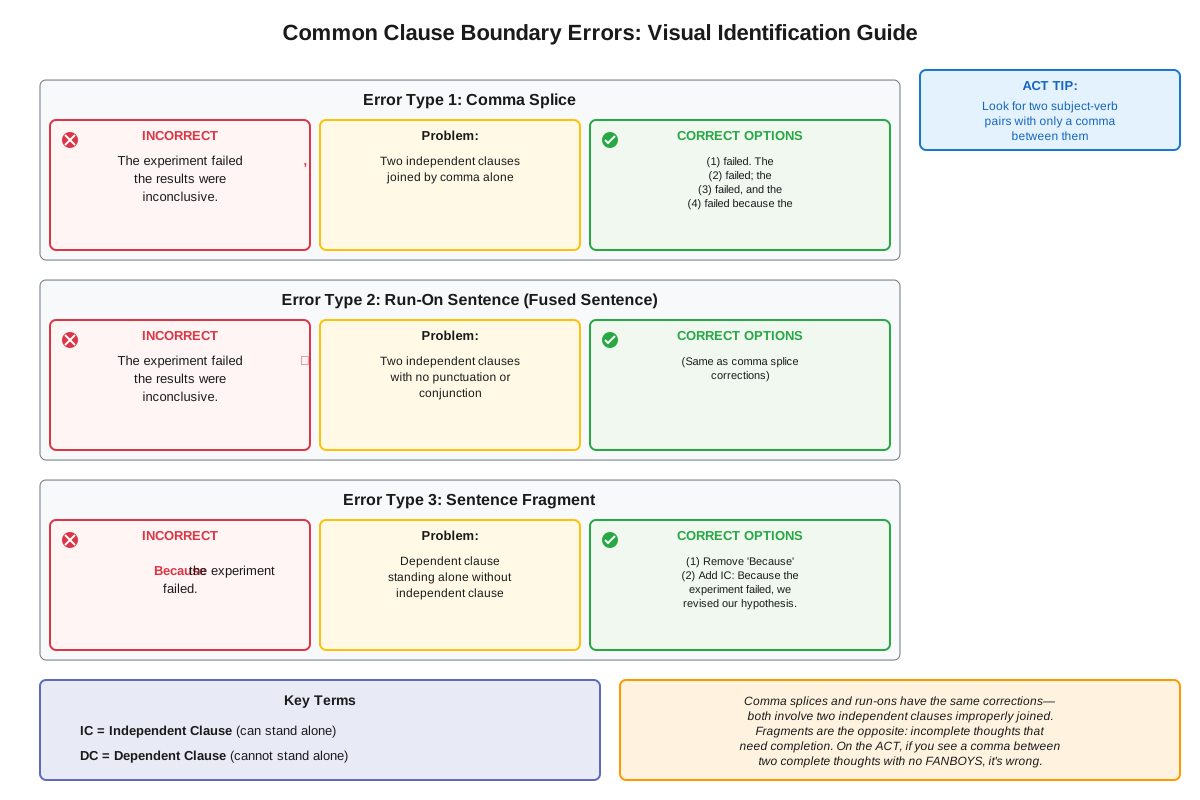
A comma splice occurs when two independent clauses are joined with only a comma and no coordinating conjunction. This is one of the most frequently tested errors on the ACT:
Incorrect: The research was groundbreaking, it changed the field forever.
Correct options:
- The research was groundbreaking. It changed the field forever. (period)
- The research was groundbreaking; it changed the field forever. (semicolon)
- The research was groundbreaking, and it changed the field forever. (comma + coordinating conjunction)
- Because the research was groundbreaking, it changed the field forever. (subordination)
The ACT often presents comma splices in answer choices because they "feel" correct to many students who pause naturally between clauses when reading aloud. However, grammatical correctness requires more than a comma when joining independent clauses.
Run-On Sentences (Fused Sentences)
A run-on sentence or fused sentence occurs when two independent clauses are joined with no punctuation at all:
Incorrect: The data supported the hypothesis the researchers published their findings.
This error appears less frequently than comma splices on the ACT but still requires recognition. The same four correction methods apply: add a period, add a semicolon, add a comma with a coordinating conjunction, or convert one clause to a dependent clause.
Semicolon Usage at Clause Boundaries
Semicolons function as "strong commas" that can join two closely related independent clauses without a conjunction. The ACT tests three key rules about semicolons:
- Both clauses must be independent: A semicolon cannot separate an independent clause from a dependent clause
- No coordinating conjunction: If FANBOYS appears, use a comma, not a semicolon
- Close relationship: The ideas should be closely related in meaning (though this is rarely the basis for eliminating an answer)
Correct: The experiment failed; the equipment malfunctioned.
Incorrect: The experiment failed; because the equipment malfunctioned. (second clause is dependent)
Incorrect: The experiment failed; and the equipment malfunctioned. (semicolon + coordinating conjunction)
Conjunctive Adverbs and Transitional Phrases
Conjunctive adverbs (however, therefore, moreover, furthermore, consequently, nevertheless) and transitional phrases (in fact, for example, on the other hand) cannot join independent clauses with only a comma. These require either a semicolon before them or a period:
Incorrect: The results were unexpected, however, they were reproducible.
Correct: The results were unexpected; however, they were reproducible.
Correct: The results were unexpected. However, they were reproducible.
This distinction trips up many students because conjunctive adverbs seem similar to coordinating conjunctions. The ACT exploits this confusion by offering answer choices with comma + however, comma + therefore, etc.
Dependent Clause Boundaries
When a dependent clause begins a sentence, it must be followed by a comma before the independent clause:
Correct: Although the experiment failed, the researchers learned valuable lessons.
When a dependent clause follows an independent clause, typically no comma is needed (unless the dependent clause is nonessential):
Correct: The researchers learned valuable lessons although the experiment failed.
The ACT tests whether students can recognize that dependent clauses don't require the same heavy punctuation as independent clauses. A semicolon before a dependent clause is always incorrect.
Concept Relationships
The hierarchy of clause boundary concepts flows from basic clause identification to punctuation application. Clause identification (determining whether clauses are independent or dependent) → leads to → selecting appropriate joining methods → leads to → avoiding comma splices and run-ons → results in → grammatically correct sentences.
Understanding coordinating conjunctions connects directly to comma usage rules, since commas can join independent clauses only when paired with FANBOYS. Meanwhile, semicolon rules relate inversely to coordinating conjunctions—semicolons replace the comma + conjunction combination. Subordinating conjunctions create dependent clauses, which changes the entire punctuation pattern and eliminates the need for semicolons or periods between clauses.
The relationship to prerequisite topics is direct: parts of speech knowledge enables clause identification, which enables boundary decisions. Students who struggle with clause boundaries almost always have gaps in recognizing subjects and verbs or in distinguishing conjunction types. Mastery of this topic also supports future learning about sentence variety, parallel structure, and modifier placement, since all these concepts require understanding where clauses begin and end.
High-Yield Facts
⭐ Two independent clauses can be joined by only four methods: period, semicolon, comma + FANBOYS, or subordination
⭐ A comma splice (two independent clauses joined by only a comma) is always grammatically incorrect on the ACT
⭐ Semicolons can only join two independent clauses—never an independent and dependent clause
⭐ Conjunctive adverbs (however, therefore, moreover) cannot follow a comma to join independent clauses; they require a semicolon or period
⭐ FANBOYS (For, And, Nor, But, Or, Yet, So) are the only seven coordinating conjunctions that can follow a comma to join independent clauses
- A run-on sentence joins two independent clauses with no punctuation and is always incorrect
- Dependent clauses at the beginning of sentences require a comma before the independent clause
- Subordinating conjunctions (because, although, since, when, if, while) create dependent clauses that cannot stand alone
- A semicolon followed by a coordinating conjunction ("; and") is always incorrect—use either semicolon alone or comma + conjunction
- Transitional phrases (in fact, for example, on the other hand) follow the same rules as conjunctive adverbs and cannot join independent clauses with only a comma
- The ACT never tests obscure punctuation rules—if a sentence seems overly complicated, look for the simpler solution
- When in doubt between a comma and a semicolon, identify whether both clauses are independent; if yes, semicolon works; if no, semicolon is wrong
Quick check — test yourself on Clause boundary decisions so far.
Try Flashcards →Common Misconceptions
Misconception: A comma can join any two clauses as long as there's a pause when reading aloud.
Correction: Commas can only join independent clauses when paired with a coordinating conjunction (FANBOYS). Reading aloud is unreliable because natural pauses don't always correspond to grammatical boundaries.
Misconception: "However" is a coordinating conjunction like "but" and can follow a comma to join independent clauses.
Correction: "However" is a conjunctive adverb, not a coordinating conjunction. It requires a semicolon or period before it when joining independent clauses: "The test was difficult; however, students performed well."
Misconception: Semicolons and commas are interchangeable based on the length of the pause desired.
Correction: Semicolons have specific grammatical functions—they join independent clauses or separate complex list items. They cannot replace commas in most situations and cannot separate independent from dependent clauses.
Misconception: Any sentence with two verbs needs a semicolon or period between them.
Correction: A single independent clause can contain multiple verbs in a compound predicate: "The scientist analyzed the data and published the results." No additional punctuation is needed unless there are two separate subjects creating two independent clauses.
Misconception: Starting a sentence with "Because" or "Although" is grammatically incorrect.
Correction: Sentences can begin with subordinating conjunctions, creating a dependent clause that must be followed by a comma and then an independent clause: "Because the experiment succeeded, the team received funding."
Misconception: The longest answer choice is usually correct for clause boundary questions.
Correction: The ACT often includes wordy, incorrect options. The correct answer is the most concise grammatically correct option, which may be shorter than alternatives.
Misconception: If two clauses are closely related in meaning, they can be joined with just a comma.
Correction: Meaning relationship doesn't override grammatical rules. Even closely related independent clauses require proper punctuation (semicolon, period, or comma + FANBOYS) or subordination.
Worked Examples
Example 1: Identifying and Correcting a Comma Splice
Original sentence: The archaeological team discovered ancient artifacts, they dated back to 3000 BCE.
Step 1: Identify the clauses
- First clause: "The archaeological team discovered ancient artifacts" (subject: team; verb: discovered) → Independent clause
- Second clause: "they dated back to 3000 BCE" (subject: they; verb: dated) → Independent clause
Step 2: Identify the error
Two independent clauses are joined by only a comma—this is a comma splice.
Step 3: Consider correction methods
- Option A: The archaeological team discovered ancient artifacts. They dated back to 3000 BCE. (period)
- Option B: The archaeological team discovered ancient artifacts; they dated back to 3000 BCE. (semicolon)
- Option C: The archaeological team discovered ancient artifacts, and they dated back to 3000 BCE. (comma + coordinating conjunction)
- Option D: The archaeological team discovered ancient artifacts that dated back to 3000 BCE. (subordination—converting second clause to dependent)
Step 4: Evaluate based on ACT preferences
All four options are grammatically correct. On the ACT, Option D would likely be preferred because it's most concise and creates a more sophisticated sentence structure. Options A and B are both correct but create choppier prose. Option C is correct but slightly wordy with the pronoun "they."
Learning objective addressed: This example demonstrates how to identify when clause boundary decisions are being tested (two independent clauses with questionable punctuation) and how to apply multiple correction strategies.
Example 2: Semicolon vs. Comma Decision
ACT-style question: The research team analyzed the data carefully; and discovered several unexpected patterns.
F. NO CHANGE
G. carefully, and
H. carefully and
J. carefully, and,
Step 1: Identify the clauses
- First clause: "The research team analyzed the data carefully" → Independent clause
- Second clause: "discovered several unexpected patterns" → This appears to be missing a subject
Step 2: Analyze the structure
Wait—the second clause doesn't have an explicit subject. This means "discovered" shares the subject "research team" from the first clause. This is a compound predicate, not two independent clauses.
Step 3: Apply the rule
Compound predicates (two verbs sharing one subject) should NOT be separated by semicolons or commas + conjunctions. They can be joined by a coordinating conjunction alone or by a comma if the predicates are long and complex.
Step 4: Evaluate answer choices
- F. NO CHANGE (semicolon + and) → Incorrect: semicolons don't pair with coordinating conjunctions
- G. carefully, and → Incorrect: comma + and is used for joining independent clauses, not compound predicates
- H. carefully and → Correct: coordinating conjunction alone properly joins compound predicate
- J. carefully, and, → Incorrect: improper comma placement
Answer: H
Learning objective addressed: This example shows how to identify clause boundaries (recognizing when there's only one independent clause with a compound predicate rather than two independent clauses) and apply the appropriate rule (no heavy punctuation needed for compound predicates).
Exam Strategy
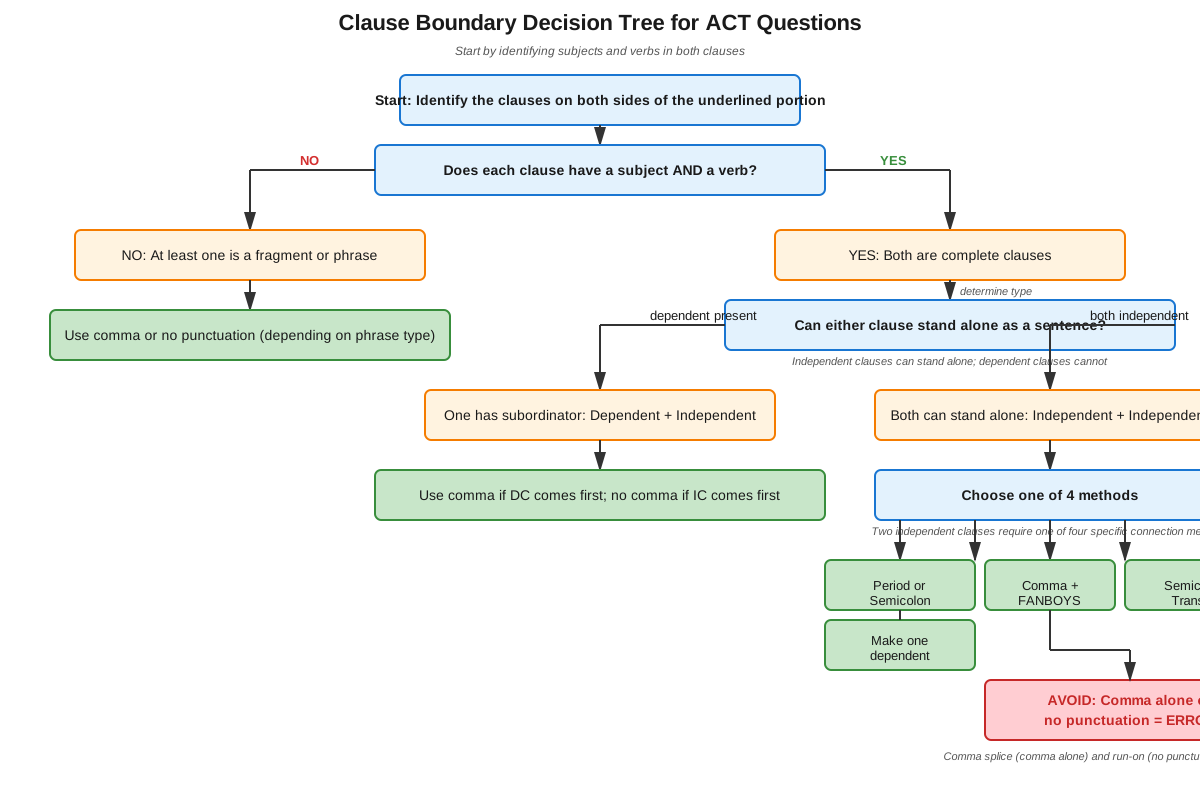
When approaching clause boundary questions on the ACT, follow this systematic process:
Step 1: Identify the underlined portion's position
If the underlined portion falls between two groups of words, immediately suspect a clause boundary question. Look for punctuation marks (commas, semicolons, periods) or conjunctions in the underlined section.
Step 2: Locate subjects and verbs
Quickly identify the subject and verb before and after the underlined portion. Ask: "Does each side have its own subject and verb?" If yes, you likely have two independent clauses. If one side lacks a subject or verb, it's either a dependent clause or a phrase.
Step 3: Check for subordinating words
Look for subordinating conjunctions (because, although, since, when, if, while, etc.) or relative pronouns (who, which, that) at the beginning of either clause. These create dependent clauses that follow different punctuation rules.
Step 4: Apply the four-method rule
If you've confirmed two independent clauses, verify that they're joined by one of the four correct methods: period, semicolon, comma + FANBOYS, or subordination. Eliminate any answer choice that violates this rule.
Exam Tip: The ACT loves to test comma + "however" as an incorrect answer choice. Whenever you see "however" in an answer choice, verify whether it's joining two independent clauses. If yes, it needs a semicolon or period before it, never just a comma.
Trigger words and phrases to watch for:
- Conjunctive adverbs: however, therefore, moreover, furthermore, consequently, nevertheless, thus
- FANBOYS: for, and, nor, but, or, yet, so
- Subordinating conjunctions: because, although, since, when, while, if, unless, until, whereas
- Transitional phrases: in fact, for example, on the other hand, as a result
Process of elimination tips:
- Eliminate any answer with a comma splice (comma alone between two independent clauses)
- Eliminate semicolons that separate independent from dependent clauses
- Eliminate semicolon + coordinating conjunction combinations
- Eliminate comma + conjunctive adverb combinations
- Choose the most concise remaining option if multiple answers are grammatically correct
Time allocation advice:
Clause boundary questions should take 15-25 seconds each. If you're spending more than 30 seconds, you're likely overcomplicating the analysis. Trust the four-method rule and move forward. These questions reward systematic application of rules rather than prolonged deliberation.
Memory Techniques
FANBOYS Mnemonic: Remember the seven coordinating conjunctions with For, And, Nor, But, Or, Yet, So. Visualize a group of fanboys at a concert, each holding a sign with one conjunction.
The Semicolon Rule: Think "Semi = Same"—semicolons join clauses of the same type (both independent). If the clauses aren't the same type, semicolons don't work.
AAAWWUBBIS for Subordinating Conjunctions: After, Although, As, When, While, Until, Because, Before, If, Since. Visualize these as "aww, wubbis" (like "wubbies" or comfort blankets) that make clauses dependent and need comfort (commas).
The Comma Splice Check: When you see a comma between two word groups, ask: "Can Stand Alone?" for each side. If both Can Stand Alone, you've found a Comma Splice Alert.
The "However" Rule: Visualize "however" as a heavy word that needs strong support—it can't balance on a weak comma. It needs the strong support of a semicolon or period.
The Four-Method Finger Count: Hold up four fingers to remember the four ways to join independent clauses: thumb = period, index = semicolon, middle = comma + FANBOYS, ring = subordination. When you encounter a clause boundary question, mentally touch each finger to check which method is being used.
Summary
Clause boundary decisions represent a critical skill for ACT English success, testing students' ability to correctly join or separate independent and dependent clauses. The fundamental principle is that two independent clauses require specific punctuation or conjunctions: periods, semicolons, commas paired with FANBOYS coordinating conjunctions, or subordination that converts one clause to dependent. The most common errors—comma splices and run-on sentences—occur when students join independent clauses with insufficient punctuation. Semicolons can only join two independent clauses and cannot be paired with coordinating conjunctions. Conjunctive adverbs like "however" and transitional phrases require semicolons or periods, not commas, when joining independent clauses. Success on these questions requires systematically identifying subjects and verbs, determining clause independence, and applying the four-method rule. Students who master clause boundaries will correctly answer 8-12 questions per test, significantly boosting their English section scores.
Key Takeaways
- Two independent clauses can only be joined by four methods: period, semicolon, comma + FANBOYS, or subordination
- Comma splices (comma alone between independent clauses) and run-on sentences (no punctuation between independent clauses) are always incorrect
- Semicolons join only two independent clauses—never independent and dependent clauses
- Conjunctive adverbs (however, therefore, moreover) require semicolons or periods before them, never just commas
- FANBOYS (For, And, Nor, But, Or, Yet, So) are the only coordinating conjunctions that can follow a comma to join independent clauses
- Dependent clauses beginning sentences need commas before the following independent clause
- Systematic identification of subjects, verbs, and clause types is more reliable than reading aloud or relying on intuition
Related Topics
Sentence Fragments: Understanding clause boundaries naturally leads to recognizing incomplete sentences that lack either a subject or a predicate, or that consist only of dependent clauses without independent clauses.
Comma Usage Rules: Mastering clause boundaries provides the foundation for understanding when commas are required (after introductory dependent clauses, before coordinating conjunctions joining independent clauses) versus when they create errors (comma splices).
Semicolon and Colon Usage: Building on clause boundary knowledge, students can explore advanced punctuation including when semicolons separate complex list items and when colons introduce explanations or lists.
Sentence Variety and Style: Once students can correctly construct sentences with multiple clauses, they can focus on varying sentence structure for rhetorical effect—a skill tested in ACT English strategy questions.
Parallel Structure: Understanding clause boundaries helps students recognize when multiple clauses or phrases must maintain parallel grammatical form within sentences.
Practice CTA
Now that you've mastered the core concepts of clause boundary decisions, it's time to put your knowledge into action! Complete the practice questions to reinforce your understanding and build the speed and accuracy you'll need on test day. The flashcards will help you memorize the four methods for joining independent clauses and the key distinctions between coordinating conjunctions and conjunctive adverbs. Remember: clause boundary questions appear 8-12 times per ACT English section, making this one of the highest-yield topics you can master. Every minute you invest in practice translates directly to points on test day. You've got this!
Sign up free to keep reading
Create a free AnvayaPrep account to finish this ACT guide on Clause boundary decisions — plus flashcards and practice questions.