Overview
Sentence separation is one of the most frequently tested concepts on the ACT English section, appearing in approximately 10-15% of all questions. This topic tests a student's ability to recognize when two independent clauses have been improperly joined, creating run-on sentences or comma splices. Mastering ACT sentence separation is essential because these questions appear consistently across multiple passages in every test administration, and they represent some of the most straightforward points available when students understand the underlying rules.
The ACT English section evaluates whether students can identify and correct structural errors that violate standard written English conventions. Sentence separation questions specifically assess the ability to distinguish between complete sentences (independent clauses) and sentence fragments, and to determine whether clauses have been properly connected using appropriate punctuation or conjunctions. These questions often appear deceptively simple but require precise understanding of grammatical boundaries and the rules governing how independent thoughts can be combined in writing.
Understanding sentence separation connects directly to broader concepts in sentence structure, including clause identification, punctuation usage, and coordination/subordination strategies. This topic serves as a foundation for recognizing more complex structural issues and demonstrates command of the fundamental building blocks of clear, effective writing. Students who master sentence separation gain confidence in tackling related topics such as modifier placement, parallel structure, and rhetorical effectiveness.
Learning Objectives
- [ ] Identify when Sentence separation is being tested in ACT English passages
- [ ] Explain the core rule or strategy behind Sentence separation
- [ ] Apply Sentence separation to ACT-style questions accurately
- [ ] Distinguish between independent clauses and dependent clauses in context
- [ ] Recognize all five acceptable methods for properly separating or joining independent clauses
- [ ] Identify comma splices and run-on sentences within 5 seconds of reading
- [ ] Evaluate answer choices to determine which punctuation marks correctly separate independent clauses
Prerequisites
- Independent vs. Dependent Clauses: Understanding the difference between clauses that can stand alone as complete sentences and those that cannot is fundamental to recognizing separation errors
- Basic Punctuation Rules: Familiarity with periods, commas, semicolons, and colons enables recognition of proper and improper clause connections
- Subject-Verb Identification: The ability to locate subjects and verbs helps determine where one complete thought ends and another begins
- Coordinating Conjunctions: Knowledge of FANBOYS (for, and, nor, but, or, yet, so) is necessary for understanding one method of properly joining independent clauses
Why This Topic Matters
Sentence separation represents a critical skill that extends far beyond standardized testing. In academic writing, professional communication, and everyday correspondence, the ability to properly separate complete thoughts ensures clarity and prevents confusion. Run-on sentences and comma splices create ambiguity, force readers to re-read passages, and undermine the writer's credibility. Mastering this skill enables students to communicate complex ideas with precision and sophistication.
On the ACT English section, sentence separation questions appear with remarkable consistency. Students can expect to encounter 3-5 questions per test that directly assess this concept, with additional questions that incorporate sentence separation as part of broader structural issues. These questions typically appear as underlined punctuation marks (commas, periods, semicolons) with answer choices offering different punctuation options. The ACT also tests sentence separation through questions about conjunctions and transitional phrases.
Common manifestations in exam passages include: comma splices where two independent clauses are joined only by a comma; run-on sentences where independent clauses are fused together without any punctuation; incorrect use of semicolons with coordinating conjunctions; and improper use of conjunctive adverbs (however, therefore, moreover) without appropriate punctuation. The ACT favors testing these errors in longer sentences where multiple clauses create complexity, making it harder for students to identify the boundaries between independent thoughts.
Core Concepts
Independent Clauses and Complete Thoughts
An independent clause contains a subject and a verb and expresses a complete thought that can stand alone as a sentence. Recognizing independent clauses is the foundational skill for sentence separation because the rules specifically govern how these complete thoughts can be connected. For example, "The student studied diligently" is an independent clause—it has a subject (student), a verb (studied), and expresses a complete idea.
The key to identifying independent clauses is asking: "Could this group of words stand alone as a complete sentence?" If the answer is yes, you're dealing with an independent clause. When two independent clauses appear together, they must be properly separated or joined using one of five acceptable methods. Failing to do so creates a run-on sentence or comma splice, both of which are grammatical errors that the ACT consistently tests.
The Five Acceptable Methods for Joining Independent Clauses
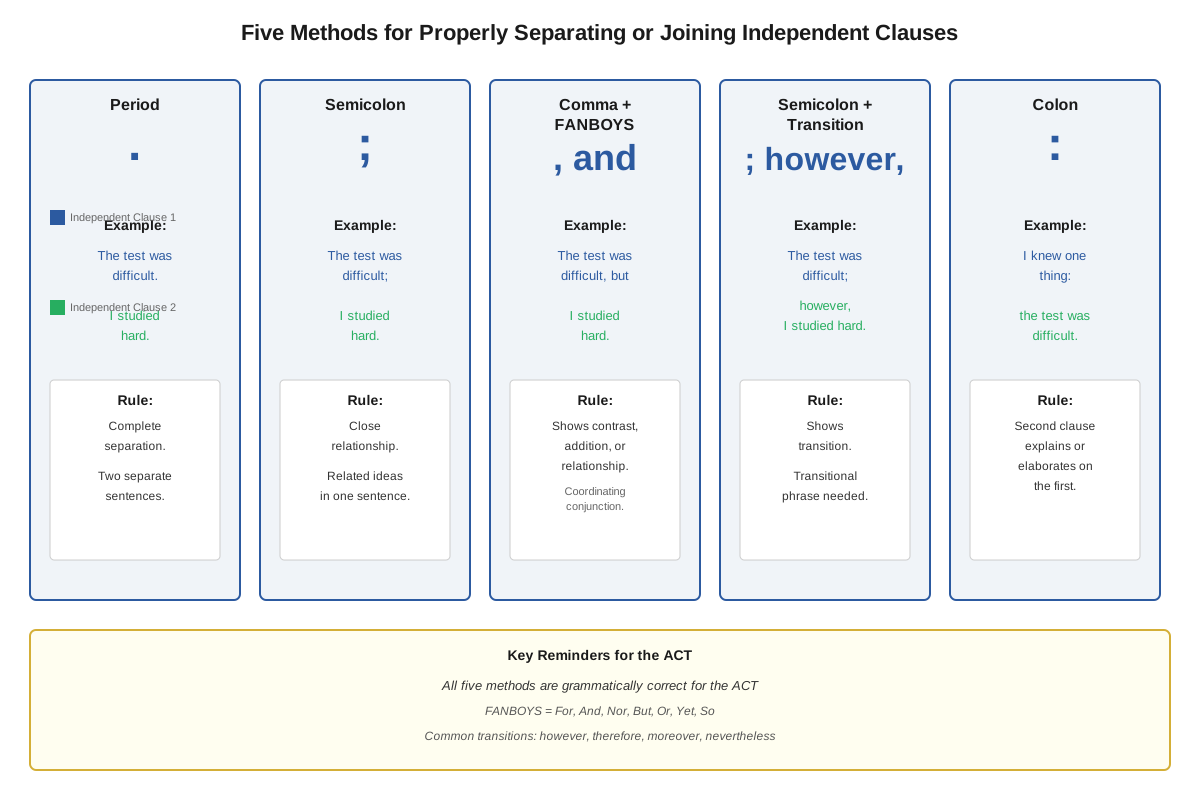
Understanding the five correct ways to handle two independent clauses is essential for ACT success:
| Method | Structure | Example |
|---|---|---|
| Period | IC. IC | The test was difficult. Many students struggled. |
| Semicolon | IC; IC | The test was difficult; many students struggled. |
| Comma + Coordinating Conjunction | IC, FANBOYS IC | The test was difficult, so many students struggled. |
| Subordination | DC, IC or IC DC | Because the test was difficult, many students struggled. |
| Colon | IC: IC (when second explains first) | The result was predictable: many students struggled. |
Method 1: Period Separation
The simplest solution is to separate two independent clauses with a period, creating two distinct sentences. This method is always grammatically correct when dealing with independent clauses, though stylistic considerations may favor other options.
Method 2: Semicolon
A semicolon can join two closely related independent clauses without a conjunction. The semicolon signals that the ideas are connected in meaning but grammatically independent. The ACT frequently tests whether students recognize that semicolons can ONLY join independent clauses—using a semicolon before a dependent clause is incorrect.
Method 3: Comma + Coordinating Conjunction
The FANBOYS conjunctions (for, and, nor, but, or, yet, so) can join independent clauses when preceded by a comma. Both elements are essential: the comma alone creates a comma splice, while the conjunction alone (without the comma) is also incorrect for joining independent clauses.
Method 4: Subordination
Converting one independent clause into a dependent clause through subordination (using words like because, although, when, if, since) changes the structure so that special separation is no longer needed. This method actually eliminates the sentence separation issue by making one clause dependent.
Method 5: Colon
A colon can join two independent clauses when the second clause explains, illustrates, or elaborates on the first. This usage is more restrictive than the semicolon and requires a specific logical relationship between the clauses.
Comma Splices: The Most Common Error
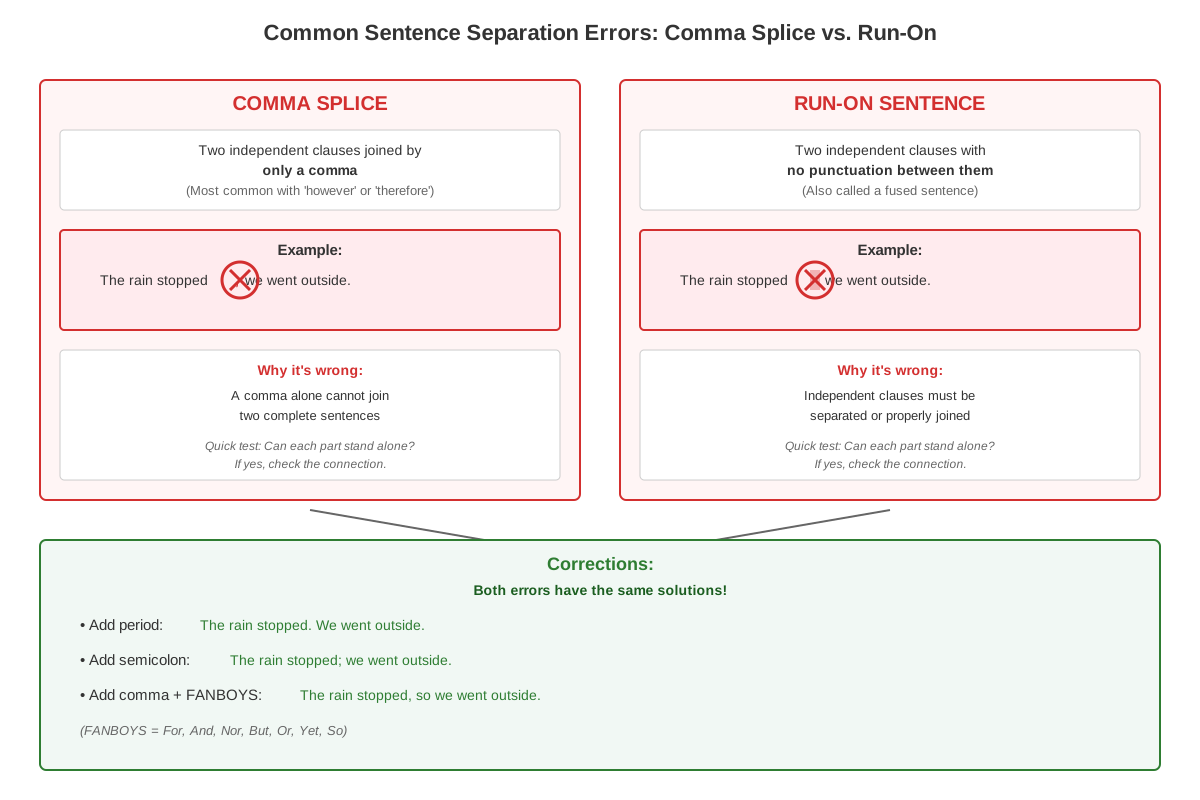
A comma splice occurs when two independent clauses are joined with only a comma, without a coordinating conjunction. This is one of the most frequently tested errors on the ACT. Example: "The library closes at midnight, students must plan accordingly." Both clauses are independent (each could stand alone), but they're improperly joined with just a comma.
The ACT often makes comma splices tempting by using transitional words that students mistakenly believe function as conjunctions. Words like "however," "therefore," "moreover," and "consequently" are conjunctive adverbs, not coordinating conjunctions, and cannot join independent clauses with just a comma. Correct usage requires a semicolon before the conjunctive adverb: "The library closes at midnight; therefore, students must plan accordingly."
Run-On Sentences (Fused Sentences)
A run-on sentence or fused sentence occurs when two independent clauses are joined without any punctuation or conjunction. Example: "The library closes at midnight students must plan accordingly." While less common than comma splices on the ACT, run-ons do appear and represent clear violations of sentence separation rules.
Recognizing Sentence Boundaries
The critical skill is quickly identifying where one independent clause ends and another begins. Look for these signals:
- Subject-verb pairs: Each independent clause must have its own subject and verb
- Complete thoughts: Each clause must express a complete idea
- Transitional words: Words like "however" and "therefore" often signal the start of a new independent clause
- Pronoun subjects: Pronouns (he, she, it, they) beginning a clause often indicate a new independent clause
When analyzing a sentence, mentally separate it at potential boundaries and ask whether each part could stand alone. If both parts can stand independently, you've identified two independent clauses that require proper separation.
Concept Relationships
Sentence separation connects directly to clause identification—students must first recognize independent clauses before they can determine whether separation is needed. This recognition skill builds on understanding subjects and verbs (prerequisite knowledge) and extends into more complex territory when clauses contain multiple phrases or modifiers.
The relationship flows as follows: Subject-Verb Identification → Clause Recognition → Independence Determination → Separation Method Selection. Each step depends on the previous one, creating a hierarchical skill structure.
Sentence separation also connects to punctuation rules more broadly. Understanding comma usage, semicolon functions, and colon applications all intersect with separation principles. Additionally, this topic relates to coordination and subordination strategies—when students understand how to convert independent clauses into dependent ones through subordination, they gain an additional tool for solving separation issues.
The concept also links forward to more advanced topics like parallel structure (which often involves multiple independent clauses) and rhetorical effectiveness (where choosing between separation methods affects style and emphasis). Mastering sentence separation provides the foundation for understanding how sentence structure influences meaning and reader comprehension.
Quick check — test yourself on Sentence separation so far.
Try Flashcards →High-Yield Facts
⭐ Two independent clauses can NEVER be joined by a comma alone—this creates a comma splice, which is always incorrect on the ACT
⭐ A semicolon can only join two independent clauses; it cannot be used before a dependent clause or after a coordinating conjunction
⭐ Conjunctive adverbs (however, therefore, moreover, consequently, nevertheless) are NOT coordinating conjunctions and cannot join independent clauses with just a comma
⭐ The FANBOYS coordinating conjunctions (for, and, nor, but, or, yet, so) require a comma before them when joining independent clauses
⭐ A colon can join two independent clauses only when the second clause explains or elaborates on the first
- An independent clause must contain both a subject and a verb and express a complete thought
- Run-on sentences (fused sentences) occur when independent clauses are joined without any punctuation or conjunction
- Subordinating conjunctions (because, although, when, if, since, while) convert independent clauses into dependent clauses
- A period is always a grammatically correct way to separate two independent clauses, though style may favor other options
- The word "and" alone (without a comma) cannot properly join two independent clauses in formal writing
- Transitional phrases like "for example" and "in fact" do not function as conjunctions and require appropriate punctuation
- When a semicolon joins independent clauses, the second clause should not be capitalized unless it begins with a proper noun
- A comma + coordinating conjunction can join more than two independent clauses in a series
- The ACT will never mark a period between two independent clauses as incorrect based solely on grammar
Common Misconceptions
Misconception: Any two sentences can be joined with a comma if they're related in meaning.
Correction: Comma splices are grammatical errors regardless of how closely related the ideas are. A comma alone can never join two independent clauses; you must use a comma + coordinating conjunction, a semicolon, or another acceptable method.
Misconception: Words like "however" and "therefore" work the same way as "and" and "but" for joining sentences.
Correction: Conjunctive adverbs (however, therefore, moreover, etc.) are not coordinating conjunctions. They require a semicolon before them when joining independent clauses: "The test was hard; however, I passed." Using only a comma creates a comma splice.
Misconception: A semicolon and a comma serve similar functions and can be used interchangeably.
Correction: Semicolons and commas have distinct grammatical roles. A semicolon can join two independent clauses; a comma cannot (unless accompanied by a coordinating conjunction). Semicolons indicate a stronger separation than commas and signal that both clauses are grammatically complete.
Misconception: Long sentences are automatically run-ons, and short sentences can't be run-ons.
Correction: Sentence length doesn't determine whether a run-on exists. A run-on is defined by improper joining of independent clauses, which can occur in relatively short sentences: "I studied I passed" is a run-on despite being only four words.
Misconception: Starting a sentence with "and" or "but" is grammatically incorrect.
Correction: Coordinating conjunctions can begin sentences in formal writing. The error occurs when these words are used without proper punctuation to join independent clauses within a sentence. "I studied for hours. And I passed the test" is perfectly acceptable.
Misconception: If you can pause while reading, you need a comma.
Correction: Commas follow specific grammatical rules, not speech patterns. Many places where speakers naturally pause don't require commas, and comma splices occur when commas are inserted based on pauses rather than grammatical structure.
Worked Examples
Example 1: Identifying and Correcting a Comma Splice
Original Sentence: "The research team collected extensive data, they analyzed the results for three months."
Analysis Process:
- Identify potential independent clauses by finding subject-verb pairs
- First clause: "The research team collected extensive data" (subject: team; verb: collected)
- Second clause: "they analyzed the results for three months" (subject: they; verb: analyzed)
- Test independence: Can each clause stand alone?
- "The research team collected extensive data." ✓ Complete sentence
- "They analyzed the results for three months." ✓ Complete sentence
- Identify the current joining method: comma only
- Recognize the error: This is a comma splice—two independent clauses joined by only a comma
- Evaluate correction options:
- Option A: "data, and they analyzed" (comma + coordinating conjunction) ✓ Correct
- Option B: "data; they analyzed" (semicolon) ✓ Correct
- Option C: "data. They analyzed" (period) ✓ Correct
- Option D: "data they analyzed" (no punctuation) ✗ Creates run-on sentence
Answer: Any of options A, B, or C would be correct. The ACT would present these as answer choices, and students must recognize that the original comma-only version is incorrect.
Example 2: Evaluating Conjunctive Adverbs
Original Sentence: "The experiment yielded unexpected results, however, the team remained confident in their methodology."
Analysis Process:
- Locate the word "however" and recognize it as a conjunctive adverb, not a coordinating conjunction
- Identify the clauses:
- Before "however": "The experiment yielded unexpected results" (independent)
- After "however": "the team remained confident in their methodology" (independent)
- Recognize the error: A comma before "however" creates a comma splice when joining independent clauses
- Evaluate correction options:
- Option A: "results, however, the team" ✗ Comma splice
- Option B: "results; however, the team" ✓ Correct (semicolon before conjunctive adverb)
- Option C: "results however the team" ✗ Run-on sentence
- Option D: "results, and however, the team" ✗ Awkward and incorrect structure
Answer: Option B is correct. The semicolon properly separates the independent clauses, and the comma after "however" correctly sets off the transitional word. This example demonstrates why understanding the difference between coordinating conjunctions and conjunctive adverbs is crucial for ACT success.
Exam Strategy
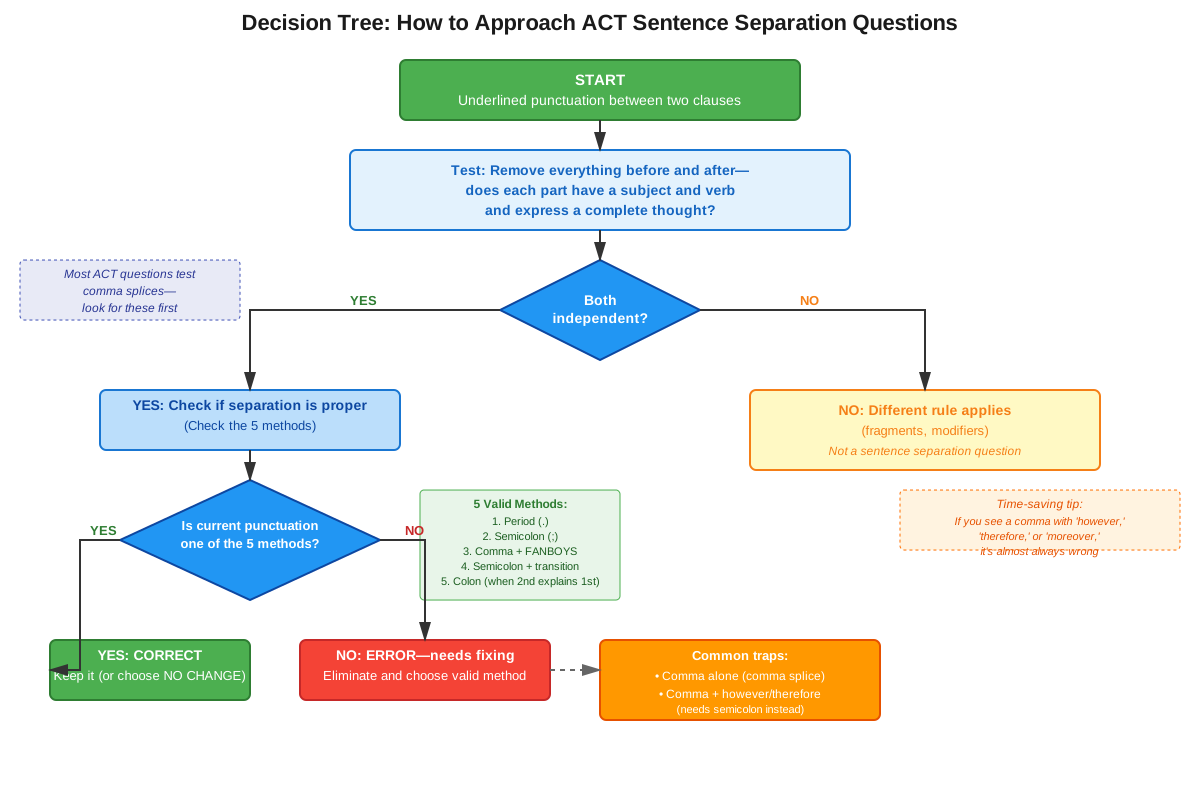
When approaching sentence separation questions on the ACT, follow this systematic process:
Step 1: Identify the Question Type
Look for underlined commas, semicolons, periods, or conjunctions. Answer choices that vary punctuation marks signal a sentence separation question. Trigger phrases in questions include "Which choice best joins these sentences?" or answer choices showing different punctuation options.
Step 2: Locate Independent Clauses
Quickly identify subject-verb pairs on both sides of the underlined punctuation. Ask: "Could each part stand alone as a complete sentence?" If yes to both, you're dealing with two independent clauses that require proper separation.
Step 3: Eliminate Incorrect Methods
- Immediately eliminate comma-only options when joining independent clauses (comma splices)
- Eliminate run-on options (no punctuation between independent clauses)
- Eliminate semicolons used with coordinating conjunctions ("IC; and IC" is incorrect)
- Eliminate semicolons before dependent clauses
Step 4: Choose Among Remaining Options
If multiple grammatically correct options remain, consider:
- Conciseness (the ACT favors shorter, clearer constructions)
- Logical relationships (colons require the second clause to explain the first)
- Context and style (though grammar takes priority)
Exam Tip: When you see "however," "therefore," "moreover," or similar words, immediately check the punctuation before them. These conjunctive adverbs require semicolons (or periods) before them when joining independent clauses—never just a comma.
Time Allocation
Sentence separation questions should take 15-20 seconds each once you've mastered the concept. They're among the fastest points available on the ACT English section because they follow clear, unchanging rules. Don't overthink these questions—apply the rules mechanically and move forward.
Process of Elimination Shortcuts
- If you see a comma joining two independent clauses without a FANBOYS conjunction, eliminate it immediately
- If you see a semicolon + coordinating conjunction, eliminate it
- If you see a conjunctive adverb with only a comma before it (between independent clauses), eliminate it
- If you see a colon but the second clause doesn't explain the first, eliminate it
Memory Techniques
The FANBOYS Mnemonic
Remember the seven coordinating conjunctions with FANBOYS:
- For
- And
- Nor
- But
- Or
- Yet
- So
Only these seven words can join independent clauses with a comma. Memorize this list completely.
The "Stand Alone" Test
Visualize physically separating the sentence at the punctuation mark. If both pieces could stand alone as complete sentences, you have two independent clauses. Picture them as separate buildings—each must have a complete foundation (subject + verb + complete thought).
The Semicolon = Period Rule
Remember: "A semicolon is a weak period." Anywhere you can use a semicolon, you could also use a period (though style might favor one over the other). This helps you remember that semicolons only join independent clauses—just like periods only come after independent clauses.
The "However" Red Flag
Create a mental red flag for conjunctive adverbs. When you see "however," "therefore," "moreover," "consequently," or "nevertheless," immediately think: "SEMICOLON BEFORE, COMMA AFTER" when they join independent clauses.
The Comma Splice Chant
"Comma alone? Leave it alone!" This simple rhyme reminds you that a comma by itself can never join independent clauses.
Summary
Sentence separation is a high-yield ACT English topic that tests whether students can properly join or separate independent clauses. The core principle is straightforward: two independent clauses (complete thoughts with subjects and verbs) cannot be joined by a comma alone or run together without punctuation. Five methods correctly handle independent clauses: periods, semicolons, comma + coordinating conjunction (FANBOYS), subordination (converting one clause to dependent), and colons (when the second clause explains the first). The most common errors are comma splices (comma only between independent clauses) and run-on sentences (no punctuation between independent clauses). Success requires quickly identifying independent clauses through the "stand alone" test and recognizing that conjunctive adverbs like "however" are not coordinating conjunctions and require semicolons before them. These questions appear 3-5 times per test and represent some of the most straightforward points available when students master the unchanging rules governing sentence boundaries.
Key Takeaways
- Two independent clauses can never be joined by a comma alone—this creates a comma splice, which is always incorrect
- Only seven coordinating conjunctions (FANBOYS) can join independent clauses with a comma: for, and, nor, but, or, yet, so
- Semicolons can only join two independent clauses; they cannot be used with coordinating conjunctions or before dependent clauses
- Conjunctive adverbs (however, therefore, moreover) require semicolons before them when joining independent clauses, not commas
- The "stand alone" test quickly identifies independent clauses: if both parts could be separate sentences, they're independent clauses requiring proper separation
- Sentence separation questions appear 3-5 times per ACT and follow unchanging rules, making them reliable points when mastered
- When in doubt between grammatically correct options, choose the most concise construction that maintains clarity
Related Topics
Coordination and Subordination: Understanding how to create complex sentences by combining independent and dependent clauses builds directly on sentence separation principles and offers stylistic alternatives to simple separation.
Comma Usage: Mastering all comma rules, including those for introductory elements, nonessential clauses, and series, complements sentence separation knowledge and addresses the full range of comma-related ACT questions.
Semicolon and Colon Usage: Deeper exploration of these punctuation marks, including their use in lists and for emphasis, extends the foundational knowledge gained through sentence separation study.
Sentence Fragments: The flip side of run-on sentences, fragments occur when incomplete thoughts are punctuated as sentences—understanding both errors provides comprehensive command of sentence boundaries.
Parallel Structure: Many parallel structure questions involve multiple independent clauses, making sentence separation knowledge essential for recognizing and correcting parallelism errors.
Practice CTA
Now that you've mastered the core concepts of sentence separation, it's time to cement your understanding through practice. Attempt the practice questions to apply these rules to ACT-style scenarios, and use the flashcards to reinforce the five acceptable methods for joining independent clauses and the key differences between coordinating conjunctions and conjunctive adverbs. Remember: sentence separation questions are among the most reliable points on the ACT English section—with focused practice, you can answer these questions quickly and confidently, building momentum for the rest of the test. Every practice question you complete strengthens your pattern recognition and speeds up your response time on test day!
Sign up free to keep reading
Create a free AnvayaPrep account to finish this ACT guide on Sentence separation — plus flashcards and practice questions.