Overview
Irony is one of the most sophisticated literary devices tested on the ACT Reading section, appearing regularly in fiction passages and occasionally in humanities selections. Understanding irony requires students to read beyond the literal meaning of words and recognize the gap between appearance and reality, expectation and outcome, or what is said and what is meant. This skill directly aligns with the ACT's emphasis on analyzing author's craft, understanding tone, and making inferences about character motivations and narrative structure.
The ACT frequently tests irony through questions that ask students to identify the author's tone, understand character perspectives, or recognize when a statement means the opposite of its literal interpretation. Questions might ask "The narrator's comment in lines 45-47 is best described as..." or "The situation described in paragraph 3 is ironic because..." These questions assess whether students can move beyond surface-level comprehension to grasp the deeper layers of meaning that authors embed in their texts.
Mastering ACT irony questions connects directly to broader reading comprehension skills, including understanding point of view, analyzing word choice and tone, and recognizing how authors create meaning through contrast and juxtaposition. Students who excel at identifying irony typically perform well on questions about author's purpose, rhetorical strategies, and the relationship between form and content—all high-value question types on the ACT Reading section.
Learning Objectives
- [ ] Identify when Irony is being tested in ACT Reading questions
- [ ] Explain the core rule or strategy behind Irony recognition
- [ ] Apply Irony concepts to ACT-style questions accurately
- [ ] Distinguish between the three main types of irony (verbal, situational, and dramatic)
- [ ] Recognize signal words and contextual clues that indicate ironic meaning
- [ ] Analyze how irony contributes to tone, theme, and characterization in passages
Prerequisites
- Literal vs. Figurative Language: Understanding that words can convey meanings beyond their dictionary definitions is essential for recognizing when authors intend ironic interpretations.
- Tone and Mood: Recognizing an author's attitude toward subject matter helps identify when tone contradicts content, a hallmark of irony.
- Context Clues: The ability to use surrounding text to determine meaning is crucial since irony depends on understanding the full situation, not isolated statements.
- Character Motivation: Understanding why characters act and speak as they do enables recognition of dramatic irony, where readers know more than characters.
Why This Topic Matters
Irony appears in approximately 15-20% of ACT Reading passages, making it one of the most frequently tested literary devices. The College Board research indicates that questions involving irony have among the lowest correct response rates, meaning students who master this topic gain a significant competitive advantage. These questions typically appear as "Craft and Structure" items worth the same points as any other question, but their difficulty level means they're often the difference between a score of 28 and a score of 32+.
In real-world contexts, recognizing irony is essential for understanding sophisticated communication in literature, journalism, political discourse, and everyday conversation. Irony allows writers to convey complex attitudes, critique social norms, create humor, and express ideas that might be too controversial or painful to state directly. Students who understand irony become more perceptive readers of everything from classic literature to contemporary satire.
On the ACT, irony most commonly appears in fiction passages, particularly those excerpted from literary novels or short stories. It also surfaces in humanities passages discussing literature, film, or cultural criticism. Questions may ask students to identify ironic statements, explain why a situation is ironic, determine the effect of irony on tone, or recognize what makes a character's words or actions ironic given the broader context.
Core Concepts
What Is Irony?
Irony is a literary device in which there is a contrast or incongruity between expectation and reality, between what is said and what is meant, or between what appears to be true and what actually is true. This gap creates meaning that goes beyond the literal level of the text. The power of irony lies in this tension—readers must recognize both the surface meaning and the deeper, often opposite, true meaning.
The key to understanding irony is recognizing that it always involves some form of opposition or reversal. Something happens that contradicts what we expect, someone says the opposite of what they mean, or the audience knows something that characters don't. This opposition creates layers of meaning that enrich the text and often contribute to themes, characterization, and tone.
The Three Types of Irony
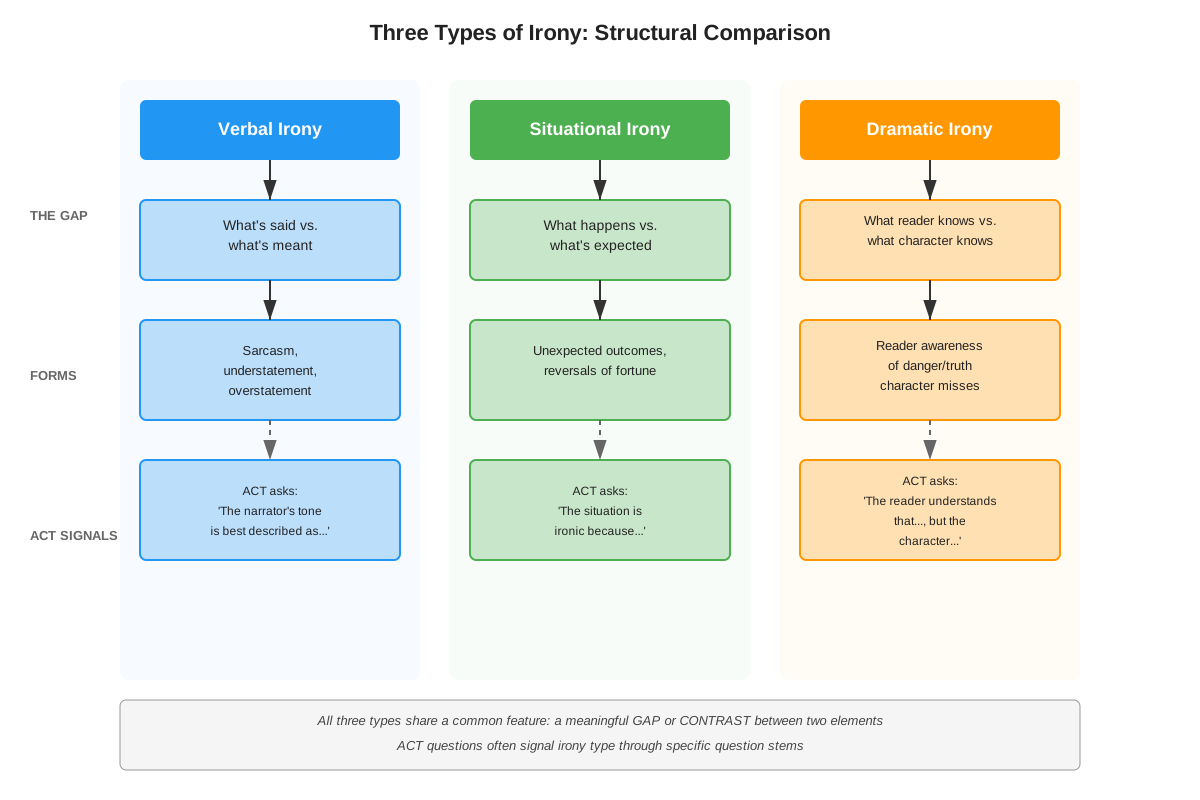
The ACT primarily tests three distinct types of irony, each with unique characteristics:
| Type | Definition | Key Feature | ACT Example |
|---|---|---|---|
| Verbal Irony | Saying the opposite of what is meant | Words contradict intention | A character calls a disaster "just perfect" |
| Situational Irony | When outcomes contradict expectations | Events contradict what should happen | A fire station burns down |
| Dramatic Irony | When readers know more than characters | Knowledge gap creates tension | Readers know the "friend" is actually an enemy |
Verbal Irony
Verbal irony occurs when a speaker says one thing but means another, typically the opposite. This is the most common type tested on the ACT. The classic example is sarcasm, though verbal irony can be more subtle than obvious sarcasm. When a character looks at pouring rain and says "Beautiful day for a picnic," the literal meaning contradicts the intended meaning.
On the ACT, verbal irony often appears in dialogue or in a narrator's commentary. The test assesses whether students recognize that the speaker's words should not be taken at face value. Context is crucial—students must consider the situation, the speaker's likely attitude, and surrounding details to determine that the statement is ironic.
Key indicators of verbal irony include:
- Statements that seem obviously false given the context
- Exaggerated praise or criticism that seems disproportionate
- Comments that contradict the speaker's established character or beliefs
- Tone words in the passage that signal the author's attitude differs from the literal words
Situational Irony
Situational irony occurs when events turn out contrary to what was expected or what seems appropriate. The outcome is the opposite of what characters, readers, or logic would anticipate. A classic example: a marriage counselor files for divorce, or someone avoids planes due to safety concerns but gets injured in a car accident on the way to the airport.
The ACT tests situational irony by presenting scenarios where outcomes contradict expectations and asking students to identify what makes the situation ironic. These questions require students to:
- Understand what the expected or logical outcome would be
- Recognize how the actual outcome differs
- Identify the meaningful contrast between expectation and reality
Situational irony often contributes to theme by highlighting life's unpredictability, the limitations of human control, or the gap between intentions and results. When analyzing situational irony, consider what the situation reveals about characters, society, or human nature.
Dramatic Irony
Dramatic irony exists when the audience or reader knows something that one or more characters do not. This knowledge gap creates tension, suspense, or sometimes humor as readers watch characters act on incomplete or incorrect information. In Shakespeare's Romeo and Juliet, the audience knows Juliet is alive while Romeo believes she's dead—this dramatic irony makes his suicide devastatingly tragic.
On the ACT, dramatic irony questions typically ask students to recognize what readers know that characters don't, or to identify the effect of this knowledge gap. These questions might be phrased as:
- "The reader understands, though the narrator does not, that..."
- "The passage suggests that unlike the protagonist, the reader knows..."
- "The irony of the situation in lines X-Y depends on the reader recognizing..."
Dramatic irony requires careful attention to point of view and narrative perspective. Students must track what information is available to different characters versus what the narrator reveals to readers.
Recognizing Irony on the ACT
Several textual clues signal that irony may be present:
Tone indicators: Words like "mockingly," "sarcastically," "wryly," or "ironically" in the passage or question stem directly signal ironic content.
Contradictions: When a character's words contradict their actions, when events contradict expectations, or when descriptions contradict reality, irony is likely present.
Exaggeration: Extreme overstatement or understatement often indicates verbal irony, as the exaggeration signals that the literal meaning isn't the intended meaning.
Contextual incongruity: When something seems out of place, inappropriate, or contrary to what the situation calls for, consider whether the author is using irony to make a point.
Concept Relationships
The three types of irony—verbal, situational, and dramatic—are distinct but interconnected concepts that all depend on the fundamental principle of contrast between appearance and reality. Verbal irony (saying the opposite of what's meant) → often contributes to → tone (the author's attitude), which helps establish → characterization (revealing personality through speech patterns).
Situational irony (unexpected outcomes) → connects to → theme (central ideas about life and human nature) by illustrating how reality defies expectations. This type also relates to plot structure, as ironic reversals often serve as turning points or climactic moments.
Dramatic irony (reader knowledge exceeding character knowledge) → depends on → point of view (narrative perspective) and → creates → suspense or tension as readers anticipate how characters will react when they discover the truth.
All three types of irony connect to prerequisite knowledge of tone and mood because recognizing irony requires understanding that the emotional quality of a passage may contradict its literal content. They also build toward more advanced skills like analyzing author's purpose and understanding rhetorical strategies, as irony is a sophisticated tool authors use to convey complex meanings and critique ideas indirectly.
High-Yield Facts
⭐ Irony always involves some form of contrast, opposition, or reversal between expectation and reality.
⭐ Verbal irony means saying the opposite of what you mean; context determines whether words should be taken literally.
⭐ Situational irony occurs when outcomes contradict what was expected or what seems appropriate.
⭐ Dramatic irony exists when readers know information that characters don't, creating tension or deeper meaning.
⭐ Sarcasm is a form of verbal irony, but not all verbal irony is sarcastic—verbal irony can be subtle and gentle.
- Irony questions on the ACT often include the word "ironic" or "irony" in the question stem, making them relatively easy to identify.
- Context is essential for recognizing irony—isolated sentences may seem straightforward, but surrounding details reveal the ironic meaning.
- Tone words in passages (mocking, sardonic, wry) signal that ironic interpretation may be necessary.
- Irony often serves thematic purposes, highlighting contradictions in society, human nature, or specific situations.
- The effect of irony can include humor, criticism, emphasis, or creating emotional impact by highlighting painful contrasts.
- When a question asks what makes something "ironic," the correct answer will identify a specific contrast or reversal.
- Dramatic irony is less common than verbal or situational irony on the ACT but appears regularly in fiction passages with complex narrative structures.
Quick check — test yourself on Irony so far.
Try Flashcards →Common Misconceptions
Misconception: Any unexpected event is situational irony. → Correction: Situational irony requires that the outcome be not just unexpected but specifically contrary to what was expected or appropriate. A surprise party is unexpected; a fire station burning down is ironic because fire stations exist to prevent fires.
Misconception: Verbal irony is always obvious sarcasm with a mocking tone. → Correction: Verbal irony can be subtle and gentle. A character might use understatement or polite phrasing to say the opposite of what they mean without harsh sarcasm. Tone varies widely in verbal irony.
Misconception: Coincidence is the same as irony. → Correction: Coincidence is simply two things happening at the same time by chance. Irony requires meaningful contrast or reversal. Meeting someone with your same birthday is coincidence; a calendar manufacturer forgetting their own birthday is ironic.
Misconception: If something is unfortunate or unlucky, it's ironic. → Correction: Bad luck alone doesn't create irony. The situation must involve a reversal of expectations or an outcome that contradicts what should logically happen. Rain on your wedding day is unfortunate; rain during a drought-relief fundraiser is ironic.
Misconception: Dramatic irony only occurs in plays or drama. → Correction: Despite its name, dramatic irony appears in all narrative forms—novels, short stories, films, and even nonfiction. The term "dramatic" refers to the dramatic effect created by the knowledge gap, not the genre.
Misconception: The correct answer to an irony question will always use the word "ironic." → Correction: ACT answer choices often describe the ironic situation without using the word "ironic." They might say "contrary to expectations," "the opposite of what was intended," or "although the character believes X, the reader knows Y."
Worked Examples
Example 1: Identifying Verbal Irony
Passage excerpt: After waiting three hours in the rain for a bus that never came, missing her job interview, and stepping in a puddle that soaked through her shoes, Maria looked up at the gray sky and said cheerfully, "Well, this is turning out to be the best day of my entire life!"
Question: Maria's statement in the final sentence is best described as:
A) A sincere expression of optimism despite difficulties
B) An ironic comment highlighting how terrible her day has been
C) A confused reaction to unexpected events
D) A dramatic exaggeration meant to gain sympathy
Solution Process:
Step 1: Identify what Maria literally says—she calls this "the best day of my entire life."
Step 2: Examine the context—she has experienced multiple frustrating, negative events (waiting in rain, missing interview, wet shoes).
Step 3: Recognize the contradiction—her words (best day) directly oppose the reality (terrible day).
Step 4: Determine the type of irony—this is verbal irony because she's saying the opposite of what she means.
Step 5: Evaluate answer choices:
- A is incorrect because the context makes clear she's not sincere
- B correctly identifies this as ironic and explains the contrast
- C misses the intentional irony in her statement
- D suggests she wants sympathy, but the passage doesn't support this motivation
Correct Answer: B
This question tests Learning Objective 1 (identifying when irony is tested) and Learning Objective 3 (applying irony concepts accurately). The key strategy is recognizing the gap between literal words and contextual reality.
Example 2: Analyzing Situational Irony
Passage excerpt: For thirty years, Dr. Chen had dedicated her life to researching treatments for insomnia, publishing groundbreaking studies and helping thousands of patients finally achieve restful sleep. Yet despite her expertise and access to every treatment she'd developed, she herself suffered from chronic insomnia, lying awake night after night in her dark bedroom, unable to practice what she'd spent her career perfecting.
Question: The situation described is ironic primarily because:
A) Dr. Chen works too many hours to get adequate sleep
B) An expert in treating insomnia cannot cure her own condition
C) Insomnia research requires staying awake for extended periods
D) Dr. Chen's patients sleep better than she does
Solution Process:
Step 1: Identify the expectation—an insomnia expert should be able to sleep well, especially with access to all available treatments.
Step 2: Identify the reality—Dr. Chen suffers from the very condition she treats.
Step 3: Recognize the type of irony—this is situational irony because the outcome (expert can't help herself) contradicts the logical expectation (expert should benefit from her own expertise).
Step 4: Evaluate answer choices:
- A provides a logical explanation but misses the ironic reversal
- B correctly identifies the core ironic contrast between expertise and inability
- C invents a false reason not supported by the passage
- D is true but doesn't explain what makes the situation ironic
Correct Answer: B
This question demonstrates Learning Objective 2 (explaining the core strategy) by requiring students to identify the specific contrast that creates irony. The strategy is to find what "should" happen versus what actually happens.
Exam Strategy
Identifying Irony Questions
ACT questions testing irony typically include specific trigger words and phrases:
- "The irony of..." or "...is ironic because..."
- "The narrator's tone can best be described as..." (when "ironic" is an answer choice)
- "The situation is best characterized as..."
- "The statement in lines X-Y means the opposite of..."
- "Unlike the character, the reader understands that..."
Exam Tip: When you see the word "ironic" in a question stem or answer choice, immediately look for contrasts, reversals, or gaps between appearance and reality in the relevant passage section.
Step-by-Step Approach
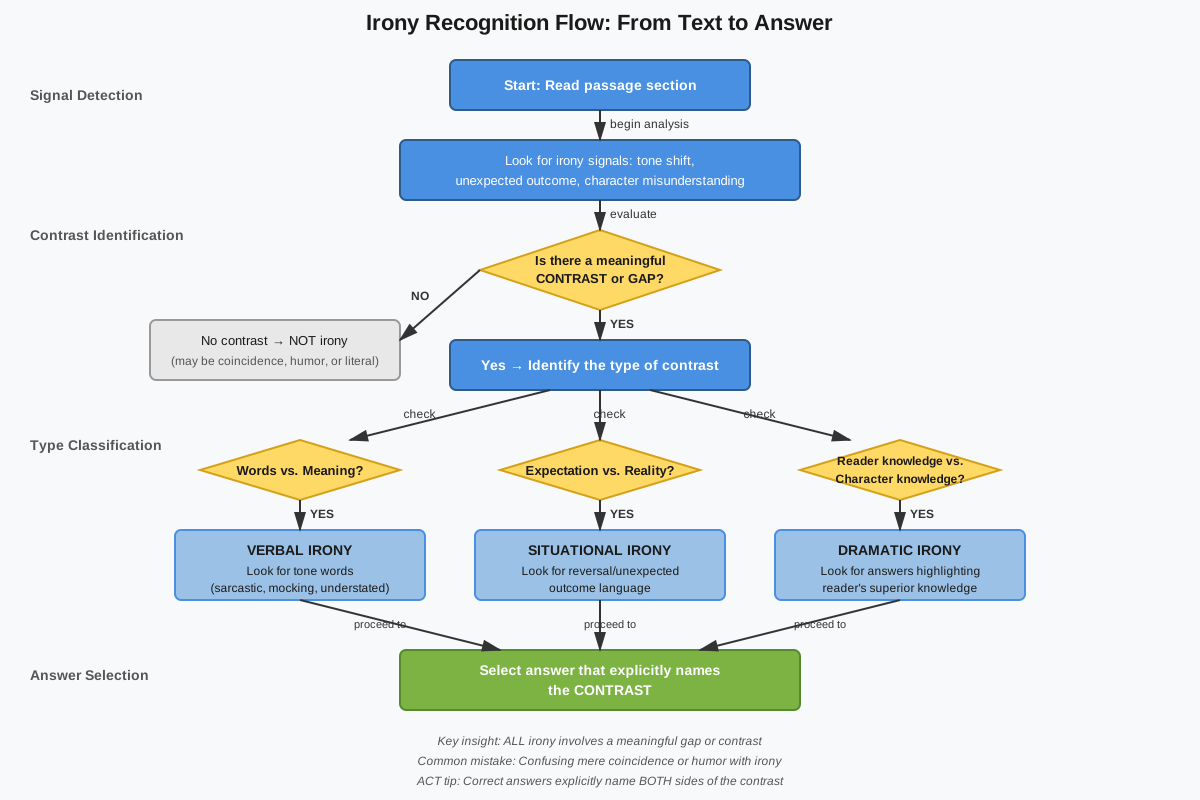
- Read for context first: Never evaluate a potentially ironic statement in isolation. Read at least 3-4 sentences before and after to understand the full situation.
- Identify the two levels: What is the surface meaning (literal words or apparent situation)? What is the deeper meaning (actual intention or true reality)?
- Look for contradictions: Does what's said contradict what's meant? Does what happens contradict what should happen? Does what readers know contradict what characters know?
- Determine the type: Verbal (words vs. meaning), situational (expectation vs. outcome), or dramatic (reader knowledge vs. character knowledge)?
- Verify with answer choices: The correct answer will explicitly identify the specific contrast or reversal that creates the irony.
Process of Elimination Tips
Eliminate answers that:
- Take ironic statements literally without considering context
- Confuse coincidence or bad luck with irony
- Identify something unexpected but not specifically contrary to expectations
- Miss the knowledge gap in dramatic irony questions
- Explain what happens without identifying the ironic contrast
Favor answers that:
- Use contrast language: "opposite," "contrary to," "despite," "although," "unlike"
- Identify specific reversals or gaps between expectation and reality
- Connect the ironic element to its effect on meaning or tone
- Acknowledge both levels (surface and deeper meaning)
Time Management
Irony questions typically require 45-60 seconds—slightly longer than detail questions but less than inference questions. The extra time is necessary to:
- Reread the relevant section with context
- Identify the specific contrast creating irony
- Verify that your interpretation matches the passage evidence
Don't rush these questions. Students who miss irony questions usually do so by reading too quickly and taking statements at face value rather than recognizing the deeper meaning.
Memory Techniques
The "OPPOSITE" Mnemonic for Verbal Irony
Observe the literal words
Pause to consider context
Point out contradictions
Opposite meaning is intended
Sarcasm is one form
Intention differs from words
Tone reveals true meaning
Examine surrounding details
The Three I's of Irony Types
Intention vs. Words = Verbal Irony (I say the opposite of what I mean)
Incongruous Outcome = Situational Irony (It happens contrary to expectations)
Information Gap = Dramatic Irony (I know what characters don't)
Visualization Strategy
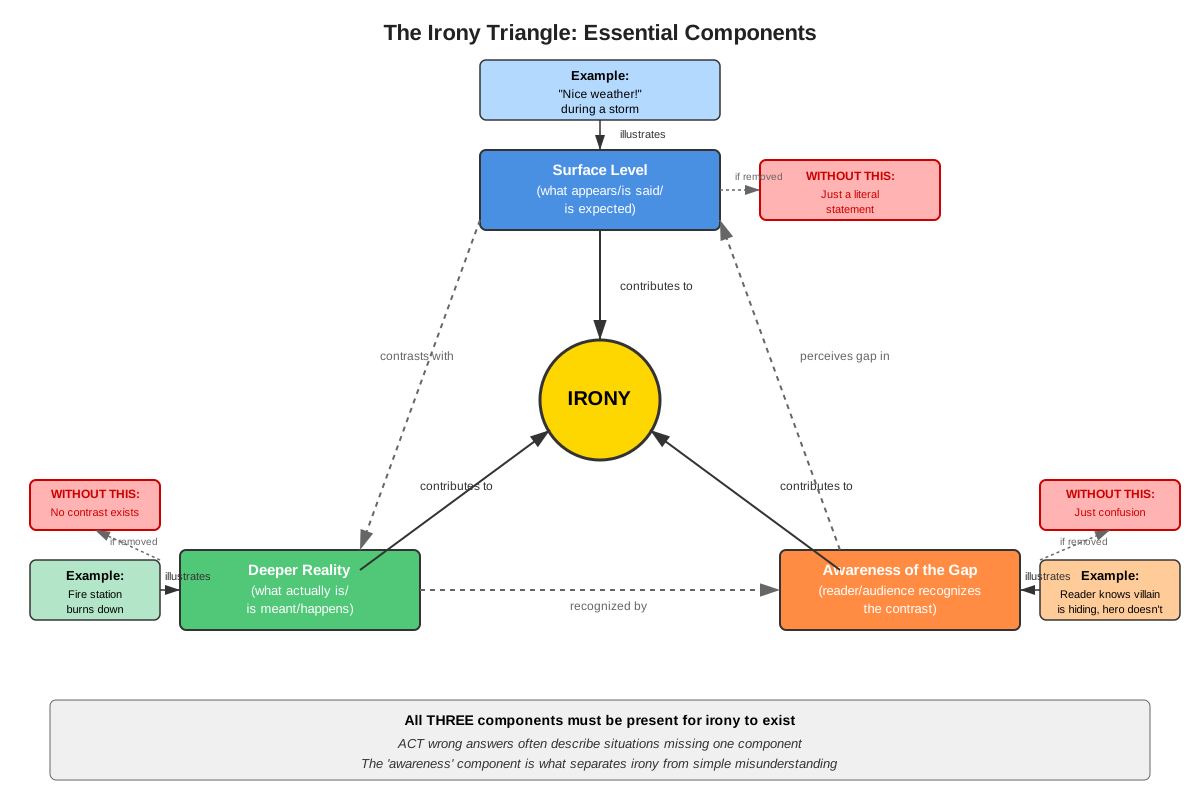
Picture irony as a two-layer cake:
- Top layer (visible): What appears to be true, what's literally said, what characters believe
- Bottom layer (hidden truth): What's actually true, what's really meant, what readers know
The gap between layers creates the ironic effect. When answering questions, always check both layers.
The "REVERSAL" Acronym
Read the context carefully
Expectation: what should happen?
Versus reality: what actually happens?
Evaluate the contrast
Recognize the type of irony
Select answer identifying the gap
Avoid literal interpretations
Look for opposition language
Summary
Irony is a sophisticated literary device that creates meaning through contrast, reversal, or opposition between appearance and reality. The ACT tests three main types: verbal irony (saying the opposite of what's meant), situational irony (outcomes contradicting expectations), and dramatic irony (readers knowing more than characters). Success on irony questions requires reading beyond literal meanings, using context to recognize contradictions, and identifying the specific gap that creates ironic meaning. Students must distinguish irony from mere coincidence or bad luck by finding meaningful reversals of expectation. The key strategy is always examining both the surface level and the deeper truth, then selecting answers that explicitly identify the contrast between them. Mastering irony questions provides a significant advantage on the ACT Reading section, as these medium-to-high difficulty questions frequently separate good scores from excellent ones.
Key Takeaways
- Irony always involves contrast, opposition, or reversal—look for gaps between expectation and reality, words and meaning, or knowledge levels
- Context is essential: never evaluate potentially ironic statements in isolation from surrounding details
- Verbal irony means saying the opposite of what you mean; situational irony means outcomes contradict expectations; dramatic irony means readers know more than characters
- Trigger words like "ironic," "contrary to," "despite," and "although" signal irony questions and correct answers
- Eliminate answers that take ironic statements literally or confuse coincidence with irony
- The correct answer will identify the specific contrast or reversal that creates the ironic effect
- Spend 45-60 seconds on irony questions to ensure you've considered both surface and deeper meanings
Related Topics
Tone and Mood: Understanding an author's attitude (tone) and the emotional atmosphere (mood) directly supports irony recognition, as ironic passages often feature tone that contradicts content. Mastering irony enhances your ability to analyze subtle tonal shifts.
Author's Purpose and Rhetorical Strategies: Irony is a sophisticated rhetorical tool authors use to critique, emphasize, or create emotional effects. Understanding why authors employ irony connects to broader questions about purpose and persuasive techniques.
Point of View and Narrative Perspective: Dramatic irony depends entirely on understanding what different characters and narrators know. Mastering point of view enables more sophisticated analysis of how knowledge gaps create meaning.
Figurative Language and Literary Devices: Irony exists within the broader category of figurative language alongside metaphor, symbolism, and other devices that create non-literal meanings. Understanding how these devices work together enriches overall reading comprehension.
Theme and Central Ideas: Irony often serves thematic purposes, highlighting contradictions in human nature or society. Recognizing ironic elements helps identify and analyze themes more effectively.
Practice CTA
Now that you understand the core concepts and strategies for identifying and analyzing irony, it's time to apply these skills! Work through the practice questions to test your ability to recognize verbal, situational, and dramatic irony in ACT-style passages. Use the flashcards to reinforce key definitions and distinctions between irony types. Remember: irony questions are high-value opportunities to demonstrate sophisticated reading skills—mastering them can significantly boost your Reading score. Approach each practice question methodically, looking for contrasts and reversals, and you'll develop the instincts needed to excel on test day.
Sign up free to keep reading
Create a free AnvayaPrep account to finish this ACT guide on Irony — plus flashcards and practice questions.