Overview
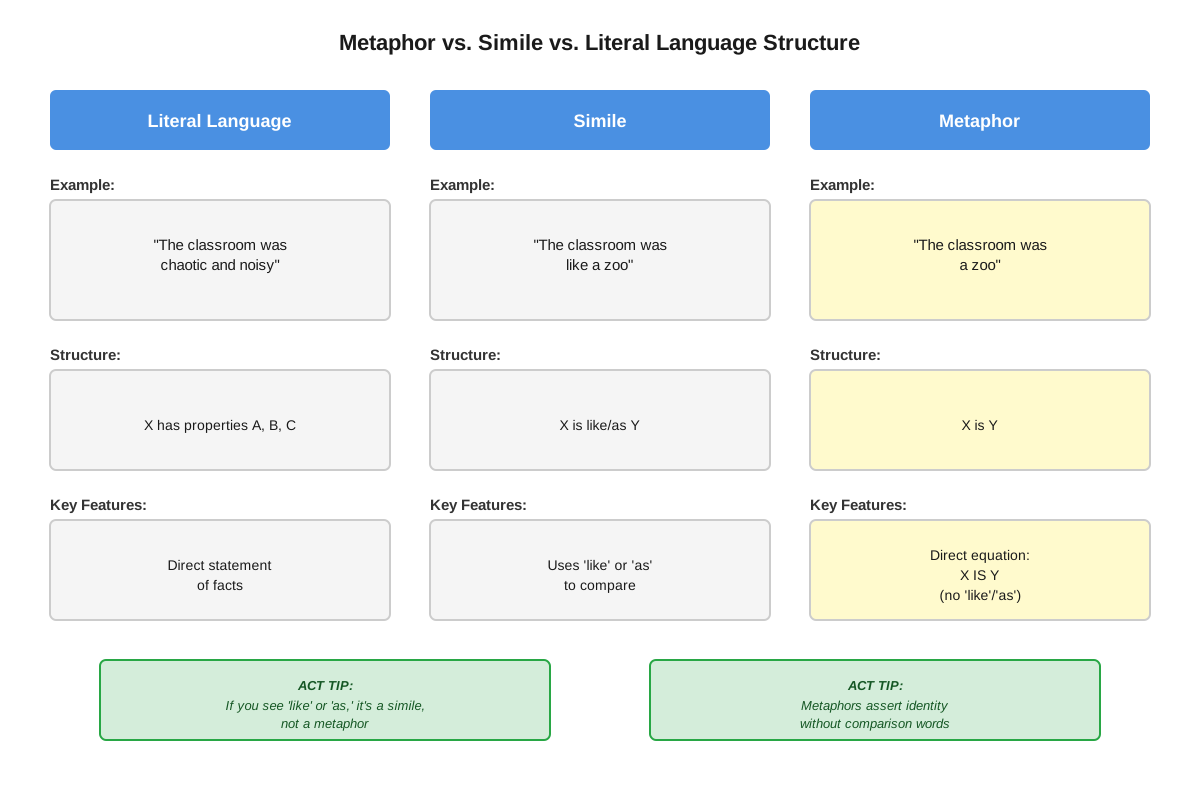
Metaphor is one of the most frequently tested figurative language devices on the ACT Reading section, appearing in passages across all genres—from literary fiction to humanities essays. Unlike literal language that states facts directly, a metaphor creates meaning by asserting that one thing is another thing, establishing an implicit comparison that reveals deeper insights about characters, themes, or ideas. For example, when a passage describes "the classroom was a zoo," it doesn't mean the room literally contained animals, but rather conveys chaos and disorder through comparison.
Understanding metaphor is essential for ACT success because these questions test your ability to interpret author's craft and analyze how writers create meaning beyond surface-level statements. The ACT frequently asks students to identify what a metaphorical phrase represents, explain why an author chose specific figurative language, or determine how a metaphor contributes to the passage's overall meaning. Questions about metaphor often appear as "most nearly means" questions, "the author uses this phrase to suggest" questions, or "the comparison serves to emphasize" questions.
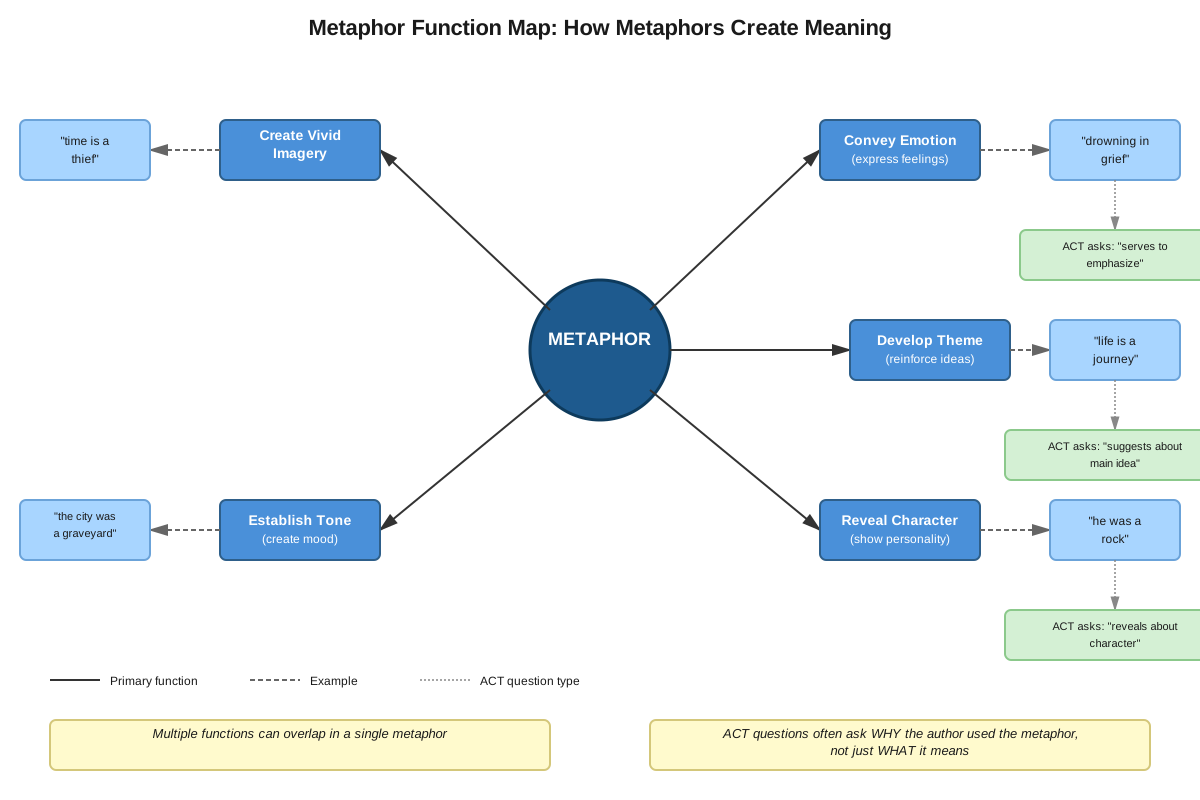
Metaphor connects to broader Reading concepts including author's purpose, tone, theme development, and characterization. Writers employ metaphors to convey complex emotions, abstract concepts, or nuanced perspectives more vividly than literal language allows. Mastering ACT metaphor questions requires both recognizing when figurative language is being used and understanding the relationship between the literal subject and what it represents—a skill that strengthens overall reading comprehension and analytical thinking across all passage types.
Learning Objectives
- [ ] Identify when Metaphor is being tested in ACT Reading questions
- [ ] Explain the core rule or strategy behind Metaphor interpretation
- [ ] Apply Metaphor analysis to ACT-style questions accurately
- [ ] Distinguish between metaphors and other figurative language devices (similes, personification, symbolism)
- [ ] Analyze how metaphors contribute to theme, characterization, and author's purpose
- [ ] Evaluate the effectiveness of specific metaphorical language choices in context
- [ ] Synthesize multiple metaphors within a passage to understand overarching patterns
Prerequisites
- Literal vs. Figurative Language: Understanding the difference between statements meant to be taken at face value versus those requiring interpretation is fundamental to recognizing when metaphorical language appears.
- Basic Literary Terms: Familiarity with concepts like imagery, tone, and theme provides the framework for understanding how metaphors function within larger textual purposes.
- Context Clues: The ability to use surrounding sentences to determine meaning is essential since metaphors require readers to infer connections between dissimilar things.
- Comparison and Contrast: Recognizing similarities and differences between concepts enables students to understand the relationship between a metaphor's literal subject and its figurative meaning.
Why This Topic Matters
Metaphor questions appear in approximately 15-20% of ACT Reading passages, making them one of the most reliable question types students will encounter. These questions typically carry the same point value as other questions but often separate high-scoring students from average performers because they require deeper analytical thinking rather than simple recall or surface-level comprehension.
In real-world contexts, understanding metaphorical language is crucial for interpreting literature, analyzing political rhetoric, comprehending scientific analogies, and navigating everyday communication where people regularly use figurative expressions. The cognitive skills developed through metaphor analysis—pattern recognition, abstract thinking, and inferential reasoning—transfer to critical thinking across all academic disciplines and professional contexts.
On the ACT, metaphor appears most commonly in Literary Narrative passages (fiction and memoir), where authors use figurative language to develop characters and convey emotional states. However, metaphors also appear in Humanities passages discussing art, music, or philosophy, and occasionally in Social Science passages where authors use figurative comparisons to explain complex concepts. Questions may ask students to identify what a metaphorical phrase represents, explain the effect of the comparison, or determine how the metaphor relates to the passage's central themes. Recognizing these patterns allows strategic test-takers to anticipate question types and prepare appropriate analytical approaches.
Core Concepts
Definition and Structure of Metaphor
A metaphor is a figure of speech that describes one thing as if it were another, creating an implicit comparison without using connecting words like "like" or "as." The basic structure involves two elements: the tenor (the actual subject being described) and the vehicle (the thing to which it's being compared). For example, in "time is a thief," time is the tenor and thief is the vehicle. The metaphor works by transferring qualities associated with thieves—stealing, taking without permission, causing loss—onto our understanding of time.
Metaphors function by highlighting specific shared characteristics between dissimilar things while suppressing other characteristics. This selective emphasis creates meaning and shapes reader interpretation. When Shakespeare writes "all the world's a stage," he emphasizes performance, roles, and audience while de-emphasizing other aspects of both world and stage. Understanding which characteristics transfer and which don't is crucial for ACT questions.
Types of Metaphors on the ACT
The ACT tests several metaphor variations, each requiring slightly different analytical approaches:
| Metaphor Type | Definition | Example | ACT Question Focus |
|---|---|---|---|
| Direct Metaphor | Explicit statement that X is Y | "Her words were daggers" | What quality is being emphasized |
| Implied Metaphor | Comparison suggested through verbs or descriptions | "She sailed through the exam" | Identifying the unstated comparison |
| Extended Metaphor | Comparison developed over multiple sentences or paragraphs | Entire passage comparing life to a journey | How the metaphor develops theme |
| Dead Metaphor | Overused metaphor that's become literal | "the foot of the mountain" | Usually not tested; too conventional |
Direct metaphors are the most straightforward, explicitly stating the comparison. ACT questions about direct metaphors typically ask what quality or characteristic the comparison emphasizes. Implied metaphors require more inference because the comparison isn't stated outright—instead, the author uses language associated with one thing to describe another. For instance, "the committee chair bulldozed the proposal through" implies the chair is a bulldozer without stating it directly.
Extended metaphors are particularly important for ACT passages because they often connect to theme questions. When an author develops a metaphor throughout a passage—perhaps comparing a character's emotional journey to a physical voyage—questions may ask how this comparison contributes to the overall meaning or what specific details within the extended metaphor represent.
Identifying Metaphor in ACT Passages
Recognizing when metaphor is being tested requires attention to specific textual signals. Look for language that seems incongruous or impossible if taken literally. If a passage describes a person as "drowning in paperwork," the physical impossibility signals figurative language. Similarly, abstract concepts described with concrete imagery often indicate metaphor: "hope flickered," "fear gripped him," or "silence blanketed the room."
ACT questions testing metaphor often include phrases like:
- "The phrase '___' most nearly suggests..."
- "The comparison serves to emphasize..."
- "The author describes ___ as ___ in order to..."
- "The metaphor of ___ conveys..."
- "By referring to ___ as ___, the author..."
These question stems signal that you need to analyze figurative language rather than simply locate information. The correct answer will identify the quality or idea being conveyed through the comparison, not the literal meaning of the words.
Analyzing Metaphorical Meaning
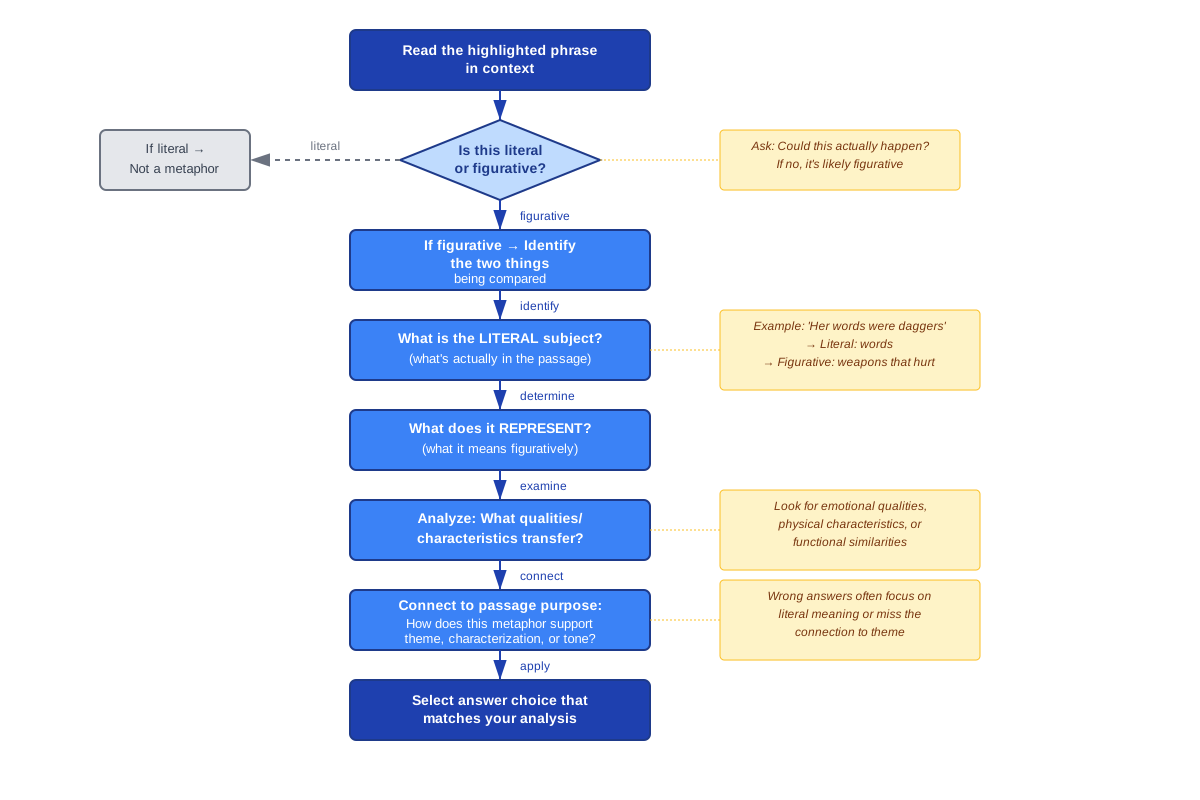
To interpret metaphors accurately on the ACT, follow this systematic approach:
- Identify the tenor and vehicle: Determine what is actually being discussed (tenor) and what it's being compared to (vehicle)
- List vehicle associations: Brainstorm qualities, characteristics, or actions associated with the vehicle
- Determine relevant transfer: Identify which associations make sense in context and relate to the tenor
- Connect to passage purpose: Consider how this particular comparison serves the author's larger goals
For example, if a passage describes a character's memory as "a museum where she wandered among dusty exhibits," the tenor is memory and the vehicle is museum. Museums are associated with preservation, display, observation, distance, organization, and sometimes neglect (dusty). In context, this metaphor likely emphasizes how the character experiences memories as preserved but distant, objects to observe rather than live experiences, possibly neglected or rarely visited.
Metaphor vs. Other Figurative Devices
The ACT occasionally tests whether students can distinguish metaphor from related devices:
Metaphor vs. Simile: Similes use explicit comparison words ("like," "as," "resembles"), while metaphors assert direct equivalence. "Her smile was sunshine" (metaphor) versus "Her smile was like sunshine" (simile). Both create comparisons, but metaphors are more direct and emphatic.
Metaphor vs. Personification: Personification is actually a specific type of metaphor that gives human qualities to non-human things. "The wind whispered secrets" personifies wind by giving it human action. ACT questions may ask about personification specifically or treat it as metaphorical language.
Metaphor vs. Symbol: Symbols are objects that represent abstract ideas through association (a dove representing peace), while metaphors create direct comparisons. Symbols tend to be more conventional and culturally established, whereas metaphors can be unique to a particular author or passage.
Concept Relationships
Metaphor analysis connects directly to multiple ACT Reading skills, forming an interconnected web of comprehension strategies. Metaphor identification → requires context clue usage → leads to understanding author's purpose. When students recognize metaphorical language, they must use surrounding context to interpret meaning, which reveals why the author chose that particular comparison, ultimately illuminating the passage's themes and purposes.
The relationship between metaphor and characterization is particularly strong in Literary Narrative passages. Character description → often employs metaphor → reveals internal states and development. Authors use metaphorical language to show rather than tell, creating vivid impressions of characters' emotions, motivations, and transformations. Understanding these metaphors is essential for answering character analysis questions.
Metaphor also connects to tone and mood analysis: Metaphor choice → establishes emotional atmosphere → contributes to overall tone. The specific vehicle an author selects (comparing something to a prison versus a sanctuary, for example) creates distinct emotional effects that shape the passage's tone. Questions about tone often require understanding how figurative language contributes to the overall emotional quality.
Within the Craft and Structure domain, metaphor relates to other literary devices through a hierarchy: Figurative language (broad category) → includes metaphor, simile, personification → all serve to create imagery → which supports theme development. Mastering metaphor provides a foundation for understanding how authors craft meaning through language choices rather than just what they say.
High-Yield Facts
- ⭐ Metaphors assert direct equivalence ("X is Y") without using "like" or "as," distinguishing them from similes
- ⭐ The correct answer to metaphor questions identifies the quality or characteristic being emphasized, not a literal interpretation
- ⭐ Extended metaphors that develop throughout a passage almost always connect to theme or central idea questions
- ⭐ Implied metaphors use verbs or descriptions associated with one thing to describe another without stating the comparison explicitly
- ⭐ Context surrounding the metaphor determines which associations transfer from vehicle to tenor
- Metaphor questions typically appear 1-2 times per ACT Reading test, most commonly in Literary Narrative passages
- Dead metaphors (conventional expressions like "leg of a table") are rarely tested because they function as literal language
- Multiple metaphors within a passage often form patterns that reinforce the same theme or idea
- Personification is a specific type of metaphor that gives human qualities to non-human entities
- The vehicle (comparison object) is always chosen for specific qualities that illuminate the tenor (actual subject)
- Wrong answers to metaphor questions often provide literal interpretations or focus on irrelevant vehicle associations
- Metaphors can convey complex emotions or abstract concepts more efficiently than literal description
- Understanding metaphor requires both recognizing figurative language and analyzing its purpose within the passage
- ACT passages may use metaphors to establish setting, develop character, advance plot, or convey theme
- The same metaphor can have different meanings in different contexts depending on which vehicle associations are relevant
Quick check — test yourself on Metaphor so far.
Try Flashcards →Common Misconceptions
Misconception: All comparisons are metaphors. → Correction: Only comparisons that assert direct equivalence without "like" or "as" are metaphors. Similes use explicit comparison words, and analogies explain relationships between pairs of things. Metaphors specifically state or imply that one thing is another.
Misconception: The correct answer to a metaphor question is always the most creative or poetic interpretation. → Correction: The correct answer must be supported by context and connect to the passage's purpose. While metaphors are creative, ACT questions reward accurate interpretation based on textual evidence, not imaginative but unsupported readings.
Misconception: Metaphors always have positive connotations. → Correction: Metaphors can be positive, negative, or neutral depending on the vehicle chosen and the context. "Her words were daggers" creates a negative comparison, while "her words were a warm blanket" creates a positive one. The vehicle's associations determine the metaphor's emotional quality.
Misconception: You need to identify every possible association between tenor and vehicle. → Correction: Focus only on associations that make sense in context and relate to the passage's purpose. If a passage describes someone's mind as "a steel trap," you don't need to consider every quality of steel or traps—only the relevant characteristic (in this case, likely the ability to catch and hold things firmly, suggesting a sharp memory).
Misconception: Extended metaphors must maintain perfect consistency throughout. → Correction: Authors often develop extended metaphors flexibly, emphasizing different aspects of the comparison in different sections. A passage comparing life to a journey might focus on destinations in one paragraph and obstacles in another, without maintaining rigid consistency about every journey element.
Misconception: If you can visualize something literally, it's not a metaphor. → Correction: Some metaphors create vivid images that could theoretically exist literally, but context reveals the figurative meaning. "She built walls around her heart" creates a visualizable image, but context makes clear this describes emotional defensiveness, not literal construction.
Worked Examples
Example 1: Direct Metaphor Analysis
Passage Excerpt: "For Marcus, the college application process was a marathon, not a sprint. Each essay represented another mile marker, each recommendation letter another water station along the route. By December, he could see the finish line approaching, though his legs—metaphorically speaking—ached with exhaustion."
Question: The author's comparison of the application process to a marathon primarily emphasizes:
A) The competitive nature of college admissions
B) The sustained effort required over an extended period
C) The physical challenges students face during senior year
D) The importance of proper preparation and training
Analysis Process:
Step 1: Identify the metaphor structure. Tenor = college application process; Vehicle = marathon.
Step 2: List marathon associations: long distance, endurance, sustained effort, pacing, exhaustion, finish line, not quick, requires stamina, competitive, requires training.
Step 3: Examine context clues. The passage explicitly contrasts marathon with sprint (emphasizing duration), mentions multiple stages over time (essays, letters, December), and references exhaustion from sustained effort. The phrase "not a sprint" directly emphasizes the time element.
Step 4: Evaluate answer choices:
- A) While marathons are competitive, the passage focuses on Marcus's individual experience, not competition with others. The context emphasizes duration and effort, not rivalry.
- B) ✓ This directly connects to the marathon's defining characteristic (long distance requiring sustained effort) and matches the context about multiple stages over months.
- C) The passage mentions metaphorical exhaustion, explicitly noting it's not physical. This misreads the figurative language as literal.
- D) While marathon runners train, the passage doesn't discuss preparation—it focuses on the ongoing process itself.
Answer: B. The metaphor emphasizes sustained effort over time, supported by the explicit contrast with "sprint" and the description of multiple stages leading to exhaustion.
Connection to Learning Objectives: This example demonstrates identifying when metaphor is tested (comparison language in the question stem), explaining the core strategy (analyzing vehicle associations in context), and applying this to select the correct answer.
Example 2: Implied Metaphor in Character Description
Passage Excerpt: "After the diagnosis, Janet's world shrank. The horizons that had stretched endlessly before her—travel, career advancement, new relationships—contracted to the walls of her apartment. She found herself rationing energy like a miser counting coins, calculating whether a trip to the grocery store was worth the expenditure."
Question: The author's description of Janet "rationing energy like a miser counting coins" suggests that:
F) Janet has become financially cautious due to medical expenses
G) Janet must carefully manage her limited physical resources
H) Janet has developed an obsessive personality disorder
J) Janet feels guilty about her inability to work
Analysis Process:
Step 1: Identify the metaphorical language. This is an implied metaphor (with a simile component). Energy is being treated as currency; Janet is being compared to a miser. The metaphor implies energy = money, a limited resource requiring careful management.
Step 2: Analyze vehicle associations. Misers: hoard resources, count carefully, fear running out, make calculated decisions about spending, prioritize conservation, view resources as scarce and precious.
Step 3: Connect to context. The passage establishes that Janet's "world shrank" after a diagnosis (suggesting illness), her horizons "contracted" (limitation), and she must calculate whether activities are "worth the expenditure" (cost-benefit analysis of limited resources).
Step 4: Evaluate answers:
- F) This takes "coins" literally rather than recognizing the metaphorical comparison. The passage discusses energy management, not finances.
- G) ✓ This correctly interprets the metaphor: energy is the limited resource (like money to a miser) that must be carefully managed and allocated. The diagnosis context supports this reading.
- H) This overgeneralizes from the specific metaphor and isn't supported by context. Careful resource management due to limitation isn't obsessive disorder.
- J) While guilt might be present, the metaphor specifically emphasizes resource limitation and management, not emotional states like guilt.
Answer: G. The metaphor compares energy to money, emphasizing that Janet must carefully manage limited physical resources, supported by the context of diagnosis and contracted possibilities.
Connection to Learning Objectives: This example shows identifying implied metaphor (where the comparison isn't stated as directly), analyzing how metaphor contributes to characterization, and distinguishing between literal and figurative interpretations.
Exam Strategy
When approaching ACT metaphor questions, implement this systematic process to maximize accuracy and efficiency:
Recognition Phase: Identify metaphor questions through trigger phrases like "the comparison," "most nearly suggests," "serves to emphasize," or "by describing X as Y." These signal that you need to analyze figurative language rather than locate literal information. Allocate approximately 45-60 seconds per metaphor question, slightly more than detail questions but less than inference questions.
Analysis Phase: Before looking at answer choices, quickly identify the tenor (what's actually being discussed) and vehicle (what it's compared to). Jot down 2-3 key associations with the vehicle that make sense in context. This prevents you from being swayed by attractive but incorrect answer choices that focus on irrelevant vehicle associations.
Elimination Strategy: Wrong answers to metaphor questions typically fall into predictable categories:
- Literal interpretations: Answers that treat figurative language as if it were literal (if a passage says someone "drowned in work," wrong answers might reference actual water)
- Irrelevant associations: Answers that identify real vehicle associations but ones that don't apply in context (if "steel trap mind" emphasizes memory, wrong answers might focus on steel's strength or traps' danger)
- Overgeneralization: Answers that go beyond what the specific metaphor conveys to make broader claims unsupported by context
- Tone mismatches: Answers that assign the wrong emotional quality to the metaphor
Context Integration: Always read 2-3 sentences before and after the metaphorical language. ACT passages provide context clues that indicate which vehicle associations are relevant. If you're torn between two answers, return to the passage and look for additional context that supports one interpretation over the other.
Extended Metaphor Strategy: When a passage develops a metaphor over multiple paragraphs, expect questions about how the metaphor contributes to theme or overall meaning. Track how different aspects of the vehicle appear throughout the passage and consider what overarching idea they collectively support.
Time Management: If a metaphor question seems particularly difficult, mark it and return after completing easier questions. Metaphor questions require analytical thinking that benefits from a fresh perspective if you're stuck.
Memory Techniques
METAPHOR Analysis Acronym:
- Mark the comparison (identify tenor and vehicle)
- Examine context clues
- Think about vehicle associations
- Analyze which associations fit
- Purpose: connect to author's goal
- Highlight relevant qualities
- Omit literal interpretations
- Review answer choices systematically
Visualization Strategy: Picture the vehicle literally, then transfer relevant visual qualities to the tenor. If a passage describes someone's anger as "a volcano," visualize an actual volcano (building pressure, explosive release, heat, destruction, unstoppable force), then consider which qualities apply to anger in context.
The "Is/Like" Test: To distinguish metaphors from similes, remember: metaphors use "is" (or equivalent), similes use "like/as." If you can insert "is" and the comparison works, it's metaphorical. "Her words [are] daggers" = metaphor. "Her words [are] like daggers" = simile.
Vehicle Association Web: When analyzing a metaphor, mentally create a web with the vehicle at the center and associations radiating outward. Then draw lines to the associations that connect to the tenor in context. This visual organization helps identify relevant qualities quickly.
Context Clue Circles: Imagine three concentric circles around the metaphorical phrase: the immediate sentence (inner circle), the surrounding paragraph (middle circle), and the overall passage theme (outer circle). Check each circle for clues about meaning, moving outward if needed.
Summary
Metaphor is a high-yield ACT Reading topic that tests students' ability to interpret figurative language where one thing is described as if it were another, creating implicit comparisons that convey meaning beyond literal statements. Success requires recognizing when metaphor is being tested through question stems that reference comparisons or ask what phrases "suggest" or "emphasize," then systematically analyzing the relationship between the tenor (actual subject) and vehicle (comparison object). The key strategy involves identifying which associations with the vehicle transfer meaningfully to the tenor in context, avoiding both literal interpretations and irrelevant associations. Extended metaphors that develop throughout passages typically connect to theme questions, while implied metaphors require inference to identify the unstated comparison. ACT metaphor questions reward students who ground their interpretations in textual evidence, use context clues to determine relevant associations, and connect figurative language to the author's larger purposes. Mastering this topic requires distinguishing metaphors from related devices like similes and symbols, understanding how metaphors contribute to characterization and tone, and applying systematic analysis rather than relying on creative but unsupported interpretations.
Key Takeaways
- Metaphors assert direct equivalence ("X is Y") without comparison words, distinguishing them from similes that use "like" or "as"
- Correct answers identify the quality or characteristic being emphasized through the comparison, supported by context clues
- Analyze metaphors by identifying tenor and vehicle, listing vehicle associations, and determining which associations transfer meaningfully in context
- Extended metaphors developed throughout passages almost always connect to theme or central idea questions
- Wrong answers typically offer literal interpretations, focus on irrelevant vehicle associations, or lack contextual support
- Context surrounding the metaphor determines which of the vehicle's many possible associations are relevant to the tenor
- Metaphor questions appear regularly on the ACT (15-20% of passages), most commonly in Literary Narrative but also in Humanities passages
Related Topics
Simile and Figurative Language: Understanding the full range of comparison devices (similes, analogies, personification) builds on metaphor mastery and helps distinguish between different types of figurative language that appear on the ACT.
Symbolism: While related to metaphor, symbols function differently as objects representing abstract ideas through cultural or contextual association. Mastering metaphor provides foundation for analyzing symbolic meaning.
Author's Purpose and Craft: Metaphor analysis connects directly to understanding why authors make specific language choices, a broader skill tested across multiple ACT question types.
Theme Development: Extended metaphors often serve as vehicles for conveying themes, so metaphor mastery enables more sophisticated theme analysis.
Tone and Mood: The emotional quality of metaphorical language contributes significantly to a passage's tone, making metaphor analysis essential for tone questions.
Practice CTA
Now that you've mastered the core concepts of metaphor analysis, it's time to apply these strategies to ACT-style practice questions. The practice set includes passages with various metaphor types—direct, implied, and extended—allowing you to test your ability to identify figurative language, analyze vehicle-tenor relationships, and select answers based on contextual evidence. Flashcards will help you internalize the systematic analysis process and common wrong answer patterns. Remember: metaphor questions separate high scorers from average performers, so investing time in deliberate practice with these questions will significantly impact your Reading score. Approach each practice question methodically, using the METAPHOR acronym and elimination strategies you've learned. You've built the foundation—now strengthen it through application!
Sign up free to keep reading
Create a free AnvayaPrep account to finish this ACT guide on Metaphor — plus flashcards and practice questions.