Overview
In the ACT Science section, understanding variables forms the foundation for interpreting experimental data and research studies. The dependent variable represents the outcome or response that researchers measure in an experiment—it's what changes in response to manipulations made by the experimenter. On the ACT, identifying and understanding dependent variables is crucial because approximately 40% of Science questions require students to interpret data relationships, distinguish between variables, or analyze experimental design. Questions testing this concept appear across all three passage types: Data Representation, Research Summaries, and Conflicting Viewpoints.
The ACT dependent variable questions typically ask students to identify which factor is being measured, predict how changes in one variable affect another, or interpret graphs and tables showing experimental results. Mastery of this topic enables students to quickly parse complex scientific passages, understand cause-and-effect relationships, and eliminate incorrect answer choices that confuse independent and dependent variables. This skill is not isolated—it connects directly to understanding experimental design, data interpretation, graph analysis, and scientific reasoning.
The dependent variable concept serves as a gateway to more advanced Science topics on the ACT. Once students can reliably identify what is being measured versus what is being manipulated, they can better analyze trends in data, evaluate competing hypotheses, and understand how scientists draw conclusions from experimental evidence. This foundational knowledge accelerates comprehension of passages involving multiple experiments, complex data tables, and scientific debates where different researchers measure different outcomes.
Learning Objectives
- [ ] Identify when Dependent variable is being tested in ACT Science passages
- [ ] Explain the core rule or strategy behind Dependent variable identification and analysis
- [ ] Apply Dependent variable concepts to ACT-style questions accurately
- [ ] Distinguish between dependent and independent variables in experimental descriptions
- [ ] Predict how changes in independent variables affect dependent variables based on data trends
- [ ] Locate dependent variables on graphs, tables, and charts regardless of axis placement
- [ ] Evaluate whether an experiment properly measures its intended dependent variable
Prerequisites
- Basic graph reading skills: Understanding x-axis and y-axis labels is essential because dependent variables are typically plotted on graphs, though not always on the y-axis
- Cause-and-effect reasoning: Recognizing that one factor can influence another helps distinguish what is being changed (cause) from what is being measured (effect)
- Scientific method fundamentals: Knowing that experiments test hypotheses by manipulating conditions and observing results provides context for why variables are categorized
- Unit interpretation: Understanding measurement units (meters, seconds, grams, degrees) helps identify what characteristic is actually being measured as the dependent variable
Why This Topic Matters
Understanding dependent variables extends far beyond standardized testing into real-world scientific literacy. Every medical study measuring patient outcomes, every engineering test evaluating material strength, and every environmental survey tracking pollution levels relies on properly identifying and measuring dependent variables. When reading news articles about scientific research, recognizing what was actually measured versus what was changed helps evaluate the validity of reported conclusions.
On the ACT Science section, dependent variable questions appear in approximately 5-7 questions per test, making this a high-frequency topic. These questions typically appear in Research Summaries passages (which describe experiments) and Data Representation passages (which present graphs and tables). The ACT tests this concept through multiple question formats: direct identification questions ("Which of the following was the dependent variable?"), data interpretation questions requiring students to read values of the dependent variable, and analysis questions asking how the dependent variable changed in response to experimental manipulations.
Common ACT passage scenarios involving dependent variables include: biology experiments measuring plant growth under different light conditions, chemistry studies recording reaction rates at various temperatures, physics investigations tracking object motion over time, and Earth science observations documenting weather patterns across locations. The test writers frequently place dependent variables on the x-axis instead of the traditional y-axis position to assess whether students truly understand the concept rather than relying on memorized rules about graph placement.
Core Concepts
Definition and Fundamental Characteristics
The dependent variable is the factor in an experiment that is measured, observed, or recorded by the researcher. It "depends on" or responds to changes in other variables—specifically the independent variable that the experimenter manipulates. The dependent variable represents the outcome, result, or effect that scientists are investigating. In the relationship "If X changes, then Y changes," Y is the dependent variable.
Key characteristics that define a dependent variable include:
- It is measured or observed, not manipulated by the experimenter
- Its values change in response to the independent variable
- It represents the data that researchers collect and analyze
- It answers the question "What effect did the manipulation have?"
- Multiple measurements of the dependent variable are typically recorded
Identifying Dependent Variables in Experimental Descriptions
When reading ACT Science passages, specific language patterns signal the dependent variable. Look for phrases such as "measured," "recorded," "observed," "monitored," "tracked," "determined," or "calculated." These action words indicate what the researchers were quantifying as their outcome.
The dependent variable typically appears in statements describing:
- What data was collected ("Scientists measured the temperature...")
- What results were obtained ("The growth rate was recorded...")
- What the study aimed to determine ("Researchers investigated how pH affects enzyme activity" - enzyme activity is dependent)
- What appears in data tables as column headers or row labels
Dependent Variables in Graphs and Tables
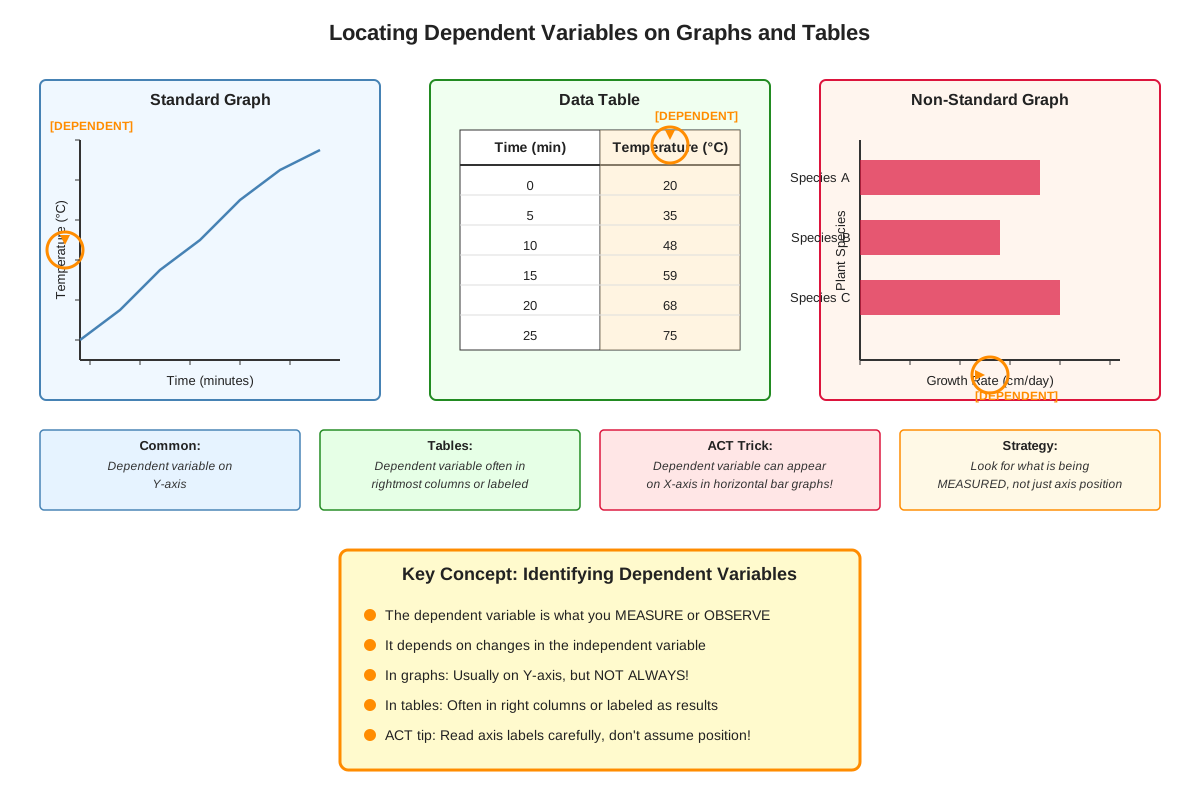
On graphs, the dependent variable traditionally appears on the y-axis (vertical axis), but ACT passages intentionally violate this convention to test deeper understanding. Students must read axis labels carefully rather than assuming position indicates variable type. The dependent variable is whichever factor was measured as the outcome, regardless of its position on the graph.
| Graph Element | Typical Location | ACT Variation |
|---|---|---|
| Dependent Variable | Y-axis (vertical) | May appear on X-axis |
| Independent Variable | X-axis (horizontal) | May appear on Y-axis |
| Multiple Dependent Variables | Multiple lines/bars | Different symbols or colors |
| Units of Measurement | Axis label in parentheses | Essential for identification |
In data tables, the dependent variable often appears:
- As column headers when independent variable values are in rows
- As the measured values in the body of the table
- With units clearly specified (kg, m/s, °C, etc.)
- As multiple columns when several outcomes were measured
Relationship Between Independent and Dependent Variables
The fundamental experimental relationship follows this pattern:
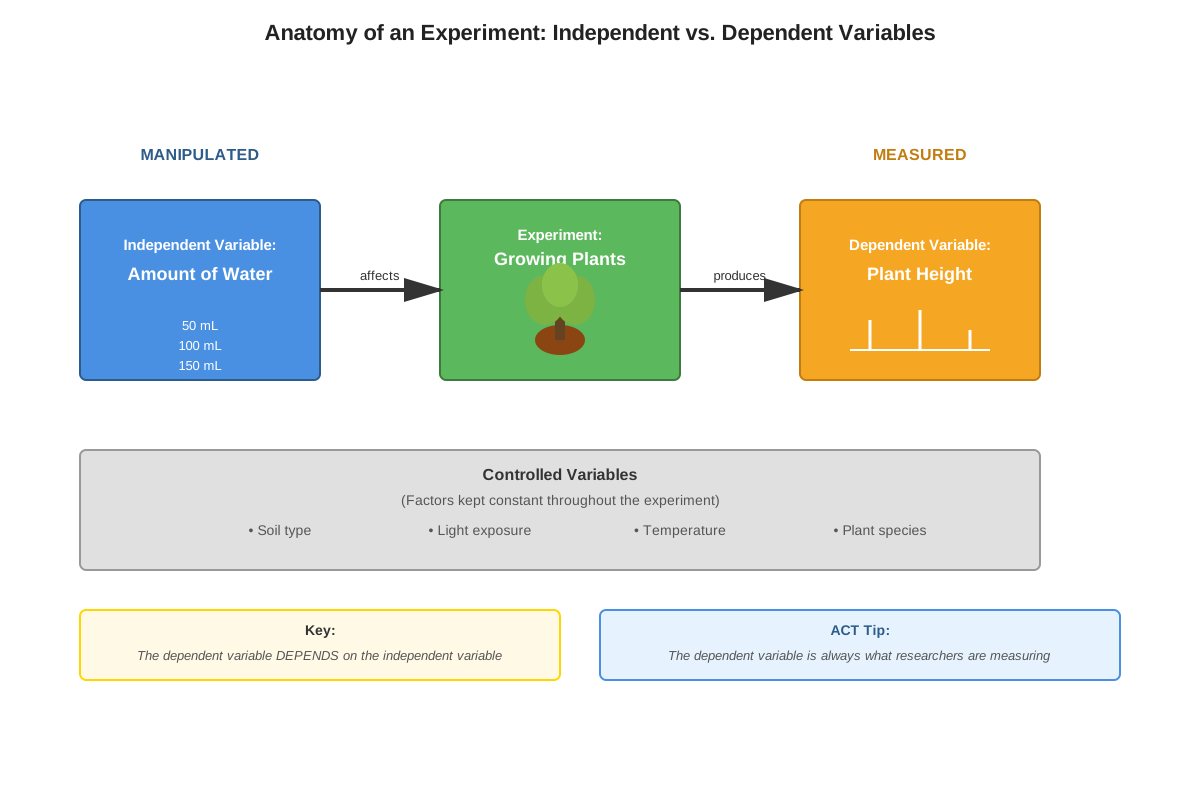
Independent Variable (manipulated) → affects → Dependent Variable (measured)
Understanding this directional relationship helps students:
- Predict how graphs should trend (if independent increases, how does dependent respond?)
- Identify which variable is which when both are mentioned
- Eliminate answer choices that reverse the cause-effect relationship
- Interpret experimental conclusions correctly
The independent variable is what the experimenter changes on purpose (different temperatures, various concentrations, multiple time intervals), while the dependent variable is what changes as a result (reaction rate, plant height, distance traveled).
Multiple Dependent Variables
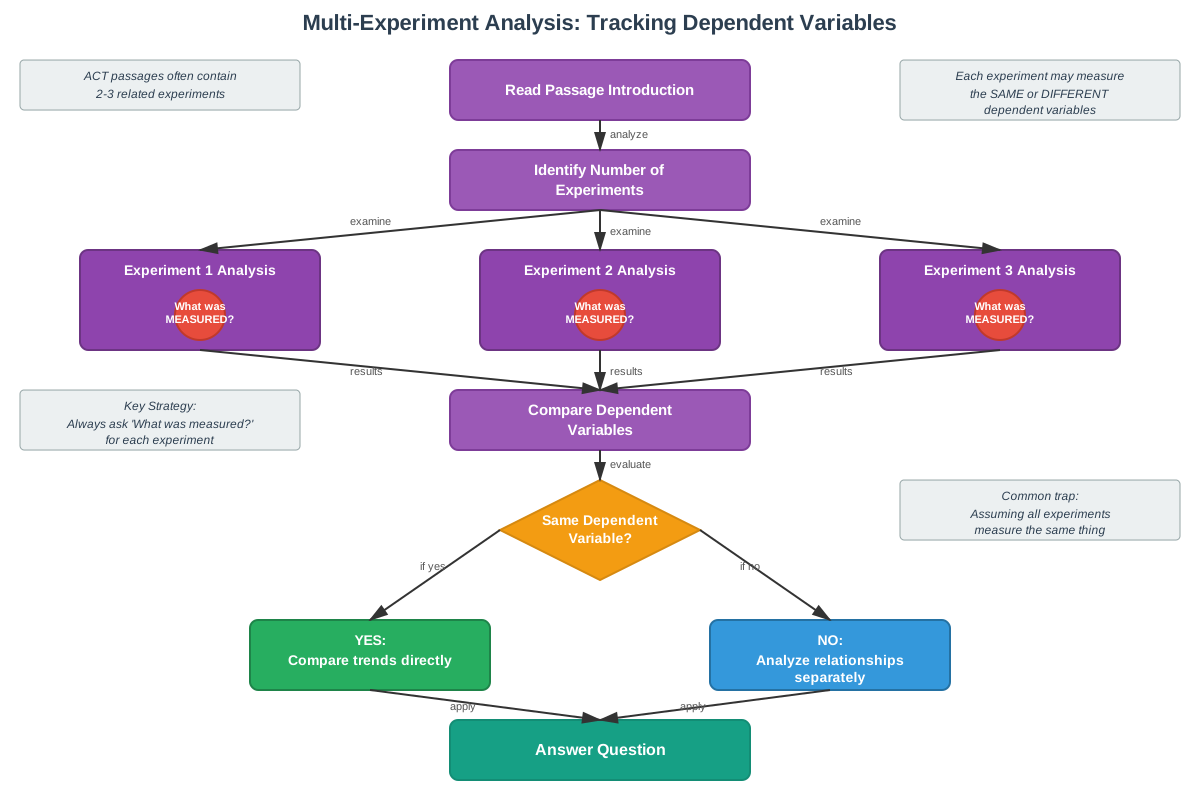
Some ACT passages present experiments measuring several outcomes simultaneously. For example, a study might measure both plant height AND leaf count under different light conditions. Both height and leaf count are dependent variables because both are measured outcomes. Recognizing multiple dependent variables helps students:
- Understand complex graphs with multiple data series
- Answer questions asking about specific measured outcomes
- Distinguish between different effects of the same manipulation
Control Variables vs. Dependent Variables
A critical distinction exists between dependent variables and control variables (also called controlled variables or constants). Control variables are factors kept the same throughout the experiment to ensure fair testing. They are neither manipulated (like independent variables) nor measured as outcomes (like dependent variables). For example, in a plant growth experiment, soil type might be a control variable—kept constant so it doesn't affect the results. The dependent variable (plant height) is actively measured, while control variables are actively kept unchanged.
Concept Relationships
The dependent variable concept connects to multiple other Science topics in a hierarchical relationship:
Experimental Design → Independent Variable → Dependent Variable → Data Collection → Graph Construction → Data Analysis
Understanding dependent variables requires first grasping experimental design principles: scientists ask questions, form hypotheses, and design tests. The independent variable (what they manipulate) directly connects to the dependent variable (what they measure). This measured data then flows into data collection procedures, which determine how information is organized into tables and graphs. Finally, data analysis interprets patterns in the dependent variable to draw conclusions.
Within the topic itself, concepts connect as follows:
Definition of Dependent Variable → Identification in Text → Location in Graphs/Tables → Relationship to Independent Variable → Interpretation of Changes → Drawing Conclusions
The dependent variable also relates to prerequisite knowledge:
- Graph reading skills enable locating the dependent variable on visual displays
- Cause-and-effect reasoning clarifies why the dependent variable responds to manipulations
- Scientific method provides context for why experiments measure specific outcomes
Understanding dependent variables enables progression to advanced topics like correlation versus causation, experimental validity, and hypothesis testing—all of which require distinguishing what was measured from what was manipulated.
High-Yield Facts
⭐ The dependent variable is what is measured or observed in an experiment, not what is manipulated
⭐ Look for keywords like "measured," "recorded," "observed," "monitored," or "determined" to identify dependent variables in passages
⭐ The dependent variable can appear on either the x-axis or y-axis of a graph—always read axis labels carefully
⭐ In the relationship "How does X affect Y?", Y is the dependent variable
⭐ The dependent variable represents the effect or outcome that responds to changes in the independent variable
- Multiple dependent variables can exist in a single experiment when researchers measure several different outcomes
- The units of measurement (seconds, grams, meters, degrees) help identify what characteristic is being measured as the dependent variable
- Dependent variables change in response to the independent variable, showing patterns like increase, decrease, or no change
- In data tables, dependent variable values typically fill the body of the table while independent variable values label rows or columns
- The dependent variable answers the research question "What happened as a result of the manipulation?"
- Control variables are kept constant and are neither independent nor dependent variables
- Time can be either an independent variable (when manipulated) or used to track changes in the dependent variable
Quick check — test yourself on Dependent variable so far.
Try Flashcards →Common Misconceptions
Misconception: The dependent variable always appears on the y-axis of a graph.
Correction: While this is the traditional convention in science, ACT passages frequently place the dependent variable on the x-axis to test whether students truly understand the concept. Always read axis labels to determine which variable was measured as the outcome, regardless of position.
Misconception: The dependent variable is always mentioned second in a sentence or question.
Correction: Word order does not determine variable type. The phrase "temperature affects reaction rate" and "reaction rate changes with temperature" both identify reaction rate as the dependent variable because it's what's being measured, not the order of mention.
Misconception: There can only be one dependent variable per experiment.
Correction: Experiments often measure multiple outcomes simultaneously. A study might measure both height and weight of plants, making both dependent variables. Each represents a different measured outcome responding to the same independent variable manipulation.
Misconception: The dependent variable is the one that depends on time.
Correction: While time-based experiments are common, "dependent" refers to depending on the independent variable, not necessarily on time. An experiment measuring plant growth at different fertilizer concentrations has growth as the dependent variable depending on fertilizer amount, even if time isn't involved.
Misconception: Control variables and dependent variables are the same thing.
Correction: Control variables are kept constant throughout an experiment to ensure fair testing, while dependent variables are actively measured as outcomes. Control variables don't change; dependent variables do change in response to the independent variable.
Misconception: If a variable changes during an experiment, it must be the dependent variable.
Correction: Both independent and dependent variables change during experiments. The key distinction is that the independent variable is changed deliberately by the experimenter, while the dependent variable changes as a response to those deliberate manipulations.
Worked Examples
Example 1: Biology Experiment Passage
Passage Summary: Scientists investigated how different wavelengths of light affect photosynthesis in aquatic plants. They placed identical plants in separate tanks and exposed each tank to a different color of light (red, blue, green, or white) for 12 hours daily. After 4 weeks, they measured the oxygen production rate (in mL/hour) for each plant, as oxygen is a byproduct of photosynthesis.
Question: Which of the following was the dependent variable in this experiment?
A) The wavelength of light
B) The oxygen production rate
C) The duration of light exposure
D) The type of plant used
Solution Process:
Step 1: Identify what was manipulated by the experimenters.
- The scientists deliberately changed the wavelength/color of light (red, blue, green, white)
- This makes wavelength the independent variable, eliminating choice A
Step 2: Identify what was measured as an outcome.
- The passage states "they measured the oxygen production rate"
- The word "measured" is a key signal for the dependent variable
- Oxygen production rate is what changed in response to different light wavelengths
Step 3: Evaluate the remaining choices.
- Duration of light exposure (C) was kept constant at 12 hours—this is a control variable
- Type of plant (D) was kept identical—this is also a control variable
- Only oxygen production rate (B) was measured as the outcome
Answer: B) The oxygen production rate
Connection to Learning Objectives: This example demonstrates identifying the dependent variable by recognizing measurement keywords and distinguishing it from control variables that were kept constant.
Example 2: Graph Interpretation
Passage Summary: A graph is presented with the x-axis labeled "Pressure (atm)" ranging from 1 to 5, and the y-axis labeled "Trial Number" from 1 to 4. Data points show volume measurements (in liters) plotted for each trial at each pressure level.
Question: Based on the experimental setup, what was the dependent variable?
A) Pressure
B) Trial number
C) Volume
D) Atmospheric conditions
Solution Process:
Step 1: Recognize the ACT's trick—the dependent variable isn't on the y-axis.
- Students might assume y-axis = dependent variable
- However, "Trial Number" is just an organizational label, not a measured outcome
Step 2: Identify what was actually measured.
- The passage mentions "volume measurements" were recorded
- Volume is the outcome being quantified at different pressures
- Even though volume isn't on either axis label, it's the data being plotted
Step 3: Determine the relationship.
- Pressure was manipulated (independent variable)
- Volume was measured in response (dependent variable)
- Trial number is neither—it's just a way to organize repeated measurements
Step 4: Eliminate incorrect choices.
- Pressure (A) was manipulated, making it independent
- Trial number (B) is an organizational label, not a variable
- Atmospheric conditions (D) aren't mentioned and would be controlled
- Volume (C) is what was measured as the outcome
Answer: C) Volume
Connection to Learning Objectives: This example shows that students must identify the dependent variable based on what was measured, not based on graph position, and demonstrates the ACT's strategy of placing variables in non-traditional locations.
Exam Strategy
Approaching ACT Dependent Variable Questions
When encountering Science passages, follow this systematic approach:
- Skim the passage for experimental design language (30 seconds)
- Look for phrases describing what was done and what was measured
- Identify the research question being investigated
- Create a mental or written variable map (15 seconds)
- Independent = what was changed/manipulated
- Dependent = what was measured/observed
- Control = what was kept the same
- Read all axis labels and table headers carefully (20 seconds)
- Never assume position indicates variable type
- Check units of measurement for clues about what's being quantified
Trigger Words and Phrases
Dependent Variable Signals (what was measured):
- "measured," "recorded," "observed," "monitored," "tracked"
- "determined," "calculated," "quantified," "assessed"
- "the effect on," "the resulting," "the outcome"
- "data was collected on," "values were obtained for"
Independent Variable Signals (what was changed):
- "varied," "changed," "manipulated," "adjusted," "set to"
- "different," "various," "ranging from"
- "exposed to," "treated with," "subjected to"
Process of Elimination Tips
When answering dependent variable identification questions:
- Eliminate control variables first - Any factor described as "kept constant," "identical," or "the same" cannot be the dependent variable
- Eliminate the independent variable - The factor that was deliberately changed by experimenters is not the dependent variable
- Look for measurement language - The correct answer will be associated with words like "measured" or "recorded"
- Check for units - The dependent variable will have measurement units (grams, seconds, meters, etc.)
Time Allocation Advice
Exam Tip: Spend no more than 15-20 seconds identifying variables in a passage. This foundational understanding will accelerate answering multiple questions about that experiment.
For passages with 5-7 questions, invest 30-45 seconds upfront identifying all variables. This initial investment pays dividends because:
- 2-3 questions will directly test variable identification
- Understanding variables helps interpret graphs and tables faster
- Knowing what was measured helps predict answer choices
If a question asks about the dependent variable and you're uncertain, use the 30-second rule: spend up to 30 seconds using elimination strategies, then make your best guess and move forward. Don't sacrifice time from other questions.
Memory Techniques
The "DIME" Mnemonic
Dependent variable = Data collected
Independent variable = Intentionally changed
Measured outcome = Must be dependent
Effect = Experimental result (dependent)
Visualization Strategy: The Cause-Effect Arrow
Visualize every experiment as an arrow:
[Independent Variable] ➜ [Dependent Variable]
The arrow always points from what was changed to what was measured. When reading passages, mentally draw this arrow to clarify relationships.
The "Y-Axis Trap" Reminder
Create a mental sticky note: "Y doesn't mean Yes"
This reminds you that just because something is on the y-axis doesn't automatically mean it's the dependent variable. Always verify by checking what was measured.
Question Transformation Technique
Transform any experimental description into the question format:
"How does [Independent] affect [Dependent]?"
Whatever fills the second blank is the dependent variable. For example:
- "Scientists tested different fertilizers on plant growth" becomes "How does fertilizer type affect plant growth?"
- Plant growth is the dependent variable
The "Measurement Units" Clue
Remember: "Units Unveil the Dependent"
The dependent variable will always have measurement units because it's quantified data. When scanning answer choices, look for options with units like grams, meters, seconds, or degrees.
Summary
The dependent variable represents the measured outcome in an experiment—the effect that responds to changes in the independent variable. On the ACT Science section, identifying dependent variables is essential for interpreting experimental passages, analyzing graphs and tables, and understanding cause-and-effect relationships in research. Students must recognize that dependent variables are identified by what was measured or observed, not by their position on a graph or order of mention in text. Key identification strategies include looking for measurement keywords ("measured," "recorded," "observed"), checking for units of measurement, and distinguishing dependent variables from independent variables (which are manipulated) and control variables (which are kept constant). The ACT frequently tests this concept by placing dependent variables in non-traditional graph positions, requiring students to read axis labels carefully rather than relying on memorized conventions. Mastery of dependent variable identification accelerates passage comprehension and enables accurate interpretation of experimental data across all Science passage types.
Key Takeaways
- The dependent variable is always what is measured, observed, or recorded as an outcome in an experiment, never what is deliberately manipulated
- Look for trigger words like "measured," "recorded," "observed," or "determined" to quickly identify dependent variables in ACT passages
- Never assume the y-axis contains the dependent variable—ACT passages intentionally place variables in non-traditional positions to test true understanding
- The dependent variable responds to changes in the independent variable, following the relationship: independent (cause) → dependent (effect)
- Multiple dependent variables can exist in a single experiment when researchers measure several different outcomes simultaneously
- Control variables are kept constant and are neither independent nor dependent—distinguishing these three variable types is crucial for ACT success
- Units of measurement (grams, seconds, meters, °C) provide valuable clues for identifying which factor is being quantified as the dependent variable
Related Topics
Independent Variables: Understanding what experimenters manipulate provides the complementary concept to dependent variables, completing the cause-effect relationship essential for experimental design questions.
Control Variables and Constants: Mastering what factors are kept the same in experiments helps distinguish between the three main variable types and improves experimental design analysis.
Graph and Table Interpretation: Once dependent variables are identified, interpreting their values and trends across different conditions becomes the next skill level for data analysis questions.
Experimental Design: Understanding how scientists structure investigations, including variable selection and measurement procedures, builds on dependent variable knowledge to evaluate research quality.
Correlation vs. Causation: Advanced analysis of whether changes in one variable actually cause changes in another requires first identifying which variables are being compared—dependent variable mastery is the foundation.
Practice CTA
Now that you understand dependent variables thoroughly, it's time to cement this knowledge through active practice. Complete the practice questions to test your ability to identify dependent variables in various experimental contexts, including passages with tricky graph orientations and multiple measured outcomes. Use the flashcards to reinforce trigger words and key distinctions between variable types. Remember: dependent variable questions appear on every ACT Science section, so mastering this topic directly translates to points on test day. Your investment in understanding this foundational concept will accelerate your performance across all Science passage types!
Sign up free to keep reading
Create a free AnvayaPrep account to finish this ACT guide on Dependent variable — plus flashcards and practice questions.