Overview
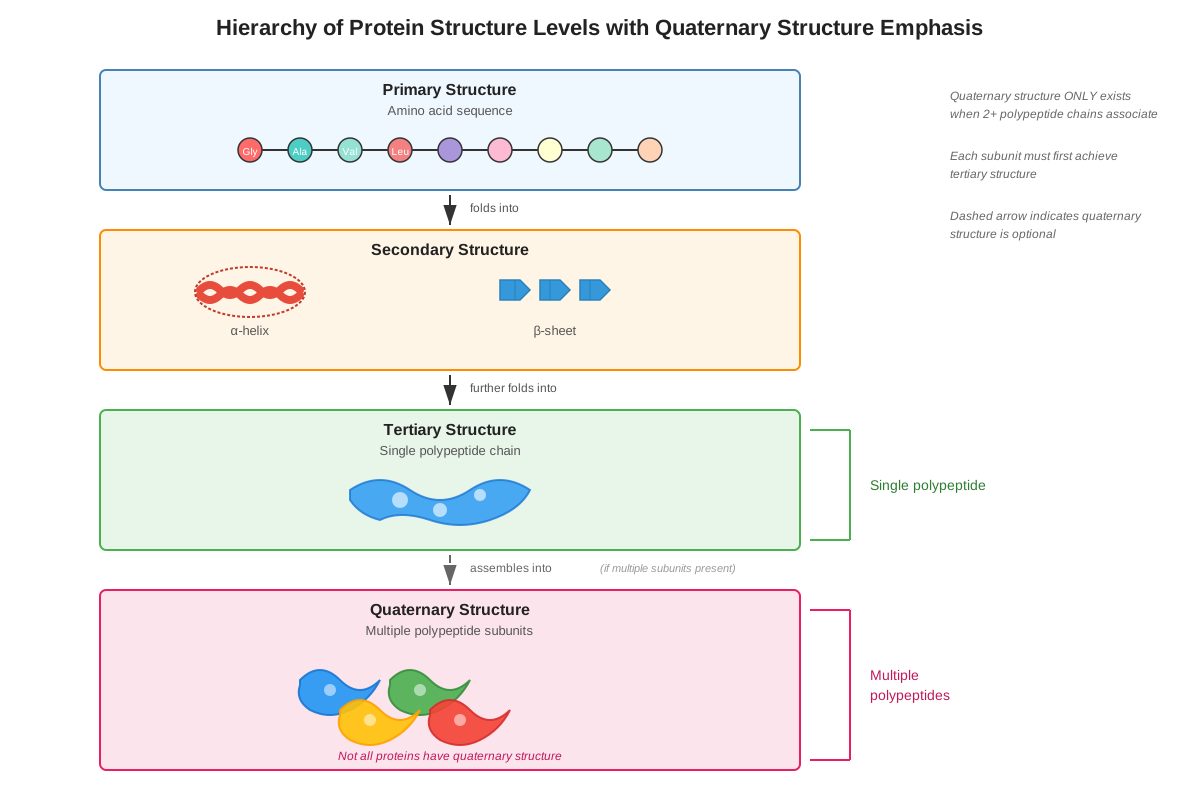
Protein quaternary structure represents the highest level of protein organization and describes the spatial arrangement of multiple polypeptide chains (subunits) that associate to form a functional protein complex. While primary structure refers to the amino acid sequence, secondary structure to local folding patterns (α-helices and β-sheets), and tertiary structure to the three-dimensional folding of a single polypeptide chain, quaternary structure emerges only when two or more polypeptide chains come together through non-covalent interactions to create a biologically active unit. This level of organization is critical for understanding how proteins achieve functional diversity, regulatory control, and cooperative behavior.
For the MCAT, protein quaternary structure is a high-yield topic that appears frequently in both discrete questions and passage-based scenarios within the Biochemistry section. The exam tests not only the definition and characteristics of quaternary structure but also its functional implications, particularly in the context of hemoglobin cooperativity, enzyme regulation, and structural proteins. Understanding quaternary structure provides essential insight into how proteins can be regulated through subunit interactions, how mutations affecting subunit assembly can cause disease, and how cooperative binding phenomena emerge from multi-subunit architecture.
This topic sits at the intersection of structural biochemistry and functional biology, connecting directly to concepts in Amino Acids and Proteins, enzyme kinetics, oxygen transport physiology, and molecular genetics. Mastery of quaternary structure enables students to predict how changes in protein composition affect function, interpret experimental data about protein assembly, and understand the molecular basis of diseases like sickle cell anemia. The MCAT frequently uses hemoglobin as a model system to test quaternary structure concepts, making this topic both conceptually important and practically high-yield for exam success.
Learning Objectives
- [ ] Define protein quaternary structure using accurate Biochemistry terminology
- [ ] Explain why protein quaternary structure matters for the MCAT
- [ ] Apply protein quaternary structure concepts to exam-style questions
- [ ] Identify common mistakes related to protein quaternary structure
- [ ] Connect protein quaternary structure to related Biochemistry concepts
- [ ] Distinguish between proteins that possess quaternary structure and those that do not
- [ ] Analyze the types of interactions that stabilize quaternary structure
- [ ] Predict functional consequences of disrupting quaternary structure
- [ ] Explain the relationship between quaternary structure and cooperative binding
Prerequisites
- Primary protein structure: Understanding amino acid sequences is essential because the primary structure determines which residues are available for inter-subunit interactions
- Secondary protein structure: Knowledge of α-helices and β-sheets is necessary since these structural elements often participate in subunit interfaces
- Tertiary protein structure: Comprehension of how single polypeptide chains fold is required because each subunit in a quaternary structure must first achieve its own tertiary structure
- Non-covalent interactions: Familiarity with hydrogen bonds, ionic interactions, van der Waals forces, and hydrophobic effects is critical since these forces stabilize quaternary structure
- Protein function basics: Understanding that protein structure determines function provides context for why quaternary structure matters biologically
Why This Topic Matters
Clinical and Real-World Significance
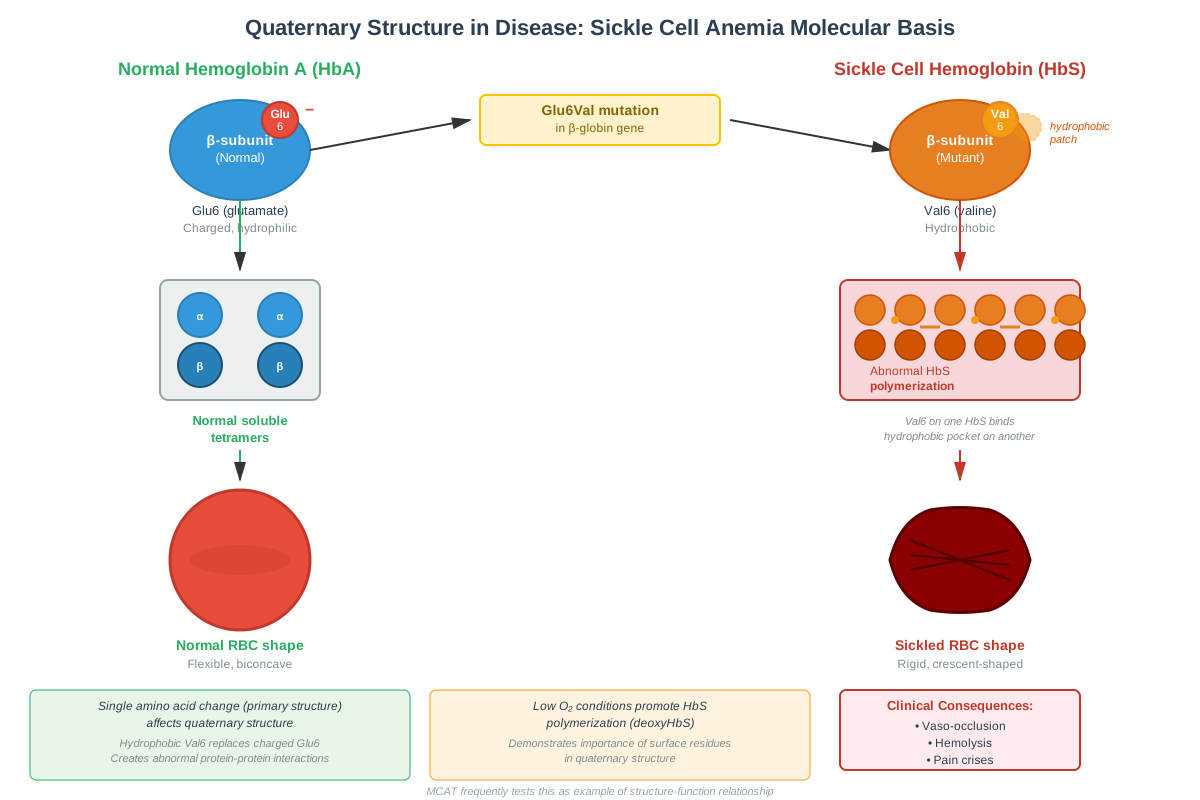
Protein quaternary structure has profound clinical implications. Hemoglobin, perhaps the most studied quaternary structure protein, demonstrates how subunit interactions enable cooperative oxygen binding—a phenomenon essential for efficient oxygen delivery to tissues. Diseases like sickle cell anemia result from mutations that alter quaternary structure assembly, causing hemoglobin molecules to polymerize abnormally. Many therapeutic targets, including receptors, ion channels, and antibodies, possess quaternary structure, making this knowledge essential for understanding drug mechanisms. Structural proteins like collagen rely on quaternary organization for tissue strength, and defects in collagen assembly cause connective tissue disorders such as Ehlers-Danlos syndrome.
MCAT Exam Statistics
Quaternary structure appears in approximately 15-20% of protein-related MCAT questions, with particularly high representation in passage-based questions. The MCAT frequently tests this topic through:
- Hemoglobin and myoglobin comparisons: Questions contrasting cooperative binding (quaternary structure) versus hyperbolic binding (no quaternary structure)
- Experimental interpretation passages: Data showing protein molecular weight under native versus denaturing conditions
- Mutation analysis: Predicting effects of amino acid substitutions on subunit assembly
- Enzyme regulation scenarios: Allosteric enzymes that require quaternary structure for regulatory function
Common Exam Presentations
The MCAT typically presents quaternary structure through:
- Gel filtration or SDS-PAGE experiments showing multiple bands or molecular weight changes
- Oxygen-hemoglobin dissociation curves requiring interpretation of cooperative binding
- Structural diagrams showing multi-subunit protein complexes
- Clinical vignettes describing diseases caused by quaternary structure defects
- Comparative biochemistry questions contrasting monomeric and multimeric proteins
Core Concepts
Definition and Fundamental Characteristics
Protein quaternary structure is defined as the arrangement and interaction of multiple polypeptide chains (called subunits or protomers) to form a functional protein complex. This structural level exists only in proteins composed of more than one polypeptide chain. Each individual subunit must first fold into its own tertiary structure before associating with other subunits. The resulting multi-subunit complex is often called an oligomer, with specific terms describing the number of subunits: dimer (two subunits), trimer (three subunits), tetramer (four subunits), and so forth.
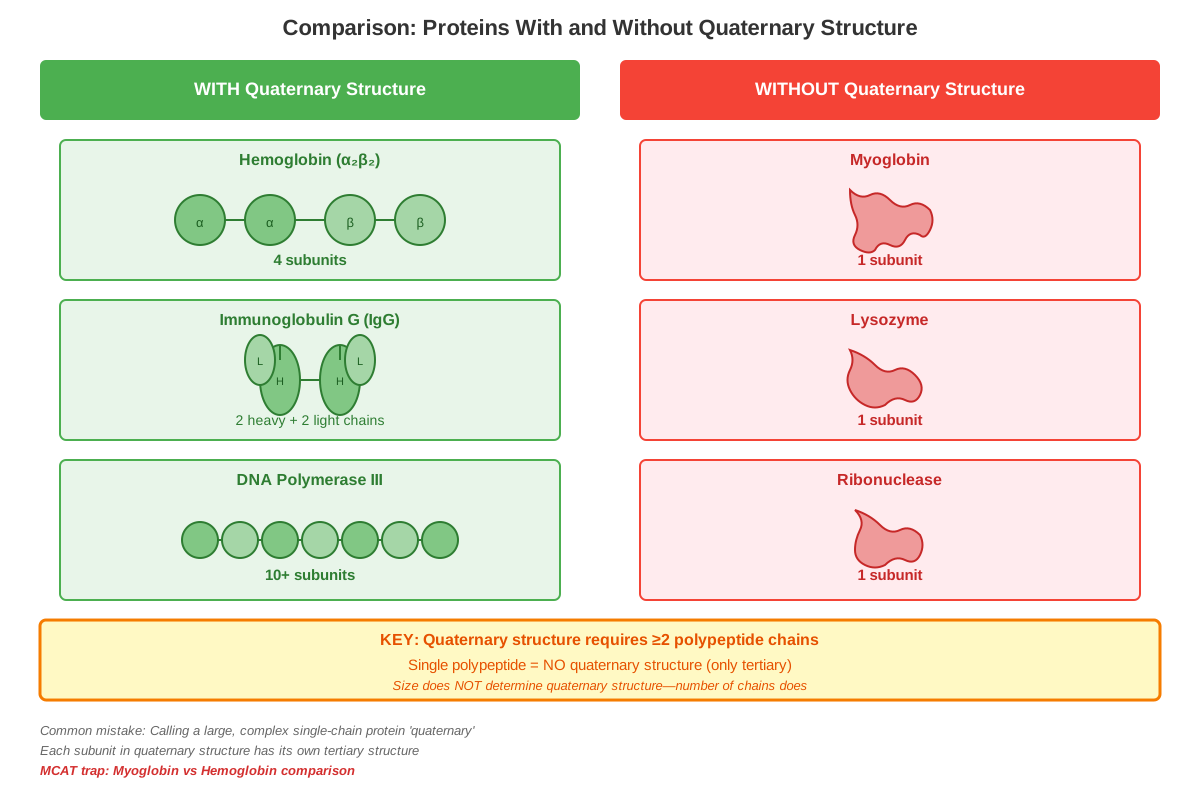
Importantly, not all proteins possess quaternary structure. Monomeric proteins like myoglobin consist of a single polypeptide chain and therefore have only primary, secondary, and tertiary structure. The presence of quaternary structure is not inherently "better" or "more advanced"—it simply represents an additional level of organization that provides specific functional advantages.
Types of Subunits
Quaternary structures can be classified based on subunit composition:
| Type | Description | Example |
|---|---|---|
| Homooligomer | All subunits are identical | Lactate dehydrogenase (4 identical subunits) |
| Heterooligomer | Subunits differ in sequence | Hemoglobin (2 α subunits + 2 β subunits) |
| Homodimer | Two identical subunits | HIV protease |
| Heterotetramer | Four different subunits | Hemoglobin A (α₂β₂) |
The distinction between identical and different subunits has functional implications. Homooligomers often exhibit symmetry that facilitates cooperative behavior, while heterooligomers can display more complex regulatory properties through differential subunit interactions.
Stabilizing Interactions
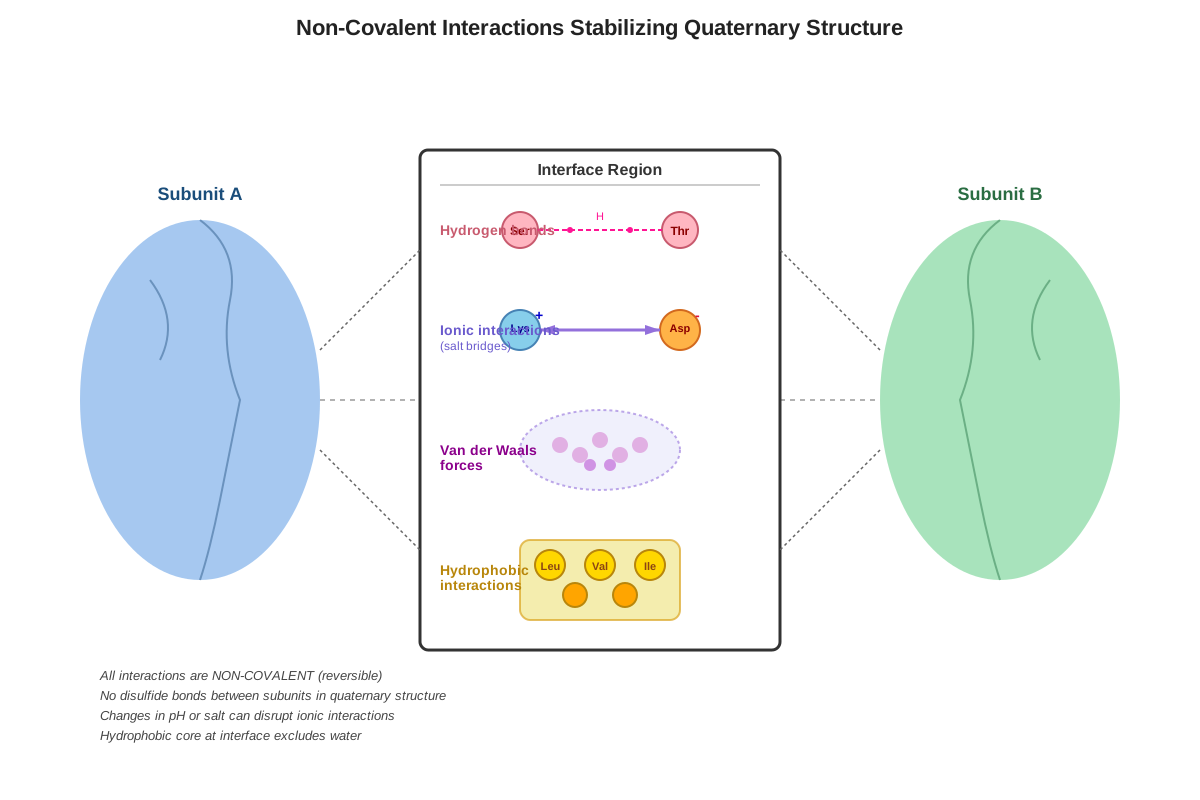
Quaternary structure is stabilized exclusively by non-covalent interactions between subunits. These include:
- Hydrogen bonds: Form between polar residues on adjacent subunit surfaces, providing directional specificity
- Ionic interactions (salt bridges): Occur between oppositely charged amino acid side chains (e.g., lysine and aspartate)
- Van der Waals forces: Weak attractions between atoms in close proximity contribute cumulatively to stability
- Hydrophobic interactions: Nonpolar residues on subunit interfaces cluster together, excluding water and driving association
MCAT Exam Tip: The MCAT may present experimental conditions (high salt, extreme pH, urea treatment) that disrupt quaternary structure. Remember that these conditions break non-covalent bonds but typically do NOT break covalent peptide bonds or disulfide bridges.
Notably, disulfide bonds (covalent bonds) can sometimes link subunits, but this is relatively rare and typically occurs in extracellular proteins. For MCAT purposes, assume quaternary structure is maintained by non-covalent forces unless explicitly stated otherwise.
Functional Advantages of Quaternary Structure
Proteins adopt quaternary structure because it confers several functional benefits:
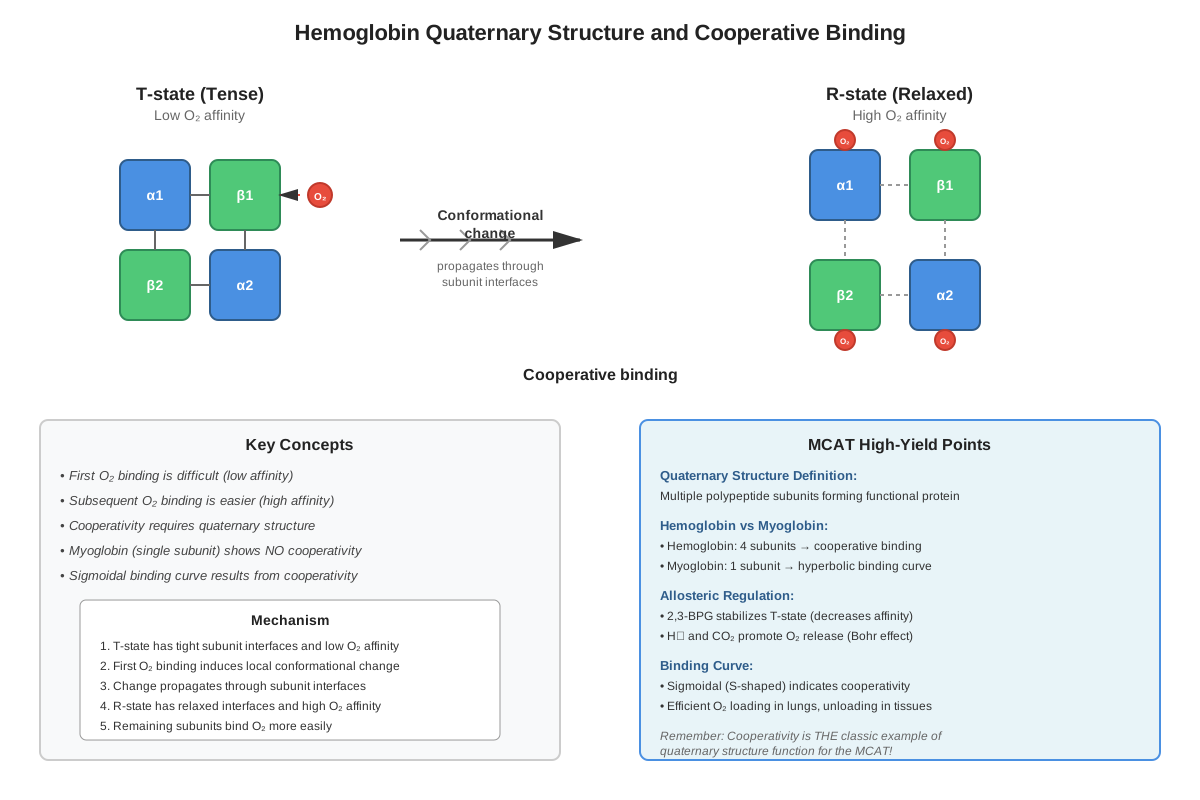
1. Cooperative Binding: Multi-subunit proteins can exhibit cooperativity, where binding of a ligand to one subunit affects the binding affinity of other subunits. Hemoglobin's cooperative oxygen binding is the classic example—oxygen binding to one subunit increases oxygen affinity in the remaining subunits, producing a sigmoidal binding curve rather than the hyperbolic curve seen in monomeric myoglobin.
2. Allosteric Regulation: Quaternary structure creates distinct regulatory sites separate from active sites. Binding of regulatory molecules at allosteric sites can induce conformational changes that propagate through subunit interfaces, modulating protein activity.
3. Increased Stability: Multiple subunits can create a more stable overall structure, particularly important for proteins functioning in harsh environments.
4. Functional Diversity: Different combinations of subunits can create protein variants with distinct properties. For example, fetal hemoglobin (α₂γ₂) has higher oxygen affinity than adult hemoglobin (α₂β₂) due to different subunit composition.
5. Efficient Synthesis and Assembly: Producing multiple copies of smaller subunits may be more efficient than synthesizing one very large polypeptide, and it allows for quality control during assembly.
Hemoglobin: The Prototypical Example
Hemoglobin serves as the primary MCAT example of quaternary structure and deserves detailed attention. Adult hemoglobin (HbA) consists of four subunits: two α chains (141 amino acids each) and two β chains (146 amino acids each), arranged as an α₂β₂ tetramer. Each subunit contains a heme group that binds one oxygen molecule, giving hemoglobin a total oxygen-carrying capacity of four O₂ molecules per tetramer.
The quaternary structure of hemoglobin enables cooperative oxygen binding through conformational changes:
- T state (Tense): Low oxygen affinity conformation, stabilized by ionic interactions between subunits
- R state (Relaxed): High oxygen affinity conformation, where subunit interfaces shift slightly
When oxygen binds to one subunit, it triggers a conformational change that destabilizes the T state and promotes transition to the R state in all subunits. This positive cooperativity produces the characteristic sigmoidal oxygen-hemoglobin dissociation curve, which is physiologically advantageous for oxygen loading in lungs and unloading in tissues.
In contrast, myoglobin is a monomeric protein (single polypeptide chain) that lacks quaternary structure. It exhibits hyperbolic oxygen binding without cooperativity, making it an excellent oxygen storage protein in muscle tissue but unsuitable for oxygen transport.
Experimental Detection of Quaternary Structure
The MCAT may present experimental data requiring interpretation of quaternary structure:
Native gel electrophoresis: Separates proteins under non-denaturing conditions, preserving quaternary structure. The protein migrates as an intact oligomer.
SDS-PAGE (denaturing conditions): Sodium dodecyl sulfate disrupts non-covalent interactions, dissociating subunits. Individual subunits migrate separately based on their molecular weight.
Size-exclusion chromatography: Separates proteins by size. A protein with quaternary structure elutes at a molecular weight corresponding to the intact oligomer under native conditions but shows smaller molecular weight(s) under denaturing conditions.
Cross-linking experiments: Chemical cross-linkers create covalent bonds between subunits in close proximity, allowing identification of which subunits interact directly.
Concept Relationships
The concepts within protein quaternary structure form an interconnected network. The definition of quaternary structure (multiple subunits) leads directly to understanding types of subunits (homo- versus hetero-oligomers), which determines the symmetry and complexity of the assembled structure. The stabilizing interactions (non-covalent forces) explain how subunits remain associated and why certain conditions (denaturants, extreme pH) disrupt quaternary structure. These interactions create subunit interfaces that enable conformational changes to propagate between subunits, which is the molecular basis for cooperative binding and allosteric regulation.
Connecting to prerequisite knowledge: Primary structure determines which amino acids are present to form inter-subunit contacts → Secondary structure elements (helices, sheets) often form the contact surfaces → Tertiary structure must be achieved in each subunit before quaternary assembly → Non-covalent interactions learned in general chemistry stabilize the quaternary arrangement.
Connecting to related topics: Quaternary structure enables cooperative binding (enzyme kinetics) → explains hemoglobin function (physiology) → relates to allosteric regulation (metabolic control) → connects to protein purification (experimental biochemistry) → underlies receptor function (cell biology and pharmacology).
Relationship Map:
Primary Structure → Tertiary Structure (individual subunits) → Quaternary Structure Assembly → Functional Properties (cooperativity, allostery) → Physiological Roles (oxygen transport, enzyme regulation) → Clinical Relevance (disease mechanisms)
High-Yield Facts
⭐ Quaternary structure exists only in proteins with two or more polypeptide chains; monomeric proteins like myoglobin lack quaternary structure
⭐ Quaternary structure is stabilized by non-covalent interactions (hydrogen bonds, ionic interactions, van der Waals forces, hydrophobic effects), not peptide bonds
⭐ Hemoglobin (α₂β₂ tetramer) exhibits cooperative oxygen binding due to quaternary structure, while myoglobin (monomer) shows hyperbolic binding
⭐ Cooperative binding produces a sigmoidal binding curve and requires quaternary structure with multiple binding sites
⭐ Denaturing conditions (SDS, urea, extreme pH) disrupt quaternary structure by breaking non-covalent bonds, causing subunits to dissociate
- Homooligomers contain identical subunits; heterooligomers contain different subunits
- The T state (tense) of hemoglobin has low oxygen affinity; the R state (relaxed) has high oxygen affinity
- Allosteric regulation often requires quaternary structure to transmit conformational changes between regulatory and active sites
- Fetal hemoglobin (α₂γ₂) differs from adult hemoglobin (α₂β₂) in subunit composition, affecting oxygen affinity
- Sickle cell anemia results from a mutation causing abnormal hemoglobin polymerization, a quaternary structure defect
Quick check — test yourself on Protein quaternary structure so far.
Try Flashcards →Common Misconceptions
Misconception: All proteins have quaternary structure.
Correction: Only proteins composed of multiple polypeptide chains possess quaternary structure. Many functional proteins, including myoglobin, lysozyme, and ribonuclease, are monomeric and have only primary, secondary, and tertiary structure.
Misconception: Quaternary structure is held together by peptide bonds between subunits.
Correction: Peptide bonds link amino acids within a single polypeptide chain (primary structure). Quaternary structure is stabilized exclusively by non-covalent interactions between already-formed polypeptide chains. Disulfide bonds occasionally link subunits but are not the primary stabilizing force.
Misconception: Cooperative binding can occur in monomeric proteins.
Correction: True cooperative binding (positive cooperativity where binding at one site increases affinity at other sites) requires multiple subunits that can communicate through conformational changes. Monomeric proteins with multiple binding sites typically show independent binding or negative cooperativity, not the positive cooperativity seen in hemoglobin.
Misconception: Denaturing a protein with quaternary structure will break it into individual amino acids.
Correction: Denaturation disrupts non-covalent interactions, causing loss of secondary, tertiary, and quaternary structure, but does NOT break peptide bonds. The result is unfolded polypeptide chains (subunits), not free amino acids. Complete hydrolysis to amino acids requires breaking peptide bonds through chemical or enzymatic means.
Misconception: The number of subunits always equals the number of binding sites or active sites.
Correction: While each hemoglobin subunit has one heme binding site (4 subunits = 4 O₂ binding sites), this is not universal. Some subunits may lack active sites and serve purely structural or regulatory roles. Additionally, an active site might be formed at the interface between two subunits.
Misconception: Higher levels of structure are always more important than lower levels.
Correction: All levels of protein structure are interdependent and equally important. Primary structure determines all higher levels; a single amino acid change (primary structure) can disrupt quaternary structure and cause disease (e.g., sickle cell anemia). No level is inherently more important—they form a hierarchy where each level depends on the previous one.
Worked Examples
Example 1: Interpreting Gel Electrophoresis Data
Question: A researcher studies a novel enzyme and performs two gel electrophoresis experiments. Under native conditions, the enzyme migrates as a single band corresponding to 240 kDa. Under denaturing conditions with SDS and β-mercaptoethanol, two bands appear at 60 kDa and 80 kDa. What can you conclude about the enzyme's quaternary structure?
Solution:
Step 1: Analyze native conditions.
Under native (non-denaturing) conditions, the enzyme remains intact with all structural levels preserved. The 240 kDa band represents the functional enzyme complex with quaternary structure maintained.
Step 2: Analyze denaturing conditions.
SDS disrupts non-covalent interactions, and β-mercaptoethanol reduces disulfide bonds. This treatment dissociates quaternary structure, separating individual subunits. Two bands indicate two different types of subunits.
Step 3: Determine subunit composition.
The two subunits have molecular weights of 60 kDa and 80 kDa. To reach a total of 240 kDa, we need to determine how many of each subunit exist:
- If there are equal numbers: 2(60) + 2(80) = 280 kDa (too high)
- If there are two 60 kDa and two 80 kDa: 2(60) + 2(80) = 280 kDa (still too high)
- If there are two 60 kDa and one 80 kDa: 2(60) + 80 = 200 kDa (too low)
- If there are three 60 kDa and one 80 kDa: 3(60) + 80 = 260 kDa (close, but not exact)
- If there are two 80 kDa and one 60 kDa: 2(80) + 60 = 220 kDa (too low)
- If there are two 60 kDa and two 80 kDa with some measurement error, or if there are three 60 kDa and one 80 kDa with rounding
Step 4: Most likely interpretation.
The enzyme is a heterooligomer (contains different subunits) with quaternary structure. The most probable composition is either two 60 kDa subunits and two 80 kDa subunits (heterotetramer), or three of one type and one of another, depending on measurement precision.
Key Concept Connection: This example demonstrates how experimental techniques distinguish between tertiary structure (single chain) and quaternary structure (multiple chains), addressing the learning objective of applying quaternary structure concepts to exam-style questions.
Example 2: Hemoglobin Mutation Analysis
Question: A patient presents with a hemoglobin variant where a mutation replaces a hydrophobic amino acid on the α-β subunit interface with a charged amino acid. Predict the effect on hemoglobin function and explain your reasoning.
Solution:
Step 1: Identify the structural location.
The mutation occurs at the α-β subunit interface—the region where α and β subunits contact each other in the quaternary structure.
Step 2: Analyze the chemical change.
Replacing a hydrophobic residue with a charged residue introduces a polar, charged group where a nonpolar group previously existed. Hydrophobic interactions normally stabilize the subunit interface by clustering nonpolar residues away from water.
Step 3: Predict structural consequences.
The charged residue will be energetically unfavorable in the hydrophobic interface environment. This will:
- Destabilize the α-β subunit interaction
- Potentially disrupt the quaternary structure
- May prevent proper assembly of the α₂β₂ tetramer
- Could cause the tetramer to dissociate more easily into αβ dimers
Step 4: Predict functional consequences.
If quaternary structure is disrupted:
- Cooperative oxygen binding will be impaired or lost because cooperativity requires intact quaternary structure for conformational changes to propagate between subunits
- The oxygen-hemoglobin dissociation curve may become more hyperbolic (like myoglobin) rather than sigmoidal
- Oxygen delivery to tissues will be less efficient
- The patient may experience symptoms similar to anemia (fatigue, weakness) due to inadequate oxygen delivery
Step 5: Consider clinical parallels.
This scenario resembles hemoglobin variants that cause hemolytic anemia or altered oxygen affinity. Some real mutations at subunit interfaces cause hemoglobin instability, leading to hemolysis (red blood cell breakdown).
Key Concept Connection: This example integrates quaternary structure with cooperative binding, mutation effects, and clinical consequences, addressing multiple learning objectives including applying concepts to exam questions and connecting to related biochemistry concepts.
Exam Strategy
Approaching MCAT Questions on Quaternary Structure
1. Identify whether quaternary structure exists: First, determine if the protein in question has multiple subunits. Look for keywords like "subunit," "oligomer," "dimer," "tetramer," or specific examples like hemoglobin. If the protein is described as monomeric or compared to myoglobin, it lacks quaternary structure.
2. Recognize experimental setups: Questions often present data from:
- Gel electrophoresis (native vs. denaturing conditions)
- Size-exclusion chromatography
- Cross-linking studies
- Binding curves (sigmoidal suggests cooperativity and quaternary structure)
3. Watch for trigger words and phrases:
- "Cooperative binding" → requires quaternary structure
- "Allosteric regulation" → often involves quaternary structure
- "Subunit dissociation" → quaternary structure is being disrupted
- "Non-denaturing conditions" → quaternary structure preserved
- "SDS-PAGE" or "denaturing conditions" → quaternary structure disrupted
- "Sigmoidal curve" → suggests positive cooperativity, implying quaternary structure
4. Process of elimination tips:
- Eliminate answers suggesting peptide bonds hold subunits together (incorrect—non-covalent forces do)
- Eliminate answers claiming monomeric proteins show cooperative binding (impossible without multiple subunits)
- Eliminate answers confusing quaternary structure with tertiary structure (quaternary requires multiple chains)
- When comparing hemoglobin and myoglobin, eliminate answers that don't account for hemoglobin's quaternary structure
5. Time allocation: Quaternary structure questions typically require 60-90 seconds. Spend time carefully reading experimental conditions (native vs. denaturing) as this distinction is frequently tested. Don't rush through data interpretation—misreading whether conditions are native or denaturing is a common error.
Common Question Formats
- Comparison questions: "How does hemoglobin differ from myoglobin?" (Answer must mention quaternary structure and cooperativity)
- Experimental interpretation: "What does the appearance of multiple bands on SDS-PAGE indicate?" (Subunits dissociated)
- Mutation prediction: "A mutation disrupts subunit interactions. What is the likely effect?" (Loss of cooperativity, altered function)
- Binding curve analysis: "Why is the oxygen-hemoglobin curve sigmoidal?" (Cooperative binding from quaternary structure)
Memory Techniques
Mnemonics
"HIVE" for quaternary structure stabilization:
- Hydrogen bonds
- Ionic interactions
- Van der Waals forces
- Exclude water (hydrophobic interactions)
"QUARTER needs MORE than one":
QUARTERnary structure requires MORE than one polypeptide chain (helps remember that quaternary structure requires multiple subunits)
"T is Tight, R is Ready" (for hemoglobin states):
- T state = Tense = Tight binding between subunits = low oxygen affinity
- R state = Relaxed = Ready to bind oxygen = high oxygen affinity
Visualization Strategy
Mental image for quaternary structure: Picture four people (subunits) holding hands in a circle (non-covalent interactions). When one person receives a signal (oxygen binding), they squeeze the hand of the next person, who squeezes the next, transmitting the signal around the circle (conformational change propagation). If you add soap (SDS/denaturant), their hands become slippery and they let go (quaternary structure disrupted), but each person remains intact (tertiary structure of individual subunits preserved unless further denatured).
Acronym for Hemoglobin
"A-B-C-D" for hemoglobin concepts:
- Alpha and beta subunits (2 of each)
- Binding is cooperative
- Conformational changes (T to R state)
- Dissociation curve is sigmoidal
Summary
Protein quaternary structure represents the spatial arrangement of multiple polypeptide subunits that associate through non-covalent interactions to form functional protein complexes. This structural level exists only in multi-subunit proteins and is absent in monomeric proteins like myoglobin. Quaternary structure is stabilized by hydrogen bonds, ionic interactions, van der Waals forces, and hydrophobic effects—never by peptide bonds, which link amino acids within individual chains. The functional advantages of quaternary structure include cooperative binding, allosteric regulation, increased stability, and functional diversity through varied subunit composition. Hemoglobin exemplifies these principles as an α₂β₂ tetramer that exhibits cooperative oxygen binding through T-state to R-state transitions, producing a sigmoidal binding curve distinct from myoglobin's hyperbolic curve. For the MCAT, students must recognize quaternary structure in experimental contexts (native versus denaturing conditions), predict functional consequences of disrupting subunit interactions, and understand how quaternary structure enables cooperative phenomena essential for physiological processes and clinical applications.
Key Takeaways
- Quaternary structure requires two or more polypeptide chains and is stabilized exclusively by non-covalent interactions, not peptide bonds
- Hemoglobin (tetramer with quaternary structure) exhibits cooperative oxygen binding with a sigmoidal curve; myoglobin (monomer without quaternary structure) shows hyperbolic binding
- Denaturing conditions (SDS, urea, extreme pH) disrupt quaternary structure by breaking non-covalent bonds, causing subunit dissociation visible on gels
- Cooperative binding and allosteric regulation require quaternary structure to transmit conformational changes between subunits
- Experimental techniques distinguish quaternary structure by comparing protein behavior under native (quaternary structure intact) versus denaturing (subunits separated) conditions
- Mutations affecting subunit interfaces can disrupt quaternary structure assembly, eliminating cooperativity and causing disease
- Understanding quaternary structure is essential for interpreting oxygen-hemoglobin dissociation curves, enzyme regulation mechanisms, and protein characterization experiments on the MCAT
Related Topics
Hemoglobin and Myoglobin Comparison: Deep dive into oxygen binding curves, physiological roles, and structural differences—builds directly on quaternary structure concepts to explain cooperative versus non-cooperative binding.
Allosteric Regulation: Explores how regulatory molecules bind at sites distinct from active sites to modulate enzyme activity, often through quaternary structure changes that propagate conformational shifts between subunits.
Enzyme Kinetics and Cooperativity: Examines sigmoidal kinetics in multi-subunit enzymes, Hill coefficient calculations, and the mathematical description of cooperative binding—quantitative extension of quaternary structure principles.
Protein Denaturation and Folding: Investigates how proteins lose structure under stress conditions and how chaperone proteins assist in proper folding and assembly of quaternary structures.
Sickle Cell Anemia and Hemoglobinopathies: Clinical application showing how single amino acid mutations affect quaternary structure assembly, causing disease through abnormal hemoglobin polymerization.
Practice CTA
Now that you've mastered the core concepts of protein quaternary structure, it's time to solidify your understanding through active practice. Challenge yourself with the practice questions and flashcards designed specifically for this topic. These resources will help you identify any remaining gaps in your knowledge and build the pattern recognition skills essential for MCAT success. Remember, understanding quaternary structure opens the door to mastering cooperative binding, allosteric regulation, and hemoglobin physiology—all high-yield topics for exam day. You've built a strong foundation; now reinforce it through deliberate practice. Your future self on test day will thank you for the effort you invest today!
Sign up free to keep reading
Create a free AnvayaPrep account to finish this MCAT guide on Protein quaternary structure — plus flashcards and practice questions.