Overview
Protein tertiary structure represents the three-dimensional arrangement of all atoms in a single polypeptide chain, forming the functional architecture that determines a protein's biological activity. This level of structural organization arises from interactions between amino acid side chains (R groups) that may be far apart in the primary sequence but come into proximity through folding. Understanding protein tertiary structure is fundamental to Biochemistry because it bridges the gap between a protein's amino acid sequence and its physiological function—a relationship that appears repeatedly across MCAT passages in both the Biological and Biochemical Foundations section.
For the MCAT, protein tertiary structure Biochemistry concepts are tested not only through direct questions about folding patterns and stabilizing forces but also through integrated passages involving enzyme kinetics, protein denaturation, genetic mutations, and drug-protein interactions. The exam frequently presents scenarios where students must predict how changes in primary structure affect tertiary structure, or how environmental conditions disrupt the forces maintaining three-dimensional conformation. Mastery of this topic enables students to tackle questions spanning multiple disciplines, from understanding how sickle cell anemia results from a single amino acid substitution to predicting how pH changes affect enzyme active sites.
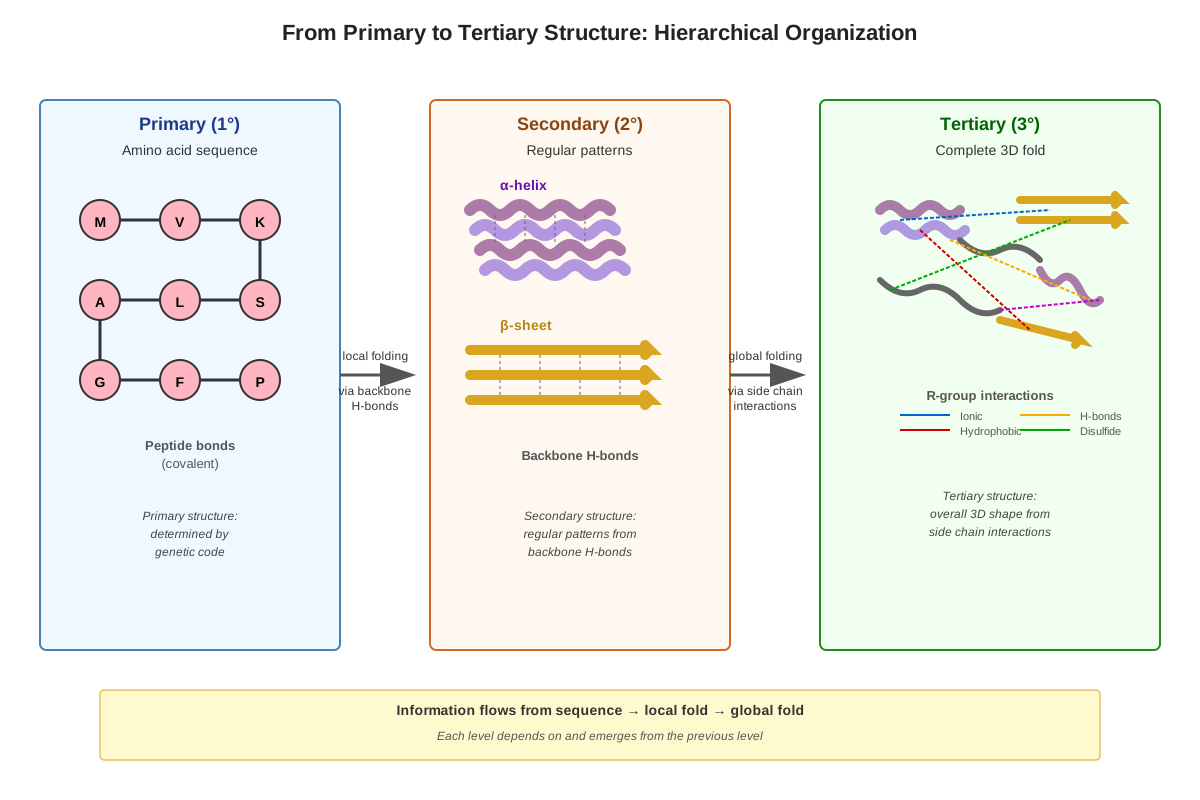
Within the broader context of Amino Acids and Proteins, tertiary structure represents the culmination of information encoded in the primary sequence (the linear order of amino acids) and the local folding patterns of secondary structure (α-helices and β-sheets). While secondary structure describes regular, repeating patterns stabilized primarily by backbone hydrogen bonds, tertiary structure encompasses the complete three-dimensional fold, including loops, turns, and the spatial relationships between all secondary structure elements. This distinction is critical for MCAT success, as test questions often require students to differentiate between structural levels and identify which forces stabilize each.
Learning Objectives
- [ ] Define Protein tertiary structure using accurate Biochemistry terminology
- [ ] Explain why Protein tertiary structure matters for the MCAT
- [ ] Apply Protein tertiary structure to exam-style questions
- [ ] Identify common mistakes related to Protein tertiary structure
- [ ] Connect Protein tertiary structure to related Biochemistry concepts
- [ ] Categorize and distinguish between the four major types of interactions that stabilize tertiary structure
- [ ] Predict how environmental changes (pH, temperature, denaturants) affect tertiary structure stability
- [ ] Analyze how mutations in primary structure can alter tertiary structure and protein function
Prerequisites
- Primary protein structure: The linear sequence of amino acids determines which side chains are available for tertiary interactions
- Amino acid properties: Knowledge of hydrophobic, hydrophilic, charged, and polar amino acids is essential for predicting folding patterns
- Secondary protein structure: α-helices and β-sheets serve as building blocks that are arranged in three-dimensional space during tertiary folding
- Chemical bonding: Understanding of hydrogen bonds, ionic interactions, van der Waals forces, and covalent bonds underlies the forces stabilizing tertiary structure
- Thermodynamics basics: Concepts of entropy, enthalpy, and free energy explain why proteins fold spontaneously into stable conformations
Why This Topic Matters
Protein tertiary structure MCAT questions appear with high frequency because this topic integrates multiple biochemical principles and connects to physiology, genetics, and pharmacology. Clinical relevance abounds: prion diseases result from misfolded proteins adopting aberrant tertiary structures, cystic fibrosis stems from improper folding of the CFTR protein, and Alzheimer's disease involves protein aggregation due to tertiary structure disruption. Understanding how proteins achieve and maintain their functional three-dimensional shapes is essential for comprehending drug design, where small molecules bind to specific tertiary structure pockets, and enzyme mechanisms, where active site geometry depends on precise tertiary arrangements.
On the MCAT, this topic appears in approximately 15-20% of Biochemistry passages, often integrated with enzyme kinetics, protein purification, or genetic mutation scenarios. Question types include:
- Discrete questions asking students to identify stabilizing forces or predict denaturation effects
- Passage-based questions requiring analysis of experimental data showing protein folding/unfolding
- Pseudo-discrete questions connecting mutations to structural and functional consequences
- Graph interpretation questions showing thermal denaturation curves or circular dichroism spectra
Common passage contexts include research studies on protein stability, clinical vignettes describing genetic diseases affecting protein structure, and experimental scenarios involving protein purification or characterization. The MCAT particularly favors questions that require students to apply knowledge rather than simply recall definitions, such as predicting how a specific amino acid substitution would affect tertiary structure based on the chemical properties of the original and replacement residues.
Core Concepts
Definition and Scope of Tertiary Structure
Protein tertiary structure refers to the complete three-dimensional arrangement of all atoms in a single polypeptide chain, including the spatial relationships between secondary structure elements, loops, turns, and side chain positions. This level of organization represents the functional form of monomeric proteins and individual subunits of multimeric proteins. The tertiary structure encompasses everything from the protein's overall shape (globular versus fibrous) to the precise positioning of amino acids in active sites or binding pockets.
The transition from secondary to tertiary structure involves the folding and packing of α-helices, β-sheets, and connecting loops into a compact, stable three-dimensional arrangement. While secondary structure is stabilized primarily by backbone hydrogen bonds in regular patterns, tertiary structure stability depends on interactions between amino acid side chains that may be distant in the primary sequence but adjacent in three-dimensional space.
Forces Stabilizing Tertiary Structure
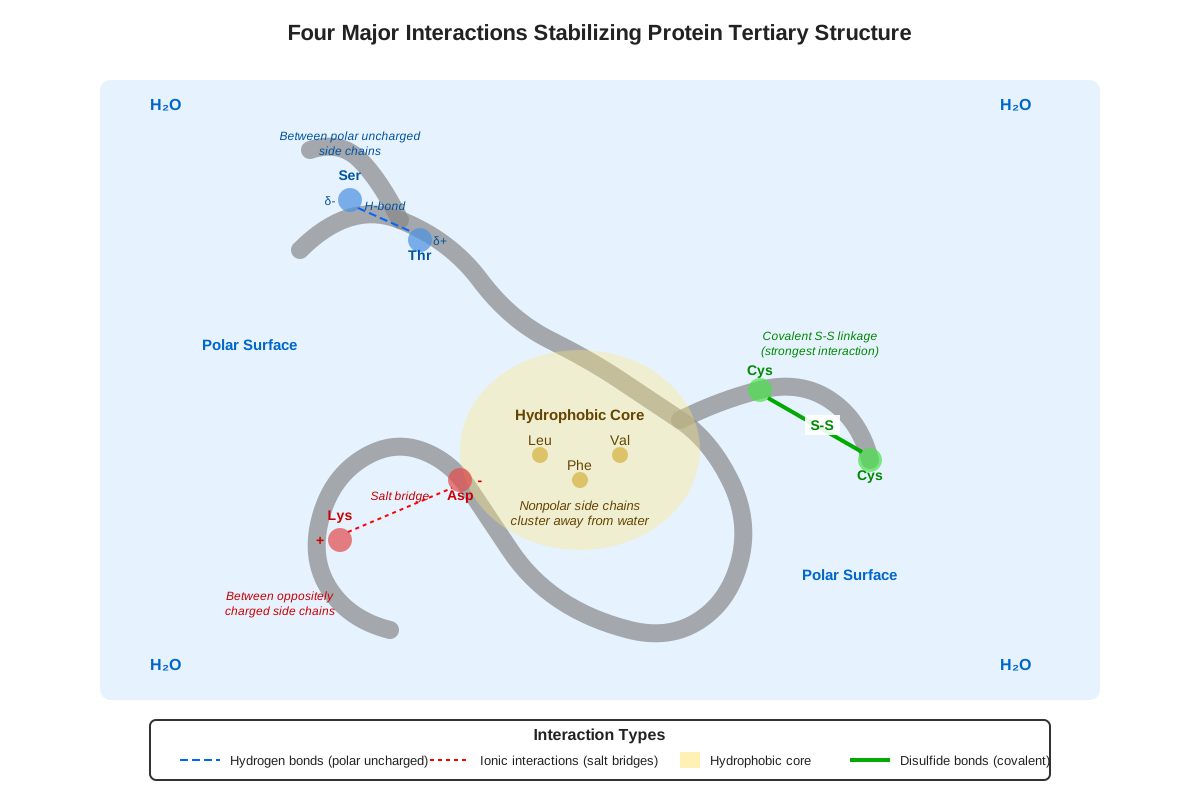
Four major types of interactions stabilize protein tertiary structure, each contributing differently to overall stability:
| Interaction Type | Strength | Distance Dependence | Key Features |
|---|---|---|---|
| Hydrophobic interactions | Moderate (cumulative) | Short-range | Nonpolar side chains cluster in protein interior; entropy-driven |
| Hydrogen bonds | Weak-moderate (2-5 kcal/mol) | Short-range, directional | Between polar/charged side chains; backbone-side chain possible |
| Ionic interactions (salt bridges) | Moderate (3-7 kcal/mol) | Medium-range | Between oppositely charged residues; pH-dependent |
| Disulfide bonds | Strong (50-60 kcal/mol) | Covalent | Between cysteine residues; primarily in extracellular proteins |
Hydrophobic Interactions
Hydrophobic interactions represent the primary driving force for protein folding in aqueous environments. Nonpolar amino acids (alanine, valine, leucine, isoleucine, methionine, phenylalanine, tryptophan) preferentially cluster in the protein core, away from the aqueous solvent. This arrangement is thermodynamically favorable because it minimizes the disruption of water's hydrogen bonding network—the hydrophobic effect is entropy-driven, as water molecules gain freedom when hydrophobic surfaces are removed from contact with the aqueous environment.
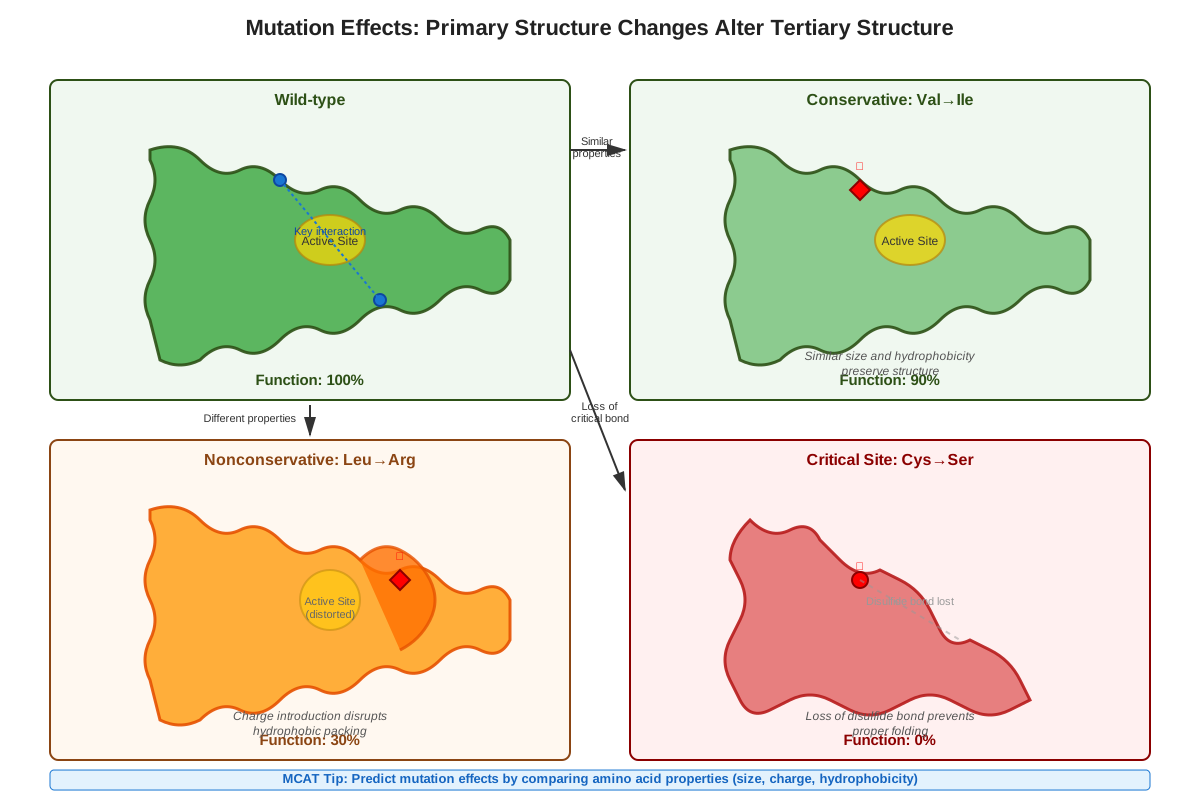
The hydrophobic core of globular proteins typically contains tightly packed nonpolar side chains, creating a stable interior that excludes water. This packing contributes significantly to protein stability through van der Waals forces between the clustered hydrophobic residues. For the MCAT, recognize that mutations replacing hydrophobic core residues with polar or charged amino acids often destabilize tertiary structure by disrupting this favorable packing.
Hydrogen Bonds
Hydrogen bonds in tertiary structure form between polar and charged amino acid side chains, contributing both to stability and to the specificity of protein folding. Unlike the backbone hydrogen bonds that define secondary structure, tertiary hydrogen bonds involve side chains and can occur between residues far apart in the primary sequence. Common hydrogen bonding partners include:
- Serine, threonine, and tyrosine (hydroxyl groups)
- Asparagine and glutamine (amide groups)
- Aspartate and glutamate (carboxyl groups)
- Lysine, arginine, and histidine (amino/imidazole groups)
These interactions are directional and distance-dependent, requiring proper geometric alignment between donor and acceptor atoms. The cumulative effect of multiple hydrogen bonds significantly stabilizes tertiary structure, though individual hydrogen bonds are relatively weak and can be disrupted by changes in pH or the presence of competing hydrogen bond donors/acceptors.
Ionic Interactions (Salt Bridges)
Ionic interactions or salt bridges form between oppositely charged amino acid side chains, typically involving:
- Positively charged: lysine, arginine, histidine (at physiological pH)
- Negatively charged: aspartate, glutamate
These electrostatic interactions are stronger than hydrogen bonds but are highly sensitive to pH and ionic strength. At extreme pH values, ionizable groups may become protonated or deprotonated, eliminating the charge complementarity required for salt bridge formation. High salt concentrations can shield charges and weaken ionic interactions through charge screening effects.
Salt bridges often occur on protein surfaces where charged residues interact with the aqueous environment, but they can also form in the protein interior where they contribute significantly to stability due to the low dielectric constant of the hydrophobic core. For MCAT purposes, recognize that salt bridges are particularly vulnerable to pH changes and that mutations affecting charged residues can disrupt these stabilizing interactions.
Disulfide Bonds
Disulfide bonds (also called disulfide bridges) are covalent bonds formed between the sulfur atoms of two cysteine residues through oxidation:
2 Cys-SH → Cys-S-S-Cys + 2H⁺ + 2e⁻These bonds are the strongest stabilizing force in tertiary structure but are relatively rare in intracellular proteins due to the reducing environment of the cytoplasm. Disulfide bonds are most common in:
- Extracellular proteins (antibodies, hormones, digestive enzymes)
- Proteins that traverse the endoplasmic reticulum
- Proteins exposed to harsh extracellular conditions
The formation of disulfide bonds is catalyzed by protein disulfide isomerase (PDI) in the endoplasmic reticulum. Incorrect disulfide bond formation can lead to misfolding, and reducing agents like β-mercaptoethanol or dithiothreitol (DTT) can break disulfide bonds, often leading to protein denaturation.
Protein Folding and the Hydrophobic Collapse
Protein folding is a spontaneous process driven by thermodynamics, where the native (correctly folded) structure represents the lowest free energy state. The hydrophobic collapse model describes the initial rapid phase of folding where hydrophobic residues cluster together, expelling water and forming a compact intermediate called a molten globule. This intermediate has some secondary structure but lacks the precise tertiary arrangement of the native state.
Following hydrophobic collapse, the protein undergoes conformational adjustments to optimize hydrogen bonds, ionic interactions, and van der Waals contacts, eventually reaching the native state. For some proteins, this process requires assistance from molecular chaperones (like heat shock proteins) that prevent aggregation and provide an environment conducive to proper folding.
Domains and Motifs
Many proteins contain distinct structural and functional regions called domains—independently folding units within a single polypeptide chain that often correspond to specific functions. Domains typically consist of 40-350 amino acids and maintain their structure even when separated from the rest of the protein. Common domain examples include:
- DNA-binding domains (helix-turn-helix, zinc fingers)
- Catalytic domains in enzymes
- Immunoglobulin domains in antibodies
Structural motifs are recognizable combinations of secondary structure elements that appear across different proteins, such as the helix-loop-helix or β-barrel motifs. While domains represent larger, independently stable units, motifs are smaller structural patterns that may or may not have independent stability.
Denaturation and Renaturation
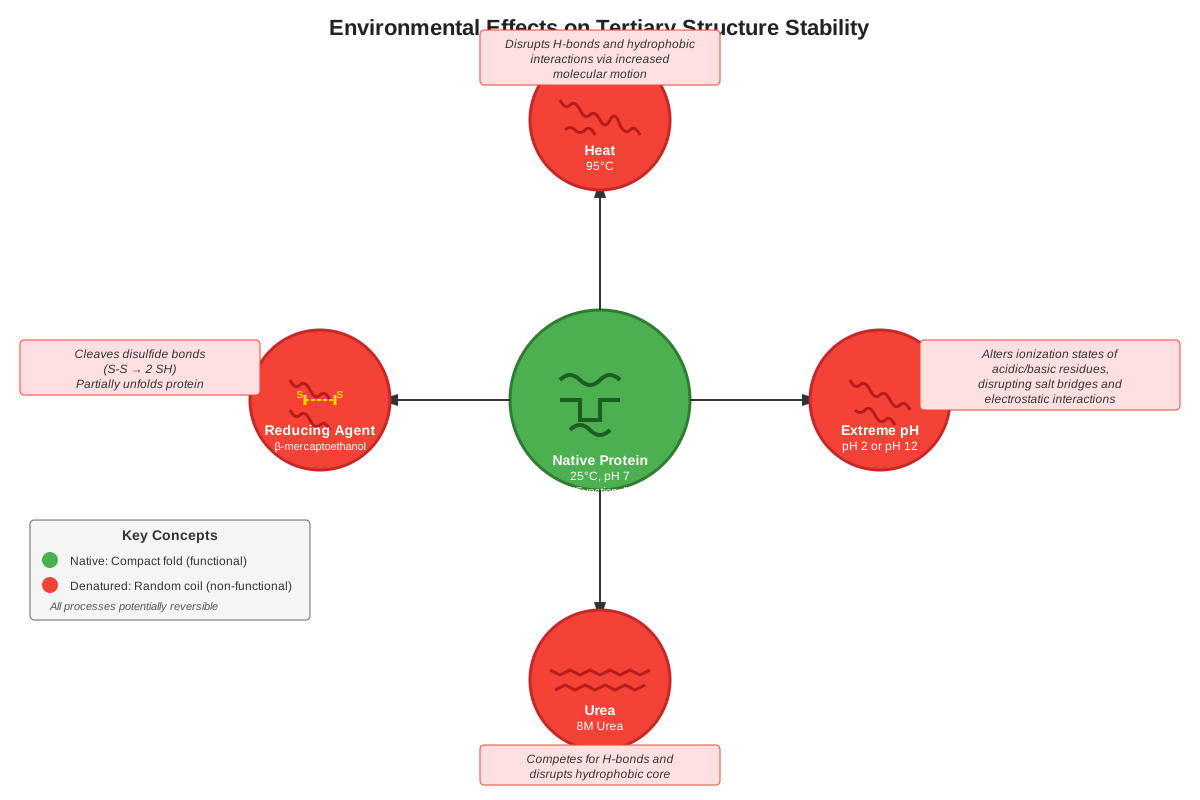
Denaturation is the disruption of tertiary (and often secondary) structure without breaking peptide bonds, resulting in loss of biological function. Denaturing conditions include:
- Heat: Increases molecular motion, disrupting weak interactions
- Extreme pH: Protonates or deprotonates ionizable groups, eliminating salt bridges and altering hydrogen bonding
- Organic solvents: Disrupt hydrophobic interactions by providing alternative environments for nonpolar residues
- Chaotropic agents (urea, guanidinium chloride): Disrupt hydrogen bonds and hydrophobic interactions
- Reducing agents: Break disulfide bonds
Some proteins can renature (refold into native structure) when denaturing conditions are removed, demonstrating that tertiary structure information is encoded in the primary sequence. However, many proteins require chaperones for proper refolding, and some form irreversible aggregates upon denaturation.
Concept Relationships
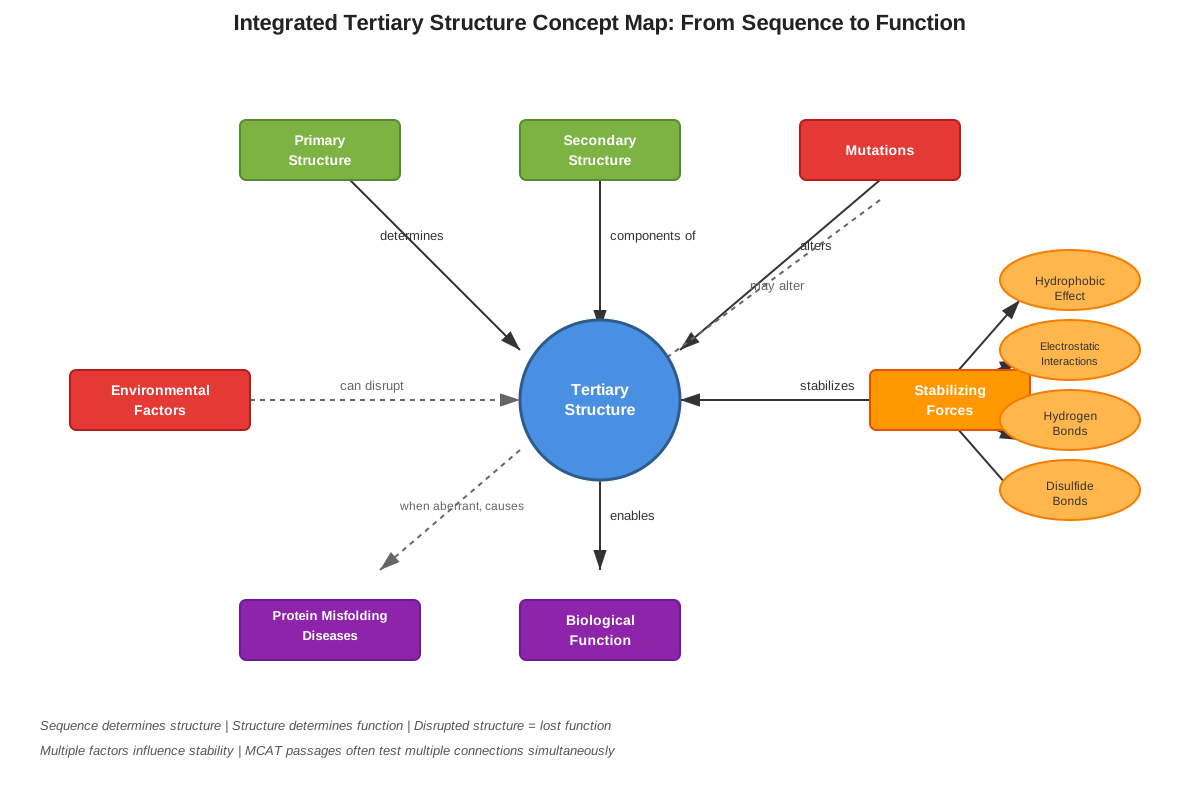
The hierarchy of protein structure creates a logical progression: primary structure (amino acid sequence) → secondary structure (local folding patterns) → tertiary structure (three-dimensional arrangement) → quaternary structure (multi-subunit assembly). Each level depends on the previous one, with primary structure encoding all information necessary for higher-order structures.
Within tertiary structure itself, concepts interconnect through cause-and-effect relationships:
- Amino acid properties → determine → types of stabilizing interactions → which create → folding patterns
- Hydrophobic effect → drives → hydrophobic collapse → leading to → compact globular structure
- Environmental conditions (pH, temperature) → affect → stabilizing forces → resulting in → structural stability or denaturation
Tertiary structure connects to related biochemistry topics through multiple pathways:
- Enzyme function: Active site geometry depends on precise tertiary structure; substrate specificity requires correct three-dimensional arrangement
- Protein purification: Techniques like chromatography exploit tertiary structure properties (charge distribution, hydrophobicity)
- Genetic mutations: Changes in primary structure can alter tertiary structure, connecting to genetics and molecular biology
- Thermodynamics: Protein folding exemplifies spontaneous processes driven by free energy minimization
- Cellular localization: Disulfide bond formation distinguishes intracellular from extracellular proteins
The relationship map for this topic:
Primary sequence → encodes → Tertiary structure → determines → Protein function
↓
Amino acid properties → dictate → Stabilizing interactions → maintain → Native conformation
↓
Environmental factors → disrupt → Weak interactions → cause → Denaturation → results in → Loss of function
Quick check — test yourself on Protein tertiary structure so far.
Try Flashcards →High-Yield Facts
⭐ Protein tertiary structure is the three-dimensional arrangement of all atoms in a single polypeptide chain, stabilized by interactions between amino acid side chains.
⭐ Hydrophobic interactions are the primary driving force for protein folding, causing nonpolar residues to cluster in the protein core away from aqueous solvent.
⭐ Disulfide bonds are covalent bonds between cysteine residues, found primarily in extracellular proteins due to the oxidizing extracellular environment.
⭐ Denaturation disrupts tertiary structure without breaking peptide bonds and can be caused by heat, extreme pH, organic solvents, or chaotropic agents.
⭐ Salt bridges (ionic interactions) are pH-dependent and form between oppositely charged amino acid side chains (Lys, Arg, His with Asp, Glu).
- Tertiary structure information is encoded entirely in the primary amino acid sequence, as demonstrated by protein renaturation experiments.
- Hydrogen bonds in tertiary structure involve side chains and can form between residues distant in primary sequence but close in three-dimensional space.
- The molten globule is a partially folded intermediate with some secondary structure but lacking the precise tertiary arrangement of the native state.
- Molecular chaperones assist protein folding by preventing aggregation and providing an environment conducive to proper tertiary structure formation.
- Mutations replacing hydrophobic core residues with polar or charged amino acids typically destabilize tertiary structure by disrupting favorable packing.
- Reducing agents like β-mercaptoethanol and DTT break disulfide bonds, often causing denaturation of proteins that depend on these bonds for stability.
- Globular proteins have hydrophobic cores and hydrophilic surfaces, while fibrous proteins have extended structures with repeating sequences.
- The native protein conformation represents the lowest free energy state under physiological conditions.
Common Misconceptions
Misconception: Tertiary structure only refers to the overall shape of a protein (globular vs. fibrous).
Correction: Tertiary structure encompasses the complete three-dimensional positions of all atoms in the polypeptide, including precise side chain locations, not just the general shape category.
Misconception: Disulfide bonds are the most important stabilizing force in all proteins.
Correction: Disulfide bonds are strong but relatively rare, found primarily in extracellular proteins. For most intracellular proteins, hydrophobic interactions and the cumulative effect of multiple weak interactions (hydrogen bonds, ionic interactions) provide the primary stability.
Misconception: Denaturation breaks peptide bonds in the protein backbone.
Correction: Denaturation disrupts tertiary (and secondary) structure by breaking weak non-covalent interactions and sometimes disulfide bonds, but peptide bonds remain intact. The primary sequence is preserved during denaturation.
Misconception: All proteins can renature (refold) after denaturation if conditions return to normal.
Correction: While some small proteins can spontaneously renature (like ribonuclease A in Anfinsen's experiment), many proteins require chaperones for proper folding, and some form irreversible aggregates upon denaturation, preventing renaturation.
Misconception: Tertiary structure and quaternary structure are the same thing.
Correction: Tertiary structure describes the three-dimensional fold of a single polypeptide chain, while quaternary structure refers to the arrangement of multiple polypeptide subunits in a multi-subunit protein complex. Not all proteins have quaternary structure, but all proteins with more than ~40 amino acids have tertiary structure.
Misconception: Hydrogen bonds in tertiary structure are the same as those in secondary structure.
Correction: Secondary structure hydrogen bonds occur between backbone carbonyl and amide groups in regular, repeating patterns. Tertiary structure hydrogen bonds involve side chains and can form between residues far apart in the sequence, contributing to the unique three-dimensional fold.
Misconception: Increasing temperature always denatures proteins immediately.
Correction: Protein denaturation is a gradual process with a characteristic melting temperature (Tm) where 50% of molecules are unfolded. Below Tm, proteins remain mostly folded, and the relationship between temperature and denaturation follows a sigmoidal curve, not an on/off switch.
Worked Examples
Example 1: Predicting Mutation Effects on Tertiary Structure
Question: A researcher identifies a mutation in a gene encoding an intracellular enzyme. The mutation changes a valine residue in the protein's hydrophobic core to glutamate. Predict the effect of this mutation on protein tertiary structure and function, and explain your reasoning.
Solution:
Step 1: Identify the properties of the original and replacement amino acids.
- Valine: nonpolar, hydrophobic amino acid with a branched aliphatic side chain
- Glutamate: polar, negatively charged amino acid with a carboxyl group in the side chain
Step 2: Consider the location of the mutation.
The mutation occurs in the hydrophobic core, where nonpolar residues normally cluster to minimize contact with aqueous solvent.
Step 3: Analyze the thermodynamic consequences.
Replacing valine (hydrophobic) with glutamate (charged, hydrophilic) in the core creates several problems:
- The charged glutamate side chain is energetically unfavorable in the low-dielectric hydrophobic core
- The glutamate cannot form favorable interactions with surrounding hydrophobic residues
- The charged side chain will seek contact with water, potentially disrupting the compact core structure
Step 4: Predict structural consequences.
This mutation will likely destabilize the tertiary structure because:
- The hydrophobic core packing will be disrupted
- The protein may not fold properly, potentially exposing hydrophobic residues to solvent
- The native conformation may be less stable than partially unfolded states
Step 5: Predict functional consequences.
- The enzyme will likely have reduced or absent catalytic activity
- The protein may be targeted for degradation by cellular quality control mechanisms
- If the protein does fold, it may have an altered active site geometry
Answer: This mutation will significantly destabilize the protein's tertiary structure by introducing a charged, hydrophilic residue into the hydrophobic core. The resulting protein will likely misfold or have greatly reduced stability, leading to loss of enzymatic function. This represents a loss-of-function mutation.
MCAT Connection: This type of question tests understanding of amino acid properties, the hydrophobic effect, and the relationship between structure and function—all high-yield concepts that appear frequently in MCAT passages about genetic diseases or protein engineering.
Example 2: Analyzing Denaturation Experimental Data
Question: An experiment examines the stability of a protein under various conditions. The protein contains two disulfide bonds and multiple salt bridges. Predict the relative stability (most stable to least stable) under the following conditions, and explain your reasoning:
A. pH 7.4, 37°C, no reducing agents
B. pH 7.4, 37°C, with β-mercaptoethanol
C. pH 2.0, 37°C, no reducing agents
D. pH 7.4, 95°C, no reducing agents
Solution:
Step 1: Establish the baseline condition.
Condition A represents physiological conditions (neutral pH, body temperature, no reducing agents). This should be the most stable condition.
Step 2: Analyze Condition B (reducing agent added).
β-mercaptoethanol is a reducing agent that breaks disulfide bonds. Since the protein contains two disulfide bonds, this condition will:
- Eliminate covalent stabilization from disulfide bonds
- Reduce overall stability compared to Condition A
- Potentially cause partial or complete denaturation depending on how critical the disulfide bonds are
Step 3: Analyze Condition C (extreme acidic pH).
At pH 2.0:
- Carboxyl groups (Asp, Glu) become protonated and lose negative charge
- Amino groups (Lys, Arg) remain positively charged
- Salt bridges between oppositely charged residues are disrupted
- Electrostatic repulsion between positively charged residues may occur
- Disulfide bonds remain intact (not affected by pH alone)
This condition will significantly destabilize the protein, though disulfide bonds may maintain some residual structure.
Step 4: Analyze Condition D (high temperature).
At 95°C:
- Increased molecular motion disrupts weak interactions (hydrogen bonds, hydrophobic interactions, ionic interactions)
- Disulfide bonds remain intact (covalent bonds not broken by heat alone)
- Most proteins denature at this temperature
- This represents severe denaturing conditions
Step 5: Rank the conditions.
- Most stable: A (physiological conditions, all stabilizing forces intact)
- B (disulfide bonds broken, but other interactions intact)
- C (salt bridges disrupted, but disulfide bonds and some other interactions remain)
- Least stable: D (most weak interactions disrupted by thermal energy)
Answer: Stability ranking from most to least stable: A > B > C > D
The ranking between B and C could be debated depending on the relative importance of disulfide bonds versus salt bridges for this particular protein, but D is clearly least stable due to the severe disruption of multiple types of weak interactions by high temperature.
MCAT Connection: This question type requires integrating knowledge of different stabilizing forces, their relative strengths, and their sensitivity to environmental conditions—exactly the kind of analysis the MCAT tests through experimental passage questions.
Exam Strategy
Approaching MCAT Questions on Tertiary Structure
Step 1: Identify the question type
- Direct definition/concept questions: Recall and apply definitions
- Mutation/substitution questions: Analyze amino acid properties and location
- Denaturation/stability questions: Consider which forces are affected
- Structure-function questions: Connect three-dimensional arrangement to biological activity
Step 2: Watch for trigger words and phrases
- "Three-dimensional arrangement" or "3D structure" → tertiary structure
- "Single polypeptide chain" → tertiary (not quaternary)
- "Hydrophobic core" → hydrophobic interactions, nonpolar amino acids
- "Salt bridge" → ionic interactions between charged residues
- "Reducing conditions" → disulfide bonds will be broken
- "Extreme pH" → salt bridges and hydrogen bonds affected
- "Denaturation" → disruption of tertiary structure, loss of function
- "Renaturation" or "refolding" → primary sequence contains folding information
Step 3: Use process of elimination strategically
For tertiary structure questions, eliminate answers that:
- Confuse structural levels (e.g., describing secondary structure features when asked about tertiary)
- Incorrectly identify stabilizing forces (e.g., claiming peptide bonds stabilize tertiary structure)
- Misunderstand denaturation (e.g., stating that denaturation breaks peptide bonds)
- Ignore amino acid properties (e.g., placing charged residues in hydrophobic cores without consequence)
Step 4: Apply the structure-function principle
Always connect structural changes to functional consequences. The MCAT rarely asks about structure in isolation—questions typically require predicting how structural changes affect protein function, enzyme activity, or cellular processes.
Time Allocation
For discrete questions on tertiary structure: 60-90 seconds
- Quick recall of definitions and concepts
- Immediate application of amino acid properties
For passage-based questions: 90-120 seconds per question
- Time to analyze experimental data or clinical scenarios
- Integration of multiple concepts
- Careful reading of answer choices to avoid traps
Exam Tip: When a passage describes a mutation, immediately identify: (1) the properties of both amino acids, (2) the likely location (core vs. surface), and (3) which stabilizing forces are affected. This systematic approach prevents errors and saves time.
Memory Techniques
Mnemonic for Stabilizing Forces (Strongest to Weakest)
"Don't Ignore Helpful Vitamins"
- Disulfide bonds (covalent, strongest)
- Ionic interactions (salt bridges)
- Hydrogen bonds
- Van der Waals forces (weakest individual interactions)
Note: Hydrophobic interactions are collectively very important but are entropy-driven rather than representing a specific bond type.
Mnemonic for Hydrophobic Amino Acids
"FAMILY VW"
- Fenylalanine
- Alanine
- Methionine
- Isoleucine
- Leucine
- Y (tYrosine - partially hydrophobic)
- Valine
- Wtryptophan
These amino acids cluster in the hydrophobic core.
Mnemonic for Charged Amino Acids (Salt Bridge Participants)
"DARK" (negatively charged)
- Daspartate (Asp)
- And
- R (glutamate, Residues)
- K (just a connector)
Actually: Asp and Glu (think "Acidic = Negative")
"RHK" (positively charged)
- Rarginine
- Histidine
- K (lysine)
Think: "aRgue with His Kindness" for positive charges
Visualization Strategy for Protein Folding
Imagine a protein as a collapsing tent:
- The tent fabric (polypeptide chain) starts extended
- Hydrophobic patches (dark spots) want to hide from rain (water)
- The tent collapses inward, hiding dark spots inside
- Zippers and snaps (hydrogen bonds, salt bridges) secure the final shape
- Metal rivets (disulfide bonds) provide extra strength where needed
This mental model helps remember that folding is driven by hiding hydrophobic residues and stabilized by multiple types of interactions.
Summary
Protein tertiary structure represents the complete three-dimensional arrangement of all atoms in a single polypeptide chain, forming the functional architecture essential for biological activity. This structural level is stabilized by four major types of interactions: hydrophobic interactions (which drive folding by clustering nonpolar residues in the protein core), hydrogen bonds between polar and charged side chains, ionic interactions (salt bridges) between oppositely charged residues, and covalent disulfide bonds between cysteine residues. The native tertiary structure represents the lowest free energy state and is encoded entirely in the primary amino acid sequence, as demonstrated by protein renaturation experiments. Environmental factors including temperature, pH, organic solvents, and reducing agents can disrupt the weak interactions maintaining tertiary structure, causing denaturation and loss of function. For the MCAT, understanding tertiary structure is essential for predicting how mutations affect protein function, analyzing experimental data on protein stability, and connecting structural changes to physiological consequences in clinical scenarios. Mastery of this topic requires integrating knowledge of amino acid properties, chemical bonding, thermodynamics, and the hierarchical nature of protein structure.
Key Takeaways
- Protein tertiary structure is the three-dimensional fold of a single polypeptide chain, stabilized by side chain interactions and determining protein function
- Hydrophobic interactions drive protein folding by causing nonpolar amino acids to cluster in the core, away from aqueous solvent—this is the primary folding force
- Four major stabilizing forces maintain tertiary structure: hydrophobic interactions, hydrogen bonds, ionic interactions (salt bridges), and disulfide bonds (covalent, strongest)
- Denaturation disrupts tertiary structure without breaking peptide bonds, caused by heat, extreme pH, organic solvents, or reducing agents, resulting in loss of function
- Mutations affecting amino acids in the hydrophobic core or disrupting salt bridges typically destabilize tertiary structure and impair protein function
- Disulfide bonds are found primarily in extracellular proteins due to the oxidizing environment outside cells; intracellular proteins rarely contain disulfide bonds
- The native protein conformation represents the lowest free energy state, and tertiary structure information is completely encoded in the primary amino acid sequence
Related Topics
Protein Quaternary Structure: Building on tertiary structure, quaternary structure describes how multiple polypeptide subunits assemble into functional protein complexes. Understanding tertiary structure is essential before studying how individual subunits interact.
Enzyme Kinetics and Catalysis: The precise three-dimensional arrangement of amino acids in enzyme active sites (determined by tertiary structure) enables substrate binding and catalysis. Tertiary structure knowledge is prerequisite for understanding enzyme mechanisms.
Protein Denaturation and Folding Diseases: Conditions like Alzheimer's, Parkinson's, and prion diseases involve protein misfolding and aggregation. Mastering normal tertiary structure enables understanding of pathological misfolding.
Protein Purification Techniques: Methods like chromatography exploit tertiary structure properties (charge distribution, hydrophobicity, size) to separate proteins. Understanding tertiary structure explains why these techniques work.
Genetic Mutations and Disease: Many genetic diseases result from mutations that alter tertiary structure. Connecting primary sequence changes to tertiary structure disruption to functional consequences represents a critical MCAT skill.
Thermodynamics of Protein Folding: The spontaneous nature of protein folding exemplifies thermodynamic principles, including entropy, enthalpy, and free energy. Tertiary structure provides a concrete biological example of these abstract concepts.
Practice CTA
Now that you've mastered the core concepts of protein tertiary structure, it's time to reinforce your understanding through active practice. Complete the associated practice questions to test your ability to apply these concepts to MCAT-style scenarios, and use the flashcards to solidify your recall of high-yield facts. Remember, understanding tertiary structure is not just about memorizing definitions—it's about developing the analytical skills to predict how structural changes affect function, a critical competency for MCAT success. Each practice question you work through strengthens your ability to think like a biochemist and tackle complex integrated passages on test day. You've built a strong foundation—now apply it!
Sign up free to keep reading
Create a free AnvayaPrep account to finish this MCAT guide on Protein tertiary structure — plus flashcards and practice questions.