Overview
Salt bridges are critical electrostatic interactions that stabilize protein structure through ionic bonds between oppositely charged amino acid side chains. These non-covalent interactions form when the positively charged side chain of a basic amino acid (lysine, arginine, or histidine) comes into close proximity with the negatively charged side chain of an acidic amino acid (aspartate or glutamate). Understanding salt bridges is fundamental to mastering Amino Acids and Proteins for the MCAT, as they represent one of the four major types of interactions that maintain tertiary and quaternary protein structure, alongside hydrogen bonds, hydrophobic interactions, and disulfide bonds.
For Biochemistry on the MCAT, salt bridges appear frequently in passages discussing protein stability, denaturation, enzyme active sites, and the effects of pH on protein function. The MCAT tests not only recognition of these interactions but also the ability to predict how environmental changes—particularly pH shifts and ionic strength variations—will affect protein structure and function. Questions may present experimental data showing protein stability under different conditions or ask students to identify which amino acid substitutions would most dramatically affect protein folding.
The significance of salt bridges extends beyond isolated protein structure questions. They connect to broader themes in Biochemistry including acid-base chemistry, thermodynamics of protein folding, enzyme catalysis mechanisms, and cellular signaling. Salt bridges often stabilize the active conformations of enzymes, contribute to protein-protein interactions in multi-subunit complexes, and can be disrupted in disease states. Mastering this topic provides a foundation for understanding how proteins maintain their functional three-dimensional structures and how this structure relates to biological function—a central principle repeatedly tested across MCAT passages.
Learning Objectives
- [ ] Define salt bridges using accurate Biochemistry terminology
- [ ] Explain why salt bridges matter for the MCAT
- [ ] Apply salt bridges to exam-style questions
- [ ] Identify common mistakes related to salt bridges
- [ ] Connect salt bridges to related Biochemistry concepts
- [ ] Predict the effect of pH changes on salt bridge stability and protein structure
- [ ] Analyze experimental data to determine the contribution of salt bridges to protein stability
- [ ] Distinguish between salt bridges and other non-covalent interactions in protein structure
Prerequisites
- Amino acid structure and classification: Understanding which amino acids are acidic, basic, and neutral is essential for identifying potential salt bridge partners
- Acid-base chemistry and pKa values: Salt bridges depend on ionization states, which are pH-dependent and governed by pKa values
- Protein structure hierarchy: Knowledge of primary, secondary, tertiary, and quaternary structure provides context for where salt bridges function
- Non-covalent interactions: Familiarity with hydrogen bonds, van der Waals forces, and hydrophobic effects allows comparison with salt bridges
- Electrostatic interactions: Basic understanding of Coulomb's law and how opposite charges attract is fundamental to salt bridge formation
Why This Topic Matters
Salt bridges represent a high-yield topic for the MCAT because they integrate multiple fundamental concepts: amino acid properties, acid-base chemistry, protein structure, and thermodynamics. Approximately 15-20% of Biochemistry questions on the MCAT involve protein structure and stability, and salt bridges appear in roughly one-third of these questions, either directly or as part of experimental interpretation.
Clinically, salt bridges are relevant to understanding protein misfolding diseases, drug design, and enzyme function. Mutations that disrupt critical salt bridges can cause diseases such as cystic fibrosis (where CFTR protein misfolding occurs) or sickle cell anemia (where altered hemoglobin interactions affect quaternary structure). Pharmaceutical researchers specifically target salt bridges when designing drugs that must bind to protein active sites or when engineering more stable therapeutic proteins.
On the MCAT, salt bridges commonly appear in several question formats: discrete questions asking about protein stability factors, passage-based questions presenting mutagenesis experiments where charged residues are substituted, and data interpretation questions showing protein denaturation curves at different pH values. The exam frequently tests whether students can predict the consequences of disrupting salt bridges through pH changes, mutations, or increased ionic strength. Understanding salt bridges also enables students to tackle questions about enzyme mechanisms, where active site residues often form salt bridges with substrates or cofactors.
Core Concepts
Definition and Chemical Nature of Salt Bridges
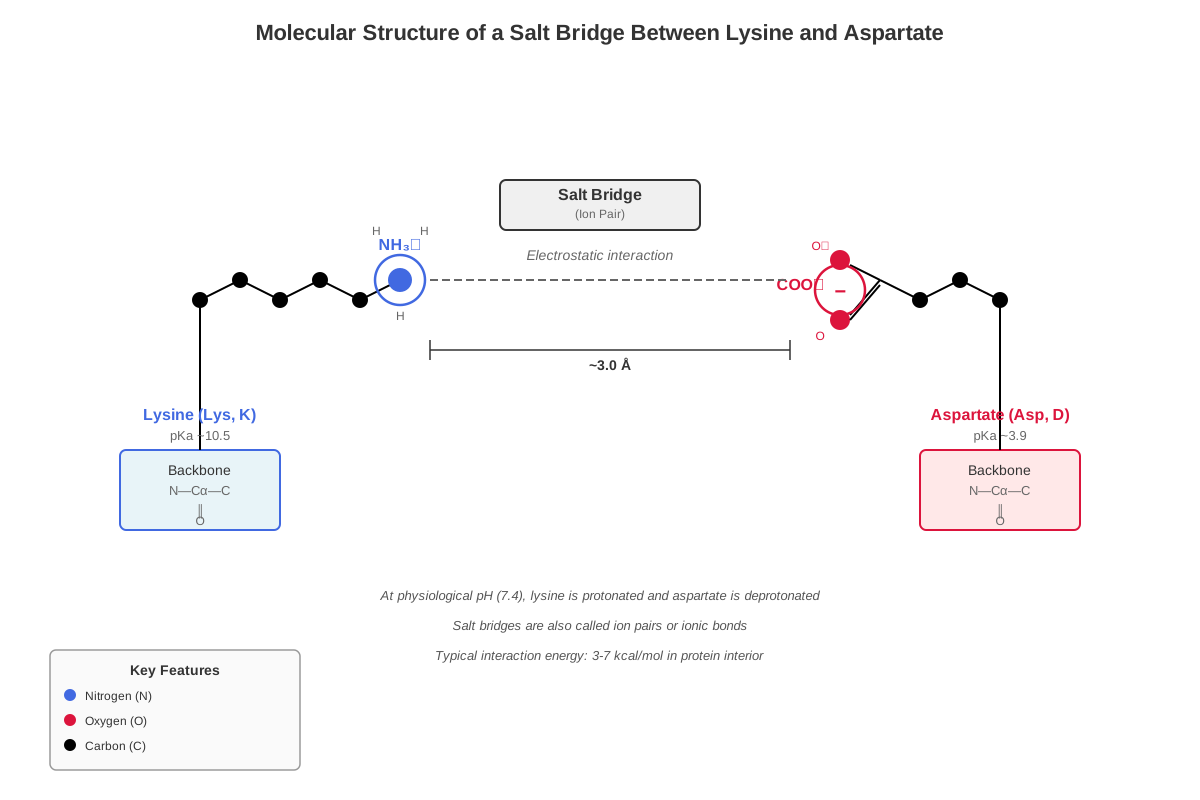
A salt bridge is an electrostatic interaction between two oppositely charged groups in a protein structure, typically occurring between the ionized side chains of acidic and basic amino acids. More precisely, salt bridges form when the carboxylate anion (COO⁻) of aspartate or glutamate comes within approximately 4 Ångströms of the ammonium cation (NH₃⁺) of lysine, the guanidinium cation of arginine, or the imidazolium cation of histidine (when protonated).
The strength of a salt bridge depends on several factors:
- Distance: Electrostatic force follows Coulomb's law (F ∝ 1/r²), so closer interactions are stronger
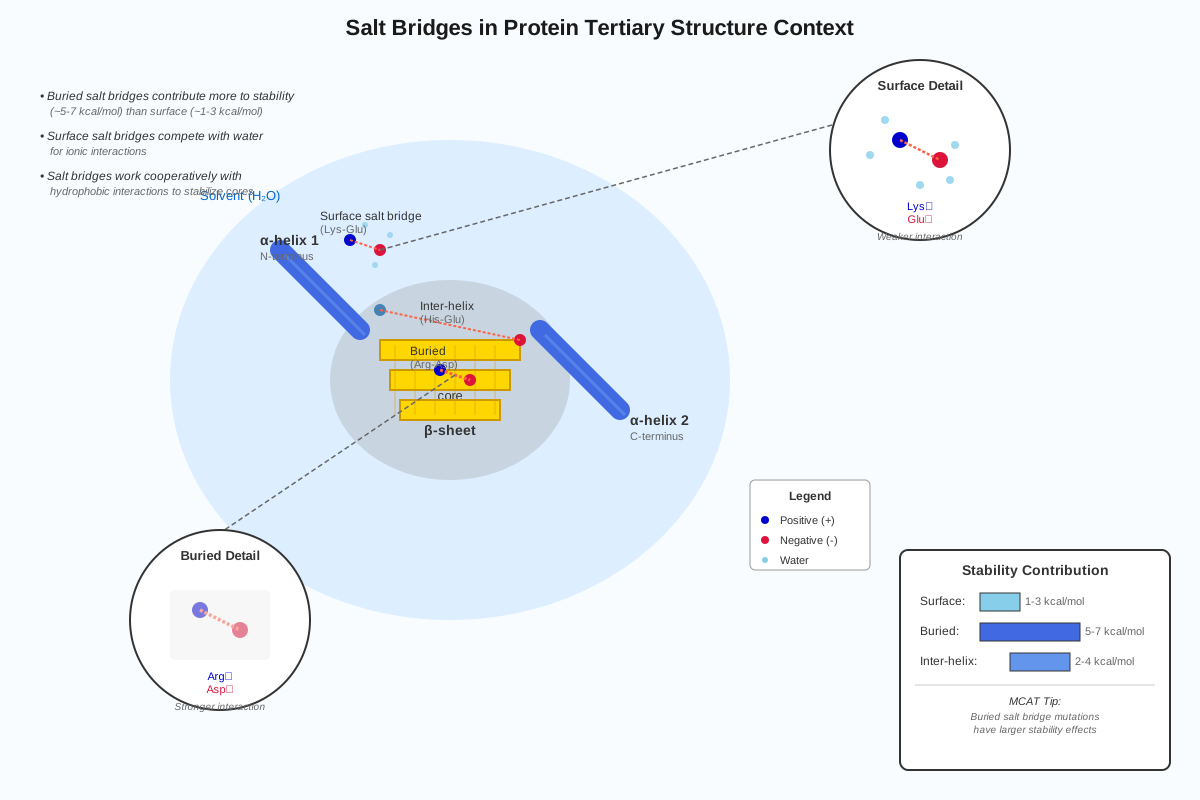
- Dielectric environment: Salt bridges are stronger in hydrophobic protein interiors (low dielectric constant) than on protein surfaces exposed to water (high dielectric constant)
- Geometry: Optimal orientation of charged groups maximizes interaction strength
- Competing interactions: Surrounding water molecules or ions can shield charges and weaken salt bridges
The energy contribution of a single salt bridge typically ranges from 3-8 kcal/mol in the protein interior, though surface salt bridges may contribute only 0.5-2 kcal/mol due to solvent competition.
Amino Acids Involved in Salt Bridge Formation
Only five amino acids can participate in salt bridges under physiological conditions:
| Amino Acid | Charge at pH 7 | Ionizable Group | pKa Range |
|---|---|---|---|
| Aspartate (Asp, D) | Negative | Carboxyl | 3.9 |
| Glutamate (Glu, E) | Negative | Carboxyl | 4.3 |
| Lysine (Lys, K) | Positive | Amino | 10.5 |
| Arginine (Arg, R) | Positive | Guanidinium | 12.5 |
| Histidine (His, H) | Variable | Imidazole | 6.0 |
Histidine deserves special attention because its pKa (~6.0) is near physiological pH, meaning it can be either protonated (positive) or deprotonated (neutral) depending on the local environment. This makes histidine particularly important in enzyme active sites where pH-dependent catalysis occurs.
pH Dependence of Salt Bridges
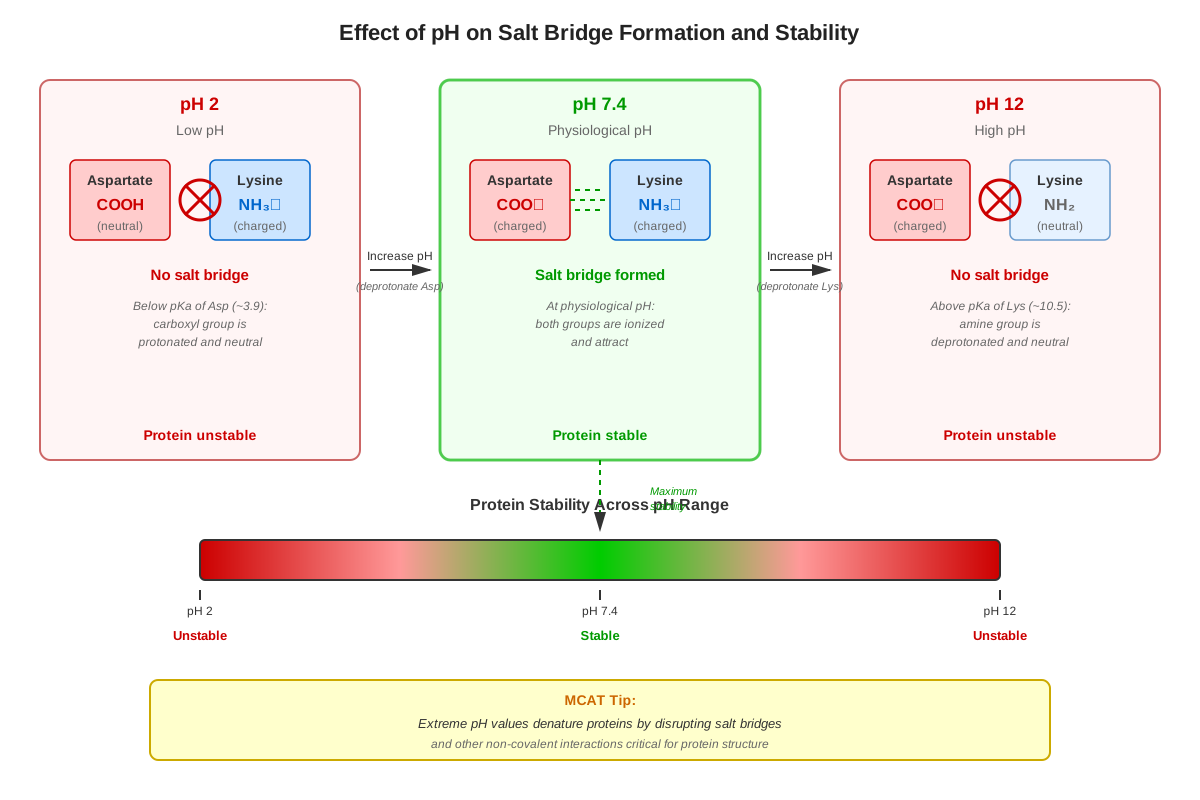
The stability of salt bridges is profoundly pH-dependent because ionization states change with pH. At extreme pH values, salt bridges are disrupted:
At low pH (acidic conditions):
- Carboxyl groups become protonated (COOH), losing their negative charge
- Basic groups remain protonated and positively charged
- Salt bridges between acidic and basic residues break
- Result: Protein destabilization and potential denaturation
At high pH (basic conditions):
- Amino groups become deprotonated (NH₂), losing their positive charge
- Acidic groups remain deprotonated and negatively charged
- Salt bridges between acidic and basic residues break
- Result: Protein destabilization and potential denaturation
At physiological pH (~7.4):
- Acidic residues are deprotonated (negatively charged)
- Lysine and arginine are protonated (positively charged)
- Histidine may be partially protonated depending on local environment
- Result: Maximum salt bridge formation and protein stability
This pH dependence explains why proteins typically have optimal stability near their physiological pH and denature at extreme pH values.
Location and Function in Protein Structure
Salt bridges contribute to protein stability at multiple structural levels:
Tertiary Structure:
- Stabilize the folded conformation of single polypeptide chains
- Often found at domain interfaces or in protein cores
- Particularly important for thermostable proteins from extremophile organisms
- Can stabilize specific conformational states (active vs. inactive)
Quaternary Structure:
- Mediate subunit-subunit interactions in multi-protein complexes
- Critical for hemoglobin's cooperative oxygen binding (salt bridges stabilize the T state)
- Important in antibody structure, where heavy and light chains interact
- Enable formation of protein oligomers and large assemblies
Active Sites:
- Position catalytic residues correctly for enzyme function
- Stabilize transition states during catalysis
- Facilitate substrate binding through complementary charge interactions
- Enable pH-dependent regulation of enzyme activity
Ionic Strength Effects
The stability of salt bridges is affected by the ionic strength of the surrounding solution. High salt concentrations (high ionic strength) can disrupt salt bridges through a process called charge screening:
- Dissolved ions (Na⁺, Cl⁻, etc.) surround charged protein residues
- These ions partially neutralize the charges on amino acid side chains
- The electrostatic attraction between salt bridge partners weakens
- At sufficiently high ionic strength, salt bridges may break entirely
This principle is exploited in protein purification techniques such as ion exchange chromatography, where increasing salt concentration elutes proteins by disrupting their ionic interactions with the column matrix.
Energetic Considerations
The thermodynamic contribution of salt bridges to protein stability involves several competing factors:
Favorable contributions:
- Electrostatic attraction between opposite charges (enthalpically favorable)
- Reduction in conformational entropy of unfolded state (stabilizing)
Unfavorable contributions:
- Desolvation penalty (removing water molecules from charged groups costs energy)
- Loss of conformational entropy in folded state (destabilizing)
- Potential repulsion if like charges are brought together
The net effect depends on whether the salt bridge forms in the protein interior (where desolvation penalty is offset by strong electrostatic interaction) or on the surface (where water competes effectively, reducing the net stabilization).
Concept Relationships
Salt bridges integrate multiple fundamental concepts in Biochemistry. The formation of salt bridges depends on amino acid properties → specifically the ionizable side chains of acidic and basic residues. These ionization states are governed by acid-base chemistry → which determines whether groups are charged at a given pH. The charged state of amino acids affects protein folding → because electrostatic interactions influence which conformations are thermodynamically favorable.
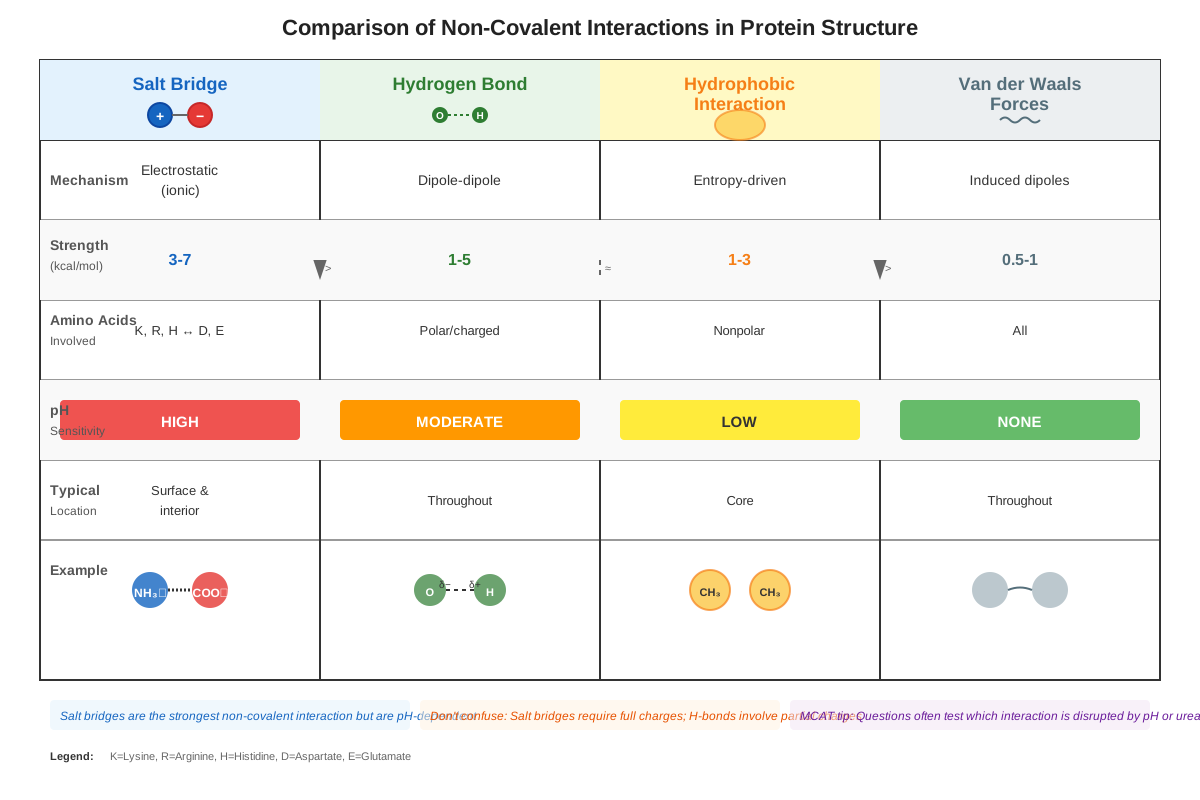
Salt bridges work alongside other non-covalent interactions → including hydrogen bonds (which can also involve charged groups), hydrophobic interactions (which drive charged residues to protein surfaces), and van der Waals forces (which contribute to optimal geometry). Together, these interactions determine protein stability → which affects protein function, enzyme activity, and cellular processes.
Changes in environmental conditions → such as pH, temperature, or ionic strength, affect salt bridge stability → which can lead to protein denaturation → resulting in loss of biological function. This connects to broader themes of homeostasis → and why cells maintain specific pH and ionic conditions.
In enzyme catalysis, salt bridges in the active site → position catalytic residues and stabilize charged transition states → which lowers activation energy → thereby increasing reaction rate. This links salt bridges to enzyme kinetics → and metabolic regulation.
High-Yield Facts
⭐ Salt bridges form between oppositely charged amino acid side chains: acidic residues (Asp, Glu) with basic residues (Lys, Arg, His)
⭐ Salt bridges are disrupted at both very low and very high pH because ionization states change, leading to protein denaturation
⭐ High ionic strength weakens salt bridges through charge screening by dissolved ions
⭐ Salt bridges are stronger in hydrophobic protein interiors (low dielectric environment) than on hydrated protein surfaces
⭐ Histidine (pKa ~6.0) is unique because it can gain or lose its positive charge near physiological pH, making it important for pH-dependent enzyme catalysis
- Salt bridges typically contribute 3-8 kcal/mol of stabilization energy in protein interiors but only 0.5-2 kcal/mol on protein surfaces
- Thermophilic proteins (from heat-loving organisms) often have more salt bridges than mesophilic proteins, contributing to their enhanced thermal stability
- In hemoglobin, salt bridges stabilize the deoxygenated T state; oxygen binding breaks these salt bridges, facilitating the transition to the R state
- Mutations that disrupt critical salt bridges can cause protein misfolding diseases and loss of function
- Salt bridges can be both intramolecular (within one polypeptide chain) and intermolecular (between different chains in quaternary structure)
- The optimal distance for salt bridge formation is approximately 2.8-4.0 Ångströms between charged atoms
- Arginine forms stronger salt bridges than lysine because its guanidinium group can form multiple hydrogen bonds simultaneously with carboxylate groups
Quick check — test yourself on Salt bridges so far.
Try Flashcards →Common Misconceptions
Misconception: Salt bridges are the strongest type of interaction in proteins → Correction: Disulfide bonds (covalent) are much stronger (~60 kcal/mol) than salt bridges (3-8 kcal/mol). Salt bridges are the strongest non-covalent interaction in low-dielectric environments but are comparable to or weaker than hydrogen bonds in aqueous environments.
Misconception: All charged amino acids in a protein form salt bridges → Correction: Many charged residues are located on protein surfaces where they interact with water rather than with other charged residues. Salt bridges require specific geometric arrangements and appropriate distances, which are not always achieved.
Misconception: Salt bridges only stabilize protein structure → Correction: While salt bridges often stabilize folded proteins, they can also stabilize unfolded or partially folded states. Additionally, breaking salt bridges can be functionally important, such as in conformational changes required for enzyme activity or allosteric regulation.
Misconception: Increasing pH always disrupts salt bridges → Correction: The effect of pH depends on which residues form the salt bridge. Increasing pH disrupts salt bridges involving basic residues (by deprotonating them) but doesn't directly affect salt bridges if the basic residue has a very high pKa (like arginine at 12.5). Conversely, decreasing pH disrupts salt bridges by protonating acidic residues.
Misconception: Salt bridges and ionic bonds are different types of interactions → Correction: Salt bridges ARE ionic bonds; the terms are synonymous in the context of protein structure. "Salt bridge" is simply the term used specifically for ionic interactions between amino acid side chains in proteins.
Misconception: Histidine always participates in salt bridges at physiological pH → Correction: Because histidine's pKa (~6.0) is near physiological pH (~7.4), it is predominantly deprotonated (neutral) under physiological conditions and therefore cannot form salt bridges unless the local environment lowers its pKa. Histidine's ability to be protonated or deprotonated near physiological pH makes it valuable for catalysis, not necessarily for forming stable salt bridges.
Worked Examples
Example 1: Predicting the Effect of pH on Protein Stability
Question: A researcher studies a protein that contains a critical salt bridge between Glu-45 and Lys-112 in its active site. The protein shows maximum activity at pH 7.0. Predict what will happen to protein activity at pH 3.0 and pH 11.0, and explain your reasoning.
Solution:
Step 1: Identify the ionization states at pH 7.0 (optimal conditions)
- Glu-45 (pKa ~4.3): At pH 7.0, glutamate is deprotonated → COO⁻ (negatively charged)
- Lys-112 (pKa ~10.5): At pH 7.0, lysine is protonated → NH₃⁺ (positively charged)
- Result: Salt bridge forms between opposite charges, stabilizing active site geometry
Step 2: Analyze pH 3.0 (acidic conditions)
- Glu-45: At pH 3.0 (below its pKa of 4.3), glutamate becomes protonated → COOH (neutral)
- Lys-112: At pH 3.0 (well below its pKa of 10.5), lysine remains protonated → NH₃⁺ (positive)
- Result: No salt bridge forms because glutamate is neutral
- Consequence: Active site destabilizes, protein activity decreases or is lost
Step 3: Analyze pH 11.0 (basic conditions)
- Glu-45: At pH 11.0 (well above its pKa of 4.3), glutamate remains deprotonated → COO⁻ (negative)
- Lys-112: At pH 11.0 (above its pKa of 10.5), lysine becomes deprotonated → NH₂ (neutral)
- Result: No salt bridge forms because lysine is neutral
- Consequence: Active site destabilizes, protein activity decreases or is lost
Conclusion: The protein will show dramatically reduced activity at both pH 3.0 and pH 11.0 because the critical salt bridge is disrupted at both extreme pH values. This explains why proteins typically have narrow optimal pH ranges corresponding to conditions where their stabilizing salt bridges remain intact.
Example 2: Analyzing a Mutagenesis Experiment
Question: Scientists create three mutant versions of an enzyme to study the importance of a salt bridge between Asp-78 and Arg-134:
- Mutant A: Asp-78 → Asn-78 (asparagine, polar uncharged)
- Mutant B: Asp-78 → Glu-78 (glutamate, acidic)
- Mutant C: Arg-134 → Lys-134 (lysine, basic)
Rank these mutants from most stable to least stable, and explain your reasoning.
Solution:
Step 1: Analyze the wild-type interaction
- Asp-78 (COO⁻) forms a salt bridge with Arg-134 (guanidinium⁺)
- This provides stabilization energy to the protein structure
Step 2: Evaluate Mutant A (Asp-78 → Asn)
- Asparagine is polar but uncharged (has amide group, not carboxyl)
- Cannot form a salt bridge with Arg-134
- Arginine's positive charge is now unsatisfied, creating electrostatic stress
- May form a hydrogen bond instead, but this is weaker than the original salt bridge
- Significant loss of stability expected
Step 3: Evaluate Mutant B (Asp-78 → Glu)
- Glutamate is also acidic with COO⁻ group
- Can still form a salt bridge with Arg-134
- Glutamate has one additional CH₂ group in its side chain (longer)
- If the geometry accommodates the extra length, the salt bridge remains
- Minimal loss of stability expected (possibly none if geometry is favorable)
Step 4: Evaluate Mutant C (Arg-134 → Lys)
- Lysine is also basic with NH₃⁺ group
- Can still form a salt bridge with Asp-78
- However, arginine's guanidinium group can form multiple hydrogen bonds simultaneously with carboxylate, while lysine's ammonium group forms fewer
- Arginine typically forms stronger salt bridges than lysine
- Moderate loss of stability expected
Ranking (most to least stable):
- Mutant B (Asp→Glu): Maintains salt bridge with minimal structural change
- Mutant C (Arg→Lys): Maintains salt bridge but with reduced strength
- Mutant A (Asp→Asn): Completely loses salt bridge, replaced by weaker hydrogen bond
Key Insight: Conservative substitutions that maintain charge (acidic for acidic, basic for basic) preserve salt bridges better than substitutions that eliminate charge. This principle is important for predicting the effects of mutations in both experimental and clinical contexts.
Exam Strategy
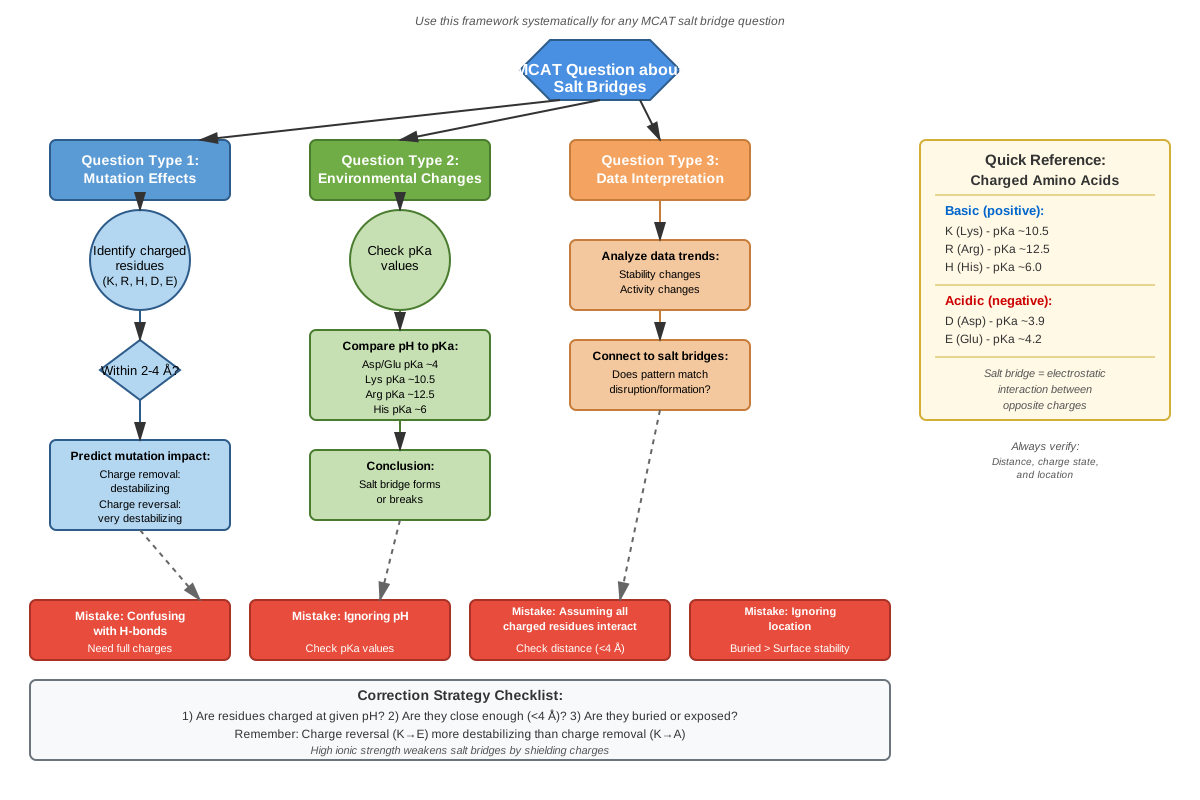
When approaching MCAT questions about salt bridges, use this systematic strategy:
1. Identify trigger words and phrases:
- "Ionic interaction," "electrostatic interaction," "charged residues"
- "pH stability," "denaturation," "protein stability"
- Specific amino acids: Asp, Glu, Lys, Arg, His
- "Mutation," "substitution," especially involving charged residues
- "Ionic strength," "salt concentration"
2. Immediately recall the five amino acids: When you see questions about charged interactions, mentally list Asp, Glu (negative) and Lys, Arg, His (positive). This prevents confusion with other amino acids.
3. For pH-related questions, use this decision tree:
- Is pH below the pKa of acidic residues (~4)? → Acidic groups become neutral
- Is pH above the pKa of basic residues (~10-12)? → Basic groups become neutral
- Is pH near 7? → Maximum salt bridge stability for most proteins
4. For mutation questions, apply the charge conservation principle:
- Acidic → acidic substitution: Likely maintains salt bridge
- Basic → basic substitution: Likely maintains salt bridge
- Charged → uncharged substitution: Definitely disrupts salt bridge
- Uncharged → charged substitution: May create new salt bridge or electrostatic stress
5. Process of elimination tips:
- Eliminate answers suggesting salt bridges form between like charges (both positive or both negative)
- Eliminate answers confusing salt bridges with disulfide bonds (covalent, involve cysteine)
- Eliminate answers suggesting salt bridges are unaffected by pH changes
- Be suspicious of answers claiming single salt bridges provide massive stability (>20 kcal/mol)
6. Time allocation: Salt bridge questions are typically medium difficulty. Spend 60-90 seconds on discrete questions, 90-120 seconds on passage-based questions. If a question requires detailed pKa calculations, it's likely testing whether you understand the concept, not whether you can calculate precisely—estimate and move forward.
Exam Tip: If a passage describes a protein stability experiment with varying pH or salt concentration, immediately predict that salt bridges are likely being tested. Skim for mentions of charged residues in the results section.
Memory Techniques
Mnemonic for acidic amino acids: "Asp and Glu are Negative too" (both end in a vowel sound and are negatively charged)
Mnemonic for basic amino acids: "Lysine, aRginine, and Histidine are Positive" (LRH = "Lurch" is positive/upbeat)
Visualization strategy: Picture salt bridges as actual bridges with a negative sign on one side and a positive sign on the other. When pH changes, imagine the signs fading away, causing the bridge to collapse.
The "6-7-10" rule for histidine: Histidine's pKa is 6, physiological pH is 7, so histidine is mostly neutral (not positive) at pH 7. This helps remember that histidine is NOT reliably positive at physiological pH, unlike lysine (pKa 10.5) and arginine (pKa 12.5).
Acronym for salt bridge disruption: "PITS" - PH extremes, Ionic strength, Temperature, Substitutions (mutations) all can disrupt salt bridges.
Spatial memory technique: Imagine the protein interior as a "VIP room" where salt bridges are strong and exclusive (low dielectric), while the protein surface is a "public pool" where salt bridges are weak because water molecules compete (high dielectric).
Summary
Salt bridges are electrostatic interactions between oppositely charged amino acid side chains that contribute significantly to protein stability and function. Formed between acidic residues (aspartate and glutamate) and basic residues (lysine, arginine, and histidine when protonated), these ionic bonds are particularly important in stabilizing tertiary and quaternary protein structures. The strength and stability of salt bridges depend critically on pH, ionic strength, and the dielectric environment, with interior salt bridges providing more stabilization than surface salt bridges due to reduced water competition. For the MCAT, students must understand that salt bridges are disrupted at extreme pH values (when ionization states change), weakened by high ionic strength (through charge screening), and can be eliminated by mutations that substitute charged residues with uncharged ones. Histidine's unique pKa near physiological pH makes it particularly important for pH-dependent processes. Salt bridges frequently appear in MCAT questions involving protein stability, enzyme active sites, allosteric regulation, and the interpretation of mutagenesis experiments, making this a high-yield topic that integrates amino acid chemistry, acid-base principles, and protein structure-function relationships.
Key Takeaways
- Salt bridges are ionic interactions between oppositely charged amino acid side chains (Asp/Glu with Lys/Arg/His) that stabilize protein structure
- Salt bridge stability is highly pH-dependent: disrupted at both low pH (acidic groups become neutral) and high pH (basic groups become neutral)
- High ionic strength weakens salt bridges through charge screening by dissolved ions in solution
- Salt bridges are stronger in hydrophobic protein interiors than on hydrated surfaces due to differences in dielectric environment
- Histidine (pKa ~6.0) is predominantly neutral at physiological pH, making it less reliable for forming stable salt bridges but valuable for pH-dependent catalysis
- Mutations that eliminate charge (charged → uncharged) disrupt salt bridges more severely than conservative substitutions (acidic → acidic or basic → basic)
- Salt bridges contribute to tertiary structure, quaternary structure, and active site geometry, linking protein structure to biological function
Related Topics
Hydrogen Bonding in Proteins: Salt bridges often work in concert with hydrogen bonds, and charged residues can participate in both types of interactions. Understanding how these non-covalent forces complement each other deepens comprehension of protein stability.
Protein Denaturation: Salt bridge disruption is a major mechanism of denaturation. Studying denaturation provides context for understanding when and why salt bridges break.
Enzyme Kinetics and pH Optima: Many enzymes have pH optima determined by salt bridges in their active sites. This connects salt bridge stability to enzyme function and metabolic regulation.
Hemoglobin Cooperativity: The classic example of salt bridges in action, where they stabilize the T state and their breaking facilitates the T→R transition. This illustrates quaternary structure and allosteric regulation.
Protein Engineering and Drug Design: Understanding salt bridges enables rational design of more stable proteins and drugs that target specific protein interactions, connecting basic biochemistry to applied science.
Practice CTA
Now that you've mastered the fundamentals of salt bridges, it's time to solidify your understanding through active practice. Challenge yourself with MCAT-style practice questions that test your ability to predict pH effects, analyze mutagenesis data, and interpret protein stability experiments. Use flashcards to drill the five amino acids involved in salt bridges and their pKa values until recall is automatic. Remember: understanding salt bridges isn't just about memorizing facts—it's about developing the analytical skills to approach any protein structure question with confidence. Your investment in mastering this high-yield topic will pay dividends across multiple MCAT passages. You've got this!
Sign up free to keep reading
Create a free AnvayaPrep account to finish this MCAT guide on Salt bridges — plus flashcards and practice questions.