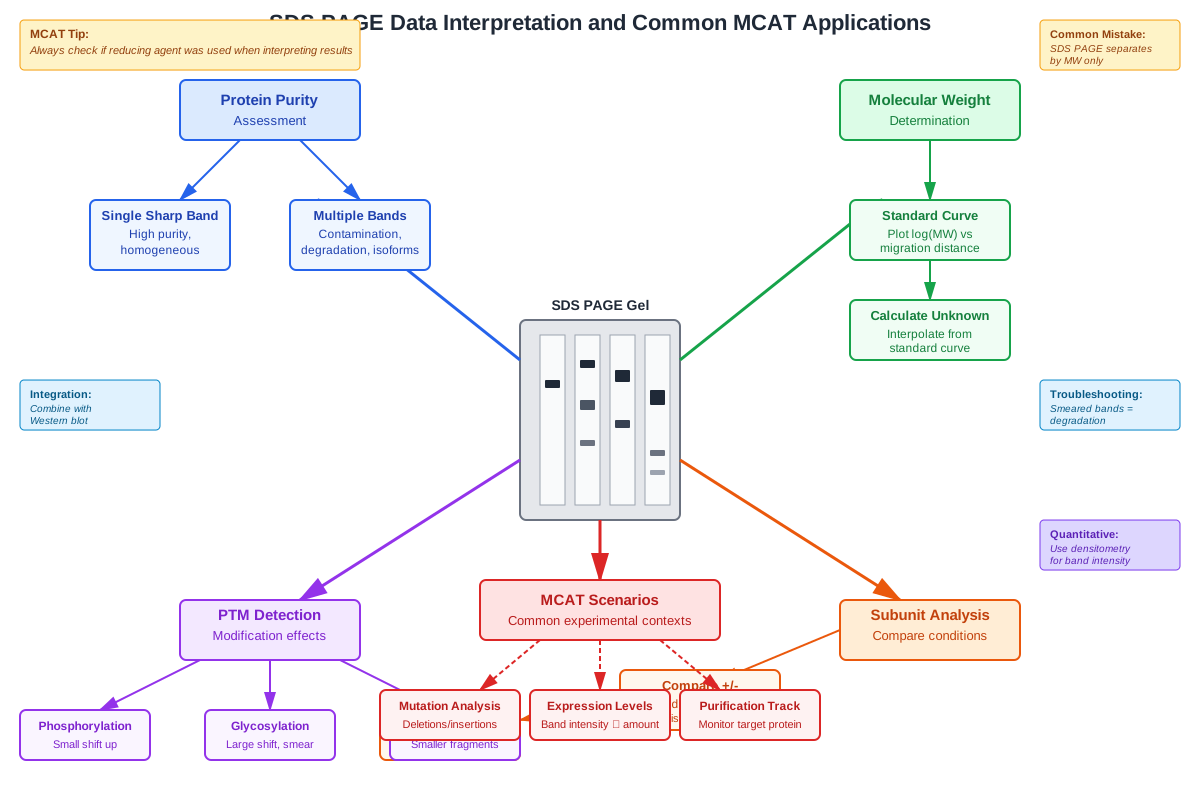
Overview
SDS PAGE (sodium dodecyl sulfate polyacrylamide gel electrophoresis) represents one of the most fundamental and widely-used laboratory techniques in biochemistry for separating proteins based on their molecular weight. This powerful analytical method combines the denaturing properties of the anionic detergent SDS with the molecular sieving capabilities of polyacrylamide gel to achieve high-resolution protein separation. Understanding SDS PAGE Biochemistry is essential for MCAT success because it integrates multiple core concepts including protein structure, charge properties, molecular interactions, and experimental design—all of which are heavily tested on the exam.
For the SDS PAGE MCAT preparation, students must grasp not only the technical mechanism of the technique but also its applications in protein analysis, its limitations, and how to interpret experimental results presented in passage-based questions. The MCAT frequently presents SDS PAGE data in the form of gel images within research passages, requiring students to analyze band patterns, estimate molecular weights, and draw conclusions about protein composition or experimental manipulations. This technique serves as a bridge between theoretical knowledge of Amino Acids and Proteins and practical laboratory applications that appear throughout the biological sciences sections.
Within the broader context of Biochemistry, SDS PAGE connects directly to fundamental concepts of protein structure (primary through quaternary), protein denaturation, charge-to-mass ratios, and molecular separation techniques. It also relates to other analytical methods such as isoelectric focusing, Western blotting, and chromatography. Mastery of SDS PAGE provides a framework for understanding how biochemists characterize proteins and how experimental data supports or refutes hypotheses about protein identity, purity, size, and post-translational modifications.
Learning Objectives
- [ ] Define SDS PAGE using accurate Biochemistry terminology
- [ ] Explain why SDS PAGE matters for the MCAT
- [ ] Apply SDS PAGE to exam-style questions
- [ ] Identify common mistakes related to SDS PAGE
- [ ] Connect SDS PAGE to related Biochemistry concepts
- [ ] Predict the relative migration distances of proteins with different molecular weights on an SDS PAGE gel
- [ ] Interpret SDS PAGE gel images to determine protein composition and purity
- [ ] Distinguish between reducing and non-reducing SDS PAGE conditions and predict their effects on disulfide-bonded proteins
- [ ] Calculate approximate molecular weights of unknown proteins using standard protein markers
Prerequisites
- Protein structure levels (primary, secondary, tertiary, quaternary): Essential for understanding how SDS denatures proteins and why quaternary structure is disrupted
- Amino acid properties and peptide bonds: Necessary to comprehend how proteins are denatured and coated uniformly with SDS
- Basic principles of charge and electrophoresis: Required to understand why proteins migrate toward the positive electrode
- Concept of molecular weight/mass: Fundamental to grasping the separation principle of SDS PAGE
- Disulfide bonds and reducing agents: Critical for distinguishing between reducing and non-reducing conditions
- Basic laboratory technique terminology: Helps in understanding experimental setup and result interpretation
Why This Topic Matters
Clinical and Research Significance
SDS PAGE serves as a cornerstone technique in clinical diagnostics, pharmaceutical development, and biomedical research. Clinicians use this method to detect abnormal proteins in patient samples, diagnose genetic disorders affecting protein expression, and monitor disease progression. In drug development, SDS PAGE verifies the purity and identity of therapeutic proteins, ensuring product quality and patient safety. Research laboratories employ this technique daily to confirm protein expression, assess purification success, and characterize protein-protein interactions.
MCAT Exam Statistics
SDS PAGE appears with high frequency on the MCAT, particularly in Biochemistry passages within the Chemical and Physical Foundations of Biological Systems section and the Biological and Biochemical Foundations of Living Systems section. Approximately 15-20% of biochemistry passages include some form of protein separation or characterization data. Questions typically assess:
- Interpretation of gel images and band patterns
- Prediction of migration patterns based on molecular weight
- Understanding of experimental conditions (reducing vs. non-reducing)
- Application of SDS PAGE principles to novel scenarios
- Integration with other techniques like Western blotting
Common Exam Presentations
The MCAT presents SDS PAGE in several characteristic formats:
- Research passage with gel image: Students must interpret band patterns to answer questions about protein identity, purity, or experimental outcomes
- Experimental design questions: Students must predict results or identify appropriate controls
- Comparison questions: Distinguishing SDS PAGE from other separation techniques (native PAGE, isoelectric focusing)
- Calculation problems: Estimating molecular weights using standard curves or marker proteins
- Mechanism questions: Testing understanding of why SDS coating enables size-based separation
Core Concepts
Fundamental Principle of SDS PAGE
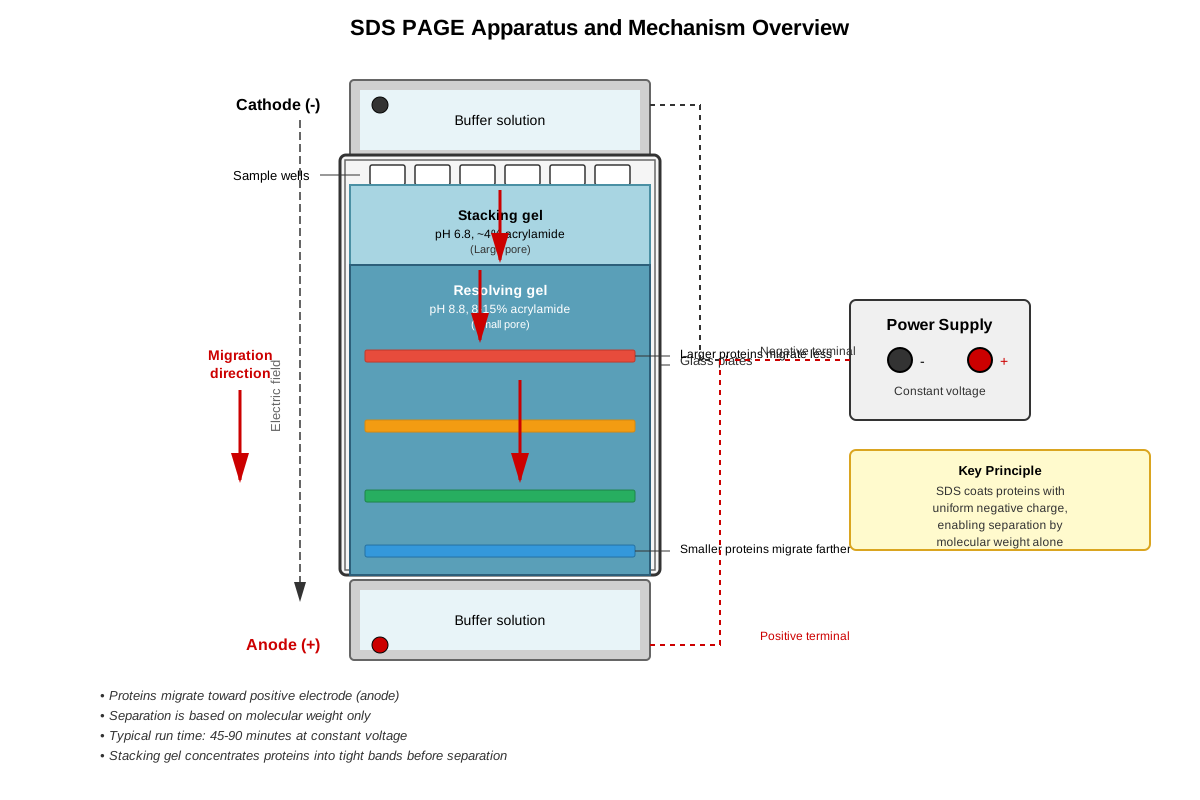
SDS PAGE operates on the principle that proteins can be separated based solely on their molecular weight when they are denatured and uniformly coated with negative charge. The technique name describes its key components: sodium dodecyl sulfate (SDS), an anionic detergent, and polyacrylamide gel electrophoresis (PAGE), the separation matrix and method. Unlike native gel electrophoresis, which separates proteins based on both charge and size, SDS PAGE eliminates the variable of intrinsic protein charge, creating a system where size becomes the sole determinant of migration.
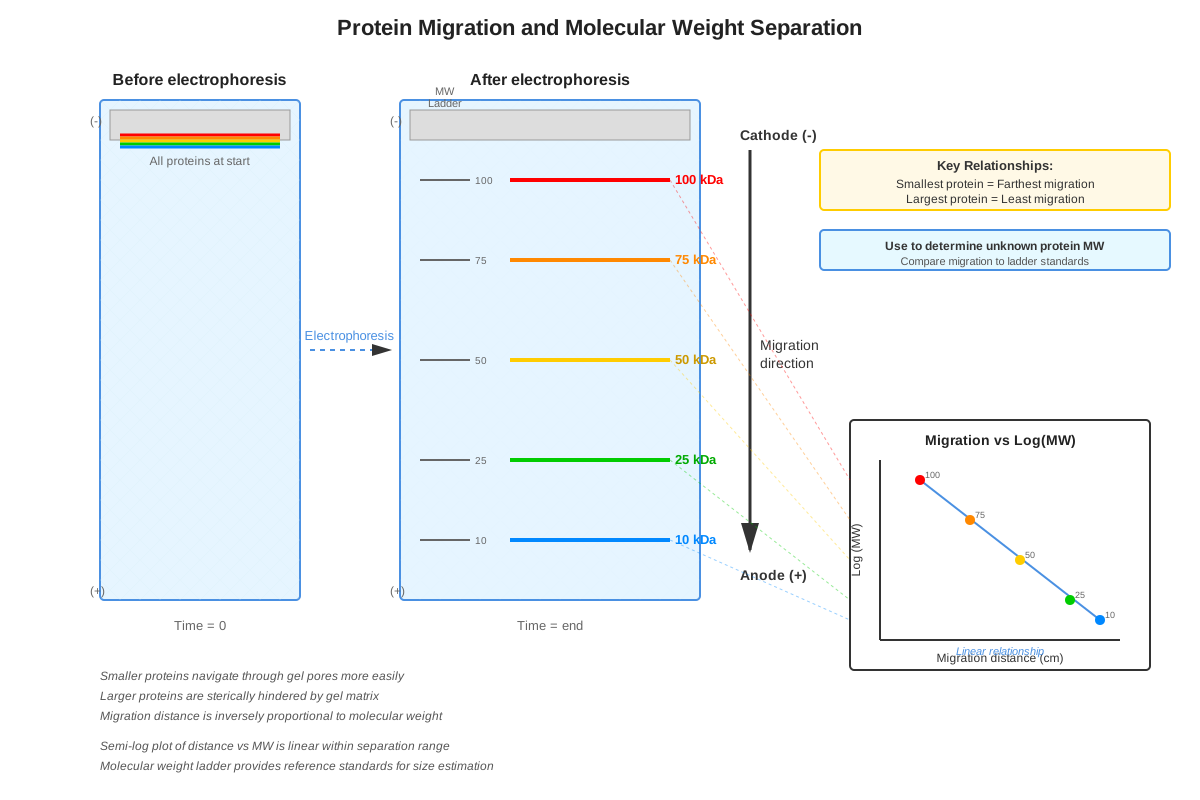
The separation occurs because smaller proteins navigate through the gel matrix pores more easily than larger proteins, resulting in differential migration rates. When an electric field is applied, all SDS-coated proteins move toward the positive electrode (anode), but smaller proteins travel farther in a given time period. This size-dependent sieving effect produces distinct bands on the gel, with each band representing proteins of similar molecular weight.
The Role of SDS (Sodium Dodecyl Sulfate)
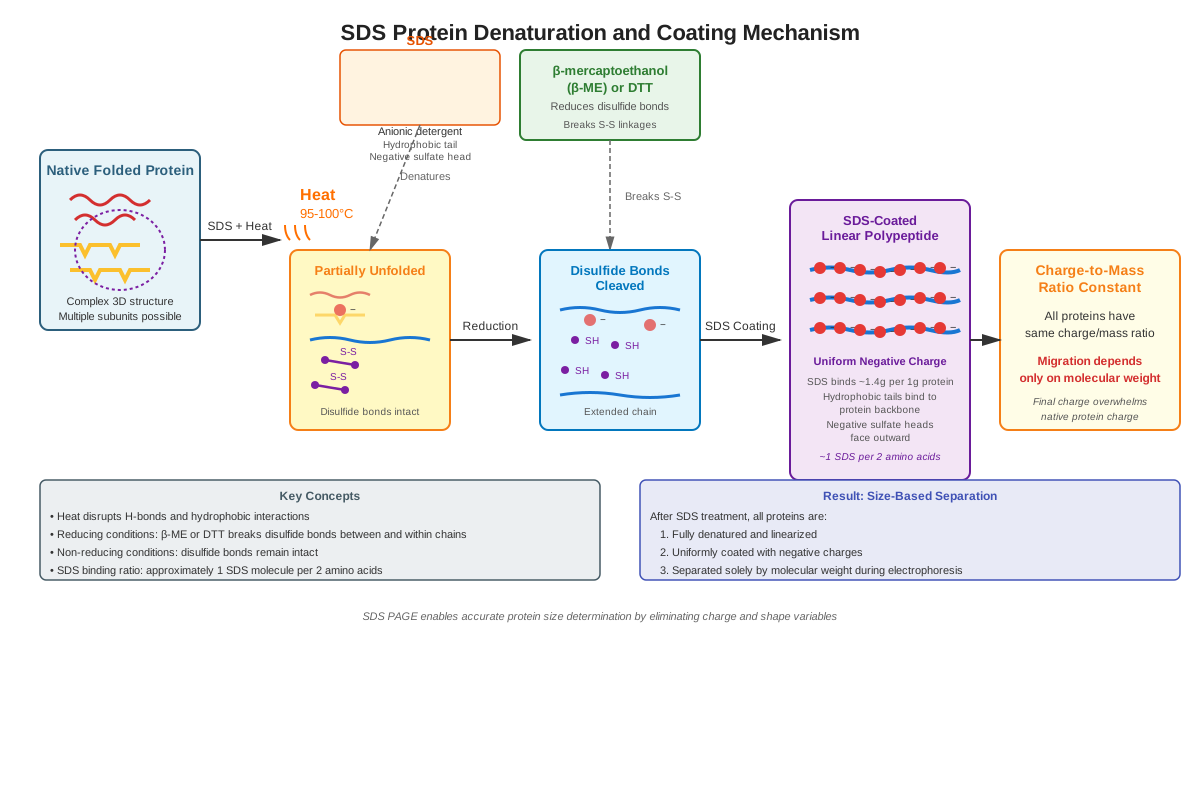
SDS is an anionic detergent with a 12-carbon hydrophobic tail and a negatively charged sulfate head group. When added to protein samples, SDS molecules bind to proteins through hydrophobic interactions between the detergent tail and hydrophobic amino acid residues. This binding accomplishes three critical functions:
- Denaturation: SDS disrupts non-covalent interactions (hydrogen bonds, ionic interactions, hydrophobic interactions) that maintain secondary, tertiary, and quaternary protein structure, unfolding proteins into linear polypeptide chains
- Uniform charge coating: SDS binds at a relatively constant ratio of approximately 1.4 grams SDS per gram of protein, or roughly one SDS molecule per two amino acid residues
- Charge masking: The abundant negative charges from SDS molecules overwhelm the intrinsic charges of amino acid side chains, giving all proteins a similar charge-to-mass ratio
This uniform negative charge density ensures that the electrophoretic mobility depends primarily on molecular weight rather than the protein's native charge distribution.
Heat Denaturation and Sample Preparation
Sample preparation for SDS PAGE typically involves heating protein samples to 95-100°C for 5-10 minutes in the presence of SDS and a buffer. This heat denaturation step ensures complete unfolding of proteins and maximizes SDS binding. The standard sample buffer contains:
- SDS (typically 2-4%): For denaturation and charge coating
- Glycerol (5-10%): Increases sample density so it sinks into gel wells
- Bromophenol blue or other tracking dye: Allows visualization of electrophoresis progress
- Tris-HCl buffer (pH ~6.8): Maintains appropriate pH
- β-mercaptoethanol or dithiothreitol (DTT) (optional): Reducing agents that break disulfide bonds
Reducing vs. Non-Reducing Conditions
A critical distinction in SDS PAGE methodology involves the presence or absence of reducing agents:
| Condition | Reducing Agents | Effect on Disulfide Bonds | Result |
|---|---|---|---|
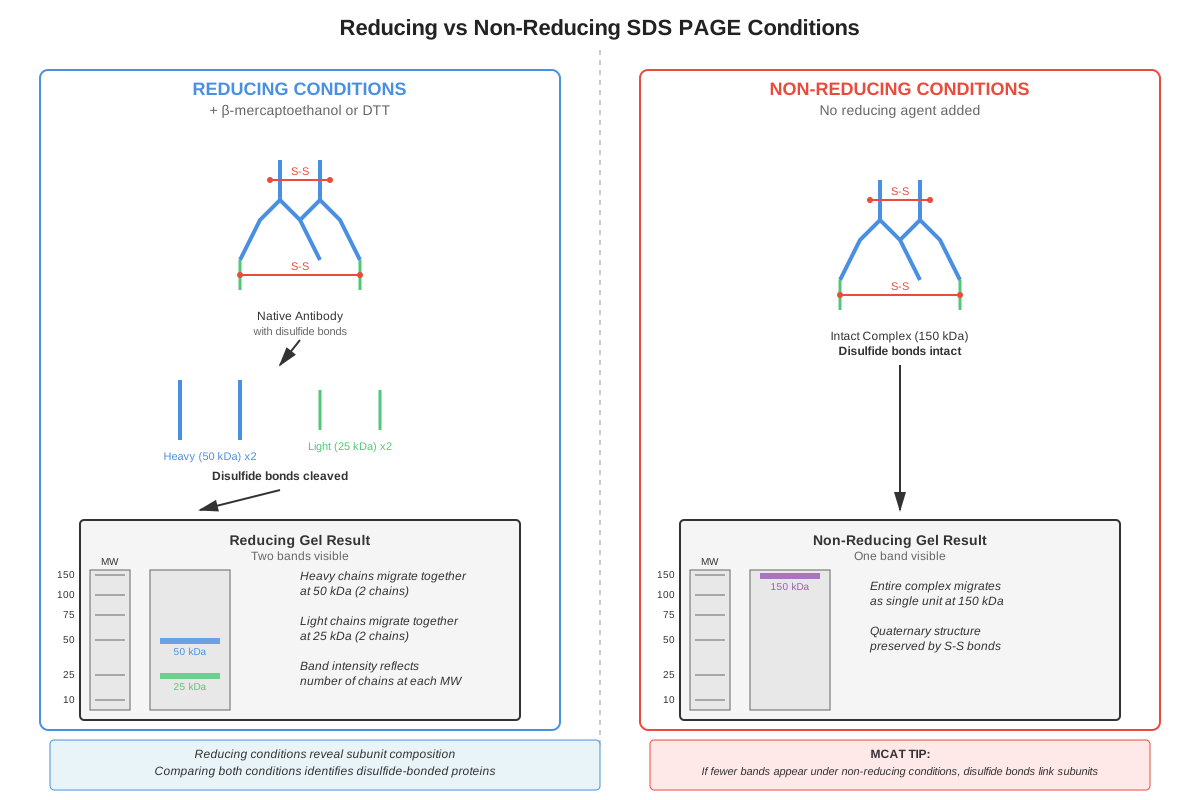
| Reducing | β-mercaptoethanol or DTT present | Breaks all disulfide bonds (both intra- and inter-chain) | Separates all polypeptide chains; multi-subunit proteins dissociate completely |
| Non-reducing | No reducing agents | Disulfide bonds remain intact | Proteins with disulfide-linked subunits remain associated; provides information about disulfide bonding patterns |
This distinction is experimentally powerful. For example, immunoglobulin G (IgG) antibodies consist of two heavy chains and two light chains connected by disulfide bonds. Under reducing conditions, IgG produces two bands (heavy and light chains). Under non-reducing conditions, IgG migrates as a single, larger band representing the intact four-chain complex.
Polyacrylamide Gel Matrix
The polyacrylamide gel serves as the molecular sieve that separates proteins by size. This gel forms through polymerization of acrylamide monomers, cross-linked by N,N'-methylenebisacrylamide (bis-acrylamide). The polymerization creates a three-dimensional mesh with pores of defined size.
Gel percentage determines pore size and separation range:
- Low percentage gels (6-8%): Larger pores, optimal for separating large proteins (100-500 kDa)
- Medium percentage gels (10-12%): Standard pores, suitable for most proteins (15-150 kDa)
- High percentage gels (15-20%): Smaller pores, best for small proteins and peptides (5-50 kDa)
The relationship between gel percentage and pore size is inverse: higher acrylamide concentrations produce smaller pores and slower migration of all proteins.
Discontinuous Buffer System (Laemmli System)
Most SDS PAGE protocols use a discontinuous buffer system (also called the Laemmli system) that includes two gel layers:
- Stacking gel (upper layer):
- Lower acrylamide concentration (4-5%)
- Lower pH (~6.8)
- Large pores
- Concentrates proteins into thin, sharp bands before separation begins
- Resolving gel (lower layer):
- Higher acrylamide concentration (8-15%)
- Higher pH (~8.8)
- Smaller pores
- Performs the actual size-based separation
The discontinuous buffer system exploits differences in ion mobility to concentrate dilute protein samples into narrow starting zones, dramatically improving resolution. Proteins stack at the interface between the stacking and resolving gels, then enter the resolving gel simultaneously for uniform separation.
Migration Pattern and Molecular Weight Determination
In SDS PAGE, migration distance is inversely proportional to the logarithm of molecular weight. This relationship allows molecular weight estimation:
log(MW) = -m × (migration distance) + bWhere m and b are constants determined by gel conditions. In practice, researchers run molecular weight markers (protein standards of known size) alongside unknown samples. By plotting log(MW) versus migration distance for standards, a standard curve enables molecular weight estimation for unknown proteins.
Key principles of migration:
- Smaller proteins migrate farther (closer to the bottom/positive electrode)
- Larger proteins migrate shorter distances (remain closer to the top/wells)
- Migration is proportional to voltage and time
- All proteins eventually reach a maximum separation based on gel length
Visualization and Detection
After electrophoresis, proteins must be visualized. Common methods include:
- Coomassie Blue staining:
- Most common general protein stain
- Detects ~50-100 ng protein per band
- Produces blue bands on clear background
- Silver staining:
- More sensitive (detects ~1-5 ng protein)
- More complex procedure
- Produces brown/black bands
- Fluorescent stains:
- High sensitivity
- Compatible with downstream analysis
- Requires specialized imaging equipment
The stained gel produces a visual pattern of bands, where each band represents proteins of similar molecular weight. Band intensity correlates with protein amount (within the linear range of the stain).
Concept Relationships
The core concepts of SDS PAGE form an integrated system where each component enables the overall separation mechanism. SDS denaturation and charge coating → creates uniformly charged protein-SDS complexes → which enables size-based separation → through the polyacrylamide gel matrix → under the influence of an electric field → producing migration patterns → that allow molecular weight determination.
The choice between reducing and non-reducing conditions branches the technique into two applications: reducing conditions reveal individual polypeptide chains and their molecular weights, while non-reducing conditions preserve disulfide-bonded structures and provide information about protein assembly and covalent modifications.
SDS PAGE connects to prerequisite knowledge of protein structure because the technique systematically disrupts each level: SDS eliminates secondary and tertiary structure, heat breaks weak interactions, and reducing agents cleave disulfide bonds that stabilize tertiary and quaternary structure. Understanding amino acid properties explains why SDS binds uniformly—the detergent interacts with hydrophobic residues present throughout all proteins.
The technique relates to broader biochemistry concepts including protein purification (SDS PAGE assesses purity), protein expression (confirms successful production of recombinant proteins), and post-translational modifications (changes in molecular weight reveal modifications like glycosylation or proteolytic cleavage). SDS PAGE also serves as the foundation for Western blotting, where proteins separated by SDS PAGE are transferred to membranes for antibody-based detection.
High-Yield Facts
⭐ SDS binds proteins at approximately 1.4 g SDS per gram protein, giving all proteins a uniform negative charge-to-mass ratio
⭐ In SDS PAGE, smaller proteins migrate farther toward the positive electrode (anode) than larger proteins
⭐ Reducing agents (β-mercaptoethanol or DTT) break disulfide bonds, separating polypeptide chains that are covalently linked
⭐ The relationship between migration distance and molecular weight is logarithmic: log(MW) is inversely proportional to migration distance
⭐ SDS PAGE separates proteins based solely on molecular weight, not charge or shape, because SDS denatures proteins and masks intrinsic charges
- Higher percentage polyacrylamide gels have smaller pores and are better for separating small proteins
- The discontinuous buffer system (stacking and resolving gels) concentrates proteins into sharp bands before separation
- Heat (95-100°C) combined with SDS denatures proteins by disrupting non-covalent interactions
- Non-reducing SDS PAGE preserves disulfide bonds and shows whether proteins have disulfide-linked subunits
- Molecular weight markers (protein ladders) run alongside samples enable estimation of unknown protein sizes
- Proteins migrate toward the positive electrode because SDS coating makes them negatively charged
- Band intensity on stained gels correlates with protein amount (within the linear detection range)
- Quaternary structure is disrupted by SDS, separating multi-subunit proteins into individual subunits
- The pH difference between stacking gel (6.8) and resolving gel (8.8) contributes to the stacking effect
- SDS PAGE cannot distinguish between proteins of identical molecular weight but different sequences
Quick check — test yourself on SDS PAGE so far.
Try Flashcards →Common Misconceptions
Misconception: Proteins migrate toward the negative electrode in SDS PAGE because proteins are positively charged.
Correction: Proteins migrate toward the positive electrode (anode) because SDS coating makes all proteins negatively charged, regardless of their intrinsic charge. The abundant negative charges from SDS molecules overwhelm any positive charges from basic amino acids.
Misconception: SDS PAGE separates proteins based on both size and charge, like native PAGE.
Correction: SDS PAGE separates proteins based solely on molecular weight. The uniform SDS coating eliminates charge as a variable by giving all proteins similar charge-to-mass ratios. Native PAGE, in contrast, separates by both charge and size because proteins retain their native structure and intrinsic charges.
Misconception: Larger proteins migrate farther in SDS PAGE because they have more charge.
Correction: Smaller proteins migrate farther because they navigate through gel pores more easily. Larger proteins are retarded by the gel matrix and migrate shorter distances. The charge-to-mass ratio is constant for all SDS-coated proteins, so size is the determining factor.
Misconception: Reducing conditions only affect proteins with quaternary structure.
Correction: Reducing conditions affect any protein containing disulfide bonds, whether those bonds are within a single polypeptide chain (intramolecular) or between different chains (intermolecular). Many proteins with only tertiary structure contain intramolecular disulfide bonds that, when reduced, may cause slight changes in migration due to altered compactness.
Misconception: The percentage of polyacrylamide gel doesn't matter as long as you run the gel long enough.
Correction: Gel percentage critically determines the separation range. A 10% gel cannot effectively separate very large proteins (>200 kDa) even with extended run times because the pores are too small for size-dependent differential migration. Similarly, a 15% gel cannot resolve small proteins (<20 kDa) that all migrate rapidly through the relatively large pores.
Misconception: All bands on an SDS PAGE gel represent single, pure proteins.
Correction: A single band may contain multiple proteins of similar molecular weight that co-migrate. Additionally, a single protein may produce multiple bands if it undergoes degradation, has multiple isoforms, or contains post-translational modifications that alter its molecular weight. Purity assessment requires additional techniques like mass spectrometry.
Misconception: SDS PAGE preserves protein function and activity.
Correction: SDS PAGE is a denaturing technique that completely destroys protein structure and function. The combination of SDS and heat unfolds proteins irreversibly. Proteins cannot be recovered in active form after SDS PAGE, unlike some native gel electrophoresis methods.
Worked Examples
Example 1: Interpreting a Reducing vs. Non-Reducing SDS PAGE Experiment
Scenario: A researcher studies a novel enzyme suspected to be a homodimer (two identical subunits). Each subunit has a molecular weight of 45 kDa. The researcher runs two SDS PAGE gels: one under reducing conditions and one under non-reducing conditions. Under reducing conditions, a single band appears at 45 kDa. Under non-reducing conditions, a single band appears at 90 kDa.
Question: What can be concluded about the structure of this enzyme?
Solution:
Step 1: Analyze the reducing condition result.
- Reducing agents (β-mercaptoethanol or DTT) break all disulfide bonds
- A single band at 45 kDa indicates individual subunits of 45 kDa each
- This confirms the subunit molecular weight
Step 2: Analyze the non-reducing condition result.
- No reducing agents means disulfide bonds remain intact
- A single band at 90 kDa (exactly 2 × 45 kDa) indicates two subunits remain associated
- The 90 kDa band represents the intact dimer
Step 3: Integrate the findings.
- The enzyme is indeed a homodimer (two identical 45 kDa subunits)
- The two subunits are held together by disulfide bond(s)
- SDS denatures the protein and disrupts non-covalent interactions, but cannot break disulfide bonds without reducing agents
- Under non-reducing conditions, the covalent disulfide bond(s) keep the subunits together despite SDS denaturation
Conclusion: The enzyme is a homodimer with subunits connected by one or more intermolecular disulfide bonds. This is a classic pattern for disulfide-bonded dimers.
MCAT Connection: This type of question tests understanding of reducing vs. non-reducing conditions, the nature of disulfide bonds (covalent), and the ability to interpret gel patterns. The MCAT frequently presents similar scenarios with antibodies, hormones, or other multi-subunit proteins.
Example 2: Molecular Weight Estimation Using Standard Curve
Scenario: An SDS PAGE gel is run with molecular weight markers and an unknown protein. The markers and their migration distances are:
| Protein Standard | MW (kDa) | Migration Distance (cm) |
|---|---|---|
| Marker A | 200 | 2.0 |
| Marker B | 116 | 3.5 |
| Marker C | 66 | 5.0 |
| Marker D | 45 | 6.0 |
| Marker E | 29 | 7.5 |
The unknown protein migrates 5.5 cm.
Question: Estimate the molecular weight of the unknown protein.
Solution:
Step 1: Create a standard curve by plotting log(MW) versus migration distance.
| MW (kDa) | log(MW) | Migration (cm) |
|---|---|---|
| 200 | 2.301 | 2.0 |
| 116 | 2.064 | 3.5 |
| 66 | 1.820 | 5.0 |
| 45 | 1.653 | 6.0 |
| 29 | 1.462 | 7.5 |
Step 2: Recognize the linear relationship.
- In SDS PAGE, log(MW) is inversely proportional to migration distance
- The relationship is approximately linear over the separation range
Step 3: Interpolate for the unknown protein at 5.5 cm.
- The unknown migrates between Marker C (66 kDa at 5.0 cm) and Marker D (45 kDa at 6.0 cm)
- At 5.5 cm, the protein is halfway between these markers
Step 4: Calculate using linear interpolation.
- log(MW) at 5.0 cm = 1.820
- log(MW) at 6.0 cm = 1.653
- Difference = 1.820 - 1.653 = 0.167 over 1.0 cm
- At 5.5 cm: log(MW) = 1.820 - (0.5 × 0.167) = 1.820 - 0.084 = 1.736
Step 5: Convert back to molecular weight.
- MW = 10^1.736 = 54.5 kDa
Conclusion: The unknown protein has an estimated molecular weight of approximately 54-55 kDa.
MCAT Connection: While the MCAT rarely requires precise calculations, understanding that molecular weight can be estimated from migration distance relative to standards is essential. Questions may ask students to identify which standard an unknown protein is closest to, or to rank proteins by size based on band positions.
Exam Strategy
Approaching SDS PAGE Questions
When encountering SDS PAGE questions on the MCAT, follow this systematic approach:
- Identify the experimental conditions: Immediately determine whether the experiment uses reducing or non-reducing conditions, as this fundamentally changes interpretation
- Locate the molecular weight markers: These provide the reference frame for estimating unknown protein sizes
- Apply the migration rule: Remember that smaller proteins migrate farther (toward the bottom/positive electrode)
- Consider band patterns: Multiple bands may indicate protein degradation, multiple subunits, or post-translational modifications
- Integrate with passage information: Connect gel results to the biological question or hypothesis being tested
Trigger Words and Phrases
Watch for these key phrases that signal SDS PAGE concepts:
- "Under reducing conditions" or "in the presence of β-mercaptoethanol": Indicates disulfide bonds are broken
- "Molecular weight determination": SDS PAGE is the likely technique
- "Protein purity": SDS PAGE assesses purity by showing single vs. multiple bands
- "Subunit composition": Compare reducing vs. non-reducing to determine subunit structure
- "Migrated farther/faster": Indicates smaller molecular weight
- "Higher molecular weight band": Appears closer to the wells (top of gel)
- "Denatured" or "under denaturing conditions": Confirms proteins are unfolded
Process of Elimination Tips
When evaluating answer choices:
- Eliminate options that reverse the size-migration relationship: If an answer states larger proteins migrate farther, eliminate it immediately
- Check for charge-based explanations: If an answer explains SDS PAGE separation based on protein charge differences, it's incorrect (SDS masks intrinsic charges)
- Verify reducing agent effects: Answers that claim reducing agents affect non-covalent bonds or that non-reducing conditions break disulfide bonds are wrong
- Assess molecular weight calculations: Eliminate answers with molecular weights that don't match the band position relative to standards
- Look for quaternary structure preservation: If an answer claims SDS PAGE preserves quaternary structure, it's incorrect (SDS disrupts non-covalent interactions holding subunits together)
Time Allocation
For SDS PAGE questions:
- Gel interpretation questions (30-45 seconds): Quickly identify band positions relative to standards
- Mechanism questions (45-60 seconds): Recall the principle that SDS creates uniform charge-to-mass ratios
- Experimental design questions (60-90 seconds): Consider what each condition (reducing vs. non-reducing) reveals
- Passage-based questions with gel images (60-90 seconds): Integrate gel data with passage information
Exam Tip: If a passage shows an SDS PAGE gel, immediately scan for molecular weight markers and note whether reducing agents were used. This 10-second investment saves time on every question about that gel.
Memory Techniques
Mnemonics
"Small Dudes Sprint" - Smaller proteins migrate Down (farther), SDS PAGE Runs by Inverse size-Negative charge-Toward positive
"RED Breaks Bonds" - Reducing Environment Disrupts Disulfide bonds
"SDS = Same Damn Size-charge ratio" - Reminds you that SDS creates uniform charge-to-mass ratios
"HEAT Helps" - Heat Enables All Tertiary structure to unfold, Helps SDS binding
Visualization Strategy
Picture an SDS PAGE gel as a race through a forest:
- The gel matrix is like trees and undergrowth
- Small proteins are like children who can weave through obstacles quickly
- Large proteins are like adults carrying heavy backpacks who move slowly through dense vegetation
- Everyone is running toward the same finish line (positive electrode)
- The SDS coating is like giving everyone the same uniform, so size is the only difference
Acronym for Sample Buffer Components
"SG-BT-R" (Sergeant-Better):
- SDS - denatures and coats
- Glycerol - adds density
- Bromophenol blue - tracking dye
- Tris buffer - maintains pH
- Reducing agent (optional) - breaks disulfide bonds
Conceptual Anchor
Remember: "SDS PAGE = Size Determines Separation, Protein Analysis by Gel Electrophoresis"
This reminds you that:
- Size (molecular weight) is the separation principle
- It's used for protein analysis
- The method is gel electrophoresis
Summary
SDS PAGE is a fundamental protein separation technique that resolves proteins based solely on molecular weight by denaturing them with SDS and heat, coating them uniformly with negative charge, and separating them through a polyacrylamide gel matrix under an electric field. The anionic detergent SDS binds proteins at a constant ratio, masking intrinsic charges and creating uniform charge-to-mass ratios, which ensures that migration depends only on size. Smaller proteins navigate through gel pores more easily and migrate farther toward the positive electrode, while larger proteins are retarded by the matrix and migrate shorter distances. The critical distinction between reducing conditions (which break disulfide bonds and separate all polypeptide chains) and non-reducing conditions (which preserve disulfide bonds) allows researchers to determine subunit composition and disulfide bonding patterns. Molecular weight estimation is achieved by comparing unknown protein migration to molecular weight standards, exploiting the logarithmic relationship between size and migration distance. For MCAT success, students must interpret gel images, predict migration patterns, understand the effects of experimental conditions, and connect SDS PAGE results to broader questions about protein structure, purity, and function.
Key Takeaways
- SDS PAGE separates proteins exclusively by molecular weight because SDS denaturation and uniform charge coating eliminate charge and shape as variables
- Smaller proteins migrate farther toward the positive electrode (anode) than larger proteins due to easier navigation through gel pores
- Reducing agents (β-mercaptoethanol or DTT) break disulfide bonds, revealing individual polypeptide chains, while non-reducing conditions preserve disulfide-bonded structures
- The relationship between molecular weight and migration is logarithmic: log(MW) is inversely proportional to migration distance
- SDS binds at ~1.4 g SDS per gram protein, creating uniform negative charge density that masks intrinsic protein charges
- Gel percentage determines separation range: lower percentage for large proteins, higher percentage for small proteins
- SDS PAGE is a denaturing technique that destroys protein structure and function but provides critical information about molecular weight, purity, and subunit composition
Related Topics
Native PAGE: Unlike SDS PAGE, native PAGE preserves protein structure and separates based on both charge and size, useful for studying protein-protein interactions and maintaining enzymatic activity
Isoelectric Focusing (IEF): Separates proteins based on isoelectric point (pI) rather than molecular weight, often combined with SDS PAGE in two-dimensional gel electrophoresis
Western Blotting: Uses SDS PAGE as the first step, followed by transfer to a membrane and antibody-based detection for specific protein identification
Two-Dimensional Gel Electrophoresis (2D-PAGE): Combines IEF (first dimension) with SDS PAGE (second dimension) for high-resolution separation of complex protein mixtures
Mass Spectrometry: Complementary technique for precise molecular weight determination and protein identification, often used to analyze bands excised from SDS PAGE gels
Protein Purification Techniques: SDS PAGE assesses the success of purification methods like chromatography and confirms protein purity
Mastering SDS PAGE provides the foundation for understanding these advanced protein analysis techniques and interpreting complex biochemical experiments presented in MCAT passages.
Practice CTA
Now that you've mastered the core concepts of SDS PAGE, it's time to solidify your understanding through active practice. Work through the practice questions and flashcards to test your ability to interpret gel images, predict experimental outcomes, and apply these principles to novel scenarios. Remember, the MCAT rewards not just knowledge but the ability to apply concepts quickly and accurately under time pressure. Each practice question you complete strengthens your pattern recognition and builds the confidence you need for test day. You've got this—now prove it to yourself through deliberate practice!
Sign up free to keep reading
Create a free AnvayaPrep account to finish this MCAT guide on SDS PAGE — plus flashcards and practice questions.