Overview
DNA replication biochemistry is a cornerstone topic within the Biochemistry section of the MCAT, specifically under the Nucleic Acids and Biotechnology unit. This process represents one of the most fundamental mechanisms in molecular biology: the faithful duplication of genetic information before cell division. Understanding the biochemical machinery, enzymatic players, and molecular mechanisms of DNA replication is essential not only for answering direct questions about replication itself but also for comprehending related topics such as DNA repair, mutation, transcription regulation, and the molecular basis of cancer. The MCAT frequently tests this topic through passage-based questions that integrate biochemical mechanisms with experimental design, requiring students to apply their knowledge of enzymes, directionality, and the chemical properties of nucleic acids.
The biochemistry of DNA replication involves a sophisticated orchestra of enzymes and proteins working in precise coordination. From the initial unwinding of the double helix to the final ligation of DNA fragments, each step requires specific enzymatic activities that exploit the chemical properties of DNA. The MCAT expects students to understand not just what happens during replication, but why it happens—the thermodynamic and kinetic principles that govern enzyme function, the structural constraints imposed by antiparallel DNA strands, and the proofreading mechanisms that ensure fidelity. This topic bridges multiple disciplines tested on the MCAT: it requires knowledge of enzyme kinetics, protein structure-function relationships, chemical bonding, and cellular biology.
Mastery of DNA replication biochemistry MCAT content provides the foundation for understanding how genetic information flows through biological systems. This topic connects directly to protein synthesis (transcription and translation), cell cycle regulation, cancer biology, and biotechnology applications such as PCR and DNA sequencing—all high-yield areas for the exam. Questions may present experimental scenarios involving replication inhibitors, mutations in replication enzymes, or novel biotechnology applications, requiring students to apply mechanistic understanding rather than simply recall facts. The ability to visualize the replication fork, track the 5' to 3' directionality, and predict the consequences of enzymatic dysfunction represents the level of mastery expected for competitive MCAT performance.
Learning Objectives
- [ ] Define DNA replication biochemistry using accurate Biochemistry terminology
- [ ] Explain why DNA replication biochemistry matters for the MCAT
- [ ] Apply DNA replication biochemistry to exam-style questions
- [ ] Identify common mistakes related to DNA replication biochemistry
- [ ] Connect DNA replication biochemistry to related Biochemistry concepts
- [ ] Diagram the replication fork and identify the function of each major enzyme
- [ ] Predict the consequences of specific enzyme deficiencies or inhibitors on replication
- [ ] Distinguish between leading and lagging strand synthesis mechanisms and explain the biochemical basis for their differences
- [ ] Analyze experimental data involving replication to draw conclusions about enzyme function or mechanism
Prerequisites
- DNA structure and base pairing: Understanding the antiparallel nature of DNA strands, complementary base pairing (A-T, G-C), and the distinction between 5' and 3' ends is essential for comprehending directionality in replication
- Enzyme function and kinetics: Knowledge of how enzymes catalyze reactions, including concepts of active sites, substrate specificity, and catalytic mechanisms, provides the framework for understanding replication enzymes
- Phosphodiester bond chemistry: Familiarity with the formation and hydrolysis of phosphodiester bonds is necessary to understand how DNA polymerase adds nucleotides and how exonucleases remove them
- Hydrogen bonding: Recognition that base pairs are held together by hydrogen bonds (2 for A-T, 3 for G-C) explains the energy requirements for strand separation
- Protein-DNA interactions: Basic understanding of how proteins recognize and bind DNA sequences or structures is relevant for origin recognition and enzyme recruitment
Why This Topic Matters
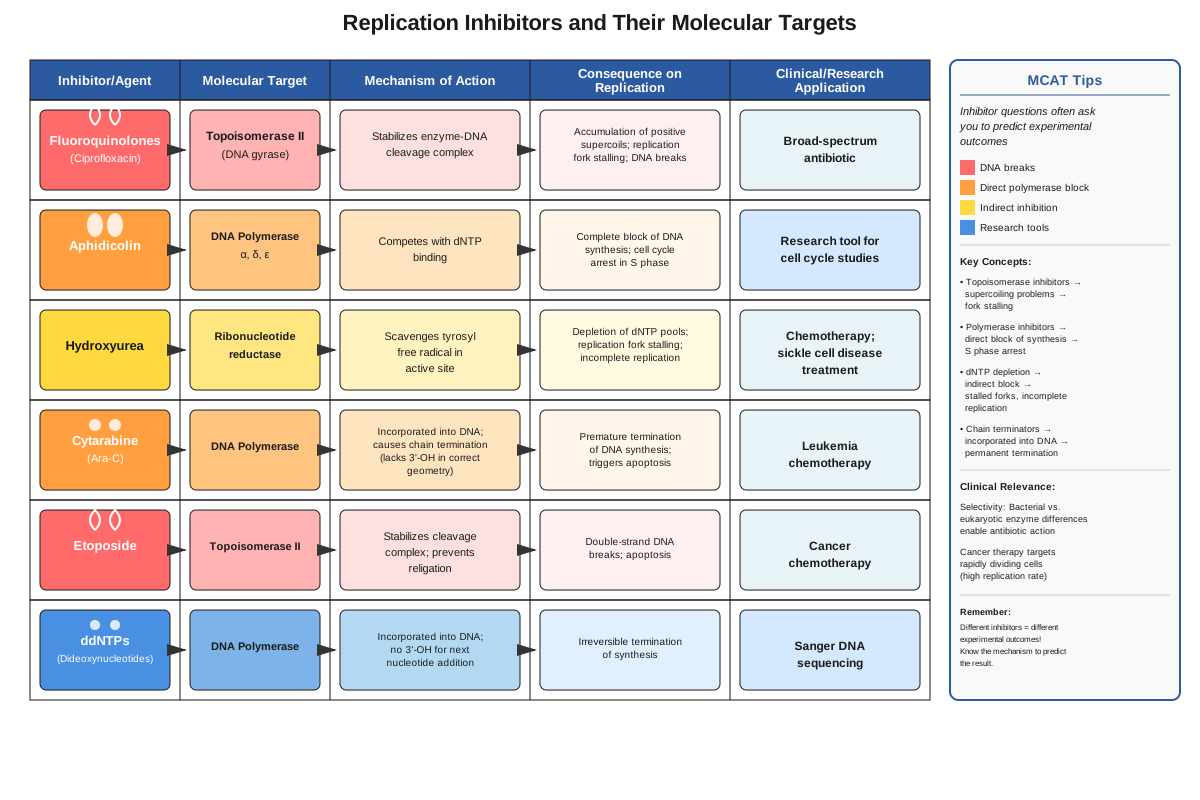
DNA replication biochemistry has profound clinical and real-world significance. Errors in DNA replication contribute to genetic diseases, cancer development, and aging. Many chemotherapeutic agents and antibiotics target replication machinery—for example, fluoroquinolone antibiotics inhibit bacterial DNA gyrase (a type II topoisomerase), while drugs like cytarabine interfere with DNA polymerase. Understanding replication mechanisms is also fundamental to modern biotechnology: PCR (polymerase chain reaction) exploits the properties of thermostable DNA polymerases, DNA sequencing technologies depend on modified nucleotides that terminate replication, and CRISPR gene editing requires understanding of DNA repair mechanisms that follow replication-like processes.
On the MCAT, DNA replication appears with high frequency across multiple question formats. Approximately 8-12% of Biochemistry questions involve nucleic acid structure and function, with replication representing a substantial portion of this content. Questions typically appear in three formats: (1) passage-based questions presenting experimental manipulations of replication enzymes or conditions, (2) discrete questions testing mechanistic understanding of specific enzymes or processes, and (3) research-based passages describing novel replication-related discoveries requiring application of fundamental principles. The MCAT particularly favors questions that integrate multiple concepts—for example, connecting replication fidelity to mutation rates, or linking replication timing to cell cycle checkpoints.
Common exam scenarios include passages describing: mutations in replication genes and their phenotypic consequences; experiments using replication inhibitors to study cell cycle progression; biotechnology applications that modify replication enzymes; comparative biochemistry examining differences between prokaryotic and eukaryotic replication; and clinical vignettes involving drugs that target replication machinery. The ability to quickly identify which enzyme is affected, predict downstream consequences, and connect molecular mechanisms to cellular or organismal phenotypes distinguishes high-scoring students. This topic also frequently appears in interdisciplinary questions that bridge biochemistry with molecular biology, genetics, and even organic chemistry (nucleotide structure and modifications).
Core Concepts
The Semiconservative Nature of DNA Replication
DNA replication follows a semiconservative mechanism, meaning each new DNA molecule consists of one original (parental) strand and one newly synthesized strand. This was definitively demonstrated by the Meselson-Stahl experiment using nitrogen isotopes. The biochemical basis for semiconservative replication lies in the complementary base pairing rules: each parental strand serves as a template for synthesis of a complementary daughter strand. This mechanism ensures that genetic information is preserved with high fidelity across cell generations. The MCAT may present experimental scenarios requiring students to predict the distribution of labeled DNA after multiple rounds of replication, testing understanding of this fundamental principle.
Directionality and the 5' to 3' Synthesis Problem
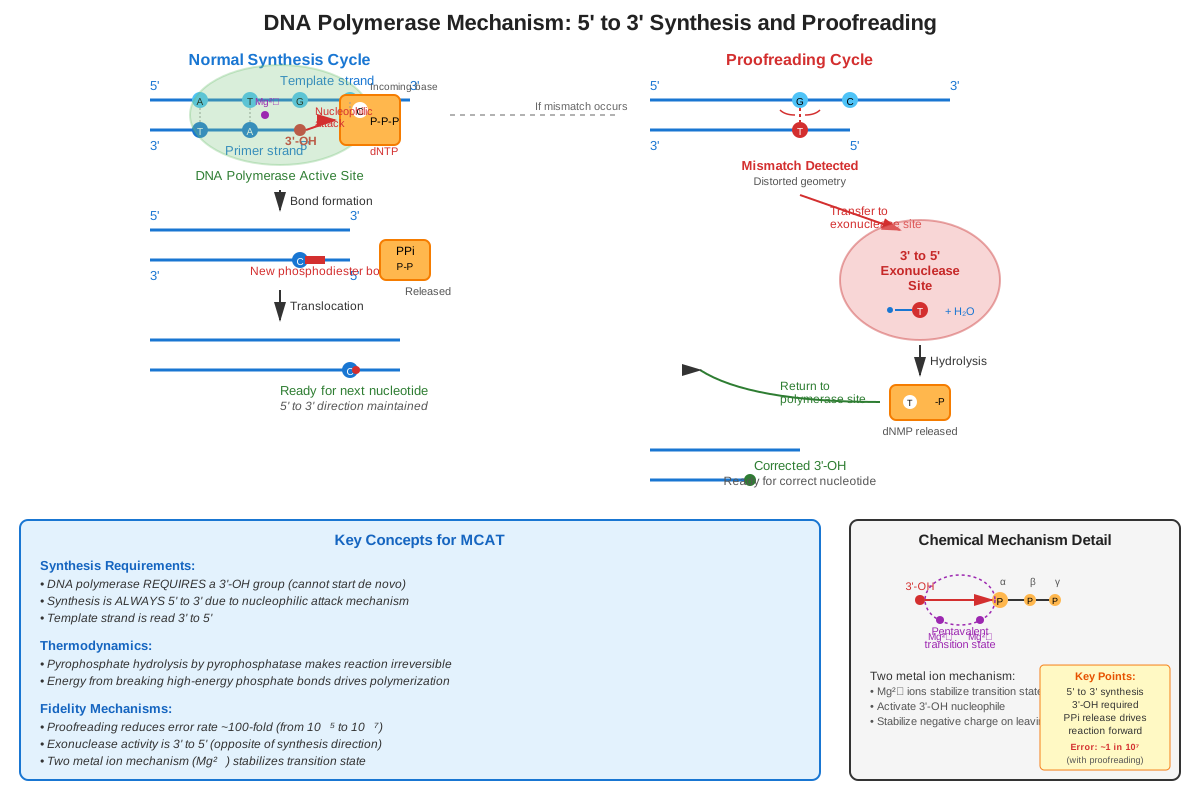
DNA polymerase, the enzyme responsible for synthesizing new DNA strands, can only add nucleotides in the 5' to 3' direction. This occurs because the enzyme catalyzes formation of a phosphodiester bond between the 3'-OH group of the growing strand and the 5'-phosphate of the incoming nucleotide triphosphate. The reaction releases pyrophosphate (PPi), which is subsequently hydrolyzed by pyrophosphatase, making the reaction thermodynamically favorable and essentially irreversible. This directional constraint creates a fundamental problem: since the two DNA strands are antiparallel, only one strand (the leading strand) can be synthesized continuously in the same direction as replication fork movement. The other strand (the lagging strand) must be synthesized discontinuously in short segments called Okazaki fragments (1000-2000 nucleotides in prokaryotes, 100-200 in eukaryotes).
The Replication Fork and Its Enzymatic Machinery
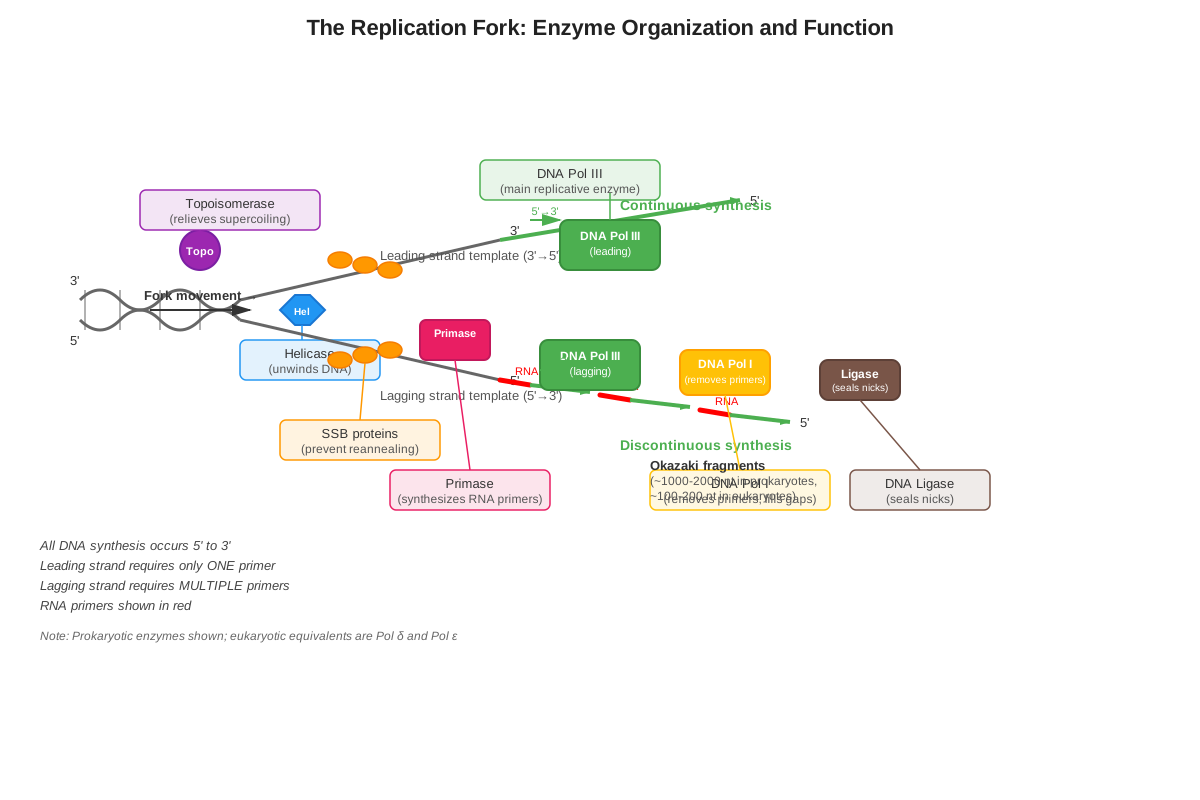
The replication fork is the Y-shaped structure where DNA unwinds and new strands are synthesized. Multiple enzymes work coordinately at this structure:
Helicase unwinds the DNA double helix by breaking hydrogen bonds between base pairs, using ATP hydrolysis to provide energy. This enzyme moves along the DNA in the 5' to 3' direction on the template strand it's tracking, creating the replication fork. The unwinding creates tension in the DNA molecule ahead of the fork.
Topoisomerase (also called DNA gyrase in prokaryotes) relieves the tension and supercoiling created by helicase unwinding. Type I topoisomerases create transient single-strand breaks, while Type II topoisomerases create transient double-strand breaks, allowing DNA strands to pass through each other. These enzymes are critical drug targets—many antibiotics and chemotherapy agents inhibit topoisomerases.
Single-strand DNA-binding proteins (SSB proteins) coat the separated single strands to prevent them from re-annealing or forming secondary structures. These proteins stabilize the single-stranded DNA template until DNA polymerase can synthesize the complementary strand.
Primase synthesizes short RNA primers (approximately 10 nucleotides) that provide the 3'-OH group required for DNA polymerase to begin synthesis. DNA polymerase cannot initiate synthesis de novo—it can only extend existing 3'-OH groups. This requirement for primers is a key concept frequently tested on the MCAT.
DNA Polymerase: Structure, Function, and Fidelity
DNA polymerase is the central enzyme of replication, catalyzing the addition of deoxyribonucleotides to the growing DNA strand. In prokaryotes, DNA polymerase III (Pol III) is the primary replicative enzyme, while DNA polymerase I (Pol I) has specialized roles in primer removal and gap filling. In eukaryotes, DNA polymerase α (alpha) initiates synthesis with primase, DNA polymerase δ (delta) synthesizes the lagging strand, and DNA polymerase ε (epsilon) synthesizes the leading strand.
DNA polymerase possesses three critical activities:
- 5' to 3' polymerase activity: The primary catalytic function, adding nucleotides to the 3' end
- 3' to 5' exonuclease activity: Proofreading function that removes incorrectly paired nucleotides from the 3' end
- 5' to 3' exonuclease activity: Present only in some polymerases (like Pol I), used for removing RNA primers
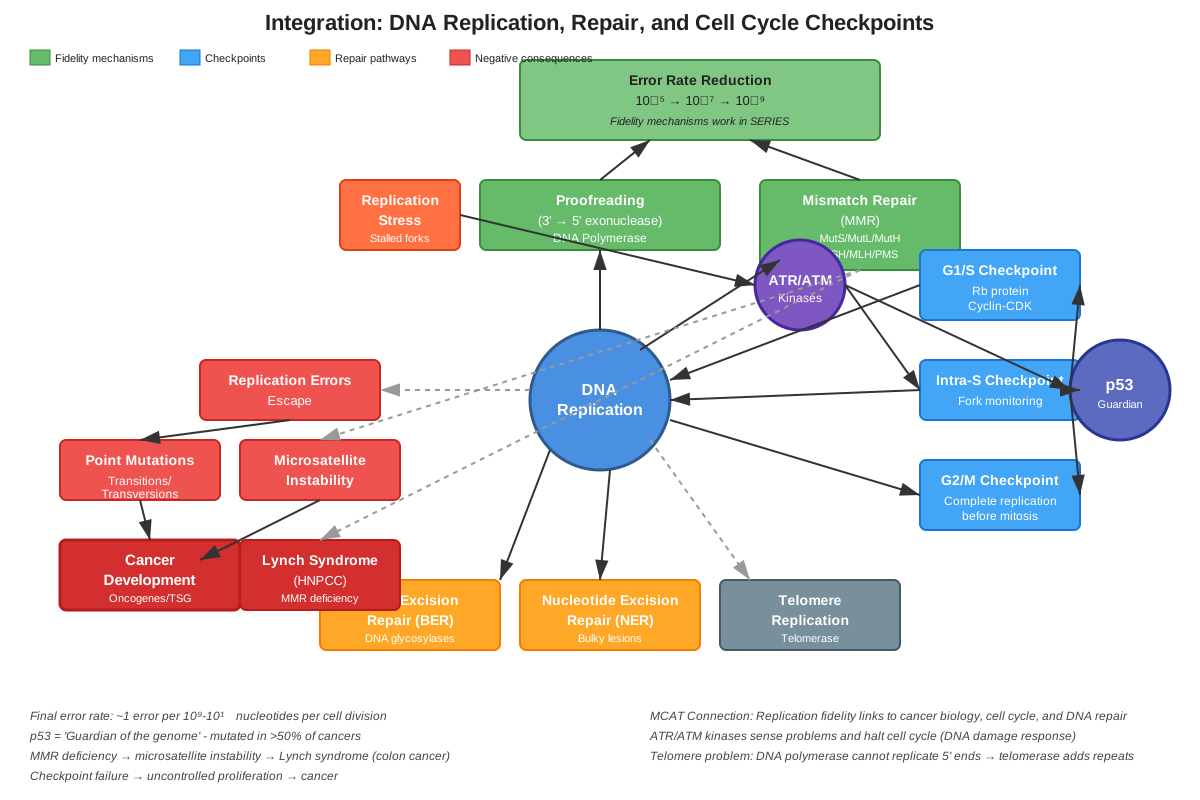
The proofreading function is essential for replication fidelity. When an incorrect nucleotide is incorporated, the geometry of the mismatch is detected, polymerase activity pauses, and the 3' to 5' exonuclease removes the incorrect nucleotide before synthesis continues. This reduces the error rate from approximately 1 in 10^5 (without proofreading) to 1 in 10^7. Additional mismatch repair systems further reduce errors to approximately 1 in 10^9 to 10^10.
Leading Strand Synthesis
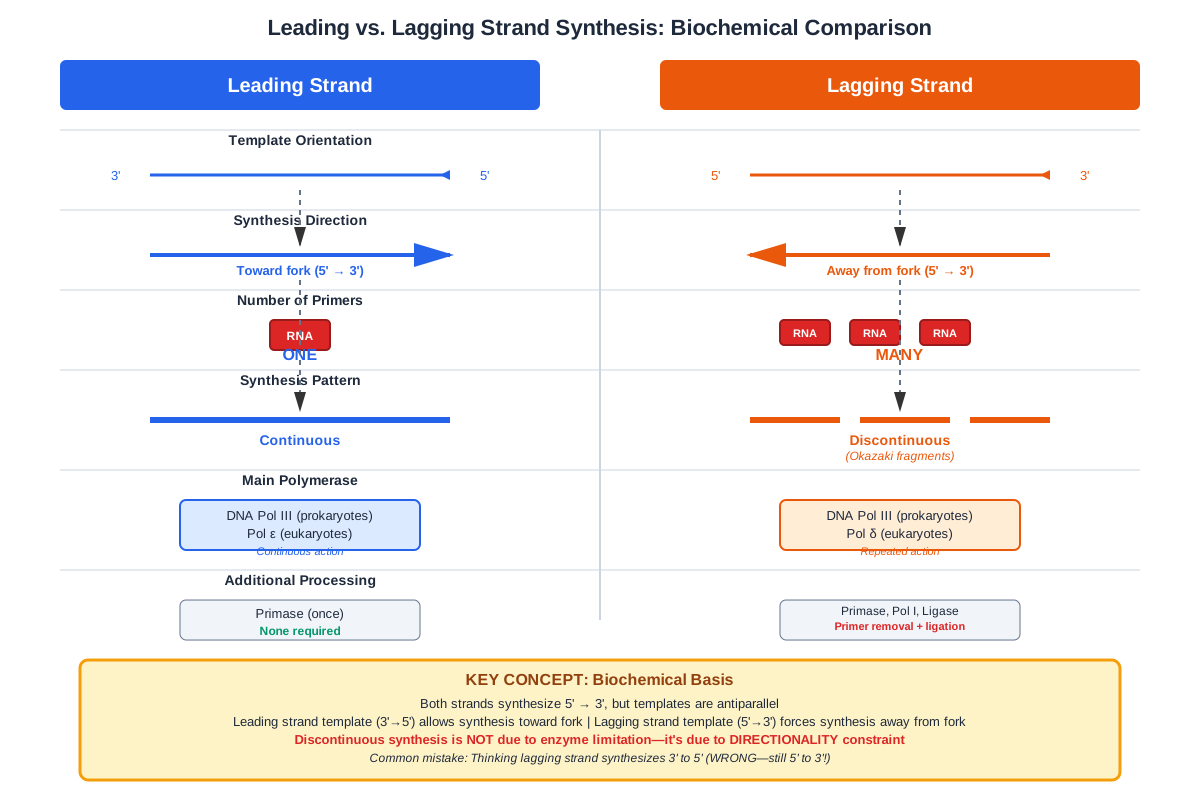
The leading strand is synthesized continuously in the 5' to 3' direction, following the replication fork as it opens. The process involves:
- Helicase unwinds the DNA
- Primase synthesizes a single RNA primer at the origin
- DNA polymerase extends from this primer continuously
- The primer is eventually removed and replaced with DNA
- The final nick is sealed by DNA ligase
This continuous synthesis is relatively straightforward and requires only one primer per replication fork.
Lagging Strand Synthesis
The lagging strand presents a more complex challenge because it must be synthesized in the direction opposite to fork movement. The solution involves discontinuous synthesis:
- As the fork opens, primase repeatedly synthesizes RNA primers on the lagging strand template
- DNA polymerase extends each primer, creating an Okazaki fragment
- When polymerase reaches the previous Okazaki fragment's primer, synthesis stops
- The RNA primer is removed (by Pol I's 5' to 3' exonuclease in prokaryotes, or RNase H and FEN1 in eukaryotes)
- The gap is filled with DNA
- DNA ligase seals the nick between adjacent Okazaki fragments by catalyzing phosphodiester bond formation
This process requires multiple primers and creates numerous fragments that must be processed and joined, making lagging strand synthesis more complex and error-prone than leading strand synthesis.
Initiation of Replication
Replication begins at specific sequences called origins of replication (oriC in E. coli). Prokaryotes typically have a single origin, while eukaryotes have multiple origins per chromosome to complete replication in a reasonable timeframe. The initiation process involves:
- Origin recognition: Specific proteins recognize and bind origin sequences (DnaA in prokaryotes, ORC in eukaryotes)
- Helicase loading: Helicase is recruited and loaded onto the DNA
- Primer synthesis: Primase synthesizes the initial RNA primers
- Polymerase recruitment: DNA polymerase is recruited to begin synthesis
The regulation of initiation is tightly controlled and linked to the cell cycle in eukaryotes, ensuring DNA is replicated exactly once per cell division.
Termination of Replication
Replication terminates when replication forks meet. In prokaryotes, specific termination sequences (ter sites) are recognized by Tus protein, which blocks helicase progression. In eukaryotes, termination is less well-defined but involves convergence of replication forks and resolution of the resulting structures. A special challenge exists at chromosome ends (telomeres) in eukaryotes: because lagging strand synthesis requires primers that are later removed, the extreme 5' ends cannot be fully replicated by conventional DNA polymerase. The enzyme telomerase (a reverse transcriptase with an RNA template) solves this "end-replication problem" by adding repetitive sequences to chromosome ends, though this enzyme is not active in most somatic cells, contributing to cellular aging.
Comparison of Prokaryotic and Eukaryotic Replication
| Feature | Prokaryotes | Eukaryotes |
|---|---|---|
| Origins | Single origin (oriC) | Multiple origins per chromosome |
| Speed | ~1000 nucleotides/second | ~50 nucleotides/second |
| Main polymerase | DNA Pol III | DNA Pol δ and ε |
| Primer removal | DNA Pol I (5' to 3' exonuclease) | RNase H and FEN1 |
| Okazaki fragments | 1000-2000 nucleotides | 100-200 nucleotides |
| Location | Cytoplasm | Nucleus |
| Associated proteins | Simpler; fewer proteins | More complex; chromatin remodeling required |
| Telomeres | Circular DNA; no end problem | Linear DNA; telomerase needed |
| Cell cycle coupling | Continuous in favorable conditions | Tightly regulated; S phase only |
Replication Fidelity and Error Correction
DNA replication achieves remarkable accuracy through multiple mechanisms:
- Base selection: DNA polymerase preferentially binds correct nucleotides based on geometry and hydrogen bonding
- Proofreading: 3' to 5' exonuclease activity removes mismatched nucleotides immediately
- Mismatch repair: Post-replication system recognizes and repairs errors that escape proofreading
- Strand discrimination: In mismatch repair, the newly synthesized strand is identified (by methylation status in prokaryotes) and corrected
The cumulative effect of these mechanisms reduces the error rate to approximately 1 mistake per billion nucleotides, essential for maintaining genetic stability across generations.
Concept Relationships
The concepts within DNA replication biochemistry form an interconnected network where each component depends on others. The semiconservative mechanism establishes the fundamental framework → requiring strand separation by helicase → which creates tension relieved by topoisomerase → exposing single-stranded templates stabilized by SSB proteins → enabling primase to synthesize RNA primers → providing the 3'-OH required by DNA polymerase → which synthesizes DNA in the 5' to 3' direction → creating the leading/lagging strand asymmetry → necessitating Okazaki fragments on the lagging strand → requiring primer removal and gap filling → completed by DNA ligase sealing nicks → with proofreading ensuring fidelity throughout.
This topic connects extensively to prerequisite knowledge: DNA structure determines the antiparallel arrangement that creates the leading/lagging strand problem; enzyme kinetics explains polymerase processivity and speed; phosphodiester bond chemistry underlies both synthesis and proofreading; thermodynamics explains why pyrophosphate hydrolysis drives synthesis forward; and protein-DNA interactions govern origin recognition and enzyme recruitment.
DNA replication biochemistry also connects forward to numerous related topics: transcription uses similar principles (RNA polymerase, 5' to 3' synthesis, template reading) but with key differences; DNA repair mechanisms employ many of the same enzymes (polymerases, ligases, exonucleases); cell cycle regulation controls when replication occurs; mutations arise from replication errors; cancer biology often involves dysregulation of replication or cell cycle checkpoints; PCR technology exploits thermostable DNA polymerases; and DNA sequencing uses modified nucleotides that terminate polymerase activity. Understanding replication provides the mechanistic foundation for comprehending how genetic information is maintained, expressed, and sometimes altered in biological systems.
Quick check — test yourself on DNA replication biochemistry so far.
Try Flashcards →High-Yield Facts
⭐ DNA polymerase can only synthesize in the 5' to 3' direction and cannot initiate synthesis de novo—it requires a primer with a 3'-OH group
⭐ The leading strand is synthesized continuously, while the lagging strand is synthesized discontinuously as Okazaki fragments
⭐ DNA polymerase III (prokaryotes) and DNA polymerase δ/ε (eukaryotes) are the main replicative enzymes with 3' to 5' exonuclease proofreading activity
⭐ Helicase unwinds DNA using ATP, topoisomerase relieves supercoiling, and SSB proteins prevent re-annealing
⭐ Primase synthesizes short RNA primers (~10 nucleotides) that are later removed and replaced with DNA
- DNA replication is semiconservative: each daughter molecule contains one parental and one new strand
- Okazaki fragments are 1000-2000 nucleotides in prokaryotes but only 100-200 nucleotides in eukaryotes
- DNA ligase seals nicks between Okazaki fragments by catalyzing phosphodiester bond formation (requires ATP in eukaryotes, NAD+ in prokaryotes)
- The 3' to 5' exonuclease activity of DNA polymerase provides proofreading, reducing error rates from 10^-5 to 10^-7
- Telomerase (a reverse transcriptase) extends chromosome ends in eukaryotes to solve the end-replication problem
- Prokaryotic replication occurs at ~1000 nt/sec from a single origin; eukaryotic replication occurs at ~50 nt/sec from multiple origins
- DNA polymerase I in prokaryotes has unique 5' to 3' exonuclease activity used for primer removal
- Replication forks are bidirectional from each origin, with both leading and lagging strands synthesized at each fork
- Mismatch repair systems provide an additional layer of error correction after replication is complete
- Many antibiotics (fluoroquinolones) and chemotherapy drugs (cytarabine, cisplatin) target replication machinery
Common Misconceptions
Misconception: DNA polymerase synthesizes both strands in the same direction at the replication fork
Correction: DNA polymerase always synthesizes 5' to 3', but because the template strands are antiparallel, one strand (leading) is synthesized toward the fork while the other (lagging) is synthesized away from the fork in short fragments. The fork moves in one direction, but synthesis occurs in opposite directions relative to the template strands.
Misconception: DNA polymerase can start synthesis anywhere on a template strand
Correction: DNA polymerase absolutely requires a primer with a free 3'-OH group to begin synthesis. It cannot initiate de novo. This is why primase is essential—it synthesizes the RNA primers that provide the 3'-OH groups. This limitation is exploited in DNA sequencing technologies using dideoxynucleotides that lack 3'-OH groups.
Misconception: The lagging strand is synthesized after the leading strand is complete
Correction: Both strands are synthesized simultaneously at the replication fork. As helicase opens the fork, DNA polymerase continuously extends the leading strand while repeatedly initiating new Okazaki fragments on the lagging strand. The process is coordinated, not sequential.
Misconception: Okazaki fragments are the same size in all organisms
Correction: Okazaki fragments are significantly longer in prokaryotes (1000-2000 nt) than in eukaryotes (100-200 nt). This difference relates to the presence of nucleosomes in eukaryotes, which must be navigated during replication, and differences in the processivity of replication machinery.
Misconception: DNA ligase and DNA polymerase perform the same function
Correction: DNA polymerase forms phosphodiester bonds between nucleotides during synthesis, extending a strand by adding nucleotides to a 3'-OH. DNA ligase seals nicks (missing phosphodiester bonds) between adjacent nucleotides that already exist in the strand, specifically joining the 3'-OH of one nucleotide to the 5'-phosphate of the next. Ligase cannot add new nucleotides; it only seals gaps between existing ones.
Misconception: Proofreading by DNA polymerase occurs in the 5' to 3' direction like synthesis
Correction: The proofreading exonuclease activity operates in the 3' to 5' direction, opposite to synthesis. When a mismatch is detected, the polymerase backs up and the 3' to 5' exonuclease removes nucleotides from the 3' end of the growing strand. This directionality is essential—it allows removal of the most recently added (and potentially incorrect) nucleotide.
Misconception: Helicase and topoisomerase perform the same function
Correction: Helicase breaks hydrogen bonds between base pairs to separate the two strands locally at the replication fork. Topoisomerase relieves the tension and supercoiling that builds up ahead of the fork due to helicase unwinding by temporarily breaking and rejoining the phosphodiester backbone. Both are necessary but perform distinct functions—helicase separates strands, topoisomerase manages topology.
Misconception: All DNA polymerases have the same activities
Correction: Different DNA polymerases have different combinations of activities. DNA Pol III (prokaryotic) has 5' to 3' polymerase and 3' to 5' exonuclease but lacks 5' to 3' exonuclease. DNA Pol I (prokaryotic) has all three activities. Eukaryotic polymerases vary: Pol α lacks proofreading, while Pol δ and ε have proofreading. These differences suit each enzyme for specific roles in replication.
Worked Examples
Example 1: Analyzing a Replication Inhibitor Experiment
Question: Researchers treat cells with an inhibitor that specifically blocks primase activity. They then examine DNA synthesis. Which of the following would be the expected result?
A) Leading strand synthesis continues normally; lagging strand synthesis stops completely
B) Both leading and lagging strand synthesis stop completely
C) Lagging strand synthesis continues normally; leading strand synthesis stops completely
D) Both strands continue synthesis but at reduced rates
Solution:
Step 1: Identify what primase does. Primase synthesizes RNA primers that provide the 3'-OH groups required for DNA polymerase to begin synthesis.
Step 2: Consider leading strand requirements. The leading strand requires only ONE primer at the origin to begin continuous synthesis. Once synthesis has started, DNA polymerase can continue extending without additional primers.
Step 3: Consider lagging strand requirements. The lagging strand requires MULTIPLE primers—one for each Okazaki fragment. As the replication fork progresses, new primers must be continuously synthesized.
Step 4: Predict the effect of primase inhibition. If primase is blocked AFTER replication has already initiated:
- Leading strand: Already has its primer, can continue synthesis
- Lagging strand: Cannot synthesize new primers for new Okazaki fragments, so synthesis stops
Step 5: Consider timing. If primase is blocked BEFORE replication initiates, neither strand could begin. The question states cells are treated and then DNA synthesis is examined, suggesting replication was already underway.
Answer: A - Leading strand synthesis continues (already has its primer), but lagging strand synthesis stops (cannot make new primers for new Okazaki fragments).
Key Learning Point: This question tests understanding that leading and lagging strands have different primer requirements. The leading strand needs only one primer per replication fork, while the lagging strand needs continuous primer synthesis. This asymmetry makes lagging strand synthesis more vulnerable to primase inhibition during ongoing replication.
Example 2: Predicting Mutation Rates with Defective Proofreading
Question: A bacterial strain has a mutation in DNA polymerase III that eliminates its 3' to 5' exonuclease activity but leaves its polymerase activity intact. Compared to wild-type bacteria, this mutant strain would most likely exhibit:
A) No change in mutation rate because mismatch repair compensates
B) Approximately 100-fold increase in mutation rate
C) Complete inability to replicate DNA
D) Slower replication but normal mutation rate
Solution:
Step 1: Identify the function of 3' to 5' exonuclease activity. This is the proofreading function that removes incorrectly incorporated nucleotides immediately after they're added.
Step 2: Quantify the contribution of proofreading. Without proofreading, DNA polymerase makes errors at approximately 1 in 10^5 nucleotides. With proofreading, this improves to approximately 1 in 10^7—a 100-fold improvement.
Step 3: Consider whether polymerase activity is affected. The question states polymerase activity remains intact, so DNA synthesis can still occur. The enzyme can still add nucleotides; it just cannot remove incorrect ones.
Step 4: Evaluate compensation mechanisms. Mismatch repair provides additional error correction AFTER replication, but it doesn't fully compensate for loss of proofreading. The mutation rate will increase significantly but not catastrophically.
Step 5: Eliminate incorrect answers:
- C is wrong: Polymerase activity is intact, so replication can occur
- D is wrong: Speed might be slightly affected, but mutation rate will definitely increase
- A is wrong: Mismatch repair helps but doesn't fully compensate
Answer: B - The mutation rate increases approximately 100-fold because proofreading normally reduces errors by about 100-fold, and its loss returns the error rate to the baseline polymerase error rate (though mismatch repair still provides some correction).
Key Learning Point: This question tests quantitative understanding of replication fidelity mechanisms. Proofreading contributes approximately 100-fold to accuracy, while mismatch repair adds another 100-fold, giving the overall 10^-9 to 10^-10 error rate. Loss of one mechanism significantly increases mutations but doesn't eliminate replication capability. This concept connects to cancer biology, where mutations in proofreading or mismatch repair genes lead to increased mutation rates and cancer predisposition.
Exam Strategy
When approaching MCAT questions on DNA replication biochemistry, begin by identifying which aspect of replication is being tested: enzyme function, directionality, leading vs. lagging strand differences, or fidelity mechanisms. Many questions hinge on understanding the 5' to 3' synthesis constraint and its consequences.
Trigger words to recognize:
- "Primer" → Think about primase, RNA primers, and the requirement for 3'-OH groups
- "Continuous" vs. "discontinuous" → Leading vs. lagging strand distinction
- "Proofreading" or "fidelity" → 3' to 5' exonuclease activity
- "Okazaki fragments" → Lagging strand synthesis
- "Supercoiling" or "tension" → Topoisomerase function
- "Initiation" → Origin recognition, helicase loading, primer synthesis
- "5' to 3'" or "3' to 5'" → Pay careful attention to directionality
Process-of-elimination strategies:
- Eliminate answers that violate the 5' to 3' synthesis rule—DNA polymerase NEVER synthesizes 3' to 5'
- Eliminate answers suggesting DNA polymerase can initiate without a primer
- For enzyme inhibitor questions, eliminate answers that don't match the specific function of the inhibited enzyme
- For mutation/error questions, eliminate answers that confuse proofreading (3' to 5' exonuclease) with primer removal (5' to 3' exonuclease)
Time allocation: DNA replication questions often appear in passages with experimental data. Spend 1-2 minutes understanding the experimental setup (what's being manipulated, what's being measured), then 45-60 seconds per question. For discrete questions, 30-45 seconds should suffice if you have solid conceptual understanding. If a question requires drawing out the replication fork, invest 20-30 seconds to sketch it—this often clarifies the answer immediately.
Common question types:
- Enzyme deficiency: Given a mutation in enzyme X, predict the consequence
- Inhibitor experiments: Drug Y blocks enzyme Z, what happens to replication?
- Comparative biochemistry: How does replication differ between prokaryotes and eukaryotes?
- Experimental interpretation: Given data from a replication assay, identify which enzyme or process is affected
- Biotechnology application: How does PCR/sequencing exploit replication mechanisms?
Exam Tip: When stuck between two answers, consider whether the question is testing mechanism (how something works) or consequence (what happens when something fails). MCAT questions often test your ability to predict downstream effects of molecular changes, not just recall facts.
Memory Techniques
Mnemonic for replication fork enzymes - "Happy Teachers Sometimes Praise Perfect Learners"
- Helicase - unwinds
- Topoisomerase - relieves tension
- SSB proteins - stabilize single strands
- Primase - makes primers
- Polymerase - synthesizes DNA
- Ligase - seals nicks
Mnemonic for DNA polymerase activities - "People Proofread Papers"
- Polymerase (5' to 3') - synthesis
- Proofread (3' to 5' exonuclease) - error correction
- Primer removal (5' to 3' exonuclease, Pol I only) - removes RNA primers
Visualization strategy for directionality: Always draw the replication fork with the fork opening to the RIGHT. Label the top strand 5' to 3' going left-to-right, and the bottom strand 3' to 5' going left-to-right. This standard orientation makes it easy to identify that the top strand is the lagging strand (synthesis goes right-to-left, away from the fork) and the bottom is the leading strand (synthesis goes left-to-right, toward the fork).
Acronym for leading vs. lagging - "Leading is Long and Linear; Lagging is Little Lumps"
- Leading: one Long, Linear, continuous strand
- Lagging: Little Lumps (Okazaki fragments)
Memory aid for Okazaki fragment sizes: "Prokaryotes are Prolific" (1000-2000 nt, much longer), while eukaryotes are more modest (100-200 nt). The presence of nucleosomes in eukaryotes creates obstacles, resulting in shorter fragments.
Conceptual anchor for primer requirement: DNA polymerase is like a train that can only add cars to an existing train (extend), but cannot start a new train from scratch (initiate). Primase is the "engine" that starts the train, then DNA polymerase adds the "cars."
Summary
DNA replication biochemistry represents the molecular mechanism by which genetic information is faithfully duplicated before cell division. The process is semiconservative, with each daughter molecule containing one parental and one newly synthesized strand. DNA polymerase, the central enzyme, synthesizes DNA exclusively in the 5' to 3' direction by adding nucleotides to a 3'-OH group, requiring RNA primers synthesized by primase to initiate synthesis. This directional constraint, combined with antiparallel DNA strands, creates asymmetry at the replication fork: the leading strand is synthesized continuously toward the fork, while the lagging strand is synthesized discontinuously as Okazaki fragments away from the fork. Multiple enzymes coordinate at the replication fork—helicase unwinds DNA, topoisomerase relieves tension, SSB proteins stabilize single strands, primase synthesizes primers, DNA polymerase extends strands with proofreading capability, and DNA ligase seals nicks between fragments. Replication achieves remarkable fidelity through base selection, proofreading (3' to 5' exonuclease), and mismatch repair, reducing errors to approximately one per billion nucleotides. Understanding these mechanisms, the specific functions of each enzyme, and the differences between leading and lagging strand synthesis is essential for MCAT success and provides the foundation for comprehending DNA repair, mutation, transcription, and biotechnology applications.
Key Takeaways
- DNA polymerase synthesizes exclusively 5' to 3' and requires a primer with a 3'-OH group; it cannot initiate synthesis de novo
- The leading strand is synthesized continuously, while the lagging strand is synthesized discontinuously as Okazaki fragments due to antiparallel strand orientation
- Key enzymes at the replication fork include helicase (unwinds), topoisomerase (relieves tension), SSB proteins (stabilize), primase (makes primers), DNA polymerase (synthesizes), and DNA ligase (seals nicks)
- DNA polymerase proofreading (3' to 5' exonuclease) reduces errors ~100-fold, contributing critically to replication fidelity
- Prokaryotic and eukaryotic replication differ in speed, number of origins, Okazaki fragment size, and specific polymerases, but follow the same fundamental mechanisms
- Understanding replication mechanisms is essential for comprehending DNA repair, mutation, PCR, DNA sequencing, and the mechanisms of many antibiotics and chemotherapy drugs
- The semiconservative nature of replication ensures each daughter cell receives one parental and one new strand, maintaining genetic continuity
Related Topics
DNA Repair Mechanisms: Building on replication knowledge, DNA repair systems use many of the same enzymes (polymerases, ligases, exonucleases) to fix damaged DNA. Understanding replication provides the foundation for comprehending base excision repair, nucleotide excision repair, and mismatch repair. Mastery of replication enzymes directly enables understanding of repair pathways.
Transcription: RNA polymerase shares key features with DNA polymerase (5' to 3' synthesis, template reading) but differs in critical ways (can initiate without primers, synthesizes RNA, doesn't require continuous priming). Comparing replication and transcription deepens understanding of both processes.
Cell Cycle Regulation: Replication occurs during S phase and is tightly regulated by cyclins, CDKs, and checkpoints. Understanding when and how replication is controlled connects molecular mechanisms to cellular biology and cancer development.
Polymerase Chain Reaction (PCR): This biotechnology application exploits thermostable DNA polymerases and the principles of replication to amplify DNA. Understanding replication mechanisms is essential for comprehending how PCR works and troubleshooting PCR-based experiments.
DNA Sequencing Technologies: Sanger sequencing uses dideoxynucleotides (lacking 3'-OH groups) to terminate replication, while next-generation sequencing technologies exploit various modifications of replication chemistry. Mastery of replication provides the foundation for understanding these techniques.
Telomeres and Aging: The end-replication problem and telomerase function connect replication to cellular aging and cancer biology. Understanding why conventional DNA polymerase cannot fully replicate chromosome ends explains the need for telomerase and its role in stem cells and cancer cells.
Practice CTA
Now that you've mastered the core concepts of DNA replication biochemistry, it's time to solidify your understanding through active practice. Work through the practice questions to apply these concepts to MCAT-style scenarios, and use the flashcards to reinforce high-yield facts and enzyme functions. Remember, understanding the "why" behind each mechanism—not just memorizing facts—is what distinguishes top MCAT performers. Focus especially on visualizing the replication fork, tracking directionality, and predicting the consequences of enzyme deficiencies. You've built a strong foundation; now strengthen it through deliberate practice. Your ability to quickly analyze replication scenarios will serve you well not only on discrete questions but also on complex passage-based questions that integrate replication with experimental design, genetics, and molecular biology. Keep pushing forward—mastery of this topic opens doors to understanding numerous related high-yield concepts!
Sign up free to keep reading
Create a free AnvayaPrep account to finish this MCAT guide on DNA replication biochemistry — plus flashcards and practice questions.