Overview
The fluid mosaic model represents one of the most fundamental concepts in Cell Biology and serves as the cornerstone for understanding membrane structure and function on the MCAT. Proposed by S.J. Singer and G.L. Nicolson in 1972, this model describes the plasma membrane as a dynamic, two-dimensional liquid structure composed of a phospholipid bilayer with embedded proteins that can move laterally within the membrane. The term "fluid" refers to the lateral movement of membrane components, while "mosaic" describes the heterogeneous distribution of proteins and other molecules scattered throughout the lipid bilayer like tiles in a mosaic pattern.
Understanding the fluid mosaic model is absolutely essential for MCAT success because it forms the foundation for numerous high-yield topics including membrane transport, cell signaling, cell-cell recognition, and cellular compartmentalization. Questions about membrane structure appear consistently across both the Biological and Biochemical Foundations of Living Systems section and the Chemical and Physical Foundations of Biological Systems section. The MCAT frequently tests this concept through passage-based questions involving experimental manipulations of membrane fluidity, protein mobility studies, and clinical scenarios involving membrane dysfunction.
The fluid mosaic model connects to virtually every aspect of cellular function tested on the MCAT. It provides the structural basis for understanding selective permeability, receptor-ligand interactions, enzymatic reactions at membrane surfaces, and the maintenance of electrochemical gradients. This topic bridges biochemistry (lipid structure, protein structure), physics (diffusion, osmosis), and physiology (nerve conduction, muscle contraction), making it one of the most integrative concepts in Biology. Mastery of this model enables students to approach complex passage-based questions with confidence and provides a framework for understanding cellular pathology and pharmacological interventions.
Learning Objectives
- [ ] Define the fluid mosaic model using accurate Biology terminology
- [ ] Explain why the fluid mosaic model matters for the MCAT
- [ ] Apply the fluid mosaic model to exam-style questions
- [ ] Identify common mistakes related to the fluid mosaic model
- [ ] Connect the fluid mosaic model to related Biology concepts
- [ ] Describe the structural components of the plasma membrane and their specific functions
- [ ] Analyze factors that affect membrane fluidity and predict their physiological consequences
- [ ] Evaluate experimental data related to membrane protein mobility and lipid dynamics
- [ ] Predict how changes in membrane composition affect cellular function in various physiological conditions
Prerequisites
- Phospholipid structure: Understanding amphipathic molecules with hydrophilic heads and hydrophobic tails is essential for comprehending bilayer formation and membrane asymmetry
- Protein structure: Knowledge of primary through quaternary structure enables understanding of how membrane proteins are oriented and function within the bilayer
- Intermolecular forces: Familiarity with hydrogen bonds, van der Waals forces, and hydrophobic interactions explains membrane stability and fluidity
- Diffusion and osmosis: These transport mechanisms depend directly on membrane structure and selective permeability
- Basic cell structure: Recognition of organelles and their membrane-bound nature provides context for the universality of the fluid mosaic model
Why This Topic Matters
The fluid mosaic model appears in approximately 8-12% of MCAT questions in the Biological and Biochemical Foundations section, making it one of the highest-yield topics in Cell Biology. Questions typically present experimental scenarios involving membrane manipulation, such as fluorescence recovery after photobleaching (FRAP) experiments, temperature effects on membrane function, or cholesterol's role in membrane dynamics. Understanding this model is critical for interpreting passage-based questions about drug delivery systems, viral entry mechanisms, and cellular signaling cascades.
Clinically, the fluid mosaic model has profound implications for understanding disease mechanisms and therapeutic interventions. Cystic fibrosis involves defective membrane protein trafficking, atherosclerosis relates to cholesterol accumulation affecting membrane properties, and many cancer therapies target specific membrane receptors. Anesthetics work by altering membrane fluidity, and antibiotic resistance often involves changes in bacterial membrane composition. These real-world applications frequently appear in MCAT passages, requiring students to apply their understanding of membrane structure to novel clinical scenarios.
The MCAT tests this topic through multiple question formats: discrete questions about membrane composition, passage-based questions analyzing experimental data on protein mobility, and pseudo-discrete questions requiring integration of membrane structure with transport mechanisms or cell signaling. Common passage themes include temperature effects on membrane-bound enzyme activity, lipid raft formation and function, and membrane fusion events during exocytosis or viral infection. Students who thoroughly understand the fluid mosaic model can quickly identify the underlying principles being tested and eliminate incorrect answer choices efficiently.
Core Concepts
The Phospholipid Bilayer Foundation
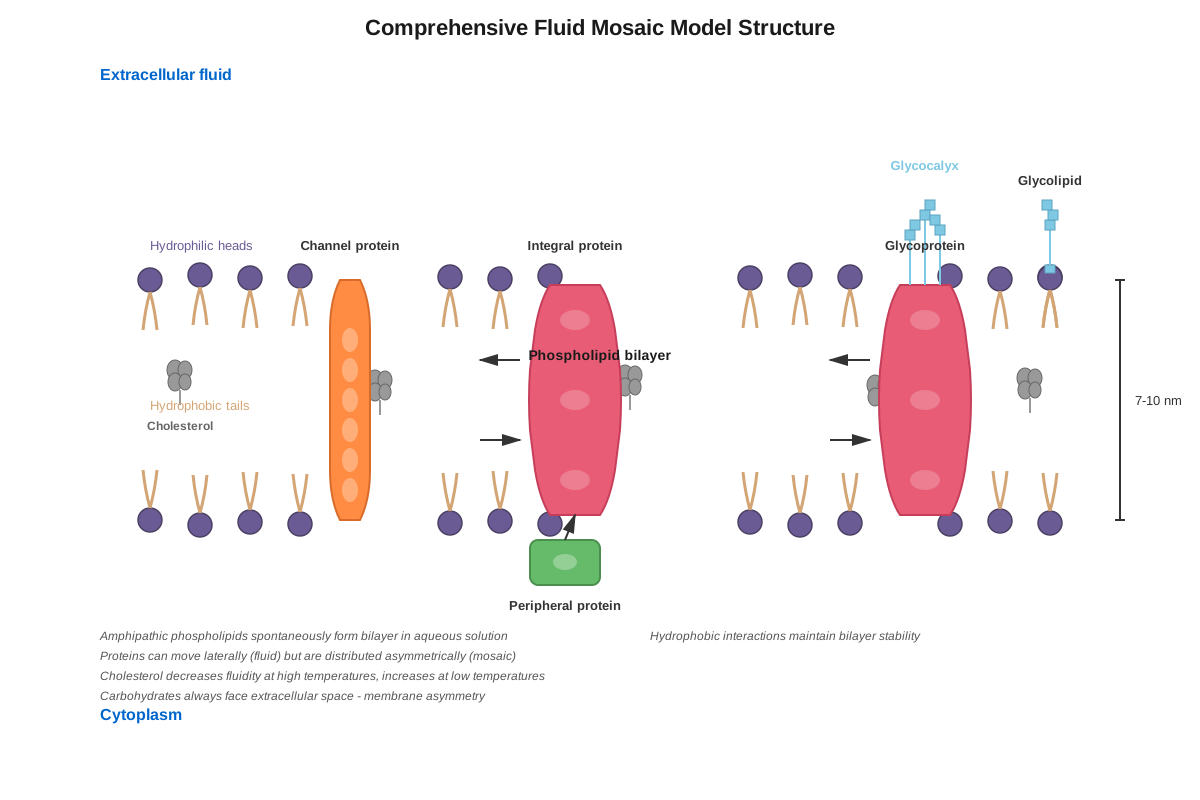
The phospholipid bilayer forms the fundamental structural framework of all biological membranes. Each phospholipid molecule is amphipathic, containing a hydrophilic (water-loving) phosphate head group and two hydrophobic (water-fearing) fatty acid tails. In aqueous environments, phospholipids spontaneously arrange into a bilayer configuration with hydrophilic heads facing the aqueous environments on both sides and hydrophobic tails sequestered in the interior. This arrangement is thermodynamically favorable because it maximizes entropy by allowing water molecules to remain ordered while minimizing unfavorable interactions between water and hydrophobic regions.
The bilayer typically measures 7-8 nanometers in thickness and exhibits selective permeability, allowing small nonpolar molecules (O₂, CO₂, N₂) and small uncharged polar molecules (water, ethanol) to cross relatively freely while restricting passage of ions and large polar molecules. This selective permeability arises from the hydrophobic core, which presents an energetic barrier to charged and polar substances. The degree of permeability depends on molecule size, polarity, and charge, with smaller and more hydrophobic molecules crossing most readily.
Membrane Fluidity and Its Determinants
Membrane fluidity refers to the viscosity of the lipid bilayer and the ease with which membrane components can move laterally within the plane of the membrane. This property is crucial for membrane function, affecting protein mobility, membrane fusion events, and cellular processes like endocytosis and exocytosis. Several factors regulate membrane fluidity:
Temperature directly affects fluidity—higher temperatures increase kinetic energy and molecular motion, making membranes more fluid, while lower temperatures decrease fluidity and can cause membranes to transition to a gel-like state. Organisms adapt to temperature changes by altering membrane lipid composition, a process called homeoviscous adaptation.
Fatty acid saturation profoundly influences fluidity. Saturated fatty acids lack double bonds and have straight hydrocarbon chains that pack tightly together, decreasing fluidity. Unsaturated fatty acids contain one or more double bonds (typically in cis configuration) that create kinks in the hydrocarbon chains, preventing tight packing and increasing fluidity. The MCAT frequently tests the relationship between fatty acid composition and membrane properties in different organisms or cellular conditions.
Fatty acid chain length also affects fluidity—longer chains have more van der Waals interactions between adjacent molecules, decreasing fluidity, while shorter chains increase fluidity. Most membrane phospholipids contain fatty acids with 14-24 carbons, with 16 and 18 being most common.
Cholesterol plays a unique bidirectional role in regulating membrane fluidity. At high temperatures, cholesterol restrains phospholipid movement and reduces fluidity by interacting with fatty acid chains through its rigid steroid ring structure. At low temperatures, cholesterol prevents tight packing of phospholipids and maintains fluidity by disrupting regular packing arrangements. This fluidity buffer function is critical for maintaining membrane function across temperature ranges. Cholesterol comprises approximately 20% of membrane lipids in animal cells but is absent from bacterial membranes (an important distinction for MCAT questions about antibiotic mechanisms).
Membrane Proteins: Integral and Peripheral
Membrane proteins constitute approximately 50% of membrane mass (though only about 2% by number due to their larger size compared to lipids) and perform most membrane functions. The fluid mosaic model categorizes membrane proteins into two main classes:
Integral membrane proteins (also called intrinsic proteins) are permanently embedded in the lipid bilayer and cannot be removed without disrupting the membrane structure, typically requiring detergents for extraction. Most integral proteins are transmembrane proteins that span the entire bilayer, with hydrophobic amino acid regions interacting with the fatty acid tails and hydrophilic regions extending into the aqueous environments on either side. These proteins often contain α-helices or β-barrels as their membrane-spanning domains. Examples include ion channels, carrier proteins, and many receptors.
Peripheral membrane proteins (also called extrinsic proteins) are temporarily associated with the membrane surface through ionic interactions or hydrogen bonds with integral proteins or with the polar head groups of phospholipids. They can be removed by changes in pH or ionic strength without disrupting the membrane. Examples include some enzymes, structural proteins, and components of the cytoskeleton that attach to the membrane.
Protein Mobility and Restrictions
A key feature of the fluid mosaic model is that membrane proteins can move laterally within the plane of the membrane, a property demonstrated by classic cell fusion experiments. However, protein mobility is not unlimited. Several factors restrict protein movement:
Lipid rafts are specialized membrane microdomains enriched in cholesterol and sphingolipids that exist in a more ordered, less fluid state than surrounding membrane regions. These rafts can sequester specific proteins and serve as platforms for cell signaling, protein sorting, and membrane trafficking. The MCAT may present passages about lipid raft disruption affecting cellular processes.
Cytoskeletal attachments can anchor membrane proteins to the underlying cytoskeleton, restricting their lateral movement. For example, spectrin networks in red blood cells maintain cell shape by anchoring membrane proteins.
Tight junctions in epithelial cells create barriers that prevent lateral diffusion of membrane proteins between apical and basolateral membrane domains, maintaining cell polarity.
Protein-protein interactions can create large complexes that move more slowly than individual proteins or become effectively immobilized.
Membrane Asymmetry
Biological membranes exhibit membrane asymmetry—the two leaflets of the bilayer have different lipid and protein compositions. The outer leaflet typically contains more phosphatidylcholine and sphingomyelin, while the inner leaflet is enriched in phosphatidylserine and phosphatidylethanolamine. This asymmetry is functionally important: phosphatidylserine exposure on the outer leaflet serves as an "eat me" signal for phagocytes during apoptosis, a concept frequently tested on the MCAT.
Membrane proteins also exhibit asymmetry, with specific orientations determined during synthesis and insertion. Carbohydrate groups attached to proteins (glycoproteins) and lipids (glycolipids) are found exclusively on the extracellular surface, forming the glycocalyx that functions in cell recognition, protection, and cell-cell adhesion.
Membrane Carbohydrates and the Glycocalyx
The glycocalyx is the carbohydrate-rich layer on the extracellular surface of the plasma membrane, composed of oligosaccharide chains attached to membrane proteins and lipids. These carbohydrates play crucial roles in:
- Cell-cell recognition: Blood type antigens (A, B, O) are carbohydrate structures on red blood cell surfaces
- Immune recognition: Self vs. non-self discrimination depends on cell surface carbohydrates
- Protection: The glycocalyx provides mechanical and chemical protection
- Cell adhesion: Selectins and other adhesion molecules recognize specific carbohydrate structures
The MCAT frequently tests glycocalyx function in the context of immune responses, blood transfusions, and pathogen recognition.
Concept Relationships
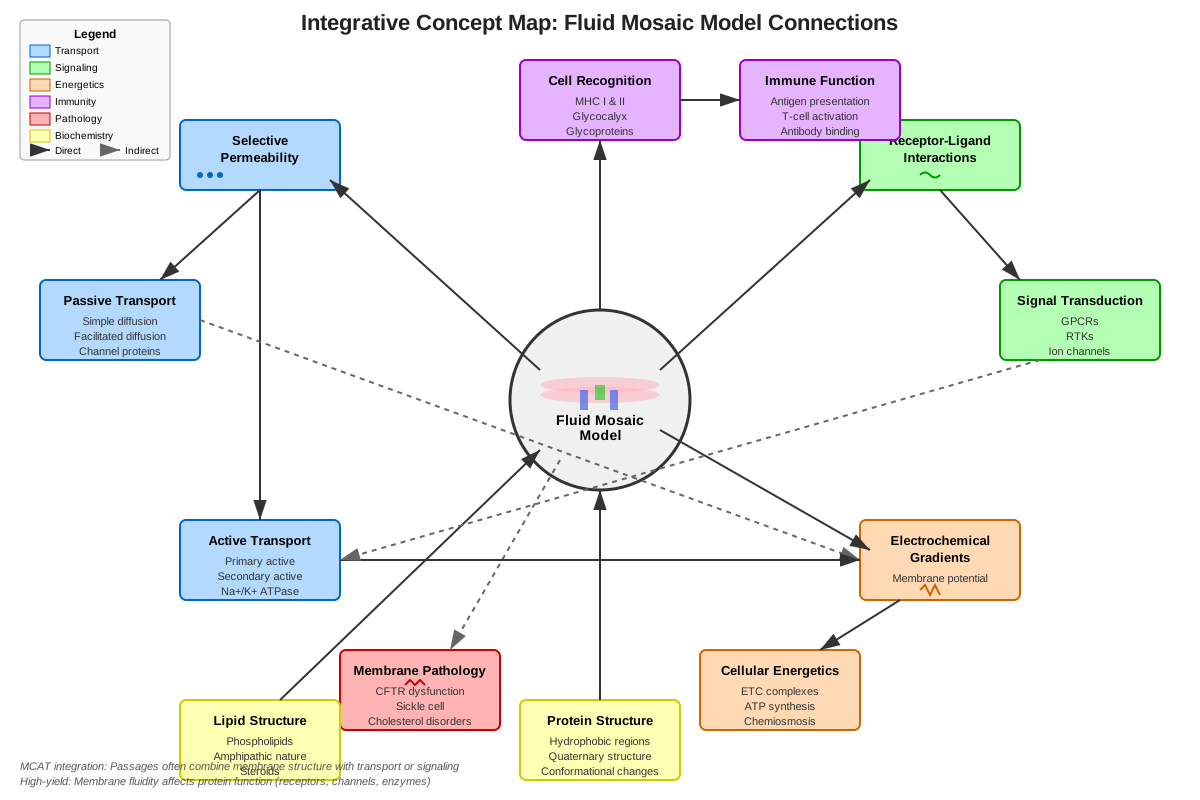
The fluid mosaic model serves as a central organizing principle connecting multiple biological concepts. The phospholipid bilayer structure directly determines selective permeability, which in turn governs passive transport mechanisms (simple diffusion, facilitated diffusion, osmosis) and necessitates active transport systems for moving substances against concentration gradients. The presence of integral membrane proteins enables facilitated diffusion through channels and carriers, while other integral proteins function as pumps for active transport (e.g., Na⁺/K⁺-ATPase).
Membrane fluidity affects the function of membrane-bound proteins, influencing enzyme activity, receptor-ligand binding, and signal transduction pathways. Changes in fluidity can alter protein conformation and activity, explaining why organisms must regulate membrane composition in response to temperature changes. This connects to homeostasis and adaptation concepts frequently tested on the MCAT.
The glycocalyx and membrane asymmetry connect to immunology (self-recognition, blood typing), cell signaling (receptor orientation), and apoptosis (phosphatidylserine exposure). Lipid rafts link membrane structure to signal transduction, endocytosis, and protein sorting, representing a higher-order organization within the fluid mosaic framework.
Relationship map: Amphipathic phospholipids → spontaneous bilayer formation → selective permeability → requires transport proteins → proteins embedded in fluid membrane → protein mobility enables receptor clustering → facilitates signal transduction → membrane fluidity regulated by cholesterol and fatty acid composition → affects cellular responses to temperature → connects to homeostasis and adaptation.
High-Yield Facts
⭐ The fluid mosaic model describes membranes as a phospholipid bilayer with embedded proteins that can move laterally within the membrane plane.
⭐ Unsaturated fatty acids increase membrane fluidity by creating kinks that prevent tight packing; saturated fatty acids decrease fluidity.
⭐ Cholesterol acts as a fluidity buffer, decreasing fluidity at high temperatures and increasing fluidity at low temperatures.
⭐ Integral membrane proteins span the bilayer and require detergents for removal; peripheral proteins associate with membrane surfaces and can be removed by pH or salt changes.
⭐ Membrane asymmetry is functionally important—phosphatidylserine on the outer leaflet signals apoptosis, and all carbohydrates face the extracellular space.
- Membrane fluidity decreases with increasing fatty acid chain length due to greater van der Waals interactions.
- The hydrophobic core of the membrane is approximately 3-4 nm thick and presents an energetic barrier to polar and charged molecules.
- Lipid rafts are cholesterol- and sphingolipid-rich microdomains that serve as platforms for cell signaling and protein sorting.
- Transmembrane proteins typically have hydrophobic α-helices or β-barrels spanning the membrane with hydrophilic regions extending into aqueous environments.
- The glycocalyx is found exclusively on the extracellular surface and functions in cell recognition, protection, and adhesion.
- FRAP (fluorescence recovery after photobleaching) experiments demonstrate lateral mobility of membrane components.
- Membrane proteins constitute approximately 50% of membrane mass but only 2% by number.
- Bacterial membranes lack cholesterol, making them targets for certain antibiotics that would not affect animal cell membranes.
Quick check — test yourself on Fluid mosaic model so far.
Try Flashcards →Common Misconceptions
Misconception: The fluid mosaic model means all membrane components can move freely in all directions. → Correction: While lateral movement within the membrane plane is common, transverse movement (flip-flop) between leaflets is extremely rare for phospholipids without enzymatic assistance (flippases, floppases). Proteins never spontaneously flip between leaflets. Additionally, protein movement can be restricted by cytoskeletal attachments, tight junctions, and protein-protein interactions.
Misconception: Cholesterol always decreases membrane fluidity. → Correction: Cholesterol has a bidirectional effect on fluidity depending on temperature. At high temperatures, it restrains phospholipid movement and decreases fluidity. At low temperatures, it prevents tight packing and increases fluidity, acting as a fluidity buffer that maintains membrane function across temperature ranges.
Misconception: All membrane proteins can be easily removed from the membrane. → Correction: Only peripheral membrane proteins can be removed by mild treatments (pH changes, salt concentration changes). Integral membrane proteins are permanently embedded in the bilayer and require detergents or organic solvents for extraction, which disrupts membrane structure.
Misconception: The membrane is a static structure with fixed protein positions. → Correction: The "fluid" in fluid mosaic model emphasizes that the membrane is dynamic, with both lipids and proteins capable of lateral movement. This mobility is essential for processes like receptor clustering during signal transduction, membrane fusion events, and the formation of specialized membrane domains.
Misconception: Saturated fats are always solid and unsaturated fats are always liquid. → Correction: While saturated fatty acids tend to have higher melting points and unsaturated fatty acids lower melting points, the physical state depends on temperature and chain length. The key concept for membranes is that saturated fatty acids pack more tightly, decreasing fluidity, while unsaturated fatty acids create kinks that increase fluidity at physiological temperatures.
Misconception: All cells have identical membrane compositions. → Correction: Membrane composition varies significantly between cell types, organisms, and even between different membranes within the same cell (plasma membrane vs. mitochondrial membrane). This variation reflects functional specialization and environmental adaptation. For example, bacterial membranes lack cholesterol, and cold-adapted organisms have more unsaturated fatty acids.
Misconception: Water cannot cross the lipid bilayer. → Correction: While the hydrophobic core presents a barrier to polar molecules, water can cross the bilayer slowly through simple diffusion due to its small size and lack of charge. However, aquaporins (water channel proteins) greatly increase the rate of water transport in cells requiring rapid water movement.
Worked Examples
Example 1: Temperature Effects on Membrane Function
Question: Researchers studying Antarctic fish notice that these organisms maintain functional cell membranes at temperatures near 0°C, while tropical fish experience membrane dysfunction at the same temperature. Analysis reveals that Antarctic fish membranes contain 75% unsaturated fatty acids, while tropical fish membranes contain 30% unsaturated fatty acids. Explain this observation using the fluid mosaic model and predict what would happen if Antarctic fish were suddenly placed in tropical waters.
Solution:
Step 1: Identify the key principle being tested—the relationship between fatty acid saturation and membrane fluidity, and how organisms adapt membrane composition to environmental temperature.
Step 2: Analyze the Antarctic fish adaptation. At low temperatures, membranes tend to lose fluidity and can transition to a gel-like state, impairing membrane protein function and cellular processes. Unsaturated fatty acids contain cis double bonds that create kinks in the hydrocarbon chains, preventing tight packing of phospholipids. This maintains membrane fluidity even at low temperatures. Antarctic fish have evolved high proportions of unsaturated fatty acids (75%) to maintain adequate membrane fluidity in their cold environment—this is homeoviscous adaptation.
Step 3: Explain tropical fish membranes. Tropical fish live at higher temperatures where membranes naturally have greater fluidity. They require more saturated fatty acids (70% saturated, 30% unsaturated) to prevent excessive fluidity that would compromise membrane integrity and protein function. The higher proportion of saturated fatty acids allows tight packing that maintains appropriate membrane viscosity at warm temperatures.
Step 4: Predict the outcome of placing Antarctic fish in tropical waters. The high proportion of unsaturated fatty acids in Antarctic fish membranes would result in excessive membrane fluidity at tropical temperatures. This would cause:
- Loss of membrane integrity and potential membrane breakdown
- Impaired protein function due to altered protein-lipid interactions
- Disrupted ion gradients as membranes become too permeable
- Possible cell death due to loss of cellular compartmentalization
Connection to learning objectives: This example demonstrates application of the fluid mosaic model to predict physiological outcomes based on membrane composition changes, a common MCAT question type involving experimental or comparative biology scenarios.
Example 2: FRAP Experiment Analysis
Question: Scientists perform a fluorescence recovery after photobleaching (FRAP) experiment on cultured cells. They label membrane proteins with fluorescent tags, bleach a small region of the membrane with intense laser light, and monitor fluorescence recovery in the bleached area over time. In normal cells at 37°C, fluorescence recovers to 80% of original intensity within 10 minutes. When the experiment is repeated at 15°C, recovery reaches only 40% after 30 minutes. When cells are pretreated with a drug that disrupts the cytoskeleton, recovery at 37°C reaches 95% within 5 minutes. Interpret these results in terms of the fluid mosaic model.
Solution:
Step 1: Understand what FRAP measures. FRAP experiments assess lateral mobility of membrane components. Recovery of fluorescence in the bleached area occurs when unbleached fluorescent proteins from surrounding membrane regions diffuse into the bleached zone. The rate and extent of recovery indicate protein mobility.
Step 2: Analyze the normal condition (80% recovery in 10 minutes at 37°C). This demonstrates that membrane proteins can move laterally within the membrane plane, consistent with the fluid mosaic model. The incomplete recovery (80% rather than 100%) indicates that some proteins are immobile, likely due to cytoskeletal attachments or protein complexes.
Step 3: Interpret the low-temperature result (40% recovery in 30 minutes at 15°C). Lower temperature decreases membrane fluidity by reducing kinetic energy and allowing tighter packing of phospholipids. This increased viscosity slows protein lateral diffusion, explaining the slower and less complete recovery. The reduced extent of recovery suggests that some proteins become effectively immobilized in the less fluid membrane.
Step 4: Explain the cytoskeleton disruption result (95% recovery in 5 minutes). Disrupting the cytoskeleton removes constraints on protein movement, allowing nearly complete recovery and faster diffusion. This demonstrates that cytoskeletal attachments restrict the mobility of some membrane proteins. The increase from 80% to 95% mobile fraction indicates that approximately 15% of membrane proteins were anchored to the cytoskeleton in normal cells.
Step 5: Synthesize the findings. These results support key aspects of the fluid mosaic model: (1) membrane proteins can move laterally within the membrane, (2) membrane fluidity affects protein mobility, (3) not all proteins are freely mobile—some are restricted by cytoskeletal attachments, and (4) temperature affects membrane properties by altering lipid packing and fluidity.
Connection to learning objectives: This example demonstrates how to analyze experimental data related to membrane dynamics and apply understanding of factors affecting membrane fluidity and protein mobility, a high-yield MCAT skill.
Exam Strategy
When approaching MCAT questions on the fluid mosaic model, first identify whether the question focuses on membrane structure, composition, fluidity, or protein mobility. Look for trigger words that indicate specific concepts:
- "Saturated/unsaturated fatty acids" → fluidity question
- "Temperature effects" → fluidity and homeoviscous adaptation
- "Cholesterol" → fluidity buffer function
- "Integral/peripheral proteins" → protein classification and removal methods
- "Lateral movement/mobility" → protein or lipid diffusion
- "Glycocalyx/carbohydrates" → cell recognition or membrane asymmetry
- "Detergent/organic solvent" → integral protein extraction
For passage-based questions, quickly identify the experimental manipulation being performed. Common scenarios include:
- Temperature manipulation: Predict effects on fluidity and cellular function
- Lipid composition analysis: Compare organisms or cell types with different membrane compositions
- Protein mobility studies: Interpret FRAP or cell fusion experiments
- Drug effects on membranes: Determine mechanism based on membrane component targeted
Process of elimination strategies:
- Eliminate answers that confuse integral and peripheral proteins (e.g., stating peripheral proteins span the membrane)
- Eliminate answers that claim cholesterol only increases or only decreases fluidity
- Eliminate answers suggesting proteins can flip between membrane leaflets spontaneously
- Eliminate answers that ignore the hydrophobic effect as the driving force for bilayer formation
- Watch for answers that confuse correlation with causation in experimental scenarios
Time allocation: Discrete questions on membrane structure should take 60-90 seconds. Passage-based questions may require 90-120 seconds, with additional time for analyzing figures or data tables. If a question requires detailed analysis of experimental results, ensure you understand the control condition before evaluating experimental manipulations.
Exam Tip: When questions present novel scenarios (e.g., unusual organisms, synthetic membranes, or new experimental techniques), return to first principles: amphipathic phospholipids form bilayers, hydrophobic interactions drive structure, and fluidity depends on temperature and lipid composition. The MCAT rewards application of fundamental concepts to new situations.
Memory Techniques
Mnemonic for factors affecting membrane fluidity: "CULTS"
- Cholesterol (buffer effect)
- Unsaturation (increases fluidity)
- Length of fatty acid chains (longer = less fluid)
- Temperature (higher = more fluid)
- Saturation (decreases fluidity)
Mnemonic for membrane protein types: "I'm Permanently Embedded, Peripherals Are Temporary"
- Integral proteins are Permanently embedded (require detergents)
- Peripheral proteins Are Temporary (removed by pH/salt changes)
Visualization strategy for membrane asymmetry: Picture the membrane as a house with decorations only on the outside (glycocalyx on extracellular surface). Inside the house (cytoplasmic side), you find the structural support (cytoskeleton attachments) and signaling equipment (phosphatidylserine that signals "eat me" when exposed outside).
Acronym for cholesterol's dual role: "BIRD"
- Buffer of fluidity
- Increases fluidity when cold
- Reduces fluidity when hot
- Determines membrane properties
Memory aid for unsaturated vs. saturated: Unsaturated fatty acids have "kinks" (double bonds) like a kinked hose that won't pack neatly—this creates space and increases fluidity. Saturated fatty acids are "straight" like rigid pipes that stack tightly—this decreases fluidity.
Summary
The fluid mosaic model describes biological membranes as dynamic structures composed of a phospholipid bilayer with embedded proteins that can move laterally within the membrane plane. The amphipathic nature of phospholipids drives spontaneous bilayer formation, creating a selectively permeable barrier with a hydrophobic core. Membrane fluidity, crucial for proper cellular function, is regulated by temperature, fatty acid saturation and chain length, and cholesterol content, which acts as a bidirectional fluidity buffer. Membrane proteins are classified as integral (permanently embedded, requiring detergents for removal) or peripheral (temporarily associated, removed by pH or salt changes), with integral proteins performing most membrane functions including transport, signaling, and recognition. The membrane exhibits asymmetry in both lipid and protein composition, with functional significance including cell recognition through the glycocalyx and apoptotic signaling through phosphatidylserine exposure. Understanding the fluid mosaic model is essential for interpreting MCAT questions on membrane transport, cell signaling, cellular adaptation to environmental changes, and experimental manipulations of membrane properties.
Key Takeaways
- The fluid mosaic model describes membranes as phospholipid bilayers with mobile, embedded proteins—"fluid" refers to lateral movement, "mosaic" to heterogeneous protein distribution
- Membrane fluidity increases with temperature, unsaturated fatty acids, and shorter chain lengths; it decreases with saturated fatty acids and longer chains
- Cholesterol uniquely buffers membrane fluidity, restraining movement at high temperatures and preventing tight packing at low temperatures
- Integral membrane proteins are permanently embedded and require detergents for removal; peripheral proteins are temporarily associated and removed by pH or salt changes
- Membrane asymmetry is functionally critical—carbohydrates face exclusively outward (glycocalyx), phosphatidylserine exposure signals apoptosis, and protein orientation is fixed during synthesis
- Protein mobility within membranes can be restricted by cytoskeletal attachments, tight junctions, lipid rafts, and protein-protein interactions
- The MCAT frequently tests this concept through experimental scenarios involving temperature effects, fatty acid composition comparisons, and protein mobility studies like FRAP experiments
Related Topics
Membrane Transport Mechanisms: Understanding the fluid mosaic model provides the structural foundation for studying passive transport (simple diffusion, facilitated diffusion, osmosis) and active transport (primary and secondary active transport). Mastery of membrane structure enables prediction of which substances can cross membranes and by what mechanisms.
Cell Signaling and Signal Transduction: Receptor proteins embedded in the membrane according to the fluid mosaic model initiate signaling cascades. Lateral mobility of receptors enables receptor clustering and signal amplification, while lipid rafts serve as signaling platforms.
Membrane Potential and Action Potentials: The selective permeability established by the phospholipid bilayer and the function of ion channels (integral membrane proteins) create and maintain membrane potentials essential for nerve and muscle function.
Endocytosis and Exocytosis: These membrane trafficking processes depend on membrane fluidity and the ability of membranes to fuse and separate, properties explained by the fluid mosaic model.
Cellular Adaptation and Homeostasis: Organisms regulate membrane composition in response to environmental changes (homeoviscous adaptation), connecting membrane structure to broader physiological principles of maintaining internal stability.
Practice CTA
Now that you have mastered the fluid mosaic model, test your understanding with practice questions and flashcards. Focus on applying these concepts to experimental scenarios and clinical vignettes—the MCAT rewards deep understanding over memorization. Challenge yourself with questions that require integration of membrane structure with transport mechanisms, cell signaling, and physiological adaptation. Remember, the fluid mosaic model appears throughout the MCAT in diverse contexts, so practice recognizing how this fundamental concept applies to novel situations. Your thorough understanding of this topic will serve as a foundation for success across multiple areas of the exam. Keep pushing forward—mastery of high-yield topics like this one brings you closer to your target score!
Sign up free to keep reading
Create a free AnvayaPrep account to finish this MCAT guide on Fluid mosaic model — plus flashcards and practice questions.