Overview
The G2 phase represents a critical checkpoint in the eukaryotic cell cycle, serving as the final preparatory stage before mitosis. This phase occurs after DNA replication (S phase) and before the cell enters mitosis (M phase), making it the second "gap" phase in the cell cycle sequence. During G2 phase, the cell undergoes extensive quality control mechanisms, synthesizes proteins essential for mitosis, continues to grow, and ensures that DNA replication has been completed accurately and completely. Understanding the G2 phase is fundamental to comprehending how cells maintain genomic integrity and coordinate the complex events of cell division.
For the MCAT, the G2 phase appears frequently in questions related to Cell Biology, cell cycle regulation, cancer biology, and cellular responses to DNA damage. The exam often tests students' ability to distinguish between the different phases of the cell cycle, understand checkpoint mechanisms, and predict cellular outcomes when these checkpoints fail. Questions may present experimental scenarios involving cell cycle inhibitors, radiation damage, or mutations in checkpoint proteins, requiring students to apply their knowledge of G2 phase functions to novel situations.
The G2 phase connects intimately with broader Biology concepts including gene expression, protein synthesis, signal transduction, and cellular quality control mechanisms. It serves as a bridge between DNA replication and the dramatic chromosomal movements of mitosis, integrating information about DNA integrity, cellular resources, and environmental signals to determine whether a cell should proceed with division or pause for repairs.
Learning Objectives
- [ ] Define G2 phase using accurate Biology terminology
- [ ] Explain why G2 phase matters for the MCAT
- [ ] Apply G2 phase to exam-style questions
- [ ] Identify common mistakes related to G2 phase
- [ ] Connect G2 phase to related Biology concepts
- [ ] Describe the molecular mechanisms of the G2/M checkpoint and its key regulatory proteins
- [ ] Analyze experimental scenarios involving G2 phase arrest and predict cellular outcomes
- [ ] Compare and contrast G2 phase with other cell cycle phases in terms of DNA content, cellular activities, and checkpoint functions
Prerequisites
- Interphase structure: Understanding that interphase consists of G1, S, and G2 phases is essential because G2 phase cannot be understood in isolation from the complete cell cycle sequence
- DNA replication: Knowledge of S phase DNA synthesis is necessary because G2 phase activities directly respond to replication completion and accuracy
- Basic mitosis: Familiarity with mitotic events helps contextualize why G2 phase preparations are necessary for successful cell division
- Chromosome structure: Understanding chromatin, sister chromatids, and centromeres is required because G2 phase involves chromosome condensation and preparation
- Cell cycle checkpoints: General awareness of checkpoint concepts provides the framework for understanding G2/M checkpoint specificity
- Protein synthesis: Knowledge of transcription and translation is fundamental because G2 phase involves extensive protein production
Why This Topic Matters
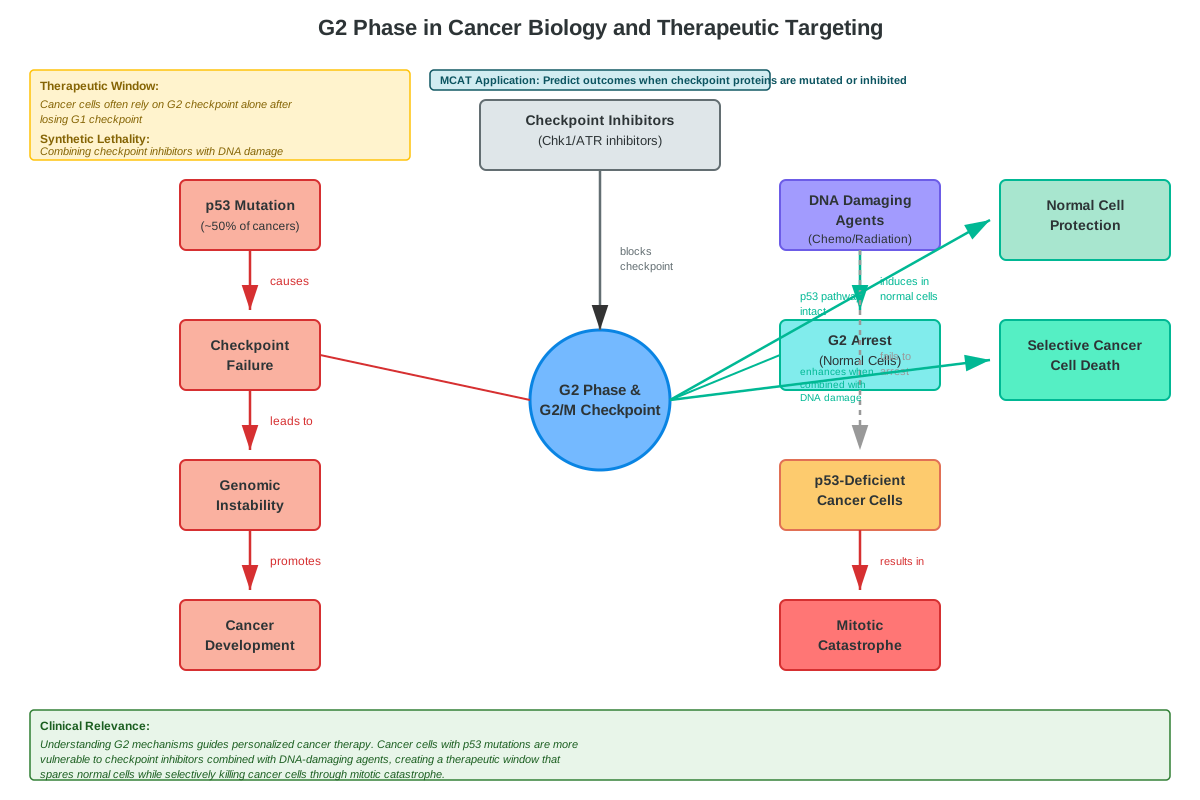
Clinical and Real-World Significance: The G2 phase checkpoint represents one of the cell's last opportunities to prevent the transmission of damaged or incompletely replicated DNA to daughter cells. Defects in G2 checkpoint function are strongly associated with cancer development, as cells with damaged DNA proceed inappropriately into mitosis, leading to chromosomal instability and aneuploidy. Many chemotherapy agents and radiation therapy specifically target rapidly dividing cells and induce G2 arrest, making this phase clinically relevant to cancer treatment strategies. Additionally, understanding G2 phase mechanisms has enabled the development of checkpoint inhibitors that can selectively kill cancer cells with pre-existing DNA damage.
Exam Statistics: G2 phase content appears in approximately 3-5% of MCAT Biology questions, most commonly within passages about cell cycle regulation, cancer biology, or experimental cell biology. Questions typically appear in the Biological and Biochemical Foundations of Living Systems section and often integrate multiple concepts such as signal transduction, gene regulation, and experimental design. The MCAT frequently presents data from cell cycle experiments using flow cytometry, microscopy, or cell synchronization techniques, requiring students to interpret results in the context of G2 phase characteristics.
Common Exam Presentations: The topic appears in several characteristic formats: (1) experimental passages describing cell cycle synchronization or checkpoint activation, (2) questions about the effects of mutations in checkpoint proteins like p53 or ATM, (3) scenarios involving DNA-damaging agents and cellular responses, (4) questions requiring students to identify cell cycle phases based on DNA content or cellular activities, and (5) cancer biology passages discussing how tumor cells evade checkpoint controls. The MCAT particularly favors questions that require distinguishing between G1, G2, and S phases based on DNA content (2n vs. 4n) and cellular activities.
Core Concepts
Definition and Position in the Cell Cycle
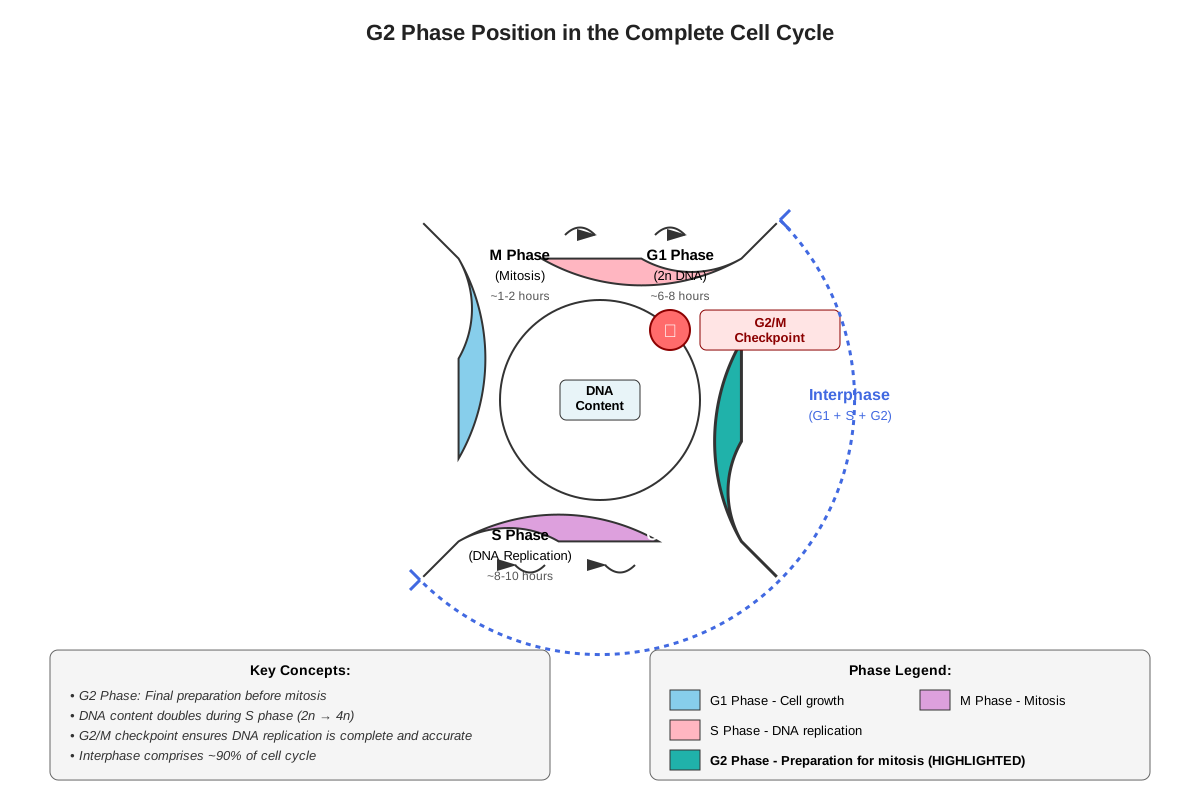
The G2 phase (Gap 2 phase) is the third phase of interphase in the eukaryotic cell cycle, occurring after S phase (DNA synthesis) and before M phase (mitosis). The "gap" terminology is somewhat misleading, as G2 is far from inactive—it represents an intensely active period of cellular preparation and quality control. During G2 phase, cells possess 4n DNA content (having replicated their genome during S phase) but maintain 2n chromosome number because sister chromatids remain joined at their centromeres and are counted as single chromosomes until they separate during anaphase.
The duration of G2 phase varies considerably among cell types, typically lasting 3-5 hours in rapidly dividing mammalian cells but extending much longer in cells with more stringent quality control requirements. Unlike G1 phase, which can vary dramatically in length or even lead to G0 (quiescent) state, G2 phase duration is relatively consistent within a given cell type, reflecting its role as a standardized preparation period before the precisely timed events of mitosis.
Cellular Activities During G2 Phase
G2 phase is characterized by several critical cellular activities that prepare the cell for successful mitosis:
- Protein synthesis: Extensive production of proteins required for mitosis, including tubulins for spindle formation, condensins for chromosome compaction, cohesins to maintain sister chromatid cohesion, and cyclins that will drive M phase progression
- Organelle duplication: Continued synthesis and duplication of organelles to ensure adequate distribution to daughter cells
- Cell growth: Further increase in cell size and accumulation of cellular resources, building on growth that began in G1
- Energy accumulation: Production and storage of ATP and other energy molecules needed for the energy-intensive processes of mitosis
- Chromosome condensation initiation: Early stages of chromatin condensation begin, preparing chromosomes for the dramatic compaction required during prophase
The G2/M Checkpoint (G2 DNA Damage Checkpoint)
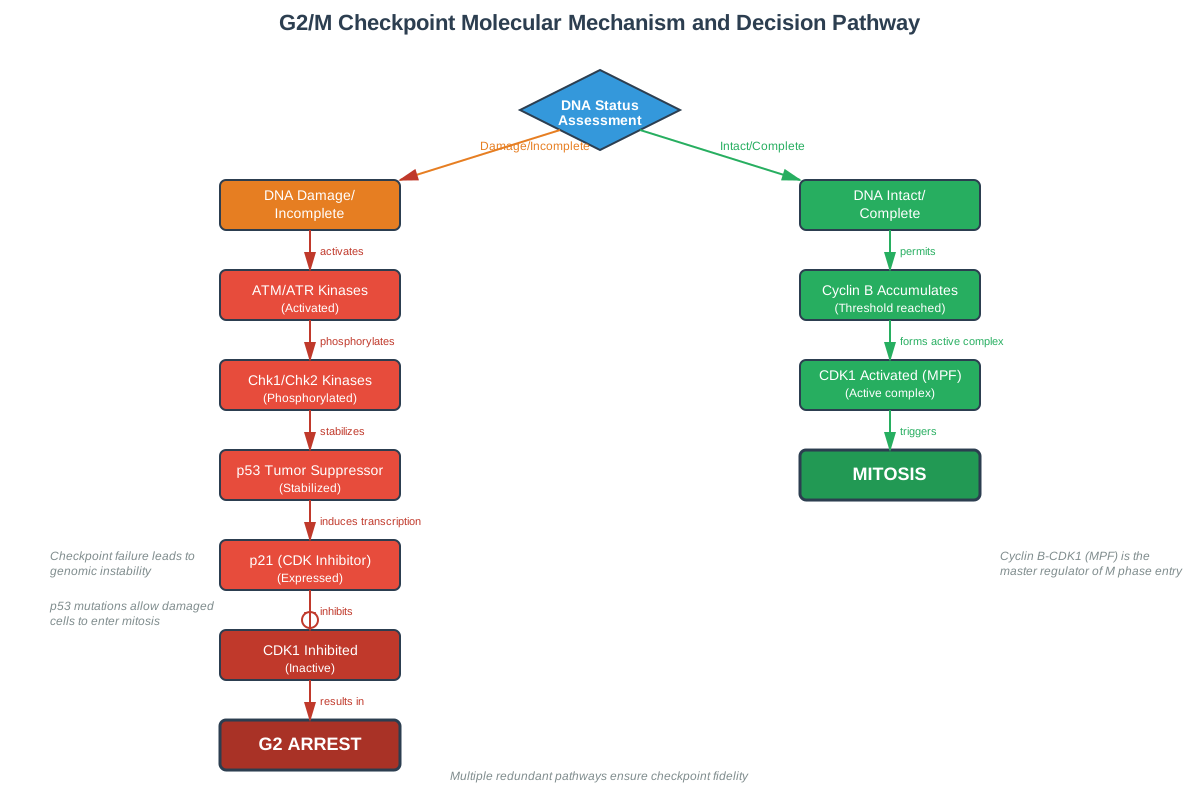
The G2/M checkpoint represents the primary regulatory mechanism controlling entry into mitosis. This checkpoint serves three essential functions: verifying DNA replication completion, detecting DNA damage, and ensuring adequate cell size and resources. The checkpoint operates through a complex molecular network centered on the cyclin-dependent kinase CDK1 (also called CDC2) and its regulatory partner cyclin B.
The molecular mechanism involves several key components:
| Component | Function | Effect on Cell Cycle |
|---|---|---|
| CDK1/Cyclin B complex (MPF) | Master regulator of mitotic entry | Active complex drives cell into mitosis |
| Wee1 kinase | Inhibitory kinase | Phosphorylates CDK1, keeping it inactive |
| CDC25 phosphatase | Activating phosphatase | Removes inhibitory phosphorylation from CDK1 |
| p53 tumor suppressor | DNA damage sensor and transcription factor | Activates p21 to block CDK activity |
| p21 (CDK inhibitor) | CDK1 inhibitor | Directly blocks CDK1/Cyclin B activity |
| ATM/ATR kinases | DNA damage sensors | Activate p53 and inhibit CDC25 |
When DNA damage is detected during G2 phase, sensor kinases ATM (Ataxia Telangiectasia Mutated) and ATR (ATM and Rad3-related) become activated. These kinases phosphorylate and activate p53, which then acts as a transcription factor to increase expression of p21. The p21 protein directly inhibits CDK1/Cyclin B complexes, preventing mitotic entry. Simultaneously, ATM/ATR inhibit CDC25 phosphatase and activate Wee1 kinase, creating multiple redundant mechanisms to ensure CDK1 remains inactive until damage is repaired.
DNA Damage Response in G2 Phase
The G2 phase provides a critical opportunity for cells to detect and respond to DNA damage that may have occurred during replication or from exogenous sources. The DNA damage response in G2 involves several coordinated processes:
Detection mechanisms: Specialized protein complexes continuously survey DNA integrity, recognizing double-strand breaks, single-strand breaks, base modifications, and replication errors. The MRN complex (MRE11-RAD50-NBS1) serves as a primary sensor of double-strand breaks, recruiting ATM kinase to damage sites.
Signal amplification: Once damage is detected, checkpoint kinases amplify the signal through phosphorylation cascades, ensuring that even small amounts of damage can trigger cell cycle arrest. This amplification involves positive feedback loops where activated checkpoint proteins recruit and activate additional checkpoint components.
Repair pathway activation: Depending on the type of damage detected, cells activate appropriate repair pathways including homologous recombination (particularly effective in G2 when sister chromatids are available as repair templates), non-homologous end joining, base excision repair, or nucleotide excision repair.
Cell fate determination: If damage is successfully repaired, checkpoint signals are extinguished, and cells proceed into mitosis. If damage is irreparable, cells may undergo permanent cell cycle arrest (senescence) or activate apoptotic pathways to eliminate the damaged cell.
Molecular Preparations for Mitosis
Beyond checkpoint functions, G2 phase involves specific molecular preparations that enable the dramatic cellular reorganization of mitosis:
Centrosome maturation: The duplicated centrosomes (replicated during S phase) undergo maturation, recruiting additional pericentriolar material and γ-tubulin ring complexes that will nucleate microtubules for spindle formation. This maturation is driven by polo-like kinase 1 (PLK1) and Aurora kinase A.
Nuclear envelope preparation: Proteins of the nuclear lamina are phosphorylated by CDK1, priming the nuclear envelope for breakdown during prophase. Nuclear pore complexes begin to disassemble, and membrane-associated proteins are modified to facilitate the rapid nuclear envelope disintegration that occurs at the G2/M transition.
Chromosome architecture changes: Condensin complexes begin loading onto chromosomes, initiating the compaction process that will transform the loosely organized interphase chromatin into the highly condensed metaphase chromosomes. Cohesin complexes are modified to ensure they maintain sister chromatid cohesion at centromeres while allowing arm separation.
Regulation of G2 Phase Length
The duration of G2 phase is regulated by both intrinsic cellular programs and extrinsic signals. Checkpoint activation can extend G2 phase indefinitely until damage is repaired or the cell commits to apoptosis. Growth factor signaling, nutrient availability, and cell-cell contact can all influence G2 progression. In development, G2 phase length is precisely controlled to coordinate cell divisions, with some embryonic cells having extremely short or virtually absent G2 phases to enable rapid cleavage divisions.
Concept Relationships
The G2 phase exists within an integrated network of cell cycle concepts. S phase directly precedes G2 and provides the doubled DNA content (4n) that characterizes G2 cells, while also potentially introducing replication errors that G2 checkpoints must detect. The G2/M checkpoint serves as the decision point that either permits entry into M phase or maintains G2 arrest, making it the functional bridge between these phases.
The G2 phase checkpoint mechanisms share molecular components with the G1/S checkpoint, particularly the p53-p21 pathway, illustrating how cells use conserved regulatory modules at multiple decision points. However, G2 checkpoints have unique features, including the CDK1/Cyclin B complex (versus CDK4/6-Cyclin D and CDK2-Cyclin E in G1) and the availability of sister chromatids as repair templates, which makes homologous recombination particularly effective during G2.
DNA repair pathways → activated during → G2 checkpoint arrest → determines → cell fate (mitosis, senescence, or apoptosis). This relationship demonstrates how G2 phase integrates DNA damage sensing with cell cycle progression decisions. The p53 tumor suppressor functions as a central hub connecting DNA damage detection to cell cycle arrest, DNA repair activation, and apoptosis initiation, making it critical for G2 checkpoint function.
Cyclin-CDK complexes regulate all cell cycle transitions, but the CDK1/Cyclin B complex (also called M-phase promoting factor or MPF) is specifically essential for the G2/M transition. The activity of this complex is controlled by opposing kinases and phosphatases (Wee1 vs. CDC25), creating a bistable switch that ensures rapid, irreversible commitment to mitosis once the checkpoint is satisfied.
The relationship extends to cancer biology: checkpoint defects → lead to → genomic instability → contributes to → cancer development. Conversely, chemotherapy and radiation → cause → DNA damage → activates → G2 checkpoint → results in → cell cycle arrest or apoptosis, explaining why these treatments are effective against rapidly dividing cancer cells.
Quick check — test yourself on G2 phase so far.
Try Flashcards →High-Yield Facts
⭐ G2 phase cells contain 4n DNA content but 2n chromosome number because DNA has been replicated but sister chromatids have not yet separated
⭐ The G2/M checkpoint is controlled primarily by the CDK1/Cyclin B complex (M-phase promoting factor), whose activity determines whether cells enter mitosis
⭐ p53 is the master regulator of G2 checkpoint arrest in response to DNA damage, acting through transcriptional activation of p21, which inhibits CDK1
⭐ ATM and ATR kinases serve as primary DNA damage sensors during G2 phase, phosphorylating p53 and other checkpoint proteins when damage is detected
⭐ G2 phase is the last opportunity for cells to repair DNA damage before mitosis, making it a critical quality control point for genomic integrity
- Wee1 kinase inhibits CDK1 by phosphorylating it, while CDC25 phosphatase activates CDK1 by removing this inhibitory phosphorylation
- G2 phase typically lasts 3-5 hours in mammalian cells but can be extended indefinitely if checkpoint conditions are not satisfied
- Homologous recombination is particularly effective during G2 phase because sister chromatids are available as repair templates
- Many chemotherapy drugs and radiation therapy induce G2 arrest by causing DNA damage that activates checkpoint mechanisms
- Cells with defective p53 (common in cancers) often have impaired G2 checkpoint function and proceed into mitosis despite DNA damage
- Polo-like kinase 1 (PLK1) and Aurora kinases are essential for centrosome maturation and other mitotic preparations during G2 phase
- The nuclear envelope begins preparations for breakdown during G2 through phosphorylation of lamins and nuclear pore proteins
- Condensin complexes begin loading onto chromosomes during G2, initiating the chromosome condensation process
Common Misconceptions
Misconception: G2 phase is just a "gap" or waiting period with no significant cellular activity → Correction: G2 phase is intensely active, involving extensive protein synthesis, organelle duplication, energy accumulation, checkpoint surveillance, and specific preparations for mitosis. The "gap" terminology is historical and does not reflect the phase's functional importance.
Misconception: Cells in G2 phase have twice as many chromosomes as G1 cells → Correction: G2 cells have the same chromosome number (2n) as G1 cells but twice the DNA content (4n vs. 2n). Sister chromatids joined at centromeres are counted as a single chromosome until they separate during anaphase of mitosis.
Misconception: The G2 checkpoint only checks for DNA damage → Correction: While DNA damage detection is a primary function, the G2/M checkpoint also verifies DNA replication completion, assesses cell size and resources, and integrates signals about environmental conditions and growth factors before permitting mitotic entry.
Misconception: All cells must pass through G2 phase before dividing → Correction: While most somatic cells have a distinct G2 phase, some rapidly dividing embryonic cells have extremely abbreviated or virtually absent G2 phases, proceeding almost directly from S phase to mitosis during early cleavage divisions.
Misconception: p53 directly stops the cell cycle by binding to CDK1 → Correction: p53 is a transcription factor that indirectly causes cell cycle arrest by increasing expression of p21, which then inhibits CDK1/Cyclin B complexes. p53 does not directly interact with or inhibit CDK1.
Misconception: Once a cell enters G2 phase, it must eventually proceed to mitosis → Correction: Cells can arrest in G2 phase indefinitely if checkpoint conditions are not satisfied, and may ultimately undergo senescence or apoptosis rather than proceeding to mitosis if damage cannot be repaired.
Misconception: G2 and G1 phases use completely different checkpoint mechanisms → Correction: While there are phase-specific components (different cyclin-CDK complexes), both checkpoints share core regulatory proteins including p53, p21, and ATM/ATR kinases, representing conserved quality control mechanisms used at multiple cell cycle transitions.
Worked Examples
Example 1: Flow Cytometry Analysis of Cell Cycle Phases
Question: Researchers treat cultured cells with a DNA-damaging agent and then use flow cytometry to measure DNA content per cell. They observe three distinct peaks: one at 2n DNA content, one at 4n DNA content, and a broader distribution between 2n and 4n. After 6 hours, the 4n peak has increased significantly while the 2n peak has decreased. Which of the following best explains these observations?
A) Cells are arresting in G1 phase due to checkpoint activation
B) Cells are arresting in G2 phase due to checkpoint activation
C) Cells are proceeding normally through the cell cycle
D) Cells are undergoing apoptosis
Solution:
Step 1: Interpret the flow cytometry data. The 2n peak represents G1 phase cells (unreplicated DNA), the 4n peak represents G2/M phase cells (replicated DNA), and the intermediate distribution represents S phase cells (partially replicated DNA).
Step 2: Analyze the change over time. The increase in the 4n peak with a corresponding decrease in the 2n peak indicates that cells are progressing from G1 through S phase and accumulating at the 4n stage.
Step 3: Consider the experimental context. DNA damage was introduced, which should activate checkpoint mechanisms. The accumulation at 4n suggests checkpoint arrest is occurring after DNA replication.
Step 4: Distinguish between G2 and M phase. Both have 4n DNA content, but flow cytometry alone cannot distinguish them. However, the question states cells are accumulating at 4n after DNA damage, which is most consistent with G2 checkpoint arrest rather than mitotic arrest (which would be unusual for DNA damage response).
Step 5: Evaluate the options. Option A is incorrect because G1 arrest would show accumulation at 2n, not 4n. Option C is incorrect because normal progression would not show preferential accumulation at any phase. Option D is incorrect because apoptotic cells would show sub-2n DNA content due to DNA fragmentation. Option B is correct: the accumulation at 4n after DNA damage indicates G2 checkpoint activation, preventing cells from entering mitosis until damage is repaired.
Key Concept: This example demonstrates how DNA content analysis can identify cell cycle phase and checkpoint activation, a common MCAT question format that requires understanding the DNA content characteristics of each phase (G1 = 2n, S = 2n-4n, G2/M = 4n).
Example 2: Checkpoint Protein Mutation Analysis
Question: A research team studies cells with a mutation that prevents p53 from being phosphorylated by ATM kinase. These cells are exposed to ionizing radiation that causes double-strand DNA breaks. Compared to normal cells, how will these mutant cells respond?
A) They will arrest more strongly in G2 phase
B) They will proceed into mitosis despite DNA damage
C) They will arrest in G1 phase instead of G2 phase
D) They will immediately undergo apoptosis
Solution:
Step 1: Understand the normal pathway. When DNA damage occurs, ATM kinase detects double-strand breaks and phosphorylates p53, activating it. Activated p53 then increases transcription of p21, which inhibits CDK1/Cyclin B, causing G2 arrest.
Step 2: Analyze the mutation's effect. If p53 cannot be phosphorylated by ATM, it cannot be activated in response to DNA damage. This means p21 will not be upregulated, and CDK1/Cyclin B will not be inhibited.
Step 3: Predict the cellular outcome. Without functional p53 activation, the G2 checkpoint cannot properly arrest the cell cycle in response to DNA damage. The cells will fail to arrest and will proceed into mitosis despite having damaged DNA.
Step 4: Evaluate the options. Option A is incorrect because the mutation impairs, not enhances, G2 arrest. Option C is incorrect because the mutation affects p53 activation, which is used in both G1 and G2 checkpoints, but the question specifically addresses radiation-induced damage that would be detected in G2. Option D is incorrect because immediate apoptosis requires functional p53, which is impaired in these cells. Option B is correct: cells with non-functional p53 cannot properly activate the G2 checkpoint and will inappropriately proceed into mitosis with damaged DNA, a hallmark of cancer cells.
Key Concept: This example illustrates the molecular mechanism of the G2 checkpoint and the consequences of checkpoint failure, connecting to cancer biology—a high-yield MCAT topic. Understanding that p53 acts as a transcription factor (not a direct CDK inhibitor) is essential for correctly analyzing checkpoint mechanisms.
Exam Strategy
When approaching MCAT questions about G2 phase, begin by identifying whether the question is asking about (1) phase identification based on cellular characteristics, (2) checkpoint mechanisms and regulation, (3) cellular responses to damage or stress, or (4) experimental interpretation of cell cycle data.
Trigger words and phrases to watch for include: "4n DNA content," "after DNA replication but before mitosis," "checkpoint activation," "p53," "CDK1/Cyclin B," "DNA damage response," "flow cytometry," "cell cycle arrest," and "preparation for mitosis." When you see "4n DNA content," immediately recognize this could be either G2 or M phase, and use additional context (checkpoint activation suggests G2, chromosome alignment suggests M) to distinguish them.
Process-of-elimination strategies: When questions present cell cycle scenarios, eliminate options that confuse DNA content with chromosome number (G2 has 4n DNA but 2n chromosomes). Eliminate options suggesting G2 cells are inactive or just "waiting." When checkpoint questions appear, eliminate options that suggest p53 directly inhibits CDKs (it works through p21) or that checkpoint proteins work in isolation (they function in integrated networks).
For experimental passages involving cell synchronization, flow cytometry, or checkpoint manipulation, quickly sketch a simple cell cycle diagram and mark where interventions occur. This visual reference helps track cellular progression and predict outcomes. When passages describe mutations in checkpoint proteins, immediately consider whether the mutation would cause loss of checkpoint function (allowing inappropriate progression) or constitutive checkpoint activation (causing permanent arrest).
Time allocation: Straightforward G2 phase identification questions should take 30-45 seconds. Checkpoint mechanism questions requiring pathway analysis may take 60-90 seconds. Complex experimental passages with data interpretation may require 90-120 seconds per question. Don't spend excessive time trying to recall every molecular detail—focus on the core logic of checkpoint function (damage detection → signal transduction → CDK inhibition → cell cycle arrest).
Memory Techniques
Mnemonic for G2 checkpoint components: "Please Always Check Well" represents the key players: P53, ATM/ATR, CDC25, Wee1. This reminds you of the major regulators controlling the G2/M transition.
Mnemonic for G2 phase activities: "Proteins Organelles Grow Energy Condense" represents: Protein synthesis, Organelle duplication, Growth, Energy accumulation, Chromosome condensation initiation—the five major activities during G2.
Visualization strategy: Picture G2 as a "final inspection checkpoint" before a rocket launch (mitosis). Inspectors (checkpoint proteins) examine the rocket (cell) for damage, verify fuel levels (energy), check all systems (organelles), and only give the "go" signal (activate CDK1/Cyclin B) when everything is ready. If damage is found, the launch is delayed (G2 arrest) until repairs are complete.
Acronym for DNA content: Remember "2-4-4-2" for the cell cycle DNA content progression: G1 = 2n, S = 2n→4n, G2 = 4n, M = 4n→2n (after division). This simple number sequence helps you quickly identify phases based on DNA content in flow cytometry questions.
Conceptual anchor: Think of G2 as "Get ready 2 divide"—this reinforces that G2 is the second gap phase and emphasizes its preparatory function. The "2" also reminds you that while DNA content is 4n, chromosome number remains 2n (diploid).
Summary
The G2 phase represents the critical preparatory and quality control stage between DNA replication and mitosis, characterized by 4n DNA content, extensive protein synthesis, organelle duplication, and checkpoint surveillance. The G2/M checkpoint, controlled primarily by the CDK1/Cyclin B complex and regulated by p53, ATM/ATR, Wee1, and CDC25, serves as the cell's final opportunity to detect and repair DNA damage before committing to mitosis. During G2, cells synthesize mitotic proteins, mature centrosomes, accumulate energy, and initiate chromosome condensation. When DNA damage is detected, ATM/ATR kinases activate p53, which transcriptionally upregulates p21 to inhibit CDK1, causing cell cycle arrest until damage is repaired. Failure of G2 checkpoint mechanisms, particularly through p53 mutations, allows cells with damaged DNA to proceed inappropriately into mitosis, contributing to genomic instability and cancer development. For the MCAT, students must be able to identify G2 phase based on DNA content (4n) and cellular activities, understand checkpoint molecular mechanisms, predict cellular responses to damage or checkpoint mutations, and interpret experimental data from flow cytometry and cell synchronization studies.
Key Takeaways
- G2 phase cells have 4n DNA content but 2n chromosome number because sister chromatids remain joined at centromeres
- The G2/M checkpoint is controlled by CDK1/Cyclin B complex, with p53-p21 pathway serving as the primary DNA damage response mechanism
- ATM and ATR kinases detect DNA damage and activate p53, which transcriptionally induces p21 to inhibit CDK1 and cause G2 arrest
- G2 phase involves intensive cellular activities including protein synthesis, organelle duplication, energy accumulation, and mitotic preparations—not a passive "gap"
- Checkpoint failure (especially p53 mutations) allows damaged cells to proceed into mitosis, contributing to cancer development
- G2 phase provides the last opportunity for DNA repair before mitosis, with homologous recombination particularly effective because sister chromatids are available as templates
- Understanding DNA content patterns (2n in G1, 2n-4n in S, 4n in G2/M) is essential for interpreting flow cytometry data and identifying cell cycle phases on the MCAT
Related Topics
M Phase (Mitosis and Cytokinesis): Mastering G2 phase naturally leads to studying mitosis, as G2 preparations directly enable mitotic events. Understanding what is prepared during G2 (spindle proteins, condensed chromosomes, separated centrosomes) clarifies why these structures appear during mitosis.
S Phase and DNA Replication: G2 phase directly follows S phase, and many G2 checkpoint functions verify that S phase was completed accurately. Studying DNA replication mechanisms helps explain what G2 checkpoints are checking for.
Cell Cycle Regulation and Cyclins/CDKs: G2 phase is one component of the broader cell cycle regulatory system. Understanding how different cyclin-CDK complexes control different transitions provides context for the specific role of CDK1/Cyclin B at the G2/M boundary.
p53 and Tumor Suppressor Genes: The p53 pathway is central to G2 checkpoint function. Deeper study of p53 regulation, its multiple cellular functions, and its role in cancer connects G2 phase concepts to cancer biology.
DNA Repair Mechanisms: G2 checkpoint arrest provides time for DNA repair. Studying specific repair pathways (homologous recombination, non-homologous end joining, base excision repair) explains what happens during G2 arrest and why some damage can be repaired while other damage triggers apoptosis.
Practice CTA
Now that you've mastered the core concepts of G2 phase, it's time to solidify your understanding through active practice. Challenge yourself with MCAT-style practice questions that test your ability to apply G2 phase concepts to experimental scenarios, interpret flow cytometry data, and analyze checkpoint mechanisms. Use flashcards to reinforce high-yield facts about DNA content, checkpoint proteins, and cellular activities. Remember, understanding G2 phase is not just about memorizing facts—it's about developing the analytical skills to approach novel cell cycle questions with confidence. The checkpoint mechanisms you've learned here appear repeatedly throughout MCAT biology content, making this foundational knowledge that will serve you across multiple topics. Keep pushing forward—your mastery of cell cycle regulation is building the strong biological foundation essential for MCAT success!
Sign up free to keep reading
Create a free AnvayaPrep account to finish this MCAT guide on G2 phase — plus flashcards and practice questions.