Overview
M phase represents the dramatic culmination of the cell cycle, during which a single parent cell physically divides into two genetically identical daughter cells. This phase encompasses both mitosis (nuclear division) and cytokinesis (cytoplasmic division), orchestrating one of the most visually striking and mechanistically complex processes in Cell Biology. The M phase is characterized by profound structural reorganization: chromatin condenses into visible chromosomes, the nuclear envelope disassembles, a bipolar spindle apparatus forms, and ultimately the entire cellular architecture is remodeled to produce two separate cells.
For the MCAT, understanding M phase Biology is essential because it integrates multiple fundamental concepts including chromosome structure, cytoskeletal dynamics, cell cycle regulation, and the molecular mechanisms ensuring genetic fidelity. Questions frequently test the sequential stages of mitosis, the checkpoints that prevent errors, and the consequences of M phase dysregulation in cancer biology. The MCAT particularly emphasizes experimental scenarios where students must interpret microscopy images, analyze the effects of drugs that disrupt mitosis, or predict outcomes when specific M phase proteins are mutated or inhibited.
The M phase MCAT content connects intimately with broader Biology themes including DNA replication (S phase), growth factor signaling, apoptosis, and tissue homeostasis. Understanding M phase provides the foundation for comprehending how multicellular organisms grow, how tissues regenerate after injury, and why uncontrolled cell division leads to malignancy. This topic bridges molecular biology, cell biology, and medical pathology—making it a high-yield area that appears across multiple question contexts on the exam.
Learning Objectives
- [ ] Define M phase using accurate Biology terminology
- [ ] Explain why M phase matters for the MCAT
- [ ] Apply M phase to exam-style questions
- [ ] Identify common mistakes related to M phase
- [ ] Connect M phase to related Biology concepts
- [ ] Describe the sequential stages of mitosis and the key molecular events in each stage
- [ ] Explain the structure and function of the mitotic spindle apparatus
- [ ] Analyze the role of M phase checkpoints in maintaining genomic integrity
- [ ] Predict the cellular consequences of disrupting specific M phase components
Prerequisites
- Interphase and cell cycle phases (G1, S, G2): M phase follows G2 and represents the culmination of cell cycle progression; understanding the preparatory events in earlier phases is essential for appreciating M phase readiness
- DNA structure and chromosome organization: Chromosomes are the primary actors in M phase; knowing how DNA is packaged with histones into chromatin and higher-order structures is necessary to understand chromosome condensation and segregation
- Cytoskeletal components (microtubules, actin, motor proteins): The mitotic spindle is composed of microtubules, and cytokinesis involves actin; familiarity with these structures is required to understand M phase mechanics
- Basic cell cycle regulation (cyclins and CDKs): M phase entry and progression are controlled by cyclin-CDK complexes, particularly cyclin B-CDK1 (MPF); understanding this regulatory framework is foundational
- Centrosome structure and function: Centrosomes serve as microtubule organizing centers (MTOCs) that nucleate spindle formation during M phase
Why This Topic Matters
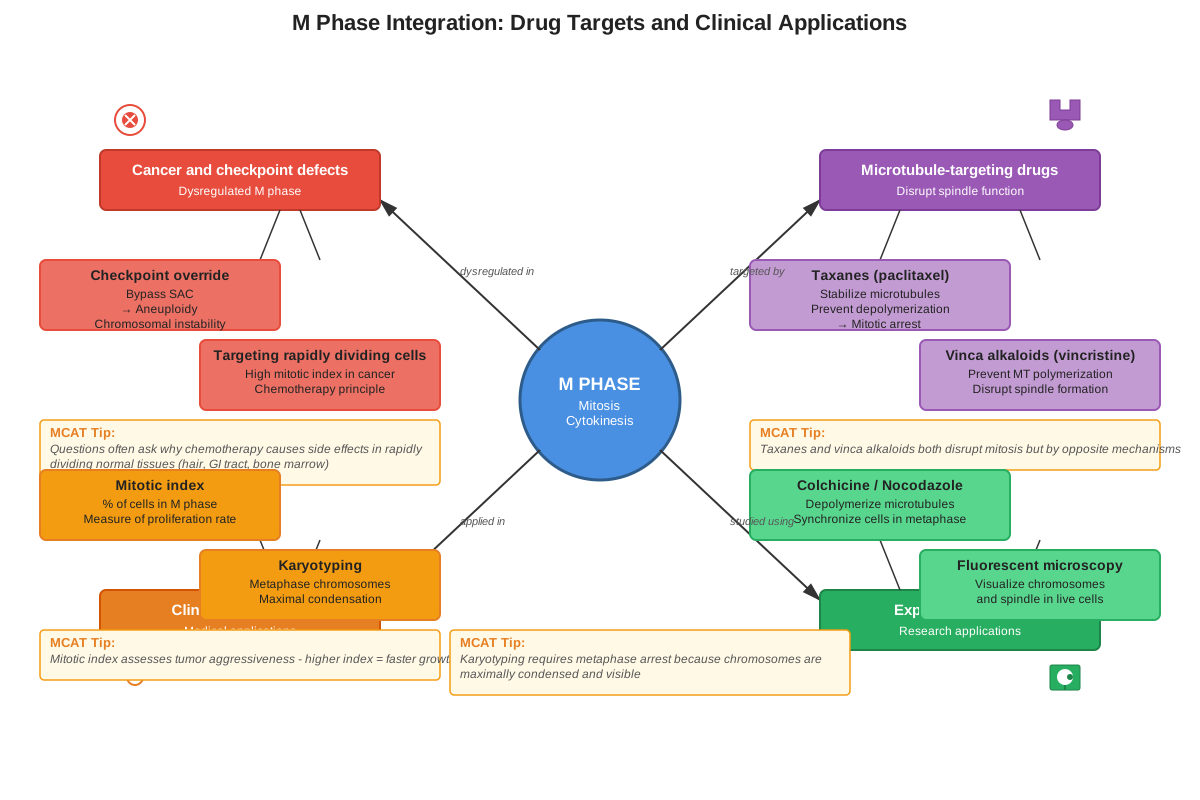
Clinical and Real-World Significance: M phase dysregulation underlies numerous human diseases, most notably cancer. Many chemotherapeutic agents specifically target dividing cells by disrupting M phase processes—drugs like taxanes (paclitaxel) stabilize microtubules, preventing spindle disassembly, while vinca alkaloids (vincristine) prevent microtubule polymerization. Understanding M phase mechanisms explains both why these drugs work and why they cause side effects in rapidly dividing normal tissues (bone marrow, hair follicles, intestinal epithelium). Additionally, errors in chromosome segregation during M phase can lead to aneuploidy, which contributes to developmental disorders (Down syndrome from trisomy 21) and drives tumor evolution.
Exam Statistics: M phase content appears in approximately 8-12% of MCAT Cell Biology questions, with particular emphasis on mitosis stages, spindle checkpoint function, and experimental manipulation scenarios. Questions typically appear as discrete items testing stage identification or as passage-based questions involving research on cell division, cancer biology, or drug mechanisms. The MCAT frequently presents microscopy images requiring students to identify mitotic stages based on chromosome position and spindle organization.
Common Exam Contexts: M phase appears in passages describing cancer research (testing novel mitotic inhibitors), developmental biology (explaining how organisms grow from single cells), stem cell biology (discussing proliferative capacity), and molecular biology experiments (analyzing the effects of protein knockdowns on cell division). The exam often integrates M phase with other topics: connecting mitotic errors to genetic variation, linking growth factor signaling to cell cycle entry, or relating apoptosis to mitotic catastrophe when checkpoints fail.
Core Concepts
Definition and Scope of M Phase
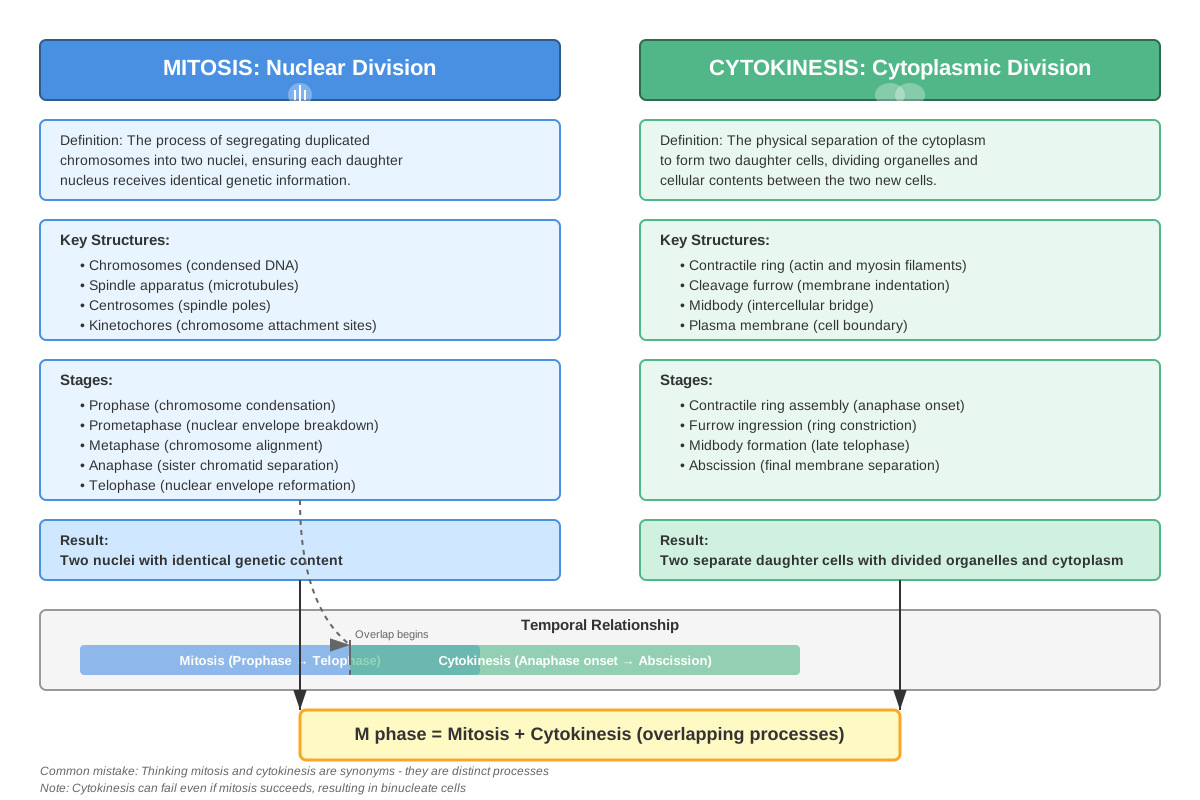
M phase (mitotic phase) is the stage of the eukaryotic cell cycle during which the replicated genome is segregated into two identical sets and the cell physically divides into two daughter cells. M phase consists of two overlapping processes: mitosis (nuclear division, comprising prophase, prometaphase, metaphase, anaphase, and telophase) and cytokinesis (cytoplasmic division). M phase is typically the shortest phase of the cell cycle, lasting approximately 30-60 minutes in mammalian cells, yet it represents the most visually dramatic and mechanistically complex period of cellular reorganization.
The defining molecular event triggering M phase entry is the activation of maturation-promoting factor (MPF), also called M-phase promoting factor, which consists of cyclin B bound to cyclin-dependent kinase 1 (CDK1). When cyclin B accumulates to threshold levels during G2 phase and CDK1 is dephosphorylated by CDC25 phosphatase, the active MPF complex phosphorylates hundreds of substrate proteins, initiating the cascade of events that characterize M phase: nuclear envelope breakdown, chromosome condensation, spindle assembly, and Golgi fragmentation.
The Stages of Mitosis
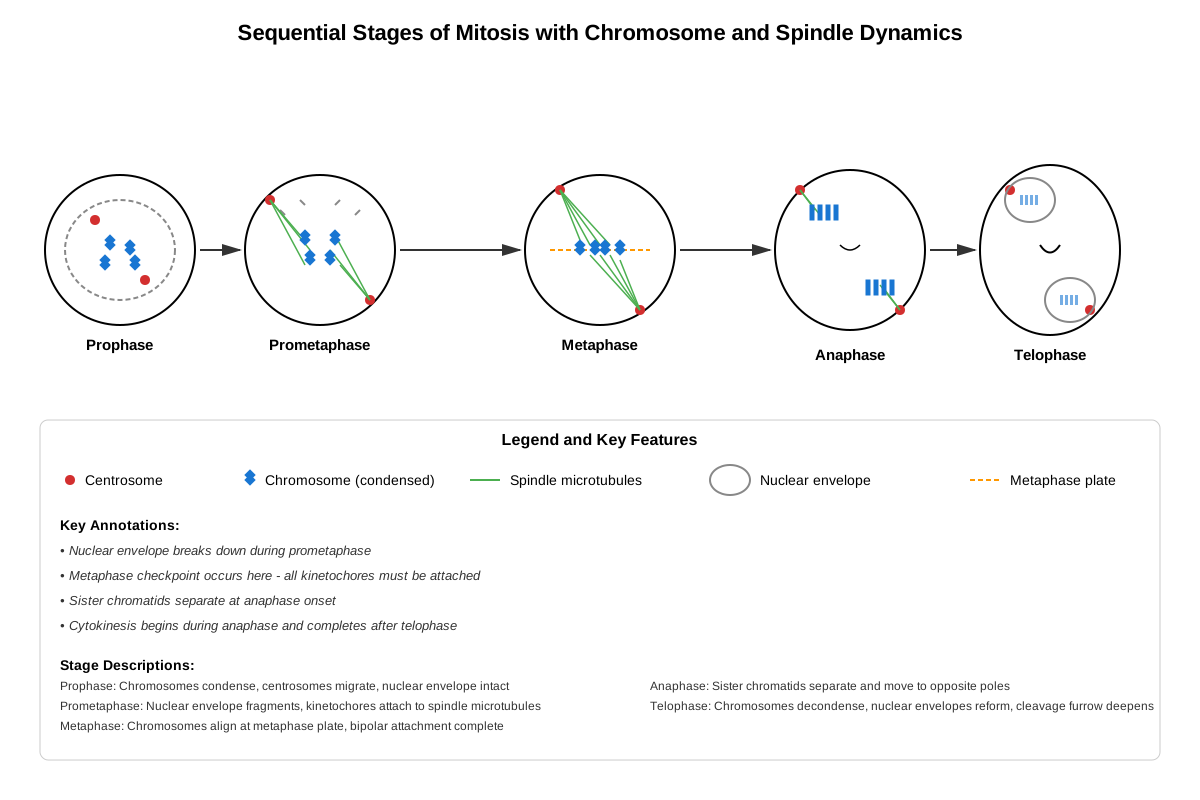
Prophase
Prophase marks the beginning of mitosis and is characterized by several simultaneous transformations. Chromatin condensation converts the diffuse interphase chromatin into compact, visible chromosomes, each consisting of two identical sister chromatids joined at the centromere. This condensation is mediated by condensin protein complexes that use ATP hydrolysis to introduce positive supercoils and compact the chromatin fiber.
Simultaneously, the centrosomes (duplicated during S phase) begin migrating toward opposite poles of the cell, nucleating microtubules that will form the mitotic spindle. The centrosomes serve as microtubule organizing centers (MTOCs), and their separation is driven by motor proteins (particularly kinesin-5 family members) that push antiparallel microtubules apart. The nuclear envelope remains intact during prophase, though it begins to show signs of disassembly as nuclear pore complexes disassemble and nuclear lamins are phosphorylated by CDK1.
Prometaphase
Prometaphase begins with nuclear envelope breakdown (NEBD), allowing spindle microtubules to access chromosomes. This breakdown occurs when CDK1 phosphorylates nuclear lamins, causing lamin filament depolymerization and membrane vesiculation. The nuclear envelope fragments into small vesicles that disperse throughout the cytoplasm.
During prometaphase, specialized protein structures called kinetochores assemble at each centromere on the outer surface of sister chromatids. Each kinetochore is a massive protein complex (>80 different proteins) that serves as the attachment site for kinetochore microtubules. The kinetochores capture the plus ends of microtubules emanating from the spindle poles through a "search and capture" mechanism. Initially, chromosomes attach to microtubules from only one pole (monotelic attachment) and undergo rapid movements as motor proteins walk along microtubules. The goal is to achieve amphitelic attachment, where sister kinetochores attach to microtubules from opposite poles, creating tension across the centromere.
Metaphase
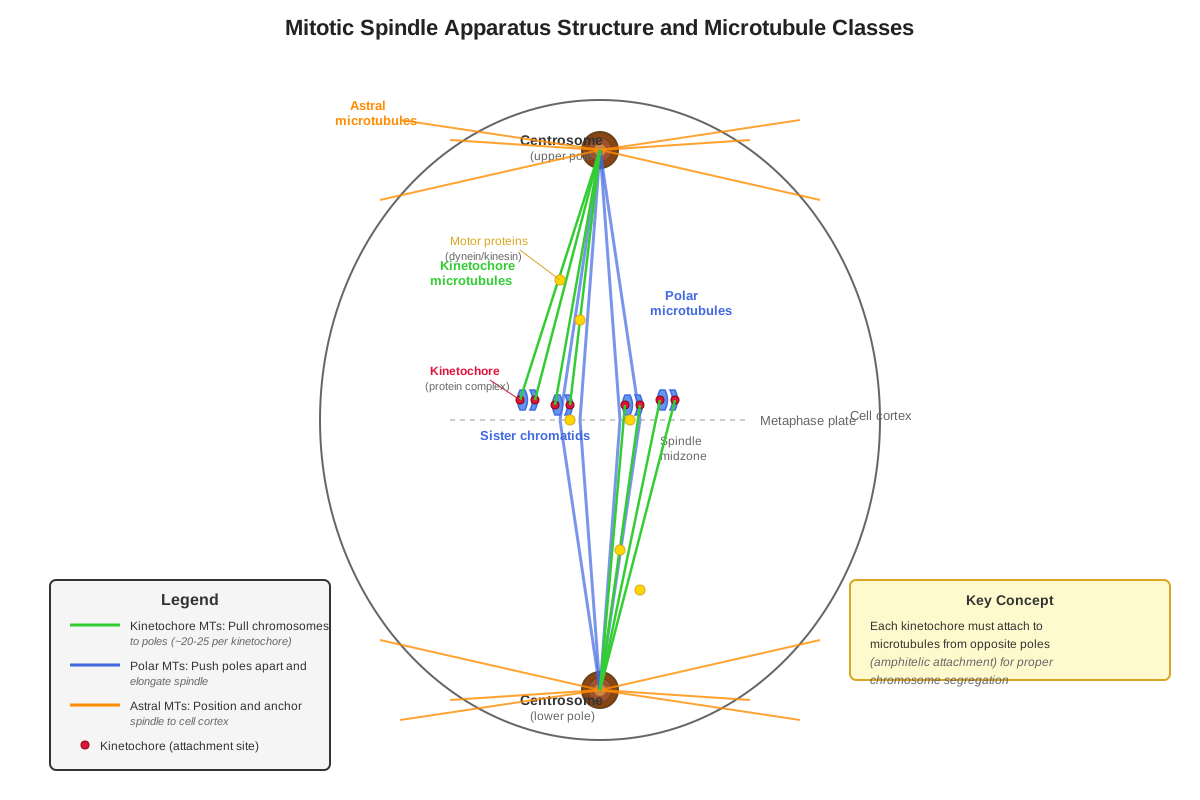
Metaphase is defined by the alignment of all chromosomes at the cell equator, forming the metaphase plate. This alignment results from the balance of forces: kinetochore microtubules pull chromosomes toward opposite poles while polar microtubules (which overlap at the cell center) push the poles apart. The tension created by bipolar attachment is sensed by the kinetochore and is essential for satisfying the spindle assembly checkpoint (SAC).
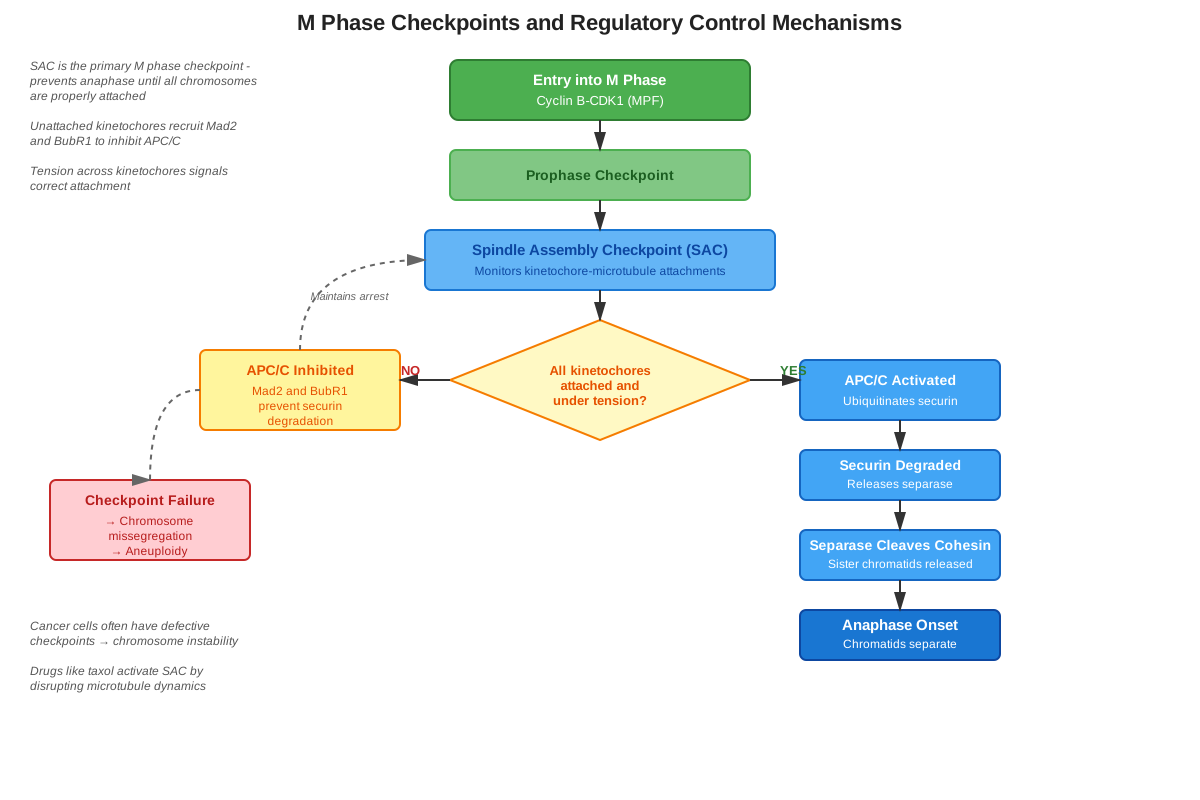
The spindle assembly checkpoint is a surveillance mechanism that prevents progression to anaphase until all chromosomes are properly attached and aligned. Unattached kinetochores recruit checkpoint proteins (including Mad2, BubR1, and Bub3) that inhibit the anaphase-promoting complex/cyclosome (APC/C), an E3 ubiquitin ligase. Only when all kinetochores are properly attached and under tension does the checkpoint become satisfied, allowing APC/C activation.
| Spindle Microtubule Type | Origin | Function |
|---|---|---|
| Kinetochore microtubules | Centrosome to kinetochore | Attach to chromosomes and generate forces for chromosome movement |
| Polar microtubules | Centrosome toward cell center | Overlap at midzone; push spindle poles apart |
| Astral microtubules | Centrosome toward cell cortex | Position spindle and anchor it to cell periphery |
Anaphase
Anaphase begins abruptly when the APC/C becomes active and ubiquitinates securin, targeting it for proteasomal degradation. Securin normally inhibits separase, a protease that cleaves cohesin complexes. Cohesin proteins form ring-like structures that hold sister chromatids together from S phase through metaphase. When separase is released, it cleaves the cohesin rings, allowing sister chromatids to separate and move toward opposite poles.
Anaphase is subdivided into two phases:
- Anaphase A: Sister chromatids separate and move toward opposite poles at approximately 1 μm/min. This movement is driven by kinetochore microtubule depolymerization at both the kinetochore (pulling) and the spindle pole (flux), combined with motor protein activity.
- Anaphase B: The spindle poles themselves move farther apart, elongating the cell. This is accomplished by polar microtubule sliding (driven by kinesin motors) and astral microtubule pulling against the cell cortex (mediated by dynein motors).
Telophase
Telophase represents the reversal of prophase events as the cell prepares to return to interphase conditions. The separated chromosomes arrive at opposite poles and begin decondensing back into chromatin as condensin complexes dissociate. The nuclear envelope reforms around each chromosome set through a process involving the binding of membrane vesicles to chromatin, vesicle fusion, and nuclear pore complex reassembly. Nuclear lamins are dephosphorylated and reassemble into the nuclear lamina. The spindle microtubules disassemble, and the Golgi apparatus and endoplasmic reticulum reorganize.
Cytokinesis
Cytokinesis is the physical division of the cytoplasm, typically beginning during anaphase and completing after telophase. In animal cells, cytokinesis occurs through cleavage furrow formation. The position of the cleavage furrow is determined by signals from the central spindle (the bundled polar microtubules at the former metaphase plate). These signals activate RhoA, a small GTPase that promotes assembly of a contractile ring composed of actin filaments and myosin II motor proteins at the cell equator.
The contractile ring assembles just beneath the plasma membrane and constricts like a drawstring, progressively deepening the cleavage furrow. Myosin II uses ATP hydrolysis to slide actin filaments past each other, generating the contractile force. As the furrow deepens, the connection between daughter cells narrows to a thin bridge called the midbody, which contains densely packed microtubules and membrane trafficking machinery. Finally, abscission occurs when ESCRT (Endosomal Sorting Complexes Required for Transport) proteins sever the midbody, completing cell separation.
Plant cells cannot form cleavage furrows due to their rigid cell walls. Instead, they undergo cytokinesis by building a new cell wall from the inside out. Vesicles containing cell wall materials are directed to the cell center by phragmoplast microtubules, where they fuse to form the cell plate, which eventually extends to the cell periphery and fuses with the existing cell wall.
M Phase Checkpoints and Regulation
The spindle assembly checkpoint (SAC) is the primary surveillance mechanism during M phase. It monitors kinetochore-microtubule attachments and prevents premature sister chromatid separation. Unattached kinetochores generate a "wait-anaphase" signal by catalyzing the formation of the mitotic checkpoint complex (MCC), which inhibits APC/C. The checkpoint proteins Mad1 and Mad2 are recruited to unattached kinetochores, where Mad2 undergoes a conformational change that allows it to bind and inhibit Cdc20, the APC/C activator. Only when the last kinetochore achieves proper attachment does the checkpoint become satisfied, MCC dissociates, and APC/C-Cdc20 becomes active to trigger anaphase.
Exam Tip: The MCAT frequently tests the consequence of checkpoint failure. If the spindle checkpoint is defective, cells proceed to anaphase with misattached chromosomes, leading to chromosome missegregation and aneuploidy—a hallmark of cancer cells.
Exit from M phase requires inactivation of CDK1 activity. The APC/C ubiquitinates cyclin B, targeting it for degradation and thereby inactivating MPF. This allows dephosphorylation of CDK1 substrates, nuclear envelope reformation, chromosome decondensation, and return to interphase conditions. The APC/C remains active into G1 phase, where it prevents premature S phase entry by keeping CDK inhibitors active.
Concept Relationships
M phase represents the functional endpoint of the entire cell cycle, integrating preparatory events from earlier phases. S phase DNA replication creates the sister chromatids that M phase must segregate, while G2 phase ensures that DNA damage is repaired and sufficient cellular resources are available before committing to division. The G2/M checkpoint (controlled by cyclin B-CDK1 activation) serves as the gateway to M phase entry.
Within M phase itself, the concepts form a sequential cascade: Prophase chromosome condensation → Prometaphase kinetochore-microtubule attachment → Metaphase chromosome alignment and checkpoint satisfaction → Anaphase sister chromatid separation → Telophase nuclear reformation → Cytokinesis physical separation. Each stage depends on completion of the previous stage, creating a unidirectional progression enforced by checkpoint mechanisms.
M phase connects forward to G1 phase through APC/C activity, which must degrade mitotic cyclins and maintain CDK inhibitors to establish the G1 state. The successful completion of M phase also relates to apoptosis: if M phase errors are detected (such as extensive chromosome missegregation), cells may undergo mitotic catastrophe, a form of cell death triggered by mitotic failure.
The relationship to cancer biology is particularly important for the MCAT: mutations that weaken the spindle checkpoint allow cells to tolerate chromosome missegregation, generating the aneuploidy characteristic of tumor cells. Conversely, many chemotherapeutic agents exploit M phase vulnerabilities by disrupting spindle function, activating the checkpoint, and triggering apoptosis in rapidly dividing cancer cells.
Quick check — test yourself on M phase so far.
Try Flashcards →High-Yield Facts
⭐ M phase consists of mitosis (nuclear division) and cytokinesis (cytoplasmic division), with mitosis subdivided into prophase, prometaphase, metaphase, anaphase, and telophase
⭐ The spindle assembly checkpoint prevents anaphase until all chromosomes are properly attached to spindle microtubules from opposite poles (amphitelic attachment)
⭐ Sister chromatid separation at anaphase onset requires APC/C-mediated degradation of securin, which releases separase to cleave cohesin complexes
⭐ Cyclin B-CDK1 (MPF) triggers M phase entry by phosphorylating substrates that promote nuclear envelope breakdown, chromosome condensation, and spindle assembly
⭐ Kinetochores are protein complexes assembled at centromeres that capture microtubule plus ends and generate forces for chromosome movement
- Chromosome condensation during prophase is mediated by condensin complexes that compact chromatin into visible structures
- The metaphase plate represents the alignment of all chromosomes at the cell equator due to balanced pulling forces from opposite spindle poles
- Cytokinesis in animal cells occurs through actin-myosin contractile ring constriction, while plant cells build a cell plate from the center outward
- Anaphase A involves chromosome-to-pole movement via kinetochore microtubule shortening, while anaphase B involves spindle pole separation
- Taxanes (like paclitaxel) stabilize microtubules and prevent spindle disassembly, arresting cells in mitosis and triggering apoptosis—explaining their use as chemotherapy agents
Common Misconceptions
Misconception: M phase and mitosis are synonymous terms.
Correction: M phase includes both mitosis (nuclear division) and cytokinesis (cytoplasmic division). Mitosis can complete without cytokinesis, resulting in a binucleate cell, demonstrating that these are distinct but normally coordinated processes.
Misconception: Chromosomes replicate during M phase.
Correction: DNA replication occurs exclusively during S phase. By the time M phase begins, each chromosome already consists of two sister chromatids joined at the centromere. M phase segregates these pre-existing sister chromatids; it does not create them.
Misconception: The nuclear envelope breaks down during prophase.
Correction: Nuclear envelope breakdown (NEBD) defines the transition from prophase to prometaphase. During prophase, the nuclear envelope remains intact, though it begins to be modified. NEBD is a rapid, dramatic event that marks prometaphase onset.
Misconception: All microtubules in the mitotic spindle attach to chromosomes.
Correction: The mitotic spindle contains three types of microtubules with different functions: kinetochore microtubules attach to chromosomes, polar microtubules overlap at the cell center and push poles apart, and astral microtubules extend to the cell cortex to position the spindle. Only kinetochore microtubules directly attach to chromosomes.
Misconception: Anaphase begins when all chromosomes reach the metaphase plate.
Correction: Metaphase alignment is necessary but not sufficient for anaphase onset. Anaphase begins only when the spindle assembly checkpoint is satisfied, which requires not just alignment but proper bipolar attachment with tension across all kinetochores. The checkpoint monitors attachment quality, not just chromosome position.
Misconception: Cytokinesis always produces two equal daughter cells.
Correction: While cytokinesis typically produces roughly equal daughter cells in most somatic cell divisions, asymmetric cytokinesis is common in specific contexts. For example, oocyte meiosis produces one large egg and small polar bodies, and stem cell divisions can be asymmetric to produce one stem cell and one differentiated cell.
Worked Examples
Example 1: Identifying Mitotic Stages from Microscopy
Question: A researcher treats cultured cells with a fluorescent dye that binds DNA and observes them under a microscope. In one cell, she observes highly condensed chromosomes aligned in a single plane at the cell center, with no nuclear envelope visible. Spindle fibers are visible extending from opposite poles to the chromosomes. Which stage of mitosis is this cell in, and what molecular event must occur next for the cell to progress?
Solution:
Step 1 - Identify key features: The question describes condensed chromosomes, alignment at the cell center, absence of nuclear envelope, and visible spindle fibers. These are characteristic features we need to match to a mitotic stage.
Step 2 - Analyze chromosome position: Chromosomes aligned "in a single plane at the cell center" describes the metaphase plate, the defining feature of metaphase. If chromosomes were moving toward poles, it would be anaphase; if they were at poles, it would be telophase.
Step 3 - Confirm with other features: The absence of nuclear envelope rules out prophase (where it's still intact) and telophase (where it's reforming). The presence of condensed chromosomes and spindle fibers is consistent with metaphase.
Step 4 - Identify the next molecular event: For the cell to progress from metaphase to anaphase, the spindle assembly checkpoint must be satisfied, allowing APC/C activation. Active APC/C ubiquitinates securin, leading to its degradation. This releases separase, which cleaves cohesin complexes holding sister chromatids together.
Answer: The cell is in metaphase. For progression to anaphase, the APC/C must become active and ubiquitinate securin, leading to separase activation and cohesin cleavage, which allows sister chromatid separation.
Connection to Learning Objectives: This example applies M phase knowledge to interpret experimental data (microscopy images), requires accurate identification of mitotic stages based on defining features, and connects structural observations to underlying molecular mechanisms—all key MCAT skills.
Example 2: Predicting Drug Effects on M Phase
Question: Researchers develop a novel compound that specifically inhibits the motor protein kinesin-5, which normally pushes antiparallel microtubules apart during spindle assembly. Predict the effect of this drug on dividing cells and explain whether the spindle assembly checkpoint would be activated.
Solution:
Step 1 - Identify kinesin-5 function: Kinesin-5 is a motor protein that crosslinks antiparallel microtubules emanating from opposite spindle poles and slides them apart, pushing the centrosomes toward opposite cell poles. This is essential for establishing spindle bipolarity during prophase and prometaphase.
Step 2 - Predict the consequence of inhibition: If kinesin-5 is inhibited, the centrosomes cannot separate properly. Instead of forming a bipolar spindle with two distinct poles, the cell would form a monopolar spindle with centrosomes remaining close together or failing to separate completely.
Step 3 - Analyze chromosome attachment: With a monopolar or malformed spindle, chromosomes cannot achieve proper amphitelic attachment (sister kinetochores attached to opposite poles). Instead, chromosomes would likely have syntelic attachments (both sister kinetochores attached to the same pole) or remain unattached.
Step 4 - Determine checkpoint status: The spindle assembly checkpoint monitors kinetochore-microtubule attachments and tension. Improper attachments and lack of tension would maintain checkpoint activation. Unattached kinetochores would recruit Mad2 and other checkpoint proteins, generating the mitotic checkpoint complex that inhibits APC/C.
Step 5 - Predict cellular outcome: Cells would arrest in prometaphase or metaphase with an activated spindle checkpoint, unable to progress to anaphase. Prolonged arrest would eventually trigger apoptosis through mitotic catastrophe.
Answer: Kinesin-5 inhibition would prevent spindle pole separation, resulting in monopolar or malformed spindles. Chromosomes would fail to achieve proper bipolar attachment, activating the spindle assembly checkpoint. Cells would arrest in mitosis and eventually undergo apoptosis. This mechanism explains why kinesin-5 inhibitors (like monastrol) are being investigated as potential cancer therapeutics.
Connection to Learning Objectives: This example requires applying M phase concepts to predict experimental outcomes, integrating knowledge of spindle structure, checkpoint function, and the consequences of M phase disruption—demonstrating the type of mechanistic reasoning the MCAT frequently tests.
Exam Strategy
Approaching M Phase Questions: When encountering M phase questions, first identify whether the question asks about (1) stage identification, (2) molecular mechanisms, (3) checkpoint function, or (4) experimental manipulation. For stage identification questions, focus on chromosome position and nuclear envelope status as the primary distinguishing features. For mechanism questions, trace the causal chain from molecular events (protein phosphorylation, degradation) to structural changes (envelope breakdown, chromatid separation).
Trigger Words and Phrases: Watch for these high-yield terms that signal specific concepts:
- "Metaphase plate" or "aligned at the equator" → metaphase
- "Sister chromatids separate" or "move toward opposite poles" → anaphase
- "Nuclear envelope breaks down" → prometaphase
- "Contractile ring" or "cleavage furrow" → cytokinesis
- "Spindle checkpoint" or "unattached kinetochore" → checkpoint activation preventing anaphase
- "Taxol," "paclitaxel," "colchicine," or "nocodazole" → drugs affecting microtubules and mitosis
Process of Elimination Tips:
- If a question describes chromosomes moving, eliminate prophase, prometaphase, and metaphase (chromosomes only move during anaphase)
- If the nuclear envelope is intact, eliminate prometaphase, metaphase, and anaphase
- If sister chromatids are separated, eliminate all stages before anaphase
- For checkpoint questions, remember that the checkpoint prevents progression, so if it's active, the cell cannot be in anaphase or later stages
Time Allocation: M phase questions typically require 60-90 seconds. Spend 20-30 seconds identifying the specific aspect being tested (stage, mechanism, or checkpoint), 30-40 seconds analyzing the information provided, and 10-20 seconds selecting and confirming your answer. For passage-based questions involving experimental data, allocate additional time to interpret figures showing microscopy images or cell cycle distributions.
Exam Tip: When questions present microscopy images, systematically assess: (1) Are chromosomes visible and condensed? (2) Where are chromosomes located? (3) Is the nuclear envelope present? (4) Are spindle fibers visible? This systematic approach prevents misidentification.
Memory Techniques
PMAT Mnemonic for Mitosis Stages: Prophase → Prometaphase → Metaphase → Anaphase → Telophase. While this classic mnemonic omits prometaphase, remember "Please Poke My Arm Today" to include all five stages.
Metaphase vs. Anaphase Distinction: "Meta-MIDDLE" (chromosomes in the middle) vs. "Ana-APART" (chromatids moving apart). This simple association prevents confusion between these commonly tested stages.
Checkpoint Activation Mnemonic: "Unattached kinetochores Make Cells wait" (UMC) reminds you that Unattached kinetochores activate the Mitotic Checkpoint Complex, preventing cell cycle progression.
Cohesin-Securin-Separase Cascade: Remember the sequence as "Co-Se-Se" (Cohesin-Securin-Separase). Securin inhibits Separase; when Securin is degraded, Separase cleaves Cohesin. The alphabetical order (Co-Se-Se) matches the functional order.
Cytokinesis Mechanism: For animal cells, remember "Actin Ring Constricts" (ARC) to recall that an Actin-myosin contractile Ring Constricts to divide the cell. For plant cells, "Plant Plate" reminds you that plants build a cell Plate rather than forming a cleavage furrow.
Visualization Strategy: Create a mental movie of mitosis as a continuous sequence. Visualize chromosomes condensing and becoming visible (prophase), the nuclear envelope dissolving like a popping bubble (prometaphase), chromosomes lining up like soldiers in formation (metaphase), sister chromatids being pulled apart like separating magnets (anaphase), and two new nuclei forming like bubbles reforming (telophase). This dynamic visualization aids recall and stage identification.
Summary
M phase represents the culminating stage of the cell cycle where a single cell divides into two daughter cells through the coordinated processes of mitosis and cytokinesis. Mitosis proceeds through five sequential stages—prophase (chromosome condensation and spindle assembly initiation), prometaphase (nuclear envelope breakdown and kinetochore-microtubule attachment), metaphase (chromosome alignment at the cell equator), anaphase (sister chromatid separation and movement to opposite poles), and telophase (nuclear envelope reformation and chromosome decondensation)—each characterized by specific structural and molecular events. The spindle assembly checkpoint ensures accurate chromosome segregation by preventing anaphase until all kinetochores achieve proper bipolar attachment with tension. M phase entry is triggered by cyclin B-CDK1 (MPF) activation, while exit requires APC/C-mediated degradation of securin and cyclin B, allowing separase to cleave cohesin and inactivating CDK1. Cytokinesis divides the cytoplasm through actin-myosin contractile ring constriction in animal cells or cell plate formation in plant cells. Understanding M phase mechanisms is essential for interpreting MCAT questions on cell division, cancer biology, and the action of mitotic inhibitor drugs used in chemotherapy.
Key Takeaways
- M phase encompasses both mitosis (nuclear division through five sequential stages: prophase, prometaphase, metaphase, anaphase, telophase) and cytokinesis (cytoplasmic division)
- The spindle assembly checkpoint prevents anaphase until all chromosomes achieve proper bipolar attachment, ensuring accurate chromosome segregation and preventing aneuploidy
- Sister chromatid separation requires APC/C-mediated securin degradation, which releases separase to cleave cohesin complexes holding chromatids together
- Cyclin B-CDK1 (MPF) triggers M phase entry by phosphorylating substrates that promote nuclear envelope breakdown, chromosome condensation, and spindle assembly
- Kinetochores are specialized protein complexes at centromeres that capture spindle microtubules and generate forces for chromosome movement
- Many chemotherapeutic agents target M phase by disrupting microtubule dynamics, exploiting the rapid division of cancer cells
- M phase errors that escape checkpoint surveillance lead to aneuploidy, a hallmark of cancer cells and a driver of tumor evolution
Related Topics
Meiosis: While mitosis produces genetically identical daughter cells, meiosis generates haploid gametes through two sequential divisions with unique features including homologous chromosome pairing, crossing over, and reductional division. Understanding mitosis provides the foundation for appreciating how meiosis differs.
Cell Cycle Regulation and Checkpoints: M phase is one component of the broader cell cycle, which includes G1, S, and G2 phases, each with specific checkpoints (G1/S, G2/M, and spindle assembly checkpoint). Mastering M phase enables deeper understanding of how cells coordinate growth, DNA replication, and division.
Cancer Biology: Dysregulation of M phase checkpoints and chromosome segregation mechanisms contributes to the genomic instability characteristic of cancer. Understanding normal M phase function illuminates how mutations in checkpoint genes (like BUB1 or MAD2) promote tumorigenesis.
Microtubule Dynamics and Motor Proteins: The mitotic spindle relies on dynamic microtubule assembly/disassembly and motor proteins (kinesins and dyneins) that generate forces. Deeper study of cytoskeletal dynamics builds on M phase concepts.
Apoptosis and Cell Death: When M phase errors are detected or when cells are arrested in mitosis for extended periods (as with chemotherapy drugs), they undergo mitotic catastrophe leading to apoptosis. Understanding M phase connects to programmed cell death pathways.
Practice CTA
Now that you've mastered the core concepts of M phase, it's time to reinforce your understanding through active practice. Challenge yourself with MCAT-style practice questions that test stage identification, checkpoint mechanisms, and experimental scenarios involving mitotic inhibitors. Use flashcards to drill the sequential stages of mitosis and the key molecular events at each transition. The more you apply this knowledge to varied question formats, the more confident and automatic your recall will become on test day. Remember: understanding M phase isn't just about memorizing stages—it's about developing the mechanistic reasoning skills that allow you to tackle any cell division question the MCAT presents. You've built a strong foundation; now strengthen it through deliberate practice!
Sign up free to keep reading
Create a free AnvayaPrep account to finish this MCAT guide on M phase — plus flashcards and practice questions.