Overview
Microfilaments are one of the three major components of the eukaryotic cytoskeleton, alongside microtubules and intermediate filaments. These dynamic protein polymers, composed primarily of actin monomers, form the thinnest filamentous structures in the cell with a diameter of approximately 7 nanometers. Microfilaments play critical roles in maintaining cell shape, enabling cell motility, facilitating muscle contraction, driving cytokinesis during cell division, and supporting various forms of intracellular transport. Understanding microfilaments is essential for comprehending how cells maintain structural integrity while remaining remarkably dynamic and responsive to environmental signals.
For the MCAT, microfilaments represent a medium-yield topic that frequently appears in questions testing knowledge of cell biology, cellular structure-function relationships, and the molecular basis of movement. The exam often integrates microfilament concepts with muscle physiology, cell division, signal transduction, and cellular responses to mechanical stress. Questions may present experimental scenarios involving drugs that disrupt actin polymerization, ask students to predict the consequences of microfilament dysfunction, or require analysis of how cells use actin-based structures for specific functions like phagocytosis or cell migration.
The study of microfilaments connects to broader themes in Biology including protein structure-function relationships, ATP-dependent processes, cellular organization, and the molecular mechanisms underlying tissue-level phenomena. Microfilaments exemplify how simple protein subunits can assemble into complex, regulated structures that enable sophisticated cellular behaviors. This topic bridges molecular biology, cell biology, and physiology, making it an ideal subject for integrated MCAT questions that test multiple knowledge domains simultaneously.
Learning Objectives
- [ ] Define microfilaments using accurate Biology terminology
- [ ] Explain why microfilaments matter for the MCAT
- [ ] Apply microfilaments to exam-style questions
- [ ] Identify common mistakes related to microfilaments
- [ ] Connect microfilaments to related Biology concepts
- [ ] Describe the molecular structure of actin and the process of actin polymerization
- [ ] Compare and contrast the three types of cytoskeletal filaments in terms of structure, composition, and function
- [ ] Explain the role of actin-binding proteins in regulating microfilament dynamics and organization
- [ ] Analyze how microfilaments contribute to specific cellular processes including muscle contraction, cytokinesis, and cell motility
Prerequisites
- Basic protein structure: Understanding primary through quaternary structure is essential because actin monomers fold into specific three-dimensional shapes and polymerize into filaments
- ATP hydrolysis and energy coupling: Actin polymerization is coupled to ATP binding and hydrolysis, which drives the dynamic behavior of microfilaments
- Cell membrane structure: Microfilaments often anchor to membrane proteins and support membrane-associated processes like endocytosis
- Basic cell structure: Familiarity with organelles and cellular compartments helps contextualize where microfilaments function
- Protein-protein interactions: Microfilament function depends heavily on interactions between actin and numerous regulatory proteins
Why This Topic Matters
Microfilaments have profound clinical and physiological significance. Muscular dystrophies, certain cardiomyopathies, and neurological disorders can result from defects in actin or actin-associated proteins. Cancer metastasis depends critically on microfilament-driven cell motility and invasion. Many pathogens, including Listeria monocytogenes and certain viruses, hijack the actin cytoskeleton to facilitate infection. Drugs targeting actin polymerization, such as cytochalasins and latrunculins, serve as important research tools and have therapeutic potential.
On the MCAT, microfilament-related content appears in approximately 3-5% of Biology questions, typically within passages about cell biology, muscle physiology, or experimental cell biology. Questions commonly test understanding of how disrupting microfilaments affects cellular processes, the role of actin in muscle contraction (particularly in conjunction with myosin), and the structural differences between cytoskeletal components. The topic frequently appears in data interpretation questions where students must analyze the effects of pharmacological agents on cell morphology or function.
Exam passages often present microfilaments in the context of: (1) experimental manipulations using cytoskeletal drugs, (2) muscle contraction mechanisms requiring integration with myosin function, (3) cell division scenarios focusing on the contractile ring, (4) cell motility and migration in development or cancer, and (5) comparative questions distinguishing between the three cytoskeletal filament types. Recognizing these common contexts helps students quickly identify relevant knowledge and apply it efficiently during the exam.
Core Concepts
Structure and Composition of Microfilaments
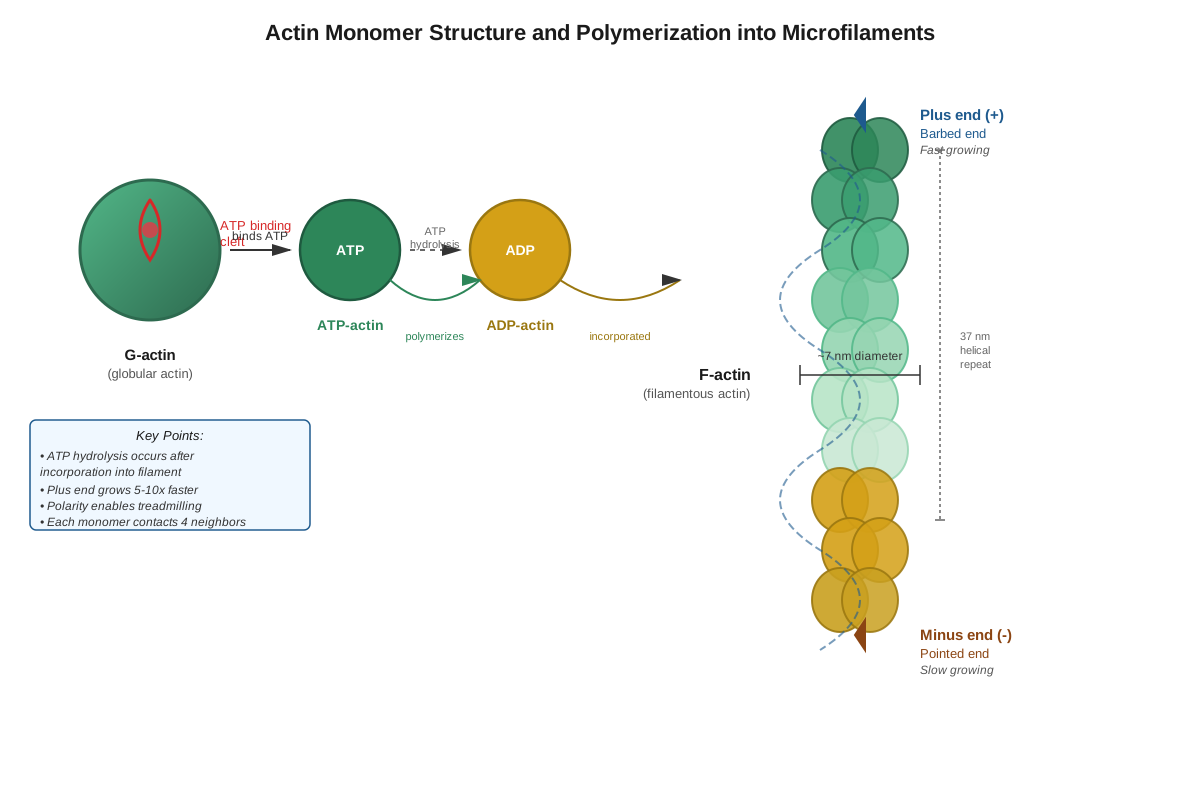
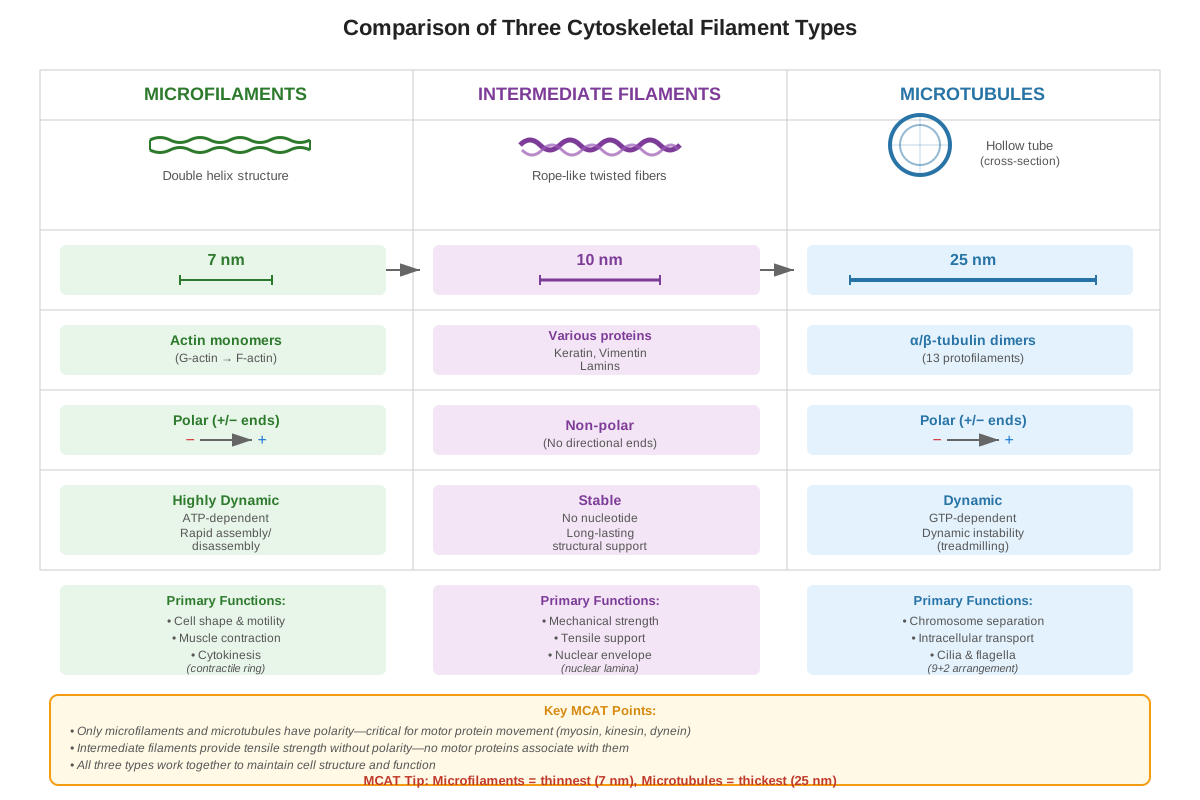
Microfilaments are helical polymers composed of globular actin protein subunits. Each actin monomer, called G-actin (globular actin), has a molecular weight of approximately 42 kilodaltons and contains a binding site for ATP or ADP. When G-actin polymerizes, it forms F-actin (filamentous actin), which appears as a double-stranded helix with a diameter of 7 nm and a helical repeat every 37 nm. This makes microfilaments the thinnest of the three cytoskeletal filament types, compared to intermediate filaments (10 nm) and microtubules (25 nm).
The actin filament exhibits structural polarity, with two distinct ends: the plus end (also called the barbed end) and the minus end (also called the pointed end). This polarity arises from the asymmetric structure of actin monomers and their uniform orientation within the filament. The plus end typically grows faster than the minus end because the rate of monomer addition exceeds the rate of dissociation at this end. This directional growth is fundamental to many microfilament functions.
Each actin monomer binds one molecule of ATP, which is hydrolyzed to ADP + Pi shortly after incorporation into the filament. This ATP hydrolysis does not provide energy for polymerization itself but rather affects the stability of the filament. ATP-actin has higher affinity for the filament than ADP-actin, creating a "cap" of ATP-actin at the growing plus end while older regions of the filament contain primarily ADP-actin. This nucleotide state difference drives the dynamic behavior called treadmilling, where monomers add to the plus end while simultaneously dissociating from the minus end, resulting in apparent filament movement without net length change.
Actin Polymerization Dynamics
Actin polymerization proceeds through three distinct phases: nucleation, elongation, and steady state. During nucleation, the rate-limiting step, three actin monomers must come together to form a stable trimer nucleus. This is thermodynamically unfavorable because dimers are unstable and readily dissociate. Once a nucleus forms, elongation proceeds rapidly as monomers add to both ends, though preferentially to the plus end. Eventually, the system reaches steady state where the rate of monomer addition equals the rate of dissociation.
The critical concentration represents the monomer concentration at which polymerization and depolymerization are balanced. Importantly, due to the structural polarity of actin filaments, each end has a different critical concentration. The plus end has a lower critical concentration than the minus end, meaning at intermediate monomer concentrations, the plus end grows while the minus end shrinks—this is treadmilling. This phenomenon allows cells to maintain dynamic actin structures that can rapidly reorganize in response to signals.
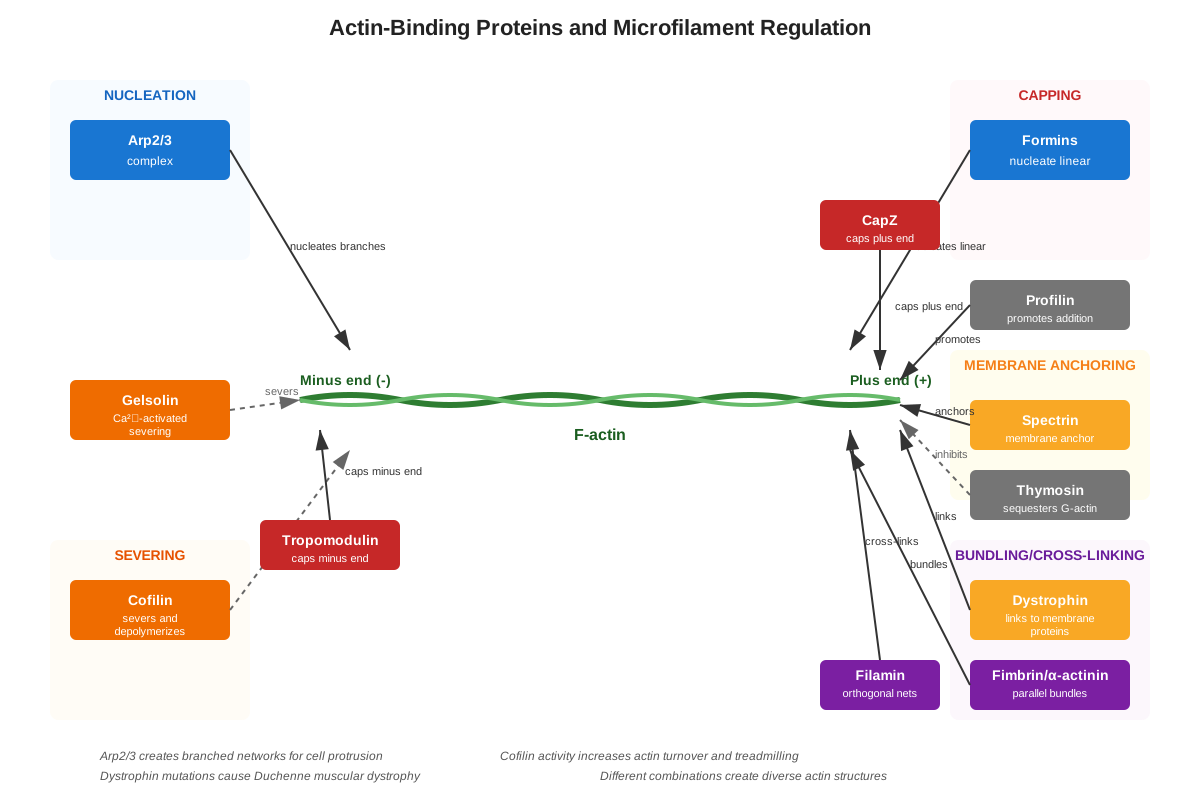
Cells regulate actin polymerization through numerous actin-binding proteins (ABPs) that control nucleation, elongation, severing, capping, and cross-linking. Profilin promotes polymerization by catalyzing ADP-to-ATP exchange on monomers and delivering ATP-actin to the plus end. Thymosin sequesters monomers, preventing polymerization. Cofilin binds ADP-actin and promotes depolymerization, particularly at the minus end. The Arp2/3 complex nucleates new filaments as branches off existing filaments, creating the branched networks essential for cell protrusion. Capping proteins bind filament ends to prevent further growth, while severing proteins like gelsolin cut filaments into shorter pieces, increasing the number of ends available for polymerization or depolymerization.
Cellular Functions of Microfilaments
Microfilaments perform diverse cellular functions, each exploiting different aspects of actin's structural and dynamic properties. In cell shape maintenance, a dense network of actin filaments called the cell cortex lies just beneath the plasma membrane, providing mechanical support and determining cell shape. This cortical actin network is particularly prominent in red blood cells, where a spectrin-actin network maintains the characteristic biconcave disc shape.
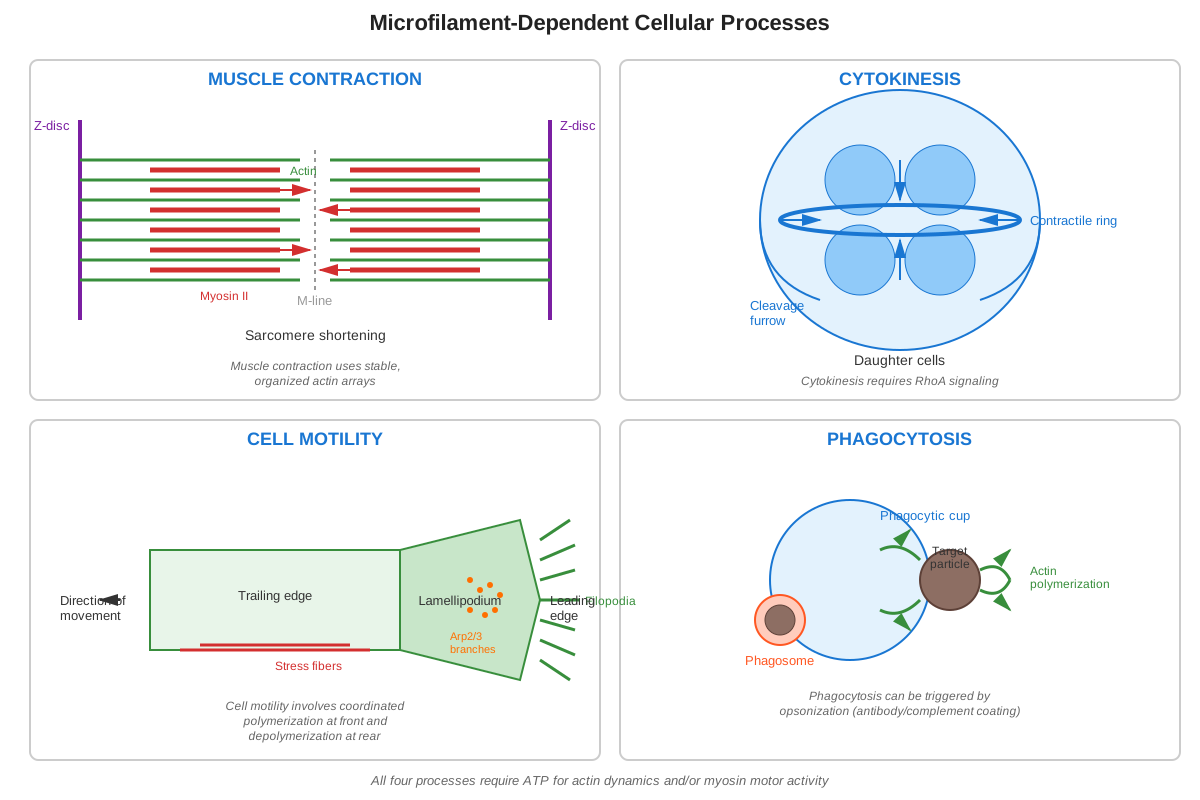
For cell motility, cells extend lamellipodia (broad, sheet-like protrusions) and filopodia (thin, finger-like protrusions) driven by actin polymerization at the leading edge. The Arp2/3 complex nucleates branched actin networks that push the membrane forward in lamellipodia, while parallel bundles of actin filaments extend filopodia. Stress fibers, contractile bundles of actin and myosin, generate tension and enable cells to pull themselves forward during migration. This process is essential for wound healing, immune cell trafficking, embryonic development, and unfortunately, cancer metastasis.
In muscle contraction, highly organized arrays of actin filaments (thin filaments) interact with myosin filaments (thick filaments) in the sarcomere. Myosin heads bind actin and use ATP hydrolysis to generate force, pulling actin filaments toward the center of the sarcomere in the sliding filament mechanism. While this is often discussed in the context of skeletal muscle, smooth muscle and non-muscle cells also use actin-myosin interactions for contraction, though with different organizational patterns.
During cytokinesis, the final stage of cell division, a contractile ring composed of actin filaments and myosin II assembles at the cell equator. Contraction of this ring pinches the cell in two, physically separating daughter cells. Without functional microfilaments, cells can complete mitosis (nuclear division) but fail to complete cytokinesis, resulting in binucleate cells.
Microfilaments also facilitate endocytosis and phagocytosis. During receptor-mediated endocytosis, actin polymerization helps deform the membrane and pinch off vesicles. In phagocytosis, dramatic actin reorganization extends pseudopodia that engulf large particles like bacteria, forming a phagosome. This process is critical for immune function, as macrophages and neutrophils use actin-driven phagocytosis to eliminate pathogens.
Comparison of Cytoskeletal Elements
| Feature | Microfilaments | Intermediate Filaments | Microtubules |
|---|---|---|---|
| Diameter | 7 nm | 10 nm | 25 nm |
| Protein subunit | Actin (globular) | Various (fibrous) | α/β-tubulin heterodimers |
| Polarity | Yes (plus/minus ends) | No | Yes (plus/minus ends) |
| Nucleotide binding | ATP | None | GTP |
| Primary functions | Cell motility, shape, contraction, cytokinesis | Mechanical strength, structural support | Intracellular transport, chromosome segregation, cilia/flagella |
| Dynamic behavior | Highly dynamic, treadmilling | Stable, slow turnover | Dynamic instability |
| Motor proteins | Myosin | None | Kinesin, dynein |
| Drug examples | Cytochalasin, latrunculin | None commonly used | Colchicine, taxol |
Pharmacological Agents Affecting Microfilaments
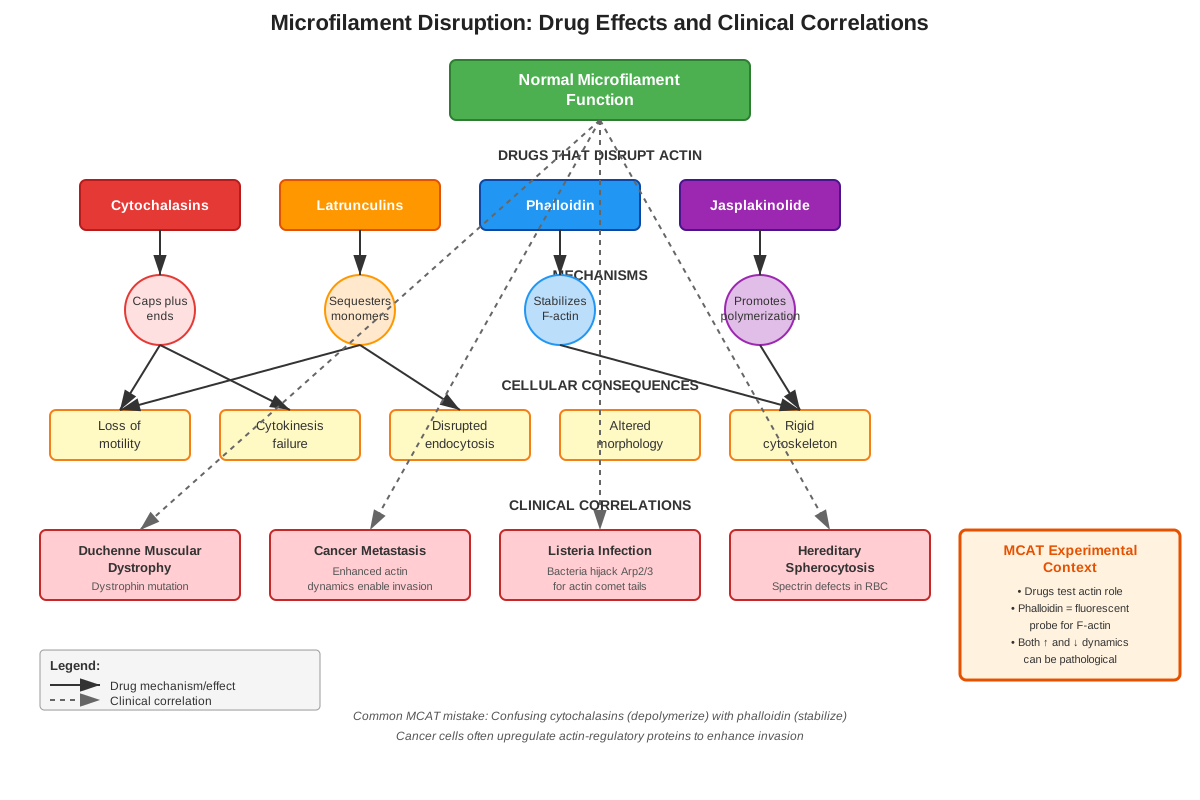
Several drugs specifically target actin polymerization and serve as important tools for studying microfilament function. Cytochalasins are fungal metabolites that cap the plus end of actin filaments, preventing elongation and causing depolymerization from the minus end. This leads to disruption of the actin cytoskeleton and inhibition of processes like cytokinesis and cell motility. Latrunculins sequester actin monomers, preventing their incorporation into filaments and causing net depolymerization. Phalloidin, a toxin from death cap mushrooms, stabilizes F-actin by binding at the interface between subunits, preventing depolymerization. Fluorescently labeled phalloidin is widely used in research to visualize actin filaments in fixed cells.
Understanding these drugs is valuable for the MCAT because experimental passages frequently describe their use to test hypotheses about cellular processes. Students must be able to predict the consequences of disrupting actin polymerization on various cellular functions.
Quick check — test yourself on Microfilaments so far.
Try Flashcards →Concept Relationships
The concepts within microfilament biology form an interconnected network. The molecular structure of actin (G-actin monomers with ATP-binding sites) → determines → polymerization dynamics (nucleation, elongation, treadmilling) → which enable → cellular functions (motility, shape, contraction, division). The structural polarity of filaments → creates → differential critical concentrations at the two ends → enabling → treadmilling and directed assembly. Actin-binding proteins → regulate → all aspects of polymerization dynamics → controlling → where and when specific actin structures form.
Microfilaments connect to prerequisite knowledge of protein structure because actin's tertiary structure determines its polymerization properties and interactions with binding proteins. Understanding ATP hydrolysis is essential because the nucleotide state of actin affects filament stability and dynamics. The connection to cell membranes appears in cortical actin networks, membrane protrusions, and endocytosis.
Microfilaments relate to other cytoskeletal elements through both complementary and contrasting properties. While microtubules provide tracks for long-distance intracellular transport and organize the mitotic spindle, microfilaments enable cell surface dynamics and contractility. Intermediate filaments provide stable mechanical support, whereas microfilaments are highly dynamic. Together, these three systems create an integrated cytoskeleton that gives cells both stability and flexibility.
The relationship map: Actin monomers → Polymerize into → Microfilaments → Organized by → Actin-binding proteins → Into structures like → Stress fibers, lamellipodia, contractile ring → Which enable → Cell motility, shape change, division → Disrupted by → Cytochalasin, latrunculin → Resulting in → Loss of specific cellular functions.
High-Yield Facts
⭐ Microfilaments are composed of actin and have a diameter of 7 nm, making them the thinnest cytoskeletal filaments
⭐ Actin filaments are structurally polar with a fast-growing plus (barbed) end and a slow-growing minus (pointed) end
⭐ Treadmilling occurs when actin monomers add to the plus end while dissociating from the minus end, creating apparent filament movement
⭐ The contractile ring that divides cells during cytokinesis is composed of actin and myosin II
⭐ Cytochalasin disrupts microfilaments by capping the plus end, while phalloidin stabilizes them
- ATP-actin is more stable in filaments than ADP-actin, creating a stabilizing cap at the growing plus end
- The Arp2/3 complex nucleates branched actin networks essential for lamellipodia formation and cell protrusion
- Profilin promotes actin polymerization while thymosin sequesters monomers to prevent polymerization
- Stress fibers are contractile bundles of actin and myosin that generate tension for cell adhesion and migration
- The cell cortex is a dense actin network beneath the plasma membrane that maintains cell shape and provides mechanical support
- Myosin motor proteins move along actin filaments toward the plus end (with few exceptions)
- Actin polymerization provides the force for membrane protrusion during cell motility and phagocytosis
Common Misconceptions
Misconception: Microfilaments and microtubules are the same structure with different names.
Correction: These are distinct cytoskeletal components with different protein compositions (actin vs. tubulin), diameters (7 nm vs. 25 nm), and primary functions. Microfilaments are involved in cell motility and shape, while microtubules primarily function in intracellular transport and chromosome segregation.
Misconception: ATP hydrolysis provides the energy for actin polymerization.
Correction: Polymerization itself is energetically favorable once nucleation occurs and does not require ATP hydrolysis. ATP binding to actin increases the monomer's affinity for the filament, and subsequent hydrolysis to ADP affects filament stability and dynamics (enabling treadmilling) but does not drive polymerization.
Misconception: Actin filaments are static structures that provide only structural support.
Correction: Microfilaments are highly dynamic, constantly undergoing polymerization and depolymerization. This dynamic behavior is essential for their functions in cell motility, shape change, and division. The half-life of an actin filament in a cell can be just minutes.
Misconception: All three cytoskeletal filament types have structural polarity.
Correction: Only microfilaments and microtubules have structural polarity with distinct plus and minus ends. Intermediate filaments lack polarity because they are assembled from fibrous proteins that associate in a staggered, antiparallel arrangement.
Misconception: Cytochalasin and phalloidin have the same effect on microfilaments.
Correction: These drugs have opposite effects. Cytochalasin disrupts actin filaments by capping the plus end and preventing polymerization, leading to net depolymerization. Phalloidin stabilizes actin filaments by preventing depolymerization, essentially "freezing" the actin cytoskeleton in place.
Misconception: Microfilaments only function in muscle cells.
Correction: While actin-myosin interactions are prominent in muscle contraction, microfilaments are present and functional in all eukaryotic cells. They perform essential roles in cell division, motility, shape maintenance, and intracellular transport in all cell types.
Worked Examples
Example 1: Experimental Drug Effects
Question: Researchers treat cultured cells with cytochalasin D and observe the effects on cell division. Which of the following outcomes is most likely?
A) Cells complete mitosis and cytokinesis normally
B) Cells arrest in metaphase and cannot proceed through mitosis
C) Cells complete nuclear division but fail to complete cytokinesis
D) Cells cannot replicate their DNA and arrest in S phase
Solution:
Step 1: Identify what cytochalasin D does. Cytochalasin D is a drug that disrupts microfilaments by capping the plus end of actin filaments, preventing polymerization and causing net depolymerization of the actin cytoskeleton.
Step 2: Determine which stages of cell division require functional microfilaments. Mitosis (nuclear division) primarily depends on microtubules, which form the mitotic spindle and segregate chromosomes. Cytokinesis (cytoplasmic division) requires the contractile ring, which is composed of actin microfilaments and myosin II.
Step 3: Predict the effect of disrupting microfilaments. Since microtubules are unaffected by cytochalasin D, mitosis should proceed normally. However, without functional microfilaments, the contractile ring cannot form or contract, preventing cytokinesis.
Step 4: Evaluate the answer choices. Choice C correctly predicts that cells will complete nuclear division (mitosis) but fail cytokinesis, resulting in binucleate cells. This matches our prediction.
Answer: C
This question tests understanding of the specific role of microfilaments in cell division and the ability to predict consequences of pharmacological disruption. It also requires distinguishing between the roles of microtubules (mitosis) and microfilaments (cytokinesis).
Example 2: Cell Motility Mechanism
Question: A researcher observes that cells treated with a drug that inhibits the Arp2/3 complex show reduced ability to migrate toward a chemoattractant. Which of the following best explains this observation?
A) The cells cannot form microtubule-based structures needed for directional sensing
B) The cells cannot nucleate branched actin networks needed for membrane protrusion
C) The cells cannot form intermediate filaments needed for structural support during migration
D) The cells cannot generate ATP needed to power cell movement
Solution:
Step 1: Recall the function of the Arp2/3 complex. The Arp2/3 complex nucleates new actin filaments as branches off existing filaments, creating branched actin networks.
Step 2: Connect Arp2/3 function to cell motility. During cell migration, cells extend lamellipodia at their leading edge. These broad, sheet-like protrusions are driven by branched actin networks nucleated by the Arp2/3 complex. The polymerization of these networks pushes the membrane forward.
Step 3: Predict the effect of inhibiting Arp2/3. Without functional Arp2/3, cells cannot efficiently nucleate the branched actin networks needed for lamellipodia formation. This would impair their ability to extend protrusions and migrate.
Step 4: Evaluate the answer choices. Choice B correctly identifies that Arp2/3 is needed to nucleate branched actin networks for membrane protrusion. Choice A is incorrect because directional sensing and migration don't primarily depend on microtubules. Choice C is wrong because intermediate filaments provide structural support but aren't the primary drivers of membrane protrusion. Choice D is incorrect because Arp2/3 doesn't directly affect ATP generation.
Answer: B
This question requires understanding the specific role of actin-binding proteins in organizing microfilaments for particular cellular functions. It tests the ability to connect molecular mechanisms (Arp2/3-mediated nucleation) to cellular behaviors (cell migration).
Exam Strategy
When approaching MCAT questions about microfilaments, first identify whether the question is asking about structure, dynamics, function, or regulation. Questions about structure often require distinguishing microfilaments from other cytoskeletal elements based on diameter, composition, or polarity. Questions about dynamics typically involve polymerization, treadmilling, or the effects of nucleotide binding. Function questions ask about specific cellular processes like motility, division, or contraction. Regulation questions involve actin-binding proteins or pharmacological agents.
Trigger words and phrases to watch for include: "actin," "cytoskeleton," "cell motility," "cytokinesis," "contractile ring," "lamellipodia," "stress fibers," "cytochalasin," "phalloidin," "cell shape," "muscle contraction," and "thin filaments." When you see these terms, immediately activate your knowledge of microfilament structure and function.
For process-of-elimination, remember that microfilaments are NOT involved in: long-distance intracellular transport (that's microtubules with kinesin/dynein), chromosome segregation during mitosis (microtubules), or providing stable mechanical strength to cells under tension (intermediate filaments). If an answer choice attributes these functions to microfilaments, eliminate it. Also eliminate choices that confuse the effects of different drugs—cytochalasin disrupts while phalloidin stabilizes.
When passages present experimental data about drugs affecting the cytoskeleton, quickly categorize the drug's mechanism (disrupts polymerization, stabilizes filaments, sequesters monomers, etc.) and predict which cellular processes would be affected. This allows you to evaluate answer choices efficiently.
Time allocation: Most microfilament questions can be answered in 60-90 seconds if you have solid foundational knowledge. Don't get bogged down trying to remember every actin-binding protein—focus on the major concepts and most common examples. If a question requires detailed knowledge of an obscure protein, it's likely testing your ability to reason from first principles rather than rote memorization.
Memory Techniques
Mnemonic for cytoskeletal filament diameters: "Microfilaments are Mini (7 nm), Intermediate are In-between (10 nm), Microtubules are Massive (25 nm)." The alliteration helps cement the relative sizes.
Mnemonic for actin-binding protein functions: "Profilin Promotes, Thymosin Traps, Cofilin Cuts" (promotes polymerization, traps/sequesters monomers, cuts/severs filaments).
Visualization for treadmilling: Picture a treadmill where a person (representing the filament) stays in the same place while the belt moves beneath them. Monomers are added at the front (plus end) like the belt appearing at the front, while monomers fall off at the back (minus end) like the belt disappearing at the back. The filament appears to move forward without changing length.
Acronym for microfilament functions: "MCDMS" - Motility, Cytokinesis, Division (contractile ring), Muscle contraction, Shape maintenance. This covers the major cellular roles.
Memory aid for drug effects: "Cytochalasin Caps and Causes Collapse" (caps plus end, causes depolymerization). "Phalloidin Prevents Polymer Parting" (prevents depolymerization, stabilizes).
Summary
Microfilaments are dynamic actin polymers that form the thinnest component of the eukaryotic cytoskeleton at 7 nm diameter. Composed of G-actin monomers that polymerize into helical F-actin filaments, these structures exhibit structural polarity with distinct plus and minus ends that have different growth rates and critical concentrations. This polarity enables treadmilling, where monomers add to the plus end while dissociating from the minus end. ATP binding and hydrolysis regulate filament stability, with ATP-actin forming a stabilizing cap at growing ends. Numerous actin-binding proteins control polymerization dynamics, including profilin (promotes), thymosin (sequesters), cofilin (depolymerizes), and Arp2/3 (nucleates branches). Microfilaments perform essential cellular functions including maintaining cell shape through the cortical network, enabling cell motility via lamellipodia and stress fibers, driving cytokinesis through the contractile ring, and facilitating muscle contraction through interactions with myosin. Pharmacological agents like cytochalasin (disrupts) and phalloidin (stabilizes) serve as important tools for studying microfilament function and frequently appear in MCAT experimental passages.
Key Takeaways
- Microfilaments are 7 nm diameter actin polymers with structural polarity (plus/minus ends) and dynamic behavior including treadmilling
- Actin polymerization proceeds through nucleation, elongation, and steady state phases, regulated by ATP/ADP binding and numerous actin-binding proteins
- The three cytoskeletal filaments differ in diameter, composition, polarity, and primary functions—microfilaments are the thinnest and most dynamic
- Microfilaments enable cell motility, maintain cell shape, drive cytokinesis via the contractile ring, and facilitate muscle contraction through actin-myosin interactions
- Cytochalasin disrupts microfilaments by capping the plus end, while phalloidin stabilizes them by preventing depolymerization
- The Arp2/3 complex nucleates branched actin networks essential for lamellipodia formation and cell protrusion during migration
- Understanding microfilament structure, dynamics, and function is essential for predicting cellular responses to experimental manipulations commonly tested on the MCAT
Related Topics
Microtubules: The largest cytoskeletal filaments (25 nm) composed of tubulin, essential for intracellular transport, chromosome segregation, and cilia/flagella structure. Mastering microfilaments provides a foundation for comparing and contrasting cytoskeletal elements.
Intermediate Filaments: The 10 nm diameter cytoskeletal components that provide mechanical strength and structural support. Understanding all three filament types enables comprehensive analysis of cytoskeletal function.
Muscle Contraction: The sliding filament mechanism depends on actin-myosin interactions, directly building on microfilament knowledge and extending it to tissue-level physiology.
Cell Cycle and Mitosis: Cytokinesis requires the actin-myosin contractile ring, connecting microfilament function to cell division and growth.
Cell Signaling: Many signaling pathways regulate actin dynamics through Rho family GTPases and other regulators, linking microfilaments to signal transduction.
Motor Proteins: Myosin motors move along actin filaments, representing a key application of microfilament structure and complementing knowledge of kinesin/dynein on microtubules.
Practice CTA
Now that you've mastered the core concepts of microfilaments, it's time to reinforce your understanding through active practice. Work through the practice questions to test your ability to apply these concepts to MCAT-style scenarios, and use the flashcards to cement high-yield facts in your memory. Remember, understanding the dynamic nature of the actin cytoskeleton and its diverse cellular functions will serve you well not only on exam day but throughout your medical education. The ability to predict how disrupting microfilaments affects cellular processes demonstrates the kind of mechanistic reasoning that defines successful MCAT performance. You've got this!
Sign up free to keep reading
Create a free AnvayaPrep account to finish this MCAT guide on Microfilaments — plus flashcards and practice questions.