Overview
Mitosis is a fundamental process of cell division that produces two genetically identical daughter cells from a single parent cell. This highly regulated mechanism is essential for growth, tissue repair, and asexual reproduction in eukaryotic organisms. Understanding mitosis requires mastery of the sequential phases, checkpoint mechanisms, and the intricate choreography of chromosomes, spindle fibers, and cellular machinery that ensure accurate genetic transmission.
For the MCAT, mitosis represents a high-yield topic that bridges multiple disciplines within Biology. Questions frequently test not only the sequential phases of mitosis but also its regulation, comparison with meiosis, and role in cancer biology. The MCAT expects students to apply knowledge of mitosis to experimental scenarios, interpret data from cell cycle studies, and recognize how disruptions in mitotic control lead to disease states. This topic appears in both passage-based and discrete questions, often integrated with concepts from genetics, molecular biology, and biochemistry.
Within Cell Biology, mitosis connects intimately to DNA replication, cell cycle regulation, chromosome structure, and cytokinesis. It serves as the foundation for understanding more complex topics including meiosis, cancer biology, stem cell differentiation, and developmental biology. Mastery of mitosis enables students to tackle questions about genetic inheritance, tissue homeostasis, and the molecular basis of uncontrolled cell proliferation. The topic's moderate difficulty stems from the need to integrate structural knowledge with functional understanding and apply both to novel experimental contexts.
Learning Objectives
- [ ] Define Mitosis using accurate Biology terminology
- [ ] Explain why Mitosis matters for the MCAT
- [ ] Apply Mitosis to exam-style questions
- [ ] Identify common mistakes related to Mitosis
- [ ] Connect Mitosis to related Biology concepts
- [ ] Describe the molecular events occurring in each phase of mitosis with specific attention to chromosome behavior and spindle dynamics
- [ ] Analyze the role of cell cycle checkpoints in regulating mitotic progression and preventing errors
- [ ] Compare and contrast mitosis with meiosis, identifying key structural and functional differences
- [ ] Predict the consequences of mitotic errors on daughter cell viability and organismal health
Prerequisites
- DNA structure and replication: Understanding chromosome composition and how genetic material is duplicated before division is essential for tracking chromosome number and DNA content through mitosis
- Cell cycle phases (G1, S, G2): Mitosis occurs after interphase, and recognizing what happens before mitosis begins is critical for understanding the starting conditions
- Basic cell structure: Knowledge of organelles, particularly the nucleus, centrosomes, and cytoskeleton, provides the structural context for mitotic events
- Chromosome structure: Familiarity with chromatin, sister chromatids, centromeres, and kinetochores is necessary to understand chromosome movement and separation
- Basic protein function: Understanding how motor proteins, cyclins, and kinases work enables comprehension of the molecular machinery driving mitosis
Why This Topic Matters
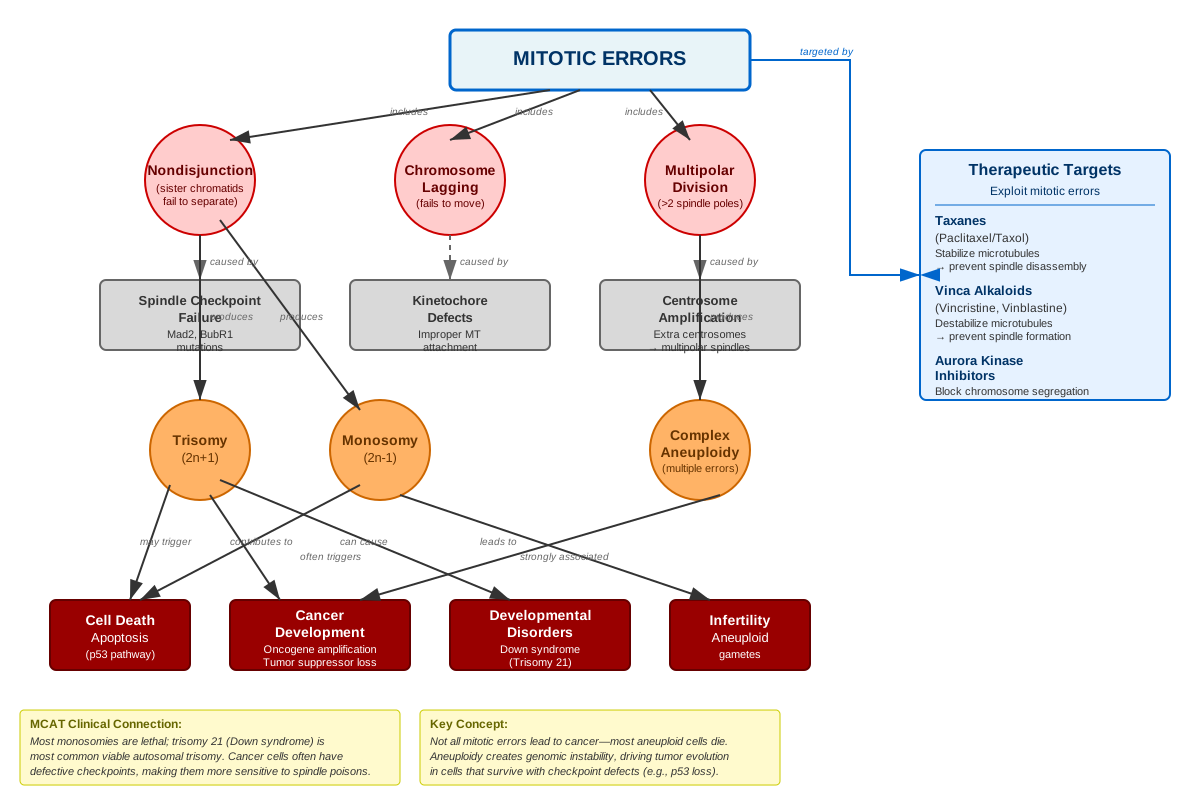
Mitosis is clinically significant because errors in this process lead to aneuploidy (abnormal chromosome number), which causes developmental disorders, spontaneous abortions, and cancer. Many chemotherapeutic agents specifically target rapidly dividing cells by disrupting mitotic spindle formation or DNA synthesis. Understanding mitosis is essential for comprehending how cancer cells evade normal growth controls and why certain tissues are more susceptible to chemotherapy side effects. Regenerative medicine and stem cell therapies also depend on controlled mitotic division to replace damaged tissues.
On the MCAT, mitosis appears in approximately 3-5% of Biology questions, making it a medium-yield topic that nonetheless requires thorough understanding. Questions typically appear in several formats: discrete questions testing phase identification and chromosome counting, passage-based questions analyzing experimental manipulations of the cell cycle, and integrated questions connecting mitosis to cancer biology or genetics. The AAMC frequently presents data from cell cycle experiments using flow cytometry, microscopy images of cells in various mitotic stages, or graphs showing cell populations over time.
Common passage contexts include: experimental treatments that arrest cells at specific checkpoints, comparison of normal versus cancer cell division rates, analysis of drugs affecting microtubule dynamics, genetic mutations affecting cell cycle regulators (p53, cyclins, CDKs), and studies of tissue regeneration or development. The MCAT particularly favors questions requiring students to predict outcomes of experimental manipulations, interpret visual data showing cells in different phases, or explain why certain interventions affect specific cell types more than others.
Core Concepts
Definition and Purpose of Mitosis
Mitosis is the process of nuclear division in eukaryotic cells that produces two daughter nuclei with identical genetic information to the parent nucleus. This process is distinct from cytokinesis (cytoplasmic division), though the two typically occur together to complete cell division. Mitosis maintains the diploid chromosome number (2n) in somatic cells and ensures each daughter cell receives a complete, accurate copy of the genome.
The primary purposes of mitosis include: growth (increasing cell number during development), tissue maintenance and repair (replacing dead or damaged cells), and asexual reproduction in some organisms. In humans, mitosis occurs continuously in tissues with high turnover rates such as skin, intestinal epithelium, and bone marrow, while occurring rarely or not at all in terminally differentiated cells like neurons and cardiac muscle cells.
The Phases of Mitosis
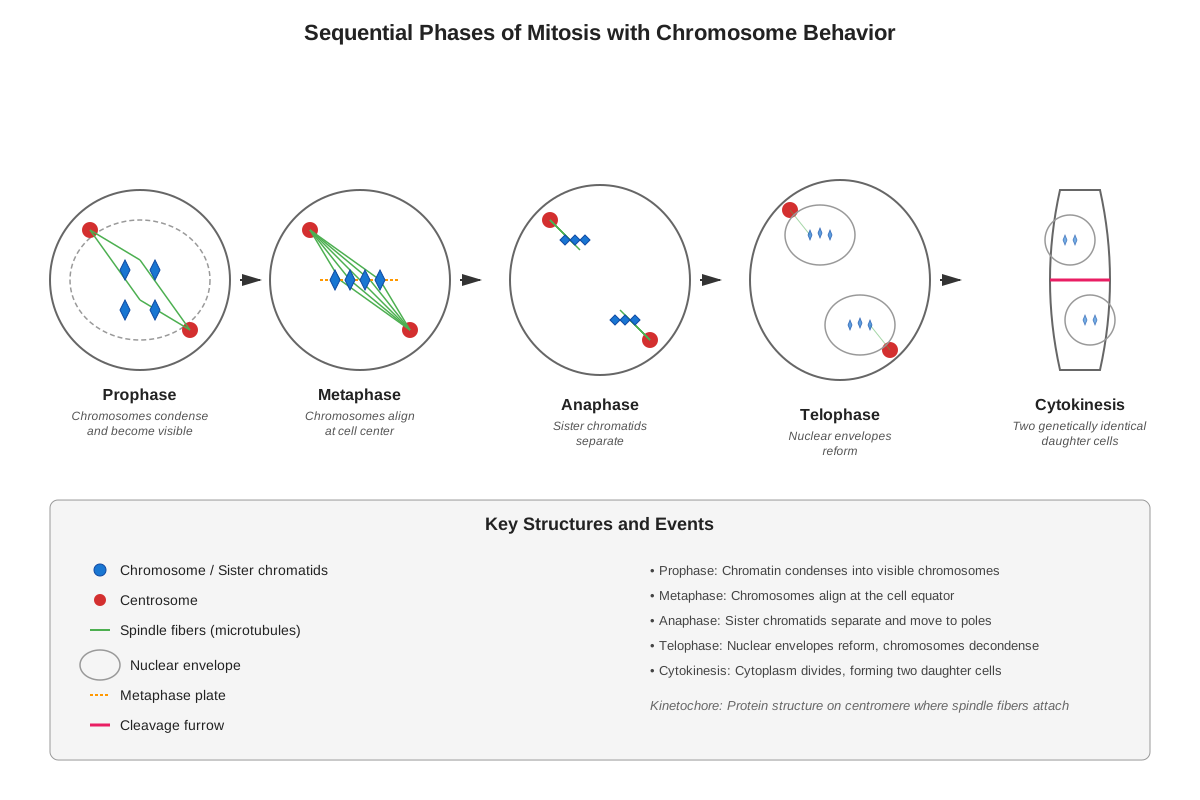
Mitosis is traditionally divided into five distinct phases: prophase, prometaphase (sometimes included in prophase), metaphase, anaphase, and telophase. These phases represent a continuous process with gradual transitions, but each has characteristic structural features that allow identification under microscopy.
Prophase
Prophase is the longest phase of mitosis, during which chromatin condenses into visible chromosomes. Each chromosome consists of two identical sister chromatids joined at the centromere. The condensation process involves histone modifications and condensin proteins that package the DNA into compact structures visible under light microscopy.
Simultaneously, the centrosomes (each containing a pair of centrioles in animal cells) begin migrating toward opposite poles of the cell. As they move, they nucleate the formation of microtubules that will eventually form the mitotic spindle. The nuclear envelope remains intact during early prophase, but nuclear pores begin to disassemble and the nucleolus disappears as ribosomal RNA transcription ceases.
Prometaphase
Prometaphase begins when the nuclear envelope fragments into small vesicles, allowing spindle microtubules to access the chromosomes. Specialized protein structures called kinetochores assemble at the centromere of each sister chromatid. These kinetochores serve as attachment sites for kinetochore microtubules extending from the centrosomes.
Chromosomes begin moving toward the cell center through a combination of motor protein activity and microtubule dynamics. Some microtubules attach to kinetochores (kinetochore microtubules), others overlap at the cell center (polar microtubules), and still others extend toward the cell membrane (astral microtubules). This phase is characterized by vigorous chromosome movement as proper attachments are established and tested.
Metaphase
Metaphase is defined by the alignment of all chromosomes at the cell's equator, forming the metaphase plate. Each chromosome is attached to microtubules from both spindle poles, creating tension that signals proper bipolar attachment. This tension is critical for activating the spindle assembly checkpoint (SAC), also called the metaphase checkpoint.
The spindle assembly checkpoint prevents progression to anaphase until all chromosomes are properly attached and aligned. Unattached kinetochores produce a "wait signal" through proteins like Mad2 and BubR1, which inhibit the anaphase-promoting complex (APC/C). Only when all kinetochores are properly attached and under tension does the checkpoint become satisfied, allowing the cell to proceed.
Anaphase
Anaphase begins abruptly when the anaphase-promoting complex becomes active and triggers degradation of cohesin proteins holding sister chromatids together. This phase is divided into two overlapping processes: anaphase A and anaphase B.
During anaphase A, sister chromatids separate and move toward opposite poles at approximately 1 μm per minute. This movement results from kinetochore microtubule shortening (depolymerization at both ends) and motor protein activity pulling chromosomes along microtubules. During anaphase B, the spindle poles themselves move apart, further separating the chromosome groups. This occurs through polar microtubule sliding (driven by motor proteins) and astral microtubule pulling against the cell cortex.
Telophase
Telophase essentially reverses the events of prophase. Chromosomes arrive at opposite poles and begin decondensing back into chromatin. Nuclear envelopes reform around each chromosome set, reassembling from the endoplasmic reticulum and nuclear envelope fragments. Nuclear pores reassemble, the nucleolus reappears as ribosomal RNA genes resume transcription, and the mitotic spindle disassembles.
Telophase overlaps with cytokinesis, the physical division of the cytoplasm. In animal cells, cytokinesis occurs through formation of a contractile ring containing actin and myosin filaments at the cell equator. This ring constricts to form a cleavage furrow that deepens until the cell pinches into two daughter cells connected only by a thin bridge called the midbody, which eventually breaks. Plant cells cannot form cleavage furrows due to their rigid cell walls; instead, they build a new cell wall from the center outward using a structure called the cell plate.
Chromosome Number and DNA Content Through Mitosis
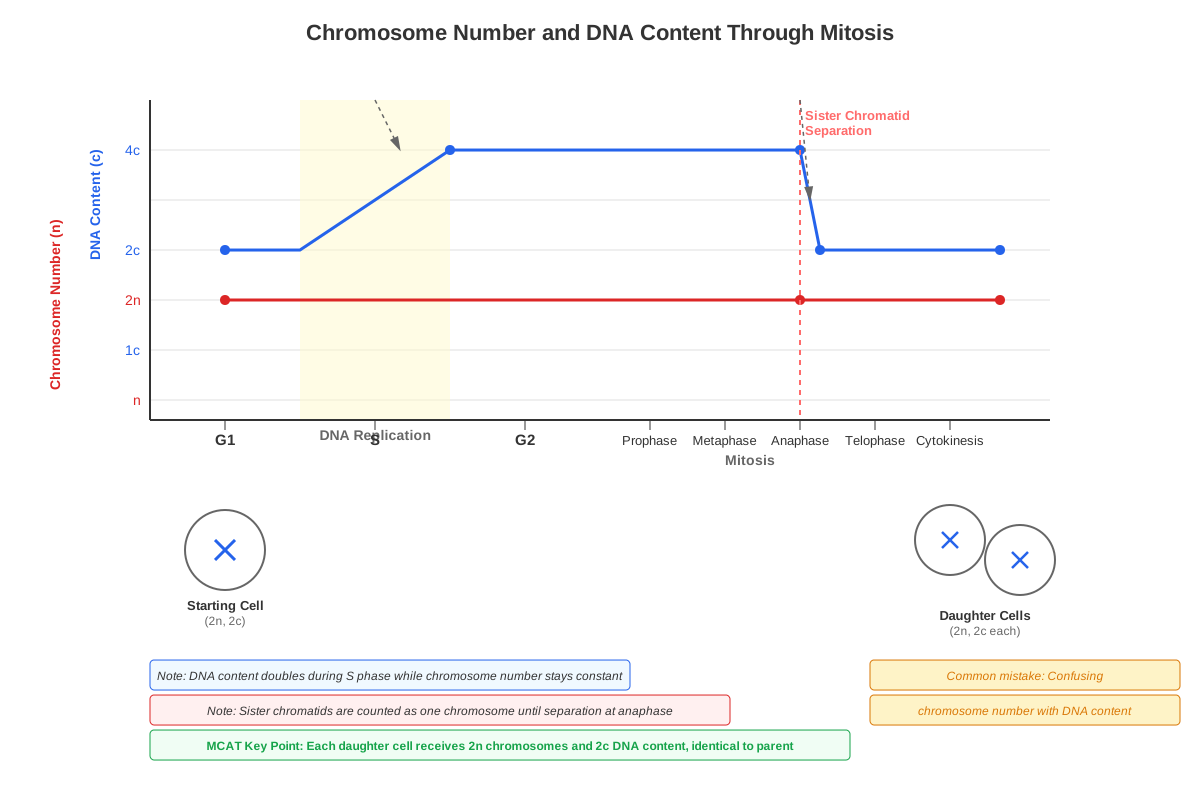
Understanding how chromosome number (n) and DNA content (C) change through mitosis is essential for MCAT questions. Before mitosis begins, cells complete S phase, during which DNA replication occurs. Consider a human somatic cell:
| Phase | Chromosome Number | DNA Content | Description |
|---|---|---|---|
| G1 | 2n = 46 | 2C | Diploid cell, unreplicated chromosomes |
| S | 2n = 46 | 2C → 4C | DNA replication occurring |
| G2 | 2n = 46 | 4C | Diploid cell, replicated chromosomes (sister chromatids) |
| Prophase-Metaphase | 2n = 46 | 4C | Still 46 chromosomes, each with 2 sister chromatids |
| Anaphase (after separation) | 4n = 92 | 4C | Sister chromatids now count as individual chromosomes |
| Telophase/Cytokinesis | 2n = 46 (each cell) | 2C (each cell) | Two diploid daughter cells formed |
The key concept is that sister chromatids joined at a centromere count as ONE chromosome, but once separated, each chromatid is counted as an individual chromosome. This explains why chromosome number temporarily doubles during anaphase before cytokinesis redistributes them.
Regulation of Mitosis
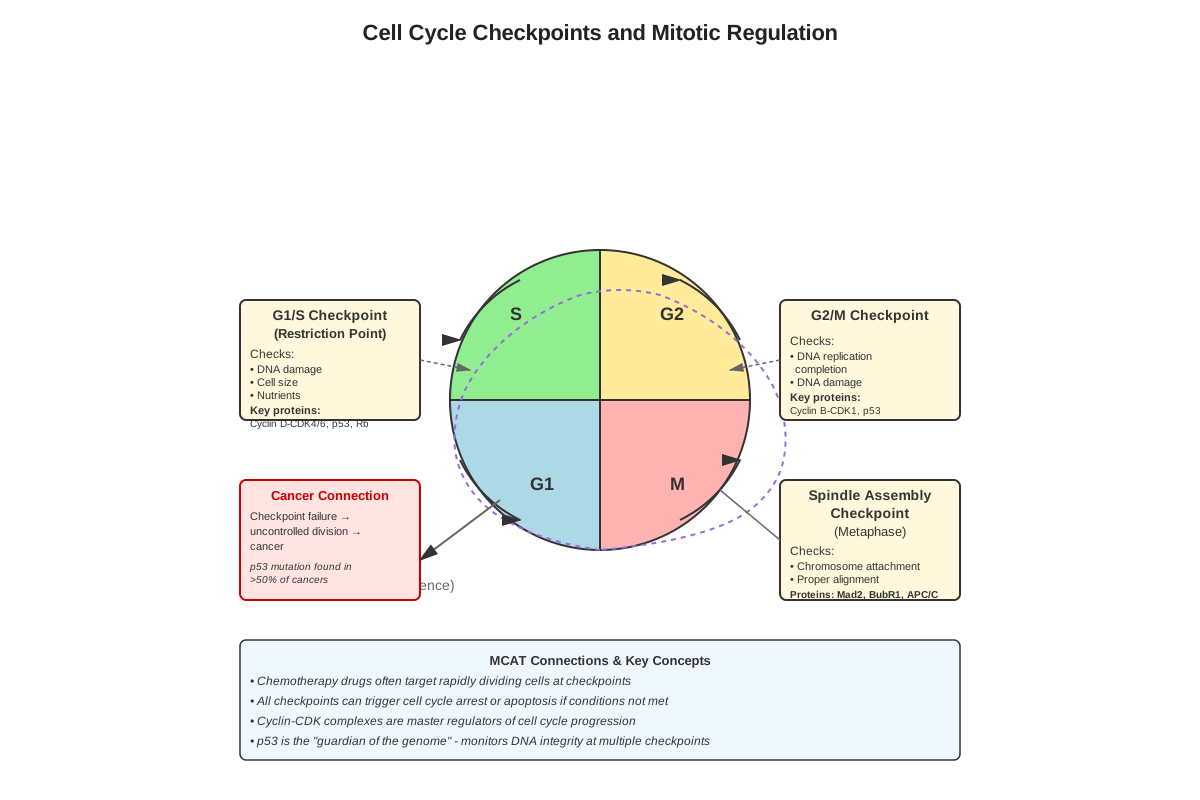
Mitosis is tightly regulated by cyclin-dependent kinases (CDKs) and their regulatory partners, cyclins. The M-phase promoting factor (MPF), consisting of CDK1 and cyclin B, drives entry into mitosis. MPF activity increases during G2 as cyclin B accumulates, and when MPF reaches threshold levels, it phosphorylates target proteins that trigger prophase events: chromosome condensation, nuclear envelope breakdown, and spindle formation.
Three major checkpoints regulate cell cycle progression:
- G1/S checkpoint (Restriction point): Assesses cell size, nutrients, growth signals, and DNA damage before committing to division
- G2/M checkpoint: Verifies complete DNA replication and checks for DNA damage before entering mitosis
- Spindle assembly checkpoint (Metaphase checkpoint): Ensures all chromosomes are properly attached to spindle microtubules before allowing anaphase
The tumor suppressor protein p53 plays a critical role at G1/S and G2/M checkpoints. When DNA damage is detected, p53 accumulates and activates genes that halt cell cycle progression, allowing time for repair. If damage is irreparable, p53 can trigger apoptosis. Loss of p53 function (occurring in >50% of human cancers) allows cells with damaged DNA to continue dividing, accumulating mutations that drive cancer progression.
Concept Relationships
The concepts within mitosis form an integrated sequence where each phase depends on successful completion of the previous one. Prophase chromosome condensation enables prometaphase kinetochore-microtubule attachment, which creates the tension necessary for metaphase alignment and checkpoint satisfaction. Only after checkpoint satisfaction can anaphase separation occur, followed by telophase reformation of nuclei and cytokinesis completion of cell division.
Mitosis connects backward to prerequisite topics: DNA replication in S phase provides the sister chromatids that separate during mitosis; chromosome structure determines how genetic material is organized and transmitted; protein synthesis produces the cyclins, CDKs, and structural proteins required for mitotic machinery. The cytoskeleton, particularly microtubules, provides the physical framework for chromosome movement.
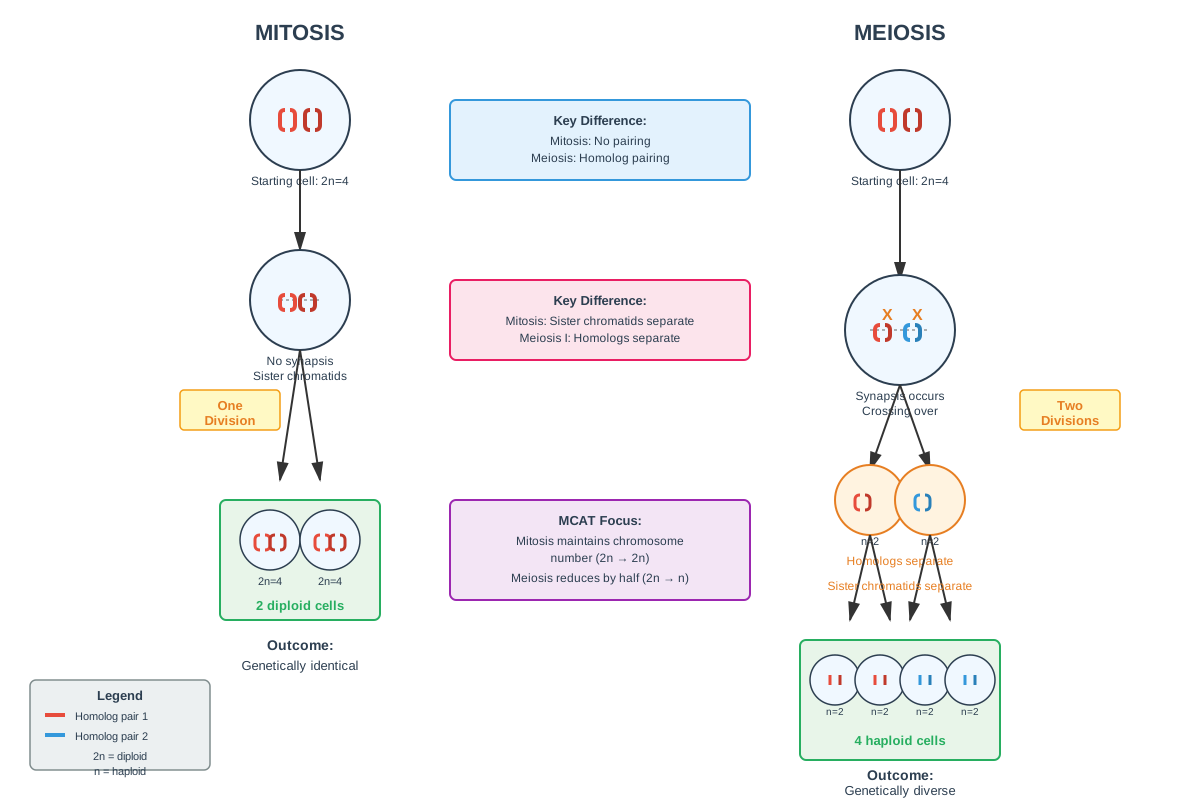
Mitosis connects forward to related topics: understanding mitosis is essential for comprehending meiosis (which includes two divisions and produces haploid gametes); cancer biology (where mitotic control is lost); genetics (mitosis explains how genetic information is transmitted to daughter cells); and development (where controlled mitotic divisions drive growth and differentiation).
The relationship map flows: DNA Replication → Sister Chromatid Formation → Mitotic Entry (CDK/Cyclin regulation) → Sequential Phases (Prophase → Prometaphase → Metaphase → Anaphase → Telophase) → Checkpoint Control → Cytokinesis → Two Identical Daughter Cells. Disruption at any point (checkpoint failure, spindle defects, cytokinesis failure) leads to abnormal outcomes (aneuploidy, polyploidy, cell death).
Quick check — test yourself on Mitosis so far.
Try Flashcards →High-Yield Facts
⭐ Mitosis produces two genetically identical diploid (2n) daughter cells from one diploid parent cell, maintaining chromosome number across generations of somatic cells
⭐ Sister chromatids joined at a centromere count as ONE chromosome; after separation in anaphase, each chromatid counts as an individual chromosome
⭐ The spindle assembly checkpoint (metaphase checkpoint) prevents anaphase until all chromosomes are properly attached to spindle microtubules from both poles with appropriate tension
⭐ Colchicine and taxol are anti-cancer drugs that disrupt microtubule dynamics, preventing spindle formation and arresting cells in metaphase
⭐ Cytokinesis differs between animal cells (cleavage furrow via contractile ring) and plant cells (cell plate formation from center outward)
- Prophase is the longest phase of mitosis, characterized by chromosome condensation and spindle formation
- Kinetochores are protein structures at centromeres that serve as attachment sites for spindle microtubules
- The anaphase-promoting complex (APC/C) triggers sister chromatid separation by promoting cohesin degradation
- p53 is a tumor suppressor that halts cell cycle progression when DNA damage is detected, preventing transmission of mutations
- Cells in G0 (quiescent state) have exited the cell cycle and do not undergo mitosis unless stimulated by growth signals
- Chromosome condensation in prophase involves condensin proteins and makes DNA inaccessible for transcription
- Motor proteins (dynein, kinesin) drive chromosome movement along microtubules during prometaphase and anaphase
- The mitotic index (percentage of cells in mitosis) indicates tissue proliferation rate and is elevated in cancers
- Failure of cytokinesis produces binucleate cells or polyploid cells with multiple chromosome sets
- Centrosomes organize microtubule nucleation and define spindle poles; cells with extra centrosomes form multipolar spindles leading to aneuploidy
Common Misconceptions
Misconception: Mitosis and cytokinesis are the same process → Correction: Mitosis refers specifically to nuclear division (karyokinesis), while cytokinesis is the separate process of cytoplasmic division. Mitosis can occur without cytokinesis, producing multinucleate cells, and the two processes are regulated by different molecular mechanisms.
Misconception: Chromosomes replicate during mitosis → Correction: DNA replication occurs during S phase of interphase, before mitosis begins. Mitosis separates already-replicated sister chromatids; no new DNA synthesis occurs during mitotic phases.
Misconception: Chromosome number changes from diploid to haploid during mitosis → Correction: Mitosis maintains chromosome number. A diploid (2n) parent cell produces two diploid (2n) daughter cells. Only meiosis reduces chromosome number from diploid to haploid.
Misconception: Sister chromatids separate during metaphase → Correction: Sister chromatids align at the metaphase plate but remain attached. Separation occurs during anaphase when cohesin proteins are degraded following spindle assembly checkpoint satisfaction.
Misconception: All cells in the body continuously undergo mitosis → Correction: Many differentiated cells (neurons, cardiac myocytes, skeletal muscle cells) are in G0 and rarely or never divide. Mitotic activity varies dramatically by tissue type, with high rates in epithelial tissues and bone marrow but minimal activity in nervous and muscle tissue.
Misconception: The nuclear envelope breaks down during telophase → Correction: The nuclear envelope breaks down during prometaphase (or late prophase) to allow spindle access to chromosomes. During telophase, nuclear envelopes reform around the separated chromosome sets at each pole.
Misconception: Microtubules only pull chromosomes during anaphase → Correction: Chromosome movement involves both pulling and pushing forces. During prometaphase, chromosomes are pushed and pulled as attachments form. During anaphase A, kinetochore microtubules shorten while motor proteins pull chromosomes. During anaphase B, polar microtubules push poles apart while astral microtubules pull poles toward the cell cortex.
Worked Examples
Example 1: Chromosome Counting Through Mitosis
Question: A human cell with 46 chromosomes enters mitosis. At the end of anaphase but before cytokinesis is complete, how many chromosomes are present in the cell, and how many will be in each daughter cell after cytokinesis?
Solution:
Step 1: Identify the starting condition. A human somatic cell has 46 chromosomes (2n = 46). After S phase but before mitosis, these exist as 46 chromosomes, each consisting of two sister chromatids joined at the centromere.
Step 2: Track changes through mitosis. During prophase, prometaphase, and metaphase, there are still 46 chromosomes (sister chromatids joined at centromeres count as one chromosome each).
Step 3: Analyze anaphase. When sister chromatids separate at the start of anaphase, each chromatid now counts as an individual chromosome. Therefore, 46 chromosomes × 2 chromatids per chromosome = 92 total chromosomes in the cell.
Step 4: Determine distribution. These 92 chromosomes are divided equally between the two poles: 46 chromosomes at each pole.
Step 5: Apply cytokinesis. When cytokinesis completes, each daughter cell receives 46 chromosomes.
Answer: At the end of anaphase before cytokinesis, there are 92 chromosomes in the cell (46 at each pole). After cytokinesis, each daughter cell contains 46 chromosomes.
Key concept: This question tests understanding that sister chromatids count as one chromosome when joined but as separate chromosomes when separated, and that mitosis maintains chromosome number in daughter cells.
Example 2: Experimental Drug Effects on Mitosis
Question: Researchers treat cultured cells with a drug that prevents microtubule polymerization. After 24 hours, they examine the cells microscopically and find most cells arrested with condensed chromosomes scattered throughout the cell, no organized spindle structure, and intact nuclear envelopes absent. In which phase are these cells arrested, and why can't they progress?
Solution:
Step 1: Identify the cellular features described:
- Condensed chromosomes (indicates mitosis has begun)
- No organized spindle (microtubules cannot form due to drug)
- No nuclear envelope (indicates prometaphase or later)
- Scattered chromosomes (not aligned at metaphase plate)
Step 2: Determine the phase. Chromosome condensation occurs in prophase, nuclear envelope breakdown occurs in prometaphase, and chromosome alignment occurs in metaphase. The cells have condensed chromosomes and no nuclear envelope, indicating they've entered prometaphase, but chromosomes are scattered rather than aligned, indicating they haven't reached metaphase.
Step 3: Explain the arrest. Without functional microtubules, the mitotic spindle cannot form. Kinetochore microtubules cannot attach to chromosomes, preventing chromosome alignment at the metaphase plate.
Step 4: Identify the checkpoint. The spindle assembly checkpoint (SAC) detects unattached kinetochores and produces a "wait signal" that inhibits the anaphase-promoting complex (APC/C). Without proper attachments, the checkpoint remains active indefinitely.
Step 5: Predict the outcome. Cells remain arrested in prometaphase because they cannot satisfy the spindle assembly checkpoint. Prolonged arrest typically triggers apoptosis.
Answer: The cells are arrested in prometaphase. They cannot progress because the drug prevents spindle formation, leaving kinetochores unattached. The spindle assembly checkpoint detects this and blocks progression to anaphase by inhibiting the anaphase-promoting complex.
Key concept: This question integrates knowledge of mitotic phases, spindle function, and checkpoint control. It demonstrates why microtubule-disrupting drugs (like colchicine and taxol) are effective anti-cancer agents—they prevent mitotic progression in rapidly dividing cells.
Exam Strategy
When approaching MCAT questions on mitosis, first identify what the question is actually asking: phase identification, chromosome counting, checkpoint function, or experimental interpretation. Phase identification questions often provide microscopy images or descriptions of cellular features—create a mental checklist of defining characteristics for each phase (condensed chromosomes + intact nuclear envelope = prophase; aligned chromosomes = metaphase; separated chromatids moving to poles = anaphase).
For chromosome counting questions, always clarify whether the question asks about chromosome number (n) or DNA content (C), as these change differently through mitosis. Remember the critical rule: sister chromatids joined at a centromere = one chromosome; separated chromatids = individual chromosomes. Draw a simple diagram if needed to track chromosome number through the phases.
Trigger words to watch for include:
- "Spindle assembly checkpoint" or "metaphase checkpoint" → think about kinetochore attachment and what prevents anaphase
- "Colchicine," "taxol," "vinblastine," or "microtubule inhibitor" → cells arrest in metaphase/prometaphase
- "Cytokinesis failure" → produces binucleate or polyploid cells
- "Sister chromatids" → joined structures that separate in anaphase
- "Homologous chromosomes" → this is a meiosis concept, not mitosis (mitosis doesn't pair homologs)
For passage-based questions, identify the experimental manipulation and predict its effect before looking at answer choices. If a passage describes a drug affecting CDK activity, immediately think about cell cycle progression and checkpoint control. If it describes a mutation affecting kinetochore proteins, think about chromosome attachment and the spindle assembly checkpoint.
Process-of-elimination strategy: Eliminate answers that confuse mitosis with meiosis (mitosis doesn't reduce chromosome number, doesn't involve homologous pairing, doesn't produce genetic variation). Eliminate answers that place events in the wrong phase (chromosome separation in metaphase, nuclear envelope breakdown in telophase). Eliminate answers that violate the fundamental principle that mitosis produces genetically identical daughter cells.
Time allocation: Discrete mitosis questions should take 60-90 seconds. Passage-based questions may require 90-120 seconds, with additional time for analyzing figures or data. Don't get stuck on chromosome counting—if confused, quickly draw a diagram showing chromosome number at each phase and move on.
Memory Techniques
PMAT is the classic mnemonic for mitosis phases: Prophase, Metaphase, Anaphase, Telophase. Expand this to I-PMAT by adding Interphase at the beginning to remember the complete sequence.
For prophase events, remember "Chromosomes Condense, Centrosomes Separate, Nuclear envelope Breaks" (CCB).
For distinguishing metaphase from anaphase, visualize: "Metaphase = Middle" (chromosomes in the middle/equator); "Anaphase = Apart" (chromatids moving apart to poles).
To remember cytokinesis differences: "Animals Pinch, Plants Build" (animal cells form cleavage furrow that pinches inward; plant cells build cell plate outward).
For checkpoint functions, use "GPS": G1/S checkpoint checks Growth signals and DNA damage; G2/M checkpoint checks DNA replication Completion; Spindle assembly checkpoint checks Spindle attachment.
To remember that sister chromatids separate in mitosis but homologous chromosomes separate in meiosis: "Sisters in Mitosis, Homies in Meiosis I".
For chromosome counting, remember: "Joined = One, Separated = Two" (sister chromatids joined at centromere count as one chromosome; once separated, each counts individually).
Visualization strategy: Create a mental movie of mitosis showing chromosomes condensing, nuclear envelope disappearing, spindles forming, chromosomes aligning in the middle, then splitting and moving to opposite sides, followed by two new nuclei forming. Replay this movie when answering questions to identify which phase is being described.
Summary
Mitosis is the process of nuclear division producing two genetically identical diploid daughter cells from one diploid parent cell, essential for growth, tissue repair, and maintenance in multicellular organisms. The process proceeds through five sequential phases—prophase (chromosome condensation and spindle formation), prometaphase (nuclear envelope breakdown and kinetochore-microtubule attachment), metaphase (chromosome alignment at the cell equator), anaphase (sister chromatid separation and movement to poles), and telophase (nuclear envelope reformation and chromosome decondensation)—followed by cytokinesis to complete cell division. Mitosis is tightly regulated by cyclin-dependent kinases and three major checkpoints that ensure proper conditions before progression, with the spindle assembly checkpoint being particularly important for preventing chromosome missegregation. Understanding chromosome number versus DNA content through mitosis, recognizing that sister chromatids count as one chromosome when joined but as separate chromosomes when separated, and knowing how experimental manipulations affect mitotic progression are essential for MCAT success. Mitosis connects to broader biology concepts including cell cycle regulation, cancer biology, meiosis, and genetics, making it a foundational topic for understanding cellular reproduction and disease.
Key Takeaways
- Mitosis produces two genetically identical diploid (2n) daughter cells, maintaining chromosome number through accurate sister chromatid separation
- The five phases (prophase, prometaphase, metaphase, anaphase, telophase) represent a continuous sequence with characteristic structural features enabling phase identification
- Sister chromatids joined at a centromere count as ONE chromosome; after anaphase separation, each chromatid counts as an individual chromosome
- The spindle assembly checkpoint prevents anaphase until all chromosomes are properly attached to spindle microtubules from both poles, preventing aneuploidy
- Mitosis is regulated by cyclin-dependent kinases and checkpoints; disruption of these controls (as in cancer) leads to uncontrolled cell division
- Cytokinesis differs between animal cells (cleavage furrow) and plant cells (cell plate), but both complete the physical separation of daughter cells
- Microtubule-disrupting drugs arrest cells in metaphase by preventing spindle formation, explaining their use as chemotherapeutic agents
Related Topics
Meiosis: Understanding mitosis provides the foundation for learning meiosis, which involves two sequential divisions producing four haploid gametes with genetic variation through crossing over and independent assortment. Comparing mitosis and meiosis is a high-yield MCAT topic.
Cell Cycle Regulation: Deeper study of cyclins, cyclin-dependent kinases, checkpoints, and tumor suppressors (p53, Rb) builds on mitosis knowledge and connects to cancer biology and signal transduction pathways.
Cancer Biology: Mitosis mastery enables understanding how cancer cells evade growth controls, accumulate chromosomal abnormalities, and respond to chemotherapeutic agents targeting cell division.
Chromosome Structure and Function: Advanced study of centromeres, kinetochores, telomeres, and chromatin organization deepens understanding of how chromosomes behave during mitosis and how structural abnormalities affect division.
Cytoskeleton and Motor Proteins: Detailed study of microtubule dynamics, motor proteins (kinesin, dynein), and actin-myosin contractility explains the molecular mechanisms driving chromosome movement and cytokinesis.
Practice CTA
Now that you've mastered the core concepts of mitosis, it's time to reinforce your understanding through active practice. Complete the practice questions to test your ability to identify mitotic phases, count chromosomes through division, analyze experimental scenarios, and apply checkpoint concepts to novel situations. Use the flashcards to drill high-yield facts until you can recall them instantly. Remember, the MCAT rewards not just knowledge but the ability to apply that knowledge quickly and accurately under time pressure—practice is what builds that skill. You've built a strong foundation; now strengthen it through repetition and application!
Sign up free to keep reading
Create a free AnvayaPrep account to finish this MCAT guide on Mitosis — plus flashcards and practice questions.