Overview
Conjugation is a fundamental mechanism of horizontal gene transfer in prokaryotic organisms, particularly bacteria, that allows genetic material to be transferred directly from one cell to another through physical contact. Unlike vertical gene transfer, which occurs from parent to offspring during reproduction, conjugation enables bacteria to share genetic information—including antibiotic resistance genes, virulence factors, and metabolic capabilities—across different strains and even different species. This process represents one of the most clinically significant mechanisms by which bacteria rapidly adapt to environmental pressures, including the spread of antibiotic resistance that poses major challenges to modern medicine.
For the MCAT, understanding conjugation biology is essential because it integrates multiple biological concepts including molecular genetics, cell biology, and evolutionary principles. The exam frequently tests students' ability to distinguish between different mechanisms of genetic transfer in bacteria (transformation, transduction, and conjugation), understand the molecular machinery involved in conjugation, and apply this knowledge to clinical scenarios involving antibiotic resistance. Questions may appear in both passage-based and discrete formats, often requiring students to analyze experimental data, interpret genetic diagrams, or predict outcomes of bacterial mating experiments.
Conjugation MCAT questions typically connect to broader themes in microbiology and biology, including natural selection, genetic diversity, plasmid biology, and the evolution of pathogenic bacteria. Mastery of this topic enables students to understand how bacterial populations rapidly evolve, why certain infections become difficult to treat, and how horizontal gene transfer contributes to genetic variation in prokaryotes. This knowledge forms a critical foundation for understanding bacterial genetics, antibiotic resistance mechanisms, and the molecular basis of microbial evolution—all high-yield topics for the Biological and Biochemical Foundations of Living Systems section of the MCAT.
Learning Objectives
- [ ] Define Conjugation using accurate Biology terminology
- [ ] Explain why Conjugation matters for the MCAT
- [ ] Apply Conjugation to exam-style questions
- [ ] Identify common mistakes related to Conjugation
- [ ] Connect Conjugation to related Biology concepts
- [ ] Describe the molecular mechanism of F plasmid transfer during bacterial conjugation
- [ ] Compare and contrast conjugation with transformation and transduction
- [ ] Predict the outcomes of conjugation experiments involving different bacterial mating types
- [ ] Analyze the role of conjugation in the spread of antibiotic resistance genes
Prerequisites
- Basic bacterial cell structure: Understanding of bacterial cell walls, membranes, and cytoplasm is necessary to comprehend how physical contact enables DNA transfer
- DNA structure and replication: Knowledge of DNA double helix structure and semiconservative replication is essential for understanding how genetic material is copied and transferred
- Plasmid biology: Familiarity with extrachromosomal DNA elements helps explain the vehicles of genetic transfer in conjugation
- Basic genetics terminology: Understanding terms like genotype, phenotype, and genetic recombination provides the foundation for discussing gene transfer outcomes
- Prokaryotic vs. eukaryotic cells: Recognition of fundamental differences between cell types clarifies why conjugation is primarily a prokaryotic phenomenon
Why This Topic Matters
Clinical and Real-World Significance
Conjugation represents one of the most pressing concerns in modern medicine due to its role in spreading antibiotic resistance. When a bacterium acquires resistance genes through conjugation, it can rapidly become untreatable with standard antibiotics, leading to serious infections that are difficult or impossible to cure. Hospital-acquired infections often involve bacteria that have gained multiple resistance genes through conjugation, creating "superbugs" like methicillin-resistant Staphylococcus aureus (MRSA) and carbapenem-resistant Enterobacteriaceae (CRE). Understanding conjugation is crucial for developing strategies to combat antibiotic resistance, including antibiotic stewardship programs and the development of novel antimicrobial agents.
Beyond antibiotic resistance, conjugation plays important roles in bacterial evolution and adaptation. Bacteria use conjugation to share genes for metabolizing novel nutrients, surviving in extreme environments, and producing toxins that enhance virulence. This mechanism of horizontal gene transfer accelerates bacterial evolution far beyond what would be possible through mutation alone, allowing bacterial populations to adapt to new challenges within days or weeks rather than generations.
Exam Statistics and Question Types
Conjugation appears on the MCAT with moderate frequency, typically in 2-4 questions per exam administration. Questions most commonly appear in the Biological and Biochemical Foundations of Living Systems section, though they may occasionally appear in passages discussing evolution or experimental design in the Critical Analysis and Reasoning Skills section when applied to scientific research contexts.
Common question formats include:
- Experimental analysis: Interpreting results from bacterial mating experiments, often involving different bacterial strains with various genetic markers
- Mechanism questions: Identifying the correct sequence of events during conjugation or the role of specific structures
- Comparison questions: Distinguishing conjugation from other forms of genetic transfer or comparing outcomes of different mating scenarios
- Application questions: Predicting how conjugation contributes to antibiotic resistance spread in clinical settings
- Diagram interpretation: Analyzing genetic maps or diagrams showing plasmid transfer between cells
Core Concepts
Definition and Basic Mechanism of Conjugation
Conjugation is defined as the unidirectional transfer of genetic material from a donor bacterial cell to a recipient cell through direct physical contact via a specialized structure called a pilus. This process requires cell-to-cell contact and involves the transfer of DNA, typically in the form of plasmids, though chromosomal DNA can also be transferred in some cases. The term "conjugation" literally means "joining together," reflecting the physical connection established between cells during the process.
The fundamental mechanism involves several key components:
- A donor cell (designated F+, for fertility factor positive) possesses a conjugative plasmid
- The donor cell produces a sex pilus (or F pilus), a hollow, tube-like protein structure that extends from the cell surface
- The pilus attaches to a recipient cell (F-, lacking the fertility factor)
- The pilus retracts, bringing the two cells into close proximity
- A cytoplasmic bridge forms between the cells
- DNA is transferred through this bridge from donor to recipient
The F (Fertility) Plasmid
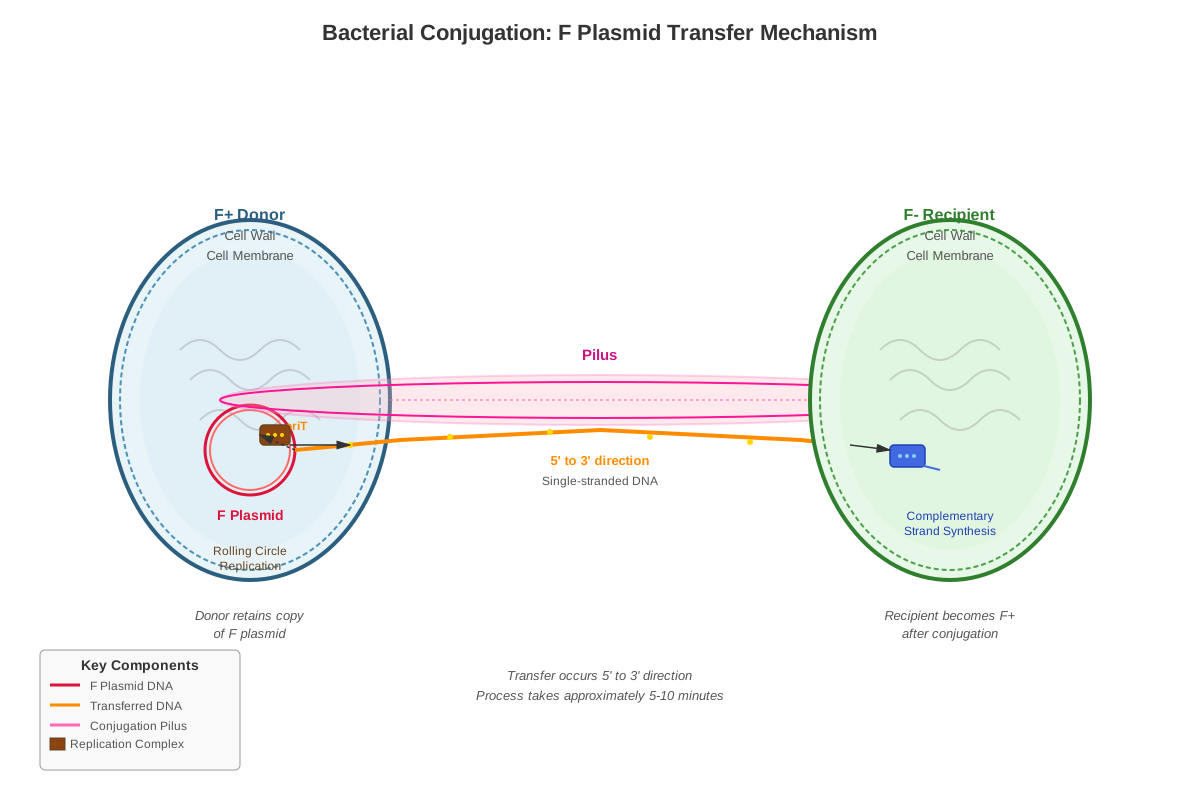
The F plasmid is the most well-studied conjugative plasmid, particularly in Escherichia coli. This circular, double-stranded DNA molecule is approximately 100 kilobase pairs in length and contains genes essential for conjugation. Key features of the F plasmid include:
- tra genes (transfer genes): Encode proteins necessary for pilus formation, DNA transfer, and plasmid replication
- oriT (origin of transfer): The specific DNA sequence where transfer begins
- Replication genes: Allow the plasmid to replicate independently of chromosomal DNA
- Genes for plasmid maintenance: Ensure stable inheritance of the plasmid in daughter cells
The F plasmid replicates using a specialized mechanism called rolling circle replication during conjugation. In this process:
- A nuclease enzyme nicks one strand of the plasmid DNA at the oriT site
- The 3' end remains attached to the plasmid, while the 5' end begins to transfer to the recipient cell
- As the intact circular strand "rolls," DNA polymerase synthesizes a new complementary strand in the donor cell
- Simultaneously, the transferred single strand is replicated in the recipient cell
- Both cells end up with complete, double-stranded copies of the plasmid
Bacterial Mating Types
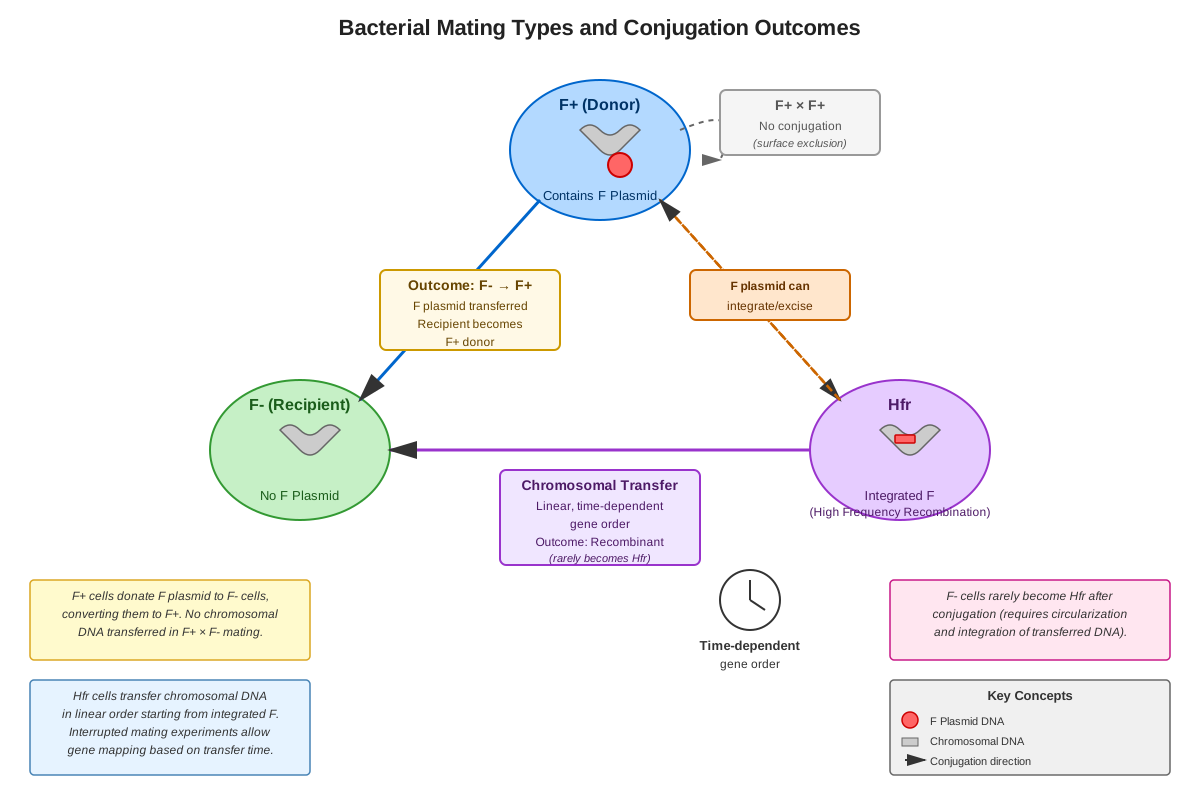
Bacteria can be classified into different mating types based on their conjugation capabilities:
| Mating Type | Description | Conjugation Role | Plasmid Status |
|---|---|---|---|
| F+ | Possesses F plasmid | Donor | Contains autonomous F plasmid |
| F- | Lacks F plasmid | Recipient | No F plasmid |
| Hfr (High frequency recombination) | F plasmid integrated into chromosome | Donor | F plasmid integrated into chromosome |
| F' (F prime) | F plasmid with chromosomal genes | Donor | F plasmid carrying some chromosomal DNA |
F+ × F- Conjugation: When an F+ cell conjugates with an F- cell, the F plasmid is transferred, converting the F- recipient into an F+ cell. This is the most common type of conjugation and results in the spread of the F plasmid through a bacterial population. Importantly, no chromosomal genes are typically transferred in this mating.
Hfr × F- Conjugation: Hfr strains arise when the F plasmid integrates into the bacterial chromosome through homologous recombination. During conjugation, Hfr cells transfer chromosomal DNA in a linear, sequential manner starting from the integration site. The transfer follows a specific order and takes approximately 100 minutes to transfer the entire chromosome. However, conjugation is usually interrupted before completion, so recipient cells typically receive only a portion of the donor chromosome. The recipient usually remains F- because the F plasmid genes are transferred last.
F' Formation and Conjugation: F' (F prime) strains form when an integrated F plasmid excises imprecisely from the chromosome, taking some adjacent chromosomal genes with it. F' plasmids can transfer both plasmid genes and the captured chromosomal genes to recipient cells, creating partial diploids (merodiploids) for those specific genes.
Molecular Mechanism of DNA Transfer
The detailed molecular mechanism of conjugation involves several coordinated steps:
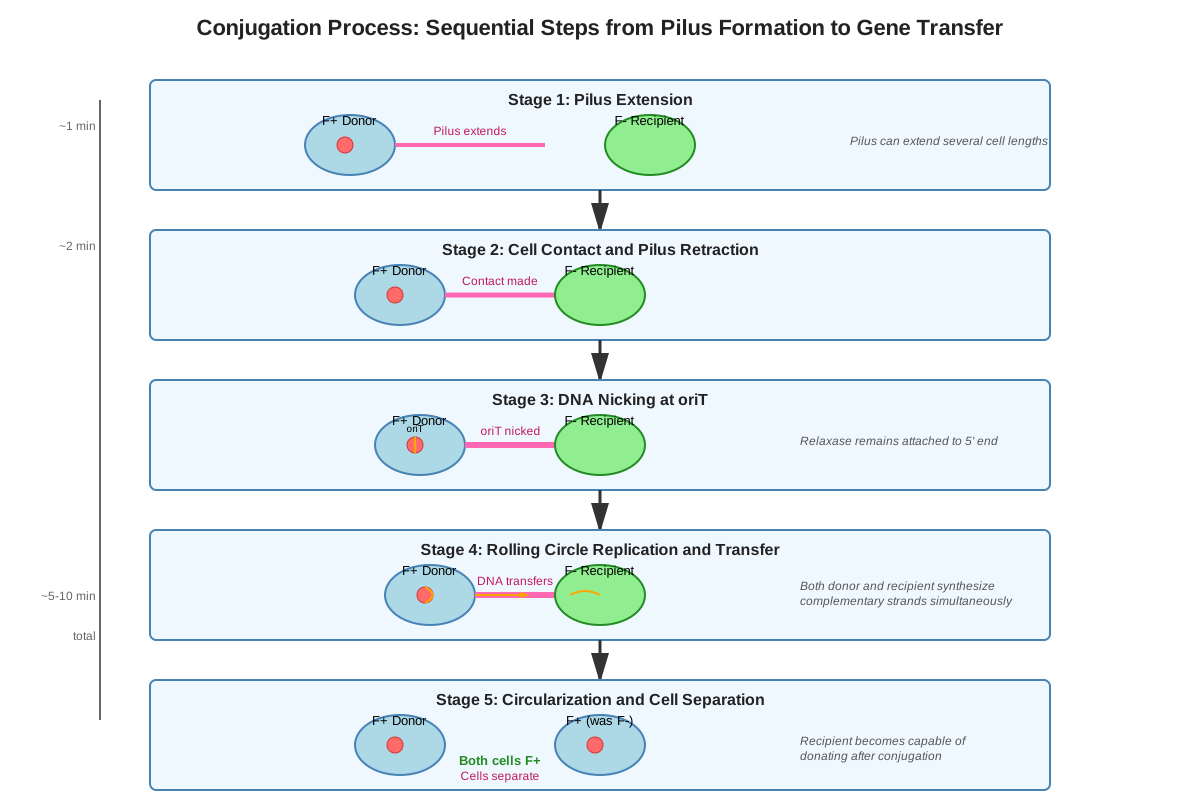
- Pilus Formation and Attachment: The donor cell expresses genes from the tra operon that encode pilin proteins. These proteins assemble into a hollow pilus structure that extends several micrometers from the cell surface. The pilus tip contains adhesins that recognize and bind to specific receptors on the recipient cell surface.
- Mating Pair Formation: After initial contact, the pilus retracts through depolymerization, pulling the recipient cell closer. A stable mating bridge forms, creating a channel through which DNA can pass. This bridge involves both the pilus structure and additional membrane proteins that stabilize the connection.
- DNA Processing and Transfer: At the oriT site, a relaxase enzyme (encoded by the traI gene) nicks one strand of the plasmid DNA. This enzyme remains attached to the 5' end of the nicked strand. The relaxase-DNA complex is then transferred through the mating bridge into the recipient cell. The transfer occurs in a 5' to 3' direction.
- Replication During Transfer: As the single strand transfers, rolling circle replication occurs in the donor cell, synthesizing a replacement strand. In the recipient cell, the incoming single-stranded DNA serves as a template for synthesis of the complementary strand, creating a complete double-stranded plasmid.
- Circularization and Gene Expression: Once transfer is complete, the linear single strand in the recipient cell circularizes, and the complementary strand is fully synthesized. The plasmid genes, including those for conjugation machinery, are then expressed, potentially converting the recipient into a donor cell.
Conjugation vs. Other Gene Transfer Mechanisms
Understanding how conjugation differs from other horizontal gene transfer mechanisms is crucial for MCAT success:
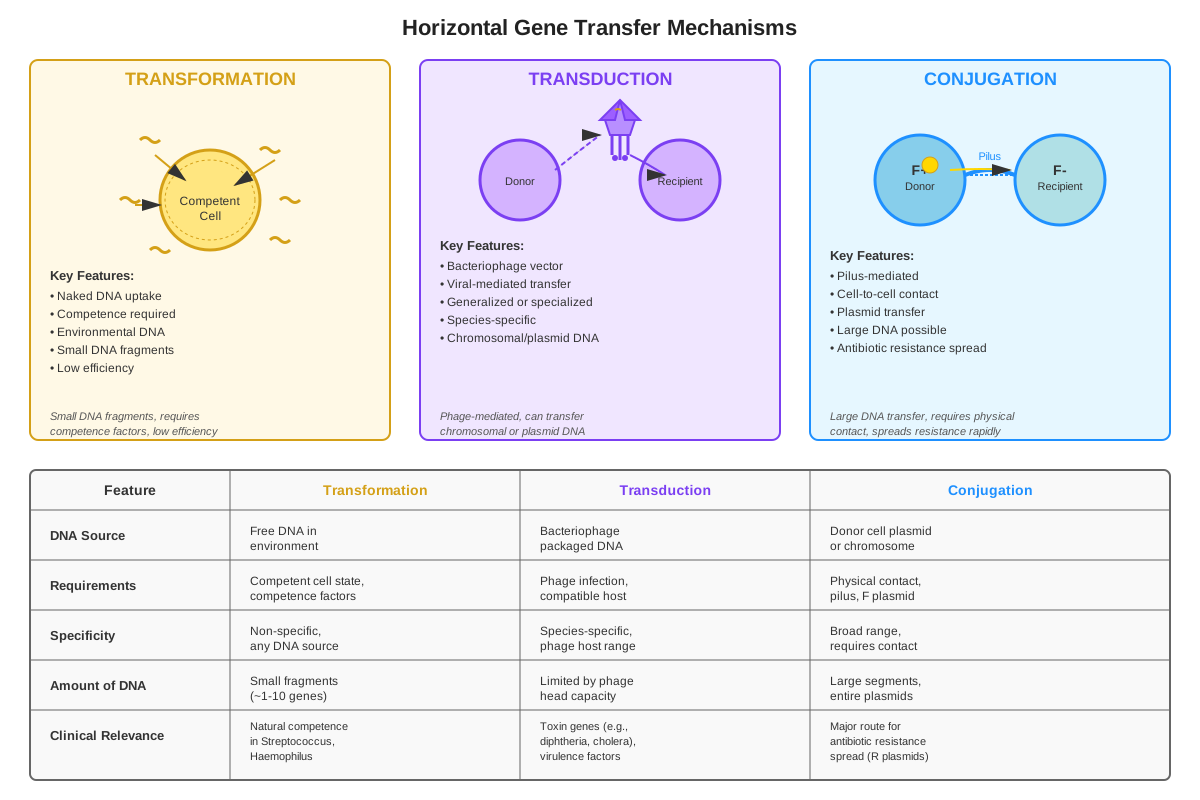
Transformation: The uptake of naked DNA from the environment by competent bacterial cells. Unlike conjugation, transformation does not require cell-to-cell contact and involves DNA that has been released from dead or lysed cells. Only certain bacterial species are naturally competent, though competence can be artificially induced in the laboratory.
Transduction: The transfer of bacterial DNA from one cell to another via a bacteriophage (bacterial virus). During viral replication, bacterial DNA may be accidentally packaged into viral particles and transferred to new cells during subsequent infections. This process is mediated by viruses, not direct cellular contact.
Key Distinctions:
- Conjugation requires living donor and recipient cells in direct contact
- Conjugation is unidirectional (donor → recipient)
- Conjugation can transfer large DNA segments, including entire plasmids
- Conjugation machinery is encoded by the transferred genetic element itself
Clinical Significance: Antibiotic Resistance Transfer
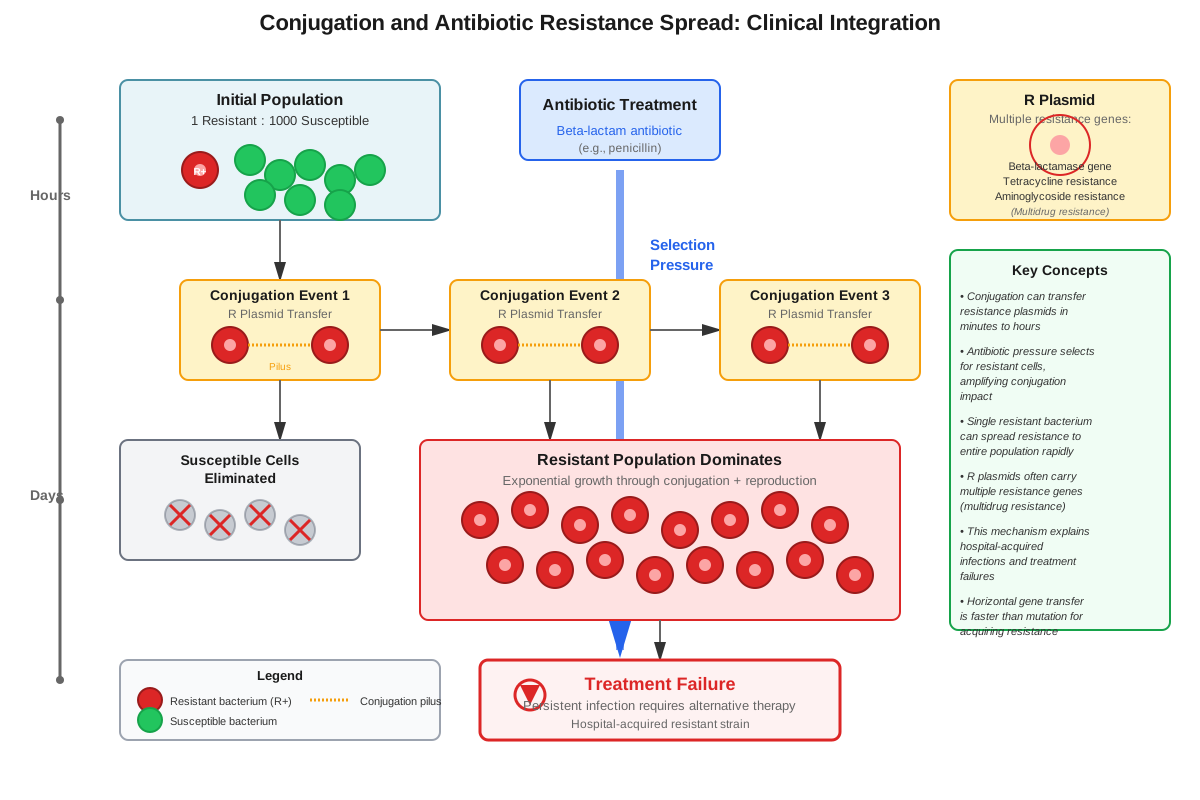
The most clinically relevant aspect of conjugation is its role in spreading antibiotic resistance genes. Resistance genes are often located on conjugative plasmids called R plasmids (resistance plasmids), which can carry multiple resistance genes simultaneously. This creates bacteria with multiple drug resistance (MDR).
Common resistance genes transferred via conjugation include:
- Beta-lactamase genes: Confer resistance to penicillins and cephalosporins
- Aminoglycoside-modifying enzyme genes: Provide resistance to gentamicin and related antibiotics
- Tetracycline efflux pump genes: Enable bacteria to pump tetracycline out of the cell
- Vancomycin resistance genes: Allow bacteria to modify cell wall targets
The rapid spread of resistance through conjugation explains why antibiotic resistance can emerge quickly in bacterial populations, even without direct antibiotic exposure. A single resistant bacterium can transfer resistance to many susceptible cells, creating a resistant population within hours to days.
Concept Relationships
Conjugation connects to numerous biological concepts, forming an integrated understanding of bacterial genetics and evolution. The process begins with plasmid biology, as conjugative plasmids serve as the primary vehicles for gene transfer. These plasmids demonstrate autonomous replication, existing independently of chromosomal DNA while still being maintained through cell divisions.
The mechanism of conjugation relies heavily on gene expression and regulation. The tra operon must be properly expressed to produce functional pilus structures and transfer machinery. This connects to concepts of transcriptional regulation and protein synthesis. The rolling circle replication mechanism links conjugation to DNA replication concepts, particularly the roles of DNA polymerase, primase, and ligase enzymes.
Relationship map:
Plasmid Biology → enables → Conjugation → leads to → Horizontal Gene Transfer → results in → Genetic Variation → drives → Bacterial Evolution → manifests as → Antibiotic Resistance
Additionally: Gene Regulation → controls → Pilus Formation → enables → Cell-Cell Contact → allows → DNA Transfer → produces → Recombinant Bacteria
Conjugation also connects to population genetics and natural selection. When antibiotic pressure is applied to a bacterial population, cells that acquire resistance genes through conjugation have a selective advantage, leading to rapid evolution of resistant populations. This demonstrates adaptation and survival of the fittest at the microbial level.
The concept extends to molecular biology techniques used in research and biotechnology. Scientists exploit conjugation to introduce engineered plasmids into bacteria, enabling genetic manipulation and the production of recombinant proteins. Understanding conjugation is therefore essential for comprehending modern genetic engineering approaches.
Quick check — test yourself on Conjugation so far.
Try Flashcards →High-Yield Facts
⭐ Conjugation requires direct cell-to-cell contact through a sex pilus and results in unidirectional DNA transfer from donor to recipient
⭐ F+ cells serve as donors and possess the F plasmid, while F- cells serve as recipients and lack the F plasmid
⭐ Hfr strains have the F plasmid integrated into their chromosome and transfer chromosomal DNA in a linear, sequential manner
⭐ Rolling circle replication occurs during conjugation, ensuring both donor and recipient cells end up with complete copies of the transferred DNA
⭐ Conjugation is the primary mechanism for spreading antibiotic resistance genes among bacterial populations
- The F plasmid is approximately 100 kb in size and contains tra genes essential for conjugation
- After F+ × F- conjugation, the recipient cell becomes F+ and can serve as a donor in subsequent matings
- Hfr × F- conjugation typically does not convert the recipient to F+ because F plasmid genes are transferred last and conjugation is usually interrupted
- F' (F prime) strains create partial diploids (merodiploids) in recipient cells for the chromosomal genes carried on the F' plasmid
- Conjugation can occur between different bacterial species, facilitating horizontal gene transfer across taxonomic boundaries
- R plasmids (resistance plasmids) often carry multiple antibiotic resistance genes, enabling transfer of multidrug resistance in a single conjugation event
- The oriT (origin of transfer) site is where DNA transfer begins during conjugation
- Conjugative plasmids are self-transmissible, containing all genes necessary for their own transfer
Common Misconceptions
Misconception: Conjugation is a form of sexual reproduction in bacteria.
Correction: Conjugation is NOT sexual reproduction. Sexual reproduction involves the fusion of gametes and the combination of genetic material from two parents to produce offspring. Conjugation is a mechanism of horizontal gene transfer where genetic material is copied and transferred from donor to recipient, but no fusion of cells occurs and no offspring are produced. Both cells survive the process independently.
Misconception: After conjugation, the donor cell loses the plasmid and becomes F-.
Correction: The donor cell retains a complete copy of the plasmid after conjugation. Rolling circle replication ensures that as one strand is transferred to the recipient, a new complementary strand is synthesized in the donor. Both cells end up with complete, functional plasmids.
Misconception: All bacteria can perform conjugation.
Correction: Only bacteria possessing conjugative plasmids (or integrated conjugative elements) can serve as donors in conjugation. Not all plasmids are conjugative—many small plasmids lack the tra genes necessary for self-transfer. These non-conjugative plasmids can only spread through vertical transmission during cell division.
Misconception: Hfr × F- conjugation always converts the recipient to Hfr.
Correction: Hfr × F- conjugation rarely converts the recipient to Hfr. Because the F plasmid genes are located at the end of the transferred chromosome (transferred last), and because conjugation is usually interrupted before completion, recipients typically receive only chromosomal genes without the complete F plasmid. The recipient usually remains F-.
Misconception: Conjugation, transformation, and transduction are essentially the same process.
Correction: These are three distinct mechanisms of horizontal gene transfer with different requirements and mechanisms. Conjugation requires living cells in direct contact, transformation involves uptake of naked DNA from the environment, and transduction requires a bacteriophage vector. Each has different efficiency, DNA size limitations, and biological requirements.
Misconception: The pilus is the structure through which DNA passes during conjugation.
Correction: While the pilus initiates contact and brings cells together, current evidence suggests that DNA transfer occurs through a mating bridge formed after pilus retraction, not through the hollow pilus itself. The pilus functions primarily in recognition, attachment, and bringing cells into close proximity.
Worked Examples
Example 1: Bacterial Mating Experiment Analysis
Question: In a laboratory experiment, an F+ strain of E. coli that is resistant to streptomycin (Str^R) but sensitive to ampicillin (Amp^S) is mixed with an F- strain that is sensitive to streptomycin (Str^S) but resistant to ampicillin (Amp^R). After allowing conjugation to occur, the bacteria are plated on media containing both streptomycin and ampicillin. What result would you expect and why?
Solution:
Step 1: Identify the genotypes
- Donor (F+): Str^R, Amp^S, F+
- Recipient (F-): Str^S, Amp^R, F-
Step 2: Determine what is transferred
In F+ × F- conjugation, the F plasmid is transferred, but chromosomal genes (including the antibiotic resistance genes in this case) are NOT typically transferred. The antibiotic resistance genes are chromosomal, not plasmid-borne.
Step 3: Predict the outcome
After conjugation:
- Former donor: Str^R, Amp^S, F+ (unchanged)
- Former recipient: Str^S, Amp^R, F+ (gained F plasmid only)
Step 4: Apply selection conditions
The media contains both streptomycin AND ampicillin. To grow, bacteria must be resistant to BOTH antibiotics.
- Former donor: Str^R, Amp^S → CANNOT grow (killed by ampicillin)
- Former recipient: Str^S, Amp^R → CANNOT grow (killed by streptomycin)
Answer: No colonies (or very few due to rare spontaneous mutations) would grow on the double-antibiotic plates because neither the donor nor recipient possesses resistance to both antibiotics, and F+ × F- conjugation does not transfer chromosomal genes.
Key Learning Point: This example demonstrates that F+ × F- conjugation transfers only the F plasmid, not chromosomal markers. This is a common MCAT question type that tests understanding of what genetic material is transferred in different conjugation scenarios.
Example 2: Hfr Mapping Experiment
Question: An Hfr strain that is pro+ (can synthesize proline), lac+ (can metabolize lactose), and gal+ (can metabolize galactose) is mated with an F- strain that is pro-, lac-, and gal-. Conjugation is interrupted at different time points, and the recipient cells are tested for acquisition of donor markers. The results show: pro+ appears at 10 minutes, lac+ appears at 20 minutes, and gal+ appears at 35 minutes. If conjugation is interrupted at 25 minutes, what will be the genotype of the recipient cells?
Solution:
Step 1: Understand Hfr transfer
Hfr strains transfer chromosomal DNA in a linear, sequential manner starting from the integration site of the F plasmid. Genes are transferred in a specific order, and the time of entry indicates the gene's distance from the origin of transfer.
Step 2: Create a gene order map
Based on the time of entry data:
- pro+ enters at 10 minutes (closest to origin)
- lac+ enters at 20 minutes (intermediate)
- gal+ enters at 35 minutes (farthest from origin)
Gene order: Origin → pro → lac → gal
Step 3: Determine what transfers by 25 minutes
If conjugation is interrupted at 25 minutes:
- pro+ has had time to transfer (enters at 10 min)
- lac+ has had time to transfer (enters at 20 min)
- gal+ has NOT had time to transfer (enters at 35 min)
Step 4: Predict recipient genotype
The recipient will have acquired pro+ and lac+ from the donor but will retain its original gal- genotype.
Answer: The recipient cells will be pro+, lac+, gal- after conjugation interrupted at 25 minutes.
Key Learning Point: This example illustrates the principle of interrupted mating experiments used to map bacterial chromosomes. The sequential, timed transfer of genes in Hfr conjugation allows determination of gene order and relative distances. This type of genetic mapping question appears frequently on the MCAT and requires understanding that Hfr transfer is linear and time-dependent.
Exam Strategy
Approaching MCAT Questions on Conjugation
When encountering conjugation questions on the MCAT, follow this systematic approach:
- Identify the mating types: Determine whether the question involves F+ × F-, Hfr × F-, or F' × F- conjugation, as each has different outcomes.
- Determine what is transferred:
- F+ × F-: Only F plasmid
- Hfr × F-: Chromosomal DNA in linear order
- F' × F-: F plasmid plus specific chromosomal genes
- Consider selection conditions: Pay close attention to the selective media or conditions described. These determine which cells will survive and be detected.
- Track both donor and recipient: Remember that both cells survive conjugation. Consider what happens to each cell type after the mating.
Trigger Words and Phrases
Watch for these key terms that signal conjugation questions:
- "Bacterial mating" or "conjugation": Direct indicators
- "F plasmid", "F factor", or "fertility factor": Suggests conjugation mechanism
- "Hfr strain": Indicates chromosomal transfer scenario
- "Pilus" or "sex pilus": Structural component of conjugation
- "Horizontal gene transfer": May involve conjugation, transformation, or transduction—distinguish carefully
- "Antibiotic resistance spread": Often involves conjugation as the mechanism
- "Interrupted mating": Classic Hfr mapping experiment
- "Donor and recipient cells": Indicates unidirectional transfer characteristic of conjugation
Process of Elimination Tips
When using process of elimination on conjugation questions:
- Eliminate answers suggesting bidirectional transfer: Conjugation is always unidirectional (donor → recipient), never reciprocal.
- Eliminate answers where the donor loses genetic material: The donor retains all its genetic information after conjugation due to rolling circle replication.
- For F+ × F- questions, eliminate answers showing chromosomal gene transfer: Standard F+ × F- conjugation transfers only the plasmid.
- For Hfr questions, eliminate answers showing the recipient becoming Hfr: This is extremely rare because F genes transfer last.
- Eliminate answers confusing conjugation with transformation or transduction: If the question mentions cell-to-cell contact or pili, it's conjugation, not the other mechanisms.
Time Allocation Advice
For discrete conjugation questions: Allocate 60-90 seconds. These typically test straightforward knowledge of mechanisms or outcomes.
For passage-based conjugation questions:
- Spend 3-4 minutes reading and annotating the passage, paying special attention to experimental design, bacterial strains used, and selection conditions
- Allocate 60-90 seconds per associated question
- If the passage includes data tables or figures showing time-course experiments, spend extra time understanding the axes and trends before attempting questions
Exam Tip: If a question asks about antibiotic resistance spread in a clinical context, conjugation is almost always the correct mechanism. Transformation and transduction occur but are less efficient for spreading resistance in natural settings.
Memory Techniques
Mnemonics for Conjugation
"F+ Finds Friends": Remember that F+ cells are donors that transfer the F plasmid to F- recipients, making them "friends" (also F+).
"Hfr = High frequency, High chromosome": Hfr strains transfer chromosomal DNA at high frequency, unlike regular F+ cells.
"PROT" for Conjugation Steps:
- Pilus formation
- Retraction and bridge formation
- OriT nicking and transfer initiation
- Transfer with rolling circle replication
"TRAnsfer needs TRA genes": The tra operon encodes the transfer machinery necessary for conjugation.
Visualization Strategies
The Bridge Analogy: Visualize conjugation as two islands (cells) connected by a bridge (pilus/mating bridge). A truck (DNA) drives across the bridge from the donor island to the recipient island, but the donor island keeps a copy of everything the truck carries.
The Assembly Line: For rolling circle replication, imagine a circular assembly line where a product (DNA strand) is continuously manufactured and sent out while the assembly line itself remains intact and continues operating.
The Gene Train: For Hfr transfer, visualize genes as train cars leaving a station in a specific order. If the train is stopped (conjugation interrupted), only the cars that already left reach the destination (recipient cell).
Acronyms
F.A.C.T.S. about Conjugation:
- F plasmid is the fertility factor
- Antibiotic resistance spreads via conjugation
- Cell-to-cell contact is required
- Transfer is unidirectional
- Sex pilus initiates the process
R.O.L.L. for Rolling Circle Replication:
- Relaxase nicks at oriT
- One strand transfers
- Leading strand synthesis in donor
- Lagging strand synthesis in recipient
Summary
Conjugation is a sophisticated mechanism of horizontal gene transfer in bacteria that enables the direct transfer of genetic material from a donor cell to a recipient cell through physical contact mediated by a sex pilus. This process, distinct from transformation and transduction, requires living cells and specialized conjugative machinery encoded by plasmids such as the F (fertility) factor. The three main types of conjugation—F+ × F-, Hfr × F-, and F' × F-—differ in what genetic material is transferred and the outcomes for recipient cells. F+ conjugation transfers only the F plasmid, converting recipients to donors. Hfr conjugation transfers chromosomal DNA in a sequential, linear manner, allowing genetic mapping but rarely converting recipients to Hfr. F' conjugation transfers both plasmid and specific chromosomal genes, creating partial diploids. The molecular mechanism involves rolling circle replication, ensuring both cells retain complete copies of the transferred DNA. Clinically, conjugation is the primary mechanism for spreading antibiotic resistance genes among bacterial populations, making it a critical concern in modern medicine. For the MCAT, students must be able to distinguish conjugation from other gene transfer mechanisms, predict outcomes of different mating scenarios, interpret experimental data from interrupted mating experiments, and apply conjugation concepts to clinical contexts involving antibiotic resistance.
Key Takeaways
- Conjugation is unidirectional horizontal gene transfer requiring direct cell-to-cell contact through a sex pilus, distinguishing it from transformation (uptake of naked DNA) and transduction (phage-mediated transfer)
- F+ cells are donors possessing the F plasmid; F- cells are recipients lacking it; Hfr cells have integrated F plasmids and transfer chromosomal DNA sequentially
- Rolling circle replication during conjugation ensures both donor and recipient cells end up with complete copies of the transferred genetic material
- F+ × F- conjugation transfers only the F plasmid, Hfr × F- conjugation transfers chromosomal genes in linear order, and F' × F- conjugation transfers plasmid plus specific chromosomal genes
- Conjugation is the primary mechanism for rapid spread of antibiotic resistance genes in bacterial populations, making it clinically significant
- Interrupted mating experiments with Hfr strains allow mapping of bacterial chromosomes based on the time required for different genes to transfer
- The tra operon encodes essential conjugation machinery including pilus proteins and DNA transfer apparatus, while oriT marks the origin of DNA transfer
Related Topics
Transformation: The uptake of naked DNA from the environment by competent bacterial cells. Mastering conjugation provides a foundation for understanding this alternative horizontal gene transfer mechanism and comparing efficiency and requirements.
Transduction: Bacteriophage-mediated gene transfer between bacterial cells. Understanding conjugation helps distinguish between different horizontal gene transfer mechanisms, a common MCAT comparison question.
Plasmid Biology: The structure, replication, and maintenance of extrachromosomal DNA elements. Conjugation relies heavily on plasmid biology, making this a natural progression for deeper study.
Antibiotic Resistance Mechanisms: The molecular basis of how bacteria resist antibiotics. Conjugation explains how resistance spreads, connecting to broader topics in microbiology and pharmacology.
Bacterial Genetics and Gene Regulation: How bacterial genes are organized, expressed, and regulated. The tra operon provides an excellent example of coordinated gene regulation.
Molecular Biology Techniques: Genetic engineering methods that exploit conjugation to introduce recombinant DNA into bacteria, connecting basic science to biotechnology applications.
Practice CTA
Now that you've mastered the core concepts of bacterial conjugation, it's time to reinforce your understanding through active practice. Challenge yourself with MCAT-style practice questions that test your ability to distinguish between conjugation types, interpret experimental data, and apply conjugation concepts to clinical scenarios. Work through the flashcards to solidify high-yield facts and ensure rapid recall during the exam. Remember, understanding conjugation not only prepares you for direct questions on this topic but also strengthens your foundation for related microbiology and genetics concepts. The more you practice applying these concepts to varied question formats, the more confident and efficient you'll become on test day. You've got this!
Sign up free to keep reading
Create a free AnvayaPrep account to finish this MCAT guide on Conjugation — plus flashcards and practice questions.