Overview
DNA replication overview is a foundational topic in Molecular Biology and Genetics that describes the fundamental process by which cells duplicate their genetic material before cell division. This semi-conservative mechanism ensures that each daughter cell receives an exact copy of the parent cell's genome, maintaining genetic continuity across generations. Understanding DNA replication is critical for comprehending how genetic information is preserved, how mutations arise, and how cells maintain genomic integrity through multiple rounds of division.
For the MCAT, DNA replication represents one of the highest-yield topics in Biology. The exam frequently tests not only the basic mechanism but also the enzymes involved, the directionality of synthesis, and the differences between prokaryotic and eukaryotic replication. Questions may appear as discrete items testing enzyme function or as part of experimental passages examining replication fidelity, mutation rates, or the effects of drugs that interfere with DNA synthesis. A solid grasp of this topic provides the foundation for understanding related concepts including DNA repair mechanisms, transcription, cell cycle regulation, and cancer biology.
The DNA replication overview MCAT content connects directly to multiple other high-yield areas. It requires understanding of DNA structure (double helix, antiparallel strands, complementary base pairing), enzyme kinetics (how DNA polymerases function), and energy metabolism (the role of nucleoside triphosphates). Additionally, replication concepts appear in passages about biotechnology (PCR, cloning), genetics (inheritance patterns, mutations), and even pharmacology (antibiotics and chemotherapy agents that target replication). Mastering this topic early creates a scaffold for understanding more complex molecular processes tested throughout the exam.
Learning Objectives
- [ ] Define DNA replication overview using accurate Biology terminology
- [ ] Explain why DNA replication overview matters for the MCAT
- [ ] Apply DNA replication overview to exam-style questions
- [ ] Identify common mistakes related to DNA replication overview
- [ ] Connect DNA replication overview to related Biology concepts
- [ ] Describe the semi-conservative nature of DNA replication and explain the experimental evidence supporting this model
- [ ] Compare and contrast the key enzymes involved in DNA replication and their specific functions
- [ ] Analyze the directionality constraints of DNA synthesis and explain how cells overcome these limitations
- [ ] Predict the consequences of defects in specific replication enzymes on cellular function
Prerequisites
- DNA structure and composition: Understanding the double helix, antiparallel strands, and complementary base pairing (A-T, G-C) is essential because replication depends on these structural features
- Basic enzyme function: Knowledge of how enzymes catalyze reactions, including concepts of active sites and substrate specificity, helps explain how replication enzymes work
- Nucleotide structure: Familiarity with the components of nucleotides (sugar, phosphate, nitrogenous base) and the 5' and 3' carbons is necessary to understand directionality
- Cell cycle basics: Awareness that DNA replication occurs during S phase provides context for when and why replication happens
- Hydrogen bonding: Understanding that hydrogen bonds hold complementary base pairs together explains how strands separate and reform during replication
Why This Topic Matters
Clinical and Real-World Significance: DNA replication is fundamental to all life processes. Every time a cell divides—whether during normal growth, tissue repair, or embryonic development—the entire genome must be accurately copied. Errors in replication contribute to cancer development, genetic diseases, and aging. Many antibiotics (like fluoroquinolones) and chemotherapy drugs (like cisplatin) work by interfering with DNA replication in bacteria or rapidly dividing cancer cells. Understanding replication mechanisms is also crucial for modern biotechnology applications including PCR (polymerase chain reaction), DNA sequencing, and genetic engineering.
Exam Statistics and Frequency: DNA replication appears on virtually every MCAT administration. Analysis of released MCAT materials shows that replication-related questions constitute approximately 3-5% of the Biological and Biochemical Foundations section. Questions typically test: (1) enzyme functions and the order of their action, (2) the semi-conservative nature of replication, (3) differences between leading and lagging strand synthesis, (4) the 5' to 3' directionality constraint, and (5) differences between prokaryotic and eukaryotic replication. This topic frequently appears in experimental passages where students must interpret data about replication rates, mutation frequencies, or the effects of enzyme inhibitors.
Common Exam Presentations: The MCAT presents DNA replication in several formats. Discrete questions often test straightforward enzyme identification or the consequences of enzyme defects. Passage-based questions may describe experiments using radioactive labeling to track DNA synthesis, present data on replication fork progression, or discuss drugs that interfere with specific replication steps. Some passages integrate replication with other topics, such as asking how replication errors lead to mutations that affect protein function, or how replication timing relates to cell cycle checkpoints. Recognizing these patterns helps students quickly identify what the question is really asking.
Core Concepts
Semi-Conservative Replication
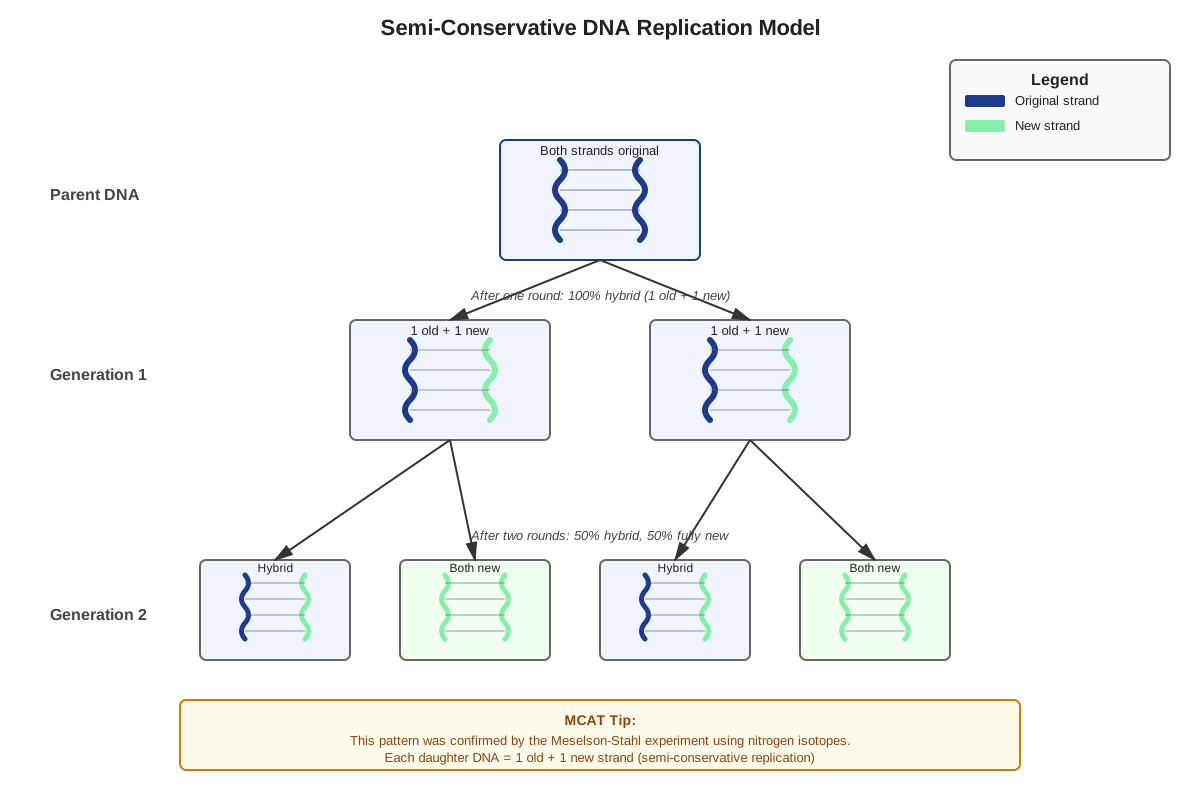
DNA replication is described as semi-conservative because each new DNA molecule consists of one original (parental) strand and one newly synthesized strand. This mechanism was elegantly demonstrated by the Meselson-Stahl experiment in 1958, which used nitrogen isotopes to track DNA through multiple generations. The semi-conservative model ensures that genetic information is preserved while allowing for the creation of two identical copies from one original molecule.
The process begins when the double helix unwinds and the two strands separate, with each serving as a template for synthesis of a complementary strand. The original base pairing rules (adenine with thymine, guanine with cytosine) ensure that the sequence is accurately copied. This template-directed synthesis is the fundamental principle underlying all DNA replication, and understanding it is crucial for the DNA replication overview Biology tested on the MCAT.
Replication Origins and Directionality
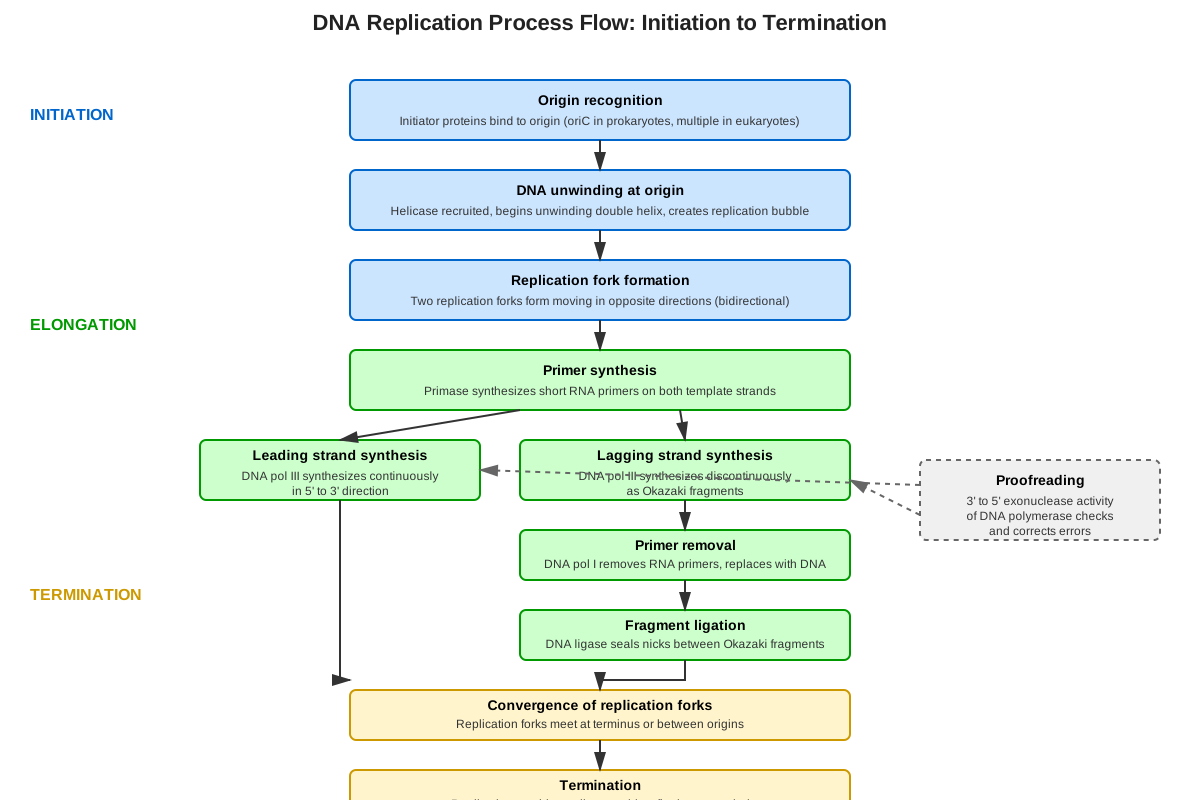
Replication origins are specific DNA sequences where replication begins. Prokaryotes typically have a single origin of replication (oriC in E. coli), while eukaryotes have multiple origins along each chromosome to speed up the replication of their much larger genomes. At each origin, the DNA strands separate to form a replication bubble with two replication forks that move in opposite directions.
A critical constraint is that DNA polymerases can only synthesize DNA in the 5' to 3' direction, adding nucleotides to the 3'-OH group of the growing strand. Because the two template strands are antiparallel (one runs 5' to 3' while the other runs 3' to 5'), this creates an asymmetry in how the two new strands are synthesized. This directionality constraint is one of the most frequently tested concepts in DNA replication overview MCAT questions.
Key Enzymes in DNA Replication
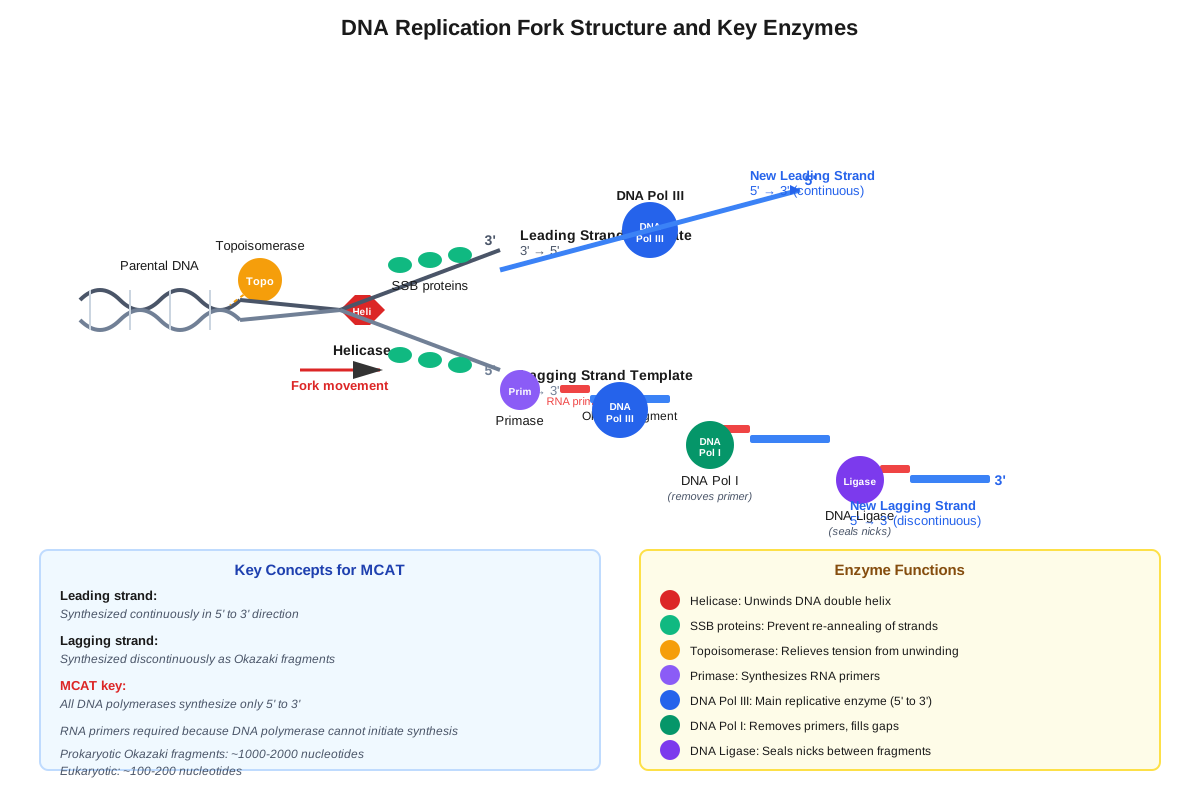
Multiple enzymes work in a coordinated fashion to accomplish DNA replication. Understanding each enzyme's specific function is essential for exam success.
| Enzyme | Primary Function | Key Details for MCAT |
|---|---|---|
| Helicase | Unwinds the double helix | Breaks hydrogen bonds between base pairs; creates replication fork |
| Single-strand binding proteins (SSB) | Stabilize separated strands | Prevent reannealing; keep template accessible |
| Topoisomerase (DNA gyrase) | Relieves tension ahead of fork | Prevents supercoiling; makes cuts and rejoins DNA |
| Primase | Synthesizes RNA primers | Creates short RNA sequences (~10 nucleotides) needed to start synthesis |
| DNA polymerase III (prokaryotes) | Main replicating enzyme | Adds nucleotides 5' to 3'; has 3' to 5' exonuclease activity (proofreading) |
| DNA polymerase I (prokaryotes) | Removes primers and fills gaps | Has 5' to 3' exonuclease activity; replaces RNA with DNA |
| DNA ligase | Seals nicks in backbone | Catalyzes phosphodiester bond formation between adjacent nucleotides |
In eukaryotes, DNA polymerase α (alpha) initiates synthesis, DNA polymerase δ (delta) synthesizes the lagging strand, and DNA polymerase ε (epsilon) synthesizes the leading strand. All DNA polymerases require a primer with a 3'-OH group to begin synthesis—they cannot start synthesis de novo.
Leading and Lagging Strand Synthesis
The antiparallel nature of DNA and the 5' to 3' synthesis constraint create two different modes of replication at each fork:
Leading strand synthesis occurs continuously in the same direction as the replication fork movement. Once primase creates a single RNA primer, DNA polymerase III can synthesize continuously, adding nucleotides to the 3' end as the fork opens.
Lagging strand synthesis occurs discontinuously in the direction opposite to fork movement. Multiple RNA primers are required, and DNA is synthesized in short segments called Okazaki fragments (approximately 1000-2000 nucleotides in prokaryotes, 100-200 in eukaryotes). Each Okazaki fragment is synthesized 5' to 3', but overall, the lagging strand is built in the opposite direction to fork movement.
The synthesis process on the lagging strand follows this sequence:
- Primase synthesizes an RNA primer
- DNA polymerase III extends the primer, creating an Okazaki fragment
- DNA polymerase III encounters the previous primer and dissociates
- DNA polymerase I removes the RNA primer using its 5' to 3' exonuclease activity
- DNA polymerase I fills the gap with DNA nucleotides
- DNA ligase seals the nick between adjacent Okazaki fragments
Proofreading and Fidelity
DNA replication is remarkably accurate, with an error rate of approximately one mistake per billion nucleotides. This high fidelity results from multiple mechanisms:
Complementary base pairing provides the initial selectivity, as correct base pairs form more stable hydrogen bonds. DNA polymerase selectivity ensures that only correctly paired nucleotides fit properly in the active site. Proofreading occurs through the 3' to 5' exonuclease activity of DNA polymerase III, which can detect and remove incorrectly paired nucleotides immediately after they are added. If the polymerase adds a wrong nucleotide, the distorted geometry is detected, the polymerase backs up, removes the incorrect nucleotide, and then continues forward with the correct one.
This proofreading mechanism is distinct from DNA repair mechanisms that fix errors after replication is complete. The MCAT may test the distinction between these processes or ask about the consequences of defective proofreading (increased mutation rates, cancer predisposition).
Prokaryotic vs. Eukaryotic Replication
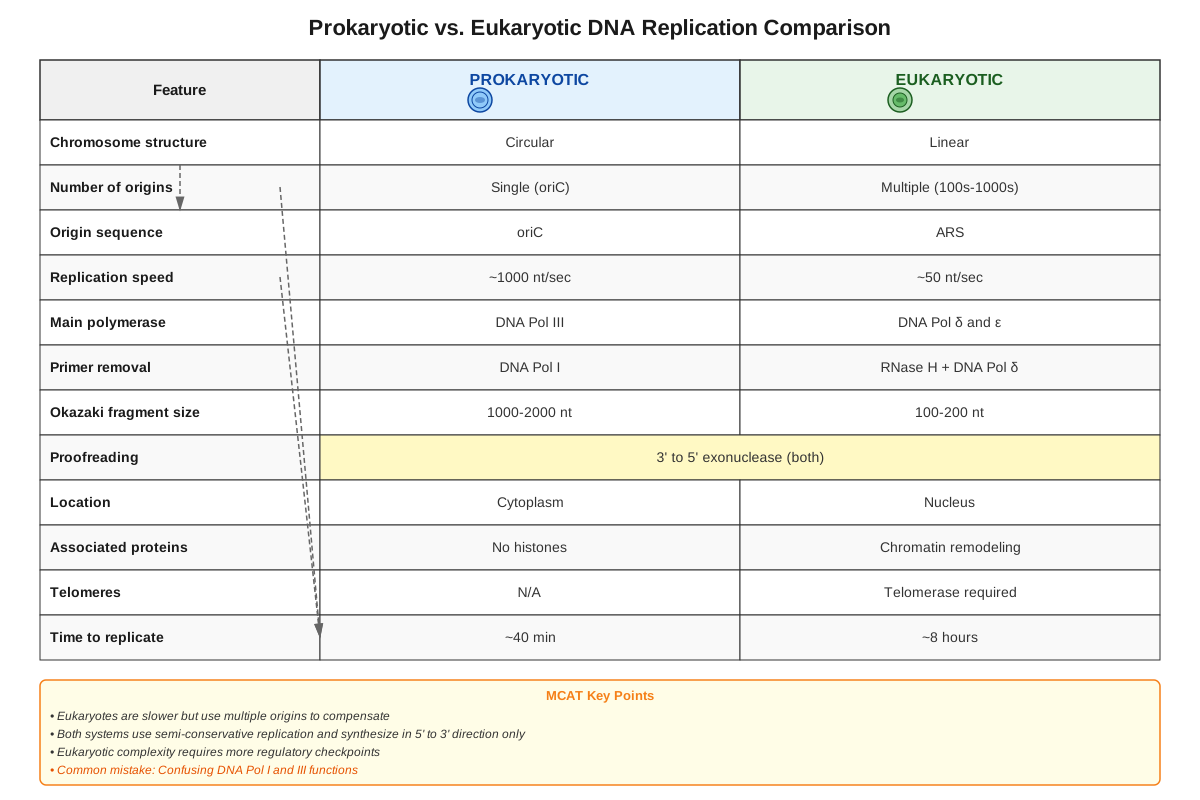
While the fundamental mechanism is conserved, several differences exist between prokaryotic and eukaryotic DNA replication:
Prokaryotic replication features:
- Single circular chromosome with one origin of replication
- Occurs continuously (no distinct S phase)
- Faster rate (~1000 nucleotides/second)
- DNA polymerase III as main enzyme
- Simpler process with fewer proteins involved
Eukaryotic replication features:
- Multiple linear chromosomes with multiple origins per chromosome
- Occurs during S phase of cell cycle
- Slower rate (~50 nucleotides/second)
- DNA polymerase δ and ε as main enzymes
- Associated with histones; requires chromatin remodeling
- Telomerase needed to replicate chromosome ends (telomeres)
The telomere problem arises because linear chromosomes cannot be completely replicated at their ends using standard replication machinery. Telomerase, a specialized reverse transcriptase with an RNA template, extends the 3' end of the lagging strand template, allowing complete replication. Telomerase is active in germ cells and stem cells but not most somatic cells, contributing to cellular aging.
Concept Relationships
The concepts within DNA replication form an integrated system where each component depends on others. Helicase creates the substrate (single-stranded DNA) that SSB proteins must stabilize, while simultaneously creating tension that topoisomerase must relieve. The separated strands serve as templates, but synthesis cannot begin until primase creates the RNA primers that provide the 3'-OH group required by DNA polymerases. The 5' to 3' directionality of polymerases necessitates the distinction between leading strand (continuous) and lagging strand (discontinuous) synthesis, which in turn requires the coordinated action of DNA polymerase I and DNA ligase to process Okazaki fragments.
This topic connects to prerequisite knowledge of DNA structure (the antiparallel double helix determines the need for different synthesis strategies on each strand) and nucleotide chemistry (understanding the 5' phosphate and 3' hydroxyl groups explains directionality). It also links forward to transcription (which also proceeds 5' to 3' and requires template reading), DNA repair (which uses some of the same enzymes), cell cycle regulation (replication must be completed before mitosis), and mutations (replication errors that escape proofreading become permanent changes).
Relationship map: DNA structure → determines template orientation → creates directionality constraint → necessitates leading/lagging strand distinction → requires multiple enzymes working in sequence → achieves semi-conservative replication → maintains genetic information → enables cell division → connects to cell cycle → relates to cancer when dysregulated
High-Yield Facts
⭐ DNA polymerases can only synthesize DNA in the 5' to 3' direction by adding nucleotides to the 3'-OH group of the growing strand
⭐ DNA polymerases require a primer (synthesized by primase) and cannot initiate synthesis de novo
⭐ Replication is semi-conservative: each new DNA molecule contains one original strand and one newly synthesized strand
⭐ The leading strand is synthesized continuously, while the lagging strand is synthesized discontinuously in Okazaki fragments
⭐ DNA polymerase III has 3' to 5' exonuclease activity for proofreading, allowing it to remove incorrectly paired nucleotides
- Helicase unwinds the double helix by breaking hydrogen bonds between base pairs
- Topoisomerase (DNA gyrase) prevents supercoiling ahead of the replication fork by making temporary cuts in the DNA backbone
- Single-strand binding proteins (SSB) prevent separated strands from reannealing before they can be replicated
- DNA polymerase I removes RNA primers and fills in gaps on the lagging strand using its 5' to 3' exonuclease activity
- DNA ligase seals the nicks between adjacent Okazaki fragments by catalyzing phosphodiester bond formation
- Eukaryotes have multiple origins of replication per chromosome, while prokaryotes typically have one origin
- Telomerase extends the 3' ends of linear chromosomes in eukaryotes, solving the end-replication problem
- The energy for adding nucleotides comes from cleaving the high-energy phosphate bonds of incoming nucleoside triphosphates (dNTPs)
Quick check — test yourself on DNA replication overview so far.
Try Flashcards →Common Misconceptions
Misconception: DNA polymerase can synthesize DNA in both directions (3' to 5' and 5' to 3').
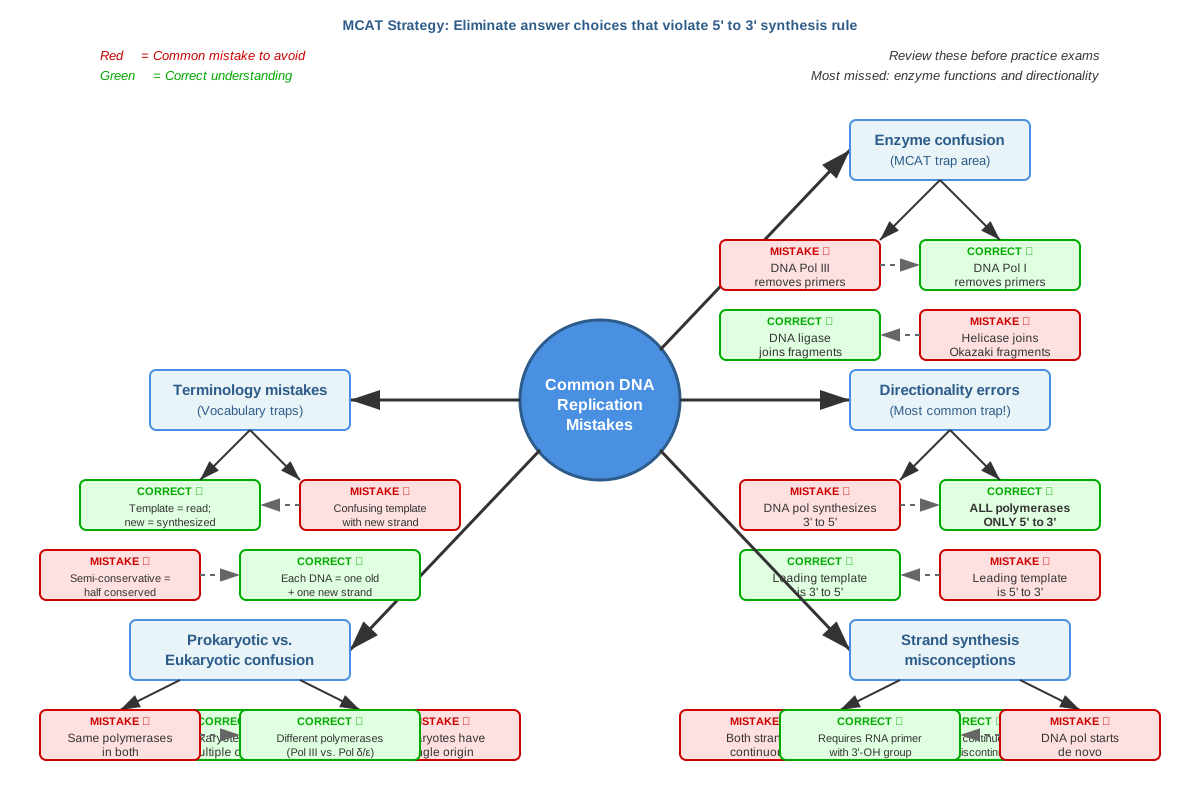
Correction: All DNA polymerases can only synthesize in the 5' to 3' direction. This unidirectional synthesis is due to the enzyme's mechanism, which adds nucleotides to the 3'-OH group. The apparent bidirectional movement of replication forks results from two polymerases working on opposite template strands, each synthesizing 5' to 3' but reading their templates in opposite directions.
Misconception: The leading strand and lagging strand refer to the template strands.
Correction: Leading and lagging refer to the newly synthesized strands, not the templates. The leading strand is the new strand synthesized continuously in the same direction as fork movement, while the lagging strand is the new strand synthesized discontinuously in the opposite direction to fork movement.
Misconception: DNA polymerase I is the main replicating enzyme in prokaryotes.
Correction: DNA polymerase III is the main replicating enzyme in prokaryotes, responsible for synthesizing the majority of both leading and lagging strands. DNA polymerase I has a specialized role in removing RNA primers and filling in the resulting gaps on the lagging strand.
Misconception: Okazaki fragments are found on both the leading and lagging strands.
Correction: Okazaki fragments are only found on the lagging strand. The leading strand is synthesized continuously as one long piece, requiring only a single primer at the origin. The lagging strand requires multiple primers and is therefore synthesized as multiple short fragments.
Misconception: Helicase and topoisomerase perform the same function.
Correction: Helicase unwinds the double helix by breaking hydrogen bonds between base pairs at the replication fork. Topoisomerase relieves the tension and supercoiling that builds up ahead of the fork as a result of unwinding. Helicase creates local strand separation, while topoisomerase prevents global structural problems in the DNA molecule.
Misconception: Proofreading and DNA repair are the same process.
Correction: Proofreading occurs during replication through the 3' to 5' exonuclease activity of DNA polymerase, immediately correcting errors as they occur. DNA repair mechanisms (like mismatch repair, base excision repair, and nucleotide excision repair) fix errors after replication is complete or repair damage from environmental sources. Proofreading is part of the replication machinery itself, while repair involves separate enzyme systems.
Misconception: RNA primers remain in the final DNA molecule.
Correction: All RNA primers are removed and replaced with DNA. On the lagging strand, DNA polymerase I removes each primer using its 5' to 3' exonuclease activity and fills the gap with DNA nucleotides. DNA ligase then seals the remaining nick. The final product contains only DNA nucleotides.
Worked Examples
Example 1: Analyzing Replication Fork Movement
Question: A researcher labels newly synthesized DNA with radioactive nucleotides during one round of replication. At a single replication fork, she observes that one strand shows continuous labeling extending from the origin, while the other strand shows multiple short labeled segments. Additionally, she finds short RNA sequences associated only with the strand showing segmented labeling. Explain these observations using your knowledge of DNA replication.
Solution:
Step 1: Identify what the continuous labeling represents
The continuously labeled strand is the leading strand. It shows continuous labeling because it is synthesized continuously in the 5' to 3' direction, the same direction as the replication fork movement. Once primase creates a single RNA primer at the origin, DNA polymerase III can synthesize this strand without interruption.
Step 2: Identify what the segmented labeling represents
The strand with multiple short labeled segments is the lagging strand. It shows segmented labeling because it is synthesized discontinuously as Okazaki fragments. Each fragment is synthesized 5' to 3', but because the overall direction is opposite to fork movement, multiple fragments are needed.
Step 3: Explain the RNA sequences
The short RNA sequences are primers synthesized by primase. They are found only on the lagging strand because each Okazaki fragment requires its own primer to initiate synthesis. The leading strand requires only one primer at the origin, which would have been synthesized before the observation period. These RNA primers will eventually be removed by DNA polymerase I and replaced with DNA nucleotides.
Step 4: Connect to learning objectives
This example demonstrates the semi-conservative nature of replication, the 5' to 3' directionality constraint, the distinction between leading and lagging strand synthesis, and the roles of primase and DNA polymerase. It shows how experimental observations can be interpreted using knowledge of replication mechanisms—a common MCAT question format.
Example 2: Predicting Consequences of Enzyme Defects
Question: A mutation in E. coli eliminates the 3' to 5' exonuclease activity of DNA polymerase III while leaving its polymerase activity intact. What would be the most likely consequence for the cell? A second mutation eliminates the 5' to 3' exonuclease activity of DNA polymerase I while leaving its polymerase activity intact. What would be the consequence of this second mutation?
Solution:
Step 1: Recall the function of DNA polymerase III's 3' to 5' exonuclease activity
The 3' to 5' exonuclease activity provides proofreading capability. When DNA polymerase III adds an incorrect nucleotide, the distorted geometry is detected, and the enzyme uses its 3' to 5' exonuclease activity to remove the mismatched nucleotide before continuing synthesis.
Step 2: Predict the consequence of losing this activity
Without proofreading, DNA polymerase III would still synthesize DNA (polymerase activity intact), but it could not correct errors immediately. This would result in a dramatically increased mutation rate—approximately 100-1000 times higher than normal. The cell would accumulate mutations rapidly, potentially leading to cell death or, if the cell survives, increased cancer risk in multicellular organisms.
Step 3: Recall the function of DNA polymerase I's 5' to 3' exonuclease activity
DNA polymerase I uses its 5' to 3' exonuclease activity to remove RNA primers on the lagging strand. After removing each primer, it uses its polymerase activity to fill the gap with DNA nucleotides.
Step 4: Predict the consequence of losing this activity
Without 5' to 3' exonuclease activity, DNA polymerase I could not remove RNA primers. The polymerase activity alone cannot fill gaps that still contain RNA. This would result in RNA sequences remaining in the final DNA molecule, creating structural abnormalities. The cell would likely be unable to complete replication properly, leading to cell death. Even if some replication occurred, the RNA-DNA hybrid molecules would be unstable and subject to degradation.
Step 5: Compare the two scenarios
The first mutation (loss of proofreading) would allow replication to complete but with many errors. The second mutation (loss of primer removal) would prevent proper completion of replication. This demonstrates that different enzymatic activities serve different essential functions in the replication process.
Exam Strategy
Approaching DNA Replication Questions: When encountering a DNA replication question, first identify whether it's asking about (1) enzyme function, (2) directionality and strand synthesis, (3) the order of events, or (4) differences between prokaryotes and eukaryotes. Many questions can be answered by carefully considering the 5' to 3' directionality constraint and working through the logical consequences.
Trigger Words and Phrases: Watch for these key terms that signal specific concepts:
- "5' to 3'" or "3' to 5'" → directionality of synthesis or exonuclease activity
- "Continuous" vs. "discontinuous" → leading vs. lagging strand
- "Primer" → think about primase and the inability of DNA polymerase to start de novo
- "Okazaki fragments" → lagging strand synthesis
- "Proofreading" → 3' to 5' exonuclease activity of DNA polymerase III
- "Supercoiling" or "tension" → topoisomerase function
- "Unwinding" → helicase function
- "Sealing" or "joining" → DNA ligase function
Process of Elimination Tips: When unsure, eliminate answers that violate fundamental principles:
- Eliminate any answer suggesting DNA polymerase synthesizes 3' to 5'
- Eliminate answers that place Okazaki fragments on the leading strand
- Eliminate answers suggesting DNA polymerase can start synthesis without a primer
- Eliminate answers that confuse the functions of different polymerases (e.g., saying DNA polymerase I is the main replicating enzyme)
Time Allocation: DNA replication questions are typically straightforward if you know the material. Allocate 60-90 seconds for discrete questions. For passage-based questions, spend time understanding the experimental setup (especially if it involves labeling or tracking DNA), then answer questions systematically. Don't get bogged down trying to visualize complex replication scenarios—draw a quick diagram if needed, marking 5' and 3' ends clearly.
Exam Tip: If a question asks about the consequence of an enzyme defect, think about what step would be blocked and what would happen to the replication process at that point. The MCAT loves questions that test whether you understand not just what enzymes do, but why each step is necessary.
Memory Techniques
Mnemonic for Enzyme Order: "Happy Students Take Practice Problems Like Pros"
- Helicase (unwinds)
- SSB proteins (stabilize)
- Topoisomerase (relieves tension)
- Primase (makes primer)
- Polymerase III (main synthesis)
- Ligase (seals)
- Polymerase I (removes primers - actually works during synthesis, not after)
Directionality Visualization: Remember "polymerase adds to the FREE 3' end" - the 3' end has a free hydroxyl group that can attack the incoming nucleotide's phosphate. Visualize the polymerase as a train that can only move forward (5' to 3'), adding cars (nucleotides) to the back of the train (3' end).
Leading vs. Lagging: "Leading is Long and continuous" (both start with L). "Lagging has Lots of fragments" (both start with L, but this one emphasizes multiple pieces).
Okazaki Fragment Location: "Okazaki fragments are On the Opposite strand" (opposite to the direction of fork movement, which is the lagging strand).
Polymerase Functions:
- Polymerase III = 3 main functions (synthesis, proofreading, main enzyme) = 3 is the main number
- Polymerase I = 1 specialized job (cleanup: remove primers and fill gaps) = 1 is the specialist
Exonuclease Directions:
- 3' to 5' exonuclease = proofreading = goes backward to check work (3' to 5' is backward relative to synthesis direction)
- 5' to 3' exonuclease = primer removal = goes forward to clear the way (5' to 3' is forward, same as synthesis direction)
Summary
DNA replication is the semi-conservative process by which cells duplicate their genetic material, with each new DNA molecule containing one original strand and one newly synthesized strand. The process requires multiple enzymes working in coordination: helicase unwinds the double helix, SSB proteins stabilize separated strands, topoisomerase relieves tension, primase synthesizes RNA primers, DNA polymerase III performs the main synthesis, DNA polymerase I removes primers and fills gaps, and DNA ligase seals nicks. The fundamental constraint that DNA polymerases can only synthesize 5' to 3' creates an asymmetry at the replication fork, resulting in continuous leading strand synthesis and discontinuous lagging strand synthesis in Okazaki fragments. Proofreading by the 3' to 5' exonuclease activity of DNA polymerase III ensures high fidelity. Understanding these mechanisms, the specific roles of each enzyme, and the differences between prokaryotic and eukaryotic replication is essential for MCAT success, as this topic appears frequently in both discrete questions and experimental passages testing application of these principles.
Key Takeaways
- DNA replication is semi-conservative, with each new molecule containing one original and one new strand
- DNA polymerases can only synthesize 5' to 3' and require a primer to begin synthesis
- The leading strand is synthesized continuously, while the lagging strand is synthesized discontinuously as Okazaki fragments
- DNA polymerase III is the main replicating enzyme with 3' to 5' exonuclease proofreading activity
- DNA polymerase I removes RNA primers using 5' to 3' exonuclease activity and fills gaps; DNA ligase seals remaining nicks
- Multiple enzymes work sequentially: helicase unwinds, SSB stabilizes, topoisomerase relieves tension, primase creates primers, polymerases synthesize, and ligase seals
- Eukaryotes have multiple origins of replication and use telomerase to replicate chromosome ends
Related Topics
DNA Repair Mechanisms: After mastering replication, study how cells fix errors that escape proofreading and repair damage from environmental sources. This includes mismatch repair, base excision repair, nucleotide excision repair, and double-strand break repair. Understanding replication provides the foundation for understanding what constitutes "normal" DNA that repair mechanisms restore.
Transcription: Like replication, transcription involves reading a DNA template and synthesizing a complementary strand (RNA instead of DNA). Both processes proceed 5' to 3', but transcription has key differences including the use of RNA polymerase, the production of single-stranded RNA, and the transcription of only specific genes rather than the entire genome.
Cell Cycle Regulation: DNA replication occurs during S phase and must be completed before mitosis. Study how checkpoints ensure replication is complete and accurate, and how dysregulation of these checkpoints contributes to cancer.
Mutations and Mutagenesis: Replication errors that escape proofreading and repair become permanent mutations. Understanding replication helps explain how different types of mutations arise and why certain sequences are mutation hotspots.
PCR and Biotechnology Applications: Polymerase chain reaction exploits the principles of DNA replication to amplify specific DNA sequences in vitro. Understanding natural replication makes PCR mechanisms intuitive.
Practice CTA
Now that you've mastered the core concepts of DNA replication, it's time to solidify your understanding through active practice. Work through the practice questions to test your ability to apply these concepts in exam-style scenarios. Use the flashcards to reinforce enzyme functions, directionality rules, and the sequence of events. Remember, the MCAT rewards not just knowledge but the ability to apply that knowledge under time pressure—practice is what builds that skill. You've built a strong foundation; now strengthen it through repetition and application. Every practice question you work through increases your confidence and speed for test day!
Sign up free to keep reading
Create a free AnvayaPrep account to finish this MCAT guide on DNA replication overview — plus flashcards and practice questions.