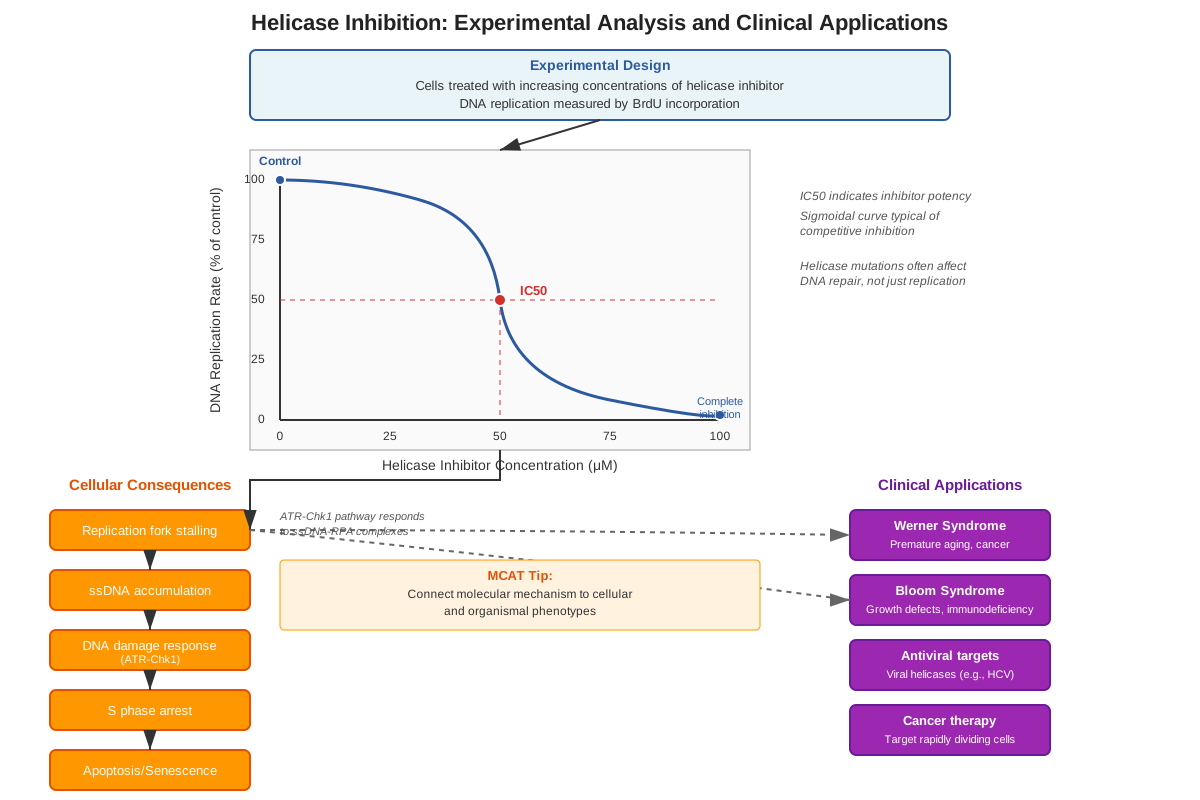
Overview
Helicase is a critical enzyme in Molecular Biology and Genetics that plays an indispensable role in DNA replication, repair, and transcription. This motor protein uses energy from ATP hydrolysis to unwind the double-stranded DNA helix, separating the two complementary strands and making them accessible for various cellular processes. Understanding helicase function is fundamental to comprehending how genetic information is duplicated and maintained across cell divisions, making it a high-yield topic for the MCAT.
For the MCAT, helicase represents a cornerstone concept that bridges multiple areas of Biology, including enzyme kinetics, energy metabolism, and the central dogma of molecular biology. Questions involving helicase frequently appear in passages discussing DNA replication mechanisms, genetic mutations, or experimental techniques that manipulate DNA. The MCAT tests not only factual knowledge about helicase structure and function but also the ability to apply this understanding to novel experimental scenarios and clinical contexts.
Mastery of helicase biology connects directly to broader themes in cellular and molecular biology. The enzyme's mechanism illustrates fundamental principles of protein-nucleic acid interactions, ATP-dependent conformational changes, and the coordination of multiple enzymes in complex biological processes. Understanding helicase provides the foundation for comprehending related topics such as DNA polymerase function, topoisomerase activity, primase function, and the overall architecture of the replication fork—all testable concepts on the MCAT.
Learning Objectives
- [ ] Define Helicase using accurate Biology terminology
- [ ] Explain why Helicase matters for the MCAT
- [ ] Apply Helicase to exam-style questions
- [ ] Identify common mistakes related to Helicase
- [ ] Connect Helicase to related Biology concepts
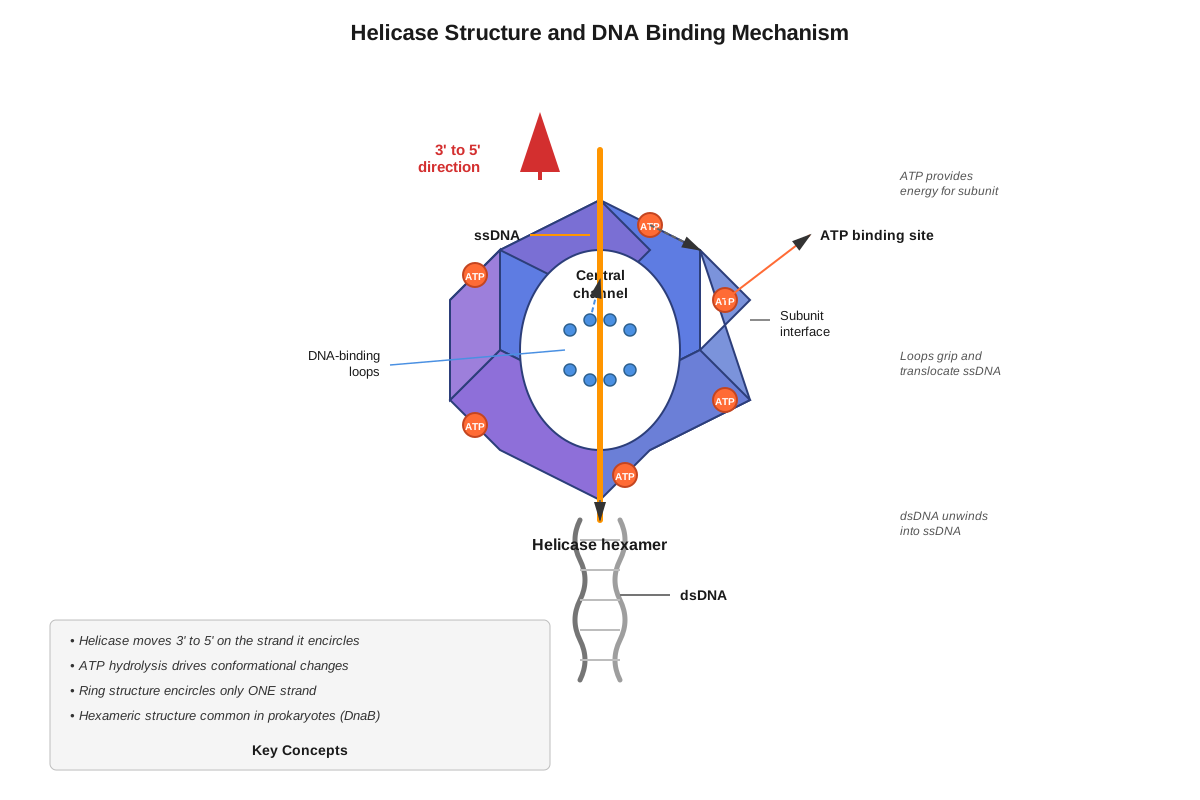
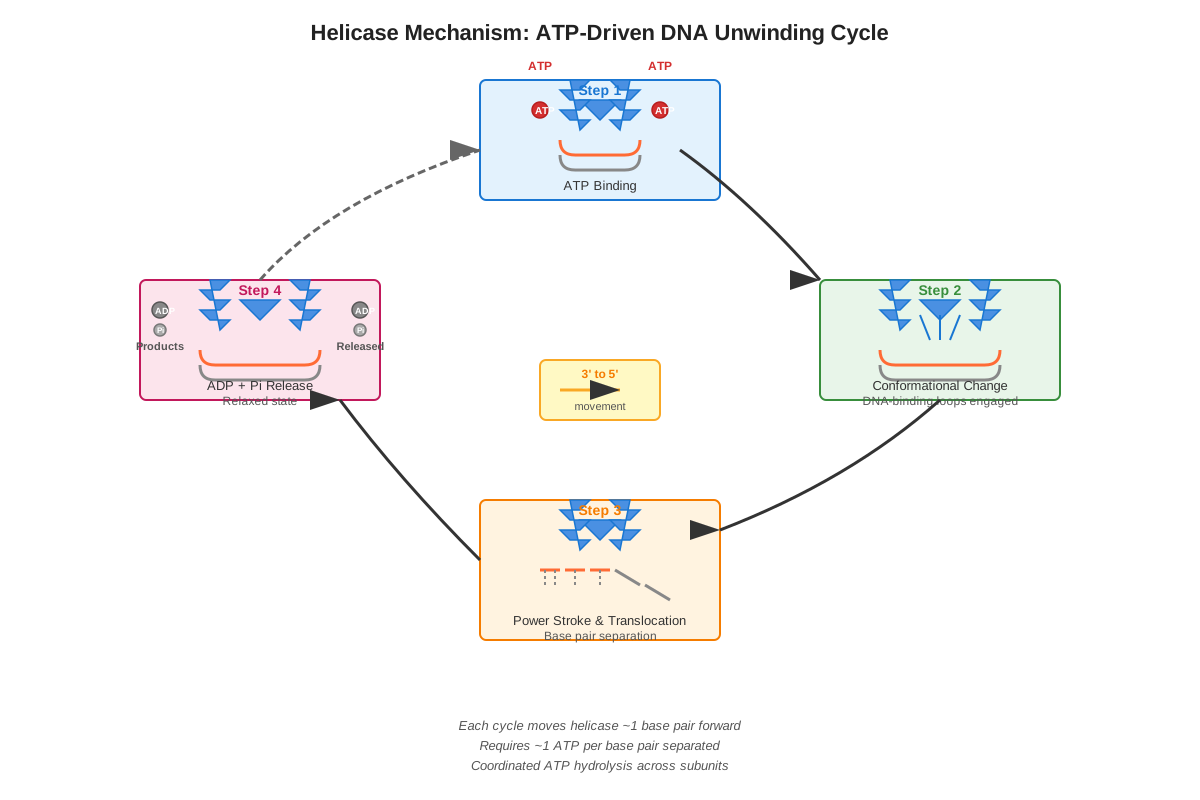
- [ ] Describe the mechanism by which helicase unwinds DNA using ATP hydrolysis
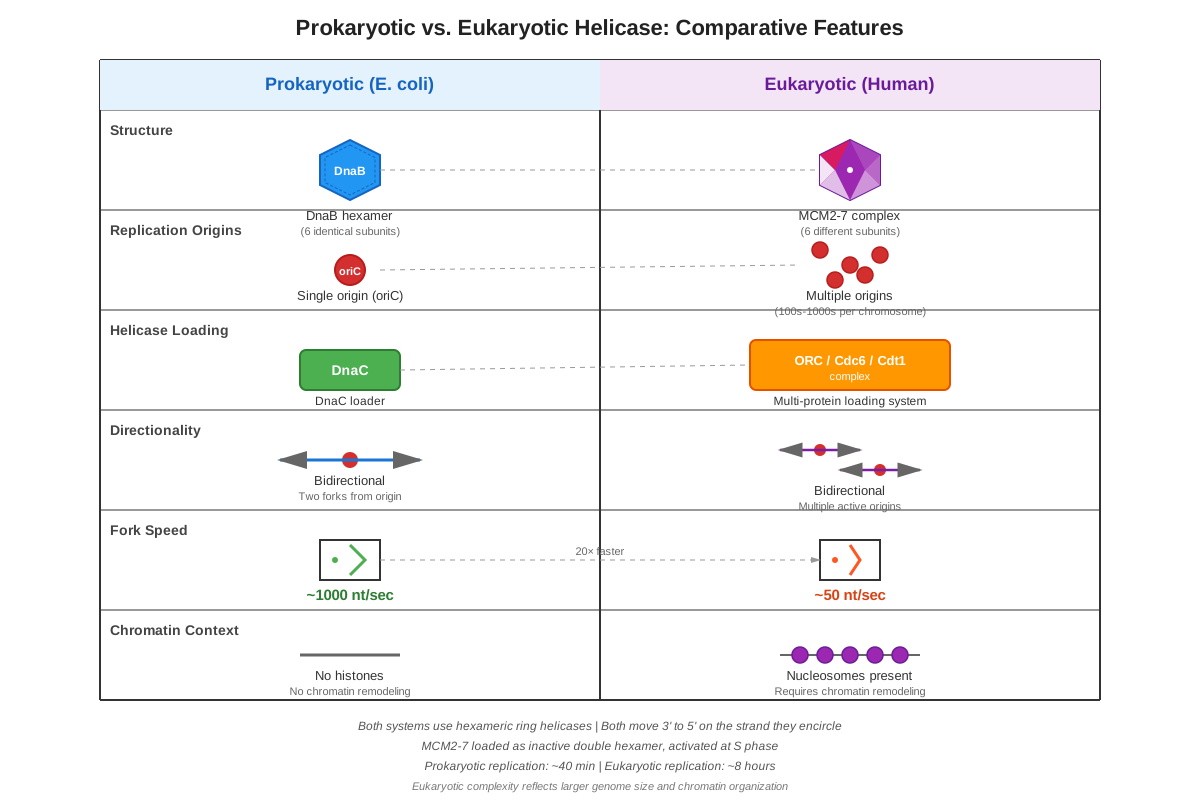
- [ ] Compare and contrast helicase function in prokaryotic versus eukaryotic DNA replication
- [ ] Analyze experimental data involving helicase inhibition and predict cellular consequences
Prerequisites
- DNA structure and base pairing: Understanding the antiparallel double helix structure is essential because helicase must disrupt hydrogen bonds between complementary base pairs
- ATP structure and hydrolysis: Helicase is an ATP-dependent enzyme, requiring knowledge of how ATP provides energy for conformational changes
- Basic enzyme function: Familiarity with enzyme-substrate interactions helps explain how helicase binds to and processes DNA
- DNA replication overview: General knowledge of semiconservative replication provides context for where helicase functions in the overall process
- Hydrogen bonding: Understanding the forces holding DNA strands together clarifies what helicase must overcome to separate strands
Why This Topic Matters
Clinical and Real-World Significance
Helicase dysfunction has profound clinical implications. Mutations in helicase genes cause several human diseases, including Werner syndrome (premature aging), Bloom syndrome (cancer predisposition and growth defects), and Xeroderma pigmentosum (extreme UV sensitivity and skin cancer risk). These conditions demonstrate that proper helicase function is essential not only for DNA replication but also for DNA repair mechanisms that protect genomic integrity. Additionally, helicases serve as targets for antiviral and anticancer therapies, as rapidly dividing cells and replicating viruses depend heavily on helicase activity.
MCAT Exam Statistics
Helicase appears in approximately 15-20% of MCAT passages involving molecular biology, making it a medium-to-high yield topic. Questions typically test understanding of helicase's role in the replication fork, its energy requirements, and its coordination with other replication enzymes. The MCAT frequently presents experimental scenarios where helicase is inhibited or mutated, requiring students to predict downstream effects on DNA replication or cell division.
Common Exam Presentation Formats
On the MCAT, helicase commonly appears in: (1) passage-based questions describing novel experimental manipulations of DNA replication machinery, (2) discrete questions testing knowledge of replication fork components, (3) research passages investigating helicase mutations and their phenotypic consequences, and (4) questions requiring integration of helicase function with other molecular processes like transcription or repair. Students must be prepared to analyze graphs showing replication rates under various conditions and interpret data from helicase inhibition experiments.
Core Concepts
Definition and Basic Function
Helicase is an ATP-dependent motor protein enzyme that catalyzes the unwinding of double-stranded nucleic acids (primarily DNA, but some helicases act on RNA). The enzyme binds to DNA and uses energy derived from ATP hydrolysis to break the hydrogen bonds between complementary base pairs, thereby separating the two strands of the double helix. This unwinding creates single-stranded DNA templates that are essential for DNA replication, transcription, repair, and recombination processes.
Helicases belong to a superfamily of enzymes characterized by conserved sequence motifs involved in nucleotide binding and hydrolysis. These enzymes function as molecular motors, converting chemical energy into mechanical work. The unwinding activity creates replication forks—Y-shaped structures where the double helix is actively being separated—and maintains these structures throughout the replication process.
Mechanism of Action
The helicase mechanism involves several coordinated steps:
- DNA binding: Helicase recognizes and binds to single-stranded or double-stranded DNA at specific sites, often at replication origins or existing single-strand regions
- ATP binding: ATP molecules bind to specific sites on the helicase protein, inducing conformational changes
- Strand separation: The enzyme uses ATP hydrolysis energy to disrupt hydrogen bonds between base pairs, physically separating the two DNA strands
- Translocation: Helicase moves along the DNA in a directional manner (either 3' to 5' or 5' to 3' depending on the specific helicase)
- Processivity: The enzyme continues unwinding DNA in a processive manner, meaning it remains attached and continues activity without dissociating
The directionality of helicase movement is crucial. In prokaryotes, the primary replicative helicase (DnaB in E. coli) moves 5' to 3' on the lagging strand template. In eukaryotes, the MCM2-7 complex serves as the replicative helicase and encircles double-stranded DNA, moving along both strands simultaneously.
Energy Requirements
Helicase activity is strictly ATP-dependent. Each cycle of strand separation requires ATP hydrolysis, with the enzyme typically hydrolyzing one ATP molecule per base pair separated (though this ratio varies among different helicases). The energy from ATP hydrolysis drives conformational changes in the helicase protein that physically push the DNA strands apart.
Without ATP, helicase cannot function, and DNA replication halts. This energy dependence makes helicase activity a rate-limiting step in replication under conditions of cellular energy depletion. The coupling of ATP hydrolysis to mechanical work exemplifies how cells use chemical energy to perform essential biological functions.
Structural Features
Most replicative helicases function as hexameric ring structures—six protein subunits arranged in a ring that encircles DNA. This ring structure allows the helicase to remain attached to DNA while moving along it, contributing to processivity. The central channel of the ring accommodates single-stranded or double-stranded DNA depending on the specific helicase type.
Key structural domains include:
- ATP-binding domains: Contain conserved Walker A and Walker B motifs for nucleotide binding and hydrolysis
- DNA-binding domains: Interact with the sugar-phosphate backbone and bases
- Oligomerization domains: Enable subunit-subunit interactions in multimeric helicases
Helicase in DNA Replication
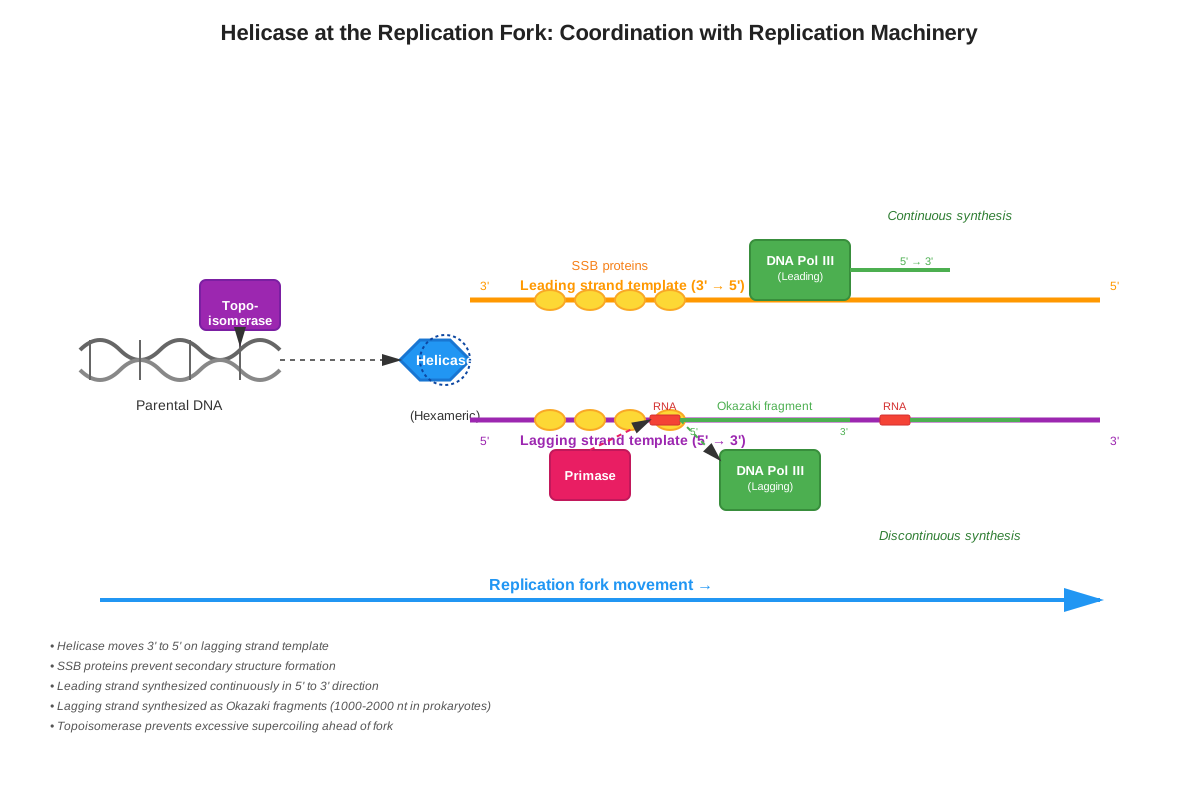
During DNA replication, helicase functions at the replication fork, the site where DNA synthesis actively occurs. The enzyme works in coordination with several other proteins:
| Protein | Function | Relationship to Helicase |
|---|---|---|
| Single-strand binding proteins (SSB/RPA) | Stabilize unwound single-stranded DNA | Bind immediately behind helicase to prevent reannealing |
| Primase | Synthesizes RNA primers | Often physically associated with helicase in the primosome |
| DNA polymerase | Synthesizes new DNA strands | Uses templates created by helicase unwinding |
| Topoisomerase | Relieves tension from unwinding | Works ahead of helicase to prevent supercoiling |
The coordination between helicase and these proteins ensures efficient and accurate DNA replication. Helicase creates the substrate (single-stranded DNA) that all other replication machinery requires.
Prokaryotic vs. Eukaryotic Helicases
Prokaryotic helicases (exemplified by DnaB in E. coli):
- Form hexameric rings
- Load at a single replication origin
- Move 5' to 3' on the lagging strand template
- Part of the primosome complex with primase
- Relatively simple regulation
Eukaryotic helicases (primarily the MCM2-7 complex):
- Form hexameric rings from six different but related subunits
- Load at multiple replication origins across chromosomes
- Require additional regulatory proteins (CDC45, GINS) for activation
- Subject to cell cycle checkpoint control
- More complex regulation reflecting the complexity of eukaryotic genome replication
Helicase in Other Processes
Beyond replication, helicases participate in:
- Transcription: RNA polymerase has helicase activity to open the DNA template
- DNA repair: Specialized helicases unwind damaged DNA for repair enzyme access
- Recombination: Helicases facilitate strand exchange during homologous recombination
- Telomere maintenance: Specific helicases help resolve telomeric structures
- RNA processing: RNA helicases unwind secondary structures in RNA molecules
Concept Relationships
Helicase function is intimately connected to multiple molecular biology concepts. The enzyme's ATP-dependent activity links to cellular energetics and the role of ATP as the universal energy currency. The unwinding mechanism directly relates to DNA structure, specifically the hydrogen bonding between complementary bases that helicase must disrupt.
Within DNA replication, helicase serves as the initiating activity that enables all subsequent steps: Helicase unwinding → SSB/RPA binding → Primase synthesis of RNA primers → DNA polymerase extension. This sequential relationship means that helicase dysfunction prevents the entire replication process.
The relationship between helicase and topoisomerase illustrates how cells solve mechanical problems in DNA metabolism. As helicase unwinds the double helix, it creates positive supercoiling (overwinding) ahead of the replication fork. Topoisomerase relieves this tension by temporarily breaking and rejoining DNA strands, demonstrating how multiple enzymes cooperate to solve problems created by DNA's helical structure.
Helicase also connects to cell cycle regulation. In eukaryotes, helicase loading and activation are tightly controlled checkpoints. The MCM2-7 complex loads onto chromatin during G1 phase but only becomes activated at the G1/S transition, ensuring replication occurs only once per cell cycle. This connection links molecular enzyme function to broader cellular regulation.
Understanding helicase provides foundation for comprehending mutation mechanisms. Helicase defects can lead to replication fork stalling, which increases mutation rates and chromosomal instability—concepts frequently tested on the MCAT in the context of cancer biology and genetic disease.
High-Yield Facts
⭐ Helicase is an ATP-dependent enzyme that unwinds double-stranded DNA by breaking hydrogen bonds between complementary base pairs
⭐ Helicase moves directionally along DNA (5' to 3' or 3' to 5' depending on the specific enzyme) and functions at the replication fork
⭐ Single-strand binding proteins (SSB in prokaryotes, RPA in eukaryotes) immediately bind DNA behind helicase to prevent strand reannealing
⭐ Helicase activity creates tension in DNA that is relieved by topoisomerase enzymes
⭐ In prokaryotes, DnaB helicase is the primary replicative helicase; in eukaryotes, the MCM2-7 complex serves this function
- Helicase functions as a hexameric ring structure that encircles DNA, contributing to its processivity
- ATP hydrolysis by helicase is coupled to conformational changes that physically separate DNA strands
- Helicase mutations cause human diseases including Werner syndrome, Bloom syndrome, and Xeroderma pigmentosum
- Helicase works in coordination with primase in the primosome complex to initiate Okazaki fragment synthesis on the lagging strand
- Different helicases exist for DNA replication, repair, recombination, and transcription, each with specialized functions
- Helicase inhibitors are being developed as anticancer and antiviral therapeutic agents
- The rate of helicase unwinding (approximately 1000 base pairs per second in prokaryotes) is a major determinant of overall replication speed
Quick check — test yourself on Helicase so far.
Try Flashcards →Common Misconceptions
Misconception: Helicase breaks phosphodiester bonds in the DNA backbone to separate strands
Correction: Helicase breaks only the hydrogen bonds between complementary base pairs; the sugar-phosphate backbone remains intact. Breaking phosphodiester bonds would fragment DNA and is the function of nucleases, not helicase.
Misconception: Helicase works independently and doesn't require other proteins for DNA replication
Correction: Helicase functions as part of a coordinated replication machinery. It requires SSB/RPA proteins to stabilize unwound DNA, topoisomerase to relieve tension, and works in complex with primase. Isolated helicase activity would be inefficient and non-productive.
Misconception: All helicases move in the same direction along DNA
Correction: Different helicases have different directional preferences. Some move 5' to 3' while others move 3' to 5' relative to the strand they're tracking. The directionality depends on the specific helicase and its cellular function.
Misconception: Helicase only functions during DNA replication
Correction: While replicative helicases are crucial for DNA synthesis, specialized helicases also function in transcription, DNA repair, recombination, telomere maintenance, and RNA processing. Cells contain multiple different helicases with distinct roles.
Misconception: Helicase can function without energy input
Correction: Helicase is strictly ATP-dependent. Unwinding the stable DNA double helix is thermodynamically unfavorable and requires energy input from ATP hydrolysis. Without ATP, helicase cannot perform its unwinding function.
Misconception: Helicase and DNA polymerase are the same enzyme
Correction: These are distinct enzymes with different functions. Helicase unwinds DNA to create single-stranded templates, while DNA polymerase synthesizes new DNA strands using those templates. They work sequentially but are separate proteins with different mechanisms.
Worked Examples
Example 1: Experimental Helicase Inhibition
Question: Researchers treat cells with a compound that specifically inhibits helicase activity but does not affect other replication enzymes. They then examine DNA replication using radioactive nucleotide incorporation. What would be the expected result?
Analysis:
Let's work through this systematically by considering what helicase does and what happens when it's inhibited.
Step 1: Identify helicase's role
- Helicase unwinds double-stranded DNA at the replication fork
- This unwinding creates single-stranded DNA templates
- These templates are necessary for DNA polymerase to synthesize new strands
Step 2: Consider the consequence of helicase inhibition
- Without helicase activity, the DNA double helix cannot be unwound
- No single-stranded templates are available
- DNA polymerase cannot synthesize new DNA without templates
Step 3: Predict the experimental outcome
- Radioactive nucleotide incorporation measures new DNA synthesis
- Without helicase, DNA polymerase cannot function
- Therefore, radioactive nucleotide incorporation would be dramatically reduced or absent
Step 4: Consider partial effects
- Any DNA synthesis observed would be from:
- Replication forks that were already established before inhibitor addition
- These would complete only short stretches before stalling
- No new replication forks could form
Answer: Radioactive nucleotide incorporation would be severely reduced or eliminated because helicase inhibition prevents the unwinding necessary to create single-stranded DNA templates for DNA polymerase. Any residual incorporation would represent completion of already-initiated replication forks.
Connection to Learning Objectives: This example demonstrates application of helicase knowledge to experimental scenarios (LO: Apply Helicase to exam-style questions) and illustrates the connection between helicase and DNA polymerase function (LO: Connect Helicase to related Biology concepts).
Example 2: Mutation Analysis
Question: A mutation in the ATP-binding domain of helicase reduces ATP hydrolysis rate by 80% but doesn't eliminate it completely. The mutation doesn't affect DNA binding. What would be the predicted effect on DNA replication, and how might cells compensate?
Analysis:
Step 1: Understand the mutation's molecular effect
- ATP hydrolysis provides energy for helicase's unwinding activity
- 80% reduction means helicase retains only 20% of normal ATP hydrolysis
- DNA binding is unaffected, so helicase can still attach to DNA
Step 2: Predict the effect on helicase function
- Reduced ATP hydrolysis means slower conformational changes
- Helicase would unwind DNA more slowly
- The enzyme would still be processive (stays attached) but less efficient
Step 3: Consider effects on overall replication
- Replication fork progression would slow significantly
- This would increase the time required for S phase
- Slower replication increases risk of fork stalling and collapse
Step 4: Identify potential cellular compensations
- Cells might increase helicase protein expression to compensate with more enzyme molecules
- Additional replication origins might be activated (in eukaryotes)
- Cell cycle checkpoints might extend S phase duration
- However, these compensations would be incomplete
Step 5: Consider clinical implications
- This scenario resembles actual helicase mutations in human diseases
- Incomplete compensation leads to replication stress
- Increased mutation rates and genomic instability would result
- Phenotypes might include growth defects and cancer predisposition
Answer: The mutation would significantly slow DNA replication by reducing helicase unwinding rate. Cells might partially compensate by increasing helicase expression or activating additional origins, but replication would remain slower than normal, leading to extended S phase, replication stress, and increased genomic instability.
Connection to Learning Objectives: This example integrates understanding of helicase mechanism with energy requirements (LO: Describe the mechanism by which helicase unwinds DNA using ATP hydrolysis) and demonstrates analysis of experimental data involving helicase mutations (LO: Analyze experimental data involving helicase inhibition and predict cellular consequences).
Exam Strategy
Approaching MCAT Questions on Helicase
When encountering helicase questions on the MCAT, follow this systematic approach:
- Identify the context: Determine whether the question involves replication, repair, transcription, or an experimental manipulation
- Map the process: Mentally visualize the replication fork and where helicase functions relative to other enzymes
- Consider energy: Remember that helicase is ATP-dependent; questions often test understanding of this requirement
- Think sequentially: Helicase acts before DNA polymerase; disrupting helicase prevents downstream events
Trigger Words and Phrases
Watch for these key terms that signal helicase involvement:
- "Unwinding" or "unwinds the double helix"
- "Replication fork"
- "ATP-dependent" in the context of DNA metabolism
- "Separates DNA strands"
- "Breaks hydrogen bonds between base pairs"
- "Processivity" in replication contexts
- Disease names: Werner syndrome, Bloom syndrome, Xeroderma pigmentosum
Process of Elimination Tips
When using POE on helicase questions:
- Eliminate answers suggesting helicase breaks phosphodiester bonds (it breaks hydrogen bonds only)
- Eliminate answers suggesting helicase works without ATP (it's strictly ATP-dependent)
- Eliminate answers confusing helicase with DNA polymerase (different enzymes, different functions)
- Eliminate answers suggesting helicase synthesizes DNA (it only unwinds; polymerase synthesizes)
- For directionality questions, remember that different helicases have different directionalities; avoid absolute statements
Time Allocation
For discrete helicase questions: 60-90 seconds is appropriate. These typically test straightforward factual knowledge about helicase function, energy requirements, or role in replication.
For passage-based questions: Allocate 90-120 seconds per question. These require integrating passage information (often experimental data) with helicase knowledge. Spend adequate time understanding the experimental setup before attempting questions.
Exam Tip: If a passage describes an experiment affecting DNA replication, immediately consider whether helicase might be involved. Many students overlook helicase and focus only on DNA polymerase, missing key insights.
Memory Techniques
Mnemonics
"Helicase UNZIPS DNA" - Remember the key functions:
- Unwinds double helix
- Nucleotide triphosphate (ATP) dependent
- Zips along DNA directionally
- Initiates replication fork formation
- Produces single-stranded templates
- Separates strands by breaking hydrogen bonds
- Directional movement (5' to 3' or 3' to 5')
- Necessary for DNA polymerase function
- Acts before other replication enzymes
Visualization Strategy
Visualize helicase as a molecular zipper moving along DNA:
- Picture a zipper opening (unwinding) as it moves along
- The zipper pull represents the helicase enzyme
- The separated zipper teeth represent the separated DNA strands
- The energy to pull the zipper comes from ATP (your hand pulling = ATP hydrolysis)
- SSB proteins are like clips that hold the zipper open behind the pull
Acronym for Replication Fork Components
"HSPD-T" for the major players at the replication fork:
- Helicase - unwinds DNA
- SSB/RPA - stabilizes single strands
- Primase - synthesizes RNA primers
- DNA polymerase - synthesizes new DNA
- Topoisomerase - relieves tension
This acronym helps remember that helicase comes first and works with these other enzymes.
Association Technique
Associate helicase with a helicopter:
- Both start with "heli-"
- A helicopter's rotors spin (like helicase moving along DNA's helix)
- Helicopters need fuel (helicase needs ATP)
- Helicopters move directionally (helicase has directionality)
- This silly association makes the term memorable
Summary
Helicase is an essential ATP-dependent motor protein enzyme that unwinds double-stranded DNA by breaking hydrogen bonds between complementary base pairs, creating single-stranded templates necessary for DNA replication, repair, and transcription. The enzyme functions as a hexameric ring structure at the replication fork, moving directionally along DNA while hydrolyzing ATP to drive conformational changes that physically separate the two strands. Helicase works in coordination with single-strand binding proteins, primase, DNA polymerase, and topoisomerase to ensure efficient DNA replication. Understanding helicase is crucial for the MCAT because it connects fundamental concepts in molecular biology, enzyme function, and cellular energetics, and frequently appears in passage-based questions involving experimental manipulations of DNA replication or genetic diseases caused by helicase mutations.
Key Takeaways
- Helicase unwinds double-stranded DNA by breaking hydrogen bonds between base pairs using energy from ATP hydrolysis
- The enzyme functions at the replication fork and is essential for creating single-stranded DNA templates for DNA polymerase
- Helicase works in coordination with SSB/RPA proteins, primase, DNA polymerase, and topoisomerase during DNA replication
- Different helicases exist in prokaryotes (DnaB) and eukaryotes (MCM2-7 complex) with distinct structural and regulatory features
- Helicase mutations cause human diseases including Werner syndrome, Bloom syndrome, and Xeroderma pigmentosum
- The enzyme's ATP-dependent mechanism and directional movement are frequently tested concepts on the MCAT
- Understanding helicase requires integration of DNA structure, enzyme kinetics, and cellular energetics—making it a high-yield topic for connecting multiple biology concepts
Related Topics
DNA Polymerase: After mastering helicase, understanding DNA polymerase function is the logical next step. DNA polymerase uses the single-stranded templates created by helicase to synthesize new DNA strands, and the coordination between these enzymes is frequently tested.
Topoisomerase: This enzyme relieves the tension created by helicase unwinding, preventing DNA from becoming overwound ahead of the replication fork. Understanding the helicase-topoisomerase relationship is essential for comprehensive replication knowledge.
DNA Replication Overview: Helicase knowledge integrates into the broader context of semiconservative replication, including leading and lagging strand synthesis, Okazaki fragments, and the overall architecture of the replication fork.
Cell Cycle Regulation: Helicase loading and activation are tightly controlled cell cycle events, particularly in eukaryotes. Understanding these regulatory mechanisms connects molecular biology to cell biology.
DNA Repair Mechanisms: Specialized helicases participate in nucleotide excision repair, base excision repair, and mismatch repair. Mastering replicative helicase function provides foundation for understanding repair helicases.
Genetic Diseases: The clinical manifestations of helicase mutations (Werner, Bloom, and Xeroderma pigmentosum syndromes) illustrate the importance of DNA metabolism and connect molecular defects to organismal phenotypes.
Practice CTA
Now that you've mastered the core concepts of helicase function, mechanism, and significance, it's time to reinforce your understanding through active practice. Attempt the practice questions and flashcards associated with this topic to test your ability to apply helicase knowledge to MCAT-style scenarios. Focus particularly on questions involving experimental manipulations and clinical vignettes, as these represent the most common ways helicase appears on the actual exam. Remember: understanding helicase isn't just about memorizing facts—it's about being able to reason through novel scenarios using fundamental principles. Your investment in mastering this topic will pay dividends not only for direct helicase questions but also for the many passages involving DNA replication, repair, and genetic stability. You've got this!
Sign up free to keep reading
Create a free AnvayaPrep account to finish this MCAT guide on Helicase — plus flashcards and practice questions.