Overview
Female reproductive anatomy is a foundational topic within the Physiology and Organ Systems unit of Biology for the MCAT. Understanding the structural organization, functional relationships, and physiological roles of the female reproductive system is essential for answering questions that span multiple disciplines, including endocrinology, developmental biology, and clinical reasoning. The MCAT frequently tests this content through passage-based questions that integrate anatomical knowledge with hormonal regulation, pregnancy physiology, and pathological conditions. Students must be able to identify structures, trace the pathway of gametes, understand the relationship between anatomy and function, and apply this knowledge to experimental scenarios or clinical vignettes.
The female reproductive system consists of internal and external structures that work in concert to produce gametes (oocytes), facilitate fertilization, support embryonic and fetal development, and enable parturition. The internal organs include the ovaries, fallopian tubes (oviducts), uterus, and vagina, while external structures comprise the vulva. Each component has distinct histological features, vascular supply, and hormonal responsiveness that contribute to reproductive function. Mastery of this anatomy requires understanding not just the static structures but also their dynamic changes throughout the menstrual cycle, pregnancy, and across the lifespan.
This topic connects intimately with endocrine physiology (hypothalamic-pituitary-gonadal axis), embryology (fertilization and implantation), and genetics (meiosis and gametogenesis). Questions on Female reproductive anatomy MCAT content often appear alongside hormonal graphs, experimental manipulations of reproductive hormones, or clinical scenarios involving infertility, contraception, or pregnancy complications. A solid grasp of anatomical relationships enables students to eliminate incorrect answer choices and reason through complex multi-step problems efficiently.
Learning Objectives
- [ ] Define Female reproductive anatomy using accurate Biology terminology
- [ ] Explain why Female reproductive anatomy matters for the MCAT
- [ ] Apply Female reproductive anatomy to exam-style questions
- [ ] Identify common mistakes related to Female reproductive anatomy
- [ ] Connect Female reproductive anatomy to related Biology concepts
- [ ] Describe the anatomical pathway from oogenesis to fertilization and implantation
- [ ] Compare and contrast the structural and functional features of each reproductive organ
- [ ] Analyze how anatomical variations or pathologies affect reproductive function
Prerequisites
- Basic cell biology and histology: Understanding epithelial tissue types, smooth muscle, and glandular structures is necessary to comprehend the tissue composition of reproductive organs
- Endocrine system fundamentals: Knowledge of hormone signaling, feedback loops, and the hypothalamic-pituitary axis provides context for how anatomy responds to hormonal regulation
- Meiosis and gametogenesis: Familiarity with oogenesis and the stages of meiotic division helps explain ovarian function and follicle development
- Cardiovascular anatomy: Understanding blood supply and venous drainage is relevant for comprehending uterine changes during the menstrual cycle and pregnancy
Why This Topic Matters
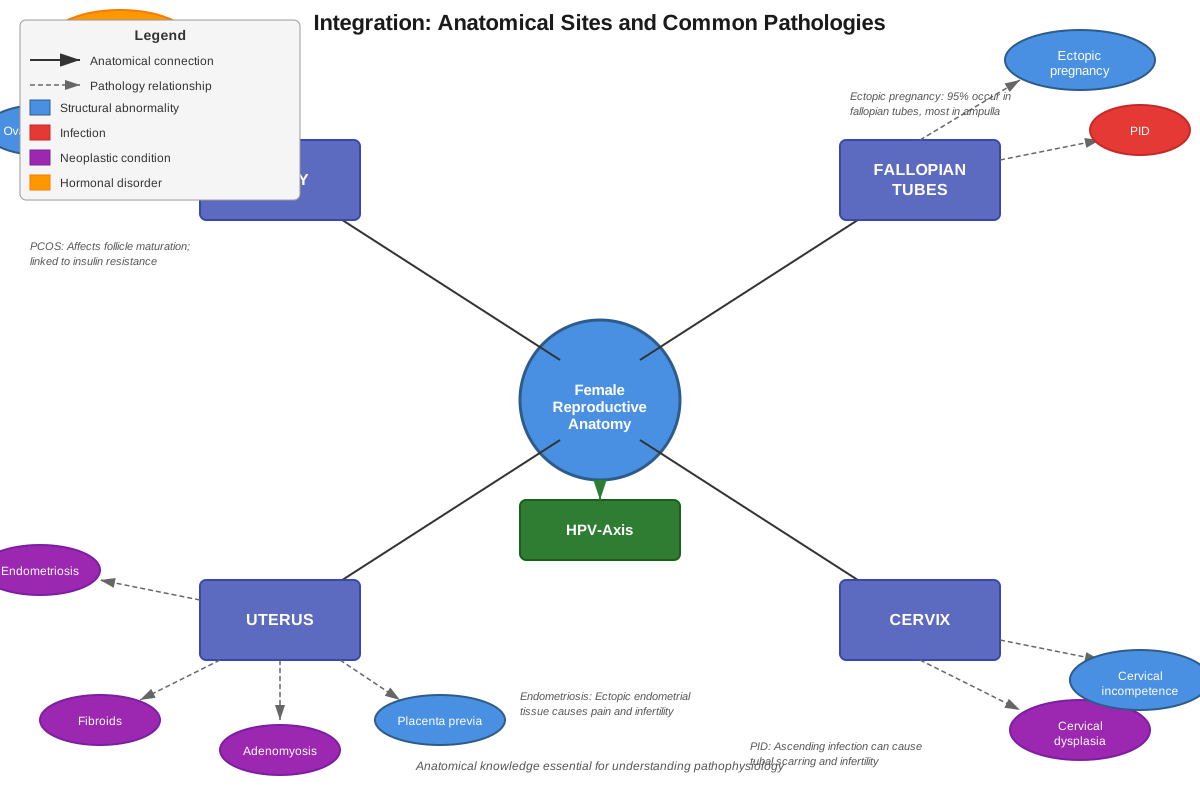
Female reproductive anatomy has significant clinical and real-world relevance. Conditions such as ectopic pregnancy, endometriosis, polycystic ovarian syndrome (PCOS), and uterine fibroids all require anatomical understanding for diagnosis and treatment. Contraceptive methods, assisted reproductive technologies, and obstetric care depend on precise knowledge of reproductive structures and their functions. For healthcare professionals, this knowledge forms the foundation for patient counseling, surgical procedures, and interpreting diagnostic imaging.
On the MCAT, female reproductive anatomy appears in approximately 3-5% of Biology/Biochemistry section questions, often integrated with endocrinology or developmental biology. Questions may present experimental data on hormone levels correlated with anatomical changes, clinical vignettes requiring anatomical reasoning, or passages describing reproductive pathologies. The topic frequently appears in discrete questions testing direct anatomical knowledge and in passage-based questions requiring application of anatomical principles to novel scenarios.
Common question formats include identifying the site of fertilization, tracing the path of an oocyte from ovulation to implantation, predicting the effects of hormonal changes on specific structures, and analyzing how anatomical abnormalities affect fertility. Understanding the three-dimensional relationships between structures, their histological composition, and their functional changes throughout the menstrual cycle enables students to approach these questions with confidence and accuracy.
Core Concepts
External Genitalia (Vulva)
The vulva comprises the external female reproductive structures, including the mons pubis, labia majora, labia minora, clitoris, vestibule, and associated glands. The mons pubis is the fatty tissue covering the pubic symphysis. The labia majora are fatty, hair-bearing folds homologous to the male scrotum, while the labia minora are thinner, hairless folds that enclose the vestibule. The clitoris is an erectile structure homologous to the penis, consisting of a glans, body, and two crura that attach to the pubic rami. The clitoris contains numerous sensory nerve endings and plays a central role in sexual arousal.
The vestibule is the space between the labia minora containing the urethral opening and the vaginal opening (introitus). The Bartholin's glands (greater vestibular glands) are located posterolaterally to the vaginal opening and secrete mucus for lubrication during sexual activity. The Skene's glands (lesser vestibular glands or paraurethral glands) open near the urethral meatus and also contribute to lubrication. The hymen is a thin membrane that partially covers the vaginal opening in individuals who have not experienced vaginal penetration, though its presence and appearance vary considerably.
Vagina
The vagina is a fibromuscular tube approximately 8-10 cm in length that extends from the vestibule to the cervix. It serves three primary functions: passage for menstrual flow, receptacle for the penis during intercourse, and birth canal during parturition. The vaginal wall consists of three layers: an inner mucosa of stratified squamous epithelium (non-keratinized), a middle muscular layer of smooth muscle, and an outer adventitia of connective tissue.
The vaginal epithelium lacks glands but is kept moist by cervical mucus and transudation through the epithelium. The epithelium is rich in glycogen, which is metabolized by normal vaginal flora (primarily Lactobacillus species) to produce lactic acid, maintaining an acidic pH (3.8-4.5) that inhibits pathogenic organisms. The vagina is highly distensible due to its muscular composition and rugae (folds) in the mucosa. The fornices are recesses formed where the vaginal wall meets the cervix: anterior, posterior, and two lateral fornices. The posterior fornix is the deepest and is clinically significant as a site for fluid collection and access to the peritoneal cavity.
Cervix
The cervix is the inferior, cylindrical portion of the uterus that projects into the vagina. It measures approximately 2-3 cm in length and consists of primarily fibrous connective tissue with some smooth muscle. The cervix has two distinct regions: the endocervix (cervical canal) lined with simple columnar epithelium that secretes mucus, and the ectocervix (portion projecting into the vagina) covered with stratified squamous epithelium continuous with the vaginal epithelium.
The junction between these two epithelial types is called the transformation zone or squamocolumnar junction, which is clinically significant as the most common site for cervical dysplasia and carcinoma. The external os is the opening of the cervix into the vagina, while the internal os is the opening into the uterine cavity. Cervical mucus changes in consistency throughout the menstrual cycle: thick and viscous during most of the cycle (forming a cervical plug that impedes sperm passage), but thin, clear, and stretchy (spinnbarkeit) around ovulation to facilitate sperm transport.
Uterus
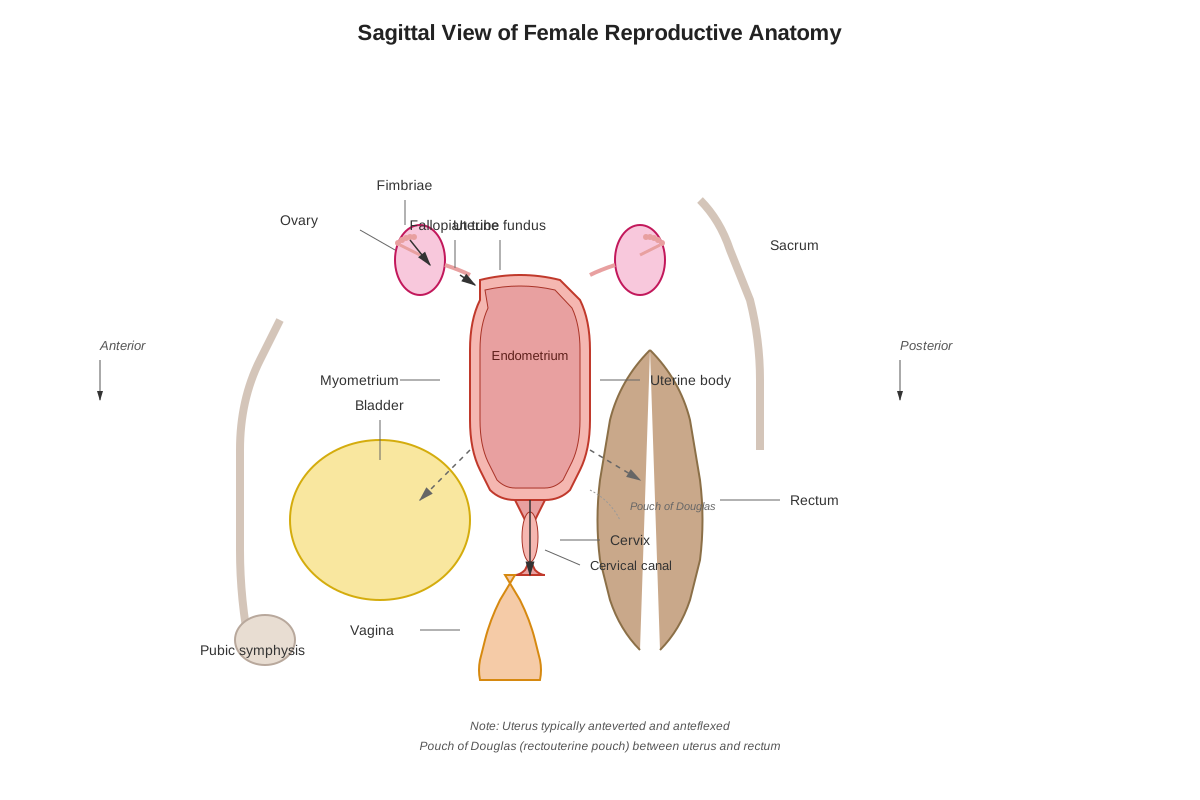
The uterus is a thick-walled, pear-shaped muscular organ approximately 7-8 cm long, 5 cm wide, and 2-3 cm thick in nulliparous women. It consists of three regions: the fundus (superior rounded portion above the entry points of the fallopian tubes), the body (main central portion), and the cervix (inferior portion). The uterine wall has three layers: the endometrium (inner mucosal layer), the myometrium (thick middle layer of smooth muscle), and the perimetrium (outer serosal layer of visceral peritoneum).
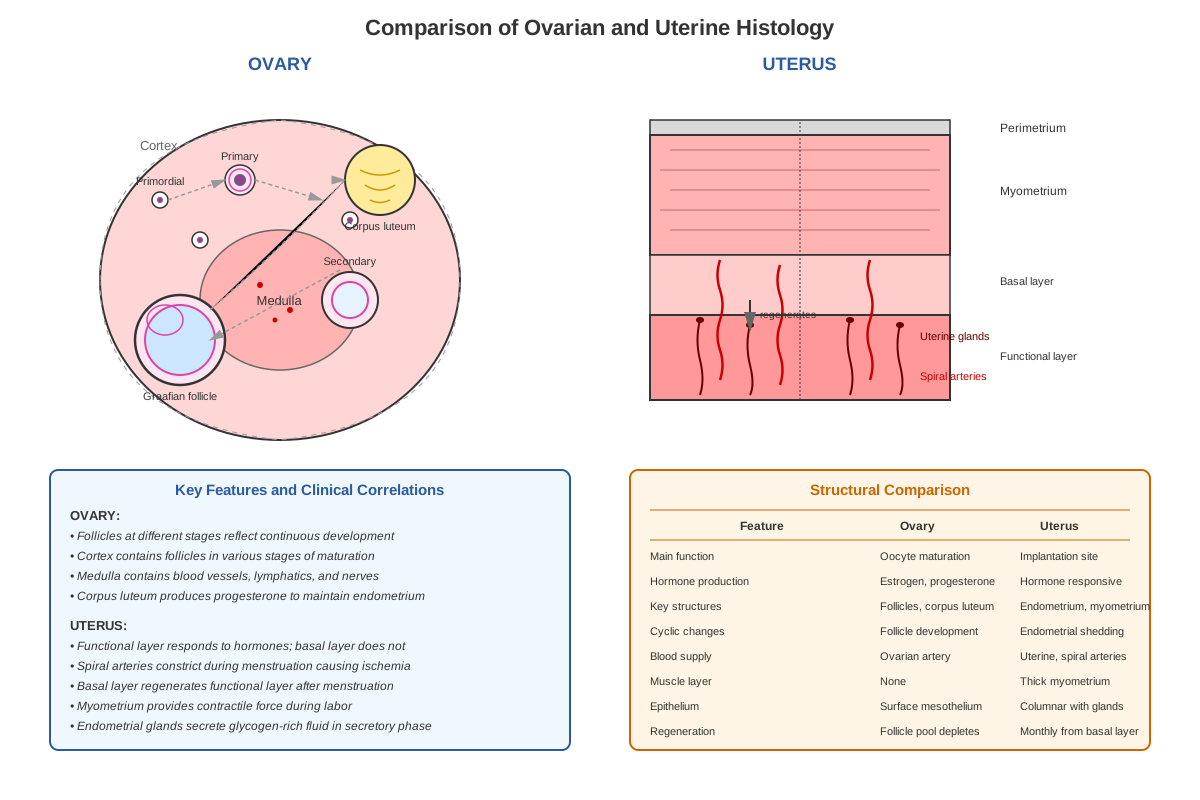
The endometrium consists of two functional zones: the stratum functionalis (superficial layer that proliferates and is shed during menstruation) and the stratum basalis (deeper layer that regenerates the functionalis after menstruation). The endometrium undergoes cyclical changes in response to ovarian hormones: proliferation during the follicular phase under estrogen influence, secretory changes during the luteal phase under progesterone influence, and menstruation when hormone levels decline. The endometrial glands become increasingly tortuous and secretory, and the spiral arteries elongate and coil during the secretory phase to support potential implantation.
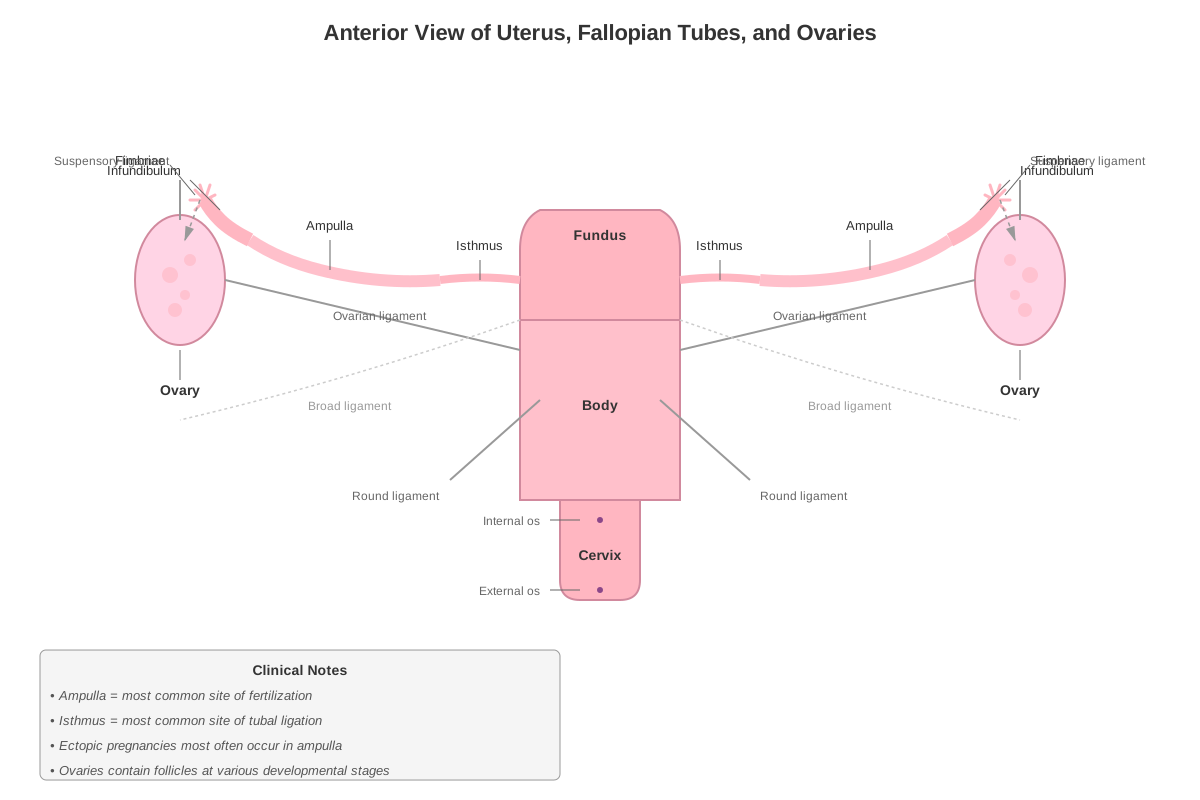
The myometrium is the thickest layer, composed of interlacing bundles of smooth muscle that enable powerful contractions during labor. The myometrium is responsive to oxytocin and prostaglandins. The uterus is supported by several ligaments: the broad ligament (double layer of peritoneum extending laterally), the round ligaments (extend from the uterine horns through the inguinal canal to the labia majora), the cardinal ligaments (provide primary support, extending from the cervix to the lateral pelvic walls), and the uterosacral ligaments (extend from the cervix to the sacrum).
Fallopian Tubes (Oviducts)
The fallopian tubes or oviducts are paired muscular tubes approximately 10-12 cm long that extend laterally from the uterine horns to the ovaries. Each tube has four anatomical regions: the infundibulum (funnel-shaped distal end with finger-like projections called fimbriae that sweep over the ovary), the ampulla (widest and longest segment where fertilization typically occurs), the isthmus (narrow segment near the uterus), and the intramural or interstitial portion (passes through the uterine wall).
The tubal wall consists of three layers: an inner mucosa with ciliated columnar epithelium and secretory cells, a middle muscular layer of smooth muscle, and an outer serosa. The ciliated cells beat toward the uterus, creating currents that help transport the oocyte. The secretory cells provide nutrients for the oocyte and early embryo. Muscular contractions (peristalsis) also contribute to gamete and embryo transport. The ampulla is the most common site of fertilization, and the developing embryo takes approximately 3-4 days to travel through the tube to reach the uterus for implantation.
Ovaries
The ovaries are paired, almond-shaped organs approximately 3-5 cm long, 2-3 cm wide, and 1-2 cm thick. They are located in the ovarian fossa on the lateral pelvic wall, suspended by the mesovarium (part of the broad ligament), the suspensory ligament of the ovary (contains ovarian vessels and nerves), and the ovarian ligament (connects the ovary to the uterus). The ovaries have two primary functions: production of oocytes (oogenesis) and secretion of sex hormones (estrogen and progesterone).
The ovary consists of an outer cortex containing ovarian follicles at various stages of development embedded in connective tissue stroma, and an inner medulla containing blood vessels, lymphatics, and nerves. The surface is covered by a simple cuboidal epithelium called the germinal epithelium (a misnomer, as germ cells do not originate here). Each ovary contains a finite number of primordial follicles established during fetal development. These follicles consist of a primary oocyte arrested in prophase I of meiosis I, surrounded by a single layer of flattened follicular cells.
During each menstrual cycle, several primordial follicles are recruited to develop into primary follicles (oocyte surrounded by cuboidal granulosa cells), then secondary follicles (multiple layers of granulosa cells with a developing theca layer), and finally tertiary or Graafian follicles (large, fluid-filled antrum with the oocyte suspended in the cumulus oophorus). Typically, only one follicle becomes dominant and ovulates, releasing a secondary oocyte arrested in metaphase II. The ruptured follicle transforms into the corpus luteum, which secretes progesterone and estrogen to support the endometrium. If fertilization does not occur, the corpus luteum degenerates into the corpus albicans, a fibrous scar.
Blood Supply and Innervation
The female reproductive organs receive blood from multiple sources. The ovarian arteries arise directly from the abdominal aorta and supply the ovaries and fallopian tubes. The uterine arteries branch from the internal iliac arteries and supply the uterus, with branches anastomosing with the ovarian arteries. The uterine arteries give rise to arcuate arteries in the myometrium, which branch into radial arteries that penetrate toward the endometrium, terminating as spiral arteries in the stratum functionalis. These spiral arteries are highly responsive to hormonal changes and undergo rhythmic constriction during menstruation, causing ischemia and shedding of the functionalis layer.
Venous drainage generally follows the arterial supply, with ovarian veins draining to the inferior vena cava on the right and the left renal vein on the left. Lymphatic drainage from the ovaries and upper fallopian tubes follows the ovarian vessels to para-aortic nodes, while the uterus and lower reproductive tract drain to internal iliac, external iliac, and inguinal nodes.
Innervation is both autonomic and sensory. Sympathetic fibers from T10-L2 and parasympathetic fibers from S2-S4 regulate smooth muscle contraction, glandular secretion, and vascular tone. The ovaries and upper reproductive tract have visceral sensory innervation that travels with sympathetic fibers, while the lower vagina and external genitalia have somatic sensory innervation via the pudendal nerve (S2-S4), making them sensitive to touch and pain.
Quick check — test yourself on Female reproductive anatomy so far.
Try Flashcards →Concept Relationships
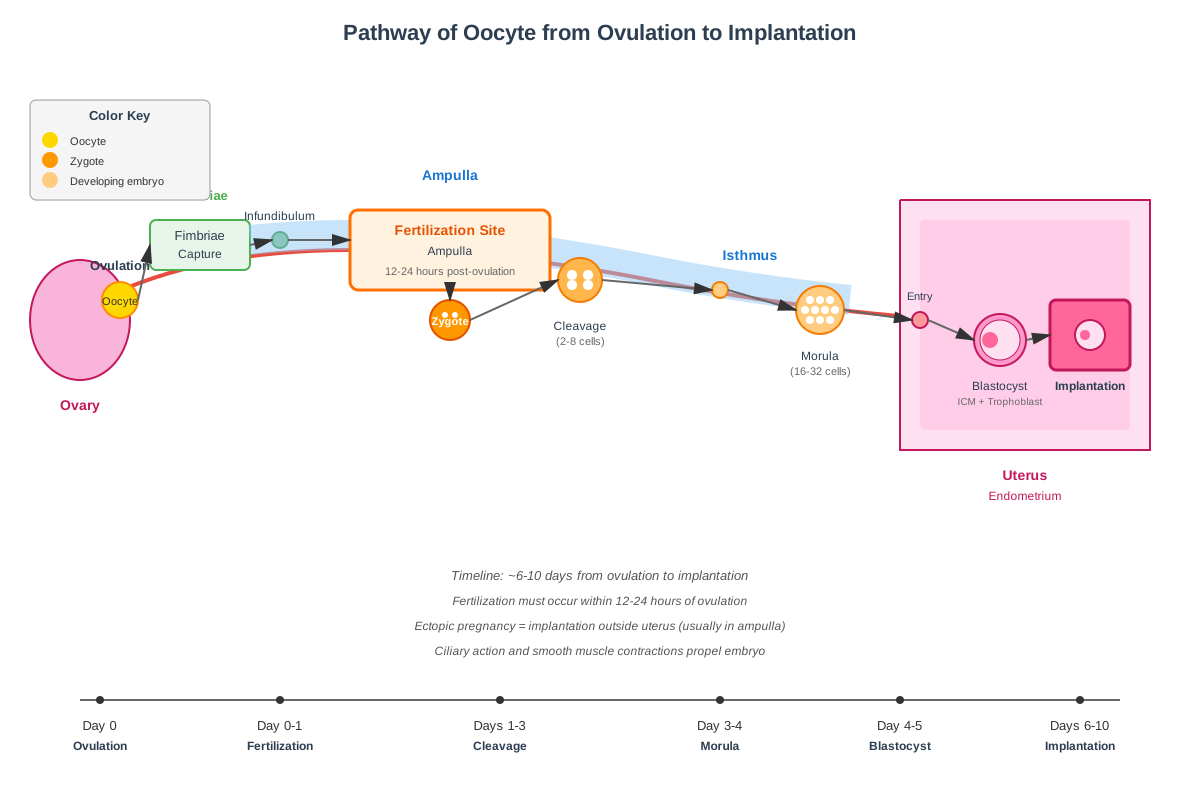
The female reproductive anatomy represents an integrated system where structure directly supports function. The pathway of reproduction begins in the ovaries, where oogenesis produces oocytes within follicles. Hormonal signals from the hypothalamic-pituitary-gonadal axis regulate follicle development, leading to ovulation. The released oocyte is captured by the fimbriae of the fallopian tube, where it travels through the ampulla—the typical site of fertilization if sperm are present.
Following fertilization, the developing embryo continues through the isthmus of the fallopian tube into the uterus, where it implants in the prepared endometrium. The endometrial changes are orchestrated by ovarian hormones: estrogen from developing follicles stimulates proliferation, while progesterone from the corpus luteum induces secretory changes. If implantation does not occur, declining hormone levels trigger menstruation, and the cycle repeats.
The cervix serves as a gateway between the external environment and the sterile uterine cavity, with mucus properties changing to either facilitate or impede sperm passage. The vagina provides the route for sperm entry and menstrual flow exit, while also serving as the birth canal. The external genitalia facilitate sexual function and protect internal structures.
This anatomical organization connects to broader biological concepts: the endocrine system (hormonal regulation), cell biology (epithelial changes and smooth muscle contraction), immunology (protection against pathogens while allowing sperm passage), and developmental biology (implantation and pregnancy). Understanding these relationships enables students to approach MCAT questions that integrate multiple systems and require multi-step reasoning.
High-Yield Facts
⭐ Fertilization typically occurs in the ampulla of the fallopian tube, not in the uterus
⭐ The transformation zone (squamocolumnar junction) of the cervix is the most common site for cervical cancer development
⭐ The corpus luteum secretes progesterone and estrogen to maintain the endometrium during the luteal phase
⭐ The endometrium consists of two layers: the stratum functionalis (shed during menstruation) and the stratum basalis (regenerates the functionalis)
⭐ Ovarian follicles contain oocytes arrested in prophase I of meiosis I until ovulation, when meiosis I completes and the oocyte arrests in metaphase II
- The vaginal pH is maintained at 3.8-4.5 by lactic acid produced from glycogen metabolism by Lactobacillus species
- The ovarian arteries arise directly from the abdominal aorta, while the uterine arteries branch from the internal iliac arteries
- Spiral arteries in the endometrium undergo rhythmic vasoconstriction during menstruation, causing ischemia and tissue shedding
- The broad ligament is a double layer of peritoneum, while the cardinal ligaments provide the primary structural support for the uterus
- Bartholin's glands are located posterolaterally to the vaginal opening and secrete mucus for lubrication
- The posterior fornix of the vagina is the deepest recess and provides access to the peritoneal cavity (pouch of Douglas)
- The myometrium is the thickest layer of the uterine wall and is composed of smooth muscle responsive to oxytocin
Common Misconceptions
Misconception: Fertilization occurs in the uterus.
Correction: Fertilization typically occurs in the ampulla of the fallopian tube. The fertilized embryo then travels to the uterus over 3-4 days for implantation. This distinction is critical for understanding ectopic pregnancy, which most commonly occurs when implantation happens in the fallopian tube.
Misconception: The ovaries are directly connected to the fallopian tubes.
Correction: The ovaries are not directly attached to the fallopian tubes. The fimbriae of the infundibulum sweep over the ovary to capture the released oocyte, but there is a small gap. This anatomical relationship explains why oocytes can occasionally be released into the peritoneal cavity rather than entering the fallopian tube.
Misconception: The entire endometrium is shed during menstruation.
Correction: Only the stratum functionalis (superficial layer) of the endometrium is shed during menstruation. The stratum basalis (basal layer) remains intact and regenerates the functionalis during the subsequent proliferative phase. This distinction is essential for understanding endometrial regeneration.
Misconception: The vagina produces its own lubrication through glands in its walls.
Correction: The vaginal epithelium lacks glands. Vaginal moisture comes from cervical mucus, transudation through the vaginal epithelium, and secretions from Bartholin's and Skene's glands. Understanding the sources of vaginal lubrication is important for clinical scenarios involving vaginal dryness.
Misconception: Oocytes complete meiosis before ovulation.
Correction: Primary oocytes are arrested in prophase I of meiosis I from fetal development until ovulation. At ovulation, meiosis I completes, producing a secondary oocyte and the first polar body. The secondary oocyte arrests in metaphase II and only completes meiosis II if fertilization occurs. This timing is frequently tested on the MCAT.
Misconception: The cervix is simply a passageway with no active function.
Correction: The cervix actively regulates sperm passage through changes in mucus consistency throughout the menstrual cycle. It also provides immunological protection and undergoes dramatic changes during pregnancy (effacement and dilation) to enable delivery. The cervix is a dynamic, hormonally responsive structure.
Worked Examples
Example 1: Tracing the Path of an Oocyte
Question: A secondary oocyte is released from the ovary during ovulation. Describe the complete anatomical pathway this oocyte would follow if fertilization occurs, including the specific locations where key events happen.
Solution:
Step 1: Ovulation - The secondary oocyte (arrested in metaphase II) is released from a Graafian follicle on the ovarian surface.
Step 2: Capture by fimbriae - The fimbriae of the infundibulum sweep over the ovary and capture the oocyte, drawing it into the fallopian tube.
Step 3: Transport through ampulla - The oocyte moves through the ampulla (the widest portion of the fallopian tube) via ciliary action and peristaltic contractions. Fertilization typically occurs here if sperm are present. Upon sperm penetration, the secondary oocyte completes meiosis II, producing a mature ovum and the second polar body.
Step 4: Transport through isthmus - The now-fertilized embryo (zygote beginning cleavage) continues through the narrower isthmus of the fallopian tube.
Step 5: Entry into uterus - The embryo passes through the intramural portion of the fallopian tube and enters the uterine cavity, now at the morula or early blastocyst stage (approximately 3-4 days post-fertilization).
Step 6: Implantation - The blastocyst implants into the prepared endometrium (stratum functionalis) of the uterine body, typically on the posterior wall, around 6-7 days post-fertilization.
Key concept: This pathway demonstrates the integration of anatomical structures with temporal events in reproduction. MCAT questions often test whether students can identify where specific events occur (e.g., fertilization in the ampulla, not the uterus) and understand the timeline of embryo development relative to anatomical location.
Example 2: Hormonal Effects on Anatomical Structures
Question: A researcher administers a drug that blocks progesterone receptors in the female reproductive tract. Based on anatomical and physiological knowledge, predict the effects on the endometrium and cervical mucus, and explain the mechanism.
Solution:
Effect on endometrium:
Progesterone normally acts on the endometrium during the luteal phase (after ovulation) to induce secretory changes. The stratum functionalis thickens, endometrial glands become tortuous and secretory, spiral arteries elongate and coil, and glycogen accumulates. These changes prepare the endometrium for potential implantation.
With progesterone receptor blockade, these secretory changes would not occur. The endometrium would remain in a proliferative state (under estrogen influence alone) or would undergo premature breakdown. The spiral arteries would not develop properly, and the endometrium would not be receptive to implantation. This would likely result in irregular bleeding and infertility.
Effect on cervical mucus:
Progesterone normally causes cervical mucus to become thick, viscous, and cellular, forming a cervical plug that impedes sperm passage and protects the uterine cavity from pathogens. This occurs during the luteal phase and throughout pregnancy.
With progesterone receptor blockade, cervical mucus would remain thin, clear, and stretchy (characteristics of estrogen-dominant mucus around ovulation). This would allow continued sperm passage but would also reduce the protective barrier function of the cervix.
Mechanism: Progesterone binds to nuclear receptors in target cells, altering gene transcription. In endometrial cells, this leads to expression of genes involved in secretory function, vascular remodeling, and immune modulation. In cervical epithelial cells, progesterone alters mucin production and composition. Blocking these receptors prevents these genomic effects.
Clinical relevance: This mechanism is the basis for progesterone receptor antagonists (like mifepristone) used for emergency contraception and medical abortion. Understanding the anatomical consequences of hormonal manipulation is essential for MCAT passages involving reproductive pharmacology or experimental manipulations.
Exam Strategy
When approaching MCAT questions on female reproductive anatomy, begin by identifying what the question is actually asking: anatomical location, functional relationship, hormonal effect, or pathological consequence. Many questions will present clinical vignettes or experimental scenarios that require applying anatomical knowledge rather than simple recall.
Trigger words to watch for:
- "Site of fertilization" → Think ampulla of fallopian tube
- "Shed during menstruation" → Stratum functionalis only
- "Arrested in metaphase II" → Secondary oocyte after ovulation
- "Transformation zone" → Squamocolumnar junction of cervix
- "Corpus luteum" → Progesterone and estrogen secretion
- "Fimbriae" → Capture of oocyte at ovulation
- "Spiral arteries" → Endometrial blood supply, menstruation
Process of elimination strategies:
For questions about the location of events, eliminate answers that confuse the uterus with the fallopian tube. Many incorrect options will place fertilization in the uterus or implantation in the fallopian tube.
For questions about hormonal effects, eliminate answers that attribute progesterone effects to estrogen or vice versa. Remember: estrogen → proliferation; progesterone → secretion and maintenance.
For questions about menstrual cycle changes, eliminate answers that suggest the entire endometrium is shed or that the basalis layer undergoes cyclical changes.
Time allocation: Discrete questions on female reproductive anatomy should take 60-90 seconds. Passage-based questions may require 90-120 seconds, as you'll need to integrate passage information with anatomical knowledge. If a question requires you to trace a pathway or predict multiple effects, quickly sketch the pathway or list the effects to organize your thinking before evaluating answer choices.
Common question formats:
- Identifying the site where a specific event occurs (fertilization, implantation, hormone secretion)
- Predicting the effects of hormonal changes or pharmacological interventions on specific structures
- Analyzing experimental data showing anatomical or functional changes across the menstrual cycle
- Reasoning through clinical scenarios involving anatomical abnormalities or pathologies
Memory Techniques
Mnemonic for fallopian tube segments (lateral to medial): "I Am In Italy"
- Infundibulum (with fimbriae)
- Ampulla (site of fertilization)
- Isthmus (narrow segment)
- Intramural/Interstitial (through uterine wall)
Mnemonic for uterine ligament support: "CRUB" (like a baby's crib)
- Cardinal ligaments (primary support)
- Round ligaments (to labia majora)
- Uterosacral ligaments (to sacrum)
- Broad ligament (peritoneal covering)
Mnemonic for endometrial layers: "Functional Falls, Basal Builds"
- The Functional layer Falls (sheds) during menstruation
- The Basal layer Builds (regenerates) the functional layer
Visualization strategy for ovarian cycle:
Picture a follicle growing larger and larger (primordial → primary → secondary → tertiary/Graafian), then "popping" at ovulation to release the oocyte. The ruptured follicle transforms into a yellow corpus luteum (corpus = body, luteum = yellow), which then degenerates into a white scar (corpus albicans, albicans = white) if pregnancy doesn't occur.
Acronym for cervical regions: "EEIO" (like "Old MacDonald")
- Endocervix (columnar epithelium)
- Ectocervix (squamous epithelium)
- Internal os (opens to uterus)
- Outernal/External os (opens to vagina)
Hormonal effects visualization:
Estrogen = Enlargement and Expansion (proliferation, thin cervical mucus)
Progesterone = Preparation and Protection (secretory changes, thick cervical mucus)
Summary
Female reproductive anatomy encompasses the structural organization and functional relationships of organs responsible for oogenesis, fertilization, and pregnancy support. The system includes external structures (vulva) and internal organs (vagina, cervix, uterus, fallopian tubes, and ovaries), each with distinct histological features and physiological roles. The ovaries produce oocytes within follicles and secrete sex hormones that regulate cyclical changes throughout the reproductive tract. Oocytes are released at ovulation, captured by the fimbriae, and transported through the fallopian tube where fertilization typically occurs in the ampulla. The fertilized embryo travels to the uterus for implantation in the hormonally prepared endometrium. The endometrium undergoes cyclical proliferation (estrogen-driven) and secretory changes (progesterone-driven), with the stratum functionalis being shed during menstruation while the stratum basalis regenerates it. The cervix regulates access to the uterine cavity through changes in mucus consistency. Understanding the anatomical pathway of gametes, the hormonal responsiveness of each structure, and the integration of anatomy with physiology is essential for MCAT success on questions involving reproduction, endocrinology, and clinical scenarios.
Key Takeaways
- Fertilization occurs in the ampulla of the fallopian tube, and implantation occurs in the uterine endometrium approximately 6-7 days later
- The endometrium has two functional layers: stratum functionalis (shed during menstruation) and stratum basalis (regenerates the functionalis)
- Oocytes are arrested in prophase I until ovulation, when they complete meiosis I and arrest in metaphase II until fertilization
- The corpus luteum secretes progesterone and estrogen to maintain the endometrium during the luteal phase; it degenerates if pregnancy doesn't occur
- The cervical transformation zone (squamocolumnar junction) is the most common site for cervical dysplasia and cancer
- Hormonal regulation drives cyclical anatomical changes: estrogen promotes proliferation, while progesterone induces secretory changes and maintenance
- Anatomical relationships are three-dimensional: understanding spatial relationships (e.g., ovaries not directly connected to fallopian tubes, posterior fornix as deepest vaginal recess) is essential for clinical reasoning
Related Topics
Menstrual Cycle Regulation: Understanding the hormonal control of the menstrual cycle (GnRH, FSH, LH, estrogen, progesterone) provides the physiological context for the anatomical changes described in this guide. Mastering female reproductive anatomy enables deeper comprehension of how hormonal fluctuations drive structural and functional changes.
Oogenesis and Folliculogenesis: Detailed study of oocyte development, meiotic arrest points, and follicle maturation builds on the ovarian anatomy covered here. This topic integrates cell biology, genetics, and reproductive physiology.
Fertilization and Implantation: The anatomical pathway described in this guide provides the foundation for understanding the molecular and cellular events of fertilization, early embryonic development, and the implantation process.
Pregnancy Physiology: Knowledge of uterine anatomy, blood supply, and hormonal responsiveness is essential for understanding the dramatic anatomical and physiological changes that occur during pregnancy, including placental development and parturition.
Male Reproductive Anatomy: Comparing and contrasting male and female reproductive structures, including homologous structures (e.g., clitoris and penis, labia majora and scrotum), reinforces understanding of both systems and developmental biology.
Practice CTA
Now that you've mastered the core concepts of female reproductive anatomy, it's time to test your knowledge and reinforce your learning. Work through the practice questions to apply these concepts to MCAT-style scenarios, and use the flashcards to solidify high-yield facts and anatomical relationships. Remember, active retrieval practice is one of the most effective study strategies—each question you work through strengthens your ability to recall and apply this information under exam conditions. You've built a strong foundation; now demonstrate your mastery!
Sign up free to keep reading
Create a free AnvayaPrep account to finish this MCAT guide on Female reproductive anatomy — plus flashcards and practice questions.