Overview
Oogenesis is the process of female gamete (egg or ovum) formation that occurs in the ovaries. This complex developmental pathway transforms primordial germ cells into mature, fertilization-competent oocytes through a series of mitotic and meiotic divisions, accompanied by dramatic cellular growth and cytoplasmic reorganization. Unlike spermatogenesis, which produces four functional gametes from each precursor cell, oogenesis generates only one viable ovum along with smaller polar bodies that eventually degenerate. This asymmetric division ensures that the single egg receives the maximum cytoplasmic resources—including organelles, mRNA, proteins, and nutrients—necessary to support early embryonic development following fertilization.
Understanding Oogenesis Biology is essential for the MCAT because it integrates multiple high-yield concepts across Physiology and Organ Systems, including cell division, hormonal regulation, reproductive anatomy, and developmental biology. The MCAT frequently tests oogenesis in the context of reproductive endocrinology, comparing and contrasting it with spermatogenesis, or within passages discussing fertility, contraception, or developmental abnormalities. Questions may require students to identify the stage at which meiosis arrests, explain hormonal triggers for oocyte maturation, or predict outcomes of chromosomal nondisjunction events.
Oogenesis MCAT questions connect to broader biological principles including meiosis, cell cycle regulation, hormone signaling cascades (particularly FSH and LH), and the coordination of reproductive cycles. Mastery of oogenesis provides the foundation for understanding fertilization, early embryonic development, and clinical scenarios involving infertility, assisted reproductive technologies, and chromosomal abnormalities like Down syndrome. This topic exemplifies how cellular processes integrate with organ system physiology and endocrine control—a hallmark of MCAT Biology passages.
Learning Objectives
- [ ] Define Oogenesis using accurate Biology terminology
- [ ] Explain why Oogenesis matters for the MCAT
- [ ] Apply Oogenesis to exam-style questions
- [ ] Identify common mistakes related to Oogenesis
- [ ] Connect Oogenesis to related Biology concepts
- [ ] Compare and contrast oogenesis with spermatogenesis in terms of timing, products, and cellular outcomes
- [ ] Trace the hormonal regulation of oogenesis through the ovarian cycle
- [ ] Predict the consequences of meiotic arrest at different stages of oocyte development
Prerequisites
- Meiosis I and II: Understanding the stages of meiotic division (prophase I, metaphase I, anaphase I, telophase I, and meiosis II) is essential because oogenesis involves two meiotic divisions with unique arrest points
- Cell cycle regulation: Knowledge of checkpoints and arrest mechanisms explains why oocytes pause at specific stages until hormonal signals trigger progression
- Mitosis: Familiarity with mitotic division is necessary to understand the proliferation phase of oogonia before meiosis begins
- Reproductive endocrinology basics: Understanding FSH (follicle-stimulating hormone) and LH (luteinizing hormone) provides context for hormonal control of oocyte maturation
- Chromosome structure: Knowledge of homologous chromosomes, sister chromatids, and ploidy levels enables tracking of genetic material through oogenesis stages
Why This Topic Matters
Clinical and Real-World Significance
Oogenesis directly impacts human fertility, reproductive health, and developmental outcomes. Women are born with a finite number of oocytes arrested in prophase I, and this pool gradually depletes throughout life, leading to age-related fertility decline and increased risk of chromosomal abnormalities. Advanced maternal age correlates with higher rates of nondisjunction during meiosis I, resulting in conditions like trisomy 21 (Down syndrome). Understanding oogenesis is crucial for comprehending assisted reproductive technologies (IVF, egg freezing), hormonal contraception mechanisms, and causes of infertility. Clinical scenarios involving polycystic ovary syndrome (PCOS), premature ovarian failure, and ovulation disorders all require knowledge of normal oogenesis.
MCAT Exam Statistics
Oogenesis appears in approximately 3-5% of MCAT Biology passages, typically within reproductive physiology or developmental biology contexts. Questions most commonly test:
- Comparison questions: Contrasting oogenesis with spermatogenesis (timing, products, arrest points)
- Hormonal regulation: Identifying which hormones trigger specific transitions in oocyte development
- Meiotic stages: Determining the ploidy and chromatid number at various oogenesis stages
- Clinical applications: Analyzing scenarios involving maternal age effects, fertility treatments, or chromosomal abnormalities
Common Exam Appearances
MCAT passages featuring oogenesis often present experimental data about:
- Hormonal manipulation of ovarian cycles in animal models
- In vitro maturation of oocytes for fertility research
- Age-related changes in oocyte quality and chromosomal segregation errors
- Comparative reproductive strategies across species
- Molecular mechanisms controlling meiotic arrest and resumption
Core Concepts
Definition and Overview of Oogenesis
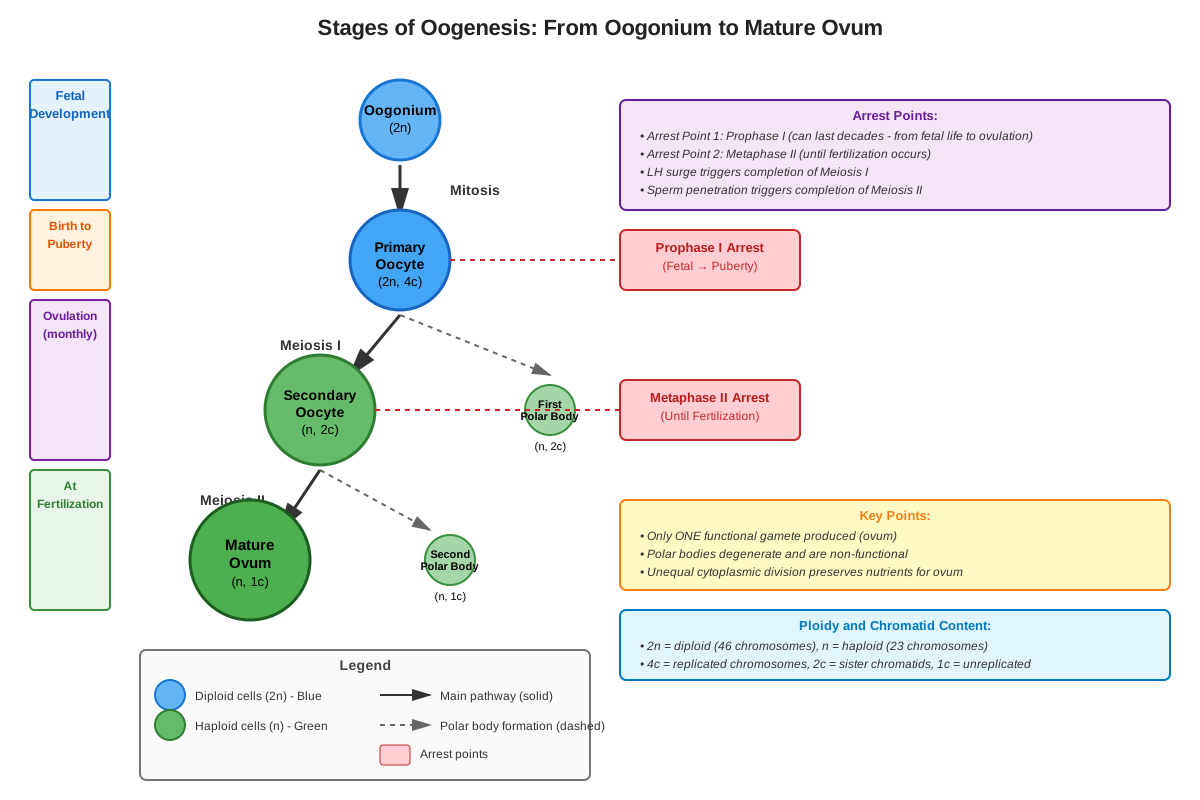
Oogenesis is the process by which female gametes develop from primordial germ cells into mature ova (eggs) capable of fertilization. This process occurs in the ovaries and spans from fetal development through reproductive years, making it one of the longest cellular processes in human biology. Oogenesis encompasses three major phases: proliferation (mitotic divisions of oogonia), growth (enlargement of primary oocytes), and maturation (completion of meiotic divisions). The entire process is characterized by prolonged meiotic arrest periods and asymmetric cell divisions that produce one large, nutrient-rich ovum and smaller polar bodies.
Stages of Oogenesis
Proliferation Phase (Fetal Development)
During early fetal development (approximately weeks 3-7 of gestation), primordial germ cells migrate to the developing ovaries and differentiate into oogonia. These diploid (2n) cells undergo multiple rounds of mitosis, proliferating to approximately 6-7 million cells by the fifth month of fetal development. This mitotic expansion creates the lifetime supply of potential eggs, as no new oogonia form after birth.
Growth Phase and First Meiotic Arrest
Before birth, oogonia enter meiosis I and become primary oocytes. These cells progress through the early stages of prophase I (leptotene, zygotene, pachytene) where homologous chromosomes pair and crossing over occurs. However, primary oocytes arrest in diplotene of prophase I, a stage also called dictyotene. This arrest is maintained by high levels of cyclic AMP (cAMP) and inhibitory signals from surrounding granulosa cells. Primary oocytes remain frozen in this stage for years or decades—from before birth until they are recruited for ovulation during reproductive years.
During this prolonged arrest, primary oocytes grow dramatically, accumulating:
- Cytoplasmic organelles (mitochondria, ribosomes, endoplasmic reticulum)
- mRNA transcripts and proteins needed for early embryonic development
- Cortical granules for the cortical reaction post-fertilization
- Yolk proteins and nutrients (less prominent in mammals than other vertebrates)
Each arrested primary oocyte becomes surrounded by a single layer of flattened follicle cells, forming a primordial follicle. By birth, approximately 1-2 million primordial follicles remain (the rest undergo atresia). By puberty, only about 300,000-400,000 remain, and only 400-500 will ever ovulate during a woman's reproductive lifetime.
Maturation Phase and Completion of Meiosis I
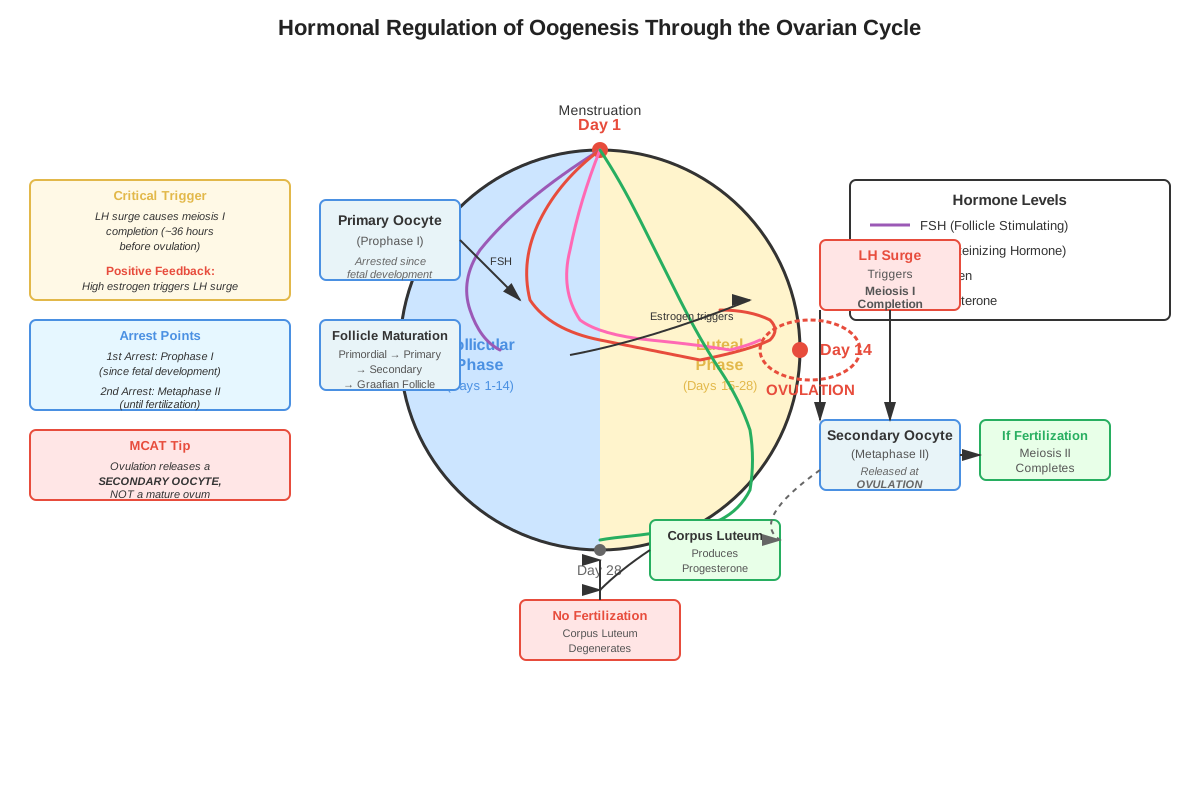
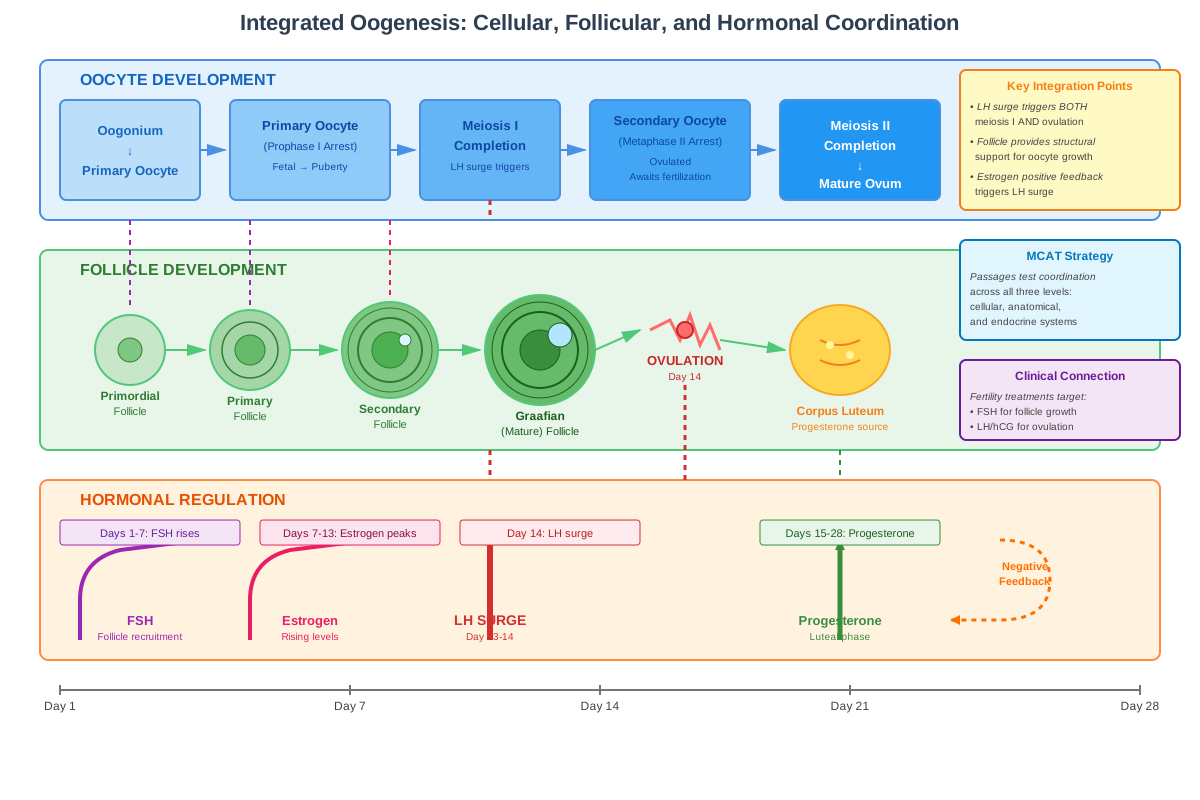
Beginning at puberty, each menstrual cycle recruits a cohort of primordial follicles to resume development. Under the influence of follicle-stimulating hormone (FSH), selected primary oocytes and their surrounding follicles begin to mature. The follicle cells proliferate and differentiate into granulosa cells, and the follicle progresses through primary, secondary (antral), and mature (Graafian) stages.
Just before ovulation, triggered by the luteinizing hormone (LH) surge, the primary oocyte completes meiosis I. This division is highly asymmetric:
- One cell receives most of the cytoplasm and becomes the secondary oocyte (haploid, n, but with sister chromatids still attached)
- The other cell receives minimal cytoplasm and becomes the first polar body, which eventually degenerates
The secondary oocyte immediately enters meiosis II but arrests at metaphase II. This second arrest point is maintained until fertilization occurs.
Completion of Meiosis II (Upon Fertilization)
The secondary oocyte, arrested in metaphase II, is ovulated and swept into the fallopian tube. If fertilization occurs, the penetration of the sperm triggers completion of meiosis II. This final division produces:
- The mature ovum (egg) with a haploid nucleus
- The second polar body, which also degenerates
The first polar body may also divide during meiosis II, potentially producing two additional polar bodies, though this is not functionally significant. Ultimately, one primary oocyte yields one functional ovum and 2-3 polar bodies.
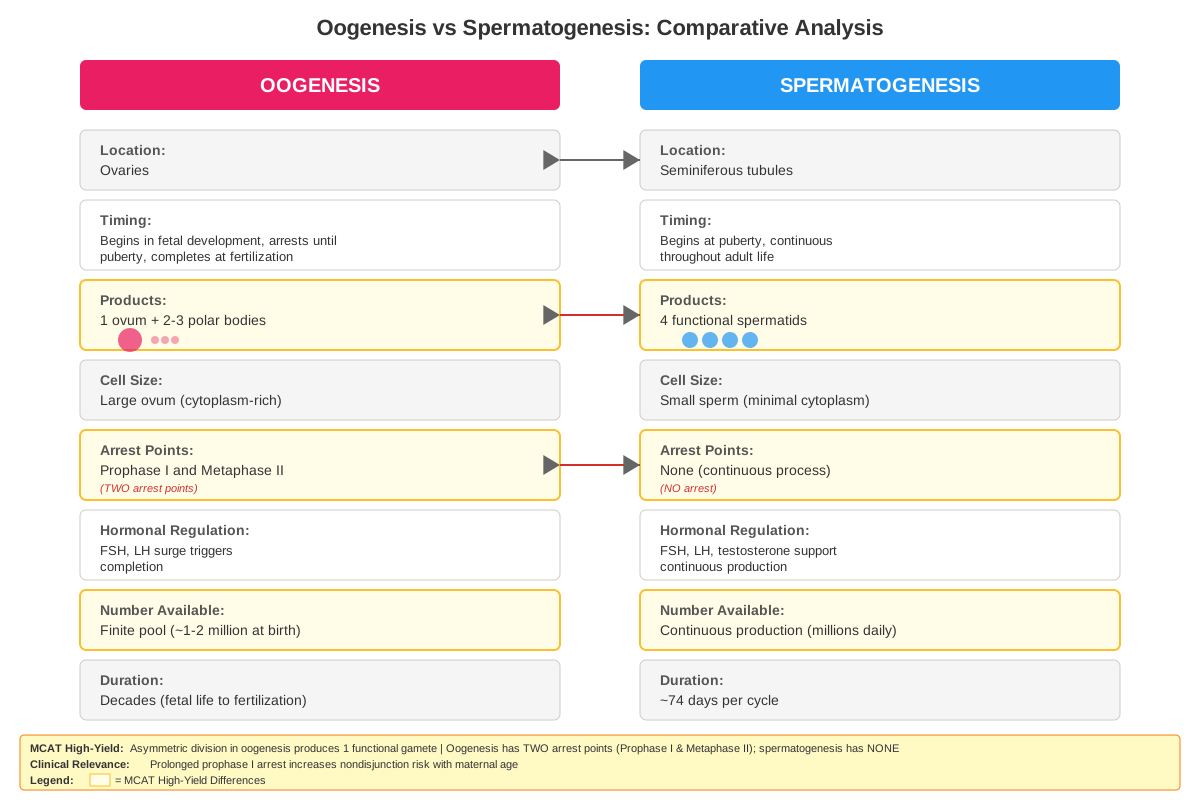
Comparison: Oogenesis vs. Spermatogenesis
| Feature | Oogenesis | Spermatogenesis |
|---|---|---|
| Location | Ovaries (cortex) | Testes (seminiferous tubules) |
| Timing | Begins before birth; completes only if fertilization occurs | Begins at puberty; continuous throughout adult life |
| Duration | Years to decades (with arrest periods) | ~74 days per cycle |
| Products per precursor | 1 functional ovum + 2-3 polar bodies | 4 functional spermatozoa |
| Cell division symmetry | Asymmetric (unequal cytoplasm distribution) | Symmetric (equal cytoplasm distribution) |
| Arrest points | Prophase I (before birth) and Metaphase II (after ovulation) | No arrest points |
| Number produced | ~400-500 in lifetime | Millions per day |
| Size of gamete | Large (~100 μm diameter) | Small (~5 μm head) |
| Motility | Non-motile | Motile (flagellum) |
Hormonal Regulation of Oogenesis
The maturation and release of oocytes is tightly controlled by the hypothalamic-pituitary-ovarian axis:
- GnRH (Gonadotropin-Releasing Hormone): Released from the hypothalamus in pulsatile fashion, stimulating the anterior pituitary
- FSH (Follicle-Stimulating Hormone): Promotes follicle development and granulosa cell proliferation; stimulates aromatase activity to convert androgens to estrogen
- LH (Luteinizing Hormone): The LH surge triggers completion of meiosis I and ovulation; also stimulates theca cells to produce androgens
- Estrogen: Produced by granulosa cells; provides negative feedback at low levels and positive feedback at high levels (triggering LH surge)
- Progesterone: Produced by the corpus luteum after ovulation; maintains the endometrium and provides negative feedback to prevent additional follicle recruitment
Chromosomal Content Through Oogenesis
Understanding ploidy and chromatid number at each stage is critical for MCAT questions:
- Oogonium: 2n (diploid), 2c (before DNA replication) or 4c (after DNA replication in S phase)
- Primary oocyte (arrested in prophase I): 2n, 4c (homologous pairs of duplicated chromosomes)
- Secondary oocyte (after meiosis I): n (haploid), 2c (sister chromatids still attached)
- Mature ovum (after meiosis II): n, 1c (single chromatids)
Follicular Development Alongside Oogenesis
Oocyte development is intimately linked with follicle maturation:
- Primordial follicle: Primary oocyte arrested in prophase I, surrounded by single layer of flattened follicle cells
- Primary follicle: Primary oocyte surrounded by cuboidal granulosa cells; zona pellucida (glycoprotein layer) forms between oocyte and granulosa cells
- Secondary (antral) follicle: Multiple layers of granulosa cells; antrum (fluid-filled cavity) forms; theca cells differentiate outside the basement membrane
- Mature (Graafian) follicle: Large antrum; oocyte suspended in cumulus oophorus; ready for ovulation
- Corpus luteum: After ovulation, remaining follicle cells transform into this endocrine structure that secretes progesterone
Concept Relationships
Oogenesis integrates multiple biological concepts into a cohesive developmental process. The cell cycle and meiosis provide the mechanistic foundation, with oogenesis representing a specialized application where meiotic divisions are temporally separated and regulated by external signals. The prolonged prophase I arrest connects to cell cycle checkpoint mechanisms, specifically the maintenance of high cAMP levels that prevent maturation-promoting factor (MPF) activation.
Hormonal regulation links oogenesis to the broader endocrine system and demonstrates how systemic signals coordinate cellular processes. The hypothalamic-pituitary-ovarian axis exemplifies negative and positive feedback loops, with FSH driving follicle development → estrogen production → LH surge → ovulation, creating the cyclical nature of the menstrual cycle.
The asymmetric cell division characteristic of oogenesis connects to developmental biology principles, where unequal distribution of cytoplasmic determinants creates cellular diversity. This contrasts with the symmetric divisions of spermatogenesis and illustrates how different reproductive strategies optimize for different outcomes (quality vs. quantity).
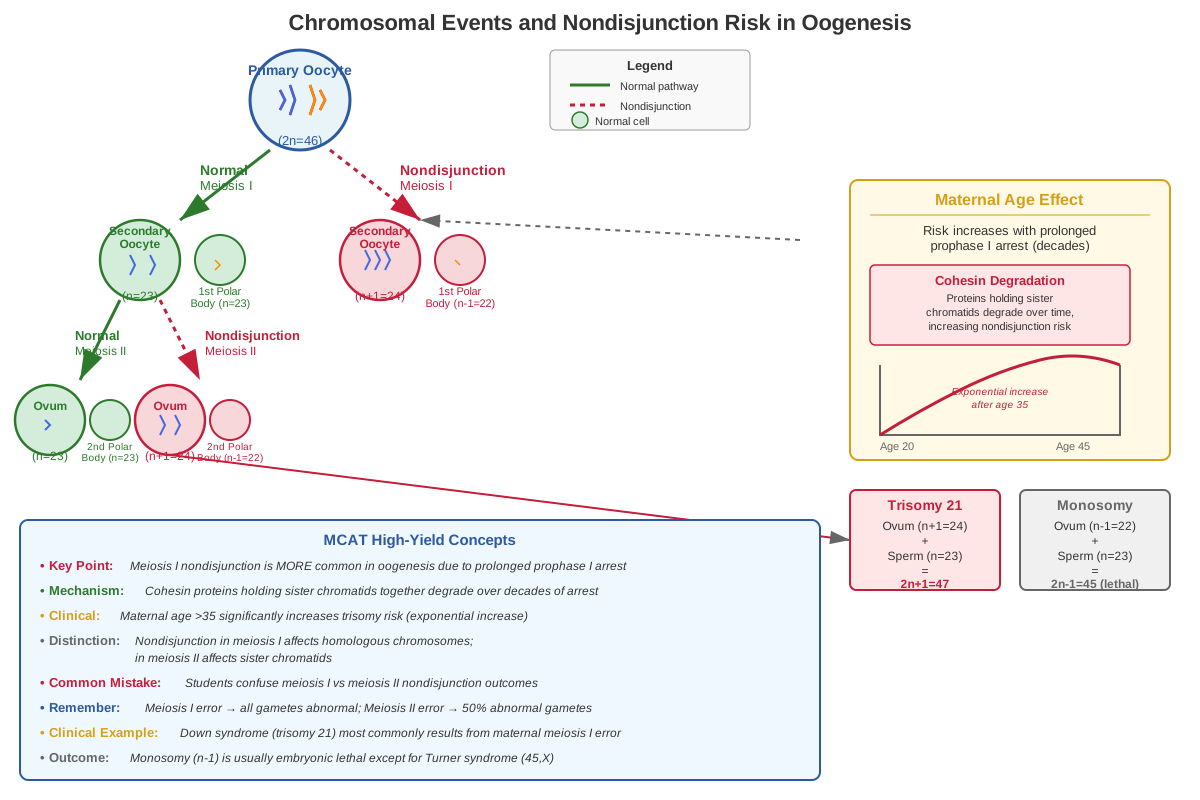
Chromosomal segregation errors during oogenesis relate to genetics and inheritance patterns. The prolonged arrest of primary oocytes makes them vulnerable to age-related deterioration of cohesion proteins, increasing nondisjunction risk and connecting oogenesis to clinical genetics and prenatal screening.
Relationship map:
Primordial germ cells → (mitosis) → Oogonia → (enter meiosis I) → Primary oocytes → (arrest in prophase I) → (FSH stimulation) → (resume meiosis I) → Secondary oocyte + First polar body → (arrest in metaphase II) → (LH surge triggers ovulation) → (fertilization) → (complete meiosis II) → Mature ovum + Second polar body
Quick check — test yourself on Oogenesis so far.
Try Flashcards →High-Yield Facts
⭐ Primary oocytes arrest in diplotene of prophase I before birth and remain arrested until recruited for ovulation (potentially decades later)
⭐ Secondary oocytes arrest in metaphase II and only complete meiosis II if fertilization occurs
⭐ The LH surge triggers completion of meiosis I and ovulation approximately 36 hours later
⭐ Oogenesis produces one functional ovum and 2-3 polar bodies per primary oocyte, unlike spermatogenesis which produces four functional gametes
⭐ Advanced maternal age increases the risk of chromosomal nondisjunction (especially in meiosis I) due to deterioration of cohesion proteins during prolonged arrest
- Oogonia undergo mitotic proliferation only during fetal development; no new oogonia form after birth
- The zona pellucida is a glycoprotein layer that forms around the oocyte and is essential for species-specific sperm binding
- FSH stimulates granulosa cell proliferation and aromatase activity, converting androgens to estrogens
- The first polar body may divide during meiosis II, but all polar bodies eventually degenerate
- Approximately 99.9% of oocytes undergo atresia (programmed cell death) and never ovulate
Common Misconceptions
Misconception: Oogenesis begins at puberty when menstruation starts.
Correction: Oogenesis begins during fetal development when oogonia enter meiosis I to become primary oocytes. At puberty, these already-formed primary oocytes simply resume development in monthly cycles, but they were created before birth.
Misconception: The secondary oocyte is haploid (n) with one chromatid per chromosome (1c).
Correction: The secondary oocyte is haploid (n) in terms of chromosome number but still has sister chromatids attached (2c). Only after completing meiosis II does the mature ovum become n, 1c with single chromatids.
Misconception: Meiosis II occurs immediately after meiosis I in oogenesis.
Correction: There is a second arrest point at metaphase II. The secondary oocyte remains arrested at this stage from ovulation until fertilization occurs. If fertilization does not occur, the oocyte degenerates without completing meiosis II.
Misconception: Polar bodies are defective or abnormal cells.
Correction: Polar bodies are normal products of meiosis that receive the correct genetic material but minimal cytoplasm. They serve to discard excess chromosomes while preserving maximum cytoplasmic resources for the single ovum. They are not defective; they simply have a different fate (degeneration).
Misconception: Women produce new eggs throughout their reproductive years, similar to continuous sperm production in men.
Correction: Women are born with their lifetime supply of primary oocytes. No new oocytes are formed after birth (though recent research suggests some stem cell activity, this is not clinically significant). The pool of oocytes only decreases through ovulation and atresia, contributing to age-related fertility decline.
Misconception: The LH surge directly causes ovulation by rupturing the follicle.
Correction: The LH surge triggers a cascade of events including completion of meiosis I, resumption of oocyte maturation, and activation of proteolytic enzymes that weaken the follicle wall. Ovulation occurs approximately 36 hours after the LH surge begins, not instantaneously.
Worked Examples
Example 1: Determining Chromosomal Content
Question: A researcher is studying oocyte development and isolates cells at different stages. Cell A is arrested in prophase I, Cell B has just completed the first meiotic division, and Cell C has just been fertilized. For each cell, determine: (i) whether it is diploid or haploid, (ii) the number of chromatids per chromosome, and (iii) the total DNA content relative to a haploid cell (c value).
Solution:
Cell A (arrested in prophase I):
- This is a primary oocyte
- (i) Diploid (2n): It still contains homologous chromosome pairs because meiosis I has not been completed
- (ii) Two chromatids per chromosome: DNA replication occurred before entering meiosis I, so each chromosome consists of two sister chromatids joined at the centromere
- (iii) 4c: With 2n chromosomes, each having 2 chromatids, the total DNA content is four times that of a haploid gamete
Cell B (just completed meiosis I):
- This is a secondary oocyte
- (i) Haploid (n): Meiosis I separated homologous chromosomes, so only one chromosome from each pair remains
- (ii) Two chromatids per chromosome: Sister chromatids remain attached after meiosis I; they only separate during meiosis II
- (iii) 2c: With n chromosomes, each having 2 chromatids, the total DNA content is twice that of a haploid gamete
Cell C (just fertilized):
- This is a mature ovum that has completed meiosis II
- (i) Haploid (n) for the egg nucleus (though the zygote will be diploid after nuclear fusion): The egg nucleus itself is haploid before fusion with the sperm nucleus
- (ii) One chromatid per chromosome: Meiosis II separated sister chromatids
- (iii) 1c: Each chromosome is a single chromatid, representing the haploid DNA content
Key Concept: Meiosis I separates homologous chromosomes (reducing from 2n to n), while meiosis II separates sister chromatids (reducing from 2c to 1c). The two arrest points in oogenesis occur before these separations are complete.
Example 2: Clinical Application of Maternal Age Effects
Question: A 42-year-old woman undergoes prenatal screening that reveals her fetus has trisomy 21 (Down syndrome), with three copies of chromosome 21. Karyotype analysis of the parents shows both have normal chromosome numbers. The extra chromosome 21 in the fetus came from the mother. At which stage of oogenesis did the nondisjunction most likely occur, and why does maternal age increase this risk?
Solution:
Identifying the stage:
Nondisjunction most likely occurred during meiosis I of oogenesis. We can determine this by considering that:
- If nondisjunction occurred in meiosis I, homologous chromosomes failed to separate, so the secondary oocyte received both chromosome 21s
- If nondisjunction occurred in meiosis II, sister chromatids failed to separate, but the fetus would still receive two copies of chromosome 21 from the mother
- However, meiosis I nondisjunction is far more common in cases of advanced maternal age
Why maternal age increases risk:
Primary oocytes arrest in prophase I before birth and remain arrested for decades until ovulation. During prophase I, homologous chromosomes are held together by cohesin proteins. Over time (years to decades), these proteins deteriorate, weakening the connections between homologous chromosomes. When the oocyte finally completes meiosis I (triggered by the LH surge), the degraded cohesins may fail to properly hold chromosomes together until anaphase I, leading to premature separation or failure to separate (nondisjunction).
The risk increases exponentially with maternal age:
- Age 25: ~1 in 1,250 risk of Down syndrome
- Age 35: ~1 in 400 risk
- Age 40: ~1 in 100 risk
- Age 45: ~1 in 30 risk
Clinical relevance: This explains why prenatal screening and diagnostic testing (amniocentesis, chorionic villus sampling) are recommended for women of advanced maternal age. The prolonged arrest period unique to oogenesis creates this age-dependent risk that does not exist for spermatogenesis, where sperm are continuously produced with no prolonged arrest.
Exam Strategy
Approaching MCAT Questions on Oogenesis
Step 1: Identify the stage being described
MCAT questions often describe a cell or process without explicitly naming the stage. Look for trigger words:
- "Arrested before birth" or "decades-long arrest" → Primary oocyte in prophase I
- "Just after ovulation" or "awaiting fertilization" → Secondary oocyte in metaphase II
- "Homologous chromosomes separate" → Meiosis I completion
- "Sister chromatids separate" → Meiosis II completion
Step 2: Determine what the question is really asking
Oogenesis questions typically test:
- Timing/sequence: When does each stage occur relative to birth, puberty, ovulation, or fertilization?
- Chromosomal content: What is the ploidy (n or 2n) and chromatid number (c value)?
- Hormonal regulation: Which hormone triggers which transition?
- Comparison: How does this differ from spermatogenesis?
Step 3: Use process of elimination strategically
- Eliminate answers that confuse meiosis I and II events
- Eliminate answers that apply spermatogenesis characteristics to oogenesis (e.g., "four functional gametes")
- Eliminate answers that place events at the wrong time (e.g., "meiosis begins at puberty")
Trigger Words and Phrases
- "Before birth" → Think: oogonia proliferation, entry into meiosis I, prophase I arrest
- "LH surge" → Think: completion of meiosis I, formation of secondary oocyte, ovulation
- "Fertilization" → Think: completion of meiosis II, formation of mature ovum
- "Polar body" → Think: asymmetric division, degeneration, minimal cytoplasm
- "Advanced maternal age" → Think: nondisjunction, chromosomal abnormalities, cohesin deterioration
- "Zona pellucida" → Think: glycoprotein layer, sperm binding, formed during primary follicle stage
Time Allocation
For a discrete question on oogenesis: 60-90 seconds
- Quickly identify the stage (15 seconds)
- Recall key characteristics (20 seconds)
- Evaluate answer choices (25-40 seconds)
For a passage-based question: 90-120 seconds per question
- Reference the passage for experimental details (30 seconds)
- Connect passage information to oogenesis concepts (30 seconds)
- Apply reasoning to answer choices (30-60 seconds)
Exam Tip: If a question asks about chromosomal content, quickly draw a simple diagram showing chromosome number and chromatids. Visual representation prevents errors when tracking ploidy through meiotic divisions.
Memory Techniques
Mnemonic for Arrest Points
"Prophase Pause, Metaphase Maybe"
- Prophase Pause: Primary oocytes arrest in prophase I (the long pause from before birth until ovulation)
- Metaphase Maybe: Secondary oocytes arrest in metaphase II (maybe they'll complete if fertilization occurs)
Mnemonic for Oogenesis Products
"One Ovum, Polar Pals Perish"
- Reminds you that oogenesis produces ONE functional ovum
- The "Polar Pals" (polar bodies) all Perish (degenerate)
- Contrasts with spermatogenesis producing four functional sperm
Visualization Strategy for Follicle Stages
Picture follicle development as a balloon inflating:
- Primordial: Deflated balloon (flat follicle cells)
- Primary: Balloon starting to inflate (cuboidal granulosa cells, zona pellucida forms)
- Secondary: Balloon half-inflated with water pocket (antrum forms)
- Mature: Fully inflated balloon ready to pop (large antrum, ready for ovulation)
Acronym for Hormonal Cascade
"Go Find Large Eggs Please"
- GnRH (from hypothalamus)
- FSH (from anterior pituitary)
- LH (from anterior pituitary)
- Estrogen (from granulosa cells)
- Progesterone (from corpus luteum)
Timeline Visualization
Create a mental timeline with three key points:
- Before birth: Oogonia → Primary oocytes → ARREST in prophase I
- Puberty to menopause: Monthly recruitment → FSH stimulation → LH surge → Complete meiosis I → ARREST in metaphase II → Ovulation
- Fertilization: Complete meiosis II → Mature ovum
Summary
Oogenesis is the developmental process that produces female gametes through a series of mitotic and meiotic divisions spanning from fetal development through reproductive years. Beginning before birth, oogonia proliferate mitotically and then enter meiosis I to become primary oocytes, which arrest in prophase I for years or decades. This prolonged arrest allows cytoplasmic growth and accumulation of resources but also increases vulnerability to age-related chromosomal segregation errors. At puberty, hormonal signals (particularly FSH and LH) trigger monthly recruitment of primary oocytes to resume development. The LH surge stimulates completion of meiosis I, producing a secondary oocyte and first polar body through asymmetric division. The secondary oocyte arrests again at metaphase II and is ovulated. Only if fertilization occurs does the oocyte complete meiosis II, producing the mature ovum and second polar body. This process yields one functional, nutrient-rich egg per precursor cell, contrasting sharply with spermatogenesis. Understanding the timing of meiotic arrest points, hormonal regulation, and chromosomal content at each stage is essential for MCAT success and provides foundation for clinical concepts including fertility, maternal age effects, and reproductive technologies.
Key Takeaways
- Oogenesis begins before birth with oogonia entering meiosis I to form primary oocytes that arrest in prophase I until recruited for ovulation during reproductive years
- Two arrest points characterize oogenesis: prophase I (before birth until ovulation) and metaphase II (after ovulation until fertilization)
- The LH surge triggers completion of meiosis I approximately 36 hours before ovulation, while fertilization triggers completion of meiosis II
- Asymmetric cell divisions produce one large, nutrient-rich ovum and 2-3 small polar bodies that degenerate, maximizing resources for the single functional gamete
- Advanced maternal age increases chromosomal nondisjunction risk due to deterioration of cohesin proteins during the prolonged prophase I arrest
- FSH drives follicle development and oocyte maturation, while the LH surge triggers ovulation and completion of meiosis I
- Unlike spermatogenesis (continuous, symmetric, producing four gametes), oogenesis is cyclical, asymmetric, and produces one gamete per precursor cell
Related Topics
Spermatogenesis: Understanding male gamete formation provides essential comparison points for oogenesis, highlighting differences in timing, products, and regulation. Mastering both processes enables comprehensive understanding of human reproduction.
Menstrual Cycle: The ovarian cycle (follicular and luteal phases) is intimately connected to oogenesis, with hormonal fluctuations driving oocyte maturation and ovulation. Understanding this relationship integrates reproductive endocrinology with cellular development.
Fertilization and Early Development: Oogenesis directly leads to fertilization, where the secondary oocyte completes meiosis II. Understanding how the mature ovum prepares for and responds to fertilization connects gametogenesis to embryology.
Meiosis and Genetic Variation: Oogenesis exemplifies meiotic processes including crossing over, independent assortment, and the consequences of nondisjunction. Deepening meiosis knowledge enhances understanding of genetic diversity and inheritance patterns.
Reproductive Endocrinology: The hypothalamic-pituitary-ovarian axis controls oogenesis through complex feedback loops. Mastering this hormonal regulation connects cellular processes to systemic physiology and clinical applications.
Practice CTA
Now that you've mastered the core concepts of oogenesis, it's time to solidify your understanding through active practice. Challenge yourself with MCAT-style practice questions that test your ability to apply these concepts in novel contexts, compare oogenesis with spermatogenesis, and analyze experimental scenarios. Use flashcards to drill the high-yield facts, especially the timing of arrest points and hormonal triggers. Remember: understanding the "why" behind oogenesis—the biological rationale for prolonged arrests, asymmetric divisions, and hormonal regulation—will enable you to tackle any question the MCAT presents. You've built a strong foundation; now reinforce it through deliberate practice and watch your confidence soar!
Sign up free to keep reading
Create a free AnvayaPrep account to finish this MCAT guide on Oogenesis — plus flashcards and practice questions.