Overview
The skin is the largest organ of the human body, serving as the primary interface between internal physiological systems and the external environment. Understanding skin structure is fundamental to mastering Physiology and Organ Systems within Biology for the MCAT. The integumentary system, of which skin is the primary component, performs critical functions including protection against pathogens and physical trauma, thermoregulation, sensory perception, vitamin D synthesis, and fluid homeostasis. These functions emerge directly from the skin's complex, multilayered architecture.
For the MCAT, skin structure Biology appears frequently in passages involving homeostasis, sensory systems, immune responses, and clinical scenarios involving burns, wounds, or dermatological conditions. Questions may test understanding of the distinct layers of skin, the cell types within each layer, the accessory structures (hair follicles, glands, nails), and how structural features enable specific physiological functions. The topic integrates concepts from cell biology (epithelial tissue, keratinocytes), biochemistry (keratin protein structure, melanin synthesis), and physiology (temperature regulation, barrier function).
Mastery of skin structure MCAT content provides a foundation for understanding related topics including the immune system (skin as first-line defense), nervous system (cutaneous receptors), endocrine function (vitamin D production), and thermoregulation. The skin exemplifies how tissue organization and cellular specialization create emergent organ-level functions—a recurring theme across MCAT biological systems questions.
Learning Objectives
- [ ] Define skin structure using accurate Biology terminology
- [ ] Explain why skin structure matters for the MCAT
- [ ] Apply skin structure to exam-style questions
- [ ] Identify common mistakes related to skin structure
- [ ] Connect skin structure to related Biology concepts
- [ ] Differentiate between the epidermis, dermis, and hypodermis based on composition and function
- [ ] Describe the process of keratinization and its role in barrier function
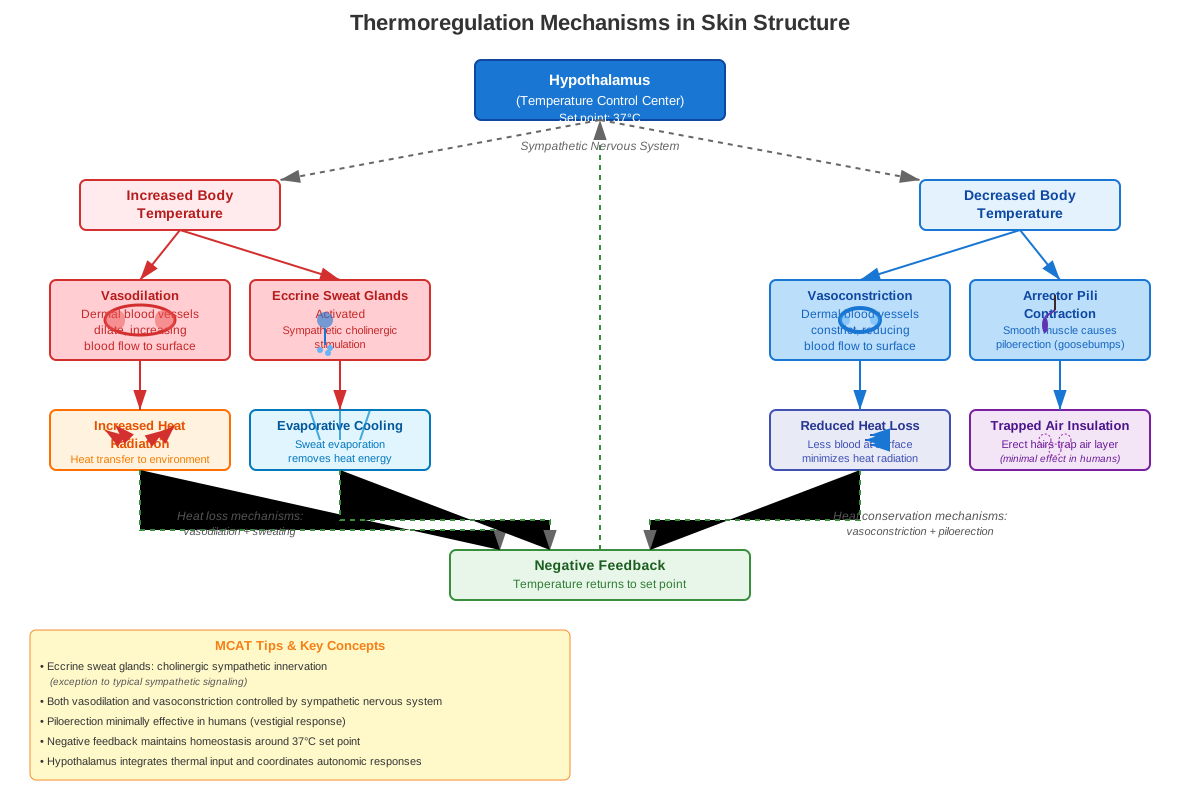
- [ ] Explain the relationship between skin structure and thermoregulation mechanisms
Prerequisites
- Epithelial tissue types: Understanding tissue classification is essential because skin consists primarily of stratified squamous epithelium
- Cell junctions: Knowledge of desmosomes and tight junctions explains how keratinocytes maintain barrier integrity
- Connective tissue components: Familiarity with collagen and elastin is necessary to understand dermal structure and properties
- Basic histology: Ability to interpret tissue organization helps identify skin layers in microscopic images
- Homeostasis principles: Understanding negative feedback and set points contextualizes thermoregulatory functions of skin
Why This Topic Matters
Clinical and Real-World Significance: The skin serves as the body's first line of defense against infection, dehydration, and environmental damage. Burns are classified by depth of skin involvement (first-degree affects only epidermis, second-degree extends into dermis, third-degree destroys full thickness), making skin structure knowledge essential for understanding injury severity. Skin cancer, including melanoma arising from melanocytes, represents one of the most common malignancies. Dermatological manifestations often indicate systemic diseases—jaundice reflects liver dysfunction, cyanosis indicates poor oxygenation, and rashes may signal autoimmune conditions.
Exam Statistics: Skin structure appears in approximately 2-4% of MCAT questions, typically within passages about homeostasis, sensory systems, or clinical scenarios. Questions may be standalone or embedded in longer passages about thermoregulation, immune function, or vitamin D metabolism. The topic appears across both Biological and Biochemical Foundations sections.
Common Exam Contexts: MCAT passages frequently present skin structure in scenarios involving burn victims (testing understanding of layer depth and regeneration capacity), temperature regulation experiments (connecting sweat glands and blood vessel distribution to cooling mechanisms), sensory perception studies (relating receptor types to skin layers), or vitamin D synthesis pathways (connecting UV exposure to biochemical reactions in skin). Passages may include histological images requiring layer identification or graphs showing temperature-dependent changes in skin blood flow.
Core Concepts
The Three Primary Layers of Skin
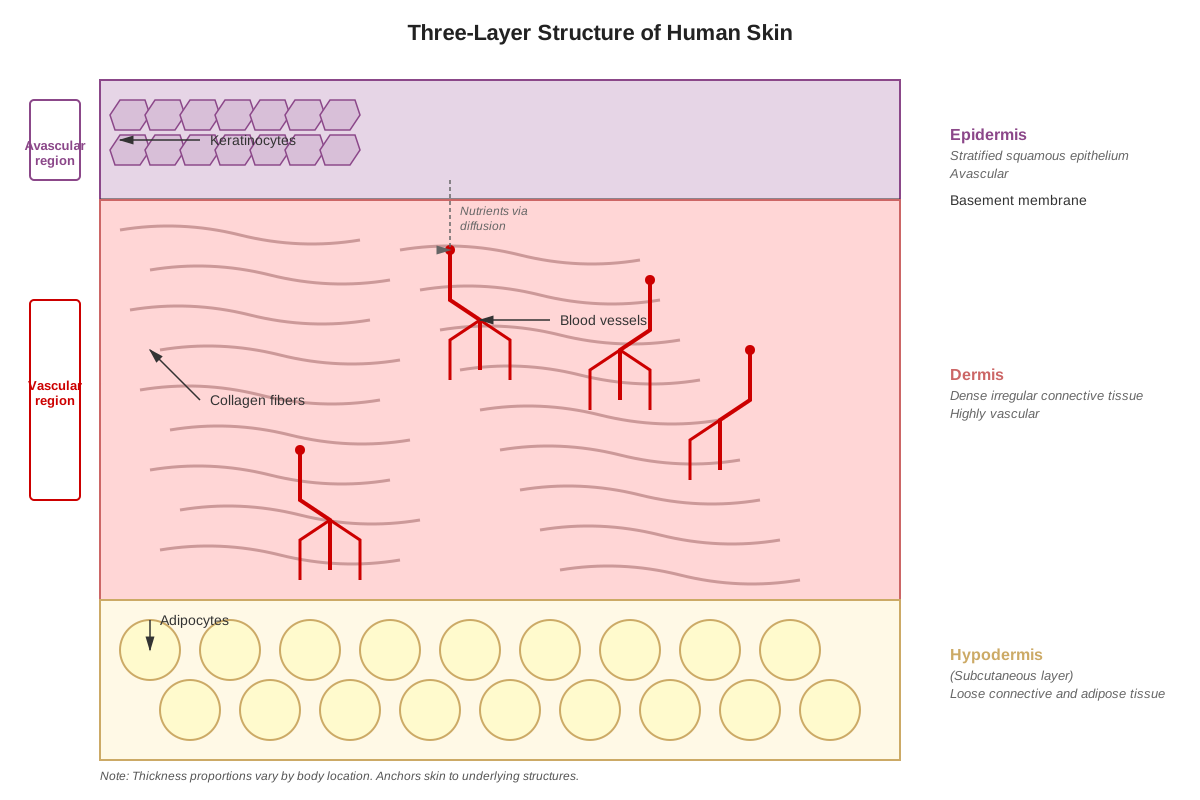
Skin structure consists of three distinct layers, each with unique composition, cellular organization, and physiological roles. From superficial to deep, these are the epidermis, dermis, and hypodermis (also called subcutaneous layer or superficial fascia).
The epidermis is the outermost layer, composed of stratified squamous epithelium. This avascular layer (lacking blood vessels) receives nutrients through diffusion from the underlying dermis. The epidermis provides a waterproof barrier and contains specialized cells including keratinocytes (90% of cells), melanocytes (pigment-producing cells), Langerhans cells (immune function), and Merkel cells (sensory reception).
The dermis lies beneath the epidermis and consists of dense irregular connective tissue rich in collagen and elastin fibers. Unlike the epidermis, the dermis is highly vascular and contains nerve endings, sensory receptors, hair follicles, and glands. The dermis provides structural strength, elasticity, and houses the blood vessels that regulate body temperature.
The hypodermis (subcutaneous layer) is the deepest layer, composed primarily of adipose (fat) tissue and loose connective tissue. While not technically part of the skin proper, the hypodermis anchors skin to underlying structures, provides insulation, and serves as an energy reservoir.
Epidermal Layers and Keratinization
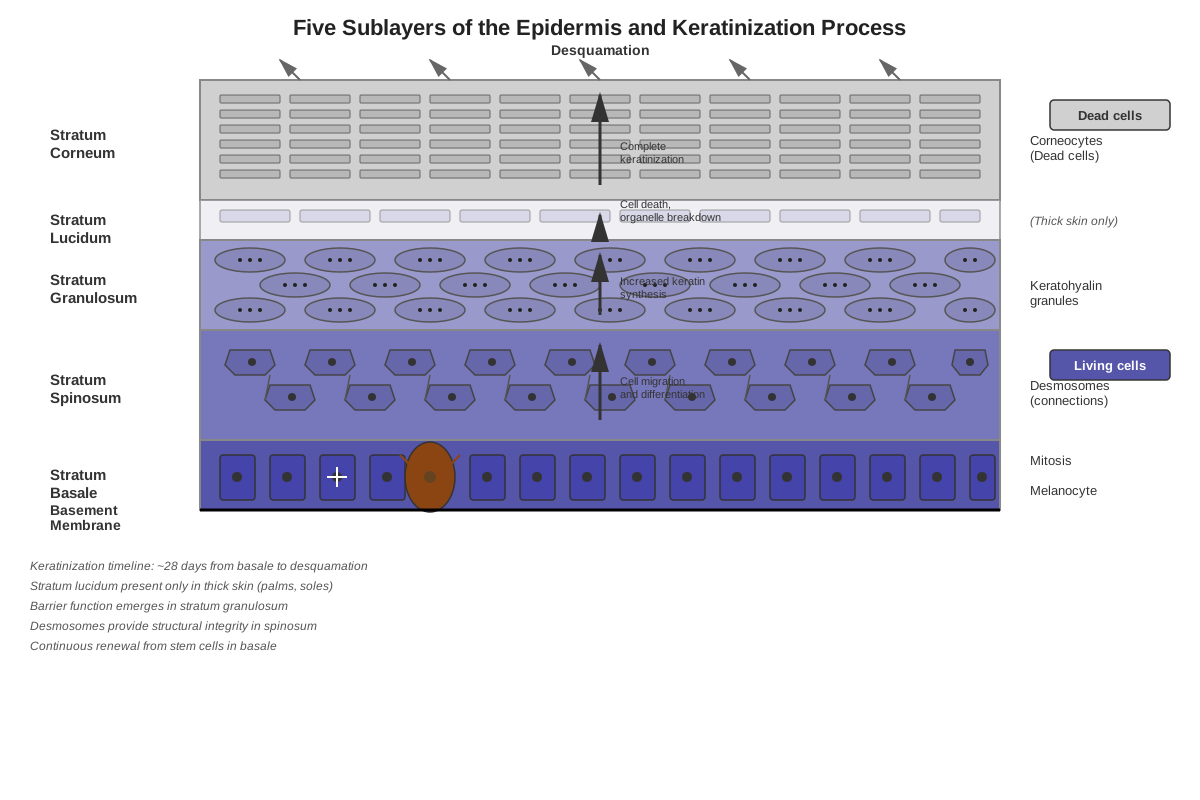
The epidermis itself contains multiple sublayers (strata) that reflect stages in the process of keratinization—the transformation of living keratinocytes into dead, keratin-filled cells that form the protective surface. From deep to superficial, these layers are:
- Stratum basale (basal layer): Single layer of columnar or cuboidal cells attached to the basement membrane. Contains stem cells that continuously divide through mitosis, producing new keratinocytes that migrate upward. Melanocytes reside in this layer, transferring melanin pigment to keratinocytes.
- Stratum spinosum (spinous layer): Several layers of keratinocytes connected by numerous desmosomes (cell junctions), giving cells a "spiny" appearance in histological preparations. Langerhans cells (antigen-presenting immune cells) are abundant here. Cells begin producing keratin filaments.
- Stratum granulosum (granular layer): 3-5 layers of flattened cells containing keratohyalin granules (precursors to keratin) and lamellar granules (release lipids that waterproof the skin). Cells undergo programmed death (apoptosis) in this layer.
- Stratum lucidum (clear layer): Present only in thick skin (palms and soles), this thin, translucent layer consists of dead keratinocytes with densely packed keratin.
- Stratum corneum (horny layer): The outermost 20-30 layers of dead, flattened keratinocytes (now called corneocytes) filled with keratin and surrounded by lipids. These cells are continuously shed (desquamation) and replaced from below. This layer provides the primary barrier function.
MCAT Exam Tip: Remember the layers using the mnemonic "Basically Students Get Lost Constantly" (Basale, Spinosum, Granulosum, Lucidum, Corneum). Questions often test the order or functional characteristics of each layer.
Dermal Structure and Components
The dermis consists of two regions with distinct characteristics:
Papillary dermis: The superficial 20% of the dermis, composed of loose areolar connective tissue with thin collagen and elastin fibers. Contains dermal papillae—fingerlike projections that interdigitate with epidermal ridges, increasing surface area for nutrient exchange and creating fingerprints. Rich in capillaries, lymphatic vessels, and sensory receptors (especially Meissner's corpuscles for light touch).
Reticular dermis: The deeper 80% of the dermis, composed of dense irregular connective tissue with thick collagen bundles arranged in various directions (providing strength and resistance to tearing). Contains fewer cells but more fibers than papillary dermis. Houses hair follicles, sebaceous glands, sweat glands, and deeper sensory receptors (Pacinian corpuscles for deep pressure and vibration).
| Feature | Papillary Dermis | Reticular Dermis |
|---|---|---|
| Location | Superficial 20% | Deep 80% |
| Tissue type | Loose areolar connective tissue | Dense irregular connective tissue |
| Fiber arrangement | Thin, loosely arranged | Thick collagen bundles |
| Vascularization | High capillary density | Moderate vascularity |
| Structures | Dermal papillae, Meissner's corpuscles | Hair follicles, glands, Pacinian corpuscles |
| Primary function | Nutrient exchange, light touch sensation | Structural strength, elasticity |
Skin Accessory Structures
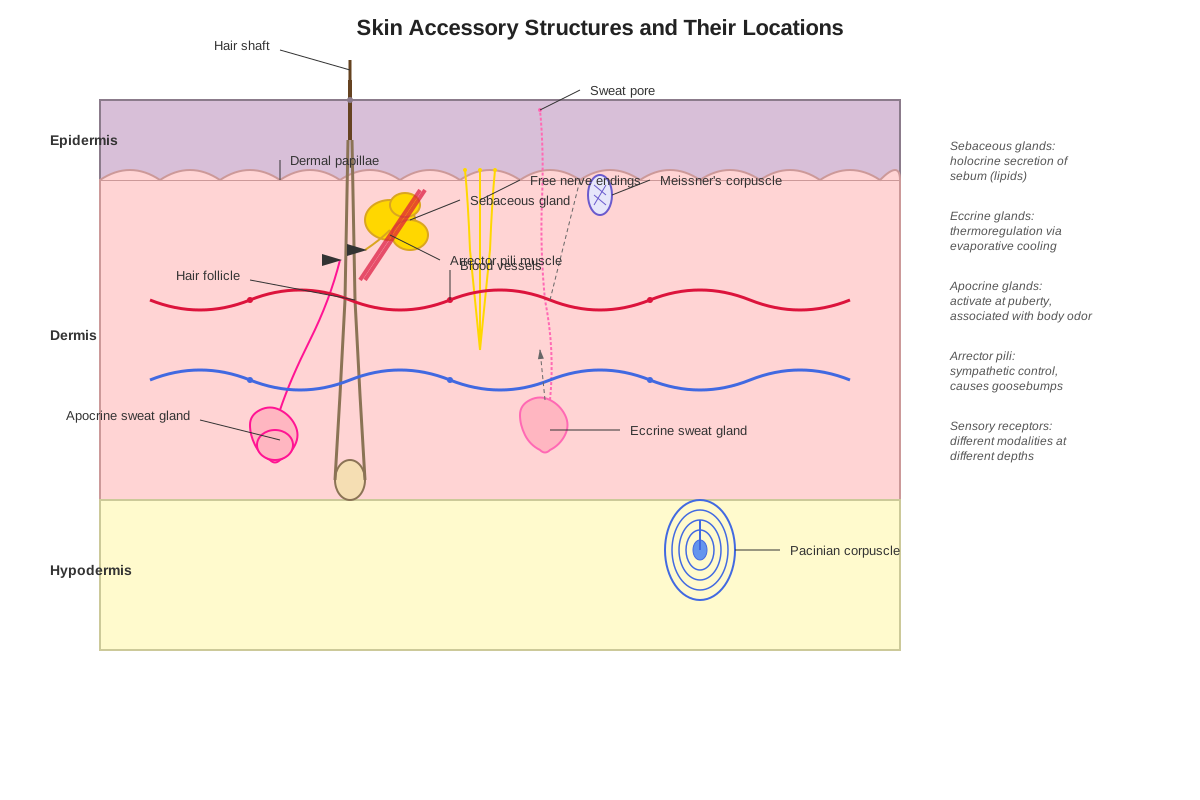
Hair follicles are epithelial invaginations extending from the epidermis into the dermis (or hypodermis for deep follicles). The hair shaft consists of dead keratinized cells. The arrector pili muscle, composed of smooth muscle, attaches to each follicle; contraction causes hair to stand erect ("goosebumps"), trapping air for insulation.
Sebaceous glands are holocrine glands that secrete sebum, an oily mixture of lipids, cholesterol, and cellular debris. Most sebaceous glands connect to hair follicles, releasing sebum that lubricates hair and skin, provides antimicrobial protection, and prevents water loss.
Sweat glands exist in two types:
- Eccrine glands: Most numerous (3-4 million), distributed across nearly all body surfaces. Produce watery sweat (99% water plus salts and metabolic wastes) that evaporates to cool the body. Ducts open directly onto skin surface.
- Apocrine glands: Located in axillary (armpit) and genital regions. Produce thicker, protein-rich secretion into hair follicles. Bacterial decomposition of this secretion produces body odor. Become active at puberty.
Nails are specialized keratinized structures protecting the distal digits. The nail body (visible portion) consists of dead, heavily keratinized cells produced by the nail matrix (growth region beneath the proximal nail fold).
Skin Functions Derived from Structure
The structural organization of skin enables multiple critical physiological functions:
Protection: The keratinized stratum corneum provides a physical barrier against mechanical trauma, pathogens, and chemicals. Lipids between corneocytes prevent water loss. Melanin in keratinocytes absorbs UV radiation, protecting underlying tissues from DNA damage. Langerhans cells initiate immune responses against pathogens breaching the barrier.
Thermoregulation: Dermal blood vessels dilate (vasodilation) to increase blood flow and heat loss or constrict (vasoconstriction) to conserve heat. Eccrine sweat glands produce sweat; evaporation removes heat. Subcutaneous adipose tissue provides insulation. Arrector pili contraction creates air-trapping layer (though minimally effective in humans).
Sensation: Multiple receptor types distributed through skin layers detect environmental stimuli:
- Free nerve endings (pain, temperature, itch)
- Meissner's corpuscles in dermal papillae (light touch, texture)
- Pacinian corpuscles in deep dermis (deep pressure, vibration)
- Merkel cells in epidermis (sustained touch, texture)
- Ruffini endings in dermis (skin stretch)
Vitamin D synthesis: UV-B radiation (290-315 nm) converts 7-dehydrocholesterol in keratinocytes and dermal fibroblasts to previtamin D3, which isomerizes to vitamin D3 (cholecalciferol). This is subsequently modified in liver and kidneys to produce active vitamin D (calcitriol), essential for calcium homeostasis.
Excretion: Sweat contains water, salts (NaCl), urea, ammonia, and small amounts of other metabolic wastes, providing minor excretory function supplementing kidneys.
Concept Relationships
The concepts within skin structure form an integrated hierarchy: Cellular composition (keratinocytes, melanocytes, fibroblasts) → Tissue organization (stratified squamous epithelium, connective tissue) → Layer formation (epidermis, dermis, hypodermis) → Organ-level functions (protection, thermoregulation, sensation).
Keratinization connects cellular differentiation to barrier function: stem cell division in stratum basale → keratinocyte maturation through spinosum and granulosum → cell death and keratin accumulation → formation of protective stratum corneum. This process exemplifies how programmed cell death (apoptosis) serves a physiological purpose.
Vascularization patterns link to multiple functions: avascular epidermis relies on dermal diffusion for nutrients → dermal capillary networks enable thermoregulation through blood flow changes → subcutaneous adipose provides insulation. The absence of blood vessels in epidermis explains why superficial wounds don't bleed and why epidermal healing depends on cell migration rather than vascular repair.
Skin structure connects to prerequisite knowledge of epithelial tissue (stratified squamous epithelium classification), cell junctions (desmosomes maintaining keratinocyte connections), and connective tissue (collagen and elastin providing dermal strength). It extends to related topics including immune system (Langerhans cells as antigen-presenting cells, skin as physical barrier), nervous system (cutaneous receptors and sensory pathways), endocrine system (vitamin D synthesis), and homeostasis (thermoregulation, fluid balance).
The relationship between structure and function is paramount: thick stratum corneum in palms/soles → enhanced protection for high-friction areas; dense dermal papillae in fingertips → enhanced tactile sensitivity; abundant eccrine glands on forehead and back → efficient cooling in heat stress.
High-Yield Facts
⭐ The epidermis is composed of stratified squamous epithelium and is avascular (receives nutrients by diffusion from dermis)
⭐ The five epidermal layers from deep to superficial are: stratum basale, stratum spinosum, stratum granulosum, stratum lucidum (only in thick skin), and stratum corneum
⭐ Keratinocytes undergo keratinization as they migrate from stratum basale to stratum corneum, dying and filling with keratin protein to form the protective barrier
⭐ The dermis contains blood vessels, nerves, sensory receptors, hair follicles, and glands, while the epidermis does not
⭐ Melanocytes in the stratum basale produce melanin pigment that is transferred to keratinocytes to protect against UV radiation damage
- The papillary dermis contains dermal papillae that interdigitate with epidermal ridges, creating fingerprints and increasing surface area for nutrient exchange
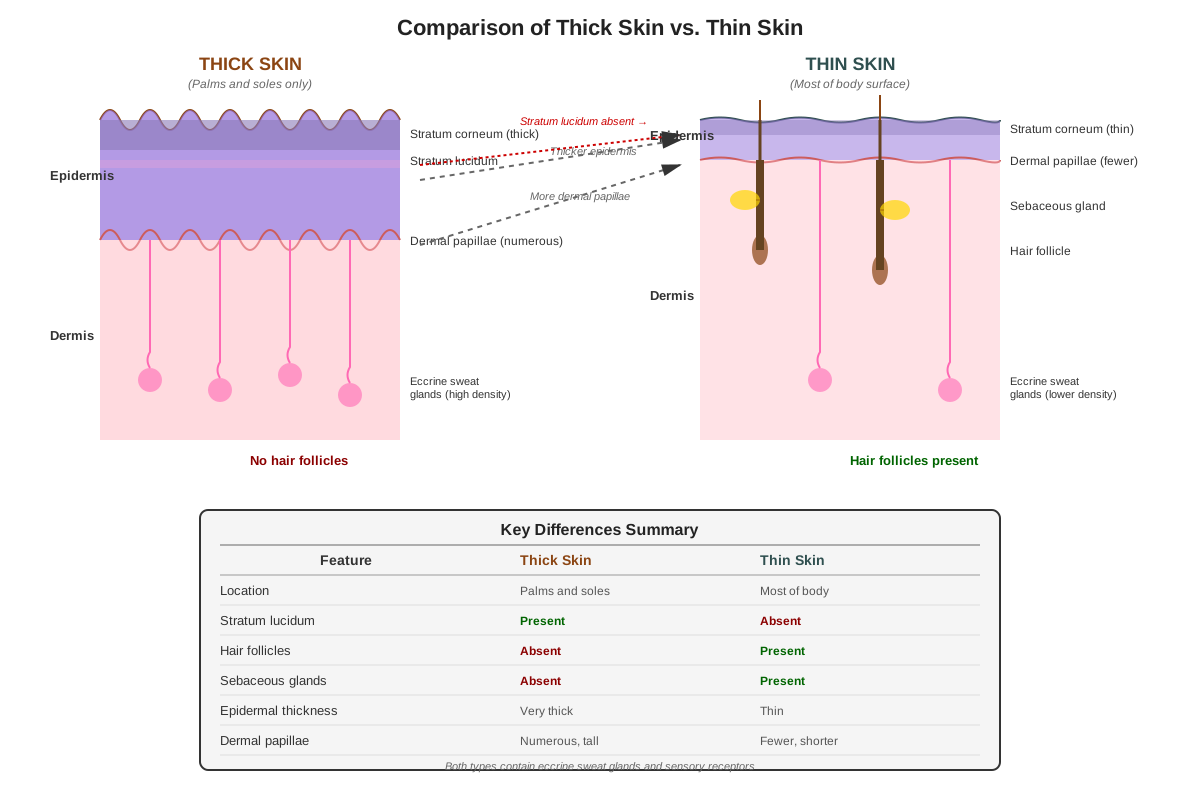
- Thick skin (palms and soles) has all five epidermal layers including stratum lucidum, while thin skin (most of body) lacks stratum lucidum
- Eccrine sweat glands produce watery sweat for thermoregulation and open directly onto skin surface, while apocrine glands produce protein-rich secretion into hair follicles
- Sebaceous glands are holocrine glands that secrete sebum (oily substance) to lubricate skin and hair
- Vitamin D synthesis begins in skin when UV-B radiation converts 7-dehydrocholesterol to previtamin D3 in keratinocytes and dermal fibroblasts
- Langerhans cells in the epidermis are dendritic cells that function as antigen-presenting cells in immune responses
- The hypodermis (subcutaneous layer) consists primarily of adipose tissue and anchors skin to underlying structures while providing insulation
- First-degree burns affect only the epidermis, second-degree burns extend into the dermis, and third-degree burns destroy the full thickness of skin
- Meissner's corpuscles (light touch) are located in dermal papillae, while Pacinian corpuscles (deep pressure/vibration) are in the deep dermis
- Desmosomes connecting keratinocytes in the stratum spinosum create the "spiny" appearance and maintain structural integrity of the epidermis
Quick check — test yourself on Skin structure so far.
Try Flashcards →Common Misconceptions
Misconception: The hypodermis is part of the skin proper.
Correction: The hypodermis (subcutaneous layer) is technically not part of the skin itself, which consists only of epidermis and dermis. However, the hypodermis is functionally associated with skin and often discussed alongside it. MCAT questions may refer to "skin layers" meaning only epidermis and dermis, or may include hypodermis when discussing the integumentary system broadly.
Misconception: All skin has the same thickness and layer composition.
Correction: Thick skin (palms and soles) contains all five epidermal layers including stratum lucidum and has a thicker stratum corneum but lacks hair follicles and sebaceous glands. Thin skin (covering most of the body) lacks stratum lucidum, has a thinner stratum corneum, but contains hair follicles and sebaceous glands. The distinction relates to functional demands—thick skin provides enhanced protection in high-friction areas.
Misconception: Melanin is produced by keratinocytes.
Correction: Melanin is synthesized by melanocytes (specialized cells in the stratum basale), not keratinocytes. Melanocytes transfer melanin to surrounding keratinocytes through their dendritic processes. Keratinocytes then accumulate the melanin in a "cap" over their nuclei, protecting nuclear DNA from UV damage. This distinction is important for understanding skin pigmentation disorders and melanoma (cancer of melanocytes).
Misconception: The epidermis heals quickly because it contains many blood vessels.
Correction: The epidermis is avascular and receives nutrients only through diffusion from dermal capillaries. Epidermal healing depends on keratinocyte migration and proliferation from the stratum basale, not vascular repair. This is why superficial epidermal wounds don't bleed and can heal without scarring if the basement membrane remains intact. Dermal wounds, which damage blood vessels, bleed and often result in scar formation.
Misconception: Sweat glands actively cool the body by producing cold sweat.
Correction: Sweat glands produce sweat at body temperature (approximately 37°C). Cooling occurs through evaporation of sweat from the skin surface, which requires heat energy (heat of vaporization) drawn from the body. If sweat drips off without evaporating, minimal cooling occurs. This is why high humidity reduces evaporative cooling efficiency—saturated air cannot accept additional water vapor.
Misconception: Skin color is determined solely by the number of melanocytes.
Correction: All humans have approximately the same number of melanocytes regardless of skin color. Skin pigmentation differences result from variations in melanin production (amount and type), melanin distribution within keratinocytes, and melanosome size and degradation rate. Genetic factors regulate these variables, creating the spectrum of human skin tones. This explains why melanocyte number doesn't correlate with skin color but melanin synthesis activity does.
Worked Examples
Example 1: Burn Classification and Regeneration
Clinical Vignette: A patient presents to the emergency department with a burn injury to the forearm sustained from hot cooking oil. Physical examination reveals an area of erythema (redness), blistering with clear fluid, and extreme pain to light touch. The physician classifies this as a second-degree burn.
Question: Based on skin structure, explain why this burn is classified as second-degree and predict the healing outcome.
Solution:
Step 1 - Identify affected layers: The presence of blistering indicates separation between epidermis and dermis, meaning the burn extends through the full thickness of the epidermis and into the papillary dermis. This defines a second-degree (partial-thickness) burn. First-degree burns affect only the epidermis without blistering, while third-degree burns destroy the full thickness including deep dermis.
Step 2 - Explain the pain: Extreme pain results from exposure of dermal nerve endings and sensory receptors. The epidermis contains no nerve endings (only free nerve endings of dermal neurons extend into lower epidermis), so intact epidermis protects underlying nerves. When epidermis is destroyed, dermal nerves are directly exposed to stimuli. Paradoxically, third-degree burns are often painless because nerve endings are completely destroyed.
Step 3 - Explain blister formation: Blisters form when plasma leaks from damaged dermal capillaries and accumulates between the epidermis and dermis. The epidermis is avascular, so blistering confirms dermal involvement where blood vessels exist.
Step 4 - Predict healing: Second-degree burns can heal without skin grafting if the stratum basale and dermal structures (hair follicles, glands) remain partially intact. Stem cells in the stratum basale and epithelial cells lining hair follicles and glands can proliferate and migrate to re-epithelialize the wound. Healing typically takes 2-3 weeks. Some scarring may occur due to dermal damage, but regeneration is possible because the reticular dermis and hypodermis remain intact to provide structural support and blood supply.
Connection to Learning Objectives: This example applies skin structure knowledge to clinical scenarios (common MCAT format), demonstrates understanding of layer-specific functions (pain sensation in dermis, regeneration from stratum basale), and connects structure to healing capacity.
Example 2: Thermoregulation Mechanisms
Experimental Scenario: Researchers measure skin blood flow and sweat production in subjects exposed to increasing ambient temperatures from 20°C to 35°C. Results show that skin blood flow increases linearly with temperature, while sweat production remains minimal until 30°C, then increases dramatically.
Question: Explain these observations based on skin structure and thermoregulatory mechanisms.
Solution:
Step 1 - Identify relevant structures: Thermoregulation involves dermal blood vessels (arterioles can dilate or constrict) and eccrine sweat glands (distributed across body surface, particularly dense on forehead, palms, and back).
Step 2 - Explain blood flow changes: As ambient temperature increases, the hypothalamus detects rising core body temperature and signals vasodilation of dermal arterioles. Increased blood flow to skin capillaries (particularly in the papillary dermis) brings warm blood closer to the surface, facilitating heat loss through radiation and conduction. The linear increase reflects proportional vasodilation as temperature rises. This mechanism operates continuously across the temperature range because it requires no additional energy expenditure beyond autonomic nervous system signaling.
Step 3 - Explain sweat production pattern: Sweat production remains minimal at moderate temperatures (20-30°C) because vasodilation alone provides sufficient heat loss. At 30°C, when vasodilation reaches maximum capacity, the hypothalamus activates eccrine sweat glands. Sweat production then increases dramatically because evaporative cooling becomes necessary to maintain thermal homeostasis. The threshold pattern reflects the body's hierarchical use of cooling mechanisms—passive heat loss first, then active evaporative cooling.
Step 4 - Connect to skin structure: The effectiveness of these mechanisms depends on structural features: the dermis must be highly vascular (it is—unlike the avascular epidermis), sweat glands must have ducts opening to the surface (eccrine glands do—they open directly onto skin rather than into hair follicles), and the stratum corneum must be permeable to water vapor (it is—lipids between corneocytes allow controlled water loss).
Step 5 - Consider energy costs: Sweat production requires metabolic energy to synthesize and secrete sweat, plus the body loses water and electrolytes that must be replaced. Vasodilation requires minimal energy. This explains why vasodilation is the first-line response and sweating is reserved for higher heat loads.
Connection to Learning Objectives: This example integrates skin structure with physiological function, demonstrates how experimental data reflects underlying anatomy, and connects multiple concepts (vascularization, gland function, barrier properties) to explain a complex homeostatic response.
Exam Strategy
Approaching MCAT Questions on Skin Structure:
- Identify the layer in question: Many questions test whether you can distinguish epidermis from dermis or identify specific epidermal strata. Key triggers: "avascular layer" = epidermis; "contains blood vessels" = dermis; "stratified squamous epithelium" = epidermis; "connective tissue" = dermis.
- Connect structure to function: MCAT questions rarely ask for pure memorization. Instead, they present scenarios requiring you to predict outcomes based on structural features. Ask: "What structures are present in this layer?" and "How do those structures enable this function?"
- Watch for clinical contexts: Burns, wounds, skin cancer, and sensory deficits are common question frameworks. Know the depth of each burn degree, which layers regenerate (epidermis can if stratum basale intact; dermis scars), and where different cell types reside (melanocytes in stratum basale → melanoma originates there).
- Process of elimination for layer identification: If a question describes a structure and asks which layer it's in, eliminate systematically:
- Contains blood vessels? Not epidermis.
- Contains glands or hair follicles? Dermis (or deeper).
- Composed of dead cells? Stratum corneum.
- Site of cell division? Stratum basale.
- Time allocation: Skin structure questions are typically straightforward if you know the content. Allocate 60-90 seconds for standalone questions. For passage-based questions, spend 30-45 seconds per question after reading the passage. Don't overthink—these questions usually test direct application of knowledge rather than complex reasoning.
Trigger Words and Phrases:
- "Waterproof barrier" → stratum corneum, lipids between corneocytes
- "Pigment production" → melanocytes in stratum basale
- "Immune surveillance" → Langerhans cells in stratum spinosum
- "Fingerprints" → dermal papillae interdigitating with epidermal ridges
- "Evaporative cooling" → eccrine sweat glands
- "UV protection" → melanin in keratinocytes
- "Tactile sensation" → Meissner's corpuscles (light touch) or Pacinian corpuscles (deep pressure)
- "Vitamin D synthesis" → keratinocytes, 7-dehydrocholesterol, UV-B radiation
Common Trap Answers:
- Questions may offer "hypodermis" as the answer for structures actually in dermis (hair follicles, glands)—remember hypodermis is primarily adipose tissue
- "Melanocytes produce keratin" is false—melanocytes produce melanin; keratinocytes produce keratin
- "Epidermis contains nerve endings" is misleading—free nerve endings from dermis extend into epidermis, but the cell bodies and most of the neurons are in dermis
Memory Techniques
Mnemonic for Epidermal Layers (deep to superficial):
"Before Studying, Get Lots of Coffee"
- Basale
- Spinosum
- Granulosum
- Lucidum
- Corneum
Alternative: "Beautiful Skin Generates Lovely Complexions"
Mnemonic for Skin Functions:
"PEST-V"
- Protection (barrier against pathogens, trauma, UV)
- Excretion (sweat contains wastes)
- Sensation (receptors detect stimuli)
- Thermoregulation (vasodilation/constriction, sweating)
- Vitamin D synthesis
Visualization Strategy for Layer Organization:
Picture skin as a brick wall (stratum corneum = protective outer bricks) built on a foundation (stratum basale = construction site where new bricks are made). The dermis is the concrete and rebar beneath (structural support with embedded utilities = blood vessels and nerves). The hypodermis is the ground/insulation beneath the foundation.
Acronym for Dermal Receptors:
"MPPM" (from superficial to deep)
- Meissner's corpuscles (light touch, in papillary dermis)
- Pacinian corpuscles (deep pressure, in reticular dermis)
- Plus Merkel cells (sustained touch, in epidermis) and free nerve endings
Memory Hook for Thick vs. Thin Skin:
Thick skin is on your palms (for grasping) and soles (for walking)—areas that need extra protection. It has an extra layer (stratum Lucidum) but Lacks hair. Thin skin is everywhere else and has hair.
Conceptual Anchor for Keratinization:
Think of keratinization as a "cellular sacrifice"—cells are born in the basement (stratum basale), live and work in the middle floors (spinosum, granulosum), then die and become the protective roof (corneum). Their death serves the organism's survival (barrier function).
Summary
Skin structure comprises three primary layers—epidermis, dermis, and hypodermis—each with distinct composition and functions. The epidermis is an avascular stratified squamous epithelium organized into five layers (stratum basale, spinosum, granulosum, lucidum, and corneum) that reflect stages of keratinization, the process by which living keratinocytes transform into dead, keratin-filled cells forming the protective barrier. The dermis, composed of connective tissue, contains blood vessels, nerves, sensory receptors, and accessory structures (hair follicles, sebaceous glands, sweat glands) that enable thermoregulation, sensation, and other functions. The hypodermis anchors skin and provides insulation through adipose tissue. Skin structure directly enables critical physiological functions including protection against pathogens and trauma, thermoregulation through vasomotor changes and sweating, sensory perception via specialized receptors, and vitamin D synthesis in response to UV radiation. For the MCAT, understanding the relationship between structural organization and physiological function is essential—questions typically present clinical scenarios or experimental data requiring application of anatomical knowledge to predict outcomes or explain mechanisms.
Key Takeaways
- The epidermis is avascular stratified squamous epithelium; the dermis is vascular connective tissue containing nerves, vessels, and glands
- The five epidermal layers from deep to superficial are: basale (mitosis), spinosum (desmosomes), granulosum (keratinization begins), lucidum (only in thick skin), corneum (dead protective barrier)
- Keratinization transforms living keratinocytes into dead, keratin-filled corneocytes that provide the waterproof protective barrier
- Melanocytes in stratum basale produce melanin that is transferred to keratinocytes for UV protection
- Thermoregulation depends on dermal blood vessel dilation/constriction and eccrine sweat gland secretion for evaporative cooling
- Burn classification reflects depth: first-degree (epidermis only), second-degree (into dermis), third-degree (full thickness destruction)
- Skin accessory structures (hair follicles, sebaceous glands, eccrine and apocrine sweat glands) reside in the dermis and serve protective, thermoregulatory, and sensory functions
Related Topics
Epithelial Tissue Classification: Understanding the characteristics of stratified squamous epithelium, including keratinized vs. non-keratinized variants, provides deeper context for epidermal structure and function. Mastering skin structure enables comparison with other epithelial barriers (e.g., gastrointestinal mucosa, respiratory epithelium).
Immune System - Innate Immunity: The skin serves as the primary physical barrier in innate immunity. Langerhans cells function as antigen-presenting cells, connecting skin structure to adaptive immunity. Understanding skin structure enables study of how barrier breaches lead to infection and inflammation.
Nervous System - Sensory Pathways: Cutaneous receptors (Meissner's, Pacinian, Merkel, Ruffini, free nerve endings) transduce mechanical, thermal, and nociceptive stimuli. Mastering their locations in skin layers prepares you for studying sensory pathways from periphery to cortex.
Endocrine System - Vitamin D Metabolism: Skin is the site of vitamin D synthesis from 7-dehydrocholesterol. Understanding this process connects skin structure to calcium homeostasis, bone metabolism, and endocrine regulation.
Thermoregulation and Homeostasis: Skin's role in temperature regulation through vasomotor changes, sweating, and insulation exemplifies negative feedback mechanisms. This topic extends to hypothalamic control centers and systemic responses to thermal stress.
Connective Tissue Structure: The dermis exemplifies dense irregular connective tissue with collagen and elastin fibers. Understanding dermal composition enables study of connective tissue disorders (e.g., Ehlers-Danlos syndrome affecting collagen) and wound healing.
Practice CTA
Now that you've mastered the structural organization of skin and its relationship to physiological functions, test your understanding with practice questions and flashcards. Focus on applying your knowledge to clinical scenarios involving burns, thermoregulation, and sensory deficits—these mirror the integrative, application-based questions you'll encounter on the MCAT. Remember, the MCAT rewards not just memorization but the ability to connect structure to function and predict outcomes based on anatomical principles. You've built a strong foundation in skin structure; now demonstrate your mastery through deliberate practice. Your understanding of how cellular organization creates organ-level functions will serve you across all biological systems on test day!
Sign up free to keep reading
Create a free AnvayaPrep account to finish this MCAT guide on Skin structure — plus flashcards and practice questions.