Overview
Gas chromatography (GC) is a powerful analytical technique used to separate, identify, and quantify volatile compounds in complex mixtures. In the context of Organic Chemistry and the MCAT, gas chromatography represents a fundamental separation method that exploits differences in the physical properties of molecules—specifically their boiling points and polarities—to achieve resolution of mixture components. This technique is essential for analyzing organic compounds that can be vaporized without decomposition, making it particularly relevant for studying small organic molecules, pharmaceuticals, environmental pollutants, and biological samples.
Understanding gas chromatography is crucial for MCAT success because it bridges multiple disciplines tested on the exam. The technique combines principles from physical chemistry (phase equilibria, vapor pressure), organic chemistry (molecular polarity, intermolecular forces), and analytical reasoning. Questions involving Gas chromatography MCAT content typically appear in passages within the Chemical and Physical Foundations of Biological Systems section, often integrated with experimental design scenarios where students must interpret chromatograms, predict retention times, or troubleshoot separation problems. The MCAT frequently tests students' ability to apply chromatographic principles to novel situations rather than simply recall definitions.
Within the broader context of Separations and Spectroscopy, gas chromatography serves as one of several complementary techniques used to purify and analyze organic compounds. While spectroscopic methods (NMR, IR, mass spectrometry) provide structural information about molecules, chromatographic techniques like GC separate mixtures into individual components that can then be characterized. This relationship is particularly important because gas chromatography is often coupled with mass spectrometry (GC-MS) in real-world applications, creating a powerful analytical platform that both separates and identifies compounds—a concept that appears regularly in MCAT passages describing experimental methodology.
Learning Objectives
- [ ] Define Gas chromatography using accurate Organic Chemistry terminology
- [ ] Explain why Gas chromatography matters for the MCAT
- [ ] Apply Gas chromatography to exam-style questions
- [ ] Identify common mistakes related to Gas chromatography
- [ ] Connect Gas chromatography to related Organic Chemistry concepts
- [ ] Predict relative retention times based on molecular structure and polarity
- [ ] Interpret chromatogram data to determine mixture composition and purity
- [ ] Compare and contrast gas chromatography with other separation techniques (liquid chromatography, distillation)
Prerequisites
- Intermolecular forces (London dispersion, dipole-dipole, hydrogen bonding): These forces determine how strongly compounds interact with the stationary phase, directly affecting retention times
- Vapor pressure and boiling points: Compounds must be volatile enough to enter the gas phase; understanding vapor pressure relationships helps predict which compounds can be analyzed by GC
- Polarity and molecular structure: The polarity of both analytes and the stationary phase determines separation efficiency through differential interactions
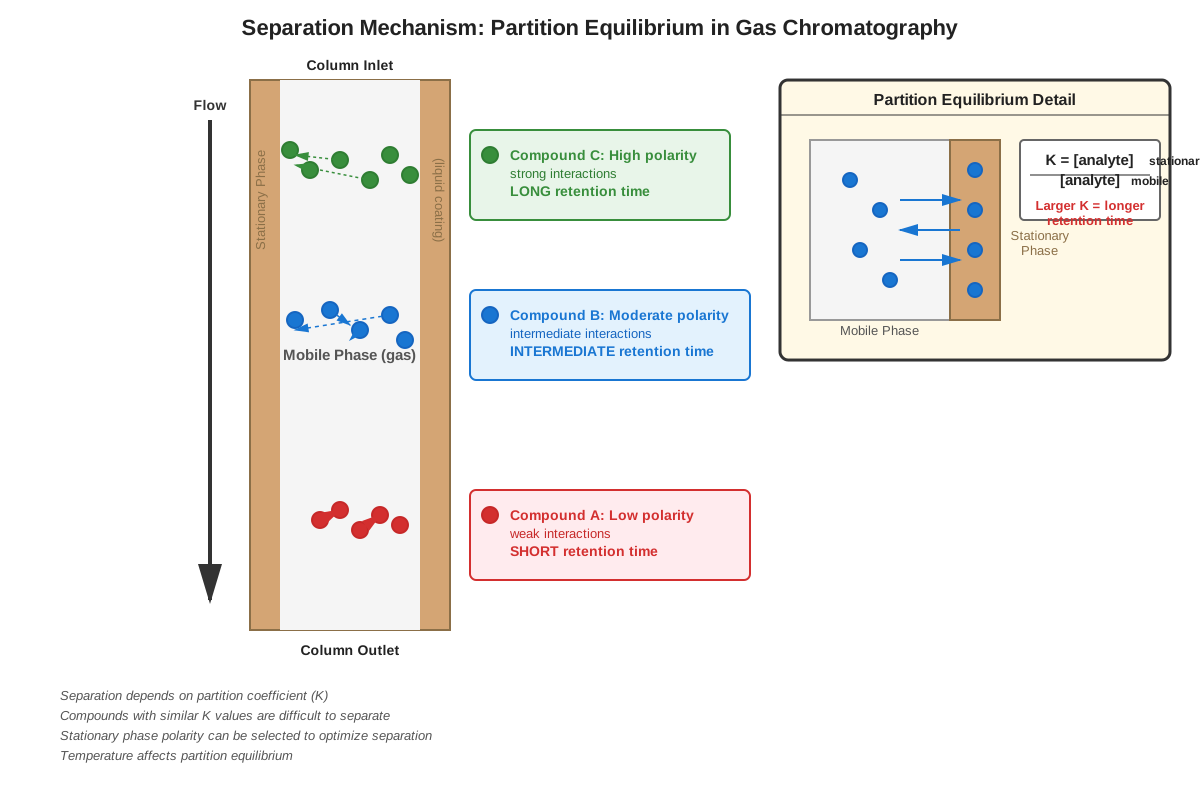
- Phase equilibria and partition coefficients: Gas chromatography relies on equilibrium distribution of analytes between mobile (gas) and stationary (liquid or solid) phases
- Basic laboratory techniques: Familiarity with sample injection, temperature control, and detector principles enhances understanding of practical GC applications
Why This Topic Matters
Gas chromatography has profound clinical and real-world significance that extends far beyond the laboratory. In forensic science, GC is used to detect drugs, alcohol, and toxins in biological samples, providing critical evidence in legal proceedings. Environmental scientists employ GC to monitor air and water quality by detecting volatile organic compounds (VOCs) and pesticides at trace levels. In pharmaceutical development, GC ensures drug purity and identifies degradation products, directly impacting patient safety. Clinical laboratories use GC to measure blood alcohol levels, diagnose metabolic disorders through analysis of organic acids, and monitor therapeutic drug levels.
On the MCAT, Gas chromatography Organic Chemistry content appears with moderate frequency, typically in 2-4 questions per exam either as discrete questions or embedded within research-based passages. Questions most commonly test students' ability to interpret chromatograms, predict retention order based on molecular properties, and understand how experimental parameters (temperature, flow rate, stationary phase polarity) affect separation. The MCAT favors application-based questions over pure recall, meaning students must understand the underlying principles rather than memorize specific retention times or detector types.
Common MCAT passage scenarios include: (1) experimental design passages where researchers use GC to analyze reaction products or monitor reaction progress, (2) biochemistry passages involving analysis of metabolites or lipids, (3) environmental science passages describing pollutant detection, and (4) method comparison passages contrasting GC with other analytical techniques. Students should be prepared to analyze chromatogram peaks, calculate retention factors, determine relative concentrations from peak areas, and troubleshoot separation problems based on chromatographic theory.
Core Concepts
Fundamental Principles of Gas Chromatography
Gas chromatography is a separation technique in which a vaporized sample is carried through a column by an inert mobile phase (carrier gas) and separated based on differential partitioning between the mobile phase and a stationary phase coating the column interior. The fundamental principle underlying GC is that different compounds have varying affinities for the stationary phase, causing them to travel through the column at different rates. Compounds with stronger interactions with the stationary phase move more slowly and are retained longer, while those with weaker interactions move quickly and elute (exit the column) first.
The separation process occurs through repeated equilibration cycles as molecules partition between the gas phase and the stationary phase thousands of times during their journey through the column. This dynamic equilibrium can be described by a partition coefficient (K), which represents the ratio of analyte concentration in the stationary phase to its concentration in the mobile phase. Compounds with larger K values spend more time in the stationary phase and thus have longer retention times—the time elapsed between sample injection and detection of a compound's peak maximum.
Components of a Gas Chromatograph
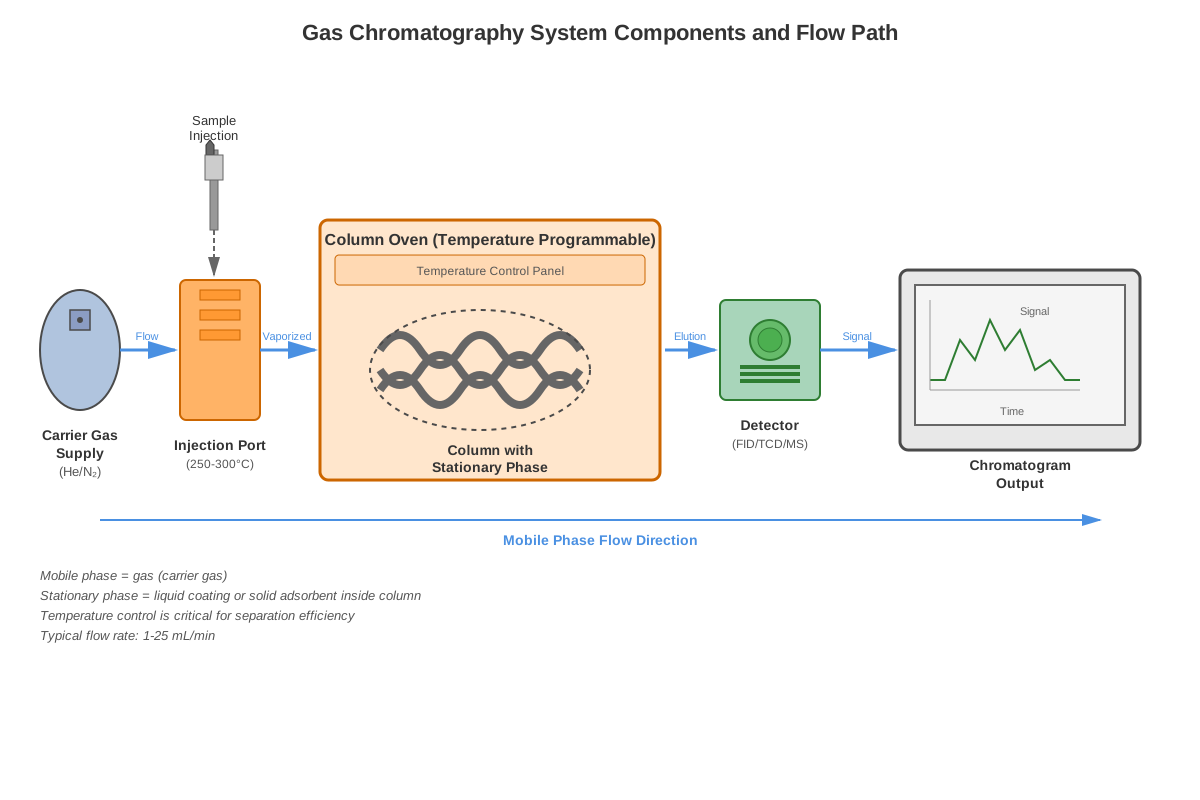
A complete gas chromatography system consists of several essential components working in concert:
- Carrier gas supply: An inert gas (helium, nitrogen, or hydrogen) serves as the mobile phase, carrying vaporized analytes through the column without reacting with them
- Injection port: A heated chamber where liquid samples are introduced via syringe and instantly vaporized; temperatures typically range from 200-300°C
- Column: A long, narrow tube (typically 10-100 meters for capillary columns) containing or coated with the stationary phase
- Column oven: A temperature-controlled chamber that maintains precise column temperature, which critically affects separation efficiency
- Detector: A device that generates an electrical signal proportional to the amount of analyte eluting from the column
- Data system: Computer software that records detector signals and displays them as a chromatogram—a plot of detector response versus time
Types of Columns and Stationary Phases
Gas chromatography employs two main column types, each with distinct characteristics:
| Column Type | Description | Advantages | Typical Applications |
|---|---|---|---|
| Packed columns | Wide-bore tubes (2-4 mm) filled with solid support particles coated with liquid stationary phase | Higher sample capacity, more robust | Preparative separations, gas analysis |
| Capillary columns | Narrow tubes (0.1-0.5 mm) with stationary phase coated on inner wall | Superior resolution, faster analysis, lower detection limits | Complex mixture analysis, trace analysis |
The stationary phase composition is crucial for achieving separation. Two primary categories exist:
- Nonpolar stationary phases (e.g., dimethyl polysiloxane): Separate compounds primarily by boiling point; lower-boiling compounds elute first
- Polar stationary phases (e.g., polyethylene glycol): Separate based on both boiling point and polarity; polar compounds are retained longer
The principle "like dissolves like" governs stationary phase selection. Nonpolar analytes are best separated on nonpolar columns, while polar compounds require polar stationary phases for optimal resolution. For complex mixtures containing both polar and nonpolar components, a moderately polar stationary phase provides balanced retention.
Retention Time and Selectivity
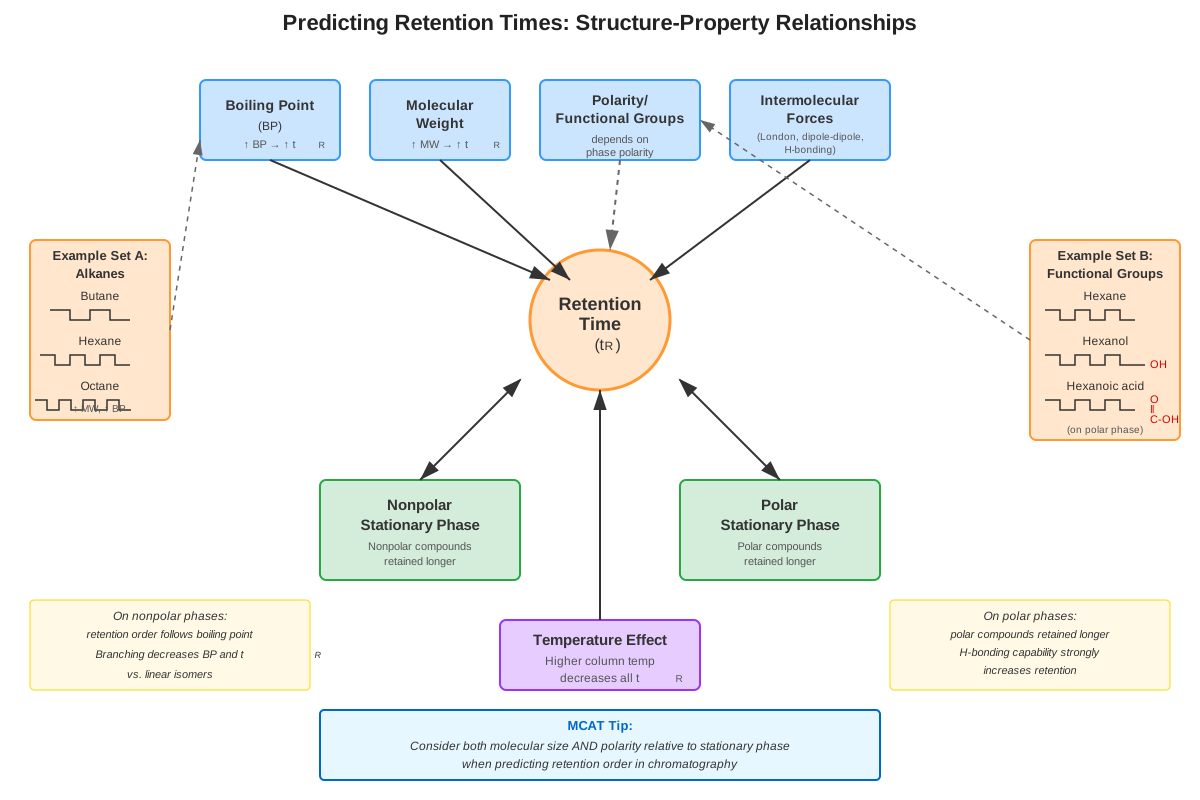
Retention time (tR) is the most fundamental measurement in gas chromatography, representing the time required for a compound to travel from injection to detection. Each compound under fixed conditions has a characteristic retention time determined by its molecular properties and interactions with the stationary phase. Several factors influence retention time:
- Boiling point: Higher boiling point compounds have lower vapor pressures and spend more time in the stationary phase, increasing retention time
- Molecular weight: Larger molecules generally have longer retention times due to increased van der Waals interactions
- Polarity: On polar stationary phases, polar compounds experience stronger dipole-dipole interactions and hydrogen bonding, increasing retention
- Column temperature: Higher temperatures increase vapor pressure, reducing retention times for all compounds
- Flow rate: Faster carrier gas flow decreases retention times but may reduce separation efficiency
The adjusted retention time (t'R) accounts for the time required for unretained compounds to pass through the column (dead time, tM): t'R = tR - tM. This value more accurately reflects compound-stationary phase interactions.
Temperature Programming
Isothermal operation maintains constant column temperature throughout analysis, suitable for samples with narrow boiling point ranges. However, complex mixtures containing compounds with widely varying volatilities benefit from temperature programming—systematically increasing column temperature during analysis. This technique offers several advantages:
- Early-eluting (volatile) compounds separate at low temperatures with good resolution
- Late-eluting (less volatile) compounds elute faster at elevated temperatures, reducing total analysis time
- Peak shapes remain sharp throughout the chromatogram, improving detection limits
- A single method can analyze compounds spanning a wide boiling point range
Temperature programming parameters include initial temperature, heating rate (°C/min), and final temperature. Optimization of these parameters is crucial for achieving complete separation while minimizing analysis time.
Detectors in Gas Chromatography
Detectors convert the presence of analytes into measurable electrical signals. The MCAT focuses on understanding detector principles rather than technical specifications:
Flame Ionization Detector (FID): Burns organic compounds in a hydrogen-air flame, producing ions that generate current proportional to the number of carbon atoms. FID is highly sensitive to organic compounds but does not detect water, carbon dioxide, or inorganic gases—making it ideal for organic analysis.
Thermal Conductivity Detector (TCD): Measures changes in carrier gas thermal conductivity when analytes are present. TCD is universal (detects all compounds different from carrier gas) but less sensitive than FID. It's particularly useful for permanent gases and compounds that don't ionize well.
Mass Spectrometer (MS): When coupled with GC (GC-MS), provides both separation and structural identification. The mass spectrometer fragments eluting compounds and measures mass-to-charge ratios, creating a unique "fingerprint" for identification.
Interpreting Chromatograms
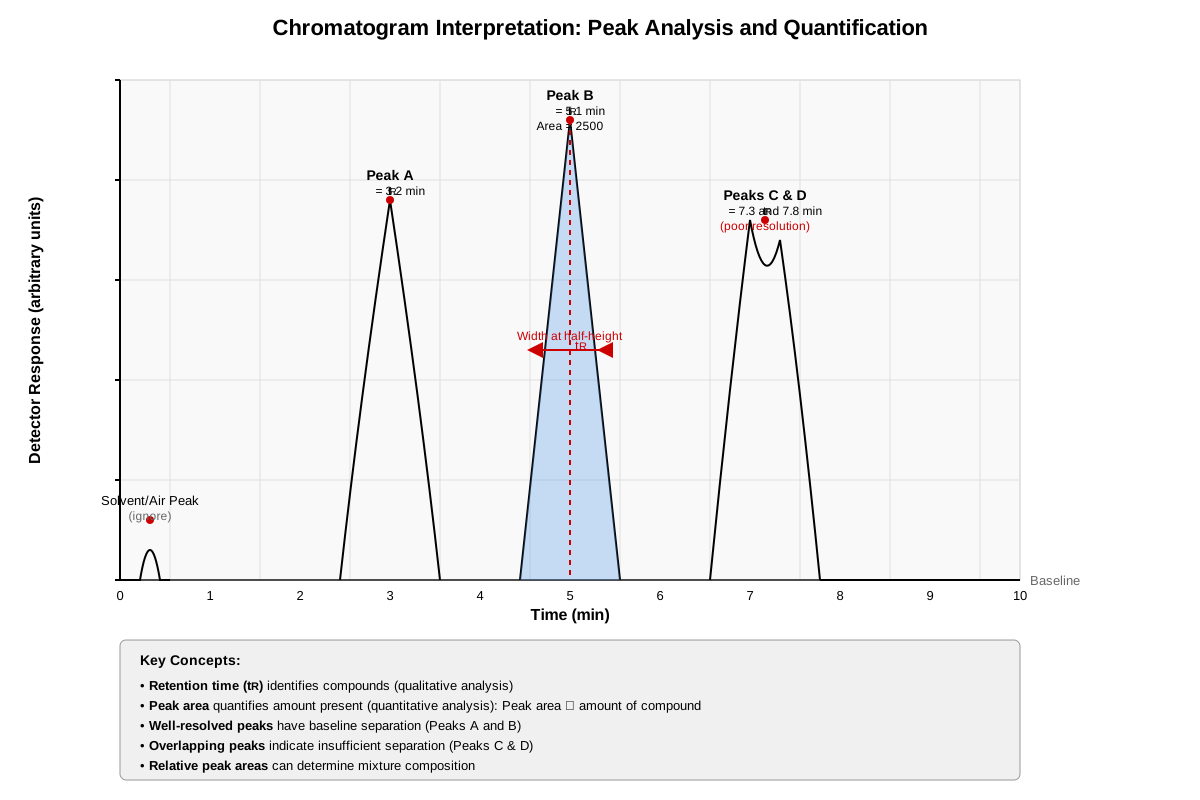
A chromatogram displays detector response (y-axis) versus time (x-axis), with each peak representing a separated compound. Key features for interpretation include:
- Peak position (retention time): Identifies the compound by comparison to standards
- Peak area: Proportional to compound concentration; used for quantification
- Peak height: Alternative quantification measure, useful for sharp peaks
- Peak width: Indicates separation efficiency; narrower peaks suggest better column performance
- Baseline resolution: Complete separation shows peaks returning to baseline between compounds
Resolution (Rs) quantifies separation quality between two adjacent peaks. Values greater than 1.5 indicate baseline separation, while values below 1.0 suggest incomplete separation that may compromise quantification accuracy.
Concept Relationships
Gas chromatography fundamentally relies on intermolecular forces to achieve separation. The strength of London dispersion forces, dipole-dipole interactions, and hydrogen bonding between analytes and the stationary phase determines retention times. This creates a direct relationship: stronger intermolecular forces → longer retention times → later elution. Understanding these forces allows prediction of elution order without memorization.
The relationship between molecular structure and chromatographic behavior follows predictable patterns. Within a homologous series (compounds differing by CH₂ units), retention time increases with molecular weight due to increased van der Waals forces. For isomers with identical molecular formulas, branching decreases retention time because branched molecules have smaller surface areas and weaker dispersion forces than linear isomers. Polarity introduces additional complexity: on polar stationary phases, functional groups capable of hydrogen bonding (alcohols, amines, carboxylic acids) show dramatically increased retention compared to nonpolar hydrocarbons.
Temperature serves as a critical control variable linking thermodynamics to separation efficiency. The relationship follows: increased temperature → increased vapor pressure → decreased retention time. This connection to vapor pressure and boiling point creates a predictable hierarchy: compounds with lower boiling points elute before those with higher boiling points under isothermal conditions. Temperature programming exploits this relationship to optimize separations across wide boiling point ranges.
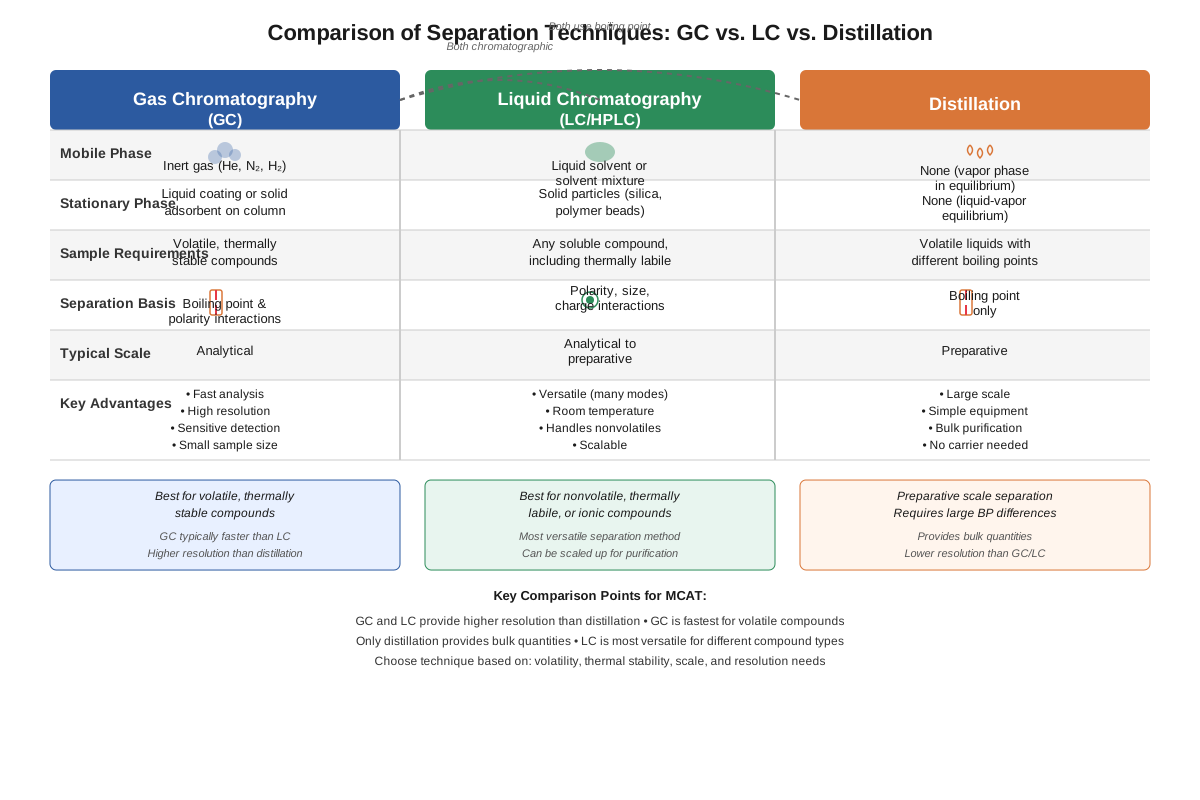
Gas chromatography connects to other separation techniques through shared principles. Like distillation, GC separates based on volatility differences, but achieves far superior resolution through repeated equilibration cycles. Compared to liquid chromatography (LC), GC requires volatile, thermally stable analytes but offers faster analysis and higher efficiency. Both techniques share the fundamental concept of differential partitioning between mobile and stationary phases, making understanding of one technique transferable to the other.
The coupling of GC with spectroscopic methods, particularly mass spectrometry (GC-MS), illustrates how separation and identification techniques complement each other. GC separates mixture components, while MS provides structural information for identification. This relationship demonstrates that chromatography answers "what compounds are present and in what amounts?" while spectroscopy answers "what is the structure of each compound?"
Quick check — test yourself on Gas chromatography so far.
Try Flashcards →High-Yield Facts
⭐ Compounds with lower boiling points elute first in gas chromatography when using nonpolar stationary phases and isothermal conditions
⭐ On polar stationary phases, polar compounds are retained longer than nonpolar compounds of similar molecular weight
⭐ Retention time increases with increasing molecular weight within a homologous series
⭐ Branched isomers elute before linear isomers due to decreased surface area and weaker van der Waals interactions
⭐ Increasing column temperature decreases retention times for all compounds
- The mobile phase in gas chromatography must be inert (helium, nitrogen, or hydrogen) to prevent reactions with analytes
- Peak area in a chromatogram is proportional to the concentration of the compound, enabling quantitative analysis
- Gas chromatography requires that compounds be volatile and thermally stable; non-volatile or heat-sensitive compounds cannot be analyzed by GC
- Flame ionization detectors (FID) respond to organic compounds but not to water, carbon dioxide, or inorganic gases
- Resolution between two peaks improves with increased column length, decreased flow rate, and optimized temperature
- Temperature programming allows analysis of mixtures with wide boiling point ranges by starting at low temperature and gradually increasing
- Capillary columns provide better resolution than packed columns due to greater surface area and efficiency
Common Misconceptions
Misconception: The mobile phase in gas chromatography actively separates compounds through chemical interactions.
Correction: The mobile phase (carrier gas) is deliberately inert and serves only to transport vaporized analytes through the column. Separation occurs exclusively through differential interactions between analytes and the stationary phase, not through mobile phase chemistry.
Misconception: Larger molecules always have longer retention times than smaller molecules.
Correction: While molecular weight correlates with retention time within a homologous series, molecular structure and polarity also critically affect retention. A small, highly polar molecule may be retained longer than a large nonpolar molecule on a polar stationary phase. Branching also affects retention—a branched isomer elutes before its linear counterpart despite identical molecular weight.
Misconception: Gas chromatography can analyze any organic compound.
Correction: GC is limited to compounds that are volatile and thermally stable at the injection port and column temperatures (typically up to 300-400°C). Large biomolecules (proteins, nucleic acids), ionic compounds, and thermally labile substances decompose before vaporization and cannot be analyzed by standard GC. These compounds require liquid chromatography or derivatization to increase volatility.
Misconception: Peak height and peak area provide the same quantitative information.
Correction: While both correlate with concentration, peak area is the preferred quantitative measure because it accounts for the total amount of compound eluting, regardless of peak shape. Peak height is affected by peak width and can be misleading if peaks broaden due to poor column efficiency or overloading. Peak area integration provides more accurate and reproducible quantification.
Misconception: Increasing carrier gas flow rate always improves separation.
Correction: Flow rate optimization involves a trade-off between analysis time and resolution. While faster flow decreases retention times, it also reduces the time available for equilibration between phases, potentially decreasing resolution. An optimal flow rate exists for each column type that balances efficiency and speed. Excessively high flow rates degrade separation quality.
Misconception: All peaks in a chromatogram represent different compounds.
Correction: A single compound can sometimes produce multiple peaks due to thermal decomposition, chemical reactions in the injection port, or the presence of isomers that interconvert at high temperatures. Additionally, impurities in solvents or column bleed (stationary phase degradation) can produce peaks unrelated to the sample. Proper interpretation requires considering these possibilities and using appropriate controls.
Worked Examples
Example 1: Predicting Elution Order
Question: A mixture contains four compounds: n-hexane (C₆H₁₄, bp 69°C), 2-methylpentane (C₆H₁₄, bp 60°C), 1-hexanol (C₆H₁₄O, bp 157°C), and cyclohexane (C₆H₁₂, bp 81°C). Predict the elution order when analyzed on a nonpolar stationary phase at constant temperature (isothermal conditions).
Solution:
Step 1: Identify the key principle. On a nonpolar stationary phase under isothermal conditions, compounds separate primarily by boiling point. Lower boiling point compounds have higher vapor pressures, spend less time in the stationary phase, and elute first.
Step 2: Organize compounds by boiling point:
- 2-methylpentane: 60°C
- n-hexane: 69°C
- cyclohexane: 81°C
- 1-hexanol: 157°C
Step 3: Consider structural factors. The first three compounds are hydrocarbons with similar polarities, so boiling point dominates. 1-hexanol has a much higher boiling point due to hydrogen bonding capability, despite similar molecular weight to the others.
Step 4: Predict elution order:
- 2-methylpentane (lowest bp, branched structure)
- n-hexane (slightly higher bp than 2-methylpentane)
- cyclohexane (cyclic structure, intermediate bp)
- 1-hexanol (highest bp due to hydrogen bonding)
Key insight: This example demonstrates that on nonpolar stationary phases, boiling point is the primary determinant of retention. The branched isomer (2-methylpentane) elutes before the linear isomer (n-hexane) despite identical molecular formulas, illustrating how structure affects volatility.
Example 2: Interpreting a Chromatogram
Question: A student analyzes a reaction mixture by GC and obtains a chromatogram showing three peaks with retention times of 3.2 min, 5.8 min, and 8.4 min. The peak areas are 1200, 4800, and 2400 arbitrary units, respectively. The detector response is known to be equal for all three compounds. Calculate the percent composition of the mixture and identify which compound is the major product.
Solution:
Step 1: Understand that peak area is proportional to concentration when detector response is equal for all compounds.
Step 2: Calculate total peak area:
Total area = 1200 + 4800 + 2400 = 8400 arbitrary units
Step 3: Calculate percent composition for each peak:
- Peak 1 (3.2 min): (1200/8400) × 100% = 14.3%
- Peak 2 (5.8 min): (4800/8400) × 100% = 57.1%
- Peak 3 (8.4 min): (2400/8400) × 100% = 28.6%
Step 4: Identify the major product. The compound eluting at 5.8 minutes represents 57.1% of the mixture and is the major product.
Step 5: Interpret retention times. The compound eluting first (3.2 min) is the most volatile (lowest boiling point or least polar), while the compound eluting last (8.4 min) is the least volatile (highest boiling point or most polar on a polar column).
Key insight: This example demonstrates quantitative analysis using chromatography. The major product is not necessarily the first or last to elute—retention time indicates physical properties, while peak area indicates relative amounts. Students must distinguish between these two independent pieces of information.
Exam Strategy
When approaching Gas chromatography MCAT questions, begin by identifying the question type: interpretation (reading chromatograms), prediction (determining elution order), or troubleshooting (explaining unexpected results). Each requires a different strategic approach.
Trigger words that signal GC content include: "retention time," "elution order," "chromatogram," "stationary phase," "mobile phase," "volatile compounds," "separation efficiency," and "peak area." When these appear, immediately activate your mental framework for chromatographic principles: partitioning, intermolecular forces, and vapor pressure relationships.
For elution order prediction questions, use this systematic approach:
- Identify the stationary phase polarity (polar vs. nonpolar)
- For nonpolar phases: rank by boiling point (lowest bp elutes first)
- For polar phases: consider both boiling point and polarity (polar compounds retained longer)
- Within similar compound classes: apply molecular weight and branching rules
- Eliminate answer choices that violate these principles
For chromatogram interpretation questions:
- Peak position (retention time) = compound identity
- Peak area = compound concentration
- Peak width = separation efficiency
- Number of peaks = minimum number of components (could be more if co-elution occurs)
Process-of-elimination strategies specific to GC:
- Eliminate choices suggesting the mobile phase causes separation (it's inert)
- Eliminate choices claiming GC can analyze any compound (requires volatility)
- Eliminate choices confusing retention time with concentration
- Eliminate choices suggesting higher temperature increases retention time (opposite is true)
Time allocation: Most GC questions can be answered in 60-90 seconds if you understand core principles. If a question requires complex calculations or multiple steps, ensure you're not overthinking—MCAT GC questions typically test conceptual understanding rather than computational skills. If you find yourself performing extensive calculations, reconsider whether you've identified the most direct solution path.
Exam Tip: When passages describe experimental methods using GC, focus on why the researchers chose GC over alternatives. This often reveals the key concept being tested: volatility requirements, separation based on boiling point, or quantification capabilities.
Memory Techniques
Mnemonic for factors affecting retention time - "BPMFT":
- Boiling point (higher bp = longer retention)
- Polarity (on polar phases, polar compounds retained longer)
- Molecular weight (higher MW = longer retention in homologous series)
- Flow rate (faster flow = shorter retention)
- Temperature (higher temp = shorter retention)
Visualization strategy for elution order: Picture molecules "sticking" to the stationary phase. Compounds with stronger "stickiness" (intermolecular forces) move slowly through the column like walking through mud, while weakly interacting compounds zip through like running on pavement. This mental image helps predict that polar compounds on polar phases are "stickier" and elute later.
Acronym for GC components - "CICOD":
- Carrier gas (mobile phase)
- Injection port (vaporizes sample)
- Column (contains stationary phase)
- Oven (temperature control)
- Detector (measures eluting compounds)
Branching rule memory aid: "Branches make molecules compact" → compact molecules have less surface area → weaker van der Waals forces → lower boiling point → elute first. Connect branching to "branches on a tree make it compact" for a visual anchor.
Polarity principle: "Like likes like, and likes to linger" → polar compounds linger (are retained) on polar stationary phases because "like dissolves like." This phrase reinforces both the interaction principle and the retention consequence.
Summary
Gas chromatography is an essential separation technique that exploits differences in volatility and polarity to resolve complex mixtures into individual components. The fundamental principle involves partitioning of vaporized analytes between an inert carrier gas (mobile phase) and a liquid or solid stationary phase coating the interior of a column. Compounds with stronger interactions with the stationary phase exhibit longer retention times and elute later. On nonpolar stationary phases, separation occurs primarily by boiling point, with lower-boiling compounds eluting first. On polar stationary phases, both boiling point and polarity determine retention, with polar compounds retained longer due to stronger dipole-dipole interactions and hydrogen bonding. Key factors affecting retention include molecular weight, branching (branched isomers elute before linear isomers), column temperature (higher temperature decreases retention), and flow rate. Chromatograms display detector response versus time, with peak position identifying compounds and peak area enabling quantification. For MCAT success, students must predict elution order based on molecular structure, interpret chromatographic data, and understand how experimental parameters affect separation efficiency. Gas chromatography connects to broader organic chemistry concepts through intermolecular forces, vapor pressure relationships, and the principle that physical properties determine separation behavior.
Key Takeaways
- Gas chromatography separates volatile compounds based on differential partitioning between a gas mobile phase and a stationary phase, with retention time determined by intermolecular force strength
- On nonpolar stationary phases, compounds elute in order of increasing boiling point; on polar phases, polar compounds are retained longer than nonpolar compounds
- Molecular structure profoundly affects retention: within homologous series, retention increases with molecular weight; branched isomers elute before linear isomers
- Increasing column temperature decreases retention times for all compounds by increasing vapor pressure and reducing stationary phase interactions
- Chromatogram interpretation requires distinguishing between peak position (compound identity via retention time) and peak area (compound concentration)
- Gas chromatography requires compounds to be volatile and thermally stable; non-volatile or heat-sensitive compounds cannot be analyzed without derivatization
- Understanding intermolecular forces (London dispersion, dipole-dipole, hydrogen bonding) is essential for predicting chromatographic behavior and elution order
Related Topics
Liquid Chromatography (HPLC): Shares fundamental partitioning principles with GC but uses liquid mobile phases, enabling analysis of non-volatile and thermally labile compounds. Mastering GC concepts provides a foundation for understanding HPLC, with the key difference being the mobile phase state and resulting analyte requirements.
Thin Layer Chromatography (TLC): A simpler chromatographic technique using a solid stationary phase on a plate. Understanding GC retention principles (polarity, intermolecular forces) directly transfers to predicting Rf values in TLC.
Mass Spectrometry: Often coupled with GC (GC-MS) to provide both separation and structural identification. Understanding GC retention helps interpret which peaks in mass spectra correspond to separated mixture components.
Distillation: A separation technique also based on volatility differences. Comparing GC to distillation highlights why GC achieves superior resolution through repeated equilibration cycles rather than a single vaporization-condensation step.
Intermolecular Forces in Organic Chemistry: Deepening understanding of London dispersion forces, dipole-dipole interactions, and hydrogen bonding enhances ability to predict chromatographic behavior and connects GC to broader organic chemistry principles.
Practice CTA
Now that you've mastered the core concepts of gas chromatography, it's time to solidify your understanding through active practice. Challenge yourself with MCAT-style questions that require you to predict elution orders, interpret chromatograms, and apply chromatographic principles to experimental scenarios. Use flashcards to reinforce high-yield facts, particularly the relationships between molecular structure and retention time. Remember, the MCAT tests application and analysis, not mere memorization—so focus on understanding why principles work rather than memorizing isolated facts. Your ability to think through chromatographic problems systematically will serve you not only on test day but throughout your scientific career. You've got this!
Sign up free to keep reading
Create a free AnvayaPrep account to finish this MCAT guide on Gas chromatography — plus flashcards and practice questions.