Overview
Thin layer chromatography (TLC) is a fundamental analytical technique in Organic Chemistry that enables the separation and identification of chemical compounds based on their differential migration through a stationary phase. This technique belongs to the broader category of Separations and Spectroscopy methods that are essential tools for organic chemists and biochemists. TLC operates on the principle of partitioning compounds between a mobile phase (solvent) and a stationary phase (adsorbent material coated on a plate), with separation occurring due to differences in polarity, molecular weight, and functional group interactions.
For the MCAT, understanding Thin layer chromatography is crucial because it represents a practical application of fundamental chemical principles including polarity, intermolecular forces, and molecular structure-property relationships. The exam frequently tests students' ability to interpret TLC results, calculate retention factors (Rf values), predict separation patterns based on molecular structure, and troubleshoot experimental conditions. TLC questions often appear in passage-based formats where students must analyze experimental data or in discrete questions testing conceptual understanding of separation mechanisms.
Thin layer chromatography MCAT questions integrate multiple concepts from organic chemistry, including functional group properties, solvent polarity, and molecular interactions. This technique serves as a bridge between theoretical organic chemistry knowledge and practical laboratory applications, making it an ideal topic for testing higher-order thinking skills. Understanding TLC also provides foundational knowledge for comprehending more advanced chromatographic techniques such as column chromatography, gas chromatography, and high-performance liquid chromatography (HPLC), all of which may appear in MCAT passages describing research methodologies.
Learning Objectives
- [ ] Define Thin layer chromatography using accurate Organic Chemistry terminology
- [ ] Explain why Thin layer chromatography matters for the MCAT
- [ ] Apply Thin layer chromatography to exam-style questions
- [ ] Identify common mistakes related to Thin layer chromatography
- [ ] Connect Thin layer chromatography to related Organic Chemistry concepts
- [ ] Calculate and interpret Rf values from experimental TLC data
- [ ] Predict the relative migration distances of compounds based on polarity and functional groups
- [ ] Analyze the effect of mobile phase composition on separation efficiency
- [ ] Evaluate appropriate visualization methods for different compound types
Prerequisites
- Polarity and intermolecular forces: Understanding dipole-dipole interactions, hydrogen bonding, and London dispersion forces is essential for predicting how molecules interact with stationary and mobile phases
- Functional group properties: Knowledge of functional group polarity and reactivity enables prediction of compound behavior during chromatographic separation
- Solubility principles: "Like dissolves like" concept governs how compounds partition between mobile and stationary phases
- Basic laboratory techniques: Familiarity with solution preparation and handling helps contextualize TLC as a practical analytical method
- Molecular structure and bonding: Understanding structural features allows prediction of compound migration patterns based on size, shape, and functional groups
Why This Topic Matters
Thin layer chromatography serves as a rapid, inexpensive, and versatile analytical tool in research laboratories, pharmaceutical development, and clinical settings. In drug development, TLC monitors reaction progress, confirms product purity, and identifies unknown compounds. Clinical laboratories use TLC variants to screen for drugs of abuse, analyze lipid profiles, and detect metabolic disorders. The technique's simplicity and speed make it an indispensable first-line analytical method before employing more sophisticated instrumentation.
On the MCAT, TLC appears in approximately 2-4% of Chemical and Physical Foundations questions, typically integrated within passages describing organic synthesis experiments, natural product isolation, or biochemical analyses. Questions may present TLC plates as figures requiring interpretation, ask students to predict separation outcomes, or test understanding of how experimental variables affect results. The topic frequently appears alongside other separation techniques in comparative questions or within passages describing multi-step purification protocols.
Common MCAT question formats include: (1) calculating Rf values from provided measurements, (2) predicting relative migration distances based on molecular structures, (3) selecting appropriate solvent systems for specific separations, (4) interpreting TLC results to determine reaction completion or product purity, and (5) troubleshooting experimental problems such as poor resolution or streaking. Understanding TLC also enables students to comprehend research methodology descriptions in passage-based questions across multiple MCAT sections, including Biological and Biochemical Foundations passages describing protein or lipid analyses.
Core Concepts
Fundamental Principles of Thin Layer Chromatography
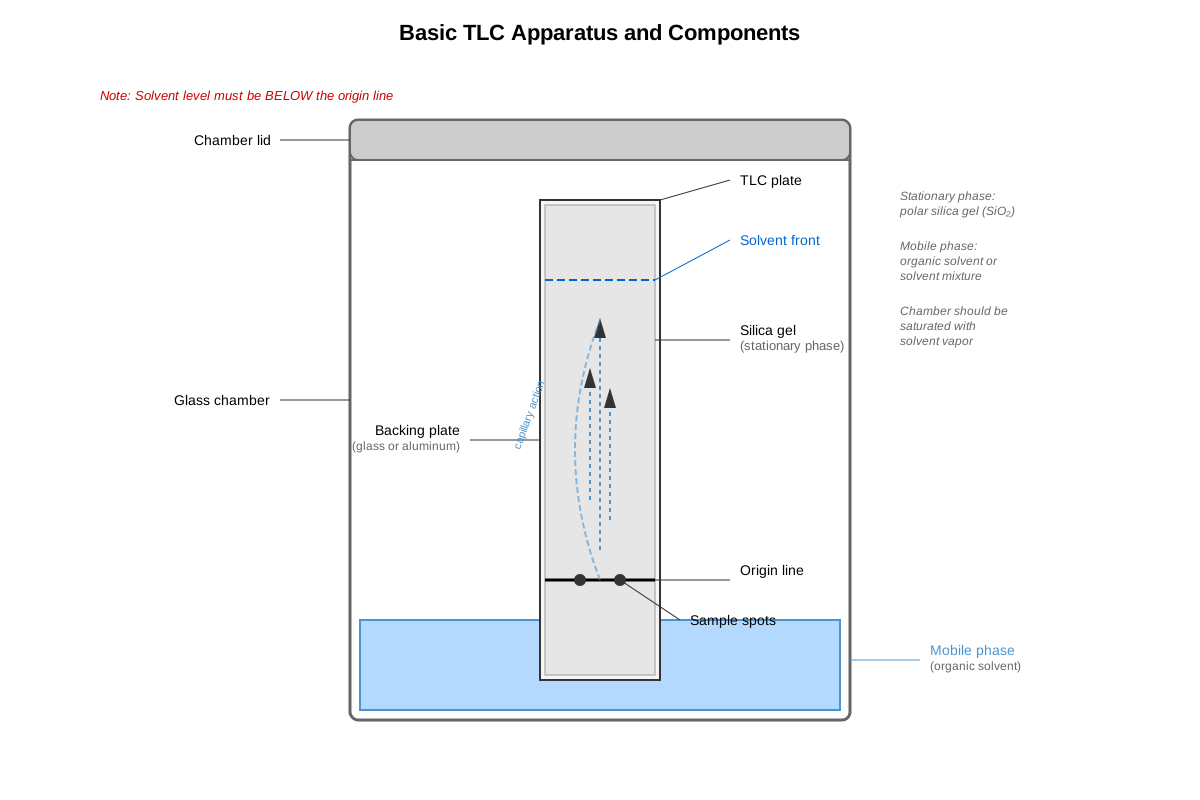
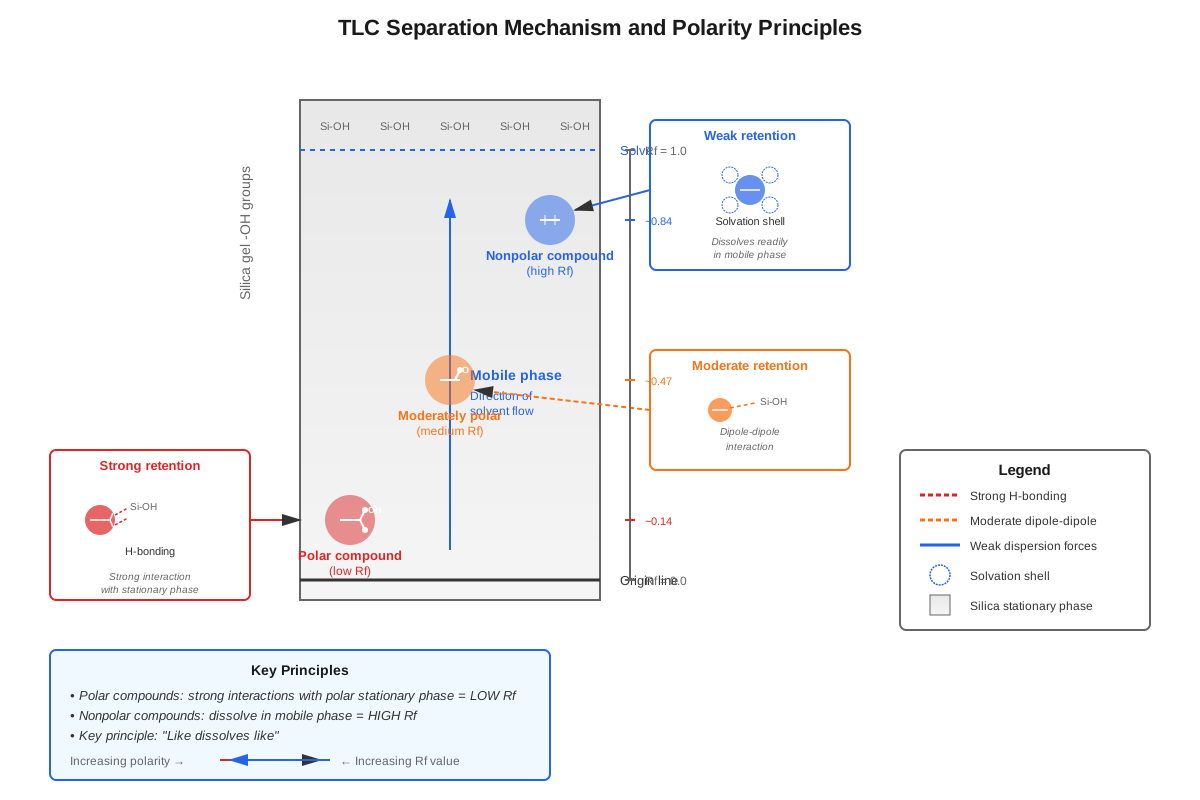
Thin layer chromatography is a planar chromatographic technique where separation occurs on a flat surface rather than within a column. The method relies on differential partitioning of compounds between a stationary phase (typically silica gel or alumina coated on a glass, plastic, or aluminum backing) and a mobile phase (an organic solvent or solvent mixture that moves up the plate by capillary action). The stationary phase in most TLC applications consists of silica gel (SiO₂), which presents a polar surface rich in hydroxyl groups capable of hydrogen bonding and dipole-dipole interactions.
The separation mechanism operates through adsorption chromatography, where compounds temporarily adhere to the stationary phase through intermolecular forces. More polar compounds interact strongly with the polar silica surface and migrate slowly, while less polar compounds interact more favorably with the mobile phase and travel farther up the plate. This differential migration creates spatial separation of mixture components, allowing visualization and identification of individual compounds.
The driving force for mobile phase movement is capillary action, the spontaneous flow of liquid through narrow spaces due to cohesive forces within the liquid and adhesive forces between the liquid and solid surface. As the solvent front advances up the plate, it carries dissolved compounds at rates determined by their relative affinities for the stationary versus mobile phases. This process continues until the solvent front approaches the top of the plate, at which point the plate is removed from the developing chamber and dried.
TLC Plate Components and Setup
A standard TLC plate consists of a thin layer (typically 0.25 mm thick) of adsorbent material uniformly coated on a rigid backing. Silica gel (silicon dioxide) is the most common stationary phase due to its high surface area, uniform particle size, and strong polar character. Alternative stationary phases include alumina (aluminum oxide) for basic compounds and reversed-phase materials (silica modified with nonpolar hydrocarbon chains) for separating very polar compounds.
The experimental setup requires:
- TLC plate: Pre-coated or prepared with stationary phase
- Developing chamber: A covered container (often a beaker with watch glass) containing mobile phase solvent
- Sample application device: Capillary tube or micropipette for spotting
- Visualization method: UV lamp, iodine chamber, or chemical staining reagents
- Pencil: For marking solvent front and origin line (pen ink would interfere)
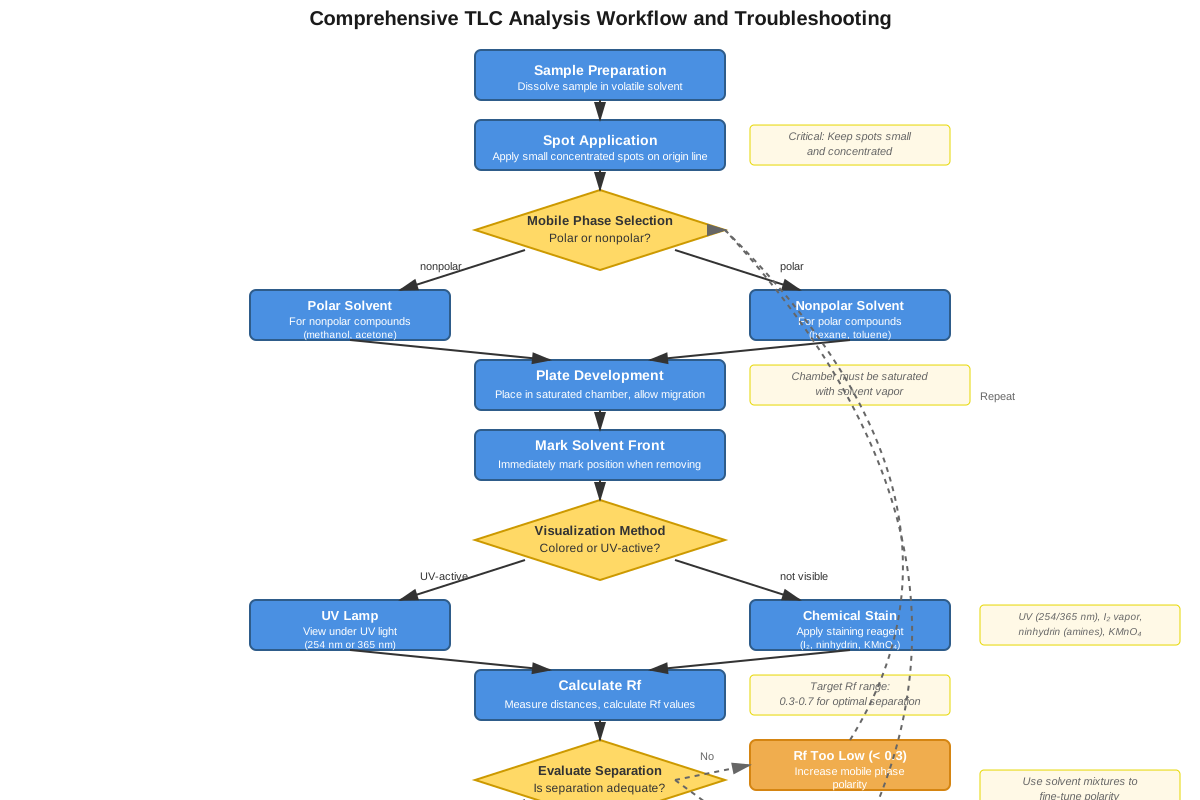
Sample application occurs at the origin line, drawn lightly in pencil approximately 1 cm from the bottom of the plate. Samples are applied as small, concentrated spots using a capillary tube, with care taken to keep spots small (2-3 mm diameter) to ensure sharp separation. Multiple samples can be spotted across the plate for comparison, maintaining adequate spacing (typically 1 cm between spots) to prevent overlap during development.
The Rf Value: Quantifying Migration
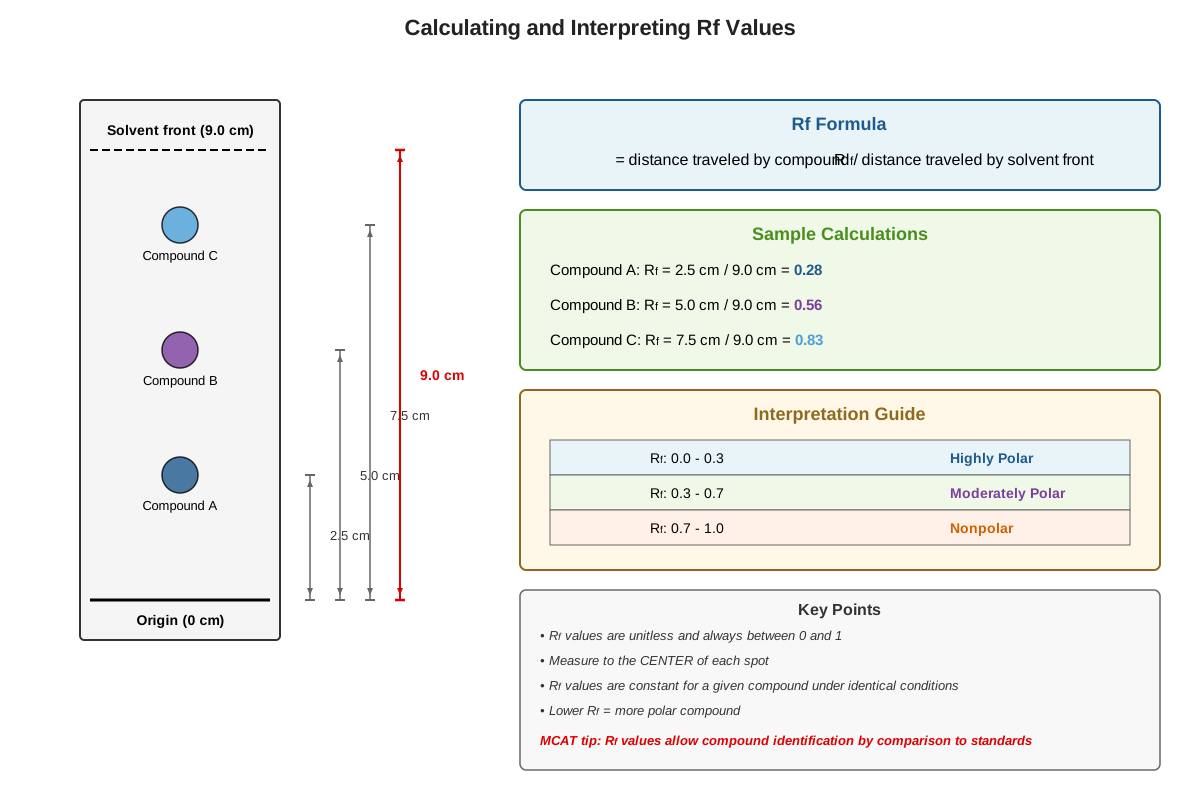
The retention factor or Rf value provides a quantitative measure of compound migration and serves as a characteristic property for identification purposes. The Rf value is calculated using the formula:
Rf = (distance traveled by compound) / (distance traveled by solvent front)Rf values always range from 0 to 1 (or 0% to 100%), where:
- Rf = 0: Compound remains at origin (very polar or strongly adsorbed)
- Rf = 1: Compound travels with solvent front (very nonpolar or no interaction with stationary phase)
- Ideal Rf = 0.3-0.7: Optimal range for accurate measurement and good separation
The Rf value depends on multiple factors including stationary phase type, mobile phase composition, temperature, humidity, and plate saturation. Therefore, Rf values are only reproducible under identical experimental conditions and should be compared with standards run simultaneously on the same plate rather than relying on literature values.
Polarity and Migration Patterns
The relationship between molecular polarity and migration distance is fundamental to predicting TLC outcomes. In normal-phase TLC (polar stationary phase with less polar mobile phase):
More polar compounds:
- Interact strongly with polar silica surface through hydrogen bonding and dipole-dipole forces
- Spend more time adsorbed to stationary phase
- Migrate shorter distances
- Have lower Rf values
Less polar compounds:
- Interact weakly with stationary phase
- Dissolve preferentially in mobile phase
- Migrate longer distances
- Have higher Rf values
This creates the general rule: On silica gel TLC, polarity and Rf value are inversely related. The most polar compound in a mixture will have the lowest Rf value, while the least polar compound will have the highest Rf value.
Mobile Phase Selection and Optimization
The mobile phase or eluent composition critically affects separation quality. Solvent selection follows these principles:
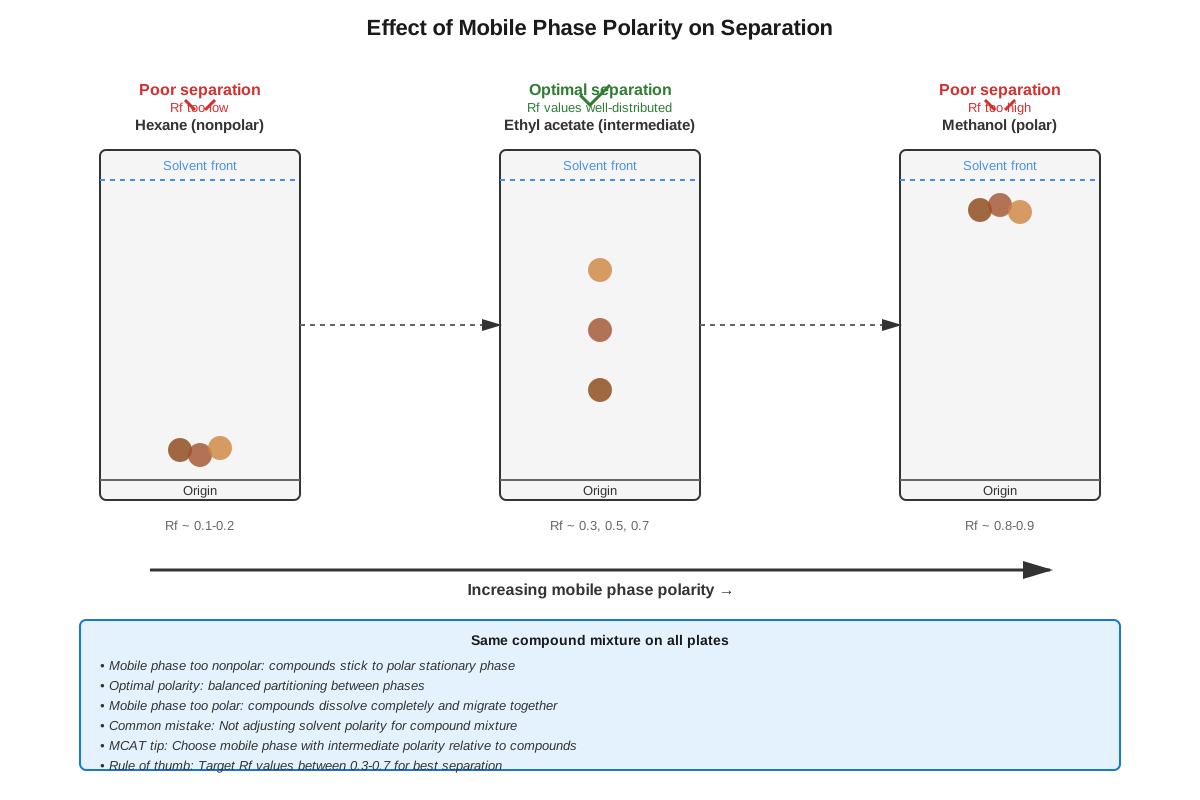
| Solvent Property | Effect on Separation | Common Solvents (increasing polarity) |
|---|---|---|
| Low polarity | Slow migration, low Rf values | Hexane, petroleum ether, toluene |
| Medium polarity | Moderate migration, optimal separation | Dichloromethane, ethyl acetate, acetone |
| High polarity | Fast migration, high Rf values | Methanol, ethanol, water |
Solvent mixtures provide fine-tuning of mobile phase polarity. A common approach uses a nonpolar solvent (hexane) mixed with increasing proportions of a polar solvent (ethyl acetate) to achieve optimal separation. For example, 70:30 hexane:ethyl acetate provides intermediate polarity suitable for many organic compounds.
The eluting power or solvent strength increases with polarity. Adding more polar solvent to the mobile phase increases all Rf values by reducing the relative difference between mobile and stationary phase polarities. Conversely, decreasing mobile phase polarity lowers all Rf values. Optimal separation occurs when compounds of interest have Rf values between 0.3 and 0.7, providing maximum resolution while maintaining measurement accuracy.
Visualization Methods
Since many organic compounds are colorless, visualization techniques are essential for detecting separated spots:
UV Visualization:
- Most common method for compounds with conjugated systems or aromatic rings
- Plates containing fluorescent indicator (F₂₅₄) glow under 254 nm UV light
- Compounds absorb UV and appear as dark spots against fluorescent background
- Non-destructive method allowing further analysis
Iodine Staining:
- Iodine vapor adsorbs to organic compounds, creating brown spots
- Reversible method (spots fade as iodine sublimes)
- Universal but less sensitive than other methods
- Useful for compounds lacking UV chromophores
Chemical Staining:
- Specific reagents react with functional groups to produce colored products
- Ninhydrin: Reacts with amines (amino acids) producing purple spots
- Phosphomolybdic acid (PMA): General stain for many organic compounds (blue-black spots)
- Potassium permanganate: Oxidizes unsaturated compounds (yellow spots on purple background)
- Destructive methods requiring separate analytical plate
Factors Affecting TLC Results
Multiple experimental variables influence separation quality and reproducibility:
Plate saturation: Pre-equilibrating the developing chamber with solvent vapor ensures uniform solvent composition and prevents edge effects. Unsaturated chambers produce uneven solvent fronts and irreproducible Rf values.
Sample concentration: Overloading causes spot tailing and streaking, while underloading may prevent detection. Optimal concentration produces compact, circular spots approximately 2-3 mm in diameter.
Development distance: Longer development distances improve resolution but increase analysis time. Standard practice develops plates until the solvent front reaches 1-2 cm from the top.
Temperature and humidity: Affect solvent evaporation rates and stationary phase activity. Controlled laboratory conditions improve reproducibility.
Stationary phase activity: Silica gel absorbs water from air, reducing polarity and altering separations. Plates may be activated by heating to remove adsorbed water, increasing stationary phase polarity.
Concept Relationships
The core concepts of thin layer chromatography interconnect through the fundamental principle of differential partitioning. Molecular polarity determines the strength of interactions with both stationary and mobile phases → these interactions govern migration distance → which is quantified by the Rf value → that serves as a characteristic identifier for compounds under specific conditions.
Mobile phase selection directly influences separation efficiency by modulating the relative polarities of the two phases. Increasing mobile phase polarity → reduces the polarity difference between phases → increases all Rf values → may improve or worsen separation depending on the specific compounds. This relationship requires optimization through systematic variation of solvent composition.
The connection to prerequisite knowledge is direct: Intermolecular forces (hydrogen bonding, dipole-dipole, London dispersion) → determine compound polarity → which governs stationary phase interactions → controlling migration rates. Similarly, functional group properties → affect overall molecular polarity → enabling prediction of relative Rf values for structurally related compounds.
TLC connects forward to more advanced separation techniques: understanding TLC principles → provides foundation for column chromatography (same separation mechanism in cylindrical format) → which extends to HPLC (high-pressure liquid chromatography using sophisticated detection) → and relates to gas chromatography (volatile compounds separated in gas phase). All chromatographic methods share the fundamental concept of differential partitioning between phases.
Within the broader context of Separations and Spectroscopy, TLC represents the analytical component that separates mixtures into pure components, which can then be characterized by spectroscopic methods (IR, NMR, UV-Vis, mass spectrometry). This sequence—separation followed by identification—forms the standard workflow for analyzing complex organic mixtures in research and clinical settings.
Quick check — test yourself on Thin layer chromatography so far.
Try Flashcards →High-Yield Facts
⭐ Rf values range from 0 to 1, with optimal separation occurring when Rf values fall between 0.3 and 0.7
⭐ On normal-phase silica gel TLC, more polar compounds have lower Rf values and migrate shorter distances
⭐ The Rf value is calculated as: distance traveled by compound divided by distance traveled by solvent front
⭐ Increasing mobile phase polarity increases all Rf values by reducing the difference between mobile and stationary phase polarities
⭐ Silica gel (SiO₂) is the most common stationary phase and provides a polar surface for normal-phase chromatography
- Compounds must be spotted above the solvent level in the developing chamber to prevent dissolution into the bulk solvent
- UV visualization at 254 nm requires either aromatic rings or conjugated systems in the compound structure
- Capillary action drives mobile phase movement up the TLC plate through adhesive and cohesive forces
- Rf values are only reproducible under identical conditions and should be compared with standards run on the same plate
- Streaking or tailing indicates sample overloading, impure compounds, or inappropriate solvent system
- The origin line and solvent front must be marked in pencil (not pen) to avoid interference with sample compounds
- Chamber saturation with solvent vapor improves reproducibility by ensuring uniform mobile phase composition
- Reversed-phase TLC uses nonpolar stationary phases where less polar compounds have lower Rf values (opposite of normal-phase)
- Multiple development (running the plate twice in the same or different solvents) can improve resolution of closely migrating compounds
- TLC can monitor reaction progress by comparing starting material and product Rf values over time
Common Misconceptions
Misconception: Higher Rf values always indicate more polar compounds.
Correction: On normal-phase silica gel TLC, the opposite is true—more polar compounds interact strongly with the polar stationary phase and have lower Rf values. Higher Rf values indicate less polar compounds that prefer the mobile phase. This relationship reverses in reversed-phase TLC where the stationary phase is nonpolar.
Misconception: Rf values are universal constants that can be looked up in tables and used for definitive identification.
Correction: Rf values depend on multiple experimental variables including stationary phase type, mobile phase composition, temperature, humidity, and plate saturation. They are only reproducible under identical conditions and should be compared with authentic standards run simultaneously on the same plate rather than relying on literature values.
Misconception: Using a more polar mobile phase will improve separation of all mixtures.
Correction: Increasing mobile phase polarity increases all Rf values, which may actually worsen separation if compounds already have high Rf values. Optimal separation requires matching mobile phase polarity to the specific mixture, often through systematic testing of different solvent ratios to achieve Rf values in the 0.3-0.7 range.
Misconception: The compound that travels farthest is always the largest molecule.
Correction: Migration distance depends primarily on polarity, not molecular size. Small polar molecules may migrate less than large nonpolar molecules. While molecular size can influence migration through steric effects, polarity and functional group interactions with the stationary phase are the dominant factors in TLC separation.
Misconception: All organic compounds can be visualized under UV light.
Correction: Only compounds with UV-absorbing chromophores (aromatic rings, conjugated systems, carbonyl groups) are visible under UV light. Saturated hydrocarbons and many aliphatic compounds require alternative visualization methods such as iodine staining or chemical reagents like phosphomolybdic acid.
Misconception: A single spot on TLC definitively proves compound purity.
Correction: A single spot indicates the absence of impurities detectable under the specific TLC conditions used, but does not guarantee absolute purity. Impurities with very similar Rf values may co-migrate and appear as a single spot. Additionally, compounds not visible with the chosen visualization method would go undetected. Multiple analytical techniques are required to confirm purity.
Worked Examples
Example 1: Calculating and Interpreting Rf Values
Problem: A TLC plate is developed to separate a mixture of three compounds. After development and visualization, the following measurements are obtained: Compound A traveled 2.5 cm from the origin, Compound B traveled 5.0 cm, Compound C traveled 7.5 cm, and the solvent front traveled 10.0 cm from the origin. Calculate the Rf values for each compound and predict their relative polarities.
Solution:
Step 1: Apply the Rf formula for each compound.
Rf = distance traveled by compound / distance traveled by solvent front
Compound A: Rf = 2.5 cm / 10.0 cm = 0.25
Compound B: Rf = 5.0 cm / 10.0 cm = 0.50
Compound C: Rf = 7.5 cm / 10.0 cm = 0.75
Step 2: Interpret the results in terms of polarity.
On normal-phase silica gel TLC, lower Rf values indicate more polar compounds that interact strongly with the polar stationary phase. Therefore:
- Compound A (Rf = 0.25) is the most polar compound
- Compound B (Rf = 0.50) has intermediate polarity
- Compound C (Rf = 0.75) is the least polar compound
Step 3: Evaluate separation quality.
All three Rf values fall within the optimal range of 0.3-0.7 (or close to it), with adequate spacing between spots (ΔRf ≥ 0.2), indicating good separation. Compound B shows ideal behavior with Rf = 0.50, while Compound A is slightly low and Compound C is slightly high. If better separation of A and B were needed, a less polar mobile phase would decrease all Rf values, potentially improving resolution.
Connection to learning objectives: This example demonstrates calculation of Rf values, interpretation of polarity relationships, and evaluation of separation efficiency—all essential skills for MCAT questions involving TLC data.
Example 2: Predicting Separation Outcomes Based on Structure
Problem: Three compounds will be separated by TLC on silica gel using 70:30 hexane:ethyl acetate as the mobile phase. Predict the order of migration (from lowest to highest Rf) for: (A) hexanoic acid, (B) hexanol, and (C) hexane.
Solution:
Step 1: Analyze functional groups and polarity.
- Hexanoic acid (CH₃(CH₂)₄COOH): Contains carboxylic acid group capable of hydrogen bonding (both donor and acceptor), making it the most polar compound
- Hexanol (CH₃(CH₂)₅OH): Contains hydroxyl group capable of hydrogen bonding (donor and acceptor), making it moderately polar
- Hexane (CH₃(CH₂)₄CH₃): Saturated hydrocarbon with no polar functional groups, making it the least polar compound
Step 2: Apply the polarity-Rf relationship.
On normal-phase silica gel TLC, more polar compounds interact more strongly with the polar stationary phase and migrate shorter distances (lower Rf values). Therefore:
Polarity order: Hexanoic acid > Hexanol > Hexane
Rf order: Hexanoic acid < Hexanol < Hexane
Step 3: Predict the TLC plate appearance.
From bottom to top (increasing distance from origin):
- Hexanoic acid (lowest spot, smallest Rf)
- Hexanol (middle spot, intermediate Rf)
- Hexane (highest spot, largest Rf)
Step 4: Consider the mobile phase.
The 70:30 hexane:ethyl acetate mixture provides moderate polarity. The large proportion of nonpolar hexane will cause all compounds to migrate relatively slowly, with the polar compounds (hexanoic acid and hexanol) showing particularly low Rf values. If the spots are too close together or too low on the plate, increasing the ethyl acetate proportion would increase all Rf values and potentially improve separation.
Connection to learning objectives: This example demonstrates prediction of TLC outcomes based on molecular structure and functional group properties, application of polarity principles, and consideration of mobile phase effects—all critical for passage-based MCAT questions requiring analysis of experimental design.
Exam Strategy
When approaching Thin layer chromatography MCAT questions, begin by identifying the question type: calculation (Rf values), prediction (separation outcomes), interpretation (analyzing TLC results), or troubleshooting (experimental problems). Each type requires a specific approach.
For calculation questions: Always write out the Rf formula and identify the two required measurements. Watch for units—ensure both distances use the same units before dividing. Remember that Rf values must fall between 0 and 1; any calculated value outside this range indicates an error. If the question provides a figure, measure carefully from the center of spots, not edges.
For prediction questions: Focus on functional groups and polarity. Create a mental ranking of compounds from most to least polar based on hydrogen bonding capability, dipole moments, and molecular structure. Remember the inverse relationship between polarity and Rf on normal-phase TLC. Watch for trigger phrases like "silica gel" (normal-phase) versus "reversed-phase" or "C18" (reversed-phase), as these reverse the polarity-Rf relationship.
Trigger words and phrases to recognize:
- "Silica gel" or "alumina" → normal-phase TLC (polar stationary phase)
- "Reversed-phase" or "C18" → nonpolar stationary phase (polarity-Rf relationship reverses)
- "Increasing solvent polarity" → all Rf values increase
- "Optimal separation" → look for Rf values between 0.3 and 0.7
- "Streaking" or "tailing" → indicates overloading or inappropriate conditions
- "UV visualization" → requires aromatic rings or conjugated systems
Process of elimination strategies:
- Eliminate any answer choice showing Rf > 1 or Rf < 0 (impossible values)
- For polarity-based questions, eliminate choices that reverse the polarity-Rf relationship
- If a question asks about improving separation, eliminate choices that would move all Rf values toward 0 or 1 (worsens separation)
- For visualization questions, eliminate UV detection for saturated aliphatic compounds lacking chromophores
Time allocation: TLC questions typically require 60-90 seconds. Spend 15-20 seconds reading and identifying the question type, 30-40 seconds on calculations or analysis, and 10-15 seconds reviewing your answer. If a question requires complex calculations, ensure you're not overthinking—MCAT TLC calculations are usually straightforward applications of the Rf formula.
Exam Tip: When a passage describes a TLC experiment, immediately identify the stationary phase type (normal or reversed), mobile phase composition, and visualization method. These three pieces of information allow you to predict separation patterns and answer most associated questions without detailed calculations.
Memory Techniques
Mnemonic for polarity and Rf relationship (normal-phase TLC):
"Polar Pals Stay Low" → Polar compounds have low Rf values on silica gel
Mnemonic for optimal Rf range:
"Three to Seven, TLC Heaven" → Rf values between 0.3 and 0.7 provide optimal separation
Acronym for factors affecting TLC:
"STAMP"
- Stationary phase type
- Temperature
- Atmosphere (chamber saturation)
- Mobile phase composition
- Plate activity (water content)
Visualization for polarity-migration relationship:
Imagine the silica gel surface as "sticky" for polar molecules. Polar compounds get "stuck" to the sticky surface and don't travel far, while nonpolar compounds slide easily past and travel farther. The more polar functional groups (OH, COOH, NH₂), the more "sticky" interactions occur.
Mnemonic for common visualization methods:
"UV Iodine Needs Ninhydrin" → Four main visualization methods (UV, Iodine, Ninhydrin, plus general stains)
Memory aid for solvent polarity series:
"Happy Elephants Eat Apples Merrily"
- Hexane (least polar)
- Ethyl acetate
- Ether
- Acetone
- Methanol (most polar)
Conceptual visualization for Rf calculation:
Picture the TLC plate as a race track. The Rf value represents what fraction of the total race (solvent front distance) each compound completed. A compound that travels halfway has Rf = 0.5, completing 50% of the race.
Summary
Thin layer chromatography is a fundamental separation technique in organic chemistry that partitions compounds between a polar stationary phase (typically silica gel) and a mobile phase (organic solvent) based on differential polarity and intermolecular interactions. The technique quantifies separation through Rf values (distance traveled by compound divided by distance traveled by solvent front), which range from 0 to 1 with optimal values between 0.3 and 0.7. On normal-phase TLC, more polar compounds interact strongly with the polar stationary phase and exhibit lower Rf values, while less polar compounds prefer the mobile phase and migrate farther. Mobile phase selection critically affects separation, with increasing solvent polarity raising all Rf values. Visualization methods include UV light for aromatic compounds, iodine staining for general detection, and specific chemical reagents for particular functional groups. For MCAT success, students must calculate Rf values accurately, predict separation patterns based on molecular structure and polarity, interpret experimental results, and troubleshoot common problems such as poor resolution or inadequate visualization.
Key Takeaways
- Rf values quantify compound migration as the ratio of compound distance to solvent front distance, always ranging from 0 to 1, with optimal separation occurring between 0.3 and 0.7
- On normal-phase silica gel TLC, polarity and Rf value are inversely related—more polar compounds have lower Rf values and migrate shorter distances due to stronger interactions with the polar stationary phase
- Mobile phase polarity directly controls separation: increasing solvent polarity increases all Rf values, while decreasing polarity lowers all Rf values; optimal separation requires matching mobile phase to the specific mixture
- Silica gel (SiO₂) serves as the standard polar stationary phase, interacting with compounds through hydrogen bonding and dipole-dipole forces based on functional group polarity
- Functional groups determine migration order: carboxylic acids and amines (most polar) migrate least, alcohols and ketones show intermediate migration, and hydrocarbons (least polar) migrate farthest
- Visualization methods must match compound properties: UV light for aromatic/conjugated systems, iodine for general detection, and specific chemical stains (ninhydrin for amines, PMA for general compounds) for targeted detection
- Rf values are condition-dependent and only reproducible under identical experimental parameters; comparison with authentic standards run simultaneously on the same plate is essential for reliable identification
Related Topics
Column Chromatography: Extends TLC principles to preparative-scale separations using the same stationary and mobile phases in a vertical column format, allowing isolation of pure compounds in larger quantities for further analysis or synthesis.
High-Performance Liquid Chromatography (HPLC): Advanced chromatographic technique using high pressure to force mobile phase through tightly packed columns with sophisticated detection systems, providing superior resolution and quantitative analysis capabilities built on TLC fundamentals.
Gas Chromatography (GC): Separation technique for volatile compounds using gas as the mobile phase, sharing the fundamental partitioning principle with TLC but requiring different sample properties and instrumentation.
Extraction and Purification Techniques: Complementary separation methods including liquid-liquid extraction, recrystallization, and distillation that often precede or follow TLC analysis in multi-step purification protocols.
Spectroscopic Methods (IR, NMR, UV-Vis, Mass Spectrometry): Analytical techniques used to identify and characterize pure compounds after TLC separation, forming the complete analytical workflow for organic compound analysis.
Intermolecular Forces and Molecular Polarity: Fundamental chemical principles underlying all chromatographic separations, with deeper understanding enabling prediction of separation outcomes and optimization of experimental conditions.
Practice CTA
Now that you've mastered the core concepts of thin layer chromatography, it's time to reinforce your understanding through active practice. Challenge yourself with the accompanying practice questions that simulate real MCAT scenarios, including Rf calculations, polarity-based predictions, and experimental troubleshooting. Work through the flashcards to cement high-yield facts and relationships in your long-term memory. Remember, understanding TLC principles not only prepares you for direct questions on this topic but also enables you to comprehend research methodology descriptions throughout the MCAT. Your ability to quickly analyze TLC data and predict separation outcomes will serve you well on test day—so dive into those practice problems with confidence!
Sign up free to keep reading
Create a free AnvayaPrep account to finish this MCAT guide on Thin layer chromatography — plus flashcards and practice questions.