Overview
Enantiomers represent one of the most fundamental concepts in Organic Chemistry and are essential for understanding molecular behavior in biological systems. These molecules are stereoisomers that exist as non-superimposable mirror images of each other, much like left and right hands. This seemingly simple structural difference has profound implications in biochemistry, pharmacology, and medicine. On the MCAT, enantiomers appear frequently in both the Chemical and Physical Foundations of Biological Systems section and the Biological and Biochemical Foundations of Living Systems section, making them a medium-to-high yield topic that requires thorough understanding.
The concept of enantiomers sits at the heart of Stereochemistry and Conformation, bridging fundamental organic chemistry principles with biological applications. Understanding enantiomers requires mastery of three-dimensional molecular visualization, chirality recognition, and the ability to predict how molecular structure affects biological activity. The MCAT tests not only the ability to identify enantiomers but also to understand their physical properties, optical activity, and differential biological effects—particularly relevant when considering drug action and enzyme specificity.
Enantiomers connect to broader organic chemistry concepts including molecular symmetry, isomerism, reaction mechanisms, and spectroscopy. They serve as the foundation for understanding more complex stereochemical relationships such as diastereomers and meso compounds. For the MCAT, the practical significance of enantiomers extends beyond pure chemistry into biochemistry (amino acid chirality, sugar configurations) and physiology (drug metabolism, receptor binding), making this topic an integrative concept that appears across multiple disciplines tested on the exam.
Learning Objectives
- [ ] Define Enantiomers using accurate Organic Chemistry terminology
- [ ] Explain why Enantiomers matters for the MCAT
- [ ] Apply Enantiomers to exam-style questions
- [ ] Identify common mistakes related to Enantiomers
- [ ] Connect Enantiomers to related Organic Chemistry concepts
- [ ] Determine whether a molecule is chiral and identify chiral centers
- [ ] Predict the optical activity of enantiomeric compounds and enantiomeric mixtures
- [ ] Distinguish between enantiomers and other types of stereoisomers
- [ ] Apply R/S nomenclature to assign absolute configuration to chiral centers
Prerequisites
- Constitutional isomers: Understanding that molecules with the same molecular formula can have different connectivity patterns provides the foundation for recognizing that stereoisomers have identical connectivity but different spatial arrangements
- Lewis structures and molecular geometry: The ability to visualize three-dimensional molecular structures is essential for recognizing mirror-image relationships and non-superimposability
- VSEPR theory and hybridization: Knowledge of tetrahedral geometry (sp³ hybridization) is critical since most chiral centers involve tetrahedral carbon atoms with four different substituents
- Basic nomenclature: Familiarity with IUPAC naming conventions helps when learning the Cahn-Ingold-Prelog priority rules for R/S designation
- Functional groups: Recognition of common organic functional groups enables identification of substituents around chiral centers
Why This Topic Matters
Enantiomers in Organic Chemistry MCAT questions appear with significant frequency because they bridge multiple disciplines tested on the exam. Clinically, enantiomers have profound importance in pharmacology—one enantiomer of a drug may be therapeutically beneficial while its mirror image could be inactive or even harmful. The tragic example of thalidomide, where one enantiomer treated morning sickness while the other caused severe birth defects, illustrates why understanding enantiomers is crucial for future healthcare professionals. Modern pharmaceutical development requires careful consideration of stereochemistry, with many drugs now marketed as single enantiomers rather than racemic mixtures.
On the MCAT, enantiomer-related questions typically appear 2-4 times per exam, representing approximately 3-5% of the Chemical and Physical Foundations section. Questions may be discrete (testing pure knowledge of stereochemistry concepts) or passage-based (requiring application to drug development, enzyme kinetics, or analytical chemistry scenarios). The MCAT frequently tests enantiomers through polarimetry passages, pharmaceutical chemistry contexts, amino acid biochemistry, and carbohydrate metabolism scenarios.
Common exam presentations include: identifying chiral centers in complex molecules, predicting optical rotation of mixtures, understanding why enzymes are stereospecific, explaining differential biological activity of enantiomers, and analyzing experimental data from chiral separation techniques. The topic also appears indirectly when discussing enzyme-substrate specificity, receptor-ligand binding, and the stereochemistry of biological molecules like amino acids (all L-configuration in proteins) and sugars (D-configuration predominates in metabolism).
Core Concepts
Definition and Fundamental Properties
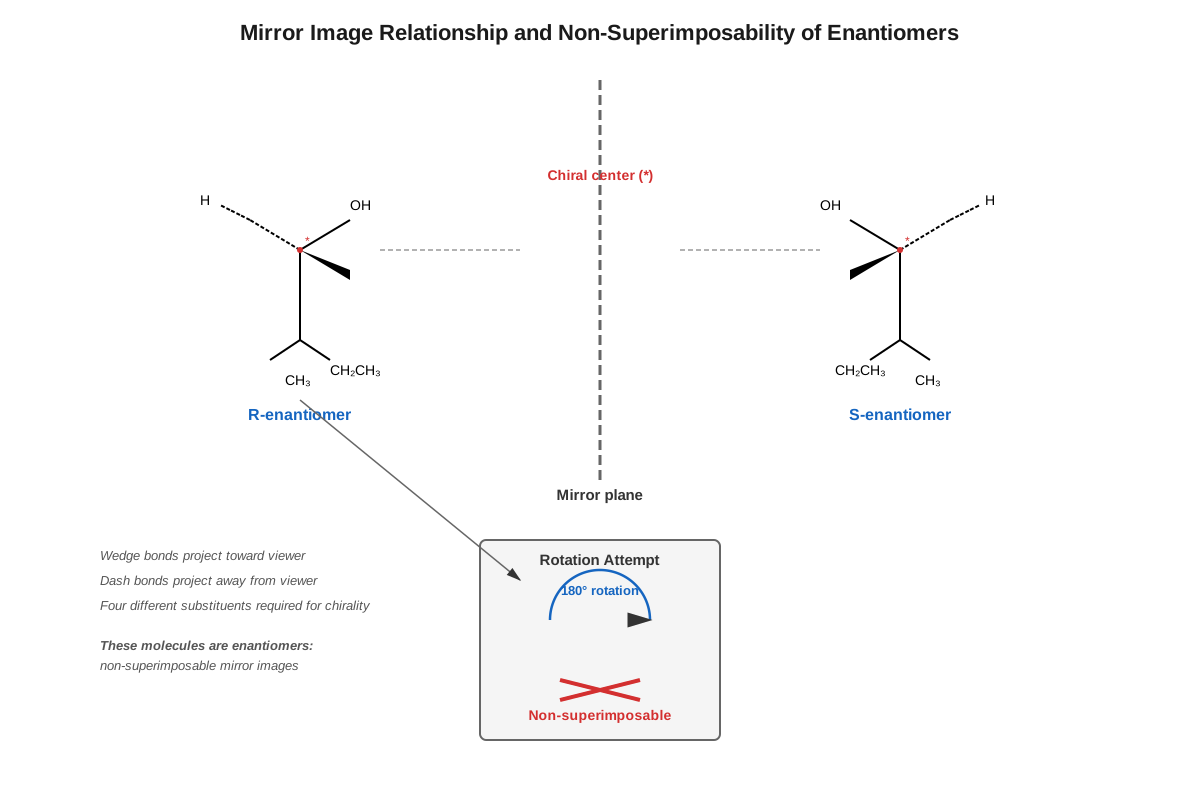
Enantiomers are stereoisomers that are non-superimposable mirror images of each other. This relationship is analogous to left and right hands—they are mirror images but cannot be perfectly overlaid regardless of how they are rotated in space. The key requirement for enantiomerism is the presence of chirality, a property of asymmetry such that a molecule cannot be superimposed on its mirror image.
A chiral center (also called a stereocenter or stereogenic center) is most commonly a carbon atom bonded to four different substituents. This tetrahedral arrangement creates the possibility for two distinct spatial configurations. When a molecule contains one chiral center, exactly two enantiomers exist. The presence of a chiral center is sufficient but not necessary for chirality—some molecules with chiral centers may be achiral due to internal symmetry (meso compounds), while some molecules without traditional chiral centers can still be chiral (such as certain allenes and spiranes).
Achiral molecules possess a plane of symmetry or center of inversion and can be superimposed on their mirror images. Simple examples include methane, ethane, and any molecule where a carbon is bonded to two or more identical groups. The distinction between chiral and achiral molecules is fundamental to understanding enantiomerism.
Optical Activity and Polarimetry
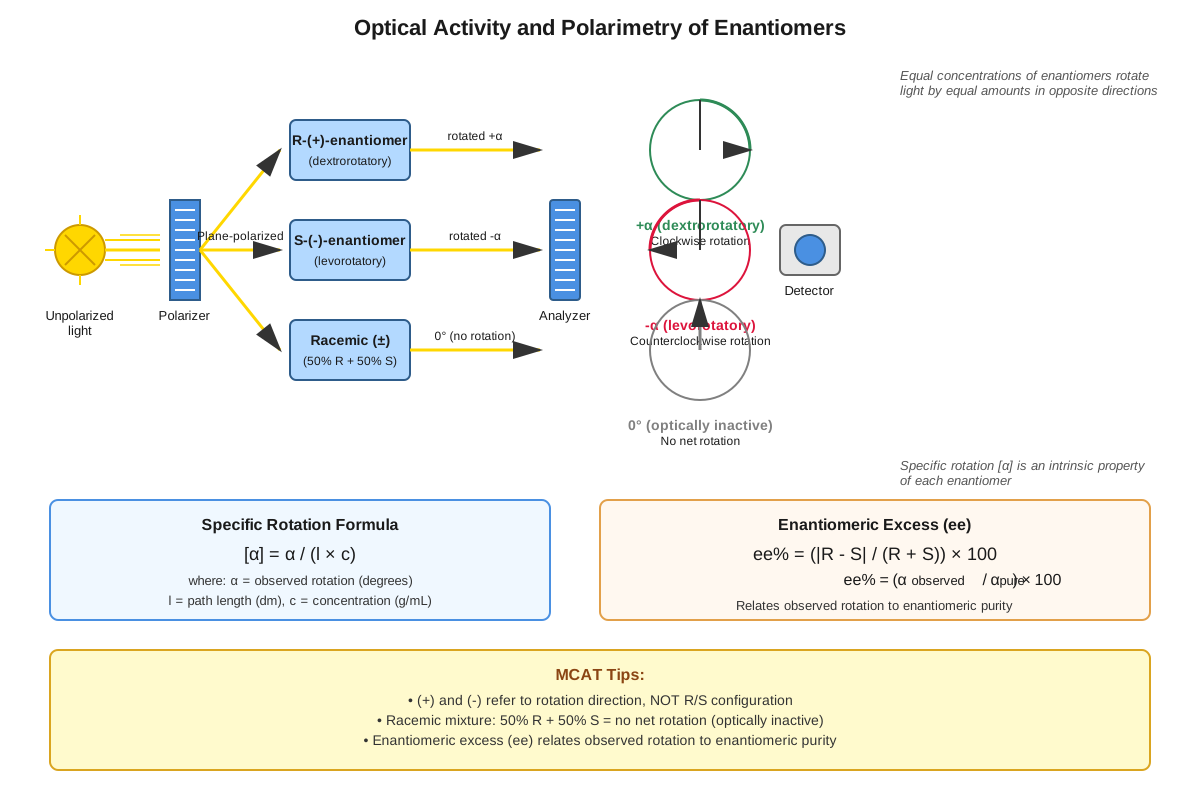
One of the most distinctive properties of enantiomers is their interaction with plane-polarized light. Optical activity refers to the ability of chiral compounds to rotate the plane of polarized light. A polarimeter measures this rotation, expressed as the specific rotation [α], which is an intrinsic property of each enantiomer under defined conditions (wavelength, temperature, solvent, concentration).
An enantiomer that rotates plane-polarized light clockwise (to the right when facing the light source) is designated as dextrorotatory or (+) or d. An enantiomer that rotates light counterclockwise (to the left) is levorotatory or (−) or l. Importantly, enantiomers rotate light by exactly the same magnitude but in opposite directions. If one enantiomer has [α] = +50°, its enantiomer has [α] = −50°.
A racemic mixture (or racemate) contains equal amounts (1:1 ratio) of both enantiomers. Because the rotations are equal and opposite, a racemic mixture shows no net optical rotation and is described as optically inactive. This does not mean the individual molecules lack chirality—rather, their effects cancel at the macroscopic level. An enantiomeric excess (ee) quantifies the purity of an enantiomeric mixture:
ee = [(R - S)/(R + S)] × 100% = (observed rotation/rotation of pure enantiomer) × 100%Nomenclature: R and S Configuration
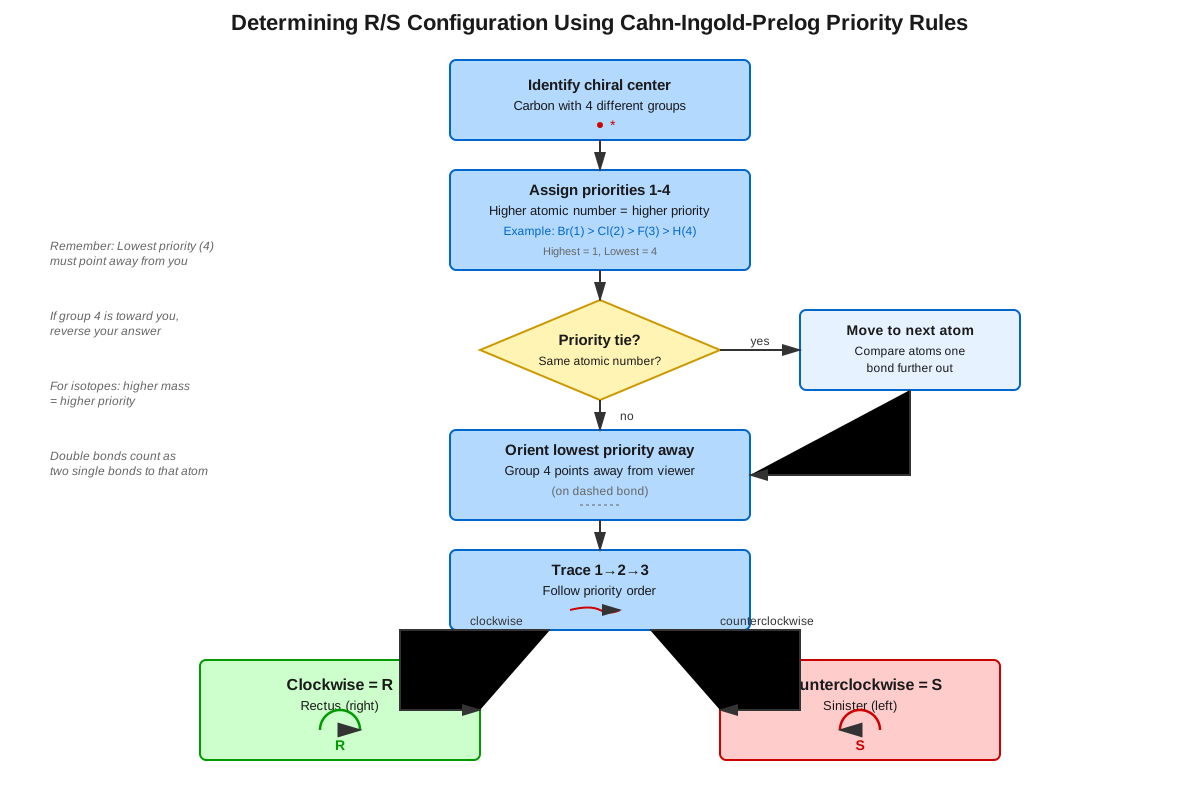
The Cahn-Ingold-Prelog (CIP) priority rules provide a systematic method for assigning absolute configuration to chiral centers. The designations R (from Latin rectus, right) and S (from Latin sinister, left) describe the three-dimensional arrangement of substituents around a chiral center.
Steps for R/S assignment:
- Identify the chiral center (typically a carbon with four different substituents)
- Assign priority to the four substituents based on atomic number (higher atomic number = higher priority). If the first atoms are identical, proceed outward along the chain until a difference is found. Multiple bonds are treated as multiple single bonds to the same atom
- Orient the molecule so the lowest priority group (#4) points away from you (into the page)
- Trace a path from priority #1 → #2 → #3
- Assign configuration: If the path is clockwise, the configuration is R; if counterclockwise, the configuration is S
For example, in (R)-2-butanol, the hydroxyl group has highest priority, followed by the ethyl group, methyl group, and finally hydrogen. When hydrogen points away, tracing OH → ethyl → methyl proceeds clockwise, yielding R configuration.
Physical and Chemical Properties
Enantiomers exhibit identical physical properties in achiral environments:
| Property | Enantiomers |
|---|---|
| Melting point | Identical |
| Boiling point | Identical |
| Density | Identical |
| Refractive index | Identical |
| Solubility (achiral solvent) | Identical |
| Spectroscopy (NMR, IR, UV-Vis) | Identical |
| Chromatography (achiral stationary phase) | Identical retention time |
However, enantiomers differ in:
- Direction of optical rotation (equal magnitude, opposite sign)
- Interaction with other chiral molecules (including enzymes, receptors, and chiral chromatography media)
- Biological activity (often dramatically different)
- Taste and smell (olfactory and gustatory receptors are chiral)
Chemically, enantiomers react at identical rates with achiral reagents but at different rates with chiral reagents. This principle underlies kinetic resolution, where a chiral catalyst preferentially reacts with one enantiomer, allowing separation of enantiomers based on differential reaction rates.
Biological Significance
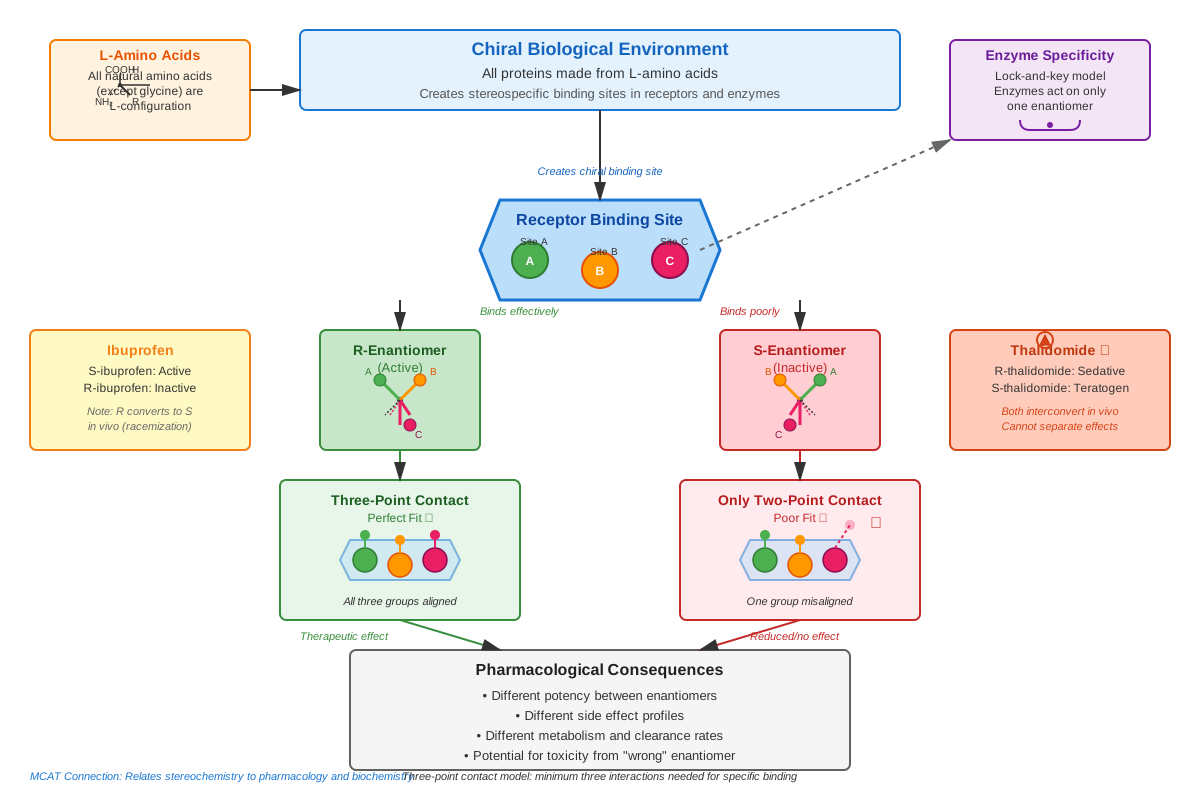
The biological importance of enantiomers cannot be overstated. Biological systems are inherently chiral—proteins are built from L-amino acids, and nucleic acids contain D-sugars. This chirality means that biological receptors, enzymes, and binding sites are chiral environments that interact differently with different enantiomers.
Enzyme stereospecificity arises because the active site of an enzyme is a chiral environment. Only one enantiomer of a substrate typically fits properly into the active site, following the "lock and key" or "induced fit" model. For example, only L-amino acids are incorporated into proteins by ribosomes, and most enzymes in carbohydrate metabolism are specific for D-sugars.
In pharmacology, enantiomers of drugs can have vastly different effects:
- Eutomer: The enantiomer with desired therapeutic activity
- Distomer: The enantiomer with less activity, no activity, or unwanted effects
Examples include:
- (S)-ibuprofen: Active anti-inflammatory; (R)-ibuprofen: Inactive (though partially converted to S in vivo)
- (R)-thalidomide: Sedative; (S)-thalidomide: Teratogenic
- (S)-citalopram (escitalopram): Antidepressant; (R)-citalopram: Minimal activity
Multiple Chiral Centers
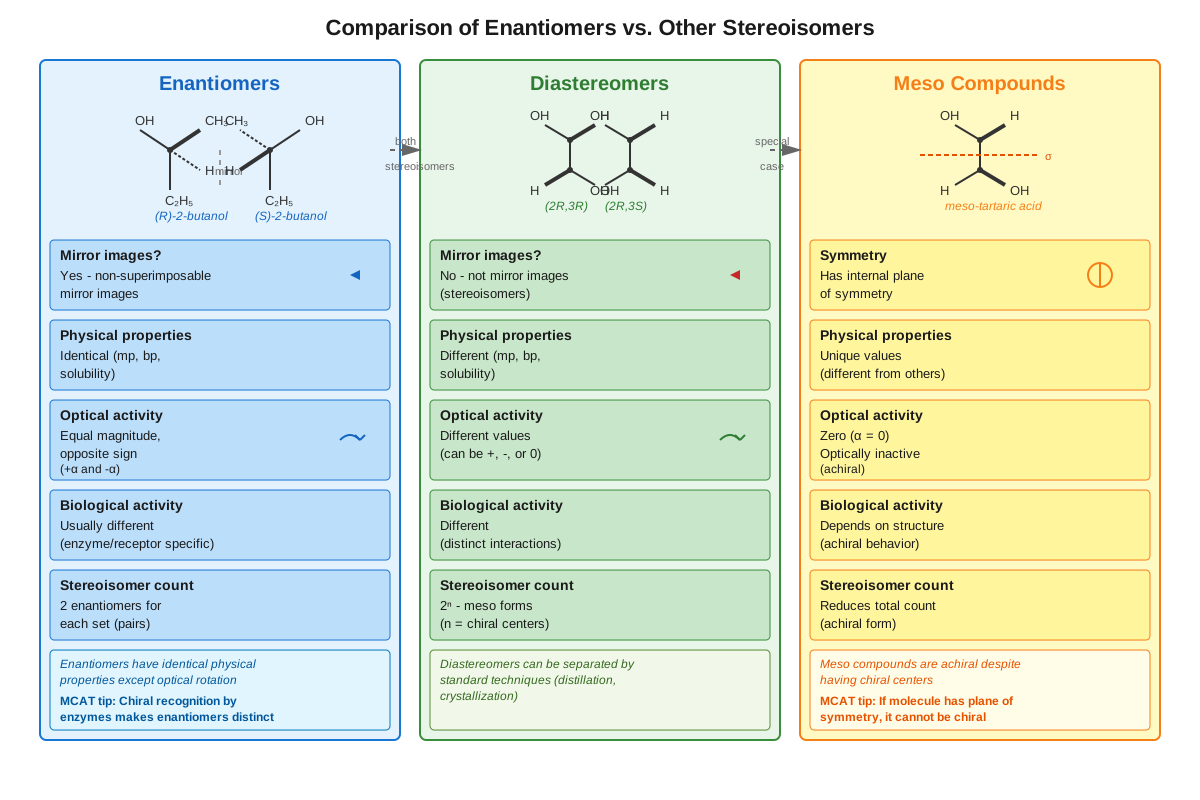
When a molecule contains n chiral centers, the maximum number of stereoisomers is 2ⁿ. With two chiral centers, up to four stereoisomers are possible. These include two pairs of enantiomers, where each pair consists of molecules that are mirror images. Stereoisomers that are not mirror images are called diastereomers (covered in related topics).
A special case occurs when a molecule with two or more chiral centers possesses an internal plane of symmetry, creating a meso compound. Meso compounds are achiral despite containing chiral centers because the molecule as a whole is superimposable on its mirror image. For example, meso-tartaric acid has two chiral centers but is optically inactive due to internal symmetry.
Concept Relationships
The concept of enantiomers builds directly on fundamental principles of molecular structure and geometry. Molecular geometry (prerequisite) → chirality recognition → enantiomer identification represents the conceptual progression. Understanding tetrahedral geometry is essential because most chiral centers involve sp³-hybridized carbons with four different substituents arranged tetrahedrally.
Within stereochemistry, the relationships flow as: Isomerism (general concept) → Stereoisomerism → Enantiomers (mirror images) and Diastereomers (non-mirror image stereoisomers). Enantiomers represent one specific type of stereoisomeric relationship, distinguished by the mirror-image criterion.
Optical activity connects directly to enantiomers through the principle that chiral molecules interact with plane-polarized light. This leads to practical applications: Enantiomers → Polarimetry → Enantiomeric excess determination → Quality control in pharmaceutical synthesis.
The R/S nomenclature system provides the language for describing enantiomers: Cahn-Ingold-Prelog rules → Absolute configuration assignment → Unambiguous communication of molecular structure. This connects to broader nomenclature systems in organic chemistry.
Biologically, the concept map extends: Enantiomers → Chiral biological molecules (amino acids, sugars) → Enzyme stereospecificity → Drug-receptor interactions → Differential pharmacological effects. This pathway explains why stereochemistry is clinically relevant.
For separation and analysis: Enantiomers → Chiral chromatography → Enantiomer separation and Enantiomers → Polarimetry → Enantiomeric purity assessment. These analytical techniques are frequently tested in MCAT passages.
Quick check — test yourself on Enantiomers so far.
Try Flashcards →High-Yield Facts
⭐ Enantiomers are non-superimposable mirror images that rotate plane-polarized light by equal magnitudes in opposite directions
⭐ A molecule with one chiral center has exactly two enantiomers; with n chiral centers, the maximum number of stereoisomers is 2ⁿ
⭐ All naturally occurring amino acids in proteins (except glycine) are L-enantiomers; most naturally occurring sugars are D-enantiomers
⭐ A racemic mixture contains equal amounts of both enantiomers and shows no net optical rotation
⭐ Enantiomers have identical physical properties (melting point, boiling point, solubility) in achiral environments but different biological activities
- The R/S designation describes absolute configuration and is independent of the direction of optical rotation (+/− or d/l)
- A chiral center most commonly consists of a carbon atom bonded to four different substituents in a tetrahedral arrangement
- Enzymes are stereospecific because their active sites are chiral environments that preferentially bind one enantiomer
- Enantiomeric excess (ee) = [(amount of major enantiomer − amount of minor enantiomer) / total amount] × 100%
- Meso compounds contain chiral centers but are achiral overall due to an internal plane of symmetry
- Chiral chromatography and chiral derivatization are methods used to separate or analyze enantiomers
- The specific rotation [α] is an intrinsic property of a pure enantiomer measured under standardized conditions
- Fischer projections provide a two-dimensional representation of three-dimensional chiral molecules, commonly used for carbohydrates and amino acids
Common Misconceptions
Misconception: All molecules with chiral centers are chiral and exist as enantiomers.
Correction: Meso compounds contain chiral centers but possess an internal plane of symmetry, making them achiral overall. They do not have enantiomers. Additionally, molecules must lack any element of symmetry (plane, center, or improper rotation axis) to be chiral.
Misconception: The R/S designation tells you the direction a compound rotates plane-polarized light.
Correction: R/S describes the absolute configuration (spatial arrangement) of substituents around a chiral center, while (+/−) or (d/l) describes the direction of optical rotation. These are independent properties—an (R)-enantiomer might be (+) or (−) depending on the specific molecule. The relationship between configuration and rotation cannot be predicted without experimental measurement.
Misconception: Enantiomers have different chemical and physical properties.
Correction: In achiral environments, enantiomers have identical physical properties (melting point, boiling point, density, solubility, spectroscopic properties) and react at identical rates with achiral reagents. They differ only in their interaction with plane-polarized light and with other chiral entities (including biological molecules).
Misconception: A 50:50 mixture of enantiomers is optically active.
Correction: A racemic mixture (1:1 ratio of enantiomers) is optically inactive because the equal and opposite rotations cancel out. Only when one enantiomer is present in excess will the mixture show net optical activity.
Misconception: Glycine is a chiral amino acid like all other amino acids.
Correction: Glycine is achiral because its "R group" is a hydrogen atom, meaning the alpha carbon is bonded to two hydrogen atoms (not four different groups). It is the only achiral proteinogenic amino acid and does not exist as enantiomers.
Misconception: If you can draw a mirror image of a molecule, it must be chiral.
Correction: Being able to draw a mirror image is necessary but not sufficient for chirality. The critical test is whether the molecule and its mirror image are superimposable. If they are superimposable (like methane or ethanol), the molecule is achiral. Only non-superimposable mirror images represent enantiomers.
Misconception: Enantiomers are the same as diastereomers.
Correction: Enantiomers are specifically mirror-image stereoisomers, while diastereomers are stereoisomers that are NOT mirror images. In molecules with multiple chiral centers, some stereoisomers will be enantiomeric pairs (mirror images) and others will be diastereomers (non-mirror image relationships).
Worked Examples
Example 1: Identifying Chiral Centers and Determining Number of Stereoisomers
Problem: Consider 3-chloro-2-butanol (CH₃-CHOH-CHCl-CH₃). How many chiral centers does this molecule have, and how many stereoisomers are possible?
Solution:
Step 1: Draw the complete structure and identify potential chiral centers.
    CH₃
     |
    CH-Cl
     |
    CH-OH
     |
    CH₃
Step 2: Examine each carbon for four different substituents.
- C1 (methyl carbon): bonded to three H atoms and one C → not chiral
- C2 (bearing Cl): bonded to Cl, H, CH₃, and CH(OH)CH₃ → four different groups = chiral center
- C3 (bearing OH): bonded to OH, H, CH₃, and CHClCH₃ → four different groups = chiral center
- C4 (methyl carbon): bonded to three H atoms and one C → not chiral
Step 3: Calculate maximum stereoisomers.
With n = 2 chiral centers, maximum stereoisomers = 2² = 4 stereoisomers
Step 4: Identify the relationships.
These four stereoisomers consist of:
- Two enantiomers with (2R,3R) and (2S,3S) configurations
- Two enantiomers with (2R,3S) and (2S,3R) configurations
- The (2R,3R)/(2S,3S) pair and the (2R,3S)/(2S,3R) pair are diastereomers of each other
Key takeaway: This problem integrates chiral center identification with the 2ⁿ rule and introduces the concept that molecules with multiple chiral centers have both enantiomeric and diastereomeric relationships. For the MCAT, being able to quickly identify chiral centers and calculate possible stereoisomers is essential.
Example 2: Optical Activity and Enantiomeric Excess
Problem: A sample of (R)-2-bromobutane has a specific rotation of +23.1°. A synthetic sample of 2-bromobutane shows an observed rotation of +13.9° under the same conditions. Calculate the enantiomeric excess and determine the composition of the mixture.
Solution:
Step 1: Calculate enantiomeric excess (ee).
ee = (observed rotation / rotation of pure enantiomer) × 100%
ee = (+13.9° / +23.1°) × 100% = 60.2%
Step 2: Interpret the enantiomeric excess.
An ee of 60.2% means there is 60.2% more of one enantiomer than the other.
Step 3: Calculate the composition.
If the major enantiomer is present at x% and the minor at y%:
- x + y = 100% (total composition)
- x − y = 60.2% (excess)
Solving: x = 80.1% and y = 19.9%
Step 4: Identify which enantiomer predominates.
Since the observed rotation is positive (+13.9°) and pure (R)-2-bromobutane is (+23.1°), the (R)-enantiomer is the major component.
Final answer: The mixture contains 80.1% (R)-2-bromobutane and 19.9% (S)-2-bromobutane.
Key takeaway: This problem type frequently appears on the MCAT in passages about pharmaceutical synthesis or chiral separation. Understanding that optical rotation is directly proportional to enantiomeric excess is crucial. Remember that a racemic mixture (50:50) would show 0° rotation, while a pure enantiomer shows maximum rotation.
Exam Strategy
When approaching Enantiomers MCAT questions, begin by identifying the question type: Is it asking about structure (identifying chiral centers), nomenclature (R/S assignment), properties (optical activity), or biological significance (drug activity, enzyme specificity)? This categorization guides your approach.
Trigger words and phrases to recognize:
- "Non-superimposable mirror images" → definition of enantiomers
- "Optically active," "rotates plane-polarized light" → discussing optical activity
- "Racemic mixture," "racemate" → 1:1 mixture of enantiomers, optically inactive
- "Stereospecific," "enantioselective" → preferential interaction with one enantiomer
- "Chiral center," "stereocenter," "asymmetric carbon" → location of chirality
- "Absolute configuration" → R/S designation
- "Enantiomeric excess" → purity of enantiomeric mixture
Process-of-elimination strategies:
For questions asking about properties of enantiomers, eliminate choices suggesting different melting points, boiling points, or solubilities in achiral solvents—these are identical for enantiomers. Keep choices mentioning opposite optical rotations or different biological activities.
When identifying chiral centers, eliminate any carbon bonded to two or more identical groups. A quick scan for carbons with four different substituents saves time.
For R/S assignment questions, if you're unsure, eliminate answers that seem inconsistent with the priority rules. Remember that higher atomic number = higher priority, and if you flip the molecule, R becomes S and vice versa.
In passage-based questions about drug development, if one enantiomer is described as active, eliminate choices suggesting both enantiomers have identical biological effects—this contradicts the chiral nature of biological systems.
Time allocation advice:
Discrete questions on enantiomers should take 60-90 seconds. If asked to assign R/S configuration, don't spend more than 45 seconds on the assignment itself—if it's taking longer, you may be overcomplicating the visualization. Use your scratch paper to draw a quick 3D representation.
For passage-based questions, spend 30-45 seconds identifying how enantiomers relate to the passage theme (drug development, enzyme kinetics, analytical chemistry). This context helps answer questions more efficiently. Questions involving calculations (enantiomeric excess, specific rotation) may take 90-120 seconds but are usually straightforward if you know the formulas.
Strategic approach for complex molecules:
When dealing with molecules containing multiple chiral centers, focus on what the question asks. If it asks about one specific chiral center, you don't need to analyze all of them. If it asks for total stereoisomers, quickly count chiral centers and apply 2ⁿ, but remember to check for meso compounds (internal symmetry) which reduce the actual number.
Memory Techniques
Mnemonic for R/S assignment: "Right = Clockwise = R"
When the lowest priority group points away and you trace priorities 1→2→3, if the path goes clockwise (to the right), it's R configuration. Counterclockwise (to the left) is S.
Mnemonic for Cahn-Ingold-Prelog priorities: "Heavy Atoms Win"
Higher atomic number = higher priority. When comparing substituents, the "heavier" atom wins. If tied, move outward until you find a difference.
Visualization strategy: "The Hand Test"
Your hands are perfect examples of enantiomers—mirror images that cannot be superimposed. When learning to identify enantiomers, physically hold your hands up as mirrors to reinforce the concept. This kinesthetic memory aid helps during the exam when visualizing molecular chirality.
Acronym for enantiomer properties: "SAME-DIFF"
- SAME physical properties (melting point, boiling point, density, solubility in achiral solvents)
- DIFFerent optical rotation direction and biological activity
Mnemonic for biological chirality: "Life Loves Left, Dextrose is Different"
- Life Loves Left: Amino acids in proteins are L-configuration
- Dextrose is Different: Sugars in metabolism are D-configuration
(Note: This refers to D/L nomenclature based on glyceraldehyde, not R/S)
Memory aid for racemic mixtures: "Race to Zero"
A racemic mixture has zero optical rotation because equal amounts of (+) and (−) enantiomers cancel out. The word "race" reminds you of "1:1" (like a tied race).
Visualization for multiple chiral centers: "Two to the N"
Hold up fingers for the number of chiral centers (n), then remember "2ⁿ" for maximum stereoisomers. Two chiral centers = 2² = 4 stereoisomers (hold up two fingers, square it).
Summary
Enantiomers are non-superimposable mirror-image stereoisomers that represent a fundamental concept in organic chemistry with profound biological implications. These molecules arise from chirality, most commonly when a carbon atom is bonded to four different substituents, creating a chiral center. While enantiomers share identical physical properties in achiral environments—including melting point, boiling point, and solubility—they differ critically in their interaction with plane-polarized light (rotating it in opposite directions by equal magnitudes) and with other chiral entities, particularly biological molecules. The R/S nomenclature system, based on Cahn-Ingold-Prelog priority rules, provides unambiguous designation of absolute configuration. For the MCAT, understanding enantiomers is essential because biological systems are inherently chiral: enzymes show stereospecificity, receptors bind enantiomers differently, and drug enantiomers can have vastly different pharmacological effects. A racemic mixture containing equal amounts of both enantiomers shows no net optical rotation, while enantiomeric excess quantifies the purity of non-racemic mixtures. Mastery of enantiomers requires three-dimensional visualization skills, recognition of chirality, and understanding of how molecular structure determines biological function—all critical competencies for success on the MCAT and in medical practice.
Key Takeaways
- Enantiomers are non-superimposable mirror images that rotate plane-polarized light by equal magnitudes in opposite directions; they have identical physical properties in achiral environments but different biological activities
- Chirality requires the absence of symmetry; a molecule with one chiral center (typically a carbon with four different substituents) exists as exactly two enantiomers
- R/S nomenclature describes absolute configuration using Cahn-Ingold-Prelog priority rules and is independent of the direction of optical rotation (+/− or d/l)
- Biological systems are chiral environments where enzymes and receptors interact stereospecifically with one enantiomer, explaining differential drug effects and the exclusive use of L-amino acids and D-sugars in biology
- Racemic mixtures (1:1 enantiomer ratio) are optically inactive because equal and opposite rotations cancel; enantiomeric excess quantifies deviation from racemic composition
- For molecules with n chiral centers, maximum stereoisomers = 2ⁿ, but meso compounds (with internal symmetry) reduce this number
- MCAT questions test enantiomer identification, R/S assignment, optical activity calculations, and biological significance—particularly in pharmaceutical and biochemical contexts
Related Topics
Diastereomers: Stereoisomers that are not mirror images, including geometric isomers (cis/trans) and stereoisomers of molecules with multiple chiral centers. Understanding enantiomers provides the foundation for distinguishing diastereomeric relationships, which have different physical properties unlike enantiomers.
Fischer Projections: A two-dimensional representation system for depicting three-dimensional chiral molecules, particularly important for carbohydrates and amino acids. Mastery of enantiomers enables interpretation of Fischer projections and determination of stereochemical relationships.
Optical Isomerism and Polarimetry: The experimental techniques and theoretical principles underlying measurement of optical activity. Understanding enantiomers is prerequisite to interpreting polarimetry data in MCAT passages.
Carbohydrate Stereochemistry: Application of enantiomer concepts to monosaccharides, including D/L designation and the stereochemistry of glucose, fructose, and other biologically important sugars.
Amino Acid Stereochemistry: All proteinogenic amino acids (except glycine) are chiral and exist as L-enantiomers in nature. Understanding enantiomers explains why only L-amino acids are incorporated into proteins and how this relates to enzyme specificity.
Drug Chirality and Pharmacology: The differential biological effects of drug enantiomers, including concepts of eutomers, distomers, and the pharmaceutical importance of enantiopure drugs versus racemic mixtures.
Practice CTA
Now that you've mastered the core concepts of enantiomers, it's time to reinforce your understanding through active practice. Challenge yourself with the practice questions and flashcards designed specifically for this topic. These resources will help you identify any remaining gaps in your knowledge and build the pattern recognition skills essential for rapid problem-solving on test day. Remember, understanding enantiomers opens the door to mastering more complex stereochemistry concepts and biochemical applications—you're building a critical foundation for MCAT success. Stay focused, practice deliberately, and watch your confidence grow!
Sign up free to keep reading
Create a free AnvayaPrep account to finish this MCAT guide on Enantiomers — plus flashcards and practice questions.