Overview
Radicals are highly reactive chemical species that contain one or more unpaired electrons in their valence shell. In the context of Organic Chemistry, radicals represent a fundamental class of reactive intermediates that play crucial roles in numerous chemical reactions, biological processes, and industrial applications. Unlike stable molecules where all electrons exist in pairs, radicals possess an odd number of electrons, making them inherently unstable and extraordinarily reactive. This unpaired electron seeks to pair with another electron, driving the radical to participate in chain reactions that can propagate through multiple steps before termination.
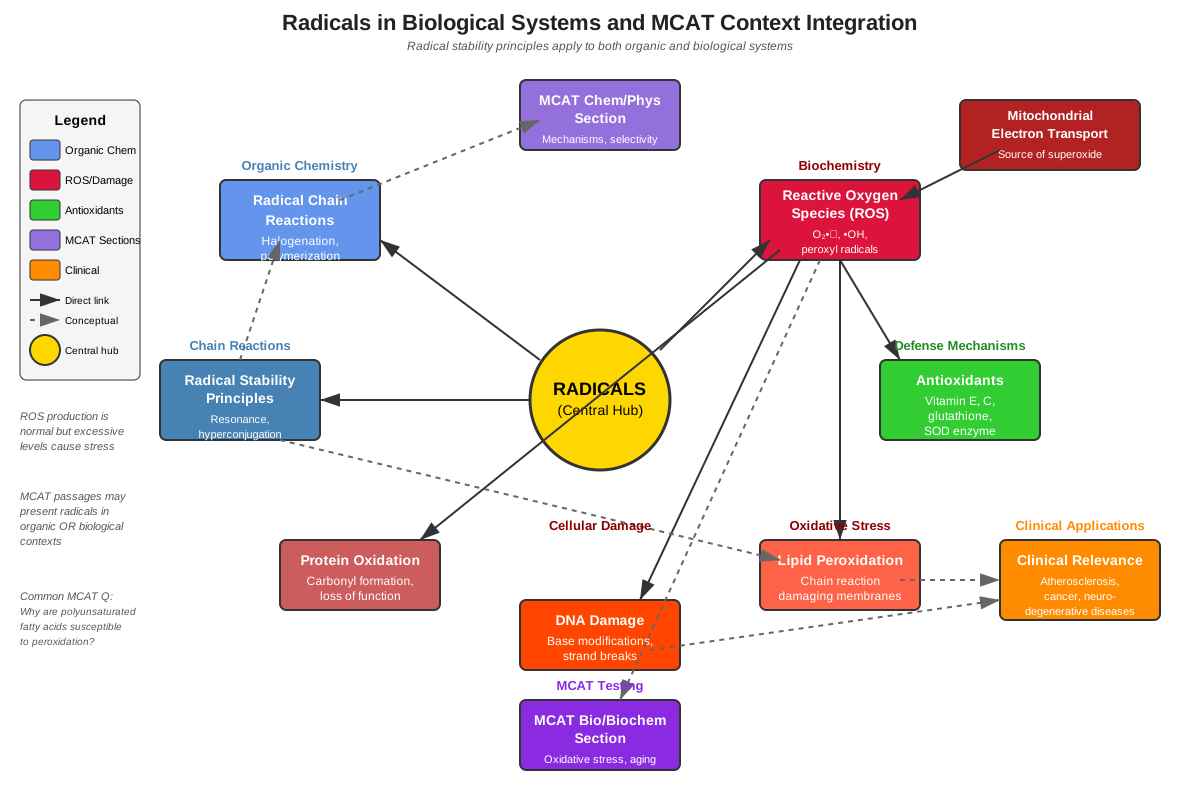
Understanding radicals is essential for the MCAT because they appear in multiple contexts across the exam. In the Chemical and Physical Foundations of Biological Systems section, radicals feature prominently in questions about reaction mechanisms, particularly halogenation reactions and polymerization processes. The Biological and Biochemical Foundations of Living Systems section tests knowledge of free radicals in biological contexts, including oxidative stress, cellular damage, and the role of antioxidants in protecting biological systems. Questions may present experimental passages describing radical-mediated reactions or ask students to predict products and mechanisms of radical reactions.
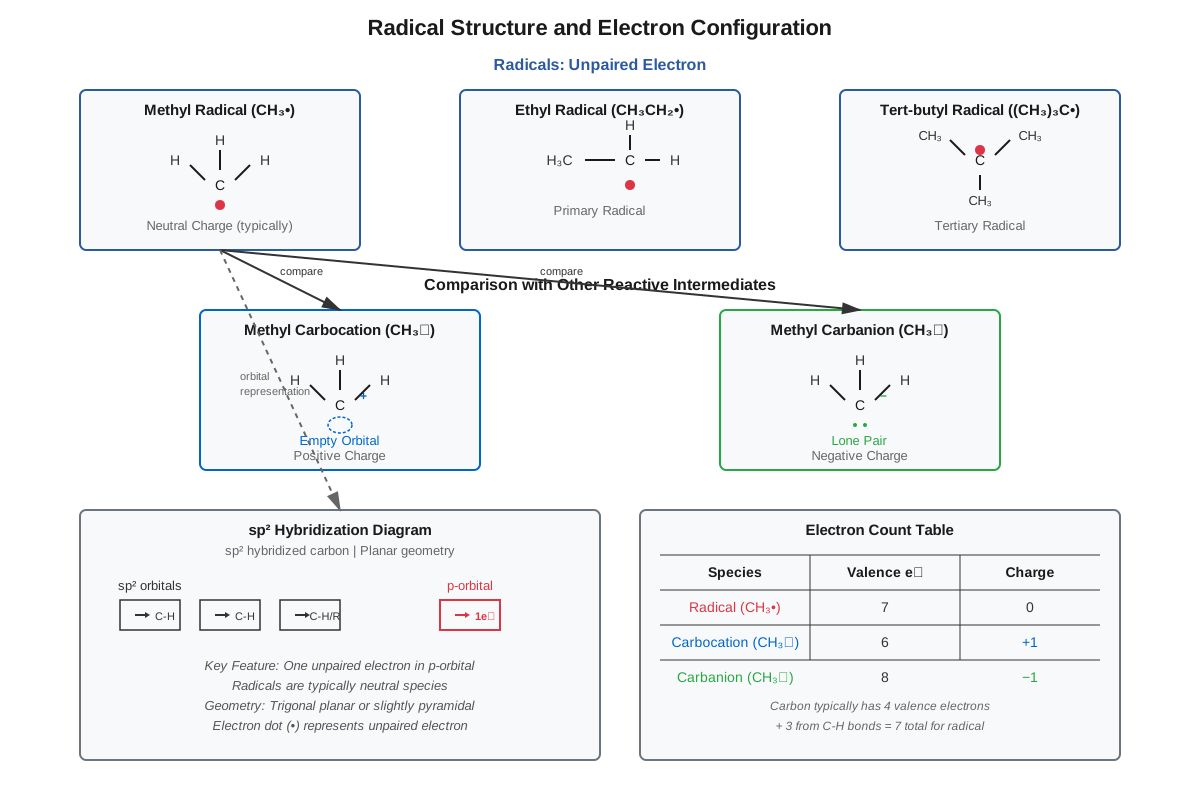
Within the broader framework of Structure and Bonding in Organic Chemistry, radicals represent one of three major types of reactive intermediates, alongside carbocations and carbanions. While carbocations carry a positive charge and carbanions carry a negative charge, radicals are typically neutral species characterized by their unpaired electron. The stability patterns, reactivity trends, and formation mechanisms of radicals connect directly to fundamental concepts of molecular orbital theory, electronegativity, resonance stabilization, and bond dissociation energies. Mastering radicals provides the foundation for understanding complex reaction mechanisms, including radical substitution, radical addition, and radical polymerization reactions that appear regularly on standardized examinations.
Learning Objectives
- [ ] Define Radicals using accurate Organic Chemistry terminology
- [ ] Explain why Radicals matters for the MCAT
- [ ] Apply Radicals to exam-style questions
- [ ] Identify common mistakes related to Radicals
- [ ] Connect Radicals to related Organic Chemistry concepts
- [ ] Predict the relative stability of different radical species based on structural features
- [ ] Describe the three stages of radical chain reactions (initiation, propagation, termination)
- [ ] Analyze the selectivity patterns in radical halogenation reactions
- [ ] Evaluate the role of bond dissociation energies in determining radical reaction feasibility
Prerequisites
- Lewis structures and electron configuration: Understanding how to represent electrons and bonds is essential for visualizing the unpaired electron in radical species
- Molecular orbital theory basics: Radicals occupy singly-filled molecular orbitals, requiring familiarity with orbital hybridization and electron filling patterns
- Electronegativity and bond polarity: The distribution of electron density affects radical stability and reactivity patterns
- Resonance structures: Delocalization of the unpaired electron through resonance significantly stabilizes radical intermediates
- Basic thermodynamics and kinetics: Concepts of activation energy, enthalpy changes, and reaction rates govern radical reaction mechanisms
- Alkane, alkene, and alkyne nomenclature: Radical reactions frequently involve these functional groups, requiring proper identification and naming
Why This Topic Matters
Clinical and Real-World Significance
Free radicals play pivotal roles in human health and disease. Reactive oxygen species (ROS) such as superoxide radical (O₂•⁻) and hydroxyl radical (•OH) are produced during normal cellular metabolism, particularly in mitochondrial respiration. While cells utilize these radicals for signaling and immune defense, excessive radical production leads to oxidative stress, damaging DNA, proteins, and lipid membranes. This oxidative damage contributes to aging, cancer development, cardiovascular disease, and neurodegenerative disorders including Alzheimer's and Parkinson's disease. Antioxidants such as vitamin E, vitamin C, and glutathione function by donating electrons to neutralize free radicals, preventing cellular damage. Understanding radical chemistry provides the mechanistic foundation for comprehending these biological processes.
In industrial chemistry, radical reactions enable the production of polymers including polyethylene, polystyrene, and PVC through radical polymerization. The pharmaceutical industry employs radical reactions in drug synthesis, while the combustion of fossil fuels proceeds through radical chain mechanisms. Environmental chemistry involves radical processes in atmospheric ozone depletion and smog formation.
Exam Statistics and Question Types
Radicals appear in approximately 3-5% of MCAT Organic Chemistry questions, with medium frequency but high importance due to their connections to biological systems. Questions typically fall into several categories:
- Mechanism-based questions: Students must identify initiation, propagation, and termination steps in radical chain reactions
- Product prediction: Given starting materials and conditions (light, heat, peroxides), predict major and minor products
- Stability comparisons: Rank radical species by stability or explain why one radical is more stable than another
- Passage-based applications: Experimental passages describing radical-mediated processes in biological or synthetic contexts
- Biological connections: Questions linking radical chemistry to oxidative stress, antioxidants, or cellular damage mechanisms
Common passage contexts include lipid peroxidation, radical halogenation selectivity studies, polymerization kinetics, and antioxidant mechanism investigations.
Core Concepts
Definition and Electronic Structure
A radical (also called a free radical) is a molecular species containing one or more unpaired electrons in its valence shell. The unpaired electron typically occupies a singly-filled orbital, making the radical paramagnetic and highly reactive. Most organic radicals are electrically neutral, though charged radical species (radical cations and radical anions) also exist. The unpaired electron is conventionally represented with a single dot (•) adjacent to the atom bearing the unpaired electron.
The electronic configuration of a carbon radical features an sp² hybridized carbon atom with the unpaired electron residing in a p orbital perpendicular to the plane of the three sp² hybrid orbitals. This geometry results in a trigonal planar or nearly planar structure with bond angles approaching 120°. The p orbital containing the unpaired electron can overlap with adjacent π systems, enabling resonance stabilization when present.
Radical Stability Patterns
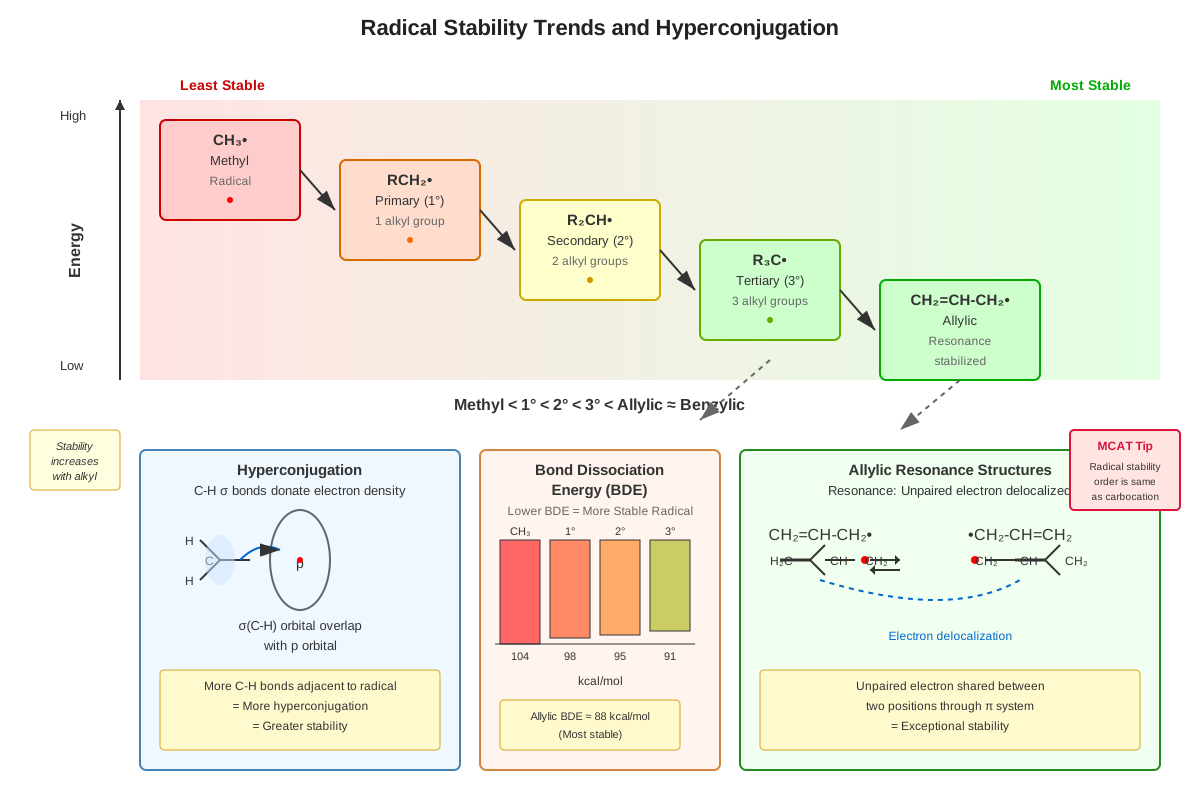
The stability of carbon-centered radicals follows a predictable hierarchy based on structural features:
Stability Order: Tertiary (3°) > Secondary (2°) > Primary (1°) > Methyl
This stability trend parallels carbocation stability but differs mechanistically. Radical stability arises from:
- Hyperconjugation: Adjacent C-H or C-C σ bonds can donate electron density into the singly-occupied p orbital through orbital overlap. More alkyl substituents provide more hyperconjugative interactions, stabilizing the radical.
- Resonance stabilization: When the radical center is adjacent to π systems (C=C, C=O, aromatic rings), the unpaired electron delocalizes through resonance. Allylic radicals (CH₂=CH-CH₂•) and benzylic radicals (Ph-CH₂•) exhibit exceptional stability due to resonance delocalization across multiple atoms.
- Inductive effects: Electron-donating groups stabilize radicals by increasing electron density at the radical center, while electron-withdrawing groups destabilize radicals.
Special Cases of Enhanced Stability:
- Allylic radicals: The unpaired electron delocalizes across three carbons through π-system overlap
- Benzylic radicals: Resonance with the aromatic ring distributes the unpaired electron across multiple positions
- Captodative radicals: Radicals with both electron-donating and electron-withdrawing substituents exhibit enhanced stability through synergistic effects
Radical Formation Mechanisms
Radicals form through homolytic cleavage (homolysis), where a covalent bond breaks symmetrically, with each atom retaining one electron from the bonding pair. This contrasts with heterolytic cleavage (heterolysis), which produces ions.
Common Radical Generation Methods:
- Photolysis (light-induced cleavage): Ultraviolet or visible light provides energy to break weak bonds, particularly halogens (Cl₂, Br₂) and peroxides
- Cl₂ + hν → 2 Cl•
- Bond dissociation energy determines which bonds break under specific wavelengths
- Thermolysis (heat-induced cleavage): Elevated temperatures provide thermal energy for homolytic bond cleavage
- Peroxides (R-O-O-R) have weak O-O bonds (~35-40 kcal/mol) that readily undergo thermolysis
- Azo compounds (R-N=N-R) decompose to form radicals and nitrogen gas
- Redox reactions: Single-electron transfer processes generate radical species
- Fenton reaction: Fe²⁺ + H₂O₂ → Fe³⁺ + •OH + OH⁻
- Biological systems generate superoxide (O₂•⁻) during electron transport
Radical Chain Reactions
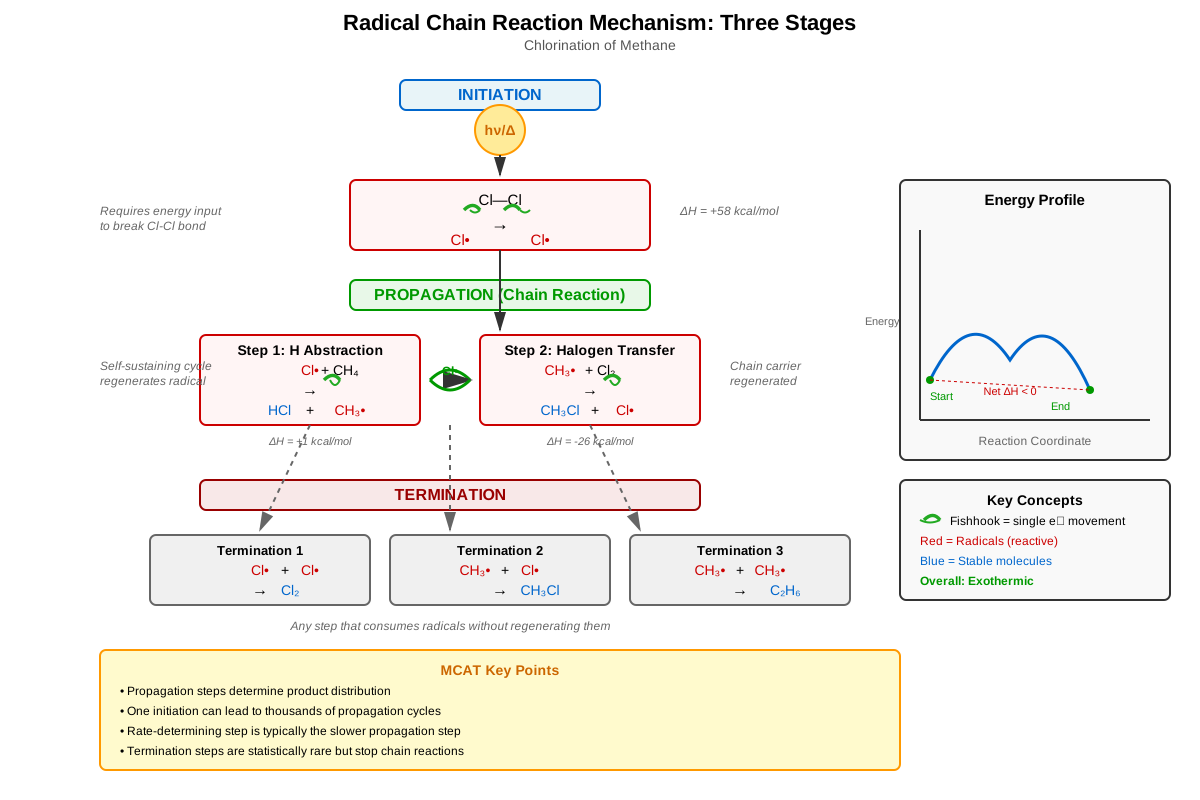
Radical reactions typically proceed through chain mechanisms consisting of three distinct stages:
Initiation
The formation of radicals from non-radical precursors through homolytic cleavage. This step requires energy input (light, heat) and has high activation energy.
Example: Cl₂ + hν → 2 Cl•
Propagation
Radicals react with stable molecules to generate new radicals, allowing the reaction to continue. These steps typically have lower activation energies than initiation. Each propagation cycle consumes one radical and produces another, maintaining the radical chain.
Example (chlorination of methane):
- Step 1: Cl• + CH₄ → HCl + •CH₃
- Step 2: •CH₃ + Cl₂ → CH₃Cl + Cl•
The chlorine radical regenerated in Step 2 can participate in Step 1 again, creating a self-sustaining cycle.
Termination
Two radicals combine to form a stable molecule, removing radicals from the system and ending the chain. These steps are statistically less frequent because radical concentrations remain low throughout the reaction.
Example termination steps:
- Cl• + Cl• → Cl₂
- •CH₃ + •CH₃ → CH₃-CH₃
- Cl• + •CH₃ → CH₃Cl
Radical Halogenation of Alkanes
The radical halogenation of alkanes represents the prototypical radical substitution reaction, where a hydrogen atom is replaced by a halogen (typically Cl or Br).
General Reaction: R-H + X₂ → R-X + HX (where X = Cl or Br)
Selectivity Patterns:
| Halogen | Reactivity | Selectivity | Conditions |
|---|---|---|---|
| Fluorine (F₂) | Extremely high | Non-selective | Too reactive for controlled reactions |
| Chlorine (Cl₂) | High | Moderately selective | Light or heat; favors more substituted positions |
| Bromine (Br₂) | Moderate | Highly selective | Light or heat; strongly favors tertiary > secondary >> primary |
| Iodine (I₂) | Very low | N/A | Thermodynamically unfavorable; reaction doesn't proceed |
Chlorination vs. Bromination:
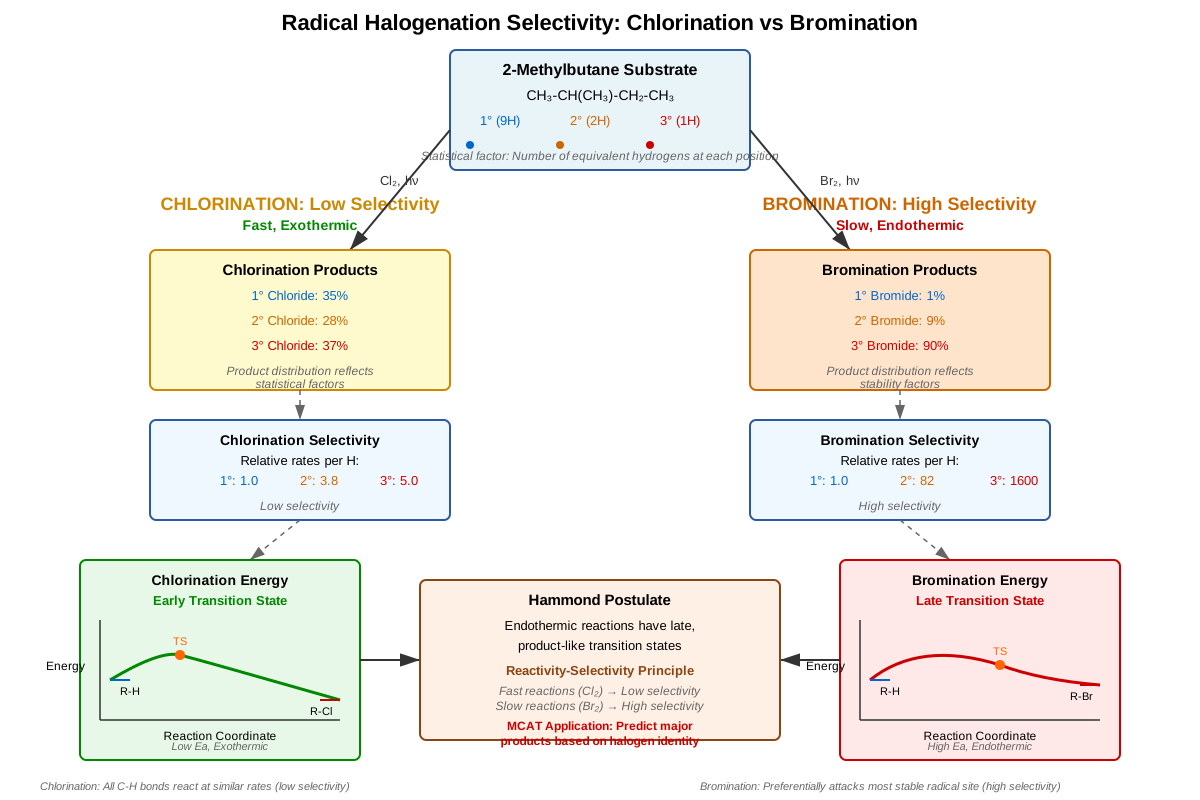
Chlorination is exothermic and relatively unselective. Chlorine radicals react rapidly with all types of C-H bonds, though tertiary positions are still favored (5:4:1 ratio for 3°:2°:1° per hydrogen).
Bromination is endothermic (for the H-abstraction step) and highly selective. Bromine radicals preferentially abstract tertiary hydrogens over secondary or primary hydrogens (1600:80:1 ratio for 3°:2°:1° per hydrogen). This selectivity arises from the Hammond postulate: the endothermic H-abstraction step has a late transition state that resembles the radical product, making radical stability crucial.
Bond Dissociation Energy and Radical Reactions
Bond dissociation energy (BDE) is the enthalpy change required to break a bond homolytically. BDE values determine:
- Which bonds break during initiation
- The thermodynamics of propagation steps
- The overall feasibility of radical reactions
Representative BDE Values (kcal/mol):
- H-H: 104
- Cl-Cl: 58
- Br-Br: 46
- I-I: 36
- CH₃-H: 105 (methyl)
- (CH₃)₂CH-H: 98 (secondary)
- (CH₃)₃C-H: 96 (tertiary)
- CH₂=CH-CH₂-H: 89 (allylic)
- Ph-CH₂-H: 90 (benzylic)
Lower BDE values for tertiary, allylic, and benzylic C-H bonds reflect greater radical stability at these positions. The overall enthalpy change (ΔH°) for a reaction equals the sum of BDEs of bonds broken minus the sum of BDEs of bonds formed.
Radical Addition Reactions
Radicals can add to π bonds in alkenes and alkynes, initiating radical addition reactions. The anti-Markovnikov addition of HBr to alkenes in the presence of peroxides exemplifies this process.
Peroxide Effect (Kharasch Effect):
- Without peroxides: HBr adds to alkenes via ionic mechanism (Markovnikov orientation)
- With peroxides: HBr adds via radical mechanism (anti-Markovnikov orientation)
Mechanism:
- Initiation: R-O-O-R → 2 RO•; RO• + H-Br → RO-H + Br•
- Propagation: Br• + CH₂=CHR → •CH₂-CHBr-R (more stable 2° radical forms)
- Propagation: •CH₂-CHBr-R + H-Br → CH₃-CHBr-R + Br•
The bromine radical adds to the less substituted carbon to generate the more stable radical intermediate, resulting in anti-Markovnikov product orientation.
Radical Polymerization
Radical polymerization produces high-molecular-weight polymers from alkene monomers through radical chain mechanisms. This process creates commercially important plastics including polyethylene, polystyrene, and poly(vinyl chloride).
Mechanism:
- Initiation: Peroxide decomposition generates radicals that add to monomer
- Propagation: Growing polymer radical adds to additional monomer units repeatedly
- Termination: Two polymer radicals combine or disproportionate
The polymer chain length depends on the relative rates of propagation versus termination, with typical polymers containing thousands of monomer units.
Concept Relationships
The chemistry of radicals interconnects with numerous fundamental concepts in organic chemistry and biochemistry. Radical stability directly parallels carbocation stability, both following the tertiary > secondary > primary > methyl hierarchy due to hyperconjugation and inductive effects. However, radicals are less sensitive to these stabilizing effects than carbocations because the unpaired electron is less electron-deficient than a carbocation's empty orbital.
Resonance stabilization → enhances → radical stability → determines → reaction selectivity. Allylic and benzylic radicals exhibit exceptional stability due to resonance delocalization, making allylic and benzylic positions highly reactive in radical substitution reactions. This connects to molecular orbital theory, where the unpaired electron occupies a p orbital that overlaps with adjacent π systems.
Bond dissociation energies → govern → thermodynamics of radical reactions → predict → reaction feasibility. The relationship between BDE and radical stability is inverse: weaker C-H bonds produce more stable radicals. This thermodynamic principle explains why bromination is selective (endothermic H-abstraction favors stable radicals) while chlorination is less selective (exothermic H-abstraction occurs readily at all positions).
Radical chain mechanisms → connect to → kinetics and reaction rates. The initiation step has high activation energy and occurs slowly, while propagation steps have lower activation energies and proceed rapidly. This explains why radical reactions require initiation conditions (light, heat, peroxides) but then proceed rapidly once started.
Radical chemistry → extends to → biological systems through oxidative stress. Reactive oxygen species (superoxide, hydroxyl radical, peroxyl radicals) damage biological molecules through radical chain reactions similar to lipid peroxidation. Antioxidants interrupt these chains by donating hydrogen atoms to radicals, forming stable antioxidant radicals that don't propagate damage.
Structure and bonding principles underlie all radical behavior: hybridization determines geometry, electronegativity affects stability, and molecular orbital overlap enables resonance. These foundational concepts integrate to explain radical reactivity patterns tested on the MCAT.
Quick check — test yourself on Radicals so far.
Try Flashcards →High-Yield Facts
⭐ Radical stability order: Tertiary > Secondary > Primary > Methyl, with allylic and benzylic radicals being exceptionally stable due to resonance
⭐ Radical chain reactions consist of three stages: Initiation (radical formation), Propagation (radical regeneration), and Termination (radical combination)
⭐ Bromination is highly selective for tertiary positions (1600:80:1 ratio for 3°:2°:1°), while chlorination is moderately selective (5:4:1 ratio)
⭐ Peroxides cause anti-Markovnikov addition of HBr to alkenes through a radical mechanism, while HCl and HI do not undergo this peroxide effect
⭐ Homolytic cleavage produces radicals (each atom gets one electron), while heterolytic cleavage produces ions (one atom gets both electrons)
- Radicals are typically sp² hybridized with trigonal planar geometry and the unpaired electron in a p orbital
- Bond dissociation energy (BDE) determines which bonds break during radical initiation; weaker bonds (lower BDE) break more easily
- Iodination of alkanes is thermodynamically unfavorable and does not proceed under normal conditions
- Fluorination is too exothermic and uncontrolled to be synthetically useful for selective alkane halogenation
- Radical reactions require initiation energy (light, heat, or chemical initiators) but are self-sustaining once started
- Hyperconjugation from adjacent C-H and C-C bonds stabilizes radicals by donating electron density into the singly-occupied orbital
- The Hammond postulate explains bromination selectivity: the endothermic H-abstraction step has a late transition state resembling the radical product
- Antioxidants like vitamin E function by donating hydrogen atoms to reactive radicals, forming stable antioxidant radicals that terminate chain reactions
- Radical polymerization produces addition polymers with no loss of small molecules, unlike condensation polymerization
- Oxygen (O₂) is a diradical with two unpaired electrons, making it reactive toward other radicals and enabling autoxidation reactions
Common Misconceptions
Misconception: Radicals are always highly unstable and exist only momentarily.
Correction: While most radicals are reactive, some radicals are relatively stable and can be isolated. Triphenylmethyl radical and nitroxide radicals (used as spin labels) persist for extended periods. Stability depends on resonance delocalization and steric protection. Additionally, radical intermediates in chain reactions exist long enough to undergo multiple propagation steps before termination.
Misconception: Radical stability follows the same pattern as carbocation stability for the same reasons.
Correction: Although both follow tertiary > secondary > primary > methyl order, the magnitude of stabilization differs. Radicals are less sensitive to stabilizing effects than carbocations because the unpaired electron is less electron-deficient than an empty orbital. Hyperconjugation stabilizes both, but the effect is more pronounced for carbocations. Additionally, radicals can be stabilized by captodative effects (simultaneous electron-donating and electron-withdrawing groups), which don't apply to carbocations.
Misconception: All halogens undergo radical substitution with alkanes under similar conditions with similar selectivity.
Correction: The four halogens show dramatically different behavior. Fluorination is explosively exothermic and non-selective. Chlorination is moderately selective and practical. Bromination is highly selective for tertiary positions. Iodination is endothermic and thermodynamically unfavorable, not proceeding under normal conditions. Only chlorination and bromination are synthetically useful for controlled alkane halogenation.
Misconception: The peroxide effect works for all hydrogen halides (HF, HCl, HBr, HI).
Correction: The peroxide effect (anti-Markovnikov addition via radical mechanism) occurs only with HBr. HCl has a strong H-Cl bond (BDE = 103 kcal/mol) that makes the propagation step endothermic and unfavorable. HI has a weak H-I bond but the iodine radical is too unreactive to add efficiently to alkenes. HBr has the optimal bond strength (BDE = 88 kcal/mol) for both propagation steps to be exothermic.
Misconception: Termination steps are the most important steps in radical chain reactions because they end the reaction.
Correction: Although termination steps end individual chains, they are statistically rare because radical concentrations remain very low throughout the reaction. Propagation steps occur thousands of times for each termination event. The selectivity and products of radical reactions are determined by the propagation steps, not termination. Termination steps become important only when considering polymer molecular weight distribution or when radical inhibitors are deliberately added.
Misconception: Radicals always abstract the most acidic hydrogen from a molecule.
Correction: Radical hydrogen abstraction is not governed by acidity (pKa). Instead, it depends on bond dissociation energy and radical stability. The most acidic hydrogens (like those on carboxylic acids) are not necessarily the most easily abstracted by radicals. Tertiary, allylic, and benzylic hydrogens are preferentially abstracted because they form stable radicals, not because they are acidic. Acidity relates to heterolytic cleavage forming anions, while radical reactions involve homolytic cleavage.
Worked Examples
Example 1: Predicting Products of Radical Bromination
Question: When 2-methylbutane is treated with Br₂ and light, what is the major monobrominated product? Explain the selectivity.
Solution:
Step 1: Identify all unique hydrogen positions in 2-methylbutane:
- Position 1 (CH₃-): primary, 3 equivalent hydrogens
- Position 2 (CH-): tertiary, 1 hydrogen
- Position 3 (CH₂-): secondary, 2 equivalent hydrogens
- Position 4 (CH₃-): primary, 3 equivalent hydrogens
Step 2: Recall bromination selectivity. Bromine radicals are highly selective, preferentially abstracting hydrogens that form the most stable radicals. The relative reactivity per hydrogen is approximately 1600:80:1 for tertiary:secondary:primary.
Step 3: Calculate the statistical probability for each position by multiplying the number of hydrogens by the relative reactivity:
- Position 1: 3 hydrogens × 1 (primary) = 3
- Position 2: 1 hydrogen × 1600 (tertiary) = 1600
- Position 3: 2 hydrogens × 80 (secondary) = 160
- Position 4: 3 hydrogens × 1 (primary) = 3
Step 4: Determine the major product. Position 2 (tertiary) dominates overwhelmingly. The major product is 2-bromo-2-methylbutane, where bromine substitutes the tertiary hydrogen.
Answer: The major product is 2-bromo-2-methylbutane (tertiary bromide). The tertiary position is vastly favored due to the high selectivity of bromine radicals for abstracting hydrogens that form stable tertiary radicals. Minor products include 1-bromo-2-methylbutane and 3-bromo-2-methylbutane, but these form in much smaller quantities.
Connection to Learning Objectives: This example applies radical chemistry to predict products (LO 3), demonstrates the importance of radical stability in determining selectivity (LO 6), and illustrates how bromination selectivity differs from chlorination (LO 8).
Example 2: Analyzing a Radical Chain Mechanism
Question: Consider the radical chlorination of methane. Given the following bond dissociation energies, calculate ΔH° for each propagation step and the overall reaction:
- Cl-Cl: 58 kcal/mol
- H-CH₃: 105 kcal/mol
- H-Cl: 103 kcal/mol
- Cl-CH₃: 84 kcal/mol
Also, explain why this reaction requires initiation but then proceeds rapidly.
Solution:
Step 1: Write the propagation steps:
- Propagation 1: Cl• + CH₄ → HCl + •CH₃
- Propagation 2: •CH₃ + Cl₂ → CH₃Cl + Cl•
Step 2: Calculate ΔH° for Propagation 1:
- Bonds broken: H-CH₃ = +105 kcal/mol
- Bonds formed: H-Cl = -103 kcal/mol
- ΔH° = +105 - 103 = +2 kcal/mol (slightly endothermic)
Step 3: Calculate ΔH° for Propagation 2:
- Bonds broken: Cl-Cl = +58 kcal/mol
- Bonds formed: Cl-CH₃ = -84 kcal/mol
- ΔH° = +58 - 84 = -26 kcal/mol (exothermic)
Step 4: Calculate overall ΔH° for the complete reaction (sum of both propagation steps):
- ΔH°(overall) = +2 + (-26) = -24 kcal/mol (exothermic overall)
Step 5: Explain the initiation requirement and rapid propagation:
The initiation step (Cl₂ → 2 Cl•) requires breaking the Cl-Cl bond (58 kcal/mol), which has a high activation energy. Light provides the energy needed to overcome this barrier, generating chlorine radicals.
Once initiated, the propagation steps are self-sustaining. Although Propagation 1 is slightly endothermic (+2 kcal/mol), it has a relatively low activation energy. Propagation 2 is strongly exothermic (-26 kcal/mol), releasing energy that helps drive the cycle forward. Each propagation cycle regenerates a chlorine radical, allowing the chain to continue for thousands of cycles before termination. The overall exothermic nature (-24 kcal/mol) makes the reaction thermodynamically favorable.
Answer: Propagation 1: ΔH° = +2 kcal/mol; Propagation 2: ΔH° = -26 kcal/mol; Overall: ΔH° = -24 kcal/mol. The reaction requires initiation because breaking Cl-Cl has high activation energy, but proceeds rapidly once started because propagation steps have lower activation energies and regenerate reactive radicals, creating a self-sustaining chain reaction.
Connection to Learning Objectives: This example demonstrates the three stages of radical chain reactions (LO 7), applies bond dissociation energies to evaluate reaction thermodynamics (LO 9), and explains the mechanistic basis for radical reactivity patterns (LO 5).
Exam Strategy
Approaching MCAT Questions on Radicals
Step 1: Identify radical conditions. Look for trigger words and conditions that indicate radical mechanisms:
- Light (hν) or UV radiation
- Heat (Δ) with peroxides or azo compounds
- Peroxides (ROOR) mentioned in the reaction conditions
- Halogens (Cl₂, Br₂) with light or heat
- Anti-Markovnikov addition of HBr
- Polymerization reactions
- Biological contexts mentioning oxidative stress, ROS, or antioxidants
Step 2: Determine the reaction stage. Questions often ask about specific steps in radical mechanisms. Identify whether the question focuses on:
- Initiation: Look for homolytic bond cleavage, typically of weak bonds (X₂, peroxides)
- Propagation: Look for steps where radicals react with stable molecules to generate new radicals
- Termination: Look for radical-radical combination reactions
Step 3: Apply stability principles. When predicting products or selectivity:
- Rank radical stability: allylic/benzylic > tertiary > secondary > primary > methyl
- Remember bromination is highly selective; chlorination is moderately selective
- Consider resonance stabilization when adjacent to π systems
Step 4: Use bond dissociation energies strategically. If BDE values are provided:
- Lower BDE = weaker bond = easier to break = more stable radical formed
- Calculate ΔH° by subtracting BDE of bonds formed from BDE of bonds broken
- Negative ΔH° indicates exothermic (favorable); positive indicates endothermic
Process of Elimination Tips
Eliminate answers that:
- Show heterolytic cleavage (forming ions) when radical conditions are present
- Predict Markovnikov products when peroxides are mentioned with HBr
- Suggest iodination proceeds readily (thermodynamically unfavorable)
- Claim fluorination is selective (it's highly unselective and violent)
- Show radicals with incorrect geometry (should be sp² hybridized, trigonal planar)
- Confuse radical stability with carbocation or carbanion stability patterns
Red flags in answer choices:
- Statements claiming all halogens behave similarly in radical substitution
- Mechanisms showing radicals with formal charges (radicals are typically neutral)
- Claims that termination steps determine product distribution (propagation steps determine products)
- Confusion between acidity and radical stability
Time Allocation
For discrete radical questions (not passage-based): Allocate 60-90 seconds. Quickly identify the reaction type, apply stability rules, and select the answer.
For passage-based questions: Spend 30-45 seconds per question after reading the passage. Passage-based radical questions often involve:
- Experimental data about selectivity or kinetics
- Biological contexts (oxidative damage, antioxidants)
- Novel radical reactions requiring mechanistic reasoning
If a question requires extensive calculation (multiple BDE calculations), consider flagging and returning if time permits. Focus on questions testing conceptual understanding of stability and selectivity, which appear more frequently.
Exam Tip: When you see "light" or "peroxides" in reaction conditions, immediately think radical mechanism. When comparing halogenation reactions, remember "Bromine is Bossy" (highly selective) while "Chlorine is Careless" (less selective).
Memory Techniques
Mnemonics
"TIPS" for Radical Stability:
- Tertiary (most stable)
- Intermediate (secondary)
- Primary
- Simple methyl (least stable)
"ABC" for Radical Chain Reactions:
- Activation (Initiation)
- Building the chain (Propagation)
- Combination (Termination)
"Bromine is Bossy, Chlorine is Careless": Bromine is highly selective (bossy about which hydrogen to abstract), while chlorine is less selective (careless, reacts with most positions).
"ROAR" for Radical Conditions:
- Radiation (light, hν)
- Oxygen/peroxides (ROOR)
- Azo compounds
- Raised temperature (heat, Δ)
Visualization Strategies
The Radical Stability Ladder: Visualize a ladder where each rung represents increasing stability:
- Bottom rung: Methyl radical (•CH₃)
- Second rung: Primary radical (R-CH₂•)
- Third rung: Secondary radical (R₂CH•)
- Fourth rung: Tertiary radical (R₃C•)
- Top rung: Allylic/Benzylic radicals (with resonance structures spreading the unpaired electron)
The Chain Reaction Cycle: Picture a circular arrow diagram:
- Initiation creates the first radical (lightning bolt breaking a bond)
- Propagation forms a loop where radicals regenerate (circular arrows)
- Termination breaks the loop (two radicals colliding and stopping)
The Selectivity Spectrum: Imagine a spectrum from "indiscriminate" to "highly selective":
- Far left (indiscriminate): Fluorine (reacts with everything)
- Center-left: Chlorine (moderately selective)
- Center-right: Bromine (highly selective)
- Far right: Iodine (so selective it doesn't react at all)
Acronyms
"HIP" for Hyperconjugation, Inductive effects, and π-system overlap - the three factors stabilizing radicals
"BDE" - "Breaking Determines Everything": Bond Dissociation Energy determines which bonds break during initiation and the thermodynamics of propagation steps
Summary
Radicals are reactive chemical species containing unpaired electrons that play crucial roles in organic chemistry and biological systems. These neutral intermediates form through homolytic bond cleavage and exhibit characteristic stability patterns: tertiary > secondary > primary > methyl, with exceptional stability for allylic and benzylic radicals due to resonance delocalization. Radical reactions proceed through chain mechanisms consisting of initiation (radical formation requiring energy input), propagation (self-sustaining radical regeneration), and termination (radical combination). The selectivity of radical halogenation varies dramatically among halogens, with bromination being highly selective for tertiary positions while chlorination shows moderate selectivity. Bond dissociation energies govern the thermodynamics of radical reactions, explaining why bromination is selective (endothermic H-abstraction favors stable radicals) and why iodination doesn't proceed (thermodynamically unfavorable). For the MCAT, understanding radical stability, recognizing radical reaction conditions (light, heat, peroxides), predicting products based on selectivity patterns, and connecting radical chemistry to biological oxidative stress are essential skills that appear in both discrete questions and passage-based contexts.
Key Takeaways
- Radicals contain unpaired electrons and form through homolytic cleavage; they are typically sp² hybridized with trigonal planar geometry
- Radical stability follows the order: allylic/benzylic > tertiary > secondary > primary > methyl, determined by hyperconjugation, resonance, and inductive effects
- Radical chain reactions consist of three stages: initiation (radical formation), propagation (radical regeneration), and termination (radical combination)
- Bromination is highly selective for tertiary positions (1600:80:1 ratio), while chlorination is moderately selective (5:4:1 ratio); iodination doesn't proceed
- The peroxide effect causes anti-Markovnikov addition of HBr to alkenes through a radical mechanism; this effect is specific to HBr
- Bond dissociation energies determine reaction thermodynamics: weaker bonds (lower BDE) break more easily and form more stable radicals
- Radical reactions require initiation conditions (light, heat, peroxides) but are self-sustaining once started due to propagation cycles
Related Topics
Carbocations and Carbocation Rearrangements: Understanding carbocation stability patterns and rearrangements complements radical chemistry, as both involve electron-deficient carbon intermediates with similar (but not identical) stability trends.
Alkene Addition Reactions: Radical addition to alkenes (peroxide effect) contrasts with ionic addition mechanisms, highlighting how reaction conditions determine mechanistic pathways and product distributions.
Resonance and Molecular Orbital Theory: Deeper exploration of how electron delocalization stabilizes reactive intermediates applies to radicals, carbocations, carbanions, and aromatic systems.
Oxidation-Reduction Reactions: Radical chemistry connects to redox processes, particularly in biological systems where electron transfer generates reactive oxygen species.
Biochemistry of Oxidative Stress: The biological consequences of radical reactions, including lipid peroxidation, DNA damage, and antioxidant defense mechanisms, extend radical chemistry into the Biological and Biochemical Foundations section.
Polymer Chemistry: Radical polymerization mechanisms demonstrate practical applications of radical chain reactions in producing commercially important materials.
Mastering radicals provides the foundation for understanding these related topics and enables progression to more complex reaction mechanisms and biological applications tested on the MCAT.
Practice CTA
Now that you've mastered the core concepts of radical chemistry, it's time to reinforce your understanding through active practice. Attempt the practice questions and flashcards associated with this topic to test your ability to predict products, analyze mechanisms, and apply stability principles to exam-style scenarios. Focus particularly on questions involving selectivity patterns, bond dissociation energy calculations, and biological applications of radical chemistry. Remember that the MCAT rewards not just memorization but the ability to apply concepts to novel situations—practice questions will develop this critical skill. Each question you work through strengthens your mechanistic reasoning and builds the confidence needed to excel on test day. You've built a solid foundation; now transform that knowledge into exam success through deliberate practice!
Sign up free to keep reading
Create a free AnvayaPrep account to finish this MCAT guide on Radicals — plus flashcards and practice questions.