Overview
Electric charge is one of the most fundamental properties of matter and serves as the foundation for understanding all electrical phenomena tested on the MCAT. This intrinsic property of subatomic particles governs how matter interacts electromagnetically, from the molecular bonds that hold proteins together to the neural signals that propagate through the nervous system. On the MCAT, electric charge appears not only in dedicated Physics passages but also integrates into biological contexts, such as membrane potentials, protein electrophoresis, and ion channel function.
Understanding electric charge is essential because it forms the conceptual basis for Electricity and Magnetism, one of the most heavily tested areas in MCAT Physics. Questions involving electric charge frequently appear in both passage-based and discrete formats, testing everything from basic charge conservation principles to complex applications involving electric fields and forces. The MCAT expects students to move beyond simple memorization and apply charge concepts to novel scenarios, particularly those involving biological systems where charged particles play critical roles.
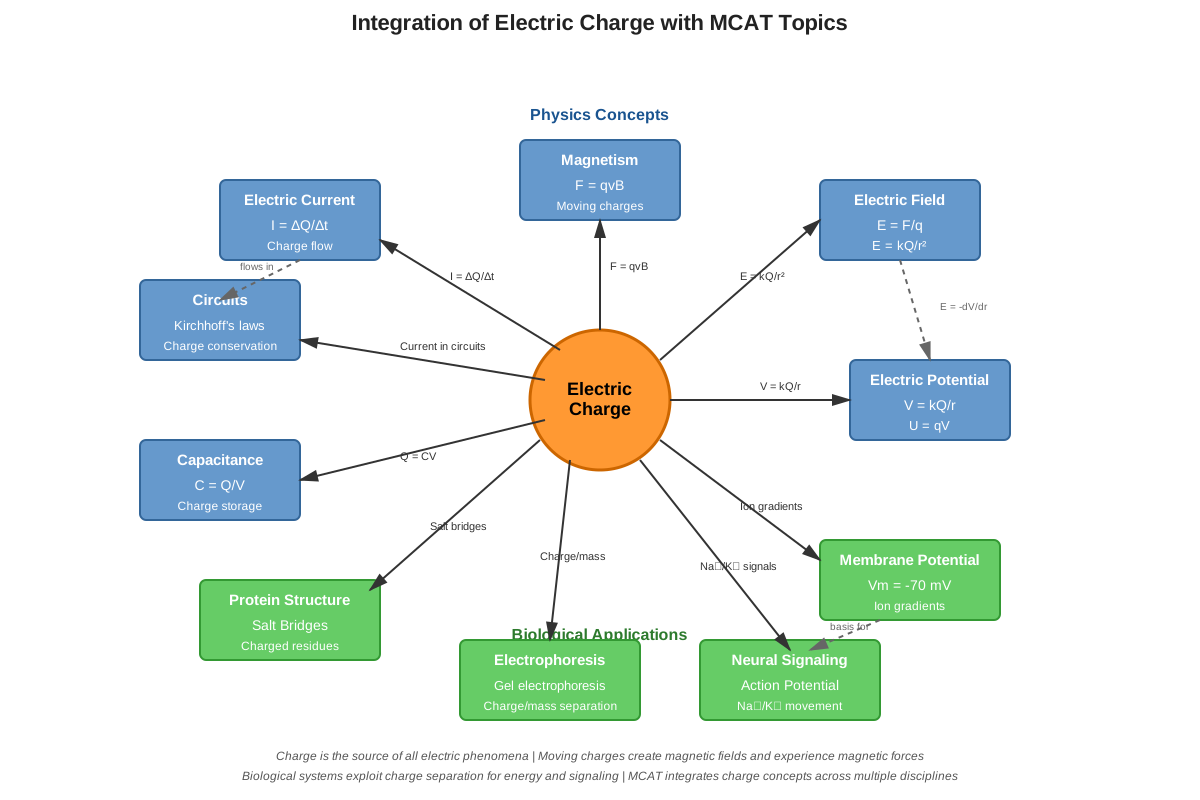
The study of Electric charge Physics connects directly to numerous other topics within the MCAT curriculum. Electric charge is the source of electric fields, which in turn create electric potential and drive current flow. These concepts extend into capacitance, circuits, and even magnetic phenomena. Additionally, understanding charge behavior at the molecular level helps explain biochemical processes such as protein folding, enzyme-substrate interactions, and the selective permeability of cell membranes—making this topic truly interdisciplinary for Electric charge MCAT preparation.
Learning Objectives
- [ ] Define Electric charge using accurate Physics terminology
- [ ] Explain why Electric charge matters for the MCAT
- [ ] Apply Electric charge to exam-style questions
- [ ] Identify common mistakes related to Electric charge
- [ ] Connect Electric charge to related Physics concepts
- [ ] Quantitatively calculate net charge on objects given numbers of protons and electrons
- [ ] Predict the direction and relative magnitude of electrostatic forces between charged objects
- [ ] Apply conservation of charge to analyze charge transfer scenarios in isolated systems
Prerequisites
- Basic atomic structure: Understanding protons, neutrons, and electrons is essential because charge is a property of these subatomic particles
- Scientific notation and unit conversions: Charge values often involve very small numbers (10⁻¹⁹ C) requiring comfort with exponential notation
- Vector concepts: Electric forces have both magnitude and direction, requiring basic vector addition and decomposition skills
- Newton's Laws: Electrostatic forces cause accelerations, so applying F = ma to charged particles is frequently tested
Why This Topic Matters
Electric charge concepts appear in approximately 8-12% of MCAT Physics questions, making it a medium-to-high yield topic that cannot be ignored. Beyond dedicated physics passages, charge principles underlie numerous biological phenomena tested in the Biological and Biochemical Foundations section. For instance, understanding how charged amino acid residues affect protein structure, how ion gradients create membrane potentials, and how electrophoresis separates molecules all require solid grasp of charge fundamentals.
Clinically, electric charge principles explain critical physiological processes. The action potential that allows neurons to transmit signals depends on the movement of charged ions (Na⁺, K⁺) across membranes. Cardiac function relies on the coordinated electrical activity of charged particles, which is why electrocardiograms (ECGs) can detect heart problems. Even diagnostic techniques like gel electrophoresis for DNA analysis and isoelectric focusing for protein separation are direct applications of charge behavior.
On the MCAT, electric charge typically appears in several question formats: discrete questions testing fundamental definitions and calculations, passage-based questions applying charge concepts to experimental setups (such as electrophoresis or mass spectrometry), and interdisciplinary questions connecting charge to biological systems. The exam frequently presents scenarios requiring students to predict charge distribution, calculate net charge, or determine the direction of electrostatic forces—all within strict time constraints that reward conceptual understanding over lengthy calculations.
Core Concepts
Fundamental Nature of Electric Charge
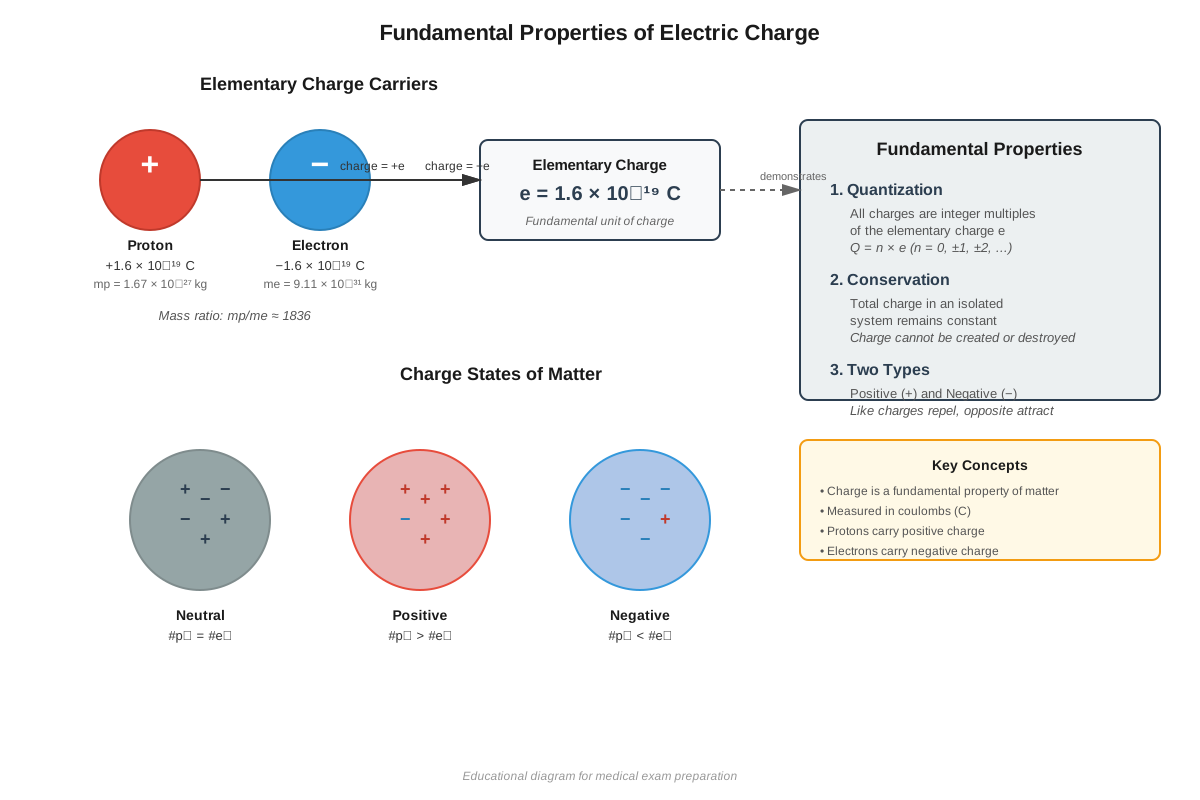
Electric charge is an intrinsic property of matter that causes it to experience electromagnetic forces. Unlike mass, which is always positive, charge exists in two varieties: positive and negative. This dual nature creates the possibility for both attractive and repulsive interactions, fundamentally distinguishing electromagnetic forces from gravitational forces.
At the subatomic level, charge is carried by specific particles. Protons carry a positive charge of +1.6 × 10⁻¹⁹ coulombs (C), while electrons carry an equal but opposite charge of -1.6 × 10⁻¹⁹ C. This fundamental unit of charge is denoted as e (the elementary charge). Neutrons, despite their name suggesting neutrality, carry no net charge. All observable charges in nature are integer multiples of this elementary charge—a principle called charge quantization.
The Coulomb: Unit of Charge
The SI unit of electric charge is the coulomb (C), named after French physicist Charles-Augustin de Coulomb. One coulomb represents an enormous amount of charge in everyday terms—it equals the charge of approximately 6.24 × 10¹⁸ protons. For MCAT purposes, students should be comfortable converting between coulombs and elementary charges, and recognize that most problems involve charges in the microcoulomb (μC = 10⁻⁶ C) or nanocoulomb (nC = 10⁻⁹ C) range.
Conservation of Charge
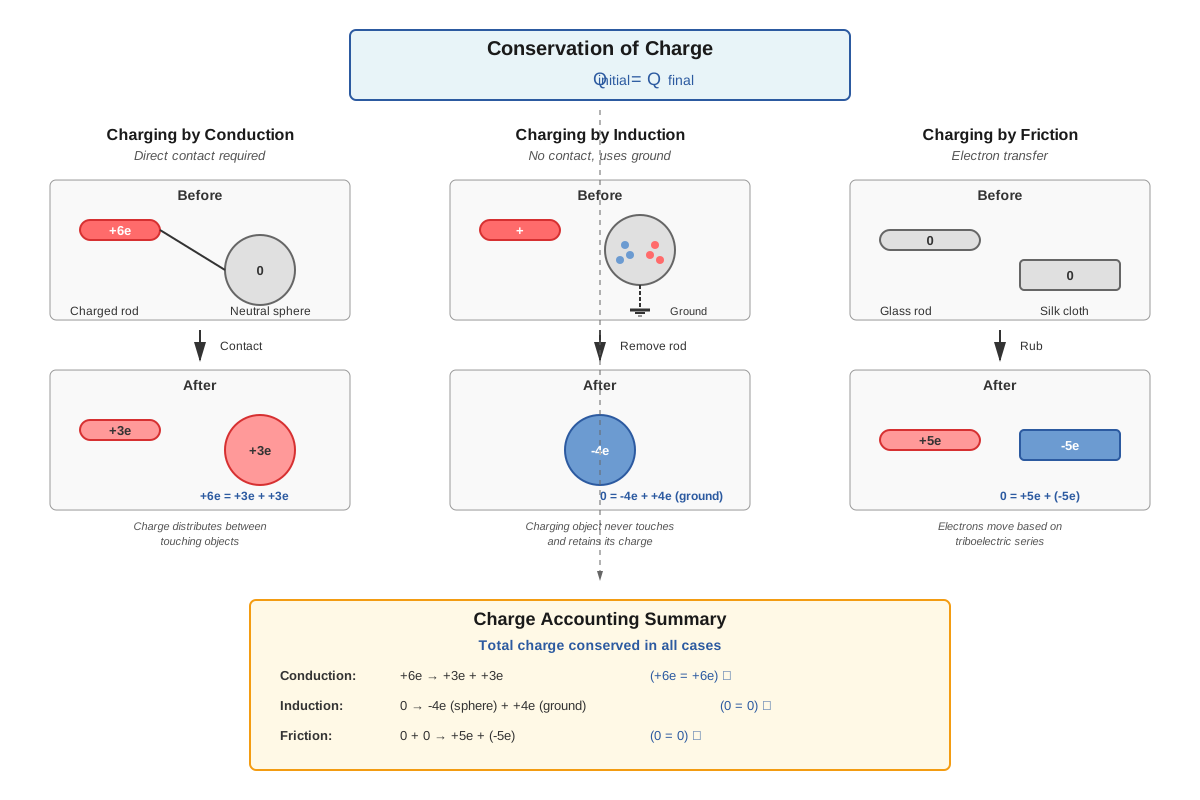
One of the most fundamental principles in physics is the law of conservation of charge: the total electric charge in an isolated system remains constant. Charge cannot be created or destroyed, only transferred from one object to another. This principle has profound implications for MCAT problem-solving.
When two neutral objects are rubbed together (such as a rubber rod and fur), electrons transfer from one material to the other. If the fur loses 1000 electrons, it becomes positively charged with a deficit of 1000 electrons. Simultaneously, the rubber rod gains those exact 1000 electrons, becoming negatively charged. The total charge of the system (fur + rod) remains zero—charge has been redistributed, not created.
Charge Transfer Mechanisms
Three primary mechanisms allow charge transfer between objects:
- Conduction: Direct contact between objects allows electrons to flow from one to another, particularly when one object is a good conductor. When a charged metal sphere touches a neutral sphere, electrons redistribute until both spheres reach the same electric potential.
- Induction: A charged object brought near (but not touching) a neutral conductor causes charge redistribution within the conductor without direct contact. The near side develops charge opposite to the inducing object, while the far side develops like charge.
- Friction: Rubbing two materials together can transfer electrons from one to the other, as seen in static electricity generation. The triboelectric series ranks materials by their tendency to gain or lose electrons.
Conductors vs. Insulators
Materials respond differently to the presence of charge based on their electronic structure:
| Property | Conductors | Insulators |
|---|---|---|
| Electron mobility | Free electrons move easily | Electrons tightly bound to atoms |
| Charge distribution | Charge moves to surface | Charge remains localized |
| Examples | Metals, ionic solutions | Rubber, glass, plastic |
| Response to external charge | Rapid redistribution | Minimal redistribution |
| MCAT relevance | Circuit problems, electrostatics | Capacitor dielectrics, static electricity |
Semiconductors represent an intermediate category with properties between conductors and insulators, though they appear less frequently on the MCAT.
Charge Distribution and Density
When charge accumulates on an object, it may distribute uniformly or non-uniformly depending on the object's shape and material. Linear charge density (λ, measured in C/m) describes charge per unit length on a wire or line. Surface charge density (σ, measured in C/m²) describes charge per unit area on a surface. Volume charge density (ρ, measured in C/m³) describes charge per unit volume within a three-dimensional object.
For conductors in electrostatic equilibrium, excess charge always resides on the outer surface and accumulates most densely at points of high curvature (sharp points or edges). This principle explains why lightning rods have pointed tips—they concentrate charge, facilitating discharge.
Polarization
Even electrically neutral objects can experience charge redistribution in the presence of an external electric field. Polarization occurs when positive and negative charges within an object shift slightly in opposite directions, creating an induced dipole moment. This phenomenon explains why neutral paper scraps are attracted to a charged balloon—the balloon's charge polarizes the paper, creating a net attractive force.
In biological contexts, polarization is crucial for understanding how water molecules (permanent dipoles) interact with ions and charged biomolecules, affecting protein folding, membrane structure, and molecular recognition.
Calculating Net Charge
For MCAT problems, calculating the net charge on an object requires accounting for all protons and electrons:
Q_net = (number of protons × e) + (number of electrons × -e)
Q_net = e(N_p - N_e)
Where N_p is the number of protons and N_e is the number of electrons. A neutral object has equal numbers of protons and electrons (N_p = N_e), yielding Q_net = 0.
Electrostatic Forces Between Charges
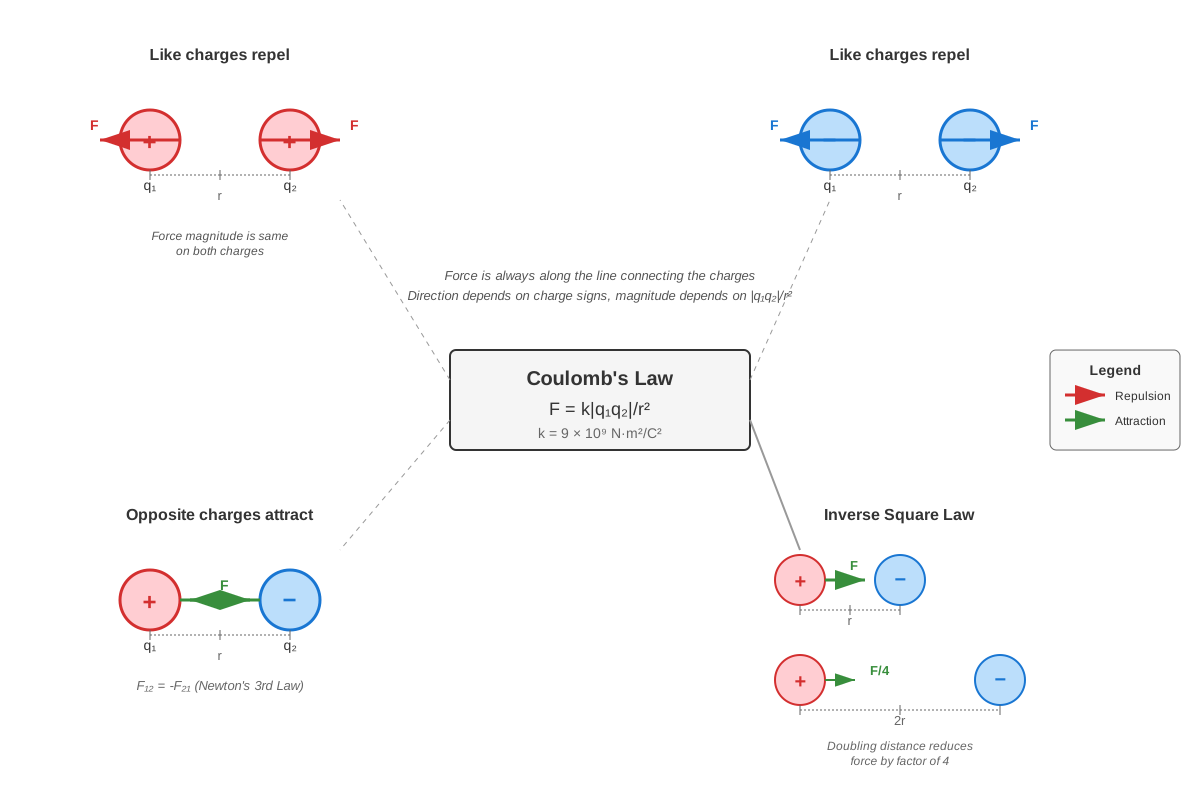
Charged objects exert forces on each other according to Coulomb's Law (covered in detail in the Electric Force topic). The key principle for understanding charge interactions is:
- Like charges (both positive or both negative) repel each other
- Unlike charges (one positive, one negative) attract each other
- The force magnitude depends on both the amount of charge and the distance between charges
This simple rule governs countless MCAT scenarios, from predicting ion movement in solution to understanding protein-protein interactions.
Concept Relationships
The concept of electric charge serves as the foundation for a hierarchical understanding of electricity and magnetism. Electric charge → creates → electric fields → which exert forces on other charges → causing electric potential differences → which drive electric current in circuits. This conceptual chain appears repeatedly throughout MCAT Physics passages.
Within the topic of electric charge itself, several concepts interconnect. The quantization of charge (all charges are multiples of e) relates directly to conservation of charge (you can only transfer whole numbers of elementary charges). Charge transfer mechanisms (conduction, induction, friction) depend on whether materials are conductors or insulators, which in turn determines charge distribution patterns on objects.
Electric charge concepts also connect backward to prerequisite knowledge. Understanding atomic structure explains why protons and electrons carry charge, while vector mathematics becomes essential when analyzing forces between multiple charges. Looking forward, charge concepts enable understanding of electric fields (charge creates fields), electric potential (work done moving charge), capacitance (charge storage), and current (charge flow rate).
The biological applications create additional connections. Charge on amino acids affects protein structure → charge separation across membranes creates resting potential → ion movement generates action potentials → charge-based separation techniques enable laboratory analysis. These interdisciplinary connections make electric charge particularly high-yield for MCAT preparation.
Quick check — test yourself on Electric charge so far.
Try Flashcards →High-Yield Facts
⭐ Electric charge is quantized: all observable charges are integer multiples of the elementary charge e = 1.6 × 10⁻¹⁹ C
⭐ Charge is conserved: the total charge in an isolated system never changes; charge can only be transferred, not created or destroyed
⭐ Like charges repel, unlike charges attract: this fundamental rule determines the direction of all electrostatic forces
⭐ Protons carry +e charge, electrons carry -e charge: neutrons are electrically neutral
⭐ Conductors allow free electron movement; insulators do not: this property determines how charge distributes on materials
- The SI unit of charge is the coulomb (C), where 1 C = 6.24 × 10¹⁸ elementary charges
- Excess charge on a conductor in equilibrium resides entirely on the outer surface
- Charge accumulates most densely at sharp points and edges on conductors (high curvature regions)
- Neutral objects can be attracted to charged objects through polarization (induced charge separation)
- Charge transfer by friction follows the triboelectric series (materials ranked by tendency to gain/lose electrons)
- In electrostatic equilibrium, the electric field inside a conductor is zero, forcing all excess charge to the surface
- Grounding an object allows charge to flow to/from Earth, which acts as an infinite charge reservoir
- Charging by induction can create a charged object without losing charge from the inducing object
- The net charge on an object equals e(N_protons - N_electrons)
- Ionic solutions conduct electricity because dissolved ions are mobile charge carriers
Common Misconceptions
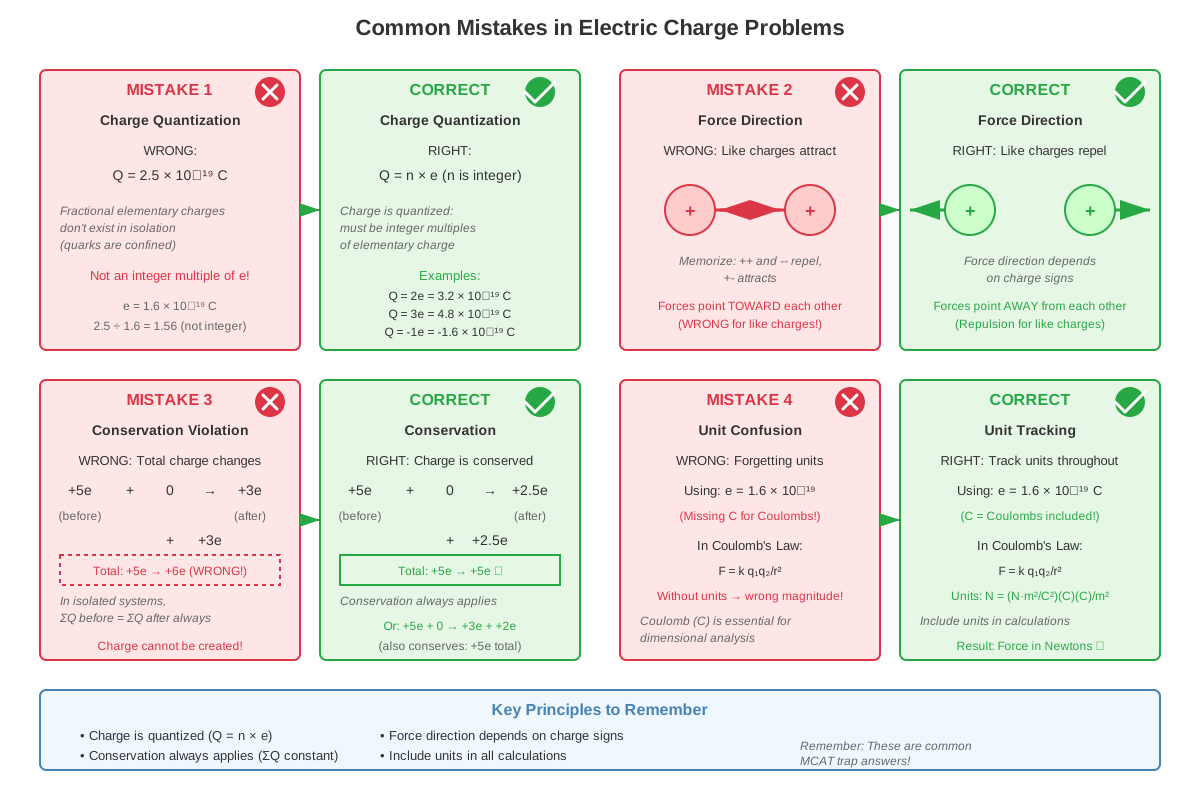
Misconception: Positive charge means an object has gained protons.
Correction: Positive charge results from a deficit of electrons, not an excess of protons. Protons are bound in atomic nuclei and do not transfer between objects under normal circumstances. Only electrons move during charging processes.
Misconception: Neutral objects don't interact with charged objects.
Correction: Neutral objects can be attracted to charged objects through polarization. The charged object induces a separation of charge within the neutral object, creating a net attractive force because the opposite charge is closer than the like charge.
Misconception: When two objects are rubbed together and both become charged, charge has been created.
Correction: Charge is conserved—it has been transferred, not created. If one object gains negative charge (electrons), the other loses an equal amount of negative charge, becoming positively charged. The total charge of the system remains constant.
Misconception: Charge distributes uniformly throughout the volume of a conductor.
Correction: In electrostatic equilibrium, excess charge on a conductor resides entirely on the outer surface. The interior of a conductor has zero net charge and zero electric field. Charge distributes on the surface in a pattern that depends on the conductor's shape.
Misconception: Insulators cannot be charged.
Correction: Insulators can definitely be charged; they simply don't allow charge to move freely. When an insulator is charged (often by friction), the charge remains localized where it was deposited rather than spreading throughout the material as it would in a conductor.
Misconception: Grounding always removes charge from an object.
Correction: Grounding allows charge to flow between an object and Earth until they reach the same potential. If a negatively charged object is grounded, electrons flow to Earth. However, if a neutral object is grounded while near a positive charge, electrons flow from Earth onto the object, making it negatively charged.
Misconception: The coulomb is a small unit of charge.
Correction: One coulomb is actually an enormous amount of charge in everyday terms. Most electrostatic phenomena involve microcoulombs (10⁻⁶ C) or nanocoulombs (10⁻⁹ C). A 1 C charge would create extremely strong forces.
Worked Examples
Example 1: Charge Transfer and Conservation
Problem: A glass rod is rubbed with silk, causing 5.0 × 10¹⁰ electrons to transfer from the glass to the silk. (a) What is the charge on the glass rod after rubbing? (b) What is the charge on the silk? (c) What is the total charge of the system?
Solution:
(a) The glass rod loses electrons, so it becomes positively charged. The magnitude of charge transferred is:
Q = n × e = (5.0 × 10¹⁰) × (1.6 × 10⁻¹⁹ C)
Q = 8.0 × 10⁻⁹ C = 8.0 nC
Since the glass lost negative charge, it has a charge of +8.0 nC.
(b) The silk gains the electrons that the glass lost. By conservation of charge, the silk must have a charge of -8.0 nC.
(c) The total charge of the system is:
Q_total = Q_glass + Q_silk = (+8.0 nC) + (-8.0 nC) = 0The total charge is zero, confirming charge conservation. The system started neutral and remains neutral overall, with charge redistributed between the two objects.
Key Concepts Applied: This problem demonstrates charge quantization (charge transferred is an integer multiple of e), charge conservation (total charge unchanged), and the mechanism of charging by friction (electron transfer between materials).
Example 2: Biological Application - Protein Net Charge
Problem: A peptide contains 12 amino acids: 3 lysine (Lys, +1 charge each at pH 7), 2 aspartate (Asp, -1 charge each at pH 7), 1 arginine (Arg, +1 charge at pH 7), and 6 neutral amino acids. What is the net charge of this peptide at pH 7? How would this peptide move in an electric field?
Solution:
First, calculate the total positive charge:
- 3 Lys × (+1) = +3
- 1 Arg × (+1) = +1
- Total positive charge = +4
Next, calculate the total negative charge:
- 2 Asp × (-1) = -2
- Total negative charge = -2
The net charge is:
Q_net = (+4) + (-2) = +2The peptide has a net charge of +2 at pH 7.
In an electric field, this positively charged peptide would migrate toward the negative electrode (cathode). This principle is the basis for electrophoresis, where proteins separate based on their charge-to-mass ratio.
Key Concepts Applied: This problem connects electric charge to biochemistry, demonstrating how charged amino acid residues contribute to a protein's net charge. Understanding this concept is essential for interpreting electrophoresis experiments, predicting protein-protein interactions, and understanding how pH affects protein charge state (isoelectric point concepts).
Exam Strategy
When approaching MCAT questions on electric charge, begin by identifying what type of charge scenario is presented: charge transfer, charge distribution, or charge-based forces. Questions often provide information about electron transfer rather than directly stating charge values—immediately convert electron numbers to coulombs using e = 1.6 × 10⁻¹⁹ C.
Trigger words and phrases to watch for include:
- "Rubbed together" or "friction" → indicates charging by friction with electron transfer
- "Brought near but not touching" → suggests induction rather than conduction
- "Grounded" → charge can flow to/from Earth
- "Isolated system" → charge must be conserved
- "Conductor" vs. "insulator" → determines whether charge can redistribute
- "Net charge" → requires accounting for both positive and negative charges
For process-of-elimination strategies, remember that charge conservation eliminates any answer choice suggesting charge creation or destruction in an isolated system. If a question asks about force direction, eliminate choices that show like charges attracting or unlike charges repelling. When dealing with conductors, eliminate options showing charge in the interior or non-uniform surface distribution in symmetric geometries.
Time allocation: Simple charge calculation problems should take 30-45 seconds. More complex scenarios involving multiple charge transfers or biological applications may require 60-90 seconds. If a problem requires extensive calculation, check whether estimation or conceptual reasoning can eliminate wrong answers more quickly.
Exam Tip: The MCAT rarely requires precise numerical calculations with charge. More often, questions test conceptual understanding of charge behavior, conservation principles, and qualitative predictions. If you find yourself doing complex arithmetic, reconsider whether a conceptual approach would be faster.
Memory Techniques
Mnemonic for charge conservation: "Charge Can't Create" (CCC) - reminds you that charge is conserved and cannot be created or destroyed.
Mnemonic for charge interactions: "LARU" - Like charges Always Repel, Unlike charges attract. The "LA" and "RU" pairs help remember the pairings.
Visualization for conductors vs. insulators: Picture conductors as a crowded dance floor where people (electrons) can move freely, while insulators are like a theater with assigned seating where people stay in place. This mental image helps remember that charge mobility distinguishes these materials.
Mnemonic for elementary charge value: "1.6 × 10⁻¹⁹" can be remembered as "Sweet 16 at negative 19" - connecting the numerator to the common phrase "sweet sixteen" and noting the negative exponent.
Acronym for charge transfer mechanisms: "CIF" - Conduction, Induction, Friction. These are the three ways charge moves between objects.
Visualization for polarization: Imagine a neutral atom as a spherical cloud with a positive nucleus at the center. When an external charge approaches, picture the electron cloud shifting slightly away from (if the external charge is negative) or toward (if positive) the external charge, creating a tiny induced dipole. This image helps understand why neutral objects can be attracted to charged objects.
Summary
Electric charge is a fundamental property of matter that exists in two types (positive and negative) and is carried by subatomic particles (protons and electrons). The elementary charge e = 1.6 × 10⁻¹⁹ C represents the smallest observable charge unit, and all charges in nature are integer multiples of this value (quantization). Charge is strictly conserved in isolated systems—it can be transferred between objects through conduction, induction, or friction, but never created or destroyed. Materials differ in how they respond to charge: conductors allow free electron movement and distribute excess charge on their surfaces, while insulators hold charge in place. Like charges repel and unlike charges attract, creating the electrostatic forces that govern phenomena from atomic structure to biological processes. Understanding these principles is essential for MCAT success, as charge concepts underlie electric fields, potentials, circuits, and numerous biological applications including membrane potentials, protein behavior, and analytical techniques like electrophoresis.
Key Takeaways
- Electric charge is quantized in units of e = 1.6 × 10⁻¹⁹ C and conserved in all isolated systems
- Protons carry +e charge, electrons carry -e charge, and charge transfer typically involves electron movement, not proton movement
- Like charges repel, unlike charges attract—this rule determines all electrostatic force directions
- Conductors allow charge mobility and distribute excess charge on surfaces; insulators localize charge where it's deposited
- Neutral objects can be attracted to charged objects through polarization (induced charge separation)
- Charge concepts connect to biological systems through ion behavior, protein charge states, membrane potentials, and separation techniques
- MCAT questions emphasize conceptual understanding and conservation principles over complex numerical calculations
Related Topics
Electric Fields: Understanding how charges create fields in the space around them and how these fields exert forces on other charges. Mastering electric charge is essential before studying fields, as charge is the source of all electric fields.
Electric Force and Coulomb's Law: Quantitative analysis of the forces between charged objects, including magnitude calculations and vector addition of multiple forces. This topic directly applies charge concepts to force calculations.
Electric Potential and Potential Energy: The work required to move charges through electric fields and the energy stored in charge configurations. Understanding charge is prerequisite to grasping how moving charges relates to energy changes.
Capacitance: The storage of separated charge on conductors and the resulting electric fields. Capacitor behavior depends fundamentally on charge accumulation and distribution principles.
Electric Current: The flow of charge through conductors, measured as charge per unit time. Current concepts build directly on understanding what charge is and how it moves.
Biological Membranes and Action Potentials: The separation of ionic charges across cell membranes creates the electrical signals that enable neural communication. This interdisciplinary topic applies charge principles to physiology.
Practice CTA
Now that you've mastered the fundamental concepts of electric charge, it's time to solidify your understanding through active practice. Attempt the practice questions and flashcards associated with this topic to test your ability to apply these concepts under exam-like conditions. Focus particularly on questions involving charge conservation, conductor vs. insulator behavior, and biological applications—these represent the highest-yield question types for the MCAT. Remember, understanding the concepts is only the first step; developing speed and accuracy through practice is what translates knowledge into points on test day. You've built a strong foundation—now strengthen it through deliberate practice!
Sign up free to keep reading
Create a free AnvayaPrep account to finish this MCAT guide on Electric charge — plus flashcards and practice questions.