Overview
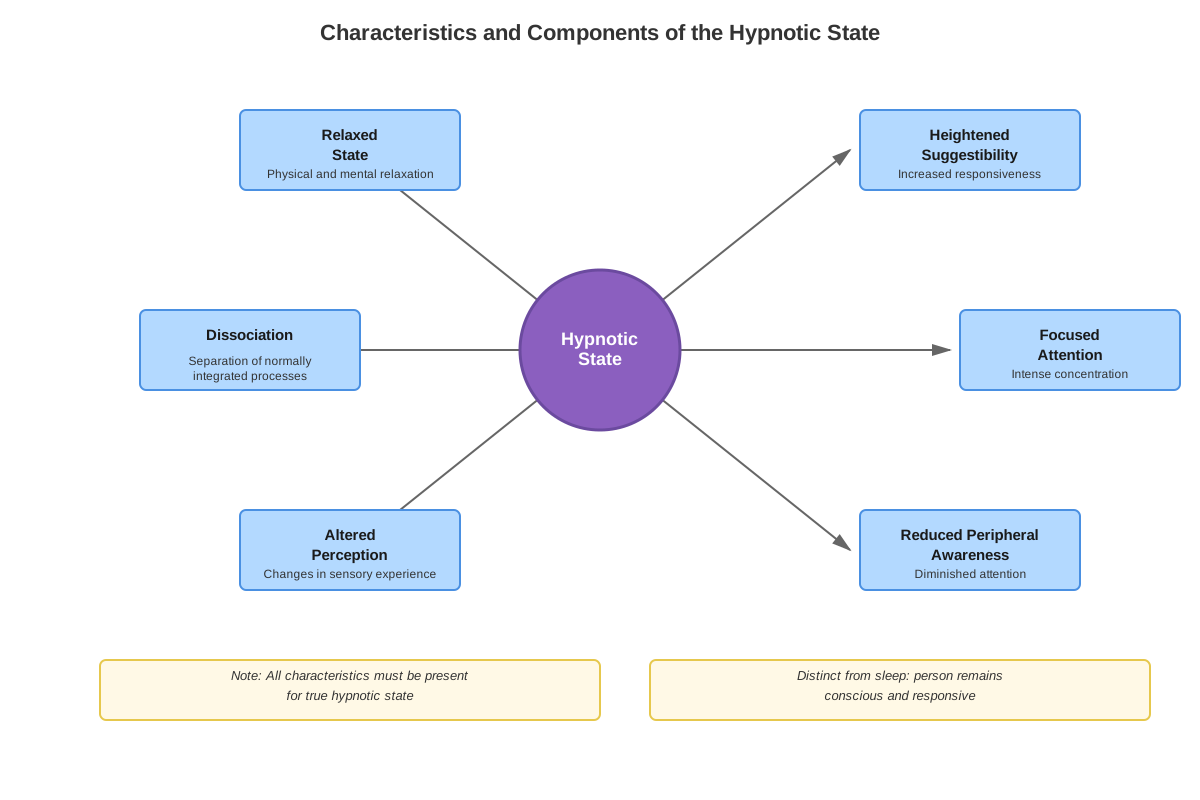
Hypnosis represents a fascinating altered state of consciousness that bridges multiple domains within Psychology, including cognition, consciousness, perception, and therapeutic intervention. As a psychological phenomenon, hypnosis involves a trance-like state characterized by heightened suggestibility, focused attention, and reduced peripheral awareness. Understanding hypnosis requires integrating knowledge of consciousness states, attention mechanisms, memory processes, and the complex interplay between voluntary and involuntary mental processes. For the MCAT, hypnosis serves as a critical example of how consciousness exists on a spectrum rather than as a binary on/off state, and it demonstrates the powerful influence of suggestion and expectation on human behavior and perception.
The study of Hypnosis Psychology illuminates fundamental questions about the nature of consciousness, the malleability of perception and memory, and the mechanisms underlying behavioral change. From a clinical perspective, hypnosis has documented applications in pain management, anxiety reduction, habit modification, and treatment of certain psychological disorders. The MCAT frequently tests hypnosis within the broader context of Cognition and Consciousness, requiring students to distinguish it from other altered states (such as sleep, meditation, or drug-induced states), understand its neurological correlates, and evaluate research findings about its efficacy and limitations.
Hypnosis MCAT questions typically appear in passages discussing consciousness research, therapeutic interventions, or experimental studies examining suggestibility and attention. These questions demand not only factual knowledge about hypnosis characteristics but also the ability to apply psychological principles to novel scenarios, critique research methodologies, and distinguish between competing theoretical explanations. Mastering this topic requires understanding both the phenomenological experience of hypnosis and the scientific debates surrounding its mechanisms, which connects to broader themes in psychology including the nature of consciousness, individual differences in cognitive processing, and the relationship between mind and behavior.
Learning Objectives
- [ ] Define Hypnosis using accurate Psychology terminology
- [ ] Explain why Hypnosis matters for the MCAT
- [ ] Apply Hypnosis to exam-style questions
- [ ] Identify common mistakes related to Hypnosis
- [ ] Connect Hypnosis to related Psychology concepts
- [ ] Compare and contrast different theoretical perspectives on hypnosis mechanisms
- [ ] Analyze the relationship between hypnotic suggestibility and individual differences
- [ ] Evaluate the validity and limitations of hypnosis in clinical and research contexts
Prerequisites
- States of Consciousness: Understanding that consciousness exists on a continuum from full alertness to unconsciousness is essential for positioning hypnosis as an altered state
- Attention and Selective Attention: Hypnosis involves intense focused attention, making prior knowledge of attentional mechanisms crucial
- Memory Systems: Hypnosis can affect memory encoding and retrieval, requiring familiarity with declarative and procedural memory
- Suggestibility and Social Influence: Understanding how expectations and social context influence behavior provides foundation for comprehending hypnotic phenomena
- Brain Wave Patterns: Basic knowledge of EEG states helps contextualize the neurological correlates of hypnotic states
Why This Topic Matters
Clinical and Real-World Significance
Hypnosis has demonstrated efficacy in numerous clinical applications, making it relevant beyond theoretical psychology. Medical professionals use hypnotherapy for pain management during procedures, childbirth, and chronic pain conditions, with research showing measurable reductions in pain perception and analgesic requirements. Mental health practitioners employ hypnosis for treating anxiety disorders, phobias, post-traumatic stress disorder, and habit disorders such as smoking cessation. The phenomenon also has forensic implications, as hypnotically refreshed testimony raises concerns about memory reliability and suggestibility in legal contexts. Understanding hypnosis helps future healthcare professionals evaluate complementary treatment modalities and recognize both legitimate therapeutic applications and pseudoscientific claims.
MCAT Exam Statistics and Question Types
Hypnosis appears on the MCAT with moderate frequency, typically in 1-3 questions per exam administration. Questions most commonly appear in the Psychological, Social, and Biological Foundations of Behavior section, though occasionally surface in passage-based questions in the Critical Analysis and Reasoning Skills section when discussing consciousness research or therapeutic interventions. The MCAT tests hypnosis through multiple question formats: discrete questions asking for definitional knowledge or characteristic features, passage-based questions requiring application of hypnosis concepts to experimental designs or clinical scenarios, and questions demanding comparison between hypnosis and other altered states. Approximately 60% of hypnosis questions appear in passage format, often embedded within broader discussions of consciousness, attention, or therapeutic psychology.
Common Exam Passage Contexts
MCAT passages featuring hypnosis typically present experimental research examining hypnotic suggestibility, neuroimaging studies investigating brain activity during hypnosis, clinical trials evaluating hypnotherapy efficacy, or theoretical discussions about consciousness mechanisms. Passages may describe studies using the Stanford Hypnotic Susceptibility Scale, present conflicting theories about hypnosis mechanisms, or examine the relationship between hypnosis and placebo effects. Questions following these passages test the ability to interpret research findings, identify confounding variables, distinguish correlation from causation, and apply psychological principles to novel situations. Recognition of these common contexts enables strategic reading and efficient question answering.
Core Concepts
Definition and Characteristics of Hypnosis
Hypnosis is a social interaction in which one person (the hypnotist) suggests to another (the subject) that certain perceptions, feelings, thoughts, or behaviors will spontaneously occur. The hypnotic state itself represents an altered state of consciousness characterized by several defining features. First, hypnotic suggestibility increases dramatically, meaning individuals become more responsive to suggestions and instructions from the hypnotist. Second, subjects experience focused attention with reduced peripheral awareness, concentrating intensely on specific thoughts, images, or sensations while filtering out distracting stimuli. Third, hypnotized individuals often report a sense of involuntariness, experiencing suggested actions or perceptions as happening automatically rather than through conscious effort.
Additional characteristics include dissociation, where aspects of consciousness become separated from others (such as when a person responds to suggestions while simultaneously observing their own behavior), and absorption, an intense imaginative involvement in suggested scenarios. Hypnotized subjects may experience time distortion, with minutes feeling like hours or vice versa, and demonstrate enhanced imagery, producing vivid mental representations in response to suggestions. Importantly, hypnosis does NOT involve loss of consciousness, sleep, or complete loss of control—subjects remain aware and can resist suggestions that violate their values or safety.
Hypnotic Induction and Susceptibility
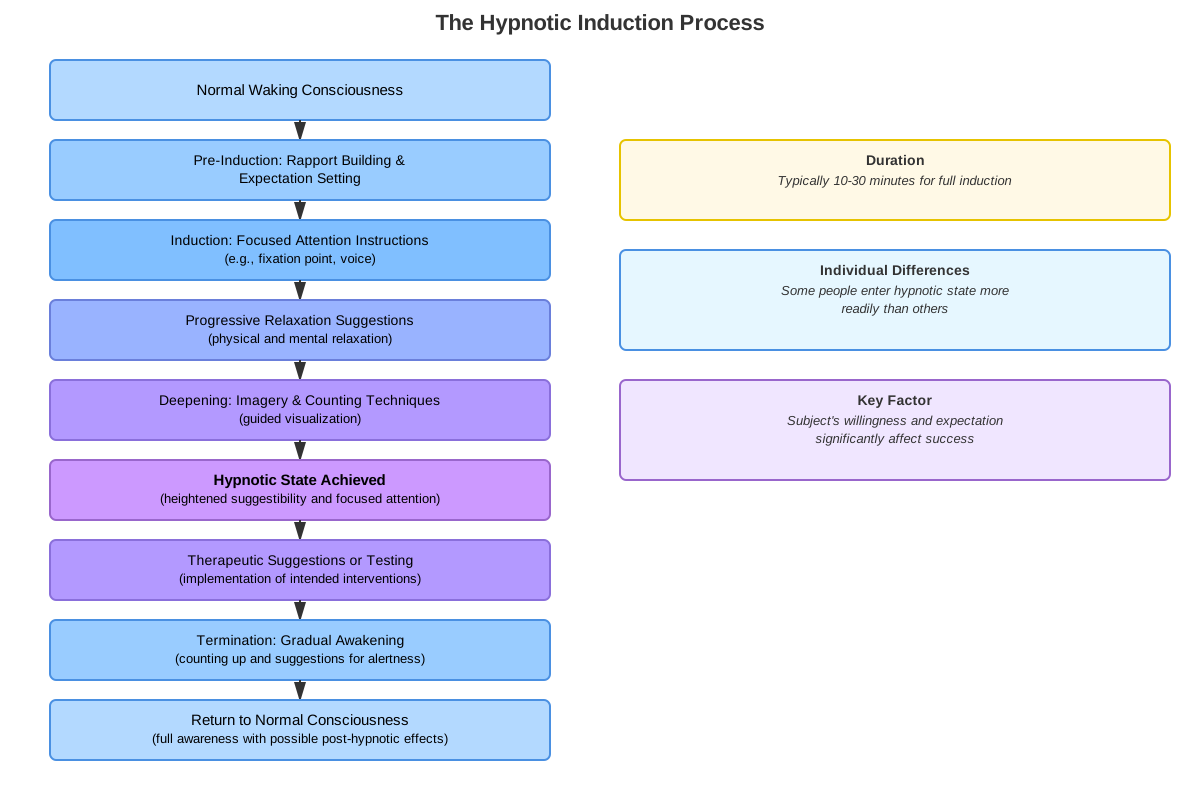
Hypnotic induction refers to the process of guiding someone into a hypnotic state, typically involving several stages. The process usually begins with establishing rapport and trust between hypnotist and subject, followed by suggestions for relaxation and focused attention. Common induction techniques include progressive muscle relaxation, fixation on a visual stimulus (the stereotypical "watch the swinging pendulum"), guided imagery, or counting procedures. The hypnotist then provides a suggestion for deepening, encouraging the subject to enter a more profound hypnotic state, often using metaphors like descending stairs or sinking into comfort.
Hypnotic susceptibility or hypnotizability refers to individual differences in responsiveness to hypnotic suggestions, measured by standardized scales such as the Stanford Hypnotic Susceptibility Scale or the Harvard Group Scale of Hypnotic Susceptibility. Research indicates that approximately 10-15% of people are highly hypnotizable, 10-15% are minimally responsive, and the majority fall in the moderate range. Susceptibility appears relatively stable across the lifespan and shows modest heritability, suggesting both genetic and environmental influences.
| Susceptibility Level | Population % | Characteristics |
|---|---|---|
| High | 10-15% | Respond to difficult suggestions (hallucinations, amnesia); deep absorption |
| Moderate | 70-80% | Respond to standard suggestions (relaxation, simple motor responses) |
| Low | 10-15% | Minimal response even to basic suggestions; high critical thinking during induction |
Factors associated with higher susceptibility include greater imaginative capacity, ability to become absorbed in experiences, positive attitudes toward hypnosis, and trust in the hypnotist. Contrary to popular belief, susceptibility does NOT correlate with gullibility, weak-mindedness, or lack of intelligence.
Theoretical Perspectives on Hypnosis
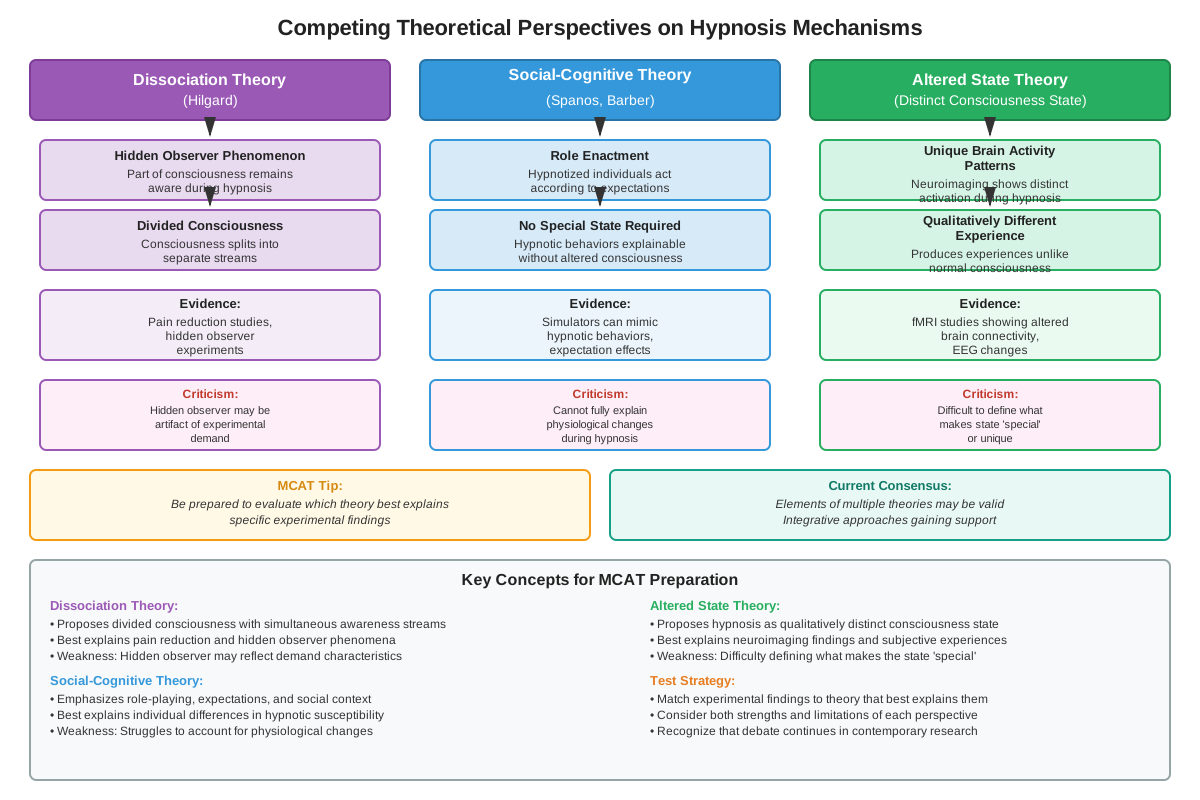
Two major theoretical frameworks compete to explain hypnotic phenomena, representing fundamentally different views about the nature of hypnosis.
Dissociation Theory (proposed by Ernest Hilgard) posits that hypnosis involves a splitting of consciousness into separate streams of mental activity. According to this view, hypnosis creates a dissociative state where some thoughts, behaviors, and perceptions operate independently from normal conscious awareness. Hilgard's concept of the "hidden observer" suggests that one part of consciousness experiences and responds to hypnotic suggestions while another part maintains awareness and monitoring functions. This theory explains phenomena like hypnotic analgesia (pain reduction), where subjects report not feeling pain while physiological indicators suggest pain signals still reach the brain. Dissociation theory views hypnosis as a genuine altered state with distinct neurological correlates.
Social-Cognitive Theory (advocated by researchers like Nicholas Spanos and Irving Kirsch) argues that hypnotic phenomena result from normal psychological processes including motivation, expectation, and social role-playing rather than a special altered state. According to this perspective, hypnotized individuals behave according to their understanding of how hypnotized people should act, motivated by desire to please the hypnotist and influenced by their expectations about hypnosis effects. This theory emphasizes that hypnotic behaviors can be produced through imagination, focused attention, and motivated role enactment without requiring a trance state. Social-cognitive theorists point to research showing that highly motivated simulators (people instructed to fake hypnosis) can produce behaviors indistinguishable from genuinely hypnotized subjects.
Both theories have supporting evidence, and the debate continues in contemporary psychology. Neuroimaging studies showing distinct brain activity patterns during hypnosis support dissociation theory, while research demonstrating the powerful influence of expectations and social context supports social-cognitive perspectives. The MCAT may present research findings supporting either view and ask students to evaluate the evidence or identify which theory best explains specific phenomena.
Neurological Correlates
Modern neuroimaging research has identified specific brain activity patterns associated with hypnosis, though interpretation of these findings remains debated. Functional MRI (fMRI) studies reveal that hypnosis involves changes in activity within the anterior cingulate cortex (involved in attention and conflict monitoring), prefrontal cortex (executive control and self-awareness), and thalamus (sensory gating). During hypnotic analgesia, brain regions associated with pain perception (anterior cingulate cortex, insula) show reduced activity, while sensory processing areas may remain active—suggesting hypnosis affects the emotional and cognitive components of pain rather than blocking sensory signals entirely.
Electroencephalography (EEG) studies show that hypnosis does NOT produce the characteristic brain wave patterns of sleep. Instead, hypnotized individuals typically display patterns consistent with relaxed wakefulness, though with increased theta wave activity (associated with drowsiness and light meditation) in some subjects. The lack of sleep-like patterns supports the view that hypnosis represents a distinct state rather than simply light sleep.
Research on functional connectivity reveals that hypnosis alters communication between brain networks, particularly reducing connectivity between the default mode network (involved in self-referential thinking and mind-wandering) and the executive control network (involved in focused attention and cognitive control). This altered connectivity may explain the subjective experience of reduced self-consciousness and effortless response to suggestions during hypnosis.
Clinical Applications and Efficacy
Hypnosis has documented effectiveness for several clinical applications, though efficacy varies by condition and individual susceptibility. Pain management represents the most robust application, with meta-analyses showing moderate to large effect sizes for both acute procedural pain and chronic pain conditions. Mechanisms likely include altered pain perception, reduced anxiety, and enhanced coping strategies. Hypnotherapy for anxiety disorders shows effectiveness comparable to other psychological interventions, particularly for specific phobias and performance anxiety.
For habit modification (smoking cessation, weight loss), research shows mixed results, with effectiveness depending heavily on treatment protocol, therapist skill, and client motivation. Hypnosis appears most effective when combined with other behavioral interventions rather than used alone. In treating irritable bowel syndrome, gut-directed hypnotherapy has demonstrated significant symptom reduction in controlled trials, possibly through effects on gut-brain communication and stress response.
Importantly, hypnosis has significant limitations. It cannot force people to act against their will or values, does not reliably enhance memory accuracy (and may actually increase false memories through confabulation), and shows variable effectiveness across individuals based on hypnotic susceptibility. Claims about hypnosis enabling superhuman feats, recovering repressed memories, or guaranteeing behavior change lack scientific support.
Hypnosis and Memory
The relationship between hypnosis and memory presents particular complexity relevant to both clinical and forensic contexts. While hypnosis can sometimes help individuals recall forgotten information through hypnotic hypermnesia (enhanced memory retrieval), research consistently shows that hypnosis also increases false memories and confabulation (filling memory gaps with plausible but inaccurate information). The heightened suggestibility during hypnosis makes individuals particularly vulnerable to leading questions and suggestion-induced memory distortions.
Hypnotic age regression, where subjects are suggested to return to childhood experiences, does NOT produce accurate historical memories. Instead, individuals typically construct memories based on current beliefs about childhood, incorporating both genuine memory fragments and imagined details. Brain activity during age regression resembles imagination rather than genuine memory retrieval.
Posthypnotic amnesia, where subjects are suggested to forget specific information after hypnosis ends, can occur in highly susceptible individuals but represents a temporary retrieval difficulty rather than true memory erasure. The information typically remains accessible through indirect measures or when the amnesia suggestion is lifted. These findings have important implications for the legal system, where hypnotically refreshed testimony is now inadmissible or heavily restricted in most jurisdictions due to concerns about reliability.
Concept Relationships
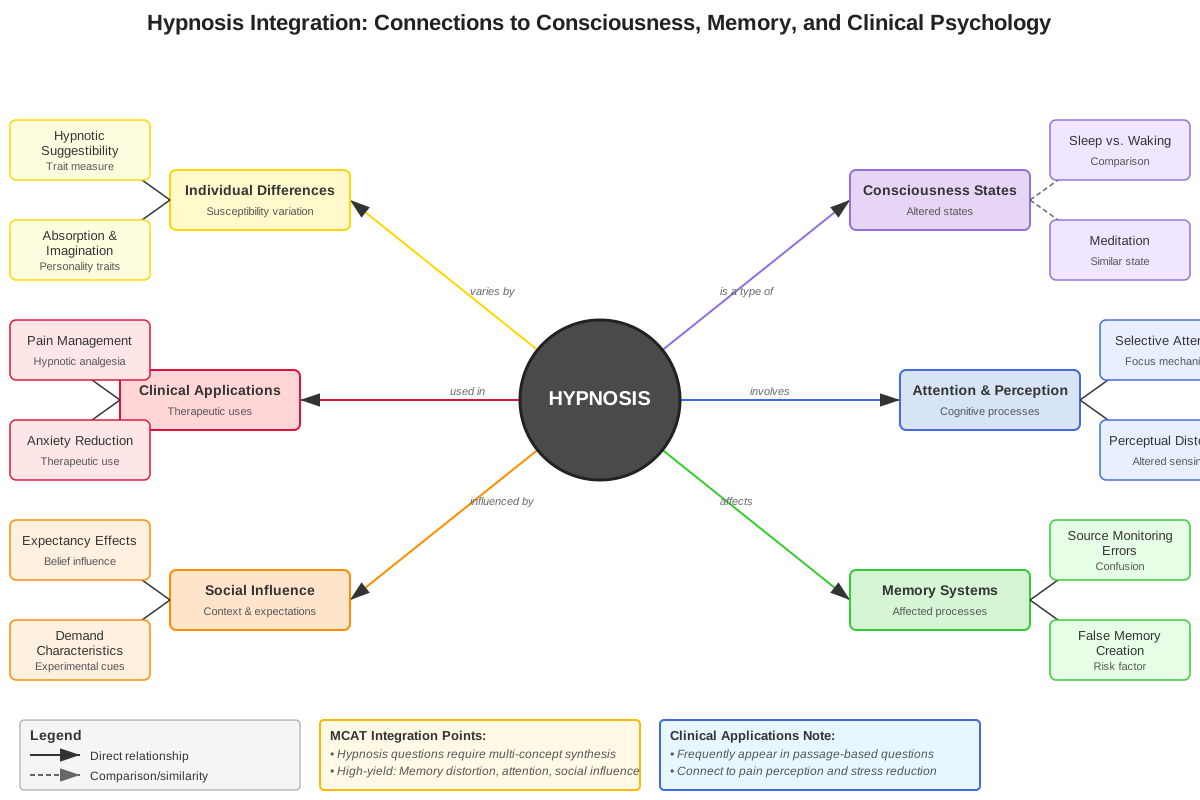
The concepts within hypnosis form an interconnected network centered on altered consciousness and suggestibility. Hypnotic induction → produces → altered state of consciousness → characterized by → heightened suggestibility, focused attention, and dissociation → which enables → hypnotic phenomena (analgesia, amnesia, behavioral responses). Individual hypnotic susceptibility → moderates → the depth and range of hypnotic phenomena experienced, with higher susceptibility enabling more dramatic effects.
The competing theoretical frameworks provide different explanatory pathways: Dissociation theory → explains phenomena through → split consciousness and hidden observer → supported by → neuroimaging findings of altered brain connectivity, while Social-cognitive theory → explains phenomena through → expectation, motivation, and role-playing → supported by → research on simulator performance and social context effects.
Hypnosis connects to prerequisite topics through multiple pathways. Understanding attention mechanisms enables comprehension of hypnotic focused attention; knowledge of memory systems illuminates why hypnosis affects memory retrieval and encoding; familiarity with consciousness states provides context for positioning hypnosis among other altered states; and understanding social influence helps explain the interpersonal dynamics of hypnotic induction.
Hypnosis also connects forward to related topics including meditation (another focused attention state), dissociative disorders (which involve pathological dissociation), placebo effects (sharing mechanisms of expectation and suggestion), pain perception (modulated by hypnotic analgesia), and psychotherapy (where hypnosis serves as an adjunctive technique). The concept of altered consciousness links hypnosis to discussions of drug effects, sleep stages, and flow states, all representing variations in conscious experience.
Quick check — test yourself on Hypnosis so far.
Try Flashcards →High-Yield Facts
⭐ Hypnosis is an altered state of consciousness characterized by heightened suggestibility, focused attention, and reduced peripheral awareness—NOT sleep or unconsciousness
⭐ Hypnotic susceptibility varies across individuals, with approximately 10-15% highly susceptible, 70-80% moderately susceptible, and 10-15% minimally responsive
⭐ Dissociation theory explains hypnosis as split consciousness with a "hidden observer," while social-cognitive theory attributes hypnotic phenomena to expectation, motivation, and role-playing
⭐ Hypnosis can reduce pain perception (hypnotic analgesia) but does NOT block sensory pain signals—it affects the emotional and cognitive components of pain
⭐ Hypnosis increases both accurate memory retrieval (hypermnesia) AND false memories/confabulation, making hypnotically refreshed testimony unreliable
- Hypnotic induction typically involves relaxation, focused attention, and progressive deepening through suggestion
- Neuroimaging shows hypnosis involves altered activity in the anterior cingulate cortex, prefrontal cortex, and changes in functional connectivity between brain networks
- Hypnosis does NOT produce sleep-like EEG patterns; brain waves resemble relaxed wakefulness with increased theta activity
- Hypnotized individuals retain the ability to resist suggestions and cannot be forced to act against their values or safety
- Clinical applications with demonstrated efficacy include pain management, anxiety reduction, and irritable bowel syndrome treatment
- Hypnotic age regression does NOT produce accurate historical memories but rather constructs based on current beliefs and imagination
- Posthypnotic suggestions can influence behavior after hypnosis ends, but effects are typically temporary and limited by individual susceptibility
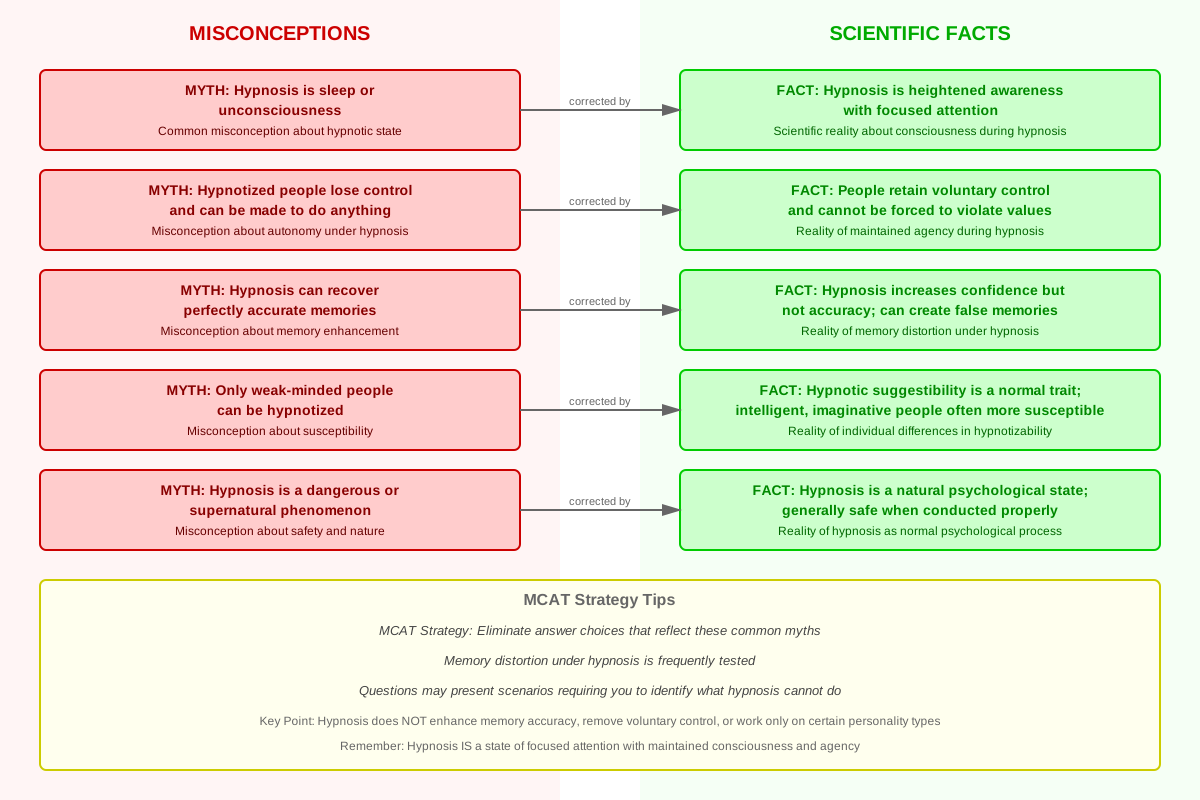
Common Misconceptions
Misconception: Hypnosis is a form of sleep or unconsciousness where people are unaware of their surroundings.
Correction: Hypnosis is an altered state of consciousness characterized by focused attention and heightened awareness of suggestions, not reduced consciousness. Hypnotized individuals remain aware of their environment and can recall the experience afterward. EEG patterns during hypnosis resemble relaxed wakefulness, not sleep stages.
Misconception: Hypnotized people lose control and can be forced to do things against their will.
Correction: Hypnotized individuals retain voluntary control and can resist suggestions that violate their values, ethics, or safety. Hypnosis enhances responsiveness to suggestions but does not eliminate critical judgment or override personal boundaries. Research shows that hypnotized subjects refuse suggestions they find objectionable.
Misconception: Hypnosis reliably enhances memory accuracy and can recover repressed memories.
Correction: While hypnosis may sometimes facilitate memory retrieval (hypermnesia), it simultaneously increases false memories and confabulation. The heightened suggestibility during hypnosis makes individuals vulnerable to incorporating suggested information into their memories. Hypnotically refreshed memories are often more confidently held but not more accurate, leading to their exclusion from most legal proceedings.
Misconception: Only weak-minded, gullible, or unintelligent people can be hypnotized.
Correction: Hypnotic susceptibility does NOT correlate with intelligence, gullibility, or personality weakness. Instead, it relates to imaginative capacity, absorption ability, and positive attitudes toward hypnosis. Many highly intelligent, creative individuals show high hypnotic susceptibility. The ability to become hypnotized reflects cognitive flexibility rather than cognitive deficiency.
Misconception: All hypnotic phenomena can be explained by either dissociation theory OR social-cognitive theory exclusively.
Correction: The mechanisms underlying hypnosis likely involve both genuine alterations in consciousness (supported by neuroimaging evidence) AND social-cognitive factors like expectation and motivation. The debate between theories continues because both perspectives have supporting evidence. The MCAT may present research supporting either view, requiring students to evaluate evidence rather than assume one theory is definitively correct.
Misconception: Hypnotherapy works equally well for all conditions and all individuals.
Correction: Hypnosis effectiveness varies significantly by condition, individual susceptibility, and treatment protocol. While evidence supports efficacy for pain management and certain anxiety disorders, results for habit modification are mixed. Individuals with low hypnotic susceptibility show minimal response to hypnotic interventions. Claims of universal effectiveness or guaranteed results are not scientifically supported.
Worked Examples
Example 1: Experimental Design Analysis
Passage Summary: Researchers investigate whether hypnosis genuinely reduces pain or merely changes pain reporting. They recruit 60 participants, measure their hypnotic susceptibility, and randomly assign them to three conditions: (1) hypnotic analgesia suggestions, (2) placebo cream described as a powerful analgesic, or (3) control condition with no intervention. All participants then immerse their hand in ice water (cold pressor test) while researchers measure pain tolerance (time until withdrawal), self-reported pain intensity, and physiological indicators (heart rate, blood pressure, facial expressions).
Question: Which finding would provide the strongest support for dissociation theory over social-cognitive theory?
Analysis Process:
First, identify what distinguishes the theories. Dissociation theory posits genuine altered consciousness with split awareness, while social-cognitive theory attributes hypnotic effects to expectation and role-playing. The key difference is whether hypnosis produces effects beyond what expectation alone can achieve.
Second, consider what each condition controls for. The placebo condition controls for expectation effects—if hypnosis works only through expectation, hypnotic analgesia and placebo conditions should produce similar results. The control condition establishes baseline pain response.
Third, evaluate which pattern of results would support dissociation theory. If hypnotic analgesia produces effects that placebo expectation cannot (particularly in highly susceptible individuals), this suggests mechanisms beyond social-cognitive factors.
Answer: The strongest support for dissociation theory would be finding that highly susceptible participants in the hypnotic analgesia condition show a dissociation between self-reported pain (low) and physiological indicators (elevated heart rate, blood pressure, facial expressions suggesting pain). This pattern suggests that pain signals reach the brain (physiological response) but conscious awareness of pain is reduced (dissociated), consistent with Hilgard's hidden observer concept. If the placebo condition produced similar self-reports but WITHOUT the physiological dissociation, this would further support that hypnosis involves mechanisms beyond expectation. Additionally, if low-susceptibility participants showed no difference between hypnosis and control conditions, this would support the role of genuine hypnotic susceptibility rather than mere compliance.
Example 2: Clinical Application Scenario
Vignette: A 45-year-old patient with chronic lower back pain has tried multiple treatments (physical therapy, NSAIDs, opioid medications) with limited success. Her physician refers her to a psychologist trained in hypnotherapy. During the initial assessment, the psychologist administers a hypnotic susceptibility scale and finds the patient scores in the highly susceptible range. The psychologist plans to use hypnosis for pain management.
Question: Based on research evidence, what outcomes can the psychologist reasonably expect, and what limitations should be communicated to the patient?
Analysis Process:
First, identify relevant research findings. Meta-analyses show moderate to large effect sizes for hypnotic pain management, particularly for chronic pain. High hypnotic susceptibility predicts better treatment response. However, hypnosis does not eliminate pain entirely and works best as part of multimodal treatment.
Second, consider mechanisms. Hypnotic analgesia likely works through multiple pathways: altering pain perception (reducing activity in anterior cingulate cortex and insula), reducing anxiety about pain, enhancing coping strategies, and possibly affecting pain-related attention and interpretation.
Third, identify realistic expectations versus misconceptions. The patient should understand that hypnosis can reduce pain intensity and improve pain-related functioning but will not cure the underlying condition or eliminate pain completely.
Expected Outcomes and Communication:
The psychologist can reasonably expect moderate pain reduction (typically 20-40% decrease in pain intensity ratings), improved pain-related functioning, and reduced emotional distress related to pain. Given the patient's high susceptibility, she may experience more substantial benefits than average. The psychologist should explain that:
- Hypnosis will likely reduce pain perception and improve coping but will not eliminate pain entirely or cure the underlying back condition
- Effects may be most noticeable for the emotional and cognitive aspects of pain (suffering, catastrophizing) rather than completely blocking pain sensations
- Regular practice of self-hypnosis techniques will be necessary to maintain benefits
- Hypnosis works best when combined with other pain management strategies (physical therapy, activity pacing, stress management)
- Individual response varies, and some sessions may be needed to determine optimal techniques for her specific pain experience
The psychologist should also address misconceptions, clarifying that hypnosis will not put her to sleep, make her lose control, or recover repressed memories about pain origins. Setting realistic expectations while emphasizing her high susceptibility as a positive prognostic factor will optimize treatment engagement and outcomes.
Exam Strategy
Approaching MCAT Hypnosis Questions
When encountering hypnosis questions, first determine whether the question tests definitional knowledge (characteristics, theories) or application (interpreting research, evaluating claims). For definitional questions, focus on distinguishing hypnosis from other states (sleep, meditation, unconsciousness) and identifying core features (suggestibility, focused attention, dissociation). For application questions, carefully analyze the experimental design or clinical scenario before selecting answers.
Trigger Words and Phrases
Watch for these key phrases that signal specific concepts:
- "Altered state of consciousness" → indicates genuine hypnotic state, relevant to dissociation theory
- "Heightened suggestibility" → core defining feature of hypnosis
- "Hidden observer" → specifically refers to Hilgard's dissociation theory
- "Role-playing" or "expectation" → signals social-cognitive theory perspective
- "Hypnotic susceptibility" or "hypnotizability" → indicates individual differences, measured by standardized scales
- "Posthypnotic suggestion" → refers to suggestions that affect behavior after hypnosis ends
- "Hypnotic analgesia" → pain reduction through hypnosis, involves altered pain perception not blocked sensation
- "Confabulation" or "false memories" → relates to hypnosis and memory, indicates unreliability of hypnotically refreshed testimony
Process of Elimination Tips
When evaluating answer choices about hypnosis:
Eliminate answers suggesting:
- Hypnosis is sleep or unconsciousness (it's an altered state with maintained awareness)
- Hypnotized people lose all control or can be forced to act against their will (they retain voluntary control)
- Hypnosis reliably enhances memory accuracy (it increases both accurate recall AND false memories)
- All people respond equally to hypnosis (susceptibility varies significantly)
- Hypnosis has no measurable brain correlates (neuroimaging shows distinct patterns)
Favor answers indicating:
- Hypnosis involves focused attention and heightened suggestibility
- Individual differences in susceptibility affect hypnotic response
- Both psychological factors (expectation) and neurological changes may contribute to hypnotic phenomena
- Hypnosis has demonstrated efficacy for specific applications (pain, anxiety) but not universal effectiveness
- Research evidence supports aspects of both dissociation and social-cognitive theories
Time Allocation
For discrete hypnosis questions, allocate 60-90 seconds. These typically test straightforward definitional knowledge or characteristic features. For passage-based questions, spend 2-3 minutes analyzing the passage (focusing on experimental design, variables, and theoretical framework), then 60-90 seconds per question. If a question requires comparing theories or evaluating research evidence, invest the full 90 seconds to carefully consider how the evidence supports or contradicts each theoretical perspective.
Memory Techniques
Mnemonic for Hypnosis Characteristics
"FADS" captures core features of the hypnotic state:
- Focused attention (intense concentration with reduced peripheral awareness)
- Altered consciousness (distinct state different from normal waking or sleep)
- Dissociation (separation of consciousness components)
- Suggestibility (heightened responsiveness to suggestions)
Mnemonic for Distinguishing Theories
"DISSOCIATE vs. SOCIAL":
DISSOCIATE (Dissociation Theory):
- Divided consciousness
- Independent streams of awareness
- Split between hidden observer and experiencing self
- Special altered state
- Observable brain changes
- Consciousness genuinely altered
- Involuntary experience
- Altered neural connectivity
- Trance state is real
- Ernest Hilgard's theory
SOCIAL (Social-Cognitive Theory):
- Social role-playing
- Ordinary psychological processes
- Context and expectation effects
- Imagination and motivation
- Acting according to beliefs about hypnosis
- Learned behavior patterns
Visualization Strategy
Visualize hypnosis as a spotlight narrowing on a stage. Normal consciousness is like a stage with multiple spotlights illuminating different areas (divided attention). Hypnosis narrows to a single, intense spotlight on one area (focused attention), while the rest of the stage dims but doesn't go dark (reduced peripheral awareness, not unconsciousness). The "hidden observer" sits in the dimmed area, still aware but separated from the main spotlight (dissociation). This image helps remember that hypnosis involves focused attention, maintained awareness, and potential dissociation simultaneously.
Acronym for Clinical Applications
"PAHI" for evidence-based hypnosis applications:
- Pain management (strongest evidence)
- Anxiety reduction
- Habit modification (mixed evidence, best with other interventions)
- Irritable bowel syndrome (gut-directed hypnotherapy)
Summary
Hypnosis represents an altered state of consciousness characterized by heightened suggestibility, intensely focused attention, reduced peripheral awareness, and often dissociation of consciousness components. Individual differences in hypnotic susceptibility, measured by standardized scales, significantly affect responsiveness to hypnotic suggestions, with approximately 10-15% of people highly susceptible. Two major theoretical frameworks compete to explain hypnotic phenomena: dissociation theory posits genuine split consciousness with a hidden observer, while social-cognitive theory attributes effects to expectation, motivation, and role-playing. Neuroimaging research reveals distinct brain activity patterns during hypnosis, including altered activity in attention and pain-processing regions and changed functional connectivity between brain networks. Clinical applications with demonstrated efficacy include pain management and anxiety reduction, though effectiveness varies by individual susceptibility and condition. Critically, hypnosis does not involve sleep or loss of control, cannot force people to act against their will, and increases both accurate memory retrieval and false memories, making hypnotically refreshed testimony unreliable. For the MCAT, students must distinguish hypnosis from other consciousness states, compare theoretical perspectives using research evidence, and evaluate claims about hypnosis applications while recognizing both legitimate uses and limitations.
Key Takeaways
- Hypnosis is an altered state of consciousness with heightened suggestibility and focused attention—not sleep, unconsciousness, or loss of control
- Hypnotic susceptibility varies significantly across individuals (10-15% high, 70-80% moderate, 10-15% low) and predicts treatment response
- Dissociation theory and social-cognitive theory offer competing explanations, with research evidence supporting aspects of both perspectives
- Hypnotic analgesia reduces pain perception by affecting emotional and cognitive pain components, not by blocking sensory signals
- Hypnosis increases both accurate recall (hypermnesia) and false memories (confabulation), making it unreliable for memory enhancement
- Neuroimaging reveals distinct brain activity patterns during hypnosis, including altered connectivity between attention and self-referential networks
- Clinical applications show evidence-based efficacy for pain management and anxiety but variable results for habit modification and other conditions
Related Topics
Meditation and Mindfulness: Like hypnosis, meditation involves focused attention and altered consciousness, but differs in self-directed practice and goals. Understanding hypnosis provides foundation for comparing different focused attention states.
Dissociative Disorders: Pathological dissociation in disorders like dissociative identity disorder shares mechanisms with normal hypnotic dissociation but occurs involuntarily and causes dysfunction. Mastering hypnosis enables understanding of dissociation as both normal and pathological phenomenon.
Placebo Effects: Hypnosis and placebo effects share mechanisms including expectation, suggestion, and altered perception. Both demonstrate the powerful influence of psychological factors on physiological outcomes.
Pain Perception and Gate Control Theory: Understanding how hypnosis modulates pain requires knowledge of pain pathways and the distinction between sensory, emotional, and cognitive pain components.
States of Consciousness: Hypnosis fits within the broader spectrum of consciousness states including sleep stages, drug-induced states, and meditation, requiring integration of multiple consciousness concepts.
Memory Encoding and Retrieval: The effects of hypnosis on memory connect to broader understanding of how memories are formed, stored, and reconstructed, including factors affecting memory accuracy.
Practice CTA
Now that you've mastered the core concepts of hypnosis, test your understanding with practice questions and flashcards. Focus particularly on distinguishing between theoretical perspectives, applying research findings to novel scenarios, and identifying common misconceptions. The ability to analyze experimental designs involving hypnosis and evaluate claims about its applications will serve you well not only on the MCAT but in critically evaluating psychological research throughout your medical career. Challenge yourself with passage-based questions that require integrating hypnosis concepts with broader psychological principles—this integration is exactly what the MCAT demands. You've built a strong foundation; now reinforce it through active practice and application!
Sign up free to keep reading
Create a free AnvayaPrep account to finish this MCAT guide on Hypnosis — plus flashcards and practice questions.