Overview
Arousal theory is a foundational motivational framework in Psychology that explains how physiological and psychological activation levels influence behavior, performance, and emotional experience. This theory posits that individuals are motivated to maintain an optimal level of arousal—neither too high nor too low—and that performance on tasks varies systematically with arousal levels. Understanding arousal theory is essential for the MCAT because it bridges multiple domains tested on the exam: motivation, emotion, stress responses, and behavioral performance. The theory provides a mechanistic explanation for why people seek out certain experiences (from thrill-seeking to relaxation) and how environmental demands interact with internal states to shape behavior.
For the MCAT, arousal theory frequently appears in passages involving Emotion Motivation and Stress, particularly in contexts examining performance under pressure, individual differences in sensation-seeking, or the relationship between physiological activation and psychological states. The theory integrates seamlessly with other motivation theories (drive reduction, incentive theory) and connects directly to stress physiology, the autonomic nervous system, and cognitive performance models. Students must understand not only the basic principles but also how arousal interacts with task complexity—a relationship formalized in the Yerkes-Dodson Law.
Mastery of Arousal theory Psychology concepts enables students to analyze experimental designs, interpret behavioral data, and predict outcomes in scenarios involving performance optimization, stress management, and individual differences in optimal functioning. This topic represents a medium-difficulty, medium-yield area that consistently appears in 2-4 questions per MCAT administration, often embedded within passages about athletic performance, test anxiety, workplace productivity, or risk-taking behavior.
Learning Objectives
- [ ] Define Arousal theory using accurate Psychology terminology
- [ ] Explain why Arousal theory matters for the MCAT
- [ ] Apply Arousal theory to exam-style questions
- [ ] Identify common mistakes related to Arousal theory
- [ ] Connect Arousal theory to related Psychology concepts
- [ ] Distinguish between optimal arousal levels for simple versus complex tasks
- [ ] Analyze how individual differences affect optimal arousal levels
- [ ] Evaluate experimental scenarios using the Yerkes-Dodson Law framework
Prerequisites
- Basic understanding of the autonomic nervous system: Arousal involves sympathetic and parasympathetic activation, which students must recognize as physiological substrates
- Familiarity with motivation concepts: Arousal theory is one of several motivational frameworks, requiring context within drive theory and incentive motivation
- Knowledge of emotion components: Arousal represents the physiological activation dimension of emotional experience
- Understanding of performance measurement: Interpreting arousal effects requires recognizing how task performance is quantified and assessed
Why This Topic Matters
Clinical and Real-World Significance
Arousal theory has profound practical applications in clinical psychology, sports psychology, occupational health, and education. Clinicians use arousal concepts to treat anxiety disorders, where excessive arousal impairs functioning, and depression, where insufficient arousal reduces motivation. Athletic coaches apply arousal optimization principles to enhance performance during competition. Educators design learning environments that maintain student arousal within productive ranges. Understanding arousal helps explain phenomena from stage fright to "choking under pressure" to the appeal of extreme sports.
MCAT Exam Statistics
Arousal theory appears in approximately 3-5% of Psychology/Sociology section questions, typically within passages about stress, performance, or motivation. Questions may ask students to:
- Predict performance outcomes given arousal levels and task difficulty
- Identify which theory best explains behavioral observations
- Analyze graphs showing arousal-performance relationships
- Evaluate experimental manipulations designed to alter arousal
Common Exam Contexts
The MCAT presents arousal theory through diverse scenarios: a passage about athletes' performance under varying crowd sizes, research on test anxiety and academic achievement, studies of workplace productivity under deadline pressure, or investigations of personality differences in sensation-seeking. Discrete questions may test definitional knowledge or ask students to distinguish arousal theory from related frameworks like drive reduction theory or the James-Lange theory of emotion.
Core Concepts
Definition and Fundamental Principles
Arousal theory proposes that individuals are motivated to maintain an optimal level of physiological and psychological activation. Arousal itself refers to a state of alertness, wakefulness, and activation involving both the central nervous system and the autonomic nervous system. This activation exists on a continuum from deep sleep (minimal arousal) through relaxed wakefulness, alert attention, and high excitement, to extreme panic or overstimulation.
The theory makes several key claims:
- Each person has an optimal arousal level at which they function best
- Individuals engage in behaviors to achieve or maintain this optimal level
- When arousal is too low, people seek stimulation (listening to music, socializing, taking risks)
- When arousal is too high, people seek to reduce stimulation (withdrawing, relaxing, avoiding challenges)
- Performance on tasks varies systematically with arousal level
The Yerkes-Dodson Law
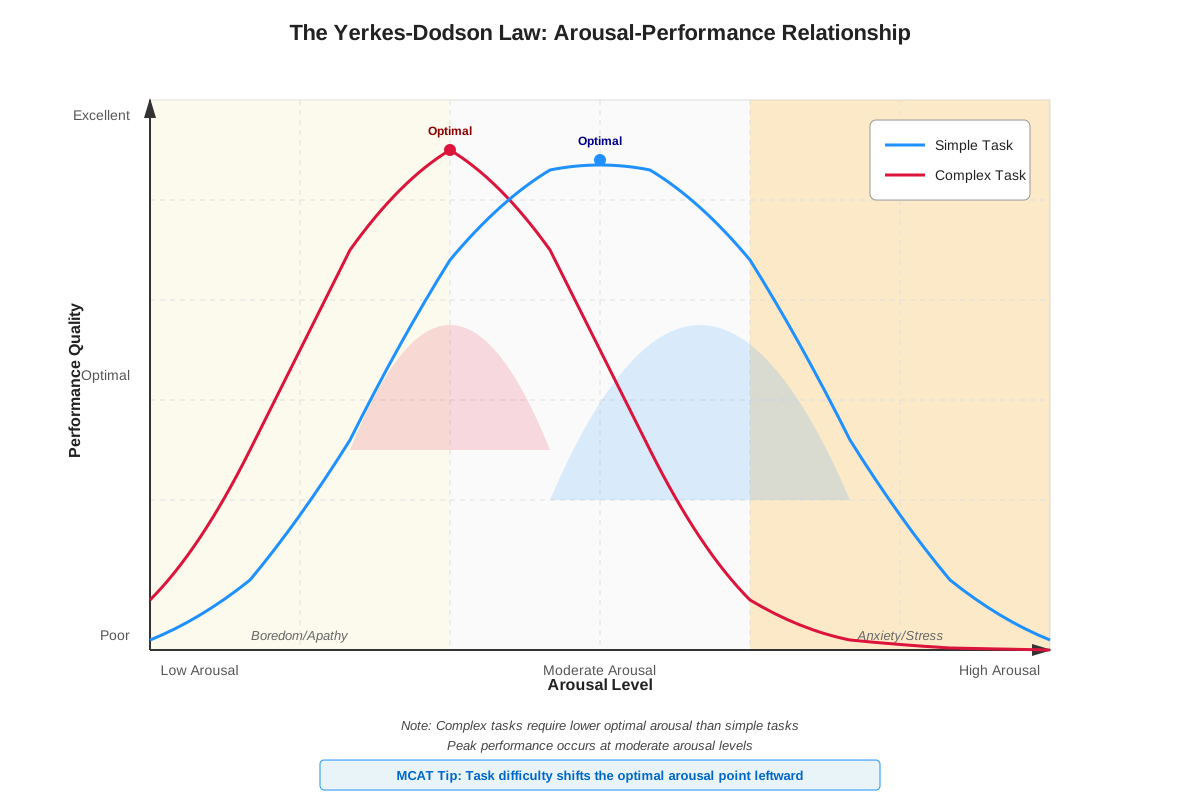
The Yerkes-Dodson Law represents the most important principle within arousal theory for MCAT purposes. This empirical relationship, first documented in 1908, describes how performance varies with arousal as an inverted U-shaped function. The law states that:
- Moderate arousal produces optimal performance
- Low arousal results in suboptimal performance due to insufficient activation, attention, and motivation
- High arousal impairs performance through anxiety, distraction, and cognitive interference
Critically, the Yerkes-Dodson Law specifies that task complexity moderates this relationship:
| Task Type | Optimal Arousal Level | Explanation |
|---|---|---|
| Simple/Well-learned | Higher arousal | Straightforward tasks benefit from increased energy and speed; minimal cognitive interference |
| Complex/Novel | Lower-moderate arousal | Difficult tasks require careful attention and working memory; excessive arousal disrupts these processes |
| Moderate difficulty | Moderate arousal | Standard inverted-U relationship applies |
For example, a sprinter performing an overlearned motor sequence benefits from high arousal (adrenaline, excitement), while a student taking a challenging calculus exam performs best at moderate arousal—high enough for alertness but not so high as to cause anxiety-induced cognitive disruption.
Physiological Basis of Arousal
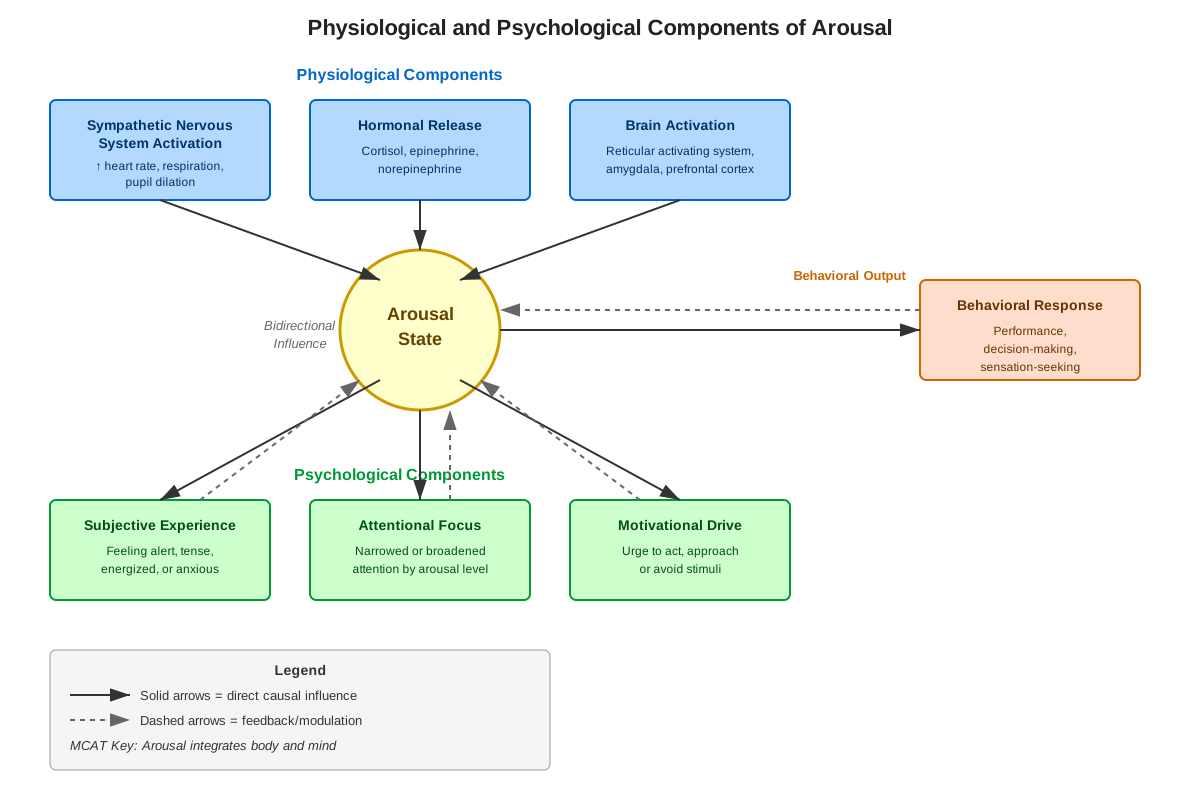
Arousal involves coordinated activation of multiple biological systems:
- Reticular Activating System (RAS): Brainstem structure that regulates wakefulness and attention; increased RAS activity elevates cortical arousal
- Sympathetic Nervous System: Produces physiological arousal markers including increased heart rate, blood pressure, respiration, pupil dilation, and stress hormone release
- Hypothalamic-Pituitary-Adrenal (HPA) Axis: Releases cortisol during sustained arousal, affecting energy mobilization and cognitive function
- Neurotransmitter Systems: Norepinephrine, dopamine, and serotonin modulate arousal states
Understanding these mechanisms helps explain why arousal affects both physical performance (through cardiovascular and muscular activation) and cognitive performance (through attention and information processing).
Individual Differences in Optimal Arousal
Not all individuals have identical optimal arousal levels. Arousal theory MCAT questions often test understanding of these individual differences:
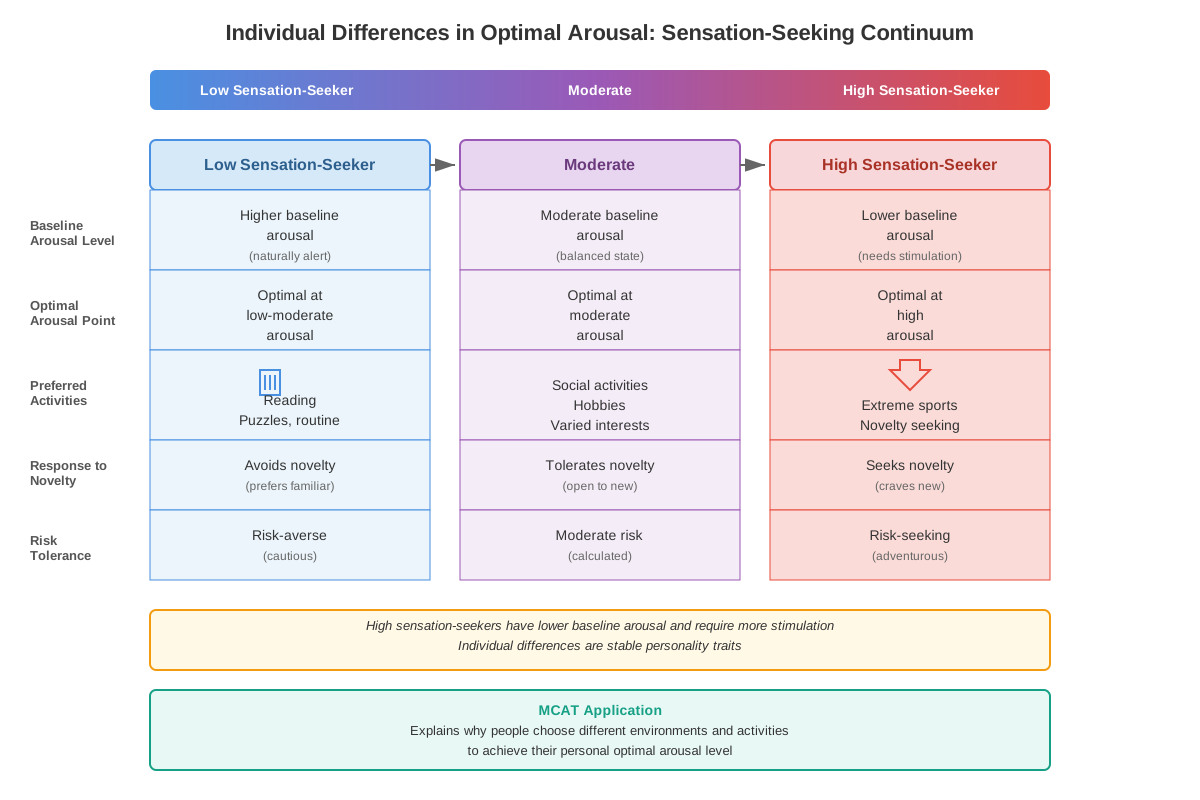
Sensation-seeking: Some individuals have chronically low baseline arousal and require intense stimulation to reach optimal levels. These high sensation-seekers engage in risky behaviors (extreme sports, gambling, novelty-seeking) to elevate arousal. Conversely, low sensation-seekers have higher baseline arousal and prefer calm, predictable environments.
Introversion-Extraversion: Hans Eysenck's theory proposes that introverts have higher baseline cortical arousal and therefore avoid additional stimulation, while extraverts have lower baseline arousal and seek social interaction and excitement to reach optimal levels.
Trait Anxiety: Individuals with high trait anxiety reach excessive arousal more quickly under stress, experiencing performance decrements at lower objective stress levels than low-anxiety individuals.
Arousal and Motivation
Arousal theory explains motivation through the concept of optimal arousal maintenance. Unlike drive reduction theory, which proposes that organisms are motivated to reduce all drives to zero, arousal theory recognizes that complete absence of stimulation is aversive. This explains:
- Why sensory deprivation is psychologically distressing
- Why people seek entertainment, novelty, and challenges even when basic needs are met
- Why moderate stress can be motivating rather than purely negative
- Individual differences in preferred activity levels and environments
Measurement of Arousal
Researchers and clinicians assess arousal through multiple methods:
- Physiological measures: Heart rate, skin conductance (galvanic skin response), cortisol levels, pupil diameter, EEG patterns
- Self-report scales: Subjective ratings of alertness, anxiety, excitement
- Behavioral indicators: Activity level, reaction time, performance metrics
- Cognitive assessments: Attention span, working memory capacity, decision-making quality
MCAT passages may present data from any of these measurement approaches, requiring students to interpret arousal levels and predict behavioral outcomes.
Concept Relationships
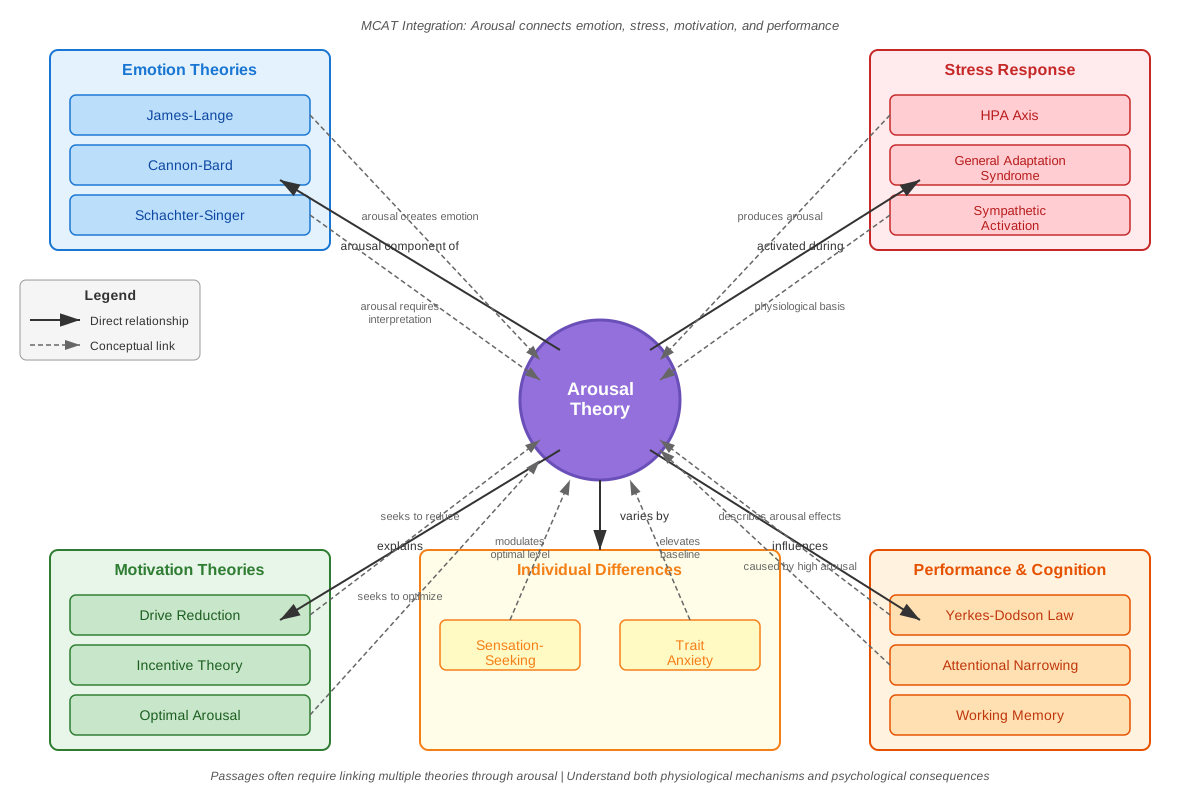
Arousal theory connects to multiple psychological frameworks in an integrated network:
Arousal Theory → Yerkes-Dodson Law: The core theoretical principle generates the specific prediction about the inverted-U performance curve, moderated by task complexity.
Arousal Theory ↔ Stress Response: Stress represents a specific context where arousal increases; the General Adaptation Syndrome describes prolonged arousal patterns (alarm, resistance, exhaustion). Arousal theory explains why moderate stress (eustress) can enhance performance while extreme stress (distress) impairs it.
Arousal Theory ↔ Emotion Theories: Arousal constitutes the physiological activation component in two-factor theories of emotion (Schachter-Singer), where arousal + cognitive label = emotion. The James-Lange theory emphasizes physiological arousal as primary in emotional experience.
Arousal Theory ↔ Attention and Cognition: Arousal level directly affects attentional focus, working memory capacity, and information processing efficiency. The relationship explains phenomena like "tunnel vision" under high arousal and mind-wandering under low arousal.
Arousal Theory ↔ Personality: Individual differences in optimal arousal relate to trait dimensions including extraversion-introversion, sensation-seeking, and behavioral inhibition/activation systems.
Arousal Theory ↔ Motivation Theories: While drive reduction theory emphasizes tension reduction, arousal theory recognizes optimal stimulation seeking. Incentive theory complements arousal theory by explaining what specific stimuli individuals pursue to achieve optimal arousal.
High-Yield Facts
⭐ Arousal theory proposes that individuals are motivated to maintain an optimal level of physiological and psychological activation, not to minimize all arousal.
⭐ The Yerkes-Dodson Law states that the relationship between arousal and performance follows an inverted U-shape, with moderate arousal producing optimal performance.
⭐ Task complexity moderates the arousal-performance relationship: simple tasks benefit from higher arousal, while complex tasks require lower-moderate arousal for optimal performance.
⭐ High arousal impairs performance on complex tasks through cognitive interference, reduced working memory capacity, and narrowed attention.
⭐ Individual differences in optimal arousal explain personality traits like sensation-seeking and extraversion-introversion.
- Arousal involves activation of the reticular activating system, sympathetic nervous system, and HPA axis.
- Low arousal leads to boredom and motivation to seek stimulation; high arousal leads to anxiety and motivation to reduce stimulation.
- Arousal can be measured through physiological indicators (heart rate, skin conductance), self-report, and behavioral performance.
- The arousal-performance relationship differs from drive reduction theory by recognizing that zero arousal is not optimal.
- Chronic excessive arousal contributes to stress-related health problems and burnout (exhaustion stage of General Adaptation Syndrome).
Quick check — test yourself on Arousal theory so far.
Try Flashcards →Common Misconceptions
Misconception: Higher arousal always improves performance. → Correction: The Yerkes-Dodson Law demonstrates that excessive arousal impairs performance, particularly on complex tasks. The relationship is curvilinear (inverted U-shape), not linear.
Misconception: Arousal theory and drive reduction theory make identical predictions. → Correction: Drive reduction theory proposes organisms are motivated to reduce all drives to zero, while arousal theory recognizes that moderate arousal is optimal and complete absence of stimulation is aversive.
Misconception: Optimal arousal level is the same for all individuals. → Correction: Significant individual differences exist based on personality traits (extraversion, sensation-seeking), trait anxiety, and baseline arousal levels.
Misconception: Arousal and emotion are synonymous. → Correction: Arousal is the physiological activation component of emotion, but emotion also requires cognitive appraisal and subjective feeling. Arousal can exist without specific emotional content.
Misconception: The Yerkes-Dodson Law applies identically to all task types. → Correction: Task complexity critically moderates the relationship—simple tasks have optimal performance at higher arousal levels than complex tasks.
Misconception: Arousal only involves sympathetic nervous system activation. → Correction: While sympathetic activation increases arousal, the reticular activating system, HPA axis, and various neurotransmitter systems also contribute. Additionally, parasympathetic activation reduces arousal.
Worked Examples
Example 1: Athletic Performance Scenario
Vignette: A researcher studies basketball players' free-throw accuracy under different conditions. Players shoot free throws in three contexts: (1) alone in an empty gym, (2) during regular practice with teammates present, and (3) during championship games with large crowds. Results show accuracy is lowest in condition 1, highest in condition 2, and intermediate in condition 3.
Question: Which theory best explains these results, and what mechanism accounts for the pattern?
Analysis:
- Identify the relevant theory: The pattern of performance varying with situational pressure suggests arousal theory and the Yerkes-Dodson Law.
- Map conditions to arousal levels:
- Condition 1 (empty gym): Low arousal—minimal social pressure, low motivation
- Condition 2 (practice): Moderate arousal—some social facilitation, optimal motivation
- Condition 3 (championship): High arousal—intense pressure, anxiety
- Assess task complexity: Free-throw shooting is a well-learned motor skill for experienced players, but still requires precision and concentration—moderate complexity.
- Apply Yerkes-Dodson Law: For a moderately complex task, optimal performance occurs at moderate arousal. Low arousal (condition 1) produces suboptimal performance due to insufficient motivation and attention. Moderate arousal (condition 2) produces optimal performance. High arousal (condition 3) causes performance decrements through anxiety and cognitive interference, though not as severely as it would for a highly complex task.
- Mechanism: The championship context elevates sympathetic nervous system activation, increasing heart rate and muscle tension while potentially disrupting fine motor control and concentration. The moderate arousal of practice provides sufficient motivation without overwhelming the cognitive and motor systems.
Answer: Arousal theory (specifically the Yerkes-Dodson Law) best explains these results. Performance follows an inverted U-shaped function, with moderate arousal during practice producing optimal accuracy, while low arousal (empty gym) and high arousal (championship) both impair performance through different mechanisms—insufficient activation versus excessive anxiety.
Example 2: Academic Performance and Test Anxiety
Vignette: A study examines students' performance on two types of exams: simple multiple-choice questions testing factual recall and complex essay questions requiring synthesis and analysis. Students are divided into low, moderate, and high test-anxiety groups based on self-report measures. Results show that for multiple-choice questions, high-anxiety students perform similarly to moderate-anxiety students, while low-anxiety students perform slightly worse. For essay questions, moderate-anxiety students perform best, while high-anxiety students show significant performance decrements.
Question: Explain these results using arousal theory principles.
Analysis:
- Recognize test anxiety as arousal: Test anxiety represents elevated arousal (sympathetic activation, stress hormone release, subjective distress).
- Differentiate task complexity:
- Multiple-choice factual recall: Relatively simple, well-learned information retrieval
- Essay synthesis: Complex task requiring working memory, organization, and integration
- Apply task complexity moderation:
- Simple tasks (multiple-choice): Optimal arousal is higher; high-anxiety students' elevated arousal falls within or near the optimal range, while low-anxiety students may have insufficient arousal for maximal motivation
- Complex tasks (essays): Optimal arousal is lower-moderate; high-anxiety students' arousal exceeds optimal levels, causing cognitive interference
- Explain mechanisms:
- For simple tasks: Higher arousal increases speed and energy without overwhelming cognitive capacity
- For complex tasks: Excessive arousal reduces working memory capacity, narrows attention, and interferes with the cognitive flexibility required for synthesis
- Individual differences: The three anxiety groups represent different baseline and reactive arousal levels, demonstrating that optimal arousal varies by both task and person.
Answer: The results demonstrate the Yerkes-Dodson Law's task complexity moderation principle. Simple multiple-choice questions benefit from higher arousal, so high-anxiety students perform well while low-anxiety students lack optimal activation. Complex essay questions require lower-moderate arousal; high-anxiety students' excessive arousal impairs the working memory and cognitive flexibility needed for synthesis, while moderate-anxiety students maintain optimal arousal for complex cognitive performance.
Exam Strategy
Approaching MCAT Questions on Arousal Theory
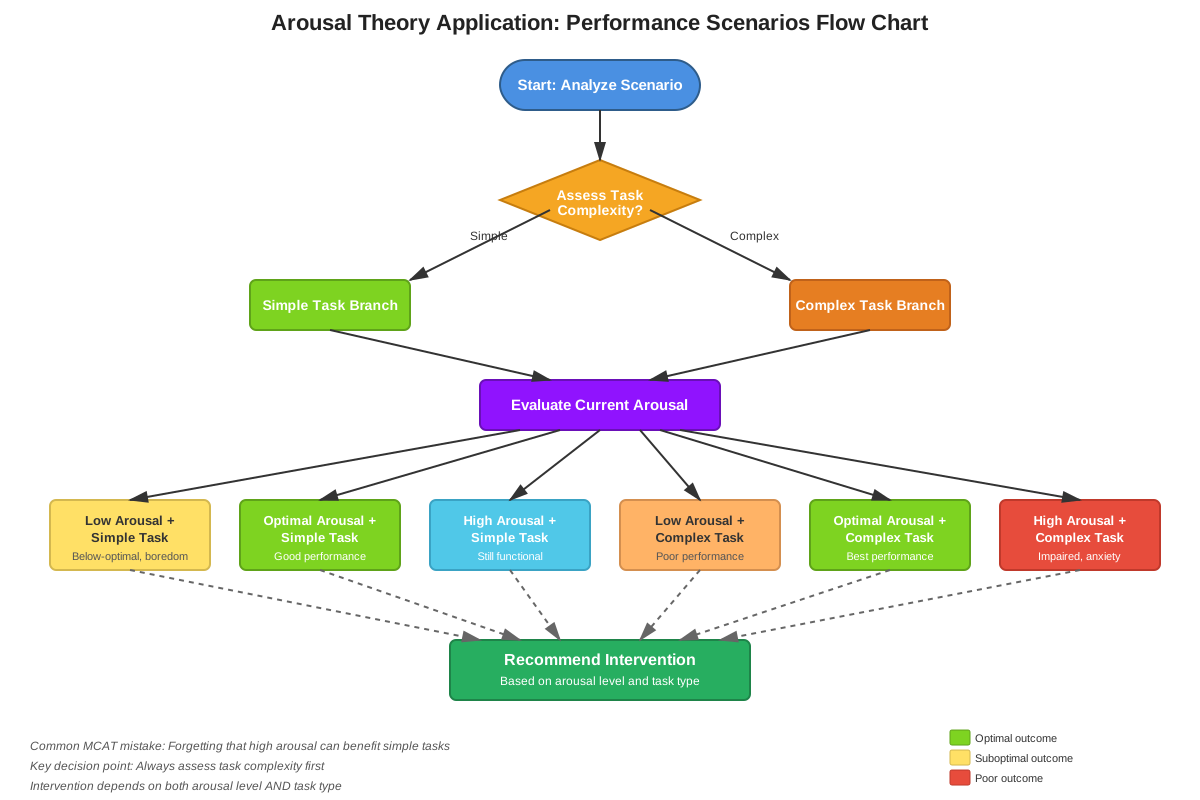
Step 1: Identify arousal-related trigger words in the question stem or passage:
- Performance, productivity, efficiency
- Anxiety, stress, pressure
- Alertness, activation, stimulation
- Task difficulty, complexity
- Individual differences in sensation-seeking or personality
Step 2: Determine whether the question asks about:
- The basic arousal-performance relationship (inverted U)
- Task complexity moderation (simple vs. complex tasks)
- Individual differences (personality, baseline arousal)
- Physiological mechanisms (sympathetic activation, RAS)
- Distinction from other motivation theories
Step 3: For graph interpretation questions:
- Inverted U-shaped curves indicate arousal theory/Yerkes-Dodson Law
- Compare curve peaks for different task types (simple tasks peak at higher arousal)
- Identify optimal arousal points and performance decrements at extremes
Step 4: Process of elimination:
- Eliminate drive reduction theory if the scenario involves seeking stimulation or if zero arousal is not optimal
- Eliminate incentive theory if the focus is on activation level rather than specific rewards
- Eliminate emotion theories (James-Lange, Cannon-Bard, Schachter-Singer) if the question emphasizes performance rather than emotional experience
Time Allocation
Arousal theory questions typically require 60-90 seconds:
- 20-30 seconds: Read and identify the theoretical framework
- 20-30 seconds: Analyze the specific scenario (task complexity, arousal level)
- 20-30 seconds: Apply principles and eliminate wrong answers
Exam Tip: When a passage presents performance data across different conditions, immediately consider whether arousal levels vary systematically. If performance is not monotonically increasing or decreasing, arousal theory with its inverted-U relationship is likely relevant.
Common Question Formats
- Theory identification: "Which theory best explains the observed pattern?"
- Prediction: "Based on arousal theory, how would performance change if...?"
- Mechanism: "What accounts for the performance decrement at high arousal?"
- Application: "A coach wants to optimize athlete performance; what arousal level should be targeted?"
Memory Techniques
Mnemonic for Yerkes-Dodson Law
"Simple Tasks Soar, Complex Tasks Crash" (STSC)
- Simple tasks perform best with Soaring (high) arousal
- Complex tasks Crash with high arousal, need moderate levels
Visualization Strategy
Picture a mountain (inverted U):
- Left slope (climbing up): Low arousal → increasing performance as arousal rises
- Peak: Optimal arousal and maximum performance
- Right slope (descending): High arousal → decreasing performance as arousal becomes excessive
- Simple task mountain: Peak is further right (higher arousal)
- Complex task mountain: Peak is further left (lower arousal)
Acronym for Arousal Effects
PAWS - Performance depends on Arousal, With task complexity as a moderating factor, Seeking optimal levels
Contrast Memory Aid
Drive Reduction vs. Arousal Theory:
- Drive Reduction: "Get to ZERO" (reduce all drives)
- Arousal Theory: "Find the ZONE" (optimal moderate level)
Summary
Arousal theory represents a fundamental motivational framework explaining how physiological and psychological activation levels influence behavior and performance. The theory proposes that individuals are motivated to maintain optimal arousal—neither too low nor too high—and that performance varies systematically with arousal according to the Yerkes-Dodson Law's inverted U-shaped function. Task complexity critically moderates this relationship: simple or well-learned tasks benefit from higher arousal, while complex or novel tasks require lower-moderate arousal for optimal performance. Individual differences in baseline arousal and optimal levels explain personality traits like sensation-seeking and extraversion. For the MCAT, students must distinguish arousal theory from drive reduction theory, apply the Yerkes-Dodson Law to predict performance outcomes, and understand the physiological mechanisms underlying arousal states. This medium-yield topic integrates with stress, emotion, motivation, and cognitive performance concepts throughout the Psychology section.
Key Takeaways
- Arousal theory posits that individuals are motivated to maintain an optimal level of activation, not to minimize all arousal to zero
- The Yerkes-Dodson Law describes an inverted U-shaped relationship between arousal and performance, with moderate arousal producing optimal results
- Task complexity moderates the arousal-performance relationship: simple tasks benefit from higher arousal, complex tasks require lower-moderate arousal
- High arousal impairs complex task performance through cognitive interference, reduced working memory, and narrowed attention
- Individual differences in optimal arousal relate to personality traits including sensation-seeking, extraversion-introversion, and trait anxiety
- Arousal involves coordinated activation of the reticular activating system, sympathetic nervous system, and HPA axis
- Arousal theory differs from drive reduction theory by recognizing that complete absence of stimulation is aversive and that moderate arousal is optimal
Related Topics
Stress and Coping: Arousal theory provides the foundation for understanding how stress (elevated arousal) affects performance and health. Mastering arousal concepts enables deeper analysis of the General Adaptation Syndrome and stress management strategies.
Emotion Theories: The physiological arousal component appears in multiple emotion theories (James-Lange, Schachter-Singer). Understanding arousal as a distinct construct clarifies how these theories differ in their explanations of emotional experience.
Attention and Cognition: Arousal level directly affects attentional capacity, working memory, and information processing. This connection is essential for understanding cognitive performance under varying conditions.
Personality Psychology: Individual differences in optimal arousal underlie major personality dimensions. This relationship appears in questions about trait theories and behavioral genetics.
Social Facilitation: The presence of others affects arousal, which in turn influences performance—a direct application of arousal theory principles to social psychology.
Practice CTA
Now that you have mastered the core concepts of arousal theory, test your understanding with practice questions and flashcards. Focus on distinguishing arousal theory from related frameworks, applying the Yerkes-Dodson Law to novel scenarios, and predicting performance outcomes based on task complexity and arousal level. Remember that consistent practice with MCAT-style questions is the most effective way to solidify your understanding and build the pattern recognition skills essential for test day success. You've built a strong foundation—now apply it!
Sign up free to keep reading
Create a free AnvayaPrep account to finish this MCAT guide on Arousal theory — plus flashcards and practice questions.