Overview
Generalization is a fundamental learning principle that describes the tendency for a conditioned response to occur not only to the original conditioned stimulus but also to stimuli that share similar characteristics. This concept bridges classical conditioning, operant conditioning, and real-world behavior, making it essential for understanding how organisms adapt their learned behaviors to new but related situations. In the context of Psychology and Learning and Memory, generalization explains why a child who has been bitten by one dog may fear all dogs, or why a student who experiences test anxiety in one classroom may feel anxious in other testing environments.
For the MCAT, generalization represents a high-yield topic that appears frequently in both discrete questions and passage-based items within the Psychological, Social, and Biological Foundations of Behavior section. The exam tests not only definitional knowledge but also the ability to apply generalization principles to experimental designs, clinical scenarios, and real-world behavioral phenomena. Understanding generalization is crucial for distinguishing it from related concepts like discrimination, extinction, and spontaneous recovery—distinctions that form the basis of many MCAT questions.
Generalization Psychology connects to broader themes including adaptive behavior, stimulus control, phobias and anxiety disorders, therapeutic interventions, and the neural mechanisms underlying learning. Mastery of this topic enables students to analyze how learned behaviors transfer across contexts, predict behavioral responses to novel stimuli, and understand both the adaptive advantages and potential maladaptive consequences of generalization in human and animal behavior.
Learning Objectives
- [ ] Define Generalization using accurate Psychology terminology
- [ ] Explain why Generalization matters for the MCAT
- [ ] Apply Generalization to exam-style questions
- [ ] Identify common mistakes related to Generalization
- [ ] Connect Generalization to related Psychology concepts
- [ ] Distinguish between stimulus generalization and response generalization
- [ ] Analyze generalization gradients and predict the strength of generalized responses
- [ ] Evaluate the role of generalization in the development and treatment of anxiety disorders
- [ ] Compare and contrast generalization with discrimination in learning contexts
Prerequisites
- Classical Conditioning (Pavlovian Conditioning): Understanding unconditioned stimuli/responses and conditioned stimuli/responses is essential because generalization most commonly occurs within conditioning paradigms
- Operant Conditioning: Knowledge of reinforcement and punishment provides context for how generalization operates across different learning frameworks
- Basic Stimulus-Response Relationships: Familiarity with how organisms learn associations between environmental cues and behavioral outcomes forms the foundation for understanding stimulus similarity
- Extinction and Spontaneous Recovery: These concepts help differentiate generalization from other post-acquisition phenomena in learning
Why This Topic Matters
Clinical and Real-World Significance
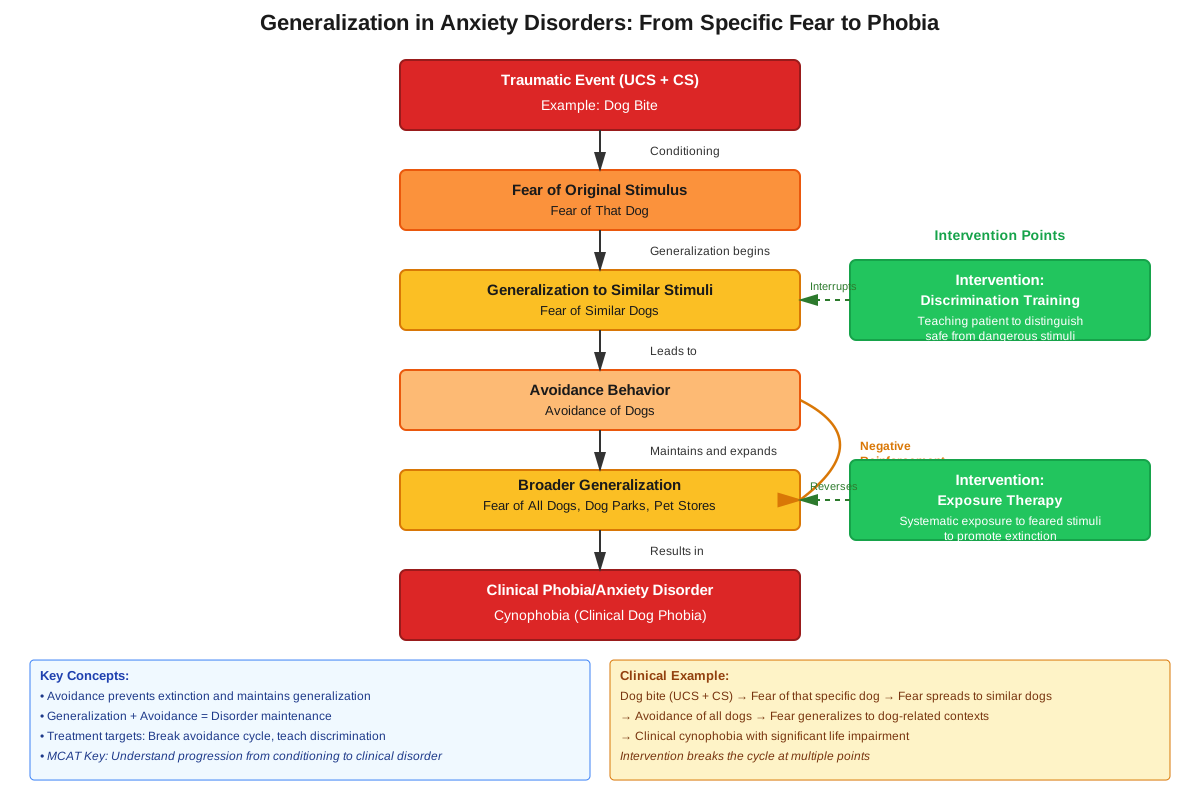
Generalization has profound implications for understanding psychological disorders, particularly anxiety-related conditions. Generalization MCAT questions often present clinical vignettes involving phobias, where an initial traumatic experience with one stimulus leads to fear responses toward an entire category of similar stimuli. For example, a person who develops a fear of elevators after being trapped in one may generalize this fear to other enclosed spaces, leading to claustrophobia. Understanding generalization is also critical for therapeutic interventions—systematic desensitization and exposure therapy work partly by helping patients discriminate between truly dangerous stimuli and safe but similar ones, essentially reversing overgeneralization.
In everyday life, generalization enables adaptive behavior by allowing organisms to respond appropriately to novel situations based on past learning. A child who learns that hot stoves cause pain will generalize this learning to other hot surfaces, providing a survival advantage. However, overgeneralization can lead to maladaptive behaviors, such as stereotyping or prejudice, where responses learned in one context are inappropriately applied to dissimilar situations.
Exam Statistics and Question Types
Generalization appears in approximately 3-5% of MCAT Psychology questions, with particularly high representation in passages involving experimental psychology, behavioral neuroscience, and clinical psychology scenarios. Questions typically fall into three categories:
- Conceptual identification: Recognizing generalization in described scenarios
- Experimental analysis: Interpreting research designs that test generalization gradients
- Application to clinical contexts: Analyzing how generalization contributes to psychological disorders or therapeutic outcomes
Passages commonly present animal learning experiments (following in the tradition of Pavlov and Watson) or clinical case studies involving phobias, PTSD, or conditioned drug responses. The MCAT frequently tests the distinction between generalization and discrimination, making this a critical comparison to master.
Core Concepts
Definition and Basic Mechanism
Generalization is the phenomenon in which a conditioned response is elicited not only by the original conditioned stimulus (CS) but also by stimuli that share physical or conceptual similarities with that CS. This occurs because the learning process does not create infinitely precise stimulus-response associations; instead, organisms learn to respond to a range of stimuli that fall within a certain similarity threshold to the original training stimulus.
The mechanism underlying generalization involves the way neural networks encode stimulus features. When an organism learns an association between a specific stimulus and a response, the neural representation includes not just the exact stimulus but a pattern of features. Any new stimulus that activates a sufficient proportion of these same neural pathways can trigger the learned response, with response strength typically correlating with the degree of similarity to the original stimulus.
Stimulus Generalization vs. Response Generalization
Two distinct forms of generalization exist, and the MCAT may test the ability to differentiate between them:
| Type | Definition | Example |
|---|---|---|
| Stimulus Generalization | A learned response occurs to stimuli similar to the original CS | A dog conditioned to salivate to a 1000 Hz tone also salivates to 900 Hz and 1100 Hz tones |
| Response Generalization | Responses similar to the learned response occur to the original CS | A rat trained to press a lever with its right paw also presses with its left paw or nose |
Stimulus generalization is far more commonly tested on the MCAT and represents the default meaning when "generalization" appears without qualification. It reflects the organism's inability or lack of training to discriminate between similar stimuli. Response generalization indicates flexibility in how organisms can produce functionally equivalent behaviors to achieve the same outcome.
Generalization Gradient
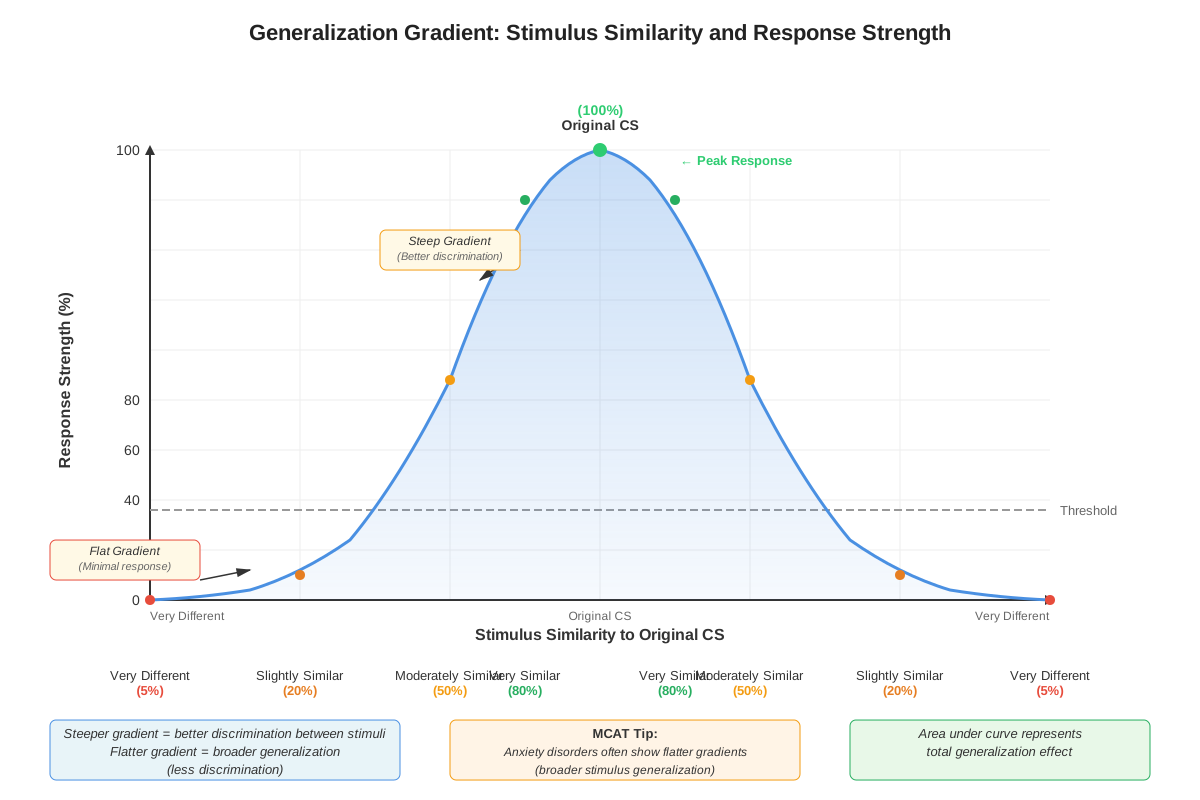
The generalization gradient is a graphical representation showing how the strength of a conditioned response varies as a function of stimulus similarity to the original CS. This concept is frequently tested through data interpretation questions on the MCAT.
Key characteristics of generalization gradients:
- Peak response occurs at or very near the original CS
- Response strength decreases systematically as stimuli become less similar to the CS
- Gradient steepness indicates the degree of discrimination: steep gradients show precise stimulus control, while flat gradients indicate broad generalization
- Symmetry may or may not occur depending on the stimulus dimension (e.g., tone frequency may show symmetric gradients, while visual stimuli may not)
In experimental contexts, generalization gradients are established by training an organism with one CS, then testing with multiple stimuli that vary systematically along a single dimension (frequency, wavelength, size, etc.) without reinforcement. The resulting pattern reveals how broadly the organism has generalized the learned association.
Factors Affecting Generalization
Several variables influence the extent and pattern of generalization:
- Similarity of stimuli: Greater physical or perceptual similarity produces stronger generalization
- Amount of training: More extensive training with the original CS can produce either narrower (more discrimination) or broader (stronger association) generalization depending on context
- Stimulus salience: More distinctive or salient stimuli produce steeper gradients (less generalization)
- Reinforcement history: Differential reinforcement of similar stimuli promotes discrimination and reduces generalization
- Motivational state: Higher drive states may broaden generalization gradients
- Time since acquisition: Generalization gradients may flatten over time as memory for the specific CS becomes less precise
Generalization in Classical vs. Operant Conditioning
While generalization occurs in both major conditioning paradigms, the mechanisms and implications differ slightly:
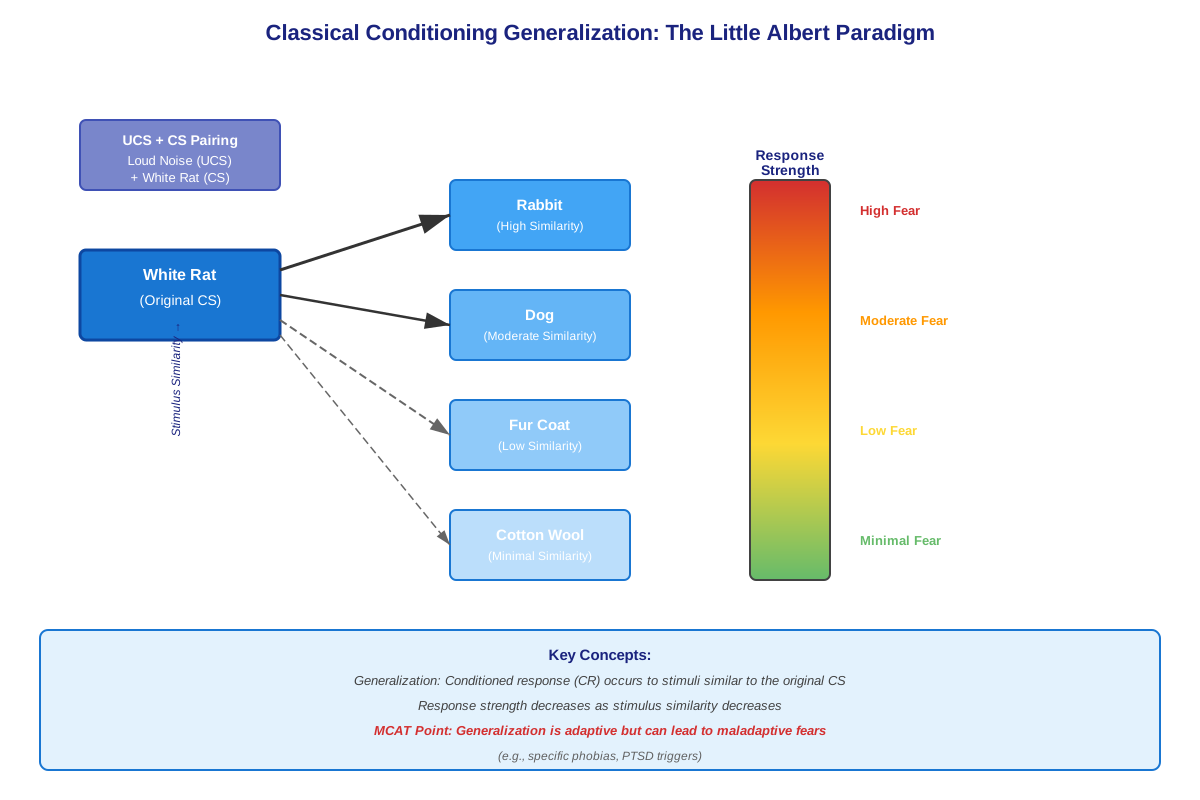
In Classical Conditioning: Generalization involves the elicitation of conditioned responses (CRs) by stimuli similar to the CS. The classic example comes from John Watson's "Little Albert" experiment, where a child conditioned to fear a white rat generalized this fear to other white, furry objects (though this study has significant ethical and methodological issues). Pavlov's original work demonstrated that dogs conditioned to salivate to a specific tone would also salivate to tones of different frequencies.
In Operant Conditioning: Generalization involves performing learned operant behaviors in the presence of stimuli similar to the discriminative stimulus (SD) that signaled reinforcement availability during training. For example, a pigeon trained to peck a key when a red light is illuminated may also peck when orange or pink lights are presented. The generalization occurs across the antecedent stimuli that set the occasion for the behavior, not the behavior itself (unless response generalization is also occurring).
Adaptive Value and Maladaptive Consequences
Generalization serves crucial adaptive functions:
- Efficiency: Organisms don't need to learn separate responses for every slightly different stimulus
- Survival: Generalizing danger signals (e.g., snake patterns, predator shapes) provides protection even when encountering novel variants
- Transfer of learning: Skills and knowledge acquired in one context can be applied to new but related situations
However, overgeneralization can be maladaptive:
- Phobias: Excessive generalization of fear responses to safe stimuli
- Stereotyping: Overgeneralizing characteristics from limited experiences with group members
- Inappropriate behavior: Applying learned responses in contexts where they are not adaptive (e.g., aggressive responses learned in one environment applied to peaceful settings)
Discrimination Training and Generalization
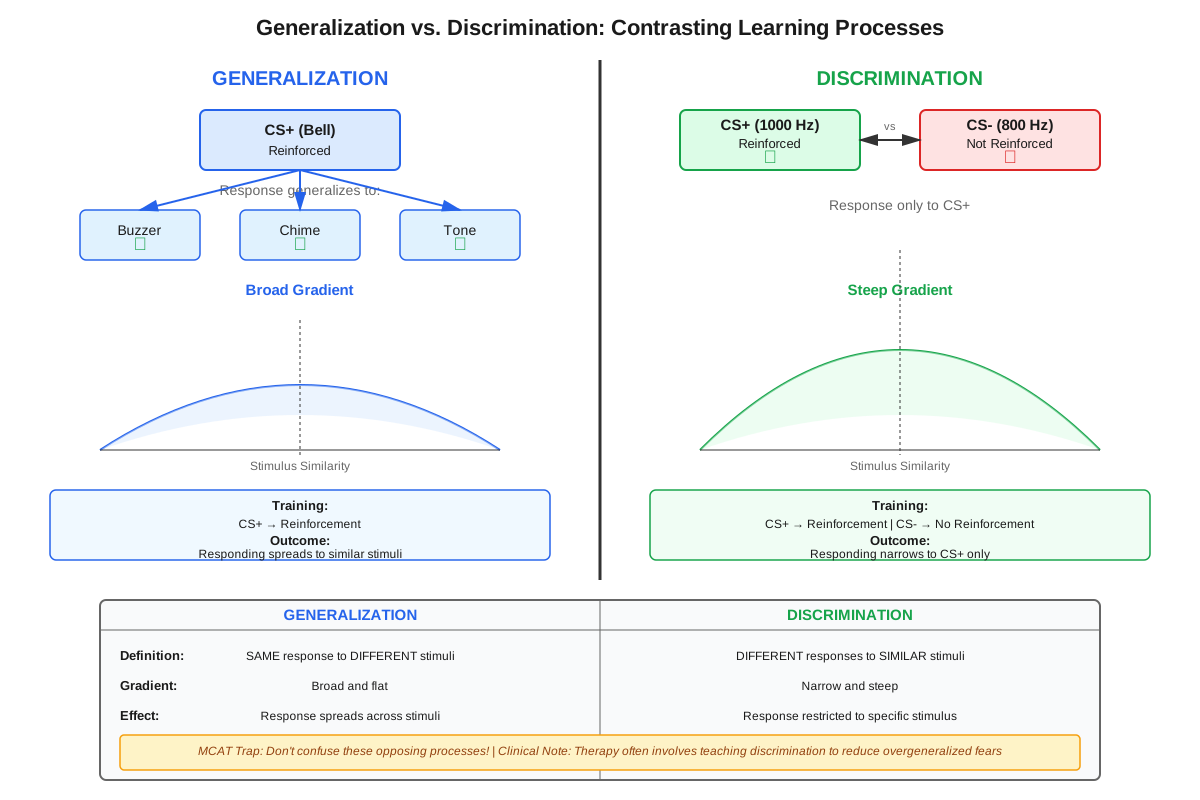
Discrimination is the complementary process to generalization, involving learning to respond differently to distinct stimuli. Discrimination training actively reduces generalization by reinforcing responses to one stimulus (S+) while not reinforcing (or punishing) responses to similar stimuli (S-). This process steepens the generalization gradient, creating more precise stimulus control.
The relationship between generalization and discrimination is dynamic: initial learning typically produces broad generalization, which can be refined through discrimination training. The MCAT frequently tests understanding of this relationship through experimental scenarios where organisms must learn to distinguish between similar stimuli.
Concept Relationships
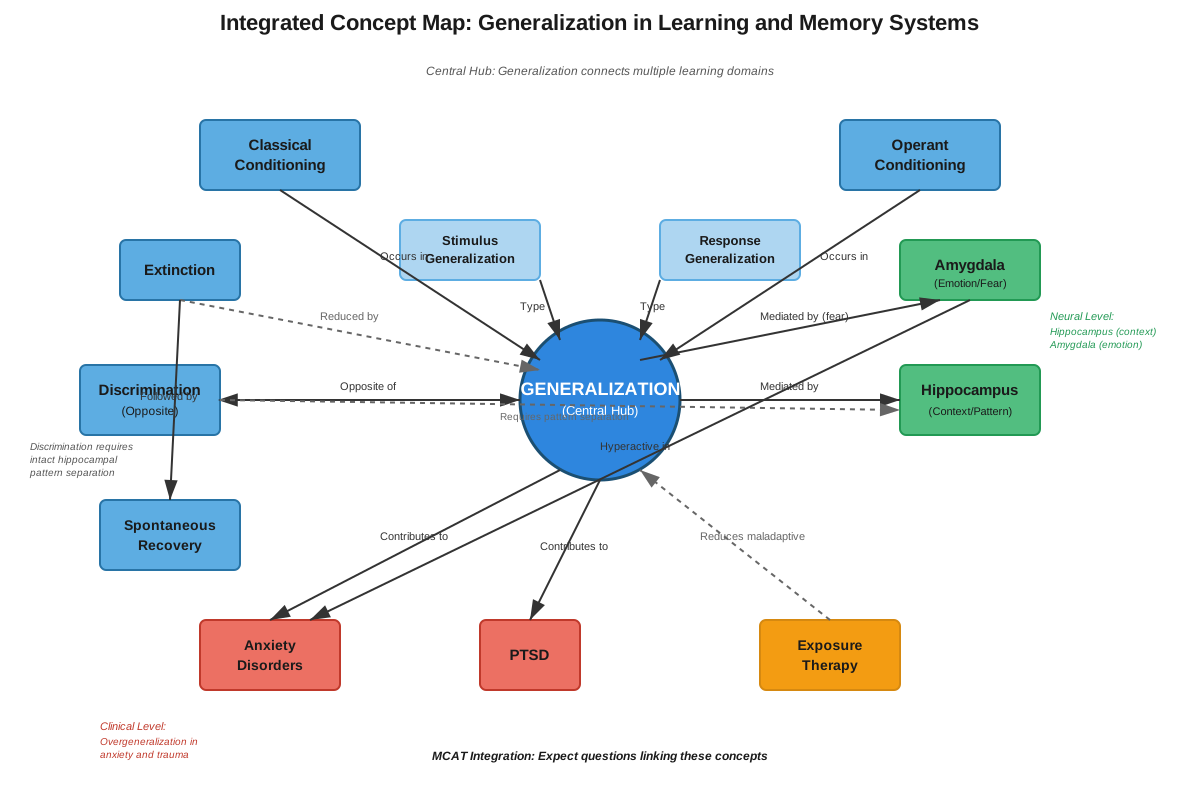
Generalization sits at the intersection of multiple learning and memory concepts, forming a network of related principles:
Classical Conditioning → Generalization: The acquisition phase of classical conditioning establishes the CS-CR association that then generalizes to similar stimuli. Without initial conditioning, generalization cannot occur.
Generalization ↔ Discrimination: These are opposing but complementary processes. Generalization broadens the range of stimuli that elicit responses, while discrimination narrows this range. Both occur simultaneously in natural learning environments, with the balance determining the specificity of stimulus control.
Generalization → Extinction: When generalized stimuli are presented without reinforcement, extinction can occur not only for those specific stimuli but can also affect responding to the original CS through a reverse generalization process.
Stimulus Salience → Generalization Gradient: More salient or distinctive stimuli produce steeper generalization gradients because their unique features are more strongly encoded, making discrimination from similar stimuli easier.
Generalization → Spontaneous Recovery: After extinction, spontaneous recovery may occur more broadly across generalized stimuli, not just the original CS, demonstrating that generalization affects multiple phases of the learning process.
Semantic Networks → Generalization: In cognitive psychology, generalization extends beyond perceptual similarity to conceptual similarity, connecting to how concepts are organized in semantic memory networks.
Generalization → Anxiety Disorders: Clinical applications show how excessive generalization of fear responses contributes to the development and maintenance of phobias, panic disorder, and PTSD, linking learning principles to psychopathology.
High-Yield Facts
⭐ Generalization is the tendency for a conditioned response to occur to stimuli similar to the original conditioned stimulus, not just the CS itself
⭐ The generalization gradient shows that response strength decreases systematically as stimulus similarity to the original CS decreases
⭐ Stimulus generalization involves responding to similar stimuli; response generalization involves producing similar responses
⭐ Discrimination training reduces generalization by reinforcing responses to one stimulus while not reinforcing responses to similar stimuli
⭐ Generalization has adaptive value (efficiency, safety) but can become maladaptive (phobias, stereotyping)
- Pavlov first systematically studied generalization using tones of different frequencies with conditioned salivation in dogs
- Steeper generalization gradients indicate more precise stimulus control and better discrimination
- The Little Albert experiment (Watson & Rayner) demonstrated generalization of conditioned fear from a white rat to other white, furry objects
- Generalization occurs in both classical and operant conditioning paradigms but involves different mechanisms
- Semantic generalization involves conceptual similarity rather than just perceptual similarity (e.g., generalizing fear from "doctor" to "dentist")
- Generalization gradients can be asymmetric depending on the stimulus dimension and organism's perceptual capabilities
- Extinction of generalized responses can occur independently of extinction to the original CS
- The degree of generalization can be influenced by the organism's motivational state and arousal level
- Generalization plays a critical role in language learning, allowing children to apply grammatical rules to novel words
- In therapy, systematic desensitization works partly by teaching discrimination between truly threatening stimuli and safe but similar ones
Quick check — test yourself on Generalization so far.
Try Flashcards →Common Misconceptions
Misconception: Generalization means the organism cannot tell the difference between stimuli at all
Correction: Generalization indicates that similar stimuli elicit the conditioned response, but this doesn't mean the organism cannot perceive differences. With discrimination training, organisms can learn to respond differently to stimuli they previously generalized across. The generalization gradient shows graded responding based on similarity, not all-or-nothing confusion.
Misconception: Generalization and discrimination are mutually exclusive processes
Correction: Generalization and discrimination occur simultaneously in most learning situations. An organism may generalize across some stimulus dimensions while discriminating along others. For example, a dog may generalize across different tones (stimulus dimension 1) while discriminating between tones and lights (stimulus dimension 2).
Misconception: Stronger initial conditioning always leads to broader generalization
Correction: The relationship between conditioning strength and generalization breadth is complex. While stronger conditioning can produce stronger generalized responses, extensive training with a specific CS can also lead to more precise stimulus encoding and thus narrower generalization. The outcome depends on whether training emphasizes the specific features of the CS or the general category it represents.
Misconception: Generalization only occurs with perceptually similar stimuli
Correction: While perceptual similarity is the most common basis for generalization, semantic or conceptual generalization also occurs, especially in humans. For example, fear conditioned to the word "doctor" might generalize to "physician" or "surgeon" despite no perceptual similarity. This semantic generalization involves higher-order cognitive processes beyond simple stimulus matching.
Misconception: Generalization is always maladaptive and represents a failure of learning
Correction: Generalization is typically adaptive, allowing organisms to apply learned responses to novel but similar situations without requiring separate learning trials for every possible stimulus variant. It becomes maladaptive only when overgeneralized to inappropriate contexts or when it interferes with necessary discriminations (as in phobias).
Misconception: The generalization gradient is always symmetric around the original CS
Correction: Generalization gradients may be asymmetric depending on the stimulus dimension and the organism's perceptual system. For example, generalization along a brightness dimension might show asymmetry if the organism's visual system is more sensitive to changes in one direction than another.
Worked Examples
Example 1: Classical Conditioning Experiment
Scenario: Researchers condition rats to fear a 1000 Hz tone by pairing it with a mild shock. After acquisition, they test the rats' freezing response (a fear indicator) to tones of 400 Hz, 700 Hz, 1000 Hz, 1300 Hz, and 1600 Hz without any shocks. The results show: 400 Hz (10% freezing), 700 Hz (45% freezing), 1000 Hz (90% freezing), 1300 Hz (50% freezing), 1600 Hz (15% freezing).
Question: What does this pattern demonstrate, and what would happen if researchers then provided discrimination training by presenting 700 Hz tones without shock while continuing to pair 1000 Hz tones with shock?
Analysis:
Step 1: Identify the phenomenon. The rats show the strongest freezing response to the original CS (1000 Hz) with systematically decreasing responses as tones become more dissimilar. This is a classic generalization gradient.
Step 2: Characterize the gradient. The gradient is relatively steep (response drops from 90% to 45-50% with 300 Hz difference), indicating moderate stimulus control. The gradient appears roughly symmetric, with similar response levels at equidistant frequencies above and below the CS (700 Hz and 1300 Hz show 45% and 50% respectively).
Step 3: Predict discrimination training effects. If 700 Hz tones are presented without shock while 1000 Hz tones continue to be paired with shock, the rats will undergo discrimination training. This will:
- Reduce freezing specifically to 700 Hz through extinction
- Steepen the generalization gradient between 700 Hz and 1000 Hz
- Potentially increase responding to 1000 Hz as it becomes more distinctive
- May affect responding to 400 Hz (also likely to decrease) but less impact on 1300 Hz and 1600 Hz
Step 4: Connect to learning objectives. This example demonstrates stimulus generalization in classical conditioning, shows how to interpret generalization gradients, and illustrates how discrimination training modifies generalization patterns.
Answer: This demonstrates stimulus generalization with a typical generalization gradient. Discrimination training would steepen the gradient by reducing responses to 700 Hz while maintaining or enhancing responses to 1000 Hz, creating more precise stimulus control.
Example 2: Clinical Application
Scenario: A patient develops intense anxiety after a panic attack in a crowded subway car. Over the following weeks, the patient begins experiencing anxiety in elevators, buses, crowded stores, and eventually even in their office when multiple colleagues are present. The patient's therapist notes that anxiety is strongest in subway cars (9/10), moderate in buses and elevators (6/10), present but milder in crowded stores (4/10), and mild in the office (2/10).
Question: Explain this pattern using learning principles, identify the psychological process occurring, and describe how the therapist might address this using behavioral techniques.
Analysis:
Step 1: Identify the learning process. The subway car served as a conditioned stimulus (CS) paired with the panic attack (which functioned as an unconditioned stimulus producing fear/anxiety as an unconditioned response). The patient now shows a conditioned fear response to the subway car.
Step 2: Recognize the generalization pattern. The patient's anxiety extends beyond subway cars to other similar situations, demonstrating stimulus generalization. The pattern shows a generalization gradient based on similarity to the original CS:
- Highest similarity: subway cars (original CS) = strongest response
- High similarity: buses, elevators (enclosed, crowded transportation) = strong response
- Moderate similarity: crowded stores (crowded but not enclosed transportation) = moderate response
- Lower similarity: office with colleagues (people present but not crowded, not transportation) = weak response
Step 3: Identify the clinical significance. This represents the development of a phobia through classical conditioning with excessive generalization. The overgeneralization is maladaptive because most of these situations are objectively safe, but the patient's learning system has generalized the fear response too broadly.
Step 4: Propose behavioral intervention. The therapist should use discrimination training through systematic desensitization or exposure therapy:
- Help the patient discriminate between the original panic-inducing situation and objectively safe similar situations
- Use gradual exposure starting with lowest-anxiety situations (office) and progressing toward higher-anxiety situations
- Prevent the conditioned response through relaxation techniques or cognitive restructuring
- Essentially, teach the patient that these generalized stimuli are not actually predictive of panic attacks
Step 5: Connect to broader concepts. This example illustrates how generalization contributes to anxiety disorders, demonstrates the clinical relevance of learning principles, and shows how understanding generalization informs therapeutic interventions.
Answer: This represents stimulus generalization of a conditioned fear response, with anxiety strength following a generalization gradient based on similarity to the original panic-inducing situation. Treatment should involve discrimination training through systematic desensitization, helping the patient learn that generalized stimuli are safe and distinct from the original threatening situation.
Exam Strategy
Approaching MCAT Questions on Generalization
Step 1: Identify the learning paradigm. Determine whether the question involves classical conditioning, operant conditioning, or observational learning, as this affects how generalization operates.
Step 2: Locate the original learned association. Find the initial CS-CR or behavior-consequence relationship that was established before generalization occurred.
Step 3: Identify similar stimuli or responses. Look for stimuli that share features with the original CS or responses that are functionally similar to the learned behavior.
Step 4: Assess the similarity dimension. Determine what makes the stimuli similar (perceptual features, semantic meaning, functional properties) and predict response strength based on degree of similarity.
Step 5: Distinguish from related concepts. Ensure the scenario describes generalization rather than discrimination, extinction, spontaneous recovery, or higher-order conditioning.
Trigger Words and Phrases
Watch for these indicators that a question involves generalization:
- "Similar stimuli"
- "Responded to other [stimuli] that resembled..."
- "Fear/response spread to..."
- "Also showed the behavior when..."
- "Gradient" (especially in data interpretation)
- "Transfer of learning"
- "Overgeneralization"
- "Broad/narrow stimulus control"
Phrases suggesting discrimination (not generalization):
- "Only responded to..."
- "Learned to distinguish between..."
- "Differential responding"
- "Selectively responded"
Process of Elimination Tips
When answer choices seem similar:
- Eliminate options that describe discrimination if the scenario shows responding to multiple similar stimuli
- Eliminate options that confuse stimulus and response generalization by checking whether similar stimuli or similar responses are involved
- Eliminate options that attribute generalization to cognitive reasoning when simpler associative learning explains the phenomenon
- Choose options that acknowledge the gradient nature of generalization over all-or-nothing descriptions
- Favor options that connect generalization to the original conditioning rather than treating it as independent learning
Time Allocation
For discrete questions on generalization (typically 60-90 seconds):
- 15-20 seconds: Read and identify the learning scenario
- 20-30 seconds: Determine what was originally learned and what is now generalizing
- 20-30 seconds: Evaluate answer choices against the definition and characteristics of generalization
- 10 seconds: Confirm and select
For passage-based questions (typically 90-120 seconds):
- Passage reading should have already identified generalization if present
- 20-30 seconds: Locate relevant passage information
- 30-40 seconds: Apply generalization principles to the specific question
- 30-40 seconds: Eliminate wrong answers and confirm correct choice
- 10 seconds: Final check
Exam Tip: If a question presents data showing response strength across multiple stimuli, you're almost certainly dealing with a generalization gradient. Focus on the pattern: peak at the original CS, systematic decrease with decreasing similarity.
Memory Techniques
Mnemonic for Generalization vs. Discrimination
"GENERAL soldiers wear SIMILAR uniforms; DISCRIMINATING shoppers want DIFFERENT products"
- GENERALization = SIMILAR stimuli elicit the same response
- DISCRIMINation = DIFFERENT stimuli elicit different responses
Visualization Strategy for Generalization Gradients
Picture a mountain peak:
- Peak = original CS (strongest response)
- Slopes = similar stimuli (decreasing response)
- Steep mountain = good discrimination (narrow generalization)
- Gentle hill = poor discrimination (broad generalization)
This visual helps remember that response strength decreases with distance from the original CS and that gradient steepness indicates discrimination ability.
Acronym for Factors Affecting Generalization: SMART
- Similarity of stimuli (more similarity = more generalization)
- Motivational state (higher drive = broader generalization)
- Amount of training (affects gradient steepness)
- Reinforcement history (differential reinforcement reduces generalization)
- Time since acquisition (memory decay can flatten gradients)
Conceptual Anchor: "The Little Albert Effect"
Remember Watson's Little Albert experiment as the prototypical example:
- Original CS: White rat
- Generalized to: White rabbit, white fur coat, white cotton, Santa Claus mask
- Key principle: Perceptual similarity (white, furry) drove generalization
- Clinical relevance: Model for phobia development
Even though this study has methodological issues, it remains the most memorable example of generalization for most students and provides a concrete anchor for abstract principles.
Summary
Generalization is a fundamental learning principle describing how conditioned responses extend beyond the original conditioned stimulus to similar stimuli, or how learned behaviors occur in response to stimuli resembling the original discriminative stimulus. This phenomenon occurs in both classical and operant conditioning and reflects the brain's tendency to encode stimulus features rather than infinitely precise stimulus representations. The strength of generalization follows a predictable pattern called the generalization gradient, with response strength decreasing systematically as stimuli become less similar to the original CS. Generalization serves adaptive functions by allowing efficient transfer of learning to novel situations, but overgeneralization can lead to maladaptive outcomes such as phobias and stereotyping. Discrimination training counteracts generalization by reinforcing differential responding to distinct stimuli, steepening the generalization gradient and creating more precise stimulus control. For the MCAT, students must be able to identify generalization in experimental and clinical scenarios, interpret generalization gradients, distinguish generalization from discrimination and other learning phenomena, and apply these principles to predict behavioral outcomes and therapeutic interventions.
Key Takeaways
- Generalization is the extension of a conditioned response to stimuli similar to the original CS, representing a core principle of learning that appears frequently on the MCAT
- The generalization gradient graphically represents how response strength decreases with decreasing similarity to the original CS, with gradient steepness indicating the degree of stimulus control and discrimination
- Stimulus generalization (responding to similar stimuli) differs from response generalization (producing similar responses), though stimulus generalization is far more commonly tested
- Generalization serves adaptive functions by enabling transfer of learning but becomes maladaptive when overgeneralized, particularly in the development of anxiety disorders and phobias
- Discrimination training reduces generalization by reinforcing responses to one stimulus while not reinforcing responses to similar stimuli, creating the complementary process that refines stimulus control
- Generalization occurs in both classical and operant conditioning, though the mechanisms differ slightly between paradigms
- MCAT questions on generalization often involve interpreting experimental data, analyzing clinical scenarios, or distinguishing generalization from related learning concepts, requiring both conceptual understanding and application skills
Related Topics
Discrimination Learning: The complementary process to generalization where organisms learn to respond differently to distinct stimuli. Mastering generalization provides the foundation for understanding how discrimination training modifies stimulus control and creates more precise behavioral responses.
Extinction and Spontaneous Recovery: These post-acquisition phenomena interact with generalization, as extinction can occur for generalized stimuli independently of the original CS, and spontaneous recovery may affect the entire range of generalized stimuli.
Systematic Desensitization and Exposure Therapy: Clinical applications that directly address overgeneralization in anxiety disorders. Understanding generalization is essential for comprehending how these therapeutic techniques work to restore appropriate discrimination.
Semantic Networks and Spreading Activation: Cognitive psychology concepts that extend generalization principles beyond perceptual similarity to conceptual relationships, showing how generalization operates in memory and language processing.
Stimulus Control in Operant Conditioning: The broader framework within which generalization operates in operant paradigms, including concepts like discriminative stimuli, stimulus delta, and conditional discrimination.
Classical Conditioning Phenomena: Higher-order conditioning, sensory preconditioning, and blocking all interact with generalization principles and represent natural extensions of this topic.
Practice CTA
Now that you've mastered the core concepts of generalization, it's time to solidify your understanding through active practice. Complete the practice questions and flashcards associated with this topic to test your ability to identify generalization in various scenarios, interpret generalization gradients, and distinguish this concept from related learning principles. Remember, the MCAT rewards not just recognition but application—practice analyzing experimental designs and clinical vignettes to build the critical thinking skills that will serve you on test day. Each practice question you work through strengthens the neural pathways encoding these concepts, creating your own generalization gradient of MCAT success!
Sign up free to keep reading
Create a free AnvayaPrep account to finish this MCAT guide on Generalization — plus flashcards and practice questions.