Overview
Discrimination in psychology refers to the learned ability to distinguish between different stimuli and respond selectively to specific stimuli while withholding responses to others. This fundamental concept in Learning and Memory represents a critical cognitive skill that allows organisms to navigate complex environments by recognizing subtle differences between similar situations, objects, or events. In the context of classical and operant conditioning, discrimination occurs when a conditioned response is elicited by one stimulus but not by similar stimuli, demonstrating that learning has become specific and refined rather than generalized.
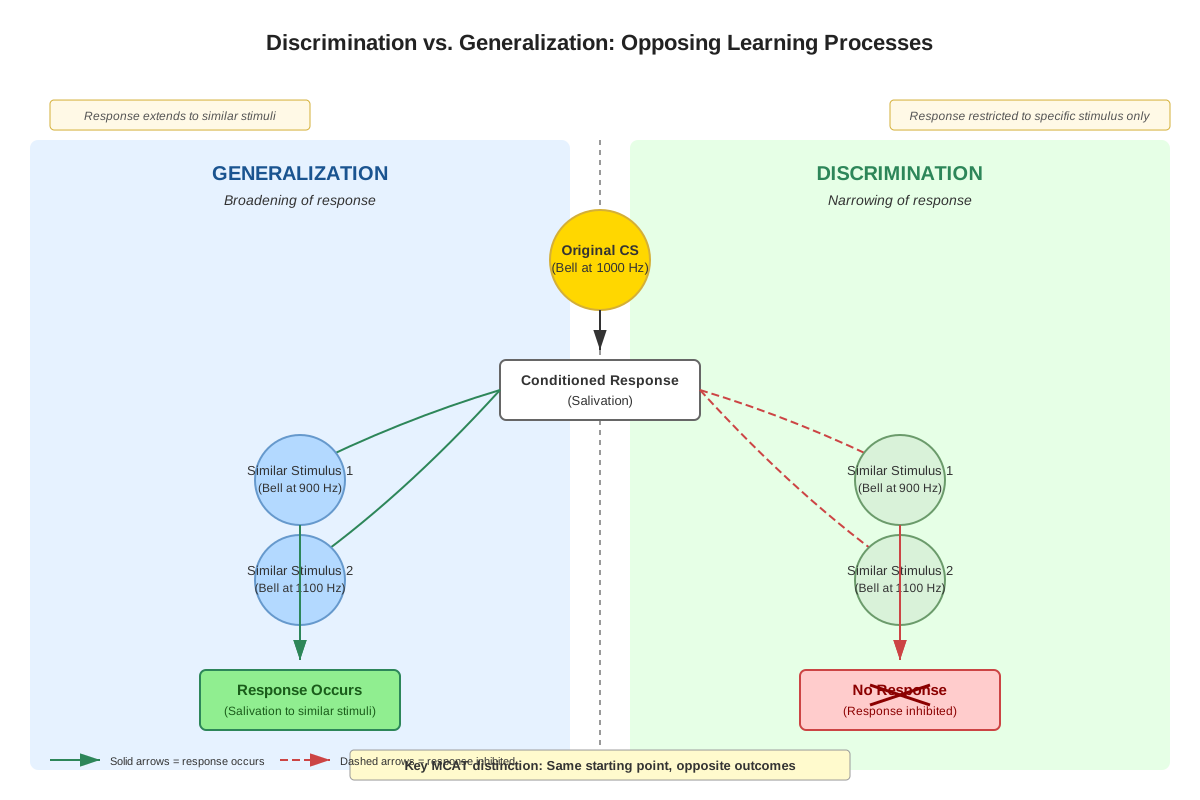
Understanding Discrimination Psychology is essential for MCAT success because it appears frequently in Psychological, Social, and Biological Foundations of Behavior passages, often integrated with questions about learning theory, behavioral modification, and cognitive development. The concept bridges multiple domains within psychology, connecting behavioral learning principles with perceptual processes, memory formation, and adaptive behavior. Discrimination represents the counterbalance to generalization—while generalization extends learned responses across similar stimuli, discrimination narrows and refines them, creating behavioral precision.
For the MCAT, discrimination questions typically appear in experimental design passages involving conditioning paradigms, clinical scenarios describing phobia treatment or behavioral therapy, and research studies examining perceptual learning or skill acquisition. The topic integrates seamlessly with classical conditioning (Pavlov), operant conditioning (Skinner), stimulus control, and cognitive processes, making it a high-yield concept that frequently serves as the foundation for understanding more complex psychological phenomena. Mastering discrimination enables students to analyze experimental results, predict behavioral outcomes, and understand how organisms develop increasingly sophisticated responses to environmental demands.
Learning Objectives
- [ ] Define Discrimination using accurate Psychology terminology
- [ ] Explain why Discrimination matters for the MCAT
- [ ] Apply Discrimination to exam-style questions
- [ ] Identify common mistakes related to Discrimination
- [ ] Connect Discrimination to related Psychology concepts
- [ ] Distinguish between discrimination and generalization in learning contexts
- [ ] Analyze experimental designs that test discriminative learning
- [ ] Predict behavioral outcomes when discriminative stimuli are manipulated
- [ ] Evaluate the role of discrimination in therapeutic interventions
Prerequisites
- Classical Conditioning: Understanding acquisition, extinction, and conditioned/unconditioned stimuli is essential because discrimination builds upon basic conditioning principles by adding stimulus specificity
- Operant Conditioning: Knowledge of reinforcement, punishment, and behavioral shaping provides the framework for understanding how discrimination develops through differential reinforcement
- Stimulus and Response: Familiarity with the basic stimulus-response relationship is necessary because discrimination fundamentally involves selective responding to specific stimuli
- Generalization: Understanding stimulus generalization is critical because discrimination represents the opposite process—narrowing rather than broadening response patterns
Why This Topic Matters
Clinical and Real-World Significance
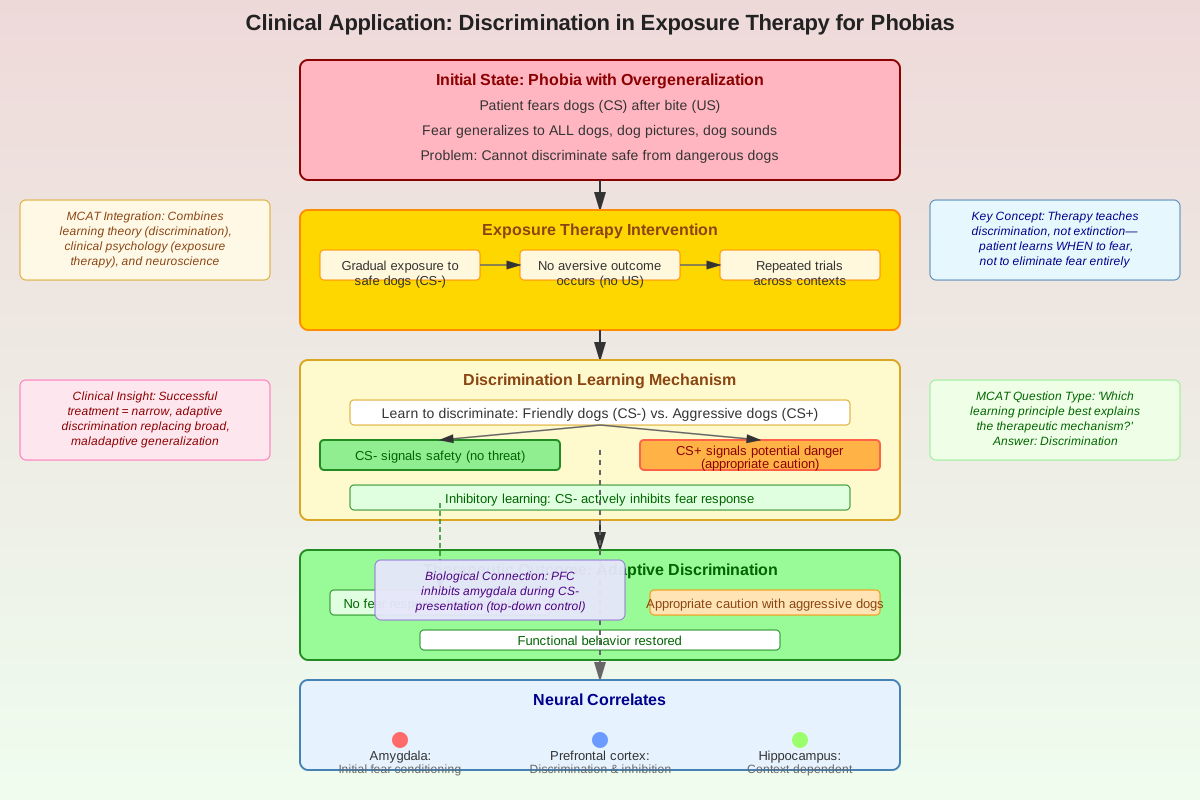
Discrimination learning underlies countless adaptive behaviors essential for survival and daily functioning. Humans constantly discriminate between safe and dangerous situations, appropriate and inappropriate social contexts, and relevant versus irrelevant information. Clinical applications include exposure therapy for phobias (learning to discriminate between genuinely threatening and safe situations), behavioral interventions for autism spectrum disorders (teaching discrimination between social cues), and addiction treatment (discriminating between high-risk and low-risk environments). The ability to make fine discriminations represents cognitive sophistication and behavioral flexibility, while impaired discrimination characterizes various psychological and neurological conditions.
MCAT Examination Statistics
Discrimination appears in approximately 8-12% of Psychology and Sociology section questions, either as the primary concept or integrated within broader learning theory passages. Questions typically present experimental scenarios requiring students to identify discriminative stimuli, predict behavioral outcomes when discrimination training occurs, or distinguish discrimination from generalization. The concept frequently appears in:
- Passage-based questions (60-70% of discrimination items): Research studies examining conditioning paradigms, behavioral interventions, or perceptual learning
- Discrete questions (30-40%): Standalone items testing definitional knowledge or application to brief scenarios
- Pseudo-discrete questions: Items following biochemistry or biology passages that include behavioral components
Common Exam Presentations
MCAT passages featuring discrimination often describe experiments where subjects learn to respond differently to similar stimuli (e.g., responding to a 1000 Hz tone but not a 900 Hz tone), clinical interventions teaching patients to distinguish between anxiety-provoking but safe situations and genuinely dangerous ones, or developmental studies examining how discrimination abilities mature. Questions may ask students to identify the discriminative stimulus (S^D), predict what happens when discrimination training is incomplete, or explain why discrimination represents adaptive learning.
Core Concepts
Definition and Fundamental Principles
Discrimination in psychology is the learned ability to differentiate between distinct stimuli and respond appropriately to each, producing a conditioned response to one stimulus (S+) while withholding that response to similar but different stimuli (S-). This process represents stimulus control, where specific environmental cues reliably predict consequences and guide behavior accordingly. Discrimination demonstrates that learning has achieved specificity—the organism has learned not just to respond, but to respond selectively based on subtle stimulus features.
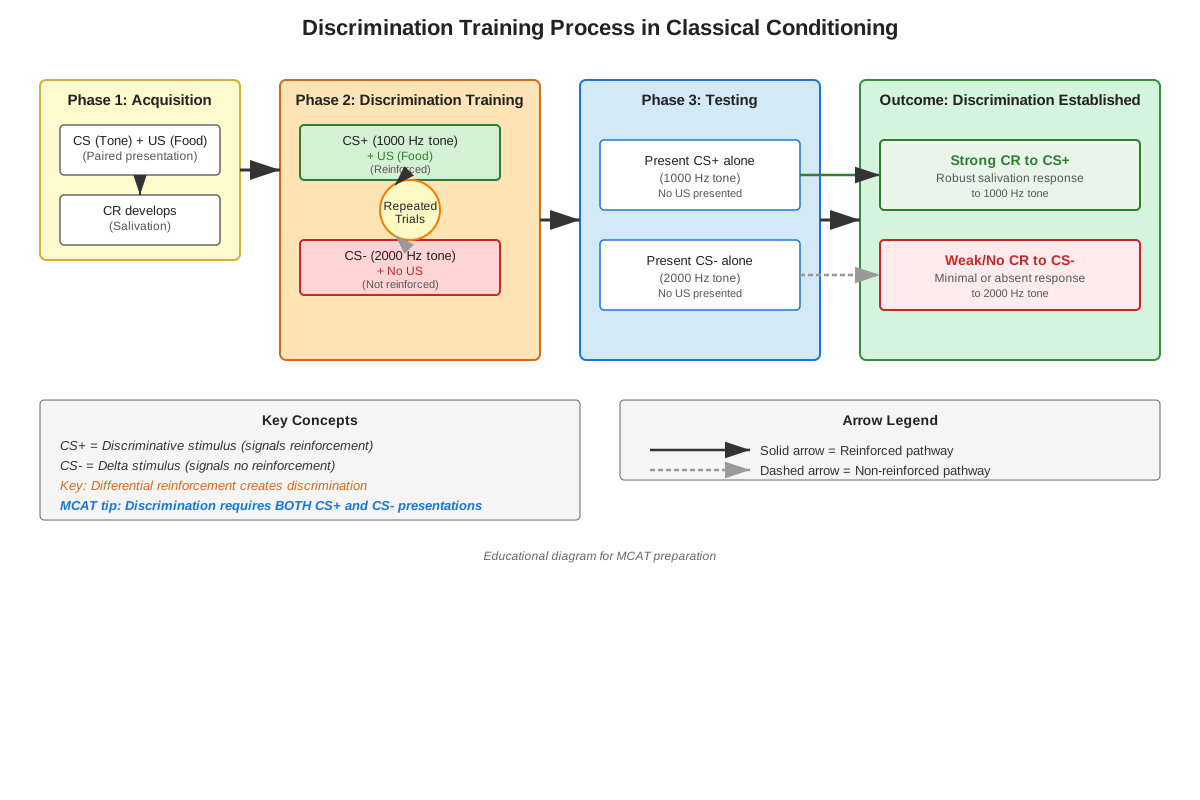
In classical conditioning, discrimination occurs when a conditioned response (CR) is elicited by the conditioned stimulus (CS+) but not by similar stimuli (CS-). For example, if a dog is conditioned to salivate to a bell tone of 1000 Hz but not to a tone of 800 Hz, discrimination has occurred. The animal has learned that only the specific 1000 Hz tone predicts food (the unconditioned stimulus), while other tones do not.
In operant conditioning, discrimination develops through differential reinforcement—reinforcing responses in the presence of one stimulus (the discriminative stimulus or S^D) while extinguishing responses in the presence of other stimuli (S-delta or S^Δ). The discriminative stimulus signals that a particular behavior will be reinforced, establishing stimulus control over that behavior. For instance, a child learns that asking for candy produces results (reinforcement) when parents are in a good mood (S^D) but not when they appear stressed (S^Δ).
Discrimination Training Procedures
Discrimination training involves systematic exposure to multiple stimuli with differential consequences, teaching the organism which stimulus features predict specific outcomes. The basic procedure includes:
- Presentation of S+: The positive stimulus is presented, and the target response is reinforced
- Presentation of S-: The negative stimulus is presented, and the target response is not reinforced (extinction)
- Alternation: S+ and S- trials are intermixed to strengthen discrimination
- Gradual refinement: Stimulus differences may initially be large, then progressively reduced to establish fine discrimination
Successive discrimination training presents stimuli sequentially—first S+, then S-, alternating between them. This method is simpler but may take longer for discrimination to develop. Simultaneous discrimination training presents both stimuli at once, allowing direct comparison and typically producing faster learning.
Discriminative Stimulus (S^D) in Operant Conditioning
The discriminative stimulus (S^D) is a cornerstone concept in operant conditioning, representing an environmental cue that signals when a particular behavior will be reinforced. The S^D does not elicit behavior automatically (unlike a CS in classical conditioning) but rather sets the occasion for behavior by indicating that reinforcement is available. This three-term contingency—S^D → Response → Consequence—forms the foundation of operant behavior analysis.
For example, a green traffic light serves as an S^D for driving forward (the behavior will be "reinforced" by reaching your destination safely), while a red light serves as S^Δ (driving forward will be "punished" by potential accidents or tickets). The S^D acquires control over behavior through repeated pairings with reinforcement availability, not through direct stimulus-response associations.
Discrimination Versus Generalization
| Feature | Discrimination | Generalization |
|---|---|---|
| Definition | Responding differently to distinct stimuli | Responding similarly to different stimuli |
| Function | Narrows response range; increases specificity | Broadens response range; increases flexibility |
| Training | Requires differential reinforcement | Occurs spontaneously without specific training |
| Adaptive value | Precision in responding to relevant cues | Efficiency in applying learning to novel situations |
| Stimulus similarity | Decreases response likelihood as stimuli differ from S+ | Increases response likelihood as stimuli resemble CS |
| Example | Responding only to your own phone ringtone | Responding to any phone ringtone |
These processes work in dynamic balance—generalization provides initial broad learning, while discrimination refines it through experience. Both are essential for adaptive behavior: generalization allows transfer of learning to new contexts, while discrimination prevents inappropriate responses to superficially similar but functionally different situations.
Factors Affecting Discrimination Learning
Several variables influence how quickly and accurately discrimination develops:
- Stimulus similarity: Greater similarity between S+ and S- makes discrimination more difficult and requires more training trials
- Salience: More noticeable, distinctive stimulus features facilitate faster discrimination
- Prior learning history: Previous experience with similar discriminations can enhance or interfere with new discrimination learning
- Reinforcement schedule: Consistent differential reinforcement (always reinforcing S+ and never reinforcing S-) produces clearest discrimination
- Motivation: Higher motivation levels typically accelerate discrimination learning
- Cognitive capacity: More complex discriminations require greater attentional and processing resources
Peak Shift Phenomenon
An intriguing aspect of discrimination learning is the peak shift effect, where maximum responding occurs not to the original S+ but to a stimulus even more different from S- along the relevant dimension. For example, if a pigeon is trained to discriminate between a 550 nm green light (S+, reinforced) and a 540 nm greenish-yellow light (S-, not reinforced), the bird may respond most strongly to a 560 nm light—even greener than the original S+. This phenomenon suggests that discrimination training teaches not just "respond to this stimulus" but "respond to stimuli that differ from S- in this direction," revealing the relational nature of discrimination learning.
Errorless Discrimination Learning
Errorless learning is a training technique that minimizes mistakes during discrimination acquisition by initially making S- very different from S+ or very weak, then gradually increasing similarity or intensity. This approach prevents the frustration and behavioral disruption associated with repeated errors and can produce more robust, persistent discrimination. Errorless learning has important applications in special education and behavioral therapy, where minimizing failure experiences is therapeutically valuable.
Concept Relationships
Discrimination sits at the intersection of multiple psychological processes, forming a conceptual hub within learning theory. The relationship map flows as follows:
Basic Conditioning → Generalization ↔ Discrimination → Stimulus Control → Complex Behavior
Discrimination emerges from basic conditioning processes (classical or operant) but represents a refinement of initial learning. It exists in dynamic tension with generalization—both processes operate simultaneously, with discrimination narrowing response patterns while generalization broadens them. The balance between these opposing forces determines behavioral flexibility and precision.
Discrimination enables stimulus control, where specific environmental cues reliably govern behavior. Strong stimulus control is essential for complex behavior chains, social learning (discriminating appropriate behavior across contexts), and cognitive development (discriminating between concepts, categories, and relationships). Discrimination also connects to attention (selective focus on relevant stimulus dimensions), perception (detecting stimulus differences), and memory (retaining information about stimulus-outcome relationships).
Within therapeutic contexts, discrimination links to exposure therapy (learning to discriminate between genuinely dangerous and safe situations), behavioral activation (discriminating between mood-enhancing and mood-depleting activities), and social skills training (discriminating appropriate responses across social contexts). The concept also relates to cognitive biases—failures of discrimination can produce overgeneralization in anxiety disorders or depression.
Quick check — test yourself on Discrimination so far.
Try Flashcards →High-Yield Facts
⭐ Discrimination is the learned ability to respond differently to distinct stimuli, representing the opposite of generalization
⭐ Discriminative stimulus (S^D) signals that a behavior will be reinforced in operant conditioning, establishing stimulus control
⭐ Discrimination training requires differential reinforcement—reinforcing responses to S+ while extinguishing responses to S-
⭐ Greater similarity between stimuli makes discrimination more difficult and requires more training trials
⭐ Peak shift occurs when maximum responding shifts away from S+ in the direction opposite to S-, demonstrating relational learning
- Discrimination in classical conditioning involves responding to CS+ but not to similar CS- stimuli
- Errorless learning minimizes mistakes during discrimination training by initially making S- very different from S+ or very weak
- Simultaneous discrimination (presenting both stimuli together) typically produces faster learning than successive discrimination
- Discrimination demonstrates stimulus control—specific environmental cues reliably govern behavior
- Impaired discrimination characterizes various psychological conditions, including generalized anxiety disorder and certain learning disabilities
- The three-term contingency (S^D → Response → Consequence) forms the foundation of operant discrimination
- Discrimination learning involves both perceptual processes (detecting stimulus differences) and associative processes (linking stimuli to outcomes)
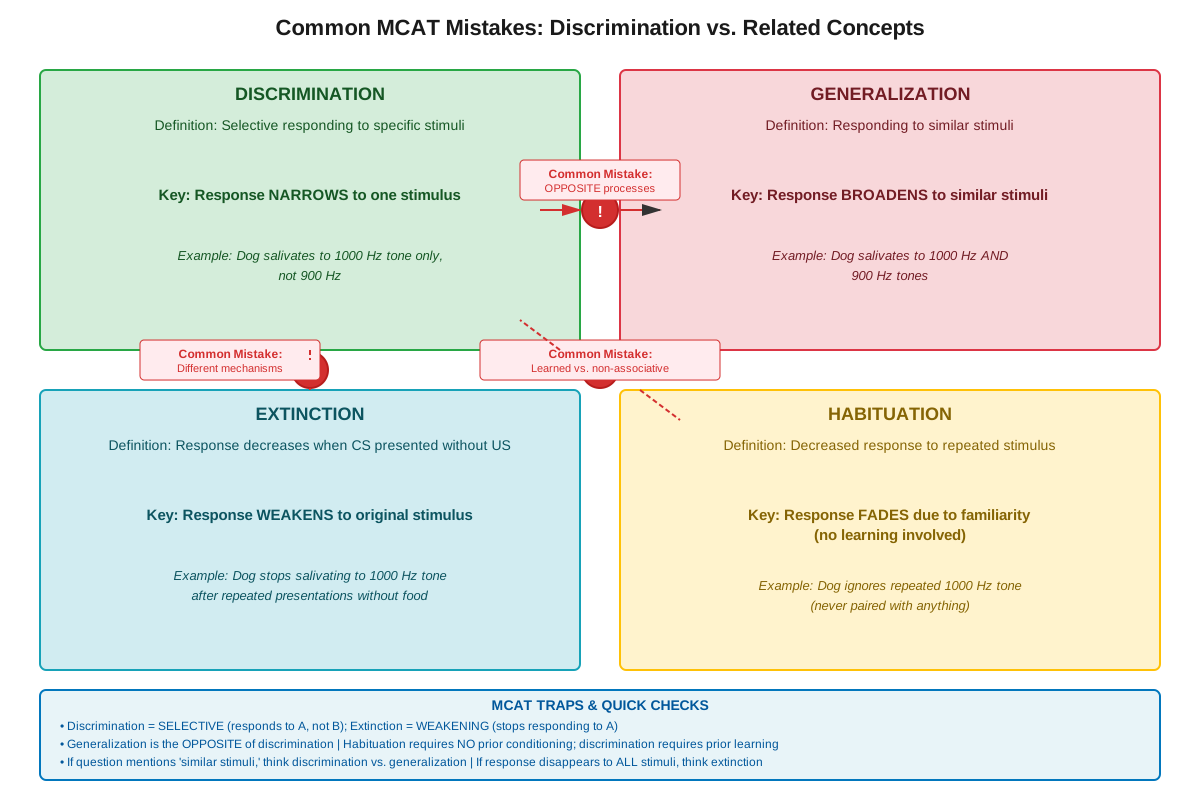
Common Misconceptions
Misconception: Discrimination and the discriminative stimulus (S^D) are the same concept
Correction: Discrimination is the learned ability to respond differently to distinct stimuli, while the discriminative stimulus is the specific cue that signals reinforcement availability in operant conditioning. The S^D is one element within discrimination learning, not synonymous with the entire process.
Misconception: Discrimination always requires conscious awareness or deliberate effort
Correction: Discrimination can occur automatically and unconsciously through repeated exposure to differential consequences. Many discriminations (like responding to traffic lights or recognizing familiar faces) become so well-learned they require no conscious thought.
Misconception: Discrimination and generalization cannot occur simultaneously
Correction: Both processes operate concurrently in most learning situations. An organism may generalize across some stimulus dimensions while discriminating along others. For example, a child may generalize "dog" across different breeds (generalization) while discriminating dogs from cats (discrimination).
Misconception: The discriminative stimulus (S^D) elicits behavior like a conditioned stimulus in classical conditioning
Correction: The S^D sets the occasion for behavior by signaling reinforcement availability but does not automatically elicit responses. It indicates when a behavior is likely to be reinforced, giving the organism information rather than triggering reflexive responses.
Misconception: Discrimination training always involves punishment for responding to S-
Correction: Discrimination typically develops through differential reinforcement—reinforcing S+ and simply not reinforcing (extinction) S-. Punishment is not necessary and may actually interfere with discrimination learning by creating emotional responses that disrupt the learning process.
Misconception: Perfect discrimination means never responding to S-
Correction: Even well-established discriminations show occasional responses to S-, especially when stimuli are highly similar or when motivation is very high. Discrimination exists on a continuum from poor to excellent, rarely achieving absolute perfection.
Worked Examples
Example 1: Classical Conditioning Discrimination
Scenario: A researcher conducts an experiment where rats receive a mild foot shock (US) immediately after hearing a 2000 Hz tone (CS+) but not after hearing a 1500 Hz tone (CS-). After 20 training trials, the rats show a strong fear response (freezing behavior) to the 2000 Hz tone but minimal freezing to the 1500 Hz tone.
Question: Has discrimination occurred? What would happen if the researcher then presented a 1750 Hz tone?
Analysis:
- Identify the learning paradigm: This is classical conditioning—an unconditioned stimulus (shock) is paired with a conditioned stimulus (tone) to produce a conditioned response (freezing)
- Assess discrimination: Yes, discrimination has occurred. The rats demonstrate differential responding—strong CR to CS+ (2000 Hz) but not to CS- (1500 Hz). This shows they have learned to distinguish between the two tones based on their predictive relationship with shock.
- Predict generalization gradient: When presented with the novel 1750 Hz tone, the rats would likely show intermediate freezing—more than to the 1500 Hz tone but less than to the 2000 Hz tone. This demonstrates the generalization gradient, where responding decreases as stimuli become less similar to CS+.
- Connect to learning objectives: This example illustrates how discrimination develops through differential conditioning, demonstrates the relationship between discrimination and generalization, and shows how to analyze experimental results involving discriminative learning.
Key takeaway: Discrimination in classical conditioning requires that the CS+ reliably predicts the US while CS- does not, producing differential responding that demonstrates learned stimulus specificity.
Example 2: Operant Conditioning and Discriminative Stimuli
Scenario: A child with autism is being taught to request items appropriately. The therapist reinforces verbal requests ("Can I have the toy?") with access to desired items when the therapist is looking at the child and has a relaxed posture (S^D). When the therapist is turned away or engaged in another activity (S^Δ), requests are not reinforced—the therapist does not respond. After several weeks, the child consistently makes requests when the therapist displays the S^D but rarely when the S^Δ is present.
Question: Explain the discrimination learning that has occurred and identify the three-term contingency.
Analysis:
- Identify the three-term contingency:
- Antecedent (S^D): Therapist looking at child with relaxed posture
- Behavior: Verbal request ("Can I have the toy?")
- Consequence: Access to desired item (positive reinforcement)
- Explain discrimination development: Through differential reinforcement, the child has learned that the therapist's attention and posture serve as discriminative stimuli signaling when requests will be reinforced. The S^D has acquired stimulus control over requesting behavior—the child now discriminates between contexts where requests are effective versus ineffective.
- Analyze the S^Δ: When the therapist is turned away (S^Δ), requests undergo extinction—they are not reinforced. This differential reinforcement (reinforcing in the presence of S^D, extinguishing in the presence of S^Δ) is the mechanism that produces discrimination.
- Clinical significance: This discrimination is therapeutically valuable because it teaches context-appropriate behavior. The child learns not just to request items, but to request them at appropriate times, which is essential for social functioning.
- Predict generalization: The child might generalize this discrimination to other adults, requesting items when they display similar attention cues (looking, relaxed posture) but not when they appear busy or distracted.
Key takeaway: Operant discrimination develops through differential reinforcement across contexts, with the discriminative stimulus signaling when specific behaviors will produce reinforcement, establishing stimulus control essential for adaptive, context-appropriate behavior.
Exam Strategy
Approaching MCAT Discrimination Questions
When encountering discrimination questions on the MCAT, follow this systematic approach:
- Identify the conditioning paradigm: Determine whether the scenario involves classical or operant conditioning, as discrimination operates differently in each
- Locate S+ and S- (or S^D and S^Δ): Identify which stimuli are associated with reinforcement/US and which are not
- Assess differential responding: Look for evidence that the subject responds differently to distinct stimuli
- Consider the generalization gradient: Questions often test understanding of how responding varies with stimulus similarity
- Evaluate training procedures: Note whether discrimination training uses simultaneous or successive presentation, errorless learning, or standard differential reinforcement
Trigger Words and Phrases
Watch for these key terms that signal discrimination concepts:
- "Respond differently to..." or "distinguish between..."
- "Only in the presence of..." (indicates discriminative stimulus)
- "Signals that reinforcement is available" (S^D definition)
- "Differential reinforcement" or "selectively reinforced"
- "Stimulus control" (outcome of discrimination training)
- "Generalization gradient" (often tested alongside discrimination)
- "Peak shift" (advanced discrimination concept)
Process of Elimination Tips
When discrimination appears in answer choices:
- Eliminate answers confusing discrimination with generalization: If the scenario shows responding to multiple similar stimuli, that's generalization, not discrimination
- Rule out answers treating S^D as eliciting stimuli: The discriminative stimulus signals reinforcement availability; it doesn't automatically trigger responses like a CS
- Reject answers suggesting discrimination requires punishment: Discrimination develops through differential reinforcement (reinforcing S+, extinguishing S-), not necessarily punishment
- Eliminate answers claiming perfect discrimination: Real discrimination shows gradients and occasional errors, not absolute all-or-nothing responding
Time Allocation
Discrimination questions typically require 60-90 seconds:
- 15-20 seconds: Read and identify the conditioning paradigm and key stimuli
- 20-30 seconds: Analyze the differential reinforcement pattern
- 20-30 seconds: Evaluate answer choices against discrimination principles
- 10 seconds: Verify your answer addresses the specific question asked
Exam Tip: Discrimination questions often appear in passages describing experimental designs. Focus on identifying which stimuli predict which outcomes—this differential prediction is the essence of discrimination.
Memory Techniques
Mnemonic for Discrimination vs. Generalization
"D-NARROW, G-BROAD"
- Discrimination NARROWS responding (specific stimuli only)
- Generalization BROADENS responding (similar stimuli included)
Visualizing the Three-Term Contingency
Picture a traffic light system:
- Green light (S^D): "Go ahead, this behavior works here" → Behavior → Reinforcement
- Red light (S^Δ): "Stop, this behavior doesn't work here" → Behavior → No reinforcement
Acronym for Discrimination Training Components
"DADS" - The essential elements of discrimination training:
- Differential reinforcement (reinforce S+, not S-)
- Alternation (present both stimuli in varied order)
- Distinction (stimuli must be distinguishable)
- Systematic practice (repeated trials strengthen discrimination)
Remembering Peak Shift
Imagine a mountain peak shifting away from danger: If you're trained to avoid one stimulus (S-) and approach another (S+), your strongest approach response "shifts" even further from the danger, moving past the original S+ to an even more distinct stimulus.
Discriminative Stimulus Memory Aid
"S^D = Signal for Dollars" (if reinforcement is money)
The discriminative stimulus signals when behavior will be rewarded, just like a "open" sign signals when a store will give you goods for dollars.
Summary
Discrimination represents a fundamental learning process whereby organisms develop the ability to respond selectively to specific stimuli while withholding responses to similar but distinct stimuli. In classical conditioning, discrimination occurs when a conditioned response is elicited by CS+ but not by CS-, demonstrating that learning has achieved specificity regarding which stimuli predict the unconditioned stimulus. In operant conditioning, discrimination develops through differential reinforcement, where the discriminative stimulus (S^D) signals that a particular behavior will be reinforced, establishing stimulus control through the three-term contingency. Discrimination exists in dynamic balance with generalization—while generalization broadens response patterns across similar stimuli, discrimination narrows them, creating behavioral precision. The process depends on factors including stimulus similarity, salience, reinforcement consistency, and prior learning history. Discrimination underlies adaptive behavior across contexts, from basic survival responses to complex social skills, and represents a high-yield MCAT concept that integrates learning theory, behavioral analysis, and clinical applications. Understanding discrimination enables students to analyze experimental designs, predict behavioral outcomes, distinguish it from related concepts like generalization, and apply learning principles to therapeutic interventions.
Key Takeaways
- Discrimination is the learned ability to respond differently to distinct stimuli, achieved through differential reinforcement or conditioning
- The discriminative stimulus (S^D) signals reinforcement availability in operant conditioning, establishing stimulus control without eliciting automatic responses
- Discrimination and generalization operate simultaneously as opposing processes—discrimination narrows response patterns while generalization broadens them
- Discrimination training requires consistent differential consequences: reinforcing responses to S+ while extinguishing responses to S-
- Greater stimulus similarity makes discrimination more difficult, requiring more training trials and producing shallower generalization gradients
- Peak shift demonstrates that discrimination involves relational learning—maximum responding shifts away from S+ in the direction opposite to S-
- Clinical applications include exposure therapy, behavioral interventions, and social skills training, where discrimination between contexts enables adaptive, appropriate responding
Related Topics
Stimulus Generalization: The complementary process to discrimination, where learned responses extend to similar stimuli; mastering discrimination provides the foundation for understanding how generalization gradients form and how the two processes interact dynamically.
Classical Conditioning: Discrimination in classical conditioning builds directly on understanding CS-US relationships, acquisition, and extinction; this foundational knowledge enables analysis of how differential conditioning produces discriminative responding.
Operant Conditioning and Reinforcement Schedules: The discriminative stimulus concept integrates with reinforcement schedules, shaping, and behavioral chains; understanding discrimination deepens comprehension of how complex behaviors come under stimulus control.
Attention and Perception: Discrimination requires detecting stimulus differences, connecting learning theory to perceptual and attentional processes; this relationship bridges behavioral and cognitive psychology.
Behavioral Therapy and Applied Behavior Analysis: Clinical applications of discrimination principles appear throughout therapeutic interventions; mastering discrimination enables understanding of treatment mechanisms in exposure therapy, skills training, and behavioral modification programs.
Practice CTA
Now that you've mastered the core concepts of discrimination in learning and memory, it's time to solidify your understanding through active practice. Challenge yourself with MCAT-style practice questions that test your ability to identify discriminative stimuli, distinguish discrimination from generalization, and analyze experimental designs involving differential reinforcement. Use flashcards to reinforce the relationship between key terms like S^D, S^Δ, differential reinforcement, and stimulus control. Remember: discrimination itself is a learning process that improves with practice—the more you apply these concepts to varied scenarios, the stronger your discriminative ability becomes when facing exam questions. You've built a solid foundation; now refine it through deliberate practice and watch your confidence soar!
Sign up free to keep reading
Create a free AnvayaPrep account to finish this MCAT guide on Discrimination — plus flashcards and practice questions.