Overview
Implicit memory represents one of the most fascinating and clinically relevant aspects of human cognition—the ability to retain and use information without conscious awareness or intentional recollection. Unlike explicit memory, which requires deliberate recall of facts or events, implicit memory operates beneath the surface of consciousness, influencing behavior, skills, and responses in ways that individuals often cannot articulate. This form of memory encompasses procedural skills (like riding a bicycle), priming effects (where prior exposure influences subsequent responses), classical conditioning responses, and other non-declarative forms of learning that shape daily functioning.
For MCAT preparation, understanding implicit memory is essential because it appears frequently across multiple contexts within the Psychology and Sociology section. Questions may present clinical vignettes involving patients with specific brain lesions who retain certain abilities while losing others, experimental scenarios testing priming effects, or behavioral observations requiring differentiation between memory systems. The topic bridges fundamental neuroscience (involving structures like the basal ganglia, cerebellum, and neocortex) with cognitive psychology principles, making it a high-yield area that integrates multiple domains of knowledge.
Within the broader framework of Learning and Memory, implicit memory represents the non-conscious counterpart to explicit memory systems. This distinction is not merely academic—it reflects fundamentally different neural substrates, developmental trajectories, and clinical presentations. Mastering implicit memory enables students to understand dissociations seen in amnesia, explain skill acquisition, interpret research on unconscious influences on behavior, and analyze how past experiences shape current responses without awareness. The concept connects directly to learning theories, brain structure and function, consciousness, and cognitive development, making it a cornerstone topic that appears in approximately 8-12% of Psychology passages on the MCAT.
Learning Objectives
- [ ] Define Implicit memory using accurate Psychology terminology
- [ ] Explain why Implicit memory matters for the MCAT
- [ ] Apply Implicit memory to exam-style questions
- [ ] Identify common mistakes related to Implicit memory
- [ ] Connect Implicit memory to related Psychology concepts
- [ ] Distinguish between the major subtypes of implicit memory (procedural, priming, classical conditioning)
- [ ] Analyze clinical cases to determine which memory systems remain intact or impaired
- [ ] Predict behavioral outcomes based on implicit memory principles in experimental scenarios
Prerequisites
- Explicit memory (episodic and semantic): Understanding the conscious, declarative memory system provides the necessary contrast to appreciate implicit memory's unique characteristics
- Basic brain anatomy: Knowledge of structures like the hippocampus, basal ganglia, cerebellum, and cortical regions enables comprehension of the neural substrates underlying different memory systems
- Classical conditioning principles: Familiarity with Pavlovian conditioning provides foundation for understanding conditioned responses as a form of implicit memory
- Cognitive psychology fundamentals: Basic understanding of information processing, attention, and consciousness helps contextualize how implicit memory operates outside awareness
Why This Topic Matters
Clinical and Real-World Significance
Implicit memory has profound implications for understanding neurological conditions, rehabilitation strategies, and everyday behavior. Patients with severe amnesia, such as those with hippocampal damage (like patient H.M., one of the most studied cases in neuroscience), often lose the ability to form new explicit memories while retaining intact implicit memory functions. These individuals can learn new motor skills, show priming effects, and develop conditioned responses despite having no conscious recollection of the learning experiences. This dissociation has revolutionized rehabilitation approaches, demonstrating that skill training can succeed even when patients cannot remember the training sessions themselves.
In everyday life, implicit memory underlies expertise development, habit formation, and the unconscious biases that influence social interactions. From the automatic movements of an experienced surgeon to the subtle prejudices revealed through implicit association tests, this memory system shapes behavior in ways that individuals often cannot consciously access or control. Understanding implicit memory helps explain why changing habits is difficult (procedural memories are resistant to extinction), why advertising works through repeated exposure (priming effects), and why phobias persist despite logical understanding (conditioned emotional responses).
MCAT Examination Context
Implicit memory appears in approximately 8-12% of Psychology passages on the MCAT, making it a high-yield topic that warrants thorough preparation. Questions typically fall into several categories:
- Research design and interpretation: Passages describe experiments testing priming, procedural learning, or conditioning, requiring students to identify the memory system being studied and predict outcomes
- Clinical vignettes: Case presentations of patients with brain lesions or amnesia require differentiation between preserved and impaired memory functions
- Theoretical application: Questions ask students to apply memory system distinctions to novel scenarios or explain behavioral observations
- Neuroanatomical correlation: Items test knowledge of which brain structures support different memory types
The topic frequently appears integrated with other concepts such as brain lesions, learning theories, consciousness, cognitive development across the lifespan, and research methodology. Discrete questions may test definitional knowledge, while passage-based questions typically require deeper analysis and application.
Core Concepts
Definition and Fundamental Characteristics
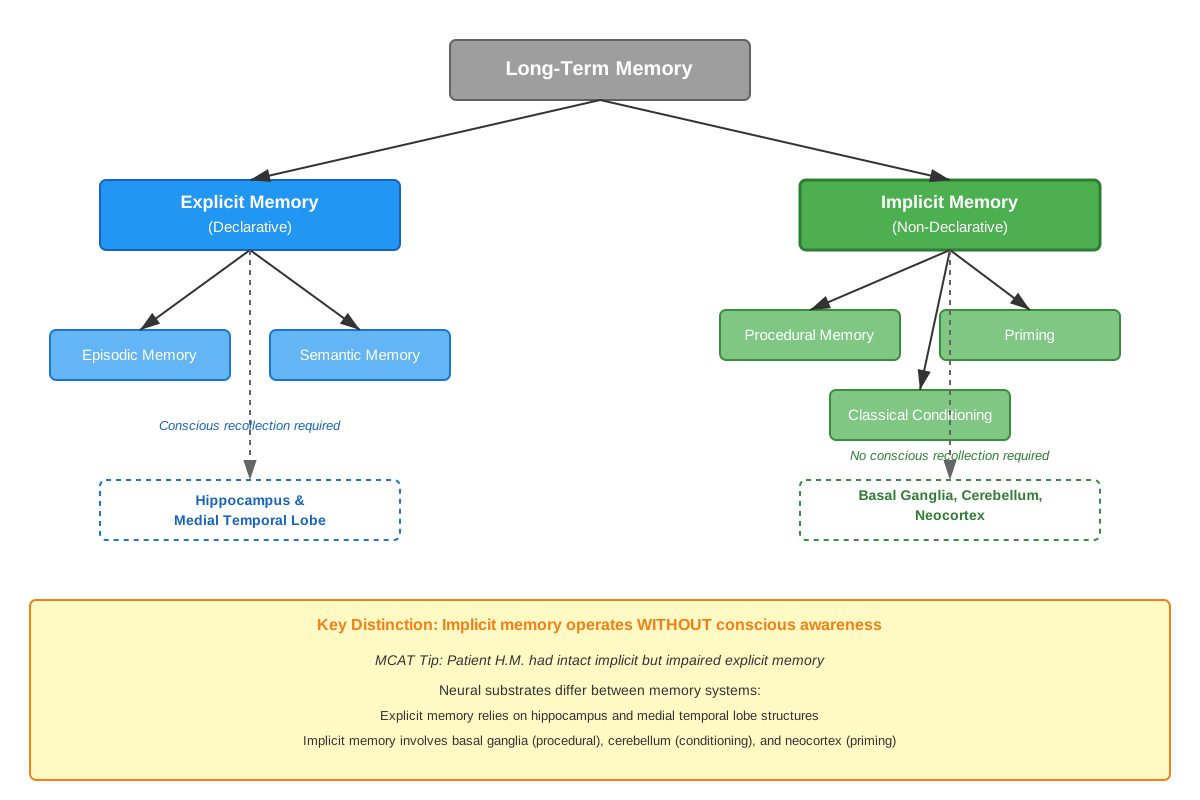
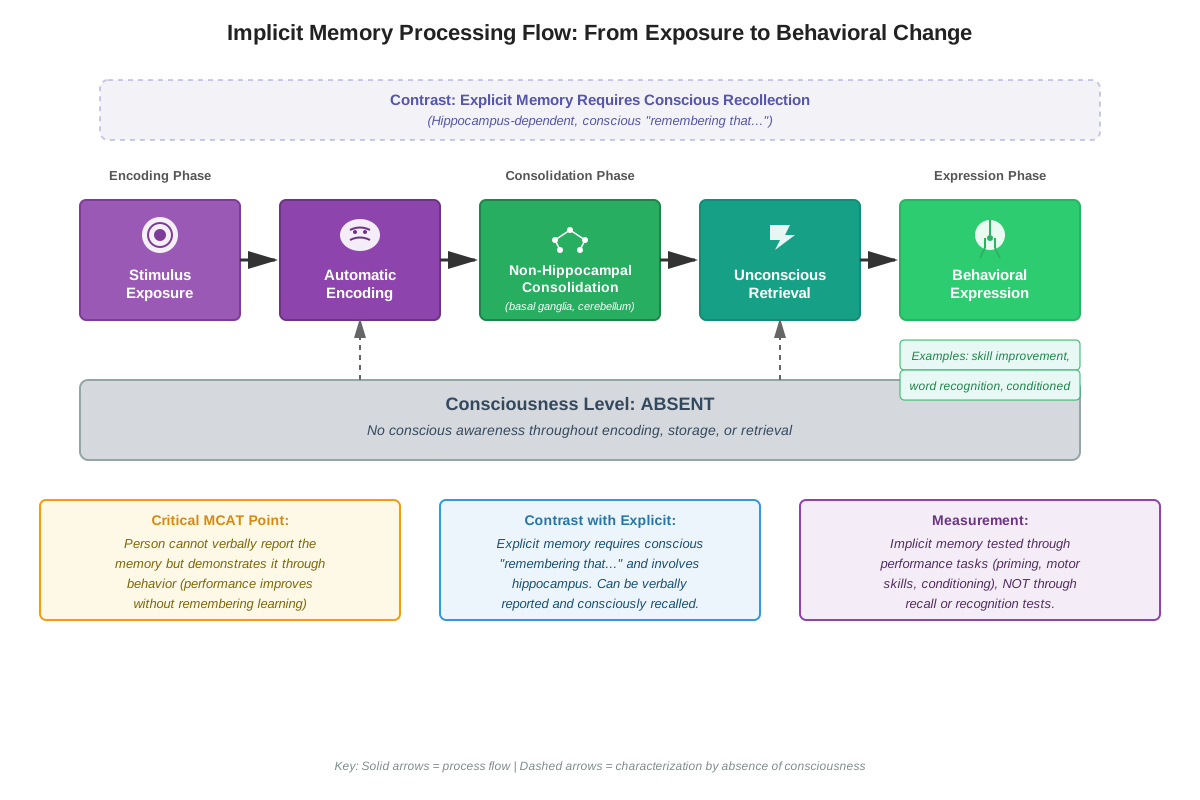
Implicit memory (also called non-declarative memory) refers to the retention of information that influences behavior and performance without conscious awareness or intentional recollection. This memory system operates automatically, does not require conscious attention for retrieval, and often cannot be verbally described by the individual. The defining feature is that memory expression occurs through performance changes rather than conscious recall—people demonstrate learning through improved skills, altered responses, or behavioral modifications without necessarily knowing they possess the relevant memory.
Key characteristics distinguishing implicit memory include:
- Unconscious retrieval: Information is accessed and used without awareness
- Performance-based expression: Memory manifests through doing rather than telling
- Resistance to forgetting: Many implicit memories show remarkable durability over time
- Independence from medial temporal lobe structures: Unlike explicit memory, implicit memory does not critically depend on the hippocampus
- Early developmental emergence: Implicit memory systems function from infancy, before explicit memory fully develops
- Preserved in amnesia: Patients with severe explicit memory deficits often show intact implicit memory
Major Subtypes of Implicit Memory
Procedural Memory
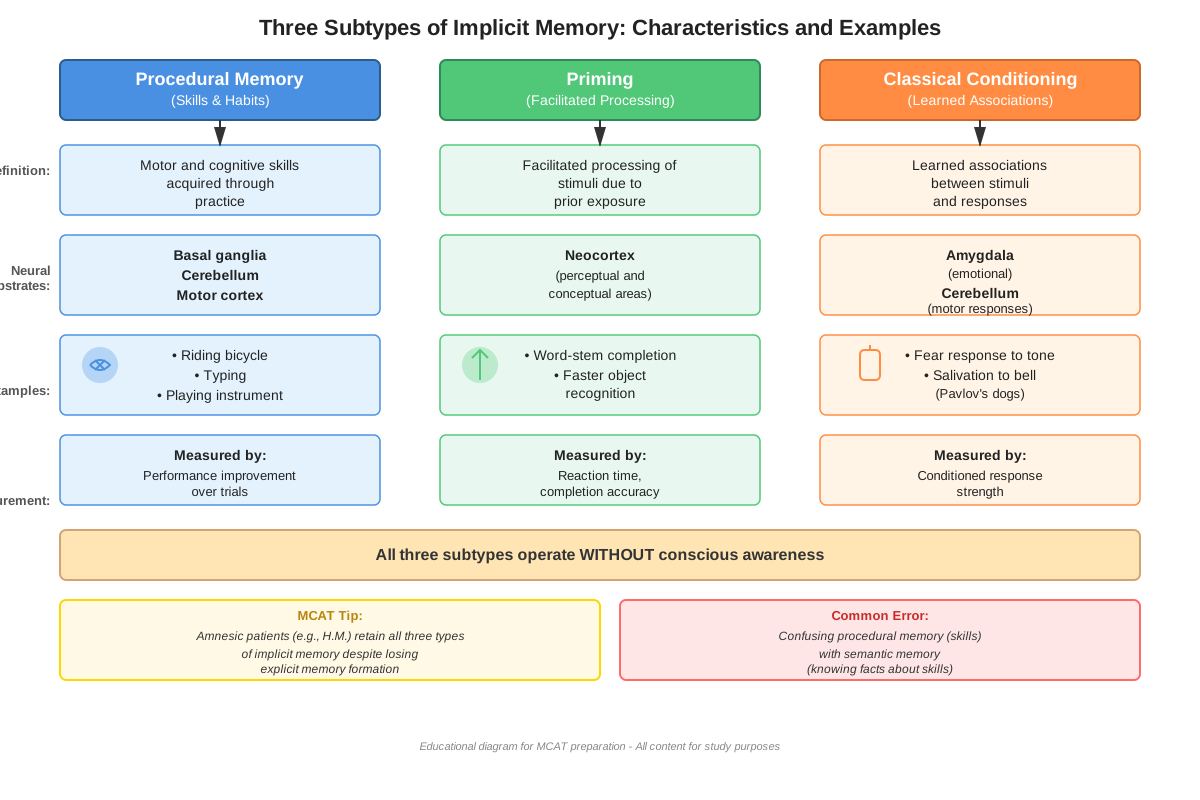
Procedural memory encompasses knowledge of how to perform skills and actions, including motor skills (riding a bicycle, typing), cognitive skills (reading mirror-reversed text), and perceptual skills (identifying degraded stimuli). This memory type is characterized by gradual acquisition through repeated practice, automatic execution once learned, and difficulty in verbal articulation of the knowledge.
The neural substrates of procedural memory primarily involve the basal ganglia (particularly the striatum) for motor skill learning and habit formation, and the cerebellum for motor timing, coordination, and error correction. The motor cortex and supplementary motor areas also play crucial roles in skill execution and refinement.
Procedural learning typically follows a power law of practice: performance improves rapidly initially, then gains become more gradual. Once consolidated, procedural memories are highly resistant to forgetting and can persist for decades without practice. Importantly, procedural memory shows minimal interference from explicit memory tasks, demonstrating the independence of these systems.
Priming
Priming refers to the phenomenon where prior exposure to a stimulus influences subsequent processing of that stimulus or related stimuli, without conscious recollection of the initial exposure. Priming manifests as faster, more accurate, or biased responses to previously encountered information.
Two major forms of priming exist:
Perceptual priming involves facilitated processing of a stimulus based on its physical form. For example, after seeing the word "DOCTOR" briefly, individuals more quickly identify "DOCTOR" when presented with degraded text or word fragments (D_CT_R), even if they don't remember seeing the word initially. Perceptual priming is typically modality-specific (visual priming doesn't transfer to auditory presentation) and relies on sensory cortical regions.
Conceptual priming involves facilitated processing based on meaning rather than form. After reading about medical concepts, individuals more quickly categorize related words or generate semantically associated responses. Conceptual priming shows transfer across modalities and depends more on semantic processing regions in the neocortex.
Priming effects can last from minutes to months depending on the type and strength of initial exposure. The neural basis involves reduced neural activity (repetition suppression) in relevant cortical areas upon re-exposure, reflecting more efficient processing.
Classical Conditioning
Classical conditioning (Pavlovian conditioning) represents a form of implicit memory where associations form between stimuli, leading to conditioned responses. After pairing a neutral stimulus (conditioned stimulus, CS) with a biologically significant stimulus (unconditioned stimulus, US), the CS alone elicits a response (conditioned response, CR) similar to the natural response to the US.
Emotional conditioning, particularly fear conditioning, exemplifies implicit memory because conditioned emotional responses occur automatically without conscious recall of the conditioning episode. A person may experience anxiety in a specific context without remembering the traumatic event that occurred there. The amygdala plays a critical role in emotional conditioning, while the cerebellum is essential for conditioned motor responses (like eyeblink conditioning).
Classical conditioning demonstrates several key phenomena relevant to implicit memory:
- Acquisition: Gradual strengthening of the CS-US association through repeated pairings
- Extinction: Reduction (but not erasure) of the CR when the CS is presented without the US
- Spontaneous recovery: Reemergence of the CR after a rest period following extinction
- Generalization: CR occurs to stimuli similar to the original CS
Neural Substrates and Dissociations
The distinction between implicit and explicit memory is not merely conceptual—it reflects fundamentally different neural systems:
| Memory Type | Key Brain Structures | Characteristics | Clinical Preservation |
|---|---|---|---|
| Explicit (Declarative) | Hippocampus, medial temporal lobe, prefrontal cortex | Conscious, flexible, rapidly acquired | Impaired in amnesia |
| Implicit - Procedural | Basal ganglia, cerebellum, motor cortex | Gradual, automatic, motor-based | Preserved in amnesia |
| Implicit - Priming | Neocortical sensory/semantic areas | Automatic, perceptual/conceptual | Preserved in amnesia |
| Implicit - Conditioning | Amygdala, cerebellum | Automatic, emotional/motor | Preserved in amnesia |
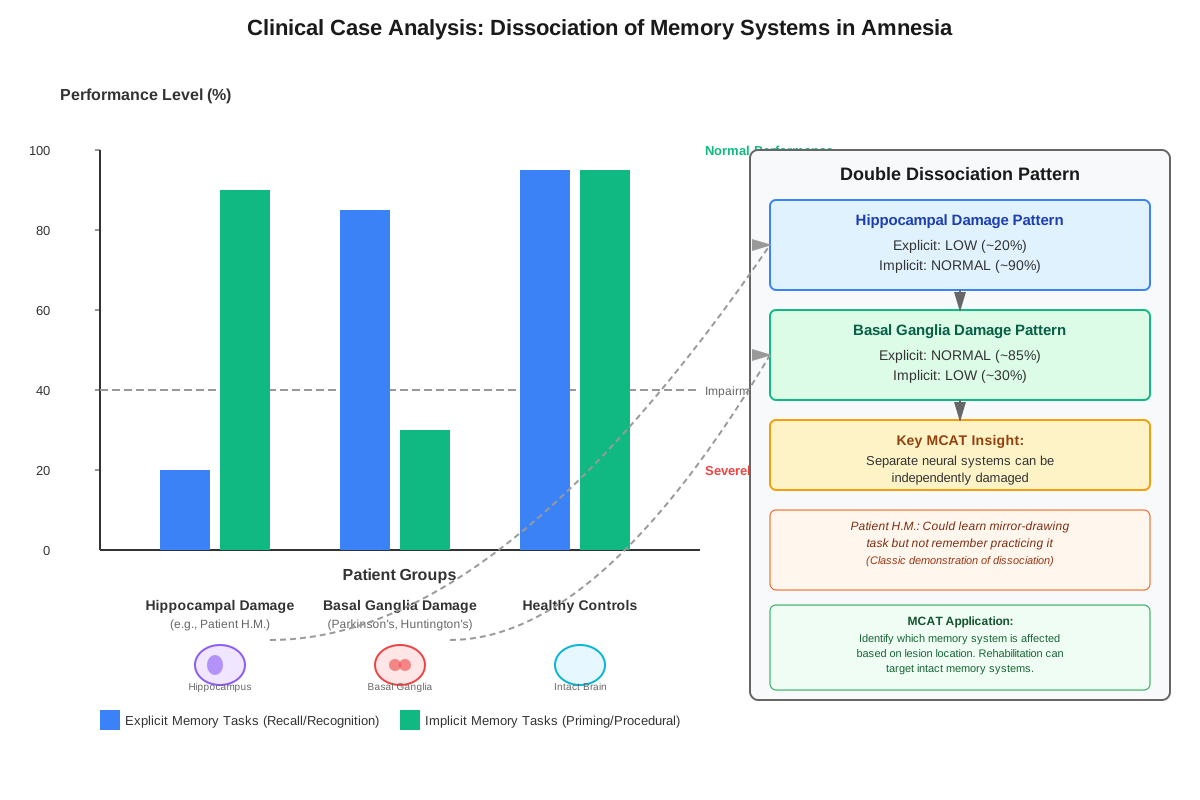
This neuroanatomical dissociation explains the famous case of patient H.M., who after bilateral medial temporal lobe resection could not form new explicit memories but successfully learned new motor skills (like mirror drawing), showed normal priming effects, and acquired conditioned responses—all without remembering the learning experiences. Such cases provide compelling evidence that implicit and explicit memory constitute separate systems.
Measurement and Assessment
Because implicit memory operates without conscious awareness, it cannot be assessed through standard recall or recognition tests. Instead, researchers use indirect tests that measure performance changes:
- Skill learning tasks: Measuring improvement in motor sequences, pursuit rotor tracking, or mirror tracing across sessions
- Priming tasks: Word-stem completion (providing "DOC___" after exposure to "DOCTOR"), perceptual identification of briefly presented stimuli, or lexical decision speed
- Conditioning paradigms: Measuring physiological responses (skin conductance, heart rate) or behavioral responses to conditioned stimuli
- Implicit Association Test (IAT): Measuring automatic associations between concepts by comparing response times in different pairing conditions
The key criterion is that performance changes occur without instructions to remember and without conscious recollection of the study phase.
Concept Relationships
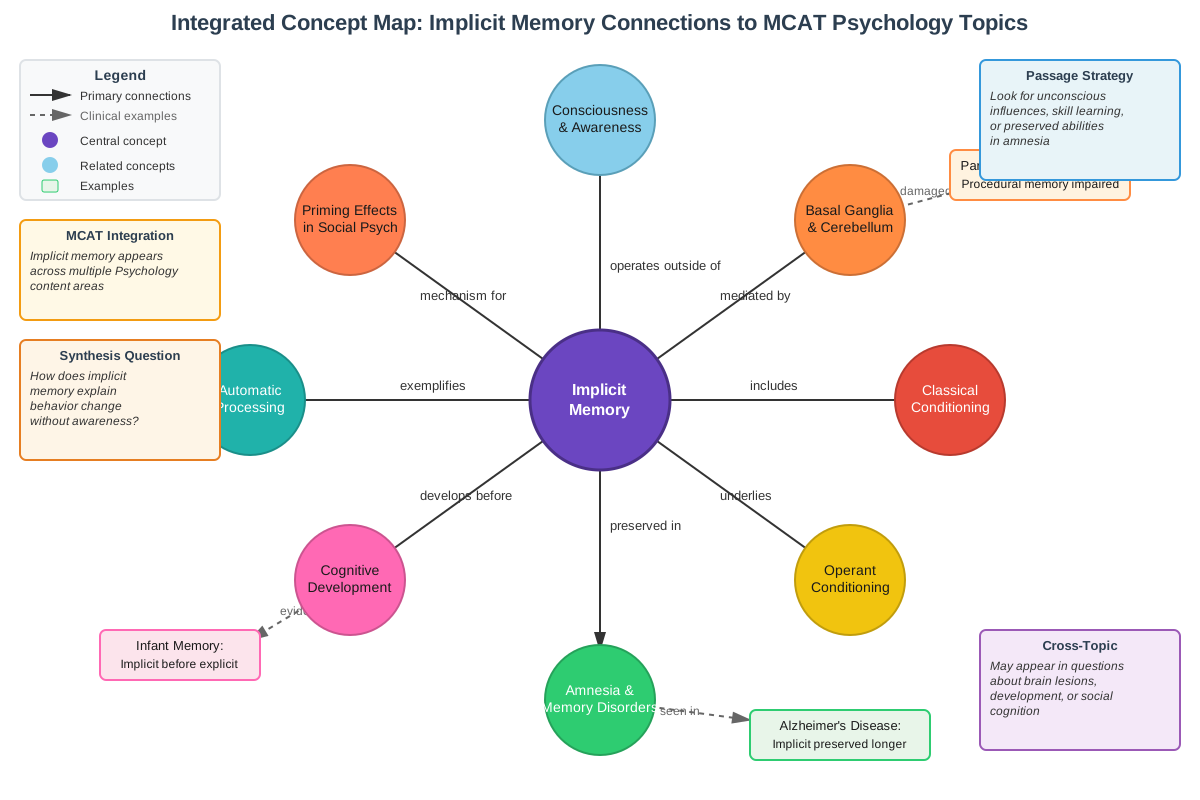
Implicit memory connects to numerous concepts within Psychology and the broader Learning and Memory framework:
Implicit memory ↔ Explicit memory: These systems represent complementary memory types with different characteristics, neural substrates, and functional properties. Understanding one requires understanding the other through contrast. Both systems can operate simultaneously, sometimes cooperatively (explicit knowledge guiding implicit skill refinement) and sometimes independently (implicit biases contradicting explicit beliefs).
Implicit memory → Procedural learning: Procedural memory constitutes a major subtype of implicit memory, specifically involving skill acquisition. The relationship is hierarchical: procedural memory is one manifestation of the broader implicit memory system.
Classical conditioning → Implicit memory: Conditioned responses represent learned associations stored in implicit memory. The conditioning process creates implicit memories that automatically trigger responses without conscious mediation.
Priming → Implicit memory: Priming effects demonstrate implicit memory by showing that prior exposure influences subsequent processing without conscious recollection. Priming serves as both a subtype and a measurement method for implicit memory.
Brain structures → Memory systems: The hippocampus and medial temporal lobe support explicit memory, while the basal ganglia, cerebellum, amygdala, and neocortex support various forms of implicit memory. This neuroanatomical dissociation explains clinical presentations and experimental findings.
Amnesia → Memory system dissociations: Studying patients with amnesia reveals the independence of memory systems. Hippocampal damage impairs explicit memory while sparing implicit memory, demonstrating that these systems can operate independently.
Consciousness → Memory expression: Explicit memory requires conscious awareness for both encoding and retrieval, while implicit memory operates outside conscious awareness. This relationship connects memory research to broader questions about consciousness and cognitive control.
High-Yield Facts
⭐ Implicit memory operates without conscious awareness and is expressed through performance rather than conscious recollection
⭐ The hippocampus and medial temporal lobe are NOT required for implicit memory, unlike explicit memory
⭐ Patients with amnesia typically show preserved implicit memory despite severe explicit memory deficits
⭐ Procedural memory involves the basal ganglia and cerebellum, not the hippocampus
⭐ Priming can be perceptual (form-based) or conceptual (meaning-based) and occurs without conscious memory of the prime
- Classical conditioning creates implicit memories stored in the amygdala (emotional) or cerebellum (motor)
- Implicit memory develops earlier in childhood than explicit memory and remains relatively preserved in aging
- Procedural memories are acquired gradually through practice but are highly resistant to forgetting once consolidated
- Priming effects can last from minutes to months depending on the type and strength of initial exposure
- Implicit memory shows minimal interference from explicit memory tasks, demonstrating system independence
- The Implicit Association Test (IAT) measures automatic associations that may contradict explicit beliefs
- Repetition suppression (reduced neural activity upon re-exposure) underlies priming effects in cortical regions
Quick check — test yourself on Implicit memory so far.
Try Flashcards →Common Misconceptions
Misconception: Implicit memory is just "unconscious explicit memory" or forgotten explicit memories that still influence behavior.
Correction: Implicit memory is a fundamentally separate system with different neural substrates, characteristics, and functions. It is not degraded or unconscious explicit memory but rather a distinct form of memory that never requires conscious awareness for encoding or retrieval.
Misconception: All implicit memories are permanent and cannot be forgotten.
Correction: While implicit memories are often durable, they can decay or be modified. Procedural skills can deteriorate without practice, priming effects fade over time, and conditioned responses can undergo extinction (though not complete erasure). Implicit memories are generally more resistant to forgetting than explicit memories but are not permanent.
Misconception: People with amnesia cannot learn anything new.
Correction: Amnesic patients with hippocampal damage cannot form new explicit memories but retain intact implicit memory systems. They can learn new motor skills, show priming effects, and acquire conditioned responses, though they won't consciously remember the learning experiences. This dissociation is one of the most important findings in memory research.
Misconception: Implicit memory always involves motor skills or physical actions.
Correction: While procedural memory (a subtype of implicit memory) often involves motor skills, implicit memory also includes non-motor forms like conceptual priming (semantic associations), perceptual priming (visual or auditory processing), and emotional conditioning. The defining feature is unconscious operation, not motor involvement.
Misconception: If someone can describe how to do something, it must be explicit memory, not procedural memory.
Correction: Many skills involve both explicit knowledge (declarative facts about the skill) and implicit procedural knowledge (the actual ability to perform). A tennis player might explicitly know rules and strategies while also possessing implicit procedural memories for stroke execution. The systems often work together, though they can be dissociated.
Misconception: Priming only works with words or verbal material.
Correction: Priming occurs across multiple domains including visual objects, faces, sounds, smells, concepts, and even social categories. Any stimulus that can be processed can potentially show priming effects, whether perceptual or conceptual.
Worked Examples
Example 1: Clinical Vignette Analysis
Vignette: A 58-year-old patient suffered bilateral damage to the hippocampus following viral encephalitis. Neuropsychological testing reveals severe anterograde amnesia—he cannot remember events from day to day or learn new facts. However, over several weeks of occupational therapy, he has learned to use a walker with increasing proficiency, though each session he claims never to have seen the walker before. When shown photographs from previous therapy sessions, he does not recognize them. However, when asked to demonstrate walking, he performs the task skillfully.
Question: Which memory system explains the patient's ability to improve walker use despite having no conscious memory of practice sessions?
Analysis:
Step 1: Identify the memory dissociation. The patient shows:
- Impaired: Explicit memory (cannot remember events, facts, or previous sessions)
- Preserved: Some form of learning (improving walker proficiency)
Step 2: Determine which memory system supports the preserved ability. The improvement in walker use represents:
- A motor skill acquired through practice
- Performance-based learning (demonstrated through doing, not telling)
- Learning without conscious awareness of the learning episodes
Step 3: Connect to implicit memory subtypes. This pattern matches procedural memory:
- Gradual acquisition through repeated practice
- Motor skill learning
- Expressed through performance rather than conscious recall
- Mediated by basal ganglia and cerebellum (spared in this patient)
- Does not require hippocampal function
Answer: The patient's improvement reflects intact implicit memory, specifically procedural memory. Despite severe explicit memory deficits due to hippocampal damage, his procedural memory system (basal ganglia and cerebellum) remains functional, allowing motor skill acquisition without conscious recollection of practice sessions. This dissociation is characteristic of amnesia and demonstrates the independence of implicit and explicit memory systems.
Learning objective addressed: Apply implicit memory to exam-style questions; distinguish between memory systems in clinical presentations.
Example 2: Experimental Design Interpretation
Scenario: Researchers conduct an experiment with two groups. Group A studies a list of 40 words for a memory test. Group B completes a "preference rating task" where they rate how much they like each of 40 words (the same words Group A studied), but they are not told this is a memory task.
One hour later, both groups complete two tasks:
- Free recall test: Write down as many words as possible from the earlier session
- Word-stem completion task: Complete word stems (e.g., "ELE____") with the first word that comes to mind; half the stems can be completed with studied words
Results:
- Free recall: Group A recalls significantly more words than Group B
- Word-stem completion: Both groups complete significantly more stems with studied words compared to baseline, with no difference between groups
Question: What do these results reveal about implicit versus explicit memory?
Analysis:
Step 1: Identify the test types.
- Free recall = explicit memory test (requires conscious recollection)
- Word-stem completion = implicit memory test (indirect measure; participants aren't told to remember)
Step 2: Interpret Group A results.
- Higher free recall: Intentional encoding enhanced explicit memory
- Elevated word-stem completion: Prior exposure produced priming effect
Step 3: Interpret Group B results.
- Lower free recall: Without intentional encoding, explicit memory is weaker
- Elevated word-stem completion (equal to Group A): Priming occurred despite no intention to remember
Step 4: Synthesize the dissociation.
The key finding is that implicit memory (priming) occurred equally in both groups regardless of encoding intention, while explicit memory (recall) depended on intentional encoding. This demonstrates:
- Implicit memory operates automatically without conscious encoding goals
- Explicit memory benefits from intentional, conscious encoding
- The two systems can be dissociated through different testing methods
- Priming reflects implicit memory because it occurs without conscious recollection
Answer: The results demonstrate a classic dissociation between implicit and explicit memory systems. The word-stem completion task reveals priming, a form of implicit memory that occurs automatically regardless of encoding intention. Both groups showed equal priming effects because implicit memory does not require conscious awareness or intentional encoding. In contrast, explicit memory (measured by free recall) was enhanced by intentional encoding in Group A. This dissociation supports the theory that implicit and explicit memory constitute separate systems with different operating characteristics.
Learning objective addressed: Apply implicit memory to exam-style questions; connect implicit memory to research methodology and experimental design.
Exam Strategy
Approaching MCAT Questions on Implicit Memory
Step 1: Identify the memory system being tested
- Look for keywords indicating conscious awareness ("remember," "recall," "recognize") → explicit memory
- Look for performance-based measures without conscious recollection ("improved," "faster," "learned to") → implicit memory
- Determine if the question involves skills, priming, or conditioning
Step 2: Consider the neural substrate
- Hippocampus/medial temporal lobe damage → explicit memory impaired, implicit memory preserved
- Basal ganglia/cerebellum damage → procedural memory impaired, other memory types may be preserved
- Amygdala damage → emotional conditioning impaired
Step 3: Apply the defining characteristics
- Implicit memory: unconscious, performance-based, gradual acquisition (for skills), preserved in amnesia
- Explicit memory: conscious, declarative, can be rapidly acquired, impaired in amnesia
Trigger Words and Phrases
Implicit memory indicators:
- "Without awareness," "unconsciously," "automatically"
- "Improved performance," "learned to," "acquired skill"
- "Priming effect," "facilitated processing"
- "Conditioned response," "automatic reaction"
- "Despite having no memory of," "without remembering"
Explicit memory indicators:
- "Recalled," "recognized," "remembered"
- "Consciously aware," "deliberately retrieved"
- "Described," "reported," "stated"
Clinical scenario triggers:
- "Hippocampal damage," "amnesia," "cannot form new memories"
- "Patient H.M.," "bilateral medial temporal lobe lesion"
- "Preserved ability to," "still capable of" (in amnesia context)
Process of Elimination Tips
- If a patient has amnesia but shows learning: The answer involves implicit memory, not explicit memory
- If the question asks about unconscious influences: Eliminate answers involving conscious recall or recognition
- If motor skill learning is described: Focus on procedural memory and basal ganglia/cerebellum, not hippocampus
- If priming is mentioned: The answer should involve implicit memory and cortical processing, not hippocampal function
- If both memory systems could apply: Look for details about awareness—conscious awareness indicates explicit memory
Time Allocation
For discrete questions on implicit memory (30-60 seconds):
- Quickly identify the memory system (10 seconds)
- Apply defining characteristics (10 seconds)
- Eliminate wrong answers (10 seconds)
- Confirm and select (10 seconds)
For passage-based questions (60-90 seconds per question):
- Reference the passage for specific details about the experimental design or clinical presentation
- Identify which memory system is being tested or affected
- Apply your knowledge to interpret results or predict outcomes
- Consider neural substrates if the question involves brain regions
Exam Tip: When a question describes a patient with amnesia who can still learn something, the answer almost always involves implicit memory. This is one of the highest-yield patterns for MCAT questions on this topic.
Memory Techniques
Acronym for Implicit Memory Subtypes
PPC - The three major types of implicit memory:
- Procedural (skills and habits)
- Priming (facilitated processing)
- Conditioning (learned associations)
Mnemonic for Implicit vs. Explicit Characteristics
"Implicit Is Invisible" - Reminds you that implicit memory operates without conscious awareness (invisible to consciousness)
"Explicit Is Expressed" - Reminds you that explicit memory requires conscious expression through recall or recognition
Neuroanatomical Memory Aid
"Hip Hop Explicit, Basal Beat Implicit"
- Hip(pocampus) = Explicit memory
- Basal (ganglia) = Implicit (procedural) memory
Visualization Strategy for Memory System Dissociation
Picture an iceberg:
- Above water (visible/conscious) = Explicit memory
- Below water (hidden/unconscious) = Implicit memory
- The underwater portion is actually larger, just as implicit memory influences more of our behavior than we realize
Priming Visualization
Imagine a path through snow: The first person walking creates the path (initial exposure), making it easier for the next person to follow the same route (priming effect). The second person doesn't need to remember the first person to benefit from the easier path.
Summary
Implicit memory represents a fundamental memory system that operates without conscious awareness, expressed through performance changes rather than conscious recollection. This system encompasses procedural memory (skills and habits mediated by basal ganglia and cerebellum), priming (facilitated processing in cortical regions), and classical conditioning (learned associations involving the amygdala and cerebellum). Unlike explicit memory, which depends critically on the hippocampus and medial temporal lobe, implicit memory relies on distributed neural systems that remain functional even in severe amnesia. The dissociation between implicit and explicit memory—demonstrated dramatically in amnesic patients who can learn new skills without remembering the learning episodes—provides compelling evidence for multiple memory systems. For the MCAT, students must recognize implicit memory in clinical vignettes and experimental scenarios, understand the neural substrates distinguishing memory systems, and apply these concepts to predict behavioral outcomes and interpret research findings. Mastery requires understanding not just the definition but the functional characteristics, measurement methods, and clinical significance of implicit memory across diverse contexts.
Key Takeaways
- Implicit memory operates unconsciously and is expressed through performance rather than conscious recall, distinguishing it fundamentally from explicit memory
- The hippocampus is NOT required for implicit memory, explaining why amnesic patients retain the ability to learn skills, show priming, and acquire conditioned responses
- Three major subtypes exist: procedural memory (skills; basal ganglia/cerebellum), priming (facilitated processing; cortical regions), and classical conditioning (learned associations; amygdala/cerebellum)
- Implicit memory is preserved in amnesia while explicit memory is impaired—this dissociation is one of the most important and frequently tested concepts
- Measurement requires indirect tests that assess performance changes without instructions to remember, such as skill learning tasks, word-stem completion, or conditioned responses
- Neural substrates differ fundamentally between memory systems: explicit memory requires medial temporal lobe structures, while implicit memory depends on basal ganglia, cerebellum, amygdala, and neocortical regions
- Clinical and research applications span rehabilitation (skill training in amnesia), social psychology (implicit biases), habit formation, and understanding unconscious influences on behavior
Related Topics
Explicit Memory (Episodic and Semantic): Understanding the conscious, declarative memory system provides essential contrast to implicit memory and enables recognition of memory system dissociations in clinical and experimental contexts.
Brain Structure and Function: Deeper knowledge of the hippocampus, basal ganglia, cerebellum, amygdala, and cortical regions enables prediction of which memory functions will be preserved or impaired with specific lesions.
Classical and Operant Conditioning: Expanding understanding of learning mechanisms beyond classical conditioning to include operant conditioning provides a more complete picture of how behavior is shaped by experience.
Amnesia and Memory Disorders: Studying specific amnesia cases and syndromes (anterograde vs. retrograde amnesia, Korsakoff's syndrome, Alzheimer's disease) deepens understanding of memory system organization and clinical presentations.
Cognitive Development: Examining how implicit and explicit memory systems develop across the lifespan reveals that implicit memory emerges earlier and remains more preserved in aging, with important implications for learning and intervention strategies.
Social Cognition and Implicit Bias: Exploring how implicit memory contributes to automatic social judgments, stereotypes, and prejudices connects memory research to social psychology and real-world applications.
Practice CTA
Now that you've mastered the core concepts of implicit memory, it's time to solidify your understanding through active practice. Challenge yourself with MCAT-style practice questions that test your ability to apply these concepts to novel scenarios, clinical vignettes, and research designs. Use flashcards to reinforce the distinctions between memory systems, neural substrates, and key characteristics. Remember: implicit memory questions frequently appear on the MCAT, and recognizing the patterns—especially the preservation of implicit memory in amnesia—will give you a significant advantage. The more you practice identifying memory systems in different contexts, the more automatic (and implicit!) your recognition will become on test day. You've got this!
Sign up free to keep reading
Create a free AnvayaPrep account to finish this MCAT guide on Implicit memory — plus flashcards and practice questions.