Overview
Memory storage is a fundamental component of the broader memory system and represents the critical process by which encoded information is maintained over time in the brain. Within the context of Psychology and specifically Learning and Memory, memory storage serves as the bridge between encoding (the initial acquisition of information) and retrieval (accessing stored information when needed). Understanding memory storage is essential for comprehending how humans retain experiences, knowledge, and skills across timescales ranging from fractions of a second to an entire lifetime.
For the MCAT, memory storage represents a high-yield topic that appears frequently in both discrete questions and passage-based items within the Psychological, Social, and Biological Foundations of Behavior section. The MCAT tests not only definitional knowledge but also the ability to apply memory storage concepts to experimental designs, clinical scenarios, and real-world situations. Students must understand the different storage systems (sensory, short-term, and long-term memory), their capacities and durations, the biological substrates underlying storage, and how storage relates to other cognitive processes.
Memory storage connects intimately with numerous other Psychology concepts tested on the MCAT, including attention, perception, consciousness, neuroanatomy, neurotransmitter systems, and cognitive development across the lifespan. The multi-store model of memory, which delineates distinct storage systems, provides a framework for understanding not only normal cognitive function but also memory pathologies, the effects of aging, and the impact of various neurological conditions. Mastery of memory storage enables students to tackle complex MCAT passages involving research studies on memory enhancement, eyewitness testimony reliability, and the neural basis of learning disorders.
Learning Objectives
- [ ] Define Memory storage using accurate Psychology terminology
- [ ] Explain why Memory storage matters for the MCAT
- [ ] Apply Memory storage to exam-style questions
- [ ] Identify common mistakes related to Memory storage
- [ ] Connect Memory storage to related Psychology concepts
- [ ] Differentiate between the three primary memory storage systems and their characteristics
- [ ] Analyze how biological structures and processes support different types of memory storage
- [ ] Evaluate experimental scenarios to identify which memory storage system is being tested
Prerequisites
- Basic neuroanatomy: Understanding brain structures (hippocampus, prefrontal cortex, amygdala) is essential because memory storage has specific neural correlates
- Neurotransmitter function: Knowledge of how neurons communicate helps explain the biological mechanisms underlying memory consolidation and storage
- Attention and perception: These processes determine what information enters memory storage systems in the first place
- Basic research methodology: Understanding experimental design helps interpret memory research studies that frequently appear in MCAT passages
Why This Topic Matters
Memory storage has profound clinical and real-world significance. Disorders affecting memory storage—including Alzheimer's disease, amnesia, traumatic brain injury, and age-related cognitive decline—impact millions of individuals. Understanding memory storage mechanisms informs therapeutic interventions, rehabilitation strategies, and educational practices. In legal contexts, knowledge of memory storage limitations affects how eyewitness testimony is evaluated and how interrogation techniques are designed.
On the MCAT, memory storage appears with high frequency, typically in 3-5 questions per exam. Questions may present as discrete items testing definitional knowledge or as passage-based questions requiring application of memory concepts to experimental data. Common question formats include:
- Experimental passages describing memory research studies where students must identify which storage system is being tested
- Clinical vignettes presenting patients with memory deficits requiring identification of the affected storage system
- Questions asking students to predict outcomes based on manipulations of storage capacity or duration
- Items requiring differentiation between storage, encoding, and retrieval failures
The MCAT particularly favors questions that integrate memory storage with biological substrates (neuroanatomy, neurotransmitters) and social/cognitive factors (stress, emotion, attention). Understanding memory storage provides a foundation for answering questions across multiple Psychology domains.
Core Concepts
Definition and Overview of Memory Storage
Memory storage refers to the process of maintaining encoded information over time within the nervous system. Unlike encoding (transforming sensory input into a form that can be processed) or retrieval (accessing stored information), storage specifically concerns the retention and maintenance of information after initial processing. Memory storage Psychology encompasses the study of how different types of information are maintained, the duration of storage, the capacity limitations of various storage systems, and the biological mechanisms supporting retention.
The concept of memory storage MCAT emphasizes understanding storage as one component of the three-stage memory model: encoding → storage → retrieval. Each stage can fail independently, and the MCAT frequently tests the ability to distinguish between these failures in experimental or clinical contexts.
The Multi-Store Model of Memory
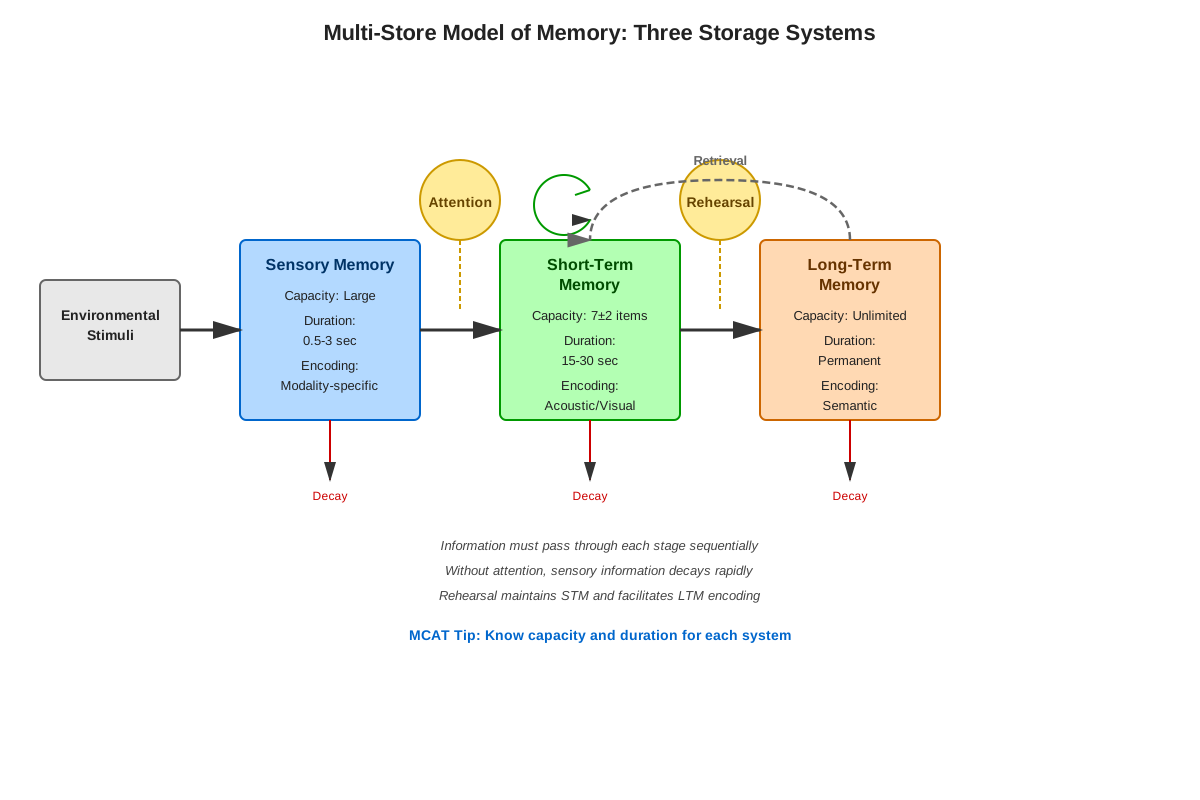
The multi-store model (also called the Atkinson-Shiffrin model) proposes three distinct storage systems, each with unique characteristics:
| Storage System | Duration | Capacity | Encoding Type | Key Features |
|---|---|---|---|---|
| Sensory Memory | 0.5-3 seconds | Very large (all sensory input) | Modality-specific (visual, auditory, etc.) | Automatic, pre-attentive, rapidly decaying |
| Short-Term Memory (STM) | 15-30 seconds (without rehearsal) | 7±2 items (Miller's Law) | Primarily acoustic/phonological | Requires attention, vulnerable to interference |
| Long-Term Memory (LTM) | Potentially unlimited | Potentially unlimited | Primarily semantic | Relatively permanent, organized by meaning |
Sensory Memory Storage
Sensory memory represents the initial, brief storage of sensory information in its original sensory form. This storage system has two well-studied subtypes:
- Iconic memory: Visual sensory storage lasting approximately 0.5-1 second. George Sperling's partial report experiments demonstrated that iconic memory has large capacity but rapid decay.
- Echoic memory: Auditory sensory storage lasting approximately 3-4 seconds, longer than iconic memory. This extended duration allows for processing of sequential auditory information like speech.
Sensory memory operates automatically without conscious attention and serves as a buffer allowing the cognitive system to select relevant information for further processing. Information not attended to rapidly decays and is permanently lost. The MCAT may present experiments manipulating the delay between stimulus presentation and recall to test understanding of sensory memory duration.
Short-Term Memory Storage
Short-term memory (STM) stores information that has been attended to from sensory memory. STM has strictly limited capacity and duration, making it vulnerable to both decay (time-based forgetting) and interference (disruption by competing information).
Working memory represents an expanded conception of STM that includes not just passive storage but also active manipulation of information. The Baddeley-Hitch working memory model includes:
- Phonological loop: Stores verbal and acoustic information through rehearsal
- Visuospatial sketchpad: Maintains visual and spatial information
- Central executive: Coordinates attention and integrates information from subsystems
- Episodic buffer: Integrates information across domains and connects to long-term memory
Chunking represents a key strategy for overcoming STM capacity limitations by grouping individual items into meaningful units. For example, the sequence "1-9-4-5-2-0-0-1" exceeds typical STM capacity (7±2 items), but chunking it as "1945-2001" reduces it to two meaningful chunks.
Maintenance rehearsal (simple repetition) can extend STM duration indefinitely, while elaborative rehearsal (connecting new information to existing knowledge) facilitates transfer to long-term storage.
Long-Term Memory Storage
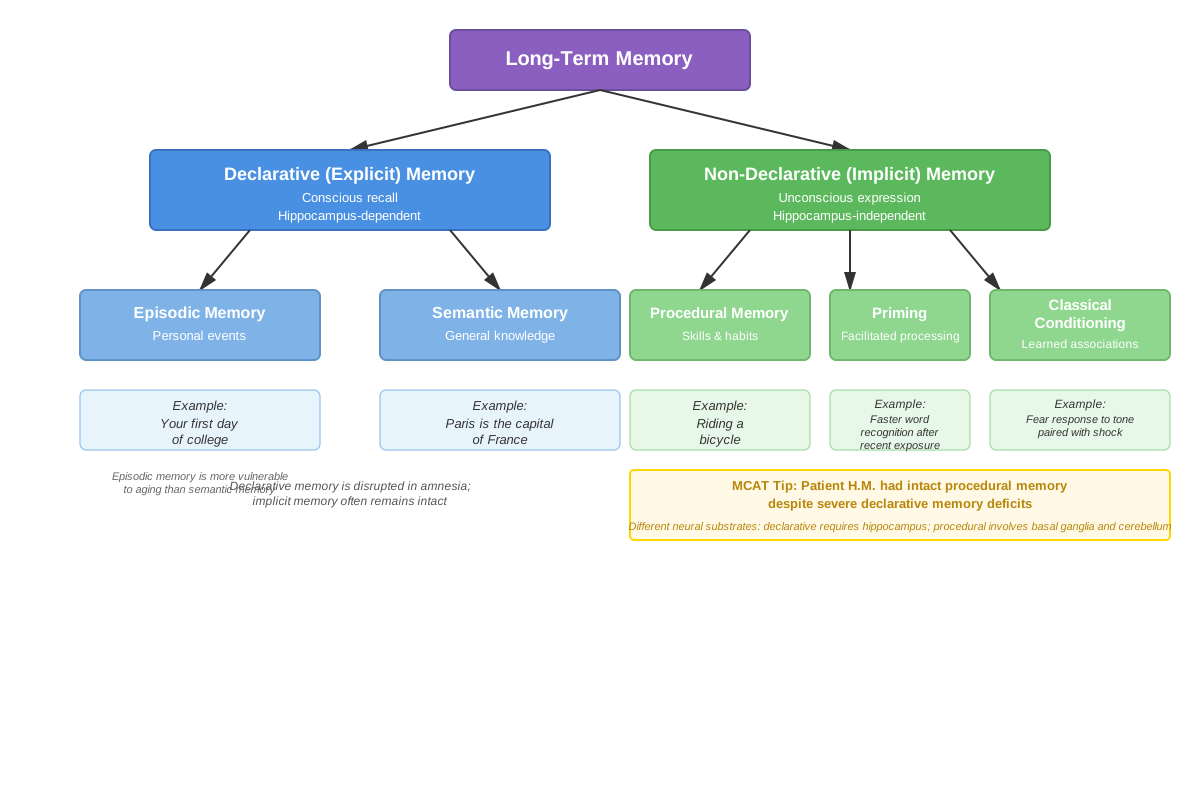
Long-term memory (LTM) represents relatively permanent storage with essentially unlimited capacity. LTM divides into multiple subsystems:
Explicit (Declarative) Memory requires conscious recollection and includes:
- Episodic memory: Storage of personal experiences and events with temporal and spatial context (e.g., "my high school graduation")
- Semantic memory: Storage of facts, concepts, and general knowledge without personal context (e.g., "Paris is the capital of France")
Implicit (Non-declarative) Memory operates without conscious awareness and includes:
- Procedural memory: Storage of skills and habits (e.g., riding a bicycle)
- Priming: Enhanced processing of stimuli due to prior exposure
- Classical conditioning: Stored associations between stimuli
- Non-associative learning: Habituation and sensitization
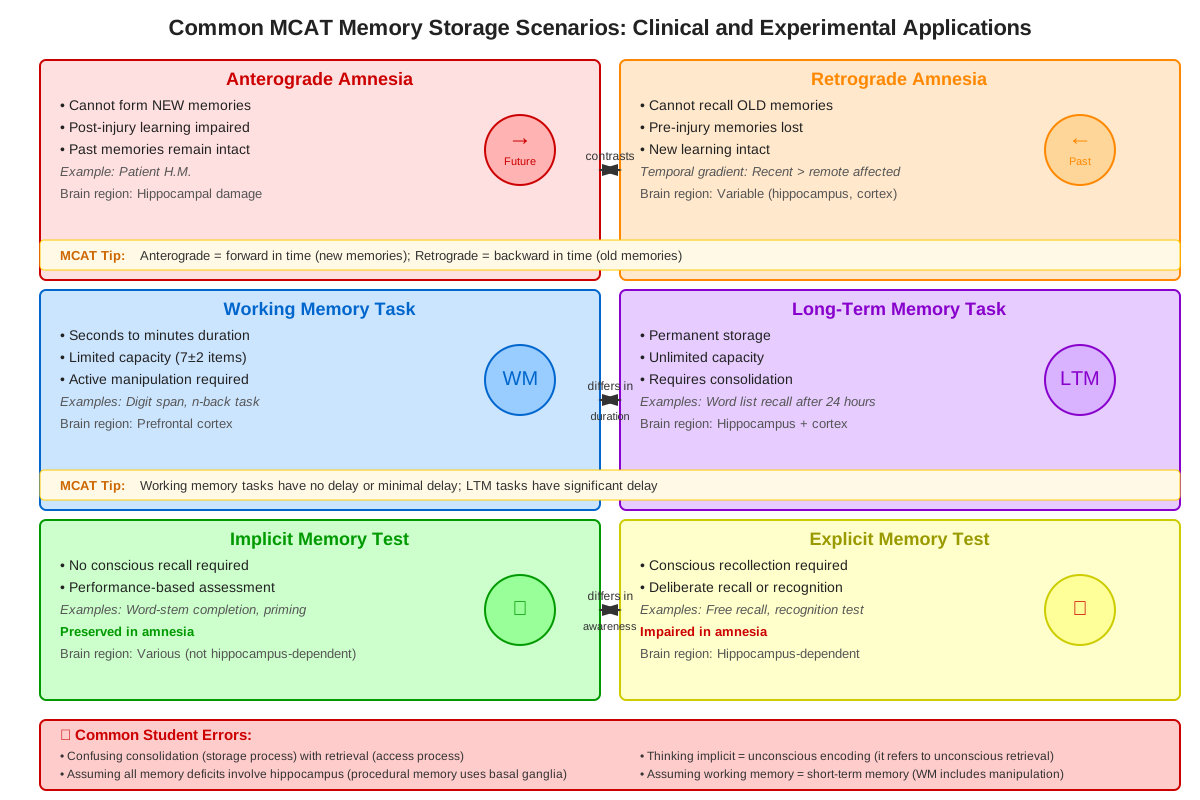
The distinction between explicit and implicit memory has critical clinical relevance. Patients with hippocampal damage (like patient H.M.) show profound explicit memory deficits while retaining intact implicit memory, demonstrating that these systems rely on different neural substrates.
Biological Basis of Memory Storage
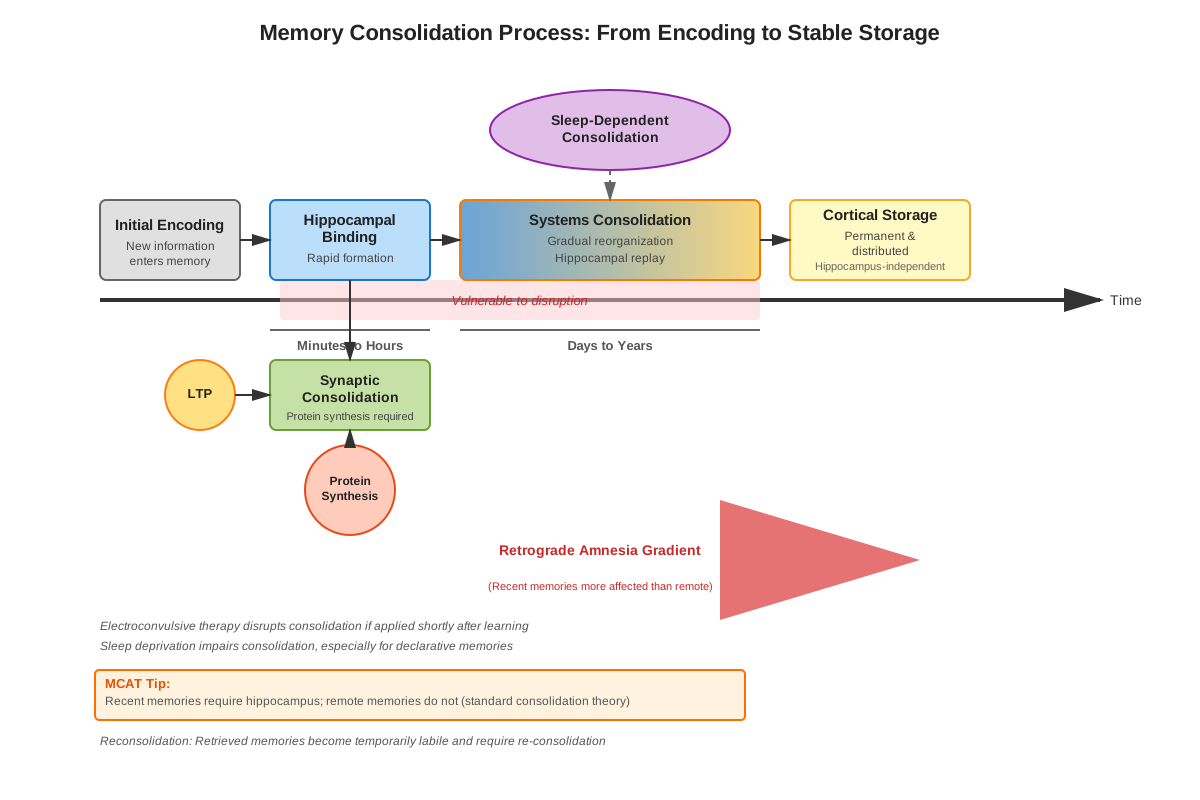
Memory storage depends on consolidation, the process by which initially fragile memory traces become stable and resistant to disruption. Consolidation occurs at two levels:
- Synaptic consolidation (minutes to hours): Involves protein synthesis and structural changes at synapses, including:
- Long-term potentiation (LTP): Persistent strengthening of synaptic connections following repeated stimulation
- Long-term depression (LTD): Weakening of synaptic connections
- Changes in dendritic spine density and morphology
- Systems consolidation (weeks to years): Involves reorganization of memory representations across brain regions, particularly the gradual transfer of memories from hippocampus-dependent to cortex-dependent storage
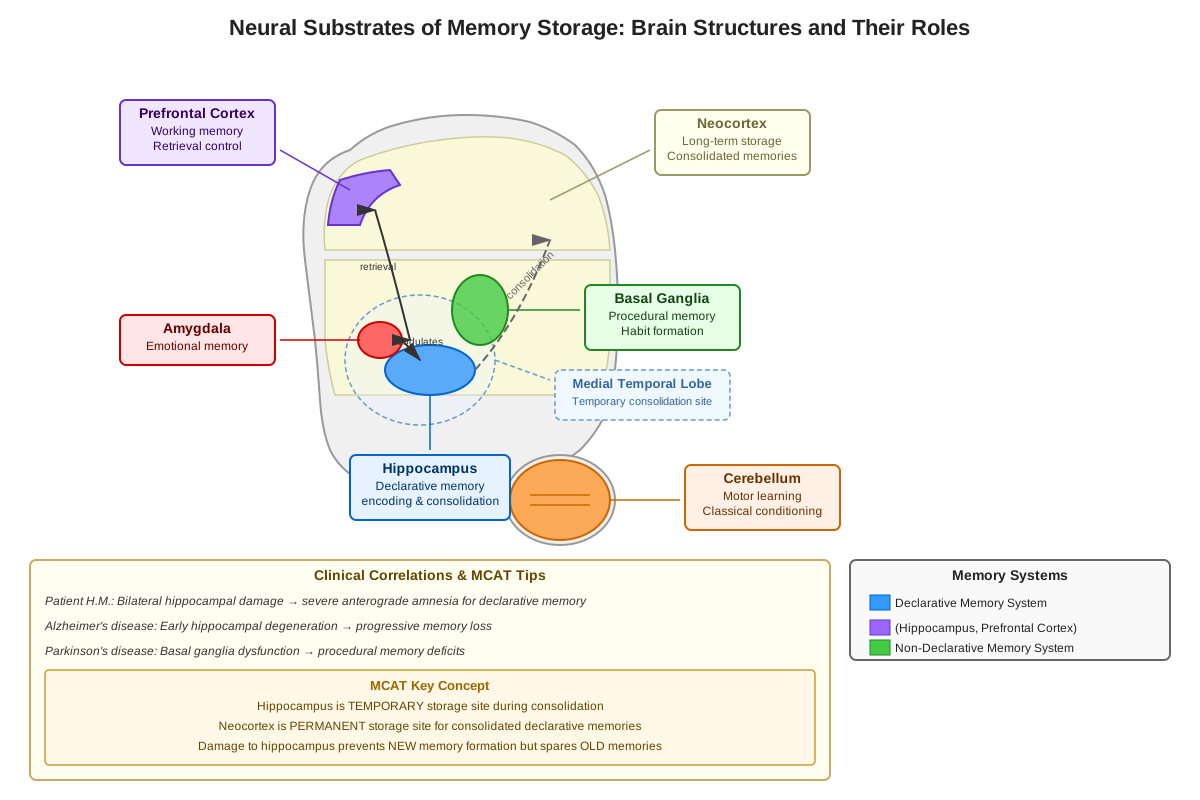
Key neural structures supporting memory storage include:
- Hippocampus: Critical for consolidation of new explicit memories; damage causes anterograde amnesia (inability to form new long-term memories)
- Prefrontal cortex: Supports working memory and executive functions
- Amygdala: Modulates emotional memory storage; enhances consolidation of emotionally arousing events
- Cerebellum and basal ganglia: Support procedural memory storage
- Neocortex: Ultimate storage site for consolidated long-term memories
Neurotransmitters play essential roles in memory storage:
- Glutamate: Primary excitatory neurotransmitter; NMDA receptor activation is necessary for LTP
- Acetylcholine: Modulates attention and encoding; deficits contribute to Alzheimer's disease
- Dopamine: Supports reward-based learning and procedural memory
- Norepinephrine: Enhances consolidation of emotionally arousing memories
Factors Affecting Memory Storage
Multiple factors influence the effectiveness of memory storage:
Sleep plays a critical role in memory consolidation. During sleep, particularly slow-wave sleep and REM sleep, the brain replays and consolidates memories formed during waking hours. Sleep deprivation impairs consolidation and storage.
Emotion significantly enhances memory storage through amygdala activation, which modulates hippocampal consolidation. This explains why emotionally arousing events (both positive and negative) are remembered more vividly than neutral events—a phenomenon called flashbulb memories for highly significant events.
Stress has complex effects on memory storage. Moderate stress can enhance consolidation through cortisol and norepinephrine release, but chronic or extreme stress impairs hippocampal function and disrupts storage.
Interference affects memory storage through two mechanisms:
- Proactive interference: Old information interferes with storage of new information
- Retroactive interference: New information interferes with storage of previously learned information
Spacing effect: Distributed practice (spreading learning over time) produces superior long-term storage compared to massed practice (cramming), likely because spacing allows for consolidation between learning sessions.
Concept Relationships
Memory storage exists within an interconnected network of cognitive processes. Attention serves as the gateway to memory storage—information must be attended to in sensory memory before it can enter short-term storage. Encoding processes determine how information is initially represented, which profoundly affects storage quality and durability. Retrieval depends entirely on successful storage; retrieval failures may reflect either storage failures or access problems.
Within memory storage itself, the systems are hierarchically organized: Sensory memory → Short-term/working memory → Long-term memory. This progression is not automatic; information must be actively processed (through attention and rehearsal) to move from one storage system to the next.
The relationship map:
Sensory Input → Attention → Sensory Memory Storage (brief, large capacity) → Selective Attention → Short-Term Memory Storage (limited capacity/duration) → Rehearsal/Elaboration → Long-Term Memory Storage (unlimited capacity/duration) → Consolidation → Stable Memory Traces
Parallel pathway: Emotional Arousal → Amygdala Activation → Enhanced Consolidation → Stronger Long-Term Storage
Memory storage connects to neuroanatomy through specific brain structures supporting different storage systems. It relates to development as storage capacities change across the lifespan (improving through childhood, declining in older adulthood). It connects to social psychology through phenomena like collective memory and social influences on memory. It relates to biological psychology through neurotransmitter systems and neural plasticity mechanisms.
Quick check — test yourself on Memory storage so far.
Try Flashcards →High-Yield Facts
⭐ Sensory memory has very large capacity but extremely brief duration (0.5-3 seconds), with iconic memory (visual) lasting ~1 second and echoic memory (auditory) lasting ~3-4 seconds
⭐ Short-term memory capacity is limited to 7±2 items (Miller's Law) and duration is 15-30 seconds without rehearsal
⭐ Long-term memory has essentially unlimited capacity and duration, but requires consolidation to become stable
⭐ The hippocampus is critical for consolidation of new explicit memories; bilateral hippocampal damage causes anterograde amnesia while leaving implicit memory intact
⭐ Working memory includes multiple components: phonological loop, visuospatial sketchpad, central executive, and episodic buffer
- Explicit (declarative) memory includes episodic and semantic memory and requires conscious recollection
- Implicit (non-declarative) memory includes procedural memory, priming, and conditioning and operates without conscious awareness
- Long-term potentiation (LTP) represents the synaptic mechanism underlying memory storage through persistent strengthening of neural connections
- Consolidation occurs at two levels: synaptic consolidation (minutes-hours) and systems consolidation (weeks-years)
- The amygdala modulates emotional memory storage, enhancing consolidation of emotionally arousing events
- Maintenance rehearsal extends STM duration but is less effective for LTM storage than elaborative rehearsal
- Sleep, particularly slow-wave and REM sleep, is essential for memory consolidation
- The spacing effect demonstrates that distributed practice produces superior long-term storage compared to massed practice
- Retrograde amnesia (loss of old memories) and anterograde amnesia (inability to form new memories) can occur independently, demonstrating dissociation between storage and consolidation
- Chunking overcomes STM capacity limitations by grouping individual items into meaningful units
Common Misconceptions
Misconception: Short-term memory and working memory are identical concepts.
Correction: Working memory is an expanded model that includes not just passive storage (STM) but also active manipulation and processing of information through multiple subsystems (phonological loop, visuospatial sketchpad, central executive, episodic buffer).
Misconception: Memory storage is like a video recording that perfectly preserves experiences.
Correction: Memory storage is reconstructive, not reproductive. Memories are stored as distributed patterns of neural activity and are reconstructed during retrieval, making them susceptible to distortion, interference, and modification over time.
Misconception: Once information enters long-term memory, it is permanently stored and retrieval failures reflect only access problems.
Correction: While LTM is relatively permanent, stored memories can decay, be modified, or be disrupted through interference. Storage failures (information never properly consolidated) and retrieval failures (information stored but inaccessible) both occur.
Misconception: The hippocampus is the permanent storage site for long-term memories.
Correction: The hippocampus is critical for consolidation of new explicit memories, but through systems consolidation, memories gradually become independent of the hippocampus and are ultimately stored in neocortical regions.
Misconception: All types of memory storage depend on the same brain structures.
Correction: Different memory storage systems rely on distinct neural substrates. Explicit memory depends on the hippocampus and medial temporal lobe structures, while procedural memory relies on the cerebellum and basal ganglia, and emotional memory involves the amygdala.
Misconception: Rehearsal always improves long-term memory storage.
Correction: Only elaborative rehearsal (connecting new information to existing knowledge) effectively promotes long-term storage. Maintenance rehearsal (simple repetition) extends STM duration but does not guarantee transfer to LTM.
Misconception: Memory storage capacity limitations reflect brain "fullness."
Correction: STM capacity limitations reflect processing constraints (how much information can be actively maintained), not physical storage space. LTM has essentially unlimited capacity; forgetting from LTM typically reflects retrieval failures or interference rather than capacity limitations.
Worked Examples
Example 1: Experimental Design Analysis
Scenario: Researchers present participants with a list of 15 words for 30 seconds. Immediately after presentation, participants are asked to recall as many words as possible. Results show that participants recall an average of 7 words, with better recall for words at the beginning (primacy effect) and end (recency effect) of the list compared to middle words.
Question: Which memory storage system(s) explain these results, and what is the mechanism underlying each effect?
Solution:
Step 1: Identify the relevant storage systems. The immediate recall task with a 15-word list exceeding typical STM capacity suggests involvement of both short-term and long-term memory storage.
Step 2: Analyze the primacy effect. Words presented early in the list show enhanced recall because participants have more opportunity to rehearse these items, facilitating transfer from STM to LTM storage. This represents the primacy effect and demonstrates long-term memory storage.
Step 3: Analyze the recency effect. Words presented at the end of the list are still in STM at the time of recall, requiring no retrieval from LTM. This represents the recency effect and demonstrates short-term memory storage.
Step 4: Explain middle-list performance. Words in the middle receive less rehearsal than early words (reducing LTM storage) and have been displaced from STM by later words (eliminating STM advantage), resulting in poorest recall.
Conclusion: The serial position curve (primacy + recency effects) demonstrates the operation of two distinct storage systems: LTM (primacy) and STM (recency). This classic finding supports the multi-store model of memory.
MCAT Connection: This addresses the learning objective of applying memory storage concepts to experimental scenarios and demonstrates how to differentiate between storage systems based on behavioral data.
Example 2: Clinical Vignette
Scenario: A 68-year-old patient presents following a stroke affecting bilateral hippocampal regions. Neurological examination reveals that the patient can hold normal conversations, recall events from his childhood and early adulthood, and learn new motor skills (like tracing a figure while looking in a mirror). However, he cannot remember meeting his doctor from one day to the next or recall what he ate for breakfast.
Question: Which memory storage systems are impaired and which are intact? Explain the neural basis for this pattern.
Solution:
Step 1: Identify intact storage systems.
- Working memory/STM: Intact, as evidenced by ability to hold normal conversations requiring temporary maintenance of information
- Remote long-term memory: Intact, as evidenced by recall of childhood events stored before the stroke
- Procedural memory: Intact, as evidenced by ability to learn new motor skills
Step 2: Identify impaired storage system.
- New explicit memory formation: Impaired, as evidenced by inability to remember recent events (meeting doctor, breakfast). This represents anterograde amnesia.
Step 3: Explain the neural basis.
The hippocampus is critical for consolidation of new explicit (declarative) memories but is not required for:
- Working memory (supported by prefrontal cortex)
- Remote memories that have undergone systems consolidation (stored in neocortex)
- Procedural memory (supported by cerebellum and basal ganglia)
Bilateral hippocampal damage prevents consolidation of new explicit memories while leaving other storage systems intact, producing the classic pattern seen in patient H.M. and similar cases.
Conclusion: This patient shows selective impairment of new explicit memory storage due to hippocampal damage, with preservation of working memory, remote memory, and implicit memory storage systems.
MCAT Connection: This addresses learning objectives related to connecting memory storage to biological substrates and identifying which storage systems are affected in clinical scenarios—a common MCAT question format.
Exam Strategy
When approaching MCAT questions on memory storage, follow this systematic approach:
Step 1: Identify which storage system is being tested. Look for temporal clues (duration), capacity information, or descriptions of the type of information being stored. Trigger words include:
- "Immediately after" → likely STM
- "Weeks later" → likely LTM
- "Brief flash" → likely sensory memory
- "Without awareness" → likely implicit memory
- "Consciously recalled" → likely explicit memory
Step 2: Consider the biological substrate. If the question mentions specific brain structures, connect them to the appropriate storage system:
- Hippocampus → explicit memory consolidation
- Prefrontal cortex → working memory
- Cerebellum/basal ganglia → procedural memory
- Amygdala → emotional memory modulation
Step 3: Distinguish between storage, encoding, and retrieval failures. The MCAT frequently tests this distinction:
- Storage failure: Information never consolidated (e.g., due to hippocampal damage)
- Encoding failure: Information never properly processed (e.g., due to inattention)
- Retrieval failure: Information stored but inaccessible (e.g., tip-of-the-tongue phenomenon)
Step 4: Apply process of elimination. For questions about memory deficits:
- If working memory is intact but new LTM formation is impaired → hippocampal damage
- If explicit memory is impaired but implicit memory is intact → medial temporal lobe damage
- If both old and new memories are affected → likely retrieval problem, not storage
Time allocation: Memory storage questions typically require 60-90 seconds. Spend 20-30 seconds identifying the storage system being tested, then 30-60 seconds applying relevant concepts to eliminate wrong answers.
Exam Tip: When passages describe memory experiments, immediately identify the delay between encoding and testing. This temporal information is the strongest clue to which storage system is being assessed.
Memory Techniques
Mnemonic for STM/Working Memory Components: "PACE"
- Phonological loop
- Attention (central executive)
- Coordination (episodic buffer)
- Eyes (visuospatial sketchpad)
Mnemonic for Explicit Memory Types: "ES"
- Episodic (personal events)
- Semantic (facts and concepts)
Mnemonic for Memory Storage Sequence: "SSL"
- Sensory memory (first, briefest)
- Short-term memory (middle, limited)
- Long-term memory (last, unlimited)
Visualization for Multi-Store Model: Picture a funnel system:
- Wide opening (sensory memory—large capacity, everything enters)
- Narrow neck (STM—bottleneck with limited capacity)
- Large reservoir (LTM—unlimited capacity for what makes it through)
Mnemonic for Hippocampal Functions: "CANE"
- Consolidation of new memories
- Anterograde amnesia when damaged
- Not needed for remote memories
- Explicit memory specifically
Acronym for Factors Enhancing Storage: "SEES"
- Spacing (distributed practice)
- Emotion (amygdala modulation)
- Elaboration (deep processing)
- Sleep (consolidation)
Summary
Memory storage represents the critical process of maintaining encoded information over time within distinct neural systems. The multi-store model delineates three primary storage systems with unique characteristics: sensory memory (brief, large capacity, modality-specific), short-term/working memory (limited capacity of 7±2 items, duration of 15-30 seconds without rehearsal), and long-term memory (essentially unlimited capacity and duration). Long-term storage divides into explicit memory (episodic and semantic) requiring conscious recollection and hippocampal-dependent consolidation, and implicit memory (procedural, priming, conditioning) operating without awareness and relying on different neural substrates. Memory consolidation occurs through synaptic changes (LTP) and systems-level reorganization, with the hippocampus serving as a critical hub for explicit memory consolidation before memories become cortically stored. Multiple factors influence storage effectiveness, including sleep, emotion, stress, rehearsal type, and spacing of practice. Understanding memory storage requires integrating cognitive models with biological mechanisms and recognizing how different storage systems can be selectively impaired in clinical conditions, making this a high-yield topic for MCAT success.
Key Takeaways
- Memory storage encompasses three distinct systems (sensory, short-term, long-term) with different capacities, durations, and neural substrates
- Short-term memory has strict limitations (7±2 items, 15-30 seconds) that can be overcome through chunking and rehearsal strategies
- Long-term memory divides into explicit (hippocampus-dependent, conscious) and implicit (hippocampus-independent, unconscious) systems
- The hippocampus is essential for consolidating new explicit memories but not for storing remote memories or supporting implicit memory
- Consolidation transforms fragile memory traces into stable long-term storage through synaptic (LTP) and systems-level mechanisms
- Emotional arousal enhances memory storage through amygdala modulation of hippocampal consolidation
- Sleep plays a critical role in memory consolidation, and spacing practice over time produces superior storage compared to massed practice
Related Topics
Memory Encoding: Understanding how information is initially processed and transformed into storable representations; mastering storage provides the foundation for understanding what happens to encoded information.
Memory Retrieval: The process of accessing stored information; storage and retrieval are interdependent, as retrieval failures may reflect either storage problems or access difficulties.
Forgetting and Memory Distortion: Mechanisms by which stored memories become inaccessible or modified; understanding normal storage processes is essential for comprehending forgetting.
Neuroplasticity and Learning: The biological mechanisms (LTP, LTD, synaptic changes) underlying memory storage represent specific examples of neural plasticity.
Cognitive Development Across the Lifespan: Memory storage capacities change with age, with working memory and consolidation efficiency declining in older adulthood.
Amnesia and Memory Disorders: Clinical conditions affecting memory storage (Alzheimer's disease, Korsakoff's syndrome, traumatic brain injury) illustrate the neural basis of storage through deficit patterns.
Practice CTA
Now that you have mastered the core concepts of memory storage, reinforce your learning by attempting practice questions and flashcards on this topic. Focus particularly on questions requiring you to distinguish between storage systems, identify neural substrates, and analyze experimental designs. The ability to apply memory storage concepts to novel scenarios—exactly what the MCAT demands—develops through active practice. Your investment in understanding memory storage will pay dividends not only on test day but throughout your medical career, as memory and learning principles underlie patient education, clinical skill acquisition, and understanding neurological conditions. You've built a strong foundation—now strengthen it through application!
Sign up free to keep reading
Create a free AnvayaPrep account to finish this MCAT guide on Memory storage — plus flashcards and practice questions.