Overview
Positive punishment is a fundamental concept in operant conditioning, a cornerstone of behavioral psychology that appears frequently on the MCAT. This learning mechanism involves the presentation of an aversive stimulus following a behavior, which decreases the likelihood that the behavior will occur again in the future. Despite its name, "positive" does not mean desirable or pleasant—rather, it refers to the addition (+) of a stimulus to the environment. Understanding this distinction is critical for MCAT success, as test-makers frequently exploit confusion between the colloquial and technical meanings of "positive."
Within the broader framework of Learning and Memory, positive punishment represents one of four quadrants in operant conditioning theory, alongside negative punishment, positive reinforcement, and negative reinforcement. Mastery of positive punishment requires not only memorizing its definition but also developing the ability to identify it in complex behavioral scenarios, distinguish it from similar concepts, and predict its effects on behavior modification. The MCAT regularly tests this topic through passage-based questions involving child development, clinical interventions, educational settings, and animal behavior studies.
The significance of positive punishment extends beyond isolated memorization—it connects to neural reward pathways, classical conditioning principles, social learning theory, and ethical considerations in behavioral modification. Students who thoroughly understand positive punishment gain a framework for analyzing any behavior-change scenario, making this topic essential for both the Psychology section and interdisciplinary passages that integrate psychological, biological, and sociological perspectives.
Learning Objectives
- [ ] Define Positive punishment using accurate Psychology terminology
- [ ] Explain why Positive punishment matters for the MCAT
- [ ] Apply Positive punishment to exam-style questions
- [ ] Identify common mistakes related to Positive punishment
- [ ] Connect Positive punishment to related Psychology concepts
- [ ] Distinguish positive punishment from negative punishment, positive reinforcement, and negative reinforcement in complex scenarios
- [ ] Analyze the effectiveness and limitations of positive punishment in behavior modification
- [ ] Evaluate ethical considerations surrounding the use of positive punishment in clinical and educational contexts
Prerequisites
- Classical conditioning fundamentals: Understanding unconditioned and conditioned stimuli/responses provides the foundation for distinguishing classical from operant conditioning
- Basic behavioral terminology: Familiarity with terms like "stimulus," "response," and "consequence" enables precise communication about learning mechanisms
- Reinforcement vs. punishment distinction: Knowing that reinforcement increases behavior while punishment decreases behavior is essential for categorizing operant conditioning techniques
- Operant conditioning overview: General knowledge of B.F. Skinner's work and the concept that consequences shape behavior frames the specific mechanisms of positive punishment
Why This Topic Matters
Positive punishment appears in approximately 15-20% of MCAT Psychology questions related to learning, making it one of the highest-yield subtopics within behavioral psychology. The MCAT tests this concept through multiple question formats: discrete questions asking for direct identification of punishment types, passage-based questions requiring application to research scenarios, and pseudo-discrete questions embedded in sociological or biological contexts where behavioral principles apply.
In clinical and real-world settings, positive punishment underlies numerous interventions and everyday interactions. Spanking a child for misbehavior, issuing speeding tickets to reduce traffic violations, and administering electric shocks in aversion therapy all exemplify positive punishment. Understanding its mechanisms helps explain why certain behavioral interventions succeed or fail, informing evidence-based practice in clinical psychology, education, and public health. The MCAT frequently presents passages about parenting styles, classroom management, addiction treatment, or animal training that require students to identify which operant conditioning principle is being applied.
Common MCAT passage contexts include: developmental psychology studies comparing discipline methods, neuroscience research on dopamine and aversive learning, sociological analyses of criminal justice systems, and experimental psychology studies manipulating consequences to shape behavior. Questions often require students to predict behavioral outcomes, identify the operant conditioning mechanism at work, or critique methodological approaches to behavior modification.
Core Concepts
Definition and Mechanism
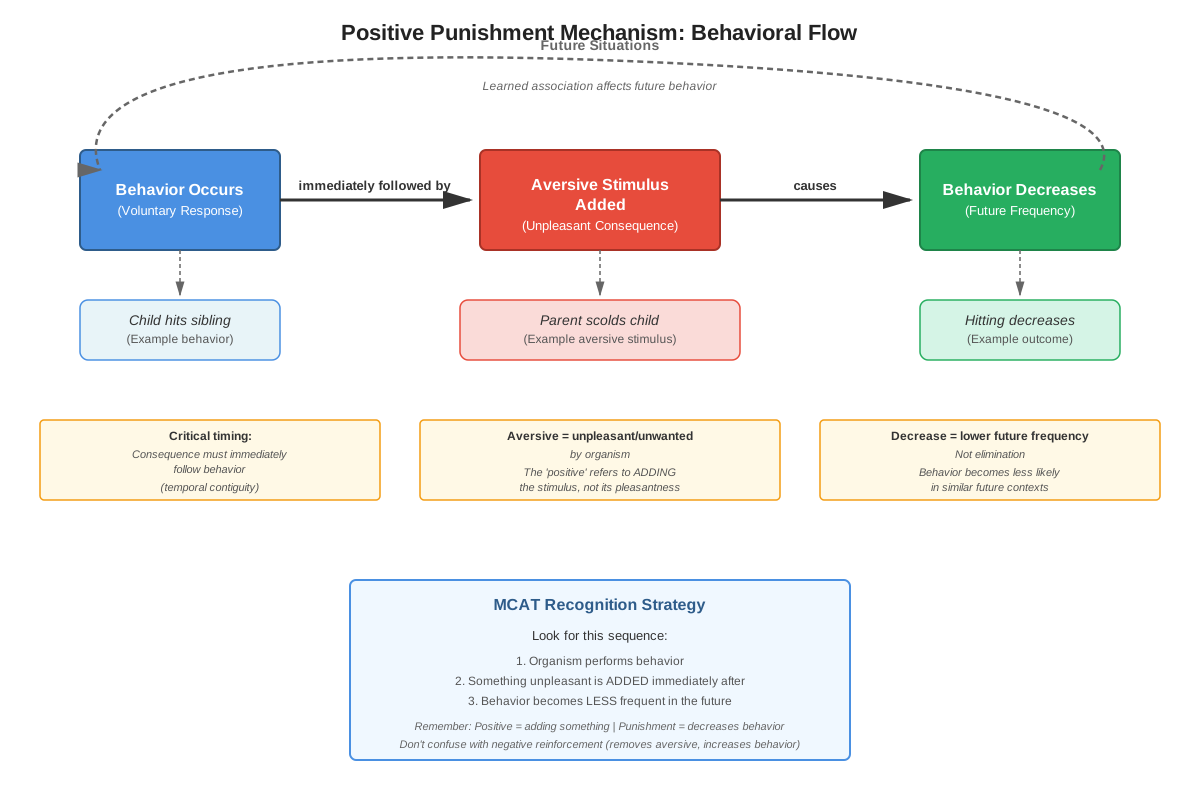
Positive punishment is an operant conditioning procedure in which the presentation (addition) of an aversive stimulus immediately following a behavior decreases the future probability of that behavior. The term "positive" refers strictly to the mathematical operation of addition—something is added to the environment. The term "punishment" indicates the functional effect—the behavior becomes less frequent.
The mechanism operates through three essential components:
- Antecedent: The environmental context or discriminative stimulus present before the behavior
- Behavior: The observable action performed by the organism
- Consequence: The aversive stimulus presented immediately after the behavior
For positive punishment to effectively modify behavior, the aversive stimulus must be:
- Contingent: Applied consistently following the target behavior
- Immediate: Presented with minimal delay after the behavior occurs
- Sufficiently aversive: Unpleasant enough to motivate behavior change
- Proportionate: Not so severe as to cause harm or ethical concerns
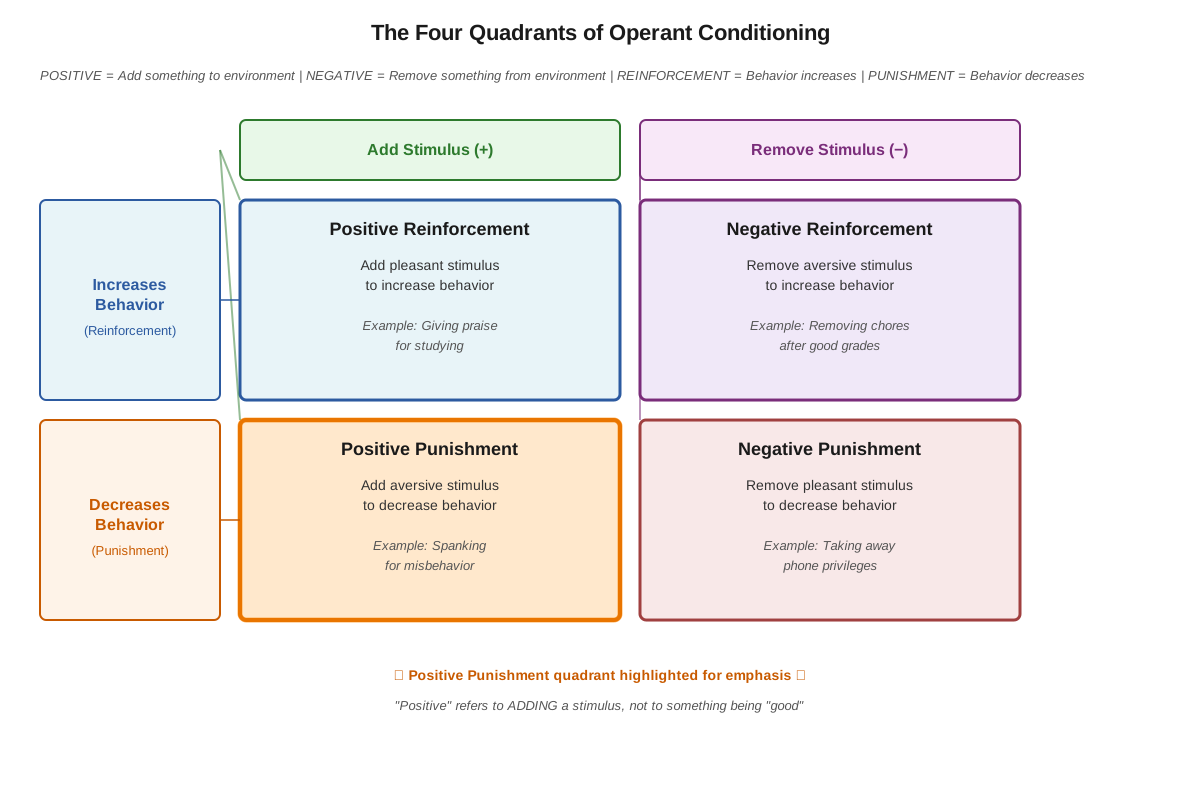
The Four Quadrants of Operant Conditioning
Understanding positive punishment requires distinguishing it from the other three operant conditioning mechanisms:
| Mechanism | Stimulus Change | Behavioral Effect | Example |
|---|---|---|---|
| Positive Reinforcement | Add pleasant stimulus | Increase behavior | Giving candy for completing homework |
| Negative Reinforcement | Remove aversive stimulus | Increase behavior | Stopping nagging when room is cleaned |
| Positive Punishment | Add aversive stimulus | Decrease behavior | Scolding for interrupting |
| Negative Punishment | Remove pleasant stimulus | Decrease behavior | Taking away phone for missing curfew |
The key distinction lies in two dimensions: whether something is added or removed (positive vs. negative), and whether the behavior increases or decreases (reinforcement vs. punishment). MCAT questions frequently test whether students can correctly categorize scenarios into these four quadrants.
Temporal Dynamics and Effectiveness
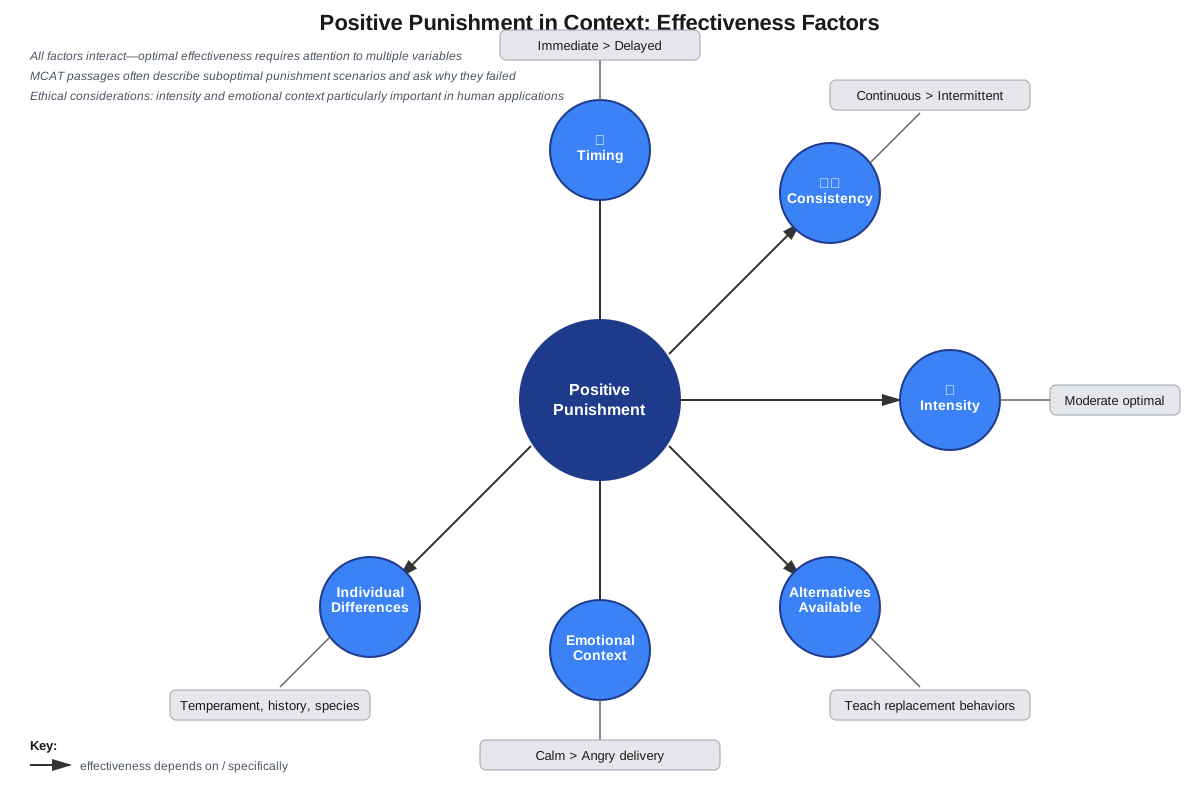
The effectiveness of positive punishment depends critically on timing. Research demonstrates that immediate consequences produce stronger behavioral effects than delayed consequences. When the aversive stimulus follows the behavior by more than a few seconds, the organism may not form a clear association between action and consequence, reducing the punishment's effectiveness.
Positive punishment Psychology research reveals several factors that moderate effectiveness:
- Consistency: Intermittent punishment is less effective than continuous punishment during initial learning
- Intensity: More aversive stimuli produce faster behavior suppression, but ethical limits apply
- Alternative behaviors: Punishment works best when combined with reinforcement of alternative, desirable behaviors
- Cognitive factors: In humans, understanding the reason for punishment enhances effectiveness
Limitations and Side Effects
While positive punishment can rapidly suppress unwanted behaviors, it carries significant limitations that the MCAT expects students to recognize:
Behavioral side effects:
- Emotional responses: Anxiety, fear, or aggression may develop toward the punisher or context
- Avoidance learning: The organism may learn to avoid the punisher rather than change the behavior
- Behavioral suppression vs. elimination: Punishment often temporarily suppresses behavior rather than eliminating it permanently
- Generalization problems: The behavior may only decrease in the presence of the punisher
Cognitive and social effects:
- Modeling aggression: Especially in children, experiencing physical punishment may teach that aggression is acceptable
- Damaged relationships: Repeated punishment can harm trust and attachment between punisher and recipient
- Reduced intrinsic motivation: External punishment may undermine internal motivation to behave appropriately
Neurobiological Basis
The neural mechanisms underlying positive punishment involve the brain's aversive learning systems. The amygdala processes the emotional significance of aversive stimuli, while the anterior cingulate cortex detects conflicts and errors. Dopamine neurons, traditionally associated with reward, also signal aversive prediction errors—when outcomes are worse than expected, dopamine activity decreases, facilitating avoidance learning.
The ventral tegmental area (VTA) and nucleus accumbens show decreased activity during aversive experiences, contrasting with their activation during positive reinforcement. This neurobiological distinction helps explain why punishment and reinforcement produce opposite behavioral effects despite involving overlapping neural circuits.
Ethical Considerations
The MCAT frequently includes questions about ethical applications of behavioral principles, particularly in clinical and educational contexts. Positive punishment raises ethical concerns because:
- Physical punishment can cause harm and violates principles of beneficence
- Psychological punishment may damage self-esteem and mental health
- Power imbalances between punisher and recipient create potential for abuse
- Alternative methods (reinforcement-based approaches) often prove equally or more effective
Professional guidelines in psychology emphasize using the least restrictive, most positive interventions first, reserving punishment for situations where reinforcement alone proves insufficient and the target behavior poses significant risk.
Concept Relationships
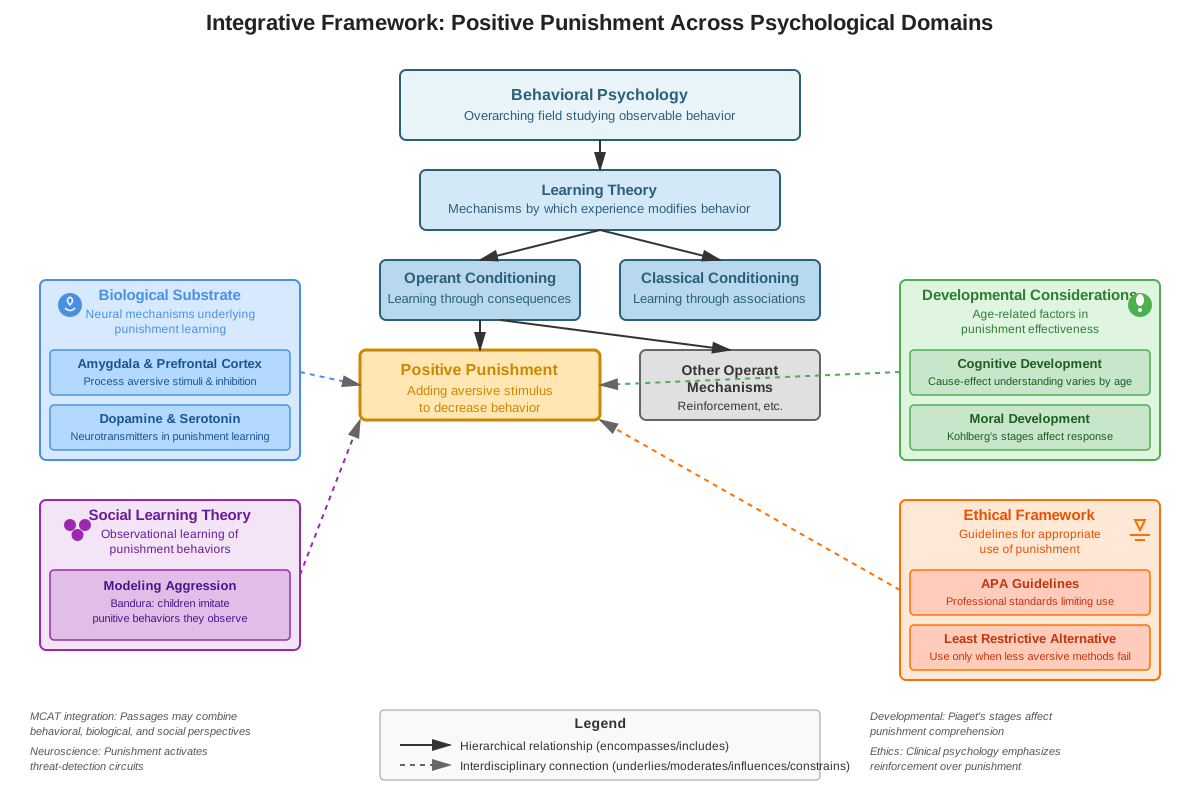
Positive punishment exists within a hierarchical conceptual framework. At the broadest level, it falls under Learning and Memory, one of the major domains of psychology. Within learning, it belongs specifically to operant conditioning (learning through consequences) rather than classical conditioning (learning through associations).
Relationship map:
- Operant Conditioning → divides into → Reinforcement (increases behavior) and Punishment (decreases behavior)
- Punishment → divides into → Positive Punishment (add aversive) and Negative Punishment (remove pleasant)
- Positive Punishment → connects to → Aversive Learning (broader category including avoidance and escape)
- Positive Punishment → contrasts with → Positive Reinforcement (both add stimuli, opposite effects)
- Positive Punishment → relates to → Classical Conditioning (aversive stimuli can become conditioned stimuli)
The concept connects to social learning theory because observing others receive punishment can modify behavior without direct experience. It relates to cognitive psychology through expectancy theories—organisms develop expectations about consequences that guide behavior. It intersects with developmental psychology in discussions of parenting styles and moral development.
Understanding positive punishment enables comprehension of more advanced topics like learned helplessness (when inescapable punishment leads to passive behavior), behavioral therapy techniques (systematic desensitization, aversion therapy), and motivation theories (extrinsic vs. intrinsic motivation).
High-Yield Facts
⭐ Positive punishment adds an aversive stimulus to decrease behavior frequency
⭐ "Positive" means addition (+), not "good" or "desirable"
⭐ Punishment decreases behavior; reinforcement increases behavior—this is the critical functional distinction
⭐ All four operant conditioning quadrants require immediate, contingent consequences for maximum effectiveness
⭐ Positive punishment is most effective when combined with positive reinforcement of alternative behaviors
- The effectiveness of positive punishment decreases rapidly as the delay between behavior and consequence increases
- Intermittent punishment is less effective than continuous punishment during initial behavior modification
- Positive punishment can produce emotional side effects including anxiety, fear, and aggression
- The amygdala and anterior cingulate cortex are key brain regions involved in processing aversive stimuli
- Ethical guidelines recommend using positive punishment only when reinforcement-based methods prove insufficient
- Physical punishment in childhood correlates with increased aggression and mental health problems in research studies
- Positive punishment may suppress behavior temporarily without eliminating the underlying motivation
- Discriminative stimuli signal when behaviors will be punished, leading to context-dependent behavior suppression
- Escape and avoidance learning represent related but distinct phenomena from positive punishment
- The intensity of the aversive stimulus must be calibrated—too weak is ineffective, too strong is unethical
Quick check — test yourself on Positive punishment so far.
Try Flashcards →Common Misconceptions
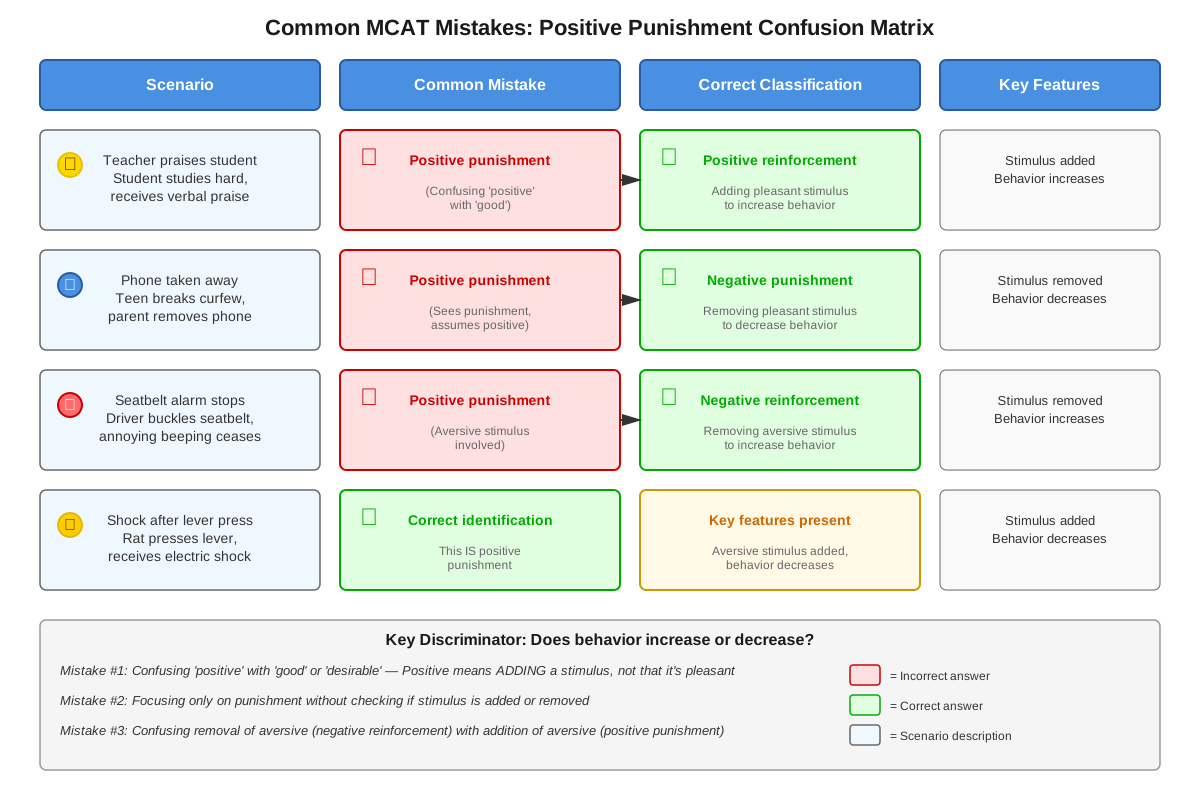
Misconception: Positive punishment means "good" punishment or effective punishment → Correction: "Positive" is a technical term meaning addition or presentation of a stimulus, with no value judgment about whether the punishment is good, bad, effective, or appropriate
Misconception: Any unpleasant consequence is positive punishment → Correction: Positive punishment specifically requires adding an aversive stimulus; removing a pleasant stimulus (like taking away privileges) is negative punishment, not positive punishment
Misconception: Punishment and negative reinforcement are the same because both involve aversive stimuli → Correction: Punishment (positive or negative) decreases behavior, while negative reinforcement increases behavior by removing an aversive stimulus; they have opposite effects on behavior frequency
Misconception: If a behavior continues after punishment, the consequence wasn't punishment → Correction: Punishment is defined by its intended function (decreasing behavior), not its success; ineffective punishment is still punishment, just poorly implemented or insufficiently aversive
Misconception: Positive punishment permanently eliminates unwanted behaviors → Correction: Research shows punishment often produces temporary behavior suppression rather than permanent elimination; behaviors may return when the punisher is absent or when motivation is strong enough
Misconception: Scolding or criticism is always positive punishment → Correction: Whether verbal feedback functions as punishment depends on the individual and context; some people find attention (even negative attention) reinforcing, making scolding inadvertently function as positive reinforcement
Misconception: Positive punishment is always unethical or harmful → Correction: While positive punishment carries risks and ethical concerns, mild forms (like verbal corrections) can be appropriate when used judiciously, immediately, and in combination with reinforcement of alternative behaviors
Worked Examples
Example 1: Identifying Operant Conditioning Mechanisms
Scenario: A researcher studies four classroom management techniques:
- Technique A: Students who complete homework receive extra recess time
- Technique B: Students who talk out of turn receive a verbal reprimand
- Technique C: Students who follow rules avoid having to complete extra assignments
- Technique D: Students who arrive late lose participation points
Question: Which technique represents positive punishment?
Step 1 - Identify the behavior and consequence for each technique:
- A: Complete homework → gain recess (add pleasant)
- B: Talk out of turn → receive reprimand (add aversive)
- C: Follow rules → avoid extra work (remove aversive)
- D: Arrive late → lose points (remove pleasant)
Step 2 - Determine if something is added or removed:
- A: Added (positive)
- B: Added (positive)
- C: Removed (negative)
- D: Removed (negative)
Step 3 - Determine if behavior should increase or decrease:
- A: Increase homework completion (reinforcement)
- B: Decrease talking out of turn (punishment)
- C: Increase rule-following (reinforcement)
- D: Decrease tardiness (punishment)
Step 4 - Categorize each technique:
- A: Positive reinforcement
- B: Positive punishment ✓
- C: Negative reinforcement
- D: Negative punishment
Answer: Technique B represents positive punishment because it adds an aversive stimulus (verbal reprimand) to decrease an unwanted behavior (talking out of turn).
Connection to learning objectives: This example demonstrates application of positive punishment to exam-style questions and distinguishes it from the other three operant conditioning mechanisms.
Example 2: Analyzing Effectiveness and Limitations
Scenario: A parent wants to reduce their 5-year-old child's tantrum behavior. Currently, when the child doesn't get what they want, they scream and throw toys. The parent decides to implement a loud, firm "NO!" immediately following each tantrum, which the child finds very unpleasant. After one week, tantrums have decreased from 8 per day to 3 per day. However, the child now shows increased anxiety around the parent and has started having tantrums primarily when the other parent is present.
Question: Analyze this scenario using principles of positive punishment, including its effectiveness and limitations.
Analysis:
Identification: This scenario involves positive punishment—the parent adds an aversive stimulus (loud "NO!") following the unwanted behavior (tantrums) to decrease its frequency.
Effectiveness factors present:
- Immediacy: The consequence follows the behavior immediately, strengthening the association
- Consistency: Applied after each tantrum during the intervention period
- Sufficient aversiveness: The child finds the loud "NO!" unpleasant enough to modify behavior
- Result: Behavior decreased by 62.5% (from 8 to 3 tantrums daily), demonstrating functional effectiveness
Limitations evident:
- Emotional side effects: The child shows increased anxiety around the punishing parent, demonstrating the common side effect of negative emotional responses
- Discriminative learning: Tantrums now occur primarily with the other parent, showing the behavior is suppressed only in the presence of the punisher rather than eliminated
- Incomplete suppression: Tantrums decreased but weren't eliminated, suggesting punishment alone is insufficient
- Relationship impact: Increased anxiety suggests potential damage to the parent-child relationship
Recommendations for improvement:
- Combine positive punishment with positive reinforcement of alternative behaviors (e.g., praising calm requests)
- Ensure both parents consistently apply consequences to prevent discriminative learning
- Consider whether negative punishment (removing a privilege) might be equally effective with fewer emotional side effects
- Address the underlying need (teaching appropriate communication skills) rather than only suppressing the symptom
Connection to learning objectives: This example demonstrates application to complex scenarios, identification of common limitations, and connection to related concepts like discriminative stimuli and the importance of combining punishment with reinforcement.
Exam Strategy
When approaching Positive punishment MCAT questions, use this systematic strategy:
Step 1 - Identify the behavior: Locate the specific action being modified. MCAT passages often include multiple behaviors; identify which one the question addresses.
Step 2 - Identify the consequence: Determine what happens immediately after the behavior. Watch for temporal relationships—consequences must follow behaviors to qualify as operant conditioning.
Step 3 - Determine addition vs. removal: Ask "Is something being added to or removed from the environment?" This distinguishes positive (add) from negative (remove) mechanisms.
Step 4 - Determine behavioral effect: Ask "Is the behavior intended to increase or decrease?" This distinguishes reinforcement (increase) from punishment (decrease).
Trigger words for positive punishment:
- "Presented with," "given," "received," "administered"
- "Aversive," "unpleasant," "unwanted," "painful"
- "Decrease," "reduce," "suppress," "eliminate" (referring to behavior)
- "Reprimand," "scold," "shock," "spray" (common aversive stimuli)
Process-of-elimination tips:
- Eliminate any answer involving removal of stimuli (those are negative mechanisms)
- Eliminate any answer where behavior increases (those are reinforcement)
- If a pleasant stimulus is added, it's positive reinforcement, not punishment
- If the question asks about ethical concerns, positive punishment answers are more likely than reinforcement answers
Time allocation: Spend 10-15 seconds identifying the behavior and consequence, then 10-15 seconds categorizing the mechanism. If a question requires more than 45 seconds, flag it and return later—these questions often test application rather than recall, and fresh perspective helps.
Common question stems:
- "Which scenario best illustrates positive punishment?"
- "The researcher's intervention represents which type of operant conditioning?"
- "What is the most likely limitation of this approach?"
- "Which modification would improve the effectiveness of this technique?"
Memory Techniques
The Addition/Subtraction Mnemonic:
- Positive = Plus (+) = Add something
- Negative = Negative (−) = Remove something
- Reinforcement = Repeat = Behavior increases
- Punishment = Prevent = Behavior decreases
The 2×2 Grid Visualization:
Visualize a grid with "Add/Remove" on one axis and "Increase/Decrease" on the other. Positive punishment occupies the "Add + Decrease" quadrant. Mentally place examples in each quadrant during practice.
The "Punishment Adds Pain" Acronym:
Positive Punishment = Presenting Painful stimulus
(Remember: three P's for Positive Punishment)
The Consequence Sequence:
Behavior → Consequence → Change
For positive punishment: Unwanted behavior → Add aversive → Decrease frequency
The Real-World Anchor Method:
Anchor each operant conditioning type to a vivid personal memory:
- Positive punishment: Remember receiving a speeding ticket (added fine, decreased speeding)
- This concrete example helps distinguish it from abstract definitions
The "Opposite Day" Technique:
Positive punishment is opposite to positive reinforcement in effect (decrease vs. increase) but similar in mechanism (both add stimuli). Remembering this relationship helps prevent confusion.
Summary
Positive punishment is a fundamental operant conditioning mechanism in which presenting an aversive stimulus immediately following a behavior decreases the future probability of that behavior. The term "positive" refers to addition of a stimulus, not to any value judgment about the punishment's desirability. Effective positive punishment requires immediate, consistent, and appropriately aversive consequences. However, it carries significant limitations including emotional side effects, temporary behavior suppression rather than permanent elimination, potential relationship damage, and ethical concerns. The MCAT frequently tests positive punishment through scenarios requiring students to distinguish it from negative punishment, positive reinforcement, and negative reinforcement—the other three quadrants of operant conditioning. Success requires understanding both the technical definition and practical applications, recognizing that punishment decreases behavior while reinforcement increases it, and that positive/negative refers to adding/removing stimuli. Neurobiologically, positive punishment involves the amygdala, anterior cingulate cortex, and dopamine systems processing aversive prediction errors. Ethically, positive punishment should be used judiciously, combined with reinforcement of alternative behaviors, and reserved for situations where less restrictive interventions prove insufficient.
Key Takeaways
- Positive punishment adds an aversive stimulus to decrease behavior—"positive" means addition, not "good"
- The four operant conditioning mechanisms differ on two dimensions: add vs. remove (positive vs. negative) and increase vs. decrease behavior (reinforcement vs. punishment)
- Effectiveness depends on immediacy, consistency, and appropriate intensity of the aversive stimulus
- Limitations include emotional side effects, temporary suppression, and ethical concerns that make reinforcement-based approaches often preferable
- MCAT questions test identification, application, and analysis of positive punishment in diverse contexts including parenting, education, clinical interventions, and animal behavior
- Distinguish punishment (decreases behavior) from reinforcement (increases behavior)—this functional difference is more important than the specific stimuli involved
- Combine positive punishment with positive reinforcement of alternative behaviors for maximum effectiveness and minimal side effects
Related Topics
Negative Punishment: Removing a pleasant stimulus to decrease behavior; understanding both punishment types enables comprehensive analysis of behavior reduction strategies
Positive Reinforcement: Adding a pleasant stimulus to increase behavior; the most commonly confused concept with positive punishment, differing only in behavioral effect
Negative Reinforcement: Removing an aversive stimulus to increase behavior; frequently confused with punishment despite opposite effects
Schedules of Reinforcement: Patterns of consequence delivery (continuous, fixed ratio, variable interval, etc.) that affect learning rate and resistance to extinction
Classical Conditioning: Learning through association rather than consequences; understanding the distinction helps categorize learning scenarios correctly
Social Learning Theory: Observational learning and modeling; explains how punishment of others affects observer behavior without direct experience
Behavioral Therapy Techniques: Clinical applications including aversion therapy, token economies, and systematic desensitization that apply operant conditioning principles
Practice CTA
Now that you've mastered the core concepts of positive punishment, it's time to solidify your understanding through active practice. Complete the associated practice questions to test your ability to identify positive punishment in complex scenarios, distinguish it from related concepts, and apply it to MCAT-style passages. Use the flashcards to reinforce high-yield facts and ensure rapid recall under exam conditions. Remember: understanding operant conditioning thoroughly gives you a powerful framework for analyzing any behavior-change scenario on test day. Your investment in mastering this foundational topic will pay dividends across multiple Psychology questions!
Sign up free to keep reading
Create a free AnvayaPrep account to finish this MCAT guide on Positive punishment — plus flashcards and practice questions.