Overview
Demography is the scientific study of human populations, focusing on their size, structure, distribution, and changes over time. This field examines vital statistics such as birth rates, death rates, migration patterns, and age distributions to understand how populations evolve and what factors drive these changes. Within Sociology, demography provides essential quantitative tools for analyzing social phenomena, revealing patterns in health disparities, resource allocation, urbanization, and social stratification. For the MCAT, demography represents a high-yield topic that frequently appears in Psychological, Social, and Biological Foundations of Behavior passages, often integrated with discussions of healthcare access, disease prevalence, social inequality, and public health policy.
Understanding Demography MCAT concepts is crucial because the exam regularly presents data-rich passages containing population pyramids, demographic transition models, and epidemiological statistics that require interpretation. Questions may ask students to analyze how demographic shifts affect healthcare systems, predict social consequences of aging populations, or evaluate the relationship between population characteristics and health outcomes. The MCAT expects students to move beyond simple memorization to apply demographic principles in analyzing complex social scenarios, making this topic essential for achieving competitive scores in the Psychological, Social, and Biological Foundations section.
The relationship between Demographics and Social Change forms a cornerstone of sociological analysis on the MCAT. Demographic patterns both reflect and drive broader social transformations, including changes in family structure, economic development, healthcare needs, and social policy. This topic connects intimately with concepts such as social stratification, healthcare disparities, epidemiology, and social movements, making it a nexus point for integrating multiple domains of Sociology knowledge. Mastering demography enables students to approach MCAT passages with a sophisticated analytical framework for understanding population-level phenomena and their individual-level implications.
Learning Objectives
- [ ] Define Demography using accurate Sociology terminology
- [ ] Explain why Demography matters for the MCAT
- [ ] Apply Demography to exam-style questions
- [ ] Identify common mistakes related to Demography
- [ ] Connect Demography to related Sociology concepts
- [ ] Interpret population pyramids and demographic transition models
- [ ] Calculate and analyze key demographic measures including crude birth rate, crude death rate, and fertility rate
- [ ] Evaluate the social and healthcare implications of demographic shifts such as population aging and urbanization
Prerequisites
- Basic statistical concepts: Understanding percentages, rates, and ratios is essential for interpreting demographic measures and population data
- Social stratification fundamentals: Knowledge of how societies organize into hierarchical groups helps contextualize demographic differences across social classes
- Basic epidemiology: Familiarity with disease distribution patterns provides context for understanding mortality and morbidity statistics in populations
- Understanding of social institutions: Knowledge of family, education, and healthcare systems helps explain how demographic patterns emerge and impact society
Why This Topic Matters
Demography holds profound real-world significance for healthcare delivery, public health planning, and social policy development. Healthcare systems must anticipate demographic shifts to allocate resources appropriately—aging populations require different medical services than younger populations, while migration patterns affect disease prevalence and healthcare access. Public health officials use demographic data to identify vulnerable populations, target interventions, and evaluate program effectiveness. Urban planners, economists, and policymakers rely on demographic projections to make decisions about infrastructure, education, retirement systems, and social services.
On the MCAT, demography appears with high frequency in the Psychological, Social, and Biological Foundations of Behavior section, typically accounting for 2-4 questions per exam either directly or as integrated content. Questions commonly present demographic data in tables, graphs, or population pyramids within passages discussing healthcare disparities, disease prevalence, social inequality, or public health interventions. The exam tests students' ability to interpret demographic statistics, understand their social implications, and apply demographic concepts to novel scenarios. Approximately 60-70% of demography questions appear in passage-based formats, while 30-40% are discrete questions testing foundational knowledge.
Common exam presentations include passages describing healthcare access differences across age groups, analyses of how demographic transitions affect disease patterns, discussions of migration's impact on community health, and evaluations of social programs targeting specific demographic groups. The MCAT frequently integrates demography with epidemiology, requiring students to connect population characteristics with health outcomes. Understanding demographic concepts enables students to quickly extract relevant information from data-heavy passages and make accurate predictions about population-level trends.
Core Concepts
Definition and Scope of Demography
Demography is the systematic, statistical study of human populations, encompassing their size, composition, distribution, and temporal changes. Demographers analyze populations through quantitative methods, examining how births, deaths, and migration shape population characteristics. The field divides into two main branches: formal demography (focused on mathematical and statistical analysis of population processes) and social demography (examining the social, economic, and cultural determinants and consequences of population change). For the MCAT, understanding demography means recognizing it as both a methodological toolkit and a substantive area of sociological inquiry that reveals patterns in human behavior and social organization.
Key Demographic Measures
Several fundamental measures form the foundation of demographic analysis:
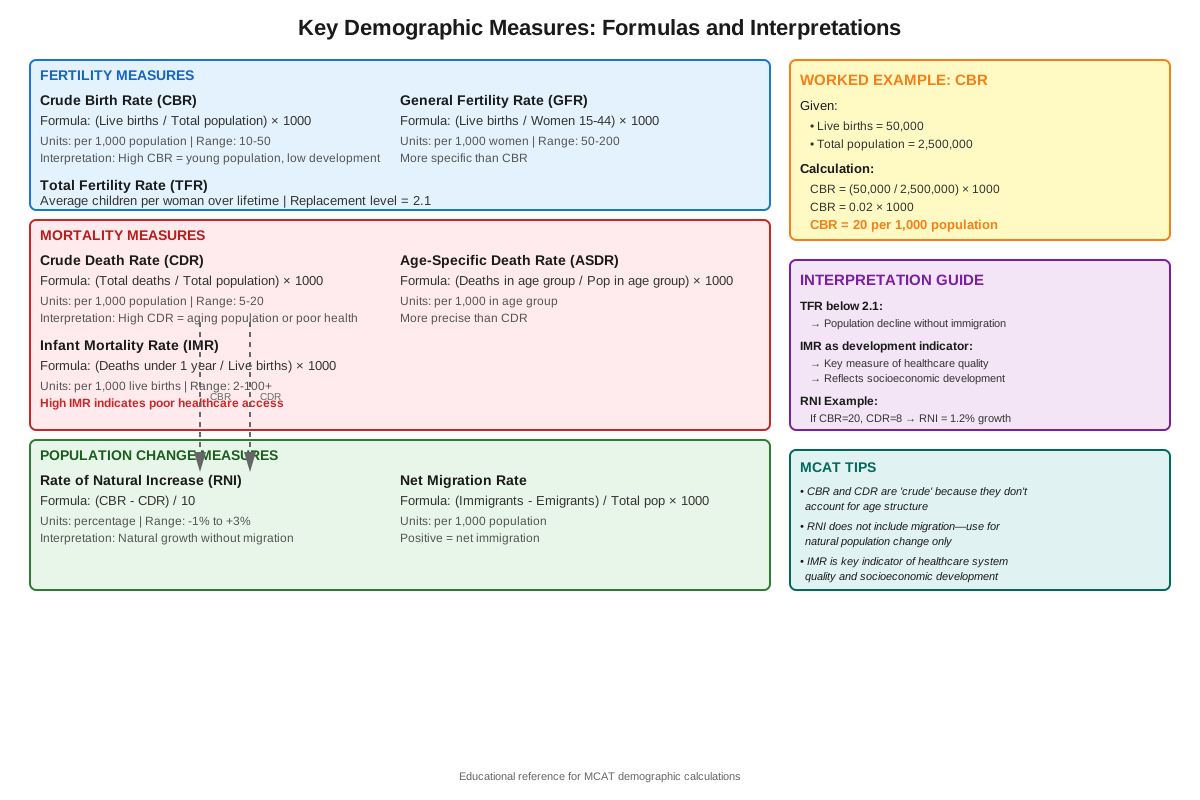
Crude Birth Rate (CBR) represents the number of live births per 1,000 people in a population per year. This measure provides a basic indicator of fertility but doesn't account for age structure variations. The formula is:
CBR = (Number of births / Total population) × 1,000Crude Death Rate (CDR) measures the number of deaths per 1,000 people in a population per year, serving as a basic mortality indicator:
CDR = (Number of deaths / Total population) × 1,000Total Fertility Rate (TFR) estimates the average number of children a woman would have during her reproductive years (typically ages 15-49) if current age-specific fertility rates remained constant. A TFR of approximately 2.1 represents replacement level fertility in developed nations—the rate at which a population exactly replaces itself from one generation to the next without migration.
Infant Mortality Rate (IMR) measures deaths of infants under one year of age per 1,000 live births annually. This sensitive indicator reflects overall population health, healthcare quality, and socioeconomic conditions.
Life Expectancy represents the average number of years a person can expect to live, typically calculated at birth but also measurable at any age. This measure reflects mortality patterns across the entire lifespan and serves as a comprehensive health indicator.
Population Pyramids
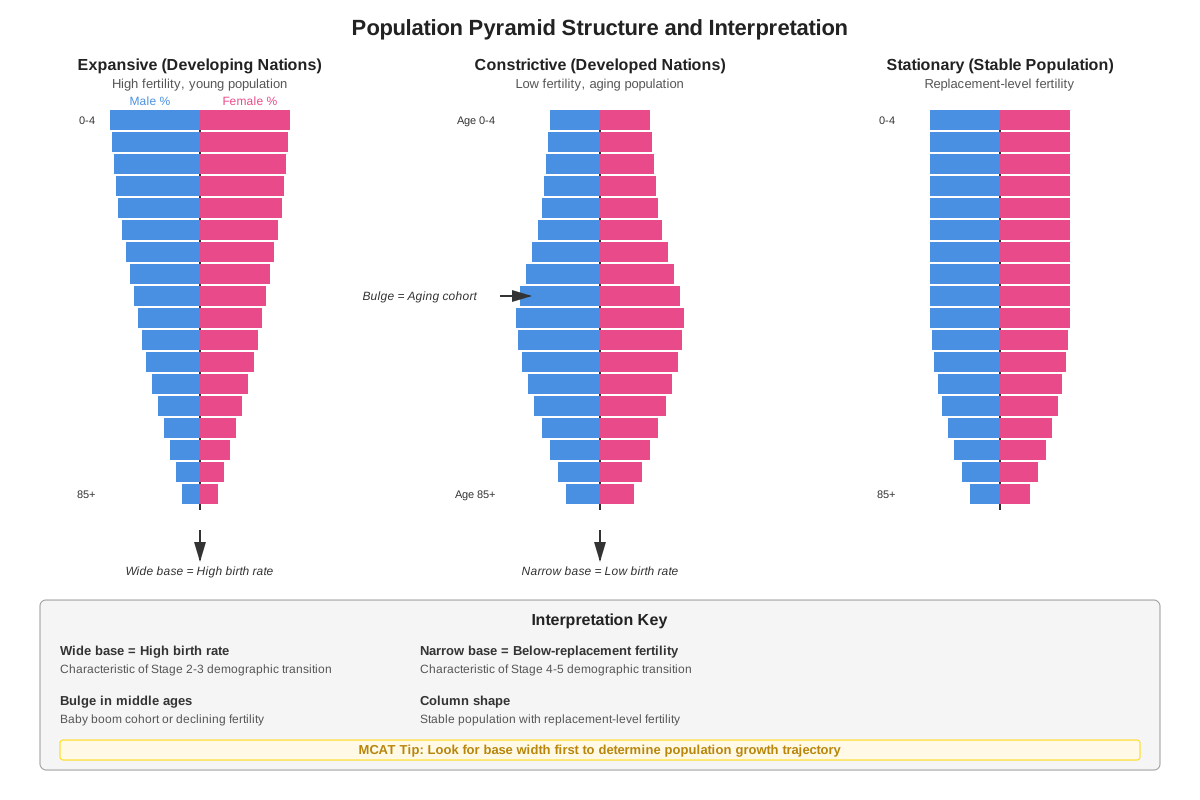
Population pyramids are graphical representations displaying a population's age and sex structure. These diagrams feature age groups on the vertical axis and population size (or percentage) on the horizontal axis, with males typically shown on the left and females on the right. The shape of a population pyramid reveals critical information about a society's demographic history and future trajectory:
Expansive pyramids (wide base, narrow top) characterize populations with high birth rates and rapid growth, typical of developing nations. These populations face challenges providing education and employment for large youth cohorts.
Constrictive pyramids (narrow base, wider middle) indicate declining birth rates and aging populations, common in developed nations. These societies face challenges supporting large elderly populations with smaller working-age cohorts.
Stationary pyramids (relatively uniform width) represent stable populations with balanced birth and death rates, indicating zero or minimal population growth.
Demographic Transition Model
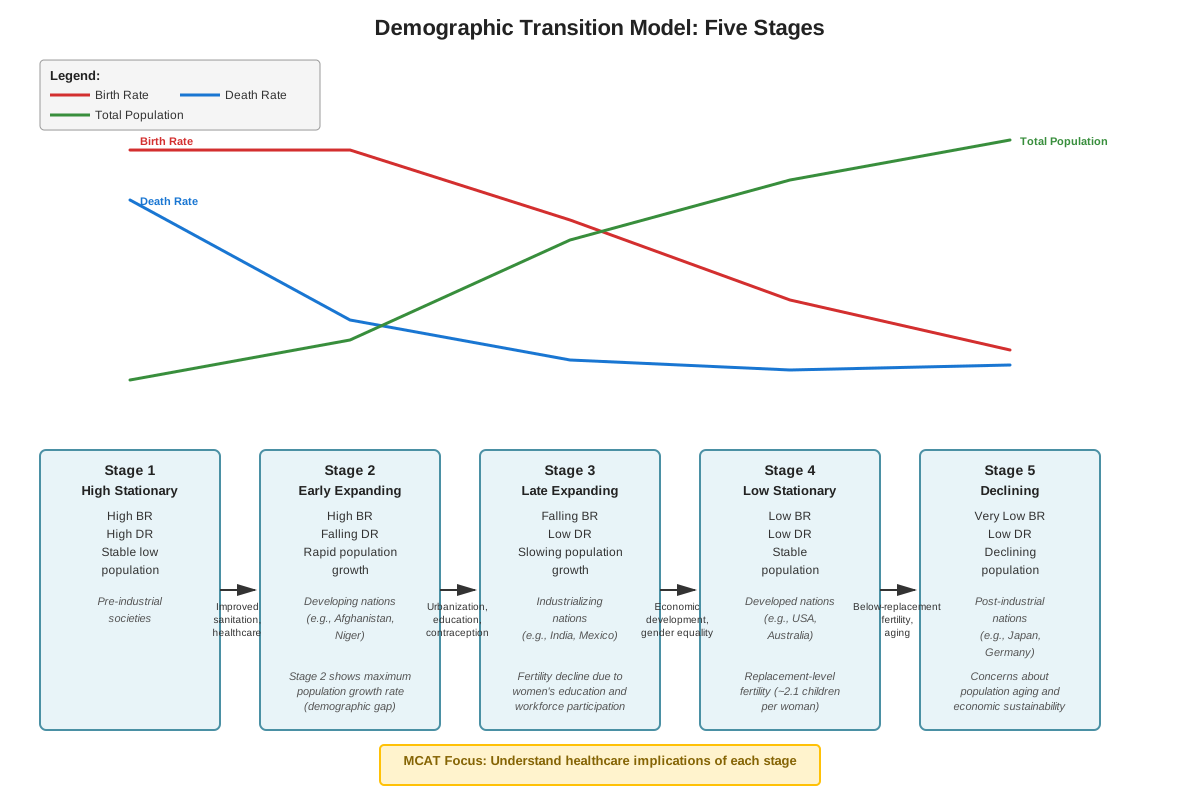
The Demographic Transition Model (DTM) describes the transformation of populations from high birth and death rates to low birth and death rates as societies develop economically. This model consists of four or five stages:
Stage 1 (Pre-transition): High birth rates and high death rates result in slow population growth. Societies lack modern medicine, sanitation, and reliable food supplies. Infant mortality is extremely high, and life expectancy is low (typically under 40 years).
Stage 2 (Early transition): Death rates decline rapidly due to improved sanitation, nutrition, and healthcare, while birth rates remain high. This creates rapid population growth. Many developing nations currently occupy this stage.
Stage 3 (Late transition): Birth rates begin declining as societies urbanize, women gain education and employment opportunities, and contraception becomes available. Death rates continue declining but more slowly. Population growth decelerates.
Stage 4 (Post-transition): Both birth and death rates are low, resulting in slow or zero population growth. Populations age significantly, and societies face challenges supporting elderly populations. Most developed nations occupy this stage.
Stage 5 (Possible further transition): Some demographers propose a fifth stage where birth rates fall below death rates, causing population decline. Countries like Japan and Germany may exemplify this stage.
Migration Patterns
Migration—the movement of people across geographic boundaries—significantly impacts population composition and distribution. Demographers distinguish between:
Immigration: Movement into a population or geographic area
Emigration: Movement out of a population or geographic area
Net migration: The difference between immigration and emigration
Push factors drive people away from origin locations (war, poverty, persecution, environmental disasters), while pull factors attract people to destination locations (economic opportunities, political freedom, family reunification, better living conditions).
Migration creates demographic consequences including brain drain (loss of educated, skilled workers from origin countries), remittances (money sent back to origin countries), and demographic dividends (economic benefits when working-age populations grow faster than dependent populations).
Population Momentum
Population momentum describes continued population growth even after fertility rates decline to replacement level. This phenomenon occurs because populations with large proportions of young people continue growing as these cohorts reach reproductive age. Population momentum explains why developing nations with declining fertility rates still experience substantial growth for decades.
Dependency Ratios
The dependency ratio measures the proportion of dependents (typically those under 15 and over 64) relative to the working-age population (ages 15-64):
Dependency Ratio = [(Population under 15 + Population over 64) / Population ages 15-64] × 100The youth dependency ratio focuses on children, while the old-age dependency ratio focuses on elderly populations. High dependency ratios indicate economic challenges as fewer workers support more dependents. Aging societies face increasing old-age dependency ratios, straining pension and healthcare systems.
Urbanization
Urbanization represents the increasing proportion of a population living in urban rather than rural areas. This demographic shift accompanies industrialization and economic development, creating concentrated populations in cities. Urbanization affects fertility rates (typically declining in urban areas), mortality patterns, migration flows, and social organization. The MCAT frequently tests understanding of urbanization's health implications, including both benefits (better healthcare access) and challenges (pollution, overcrowding, infectious disease transmission).
Concept Relationships
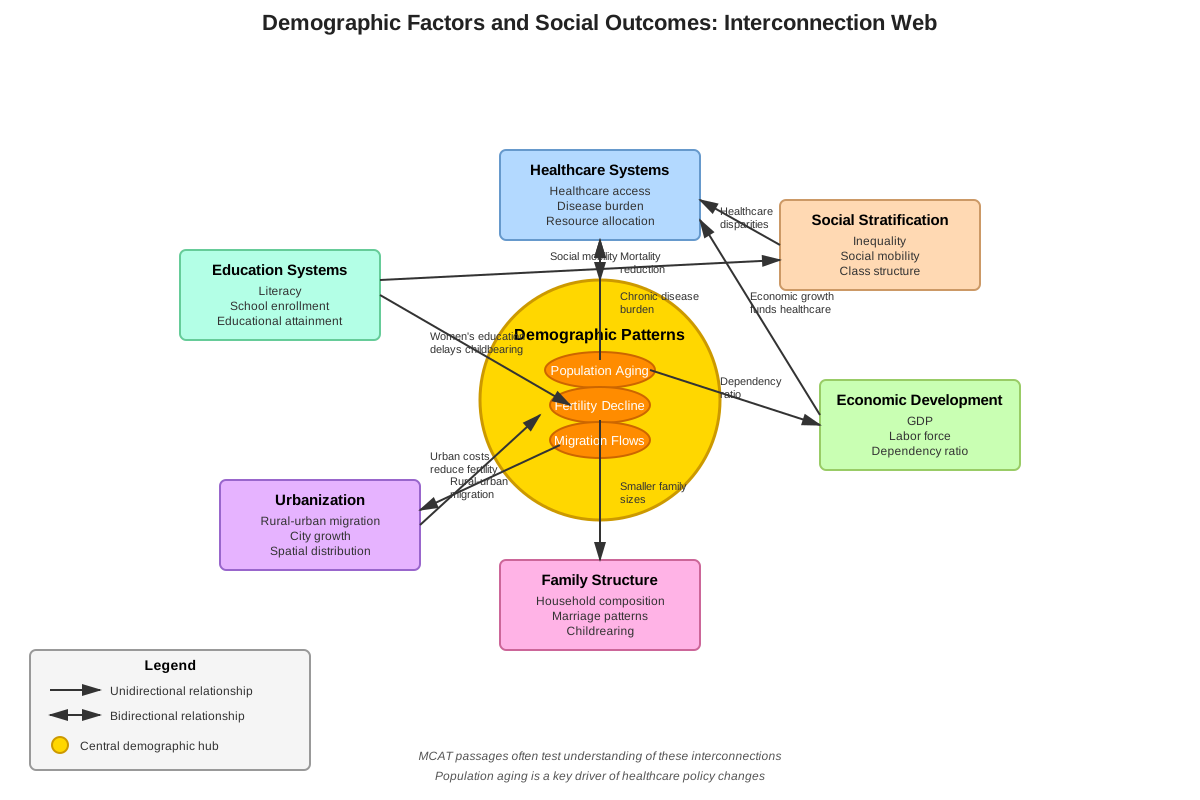
Demographic concepts form an interconnected system where changes in one element cascade through others. The Demographic Transition Model serves as the organizing framework, with declining death rates (Stage 2) preceding declining birth rates (Stage 3), creating the population momentum that drives continued growth even as fertility approaches replacement level. This transition fundamentally alters population pyramids, transforming expansive shapes into constrictive ones as societies age.
Migration patterns both respond to and drive demographic change—economic development creates pull factors attracting immigrants, while rapid population growth in Stage 2 societies creates push factors encouraging emigration. These movements alter dependency ratios in both origin and destination populations, as migrants are typically working-age adults. Urbanization accelerates demographic transitions by concentrating populations where education, healthcare, and employment opportunities reduce fertility rates.
Key demographic measures interconnect mathematically and conceptually: crude birth rates minus crude death rates (plus net migration) determine population growth rates. Total fertility rates predict future age structures, while infant mortality rates reflect the broader mortality patterns captured in life expectancy. Dependency ratios emerge from age structures displayed in population pyramids, which themselves result from historical patterns of fertility, mortality, and migration.
These demographic concepts connect to broader sociological topics: social stratification creates demographic disparities (wealthy populations have lower infant mortality and higher life expectancy), healthcare access affects mortality patterns, family structure influences fertility rates, and social movements may emerge from demographic pressures (youth bulges correlating with political instability). Understanding these relationships enables sophisticated analysis of MCAT passages integrating demographic data with social phenomena.
Quick check — test yourself on Demography so far.
Try Flashcards →High-Yield Facts
⭐ The Demographic Transition Model progresses from high birth/death rates → declining death rates → declining birth rates → low birth/death rates as societies develop economically
⭐ Replacement level fertility (TFR ≈ 2.1 in developed nations) represents the fertility rate at which a population exactly replaces itself without migration
⭐ Population pyramids with wide bases indicate young, rapidly growing populations, while narrow bases indicate aging, slow-growing or declining populations
⭐ Population momentum causes continued growth for decades even after fertility reaches replacement level due to large cohorts of young people entering reproductive years
⭐ Infant mortality rate serves as a sensitive indicator of overall population health, healthcare quality, and socioeconomic development
- Crude birth rate and crude death rate are expressed per 1,000 people per year, while infant mortality rate is expressed per 1,000 live births per year
- The dependency ratio increases in both very young populations (high youth dependency) and aging populations (high old-age dependency)
- Urbanization typically correlates with declining fertility rates due to increased education, employment opportunities, and contraceptive access
- Migration creates brain drain in origin countries when educated, skilled workers emigrate to destination countries
- Life expectancy at birth reflects mortality patterns across the entire lifespan and serves as a comprehensive population health indicator
- Stage 2 of the Demographic Transition Model produces the most rapid population growth due to declining death rates while birth rates remain high
- Net migration equals immigration minus emigration and can significantly impact population size and composition independent of natural increase
Common Misconceptions
Misconception: Demography only studies population size and growth rates.
Correction: Demography examines multiple dimensions including age structure, sex ratios, geographic distribution, and composition by various characteristics (race, ethnicity, socioeconomic status). Population pyramids, dependency ratios, and migration patterns are equally important demographic concerns beyond simple size and growth.
Misconception: High birth rates always indicate rapid population growth.
Correction: Population growth depends on the relationship between birth rates and death rates. Stage 1 societies have high birth rates but also high death rates, resulting in slow growth. Only when death rates decline while birth rates remain high (Stage 2) does rapid growth occur.
Misconception: Once fertility reaches replacement level (TFR ≈ 2.1), population growth immediately stops.
Correction: Population momentum causes continued growth for 50-70 years after reaching replacement fertility because large cohorts of young people continue entering reproductive years. The population stabilizes only after these cohorts age through the reproductive period.
Misconception: Population pyramids always have pyramid shapes.
Correction: Only expansive pyramids (young, rapidly growing populations) have traditional pyramid shapes. Constrictive pyramids (aging populations) have narrow bases and wider middles, while stationary pyramids have relatively uniform widths. The shape reflects demographic history and current trends.
Misconception: Crude birth rate and total fertility rate measure the same thing.
Correction: Crude birth rate measures births per 1,000 total population per year (affected by age structure), while total fertility rate estimates average children per woman during reproductive years (standardized across age structures). TFR provides a better comparison across populations with different age structures.
Misconception: Urbanization causes population growth.
Correction: Urbanization represents population redistribution from rural to urban areas, not population growth itself. In fact, urbanization typically correlates with declining fertility rates and slower population growth as urban residents have fewer children than rural residents.
Misconception: All developed nations have completed the demographic transition and reached Stage 4.
Correction: While most developed nations are in Stage 4, some may be entering a proposed Stage 5 with birth rates below death rates, causing population decline. Additionally, some nations have experienced temporary reversals or stalls in the transition due to economic crises, wars, or epidemics.
Worked Examples
Example 1: Interpreting Population Pyramids
Scenario: An MCAT passage presents two population pyramids. Country A shows a wide base (ages 0-14 comprising 40% of population), progressively narrowing toward the top (ages 65+ comprising 3% of population). Country B shows a narrow base (ages 0-14 comprising 18% of population), a wide middle (ages 15-64 comprising 66% of population), and a substantial top (ages 65+ comprising 16% of population).
Question: Which statement best describes the demographic situations of these countries?
Analysis:
Country A's pyramid shape indicates an expansive pyramid characteristic of a young, rapidly growing population. The wide base (40% under age 15) suggests high birth rates, while the narrow top (only 3% over 65) indicates high mortality rates and low life expectancy. This pattern is typical of Stage 2 in the Demographic Transition Model, where death rates have begun declining but birth rates remain high. Country A likely faces challenges providing education and employment for its large youth cohort but benefits from a low dependency ratio currently (though this will increase as the large young cohort ages).
Country B's pyramid shape indicates a constrictive pyramid characteristic of an aging, slow-growing or stable population. The narrow base (18% under age 15) suggests low birth rates, while the substantial top (16% over 65) indicates low mortality rates and high life expectancy. This pattern is typical of Stage 4 in the Demographic Transition Model. Country B likely faces challenges supporting its aging population, including healthcare costs and pension obligations, reflected in a high old-age dependency ratio.
Answer: Country A is experiencing rapid population growth with a young age structure (Stage 2), while Country B has slow or zero growth with an aging population (Stage 4). Country A will face youth-related challenges (education, employment), while Country B will face elderly-related challenges (healthcare, pensions).
Connection to Learning Objectives: This example demonstrates applying demographic concepts to interpret population pyramids and connecting demographic patterns to the Demographic Transition Model, directly addressing the objectives of applying demography to exam-style questions and connecting demographic concepts.
Example 2: Calculating and Interpreting Demographic Measures
Scenario: An MCAT passage provides the following data for a hypothetical country:
- Total population: 10,000,000
- Live births in one year: 180,000
- Deaths in one year: 90,000
- Deaths of infants under 1 year: 3,600
- Female population ages 15-49: 2,500,000
Question: Calculate the crude birth rate, crude death rate, and infant mortality rate. What do these measures suggest about this country's demographic stage?
Analysis:
Crude Birth Rate (CBR):
CBR = (180,000 births / 10,000,000 population) × 1,000 = 18 per 1,000Crude Death Rate (CDR):
CDR = (90,000 deaths / 10,000,000 population) × 1,000 = 9 per 1,000Infant Mortality Rate (IMR):
IMR = (3,600 infant deaths / 180,000 live births) × 1,000 = 20 per 1,000 live birthsInterpretation: The CBR of 18 per 1,000 indicates moderate to moderately high fertility. The CDR of 9 per 1,000 indicates relatively low mortality. The difference (CBR - CDR = 9 per 1,000) suggests a natural increase rate of 0.9% annually, indicating moderate population growth. The IMR of 20 per 1,000 live births is moderately high by global standards (developed nations typically have IMRs under 10 per 1,000), suggesting this country has made progress in reducing mortality but still faces healthcare and socioeconomic challenges.
These measures collectively suggest a country in Stage 2 or early Stage 3 of the Demographic Transition Model. Death rates have declined substantially (reflected in the relatively low CDR), but birth rates remain moderately high, creating population growth. The moderately high infant mortality rate indicates incomplete progress in healthcare development. This country is likely experiencing economic development, improved sanitation and healthcare access, but has not yet achieved the low fertility rates characteristic of fully developed nations.
Connection to Learning Objectives: This example demonstrates calculating key demographic measures and interpreting their meaning, directly addressing the objective of calculating and analyzing demographic measures and applying demographic concepts to understand population dynamics.
Exam Strategy
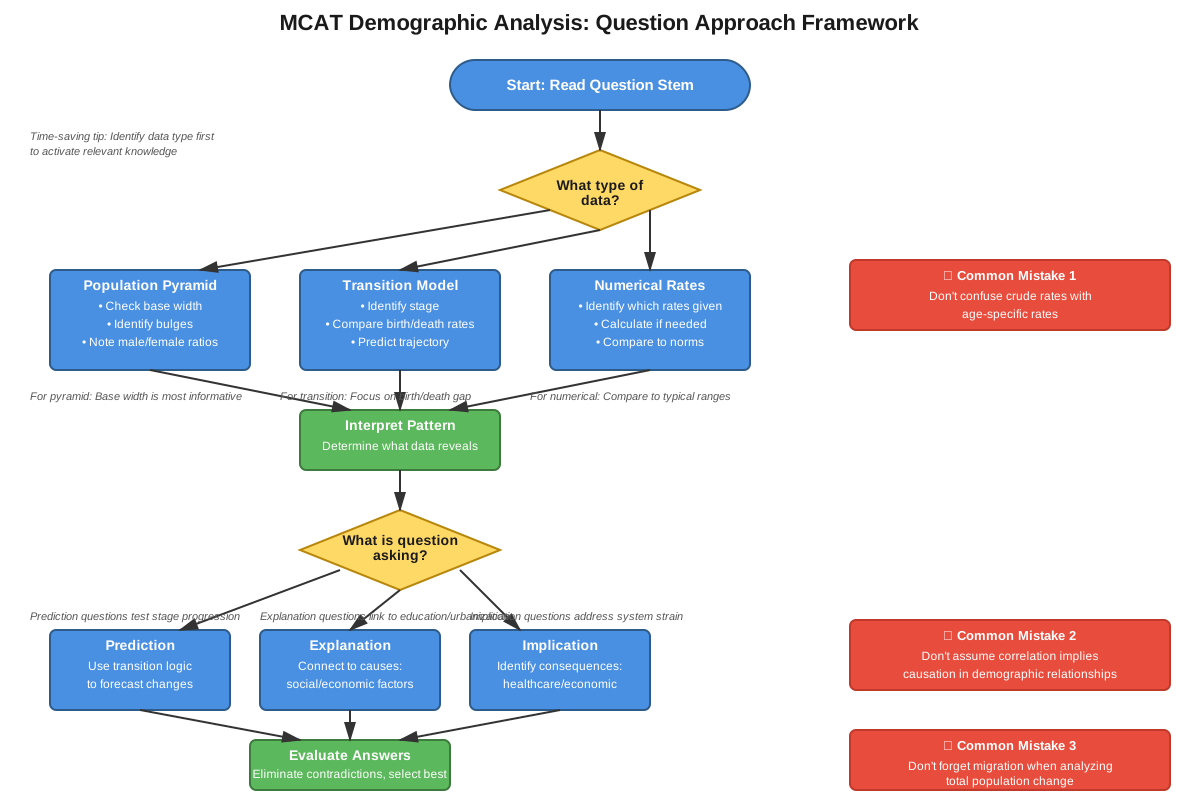
When approaching MCAT questions on demography, begin by identifying the demographic stage or pattern described. Population pyramids, birth/death rates, and descriptions of social conditions provide clues about whether a population is young and growing, aging and stable, or declining. This contextual understanding helps predict associated social phenomena and healthcare challenges.
Trigger words and phrases to watch for include:
- "Aging population," "graying society" → suggests Stage 4, high old-age dependency, healthcare challenges
- "Youth bulge," "young population" → suggests Stage 2, rapid growth, education/employment challenges
- "Replacement level fertility" → TFR ≈ 2.1, but remember population momentum
- "Urbanization," "rural-to-urban migration" → typically correlates with declining fertility
- "Brain drain" → emigration of educated workers, typically from developing to developed nations
- "Dependency ratio" → focus on who supports whom economically
For data interpretation questions, carefully note whether rates are expressed per 1,000 population (CBR, CDR) or per 1,000 live births (IMR). Distinguish between crude rates (affected by age structure) and standardized rates (controlling for age structure). When comparing populations, consider whether differences reflect true demographic variation or merely different age structures.
Process-of-elimination strategies: Eliminate answer choices that confuse demographic stages (e.g., attributing rapid growth to Stage 4 populations) or misunderstand population momentum (suggesting immediate stabilization after reaching replacement fertility). Eliminate choices that reverse cause and effect (e.g., claiming urbanization causes population growth rather than redistribution). Watch for choices that overgeneralize—demographic patterns have exceptions based on specific historical, cultural, and policy contexts.
Time allocation: Demographic questions often present data tables or graphs requiring interpretation. Spend 30-45 seconds analyzing the data structure before reading questions. For calculation questions, quickly estimate whether the answer should be large or small before computing precisely. For conceptual questions, identify the demographic stage first, then predict associated characteristics before evaluating answer choices.
Memory Techniques
Demographic Transition Model Stages Mnemonic: "Poor Economies Later Prosper Slowly"
- Pre-transition (Stage 1): High birth/death rates
- Early transition (Stage 2): Death rates drop, rapid growth
- Late transition (Stage 3): Birth rates drop, slowing growth
- Post-transition (Stage 4): Low birth/death rates, stable
- Super-post-transition (Stage 5): Birth rates below death rates, decline
Population Pyramid Shapes: Visualize actual shapes:
- Expansive = Expanding base (wide bottom) = young, growing
- Constrictive = Constricted base (narrow bottom) = aging, stable/declining
- Stationary = Straight sides (uniform) = balanced, stable
Dependency Ratio Components: "Young and Old depend on Workers"
- Youth (under 15) + Old (over 64) / Working age (15-64)
Migration Push/Pull Factors: "WEEP pushes, JOLF pulls"
- Push factors: War, Economic hardship, Environmental disaster, Persecution
- Pull factors: Jobs, Opportunity, Liberty, Family
Key Rates Visualization: Create a mental image of a population of 1,000 people in a stadium. CBR of 20 means 20 babies born in that stadium yearly. CDR of 10 means 10 people die. IMR of 15 means 15 of every 1,000 babies born don't reach their first birthday. This concrete visualization helps remember that these are rates per 1,000.
Summary
Demography, the statistical study of human populations, provides essential tools for understanding population size, structure, distribution, and change over time. The field examines vital statistics including birth rates, death rates, migration patterns, and age distributions through measures such as crude birth rate, crude death rate, total fertility rate, infant mortality rate, and life expectancy. Population pyramids graphically display age and sex structures, revealing whether populations are young and growing (expansive), aging and stable (constrictive), or balanced (stationary). The Demographic Transition Model describes how populations transform from high birth and death rates to low birth and death rates through four or five stages as societies develop economically. Population momentum causes continued growth even after fertility reaches replacement level due to large cohorts of young people entering reproductive years. Migration patterns, dependency ratios, and urbanization further shape population characteristics and create social consequences. For the MCAT, mastering demography enables interpretation of data-rich passages, prediction of healthcare challenges associated with different demographic patterns, and understanding of how population characteristics relate to health disparities and social change.
Key Takeaways
- Demography studies population size, structure, distribution, and change through quantitative measures including birth rates, death rates, fertility rates, and migration patterns
- Population pyramids reveal demographic patterns: wide bases indicate young, growing populations while narrow bases indicate aging, stable or declining populations
- The Demographic Transition Model describes progression from high birth/death rates → declining death rates → declining birth rates → low birth/death rates as societies develop
- Population momentum causes continued growth for decades after reaching replacement level fertility (TFR ≈ 2.1) due to large young cohorts entering reproductive years
- Key demographic measures include crude birth rate and crude death rate (per 1,000 population), infant mortality rate (per 1,000 live births), total fertility rate (children per woman), and life expectancy
- Dependency ratios measure the proportion of dependents (young and old) relative to working-age populations, with high ratios indicating economic challenges
- Demographic patterns connect to broader social phenomena including healthcare access, social stratification, urbanization, and social change
Related Topics
Epidemiology and Population Health: Demography provides the population framework for understanding disease distribution, with demographic characteristics (age, sex, location) serving as key epidemiological variables. Mastering demography enables deeper analysis of how population patterns affect health outcomes.
Social Stratification and Health Disparities: Demographic patterns vary systematically across social classes, races, and ethnic groups, with privileged groups typically showing lower mortality and fertility rates. Understanding demography enhances analysis of health inequalities.
Healthcare Systems and Policy: Demographic shifts create healthcare challenges requiring policy responses—aging populations need geriatric services, while young populations need pediatric and maternal care. Demographic knowledge enables evaluation of healthcare system adequacy.
Urbanization and Social Change: The demographic shift from rural to urban living transforms social organization, family structure, and health patterns. Demography provides tools for analyzing urbanization's social consequences.
Family and Social Institutions: Fertility patterns reflect and shape family structures, while demographic changes affect all social institutions. Understanding demography deepens analysis of institutional change.
Practice CTA
Now that you've mastered the core concepts of demography, it's time to reinforce your learning through active practice. Attempt the practice questions and flashcards associated with this topic to test your ability to interpret population pyramids, calculate demographic measures, and apply the Demographic Transition Model to novel scenarios. Remember, the MCAT rewards not just knowledge but the ability to apply concepts to unfamiliar situations—practice questions develop this critical skill. Each question you work through strengthens your pattern recognition and builds confidence for test day. You've built a strong foundation; now solidify it through deliberate practice!
Sign up free to keep reading
Create a free AnvayaPrep account to finish this MCAT guide on Demography — plus flashcards and practice questions.