Overview
The family is one of the most fundamental social institutions examined in Sociology and represents a critical topic within the MCAT's Social Structure and Institutions content category. As a primary agent of socialization and the basic unit of social organization across virtually all human societies, understanding family sociology requires mastery of how families are defined, structured, and how they function to transmit culture, provide economic support, and shape individual identity. The MCAT tests not only definitional knowledge but also the ability to analyze how family structures influence health behaviors, access to healthcare, social mobility, and psychological development.
Family appears frequently on the MCAT in both discrete questions and passage-based contexts, often integrated with topics such as socialization, social inequality, cultural transmission, and health disparities. Test-makers favor questions that require students to apply sociological perspectives to real-world scenarios involving family dynamics, changing family structures, or the relationship between family organization and health outcomes. Understanding family from a sociological lens means moving beyond personal experience to recognize families as socially constructed institutions that vary across cultures, historical periods, and socioeconomic contexts.
This topic connects intimately with broader sociological concepts including social institutions, culture, socialization, social stratification, and demographic change. Mastery of family sociology enables deeper understanding of how macro-level social forces shape micro-level interactions and individual outcomes—a core analytical skill the MCAT assesses throughout its Psychological, Social, and Biological Foundations section.
Learning Objectives
- [ ] Define Family using accurate Sociology terminology
- [ ] Explain why Family matters for the MCAT
- [ ] Apply Family to exam-style questions
- [ ] Identify common mistakes related to Family
- [ ] Connect Family to related Sociology concepts
- [ ] Distinguish between different family structures and kinship patterns
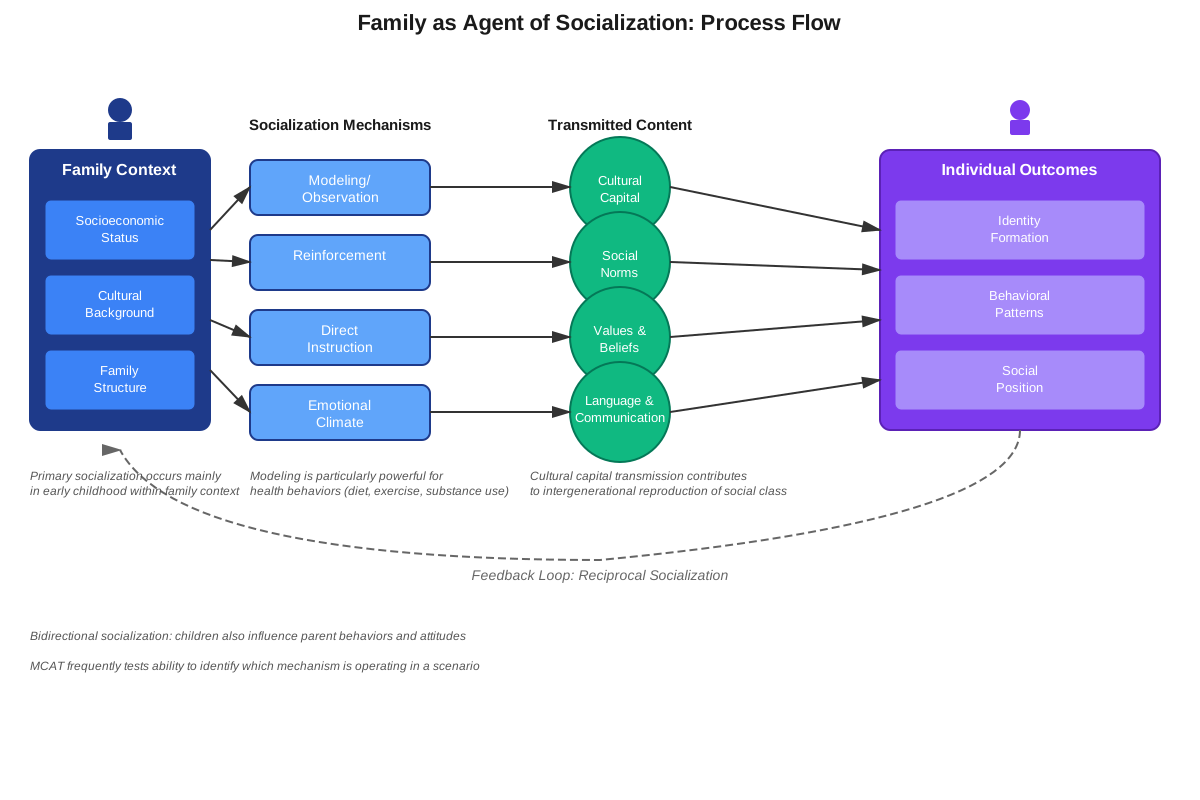
- [ ] Analyze how family functions as an agent of socialization and social control
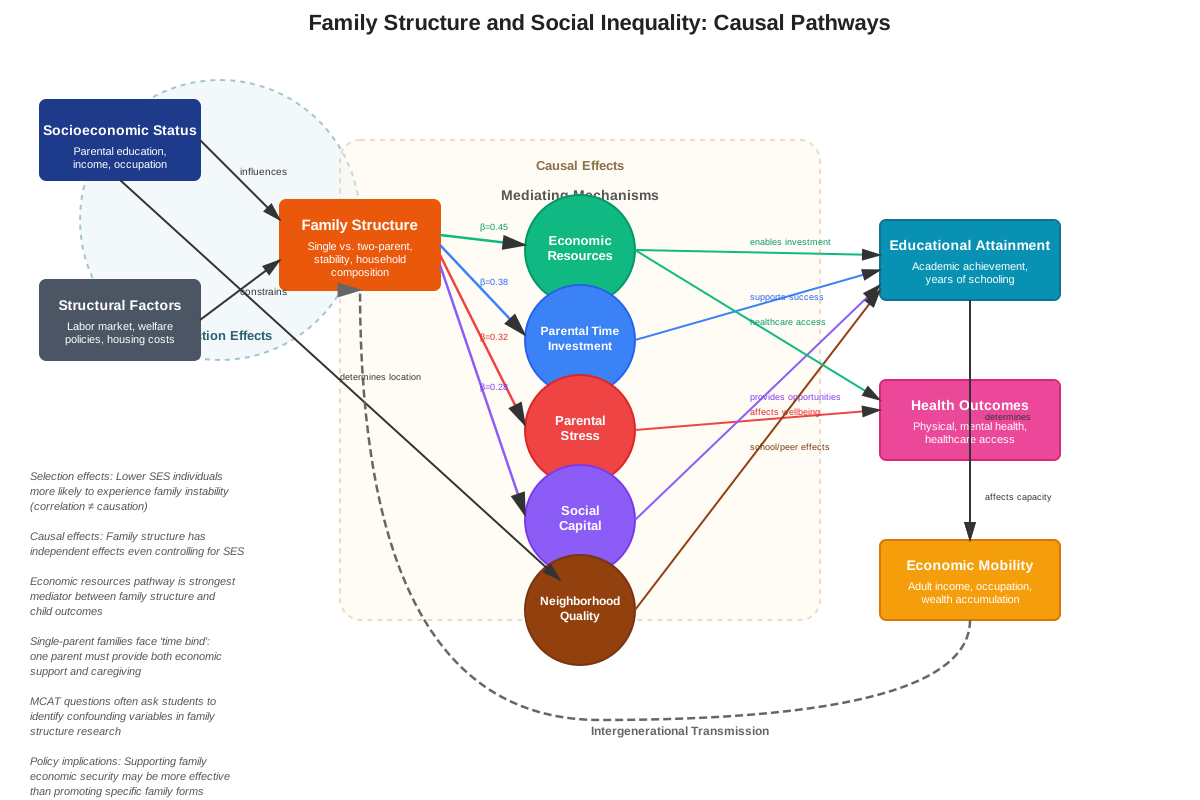
- [ ] Evaluate the relationship between family structure and social inequality
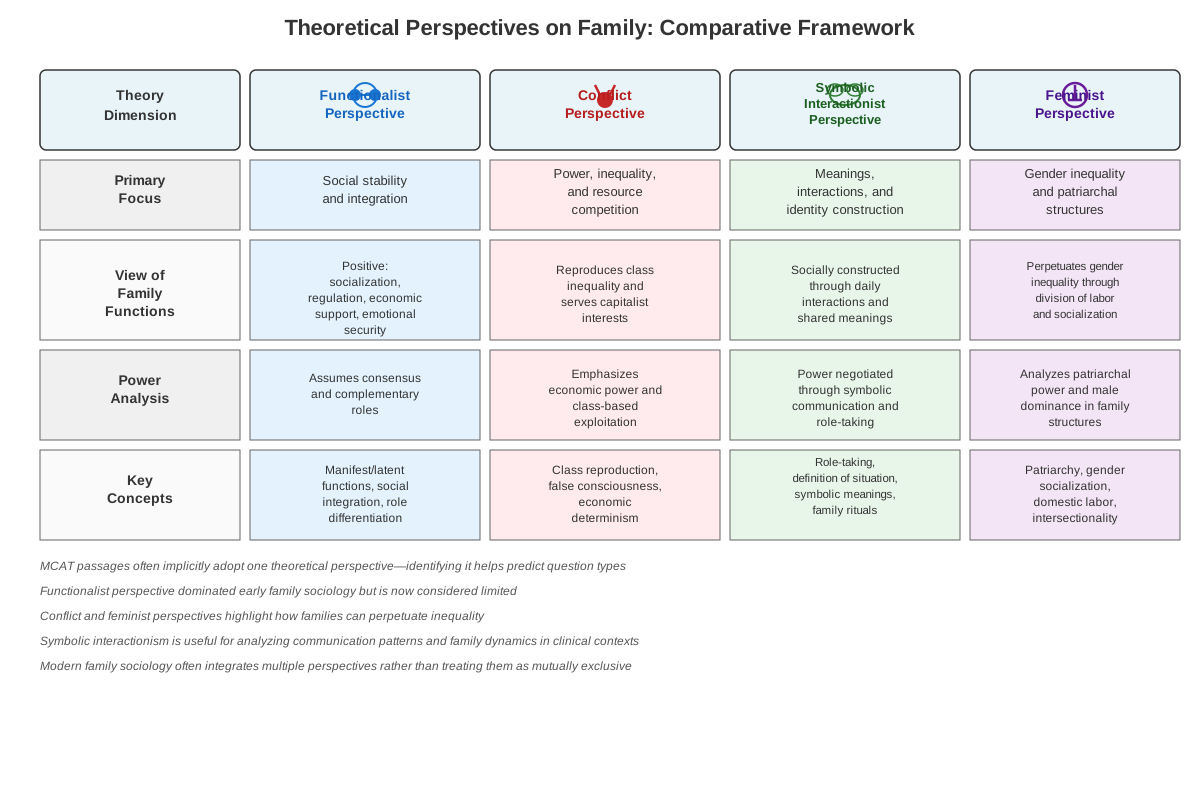
- [ ] Compare theoretical perspectives on family (functionalist, conflict, symbolic interactionist, feminist)
Prerequisites
- Basic Sociology terminology: Understanding terms like social institution, social structure, and norms is essential for contextualizing family within broader sociological frameworks
- Socialization concepts: Knowledge of how individuals learn cultural norms and values provides foundation for understanding family's role as primary socialization agent
- Culture fundamentals: Familiarity with cultural variation and cultural transmission helps explain diversity in family forms across societies
- Social stratification basics: Understanding social class, inequality, and social mobility connects to how families reproduce or challenge social hierarchies
Why This Topic Matters
Family represents one of the highest-yield topics in MCAT Sociology because it intersects with numerous other testable concepts and appears in diverse question formats. Clinically, understanding family structures and dynamics is essential for physicians who must consider family support systems, intergenerational health patterns, caregiving arrangements, and how family contexts influence patient compliance, mental health, and health-seeking behaviors. Medical practice increasingly recognizes that effective treatment requires understanding patients within their family contexts, making this sociological knowledge directly applicable to clinical scenarios.
On the MCAT, family-related content appears in approximately 8-12% of Sociology questions, making it one of the most frequently tested social institutions. Questions typically present in three formats: (1) discrete questions testing definitional knowledge of family types and kinship patterns, (2) passage-based questions analyzing research on family dynamics and health outcomes, and (3) application questions requiring students to identify how family structure influences socialization, social mobility, or health disparities. The AAMC particularly favors questions that integrate family with topics like social capital, cultural capital, health inequalities, and life course perspectives.
Common passage contexts include research on single-parent households and child outcomes, multigenerational living arrangements and elderly care, changing marriage patterns and their social implications, family structure variations across ethnic groups, and the relationship between family socioeconomic status and educational achievement. Recognizing these patterns helps students anticipate question angles and activate relevant conceptual frameworks efficiently during the exam.
Core Concepts
Defining Family
Family is defined sociologically as a socially recognized group of individuals connected through blood relations (consanguinity), marriage or legal partnership (affinity), or adoption, who typically share economic resources, provide mutual care and support, and often reside together. This definition emphasizes that families are social constructs—their boundaries, composition, and functions are defined by social norms rather than biological imperatives alone. The sociological perspective recognizes that what constitutes a "family" varies significantly across cultures, historical periods, and even within the same society.
The concept of kinship extends beyond the nuclear family to encompass the broader network of relatives and the social rules governing relationships among them. Kinship systems determine inheritance patterns, marriage rules, residence patterns, and obligations among relatives. Understanding kinship helps explain why family structures differ globally and how these differences reflect underlying cultural values and economic systems.
Family Structures and Types
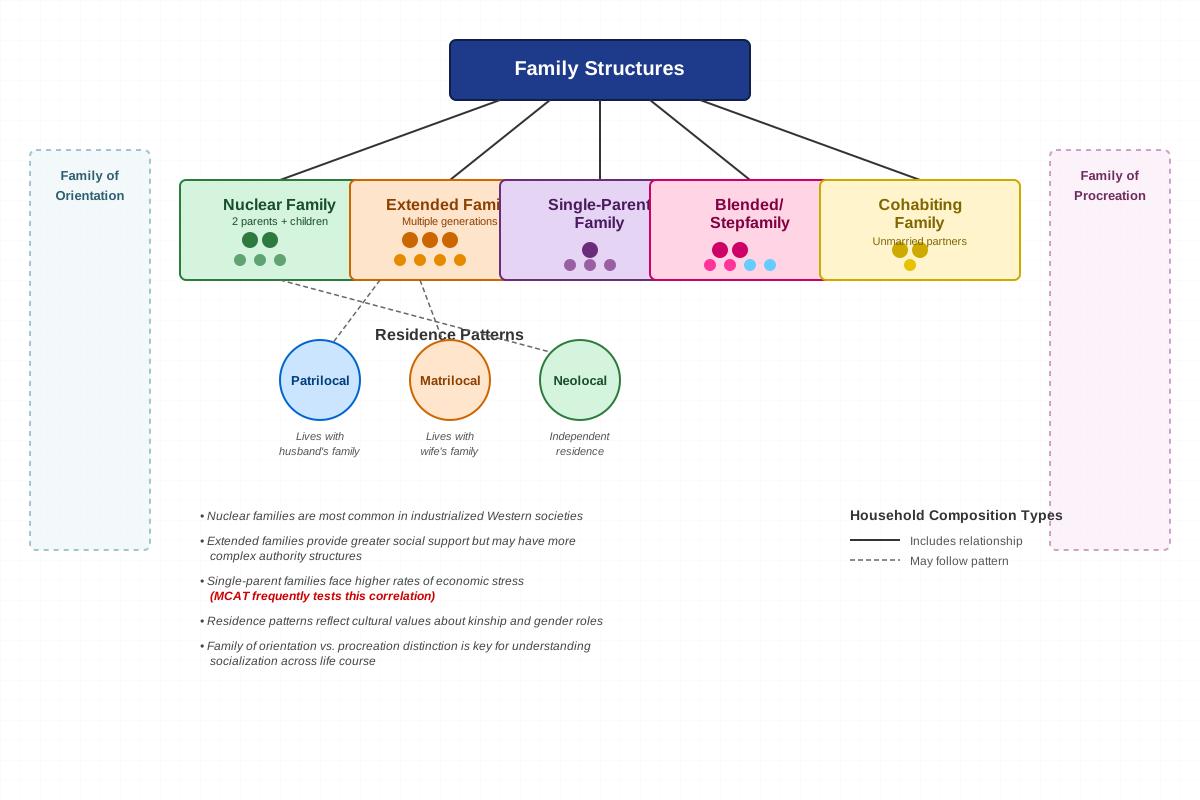
Family structures can be categorized along multiple dimensions, each reflecting different organizational principles:
| Family Type | Definition | Key Characteristics |
|---|---|---|
| Nuclear family | Two parents and their biological or adopted children | Traditional Western ideal; economically independent unit |
| Extended family | Multiple generations and/or siblings with their families living together or in close proximity | Common in collectivist cultures; shared resources and childcare |
| Single-parent family | One parent raising children without a co-resident partner | Increasing prevalence; often faces economic challenges |
| Blended family | Remarried couples with children from previous relationships | Also called stepfamilies; complex kinship dynamics |
| Cohabiting family | Unmarried partners living together, with or without children | Increasingly common; varies in stability and social recognition |
| Chosen family | Non-biologically related individuals who function as family | Common in LGBTQ+ communities; emphasizes social construction of family |
Family of orientation refers to the family into which one is born or raised, serving as the primary socialization context. Family of procreation refers to the family one establishes through marriage or partnership and reproduction. This distinction helps sociologists analyze how individuals transition between family roles across the life course.
Kinship Patterns and Residence
Societies organize kinship along several dimensions that structure family relationships and obligations:
Descent patterns determine how kinship is traced:
- Patrilineal descent: Kinship traced through the father's line
- Matrilineal descent: Kinship traced through the mother's line
- Bilateral descent: Kinship traced through both parents equally (most common in Western societies)
Residence patterns describe where newly married couples establish their household:
- Patrilocal residence: Couple lives with or near husband's family
- Matrilocal residence: Couple lives with or near wife's family
- Neolocal residence: Couple establishes independent household (common in industrialized societies)
Authority patterns indicate who holds decision-making power:
- Patriarchy: Male-dominated family structure with fathers/husbands holding primary authority
- Matriarchy: Female-dominated family structure (rare as a societal norm)
- Egalitarian: Relatively equal power distribution between partners
Functions of Family
From a functionalist perspective, families serve several essential functions that maintain social stability:
- Reproduction and population replacement: Ensuring biological continuation of society
- Socialization: Transmitting culture, values, norms, and language to children (primary socialization)
- Economic support: Pooling resources, providing for members' material needs
- Emotional support: Providing intimacy, companionship, and psychological security
- Social placement: Conferring social status and identity through family position
- Social control: Regulating sexual behavior and monitoring members' conduct
The conflict perspective challenges this harmonious view, emphasizing how families reproduce social inequality. Families transmit not just culture but also social capital (networks and connections), cultural capital (knowledge, skills, and cultural competencies), and economic capital (wealth and resources) unequally across social classes. This intergenerational transmission of advantage and disadvantage perpetuates stratification systems. Conflict theorists also highlight power imbalances within families, including gender inequality in domestic labor and economic dependency.
Feminist perspectives specifically examine how families are sites of gender socialization and patriarchal control, where traditional gender roles are learned and reinforced. Feminist scholars analyze the gendered division of household labor, the undervaluation of care work, and how family structures can limit women's economic independence and career opportunities.
Symbolic interactionist perspectives focus on the micro-level dynamics of family life—how family members create shared meanings, negotiate roles, and construct family identity through daily interactions. This perspective examines how families develop unique communication patterns, rituals, and definitions of situations that shape members' self-concepts and relationships.
Marriage Patterns
Marriage is a legally and/or socially recognized union between individuals that establishes kinship ties and typically involves economic cooperation, sexual partnership, and shared responsibility for children. Marriage patterns vary significantly:
- Monogamy: Marriage between two individuals (most common in Western societies)
- Polygamy: Marriage involving more than two partners
- Polygyny: One man married to multiple women (most common form of polygamy globally)
- Polyandry: One woman married to multiple men (rare)
Endogamy refers to marriage within one's social group (religion, ethnicity, class), while exogamy refers to marriage outside one's group. Most societies practice some form of endogamy, which helps maintain group boundaries and consolidate resources within communities. Homogamy describes the tendency for people to marry others with similar social characteristics (education, age, race, religion)—a pattern that reinforces social stratification.
Contemporary Family Trends
Modern industrialized societies have experienced significant family transformations:
- Delayed marriage and childbearing: Average age at first marriage and first birth has increased substantially
- Increased cohabitation: More couples live together without marrying
- Rising divorce rates: Though rates have stabilized or declined in recent decades
- Single-parent households: Increasing proportion of children raised in single-parent families
- Dual-earner families: Both partners employed outside the home has become normative
- Declining fertility: Birth rates below replacement level in many developed nations
- Same-sex marriage legalization: Expanding legal recognition of diverse family forms
- Multigenerational households: Increasing due to economic pressures and aging populations
These trends reflect broader social changes including women's increased labor force participation, changing gender norms, economic pressures requiring dual incomes, increased individualism, and greater acceptance of family diversity.
Concept Relationships
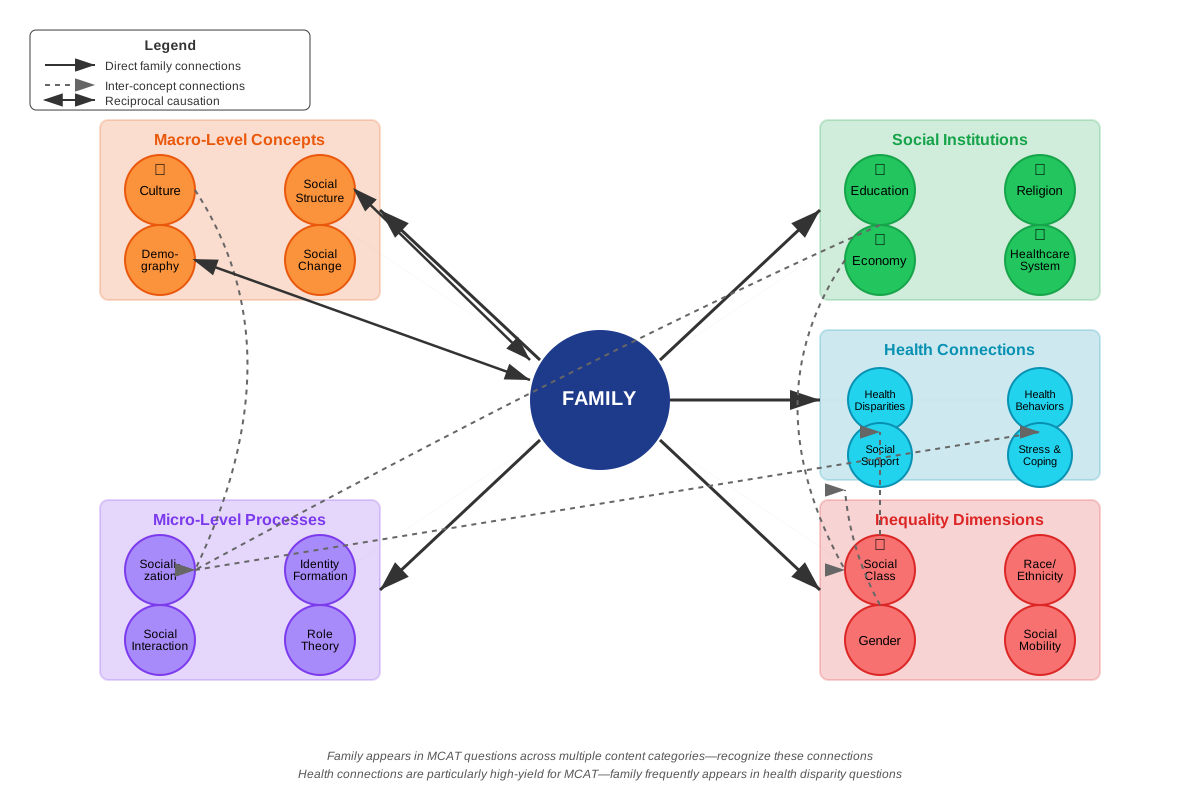
Family concepts form an interconnected system where structural features influence functional outcomes. Family structure (nuclear, extended, single-parent) → determines → resource availability and socialization patterns → which influence → child outcomes and social mobility. The kinship system (descent, residence, authority patterns) → shapes → family obligations and power dynamics → which affect → gender roles and intergenerational relationships.
Family connects to broader sociological concepts through multiple pathways. Socialization depends fundamentally on family as the primary agent transmitting culture and forming personality. Social stratification is reproduced through families' transmission of capital (economic, social, cultural) across generations. Social institutions interact as family structures both influence and are influenced by economic systems, educational institutions, and religious organizations. Demographic change (fertility, mortality, migration) directly shapes family composition and size.
The relationship flows bidirectionally: Macro-level social forces (industrialization, urbanization, economic systems) → transform → family structures and norms → which in turn shape → individual experiences and outcomes → that aggregate to → social patterns and institutions. For example, industrialization promoted nuclear family structures and neolocal residence by requiring geographic mobility for employment, while these smaller, mobile family units facilitated further economic development.
Theoretical perspectives on family connect to broader sociological paradigms: Functionalism views family as maintaining social equilibrium, conflict theory sees family as reproducing inequality, symbolic interactionism examines meaning-making in family interactions, and feminism analyzes gendered power relations—each perspective illuminating different aspects of family life and connecting to parallel analyses of other institutions.
High-Yield Facts
⭐ Family is a social institution defined by socially recognized kinship ties (consanguinity, affinity, adoption) rather than biology alone, making it a social construct that varies across cultures and time periods.
⭐ Nuclear families (two parents and children) are distinguished from extended families (multiple generations or siblings' families), with extended families more common in collectivist cultures and providing greater resource pooling.
⭐ Family of orientation (family you're born into) serves as the primary agent of socialization, while family of procreation (family you create) represents adult family roles and responsibilities.
⭐ Patrilineal descent traces kinship through fathers, matrilineal through mothers, and bilateral through both parents—with bilateral descent most common in Western industrialized societies.
⭐ Endogamy (marrying within one's group) and homogamy (marrying someone similar) are dominant marriage patterns that reinforce social boundaries and reproduce social stratification.
- Functionalist perspective emphasizes family's essential functions: reproduction, socialization, economic support, emotional support, and social placement.
- Conflict perspective highlights how families reproduce social inequality through intergenerational transmission of economic, social, and cultural capital.
- Neolocal residence (independent household) is associated with industrialized societies and nuclear family structures, while patrilocal and matrilocal residence patterns are more common in agricultural societies.
- Single-parent families face higher rates of poverty and economic stress, which can affect children's educational outcomes and health—illustrating the connection between family structure and social inequality.
- Dual-earner families have become normative in developed societies, reflecting women's increased labor force participation and economic necessity, while creating challenges for work-family balance.
- Cohabitation has increased dramatically as an alternative or precursor to marriage, with varying levels of stability and social acceptance across different cultural contexts.
- Polygyny (one man, multiple wives) is the most common form of polygamy globally, while polyandry (one woman, multiple husbands) is extremely rare.
Quick check — test yourself on Family so far.
Try Flashcards →Common Misconceptions
Misconception: Family is a natural, biologically determined unit that takes the same form across all societies.
Correction: Family is a social construct whose definition, structure, and functions vary dramatically across cultures and historical periods. While biological reproduction is universal, how societies organize kinship, define family membership, and structure family relationships reflects cultural values and social organization rather than biological necessity.
Misconception: The nuclear family (two parents and children) is the universal or "traditional" family form.
Correction: Extended family structures have been more common throughout human history and remain prevalent in many cultures today. The nuclear family became dominant in Western societies only with industrialization and urbanization. Defining nuclear families as "traditional" reflects cultural bias rather than historical or cross-cultural reality.
Misconception: Single-parent families inherently produce worse outcomes for children due to the family structure itself.
Correction: Research shows that economic resources and social support are more predictive of child outcomes than family structure per se. Single-parent families face higher poverty rates, which affects outcomes; when controlling for socioeconomic status, differences diminish significantly. The association reflects economic inequality rather than inherent structural deficits.
Misconception: The functionalist view that families serve essential social functions means all families function well or that current family structures are optimal.
Correction: Functionalism describes what functions families typically serve for society, not whether individual families perform these functions effectively or whether existing arrangements are ideal. Conflict and feminist perspectives reveal how families can also perpetuate inequality, abuse, and oppression—functions ignored by traditional functionalist analysis.
Misconception: Matrilineal descent systems indicate that women hold power in those societies (matriarchy).
Correction: Matrilineal descent (tracing kinship through mothers) is distinct from matriarchy (female political dominance). Most matrilineal societies still feature male authority, with power held by maternal uncles rather than fathers. True matriarchies as societal systems are extremely rare or nonexistent in the anthropological record.
Misconception: Cohabitation is essentially the same as marriage in terms of stability and outcomes.
Correction: While cohabitation has become increasingly common and accepted, research shows cohabiting relationships tend to be less stable than marriages on average, and cohabiting couples report lower relationship quality. However, these differences vary by cultural context, selection effects (who chooses to cohabit vs. marry), and whether cohabitation is viewed as an alternative to or precursor to marriage.
Worked Examples
Example 1: Analyzing Family Structure and Social Mobility
Vignette: A sociological study examines educational attainment across three generations in 500 families. Researchers find that children from families with married parents, grandparents living nearby, and extensive kinship networks achieve higher educational levels than children from nuclear families with geographically distant relatives, even when controlling for parental income and education. The study suggests that extended family networks provide additional social capital that facilitates educational success.
Question: Which sociological concept best explains how extended family networks contribute to educational outcomes independent of economic resources?
Analysis:
- Identify the key elements: Extended family networks, educational outcomes, independence from economic factors
- Recognize relevant concepts: Social capital (networks and connections that provide resources), cultural capital (knowledge and skills), family structure effects
- Apply theoretical framework: The question specifically asks about effects independent of economic resources, pointing toward non-economic forms of capital
- Connect to family sociology: Extended families provide greater social capital through larger networks, more adults available for mentoring and support, connections to educational and employment opportunities, and collective resources beyond just money
Answer: Social capital best explains this phenomenon. Extended family networks provide children with access to a broader range of social connections, mentors, role models, and information about educational opportunities. Grandparents and extended kin can offer tutoring, childcare that enables parental work or education, connections to teachers or employers, and accumulated knowledge about navigating educational systems. This demonstrates how family structure influences outcomes through social mechanisms beyond economic resources, illustrating the conflict perspective's emphasis on how different forms of capital are transmitted through families.
Connection to learning objectives: This example applies family concepts to exam-style questions, connects family to social stratification and capital theory, and demonstrates how to analyze research findings using sociological frameworks.
Example 2: Comparing Theoretical Perspectives on Changing Family Structures
Vignette: Over the past 50 years, the United States has seen dramatic increases in single-parent households, cohabitation, delayed marriage, and dual-earner families, while divorce rates rose then stabilized. A researcher examines how these changes affect social stability and individual well-being.
Question: How would functionalist, conflict, and feminist perspectives differently interpret these family structure changes?
Analysis:
Functionalist perspective:
- Would view these changes with concern, emphasizing potential dysfunction in families' ability to perform essential functions
- Might argue that single-parent families struggle to provide adequate economic support and socialization
- Could suggest that delayed marriage and lower marriage rates threaten social stability and population replacement
- Would emphasize the importance of family stability for maintaining social order
- However, might also recognize functional alternatives—that diverse family forms can still perform essential functions if supported by other institutions
Conflict perspective:
- Would analyze how family changes reflect and reproduce economic inequality
- Might argue that dual-earner families emerged from economic necessity as wages stagnated, requiring two incomes to maintain middle-class status
- Would highlight how single-parent families (disproportionately headed by women) face poverty due to wage inequality and inadequate social support
- Could emphasize that family instability reflects economic insecurity rather than moral decline
- Would examine how wealthy families maintain advantages across generations regardless of structure, while poor families face disadvantages amplified by structural changes
Feminist perspective:
- Would view some changes positively as reflecting women's increased autonomy and economic independence
- Might argue that delayed marriage and increased divorce rates indicate women's greater ability to leave unsatisfactory relationships
- Would critique the persistent gendered division of household labor even in dual-earner families
- Could highlight how single motherhood often results from women bearing disproportionate childcare responsibility
- Would emphasize that family changes require corresponding changes in workplace policies, childcare support, and gender norms to achieve true equality
Connection to learning objectives: This example demonstrates how to apply multiple theoretical perspectives to the same phenomenon, showing how different frameworks illuminate different aspects of family change. It connects family to broader concepts of social change, inequality, and gender, while modeling the analytical approach MCAT questions require.
Exam Strategy
When approaching MCAT questions on family, begin by identifying whether the question asks about structure (types of families, kinship patterns), function (what families do for society or individuals), or theoretical perspective (how different frameworks interpret family phenomena). This initial categorization helps activate the relevant conceptual framework.
Trigger words and phrases to watch for:
- "Primary socialization" → points to family of orientation's role in transmitting culture
- "Intergenerational transmission" → suggests social capital, cultural capital, or reproduction of inequality
- "Kinship patterns" or "descent" → requires knowledge of patrilineal, matrilineal, bilateral systems
- "Family structure and outcomes" → likely testing understanding that socioeconomic factors often explain apparent structural effects
- "Traditional family" → be alert for cultural bias; recognize diversity of family forms
- "Functions of family" → typically requires functionalist perspective
- "Inequality within families" or "power dynamics" → suggests conflict or feminist perspective
Process-of-elimination strategies:
- Eliminate options that confuse family structure with family function (e.g., claiming nuclear families can't provide emotional support)
- Rule out answers that present one family form as universally superior or "natural"
- Reject options that ignore socioeconomic confounds when explaining family structure effects
- Eliminate choices that conflate correlation with causation in family research
- Discard answers that misapply theoretical perspectives (e.g., functionalism focusing on inequality rather than social stability)
Time allocation: Family questions typically require 60-90 seconds. Spend 20-30 seconds carefully reading the question stem and identifying the specific concept being tested, 20-30 seconds analyzing answer options, and 20-30 seconds confirming your choice by eliminating clearly incorrect options. For passage-based questions, invest time understanding the research design and findings, as questions often test application of family concepts to interpret study results.
Common question patterns:
- Definitional questions testing knowledge of family types, kinship patterns, or marriage forms
- Application questions requiring identification of which family concept explains a described phenomenon
- Theoretical perspective questions asking how functionalist, conflict, or feminist frameworks would interpret family dynamics
- Research interpretation questions presenting study findings about family structure and outcomes, testing understanding of confounding variables and causal relationships
Memory Techniques
FRESE for family functions (functionalist perspective):
- Family reproduction (biological continuation)
- Regulation of sexuality (social control)
- Economic support (material needs)
- Socialization (cultural transmission)
- Emotional support (psychological needs)
"PAM Descends" for descent patterns:
- Patrilineal (father's line)
- All sides = bilateral (both parents)
- Matrilineal (mother's line)
"PAM Needs a New Place" for residence patterns:
- Patrilocal (husband's family)
- All = neolocal (independent)
- Matrilocal (wife's family)
- New = neolocal (reinforcement)
- Place = residence
Visualization for family types: Picture a tree to represent extended family (multiple branches, deep roots, interconnected) versus a single flower for nuclear family (one stem, independent). This visual metaphor helps remember that extended families involve multiple generations and lateral connections, while nuclear families are smaller, independent units.
"COPS" for capital types transmitted through families:
- Cultural capital (knowledge, skills, cultural competencies)
- Opportunity = social capital (networks, connections)
- Property = economic capital (wealth, income)
- Status = social capital (position, prestige)
Theoretical perspective quick reference:
- Functionalism = "What does family DO?" (functions, stability, social order)
- Conflict = "Who WINS?" (inequality, power, resource distribution)
- Feminist = "Where are the WOMEN?" (gender roles, patriarchy, domestic labor)
- Symbolic Interactionism = "What does it MEAN?" (interactions, meanings, identity)
Summary
Family represents a fundamental social institution defined by socially recognized kinship ties through blood, marriage, or adoption, serving essential functions including socialization, economic support, and cultural transmission. As a social construct, family structures vary dramatically across cultures and historical periods, ranging from nuclear families (two parents and children) to extended families (multiple generations) to diverse contemporary forms including single-parent, blended, and chosen families. Kinship systems organize family relationships through descent patterns (patrilineal, matrilineal, bilateral), residence patterns (patrilocal, matrilocal, neolocal), and authority structures (patriarchal, egalitarian). Theoretical perspectives offer different lenses: functionalism emphasizes families' essential social functions, conflict theory highlights how families reproduce inequality through intergenerational transmission of capital, feminist perspectives examine gendered power dynamics, and symbolic interactionism focuses on meaning-making in family interactions. Contemporary trends including delayed marriage, increased cohabitation, rising single-parent households, and dual-earner families reflect broader social changes in gender norms, economic structures, and cultural values. Understanding family sociology requires recognizing that family structure effects on outcomes often reflect socioeconomic factors rather than structure itself, and that diverse family forms can successfully perform essential functions when adequately supported.
Key Takeaways
- Family is a socially constructed institution defined by kinship ties (consanguinity, affinity, adoption) whose structure and functions vary across cultures, making it essential to avoid ethnocentric assumptions about "normal" or "traditional" families
- Family structures (nuclear, extended, single-parent, blended) differ in composition and resource availability, but outcomes depend more on socioeconomic resources and social support than structure alone
- Kinship patterns including descent (patrilineal, matrilineal, bilateral), residence (patrilocal, matrilocal, neolocal), and authority (patriarchal, egalitarian) organize family relationships and reflect broader cultural values and economic systems
- Theoretical perspectives provide complementary frameworks: functionalism emphasizes essential social functions, conflict theory highlights inequality reproduction, feminist perspectives examine gender dynamics, and symbolic interactionism focuses on meaning-making
- Families serve as primary agents of socialization and transmit not only culture but also economic, social, and cultural capital, making them central to both individual development and the reproduction of social stratification
- Contemporary family changes (delayed marriage, increased cohabitation, dual-earner families, diverse family forms) reflect broader social transformations in gender norms, economic structures, and cultural values rather than moral decline
- MCAT questions on family typically test definitional knowledge, application of concepts to research findings, theoretical perspective analysis, and understanding of how family structure relates to social inequality and health outcomes
Related Topics
Socialization: Family serves as the primary agent of socialization, making deep understanding of socialization processes essential for analyzing family's role in personality development, cultural transmission, and identity formation. Mastering family concepts enables more sophisticated analysis of how different family structures and dynamics affect socialization outcomes.
Social Stratification and Inequality: Family is the primary mechanism through which social class position is transmitted across generations through economic, social, and cultural capital. Understanding family deepens comprehension of how inequality is reproduced and occasionally challenged through intergenerational processes.
Gender and Sexuality: Family structures both reflect and reinforce gender norms, making gender sociology essential for analyzing family dynamics. Feminist perspectives on family connect directly to broader gender inequality topics including division of labor, patriarchy, and women's economic status.
Social Institutions: Family represents one of several major social institutions (alongside education, religion, economy, government), and understanding how these institutions interact—such as how economic systems shape family structures or how families interface with educational institutions—requires integrated knowledge across institutional domains.
Demography and Population: Family patterns directly influence demographic trends including fertility rates, household composition, and population aging, while demographic changes reshape family structures and functions. This bidirectional relationship makes demographic knowledge essential for understanding family change.
Culture and Society: Family forms reflect cultural values (individualism vs. collectivism, gender norms, religious beliefs), making cultural sociology foundational for understanding family diversity. Cross-cultural comparison of family structures illuminates how culture shapes this supposedly "natural" institution.
Practice CTA
Now that you've mastered the core concepts of family sociology, it's time to solidify your understanding through active practice. Challenge yourself with MCAT-style practice questions that require you to apply these concepts to novel scenarios, interpret research findings, and analyze family dynamics from multiple theoretical perspectives. Use flashcards to reinforce definitional knowledge of family types, kinship patterns, and theoretical frameworks until you can instantly recognize and differentiate these concepts. Remember that family appears frequently on the MCAT precisely because it connects to so many other sociological concepts—mastering this topic strengthens your entire sociology foundation. Your investment in understanding family sociology will pay dividends not only on test day but throughout your medical career as you work with patients in their family contexts. You've got this!
Sign up free to keep reading
Create a free AnvayaPrep account to finish this MCAT guide on Family — plus flashcards and practice questions.