Overview
Interviews represent a fundamental qualitative research method in Sociology and are a critical component of the Research Methods and Statistics domain tested on the MCAT. As a data collection technique, interviews involve direct, purposeful conversations between researchers and participants to gather in-depth information about attitudes, experiences, beliefs, and behaviors. Unlike quantitative methods that emphasize numerical data and statistical analysis, interviews provide rich, nuanced insights into the social world by allowing participants to express their perspectives in their own words. This method is particularly valuable when researchers seek to understand the meaning individuals attach to their experiences or when exploring complex social phenomena that cannot be adequately captured through surveys or experiments.
For the MCAT, understanding interviews is essential because the exam frequently presents research scenarios in the Psychological, Social, and Biological Foundations of Behavior section where students must evaluate study designs, identify appropriate methodologies, and recognize the strengths and limitations of different research approaches. Questions may ask students to determine when interviews would be the most appropriate method, distinguish between interview types, or identify potential sources of bias in interview-based research. The MCAT tests not only definitional knowledge but also the ability to apply methodological concepts to novel research scenarios, making it crucial to understand both the theoretical foundations and practical applications of interview methodology.
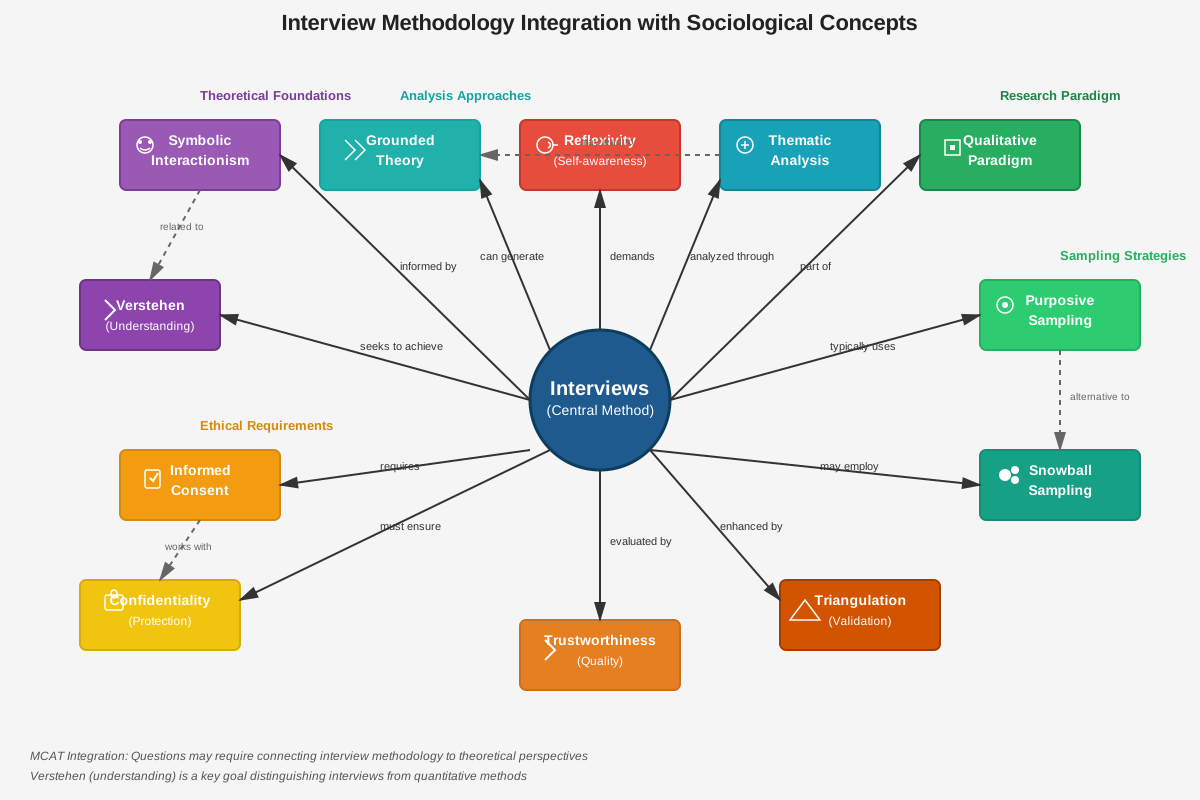
Interviews connect to broader sociological concepts including symbolic interactionism (which emphasizes how individuals create meaning through social interaction), qualitative versus quantitative research paradigms, sampling strategies, and issues of validity and reliability in social research. Understanding interviews also requires knowledge of research ethics, particularly informed consent and confidentiality, as well as awareness of how researcher characteristics and question framing can influence participant responses. This topic serves as a bridge between theoretical sociology and empirical research practice, demonstrating how sociologists systematically study social life while remaining attentive to the complexity of human experience.
Learning Objectives
- [ ] Define Interviews using accurate Sociology terminology
- [ ] Explain why Interviews matters for the MCAT
- [ ] Apply Interviews to exam-style questions
- [ ] Identify common mistakes related to Interviews
- [ ] Connect Interviews to related Sociology concepts
- [ ] Distinguish between structured, semi-structured, and unstructured interview formats
- [ ] Analyze the advantages and limitations of interviews compared to other research methods
- [ ] Evaluate potential sources of bias in interview-based research
- [ ] Apply appropriate interview methodology to specific research questions
Prerequisites
- Basic research terminology: Understanding terms like "qualitative," "quantitative," "variable," and "data collection" provides the foundation for distinguishing interviews from other methods
- Research ethics principles: Knowledge of informed consent, confidentiality, and protection of human subjects is essential for evaluating the ethical conduct of interview research
- Sampling concepts: Familiarity with different sampling strategies (random, convenience, purposive) helps in understanding how interview participants are selected
- Validity and reliability: Basic understanding of these measurement concepts enables evaluation of interview quality and trustworthiness
- Qualitative vs. quantitative paradigms: Recognizing the fundamental differences between these research approaches contextualizes where interviews fit in the research methods landscape
Why This Topic Matters
Interviews hold significant real-world importance across multiple domains relevant to future physicians. In clinical settings, the medical interview (history-taking) represents the primary diagnostic tool, with studies suggesting that 70-80% of diagnoses can be made from the patient interview alone. Understanding interview methodology helps future physicians recognize how question framing, interviewer characteristics, and rapport influence the quality of information obtained. Additionally, much of medical and public health research relies on interviews to understand patient experiences, health behaviors, barriers to care, and treatment adherence—all topics that inform evidence-based practice and health policy.
On the MCAT, interview-related content appears with moderate frequency, particularly in passages describing qualitative or mixed-methods research studies. According to AAMC data, approximately 5-8% of questions in the Psychological, Social, and Biological Foundations of Behavior section involve research methodology, with interviews representing a substantial portion of this content. Questions typically appear in two formats: (1) passage-based questions where students must evaluate a described study's methodology, and (2) discrete questions testing definitional knowledge or methodological principles. The exam particularly emphasizes distinguishing between research methods, identifying appropriate applications, and recognizing methodological limitations.
Common MCAT scenarios involving interviews include: research passages describing studies of patient experiences with chronic illness, investigations of health disparities in underserved communities, explorations of physician-patient communication, studies of medical student stress and burnout, and examinations of how individuals make health-related decisions. Students must be prepared to identify when interviews are the most appropriate method, recognize different interview types, evaluate potential biases, and understand how interview data contributes to sociological and health-related knowledge. The ability to critically analyze research methodology is a core competency the MCAT assesses, making thorough understanding of interviews essential for exam success.
Core Concepts
Definition and Fundamental Characteristics
Interviews are a qualitative research method involving direct verbal interaction between a researcher (interviewer) and one or more participants (interviewees) for the purpose of gathering detailed information about experiences, attitudes, beliefs, or behaviors. Unlike casual conversations, research interviews are purposeful, systematic, and guided by specific research objectives. The interview method is distinguished by its flexibility, depth of information obtained, and emphasis on understanding phenomena from the participant's perspective. In Sociology, interviews serve as a primary tool for exploring how individuals construct meaning, navigate social structures, and experience social phenomena.
The fundamental characteristics of interviews include: (1) direct interaction between researcher and participant, allowing for clarification and follow-up questions; (2) verbal data collection, typically audio-recorded and transcribed for analysis; (3) flexibility in questioning approach, ranging from highly structured to completely open-ended; (4) depth over breadth, prioritizing rich, detailed information from fewer participants rather than superficial data from many; and (5) interpretive focus, emphasizing understanding meaning and context rather than measuring variables numerically.
Types of Interviews
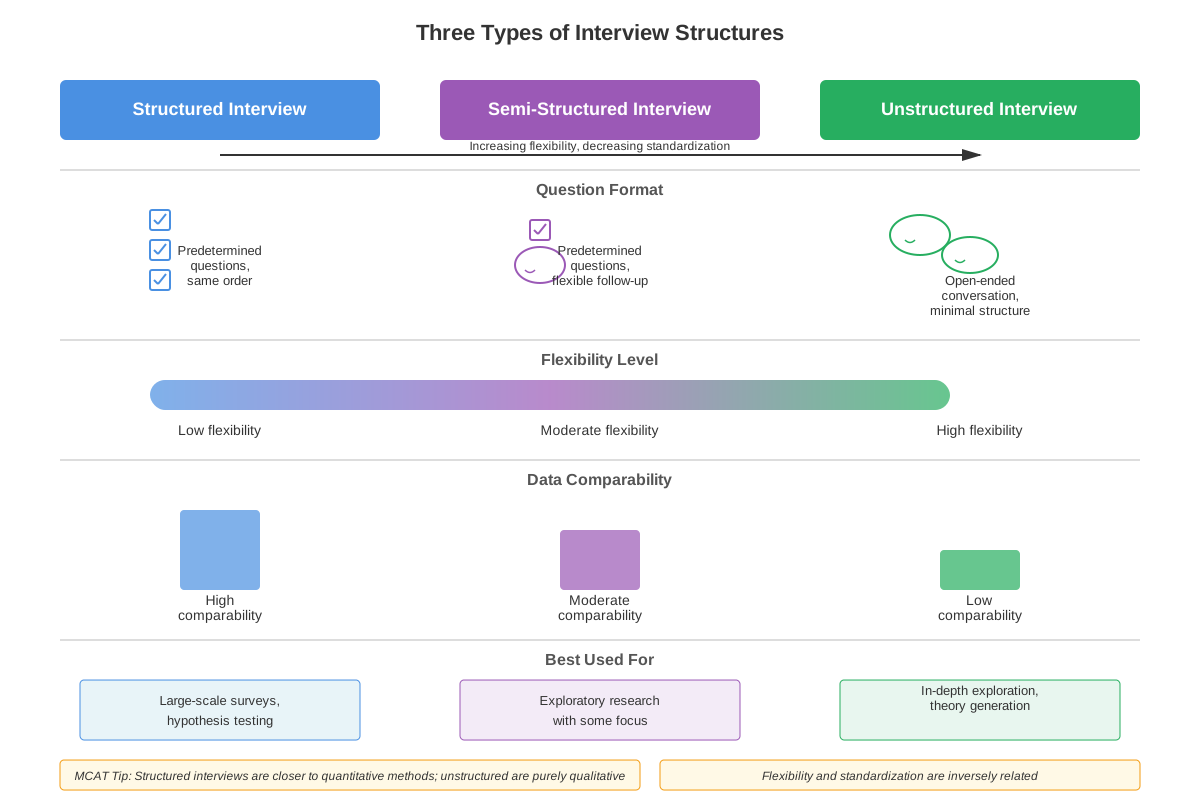
Structured interviews follow a predetermined set of questions asked in a specific order, with little to no deviation from the interview protocol. Every participant receives identical questions in the same sequence, similar to an oral survey. This approach maximizes standardization and reliability, making responses more comparable across participants. Structured interviews are appropriate when researchers have clear, specific research questions and want to ensure consistency in data collection. However, they sacrifice flexibility and may miss unexpected but important information that doesn't fit the predetermined questions.
Semi-structured interviews use an interview guide containing key topics and questions but allow interviewers flexibility in question order, wording, and follow-up. This format balances standardization with adaptability, enabling researchers to ensure all important topics are covered while remaining responsive to individual participants' experiences and perspectives. Semi-structured interviews are the most common format in sociological research because they combine systematic data collection with the flexibility to explore emergent themes. Interviewers can probe interesting responses, ask for clarification, and adjust questions based on participant understanding.
Unstructured interviews (also called in-depth interviews or informal interviews) involve minimal predetermined structure, often beginning with a single broad question or topic. The conversation develops organically based on participant responses, with the interviewer following the participant's lead while gently guiding discussion toward research-relevant topics. This approach maximizes flexibility and depth, allowing participants to raise issues the researcher might not have anticipated. Unstructured interviews are particularly valuable in exploratory research or when studying sensitive topics where rigid questioning might inhibit disclosure. However, they require highly skilled interviewers and produce data that may be difficult to compare across participants.
Interview Formats and Settings
Interviews can be conducted in various formats, each with distinct advantages and limitations:
| Format | Description | Advantages | Limitations |
|---|---|---|---|
| Face-to-face | In-person, one-on-one interaction | Rich data including nonverbal cues; builds rapport; high response quality | Time-consuming; expensive; geographic limitations; interviewer effects |
| Telephone | Conducted via phone call | Cost-effective; wider geographic reach; reduced interviewer effects | No visual cues; may feel impersonal; limited to those with phone access |
| Video conference | Conducted via platforms like Zoom | Combines visual interaction with geographic flexibility; cost-effective | Requires technology access; potential technical difficulties; privacy concerns |
| Group interviews/Focus groups | Multiple participants interviewed simultaneously | Efficient; generates discussion and diverse perspectives; observes social interaction | Dominant voices may overshadow others; social desirability bias; complex data analysis |
The setting of an interview significantly influences data quality. Interviews may occur in participants' homes (comfortable but potentially distracting), institutional settings like offices or clinics (professional but potentially intimidating), or neutral locations like coffee shops (casual but lacking privacy). Researchers must balance participant comfort, confidentiality requirements, and practical considerations when selecting interview settings.
Advantages of Interview Methodology
Interviews offer several distinct advantages that make them valuable for sociological research:
- Depth and detail: Interviews generate rich, nuanced data that captures complexity and context impossible to obtain through closed-ended surveys
- Flexibility: Interviewers can clarify questions, probe responses, and adapt to individual participants' communication styles and understanding
- Exploration of sensitive topics: The rapport built in interviews facilitates discussion of personal, emotional, or stigmatized subjects
- Understanding meaning: Interviews reveal how participants interpret their experiences and construct meaning, central to interpretive sociology
- Discovery of unexpected findings: Open-ended questioning allows participants to raise issues researchers hadn't anticipated
- Appropriate for complex topics: Interviews can explore multifaceted phenomena that resist simple categorization or measurement
- Accessibility: Interviews accommodate participants with limited literacy or those who prefer verbal to written communication
Limitations and Challenges
Despite their strengths, interviews have important limitations that researchers and MCAT test-takers must recognize:
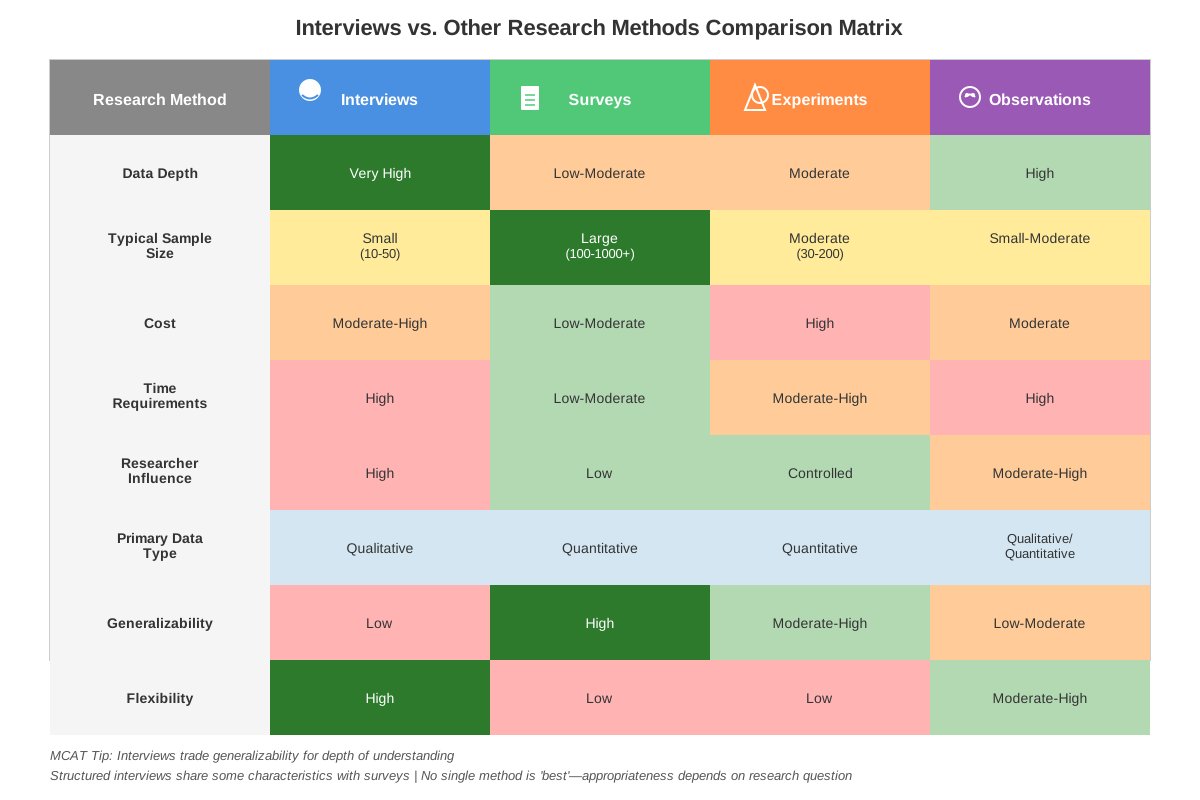
Time and resource intensity: Interviews require substantial time for scheduling, conducting, transcribing, and analyzing. A single one-hour interview may generate 20-30 pages of transcript requiring hours of analysis. This limits sample sizes, typically ranging from 10-50 participants in interview studies.
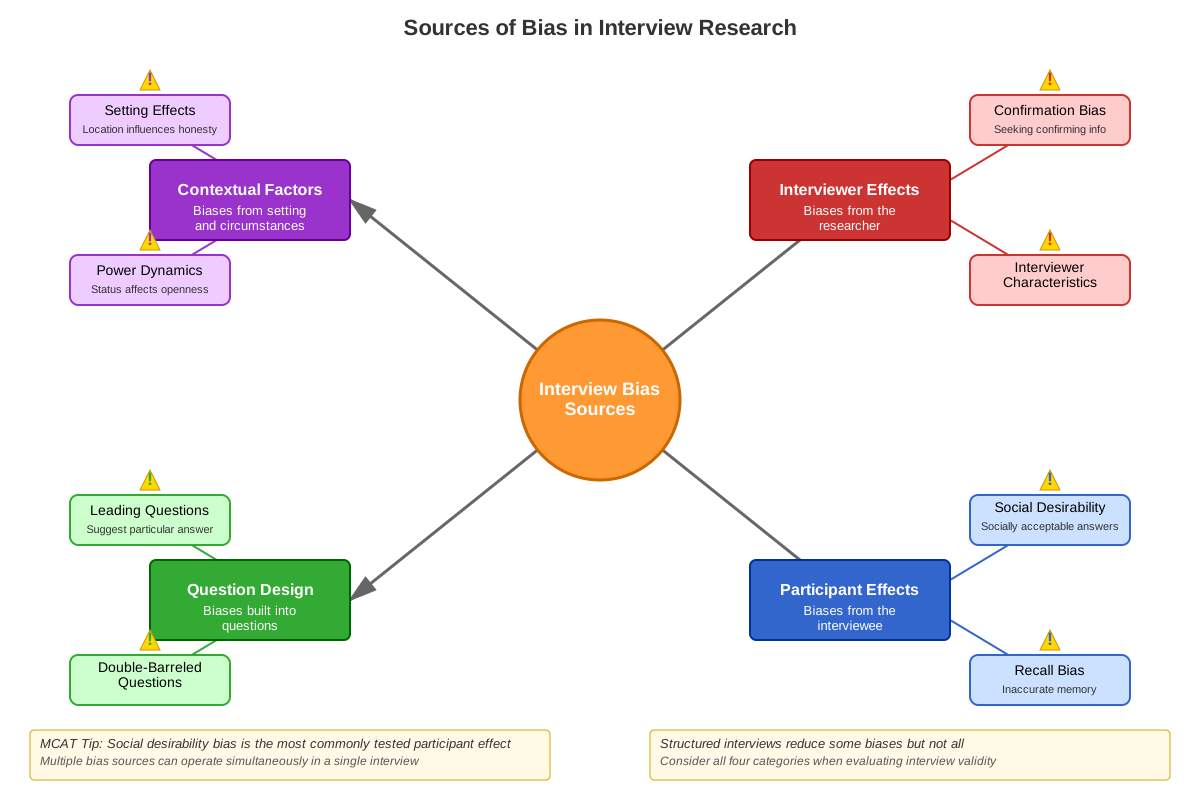
Interviewer effects: The interviewer's characteristics (gender, race, age, social class) and behavior (tone, body language, reactions) can influence participant responses. Social desirability bias may lead participants to present themselves favorably rather than honestly, particularly on sensitive topics.
Generalizability concerns: Small, often non-random samples mean findings may not generalize to broader populations. However, qualitative researchers argue that transferability (applicability to similar contexts) is more appropriate than statistical generalization for interview research.
Subjectivity in analysis: Interpreting interview data involves researcher judgment, raising questions about reliability (consistency) and validity (accuracy). Different researchers might interpret the same interview differently.
Recall bias: Participants may inaccurately remember past events or experiences, particularly those that occurred long ago or were emotionally charged.
Power dynamics: The researcher-participant relationship involves inherent power imbalances that may inhibit honest disclosure, particularly when studying vulnerable populations or sensitive topics.
Interview Process and Best Practices
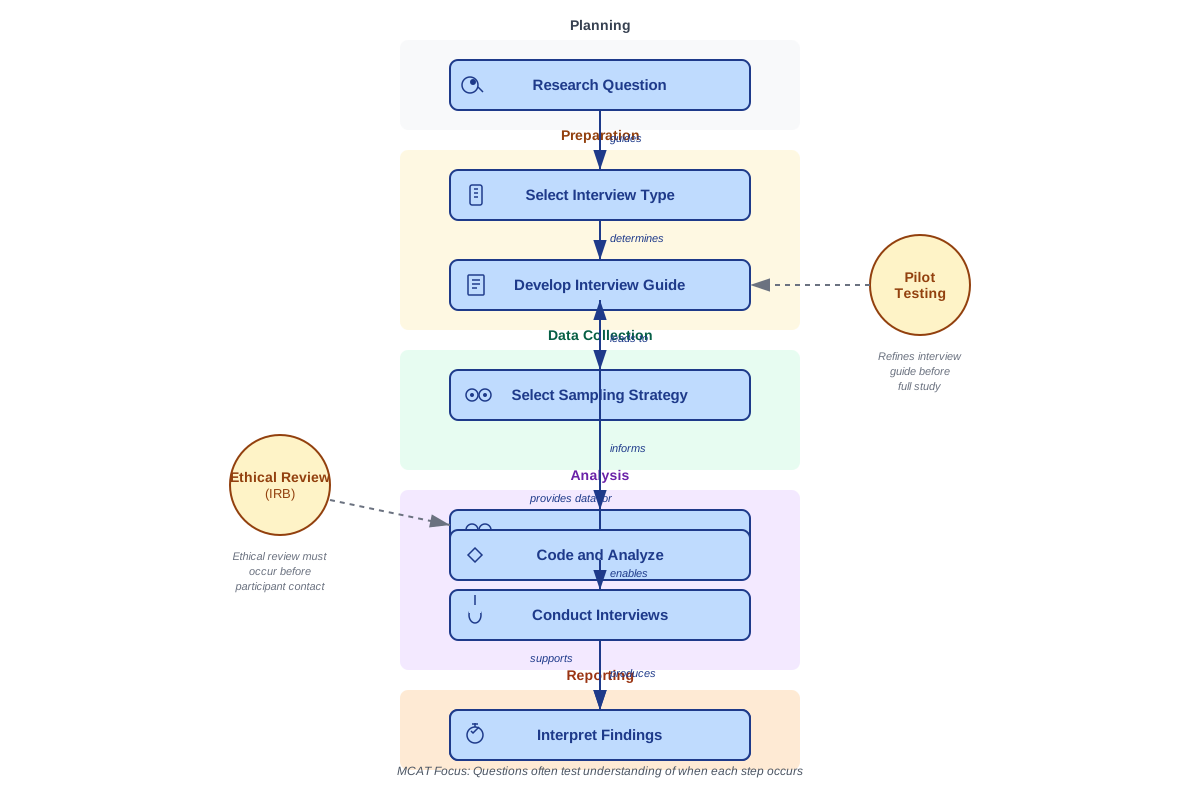
Conducting high-quality interviews involves several key steps:
- Developing the interview guide: Creating thoughtful questions that are open-ended, clear, non-leading, and aligned with research objectives
- Recruiting participants: Using appropriate sampling strategies (often purposive sampling to select information-rich cases)
- Obtaining informed consent: Ensuring participants understand the study purpose, procedures, risks, benefits, and their right to withdraw
- Building rapport: Establishing trust and comfort through appropriate self-disclosure, active listening, and non-judgmental responses
- Conducting the interview: Asking questions, probing responses, managing time, and remaining attentive to verbal and nonverbal cues
- Recording and transcribing: Audio-recording (with permission) and creating verbatim transcripts for analysis
- Analyzing data: Using systematic approaches like thematic analysis or grounded theory to identify patterns and meanings
- Ensuring trustworthiness: Employing strategies like member checking (verifying interpretations with participants), triangulation (using multiple data sources), and reflexivity (examining researcher influence)
Interviews in Mixed-Methods Research
Interviews are frequently combined with quantitative methods in mixed-methods research designs. For example, researchers might conduct a survey to identify patterns across a large sample, then interview a subset of participants to understand the meanings and processes underlying those patterns. Alternatively, exploratory interviews might inform survey development by identifying relevant variables and appropriate question wording. This integration leverages the complementary strengths of qualitative and quantitative approaches, providing both breadth and depth of understanding.
Concept Relationships
Within the topic of interviews, the various concepts form an interconnected system. The type of interview (structured, semi-structured, or unstructured) directly determines the degree of flexibility available during data collection, which in turn influences the depth and comparability of data obtained. More structured approaches enhance reliability and enable easier comparison across participants but sacrifice the flexibility to explore unexpected themes. Conversely, unstructured interviews maximize depth and discovery but complicate cross-participant comparison.
The advantages of interviews (depth, flexibility, meaning-making) exist in tension with their limitations (time intensity, small samples, generalizability concerns), creating methodological trade-offs researchers must navigate. These trade-offs connect to the broader distinction between qualitative and quantitative paradigms, with interviews representing the qualitative emphasis on understanding meaning and context over measuring variables and testing hypotheses.
Interviewer effects and social desirability bias represent specific manifestations of the general challenge of validity in social research—ensuring that data accurately reflects the phenomenon being studied rather than artifacts of the measurement process. These concerns connect to research ethics, as researchers have obligations to minimize harm and maximize data quality through appropriate training, reflexivity, and methodological rigor.
The interview process (from guide development through data analysis) connects to sampling strategies, as interview studies typically use purposive rather than random sampling to select information-rich cases. This sampling approach reflects the qualitative goal of transferability rather than statistical generalization, connecting back to fundamental epistemological differences between research paradigms.
Interviews relate to prerequisite concepts including informed consent (participants must understand what interview participation involves), confidentiality (protecting sensitive information shared during interviews), and validity and reliability (ensuring interview data is trustworthy). They also connect forward to related topics like ethnography (which often incorporates interviews), surveys (a contrasting quantitative method), and research design (selecting appropriate methods for specific research questions).
The relationship map: Research Question → Determines → Interview Type (structured/semi-structured/unstructured) → Influences → Data Characteristics (depth, comparability, flexibility) → Requires → Appropriate Analysis Methods → Produces → Findings with specific strengths and limitations → Connects to → Broader theoretical frameworks in Sociology.
Quick check — test yourself on Interviews so far.
Try Flashcards →High-Yield Facts
⭐ Interviews are a qualitative research method involving direct verbal interaction between researcher and participant to gather in-depth information about experiences, attitudes, and meanings.
⭐ Structured interviews use predetermined questions in fixed order (maximizing standardization), semi-structured interviews use flexible interview guides (balancing structure and adaptability), and unstructured interviews follow participant-led conversation (maximizing depth and discovery).
⭐ Key advantages of interviews include depth of information, flexibility, ability to explore sensitive topics, and understanding participant meaning-making; key limitations include time intensity, small samples, interviewer effects, and generalizability concerns.
⭐ Social desirability bias occurs when participants present themselves favorably rather than honestly, particularly on sensitive topics or when interviewer characteristics create social distance.
⭐ Interviewer effects refer to how interviewer characteristics (demographics, behavior, reactions) influence participant responses, potentially compromising data validity.
- Interviews typically use purposive sampling (selecting information-rich cases) rather than random sampling, limiting statistical generalization but enabling deep understanding of specific phenomena.
- Face-to-face interviews provide richest data including nonverbal cues but are most time-consuming and expensive; telephone and video interviews offer geographic flexibility with some loss of contextual information.
- Focus groups involve interviewing multiple participants simultaneously, generating discussion and diverse perspectives but risking dominant voices overshadowing quieter participants.
- Interview data analysis involves systematic approaches like thematic analysis (identifying patterns across interviews) or grounded theory (developing theory from data).
- Trustworthiness in interview research is established through member checking (verifying interpretations with participants), triangulation (using multiple data sources), and reflexivity (examining researcher influence on findings).
- Mixed-methods research combines interviews with quantitative methods, leveraging complementary strengths of qualitative depth and quantitative breadth.
- Informed consent for interviews must address audio recording, confidentiality limits, time commitment, and participants' right to skip questions or withdraw.
- Rapport-building is essential for interview quality, involving active listening, non-judgmental responses, and appropriate self-disclosure to establish trust.
Common Misconceptions
Misconception: Interviews are just casual conversations and don't require systematic planning or methodology.
Correction: While interviews may feel conversational, they are purposeful, systematic research tools requiring careful planning, skilled execution, and rigorous analysis. Researchers develop interview guides, train interviewers, establish protocols for consistency, and use systematic analysis methods to ensure trustworthy findings.
Misconception: Structured interviews are always better than unstructured interviews because they're more scientific and objective.
Correction: No interview type is inherently superior; appropriateness depends on research goals. Structured interviews suit confirmatory research with specific questions requiring comparable responses. Unstructured interviews suit exploratory research seeking to understand complex phenomena from participants' perspectives. Semi-structured interviews balance these goals. The "best" method aligns with the research question.
Misconception: Small sample sizes in interview studies mean the findings are invalid or unimportant.
Correction: Interview studies prioritize depth over breadth, seeking rich understanding of phenomena rather than statistical generalization. Small samples are appropriate for qualitative research goals. Findings demonstrate transferability (applicability to similar contexts) rather than generalizability. The value lies in understanding meaning, process, and context, not in representing populations statistically.
Misconception: Interviewer bias can be completely eliminated through proper training and protocols.
Correction: While training and protocols reduce bias, interviewer effects cannot be entirely eliminated because interviews are inherently social interactions. Researchers acknowledge this through reflexivity—explicitly examining how their characteristics, assumptions, and behaviors may influence data. The goal is transparency and minimization, not elimination, of researcher influence.
Misconception: Interview data is just participants' opinions and therefore less valuable than objective quantitative data.
Correction: This misconception reflects misunderstanding of qualitative epistemology. Interview data reveals how people construct meaning, experience social phenomena, and navigate their social worlds—central concerns in sociology. These insights are not "mere opinions" but windows into social reality. Different research methods answer different questions; neither qualitative nor quantitative data is inherently more valuable.
Misconception: Leading questions are acceptable in interviews because they help participants understand what information the researcher wants.
Correction: Leading questions (those suggesting desired answers) compromise data validity by influencing participant responses rather than capturing authentic perspectives. Good interview questions are open-ended and neutral, allowing participants to respond in their own terms. For example, "How did you feel about that experience?" is preferable to "That must have been difficult, wasn't it?"
Worked Examples
Example 1: Selecting Appropriate Interview Methodology
Scenario: A researcher wants to understand how first-generation college students experience the transition to university life. The researcher has limited prior knowledge about this topic and wants to explore students' perspectives in depth, including aspects of the experience that might not be anticipated. Which interview type would be most appropriate and why?
Analysis:
Step 1: Identify the research goal. The researcher seeks to understand experiences from participants' perspectives with limited prior knowledge, suggesting an exploratory, qualitative approach.
Step 2: Consider the need for flexibility. The phrase "including aspects that might not be anticipated" indicates the researcher needs flexibility to follow unexpected themes that emerge during interviews.
Step 3: Evaluate depth requirements. The goal of understanding experiences "in depth" suggests prioritizing rich, detailed data over standardized, comparable responses.
Step 4: Match requirements to interview types:
- Structured interviews: Too rigid for exploratory research; predetermined questions might miss unanticipated themes
- Semi-structured interviews: Provides balance of ensuring key topics are covered while allowing flexibility to explore emergent themes
- Unstructured interviews: Maximizes flexibility and depth but might miss important topics if not raised by participants
Answer: Semi-structured interviews would be most appropriate. This approach allows the researcher to develop an interview guide ensuring all participants discuss key aspects of the college transition (like academic adjustment, social integration, financial concerns) while maintaining flexibility to explore unexpected themes that individual students raise. If the researcher had even less prior knowledge, unstructured interviews might be preferable, but semi-structured interviews typically offer the best balance for this type of exploratory research.
Connection to learning objectives: This example demonstrates applying interview methodology to research scenarios (LO 3), distinguishing between interview formats (LO 6), and analyzing advantages and limitations (LO 7).
Example 2: Identifying Methodological Limitations
Scenario: A study investigating physician attitudes toward end-of-life care conducted semi-structured interviews with 15 physicians at a single academic medical center. The researchers, who were also physicians at the same institution, interviewed their colleagues and found that most expressed strong support for patient autonomy in end-of-life decisions. What are the primary methodological limitations of this study?
Analysis:
Step 1: Evaluate the sample. The sample includes only 15 physicians from a single institution, limiting diversity of perspectives and transferability to other settings (community hospitals, rural practices, different regions).
Step 2: Consider sampling strategy. The sample appears to be a convenience sample (colleagues at the same institution) rather than purposive sampling designed to capture diverse perspectives, potentially missing important variation in attitudes.
Step 3: Assess interviewer effects. The researchers interviewed their own colleagues, creating potential social desirability bias. Physicians might present attitudes they believe are professionally appropriate rather than expressing genuine views, particularly on ethically sensitive topics like end-of-life care.
Step 4: Examine power dynamics. The hierarchical nature of medical institutions means some interviewees might have been junior to the researchers, potentially inhibiting honest disclosure of attitudes that differ from perceived institutional norms.
Step 5: Consider generalizability. Academic medical centers have distinct cultures, patient populations, and resource availability compared to other practice settings, limiting transferability of findings.
Answer: The primary limitations include: (1) Small, homogeneous sample from a single institution limits transferability; (2) Interviewer effects and social desirability bias from researchers interviewing colleagues on sensitive topics may produce socially acceptable rather than authentic responses; (3) Potential power dynamics if researchers held senior positions relative to some participants; (4) Convenience sampling rather than purposive sampling may miss important variation in attitudes. To strengthen the study, researchers could recruit from diverse practice settings, use interviewers external to participants' institutions, ensure confidentiality protections, and employ purposive sampling to capture varied perspectives.
Connection to learning objectives: This example demonstrates identifying common mistakes (LO 4), evaluating potential sources of bias (LO 8), and analyzing limitations of interview methodology (LO 7).
Exam Strategy
When approaching MCAT questions about interviews, use this systematic strategy:
1. Identify the research goal: Determine whether the study is exploratory (understanding a phenomenon with limited prior knowledge) or confirmatory (testing specific hypotheses). Interviews suit exploratory goals and understanding meaning; surveys and experiments suit confirmatory goals and hypothesis testing.
2. Watch for trigger words:
- "Understand experiences," "explore perspectives," "meaning-making," "in-depth" → suggest interviews are appropriate
- "Attitudes," "beliefs," "sensitive topics," "complex phenomena" → interviews can address these
- "Small sample," "purposive sampling," "qualitative" → characteristic of interview studies
- "Generalize to population," "statistical analysis," "large sample" → suggest quantitative methods more appropriate
3. Evaluate method-question alignment: Ask whether the described method matches the research question. Common MCAT scenarios present mismatches (e.g., using structured interviews when unstructured would be more appropriate, or claiming generalizability from small interview samples).
4. Identify limitations systematically: When questions ask about study limitations, consider:
- Sample characteristics (size, diversity, selection method)
- Interviewer effects (characteristics, relationship to participants)
- Biases (social desirability, recall bias)
- Generalizability/transferability concerns
- Practical constraints (time, resources)
5. Use process of elimination: When choosing between interview types:
- Eliminate structured interviews if flexibility is needed
- Eliminate unstructured interviews if standardization or comparison is important
- Semi-structured interviews are often the "middle ground" answer when both structure and flexibility are valued
6. Consider the context: MCAT passages often describe health-related research. Think about whether the topic is sensitive (stigmatized conditions, illegal behaviors, personal experiences) or requires understanding patient perspectives—both favor interviews over surveys.
7. Time allocation: Spend 60-90 seconds on discrete questions about interview definitions or characteristics. For passage-based questions, allocate 90-120 seconds, ensuring you reference specific passage details rather than making assumptions.
Exam Tip: When a question asks which research method is "most appropriate," the correct answer will align with the research goal stated in the question stem. If the goal is understanding meaning or exploring experiences, choose interviews over surveys or experiments.
Exam Tip: Be cautious of answer choices claiming interview findings "prove" something or "demonstrate causation." Interviews are qualitative and exploratory; they reveal patterns and meanings but don't establish causation or provide statistical proof.
Memory Techniques
Mnemonic for Interview Types - "SUN":
- Structured = Same questions, Standardized, Survey-like
- Unstructured = Unplanned flow, Unrestricted topics, Unique to each participant
- Not-quite-structured (semi-structured) = Navigates between structure and flexibility
Mnemonic for Interview Advantages - "DEFFUSE":
- Depth of information
- Exploration of unexpected findings
- Flexibility in questioning
- Facilitates discussion of sensitive topics
- Understanding of meaning
- Suitable for complex phenomena
- Easy for participants with limited literacy
Mnemonic for Interview Limitations - "TIGERS":
- Time intensive
- Interviewer effects
- Generalizability concerns
- Expensive (resources)
- Recall bias
- Social desirability bias
Visualization Strategy: Picture interviews on a flexibility spectrum:
- Left end: Structured interview = rigid ruler (straight, inflexible, measures consistently)
- Middle: Semi-structured interview = flexible measuring tape (some structure but can bend)
- Right end: Unstructured interview = flowing conversation (organic, adaptive, follows natural course)
Acronym for Evaluating Interview Quality - "CRAFT":
- Credibility: Are findings believable and accurate?
- Reflexivity: Did researchers examine their influence?
- Auditability: Is the research process transparent and documented?
- Fidelity: Were interviews conducted with skill and care?
- Transferability: Can findings apply to similar contexts?
Summary
Interviews represent a fundamental qualitative research method in sociology, involving purposeful verbal interaction between researchers and participants to gather in-depth information about experiences, attitudes, and meanings. The three main types—structured (predetermined questions in fixed order), semi-structured (flexible interview guide), and unstructured (participant-led conversation)—offer different balances of standardization and flexibility appropriate for different research goals. Interviews excel at generating rich, nuanced data and understanding phenomena from participants' perspectives, making them valuable for exploratory research and investigating complex or sensitive topics. However, they are time-intensive, involve small samples, and face challenges including interviewer effects, social desirability bias, and limited generalizability. For the MCAT, students must distinguish between interview types, match methodology to research questions, identify appropriate applications, and recognize methodological limitations. Success requires understanding both the theoretical foundations of qualitative research and the practical considerations of conducting and evaluating interview studies. The ability to critically analyze research methodology, including recognizing when interviews are most appropriate and identifying potential sources of bias, is essential for MCAT success and future medical practice.
Key Takeaways
- Interviews are qualitative research methods using direct verbal interaction to gather in-depth information about experiences, attitudes, and meanings from participants' perspectives
- The three interview types—structured (fixed questions), semi-structured (flexible guide), and unstructured (participant-led)—differ in standardization and flexibility, with appropriateness depending on research goals
- Key advantages include depth, flexibility, and understanding meaning; key limitations include time intensity, small samples, interviewer effects, and generalizability concerns
- Social desirability bias and interviewer effects represent major validity threats that researchers must acknowledge and minimize through appropriate design and reflexivity
- Interviews suit exploratory research, complex phenomena, sensitive topics, and understanding meaning-making; they complement quantitative methods in mixed-methods designs
- MCAT questions test ability to match methodology to research questions, distinguish interview types, and identify methodological limitations in research scenarios
- Critical evaluation of interview research requires considering sample characteristics, potential biases, interviewer-participant dynamics, and appropriate claims given methodological constraints
Related Topics
Surveys and Questionnaires: Quantitative data collection methods using standardized questions, contrasting with interviews' qualitative, flexible approach. Understanding surveys helps distinguish when structured data collection across large samples is preferable to in-depth interviews.
Ethnography: Qualitative research involving prolonged immersion in a social setting, often incorporating interviews alongside participant observation. Mastering interviews provides foundation for understanding this comprehensive qualitative approach.
Focus Groups: Group interview format generating discussion among multiple participants simultaneously. Building on interview knowledge enables understanding of group dynamics in research contexts.
Sampling Strategies: Methods for selecting research participants, including purposive sampling common in interview research. Understanding sampling connects to evaluating representativeness and transferability of interview findings.
Qualitative Data Analysis: Systematic approaches like thematic analysis and grounded theory for interpreting interview transcripts. Mastering interview methodology provides context for understanding how qualitative data becomes research findings.
Research Ethics: Principles governing ethical conduct of research with human subjects, particularly relevant for interviews involving sensitive topics or vulnerable populations. Interview knowledge connects to broader ethical considerations in research.
Practice CTA
Now that you've mastered the fundamentals of interviews as a research method, it's time to test your understanding and reinforce your learning. Challenge yourself with practice questions that simulate real MCAT scenarios—you'll encounter passages describing interview-based studies where you must evaluate methodology, identify limitations, and determine appropriate applications. Work through the flashcards to cement key definitions and distinctions between interview types. Remember, the MCAT rewards not just memorization but the ability to apply methodological concepts to novel research scenarios. Each practice question you complete strengthens your analytical skills and builds confidence for test day. You've got this—your thorough understanding of interview methodology will serve you well both on the exam and in your future medical career, where understanding how to gather and evaluate information from patients is fundamental to excellent care.
Sign up free to keep reading
Create a free AnvayaPrep account to finish this MCAT guide on Interviews — plus flashcards and practice questions.