Overview
Back stage behavior is a foundational concept in Sociology derived from Erving Goffman's dramaturgical approach to understanding Social Interaction and Identity. This theoretical framework conceptualizes social life as a theatrical performance, where individuals present themselves differently depending on their audience and setting. Back stage behavior specifically refers to the private, authentic actions and expressions that occur when individuals are away from public scrutiny—the moments when the "performance" stops and people can relax, rehearse, or drop their carefully constructed social facades.
Understanding back stage behavior is essential for the MCAT because it appears frequently in passages examining social psychology, identity formation, impression management, and the dynamics of social roles. The MCAT Psychological, Social, and Biological Foundations of Behavior section regularly tests students' ability to distinguish between public and private behaviors, analyze how context shapes self-presentation, and evaluate the psychological consequences of maintaining different personas across social settings. This concept intersects with numerous high-yield topics including self-presentation theory, role theory, social identity, and the looking-glass self.
The distinction between front stage and back stage behavior illuminates fundamental questions about authenticity, social conformity, and the construction of identity in modern society. For MCAT purposes, this topic frequently appears in passages describing workplace dynamics, healthcare provider-patient interactions, research on social media behavior, and studies examining how individuals navigate multiple social roles. Mastering this concept enables students to quickly identify the theoretical framework underlying experimental designs and to predict how changes in social context will affect individual behavior—both critical skills for achieving a competitive score on test day.
Learning Objectives
- [ ] Define Back stage behavior using accurate Sociology terminology
- [ ] Explain why Back stage behavior matters for the MCAT
- [ ] Apply Back stage behavior to exam-style questions
- [ ] Identify common mistakes related to Back stage behavior
- [ ] Connect Back stage behavior to related Sociology concepts
- [ ] Distinguish between front stage and back stage behavior in clinical and research scenarios
- [ ] Analyze how transitions between front stage and back stage settings affect self-presentation
- [ ] Evaluate the psychological costs and benefits of maintaining distinct front stage and back stage personas
Prerequisites
- Symbolic Interactionism: The theoretical perspective that social interaction creates and maintains meaning through symbols and shared understanding; provides the foundational framework for dramaturgical analysis
- Self-Presentation and Impression Management: The processes by which individuals attempt to control how others perceive them; directly relates to why people behave differently in front stage versus back stage settings
- Social Roles and Role Theory: The concept that individuals occupy positions in society with associated behavioral expectations; explains why back stage behavior often involves role relief or role rehearsal
- Primary and Secondary Groups: Distinction between intimate, long-term relationships and formal, goal-oriented relationships; helps predict which settings are more likely to permit back stage behavior
Why This Topic Matters
Back stage behavior has profound real-world significance in healthcare settings, which makes it particularly relevant for future physicians. Medical professionals must navigate complex social performances—maintaining professional composure with patients (front stage) while processing emotional reactions, discussing cases with colleagues, or decompressing in private spaces (back stage). Understanding this dynamic helps future healthcare providers recognize the importance of appropriate venues for emotional expression, peer consultation, and professional development. Research shows that physicians who lack adequate back stage spaces for authentic expression experience higher rates of burnout and compassion fatigue.
On the MCAT, back stage behavior appears in approximately 8-12% of Sociology passages, making it a high-yield topic that warrants thorough preparation. This concept most commonly appears in three question formats: (1) passage-based questions asking students to identify which behaviors represent front stage versus back stage conduct, (2) standalone questions requiring application of dramaturgical theory to novel scenarios, and (3) research design questions examining how observation methods might alter the authenticity of behavior (the observer effect). The MCAT frequently pairs this concept with experimental designs involving naturalistic observation, participant observation, or studies of workplace behavior.
Exam passages commonly present back stage behavior in contexts such as: healthcare workers' behavior in break rooms versus patient care areas; social media as a front stage performance versus private messaging; service industry employees' conduct with customers versus in kitchen or storage areas; and students' behavior in classroom settings versus dormitory environments. The MCAT particularly favors passages that explore the tension between authentic self-expression and social expectations, making this concept a frequent bridge between sociology and psychology content.
Core Concepts
Dramaturgical Approach and Goffman's Framework
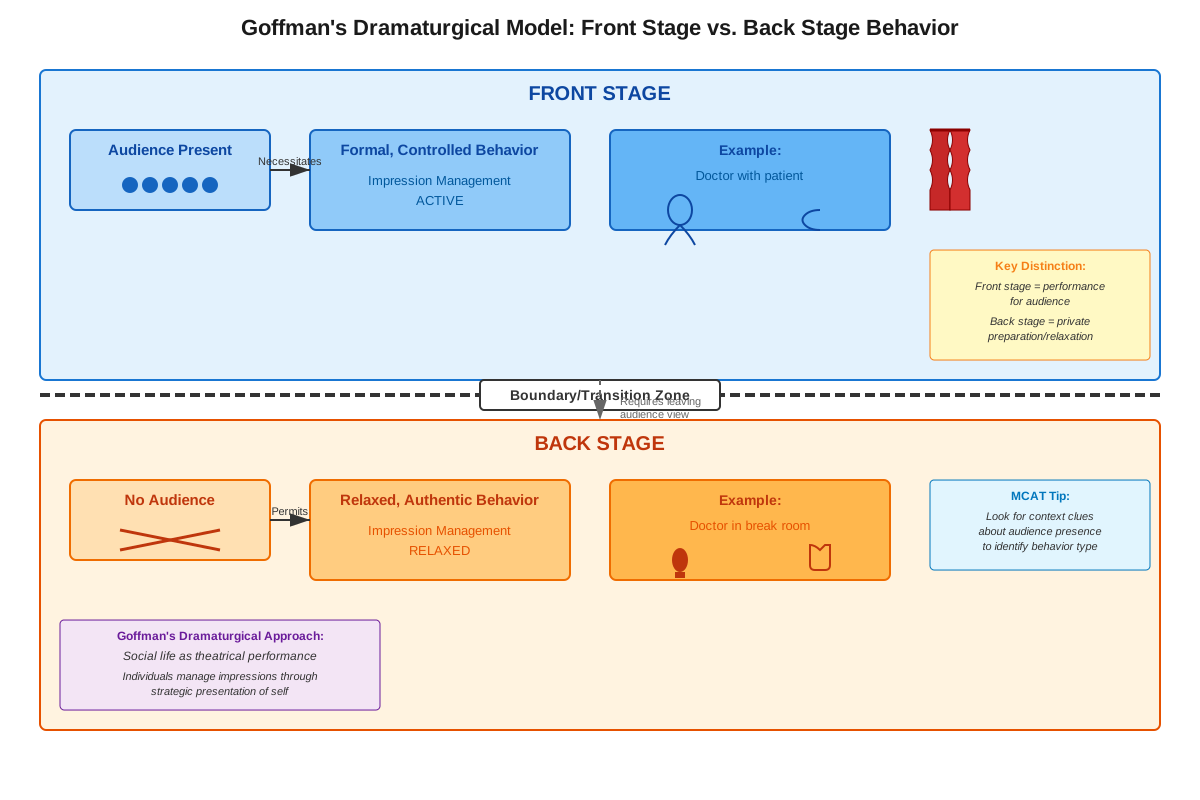
The dramaturgical approach to social interaction, developed by sociologist Erving Goffman in his seminal work "The Presentation of Self in Everyday Life" (1959), uses theatrical metaphors to explain how individuals manage their social identities. Goffman proposed that social life resembles a theatrical performance where individuals are actors, social settings are stages, and interactions follow scripts shaped by cultural norms and role expectations. Within this framework, back stage behavior represents the private realm where individuals can step out of their performed roles, express authentic emotions, and prepare for their public performances.
Back stage behavior Sociology encompasses all actions, expressions, and communications that occur in private settings where individuals feel free from the evaluative gaze of their primary audience. These are spaces where the "actor" can drop their character, rehearse upcoming performances, discuss strategy with fellow performers, or simply relax without maintaining their public persona. The back stage is characterized by informality, authenticity, and often includes behaviors that would be considered inappropriate or damaging if displayed in front stage settings.
Characteristics of Back Stage Behavior
Back stage behavior exhibits several defining characteristics that distinguish it from front stage performances:
Authenticity and Relaxation: In back stage settings, individuals typically display more genuine emotions, use informal language, and adopt relaxed postures or expressions. A surgeon might maintain calm professionalism during an operation (front stage) but express frustration or anxiety when debriefing with colleagues afterward (back stage).
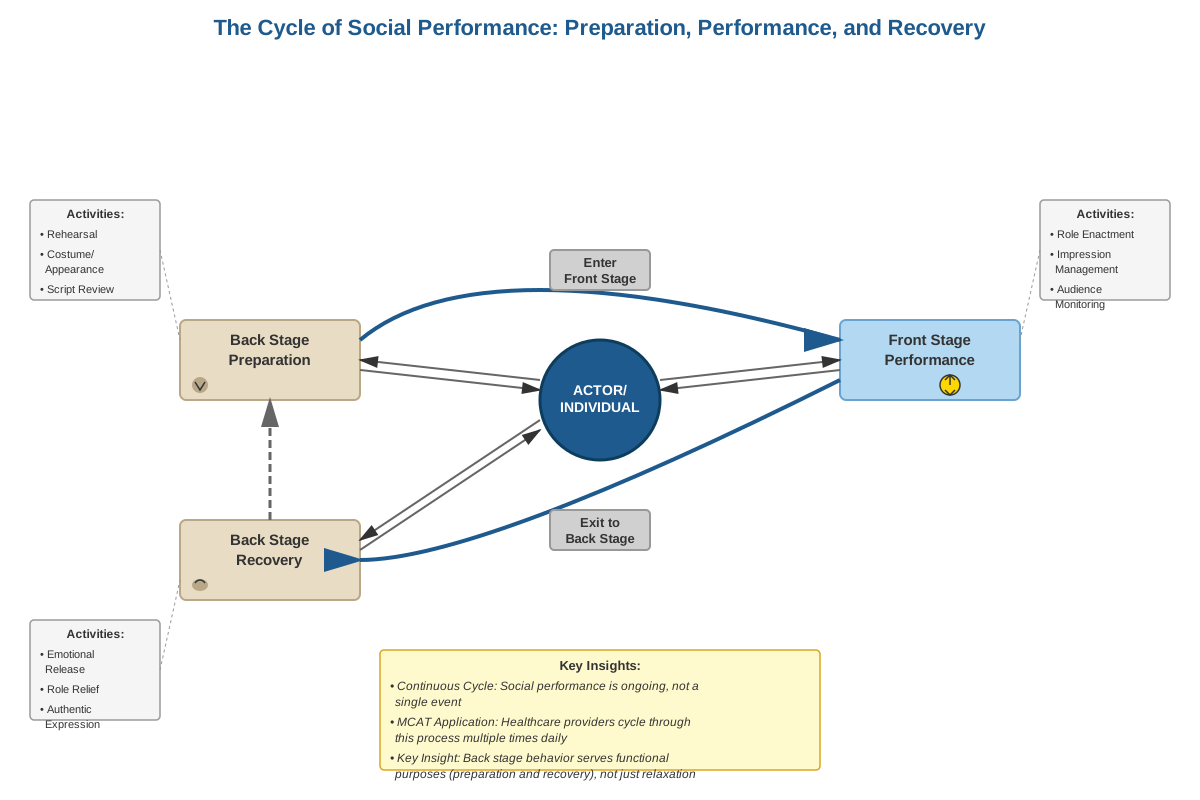
Role Relief: Back stage spaces provide opportunities for role relief—temporary suspension of the demands associated with social roles. Service workers might complain about difficult customers, teachers might express frustration about challenging students, or healthcare providers might process difficult patient outcomes. This role relief serves important psychological functions, preventing role strain and burnout.
Rehearsal and Preparation: The back stage serves as a space for practicing and refining front stage performances. Medical students rehearse patient interviews, salespeople practice pitches, and politicians prepare speeches. This rehearsal function highlights how back stage behavior directly supports front stage success.
Contradictory Behavior: Actions in back stage settings may directly contradict front stage presentations. A restaurant server who maintains a cheerful demeanor with customers might express genuine irritation in the kitchen. This contradiction doesn't necessarily indicate deception but rather reflects the social necessity of different behaviors in different contexts.
Front Stage vs. Back Stage: A Comparative Framework
| Dimension | Front Stage Behavior | Back Stage Behavior |
|---|---|---|
| Audience | Public, evaluative observers | Trusted peers, self, or no audience |
| Authenticity | Managed impression, role-consistent | More genuine, less filtered |
| Language | Formal, professional, careful | Informal, colloquial, unguarded |
| Purpose | Achieve social goals, maintain image | Relax, prepare, process emotions |
| Emotional Display | Regulated by display rules | More spontaneous and authentic |
| Setting Examples | Exam room, courtroom, classroom | Break room, home, private office |
| Consequences of Violation | Damage to reputation, role failure | Minimal (unless back stage is exposed) |
The Importance of Boundaries
The effectiveness of the front stage/back stage distinction depends on maintaining clear boundaries between these regions. When back stage behavior becomes visible to front stage audiences, the result is often embarrassment, loss of credibility, or damage to professional relationships. The MCAT frequently tests understanding of what happens when these boundaries are violated—such as when a "hot mic" captures private comments, when social media posts intended for friends become public, or when patients overhear healthcare providers' private discussions.
Boundary management requires both physical and social mechanisms. Physical boundaries include closed doors, separate spaces, and controlled access. Social boundaries include trust relationships, shared understanding of confidentiality, and cultural norms about appropriate disclosure. Healthcare settings illustrate this clearly: hospital break rooms, physician lounges, and private offices serve as designated back stage spaces where medical professionals can decompress, discuss cases candidly, and support one another without compromising patient care or professional image.
Psychological Functions of Back Stage Behavior
Back stage behavior serves critical psychological functions that support mental health and social functioning:
- Emotional Processing: Back stage spaces allow individuals to experience and express emotions that would be inappropriate in front stage settings, facilitating emotional regulation and preventing emotional exhaustion
- Identity Integration: Private settings enable individuals to reconcile different aspects of their identity, reducing the cognitive dissonance that can arise from maintaining multiple social personas
- Social Support: Back stage interactions with peers who share similar roles provide validation, advice, and collective problem-solving
- Stress Reduction: The ability to "drop the act" reduces the cognitive and emotional burden of constant impression management
- Performance Improvement: Rehearsal and feedback in back stage settings enhance the quality of front stage performances
Back Stage Behavior in the Digital Age
Contemporary Social Interaction and Identity dynamics have complicated traditional front stage/back stage distinctions. Social media platforms blur these boundaries, creating what some sociologists call "context collapse"—situations where multiple audiences with different expectations can observe the same behavior simultaneously. A single social media post might be visible to family, friends, colleagues, and strangers, making it difficult to determine whether the platform represents front stage or back stage space.
This ambiguity has significant implications for identity management and social behavior. Research shows that individuals experience increased anxiety and self-monitoring when they cannot clearly distinguish between front stage and back stage contexts. The MCAT may present passages exploring how digital communication technologies affect authentic self-expression, privacy expectations, and the psychological consequences of constant front stage performance.
Concept Relationships
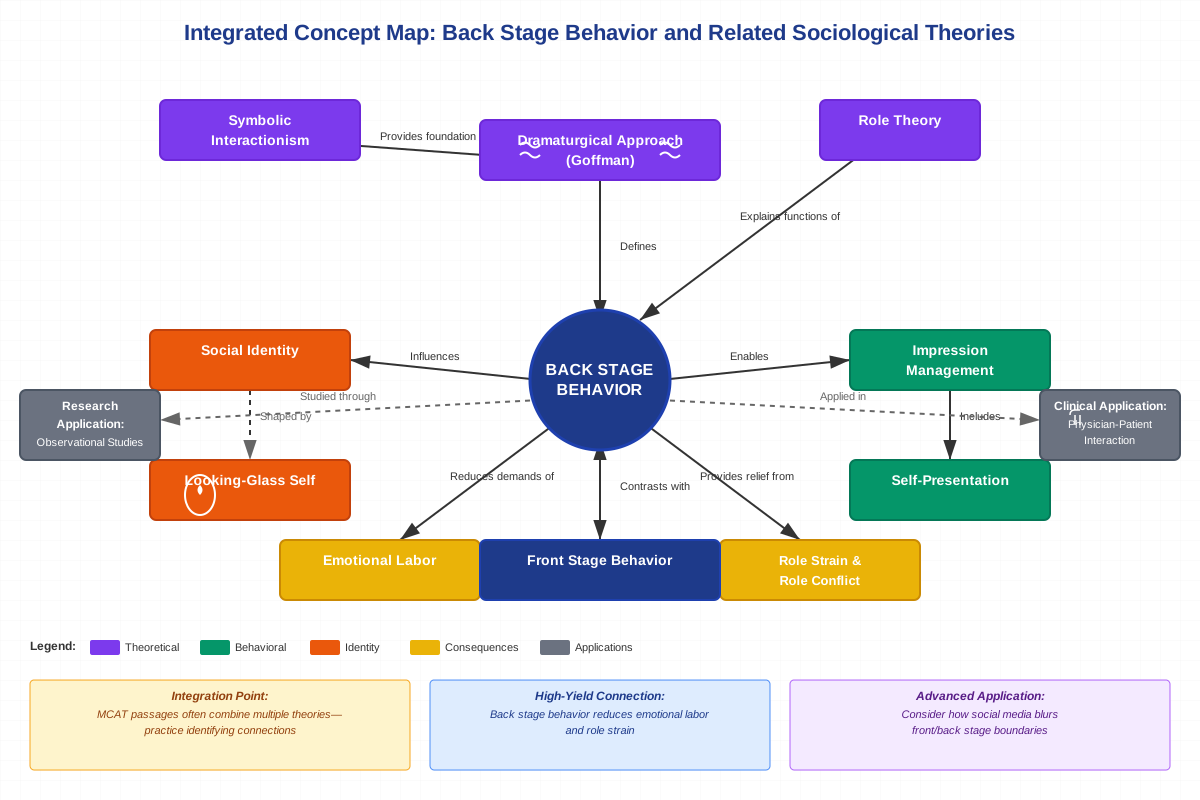
Back stage behavior connects intimately with impression management and self-presentation theory. Impression management represents the overarching process of controlling how others perceive us, while back stage behavior provides the private space where we prepare these managed impressions and recover from the effort of maintaining them. The relationship flows: Impression Management Goals → Front Stage Performance → Back Stage Recovery and Preparation → Refined Front Stage Performance.
The concept links directly to role theory through the mechanism of role strain and role conflict. When individuals experience tension from occupying multiple roles or from the demands of a single role, back stage spaces provide essential relief. The relationship operates as: Role Demands → Role Strain → Need for Back Stage Relief → Restoration of Capacity for Role Performance. Without adequate back stage opportunities, role strain can escalate to role conflict or role exit.
Social identity theory intersects with back stage behavior through the distinction between personal and social identity. Front stage behavior typically emphasizes social identity (group memberships and associated characteristics), while back stage behavior allows greater expression of personal identity (individual attributes and authentic preferences). This creates a dynamic: Social Identity Salience (Front Stage) ↔ Personal Identity Expression (Back Stage) → Integrated Self-Concept.
The looking-glass self concept relates to back stage behavior by explaining why individuals need private spaces. The looking-glass self describes how we develop self-concept through imagining how others perceive us. Constant exposure to others' evaluative gaze (perpetual front stage) can lead to an overly externalized sense of self. Back stage behavior provides respite from this external evaluation, allowing individuals to reconnect with internally-derived aspects of identity: Others' Perceived Judgments → Self-Concept Formation → Need for Back Stage Authenticity → Balanced Identity Development.
Primary and secondary groups predict where back stage behavior is likely to occur. Primary groups (family, close friends) often constitute back stage audiences because trust and intimacy permit authentic self-expression. Secondary groups (coworkers, classmates) typically represent front stage audiences, though subgroups within secondary groups may develop sufficient trust to create back stage spaces. The progression follows: Relationship Intimacy → Trust Development → Permission for Back Stage Behavior → Deeper Relationship Bonds.
Quick check — test yourself on Back stage behavior so far.
Try Flashcards →High-Yield Facts
⭐ Back stage behavior refers to private actions and expressions that occur away from public scrutiny, where individuals can drop their social performances and behave more authentically.
⭐ The dramaturgical approach, developed by Erving Goffman, conceptualizes social interaction as theatrical performance with front stage (public) and back stage (private) regions.
⭐ Back stage spaces serve critical functions including role relief, emotional processing, performance rehearsal, and stress reduction.
⭐ Violations of front stage/back stage boundaries typically result in embarrassment, loss of credibility, or damage to professional relationships.
⭐ Healthcare settings clearly demonstrate front stage/back stage distinctions: patient care areas are front stage, while break rooms and private offices are back stage.
- Back stage behavior often contradicts front stage presentations without indicating deception—different contexts require different behaviors.
- Social media platforms create "context collapse" where traditional front stage/back stage boundaries become ambiguous.
- Role strain and burnout increase when individuals lack adequate back stage spaces for authentic expression and recovery.
- Primary groups are more likely to serve as back stage audiences due to established trust and intimacy.
- The MCAT frequently tests ability to identify which behaviors represent front stage versus back stage conduct in experimental or clinical scenarios.
- Physical boundaries (closed doors, separate spaces) and social boundaries (confidentiality norms, trust) both maintain front stage/back stage distinctions.
- Back stage behavior includes both relaxation/authenticity and active preparation/rehearsal for front stage performances.
Common Misconceptions
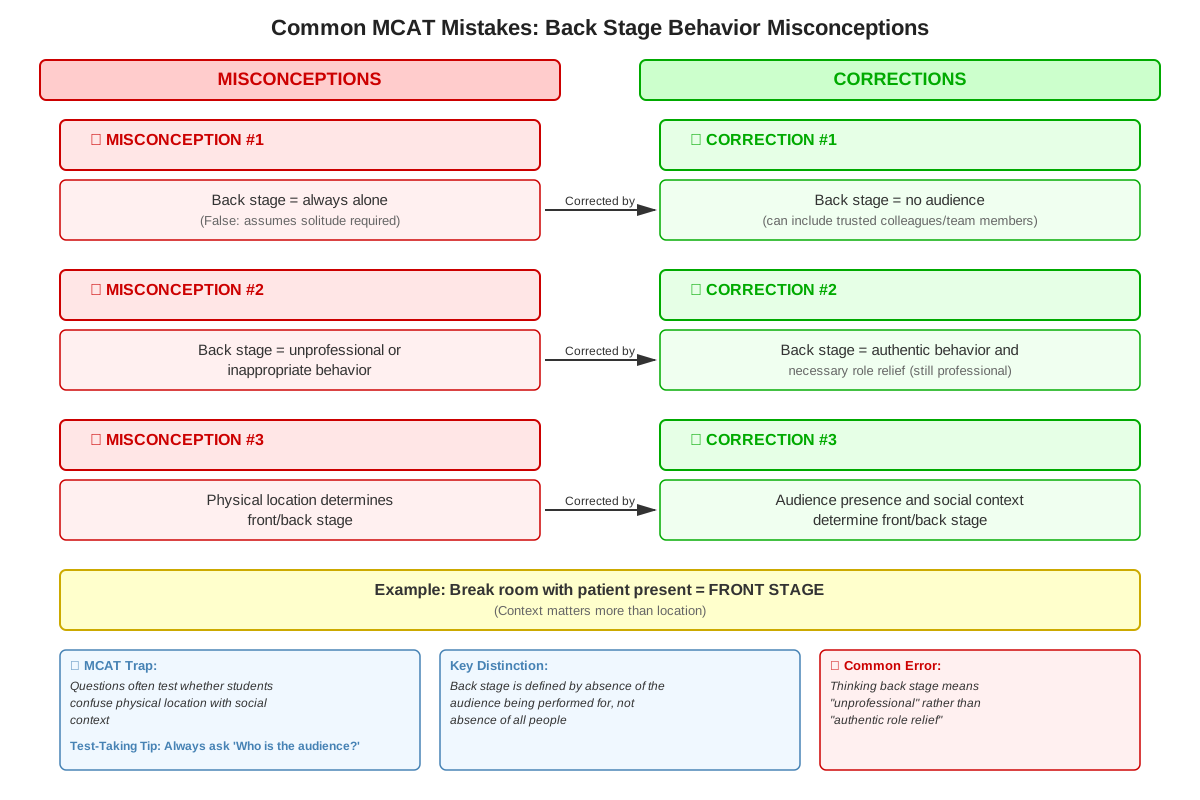
Misconception: Back stage behavior is always completely authentic and represents the "true self" while front stage behavior is fake or deceptive.
Correction: Both front stage and back stage behaviors are authentic aspects of identity; front stage behavior reflects genuine social roles and values, not deception. The self is multifaceted, and different contexts appropriately elicit different aspects of identity. A physician's professional demeanor with patients is no less "real" than their casual behavior with family—both are authentic expressions of different social roles and relationships.
Misconception: Back stage behavior only occurs when completely alone; any audience presence makes a setting front stage.
Correction: Back stage behavior can occur with trusted audiences who share similar roles or relationships. Colleagues who work together often create shared back stage spaces where they can be authentic with one another. The defining feature is not solitude but rather freedom from evaluative judgment and permission to drop formal role performances.
Misconception: All private spaces automatically constitute back stage regions.
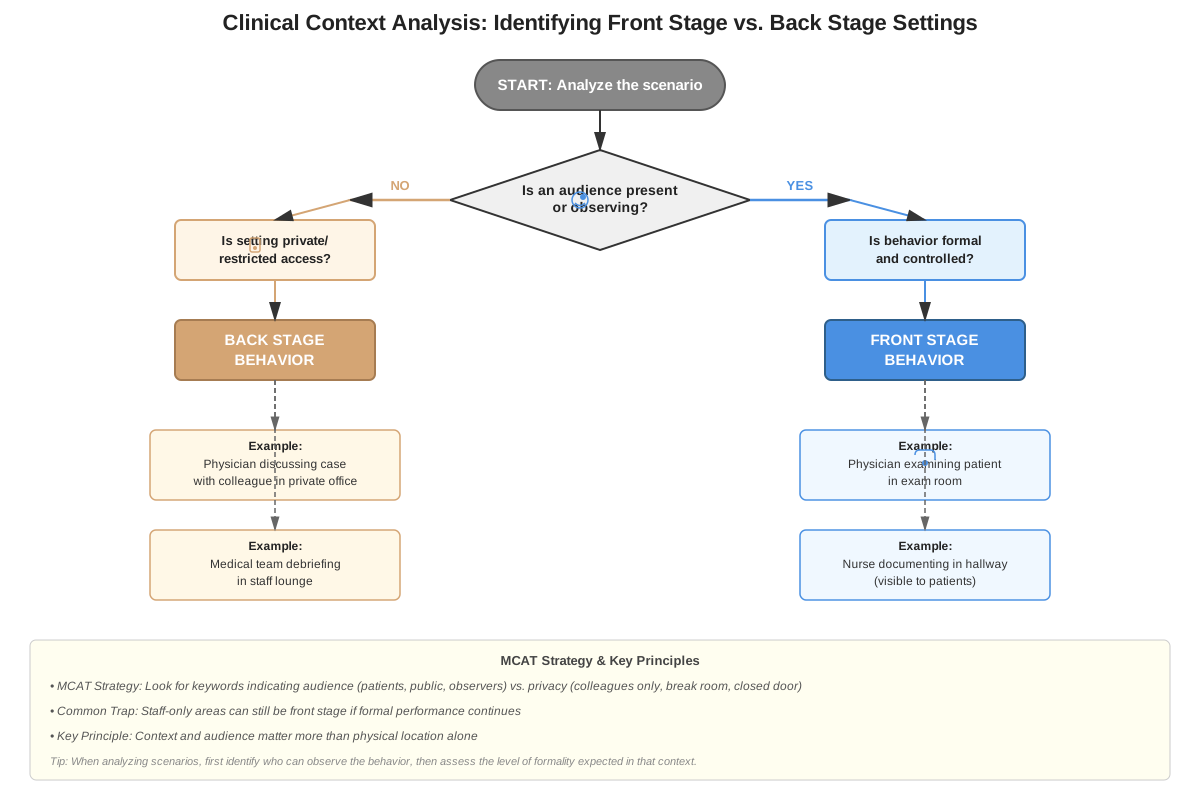
Correction: The designation of front stage versus back stage depends on social context and audience, not just physical location. A physician's private office becomes front stage when meeting with patients or administrators, even though the same space serves as back stage when the physician is alone or with trusted colleagues. Context and audience determine the nature of the space.
Misconception: Back stage behavior is unprofessional or inappropriate.
Correction: Back stage behavior is psychologically necessary and professionally important. Healthcare providers need spaces to process difficult cases, express emotions, and support one another. The key is maintaining appropriate boundaries so back stage behavior remains private. Professional codes recognize the importance of peer consultation and emotional processing in designated private settings.
Misconception: Digital communication is always back stage because it feels private.
Correction: Digital platforms often create ambiguous spaces that may be visible to unintended audiences. Text messages, emails, and social media posts can be forwarded, screenshotted, or accessed by broader audiences than originally intended. The perceived privacy of digital communication doesn't guarantee actual privacy, making these spaces potentially front stage despite feeling back stage.
Worked Examples
Example 1: Healthcare Setting Analysis
Scenario: A research study observes physician behavior in different hospital settings. In patient examination rooms, physicians maintain steady eye contact, use formal language, explain procedures carefully, and display calm confidence even when uncertain about diagnoses. In the physician lounge, the same doctors use medical jargon freely, express frustration about difficult cases, discuss diagnostic uncertainties openly, and occasionally make dark humor about stressful situations. When physicians know they're being recorded for training purposes, their lounge behavior becomes more formal and guarded.
Question: Which of the following best explains the behavioral differences observed across these settings using dramaturgical theory?
Analysis:
Step 1: Identify the theoretical framework. The question explicitly mentions dramaturgical theory, which centers on front stage versus back stage behavior.
Step 2: Classify each setting. Patient examination rooms represent front stage settings where physicians perform their professional role for their primary audience (patients). The physician lounge represents a back stage setting where doctors can drop their professional performance, express authentic emotions, and engage in role relief.
Step 3: Analyze the behavioral changes. Front stage behaviors (formal language, calm confidence, careful explanations) serve impression management goals—maintaining patient trust and professional credibility. Back stage behaviors (jargon, expressed frustration, dark humor) serve different functions—emotional processing, peer support, and stress relief.
Step 4: Consider the recording effect. When physicians know they're being recorded, the lounge becomes front stage because a broader audience (training viewers) can observe their behavior. This demonstrates that physical space alone doesn't determine front stage versus back stage designation—audience and context matter.
Answer: The physicians engage in front stage behavior with patients to maintain professional image and fulfill role expectations, while back stage behavior in the lounge provides role relief and authentic emotional expression. The presence of recording equipment transforms the back stage space into front stage by introducing an evaluative audience.
Connection to Learning Objectives: This example demonstrates application of back stage behavior to exam-style questions, distinguishes between front stage and back stage settings, and illustrates how context affects self-presentation.
Example 2: Social Media Boundary Violation
Scenario: A medical student posts on what she believes is a private social media account, venting frustration about a difficult clinical rotation and making sarcastic comments about a supervising physician's teaching style. She uses the physician's name and describes specific incidents. The post is shared by a friend-of-a-friend and eventually reaches the medical school administration and the physician mentioned. The student faces disciplinary action and must explain that she thought she was communicating privately with close friends.
Question: This scenario best illustrates which sociological concept related to impression management?
Analysis:
Step 1: Identify the core issue. The student believed she was engaging in back stage behavior (authentic expression to trusted peers) but her communication became visible to a front stage audience (school administration, supervising physician).
Step 2: Recognize the boundary violation. The student failed to maintain adequate boundaries between front stage and back stage regions. What she perceived as a private, back stage space (social media account with friends) actually had permeable boundaries that allowed front stage audiences to access her back stage behavior.
Step 3: Analyze the consequences. When back stage behavior becomes visible to front stage audiences, the typical result is embarrassment, loss of credibility, or professional consequences—exactly what occurred. The student's authentic frustration, appropriate for back stage expression with peers, became inappropriate when exposed to evaluative audiences.
Step 4: Consider the digital context. This scenario illustrates "context collapse" in digital communication—the blurring of front stage and back stage boundaries that occurs when multiple audiences can access the same content. Social media creates ambiguous spaces that feel private but may be functionally public.
Answer: This scenario illustrates the violation of front stage/back stage boundaries and demonstrates how digital communication platforms create context collapse, making it difficult to maintain separate public and private personas. The student's back stage behavior (venting to peers) became visible to front stage audiences (professional evaluators), resulting in professional consequences.
Connection to Learning Objectives: This example applies back stage behavior concepts to contemporary digital contexts, identifies common mistakes (assuming digital communication is private), and connects to related concepts including impression management and boundary maintenance.
Exam Strategy
When approaching MCAT questions about back stage behavior, begin by identifying the setting and audience described in the passage or question stem. Ask: "Who can observe this behavior?" and "What are the social expectations in this context?" Front stage settings involve evaluative audiences and formal role expectations, while back stage settings involve trusted peers or privacy with relaxed expectations.
Trigger words that signal back stage behavior include: "private," "among colleagues," "off-duty," "behind closed doors," "informal setting," "with close friends," "break room," "lounge," "rehearsal," and "preparation." Conversely, front stage indicators include: "public," "professional setting," "with clients/patients," "formal," "observed," "recorded," and "performance."
For process-of-elimination, immediately eliminate answer choices that:
- Confuse front stage and back stage settings (e.g., claiming patient care areas are back stage)
- Suggest back stage behavior is deceptive or unprofessional rather than psychologically necessary
- Ignore the role of audience and context in determining whether behavior is front stage or back stage
- Fail to recognize that the same physical space can be front stage or back stage depending on who is present
When passages describe behavioral differences across settings, the correct answer typically involves dramaturgical theory and the front stage/back stage distinction. When passages describe boundary violations (overheard conversations, leaked communications, accidental recordings), focus on the consequences of back stage behavior becoming visible to front stage audiences.
Time allocation: Questions about back stage behavior are typically straightforward once you identify the theoretical framework. Spend 30-45 seconds identifying whether described behaviors are front stage or back stage, then 30-45 seconds evaluating answer choices. Don't overthink these questions—the MCAT usually provides clear contextual clues about setting and audience.
Exam Tip: If a question describes someone behaving differently in two settings, immediately think "dramaturgical approach" and classify each setting as front stage or back stage. This framework will guide you to the correct answer in 80% of cases.
Memory Techniques
STAGE Mnemonic for distinguishing front stage from back stage behavior:
Setting: Public/formal = front stage; Private/informal = back stage
Trust: Low trust/evaluative audience = front stage; High trust/supportive audience = back stage
Authenticity: Managed impression = front stage; Genuine expression = back stage
Goals: Achieve social objectives = front stage; Relief and preparation = back stage
Expression: Controlled emotions = front stage; Spontaneous emotions = back stage
Visualization Strategy: Picture a theater with a curtain. Everything in front of the curtain (visible to the audience) represents front stage behavior—polished, rehearsed, performance-oriented. Everything behind the curtain represents back stage behavior—actors dropping character, stagehands moving props, directors giving notes. When you encounter MCAT questions, visualize which side of the curtain the described behavior occurs on.
The "Break Room Rule": When uncertain whether a setting is front stage or back stage, ask yourself: "Would this behavior be appropriate in a workplace break room with colleagues?" If yes, it's likely back stage behavior. If no (because it's either too formal or too inappropriate), it's likely front stage behavior or a boundary violation.
Goffman's Gift: Remember that Erving Goffman Gave us the dramaturgical approach with Genuine back stage behavior versus performed front stage behavior. The three G's help recall both the theorist and the core concept.
Summary
Back stage behavior represents a fundamental concept in the sociological understanding of social interaction and identity formation. Derived from Erving Goffman's dramaturgical approach, this concept distinguishes between public performances (front stage) where individuals manage impressions and fulfill role expectations, and private spaces (back stage) where people can express authentic emotions, rehearse performances, and experience role relief. The MCAT frequently tests this concept through passages examining healthcare settings, workplace dynamics, and digital communication contexts. Understanding back stage behavior requires recognizing that different social contexts appropriately elicit different behaviors, that maintaining boundaries between front stage and back stage regions is essential for effective impression management, and that back stage spaces serve critical psychological functions including emotional processing and stress reduction. Mastery of this concept enables students to quickly analyze how setting and audience shape behavior, predict consequences of boundary violations, and apply dramaturgical theory to novel scenarios—all high-yield skills for MCAT success.
Key Takeaways
- Back stage behavior occurs in private settings away from evaluative audiences, allowing authentic expression and role relief, while front stage behavior involves managed performances for public audiences
- Goffman's dramaturgical approach conceptualizes social life as theatrical performance with distinct front stage and back stage regions serving different functions
- Back stage spaces are psychologically necessary, providing opportunities for emotional processing, performance rehearsal, and stress reduction that prevent burnout and role strain
- Violations of front stage/back stage boundaries typically result in embarrassment or professional consequences when private behavior becomes visible to public audiences
- Setting and audience—not just physical location—determine whether behavior is front stage or back stage; the same space can shift between these designations
- Healthcare contexts clearly illustrate this concept: patient care areas are front stage while break rooms and private offices serve as back stage regions
- Digital communication complicates traditional boundaries through "context collapse," making it difficult to maintain separate public and private personas
Related Topics
Impression Management and Self-Presentation: Explores the broader strategies individuals use to control how others perceive them, including ingratiation, self-promotion, and intimidation. Mastering back stage behavior provides the foundation for understanding these more specific impression management tactics.
Role Theory and Role Strain: Examines how individuals occupy social positions with associated expectations and the tensions that arise from role demands. Back stage behavior serves as a primary mechanism for managing role strain, making this a natural progression.
Social Identity Theory: Investigates how group memberships shape self-concept and behavior. Understanding back stage behavior illuminates when personal versus social identity becomes salient, deepening comprehension of identity dynamics.
Symbolic Interactionism: The broader theoretical perspective emphasizing how meaning emerges through social interaction. Back stage behavior represents one application of symbolic interactionist principles to everyday social life.
The Looking-Glass Self: Charles Cooley's concept describing how self-concept develops through imagining others' perceptions. This connects to back stage behavior by explaining why constant external evaluation (perpetual front stage) can be psychologically exhausting.
Primary and Secondary Groups: Distinguishes between intimate, long-term relationships and formal, goal-oriented relationships. This classification helps predict which social contexts will permit back stage behavior and which require front stage performances.
Practice CTA
Now that you've mastered the theoretical foundations of back stage behavior and its applications to MCAT-style questions, it's time to solidify your understanding through active practice. Complete the practice questions and flashcards associated with this topic to reinforce your ability to quickly identify front stage versus back stage settings, apply dramaturgical theory to novel scenarios, and avoid common misconceptions. Remember: the MCAT rewards not just knowledge but the ability to rapidly apply concepts to unfamiliar contexts. Each practice question you complete strengthens the neural pathways that will help you achieve your target score. You've invested the time to understand this high-yield concept—now invest a few more minutes to ensure you can execute under test conditions. Your future self on test day will thank you for the preparation you're doing right now.
Sign up free to keep reading
Create a free AnvayaPrep account to finish this MCAT guide on Back stage behavior — plus flashcards and practice questions.