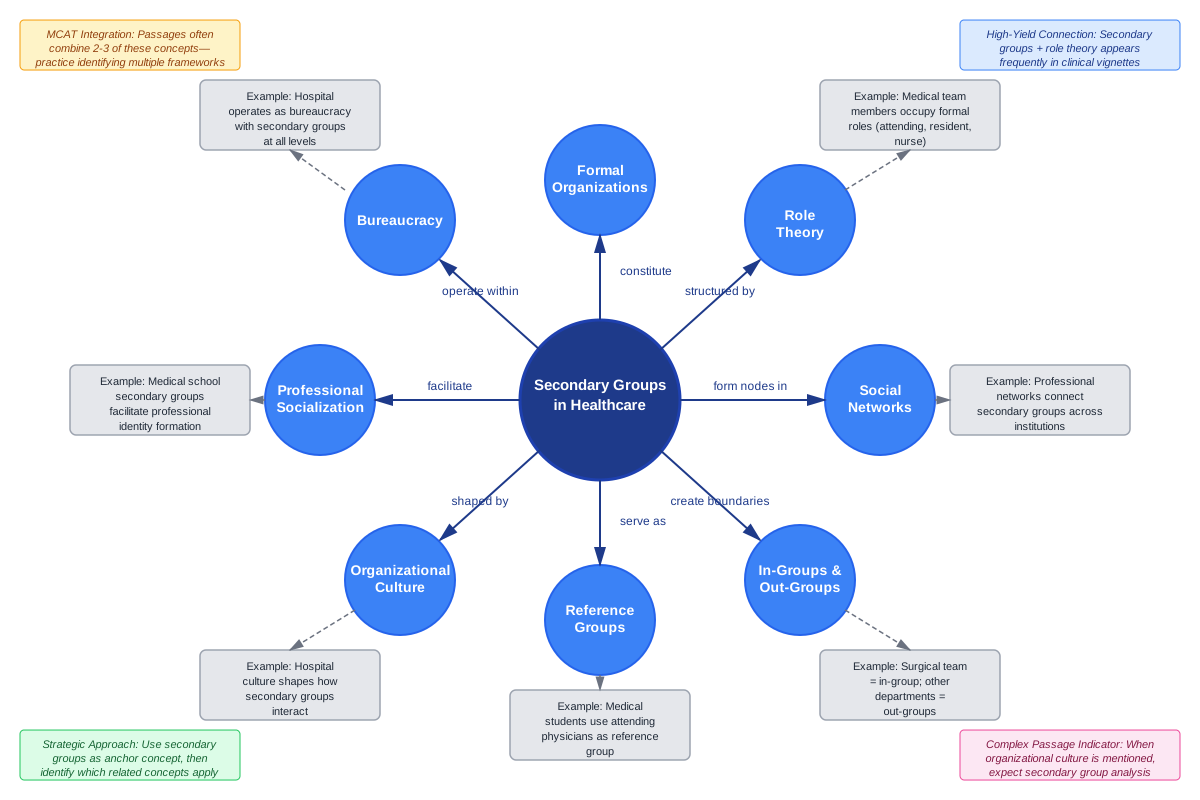
Overview
Secondary groups represent a fundamental concept in Sociology that appears frequently on the MCAT, particularly within questions addressing Social Structure and Institutions. These groups form the backbone of modern organizational society, encompassing workplaces, schools, professional associations, and large-scale social organizations. Unlike primary groups characterized by intimate, face-to-face relationships, secondary groups are larger, more impersonal, and goal-oriented social structures where individuals interact based on specific roles rather than personal connections. Understanding secondary groups is essential for analyzing how individuals navigate institutional settings, maintain professional identities, and participate in formal organizational structures that shape healthcare delivery, patient care systems, and medical practice environments.
The distinction between primary and secondary groups represents one of the most tested concepts in MCAT Sociology, appearing in passages about healthcare organizations, medical team dynamics, patient-provider relationships, and institutional behavior. Secondary groups operate through formal rules, hierarchical structures, and task-oriented interactions—characteristics that define modern medical institutions, hospital systems, and healthcare bureaucracies. Students must recognize how these groups influence individual behavior, shape professional roles, and create the structural framework within which medical care occurs.
Mastering secondary groups enables deeper understanding of organizational behavior, role theory, bureaucratic structures, and the tension between formal institutional requirements and personal relationships in healthcare settings. This topic connects directly to concepts including in-groups and out-groups, reference groups, social networks, and organizational culture—all high-yield areas for MCAT preparation. The ability to quickly identify secondary group characteristics and distinguish them from primary groups proves essential for efficiently answering discrete questions and analyzing complex sociological passages within the strict time constraints of the MCAT.
Learning Objectives
- [ ] Define Secondary groups using accurate Sociology terminology
- [ ] Explain why Secondary groups matters for the MCAT
- [ ] Apply Secondary groups to exam-style questions
- [ ] Identify common mistakes related to Secondary groups
- [ ] Connect Secondary groups to related Sociology concepts
- [ ] Compare and contrast secondary groups with primary groups across multiple dimensions
- [ ] Analyze how secondary groups function within healthcare institutions and medical practice
- [ ] Evaluate the role of secondary groups in shaping professional identity and organizational behavior
Prerequisites
- Primary groups: Understanding intimate, face-to-face groups provides the essential contrast needed to recognize secondary group characteristics
- Social structure basics: Familiarity with how society organizes into patterns of relationships enables comprehension of group-level analysis
- Role theory fundamentals: Knowledge of social roles and status helps explain how individuals function within formal organizational settings
- Basic organizational concepts: Understanding institutions and formal organizations provides context for where secondary groups operate
Why This Topic Matters
Secondary groups appear in approximately 15-20% of MCAT Sociology passages, making them one of the highest-yield topics in the Social Structure and Institutions content category. The MCAT frequently tests this concept through clinical vignettes involving hospital staff interactions, medical team dynamics, professional associations, and healthcare organizational structures. Questions may ask students to identify group types, predict behavior patterns in institutional settings, or analyze how formal organizational structures influence individual actions and professional relationships.
In real-world medical practice, physicians constantly navigate secondary groups—hospital departments, medical boards, insurance networks, professional societies, and healthcare systems. Understanding secondary group dynamics helps future physicians recognize how institutional structures shape patient care, influence clinical decision-making, and create both opportunities and constraints within healthcare delivery. The impersonal, goal-oriented nature of secondary groups explains why healthcare bureaucracies function as they do, why professional boundaries exist, and how medical institutions balance efficiency with patient-centered care.
The MCAT particularly favors questions that require distinguishing secondary groups from primary groups in ambiguous scenarios, analyzing how individuals transition between group types, and evaluating the consequences of secondary group characteristics on healthcare outcomes. Passages often present complex organizational scenarios where students must identify whether relationships are primarily instrumental (secondary) or expressive (primary), making this distinction a critical skill for exam success.
Core Concepts
Definition and Fundamental Characteristics
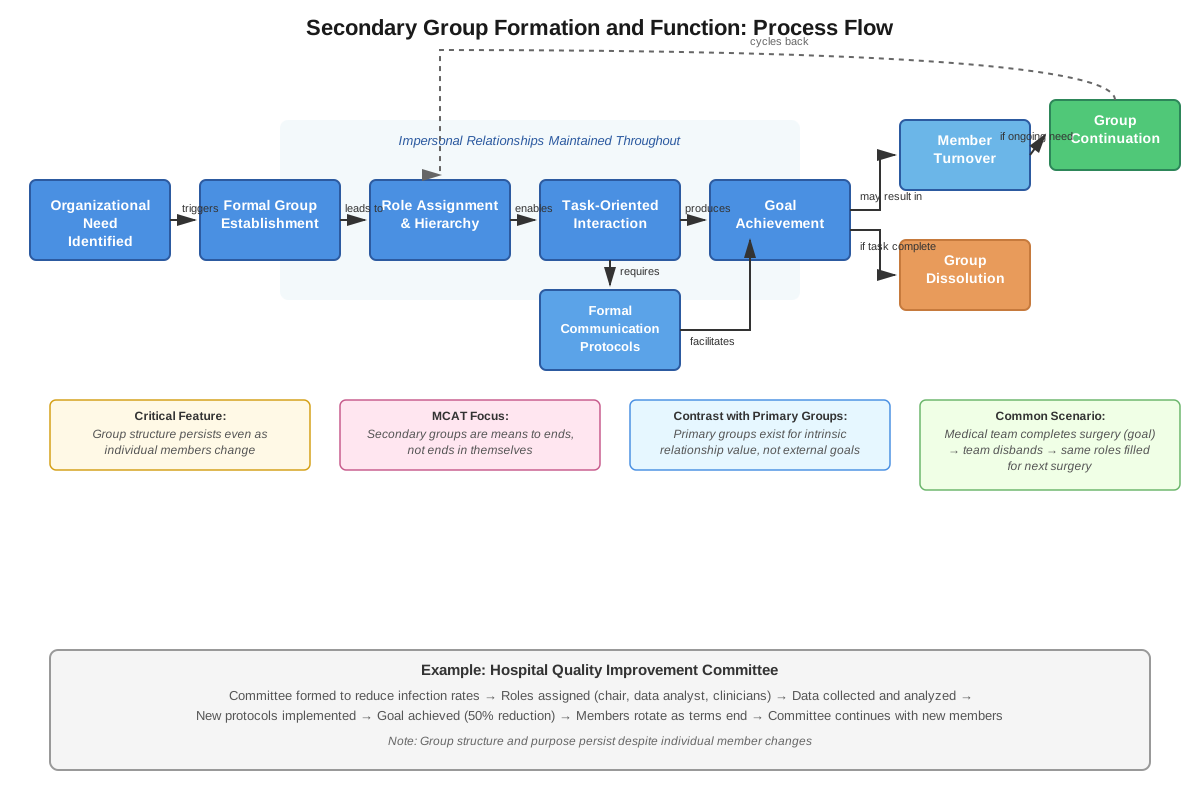
Secondary groups are large, impersonal, goal-oriented social groups characterized by formal relationships, specific roles, and instrumental interactions focused on accomplishing particular tasks or objectives. These groups form the organizational infrastructure of modern society, existing primarily to achieve specific purposes rather than to fulfill emotional or relational needs. Members interact based on defined roles and responsibilities rather than personal characteristics or intimate knowledge of one another.
The defining features of secondary groups include:
- Large size: Typically contain many members, often too numerous for everyone to know each other personally
- Impersonal relationships: Interactions remain formal, professional, and role-based rather than intimate or emotionally deep
- Goal-oriented purpose: Exist to accomplish specific objectives, complete tasks, or fulfill organizational missions
- Limited duration: Membership often temporary or time-bound, lasting only as long as the goal requires or the role continues
- Formal structure: Operate through explicit rules, regulations, hierarchies, and established procedures
- Instrumental interactions: Communication focuses on task completion and information exchange rather than emotional support
Secondary Groups in Healthcare Contexts
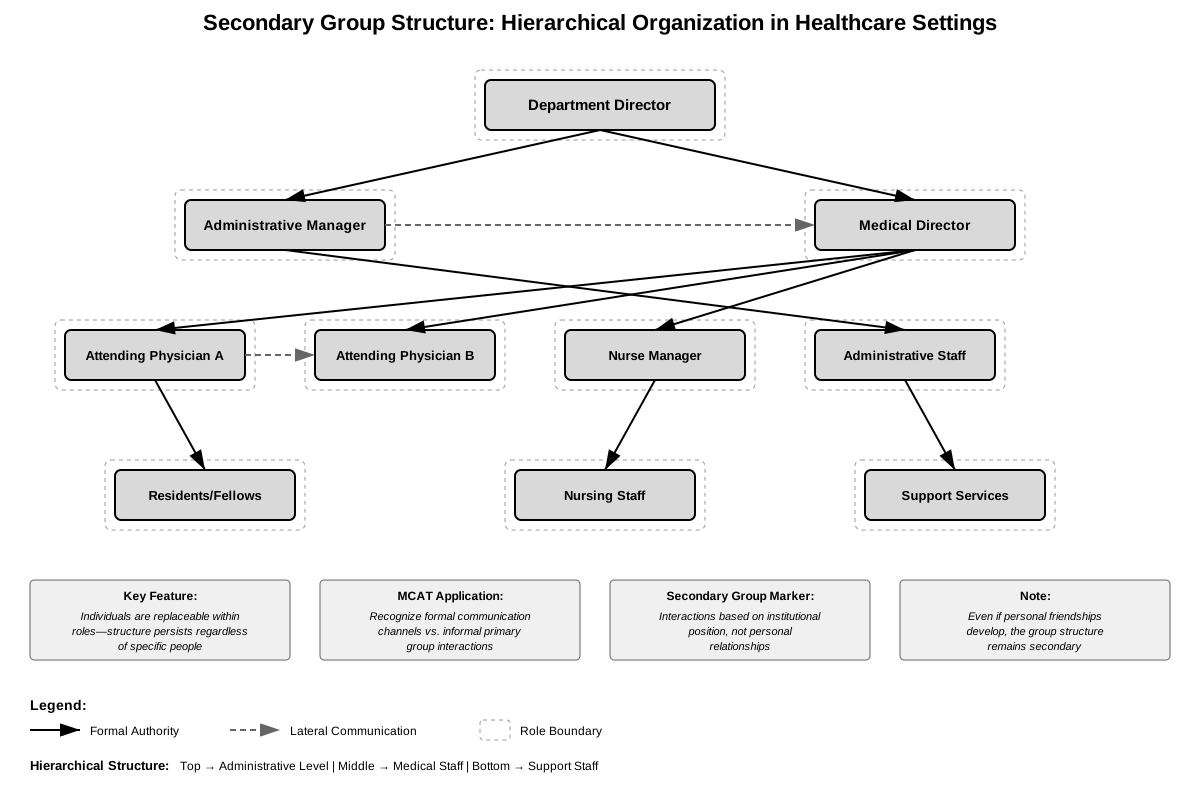
Medical institutions exemplify secondary group structures through hospital departments, medical teams, insurance networks, and professional organizations. A hospital surgical team represents a classic secondary group: members interact based on professional roles (surgeon, anesthesiologist, nurse), follow formal protocols, focus on the instrumental goal of patient treatment, and may not develop personal relationships despite working together regularly.
Healthcare organizations demonstrate secondary group characteristics through:
- Bureaucratic hierarchies: Clear chains of command from hospital administrators to department heads to attending physicians to residents
- Specialized roles: Each position has defined responsibilities, qualifications, and scope of practice
- Formal communication: Documentation requirements, standardized procedures, and official channels for information flow
- Task orientation: Primary focus on patient outcomes, treatment protocols, and organizational efficiency
- Professional boundaries: Maintenance of appropriate distance between providers and patients, as well as among staff members
Comparison with Primary Groups
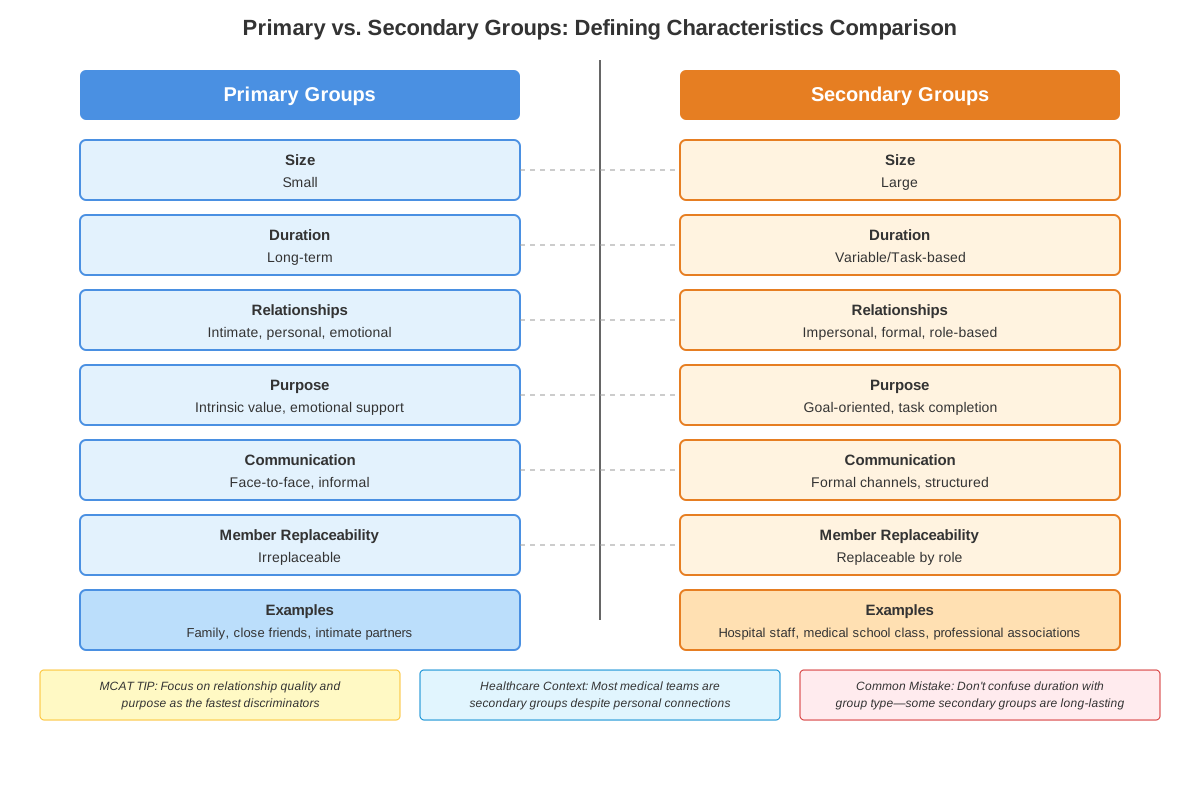
Understanding secondary groups requires clear differentiation from primary groups, which are small, intimate groups characterized by face-to-face interaction, emotional depth, and expressive relationships. The following table highlights critical distinctions:
| Characteristic | Primary Groups | Secondary Groups |
|---|---|---|
| Size | Small (2-20 members) | Large (potentially hundreds or thousands) |
| Relationships | Personal, intimate, emotional | Impersonal, formal, professional |
| Duration | Long-term, often lifelong | Temporary, time-limited |
| Purpose | Expressive (emotional fulfillment) | Instrumental (goal achievement) |
| Communication | Informal, spontaneous, emotional | Formal, structured, task-focused |
| Identity formation | Strong influence on self-concept | Limited personal identity impact |
| Examples | Family, close friends, intimate partners | Workplace teams, professional associations, corporations |
| Interaction basis | Whole person, multiple roles | Specific role, segmented identity |
The Primary-Secondary Group Continuum
Rather than existing as absolute categories, groups often fall along a continuum between purely primary and purely secondary characteristics. A long-term work team may develop some primary group qualities (personal friendships, emotional support) while maintaining secondary group structure (formal roles, task focus). This phenomenon, called group transformation, occurs when secondary groups develop primary group characteristics over time, or when primary groups adopt formal structures for specific purposes.
Medical students often experience this continuum: their study groups begin as secondary groups (goal: pass exams) but may develop primary group qualities (emotional support, lasting friendships) through sustained interaction. Conversely, family businesses represent primary groups (family relationships) that adopt secondary group structures (formal roles, business procedures) to achieve organizational goals.
Functions of Secondary Groups in Society
Secondary groups serve essential societal functions that primary groups cannot fulfill:
- Coordination of complex tasks: Enable large-scale projects requiring specialized expertise and division of labor
- Economic production: Organize workplaces, corporations, and industries that generate goods and services
- Social control: Implement rules, regulations, and formal sanctions that maintain social order
- Professional socialization: Train individuals in specialized roles and professional identities
- Resource distribution: Allocate societal resources through formal institutions and organizations
- Innovation and progress: Bring together diverse expertise to solve complex problems and advance knowledge
Bureaucracy as Secondary Group Structure
Bureaucracy represents the quintessential secondary group organizational form, characterized by Max Weber's ideal type features: hierarchy of authority, written rules and regulations, specialized division of labor, impersonal relationships, and career advancement based on merit. Healthcare systems exemplify bureaucratic secondary groups through hospital administration, insurance companies, government health agencies, and medical licensing boards.
Bureaucratic secondary groups provide efficiency and predictability but may also create challenges including:
- Depersonalization: Treating individuals as cases or numbers rather than unique persons
- Rigidity: Difficulty adapting to unique situations or individual needs
- Goal displacement: Focusing on following procedures rather than achieving intended outcomes
- Alienation: Members feeling disconnected from organizational mission or personal meaning in their work
Role Relationships in Secondary Groups
Within secondary groups, individuals occupy formal roles defined by organizational structure rather than personal characteristics. These roles come with explicit expectations, responsibilities, and authority levels. A physician's role in a hospital secondary group includes specific duties (patient care, documentation, supervision), authority (ordering tests, prescribing medications), and limitations (scope of practice, institutional policies).
Role conflict frequently emerges in secondary groups when incompatible expectations arise from different roles or when personal values clash with organizational requirements. A physician may experience role conflict between the bureaucratic requirement to see patients efficiently (secondary group pressure) and the desire to provide thorough, personalized care (primary group values).
Concept Relationships
Secondary groups connect fundamentally to primary groups through contrast and complementarity—both group types fulfill different human needs and operate through distinct mechanisms. While primary groups provide emotional support and identity formation, secondary groups enable goal achievement and societal organization. Individuals simultaneously belong to multiple groups of each type, navigating between intimate personal relationships and formal professional interactions.
The relationship flows as: Social structure → encompasses → Groups → divide into → Primary groups (expressive, intimate) and Secondary groups (instrumental, formal) → both contain → Roles and statuses → which generate → Social interactions → that create → Social networks.
Secondary groups connect to bureaucracy as the organizational form that structures most large secondary groups in modern society. Understanding bureaucratic characteristics (hierarchy, formal rules, specialization) explains how secondary groups function and why they exhibit particular patterns of interaction and decision-making.
The concept links to reference groups because secondary groups often serve as reference points for professional identity, career aspirations, and normative behavior in occupational settings. Medical students use physician groups as reference groups, adopting professional values and behavioral standards from these secondary group models.
Secondary groups relate to in-groups and out-groups through organizational boundaries that define membership, create professional identities, and sometimes generate intergroup competition or conflict. Hospital departments may function as in-groups for their members while viewing other departments as out-groups, affecting collaboration and resource allocation.
The connection to social institutions is direct: secondary groups constitute the organizational building blocks of institutions like healthcare, education, government, and economy. Hospitals, medical schools, insurance companies, and health departments are all secondary groups that collectively form the healthcare institution.
Quick check — test yourself on Secondary groups so far.
Try Flashcards →High-Yield Facts
⭐ Secondary groups are large, impersonal, goal-oriented groups with formal structures and instrumental relationships focused on task completion rather than emotional fulfillment.
⭐ The primary distinction between primary and secondary groups is expressive (emotional, relationship-focused) versus instrumental (goal-focused, task-oriented) purpose.
⭐ Healthcare organizations, hospital departments, medical teams, and professional associations are classic examples of secondary groups in medical contexts.
⭐ Secondary groups operate through formal roles, explicit rules, hierarchical authority, and specialized division of labor—characteristics of bureaucratic organization.
⭐ Members of secondary groups interact based on specific roles and responsibilities rather than whole-person relationships or intimate knowledge of each other.
- Secondary groups typically have temporary or time-limited membership lasting only as long as the role or goal requires.
- Group transformation occurs when secondary groups develop primary group characteristics over time through sustained interaction and relationship building.
- Bureaucratic secondary groups can create depersonalization, rigidity, and goal displacement despite providing efficiency and predictability.
- Role conflict frequently emerges in secondary groups when organizational requirements clash with personal values or when multiple role expectations prove incompatible.
- Secondary groups serve essential societal functions including coordination of complex tasks, economic production, social control, and professional socialization.
- The primary-secondary group distinction exists on a continuum rather than as absolute categories, with many groups exhibiting mixed characteristics.
- Professional boundaries in healthcare reflect secondary group norms that maintain appropriate distance and role-based interactions between providers and patients.
Common Misconceptions
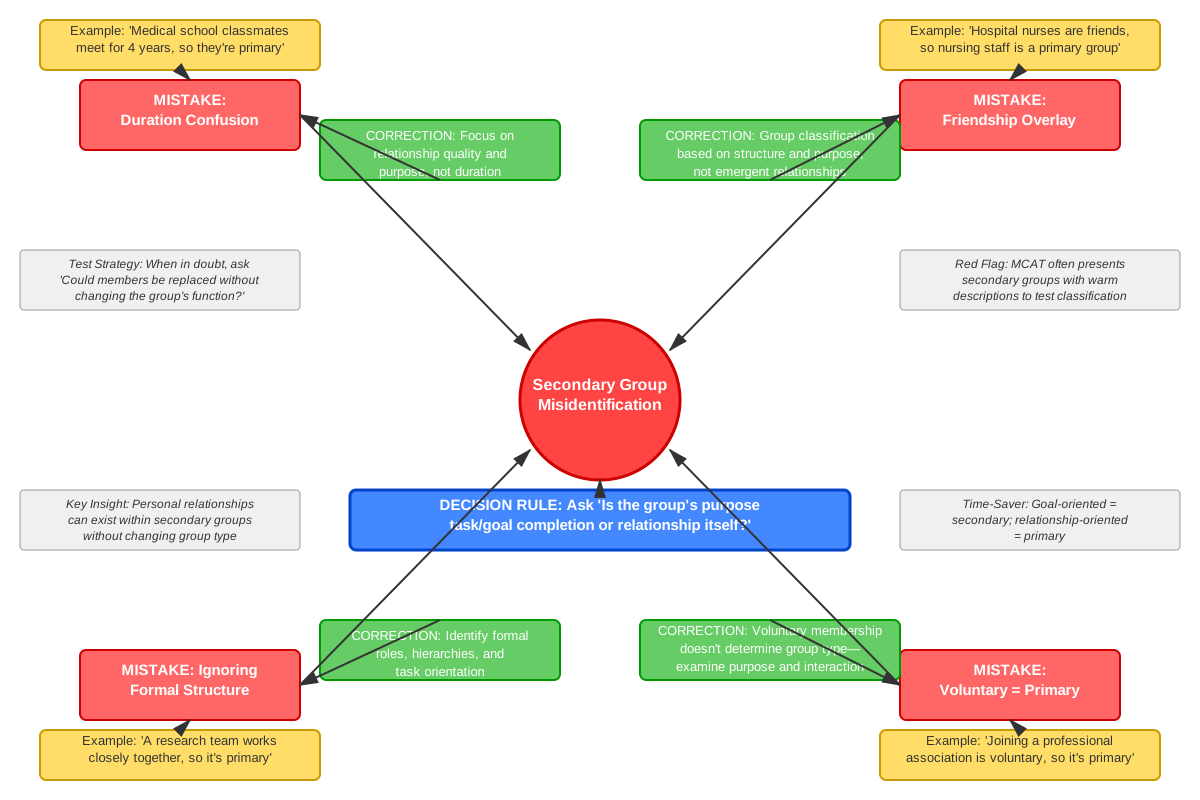
Misconception: All workplace relationships are secondary group interactions.
Correction: While workplaces are secondary groups structurally, employees often develop primary group relationships (close friendships, emotional support networks) within the secondary group context. The organizational structure remains secondary, but interpersonal relationships may become primary.
Misconception: Secondary groups are less important than primary groups for individuals.
Correction: Both group types fulfill essential but different human needs. Secondary groups enable goal achievement, professional identity, economic survival, and societal participation—functions as vital as the emotional support provided by primary groups. Most individuals require both types for well-being.
Misconception: Secondary groups always remain impersonal and never develop emotional connections.
Correction: Through group transformation, secondary groups can develop primary group characteristics while maintaining their formal structure and instrumental purpose. Long-term work teams often exhibit both secondary (formal roles, task focus) and primary (personal friendships, emotional support) qualities simultaneously.
Misconception: The patient-physician relationship is always a secondary group interaction.
Correction: While the healthcare system is a secondary group and initial patient-provider interactions are formal and role-based, long-term therapeutic relationships may develop primary group characteristics (personal knowledge, emotional connection, trust) while maintaining professional boundaries. The relationship exists on the primary-secondary continuum.
Misconception: Secondary groups only exist in modern, industrialized societies.
Correction: While secondary groups proliferate in modern societies due to specialization and bureaucratization, they exist in all societies with formal organizations, trade networks, military structures, or religious institutions. The prevalence and complexity increase with modernization, but the basic form is universal.
Misconception: Membership in secondary groups doesn't affect personal identity or self-concept.
Correction: Although secondary groups have less identity impact than primary groups, professional roles and organizational memberships significantly influence self-concept, particularly regarding occupational identity, social status, and career-related aspects of self. Physicians' professional identity is substantially shaped by secondary group memberships in medical institutions.
Worked Examples
Example 1: Hospital Emergency Department Analysis
Vignette: A busy urban hospital emergency department employs 45 physicians, 120 nurses, and numerous support staff working in rotating shifts. Staff members follow standardized triage protocols, communicate through formal documentation systems, and interact primarily during patient care activities. While some staff members have worked together for years, most interactions focus on case management and treatment decisions. Department meetings occur monthly to review protocols and performance metrics.
Question: Does the emergency department function primarily as a primary or secondary group? Justify the classification using specific characteristics.
Analysis:
Step 1: Identify size characteristics. The department contains over 165 members—far too large for everyone to know each other personally. This indicates secondary group structure.
Step 2: Examine relationship quality. Interactions focus on "case management and treatment decisions" (instrumental, task-oriented) rather than personal connection or emotional support. Communication occurs "through formal documentation systems" (formal, structured). These are secondary group characteristics.
Step 3: Assess purpose and goals. The department exists to provide emergency medical care (specific, instrumental goal) rather than to fulfill emotional needs or build intimate relationships. This is goal-oriented secondary group purpose.
Step 4: Evaluate organizational structure. "Standardized triage protocols," "rotating shifts," and "monthly department meetings to review protocols and performance metrics" indicate formal rules, specialized roles, and bureaucratic organization—hallmarks of secondary groups.
Step 5: Consider duration and interaction basis. Staff work "rotating shifts" (temporary, time-limited interactions) and interact "primarily during patient care activities" (role-based, segmented interactions) rather than engaging as whole persons.
Conclusion: The emergency department functions primarily as a secondary group based on large size, impersonal relationships, instrumental goal orientation, formal structure, and role-based interactions. While some staff may develop primary group relationships (friendships) within this context, the organizational structure and predominant interaction patterns are clearly secondary.
Example 2: Medical School Study Group Evolution
Vignette: Four medical students form a study group during their first semester to prepare for anatomy exams. Initially, they meet twice weekly in the library, divide topics for review, quiz each other on material, and maintain focused, efficient study sessions. Over two years, the group continues meeting but begins sharing personal struggles, supporting each other through family crises, celebrating birthdays together, and communicating daily about both academic and personal matters. They now consider each other close friends while still maintaining their study schedule and academic focus.
Question: How has this group's classification changed over time? What sociological concept explains this transformation?
Analysis:
Step 1: Classify initial group characteristics. The group formed with an instrumental purpose (exam preparation), maintained task-focused interactions ("divide topics," "quiz each other"), and conducted "focused, efficient study sessions." These are secondary group characteristics despite small size.
Step 2: Identify changes over time. The group developed "sharing personal struggles," "supporting each other through family crises," "celebrating birthdays," and "communicating daily about both academic and personal matters"—all primary group characteristics involving emotional depth, expressive purpose, and whole-person relationships.
Step 3: Note persistent secondary elements. The group "still maintain[s] their study schedule and academic focus," indicating the instrumental purpose continues alongside the expressive relationships.
Step 4: Apply relevant concept. Group transformation describes when secondary groups develop primary group characteristics through sustained interaction while potentially maintaining their original structure and purpose.
Step 5: Recognize continuum placement. The group now exhibits both secondary (goal-oriented study sessions, task focus) and primary (emotional support, intimate friendships, daily personal communication) characteristics, placing it in the middle of the primary-secondary continuum rather than at either extreme.
Conclusion: The study group has undergone group transformation from a predominantly secondary group (instrumental, task-focused) to a mixed group exhibiting both secondary and primary characteristics. This demonstrates that groups exist on a continuum and can develop characteristics of both types simultaneously. The group now serves both instrumental functions (exam preparation) and expressive functions (emotional support, friendship), illustrating how sustained interaction can transform group dynamics while maintaining original purposes.
Exam Strategy
When approaching MCAT questions about secondary groups, immediately scan for trigger words indicating group type: "formal," "organization," "workplace," "professional," "department," "corporation," "association," "bureaucracy," "protocol," "role," and "task-oriented" suggest secondary groups, while "intimate," "emotional," "family," "close friends," "personal," and "support" suggest primary groups.
Process-of-elimination strategy: If a question asks you to identify group type, eliminate options by checking against the primary-secondary distinction table. Ask: Is the group large or small? Are relationships personal or impersonal? Is the purpose expressive or instrumental? Is the structure formal or informal? Two or more secondary characteristics typically indicate a secondary group, even if some primary elements exist.
Time allocation: Secondary group questions typically require 60-90 seconds. Spend 20 seconds identifying key characteristics in the passage, 30 seconds applying the primary-secondary distinction, and 20 seconds eliminating wrong answers. Don't overthink ambiguous cases—the MCAT usually provides clear indicators of predominant group type.
Common question formats include:
- Direct classification: "Which of the following best describes the group in the passage?" Look for the option emphasizing instrumental purpose, formal structure, or role-based interaction.
- Comparison questions: "How does Group A differ from Group B?" Focus on the expressive-instrumental distinction and relationship quality.
- Application scenarios: "A physician joins a hospital department. This represents membership in which type of group?" Recognize organizational contexts as secondary groups.
- Transformation questions: "How has the group changed over time?" Identify shifts from instrumental to expressive purpose or from formal to intimate relationships.
Exam Tip: When passages describe healthcare settings, assume secondary group structure unless clear evidence of primary group characteristics appears. Hospitals, clinics, medical teams, and professional organizations default to secondary classification.
Red flag phrases that indicate wrong answers: Any option suggesting a workplace or professional organization is a primary group (incorrect unless the question specifically addresses friendships within the organization); any option claiming secondary groups don't affect identity (they do, particularly professional identity); any option treating the primary-secondary distinction as absolute rather than a continuum.
Memory Techniques
SECONDARY Mnemonic for key characteristics:
- Size: Large membership
- Explicit rules and formal structure
- Career/professional focus
- Organizational goals and task orientation
- Non-personal, impersonal relationships
- Defined roles and responsibilities
- Achievement-focused (instrumental)
- Role-based interactions
- Yield efficiency through specialization
Visualization strategy: Picture a hospital organizational chart with boxes and lines showing hierarchy, departments, and formal roles. This image captures secondary group structure—formal, organized, role-based, impersonal. Contrast this with a family dinner table where everyone knows each other intimately (primary group).
Comparison anchor: Remember "2nd = 2 many 2 know" (secondary groups have too many members to know personally). This helps recall that size and impersonal relationships define secondary groups.
Purpose distinction: "PRIMARY = PERSONAL" (emotional, expressive) versus "SECONDARY = SYSTEMATIC" (goal-oriented, instrumental). The alliteration helps maintain the distinction.
Healthcare context reminder: "Hospital Hierarchy = Secondary Structure" connects the most common MCAT context (healthcare organizations) to the correct group type.
Summary
Secondary groups represent large, impersonal, goal-oriented social structures characterized by formal organization, role-based interactions, and instrumental purpose focused on task completion rather than emotional fulfillment. These groups form the organizational backbone of modern society, including healthcare institutions, professional associations, corporations, and bureaucratic organizations. The fundamental distinction between secondary and primary groups—instrumental versus expressive purpose, impersonal versus intimate relationships, formal versus informal structure—appears frequently on the MCAT, particularly in passages about healthcare organizations and professional interactions. Understanding that groups exist on a continuum and can undergo transformation from secondary to primary characteristics (or exhibit both simultaneously) enables nuanced analysis of complex organizational scenarios. Secondary groups serve essential societal functions including coordination of complex tasks, professional socialization, and resource distribution, while also potentially creating challenges like depersonalization and role conflict. Mastery of secondary group concepts requires recognizing their characteristics in healthcare contexts, distinguishing them from primary groups, and analyzing how formal organizational structures influence individual behavior and professional relationships in medical settings.
Key Takeaways
- Secondary groups are large, impersonal, goal-oriented organizations with formal structures and instrumental, role-based interactions focused on task completion.
- The primary-secondary distinction centers on expressive (emotional, relationship-focused) versus instrumental (goal-oriented, task-focused) purpose, with healthcare organizations typically functioning as secondary groups.
- Groups exist on a continuum and can undergo transformation, developing characteristics of both types simultaneously through sustained interaction.
- Secondary groups operate through bureaucratic features including hierarchy, formal rules, specialized roles, and impersonal relationships—characteristics defining medical institutions.
- Understanding secondary groups enables analysis of organizational behavior, professional roles, institutional structures, and the tension between formal requirements and personal relationships in healthcare settings.
- Common MCAT scenarios involve identifying group types in healthcare contexts, analyzing group transformation, and recognizing how secondary group structures influence professional interactions.
- Trigger words like "formal," "organization," "professional," "department," and "protocol" indicate secondary groups, while "intimate," "emotional," and "personal" suggest primary groups.
Related Topics
Primary Groups: The contrasting group type characterized by intimate, face-to-face relationships and expressive purpose; mastering secondary groups requires clear understanding of this fundamental distinction.
Bureaucracy and Formal Organizations: The organizational structure that defines most secondary groups in modern society; understanding Weber's ideal type bureaucracy deepens comprehension of how secondary groups function.
Reference Groups: Groups that individuals use as standards for self-evaluation and behavior; secondary groups often serve as reference groups for professional identity and career development.
In-Groups and Out-Groups: The distinction between groups to which individuals belong versus those they don't; secondary group membership creates professional in-groups that influence identity and behavior.
Social Networks: The web of social relationships connecting individuals; secondary groups form important nodes in professional and organizational networks that shape opportunities and information flow.
Role Theory and Role Conflict: The study of social positions and their associated expectations; secondary groups create formal roles that may generate conflict when expectations clash with personal values or other role demands.
Practice CTA
Now that you've mastered the core concepts of secondary groups, test your understanding with practice questions and flashcards designed to simulate actual MCAT scenarios. Focus on distinguishing secondary from primary groups in healthcare contexts, analyzing group transformation, and recognizing how organizational structures influence professional behavior. Remember: the MCAT rewards quick, accurate identification of group characteristics and application of sociological concepts to clinical vignettes. Your ability to rapidly classify groups and predict their behavioral patterns will directly translate to points on test day. You've built the foundation—now reinforce it through active practice and application!
Sign up free to keep reading
Create a free AnvayaPrep account to finish this MCAT guide on Secondary groups — plus flashcards and practice questions.