Overview
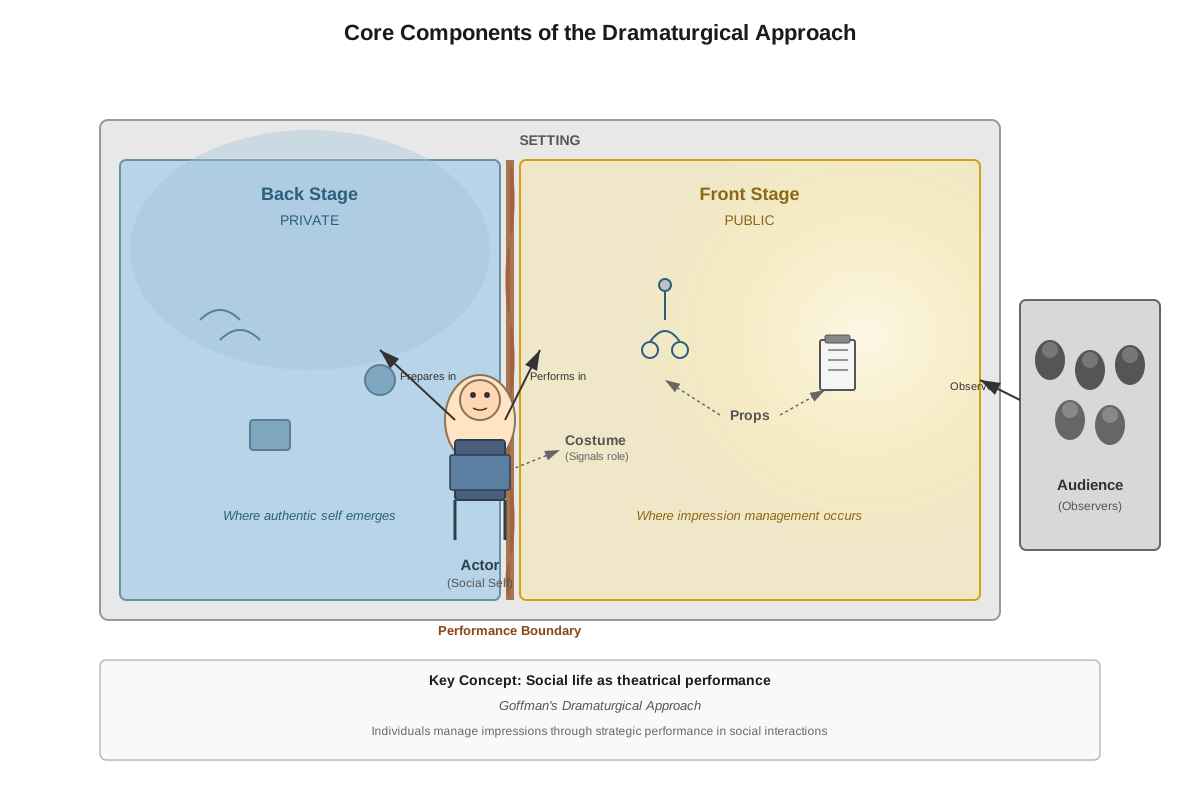
The dramaturgical approach is a foundational sociological perspective developed by Erving Goffman that conceptualizes social interaction as a theatrical performance. In this framework, individuals are viewed as actors who present themselves strategically to different audiences in various social settings, managing impressions to shape how others perceive them. Just as actors on stage perform roles, wear costumes, and use props to convey meaning, people in everyday life engage in impression management, carefully controlling the information they reveal to achieve desired social outcomes. This approach falls within the symbolic interactionist tradition and provides powerful analytical tools for understanding how identity is constructed, maintained, and negotiated through social interaction.
For the MCAT, the dramaturgical approach represents a high-yield topic within Social Interaction and Identity that frequently appears in Sociology passages and discrete questions. The MCAT tests this concept both directly—asking students to identify dramaturgical elements in social scenarios—and indirectly, by embedding it within passages about professional behavior, stigma management, social roles, or identity presentation. Understanding this framework enables students to analyze complex social situations, predict behavioral patterns, and explain how individuals navigate multiple social contexts while maintaining coherent identities.
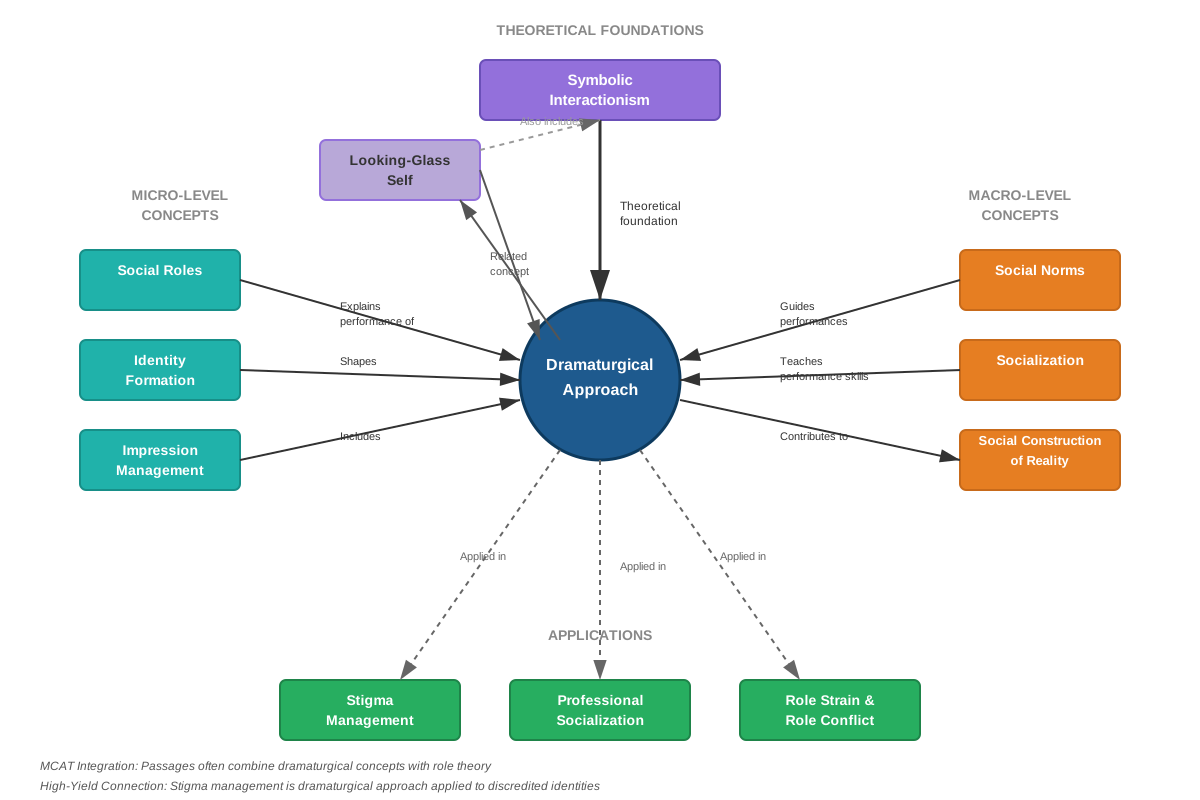
The dramaturgical approach connects intimately with broader Sociology concepts including social roles, status, identity formation, symbolic interactionism, and the social construction of reality. It provides a bridge between micro-level interactions (how individuals behave in specific encounters) and macro-level social structures (how cultural norms and expectations shape those behaviors). Mastering this topic equips students to tackle MCAT questions about healthcare provider-patient interactions, professional socialization, stigma, deviance, and the presentation of self across diverse social contexts—all common themes in the Psychological, Social, and Biological Foundations of Behavior section.
Learning Objectives
- [ ] Define dramaturgical approach using accurate Sociology terminology
- [ ] Explain why dramaturgical approach matters for the MCAT
- [ ] Apply dramaturgical approach to exam-style questions
- [ ] Identify common mistakes related to dramaturgical approach
- [ ] Connect dramaturgical approach to related Sociology concepts
- [ ] Distinguish between front stage and back stage behaviors in clinical and social scenarios
- [ ] Analyze how impression management strategies vary across different social contexts
- [ ] Evaluate the role of props, setting, and audience in shaping social performances
Prerequisites
- Symbolic Interactionism: The dramaturgical approach is rooted in this theoretical perspective, which emphasizes that people create meaning through social interaction and interpret symbols to understand their social world
- Social Roles and Status: Understanding that individuals occupy positions in society with associated expectations is essential for grasping how people perform these roles dramatically
- Self and Identity: Basic knowledge of how individuals develop and maintain a sense of self through social processes provides the foundation for understanding impression management
- Socialization: Familiarity with how people learn social norms and expectations helps explain why individuals perform certain roles in particular ways
Why This Topic Matters
The dramaturgical approach has profound real-world significance in healthcare settings, where medical professionals must carefully manage their presentation to establish credibility, inspire confidence, and maintain professional boundaries. Physicians, nurses, and other healthcare providers engage in impression management when they wear white coats (costumes), use medical terminology (specialized language), and maintain composed demeanors even in stressful situations. Understanding this framework helps explain phenomena like "white coat syndrome," professional burnout (from constant performance demands), and the challenges of maintaining work-life boundaries.
On the MCAT, dramaturgical concepts appear with remarkable frequency—approximately 2-4 questions per exam directly test this material, while many additional questions incorporate these ideas indirectly. The exam commonly presents passages about professional identity development, patient-provider communication, stigma management in chronic illness, or social behavior in institutional settings. Questions may ask students to identify which behavior represents "front stage" versus "back stage" performance, explain why someone engages in particular impression management strategies, or predict how changing the audience or setting will alter behavior.
Typical MCAT applications include: analyzing how medical students learn to "perform" as physicians during clinical rotations; explaining why patients may present themselves differently to doctors versus family members; identifying impression management failures that lead to stigma or embarrassment; and understanding how social settings (emergency rooms, private offices, hospital hallways) function as different "stages" requiring distinct performances. The interdisciplinary nature of this topic—bridging sociology, psychology, and healthcare contexts—makes it particularly valuable for the MCAT's integrated approach to testing social and behavioral sciences.
Core Concepts
The Theatrical Metaphor
The dramaturgical approach fundamentally relies on an extended theatrical metaphor to analyze social life. Erving Goffman, who developed this framework in his seminal 1959 work "The Presentation of Self in Everyday Life," argued that social interaction resembles theatrical performance in systematic ways. Individuals are conceptualized as actors who perform roles before various audiences in different settings. This is not to suggest that social life is fake or insincere, but rather that all social interaction involves some degree of conscious or unconscious performance—people adjust their behavior, appearance, and communication based on who is watching and what impression they wish to create.
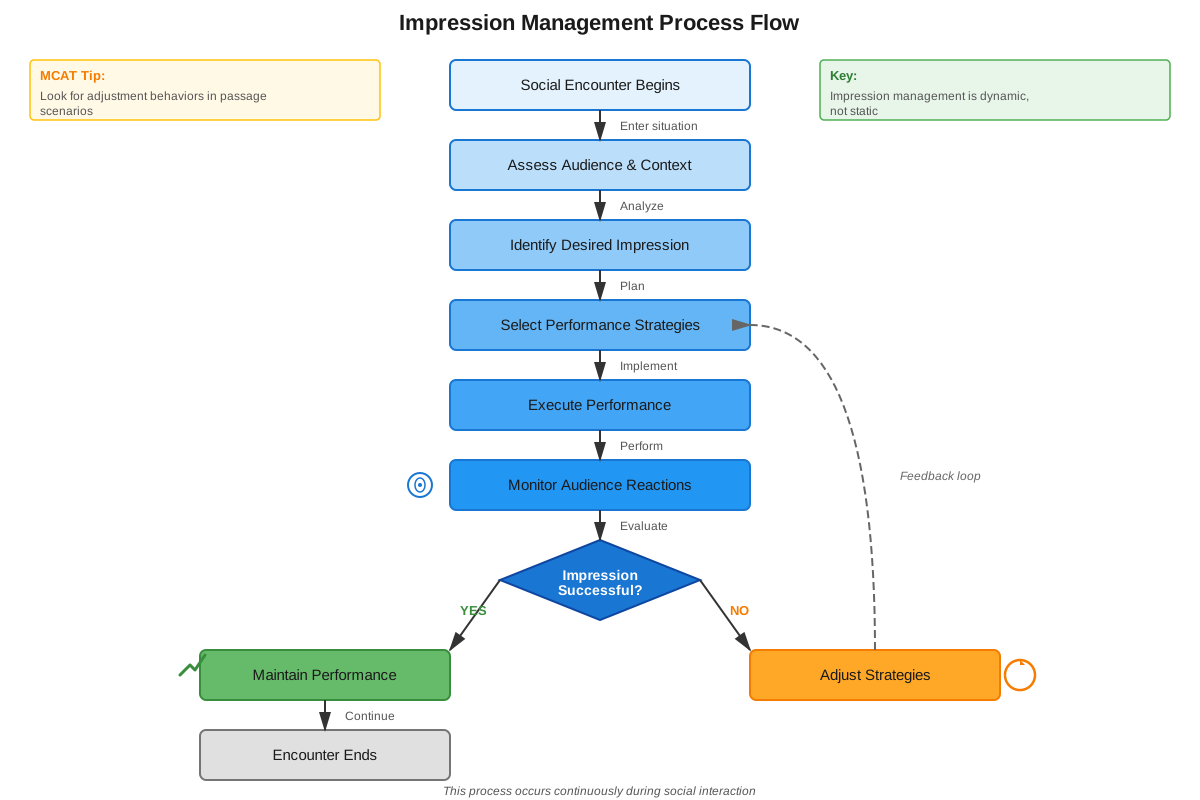
The core insight is that individuals engage in impression management (also called self-presentation), which refers to the process of controlling information about oneself to influence how others perceive and respond to them. This management occurs continuously throughout social interaction, though people vary in their awareness of and skill at impression management. Successful impression management requires understanding social norms, reading audience reactions, and adjusting performance accordingly.
Front Stage vs. Back Stage
One of the most powerful and testable distinctions in the dramaturgical approach is between front stage and back stage regions. These represent different social spaces with fundamentally different behavioral expectations and performance requirements.
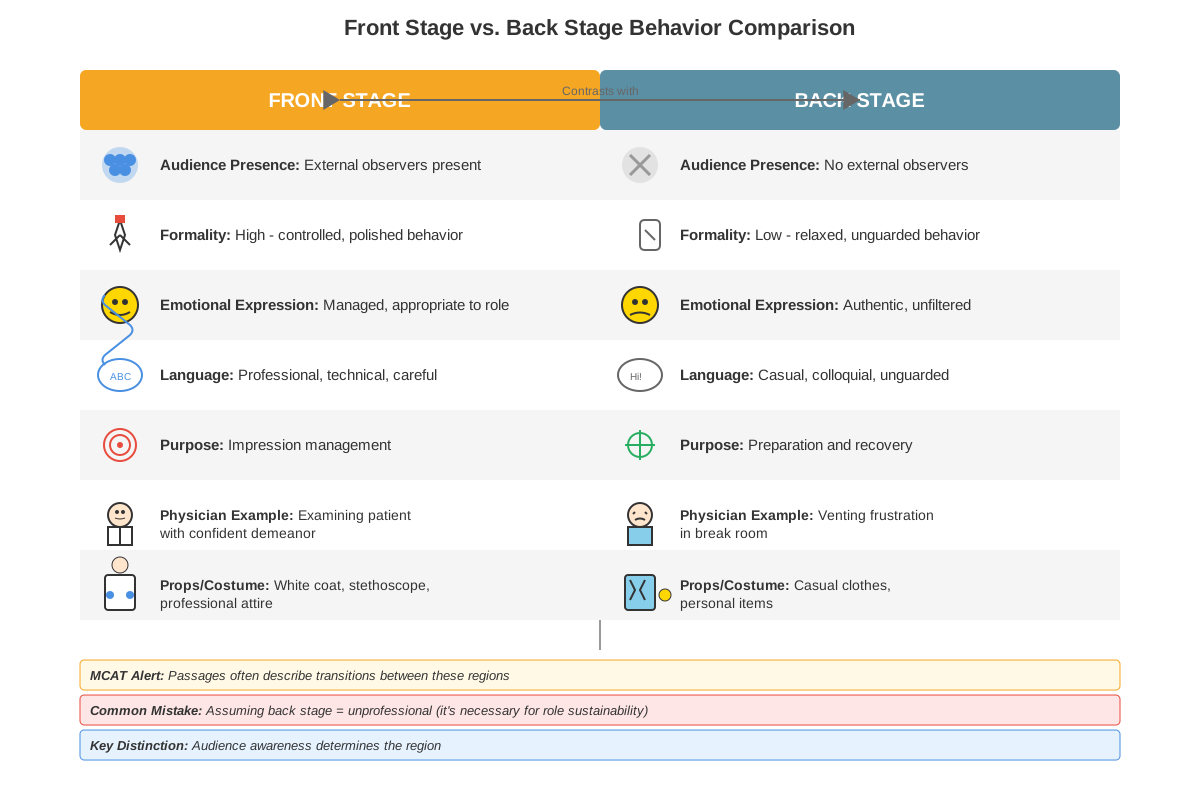
Front stage refers to social settings where individuals perform for an audience and must adhere to established social norms, roles, and expectations. In front stage regions, people carefully manage their appearance, manner, and behavior to create desired impressions. Examples include a physician examining a patient, a student taking an exam, a server interacting with restaurant customers, or a job candidate in an interview. Front stage behavior is characterized by formality, adherence to role expectations, and conscious impression management.
Back stage (or backstage) refers to private or semi-private spaces where individuals can relax, drop their performances, and behave more authentically without audience scrutiny. In back stage regions, people can prepare for front stage performances, rehearse roles, vent frustrations, or simply be themselves without maintaining a particular impression. Examples include physicians discussing cases in a private lounge, students relaxing in dorm rooms, servers complaining about customers in the kitchen, or candidates decompressing after interviews. Back stage behavior is characterized by informality, relaxation of role requirements, and reduced impression management.
| Aspect | Front Stage | Back Stage |
|---|---|---|
| Audience | Present and observing | Absent or trusted intimates |
| Behavior | Formal, role-appropriate | Informal, relaxed |
| Impression Management | High, conscious control | Low, authentic expression |
| Examples | Doctor's office, classroom, courtroom | Break room, home, private office |
| Purpose | Maintain social roles and expectations | Prepare, recover, be authentic |
The boundary between front stage and back stage is crucial but not always fixed. Violations occur when back stage behavior accidentally becomes visible to front stage audiences—for example, when a physician's private conversation about a patient is overheard, or when a "reply all" email exposes back stage opinions to front stage colleagues. Such violations often result in embarrassment, loss of credibility, or damaged relationships.
Performance Elements
The dramaturgical approach identifies several key elements that constitute social performances:
Setting refers to the physical environment where interaction occurs, including furniture, décor, lighting, and spatial arrangement. Settings communicate information about the type of interaction expected and help establish the appropriate mood. A physician's office with diplomas, medical equipment, and an examination table creates a setting that supports the doctor's professional performance and signals to patients how they should behave.
Appearance encompasses how individuals present themselves physically, including clothing, grooming, body language, and accessories. Appearance serves as a costume that signals social identity, status, and role. Medical professionals wear white coats or scrubs; business executives wear suits; judges wear robes. These costumes immediately communicate who the person is and what role they are performing.
Manner refers to how individuals conduct themselves during interaction—their demeanor, tone of voice, gestures, and interpersonal style. Manner indicates the role the person expects to play in the upcoming interaction. A physician's calm, confident manner reassures patients and establishes authority, while a deferential manner from a medical student signals their subordinate status in the medical hierarchy.
Props are objects that actors use during their performances to support their roles and make their performances more convincing. For healthcare providers, props include stethoscopes, prescription pads, computers, and medical charts. These objects are not merely functional—they also serve symbolic purposes, marking the bearer as a legitimate medical professional.
Teams and Collaboration
Social performances often involve teams—groups of individuals who cooperate to maintain a particular definition of the situation. Team members work together to support each other's performances and protect the team's collective impression. In healthcare settings, the entire medical team (physicians, nurses, technicians) collaborates to maintain an impression of competence, coordination, and patient-centered care.
Team members must maintain dramaturgical loyalty, meaning they protect each other's performances and avoid revealing back stage information that would undermine the team's front stage presentation. They also practice dramaturgical discipline, exercising self-control to avoid performance mistakes, and dramaturgical circumspection, planning carefully to prevent problems before they occur.
Impression Management Strategies
Individuals employ various strategies to manage impressions effectively:
- Idealization: Presenting an idealized version of oneself that emphasizes positive qualities and conforms to social expectations while concealing aspects that might undermine the desired impression
- Mystification: Maintaining social distance and restricting information to preserve awe, respect, or authority (common among high-status professionals)
- Misrepresentation: Deliberately presenting false information to create a desired but inaccurate impression
- Defensive practices: Strategies performers use to protect their own performances from disruption
- Protective practices: Strategies audiences use to help performers maintain their presentations, even when flaws are apparent
Role Distance and Authenticity
Role distance refers to the degree to which individuals separate their personal identity from the roles they perform. People may perform a role while simultaneously signaling that they are more than just that role—for example, a physician who jokes with patients demonstrates role distance by showing they are a person, not just a doctor. This concept addresses the tension between performing social roles and maintaining authentic selfhood.
Concept Relationships
The dramaturgical approach connects internally through a logical progression: individuals occupy social roles (actor) → they perform these roles before others (audience) → in specific locations (settings/stages) → using various tools (props, costumes, manner) → to create desired impressions (impression management) → while distinguishing between public and private behavior (front stage vs. back stage). Each element supports and reinforces the others within the theatrical metaphor.
This approach connects to prerequisite knowledge of symbolic interactionism by emphasizing that social reality is constructed through interaction and that people interpret symbols (including performances) to create meaning. It extends role theory by examining not just what roles exist, but how people actively perform and negotiate these roles in practice. The concept links to identity formation by showing that identity is not fixed but rather performed and adjusted across contexts—people present different versions of themselves to different audiences.
The dramaturgical approach relates to socialization by explaining how people learn to perform social roles appropriately—socialization is essentially learning the scripts, costumes, and manners required for various social performances. It connects to concepts of stigma (also developed by Goffman) by explaining how stigmatized individuals manage information about their discrediting attributes, often maintaining different presentations in front stage versus back stage regions.
Relationship map: Symbolic Interactionism (theoretical foundation) → Dramaturgical Approach (analytical framework) → Impression Management (process) → Front Stage/Back Stage (spatial distinction) → Social Roles (content of performance) → Identity (outcome of performances) → Stigma Management (special case of impression management)
Quick check — test yourself on Dramaturgical approach so far.
Try Flashcards →High-Yield Facts
⭐ The dramaturgical approach conceptualizes social interaction as theatrical performance, with individuals as actors managing impressions before audiences
⭐ Front stage refers to public settings where people perform roles according to social expectations; back stage refers to private settings where people can relax and be authentic
⭐ Impression management is the process of controlling information about oneself to influence how others perceive and respond
⭐ Setting, appearance, manner, and props are key elements that constitute social performances
⭐ Teams are groups of individuals who cooperate to maintain a particular definition of the situation and protect each other's performances
- The dramaturgical approach was developed by sociologist Erving Goffman in 1959
- Role distance refers to separating personal identity from performed roles
- Dramaturgical loyalty means team members protect each other's performances
- Violations of front stage/back stage boundaries typically result in embarrassment or loss of credibility
- Idealization involves presenting an enhanced version of oneself that emphasizes positive qualities
- Healthcare settings provide clear examples of dramaturgical principles, with distinct front stage (patient areas) and back stage (staff areas) regions
- Mystification maintains social distance to preserve authority and respect
- Protective practices are strategies audiences use to help performers maintain their presentations
- The approach bridges micro-level interactions and macro-level social structures
- Understanding dramaturgical concepts helps explain professional socialization in medical training
Common Misconceptions
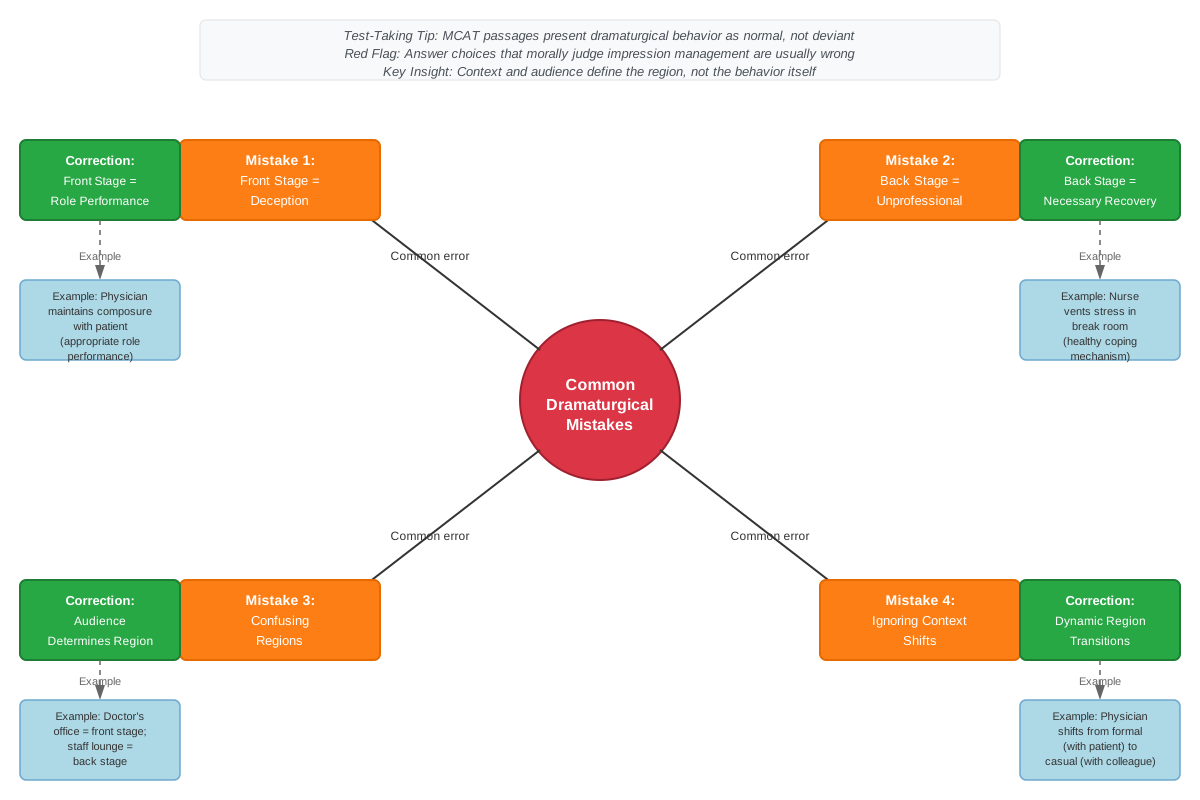
Misconception: The dramaturgical approach suggests that all social behavior is fake or insincere
Correction: The approach does not claim that performances are inauthentic; rather, it recognizes that all social interaction involves some degree of presentation management. People can be genuine while still adjusting their behavior to different contexts and audiences. The performance is real social behavior, not pretense.
Misconception: Front stage and back stage are fixed, permanent locations
Correction: Front stage and back stage are relative concepts that depend on who is present and what social expectations apply. The same physical space can be front stage in one situation and back stage in another. A physician's office is front stage when patients are present but becomes back stage when only colleagues are there.
Misconception: Only high-status professionals engage in impression management
Correction: All individuals engage in impression management across all social interactions, regardless of status. While the strategies and stakes may vary, everyone adjusts their presentation based on audience and context—from children behaving differently around parents versus peers to patients presenting symptoms to doctors.
Misconception: Back stage behavior represents someone's "true self" while front stage behavior is false
Correction: Both front stage and back stage behaviors are authentic aspects of self, just expressed in different contexts. People have multiple, context-dependent selves rather than one "true" self hidden behind performances. The dramaturgical approach recognizes that identity is multifaceted and situational.
Misconception: The dramaturgical approach only applies to face-to-face interaction
Correction: While Goffman originally focused on face-to-face encounters, dramaturgical principles apply to all forms of social interaction, including digital communication, social media, written correspondence, and virtual meetings. People manage impressions across all communication channels, though the specific strategies may differ.
Misconception: Impression management is always conscious and deliberate
Correction: Much impression management occurs automatically and unconsciously through socialized habits. People learn appropriate performances through socialization and often execute them without conscious thought. However, individuals may become more consciously aware of impression management in high-stakes situations or when performances fail.
Worked Examples
Example 1: Medical Student Clinical Rotation
Scenario: A third-year medical student, Jamie, is beginning clinical rotations in a hospital. During morning rounds with the attending physician and residents, Jamie presents patient cases using formal medical terminology, maintains a serious demeanor, and wears a short white coat with a stethoscope. Later, in the medical student lounge, Jamie complains to classmates about feeling overwhelmed, admits to not understanding some diagnoses, and jokes about the attending physician's intimidating style. When Jamie's parent calls, Jamie switches to explaining medical experiences in everyday language and expresses excitement about the learning opportunities.
Analysis using dramaturgical approach:
Front stage performance: During rounds, Jamie is performing the role of "medical student" before an audience of supervising physicians, residents, and patients. The setting (hospital hallway during rounds) is clearly front stage. Jamie's appearance (white coat, stethoscope) serves as a costume signaling medical professional identity. The manner (serious, formal) and use of medical terminology demonstrate appropriate role performance. Jamie engages in impression management to appear competent, knowledgeable, and professional—idealizing the presentation by concealing uncertainty and emphasizing medical knowledge.
Back stage behavior: The medical student lounge represents a back stage region where Jamie can drop the professional performance. Here, Jamie expresses authentic feelings (overwhelmed), admits limitations (not understanding diagnoses), and engages in informal behavior (joking about the attending). This back stage space allows Jamie to prepare for front stage performances, process experiences, and maintain psychological well-being without the pressure of constant impression management.
Multiple audiences: When speaking with parents, Jamie performs yet another role—that of "child" or "family member"—adjusting language, tone, and content for this different audience. This demonstrates that individuals maintain multiple performances for different audiences, each requiring distinct impression management strategies.
Learning objective connection: This example demonstrates how to apply the dramaturgical approach to analyze real social situations, identify front stage versus back stage regions, and recognize impression management strategies in healthcare contexts—all high-yield for MCAT questions.
Example 2: Patient with Chronic Illness
Scenario: Marcus has been living with diabetes for five years. During his quarterly endocrinologist appointments, he reports that he checks his blood sugar regularly, follows his diet plan carefully, and takes his medications as prescribed. He dresses neatly for appointments and brings a detailed log of his glucose readings. However, at home, Marcus frequently skips blood sugar checks when busy, occasionally indulges in foods outside his diet plan, and sometimes forgets evening medications. He discusses these challenges honestly with his diabetes support group, where other members share similar struggles. When colleagues at work ask about his diabetes, Marcus minimizes its impact, saying "it's no big deal" and "totally under control."
Analysis using dramaturgical approach:
Multiple front stages: Marcus performs different roles on multiple front stages. In the doctor's office, he performs the role of "compliant patient," using props (glucose log), appearance (neat dress), and manner (reporting adherence) to create an impression of successful disease management. This impression management serves practical purposes—avoiding physician disapproval and maintaining a positive patient-provider relationship—but may also reflect idealization, presenting an enhanced version of his actual behavior.
At work, Marcus performs the role of "healthy, capable employee" before colleagues, minimizing his illness to avoid stigma, maintain professional credibility, and prevent being perceived as limited or vulnerable. This represents a different impression management strategy—concealment or downplaying of potentially discrediting information.
Back stage authenticity: The diabetes support group functions as a back stage region where Marcus can be authentic about his struggles without fear of judgment. This space allows him to drop the "compliant patient" and "healthy employee" performances and express the reality of living with chronic illness. The support group members form a team with shared understanding, providing mutual support for each other's front stage performances while offering a safe back stage space.
Home as back stage: Marcus's home represents the ultimate back stage where he can relax role requirements and behave according to immediate preferences rather than ideal standards. The discrepancy between his reported behavior (front stage) and actual behavior (back stage) illustrates the gap that impression management can create between public presentation and private reality.
Implications: This example shows how the dramaturgical approach helps explain patient behavior, adherence challenges, and the complexity of living with chronic illness. It demonstrates why healthcare providers may receive incomplete or idealized information from patients and why understanding impression management is crucial for effective patient care.
Learning objective connection: This example applies dramaturgical concepts to healthcare scenarios, demonstrates how to identify impression management strategies, and connects to related concepts like stigma and patient-provider communication—all frequently tested on the MCAT.
Exam Strategy
When approaching MCAT questions on the dramaturgical approach, first identify whether the question asks about theoretical concepts (defining terms, identifying examples) or application (analyzing scenarios, predicting behavior). Most questions will present a social scenario and ask you to identify which dramaturgical concept best explains the behavior described.
Trigger words and phrases to watch for:
- "Presentation of self" or "self-presentation" → impression management
- "Public behavior" versus "private behavior" → front stage versus back stage
- "Managing others' perceptions" → impression management
- "Professional setting" or "formal interaction" → likely front stage
- "Behind closed doors" or "among close friends" → likely back stage
- "Maintaining an image" or "protecting reputation" → impression management
- "Role performance" or "acting the part" → dramaturgical approach generally
Process-of-elimination strategy: When questions present multiple theoretical frameworks, eliminate options that focus on internal psychological processes (psychoanalytic approaches), large-scale social structures (structural functionalism), or conflict and power dynamics (conflict theory) if the scenario emphasizes face-to-face interaction and impression management. The dramaturgical approach is specifically about micro-level interaction and self-presentation.
Common question formats:
- Identification questions: "Which of the following best illustrates front stage behavior?" → Look for formal, public settings with audience awareness
- Application questions: "A physician who jokes with colleagues but maintains a serious demeanor with patients is demonstrating..." → Recognize front stage/back stage distinction
- Prediction questions: "Based on the dramaturgical approach, how would this person likely behave when..." → Consider audience, setting, and impression management goals
Time allocation: Dramaturgical questions typically require 60-90 seconds. Spend 30 seconds carefully reading the scenario to identify the setting, audience, and behavior, then 30-60 seconds evaluating answer choices. Don't overthink—the correct answer usually clearly matches the definition of the concept being tested.
Exam Tip: If a question describes someone behaving differently in different social contexts, the dramaturgical approach is almost certainly the correct framework. This is the defining feature that distinguishes it from other sociological perspectives.
Memory Techniques
Mnemonic for Performance Elements - "SAMP":
- Setting: Where the performance occurs
- Appearance: How the actor looks (costume)
- Manner: How the actor behaves (demeanor)
- Props: Objects used in the performance
Visualization for Front Stage vs. Back Stage:
Picture an actual theater. The front stage is the visible stage where actors perform for the audience—formal, scripted, public. The back stage is behind the curtain where actors relax, remove costumes, rehearse lines, and complain about the director—informal, authentic, private. This literal theatrical image helps remember the metaphorical social distinction.
Acronym for Team Requirements - "DLC":
- Dramaturgical discipline: Self-control during performance
- Loyalty: Protecting team members' performances
- Circumspection: Careful planning to prevent problems
Memory phrase for Impression Management:
"I'm Managing Perceptions Right Everywhere Socially Successfully"
(Impression Management: Presenting Right Everywhere Socially Successfully)
Conceptual anchor: Always connect dramaturgical concepts back to the core metaphor—"Social life is like theater." When you encounter any term (front stage, props, performance, audience), immediately think "How does this relate to actual theater?" This anchor keeps all concepts organized and retrievable.
Summary
The dramaturgical approach, developed by Erving Goffman, provides a powerful framework for analyzing social interaction through the metaphor of theatrical performance. Individuals function as actors who perform social roles before various audiences in different settings, engaging in continuous impression management to shape how others perceive them. The fundamental distinction between front stage (public, formal performance) and back stage (private, authentic behavior) explains how people adjust their presentation across contexts while maintaining coherent identities. Key performance elements—setting, appearance, manner, and props—work together to create convincing social performances. Teams collaborate to maintain shared definitions of situations through dramaturgical loyalty, discipline, and circumspection. For the MCAT, this high-yield topic appears frequently in questions about healthcare interactions, professional socialization, identity management, and stigma. Understanding the dramaturgical approach enables students to analyze complex social scenarios, predict behavioral patterns, and explain how individuals navigate multiple social contexts—essential skills for success on the Psychological, Social, and Biological Foundations of Behavior section.
Key Takeaways
- The dramaturgical approach conceptualizes social interaction as theatrical performance, with individuals managing impressions before audiences in various settings
- Front stage refers to public settings requiring formal role performance; back stage refers to private settings allowing authentic, relaxed behavior
- Impression management is the continuous process of controlling information about oneself to influence others' perceptions
- Performance elements include setting (physical environment), appearance (costume), manner (demeanor), and props (symbolic objects)
- Teams collaborate to maintain shared performances through loyalty, discipline, and circumspection
- The approach bridges micro-level interactions and macro-level social structures, connecting to symbolic interactionism, role theory, and identity formation
- Healthcare settings provide clear examples of dramaturgical principles, making this concept highly testable on MCAT passages about medical professionalism and patient-provider interaction
Related Topics
Symbolic Interactionism: The broader theoretical framework emphasizing that people create meaning through social interaction; the dramaturgical approach represents one specific application of symbolic interactionist principles to analyzing self-presentation and social performance.
Stigma and Stigma Management: Also developed by Goffman, stigma theory explains how individuals with discrediting attributes manage information about themselves; directly applies dramaturgical concepts to understanding how stigmatized individuals control their presentations across front stage and back stage regions.
Social Roles and Role Strain: Understanding how individuals occupy multiple roles simultaneously and experience conflict between role demands; the dramaturgical approach explains how people perform these roles and manage competing expectations.
Identity Formation and Self-Concept: The dramaturgical approach contributes to understanding how identity develops through social interaction and performance; mastering this topic enables deeper analysis of how the self is socially constructed.
Professional Socialization: The process through which individuals learn professional roles and behaviors; dramaturgical concepts explain how medical students, for example, learn to perform as physicians through acquiring appropriate costumes, manners, and impression management strategies.
Practice CTA
Now that you have mastered the dramaturgical approach, test your understanding with practice questions and flashcards. Focus on applying these concepts to healthcare scenarios, distinguishing between front stage and back stage behaviors, and identifying impression management strategies in complex social situations. The more you practice recognizing dramaturgical elements in MCAT-style passages, the more automatic and efficient your analysis will become. Remember: this is a high-yield topic that appears frequently on the exam—your investment in mastering it will pay significant dividends on test day. You've got this!
Sign up free to keep reading
Create a free AnvayaPrep account to finish this MCAT guide on Dramaturgical approach — plus flashcards and practice questions.